• Skip to primary navigation
  • Skip to main content
  • Skip to primary sidebar
  • Home
  • About Us
    • Privacy Policy
    • Comment Policy
    • Disclosures & Disclaimers
  • Resources
    • Links, Essays & Articles
    • Fandomology!
    • CLAMP Directory
    • BlogRoll
  • Features & Columns
    • 3 Things Thursday
    • Adventures in the Key of Shoujo
    • Bit & Blips (game reviews)
    • BL BOOKRACK
    • Bookshelf Briefs
    • Bringing the Drama
    • Comic Conversion
    • Fanservice Friday
    • Going Digital
    • It Came From the Sinosphere
    • License This!
    • Magazine no Mori
    • My Week in Manga
    • OFF THE SHELF
    • Not By Manga Alone
    • PICK OF THE WEEK
    • Subtitles & Sensibility
    • Weekly Shonen Jump Recaps
  • Manga Moveable Feast
    • MMF Full Archive
    • Yun Kouga
    • CLAMP
    • Shojo Beat
    • Osamu Tezuka
    • Sailor Moon
    • Fruits Basket
    • Takehiko Inoue
    • Wild Adapter
    • One Piece
    • After School Nightmare
    • Karakuri Odette
    • Paradise Kiss
    • The Color Trilogy
    • To Terra…
    • Sexy Voice & Robo
  • Browse by Author
    • Sean Gaffney
    • Anna Neatrour
    • Michelle Smith
    • Katherine Dacey
    • MJ
    • Brigid Alverson
    • Travis Anderson
    • Phillip Anthony
    • Derek Bown
    • Jaci Dahlvang
    • Angela Eastman
    • Erica Friedman
    • Sara K.
    • Megan Purdy
    • Emily Snodgrass
    • Nancy Thistlethwaite
    • Eva Volin
    • David Welsh
  • MB Blogs
    • A Case Suitable For Treatment
    • Experiments in Manga
    • MangaBlog
    • The Manga Critic
    • Manga Report
    • Soliloquy in Blue
    • Manga Curmudgeon (archive)

Manga Bookshelf

Discussion, Resources, Roundtables, & Reviews

Reviews

Dahlia in Bloom: Crafting a Fresh Start with Magical Tools, Vol. 5

November 25, 2022 by Sean Gaffney

By Hisaya Amagishi and Kei. Released in Japan as “Madougushi Dahlia wa Utsumukanai” by MF Books. Released in North America by J-Novel Heart. Translated by Osman Wong.

The fact that I still greatly enjoy this series despite it moving at a pace that would make a snail speed past it is testament to the good writing and strong characterization of the two leads. Last time I said that I didn’t feel Dahlia was quite mature enough to enter into a relationship, and that’s still true, but it has to be said that the exact same thing can be said about Volf. Plus, let’s face it, they’re essentially already married in how they act around each other every day. It just lacks the acknowledgement of attraction and desire. But boy, we’d really like to see that attraction and desire, huh? Volf is one slight step ahead of Dahlia in that he occasionally can admit his feelings (see his reaction when he hears Oswald has recommended Dahlia get a “large black-haired dog” to guard her at night. (Dahlia, of course, does not pick up on this at all, and starts asking about actual dogs.) Slow burn isn’t the word. Slow heating pad.

It’s a new volume, so we must be getting a new person who’s challenging Dahlia to verify that she’s not after Volf’s status or wealth and that she really is who she says she is. This time it’s Volf’s brother Guido, who tries to bribe Dahlia with a pile of cash, which works about as well as you’d expect. After this misunderstanding is cleared up (and Volf, who arrived late, expresses his displeasure at the whole thing), she bonds with Guido pretty quickly, as well as his bodyguard Jonas. She’s also becoming fast friends with her mentor Oswald, who is teaching her the proper, safe way to make tools (as opposed to the various not safe things she’s been doing to date), and giving her a protection bracelet made from precious materials. This triggers Volf’s jealousy… not that he’ll admit it. And she doesn’t notice it anyway.

Probably the most interesting part of the book is when Dahlia is convinced to actually outsource things so that she’ll have time to come up with new ideas. The problem with this is that the best company to outsource to is Orlando & Co., home of her ex. It is rather fitting how the company has fallen on hard times. At times you might think it’s a bit too much, and if you do I urge you to go back and read the first volume and see what Tobias did. Dahlia, of course, goes nowhere near the place, which is just as well, as she might be tempted to be too nice – indeed, she’s being too nice just subcontracting to them at all. Ivano’s scene with Ireneo is dark and chilling, both for his attitude towards the company and also for his ability to see that Tobias’ mother (who blames herself for everything that happens) is suicidal, and pauses things to make Ireneo stop her. This is a long way from “Dahlia and Volf drink and drink and drink some more”.

That said, rest assured we have that as well. (Also, have we even seen Tobias’ wife since she arrived to be the other woman? I will be 100% unsurprised if she did not bail as soon as the world turned against him.) Dahlia in Bloom remains a top-tier Heart title.

Filed Under: dahlia in bloom, REVIEWS

Making Magic: The Sweet Life of a Witch Who Knows an Infinite MP Loophole, Vol. 1

November 25, 2022 by Sean Gaffney

By Aloha Zachou and Tetubuta. Released in Japan as “Maryoku Cheat na Majo ni Narimashita: Sōzō Mahō de Kimamana Isekai Seikatsu” by GC Novels. Released in North America by J-Novel Club. Translated by Emily Hemphill.

A lot of new writers these days tend to start off writing fanfiction of their favorite series, or of the popular series of the time. The good authors know how to skillfully take the original world and add their own take and characterization to it. The less good authors simply rewrite the original as prose, adding the occasional difference but largely having events go the same way. I am starting to feel that way about a lot of these “reincarnated into a fantasy world with OP stats” books. They may have different villages, or dungeons, and this one at least lacks a harem of slave girls (instead having a golem daughter-figure… I’ll go with daughter as the alternative skeeves me), but for the most part if you’ve read Kuma Kuma Kuma Bear, you’ve pretty much read the same sort of things that happen here. It’s not a good sign when even the chapter titles are pleasant but boring.

We start off with our main character dying and meeting God. We don’t hear a single thing about their past life, though they appear to have been a woman named Chise. In any case, God reincarnates her into a different world, and she chooses ‘Creation Magic’ as her one cheat skill that gods inevitably give dead people in this genre. Ending up in the middle of absolutely nowhere, Chise slowly begins to figure out how this world works and how her powers work. Very, very slowly. Eventually she creates a golem, and then by feeding the golem magic stones the golem evolves into Teto, a very strong and naive young woman who is deeply devoted to Chise. Together, the two of them rescue adventurers, gather herbs, fight ogres, and help a village to acquire basic survival skills.

This is from Micro Magazine’s GC Novels imprint, and I’ve talked before about how this imprint seems to have a very high miss ratio for me. I’m afraid this is another one. It improves in the second half with the village, and when it tries to focus on the fact that as a consequence of Chise raising her magic powers so high she’s also accidentally making herself immortal. Unfortunately, the first half is an absolute slog, especially for non-gamers who do not care how Chise tries various ways to kill things, or create things, or raise her magic. Also, and I blame the editors more than the translator here, one thing Chise creates to help her level up is named, repeatedly, a “strange fruit”. Even if that was its name in the Japanese romanji, or if it turns out it’s a familiar RPG thing, it should have been changed to ‘weird fruit’ or ‘bizarre fruit’ or something similar. Please google the words, or search on Spotify, if you don’t already know why.

If you’re a fan of overpowered characters who look like 12-year-olds walking around being incredibly powerful… there are STILL better books to read than this one.

Filed Under: making magic, REVIEWS

Accomplishments of the Duke’s Daughter, Vol. 7

November 24, 2022 by Sean Gaffney

By Reia and Haduki Futaba. Released in Japan as “Koushaku Reijou no Tashinami” by Kadokawa Books. Released in North America by Seven Seas. Translated by Andria Cheng.

If the first book in the “Accomplishments of the Duchess” prequel was about discovering the hellion that Merellis once was, this volume is about showing us how she came to be the woman we know from the main series. In essence, this is also a book about her training for battle, it’s just the battles she’s going to face are in society rather than in the military, and the enemy is anyone who dares to look down on her. And, frankly, she takes to this just as well as she took to being a swordswoman. Frankly, as I’ve said before, Accomplishment of the Duke’s Daughter is not a series to read if you want to see protagonists struggling valiantly against impossible odds. For the most part, it’s about seeing women kick ass, in a variety of settings. In that regard, this volume works perfectly fine. And, in case you were worried we’d lose the awesome swordplay and butchering of enemies, no worries, we get a bit of that as well.

There is an ominous beginning, where Merellis’ father forbids her from taking up the sword and announces she’s going to be engaged to be married to the son of Duke Armelia, a political marriage. She suffers greatly over this for about five pages, but the reader is in on the joke, so we know everything will be fine once she figures out who the duke’s son is. After that it’s just a matter of shifting gears. If she can protect the most people around her through politics rather than the blade, then politics it is. As such, Louis’ mother gives Merellis a crash course in nobility, something she has assiduously been avoiding for the past several years. Just in time too, as it’s time for her to make her debut and attend the academy. Let’s hope it goes smoother for her than it did for her daughter…

I enjoyed seeing how Merellis’ training in military and the sword can be of use to her in society, particularly in how she watches the way people move and stand. Twins who are indebted to her father for saving their lives arrive at the estate, and Merellis can tell very rapidly that a) they have some basic fighting skills, and b) they’re OK to trust. These skills will serve her well. The book’s pacing is sometimes a problem, and sometimes the plots it drops can be more ominous than intended – Merellis’ old maid injures herself and is forced to return home, and there is a suggestion that she will die… which she may indeed have done, as we never hear from her for the rest of the book. It’s at times like these that the series shows off its seat-of-the-pants webnovel roots.

Fans of the main series may still be a bit put off that Iris is only in the wraparound at the start and end of this, but for those who found her mother to be a cool character, good news, here’s more of her.

Filed Under: accomplishments of the duke's daughter, REVIEWS

Death’s Daughter and the Ebony Blade, Vol. 2

November 24, 2022 by Sean Gaffney

By Maito Ayamine and Cierra. Released in Japan as “Shinigami ni Sodaterareta Shoujo wa Shikkoku no Tsurugi wo Mune ni Idaku” by Overlap Bunko. Released in North America by J-Novel Club. Translated by Sylvia Gallagher.

It’s probably time to bring up Michael Moorcock and the series Elric of Melnibone, a series that I’m 100% sure that Maito Ayamine has read over and over again. This particular light novel series happens to feature a silver-haired protagonist who wields a sword that supposedly takes the souls of those it kills and gives them to their patron. Which, well, is exactly what happens in Elric as well. That said, Death’s Daughter and the Ebony Blade does not remotely have a sense of tragedy or pathos in it, running instead on “gosh, that murderous military scamp, isn’t she adorable?”. In the Elric series, you can be reasonably certain that everyone around Elric, particularly his love interests or close friends, will die. Olivia has Ashton has her not-quite-love interest, and Claudia as her “in my heart, this is an OTP” best friend/morality chain, but I have little worry that they’ll be killed off anytime soon. The same can’t be said for anyone else on the side of the Empire.

After the events of the first book, Olivia has gotten a bit of a reputation. In fact, she’s being called a monster, something she is not happy with. (Later she gets upgraded to “God of Death”, which pleases her much more). The book rapidly becomes a series of battles where the moral of the story is “if Olivia is here, or able to get here in the nick of time, we will win. Otherwise, bad things will happen.” The Empire tries sending some of its strongest warriors to fight her, and then a few of its generals. The outcome is the same. It helps that she has Ashton’s tactics, of course, which are also rapidly being appreciated more and more, by her allies if not by the Empire. Can someone come along that causes Olivia to reflect on what she has become? Or is it just “I want to eat delicious cake and butcher enemies, and this town has no cake?”.

In case it was not crystal clear, you should only be reading this series if you have no trouble with a moral void of a main character. In any other series, Olivia would be the terrifying villain. Indeed, I was sort of expecting Claudia to turn to Ashton at some point, possibly after Olivia had decided on the blood and skulls-themed family name as the one she’ll take going forward, and say “Are we the baddies?”. No, you’re not, but that’s really only because there are no goodies in this book, really. Everything can be abandoned in the name of military victory. There is some lip service paid to what it means to be a good lord of a city, in terms of protecting the people who live in that city from harm, but even there the lesson is taught by the execution of the errant lord.

Essentially, this is a very dark series, but it’s not written in a dark manner. It’s written as if this is Haruhi Suzumiya with a sword. That sort of dissonance is probably what makes it interesting.

Filed Under: death's daughter and the ebony blade, REVIEWS

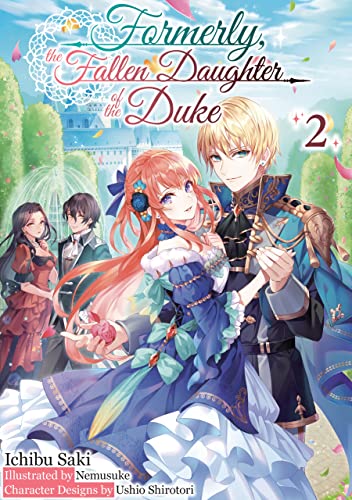
Formerly, the Fallen Daughter of the Duke, Vol. 2

November 23, 2022 by Sean Gaffney

By Ichibu Saki, Nemusuke, and Ushio Shirotori. Released in Japan as “Moto, Ochikobore Koushaku Reijou desu” by Mag Garden Novels. Released in North America by J-Novel Heart. Translated by Andrew Schubauer.

The author admits in the afterword that a lot of the fans of this work were very thrown off by the twist at the end of Book One, and even more by the start of the events in the second book. I can’t really blame them. Book one read like a nice, pleasant villainess story with a happy ending. A bit boring, but not actually so much so that you walk away. And now we’re back to the start, and we have to do things all over again. The trouble here is that our heroine does not quite have the self-esteem needed to try to regain her fiancee, so we get nearly an entire book of “it’s OK if he doesn’t love me this time around, I’m fine with being friends”. The other issue, of course, is Charlotte, who remains The Absolute Worst. It’s never quite made clear if she also has memories from Japan, but there’s certainly a lot of “I’m the heroine, why is everything not going my way?” to her.

After the events at the end of the last book, Claire finds herself back where she started, in her old country and about to get her old baptism. She manages to make a few quiet changes (like taking her mother’s note to her so it can’t be used by Charlotte), but for the most part everything goes as it did last time. Except… her family seems a lot nicer and more considerate? In fact, she’s being sent off to school in the country that she fled to in the last book, and can reunite with her old friends and old fiance. But there’s a hitch. Claire is not the only one that went back in time for a redo. And the forces of evil are using the power of capitalism to try to destroy any chance Claire has at getting the powerful magic she needs to achieve her happy ending.

The book keeps its feet firmly in the fantasy in this volume, with almost no mention of the “Japanese game” part of the series. For the most part, as I noted, the most interesting part of the book is Claire reacting to her family being nice to her. Claire never explicitly states this, but being treated like garbage in the previous world hurt her a lot, and it means that when her ex-fiance or brother are kind and caring towards her (indeed, the fiance is trying to fix the ‘ex’ part) it just throws her off. There is an iffy part of the book, though, which involves brainwashing someone. First of all, the setup to this is ham-handed and obvious, and I rolled my eyes. Second, even though the person being brainwashed is an antagonist, and Claire freaks out and tries to undo it, it really seems like an easy “get out of bad plots free” card. Fortunately there’s still Charlotte around to make everything worse, but still.

This book does NOT end with another loop, much to my relief, and there is a third volume in the series. I’d put this in the middle tier of villainess books.

Filed Under: formerly the fallen daughter of the duke, REVIEWS

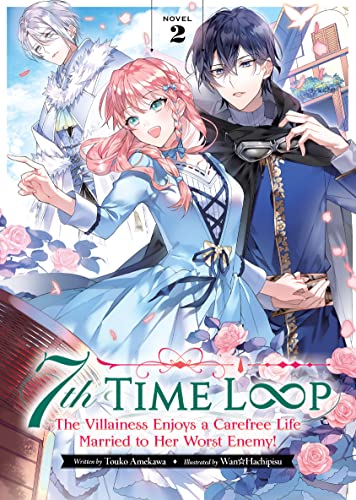
7th Time Loop: The Villainess Enjoys a Carefree Life Married to Her Worst Enemy!, Vol. 2

November 22, 2022 by Sean Gaffney

By Touko Amekawa and Wan*Hachipisu. Released in Japan as “Loop 7-kaime no Akuyaku Reijou wa, Moto Tekikoku de Jiyuukimama na Hanayome (Hitojichi) Seikatsu wo Mankitsusuru” by Overlap Novels f. Released in North America by Seven Seas. Translated by Amy Osteraas. Adapted by Aysha U. Farah.

I’ve frequently made fun of the fact that many villainesses in these books, with Katarina Claes being the best example, keep constantly trying to “solve” all the problems facing them without realizing that the problems have solved themselves simply due to being empathic and kind. Because Katarina, and Rishe in this series, know the real truth: even if you are as sweet as pie, never assume that the narrative has gone away. Rishe knows that her recurring deaths, and the war that leads to them, are not something that can be solved by simply marrying the man behind it all and showing him how to be happy. There’s a lot more to it than that. This is especially true of this second volume, which brings back a number of characters from her life as an apothecary. Including one who is, for all intents and purposes, a terrorist.

Rishe remains dedicated to her efforts to live a happy, carefree life by overworking herself to death in order to get it. She takes sword training from Arnold, and when she realizes that she absolutely lacks the stamina she had in her knight life, not to mention the elite training Arnold’s knights have, she secretly disguises herself as a boy and enrolls in the knight course. As this is happening, a delegation from Coyolle, a country which has relied on its mining to help it not be taken over and destroyed by other countries, has arrived, including Prince Kyle, who Rishe knew in her apothecary life, and Michel, an alchemist who enjoys inventing things, and if they’re weapons of mass destruction, well, they need to be used. You can’t just NOT use poison once you’ve made it.

Michel was probably the best character in this volume. He’s given a tragic backstory, of course, but for the most part he is the genial mad scientist, willing to blow up the world as long as it shows that his theories are correct. He and Rishe get along surprisingly well. Then again, getting along with everyone is Rishe’s thing. And this includes Prince Kyle, who briefly makes Arnold jealous as in his country all women are meant to be venerated, meaning his attention to Rishe is, shall we say, too much for our grumpy Crown Prince. That said… war does appear to be the the first response for him, and Rishe has to work her ass off to show that diplomacy is the better answer in this case. The answer to “why do I keep dying?” is still not an easily solvable one, but at the very least Arnold finds her fascinating, and is unlikely to brutally murder her this time, unless some horrible misunderstanding happens. Which is unlikely, I mean, this is a light novel…

Fans of the genre, or just fans of shoujo romance, should find plenty to dig into here.

Filed Under: 7th time loop, REVIEWS

High School DxD: Pandemonium on the School Trip

November 21, 2022 by Sean Gaffney

By Ichiei Ishibumi and Miyama-Zero. Released in Japan by Fujimi Fantasia Bunko. Released in North America by Yen On. Translated by Haydn Trowell.

This may be the least horny DxD volume to date. Which, trust me, means it’s still ridiculously horny, and filled with consensual groping and non-consensual destruction of clothing. But the title is actually High School DxD, and this volume wants to remind you of the first part, as Issei and his class are going to Kyoto. And they actually do make an effort to put in the “look, I did the research” work. There are, of course, supernatural bad things going on on their trip. And they naturally seem to center around Issei. But his teachers say to leave it to them, and to try to have a normal fun school trip. Which makes sense. Most of our protagonists are either demons, fallen angels, or angels, and “high school romcom” is theoretically not high on the list of things they have to do. Unless you’re High School DxD, of course, where Issei cannot walk two steps without having another gorgeous young woman fall in love with him. This volume’s candidate is very young indeed.

As noted, everyone’s off to Kyoto!… well, almost everyone. Rias and Akeno are, of course, one grade higher than Issei, so aren’t going, much to their annoyance. That said, everything is official and they even have special thingummies that will allow them to visit the very religious temples without, y’know, bursting into flames or the like. Things are going well… despite a growing rash of breast gropers among the populace. And the elementary-school aged fox girl who demands that Issei give back her mother, who has been kidnapped. That said, if you recall the events of the seventh volume and wonder “if this perhaps the work of the guys trying to reverse engineer balance breakers so humanity can fight angels and demons?”, you would be absolutely correct.

I will admit that the human side does have a point here, in that if you happen to know about angels and demons and dragons and the like, and they’re all fighting each other, you start to feel like a pointless statistic in comparison. That said, if you want humanity to triumph, I’m pretty sure “terrorist acts” is not the way to go. As for Issei, he’s getting better not only at fighting but also at leading, which is good because without Rias the group seems to lack anyone to give them strategy beyond “hit things very hard”. (Or heal things very hard, in Asia’s case.) I was also amused to see that Issei’s power is very similar to Izuku’s in My Hero Academia (which came out well after this book), complete with prior users who give him cryptic advice. And are also a fan of his signature breast moves. Which is a real sentence that I just typed out, and I still can’t really believe that.

So we’ve had the sports festival, and the class trip, so I think I know what’s coming next. Till then, enjoy a solid volume in this horny series.

Filed Under: high school dxd, REVIEWS

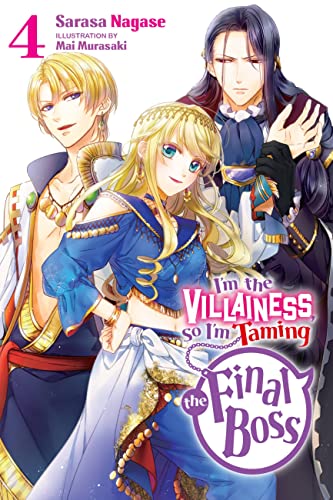
I’m the Villainess, So I’m Taming the Final Boss, Vol. 4

November 21, 2022 by Sean Gaffney

By Sarasa Nagase and Mai Murasaki. Released in Japan as “Akuyaku Reijo Nanode Rasubosu o Katte Mimashita” by Kadokawa Beans Bunko. Released in North America by Yen On. Translated by Taylor Engel.

A lot of light novels, particularly in the Villainess genre, have trouble sometimes coming up with what comes next. Looking in particular at My Next Life As a Villainess, which one can argue has sort of been spinning its wheels since the start of Book 3. Fortunately, some authors are much better at coming up with compelling storylines, even if the storyline is “oh, there was another game”. It helps that we have Aileen, who of all the Villainess protagonists is probably the best at being a “villain” personality, i.e. a confident and dynamic young woman who does not take shit from anyone. Well, except perhaps her husband. That said, she gets help here from the “heroine”, Lilia, who is not exactly on her side but is not the antagonist this time, and whose gleeful fourth-wall breaking and sneering bitchiness make this book even more entertaining than it already is. They’re taking on the third game, which has an Arabian feel to it, but still involves the same old otome game tropes.

Aileen and Lilia, along with attendants Rachel and Serena, are headed on a boat trip to Hausel. A dragon went wild while Claude had amnesia, and they need to attend an inquiry to explain it. Unfortunately, on the voyage, the boat’s women are all kidnapped! They’re now in the Kingdom of Ashmael, and are part of the royal harem. Unfortunately, Aileen and Lilia both recognize this scenario: it’s the third game! The “heroine” is Sahra, a holy daughter of God who can repair the Holy Sword. The “villainess” is Roxane, a stoic and reserved woman who is Baal’s main consort. That said… certain aspects of the game seem to have already happened before Aileen and company arrive. Is someone else pulling the strings? Can Aileen avoid being unfaithful to her husband? And why haven’t they consummated their marriage anyway?!

Every time Aileen and Lilia are in the same scene it is a delight. Lilia is absolutely terrible in a way that would be excruciating in real life but is wonderful on the printed page. The fact that the two of them are forced to team up here makes it even better. As for Roxane, like the other villainesses in this series she turns out to be far more than she seems, and I hope we see more of her. We’re definitely going to be seeing more of Sahra… at least I hope we are, as her arc was rushed and lacking, the one part of this I didn’t enjoy. The implication near the end is that Cedric is going to take her in as sort of a way to keep Lilia interested, which I’m sure won’t rebound horribly on him in any way. And, of course, Aileen and Claude are adorable together. It is amusing that everyone – everyone – who knows Aileen thinks she’s cutest when she’s crying. (We also get some brief backstory drop, and wow, her family is very much “you will be awesome or you will die, no other options.”)

This is the first volume that won’t be animated by the current adaptation, and if you’re an anime-only fan it’s a great one to dive into. This remains one of the top-tier titles in the Villainess genre.

Filed Under: i'm the villainess so i'm taming the final boss, REVIEWS

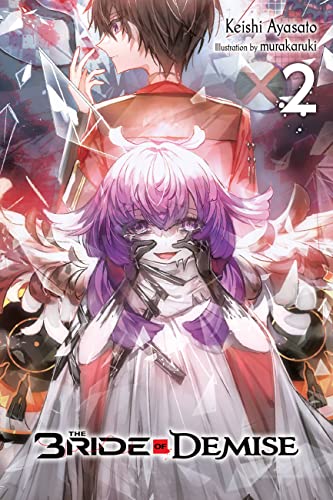
The Bride of Demise, Vol. 2

November 17, 2022 by Sean Gaffney

By Keishi Ayasato and murakaruki. Released in Japan as “Shūen no Hanayome” by MF Bunko J. Released in North America by Yen On. Translated by Jordan Taylor.

Sometimes you are an author with a wonderful idea, a grand epic tale that will span 30, nay, 50 volumes, and then you get told by editorial to wrap it up in the next chapter. So goes life. Then there is the opposite problem. Sometimes you get an idea for a great, short, punchy horror story with a side of friendship and bonding, and it’s great. In fact, it’s so great the publisher asks where the next volume is. There… isn’t one? It’s complete? Nonsense, you will write more. Because it was popular. Now, I’m not sure that’s exactly what happened with Keishi Ayasato and The Bride of Demise, but it would not surprise me if that was the cast. There’s nothing wrong with this book. It’s got evocative prose, startling horror, and some cool battle scenes. It’s just it doesn’t feel like it’s actually telling us all THAT much that’s new about the world, except for one thing which isn’t much of a surprise. But, if you enjoy Ayasato, it’s still very good.

Kou Kaguro, after 15,000 deaths to get there, finally has his happy ending. He’s at the Academy in his special class with his beloved White Princess. He even gets a big surprise when Millennium Black Princess joins the class as a “new transfer student”, something so blatantly false that the class boggles in disbelief. And they get a second teacher, Hibiya, who proves to be far more adept at actual teaching than the eccentric Kagura. Plus, it’s School Festival time! Admittedly, as part of the secret class, it’s harder to walk around the festival, but that’s why masks were invented. They’re even doing a haunted house, and trust me when I say it will be scary. Everything’s coming up roses for Kou… at least till he gets stabbed to death. And then stabbed again. And again. By his closest friends.

Kou can be a relatively passive protagonist, something he is called out for here by Kagura and Hibiya, who both tell him that he uses his time powers like a magical do-over, and that eventually that will get him into trouble. But he’s still trying to be a good guy… a “hero of justice”, as it’s explicitly stated here, and towards the end of the book he finally gets a handle on this, realizing that sometimes justice makes you need to do terrible things to people that don’t really deserve the=m. We also get some new insight into the kihei, which should be too surprising if you’re read enough conspiracy novels, but also lends a nice air of “uh oh” to the series going forward. And there’s even a smidgen of romance, though for the most part it’s either of the “let’s hold hands” variety (Kou and his princesses) or an ominous setup for the third book (Asagiri).

So yeah, this was good, and I enjoyed it. But I don’t think the book was all that necessary. Possibly the publishers agreed – the next book is the final one in the series, I believe.

Filed Under: bride of demise, REVIEWS

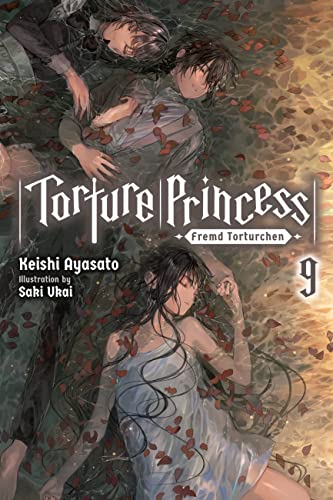
Torture Princess: Fremd Torturchen, Vol. 9

November 16, 2022 by Sean Gaffney

By Keishi Ayasato and Saki Ukai. Released in Japan as “Isekai Goumon Hime” by MF Bunko J. Released in North America Yen On. Translated by Nathaniel Hiroshi Thrasher.

It might come as a surprise, particularly if you read the early books, but the main character in the Torture Princess novels is, in fact, the Torture Princess. Kaito is definitely the co-protagonist at the start, but as the volumes go on it becomes clear that he’s more an ideal, a symbol of hope, rather than the one whose character development we see as the books go on. That’s Elisabeth’s role, and in this final book we see her mask cracking more than any other, as she tries to keep up the “you want to die, fine, whatever” attitude even as she cries blood trying to stop everyone from dying. If you have read every volume of Torture Princess, Elisabeth is probably the main reason. (Yes, OK, Izabella and Jeanne are probably the main reason, I’ll get there.) The plot of this book is not really “will Elisabeth win?” or “will Alice win?”, it’s “how dark can the author make this and still have us care about the outcome?”. The answer is, unsurprisingly, pretty dark.

The big confrontation with Alice is happening, and unfortunately each person being brutally slaughtered leads to more power for Alice. Fortunately, a savior arrives (no, not him – not yet) to essentially remove Alice from the plot for the first half of the book, so that Elisabeth can deal with the fallout of everything else. There’s the Sand Queen, who may be dead but that’s not stopping them. There’s the battle between humans, mixed race and beastmen. And there’s the fact that even now she really wants to see Kaito one last time. Sadly, in the second half of the book Alice returns, and gets down to the mass extinction event that she’s now wedded to. Is there anything that can be stopped? And can the book actually manage to not kill everyone off?

Spoilers: not everyone dies. That said, a lot of people do die. I mentioned Izabella and Jeanne, and I must admit that Izabella has had “I am going to die tragically” written across her forehead from the moment we met her. Indeed, the arc of her character is how she keeps NOT dying. That and her love for Jeanne, which comes dangerously close to stealing the show here. I love Elisabeth, and she’s great here, but the best MOMENT in the final volume is the impromptu marriage ceremony that Izabella and Jeanne perform. It will make you smile and cry at the same time. I also appreciated how Alice’s story ended. There was literally nothing anyone in this world could do for her anymore, so she simply got dumped back in modern Japan. It’s cruel, yes, in a “not our problem” sort of way, but cruelty is old hat in Torture Princess. As for the very end, it’s possible to read it as metaphorical. It might seem a bit too pat if you read it literally. Either way, though, I’m fine with it.

In the end, though, it may be the grand guignol, over the top prose that was the main reason everyone ate this series up. Kudos to Nathaniel Hiroshi Thrasher for translating it. This was a good series, which I doubt is getting an anime anytime soon. A bit too much torture for that medium.

Filed Under: REVIEWS, torture princess

Banished from the Hero’s Party, I Decided to Live a Quiet Life in the Countryside, Vol. 7

November 15, 2022 by Sean Gaffney

By Zappon and Yasumo. Released in Japan as “Shin no Nakama ja Nai to Yuusha no Party wo Oidasaretanode, Henkyou de Slow Life Surukoto ni Shimashita” by Kadokawa Sneaker Bunko. Released in North America by Yen On. Translated by Dale DeLucia.

A lot of people, particularly since the anime debuted, have discussed the way that this series handles its Divine Blessings. Indeed, one might say that how to handle them is the point of the entire series. It comes down to how much is pre-determined and how much is free will, so is naturally going to be a bit contested by readers. That said, I think the series is trying to navigate an interesting middle ground, showing that in this world you have a role but you can manipulate that role how you like. Admittedly that’s easier for some than for others – see Ruti’s entire plot for the first four books. But even then, once she was able to free herself from the blessing’s stranglehold on her, she’s been saving people in the way she wants to, rather than the way she’s destined to. Leonor, though… oof. There’s trying to fight fate and then there’s ignoring fate.

We pick up where we left off last time. There’s pirates and princes in Zoltan, and its reputation as a backwater town where nothing happens is in jeopardy by an impending war. Red and company manage to work things out with the pirates, though admittedly the tragic backstory that is revealed helps an awful lot there. Leonor, though, is a very different matter. She will not stop until she destroys everything. And what’s worse, we discover that she and Red met back when he was a young knight, and she really, really, really took a liking to him. So she’s now determined to have him as well as destroy her sister and also make sure that her kingdom is taken over by demons. As for the demons themselves… they’re just doing what demons do, really. They may not have blessings, but they enjoy being jerks.

The outcome of the battle is not really in doubt. Zoltan has Ruti, who is basically this series’ equivalent of “we have a Hulk”. But it hits the right beats anyway, showing how well Rit can command a force even though, as she repeatedly says, all she wants to do now is live her lovey-dovey apothecary life with Red. Red shows off how well actual practice and skill can trump “Oooh, I’ve got a cool blessing”. And we also see that people do not HAVE to be beholden to what their urges tell them to. Tisse is an assassin. She’s really good at killing people. But here we see her take the Cooking skill, just so that she can join Red in making really good food. Heck, Mister Crawly Wawly also takes the Cooking skill! I am hoping that “Tisse and Mister Crawly Wawly write a spider cookbook” is a genuine subplot in this series, as that would be awesome.

Unfortunately, Slow Life may have to wait – again – as there’s a new hero in town, and I get the sense that the Church wants to make his first mission “destroy the old hero who dared defy us”. Still, for now peace reigns again, which is all we can ask. And hey, Season 2 of the anime coming soon.

Filed Under: banished from the hero's party, REVIEWS

I’ve Been Killing Slimes for 300 Years and Maxed Out My Level, Vol. 13

November 14, 2022 by Sean Gaffney

By Kisetsu Morita and Benio. Released in Japan as “Slime Taoshite 300 Nen, Shiranai Uchi ni Level MAX ni Nattemashita” by GA Novels. Released in North America by Yen On. Translated by Jasmine Bernhardt.

Perhaps the author has been listening to me a little bit more, as this volume thankfully features no fake yuri tease followed by Azusa saying that she’s straight. Instead it leans entirely on the found family side of the equation, while doing what it does best: adding new characters and telling fun stories. There’s no plot to this story, no ongoing goal or character development, so as always there’s very little to grab on to for a review, but in terms of “cute girls doing cute things”, it serves well enough. The closest we get to depth in this one is when we’re introduced to the Grim Reaper by the two goddesses, and Azusa realizes that, having lived 300 years, she is definitely the baby in the room compared with the others, who casually discuss trying something as a hobby for fifty thousand years to see how it goes. Which of course makes it all the more impressive that she’s one of the biggest powerhouses in the world.

In this volume: everyone gathers at the city of the undead to celebrate Rosalie’s 200th Deathiversary; The group hikes up a mountain to see a historical citadel that fascinates Shalsha; Pecora forces Azusa and Beelzebub to join her in re-enacting a favorite book… by running across the countryside on giant robot Godzillas; Godly Goddess and Nintan invite Azusa to meet the world’s grim Reaper, who turns out to be a frustrates author (and is also entirely covered in hair, it’s implied because of introversion); Godly Goddess gets Azusa to try out her new “training program”, which ends up essentially being a Super Mario game, complete with Pecora as the final boss AND Pecora as the Princess in the castle; a phanton thief vows to steal one of the exhibits in Halkara’s museum, and Halkara is quick to capitalize on this; and in the side story, Laika fights her old master and her sister.

A lot of these feel more like they’re there to entertain the author rather than the reader. The citadel one in particular is very “let me show off all the research I couldn’t put into my Oda Nobunaga series”. Those who enjoy nerd references in their titles will be amused by the robot kaiju, as well as the long parody of platformer games. There’s also some actual fanservice, as Azusa gets stripped to her underwear by the game, but I think it’s meant to amuse rather than titillate. The author also apologizes to the artist for having to draw someone who isn’t a cute girl – I assume he means the reaper, who is indeed a ball of hair, but I have no doubt that a future book is going to take care of that. Basically, the series keeps chugging along, and that’s fine. The Laika stories seem to come to an end with this volume, and I wonder who will take their place now that we’ve had Beelzebub, Halkara, and Laika.

So yes, fluff, good fluff, but plotless fluff. The goal with these is always ‘is there enough here for a full review?” Just barely.

Filed Under: i've been killing slimes for 300 years, REVIEWS

Re: ZERO -Starting Life in Another World – Ex, Vol. 5

November 13, 2022 by Sean Gaffney

By Tappei Nagatsuki and Shinichirou Otsuka. Released in Japan by Media Factory. Released in North America by Yen On. Translated by Kevin Steinbach.

Last time I mentioned that the 4th side story volume was actually a setup for the 6th arc, which had not come out yet. It still hasn’t – expect it in 2023. Worse news, this volume is mostly a setup for the seventh arc of the series, so I’d say expect that in late 2024. Fortunately, this one can be read as a standalone relatively easily, mostly as it stars Priscilla, who we are already familiar with. That said, you might want to brush up on the 4th book in the Ex series, as several characters from that show up here, even though this book takes place a few years earlier. This book can basically be divided into two stories: 1) a throne war with 32 siblings trying to kill each other, and 2) a death battle stadium where the competitors take over, but one of them has an ulterior motive. That said, it’s a Priscilla book. So honestly, the real plot is “Priscilla is fabulous”. (Oh yes, and Al as well. Hi, Al. You sort of sound like Subaru, but less tsukkomi.)

In the first story (framed as Priscilla reading what might be her diary to Schult), we meet Prisca Benedict, age 10… who is immediately murdered by her servants. But it’s OK, that was just a body double! This should give you an idea of the sort of thing we have going on. It’s betrayal, backstabbing, and zero sibling affection, as Prisca tries to stay alive and become heir over her cunning older sister and powerful older brother. Who has the power of the previous book on his side, which shows he wins. The second story shows us Al, who has lost his arm but lacks his helmet. He’s spent ten years fighting death battles for an audience on an island devoted entirely to that purpose. Unfortunately for him, the other “sword-slaves” are rising up in rebellion, even if that’s a terrible idea. Will Al be able to talk them down? What about that ulterior motive? And what is Priscilla Pendleton, now on Marriage #1, doing there?

The biggest frustration with this volume is that it’s NOT how Priscilla and Al first meet – they spend the entire second story apart from each other, and never meet. We also don’t get a shot of Al’s face, though he’s there on the front cover and also one illustration seen from the back, showing off his ponytail. Priscilla has her intelligence and arrogance here, but is also ten years old, so is now quite the powerhouse we see in the main series. She’s helped by Arakiya, a dog girl who gains monstrous powers by “eating” spirits (and can somehow hold on to her sense of self), and one things I really like about the Re: Zero books is seeing characters who are otherwise terrible people and show the people that they like and respect. Priscilla may regard 95% of everyone around her as clowns, but she’s rarely WRONG about that either, and I enjoyed her scenes with Arakiya. Al shows that he has similar people-judging qualities, too.

I’m sure I will forget 95% of this book when we get to Book 26 and Arc 7. Oh well. It’s still a solid entry in the series, especially if you like Priscilla: The Early Years.

Filed Under: re: zero, REVIEWS

How a Realist Hero Rebuilt the Kingdom, Vol. 17

November 12, 2022 by Sean Gaffney

By Dojyomaru and Fuyuyuki. Released in Japan as “Genjitsu Shugi Yuusha no Oukoku Saikenki” by Overlap Bunko. Released in North America by J-Novel Club. Translated by Sean McCann.

I’m not entirely certain if the author has stated that this series is going to end 2-3 volumes from now, but honestly he doesn’t have to. After reading this book, it’s self-evident that we are in the “endgame” part of Realist Hero. We’re getting answers to things we have wondered since the first volume, even if we didn’t actually know we were wondering them. The Demon Lord’s Domain. What relationship this world has with Souma’s time on Earth. And, of course, how can a character possibly be in this series and still remain single? (Answer: they can’t. I think Trill is maybe the only one still not married, and even then we know it’s just a matter of time.) That said, the main thrust of this book ends up being setting up the next book, because having laid out all the mysteries and answered them, there’s only one thing left to do: big fight between the two world powers. It can’t be put off any longer, alas.

After things settle down following events from the 16th book, everyone is getting married. Souma adds Maria and Yuriga to his wife count. Hakuya marries Jeanne. Mio Carmine marries Colbert. This author has a fetish, and it’s marriages. However, Fuuga Haan wants to take care of one last thing: the Demon Lord’s Domain. And he wants Souma to help him, and is perfectly willing to blackmail him in order to get it. Unfortunately, the Demon Lord’s Domain is ludicrously hard to defeat, and also still relatively unknown, though Ichiha’s data helps there. Also unfortunately, it turns out that one of Souma’s children has inherited the9ir grandmother’s precognition, and has foreseen… Souma’s death!

I can’t really get into the nitty gritty of the book without spoiling its main secrets, but it’s something that has been foreshadowed for some time now. What I can say is that this book showed off better than most of the last few how much time has passed in this world. Because everything happens all at once in these books, it’s sometimes hard to remember that it’s been almost a decade since Souma first was summoned, and that his oldest kids are now six years old. This also means Yuriga is 18 or so, making it at least a bit less creepy for Souma to be marrying her – and it’s also stated that she’s not “consummating” at the moment because she’s concentrating on her career. That said, her career as “the thing trying to hold back her brother from attempting to destroy Souma’s league of nations” is failing hard. Though admittedly there really was very little she could do to stop that. Fuuga is the type who simply has to be waging war on something, and due to the circumstances of this book he is not able to wage it here. That said, I’m pretty sure we know who will be winning the fight between them.

I’m not sure how many book the series has to go, but 20 would not surprise me as an end point. Till then, enjoy the nerdy past history of the Demon Lord’s Domain, which features a surprise Demon Lord that I don’t think any reader was expecting.

Also, it is impossible not to see Maria on the cover of this volume and not start singing “Hello mah baby, hello mah honey, hello mah ragtime gaaaaaal!”

Filed Under: how a realist hero rebuilt the kingdom, REVIEWS

Invaders of the Rokujouma!?, Vol. 40

November 11, 2022 by Sean Gaffney

By Takehaya and Poco. Released in Japan as “Rokujouma no Shinryakusha!?” by HJ Bunko. Released in North America digitally by J-Novel Club. Translated by Warnis.

If this is your 42nd book of Rokujouma!?, welcome back. As a hardcore fan, you’re well aware of the numbering being off due to the two .5 volumes. If this is your first volume of Rokujouma!?, my god, you’re far too late. We’ve already moved in with this series. We have so many in jokes and memes that you don’t know. You must simply be staring at the chaos from your place by the drinks table in the corner, wondering why you didn’t get Vol. 1, 2, and 3 when they came out (at the same time) in 2017. But fear not, I am here for you. I can sum up the series so you aren’t lost. Nice guy. Alien princess and her aide and her rival. Ghost girl and her real body and her alternate world self. Magical girl and her formerly evil magical girl ally and their mentor. Pellucidar girl. And her things that say “ho!”. Sempai and her soul sister. Landlord and her inner dragon. Annoying best friend. Annoying best friend’s sister. God in disguise. Together… they fight crime! See, that was easy.

OK, clearly not that easy, given the girl on the cover art is “none of the above”. In any event, this is a short story volume but also a prelude to the next arc. The first half is web stories. Koutarou, Clan, the haniwas, and Alunaya all decide to race toy cars. The second story has Maki chatting with Crimson, her former ally-turned-enemy-turned-ally, and has her try to experience things that are not “fighitng is the baddest!”, which mostly fails. Nana goes to visit her old partner Kanae and ends up in a badminton match against Sanae (chan version) and Yurika. Finally, everyone is packing to go to Forthorthe, and we’re even taking Mackenzie and his sister, so that they aren’t quietly killed while everyone is away. Snacks are bought. Underwear is bought. Training scenes occur. And Koutarou remains The Purest Young Lad out there.

Those who have read my Rokujouma!? reviews before know it’s time for the Yurika report, as I gush about my favorite once more. This is a stellar volume for Yurika, possibly as she’s barely around Koutarou at all. In the badminton scene she’s got Nana in the room, so is trying her damndest to show her that she’s a mature and deserving young protege, not even whining when getting a shuttlecock to the face. (That sounds wrong…) We also get a scene showing her training the troops, and seemingly coming to terms with the fact that her “magical girl” magic is unorthodox. Basically, with what appears to be photographic memory and a good eye for improvising on the fly, Yurika is not a magical girl as much as a chemist. And thus is it very important to keep her on the side of good and light. (I hope this is not ominous foreshadowing…)

So as a short story volume goes, this is more important than most. None of the short stories are bad, and the final one is necessary setup for what might (?) be the final (???) arc in the series. And if this IS your first volume in the series… well, you have 41 more to get now.

Filed Under: invaders of the rokujouma!?, REVIEWS

  • « Go to Previous Page
  • Page 1
  • Interim pages omitted …
  • Page 69
  • Page 70
  • Page 71
  • Page 72
  • Page 73
  • Interim pages omitted …
  • Page 346
  • Go to Next Page »
 | Log in
Copyright © 2010 Manga Bookshelf | Powered by WordPress & the Genesis Framework