• Skip to primary navigation
  • Skip to main content
  • Skip to primary sidebar
  • Home
  • About Us
    • Privacy Policy
    • Comment Policy
    • Disclosures & Disclaimers
  • Resources
    • Links, Essays & Articles
    • Fandomology!
    • CLAMP Directory
    • BlogRoll
  • Features & Columns
    • 3 Things Thursday
    • Adventures in the Key of Shoujo
    • Bit & Blips (game reviews)
    • BL BOOKRACK
    • Bookshelf Briefs
    • Bringing the Drama
    • Comic Conversion
    • Fanservice Friday
    • Going Digital
    • It Came From the Sinosphere
    • License This!
    • Magazine no Mori
    • My Week in Manga
    • OFF THE SHELF
    • Not By Manga Alone
    • PICK OF THE WEEK
    • Subtitles & Sensibility
    • Weekly Shonen Jump Recaps
  • Manga Moveable Feast
    • MMF Full Archive
    • Yun Kouga
    • CLAMP
    • Shojo Beat
    • Osamu Tezuka
    • Sailor Moon
    • Fruits Basket
    • Takehiko Inoue
    • Wild Adapter
    • One Piece
    • After School Nightmare
    • Karakuri Odette
    • Paradise Kiss
    • The Color Trilogy
    • To Terra…
    • Sexy Voice & Robo
  • Browse by Author
    • Sean Gaffney
    • Anna Neatrour
    • Michelle Smith
    • Katherine Dacey
    • MJ
    • Brigid Alverson
    • Travis Anderson
    • Phillip Anthony
    • Derek Bown
    • Jaci Dahlvang
    • Angela Eastman
    • Erica Friedman
    • Sara K.
    • Megan Purdy
    • Emily Snodgrass
    • Nancy Thistlethwaite
    • Eva Volin
    • David Welsh
  • MB Blogs
    • A Case Suitable For Treatment
    • Experiments in Manga
    • MangaBlog
    • The Manga Critic
    • Manga Report
    • Soliloquy in Blue
    • Manga Curmudgeon (archive)

Manga Bookshelf

Discussion, Resources, Roundtables, & Reviews

Reviews

Higurashi: When They Cry, Vol. 18

April 23, 2012 by Sean Gaffney

Story by Ryukishi07; Art by Karin Suzuragi. Released in Japan as “Higurashi no Naku Koro ni: Tsumihoroboshi-hen” by Square Enix, serialized in the magazine Gangan Powered. Released in North America by Yen Press.

This is a revelatory volume of Higurashi, both in the way that it wraps up the plotline with Rena and Keiichi, and in the way that it affects Rika, who is turning out to be the real star of the series. Of course, we have a ways to get there. First off, we deal with Rena’s continuing slide into madness, which culminates in her holding the entire school hostage and dousing it with gasoline. (Thank heavens this isn’t Naruto-level popular, I have to say, or the censors might wake.)

There’s not as much creeping paranoid horror as there was in the previous three volumes, mostly because Rena’s all the way there. That said, there are some impressive visuals from artist Karin Suzuragi. The way the panels and pages are set up and flow from one to another is very well done, and there’s lots of ‘turn the page and be shocked’ moments, particularly when Keiichi realizes he’s been tricked with the fake bomb. And, of course, Rena’s ‘Higurashi faces’ are impressive as well, though the best and most terrifying of those is at the end of the next arc.

Rika had mentioned last time that it was too late to save this world, but Keiichi is trying to make her realize that it’s not just about ‘how do I avoid getting disemboweled’ but about trying to prevent the little tragedies. She was already stunned that he remembered a previous world where he was the instigator. Now, in teaming up with Keiichi and Satoko to stop Rena, she decides after so long to try to stop fate even if it is impossible. (I love her cynical face as she faces off against Rena – we’re seeing more and more of the Rika that remembers every single go-round, and must be far older than 10 years old.) Incidentally, when Rika tells Keiichi that last time she didn’t try hard enough and Rena succeeded? We’ve seen that world too, in the Beyond Midnight arc.

Satoko is also impressive here, and it’s nice to see an arc where she’s less physically and mentally abused. Mion also gets a fantastic moment at the very start of the volume, reminding you that she is indeed the heir to a huge yakuza family and has no intention of doing anything else when she grows up. Mostly, however, she is the abused one in this volume, getting the blunt end of Rena’s billhook to the head in a mistaken belief that her family is behind everything that’s happened for the last few hundred years. In the end, though, this is about Rena and Keiichi.

There really aren’t as many “ship wars” as you’d expect from a harem series in Higurashi fandom. Partly as it ends up being about friendship, partly as little is resolved one way or the other. Keiichi/Rena fans, however, can be happy that the most shippy of their arcs was adapted for manga – Keiichi/Mion fans have to say “But hey, we got the PS2 arc!”. It will be hard to top this, though. The fight on the roof is fantastic, the best Keiichi has ever been, showing him finally breaking through to Rena not by pleading and making sense, but by the game they started with. This arc has been very cyclical, with Keiichi’s need to atone going back to the first arc. Now we end as we began, with a battle between friends – only instead of water, they have lethal weapons in their hands. But lethal weapons are only lethal if they’re used.

Rena’s been very clever through this volume – she’s one of the smartest in the cast, and implied, like Keiichi, to be playing stupid much of the time. But perhaps her finest hour is being able to break through the madness that has gripped every antagonist in this series to date, before killing him. Keiichi realizes how amazing this is, praising her for it in text. By distracting her with the roof battle “game”, he was able to remind her of the fun they all had – and also of her love for Keiichi, and his love for her. They both seem to know it’s not to be – there’s still a certain fatalism here – but Rena cries, and repents her earlier actions. She’s no longer crazy.

And so this arc ends, with the schoolchildren safe, Keiichi and Mion alive, Rena sane, and a final speech by Rika and Keiichi about finding the strength to fight fate, and that they’ll kick back against it as many times as they have to. Which is good, as after this happy ending (the chapter is called “Happy Rena”, anotehr cyclical bookend), we turn the page… and the whole village is dead again. Yes, we’ve managed to resolve Rena’s issues, but Rena was never the one who was disemboweling Rika on an altar, and the main villain is still unknown (though I can hazard a guess). The manga actually makes our irritation at another bad end explicit, with “The End” appearing 25 pages early, and then someone (Bernkastel?) chiding us for ruining the happy ending by turning the page. And so we’re left with Akasaka, 25 years later, wondering what could have stopped this horrific tragedy.

Overall, this arc was one of the best of the series, especially for fans of Rena, its iconic character. Higurashi now takes a summer break, but Yen Press will return in September with what I’m sure will be the final arc in the series, in which everyone lives happily ever after.

After all, how could the “Massacre Arc” possibly be bad?
Filed Under: REVIEWS

Tidbits: Now We Are Six

April 22, 2012 by Michelle Smith

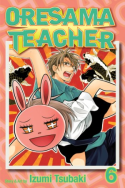
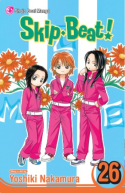
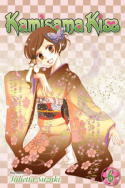
Originally, this post was supposed to go up several months ago, when the sixth volumes of these series were newly released, but time conspired against me. And so, belatedly, I present reviews of volumes five and six of Kamisama Kiss and Oresama Teacher. Also included is perennial favorite Skip Beat!, which is on a similar trajectory, just twenty volumes ahead.

Kamisama Kiss, Vols. 5-6
It’s hard to believe now that I ever had my doubts about Kamisama Kiss, because I’m enjoying it more and more with each volume.

Volume five finds Nanami determined to correct public opinion that her shrine is a creepy, dangerous ruin, especially since her shinshi, Tomoe, works so hard to maintain it. And so, she decides to hold a festival, spending two weeks preparing for a special performance while soliciting amusingly misguided advice from her supernatural acquaintances. It’s a success in the end. In volume six, Nanami is called upon to compete against another human girl for a spot at a prestigious kami conference.

In these two volumes, mangaka Julietta Suzuki nicely balances the expansion of the supernatural world (including the introduction of several new characters) and Nanami’s abilities with further development in her relationship with Tomoe. It seems to me that Tomoe is finding himself somewhat in awe of his kami these days—particularly when purification powers on par with his first master’s manifest themselves—and also more prone to emotions like fondness and jealousy. One of the best things about their relationship is how he is able to encourage and reassure her before the festival without being condescending about it. “I acknowledged you as my master,” he says. “Don’t be afraid. Prove yourself to everyone… like you did to me.”

I think the main appeal for me is that Kamisama Kiss is shaping up to be the story of Nanami’s growth. She may be in love with Tomoe, but winning his affections is not her sole ambition, or even her focus. Instead, she wants to develop as a kami and become someone that her parishioners can depend upon and respect. Because progress has come slowly, watching her actually achieve some truly remarkable things in these volumes actually leaves me a little verklempt. This has become less a story about a human girl thrust into the wacky world of yokai and more about someone embracing their destiny and striving to reach their full potential. I eagerly look forward to the next volume.

Oresama Teacher, Vols. 5-6
I was worried there for a minute. It seemed to me that volume five was showing signs of Tsubaki-sensei running out of ideas, what with a chapter about Takaomi and Mafuyu helping a wealthy girl find love with her self-denying servant, a chapter about the school’s bancho being stalked by a flower fairy, and a chapter about the Student Council’s resident ninja gathering intel on the Public Morals Club.

Although it’s not the neatest bow—I still don’t fully grasp why the Student Council is so opposed to Takaomi’s plans to attract more non-delinquent students to Midorigaoka, but at least I have an inkling now—Tsubaki does manage to tie things together by the end of volume six. Okay, not the flower fairy bit, but the significance of Takaomi going out of his way to help Marika (the rich girl) ties in with the backstory of why he’s become a teacher and why he’s made a bet with the school’s director. It brings new depth to his character and even relates to some things he said back in volume one.

I also really enjoyed the chapter in which the members of the Public Morals Club—now including Shinobu the ninja, who has decided to obtain information on his enemies from within their midst—explore the school, finding oodles of empty classrooms and realizing that it was once a thriving place with high-caliber students. Also significant is that, when Mafuyu is frustrated by Takaomi refusal to reveal his true motivations, she complains that all she’d wanted was to be a regular high school girl, but then got forcibly recruited to his agenda. Hayasaka overhears and, thinking he has kept Mafuyu from the life she’d wished for, avoids her. Mafuyu attempts to hang out with some girls, but in the end realizes she prefers being with Hayasaka. It’s really sweet.

This description might make it sound as if the series has suddenly gone in a plot-heavy direction, but that’s not really the case. There’s definitely something happening, but there are still plenty of amusing moments. My favorite is when Hayasaka and Super Bun are reunited and we get a panel of her carrying him in her arms while he thinks, “You’re so dreamy!”

Skip Beat!, Vols. 25-26
It’s a rare series that still genuinely delights me this far into its run, but Skip Beat! consistently manages to do so. I think the key here is that Nakamura has developed a cast of characters whose personality quirks enable her to take the plot in unexpected directions.

For example, volume 25 is all about the aftermath of Valentine’s Day. Sho has learned that Kyoko gave chocolates to Reino, and so shows up on the set of Dark Moon with an ostentatious bouquet in hand. He’s not out to win Kyoko’s love—so her explanation of the true nature of the chocolates (hatred) makes no difference—he just wants all her thoughts to be focused on him once more, and he temporarily ensures this by stealing her first kiss. Kyoko freaks out, according to plan, and is briefly talked down by Ren, but when she gives Ren his own special valentine, he can’t resist driving thoughts of Sho out of her head by administering a smooch of his own. This one’s on the cheek and he plays it off as a foreigner’s expression of gratitude, but it definitely leaves a trace in her heart.

Backing away from all of this progress, Nakamura eases us into the next arc by having Kyoko and Kanae return to the Love-Me Section, where they are joined by new member Chiori Amamiya, a former child actress whom Kyoko recently inspired to regain her love for acting. Each girl receives a personalized assignment from Lory, and Kyoko’s involves picking up Cain Heel, a dangerous-looking guy who is the president’s guest. Turns out, this is Ren going undercover and Kyoko’s new assignment is to stay by his side as his doting and scantily clad goth sister, Setsuka. And they have to live together in a hotel room. Ordinarily, a twist like this would be completely out of left field, but because this is Lory and because this is Skip Beat! I can just roll with it and eagerly anticipate the complications that will ensue.

If you’ve never read Skip Beat! before, now is a great time to start, as an omnibus edition of the first three volumes has recently been released!

Review copies provided by the publisher.

Filed Under: REVIEWS Tagged With: shojo beat, VIZ

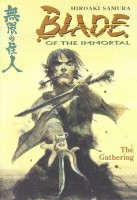
Blade of the Immortal, Volume 8: The Gathering

April 20, 2012 by Ash Brown

Blade of the Immortal, Volume 8: The GatheringCreator: Hiroaki Samura
U.S. publisher: Dark Horse
ISBN: 9781569715468
Released: August 2001
Original release: 1997-1998
Awards: Eisner Award, Japan Media Arts Award

The Gathering is the eighth volume of the English edition of Hiroaki Samura’s award-winning manga series Blade of the Immortal. Published in 2001 by Dark Horse Comics, The Gathering is most closely equivalent to the seventh volume of the Japanese edition of the series, published in 1997, although it also includes a chapter from the eighth volume which was first released in 1998. Blade of the Immortal has been the recipient of both an Eisner Award and a Japan Media Arts Award. Critically acclaimed in both the East and the West, the series is also one of my personal favorites. The Gathering marks the approach of the end of the second major story arc in Blade of the Immortal. The volume picks up almost immediately after the events in the previous volume, Heart of Darkness. Since there were some pretty major developments in that volume, I was particularly looking forward to reading The Gathering.

After their violent falling out with Shira, Manji and Rin’s tenuous alliance with the Mugai-ryū assassins dissolves. Anotsu has successfully left Edo without being caught and is now well on his way to Kaga and out of the Mugai-ryū’s reach. They do, however, have an idea where Anotsu is heading. But they’re not about to tell Manji without getting something in return. Rin, still determined to pursue Anotsu, realizes that she is the only one who even has a chance of passing through one of Edo’s checkpoints and leaves Manji behind without telling him where she is going. It doesn’t take much for him to figure it out and Manji is ready to do anything it takes to follow her. But to complicate matters further, both Rin and Manji are now wanted for murder. It will be extremely difficult for either of them to leave Edo, let alone find Anotsu.

Rin is no longer as naive as she once was, although this doesn’t stop her from making decisions she knows are foolish. She has seen some terrible things on her path of revenge against Anotsu and it has changed her. The journey has changed Manji as well. He has become more open in showing his concern for Rin. While he has become quite attached to the younger girl and is very protective of her, he is not overprotective. But as soon as she disappears Manji doesn’t hesitate for a moment to try to find her again. It’s been a while since Manji has really let loose in a fight (it’s also been quite some time since he’s really needed to) but he is given ample opportunity to in The Gathering. He is at a distinct advantage because of his near immortality, but this also means he has a lot more pain and suffering in store for him. Still, Manji is able to employ in very dramatic and effective ways techniques and strategies that other swordsmen would only resort to out of desperation (if at all).

While Rin and Manji are attempting to leave Edo, the members of the Mugai-ryū are trying to make the best out of the situation. Manji and the Mugai-ryū may no longer be allies but they are all ready to use one another for their own benefit. Although the assassains’ backgrounds are still mostly a mystery, The Gathering reveals a few more hints about their employers. The assassins may be ruthless and violent, but at least for the moment it’s in their interest that Manji and Rin are alive. On the other hand the Ittō-ryū—Anotsu’s sword school—is itching to take down the man who has single-handedly killed so many of their own. Anotsu has already proven himself to be a formidable opponent, but many of the other members of the Ittō-ryū are crafty and skilled fighters, too. Even if they don’t particularly get along, Manji has given them a common goal for the time being. The Ittō-ryū is most definitely made up of the individuals with their own ways of doing things. The Gathering leaves off in the middle of an intense fight and I’m looking forward to seeing how it concludes in The Gathering, Part II.

Filed Under: REVIEWS Tagged With: Blade of the Immortal, Dark Horse, Eisner Award, Hiroaki Samura, Japan Media Arts Award, manga

Manga Artifacts: Love Song

April 19, 2012 by Katherine Dacey

Back in the 1990s, Rachel Thorn labored hard to make Keiko Nishi a household name among American manga readers, translating six of her stories for VIZ. Two appeared in Four Shojo Stories alongside work by Moto Hagio and Shio Sato, and four appeared in a stand-alone volume called Love Song.

VIZ made a conscious effort to present Nishi’s work not just as comics, but as literature. Love Song boasted fancy endpapers — the kind you might find in the Everyman’s edition of Middlemarch — and a back cover blurb that defined shojo manga as “a literary genre of Japanese comics in which the relationships between characters are as meticulously crafted as the story’s action.” Lest the reader interpreted that statement to mean, “Here be romance comics,” the editor optimistically declared that shojo manga was “created by women for everyone!”

Though Nishi didn’t catch on with Western readers, it’s easy to see why Thorn championed her work: she’s a terrific, versatile storyteller, equally capable of writing light-hearted fantasies and character studies of deeply damaged people. Of the four stories that appear in Love Song, two are standouts: “Jewels of the Seaside,” a black comedy about three sisters who compete for the same man’s affection, with disastrous results, and “The Skin of Her Heart,” a sci-fi tale about a young woman torn between what she wants and what her mother wants for her. The other two stories — “Love Song” and “The Signal Goes Blink, Blink” — are also strong, if more conventional. “Love Song” focuses on an angry young woman who dominates her saintly boyfriend, while “The Signal Goes Blink, Blink” explores how fame transforms the life of a bullied teen.

Common to all four stories is a palpable sense of longing. The characters desperately seek human connection, but face genuine obstacles to their happiness. Yoshio Yamada, hero of “Signal,” is a perfect example: he’s the kind of small, quiet person whose shyness makes him a natural target for other kids’ scorn. (Even his own family detests him for his weakness.) When his newly discovered healing abilities land him television appearances, he worries what will happen if his powers fail him — not because he fears the stigma of being discredited, but because he fears being alone. “I’m afraid that if I lose this power, I’ll just go back to being a nobody again,” he tells his agent. “Are those people going to play with me? Will they come to school with me?”

The female protagonists of “Love Song” and “Skin of Her Heart” are also dissatisfied, though neither can fully articulate what they want. Saki, the heroine of “Love Song,” is perplexed by the intensity of her anger; though she readily admits that she was scarred by her first romantic experience, that alone cannot explain the cruel delight she takes in manipulating her current boyfriend. Lin-Lin, protagonist of “Skin,” also has difficulty pinpointing the source of her frustration, rejecting a suitor who could solve all of her financial and family problems. Only in the final pages of the story does she realize that moving to another space colony might change her life in ways that would help her “learn to open my heart to someone.”

Even the “Seaside” sisters are prisoners of their own desires. All three fancy their cousin Daniel, a handsome, polite young man, but each secretly worries that she compares unfavorably with her siblings. Their desperation is played for macabre laughs — poison factors into the narrative — but each sister’s pain and fear of rejection is very real; the punchline of the story is simultaneously amusing and horrifying, as we realize the true cost of their insecurities.

Nishi’s artwork is the perfect vehicle for such nuanced character studies, at times precise, elegant, and naturalistic, and at times loose and sketchy, with the white of the page playing an important role in underscoring the emotional distance between her characters. Her minimalist approach won’t be to every shojo fan’s liking, but she demonstrates that it’s perfectly possible to convey the interior lives of her characters without resorting to the kind of visual shorthands — flowers, sweatdrops, nosebleeds — that have been overused in contemporary shojo manga.

Readers wishing to track down a copy of Love Song should know that the title is officially out of print. (You won’t find it listed anywhere on the VIZ website.) Unlike Four Shojo Stories or A, A’, however, Love Song is still relatively easy to obtain through online retailers like Amazon, Barnes and Noble, and eBay. Highly recommended.

Manga Artifacts is a monthly feature exploring older, out-of-print manga published in the 1980s and 1990s. For a fuller description of the series’ purpose, see the inaugural column.

LOVE SONG • BY KEIKO NISHI • VIZ • 208 pp. • NO RATING

Filed Under: Manga, Manga Critic, REVIEWS Tagged With: Keiko Nishi, Rachel Thorn, shojo, VIZ

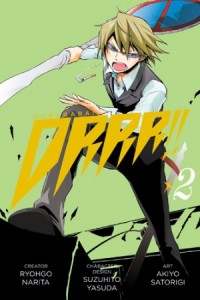
Durarara!!, Vol. 2

April 19, 2012 by Sean Gaffney

By Ryohgo Narita, Suzuhito Yasuda, and Akiyo Satorigi. Released in Japan by Square Enix, serialization ongoing in the magazine GFantasy. Released in North America by Yen Press.

In this second volume of Durarara!!, I was reminded once more of how mentally unbalanced the entire cast is. In Volume one we had Izaya and his ‘I will pretend to murder wannabe suicidal teens’ schtick, but here we manage to get our cover boy Shizuo, who seems to have a bit of a rage problem; Erika and Walker, who turn out to not just be crazy otaku but *really* crazy otaku; and the creepy incestual text (to call it subtext would be wrong; the bathing sequence speaks for itself) between Namie and Seiji. It’s enough so that when you see the supposedly three normal teenagers in the cast, your first reaction is to say “I wonder how warped we’ll find they really are?” rather than assuming they’re there as relief.

I’m also impressed with the way this series handles metatext. The characters aren’t necessarily aware that there is a fourth wall – there’s no talking to the reader or anything – but you can see the artist and writer playing around a bit with the medium. Walker’s monologue about how he and Erika are simply insane naturally, and that it has nothing whatsoever to do with all the anime and manga they consume, is a clever stab at Japanese moral guardians (even as the scene itself can be deeply disturbing – if you dislike implied eye torture, you may want to be warmed, even though it doesn’t actually happen). Likewise, Anri’s description of Mika’s past activities are done as a cute 4-koma, helping to show the dissonance between Mika’s looks and personality and her creepy stalker reality.

Celty gets the first chapter to herself, but otherwise takes a back seat until the cliffhanger. The main plotlines we seem to be following now are a) Celty and her head, and b) the Dollars gang that everyone seems to either be interested in or a part of. Kadota suspects the gang is Izaya’s doing, and you can certainly see why – it’s exactly the sort of thing he *would* do. But isn’t it a bit too obvious? Then we also have Mikado and the high schoolers, who, while interacting with the others, don’t seem to be getting drawn into their plots just yet, aside from Minako’s continued curiosity about Dollars. I quite liked Mikado during his meal with Anri – we see him reject the blunt, vicious reply he’d like to say, but when Anri shows she’s aware of her own flaws (and her own tendencies to use others), he doesn’t hesitate to be direct. They’re good kids.

Someone once told me that Durarara!! is a superhero comic where there aren’t any actual heroes, only supervillains going about their daily life. The word ‘villain’ might perhaps be a bit too strong, but not by much. These eccentrics are not your wacky moe harem cast, and the cliffhanger, which implies that the missing Mika Harima has been put to a very, very bad use shows us that things may only go downhill from here. Despite all this, however, Durarara!! remains a fun, breezy ride. It’s just a ride filled with sociopaths.

Filed Under: REVIEWS

Cross Game, Vol. 7

April 17, 2012 by Sean Gaffney

By Mitsuru Adachi. Released in Japan in 2 separate volumes by Shogakukan, serialized in the magazine Shonen Sunday. Released in North America by Viz.

As we reach Viz’s penultimate volume of Cross Game, the tournament is upon us. Meaning that, after a brief break last volume, baseball finally returns in a big way in this volume. Not that this is a bad thing, of course. Adachi finds new ways to make things interesting. An old, proud villain getting what’s coming to him. An old friend on a rival team trying his best. Akaishi dealing with distractions putting him off his game, just as Azuma did last volume. Ko finding that if he sacrifices control, he can throw even faster. This is still a sports manga, and the baseball chapters are very good.

Speaking of Akaishi, it’s interesting contrasting his relationship with Akane to Ko’s here. Akane spends most of the last half of the volume in hospital, which, as I noted before, is throwing Akaishi off his game due to his being distracted. The way she handles this is great, and shows me that I think she’s pretty much written Ko off. (She gets the 2nd best line of the book. “Boys are nice, aren’t they?” It’s funnier in context.) Later, we see her conversation with Ko, which is almost entirely elliptical and filled with unspoken meaning. She’s pushing Ko towards Aoba, just as she tries to push Aoba towards Ko at the start of this volume.

Ko, honestly, doesn’t need that much pushing. I think he understands where his feelings lie on the matter – at one point he notes Akane looks like Wakaba… too much like her – but he simply isn’t the sort of guy who presses things in a straightforward way. His training to become a great pitcher took Aoba by surprise, and I think his feelings need to do the same. We’re hearing more and more about Ko being a “great liar”, and that’s not just discussing his ability to say the opposite of what he means with a straight face. We have several moments here where Ko is clearly being honest and forthright – with Aoba at Wakaba’s grave, and with Azuma when discussing Ichiyo’s “bet” (Ko clearly knows Ichiyo is going to get married Koshien or no.) However, the constant background chant of “liar, liar, liar” makes us wonder if this is how Aoba sees him – deceptive, shifty, not saying what he means.

As for Aoba, I’d noted several reviews ago that Cross Game features a hero who’s similar to Adachi’s heroines, and Aoba is a heroine that’s quite like Adachi’s heroes. She still has trouble accepting things. Not just the idea that Ko might be interested in her – something Ko denies to her face – but the idea that she has any worth beyond sports. Her attempts at common ‘feminine’ activities – cooking, sewing – are disasters, and the fact that everyone looks to her as an inspiration in baseball must hurt horribly given that she can never truly participate. Akane says point blank that if Aoba learns to like herself, she might learn what Ko really sees in her. And even Ko is, I think, starting to realize that he can’t pull the “I’ll do anything but date you” thing forever. His brushing off of Aoba when he goes to Akane in the hospital, saying “you’d be a third wheel”, is startling, and one of the few times I think Ko means to provoke a deliberate reaction.

The baseball team, in case I forgot to mention it, has made it to the finals by the end of the book. If Seishu wins, they go to Koshien. Of course, while we’d like to see that, the final volume will be about Ko and Aoba, as always. They both took Wakaba’s death in different ways, creating behavioral habits that were designed to avoid having them be hurt again. And as they grow up – Ko, drifting away from any conflict, and Aoba, angrily punching past obstacles – they realize that this can’t go on forever. Something has to give. In the final volume, we’ll see how Adachi handles it. And who wins.

Filed Under: REVIEWS

Excel Saga, Vol. 23

April 15, 2012 by Sean Gaffney

By Rikdo Koshi. Released in Japan by Shonen Gahosha, serialized in the magazine Young King OURS. Released in North America by Viz.

As you can see by the fact that that header says ‘serialized’ rather than ‘serialization ongoing’, Excel Saga has finally come to an end in Japan, with Vol. 27 being the last. Sadly, this does not mean that the volumes will be going on a faster schedule anytime soon – Carl Horn ends the volume by saying we will likely see Vol. 24 in 2013. On the bright side, at least it’s still not cancelled! Given this economy, we can all be grateful for that. Of course, as the plot gets more convoluted and some of the past volumes get harder to find, it can be difficult to work out exactly what’s going on. This is a manga series that requires a great deal of paying attention to get the most out of it. So what happens here?

Given Misaki’s on the cover, let’s start with her. When we last left her in Vol. 22, she was somewhat shaken up by Iwata being in Nishiki’s body, but more by the fact that Iwata was near death. That’s temporarily halted here, but not for long – we think things are back to normal, but halfway through the volume Iwata’s brain has regressed to the point where he’s forgotten everything after meeting Misaki in college. This shakes her up badly – by now most folks are aware that she’s in love with Iwata, but given her personality – and Iwata’s – it still comes as a shock every time we see it shown. So much so that she is willing to betray a newly formed allegiance.

Back to the first chapter of the book, and we are rather surprised to see Misaki and Excel genuinely teaming up, especially after last time when Misaki basically admitted her true desire was to stay out of things and just be left alone. Unfortunately, what’s going on with Iwata – and its connection to Excel – means that really isn’t an option anymore. Seeing them briefly working together is awesome – they are both in their own ways the most sensible and competent members of their respective groups – and it’s a shame we couldn’t see more of it.

We can’t see more of it because of what happened with Excel and Isshiki (Ropponmatsu 1 for those playing at home). To be fair to Rikdo, he did not pull this out of thin air. Much of the plot of the previous two volumes has been setting us up for what we see here. Excel’s amazing strength is shown in Vol. 20 in her fight with Isshiki, and we also see how consciousnesses can translate into other robot bodies when Iwata does it. That said, Excel definitely does not seem to be a robot. Despite having robot strength, and apparently robot invulnerability. Misaki hitting her with the laser whip was startling, but she had to know for sure. And that’s BEFORE Excel swapped bodies with Isshiki.

This is, as Shiouji tells Elgala, very dangerous. They’ve no idea how it happened, and no idea how to recreate or stop it. Meanwhile, Excel’s ACTUAL body does not have an Isshiki mind in it – it’s just sitting there slowly dying. And so Misaki is forced to ally with Elgala. This is much less of a powerful alliance. Elgala is very strong for a human, and is incredibly resilient for one too, but the fact is that compared to Excel she is simply not a superhuman. She’s also an idiot – yes, even compared to Excel. On the plus side, she’s a member of ACROSS. That’s about all the pluses. Her reasoning with Excel fails to take into account Excel’s devotion to Il Palazzo – one made even stronger by her immortal robot body.

As for other characters, it was rather surprising to see Hyatt not only remember Watanabe, but even seem to remember affection for him. Hyatt will, let’s face it, always be the most opaque cast member (And I include Miwa in that group) – and it’s not surprising that she vanishes from the second half of the manga. However, seeing this suggests that perhaps there is something more to her than just falling over and dying, and Watanbe brings it out… somehow. As for Watanabe, those weary of his descent into sleazy pervdom will be relieved to note that he reverts after this confrontation to his old Miss Ayasugi-loving self. Who is still a wuss, but the alternative was not to most people’s liking.

(BTW, Carl Horn confuses ‘True End’ with ‘Good End’. Watanabe thinks he’s getting the True End as he’s going to DIE, but still happy knowing he was loved/remembered. True endings tend to be bittersweet. Higurashi is a good example – the original games, manga and anime had a ‘Good End’, but the PS2 game version had a ‘True End’, which did not save everyone. True endings are generally deeper and more realistic, but of course less happy.)

Kabapu really doesn’t do much here, but we do get more Miwa. She’s clearly our end villain by now, and the one in control at ACROSS. Well, most of the time – it hasn’t been clear for AGES when anyone is dealing with the real Il Palazzo. For example, the Il Palazzo Elgala and Hyatt report to seems unaware that there was a robot President Excel at all. And Miwa walks right up to him at one point – is that the hologram? Is Il Palazzo like Isshiki? Or, more likely, is Il Palazzo like Excel? (We’ve seen flashbacks of the two of them in their previous lives.) I wonder if his consciousness can jump bodies? As for Miwa, we don’t know precisely what she wants just yet, but I’m betting having Excel in Isshiki’s body is good for her and bad for everyone else.

And so we leave off for another year – at a fairly annoying cliffhanger, it must be said. (Though really, wait till Vol. 26 – that’ll really make you scream.) Is Excel aware she may be working for the enemy? Where is the real Il Palazzo? Will Iwata regain his old goofy self? Can Misaki admit her feelings for him at all? Is Miwa really her husband in disguise, as all of Excel Saga fandom seems to think? What is Kabapu going to do? Can Watanabe ever truly reunite with Hyatt? And is Elgala going to say hilarious yet dumb things?

We won’t find out any of those for at least another year. Though I’m guessing the Elgala one will be true if nothing else. This volume was great. So much hot, thick plot pushing into my brain – ACK! Must stop that! Keeping my brain free of plot is what Il Palazzo desires!

Filed Under: REVIEWS

A Devil and Her Love Song, Vol. 2

April 13, 2012 by Sean Gaffney

By Miyoshi Tomori. Released in Japan by Shueisha, serialized in the magazine Margaret. Released in North America by Viz.

In Volume two of this series, we delve further into the psyches of both Maria and Kanda, and get a good look at how the series overall is going to shape up. Basically, if you dislike hardcore bullying, or people abuse authority? You may wish to consider another series. I wish you wouldn’t, though, as this is really quite good.

It can sometimes be frustrating that so many manga series are devoted to life in high school. Do we really need to relive those years all over again? And this volume is especially good at showing us the darker side of high school – Maria has virtually the entire class (save our two heroes, of course, as well as Tomoyo, the girl we dealt with in Volume 1) united against her, with Ayu Nakamura only being the most obvious. Given the nature of shoujo manga, I expect Maria will eventually win over one or two more of these girls, but in the meantime, it’s hard to take – especially given how vicious they are here, calling Maria a slut and ripping off her rosary (which them gets thrown away by the teacher.)

Oh yes, that teacher. Another trend of Japanese manga and anime dealing with bullying is that ‘blame the victim’ seems to be the norm (not that this is limited to Japan). Fruits Basket had Kisa being urged to “get stronger” so that she wouldn’t be bullied, and Medaka Box has a bullied track star afraid to tell anyone as *she* would be the one cut from the track team. Towards that end, we have the class’ sadistic teacher, who seems happy enough to use Maria to further his own ends. He’s over the top, yes, but I also liked the fact that he is a clever bully – he manages to turn things around against Kanda quite well, and is compared uncomfortably with him. Teachers in Japan hate the nail sticking up, which is exactly what Maria is – and what Kanda tried not to be every day.

Vol. 2 delves deeper into Kanda’s psyche, as we see not only how much of his everyday behavior is a false front, but how much he relies on that front to get him through life. Maria has no filters, so is unable to see just how people use them to make things less harsh. (I’ve noticed her tendency to use full last and first names with everyone.) The trouble with these filters, of course, is it makes it harder for genuine feelings to get through – on either side. Maria is so unfiltered that she makes an impression right away, but I also loved the end, where Maria notes that the class is so angry with Kanda because he was so important to them in the first place.

This is a 13-volume series, and we’re barely into it. Which makes sense, not because Maria will have to defeat and/or befriend teachers and bullying classmates in order to get that brass ring, but that it’s becoming clearer that the biggest obstacle is her own self-hatred. If Maria keeps thinking of herself as making everyone and everything around her worse, then she’s never going to be able to open up. She seems to realize this, and is happy that she came to this new school. As we get more of her backstory (and the cliffhanger here seems to imply the next volume may have more of it), hopefully we’ll get to see her begin to cope with not being a devil, but simply a teenager who’s been through a harsh life.

Filed Under: REVIEWS

The Kurosagi Corpse Delivery Service, Vol. 12

April 10, 2012 by Sean Gaffney

By Eiji Otsuka and Housui Yamazaki. Released in Japan as “Kurosagi Shitai Takuhaibin” by Kadokawa Shoten, serialization ongoing in the magazine Shonen Ace. Released in North America by Dark Horse.

It’s been a long, long wait, but it’s great to see a new volume of this horror/comedy/workplace series. The reasons for the long wait are many: first off, I imagine Carl Horn was quite busy, as he also edits all the Oh My Goddess and Evangelion titles for Dark Horse, and OMG was on a ‘speed-up’ release schedule. He also had Excel Saga 22 and 23 in there somewhere. But mostly I suspect it’s due to poor sales, as Carl admits in the liner notes. This is why the cover for Vol. 12 is now a normal manga cover as opposed to that cardboardey-feeling cover we had for 1-11. Luckily, the content inside is still excellent.

That cover image above comes without the little ‘Parental Advisory: Explicit Content’ sticker partially obscuring Sasaki’s face, but the sticker is most definitely needed, as this particular volume has explicit sex to go with its explicit gore. No, Karatsu hasn’t gotten it on with either Sasaki or Kikuchi – though he and Sasaki are absent from the last story for a “trip to Hawaii” that’s apparently in Vol. 13. Instead the first story deals with the dangers of virtual reality RPGs, and also trying to sell your identity – or buy another one. As you can imagine, when unscrupulous people get a hold of something shady that needs marketing, bad things happen. Note this is not only the most sexually explicit in the volume, with both sex and nudity, but it’s also the goriest – “Talk about loss of face!” is a grotesque pun here. It also has the most unpleasant of this volume’s villains. Luckily, she gets hers as our heroes make another of their grand entrances. And as a bonus, Sasaki gets to wear another ridiculously impractical outfit, even if only in VR.

The middle story was my favorite, even though I knew it would end poorly. It features a washed-out comic and a club hostess who meet cute, immediately fall for each other, and are basically adorable. In *this* series? You know how long they’ll last. That said, the adorable is there, and it’s refreshing seeing Eiji Otsuka writing the closest this series will ever get to romantic comedy. This story deals with both discorporation – the talent of the hostess girl – and the Japanese housing market, which proves to be as bloody and cutthroat as anything else in this series. It’s also a rather cynical take on the world of showbiz comedians, with the villains here giving off a very seedy, sub-Jerry Lewis vibe. It also has the happiest of the three endings – well, as happy as you’re gonna get.

Lastly, we have a story about a dollmaker longing for his dead sister, who passed away during World War II. Unfortunately, this also ties in with both Korean politics (which the authors have gone into before, possibly as it makes Japan very uncomfortable, and they love pushing buttons) and realdolls (complete with many creepy otaku and some cameos of dolls based on Ayanami from Evangelion and Yoko from Gurren Lagann). It’s the weakest story in the volume, possibly due to Karatsu and Sasaki’s absence (Makino is there but doesn’t do much, as per usual, but that does leave the bulk of things to the “goofy” characters), but not without merit, and has a morbidly cynical punchline. Plus there’s some more Makino/Yata ship tease, which pleases me.

For those wondering about the small fragments of plot that have been going through previous volumes, well, there’s none of that here. What we get is a strong horror manga, with dark veins of comedy and a few heartwarming spots (OK, very few). It’s a solid series that needs more love.

Filed Under: REVIEWS

Skip Beat!, Vol. 27

April 9, 2012 by Sean Gaffney

By Yoshiki Nakamura. Released in Japan by Hakusensha, serialization ongoing in the magazine Hana to Yume. Released in North America by Viz.

We left off last time with Ren and Kyoko posing as siblings – and all of the awkwardness that comes from this, including having to share a room. Volume 27 does now pull back on this at all, but makes things a whole lot worse, as we get to see, for once, Ren lose control rather than Kyoko.

Before that, though, we have some highly amusing scenes in which Kyoko finds, once again, it’s hard to act method when you have no idea what something is like – in this case, being spoiled. You can tell Ren is having an absolute ball with this, and Kyoko’s faces throughout as a picture – especially as she realizes that seeing Cain acting like a petulant child is actually sort of a turn-on for her/Setsu.

This cuteness is just a setup, though. The real meat of the volume is what happens next, where Kyoko is accosted by a gang of young guys looking for “a good time”. She, naturally, sics her “brother” on them, which is fine, as Ren is quite good at dodging, and these thugs are nothing special. At least until they start pulling out weapons. When one of them knocks Kyoko to the ground, the sight of Ren losing control is rather scary. If not for us (we’ve had flashbacks spoiling us for Ren’s traumatic past for some time), then certainly for Kyoko, who is stunned. It’s made worse by the fact that she can’t break character, but has to break up the fight. Strong stuff here.

Afterwards, in the hotel room… well, we’ve done comedy. We’ve done drama. Now it’s time for some romance. Well, quasi-romance, that is – it’s only Vol. 27, after all, you shouldn’t expect any real development just yet. But Kyoko gets into character too easily, which means that if she’s worried about her brother drowning in a tub, she’s gonna walk in on him. What follows is both hilarious and sexy, showing the depth of feeling Ren has for Kyoko (and his complete misinterpretation of her reaction), as well as Kyoko’s growing love for Ren – which she’s oblivious to, of course. The highlight here has to be Kyoko upset that she didn’t see “all” of Ren… so that she could make her doll more realistic.

Meanwhile, just because Kyoko’s doing Setsu doesn’t mean she’s not also still involved in Box R. Indeed, her two roles are bleeding into each other, and it can be hard to switch. I like the way that Skip Beat! shows us that, even though Ren and Kyoko are prodigies, acting is still a difficult profession – and that even if you’re method acting, you still have to keep your head in the game. Which is definitely something Ren is having trouble doing. He begs Lory to have Kyoko “fired” as Setsu, as he worries he won’t be able to control himself around her. Lory agrees – provided Ren fires her himself, saying he “doesn’t need her”. Oh Lory, you’re such a wonderfully manipulative ass. XD

I mentioned this volume is Number 27, so it seems appropriate that it ends with everyone realizing just how much Kyoko has grown up recently – and how gorgeous she’s becoming. Poor Ren. He’ll have rivals before you know it. In the meantime, one of North America’s longest shoujo series continues to show why it’s so popular. Lots of fun.

Filed Under: REVIEWS

The Earl & The Fairy, Vol. 1

April 6, 2012 by Katherine Dacey

Meet Lydia Carlton: she’s a so-called “fairy doctor,” a healer who acts as an intermediary between the spirit and human worlds. The rapid advance of technology in Victorian England has made Lydia’s job obsolete; most people no longer seek magical remedies for their ailments, and view Lydia as a relic of a less enlightened time, someone who steadfastly clings to the belief that she can see and talk to these mischievous folk. Lydia knows better: not only are fairies real, but they continue to wreak havoc with humans, even in an age of railroads, telegraphs, and steam-powered ships.

Lydia’s predicament would make a swell basis for a manga, but her abilities are more a plot contrivance than a central element of the drama — at least in volume one of The Earl & The Fairy. The initial chapters focus on Lydia’s fraught relationship with Edgar Ashenbert, a dashing young man who claims to be descended from the Blue Knight, a legendary warrior. Edgar enlists kidnaps Lydia because he needs someone to help him find the Blue Knight’s sword, the location of which is inscribed on a coin that can only be read by a fairy doctor.

If you’ve read more than five or six shojo manga — or, for that matter, five or six Harlequin romances — you can guess what sort of chap Edgar is: he’s handsome, possessive, and smug, with a tender side that the heroine’s beauty and decency helps reveal. Lydia is a similarly predictable character: she’s feisty and conflicted, simultaneously drawn to and repelled by her captor. Lydia also happens to be one of the duller knives in the Shojo Beat drawer, placing her trust in anyone who approaches her; she’s kidnapped not once but twice in the very first chapter of the story.

For a grumpy old lady like me, stale, silly lead characters would usually be a deal-breaker. The lively supporting cast and lovely artwork, however, drew me into the story, even when Edgar and Lydia’s conversations inspired eyeball rolling and hair pulling. (In later chapters, Edgar narrates his tortured personal history in comic detail — it’s courtship by information dump.)

The best character in The Earl & The Fairy — so far, at least — is Nico, a magical being who assumes the form of a fussy talking cat. On one level, Nico is a standard animal sidekick, providing much-needed comic relief: in one running joke, for example, he bristles with indignation every time he’s served a bowl of milk. (He prefers wine.) On another level, however, Nico is a reader stand-in, giving voice to our frustration with Lydia’s naivete; in essence, it’s like watching a horror movie in which one of the characters says, “Don’t open that door, dude, the killer’s in there.” You don’t say.

Ermine and Raven, a sister-brother duo in Edgar’s employ, also add depth to the cast. Their backstory is pure manga: both were enslaved by a wicked “prince” working out of the sewers of an unnamed American city. After Edgar rescued them, Ermine and Raven became his most devoted servants, waiting on him hand and foot, defending him against enemies, and wooing Lydia on his behalf. To be sure, henchmen/servants are a standard manga type, but Ermine and Raven have enough idiosyncrasies to make them interesting; Ermine, in particular, is an unusual figure, a melancholy cross-dresser who seems caught between the male and female worlds.

The Earl & The Fairy‘s other saving grace is the artwork. The character designs are crisply executed; though none of the characters are especially distinguished looking, artist Ayuko draws elegant, well-proportioned figures that are pleasing to the eye. The settings are rendered with even greater care, capturing the technology and landscapes of mid-nineteenth century England in convincing detail. (Well, minus the ships: when viewed from a distance, they appear to be eighteenth-century sailing vessels, while their interiors suggest a Cunard ocean liner.) Ayuko pays similar attention to lighting; in several nocturnal scenes, she does a fine job of suggesting the meager, irregular quality of candlelight, using delicate crosshatching to mark the boundary between light and shadow.

If the parts of Earl are greater than the whole, it’s still an entertaining series. I don’t know if moody landscapes and talking cats are enough to justify my investment in all four volumes, but I’m certainly willing to read another before declaring this nice-looking romance a dud.

THE EARL & THE FAIRY, VOL. 1 • STORY AND ART BY AYUKO, ORIGINAL CONCEPT BY MIZUE TANI • VIZ MEDIA • 186 pp. • RATING: TEEN (13+)

Filed Under: Manga, Manga Critic, REVIEWS Tagged With: Romance/Romantic Comedy, shojo, shojo beat, VIZ

The Drops of God, Vol. 3

April 4, 2012 by Sean Gaffney

By Tadashi Agi and Shu Okimoto. Released in Japan as “Kami no Shizuku” by Kodansha, serialization ongoing in the magazine Weekly Morning. Released in North America by Vertical.

The third omnibus of Drops of God sees the first major plot advancement in the series. After spending so long trying to guess which wine was described in the will, one of our heroes finally gets it right. Of course, that does leave eleven more. And there’s still a few other problems to solve along the way…

(Incidentally, my cover for V. 3 is different from the one above. Last minute change? Or multiple designs?)

Once again, we have a plotline about how wine is far more than just an alcoholic beverage. We left off at the end of the last volume with an amnesiac woman who only had a description of wine to link her to her forgotten past. The trouble is, she’s now married – and both she and her husband are worried that if she recovers her memories, she’ll remember she was in love with someone else. Even though it relied on a contrived coincidence (two car accidents in the past leading to tragedy?), I really enjoy the way the authors used this, showing that it doesn’t necessarily take amnesia to avoid the past. And indeed, that the future can also shape the past – when Kaori recovers her memories and discovers her old love, we see that she and her husband are not the only ones whose lives are shaped by the tragedy. Throughout this plot, wine comes into play, acting almost as a mnemonic in order to be a gateway to prior events.

We then get the battle for the first apostle, which comes down to a very interesting point: these are not ‘the 12 best wines’ that Shizuku’s father has been describing, but 12 wines that he wanted to describe. This means that the first apostle revealed here depends on it not being an outstanding wine, but rather a wine that you have to work at to enjoy. Not only can I empathize with this, but of course it opens the playing field of wine even more to the cast. As with previous volumes, we get lovingly detailed depictions of the scene they’re imagining (and that his father described), which allow you to see the similarities and differences between the two wines picked, which differ only in the year made. It’s a good scene.

Characterization of the regulars continues to be the weak part of the series, but to be fair this is a manga about wine, not about Shizuku and Miyabi. We do get a little more development of her character here, showing her first love from high school returning and shocking her by being a cold businessman, but honestly I thought the best part of the manga for her was her superdeformed jealousy of Shizuku having lunch with Sara. Any love story that happens in this series will take even longer than Oishinbo’s did (and that took 47 volumes!), mostly as when it comes to love Shizuku seems to be thick as a brick. Something lampshaded by the other cast members. Speaking of the rest of the cast, the Italian wine snob, Chosuke, gets a rather sweet little backstory showing why he dislikes French wine so much.

The volume ends with the first half of the story I mentioned above with Miyabi’s old love. It involves trying to show that brand name doesn’t always mean quality, but to do that they have to note that in terms of wine, it frequently does. Lafite and Rothschild aren’t the top names in wine just due to marketing and publicity. They’re the cream of the crop, and I liked the scenes where Shizuku and Miyabi realize what a big hurdle they have to overcome. In the meantime, they’re also searching for the second apostle. Given this is a manga series, I have a sneaking suspicion Shizuku is going to fail hard at finding it, but we shall see.

This continues to be a good solid foodie manga. The broad points (p;lot, characters) are cliched, but the writing is what makes them stand out, and shows the work of two long-standing professionals. Definitely one for your shelves… though maybe the drinks cabinet instead?

Filed Under: REVIEWS

Is This A Zombie?, Vol. 1

April 2, 2012 by Sean Gaffney

By Sacchi and Shinichi Kimura. Released in Japan as “Kore wa Zombie desu ka?” by Kadokawa Shoten, serialization ongoing in the magazine Dragon Age. Released in North America by Yen Press.

Now, let’s be fair. I knew I wouldn’t like this title when I ordered it. As I’ve noted before, I sometimes get things I hate in order to bring more ‘balance’ to my blog – see my review of Qwaser of Stigmata as an example. And honestly, any title that ran in Dragon Age is guaranteed to get me looking at it warily, similar to Champion Red. Sadly, though, Is This A Zombie? is merely bad, and not laughably bad.

This is essentially one of those manga where the premise is ‘guy living with lots of cute girls of various tyes’, but the author can’t really be bothered to give us much backstory on them. character development for Haruna and Sera in particular is minimal, with the two of them fulfilling the usual moe fetish tropes – Haruna is the loli tsundere, and Sera is the violent kuudere. Amazingly, by the way, this is not actually the worst of the adaptations – there’s an ‘alternate universe’ manga running in Comp Ace called ‘Yes, She’s Your Bride’ that is basically this only with less monster fighting and more naked harem antics. The mind boggles.

There is meant to be a certain amount of self-parody here, I suspect, but it’s the kind that’s done by people who think putting ‘ironic’ in quotes is ironic. The sleazy fanservice winks at you, but wants to have it both ways so the wink doesn’t fulfill its function. There’s also our hero’s magical girl outfit – excuse me, ‘magikewl’ girl (Yen explains why they translated it that way, and I agree it works, but I still hate it) – which of course is designed for laughs. Even the layout of the manga itself screams ‘self-aware comedy!’. It’s just not very good at that.

This is actually a shame, as there are a few moments in the manga where it briefly gets serious, and they show a definite leap in quality. These tend to revolve around the third girl, Eu, who is the quiet Rei Ayanami-esque character. She’s the one who resurrected Ayumu and turned him into a zombie in the first place, and like many other emotionless girls in anime/manga, her emotionless state is actually a plot point. Ayumu’s advice to her, and his decision to take whatever fate throws at him in order to make her life easier, is about the only time in the entire volume I liked him (he is otherwise a sarcastic pervert, one of the new breed of harem leads who are a reaction against the nebbish “Tenchi” type, but seeing a perverse guy not sleeping with all the women chasing after him is even more irritating than seeing a ‘pure-hearted’ type not do so).

Yen’s translation is fine for this type of series – it’s very colloquial, and at times read like a dub, but the original was no doubt just as colloquial. There’s lots of sentai and giant robot references, all explained in Yen’s copious endnotes. Sadly, absent from the endnotes is an explanation of why they licensed this at all. Admittedly, it *has* an audience here, unlike Sasameke. This title will appeal very much to the harem-anime-downloading, body-pillow-buying, waifu-proclaiming males out there. For everybody else, read pages 130-145, realize that the rest of the manga is nothing like that, and find something else.

Filed Under: REVIEWS

Pretty Guardian Sailor Moon, Vol. 4

March 31, 2012 by Sean Gaffney

By Naoko Takeuchi. Released in Japan as “Bishoujo Senshi Sailor Moon” by Kodansha, serialized in the magazine Nakayoshi. Released in North America by Kodansha Comics.

The fourth volume of Sailor Moon, and Jupiter gets the cover! Unfortunately, we’re also in the middle of a ‘have the senshi get abducted one by one’ arc, so she gets the first chapter and not much else. As with the Mercury and Mars chapters, we see Jupiter bonding with a friend of hers, this one male. It seems pretty platonic, though, at least on her end. We also get the revelation that her parents are both dead from a plane crash, so she lives on her own in a swank apartment. No idea where she gets the money… Rich relatives? Settlement from the crash? Honestly, most of the senshi are well-off. Even Usagi and Minako, the two most likely to be whining about not having any money, don’t seem to be hurting.

But in any case, soon Jupiter joins her friends in ‘captured off screen’ land. Venus is theoretically the next chapter, but honestly she’s not in it much. Presumably as Minako had an entire manga series devoted to her own personal life, she didn’t need a chapter that shows who her friends are and what she does on her days off. What we’re more concerned with is Chibi-Usa and the new enemies (who I will just start calling the Black Moon Clan, as that’s who they are). Chibi-Usa is settling in nicely in the past, and has even made a new friend (Momo will be Chibi-Usa’s designated friend till Hotaru basically replaces her in SuperS and Stars). But she’s still in denial about what’s going on, and actually seems to have some sort of PTSD (and with good reason, as we shall find). So Usagi is worrying about that, to the point where Naru and Umino are concerned. Remember them? Naru here even admits she knows Usagi is part of “another world that she can’t enter”. True enough, Naru, the author will forget you again soon.

Venus is abducted as we expected… but this time Usagi and Mamoru get there in time, and Mamoru gets a bit of powerup (albeit a ridiculous one: Tuxedo La Smoking Bomber is not in the anime, which tended to make Mamoru less powerful and more jerkassish). So Venus gets to stick around and help question Chibi-Usa, who has finally broken down and admits the truth: she’s from 1000 years in the future. And the future is in danger from the same folks abducting senshi. So, after a brief stop at Mamoru’s to get it on… oh, yeah, about that. Chapter 19 has Chibi-Usa basically terrified, so she wants to stay at Mamoru’s apartment. Usagi goes along, and after discussing things and various reassurances, they start to kiss and fall onto his bed. Then it’s the next morning, and Chibi-Usa is looking out the window. Usagi and Mamoru come in, Usagi wearing the same dress she had on last night and Mamoru’s dress shirt. So, nothing may have happened… or something may have happened. Most fans of Usagi and Mamoru’s romance think of this as their ‘first time’.

So we’re off to the 30th Century, something which is basically forbidden. So forbidden, in fact, that another senshi arrives to stop them! Yes, Sailor Pluto debuts here, though at this point in the story she’s still basically trapped in one place, at the Gates of Time. She’s devoted to stopping intruders, even if that means Sailor Moon and company (which makes no sense, but we’ll assume it’s some preventing paradox thing). Luckily, Chibi-Usa shows up, and it’s revealed that she and Pluto are close. In fact, the 30th Century, for all its crystal utopia, seems to be a very lonely place, as Chibi-Usa is mocked for being relatively powerless by the other children (she’s also 902 years old, something so gratuitously broken I don’t even want to get into it. Pretend that line doesn’t exist.), and Pluto’s stoic duty is only relieved by visits from Chibi-Usa (who she dotes on) and Endymion (who she seems to have a small crush on, as noted by her blushes here.)

Ah yes, Endymion. Arriving at the desolate wasteland of corpses that is the 30th Century, we meet King Endymion, aka Mamoru, who is a phantom but can at least interact with the others. We also meet, encased in crystal, Neo-Queen Serenity, aka Usagi, the future ruler of the planet. This is not really a surprise today, and honestly I don’t think it was meant to be back then either. Chibi-Usa is their daughter, and we also meet Luna and Artemis’s daughter Diana. Unfortunately, Usagi is still having difficulty with the whole ‘Mamoru loves his daughter more than me’ thing, and runs off to get captured.

I haven’t talked much about the Black Moon Clan here, but Prince Demande deserves a special mention here as being a loathsome creep. He’s not the true big bad in this arc… that would be Wiseman, who gets the cliffhanger for this volume… but he’s the equivalent of Beryl, and it seems appropriate that he has an obsession with Usagi the way that Beryl did with Mamoru. He even forces a kiss on her, much to her horror. (One note about the odd continuity here. After going to the future and getting told the plot, the senshi quickly go back to their home era… only to pretty much immediately have to return after Usagi storms off and gets captured. Why bother going back at all? No wonder Pluto gets annoyed when they arrive… the Time Gate must be a revolving door.)

We end this volume with Cibi-Usa being the one doing the running off, and running into a fortune-telling black cloud of evil called Wiseman. As with all black clouds of evil in Sailor Moon, this is not going to prove to be a good thing. Not for our heroes, not for Chibi-Usa, and especially not for Pluto. But that’s for Volume 5.

Filed Under: REVIEWS

Bunny Drop, Vol. 5

March 27, 2012 by Sean Gaffney

By Yumi Unita. Released in Japan as “Usagi Drop” by Shodensha, serialized in the magazine Feel Young. Released in North America by Yen Press.

Quick note: Please do not write spoilers about this series in your comments. They will be deleted.

When we last left our heroes, Rin was a cute 6-year-old, enjoying school, and starting to come into her own. Daikichi was still bumbling along, but generally had gotten the hang of being a good parent and was making inroads on getting closer to single mother Nitani. And so we come to Volume 5… where ten years have passed.

Yes, it’s a giant time skip, and Rin and Kouki are now in high school. Well, I had said that the series needed to shake itself up a little, and this certainly does that. More to the point, however, it manages to shift things to an entirely different place. The basic premise is still the same… we’re seeing Rin grow and Daikichi parenting. But Daikichi has raised Rin to be a self-sufficient, strong young lady. She can take care of the cooking and cleaning when necessary. No, being the parent of a teenager brings fresh new issues. Like romance.

It is fairly obvious throughout this volume that Kouki is completely in love with Rin, and that it seems to be mostly one-sided. Not that she doesn’t like Kouki, but they get compared to brother and sister, and Rin doesn’t think that’s far off. Plus, in some of the gap filling we get in this volume, Kouki apparently has an ex-girlfriend who was not very fond of Rin, and this seems to have soured her opinion of Kouki and romance a bit. Rin is at a point where she’s not sure what she’s feeling. Honestly, the person she’s closest to is still Daikichi, whom she asks for advice. His advice is not particularly helpful, but it’s from the heart. Which sometimes is all that matters.

Then there’s Daikichi and Nitani-san. I had noted in early volumes that I wanted them to hook up, and now ten years later it hasn’t happened. This is quite frustrating to the reader. And to Kouki. And indeed to Daikichi and Nitani-san, both of whom clearly have feelings for each other. We get a flashback in the last chapter to a moment a few years back, where Nitani-san is trying to deal with Kouki acting up and being a delinquent (he’s gotten better by the present day). This scene is one of the most awkward, heartfelt yet also heartbreaking things I’ve ever seen in manga, an encapsulation of everything that doesn’t go right in romance. Sometimes even when everyone wants to… you simply can’t quite make that final leap. There’s several volumes to go, but after this, I honestly no longer expect these two to get together. Which is a shame.

When this series began, we had four volumes of cute, which fit very well with cute little six-year-old Rin. But now Rin is a teenager, which means we’re at that awkward period. And true to form, this entire volume is filled with awkward. People not quite saying the right thing, not getting their point across, unsure of how to handle something. And this is the entire cast, not just the actual teenagers. Bunny Drop has grown with its heroine, and now asks that you stick around while she deals with all these pesky feelings. I suspect I may cringe on the fallout from all of this, but I’ll be riveted nonetheless.

Filed Under: REVIEWS

  • « Go to Previous Page
  • Page 1
  • Interim pages omitted …
  • Page 283
  • Page 284
  • Page 285
  • Page 286
  • Page 287
  • Interim pages omitted …
  • Page 346
  • Go to Next Page »
 | Log in
Copyright © 2010 Manga Bookshelf | Powered by WordPress & the Genesis Framework