• Skip to primary navigation
  • Skip to main content
  • Skip to primary sidebar
  • Home
  • About Us
    • Privacy Policy
    • Comment Policy
    • Disclosures & Disclaimers
  • Resources
    • Links, Essays & Articles
    • Fandomology!
    • CLAMP Directory
    • BlogRoll
  • Features & Columns
    • 3 Things Thursday
    • Adventures in the Key of Shoujo
    • Bit & Blips (game reviews)
    • BL BOOKRACK
    • Bookshelf Briefs
    • Bringing the Drama
    • Comic Conversion
    • Fanservice Friday
    • Going Digital
    • It Came From the Sinosphere
    • License This!
    • Magazine no Mori
    • My Week in Manga
    • OFF THE SHELF
    • Not By Manga Alone
    • PICK OF THE WEEK
    • Subtitles & Sensibility
    • Weekly Shonen Jump Recaps
  • Manga Moveable Feast
    • MMF Full Archive
    • Yun Kouga
    • CLAMP
    • Shojo Beat
    • Osamu Tezuka
    • Sailor Moon
    • Fruits Basket
    • Takehiko Inoue
    • Wild Adapter
    • One Piece
    • After School Nightmare
    • Karakuri Odette
    • Paradise Kiss
    • The Color Trilogy
    • To Terra…
    • Sexy Voice & Robo
  • Browse by Author
    • Sean Gaffney
    • Anna Neatrour
    • Michelle Smith
    • Katherine Dacey
    • MJ
    • Brigid Alverson
    • Travis Anderson
    • Phillip Anthony
    • Derek Bown
    • Jaci Dahlvang
    • Angela Eastman
    • Erica Friedman
    • Sara K.
    • Megan Purdy
    • Emily Snodgrass
    • Nancy Thistlethwaite
    • Eva Volin
    • David Welsh
  • MB Blogs
    • A Case Suitable For Treatment
    • Experiments in Manga
    • MangaBlog
    • The Manga Critic
    • Manga Report
    • Soliloquy in Blue
    • Manga Curmudgeon (archive)

Manga Bookshelf

Discussion, Resources, Roundtables, & Reviews

Reviews

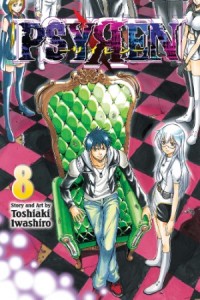
Psyren, Vol. 8

January 8, 2013 by Sean Gaffney

By Toshiaki Iwashiro. Released in Japan by Shueisha, serialized in the magazine Weekly Shonen Jump. Released in North America by Viz.

No, I haven’t really skipped Vols. 2-7. Psyren simply lends itself well to the brief, one-paragraph reviews I do for Manga Bookshelf every week, and I’ve covered them all over there. Nura: Rise of the Yokai Clan is a similar title. They’re both what I call ‘mid-range’ Jump titles. They’re not huge, breakout hits, and they tended to linger at the bottom of the table of contents when they were still running. But they fill the magazine, and they provide a good helping of ‘Friendship, Training and Victory’, Jump’s motto. The slow economy means we don’t see as many of these types over here now – Viz tends to wait for breakout hits, like Toriko and Bakuman, or more recently Nisekoi. But all this is not to call Psyren generic shonen. It has its very good points.
psyren8

When we last left our heroes, they were back in the Psyren world, which is not particularly one of those good points. I find Ageha and company’s quest to discover the truth about their powers and trying to change history far more interesting when they’re back among the kids of Elmore Wood and their former Psyren mentors. I’m not sure the author agrees with me, but at least this time round we get a little bit more than just desolate wastelands and explosions of power. The attempts to change history are finally WORKING, and even though everything still goes to hell, this time Ageha and company have a few more allies to choose from.

If you take time to look at what’s going on in this volume, you’ll end up with the feeling that you’re being emotionally manipulated. Which, well, is what authors do. Almost every scene in this volume is there to make you squee with joy, or tug at your heartstringas, or laugh out loud (only a couple of times there – this is, for the most part, a serious series). You feel for our heroes when the bad guys take them apart (including ripping off Ageha’s foot, which looks appropriately gross), and grin when the cavalry arrives to rescue them and kick the villain’s asses. (The cover spoils the cavalry’s appearance a bit, but hey.) And the flashback describing the destruction of the world, as well as the death of many of the more adult Psyren charact4ers, is really depressing.

So, I hate the Psyren world, but I’m not alone. The reader really wants Ageha to change things so that this ISN’T the future they have to deal with. Unfortunately, I have a feeling that to do that, we’ll need to be here a while, but hey, there are checks and balances. By the way, if you have friends who read superhero comics and want to see what this manga thing is all about, Psyren would be a very good entry point for them, as it’s basically kids with superpowers they don’t quite now how to control battling a mysterious organization. There’s a little Teen Titans theme going with the Elmore Wood kids. And hey, one of the women in this volume even wears a hilariously awful fanservicey outfit which emphasizes her huge chest, even though she’s canonically shy and modest. What’s more superhero comics than that?

Psyren is not a Jump title you obsess over like Bleach or One Piece. You will forget about the series a few hours after you read the new volume. But that volume will please and entertain you, and gives you good shonen vitamins and minerals. Sticks to the ribs in your quest to stave off a hunger for more manga. Check it out.
Filed Under: REVIEWS Tagged With: psyren

Strobe Edge, Vol. 2

January 7, 2013 by Anna N


Strobe Edge, Vol 2 by Io Sakisaka

I liked the first volume of Strobe Edge well enough, but I was hoping that the second volume would be a tiny bit more interesting, in order to justify my wanting to keep following the series. I wasn’t disappointed, as the second volume dropped the emphasis on the heroine Ninako’s naivety in favor of some standard shojo plot elements with an emphasis on the characters’ emotions and just enough of a twist to produce some unexpected moments.

Ninako is back at school after summer vacation, wondering how to deal with the fact that she confessed her feelings to laconic yet secretly super-nice heartthrob Ren on the last day of school. Ren turned her down nicely, mentioning his girlfriend. Ninako practices how to say hello to him and reflects that their first encounter will likely be as difficult for the rejector in addition to the rejectee. Unfortunately word of Ninako’s daring has spread and she is known throughout the school as “girl who confessed to Ren on the train platform.” Her friends try to comfort her, but Ninako finds a slightly unwelcome distraction in the person of Ando, a flighty womanizer who seems fascinated by her indifference to him and her continued love for Ren even after being rejected. The unlikely trio gets thrown together in doing some committee work for school, and while Ando might have a habit of trying to collect as many girls’ cell phone numbers as possible, he does exhibit some genuine friendship and sensitivity to Ninako when she’s placed in an awkward situation.

Strobe Edge isn’t the type of shojo manga that challenges conventions, but it is extremely well-executed. I couldn’t find anything to quibble with the artwork, and the pained expressions Ninako sometimes makes as she navigates the storm of teenage romance offsets some of the expected shojo prettiness. There were plenty of humorous elements too, as Ninako is initially embraced by a secret society at school that is comprised solely of girls that Ren has rejected. I continue to enjoy the fact that most of the characters are genuinely nice and sympathetic. A bonus story in this volume focuses on the way Ren and his girlfriend Mayuka began their relationship, and it was fun to see a different aspect of those characters told from Mayuka’s side. I wish more manga had side stories that served as a supplement to the main plot, as opposed to publishing unrelated short stories by the same author in the back of a volume just to fill it out. Strobe Edge is perfect comfort reading for anyone who wants to read a well-done shojo manga that keeps things on the light and fluffy side.

Review copy provided by the publisher.

Filed Under: REVIEWS Tagged With: shojo beat, Strobe Edge, viz media

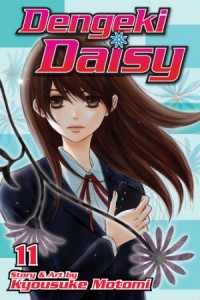
Dengeki Daisy, Vol. 11

January 5, 2013 by Sean Gaffney

By Kyousuke Motomi. Released in Japan by Shogakukan, serialization ongoing in the magazine Bessatsu Comic (“Betsucomi”). Released in North America by Viz.

I’m trying to think when Dengeki Daisy went from ‘shoujo series I quite like’ to ‘one of my top recommendations for shoujo period’. Probably around Vol. 8 or 9, when the thriller aspects of the title were at their height. Of course, this is not to take away from the comedy or the romance, but Daisy blends all three quite well. Judging from the cover, you might think that this was another melodrama like We Were There, and certainly there are a few dramatic angsty elements. But what’s most thrilling about this title is that it feels almost like a movie – action revelations, lots of running around, kidnappings and threats. A modernized Republic serial, without all the stupid bits.

dengekidaisy11

This volume mostly deals with Teru’s friend Rena, who has come a long way from the ‘princess’-type we saw early in the series. She’s somewhat trapped in an arranged marriage due to her family’s business, and is not very fond of her fiancee. Nor should she be, as he is a jerk through and through, something that the author really doesn’t try to hide at all (she even apologizes to the reader for all the face time he’ll be getting). Amusingly, he’s also shown to be a second-tier bad guys, and the true villains such as Chiharu have little respect for him. But this doesn’t mean he’s not a danger to Rena herself, and the cliffhanger is set up beautifully. It also gives Teru a chance to experience what everyone else in her group goes through when she’s kidnapped or threatened… and I don’t think she likes it any more than they do.

Earlier in the volume, when everyone thinks that Kazuki is merely a jerk fiancee, they set about trying to support Rena and cheer her up – while at the same time allowing her to handle the situation, which she feels she needs to do. I love the way that this manga handles its romances. Both Kurosaki and Kiyoshi (who has a crush on Rena) want desperately to simply sweep in like a white knight and solve all their respective love’s problems, keeping them safe from all harm. But both know that that’s just selfishness, and try to keep a balance between protectiveness and simply being there when needed. (To be fair, this cast does get into danger constantly, so you can see why they’re edgy.) Honestly, few shoujo mangas out right now respect their female characters as much as Dengeki Daisy.

Other things to note: Rena’s trick to inform everyone of her true feelings was brilliant, and they’re right, I hadn’t even thought of that method since childhood. Also, when Kurosaki says “wholesome high school kids read Betsucomi”, all I could think was “And unwholesome kids read Sho-Comi!”. (Kyousuke Motomi, like Mitsuru Adachi and Rumiko Takahashi, likes to plug her own work and her bosses whenever she can.) And that final page simply looks fantastic. If you haven’t been reading this series, try to catch up. It’s a complete winner.

Filed Under: REVIEWS

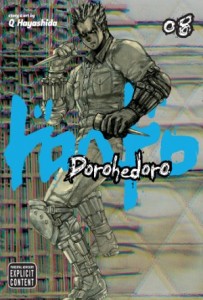
Dorohedoro, Vol. 8

January 2, 2013 by Sean Gaffney

By Q Hayashida. Released in Japan by Shogakukan, serialization ongoing in the magazine Ikki. Released in North America by Viz.

I’ve said a few times before that I don’t really read Dorohedoro for the plot, and it’s true. This is the sort of series that is best experienced by, when a new volume comes out, re-reading every previous volume just to remind yourself of all the little details. Since I don’t do that, I’m constantly forgetting things. But even I have to admit that the main plotline is starting to actually give us more than vague hints here. The Cross-Eyes are becoming more and more important, and Risu and Caiman’s search looks to be the same one, from different angles. Most of all, we meet a guy in a flashback who I have a sneaking suspicion is the one man tying this all together.

dorohedoro8

All right, enough of the plot. Let’s go back to talking about violence and humor, which are still this manga’s main fuel. Hayashida excels at writing grotesque action scenes filled with gore, and we certainly get that here. The highlight is probably Shin headbutting a man so hard his brain goes flying out the back of his head. I mean, this series isn’t rated M just for the breasts, you know. And quite often the violence and humor combine, such as the fate of the Cross-Eyed’s landlady, which is both horrible and yet somehow amusing. It’s hard to take an evil gang seriously when they’re such schlubs, and I can’t imagine what new bright-eyed character Natsuki sees in them.

The other thing threading through this entire series is drug use and abuse. The way magic works in this universe involves a lot of ‘black powder’ being sold to help non-magic users get a quick fix. Though they’re running out, so they’re starting to sell off some coarser fakes that aren’t as pure. No prizes guessing what the metaphor is here. Meanwhile, En is basically trying to build a new and better hallucinogenic mushroom, and finds that while it makes your wildest dreams come true, the comedown afterwards is rather harsh (poor Fujita…). I have to think at this point that En is aware that Chota is impersonating Nikaido and is just giving him enough rope to hang himself, given Chota’s pathetic attempts at impersonation.

But as always, it’s the relationships and friendships between everyone that are the main reason to read Dorohedoro. Shin may not have a crush on Noi the way she does on him, but his single-minded devotion to finding her is impressive to see. Nikaido and Caiman have swung back into their old groove, though I’m not sure how long that will last. Seeing Dr. Kasukabe reunite with his wife (who has a surprise new job!) is bittersweet but also rather touching, and I hope we see more of her soon. And then there’s Ebisu and her dream of her parents, reminding us that she is more than just comedy relief but a broken young girl.

I still can’t think of a dystopian title I’m enjoying more than Dorohedoro. I know that things will get much worse for everyone soon, but for once I’m actually looking forward to it. This cast does better when its backs are against the wall. And most importantly: will we see more of the Gyoza Fairy?

Filed Under: REVIEWS Tagged With: dorohedoro

Nisekoi, Vol. 1

December 31, 2012 by Sean Gaffney

By Naoshi Komi. Released in Japan by Shueisha, serialization ongoing in the magazine Weekly Shonen Jump. Released in North America by Viz Media.

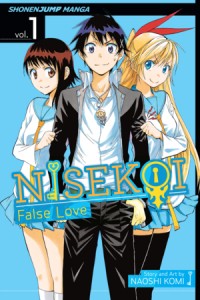
It’s been an awfully long time since I’ve reviewed a Shonen Jump Vol. 1 from Viz. There have been some Jump Square titles, such as Blue Exorcist or Genkaku Picasso. But I never did read Barrage when it was released digitally, or Takama-ga-hara. The reason being that by the time those series really got going enough to pay attention to them, Japan had already cancelled them. (And honestly, I expect sports manga Cross Manage to meet the same fate.) Shonen Jump Alpha had tried to introduce new series simultaneously with Japan, only to come up against the brutal cancellation process that 75% of all Jump series go through. So they needed to try to find an already successful series to bring in, one that didn’t require much explanation, didn’t need censoring, wasn’t over 20 volumes long already, wasn’t getting death threats in Japan, and wouldn’t give their translators nervous breakdowns. The obvious choice was Nisekoi, which has passed the 2-3 volume death range of Jump titles and become a nice little hit over in Japan.

nisekoi1

I admit to being surprised by this one a bit as well, as it requires a bit of a leap of faith from Viz. You see… (whispers) it has no supernatural content. Really! Nor is it about sports. So, for long-time readers of Jump, that leaves two categories. Gag comedy (not gonna happen over here), or romantic harem comedy. Nisekoi fits squarely into the latter, and is Viz’s first attempt at pure romantic Jump since Strawberry 100% and I”s. Luckily, it has a bit more going for it, including a good sense of humor and willingness to make fun of its characters, as well as a yakuza Romeo and Juliet style plot.

Given that a Jump romantic comedy is never going to be hugely original, I was pleased to see the things this series did right. Ichijo is a nebbish, somewhat weak harem hero who nevertheless can stand up for himself and does not automatically fall into cleavage every two seconds. Kirisaki is a tsundere jerk, but most of that is frustration at her upbringing and general poor social skills, rather than it being her default. And the other girl in the love triangle, Onadera, is… well, so far pretty damn cliche. But then she’s a nice sweet girl in a harem genre, so she’s not going to get the guy anyway. In addition, while I’m sure they will come up at some point, it was a pleasure to see a Jump romance that didn’t revolve around underwear or boobs. The comedy stems from the situations and personalities of the leads, which is always a plus.

As for the plot, the series has the subtitle ‘False Love’, which is referring to the fact that, to prevent their rival yakuza families from killing each other, Ichijo and Kirisaki must pretend to be a couple. But there’s also the love issues created by Ichijo’s pendant, which is a lock that his long-forgotten promise girl (anyone who’s read Love Hina knows this plot) has the key to. I’ll bet you two to one there are multiple keys. Ichijo wants to find the promise girl so he can profess his love, but his that real true love? And what about Onadera’s obvious crush?

There’s nothing astoundingly original here. But for anyone who tried the aforementioned Love Hina and found its leads too irritating and its author too obsessed with naked girls hitting the hero, Nisekoi is a more mild alternative. The current chapters are running in Shonen Jump Alpha, with a ‘here’s what happened in the 6 or so volumes before these’ synopsis. I imagine the intervening volumes will come out fairly rapidly to catch up. Digitally, at least. I’ve no idea what the print schedule for this is. In any case, good stuff, and glad to see Viz once again taking a chance on Jump titles that don’t involve demons, ghosts, vampires, or all three.

Filed Under: REVIEWS Tagged With: nisekoi

Higurashi: When They Cry, Vol. 20

December 28, 2012 by Sean Gaffney

Story by Ryukishi07; Art by Hinase Momoyama. Released in Japan as “Higurashi no Naku Koro ni: Minagoroshi-hen” by Square Enix, serialized in the magazine GFantasy. Released in North America by Yen Press.

(This review talks briefly about the villain of the series, for the one or two of you who haven’t figured it out or spoiled yourselves.)

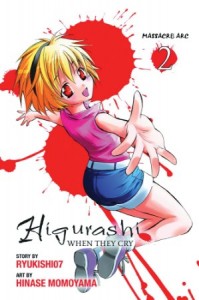
I have a lot I want to say about this 2nd Massacre omnibus, so pardon me if I go on for a bit. Let’s start with what we’re fighting against here and what our weapons are. The villain here isn’t the child center, or the village, or the Sonozakis, or even Satoko’s uncle, really – it’s apathy, discouragement, and stubborn pride. When you know something is wrong but look the other way, or go along with everyone else, or simply lie to yourself that it’s the right thing to do – after all, if it was wrong, someone would step in, right? And so Satoko is scapegoated by the entire village, just as her brother was, for their parent’s actions, even though everyone knows deep inside she’s an innocent girl. She is fighting against the unity of the status quo.

massacre2

Then we have the weapons that can free her. Not Keiichi and Rena, though as semi-outsiders, they are eminently suited to be more appalled at everyone else’s behavior than the others. Not the Sonozaki family, who, once converted, prove to be able to take down any governmental barrier with just a few well-placed lawyers and friends in high places. (Speaking of which, has anyone noticed that the Sonozakis being essentially yakuza isn’t really remarked on as horrible? We see them do yakuza-type things – they have a torture chamber, for chrissakes – but there’s no suggestion, even with the upcoming ‘Good End’ in the next arc, that Mion will do anything other than take up the reins of the family when she is of age and her grandmother dies. It’s quite odd from a Western standpoint.)

No, the weapons everyone uses are courage, resolve, and unity. I like the way that this plays out in regards to the writing. Unity has been killing Satoko – but it’s a terrified village afraid to speak up for fear of getting ostracized just like she is. Keiichi, however, reminds them of what they once were, rebelling against the unfeeling government in the dam project. He points out the force for true greatness that a united village can be – and then Rena shames them by reminding them what that unity is doing to Satoko right now. Then, when confronting Oryou, Mion’s grandmother, Keiichi and the others need to muster their courage and resolve. Oryou is the most prideful of this bunch, and to the end she refuses to publicly back down. But it’s Keiichi’s resolve – along with a death threat, but hey, he’s held back from actually doing anything – that impresses her, and once the public eye is away from her, she too makes the right decision.

This arc seems at times to play out like a series of boss fights in a video game, where you need to face tougher and tougher foes and come up with new and creative weapons. Luckily, the last 6 arcs before this have been tempering our heroes, even if they don’t remember it save for Rika. Again, we see what happens when the answer to everyone’s problems is not ‘goo off on your own’. Even Ooishi, who I noted gave us a cliffhanger last time by looking creepy and threatening, is trying to give Keiichi some good and sensible advice. He just… looks creepy, it’s how it is. By the way, we also meet for the first significant time Akane, Mion and Shion’s mother. She appears to be semi-ostracized from her mother, which is why Mion is next in like as clan leader. She’s also an even better tease than her daughters, both of whom she offers to Keiichi.

Speaking of which, I’ve noted before how this has harem aspects to it, many times playing out like a date sim. This is especially true in the early visual novels, where you don’t see Keiichi’s face – he’s the generic player character. He was initially the harem lead because, well, there weren’t any other options around, really. But as the series has gone on and he’s been overtaken by Rika, he’s really impressed. Both in the Atonement arc and here, he shows why the nickname given to him is ‘master of words’ – he is the heart of this group (Rena, who’s always one step ahead, is the brains) – and there’s no longer any question as to why Rena and Mion fell for him hard.

I wonder if we’ll ever see what motivated Satoko’s parents to be the lone villagers saying the dam should go through. Was there some deep reason behind it, or are they meant to be simply ‘bad guys’ as Satoko’s aunt and uncle were? Speaking of which, I don’t think there’s been any villain character in Higurashi more deserving of his fate than Teppei. He gets some of the more terrifying Higurashi faces here, and his physical, mental and emotional abuse of Satoko is teeth-grindingly appalling. But of course, that’s what makes the scene where she finally asked the child center for help, and then stands up to her uncle, so amazing. This is what the unity of the villagers can lead to – a downtrodden 9-year-old girl finding her own courage and taking a stand against a horrible man. When she brags to her friends about how something like this won’t get her down, it’s impossible not to have a tear come to your eye.

(By the way, the artist for this arc, Hinase Momoyama, is one of the best of the entire series, keeping everything light and moe but avoiding some of the awkward bodies and weird posing from prior arcs. She also does some really over the top ‘Higurashi faces’, which will only get worse as the series goes on.)

Oh, yes, the series goes on. Thought you were done? This is only omnibus 2 of 3, and this is called the Massacre arc but has been rather free of massacres. And Rika is aware of this – Teppei is horrible, but he’s not gutting her on an altar. She still has to stop the killings after the Cotton Drifting. And that leads us to our villain, who I can now, at last, discuss. Not that it hasn’t been somewhat obvious. Some stories try to hide their villains by making them the seemingly nice, friendly person. But Ryukishi07 is perfectly content with making it the paranoid, occult-loving woman who was practically having an orgasm when she was shown the torture weapons of Hinamizawa.

Rika and Bernkastel had gone over the 3 ironclad rules of each world, and it’s here that we see that one of the rules is obviously incorrect – Takano is the villain, so she’s not the corpse found in the oil drum. Not that faking your death in this series seems all that hard. I will admit, the final scene in the manga doesn’t have all the impact it should, in my opinion, mostly as the audience still doesn’t really have all the facts – Takano’s revelations to Tomitake are as confusing to us as they are to her, and a casual reader might very well think, “Wait, it’s her? Where did that come from?” Of course, in Japan this series had few casual readers – the anime was over, the visual novels were done, and everyone knew what was going to happen. As Frederica Bernkastel notes in her poem, the cat in the box is dead. This is not the Good End world.

And so with one omnibus to go, where will Takano lead us? To a massacre? And for god’s sake, what does Rika have to do to stop dying? What is the solution here? How can Takano be stopped? Well, we won’t find that out next time. But we will get to see some VERY over the top, scary Higurashi faces. Stay tuned.

(TL, DR: this volume was fabulous, except maybe towards the end.)

Filed Under: REVIEWS Tagged With: higurashi

Blood Lad, Vol. 1

December 26, 2012 by Sean Gaffney

By Yuuki Kodama. Released in Japan by Kadokawa Shoten, serialization ongoing in the magazine Young Ace. Released in North America by Yen Press.

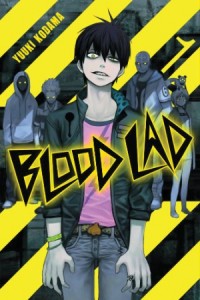
I wasn’t quite sure what to expect with this series aside from ‘vampires’. And that ends up being pretty fitting, as I think the series itself is not quite sure where it’s going to go until we get about halfway through this omnibus, at which point it finds its feet surprisingly quickly. There’s some interesting characters, attempts at world building, and some surprisingly vicious backstory, along with a healthy dollop of humor and fanservice. Honestly, I’m not really sure why this is in the seinen magazine Young Ace rather than its Shonen equivalent, unless it gets far more violent later on. It could simply be Young Ace had the free slot for a new series.

bloodlad1

Admittedly, after the first few pages I was expecting something far worse than what this turned out to be. The idea of a slacker vampire who’s a secret otaku made me groan, and thankfully this aspect of Staz’s personality is given shot shrift as the series goes on. More to the point, we see that Staz’s seeming apathy towards life stems from his own family relationships, and that he’s surprisingly tough and powerful – and even clever, when he bothers to be. I was amused at one or two points in the volume where he analyzed the situation and immediately gave up fighting, knowing that he would lose and it’s best to conserve his powers. I was also pleased to see that his obsession with Fuyumi lasted only till she died – after which, he really wants to resurrect her but is clearly not enamored of her. Blood Lad is driven by its action and fantasy, not its harem aspects (though those do linger, mainly via Bell).

As for Fuyumi, she’s probably the aspect of this story I enjoyed the least. She should be there to be the audience identification figure, the lone normal Japanese girl among a town full of freaks. Unfortunately, you don’t get very far in to this volume before you see her role is to have large breasts and get captured a lot. There is a bit of existential angst when she and Staz return to Japan, and he uses mind control to make everyone think she’s still there – this horrifies her till he points out the alternative. Mostly, though, Fuyumi seems to be there to draw in readers who want a passive female in their action fantasy manga.

As I noted earlier, Staz does not have a very nice backstory, and no doubt we will meet his brother in the second volume. The idea of how Staz’s magic is suppressed is quite scary, and certainly explains why he’s so reluctant to take any actions. We also meet his sister Liz, who quickly proceeds to torture him, though I have a nagging suspicion that there may be a bit of a brother complex behind all this – possibly as I’ve read too many moe manga in a row recently.

Blood Lad isn’t terrific – Soul Eater handles almost everything this manga tries to do better – but it’s a solid title, and better than I’d expected. If it can do something with Fuyumi next time, that’s be appreciated. But either way, I look forward to seeing Staz break out and kick some more asses in Volume 2.

Filed Under: REVIEWS Tagged With: blood lad

Kaoru Mori: Anything and Something

December 24, 2012 by Sean Gaffney

By Kaoru Mori. Released in Japan by Enterbrain, serialized in various magazines. Released in North America by Yen Press.

Well this is a bit of an odd duck, isn’t it? Half story collection, half sketchbook, it’s no surprise that this is being released in more expensive hardcover, as I doubt it would recoup any costs whatsoever otherwise. But then that’s also true of A Bride’s Story as well (and note Emma and Shirley were “blogger favorites” with crappy sales). Kaoru Mori is not the author of a Bleach or Naruto, and has a very enthusiastic but minimal audience. As such, this may almost be review proof – anyone buying this is getting it because it’s something new by the author, and the content is mostly irrelevant. That said, there is a lot to like here, even as there’s also a lot that left me scratching my head or feeling vaguely unsatisfied. Which is about what you’d expect from a collection like this.

anythingandsomething

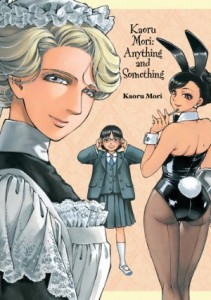
One thing that pleased me greatly was the sense of humor of many of these stories. Indeed, they’re not simply funny but eccentric – always one of my favorites. The first story in the collection shows a butler and maid desperate for a master so that they can continue to live as they are accustomed – and it’s clear who’s going to be in charge. Then there’s the very early story involving a perverted loon of an inventor and his implacable battle maid. It was impossible for me not to think of the inventor as being played by Michael Bentine (google it). And the cute yet slight story of a girl who takes forever to grow into her school uniform just brings a smile to the face. Some girls are born to attract attention no matter how they look.

There’s also quite a bit of cheesecake here, as if the cover art didn’t clue you in. A Bride’s Story and Emma don’t exactly give a lot of opportunities to draw the female form (except covered in gorgeous clothing). Also, Mori writes mainly for Fellows!, an Enterbrain seinen magazine whose content is geared towards older men who like to see something sexy. This explains the almost static chapters with the Host Club bunny and the wife trying on her swimsuit, which are almost there for art alone. Indeed, one very short story about a girl who is bird-watching essentially stars her posterior.

There were one or two stories that reminded me of my frustration with Mori’s implacable females, particularly one involving a young master wanting to no longer be treated like a child and his maid who smiles politely no matter what. I admit it’s what she does best, but I was hoping for a bit more wackiness. Ironically, the longest story of the collection (and one of my favorites) wasn’t written by Mori, but by fellow Fellows! writer Satoshi Fukushima (who writes Kidou Ryodan Hachifukujin, which would be an awesome if unsellable license). This also features a seemingly implacable girl, but mostly focuses on the ‘normal’ girl who becomes her friend. There were a lot of subtleties here regarding art and life, and I worried that the story was going to end far more tragically, so was pleased at its more ambiguous climax.

After that, there’s the 2nd half of the book. I have far less to say about it – it’s a sketchbook, basically – and if you like Emma or A Bride’s Story, or simply reading about things like fireplaces, then you should find it satisfying. I do wish it had been interspersed with the short stories – having it all come in the 2nd half ends up making the whole book feel like a bit of a curate’s egg (google that too). There’s some good stuff here, but as a collection it’s more ‘odd’ than ‘satisfying’. Which is appropriate, as that’s how I’ve come to view Mori’s work as a whole.

Filed Under: REVIEWS Tagged With: anything and something

Pride Vol. 3 and 4

December 21, 2012 by Anna N

Pride Volume 3 by Yukari Ichijo
Available on Jmanga.com

pride3

Pride is rapidly becoming one of my favorite series on Jmanga. This story of two rival opera singers always manages to put an interesting twist on showbiz manga with some unexpected plot twists. The rivalry between classy yet suddenly broke Shio and crawling up from the gutter Moe was firmly established in the first two volumes, and they are thrown together when they both get work at the same nightclub. Something unexpected occurs when they sing together though, their different voices end up blending in a delightful way. Ran thinks that the two women combined are his perfect diva and he is inspired to write even more of his own music for them. They join together in an unlikely trio called SRM, with both singers challenging each other to grow while Ran feels free to explore his avant-garde impulses. After seeing the antagonistic relationship between Shio and Moe, it was interesting to see how their commitment to music made them want to work together.

One of the things that I enjoy about this series is the way that Shio and Moe are so forthright with each other about their mutual dislike. Moe basically states that she hates Shio, and Shio points out that Moe’s low character is also something that she despises. Moe announces that when they sing together she intends to use Shio as her foil to showcase her own voice, and Shio points out that if she intends to do that, Moe has to drastically elevate her technique. The fledgling trio actually starts to achieve a small amount of success when they get a chance to go on a variety show that has a singing and songwriting competition, but their chances of winning are derailed when a musical prodigy named Eiko also appears on the program as a surprise guest.

Pride Volume 4 by Yukari Ichijo
Available on Jmanga.com

pride4

It turns out the Eiko is the illegitimate half-sister of Shio’s wealthy fiance Mr. Jinno. Shio gets a glimpse of Jinno’s family life when she’s introduced to his parents, and she sees that Eiko has to sneak around in order to see her father. Jinno’s character begins to be revealed a bit more, and he is slightly more sympathetic, but still with the potential to do something scary if Shio crosses him. Just as Shio’s future life as a music company begins to take shape, Ran suddenly seems to be looking at her in a new way. Shio’s been able to take care of herself on her own for a bit, and the new levels of maturity and self-assurance begin to attract Ran. Shio keeps her engagement a secret because she doesn’t want to distract from SRM’s potential.

As a character, Shio is still interesting after 4 volumes, because she just seems to sail through some difficult situations due to her strong sense of self. This is contradicted by her cold decision to become engaged to Jinno, but she’s also very pragmatic. When Shio sees the truth about Moe’s mother, she handles the situation with aplomb, and doesn’t use it as an excuse to strike back at her rival. Moe begins to recognize that her singing has been improved by being exposed to Ran’s music and Shio’s technique, but she still goes through life with raw emotional reactions. The contrast between the personalities and life situations of two protagonists in Pride really drives the series forward in a compelling way. The fourth volume ends in a bit of a cliffhanger, and I can’t wait for volume five.

Electronic access provided by the publisher

Filed Under: REVIEWS Tagged With: jmanga.com, pride

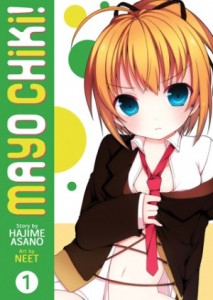
Mayo Chiki!, Vol. 1

December 21, 2012 by Sean Gaffney

By Hajime Asano and NEET. Released in Japan as “Mayoeru Shitsuji to Chikin na Ore to!” by Media Factory, serialization ongoing in the magazine Comic Alive. Released in North America by Seven Seas.

Possibly the most frustrating thing about Mayo Chiki! is that there is a manga with some interest in it struggling to get out here. The story is not remotely going to be original, but it could at least be interesting, with some likeable characters and a healthy dose of humor. The humor, at least, is present, and one of the manga’s saving graces. But none of that really seems to matter, as the manga’s art and general mood seems to revolve around presenting young girls (in the classic moe ‘they’re 17 but look about 9’ style) looking humiliated in half-naked (and sometimes 3/4 naked) poses. And it kills any chance the story may have had of doing something with its cliches.

mayochiki

The basic premise of Mayo Chiki! reads like any number of the moe light novels that have come out in Japan recently, and been made into anime/manga/games/etc. Indeed, some of you may have read my reviews of I Don’t Like You At All, Big Brother!! and Haganai, both of which run in the same magazine and are cut from the same cloth. The premise is that Jiro, who is terrified of women (but extremely tough) due to his mother (a wrestler) and sister (just a sadist) beating the shit out of him every day, such that he gets a nosebleed whenever he sees a woman as a defense mechanism (his family stopped when they saw blood). School is his only refuge, but one day, in the bathroom, he accidentally walks in on the handsome yet cold Subaru, and notes he is wearing panties. In fact, it’s worse than that – Subaru is a girl. And no one is supposed to find this out on pain of death. Luckily, Subaru is more than just a handsome bishie trap – she’s also butler for the school’s rich princess, who turns out to be sympathetic – and sadistic. She blackmails Jiro into keeping their secret, and gradually Jiro and Subaru grow closer, despite everyone else now thinking the two of them are gay.

Yes, there was no way this would be fantastic or original given that premise. But it didn’t have to be all that bad. And as I said, the manga has some very funny moments in it, my favorite being the ‘secret memory manipulation technique’ which consists of hitting someone till they lose their memory. And there are some possible plot points of interest, especially given the hero and heroine have both lost a parent. But then you get the little sister turning out to have incestual feelings for her brother, I think simply because you can’t write a moe light novel without incest subtext anymore. And Subaru being tied up in bed with a ball gag in her mouth, supposedly to stop her from killing Jiro but more accurately to show the reader she is tied up and with a ball gag in her mouth. And the extras, which have a ‘I am holding a microphone with my mouth open’ shot, a ‘I am licking ice cream’ shot, and a 2-page spread of the cover, only with Subaru wearing only an unbuttoned men’s shirt.

I like some moe stuff – Haruhi Suzumiya, K-On!, Toradora. But I think my general feeling about moe manga with so many suggestive poses like Mayo Chiki! is that it makes me feel like a criminal when I read it. Certainly I don’t recommend taking this book anywhere near Canadian Customs. That said, I am me, and I’m sure that if readers can get past the art style and sleazy sexual poses, there’s a more interesting story in here crying to get out. And of course there’s the anime adaptation, which Sentai has released, so it has a built-in fanbase. I think I’m just tired of anything from Comic Alive, maybe.

Filed Under: REVIEWS Tagged With: mayo chiki!

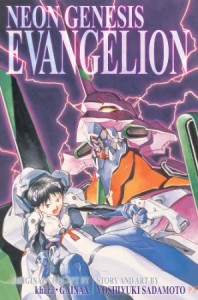
Neon Genesis Evangelion Omnibus, Vol. 1-3

December 19, 2012 by Sean Gaffney

By Yoshiyuki Sadamoto and GAINAX. Released in Japan by Kadokawa Shoten, serialized in the magazine Shonen Ace. Released in North America by Viz Media.

In a not-entirely-coincidental move, Viz has released the first of their omnibus releases for Evangelion at the same time as Vol. 13, giving the reader a chance to catch up and remind themselves of what they may have forgotten. And it’s definitely possible that they forgot, as the manga began in 1995, and Viz started releasing it in 1998 or so, in 32-page comic book format (remember when they did that?) and flipped (remember when they did that?). But now it’s decades later, and it’s time to get the band back together again with this new oversize omnibus with color pages and snazzy packaging. (Which is well worth it, by the way, it looks great.) But what about the content?

evangelion

Given I only reviewed Vol. 13 of Evangelion last week, there may be some repetition involved. But the main reason I tend to prefer the manga adaptation of Evangelion to the anime is that it takes the basic plot and makes everything just slightly more tolerable. And indeed, in these early volumes, it is pretty slight – there are no major changes from what we watched in the first 6 episodes or so of the anime. For those living in a cave, Evangelion starts off as a post-apocalyptic giant robot sort of story where a young teenager estranged from his father is called to a super secret base to find out that he’s one of the few people who can pilot said giant robot and defeat the enemy creatures that keep attacking the Earth. Only the creatures are Angels, and that’s not merely Japan’s love for using religion where it’s not appropriate – Evangelion is drenched in religion, with each enemy angel having an appropriate name – Sachiel, Shamshel, Ramiel, etc.

Shinji in particular benefits from the adaptation to manga. He still complains quite a bit, and still runs off halfway through the volume, but his general demeanor is more argumentative and sullen rather than weak and whiny, and it simply makes the reader identify with him better. Indeed, his reasoning for running off is given better depth in the manga – he’s desperately searching for a family/parental figure, and finding that the closest one he now has, Misato, has been writing a journal for NERV analyzing him is a crushing blow. His response to Touji is also excellent – some may object that it shows Shinji being too ‘cool’, but I like to think that it shows Shinji as being slightly less broken.

There’s also Shinji’s relationship with Gendo, and his observation of Rei’s relationship with Gendo. I’ll admit I’m not all that fond of Gendo, and the manga doesn’t help – he’s the one character who’s actually less appealing than in the anime. But seeing his interactions with Rei must deal Shinji’s fragile psyche a crushing blow, wondering what in God’s name is wrong with him if he can’t get any sort of affection from his father but she can. Of course, this isn’t Rei’s fault, and it’s to his credit that he’s able to bond with her as well. The three volumes are roughly divided into Shinji’s relationship with another person – Gendo in Vol. 1, Misato in 2, and Rei in 3. The climax to 3, where Shinji manages to coax a genuine smile out of Rei,l is wonderfully heartwarming, and a great place to end this omnibus.

If you haven’t read the manga yet, this is absolutely a worthy release to get, showing why it’s become one of the most important stories from the last thirty years.

Also, Page 234 has to be read to be disbelieved. Sometimes an Angel is not just a cigar, I guess. And Misato’s dialogue is just icing on the cake.

Filed Under: REVIEWS Tagged With: evangelion

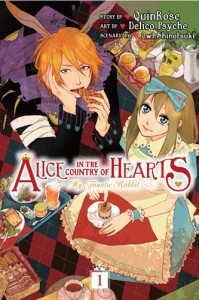
Alice in the Country of Hearts: My Fanatic Rabbit, Vol. 1

December 17, 2012 by Sean Gaffney

By Quin Rose, Owl Shinotsuki and Delico Psyche, based on the game by Quin Rose. Released in Japan as “Heart no Kuni no Alice ~My Fanatic Rabbit~” by Mag Garden, serialized in the magazine Comic Blade Avarus. Released in North America by Yen Press.

Well this has certainly turned into a franchise, hasn’t it? Given sales in North America seem to be relatively strong (for manga), we shouldn’t be surprised. Yet here is the third spinoff series from the original Alice manga, with promises of a fourth this spring and two more in the summer. Each focusing on a different pairing for our heroine, in the finest otome game tradition. And each managing to also deal with the main serious game plotline, where your secondary goal is to figure out that Alice actually regaining her memories is BAD BAD BAD. And with one exception (sorry, Bloody Twins, you still suck), the spinoff manga have done an impressive job of doing just that.

QuinRose_AliceFanaticRabbit_V1_TP

Not that you would know it from the first half. And I try not to begrudge the series its romance – after all, that *is* the other half of the goal of the games, and its primary audience is women who like to see hot guys of various types (all psychotic, but in different ways!) fall for our stand-in-for-the-reader heroine. This time around, it’s Elliot March, aka the march Hare, who is Blood Dupre’s #2 at the Hatter Mansion. As with the rest of the cast, Elliot is drawn to Alice being different (her ‘outsider’ status) and both he and Alice starting to fall for each other while simultaneously not knowing what that is. You know the drill – “what is this strange pain in my chest”, etc.

Things start to change as we are reminded that the hatter clan is a mafia organization – and that Wonderland has a very casual, even callous view of death, given that it’s impermanent (well, relatively). Alice has been trying to distance herself from the fact that she’s living with a bunch of killers, so Blood (deliberately, I suspect) makes absolutely sure that she gets this shoved in her face, and knows that Elliot is a trained killer as well.

Then comes the part of the book that really knocks it out of the park. For all that Alice is the heroine in Wonderland to whom all the guys are attracted, she has amazingly low self-esteem, constantly living in the shadow of her perfect big sister (whose fate, again, is alluded to but never specified by the other men in the cast) and having to be around Blood, who physically resembles her old boyfriend/crush/whichever. Elliot notices that Alice gets depressed every time this comes up, and offers a solution. And once again, the manga (and no doubt the games) remind you that it’s not just a case of picking a hot guy and living sexily ever after – these people are SCREWED UP. Wonderland is a world of twisted values about death and what it means to be alive, and they’re not attracted to Alice’s personality or beauty – they’re attracted to Alice as she has a beating heart rather than a clock.

After this, the rest of the manga isn’t quite as interesting – it doesn’t help that Peter shows up, and is in ‘obsessive’ mode. It does end on a good cliffhanger, though, with Vivaldi calling for Alice’s head even as Elliot races to the Hatter Mansion to save her. There’s only two volumes in the series, so everything will wrap up nicely next time, I imagine. But this series continues to show how to make a really interesting romance series – having you constantly question everything about the heroes, heroine, world, and premise. Nice job.

Filed Under: REVIEWS

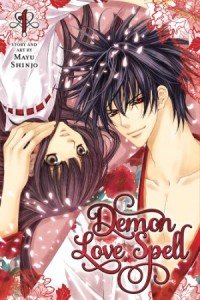
Demon Love Spell, Vol. 1

December 14, 2012 by Sean Gaffney

By Mayu Shinjo. Released in Japan as “Ayakashi Koi Emaki” by Shueisha, serialized in the magazine Margaret. Released in North America by Viz.

When I first heard this was licensed, I had assumed it was due to the popularity of Maru Shinjo, creator of Sensual Phrase and Ai Ore!, and that it would have lots of hot jerk guys trying to get into the female cast’s pants. Which is absolutely true. But little did I realize that the main reason this was licensed was probably because it played into Viz’s newfound obsession with yokai manga. I mean, this is basically just a sexier Kamisama Kiss, right? With adorable chibi-incubus!

demonlovespell1

This is very much on the ‘silly’ side of Mayu Shinjo’s work, which suits me just fine, as I like her best when she’s putting her heroes through the ringer rather than when they’re emotionally manipulating the heroine. Though there’s a fair bit of that going on here as well. But for some reason, I find it more acceptable here than I do in Ai Ore!. Miko is just a little bit stronger than Mizuki, and less likely to be taken in by some sweet talk and sweet loving (well, except in her dreams, where they’re apparently already gone pretty far). As for Kagura, there is a built-in plot device to keep him from being an ass – he’s in adorable SD-mode! Yes, many things that are hideously inappropriate when a grown man is saying them are totally OK when the guy snuggling the heroine’s breasts can fit easily in between them.

There are a few random yokai demons here, who look similar to the ones we see in, say, Nura, or Natsume’s Book of Friends. Those two titles would probably tone down the fact that Kagura is an incubus, of course. But Mayu Shinjo, who got her start writing softcore porn shoujo for Shogakukan and has never really strayed quite that far away, knows how to do the sexy. The relationship dynamics between the main couple go back and forth all the time, which makes things more interesting. Admittedly, things slow down a bit after the first 2/3 of the book, when the series switched from being a one-off to a longer run, and the author had to figure out what to do next. Thus we meet a new classmate who’s sensitive to spirits, and a manipulative fox creature (who, naturally, turns into a cute, shy bishonen).

This being a shoujo manga, there’s still plenty of waffling from the heroine about what these strange feelings are, with the added bonus of ‘what the hell did he do to me in my dreams?’. That said, the humor here is top-notch, with many amusing humiliations of our otherwise handsome seductive hero. There is a choice scene with a hamster that I won’t spoil, but made me laugh out loud. In Ai Ore!, Shinjo was always at her best when not taking her hero seriously, and the same applies here. Given all the cliches she has to work with – heck, the hero’s powers even awake with a kiss – I expect we’ll only see more of this in the future.

I always go back and forth on Shinjo manga, and indeed there’s a chance that this could turn sour in a hurry, depending on how Miko is developed. For now, though, we have a first volume that’s a winner, especially if you enjoy yokai comics but want a little spice to it.

Filed Under: REVIEWS

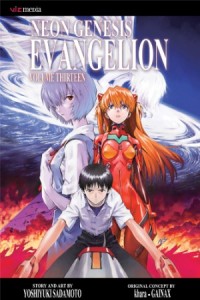
Neon Genesis Evangelion, Vol. 13

December 12, 2012 by Sean Gaffney

By Yoshiyuki Sadamoto and GAINAX. Released in Japan by Kadokawa Shoten, serialized in the magazine Young Ace. Released in North America by Viz Media.

The trouble with reviewing a manga series like Evangelion, with release dates from hell, is that of memory. I mean, I’m obsessed with Excel Saga, but even I had to do a bit of a reread when it was coming out on a once a year basis. And Evangelion isn’t even allowed that luxury – it comes out when a Japanese volume comes out, and Sadamoto is notorious for hiatuses, breaks, and 8-page chapters because the editors had to submit something or they’d lose their jobs. Luckily, he’s with Kadokawa Shoten, former home of CLAMP, so they’re used to things like this. What this means, though, is that it’s entirely possible that this manga, which started in 1995 in Japan, may not finish by 2015, which is the date it actually takes place.

Evangelion13

However, the comet has passed by once more, which means that we have a new Evangelion volume. And luckily, Sadamoto continues to do what we all want him to do; he tells the basic story of Evangelion, but makes everything better and all the characters more tolerable. Now, this does have its down side, which is that he is still telling the same story. The manga looks as if it might end with Vol. 14 (though that’d be compressing things a bit), and we’re still heading for the orange goo horizon, if you know what I mean. But without Anno’s veneer of self-hatred and disgust surrounding Shinji and company, we’re left with a title that’s a bit less soul searching but has a lot more ‘hell yeah!’ moments.

Let’s start with the most obvious, which we started to see at the end of Volume 12: Shinji rescues Asuka. Now, this probably isn’t permanent; indeed, by the end of the volume, I’m not entirely certain if she’s dead or not. But that’s irrelevant. Shinji making an effort, doing something other than whine and clutch his knees, is the main reason to read the Evangelion manga at all. And his reunion with Asuka, however brief, is all the more touching for it.

As for the rest of the cast, well, Fuyutsuki and the Bridge Bunnies are mostly used to shout the plot at us, as you’d expect when the apocalypse is coming down and has to be carefully monitored. (At least they avoided saying that Lilith’s power levels were over nine thousand.) Ritsuko, meanwhile, also gets to meet a bad end, mostly due to the astonishing idea that she thought that the computers (i.e. her mother) would side with her over Gendo. I mean really, has she met her mother? That said, she too gets a better exit which is more satisfying, both for her and for us. (Who here wasn’t wanted to shoot Gendo in the throat? Come on, let’s not always see the same hands…)

We end on a cliffhanger, with Giant Rei towering over all, and Shinji having dream flashbacks to Yui trying to tell him something, only he’s not quite sure what it is. I’m not sure if everything will be resolved in the next volume, or even whether that volume will come out before I die. And I suspect this will all end in tears. But at least I’ll be able to look back on the cast and say they tried their best, which is more than I could say for the anime. (The new movies, I hear, are trying to do something similar.) Recommended, especially for those who enjoy seeing Shinji achieve things.

Filed Under: REVIEWS

Story of Saiunkoku, Vol. 8

December 10, 2012 by Anna N

Story of Saiunkoku, Vol 8. by Kairi Yura and Sai Yukino

I enjoy the meditative pace of Story of Saiunkoku. By the end of this volume plucky heroine and trailblazing civil servant Shurei Hong is finally launched at another stage of her life, and the fact that it took eight volumes for her to experience a new adventure doesn’t bother me at all. The main reason why I enjoy this series so much is the fact that the manga features such a rich variety of characters, all of whom are sympathetic and interesting in different ways. As the first and only woman to pass the civil servant exam, Shurei has been accused of cheating and must clear her name. It is always a bit heartwarming how all the people that surround Shurei come together to support her. She’s a very capable young woman, but the path that she’s chosen is so incredibly difficult that it is a good thing that she has so many friends and relatives who work behind the scenes to make sure that she can succeed on her own terms.

It turns out that the burdensome paperwork that Shurei and Eigetsu were processing also not so coincidentally included the clues to major financial irregularities in the Ministry of Rites whose head was determined to prevent Shurei from becoming a civil servant. Shurei and Eigetsu’s hazing resulted in their peers becoming more sympathetic to them, and the duo was also able to research and create a report that contained very damning evidence about an enemy that they didn’t even know they had. Supporting cast members that come to the forefront in this volume include Shurei’s uncle Renshin Hong and Minister Ko, whose devastating beauty ends up being a weapon for Shurei when he actually takes off his mask in court to force a confession from the Minister of Rites. There’s plenty of humor in this scene, as the onlookers are warned that if they look at Minister Ko’s face they will lose their ability to concentrate on work for years, their home life will collapse, and “in the worst case, you may lose your mind.”

There’s a great scene between Shurei and Ryuki towards the end of the volume where he demonstrates his trust in her by appointing her as a civil servant even though he would prefer that she stay as his bride. Shurei and Eigetsu embark on a new phase of their lives as civil servants together, but life can’t be boring when they are about to be sent to govern the most rebellious province in the land, aided mainly by the roguish Ensei. This volume also features a very lighthearted story about a cross-dressing contest that Shurei tries to make her male friends participate in because she’s so enthusiastic about the grand prize of many bales of rice. I think we’re catching up to the Japanese releases of this manga and the next volume is the final one. I’ll be a bit disappointed since I believe the light novel version of the story covers much more than the manga. Still, I’ll be happy with whatever I can read from this series.

Filed Under: REVIEWS Tagged With: shojo beat, shoujo, story of saiunkoku

  • « Go to Previous Page
  • Page 1
  • Interim pages omitted …
  • Page 275
  • Page 276
  • Page 277
  • Page 278
  • Page 279
  • Interim pages omitted …
  • Page 346
  • Go to Next Page »
 | Log in
Copyright © 2010 Manga Bookshelf | Powered by WordPress & the Genesis Framework