• Skip to primary navigation
  • Skip to main content
  • Skip to primary sidebar
  • Home
  • About Us
    • Privacy Policy
    • Comment Policy
    • Disclosures & Disclaimers
  • Resources
    • Links, Essays & Articles
    • Fandomology!
    • CLAMP Directory
    • BlogRoll
  • Features & Columns
    • 3 Things Thursday
    • Adventures in the Key of Shoujo
    • Bit & Blips (game reviews)
    • BL BOOKRACK
    • Bookshelf Briefs
    • Bringing the Drama
    • Comic Conversion
    • Fanservice Friday
    • Going Digital
    • It Came From the Sinosphere
    • License This!
    • Magazine no Mori
    • My Week in Manga
    • OFF THE SHELF
    • Not By Manga Alone
    • PICK OF THE WEEK
    • Subtitles & Sensibility
    • Weekly Shonen Jump Recaps
  • Manga Moveable Feast
    • MMF Full Archive
    • Yun Kouga
    • CLAMP
    • Shojo Beat
    • Osamu Tezuka
    • Sailor Moon
    • Fruits Basket
    • Takehiko Inoue
    • Wild Adapter
    • One Piece
    • After School Nightmare
    • Karakuri Odette
    • Paradise Kiss
    • The Color Trilogy
    • To Terra…
    • Sexy Voice & Robo
  • Browse by Author
    • Sean Gaffney
    • Anna Neatrour
    • Michelle Smith
    • Katherine Dacey
    • MJ
    • Brigid Alverson
    • Travis Anderson
    • Phillip Anthony
    • Derek Bown
    • Jaci Dahlvang
    • Angela Eastman
    • Erica Friedman
    • Sara K.
    • Megan Purdy
    • Emily Snodgrass
    • Nancy Thistlethwaite
    • Eva Volin
    • David Welsh
  • MB Blogs
    • A Case Suitable For Treatment
    • Experiments in Manga
    • MangaBlog
    • The Manga Critic
    • Manga Report
    • Soliloquy in Blue
    • Manga Curmudgeon (archive)

Manga Bookshelf

Discussion, Resources, Roundtables, & Reviews

Reviews

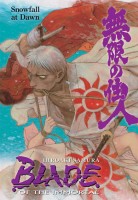
Blade of the Immortal, Volume 25: Snowfall at Dawn

September 13, 2013 by Ash Brown

Blade of the Immortal, Volume 25Creator: Hiroaki Samura
U.S. publisher: Dark Horse
ISBN: 9781595828835
Released: August 2012
Original release: 2009
Awards: Eisner Award, Japan Media Arts Award

Snowfall at Dawn is the twenty-fifth volume in the English-language release of Hiroaki Samura’s award-winning manga series Blade of the Immortal. Published by Dark Horse in 2012, Snowfall at Dawn collects the same chapters as the twenty-fourth volume of the original Japanese edition of Blade of the Immortal released in 2009. Blade of the Immortal first began serialization in 1993 and has covered a lot of ground since then. Starting as a story of revenge with a touch of the supernatural, the series mixes historical reality with the fantastic and later on even a healthy dose of horror. Snowfall at Dawn is part of the fifth and final major story arc of the series. With morally complex characters, dynamic artwork, and an engaging story, Blade of the Immortal continues to be one of my favorite manga series.

After their daring assault on Edō Castle, Baro Sukezane provides the diversion needed to allow his comrades Magatsu Taito and Anotsu Kagehisa, the leader of the Ittō-ryū sword school, to escape. They aim to rejoin the rest of the Ittō-ryū as quickly as possible while avoiding their pursuers. Among those trying to locate Anotsu are Asano Rin and Manji, her bodyguard and companion. Little do the pair know, but they are also being pursued. Shira, a sadistic murderer who holds a particularly intense grudge against Manji, is steadily getting closer to exacting his revenge. Accompanying Shira is Kawakami Renzō, a broken young man with his own reason for hating Manji. It’s only a matter of time before the four of them meet once again. The encounter is one that Shira has been preparing for and fantasizing about, taking great pleasure in anticipating and contemplating the pain and torment his plans will bring Manji and Rin.

The last few volumes have been building up to the confrontation between Shira and Manji. Unsurprisingly, their battle is the focus of Snowfall at Dawn. What did surprise me, however, is how comparatively tame it is physically when considering the perverse and barbaric nature of Shira’s past exploits and misdeeds. The potential for extreme physical violence between Shira and Manji is great. Shira is an unapologetic and twisted sadist while Manji is a man who is extraordinarily difficult to kill, making him an ideal victim and target. But Shira isn’t only interested in Manji’s physical suffering, he also takes great joy in causing mental anguish. Although there is still plenty of bodily harm and pain inflicted during the battle in Snowfall at Dawn, the psychological impact and agony caused by Shira’s attack on Rin and Manji is just as crucial to the fight. Out of all of the characters in Blade of the Immortal, Shira is easily the most unquestionably villanous and terrifying.

In addition to the showdown between Shira and Manji, Snowfall at Dawn also reveals Shira’s whereabouts during the long prison story arc as well as his involvement in the immortality experiments. Shira may be an utter bastard, but he’s had some unspeakable things done to him as well. As part of this, there is also a lengthy discourse in Snowfall at Dawn about the nature and limitations of Manji’s bizarre regenerative abilities. While vaguely interesting, it is largely unnecessary. Anyone who has been reading Blade of the Immortal should be well aware by this point that Manji’s immortality is imperfect; ample evidence can be found throughout the series. However, Samura hasn’t previously gone into such specific detail about it as he does in Snowfall at Dawn. Unfortunately, he has to interrupt the flow of the story in order to do so. Still, Samura soon returns to what really matters in Snowfall at Dawn–Manji and Shira’s battle, which will reach its conclusion in the next volume, Blizzard.
Filed Under: REVIEWS Tagged With: Blade of the Immortal, Dark Horse, Eisner Award, Hiroaki Samura, Japan Media Arts Award, manga

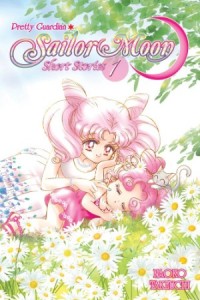
Pretty Guardian Sailor Moon Short Stories, Vol. 1

September 12, 2013 by Sean Gaffney

By Naoko Takeuchi. Released in Japan as “Bishoujo Senshi Sailor Moon” by Kodansha, serialized in the magazine Run Run. Released in North America by Kodansha Comics.

There’s an important thing to keep in mind when reading this first of two collections of short stories that were interspersed throughout the series’ run: they didn’t run in Nakayoshi. They ran in a sister magazine, run Run, which was also home to Sailor V. Run Run no longer exists today, but I seem to recall when it was around that its core audience was girls about 2-3 years younger than the usual Nakayoshi audience. And that’s not even getting into the fact that these are quick side-stories Naoko dashed off in between chapters, so are naturally going to be a bit more comedic and fluffy than the core plotline.

sailormoonss1

If all of this sounds a bit defensive, well, let’s just say that ‘light and frothy’ doesn’t begin to describe this volume of Sailor Moon extras, most of which are very silly and not exactly lending themselves to deeper analysis. Four of the stories star Chibi-Usa and her friends (with occasional rescues from Sailors Moon and V), while three others detail the struggles of the Inners to pass high school exams. The first one is around the R continuity (Chibi-Usa has just arrived, and is meeting her very busty friend Momo… Ranma fans will immediately be reminded of Shampoo), but most of the stories take place around the SuperS continuity – indeed, a few of them were adapted into the SuperS anime – with the final one seeming to be around Stars, given it has Hotaru.

This is not to say I did not 100% enjoy these stories, as I did. I like Naoko’s style of blatant humor, and she has a knack for amusing caricature faces. The Chibi-Usa stories at the beginning are pure fun for kids, with the kids getting into danger and having to transform to get themselves out of it. The story at the end is slightly longer and attempts to have more depth, but there’s only so far you can go when you find out that Naru’s sister is not only a kogal but is also named Naruru. It’s good to know that Japan has horrible naming sense as well. (Also, kudos to Mari Morimoto for the translation of this chapter, which was filled with topical Japanese slang that Chibi-Usa and Hotaru pointed out and lampshaded throughout, thus making it virtually unadaptable. A very nice job.)

My favorite part of the book, I will admit, are the three stories focusing on the Inners. Makoto’s is probably the weakest, but we do get some amusing scenes of her procrastination through cooking and housework, and also hear about her late parents for what may be the only time in the manga OR anime canon. (They’re killed in a plane crash when Makoto was a little girl, which is used here as both an amusing gag and to have Mako gain sympathy points from her friends.) Ami’s First Love is probably the best written of the three, and it’s no surprise that the anime adapted this into a short film for theaters. Ami can be very tightly wound, so seeing her coming unglued at finding a student who’s just as perfect in studying as she is is hilarious, particularly when she gets so upset by this she seems to make herself ill.

And then there’s Rei and Minako. I’ve discussed how much I love this chapter before, silly as it is, and that hasn’t changed. The manga version of Rei – cool, collection, a bit ‘ice queen’ – is in such contrast to Minako’s extrovert that it makes sense that she’d want to see what Rei’s life at school is like – and yes, she’d want to ask if Rei farted. I think that Minako regards Rei as a bit too perfect, and this is just her own tactless way of trying to reassure herself that Rei is human after all. Of course, all that her visit to Rei’s perfect Catholic school ends up doing is tweaking Minako’s own insecurities – and that leads to Rei seeming genuinely upset at Minako getting angry, showing she *isn’t* the perfect ice princess. Rei is likely very lonely at that school where she only has admirers, and just can’t express her friendships in the way that Minako wants her to. Still, they manage to bond by… well, Rei being possessed and trying to kiss Minako. And afterwards being crankier than ever. But Minako’s feeling good again, and that’s what’s important. Bless these children.

So if the Sailor Moon series was a full-course meal, then this is dessert. Don’t go into it expecting anything more than delicious sweets that are easy on the eyes but not all that good for you, and you should be fine. Also, Rei has never farted. She is better than all of us.

Filed Under: REVIEWS

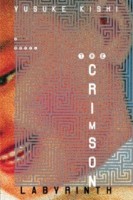
The Crimson Labyrinth

September 11, 2013 by Ash Brown

The Crimson LabyrinthAuthor: Yusuke Kishi
Translator: Masami Isetani and Camellia Nieh
U.S. publisher: Vertical
ISBN: 9781932234114
Released: October 2006
Original release: 1999

The Crimson Labyrinth, written by Yusuke Kishi, was first published in Japan in 1999. Prior to the novel’s release, Kishi had won two Japan Horror Association Awards. He continues to be a bestseller and award winner in Japan both for his horror and for his speculative fiction. The Crimson Labyrinth was released in English in 2006 by Vertical with a translation by Masami Isetani and Camellia Nieh. The novel was Kishi’s English debut and so far remains the only work of his that has been translated, although Vertical is scheduled to release Tōru Oikawa’s manga adaptation of Kishi’s novel From the New World in 2013. The Crimson Labyrinth was my introduction to Kishi and his work. I was particularly interested in reading The Crimson Labyrinth after seeing it compared to Koushun Takami’s Battle Royale, a personal favorite of mine. Also, I tend to enjoy just about everything that Vertical publishes.

Forty years old and unemployed, Yoshihiko Fujiki never expected that answering a job advertisement would end up with him being drugged and abandoned in the wild. He wakes up alone with only a small amount of food and water and a Pocket Game Kids handheld game console to keep him company. Soon he encounters Ai Otomo who is also wandering alone and who has been given similar provisions. Following the instructions provided by the game console, together they navigate the labyrinthine corridors and valleys of the bizarre landscape in which they find themselves. When they reach the first checkpoint indicated by the console they discover another group of people waiting there. All together there are nine Japanese men and women and no one seems to be certain of what is going on, where they are, who has stranded them or for what purpose. What they do know is that have become unwilling participants in a perverse game of survival. If they want to stay alive they may very well have to turn on each other.

The Crimson Labyrinth is heavily influenced by extreme reality television as well as classic, text-based role-playing games. And just like those RPGs, the decisions made by the characters early on in The Crimson Labyrinth are the most crucial and will determine how the rest of the game will play out. At first the group of nine works together, but their cooperation quickly disintegrates. The group fragments into four smaller teams, each following a different path outlined by the game: survival, self-defense, food, or information. Game theory might suggest how the competition will progress and what will lead to the ideal outcome for all involved, but as Fujiki points out, game theory is nearly useless in their situation. It depends on people making logical and rational decisions after considering all the information available to them. Humans are most certainly not rational creatures, especially when faced with the unknown, consumed by fear, and fighting for their lives.

Most of The Crimson Labyrinth takes place over the course of a few weeks. As events and the game unfold, the novel is seen exclusively from Fujiki’s perspective. For a large part of The Crimson Labyrinth he doesn’t interact much with anyone except Ai. This is a little unfortunate since the utter hell the other teams are going through can only be inferred. But as the novel and the game progress, Ai and Fujiki come across shocking evidence that the other players are having a very hard time of it and that it didn’t take long at all for violence to erupt. The wilderness is filled with its own dangers, but it’s really their fellow humans that they need to be wary of. Terrible things happen in The Crimson Labyrinth. What makes it even worse is the fact that so many of them could have been avoided if only people were able to bring themselves to trust each other and work together. In the end, no one is entirely innocent of the deaths that occur. A quick read, The Crimson Labyrinth is an absorbing novel of horror and survival.

Filed Under: REVIEWS Tagged With: Novels, vertical, Yusuke Kishi

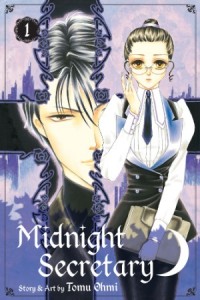
Midnight Secretary, Vol. 1

September 10, 2013 by Sean Gaffney

By Tomu Ohmi. Released in Japan by Shogakukan, serialized in the magazine Petit Comic. Released in North America by Viz.

I often joke when discussing licenses that the thing most companies tend to look for is “does this manga have vampires in it? And are they hot??”. But of course in general there has to be more substance to it than that. We need smart, compelling characters, we need some intriguing backstory, and of course we do need some nice seductive romance. With Midnight Secretary we get two out of the three, and I suspect the intriguing backstory will come in future volumes as this develops more of a plot.

midnightsecretary1

Kaya is a young woman living with her mother who is highly skilled but has one big problem (at least it’s a problem to her): she has a face that makes her look far too young. So, in order to get the secretarial work that she’s so good at, she does her hair up in a tight bun and wears glasses, looking very much like the cliche of what we think good secretaries should be. Like most Petit Comic heroines I’ve read about, her family has fallen on hard times, and her father has passed away from being incompetent… um, from stress. Luckily, she has a new job as secretary to the company director. Unluckily, he’s a womanizer, arrogant, and unimpressed with her looks. Oh yes, and he’s a vampire.

I am pleased that we get the reveal to this right off the bat, and that, after a bit of soul searching (and some blackmail on Kyohei’s part) she manages to file “vampire” under “things I have to manage in my boss’ day”. Indeed, Kaya takes her job very seriously indeed, and once she accepts what Kyohei is, she’s quick to research everything about vampires (most of which, amusingly, is wrong) and try to deal with the issues. And yes, sometimes that involves his sucking her blood, but only in emergencies. And it’s totally not one of the most erotic experiences she’s ever had, nope.

Kyohei’s brother is the executive director, and Kaya notes he isn’t a vampire, something I was prepared to have be wrong but no, it appears that is the case. It’s amusing to me that most of the drama in this fist volume comes less from Kyohei’s vampiric tendencies and more from the corporate intrigue. Kaya is far more valuable to him for her smarts and her spying ability than as a free meal ticket. Of course, he does eventually get her hair down and glasses off, and we start to see the smoldering passion that will no doubt justify this series’ 7-volume length. Indeed, by the end of Vol. 1 Kyohei is finding that other women’s blood just doesn’t do it for him, and he adds ‘blood for me’ to the endless list of Kaya’s tasks.

This is a fun series, with a more capable heroine than I’m used to seeing in this type of title. I wonder if we’ll get more of Kyohei’s vampire backstory as the series goes on, or if it will stick to corporate intrigue. And of course how these two will fall deeper in love. It’s another spicy romantic josei series from Shojo Beat. Fans of romance and the supernatural will snap it up.

Filed Under: REVIEWS

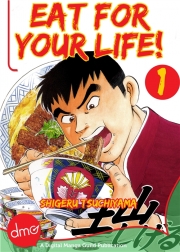
Eat for Your Life vol. 1

September 9, 2013 by Anna N

eatforyourlife

Eat for Your Life Volume 1 by Shigeru Tsuchiyama

This book is available on emanga.com

I do enjoy food manga now and then, and since unfortunately this is a genre that we only get a small sampling of here I’m always interested in a new title. While there are plenty of manga that I’ve read devoted to particular dishes or types of food, eating with friends, or in the case of Toriko eating incredibly weird things, this is the first eating competition manga that I’ve read. I found the combination of sports manga plot structure and endless drawings of bowls of katsudon compelling.

Ohara is a salaryman with a reputation as a gourmet. Perpetually broke due to his habit of going on food tours, he stumbles across an eating competition and decides to try his luck. Ohara fails, but he catches the eye of a professional food competitor named George. I could tell at a glance that George was going to be Ohara’s eccentric mentor because he was wearing a fringed leather jacket, sunglasses, and a ponytail. George appreciates Ohara’s ability to savor what he is eating as well as his rudimentary but sound eating technique.

Ohara begins to be pulled into the world of competative eating, but with some informal coaching from George, he might be ready to take his love of eating to the next level. The situations and characters in Eat For Your Life follow the “try your best” theme of most sports manga, except here one tries to conquer insane serving amounts of food as opposed to facing an opponent on the sports field. Eat For Your Life was amusing. The art was well executed, but not particularly distinctive, and there wwas a decent amount of humor as Ohara reacts with a rookie’s amazement to the world of competitive eating. I recommended this title for foodie manga fans.

Electronic access provided by the publisher.

Filed Under: REVIEWS Tagged With: digital manga publishing, dmg, emanga

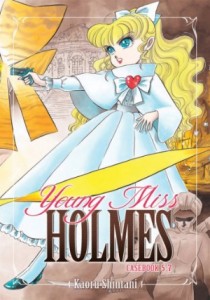
Young Miss Holmes, Casebook 5-7

September 8, 2013 by Sean Gaffney

By Kaoru Shintani. Released in Japan as “Christie High Tension” by Media Factory, serialized in the magazine Comic Flapper. Released in North America by Seven Seas.

The Young Miss Holmes series wraps up here with an omnibus of the final three volumes, and also takes a departure from canon, as only the first story, “The Adventure of the Solitary Cyclist”, is a Watson story published by Conan Doyle. That said, some of the titles of the remaining stories here may be familiar with Holmes and Watson, particularly the “Canary Trainer” mentioned in “The Adventure of Black Peter”, and the infamous “Giant Rat of Sumatra”, mentioned in the “Adventure of the Sussex Vampire” story. Shintani makes a decent effort at leaving the Holmes canon, and it allows him to do a bit more with Christie than simple sleuthing, particularly in the finale, which is basically an action movie with very little detecting.

ymh3

The canonical Holmes story, Solitary Cyclist, does a decent job of having Christie and Sherlock join forces. Violet Smith is an old friend of Grace, Christie’s governess. Christie herself is chomping at the bit to become more independent, while still retaining a childlike air (particularly in the Circus chapters). That said, she’s not only more mature than most girls her age but far more modern, discussing how she has no desire to be a young lady the way the Victorians see them, and is already taking her savings and starting a pension plan to allow her servants to retire happily. It’s a good way to try to drag Holmes into the 21st century a bit, while still maintaining the charm of the original. (That said, I could have done without the appearance of Queen Victoria herself, in the weakest part of the book.)

The book is not faultless, of course. There is less nudity and gore than the first two omnibuses, but there’s still lots of corpses for an All-Ages rating, and Comic Flapper and Shintani still seem to sexualize Christie more than is necessary on a few title pages. The use of ‘moneylenders’ once or twice comes with some Victorian stereotypes, although it’s not really bad unless you’re looking for it. (Indeed, most of the villains here suffer from “I am ugly and therefore a villain” disease, which is quite common in comics and manga alike.) “The Dying Message” and “The Flying Dancer” aren’t too bad, but are weaker than the other stories we see here.

The Canary Trainer story is easily the creepiest of the book, featuring murder, suicide, child slavery, hypnotic suggestion, and child prostitution. It also merges Christie and Holmes the best of the five stories seen here, as they start out pursuing two totally different cases that only turn out to be the same thing right near the end. However, in a shocking display of canon ignorance, Shintani may have drawn Mycroft Holmes as slim. Luckily, there’s an out: everyone who says “that must have been Mycroft” didn’t actually see him. Perhaps it was Sherringford. Let’s go with that.

Things come to a head with the 7th volume/last third of the book, The Giant Rat of Sumatra. This helps to avoid the stereotype of “foreign villains” by sending a troup of good guys from India to help protect Christie from the thuggee bad guys. They are, of course, led by a young woman who is basically the Indian version of Christie, complete with tomboy mannerisms and snarky retainers. She’s good in a fight, however, which is a bonus, as Christie decides to simply go to ground in her mansion and let the villains come to her. Which they do, in one big final conflagration.

The series ends with the return of Christie’s parents, which marks a good stopping point – I’m sure they won’t totally stop her getting into adventures, but no doubt she will have to slow down a little. Shintani is currently writing a sequel, Christie London Massive, featuring a 17-year-old Christie, a whole new cadre of battle maids (led by Nora, no fear, she’s still there), and perhaps a familiar adversary of Sherlock Holmes thrown into the mix. Of course, that’s Japan. Whether it comes out here or not depends on how well the print and E-Book versions do. I had a ball reading them, particularly as a Holmes fan, and definitely recommend picking up the whole series.

Also, there is a dodo. For some reason.

Filed Under: REVIEWS

Manga: Introduction, Challenges, and Best Practices

September 8, 2013 by Ash Brown

Manga: Introduction, Challenges, and Best PracticesEditor: MJ
Publisher: Dark Horse
ISBN: 9781616552787
Released: December 2013

The Comic Book Legal Defense Fund (CBLDF) is an organization based in the United States devoted to the protection of the freedoms to read, create, and provide access to comics. Manga: Introduction, Challenges, and Best Practices is a part of its education initiative funded by the Gaiman Foundation and was published by Dark Horse in 2013. Manga was edited by MJ and includes contributions from Katherine Dacey, Shaenon Garrity, Sean Gaffney, Ed Chavez, Erica Friedman, and Robin Brenner. It’s an excellent lineup of manga critics, scholars, and those who have worked in the manga industry in both Japan and North America. Being familiar with their work, in addition to being a card-carrying member of the CBLDF, I was very excited when I learned about the upcoming release of Manga. And because I also happen to be a librarian, I was able to snag an early copy of the guide.

Manga consists of nine chapters and a list of recommended resources. The first chapter, “What Is Manga?” provides a brief history of manga both in Japan and in the West, distinguishes manga from comparable comics traditions such as manhua, manhwa, OEL manga and other manga-influenced comics, and provides suggested resources for further reading. The following chapters survey the four major demographics of manga–shōnen, shōjo, seinen, and josei–as well as two additional categories–yuri and boys’ love. These chapters cover history, commonly found genres, special issues, and (except for the chapter devoted to yuri) notable artists. Another chapter, “Untranslated and Fan Translated,” addresses dōjinshi and scanlations. The final and longest chapter, “Challenges,” focuses on the collection and defense of manga by libraries and summarizes a few major North American court cases dealing with manga.

As is always the danger when writing about popular culture, some of the information in Manga–specifically some of the references to what has or hasn’t been licensed in English–is already out of date. That doesn’t make Manga any less valuable as a resource, though. It is, however, something to keep in mind while reading the guide. Manga is a fantastic introduction to and overview of manga and manga history, especially as it applies to the North American market. The book seems to be particularly geared towards libraries and schools which may be developing or maintaining a manga collection, but Manga should also be interesting and useful to already established fans of manga as a whole as well to as people who are unfamiliar with the form but who would like to learn more about it. Manga packs a lot of information into a slim volume but remains very accessible throughout.

The only thing missing that may have made Manga even more useful for the uninitiated would be a glossary of terms. More information about the contributors themselves would have also been beneficial. I knew who they were but someone less familiar with the subject area wouldn’t necessarily recognize them. Overall, Manga is short and to the point and is an excellent resource. The guide eases readers into the subject and avoids overwhelming them with too much information. There were a couple of generalizations that gave me pause and may have been overly broad, but Manga is meant as an introduction and so shouldn’t (and doesn’t) get bogged down in technicalities and exceptions. Manga is consistently accurate and informative for the audience it’s intended. The book may not be incredibly in-depth, but it is a great place to start learning about manga, its history, and its challenges. Manga is very easy to recommend not only to library professionals, but to general manga enthusiasts as well.

Disclosure: Experiments in Manga is a member blog of Manga Bookshelf; many of those who worked on Manga are also associated with Manga Bookshelf.

Filed Under: REVIEWS Tagged With: Dark Horse, manga, Melinda Beasi, Nonfiction

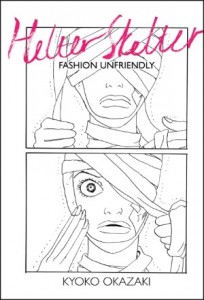
Helter Skelter: Fashion Unfriendly

September 7, 2013 by Sean Gaffney

By Kyoko Okazaki. Released in Japan by Shodensha, serialized in the magazine Feel Young. Released in North America by Vertical.

When I first heard about the new title that Vertical had licensed, and its basic premise, I started to formulate in my head an idea of how it would probably go. We already knew it would be about modeling and plastic surgery in some way. It was not a great leap forward to imagine there would be a younger, more successful rival, a controlling mother figure, and the hubristic slide into inevitable tragedy. And technically, that’s all present and correct in this volume. But that doesn’t begin to describe what a stunning ride this is, and how much you get drawn into its characters and storyline.

helterskelter

Liliko is the star here, and she’s far more self-aware than I was really expecting. She starts at the top of the modeling game, but it’s taken a lot of work to get her there. Moreover, a secondary plotline throughout the book discusses the shady characters who did her plastic surgery, and how the law is getting closer and closer to them. Really, while Liliko is flagrantly horrible at many points in this book – she notes at one point that she’s so broken that the only thing that gives her satisfaction is breaking others – she’s no worse than na lot of the top strata in the business she’s engaged in, which uncaringly throws away stars once they lose their looks or get embroiled in scandal.

Actually, the character I was most fascinated with throughout the book was Hada, the young woman who starts as Liliko’s gofer/assistant and ends up falling for her hard, in all the wrong ways. I was initially expecting Hada to end up killing herself – there are a few suicides in this book, and I wondered if one of the corpses I saw would be hers. Then, as things got worse, I realized that it was more likely she’d wind up arrested. Then I wondered if she’d be the chief witness for the prosecution. Then, as things really spiraled, it became clear that there was no separating Hada and her easily led boyfriend from Liliko for any period… not while they’re still completely codependent on each other.

There was one thing I didn’t think worked here, or at least that didn’t resonate with me as much as the rest of the book. Takao Nanbu, Liliko’s boyfriend at the start of the book, likes to speak in a philosophical, slightly smarmy way, and he simply grated on my nerves with all the Tiger Lily stuff and talk about past lives. Certainly he added a different element to the story (and oh do I feel bad for his fiancee getting caught up in Liliko’s psychotic drama), but especially towards the end I felt his monologues were simply overdone.

It’s hard to discuss the main selling point of this manga, as it’s basically an underlying tone. So much happens here that could be termed a car crash, but Okazaki is so compelling a storyteller that you read on anyway, even as modeling turns to adultery, assault and multiple suicides. The title is completely appropriate – and no, despite the song getting a mention right at the end, I don’t think it’s entirely talking about The Beatles. The Helter Skelter is a British amusement park ride (tornado slide for U.S. readers) that is a wild, out of control ride that makes the reader want to go back to the top when they hit the bottom. Likewise Liliko hits rock bottom at the end of this book, but that doesn’t mean that we should count her out, or that this is the end. Her story (and possible new downfall) is only beginning.

Filed Under: REVIEWS

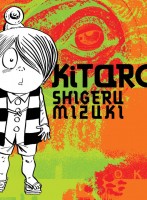
Kitaro

September 6, 2013 by Ash Brown

KitaroCreator: Shigeru Mizuki
U.S. publisher: Drawn & Quarterly
ISBN: 9781770461109
Released: August 2013
Original release: 1967-1969

Over the last few years I have become increasingly interested in yokai–Japan’s supernatural beings and monsters of myth and legend. When it comes to yokai manga the most influential creator in Japan is Shigeru Mizuki. His most famous series GeGeGe no Kitaro is considered a classic and continues to inspire others. I was absolutely thrilled when Drawn & Quarterly announced that GeGeGe no Kitaro had been licensed in English. Kitaro, released in 2013, collects stories from the first few volumes of Mizuki’s GeGeGe no Kitaro published in Japan between 1967 and 1969. Also included in Drawn & Quarterly’s Kitaro is an excellent introduction by Matt Alt (one of the co-authors of Yokai Attack!) and a yokai glossary by Zach Davisson, both of which are particularly useful for readers who aren’t familiar with Kitaro or yokai, but which should also be interesting for those who are more knowledgeable.

“It is said that when the crow caws thrice, and the frog responds twice, the appearance of Kitaro is imminent.” Kitaro of the Graveyard, a one-eyed yokai in the form of a young boy whose ways are mysterious and who wields great spirit powers. Generally a friendly sort of fellow, Kitaro helps protect people from more malicious yokai although unscrupulous humans might find themselves on the losing end of an encounter with him as well. Sometimes working alone and sometimes enlisting the help of other yokai, Kitaro’s adventures take him all over Japan, everywhere from its most densely populated cities to its most remote islands and beyond. It is part of Kitaro’s mission to defeat evil yokai. The spirits and monsters that he faces will take all of the esoteric knowledge and supernatural skills he has to vanquish them, not to mention a little luck.

The stories in Kitaro tend to be episodic and vary in length–most are around fifteen pages while the longest could easily be collected as their own graphic novels. Although the stories aren’t directly related, many share recurring characters. The most notable are Kitaro himself, his father Medama Oyaji–an eyeball with a body who resides in Kitaro’s empty eye socket and enjoys a good teacup bath–and Nezumi Otoko–a half-human, half-yokai troublemaker and sometimes friend. Mizuki was inspired by more than just Japanese folklore when creating Kitaro. In addition to traditional yokai and his own imagination, popular culture and more modern kaiju were also important influences. Even monsters from Western literature, film, and mythology make an appearance. As a result, Kitaro is a lively amalgamation of sources.

I found Kitaro to be utterly delightful. Although it is a horror manga dealing with powerful supernatural creatures and featuring some legitimately creepy scenarios, Kitaro is also very funny and even cheerful in tone. Kitaro does seem to gain abilities as is convenient to the story, but it is still amusing to see how he manages to get out of precarious situations. It can be a bit silly at times, and on occasion deceptively simple and straightforward, but Kitaro is also a great deal of fun. Because of its episodic nature there isn’t much plot or character development, but Mizuki’s creations are still memorable. I particularly appreciate all of the different traditions he draws from to create a tale that is distinctly his own. I loved Kitaro and enjoyed the volume immensely. I sincerely hope that Drawn & Quarterly will be able to release more of the series.

Filed Under: REVIEWS Tagged With: Drawn and Quarterly, Kitaro, manga, Shigeru Mizuki

Attack on Titan, Vol. 6

September 3, 2013 by Sean Gaffney

By Hajime Isayama. Released in Japan by Kodansha, serialization ongoing in the magazine Bessatsu Shonen Magazine. Released in North America by Kodansha Comics.

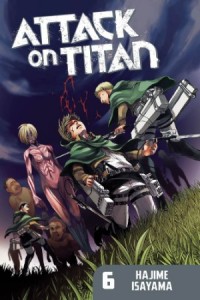
Sometimes books just read FAST. You pick up the book, start turning the pages, and the next thing you know you’re looking at the preview. That’s definitely the case with this volume of Attack on Titan, which is nonstop action from beginning to end, and its pace is just unrelenting. We see Armin being clever, Reiner being badass, Eren learning that being in a military organization is a hard thing for a hothead to do, and lots of mass destruction and slaughter of the survey team in general. As if the cover didn’t already tip you off.

titan6

Armin noted at the end of the last volume that the female Titan who dominates this volume is intelligent, and boy do we see that here. She knows how to protect herself, she’s mercilessly cruel and sadistic (you can see the amusement in her face when a soldier begs her to let him go, and she starts spinning him around till he’s so much meat before doing so), and far, far harder to get rid of than the run of the mill titans we’d seen to date. It takes Armin, Jean and Reiner all of their combined skills just to get away and try to shove the titan in the right direction.

As for Eren, he’s having the same problem that a reader might be having – he spent 5 volumes training and bonding with a group of friends and comrades, only to be torn away from them and forced into a group he barely knows and who doesn’t seem to like him much (excepting the resident mad scientist). Not to mention people still won’t let him go berserk and just start killing Titans, possibly as it’s incredibly stupid. He does begin to get an inkling of what military discipline is like here, as Levi straight up tells him he can do what he wants but reminds him of what they’ve all been fighting for. In the end, despite his rage and tragic past, it’s just not all about Eren.

Speaking of his new squadmates, I appreciated the flashback where we see how well they work together as a unit. Given a series like this, you tend to dismiss anyone who doesn’t have a bio at the front of the book as “cannon fodder”, and the fact that they had pictures but no text didn’t bode well. But the fact is Levi’s squad has survived longer than Eren has outside the walls, and they’ve killed more Titans than he has too. Their well-oiled machine shows Eren that he can turn his rage and anger into something useful to them. And his trust is rewarded in the end, as the female Titan is captured due to the efforts of the entire team.

This was a thrilling volume, and uplifting compared to previous ones. Of course, that means next time it will likely be even more depressing, but hey, you take your victories where you can. When humanity is fighting an unstoppable enemy, you enjoy seeing them fight back. The art needs more improvement still (Dear Isayama: your faces all look alike. Love, Sean), but otherwise it’s another winner.

Filed Under: REVIEWS

Midnight Secretary, Vol. 1

September 1, 2013 by Anna N

While I enjoy reading paranormal romances set in high school as much as anyone, I attended high school more years ago than I’m willing to admit. So I’m happy to see a romance title that swaps out a twenty-something office lady for the typical teenage manga protagonist. Kaya is an Executive Secretary who is reassigned to the Managing Director at Tohma Corp. Kaya dresses severely, with her hair pulled back and sports fake glasses in order to combat her naturally youthful appearance. Her new boss Kyohei Tohma is an absolute boor, asking that she be reassigned as soon as he sees her because her appearance offends him. Kyohei spends long hours at the office, but he seems to take frequent breaks during the day as a parade of women keep visiting him at his office only to leave looking disheveled and pale.

Kaya is very dedicated to Tohma Corp. and her job, so she does a bit of sleuthing as she is worried that her new boss is doing drugs. She ends up discovering that he is in fact a vampire. Kyohei decides that Kaya’s discovery is a good thing, because she can be his secretary for real if she knows about his condition. He threatens her mother’s employment with the company to ensure Kaya’s silence and assures her that she won’t become his next victim because he only drinks from the finest of women.

As a heroine, Kaya has a bit of a subversive streak. She decides to subtly test vampire theories through her job duties by giving one of Kyohei’s women a silver cross and trying to see if he has a reflection in a mirror. Kaya figures out that the senior director, Kyohei’s older brother, is aware of Kyohei’s vampirism yet isn’t a vampire himself. Kyohei seems amused by Kaya’s detective attempts, and she resolutely resists his arrogant suggestions for her to improve her appearance. When Kyohei gets weakened and needs blood Kaya decides that her secretarial duties extend to becoming food, announcing that “Even if you’re a spoiled, arrogant philanderer…even if you’re sarcastic…and even if you’re a vampire…I want to protect you!”

Kaya and her boss gradually become a bit closer as he begins to trust her with more details of Tohma’s business dealings. Her protective streak is very strong, resulting in some goofy antics at an office Christmas party. I enjoyed the packaging for this manga, as all the extra purple scroll-work makes Midnight Secretary look appropriately gothic. Ohmi’s art is attractive, with believable shifts in the characters’ appearance and mannerisms when Kaya loses her glasses or when Kyohei is in the grips of vampiric compulsion. We see the couple’s professional facades begin to crack more and more as the volume progresses. I enjoyed this first volume of Midnight Secretary very much, and I’m looking forward to the rest of the series.

Review copy provided by the publisher

Filed Under: REVIEWS

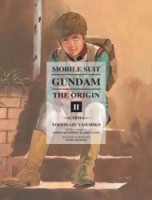
Mobile Suit Gundam: The Origin, Vol. 2: Garma

August 30, 2013 by Ash Brown

GundamOrigin2Creator: Yoshikazu Yasuhiko
Original story: Yoshiyuki Tomino and Hajime Yatate

U.S. publisher: Vertical
ISBN: 9781935654889
Released: June 2013
Original release: 2006

Though I wouldn’t consider myself to be a fan of or even particularly knowledgeable about the massive Gundam franchise, at this point I would consider myself to be a fan of Yoshikazu Yasuhiko’s manga series Mobile Suit Gundam: The Origin. The manga is a retelling of the original 1979 Mobile Suit Gundam anime series from one of the artists who was heavily involved in its creation and visual design. Garma is the second volume in the collector’s edition of Yasuhiko’s The Origin manga, originally released in Japan in 2006. The English-language edition of the volume, published by Vertical in 2013, is a beautiful, high-quality release. This particular volume includes a small illustration gallery of Yasuhiko’s color work as well as a roundtable and special illustration from CLAMP. I was quite impressed with Activation, the first volume of The Origin, so I was looking forward to reading Garma a great deal.

After an eight-month armistice, the forces of the Earth Federation and the Principality of Zeon have once again come into conflict. The Federation’s colony Side 7 was attacked and destroyed when Zeon discovered the Federation military was secretly developing a highly advanced mobile suit there. White Base, the supply ship carrying the new weapon as well as hundreds of refugees from the colony, has reached Earth but Zeon’s pursuit has pushed it far off course. Trapped behind enemy lines and commanded by a young and inexperienced crew, White Base may have survived the initial confrontation with Zeon but the threat is far from over. The Zeon forces are determined to prevent White Base from breaking through to Jaburo; if they can’t capture the new technology, they are more than happy to destroy it. In particular, Colonel Garma Zabi, leader of the Zeon’s North American forces and the youngest son of its reigning family, is interested in the recognition, prestige, and military honor that successfully accomplishing such a feat would bring.

While in Activation the fighting primarily took place in space, the battles and skirmishes in Garma are surface based, occurring on Earth’s land, in its air, and even within a demolished urban center. Both Yasuhiko and the characters must make adjustments because of this. They must take into consideration and use the terrain and topography as part of their strategy. The battles in Garma literally, figuratively, and visually have weight. Even during the aerial maneuvers, Yasuhiko is constantly aware of the forces and gravity in play. The way he draws the battles makes them feel very different from those in Activation and they should be different–tactics and equipment change depending on the environment. Fighting on a planet is very different from fighting in space and he captures that remarkably well. The battles in Garma are engaging. Yasuhiko’s excellent pacing and layout combined with his color work result in some exceptionally stunning, cinematic sequences.

While the military aspect of The Origin is certainly important, perhaps even more important are the more personal human dramas of the story. As can be inferred by the volume’s title, Garma plays a particularly critical role at this point in the manga. Introduced at the very end of Activation, Yasuhiko quickly reveals Garma to be an arrogant and privileged young man. His relationship and association with Char, one of Zeon’s most formidable and calculating commanders, is crucial to the development of the story. Perhaps Garma’s complete opposite is Amuro Ray, the young pilot of the Federation’s new Gundam mobile suit. Drawn into war more by chance than by choice, at the age of fifteen he’s already seen more of battle than he ever wanted. He’s understandably terrified and struggling with the grave responsibility that has been thrust upon him. I’m very interested in seeing how the two sides of the conflict react to the events in Garma because they will have some major consequences.

Filed Under: REVIEWS Tagged With: Gundam, Hajime Yatate, manga, vertical, Yoshikazu Yasuhiko, Yoshiyuki Tomino

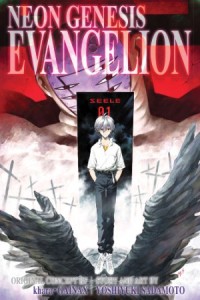
Neon Genesis Evangelion Omnibus, Vols. 10-12

August 30, 2013 by Sean Gaffney

By Yoshiyuki Sadamoto and GAINAX. Released in Japan by Kadokawa Shoten, serialized in the magazines Shonen Ace and Young Ace. Released in North America by Viz Media.

This fourth omnibus from Viz will be the last for a while, as Japan hasn’t even announced when the final volume is coming out yet. I assume it will be released simultaneously here and Japan, as Vol. 13 was, and that there will be a gap between that any any 5th omnibus. That said, there’s more than enough here to keep Evangelion fans busy. So much happens in this omnibus that it’s a bit difficult to know where to begin. One thing is for certain, though, and that’s the ongoing massacre of everyone Shinji loves and holds dear is still going to happen. Business as usual, folks.

evangelion4

Kaworu was introduced far earlier in each successive adaptation of Evangelion, probably as fans took him so quickly to their hearts. That doesn’t mean that he gets to be all warm and fuzzy, though he’s trying. I think it’s clear he wants to comfort Shinji and make him feel better, but he has no idea how people deal with grief – or indeed, emotions in general. He tries to make up for that by physical closeness, but Shinji, who’s already somewhat sexually confused due to simply being a teenager, lashes out at him. The manga makes things bigger – both Shinji’s rejection of Kaworu’s advances of friendship (or something more), and of his admitting how close Kaworu really got to him. In the end, Kaworu wanting Shinji to kill him manages to be rather heartwarming and sweet, in an Evangelion way.

And, in the opposite direction from heartwarming and sweet, we have Ritsuko, who has realized all along that Gendo is using her like he uses everyone else, but has been too wrapped up in her desire for him to really try to do anything about it. Gendo throwing her to the wolves of SEELE seems like it was a wake-up call, and she proceeds to give him the biggest ‘fuck you’ that she possibly can, with Misato and Shinji as witnesses. The idea of Rei being a clone is something that we’ve basically accepted, particularly given we see her get killed early on in this volume and then show up with the same body but without the emotional attachment to Shinji she had grown over the series. Despite that, the scene showing all the Rei bodies in the vat, waiting to be the next one, has not lost any of its power. It’s almost a relief that a suicidal and self-loathing Ritsuko destroys them all.

I talked last time about how Asuka gets much less to do in the manga, and that’s still true in this volume – until the end. Sticking her in her Eva may have been a safety precaution, but it was also the best possible thing for her psyche, as she manages to come to terms with what her mother was to her – and then goes to town on SEELE’s invading Evas, in the most glorious battle sequence we have seen to date in the series. Seeing Asuka, who has spent her entire life overcompensating for feeling useless and unwanted, take out these fakes with strength and purity of heart, is a beautiful thing, even if she can’t quite save the entire day. Mostly as it’s questionable as to whether there will be a tomorrow to be saved.

Because the JSSDF is invading NERV, and the orders are to kill everyone – even people who surrender, even people begging for their life. This we see, and it’s absolutely terrifying. It comes to the point where only Shinji in his Eva can save the day, but he is absolutely emotionally dead after everything that has happened to him (and remember, the timeline for the manga seems to be far faster than the anime one). Luckily, he has Misato,who gets her finest hour in the final part of this volume at the same time that Asuka is getting hers. Misato has always sort of straddled that line with Shinji between feelings of a mother, of a sister, and of a woman. It fits well with the rest of the series, where Shinji can’t tell if he loathes or is attracted to Kaworu, Ritsuko’s desire merges with her anger, and Gendo imprints her dead wife onto a clone that is both her and not her at the same time – something that she gets but he may not. All of these things are what makes up humanity – and that’s what Misato has to convince Shinji to save.

Has she done that? Well, you can get Vol. 13 right now and see for yourself, but whether we manage to get an ending that isn’t covered in orange goo is another matter. The manga has ended in Japan, so it’s a matter of Kadokawa scheduling the final volume. either way, it’s been an amazing ride. The manga world of Evangelion is still my favorite.

Filed Under: REVIEWS

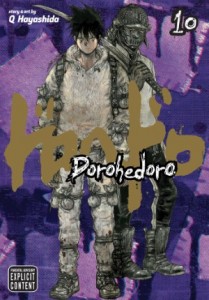
Dorohedoro, Vol. 10

August 27, 2013 by Sean Gaffney

By Q Hayashida. Released in Japan by Shogakukan, serialization ongoing in the magazine Ikki. Released in North America by Viz.

It’s worth noting, in case people have somehow forgotten it amongst all the gyoza and goofiness, that this series is incredibly terrifying at times. Everyone’s pasts are brutal and horrific, and it’s made almost all of them into morally ambiguous killers. The corpses that litter Dorohedoro are almost uncountable. And one of our good guys has a flashback in this volume showing that he collected these corpses and experimented on them. Meanwhile, Ebisu is learning the hard way that you can’t go home again.

dorohedoro10

Actually, the Ebisu plotline was probably my favorite part of this volume, if only for the 80 shades of wrong it contained. For one, the entire plotline with her parents is just nightmarish. Their daughter disappears, they are distraught, broken… so they pay a sorcerer to bring her back. And he… is a man with a paint tube mask, something that sounds much funnier than it is given that’s also how he recreates Ebisu. Only it isn’t Ebisu, to the point where her own parents fled their home. And now Ebisu returns to find herself under attack by her own doppelganger. Of all the disturbing art and violence that we get in this volume (yes, even the final scene), Ebisu having her head slashed open is the one that will stick with me. Just… urgh.

Meanwhile, we continue to get flashbacks to the guy that I think is Caiman’s past. His name is Ai, and he’s a sullen teen, all right. He also goes and gets himself killed fairly fast, or so we think. As it turns out, when Shin and Noi dig up the grave, there is a distinct lack of Ai there. It has to be said that Dorohedoro is a very dense manga, and its hints, when they arrive, are not necessarily very revealing. Caiman’s past in particular is difficult as we’re given the fakeout of his being connected to Risu, which turned out to be not quite true (but also yes, it is totally true).

And finally, En wakes up again, and boy is he pissed off. It’s worth noting just how overpowered En is in comparison to everyone else in this manga. He arrives and just completely owns everyone, even Caiman, who is immune to magic… which really doesn’t help when mushrooms are erupting from all of your internal organs. Now En has Nikaido again, and Caiman appears to be dead. He’s appeared to be dead before, but this time he has his own head (maybe) back, and the lizard head is a thing of the past. Maybe.

Leaving aside the batter-fried shrimp sorcerer at the end of the book, this was a fun, if a bit confusing, volume of Dorohedoro. Yes, explanations are thin on the ground, but the story never suffers from the lack of them. I suspect that the story is going to switch back to the cross-eyed gang for a bit given that cliffhanger (and we also get a really sweet/disturbing scene of the cross-eyes reminiscing about their completely insane leader, who I think is also Ai? Caiman? Whatever…). Wherever the story goes, though, I’m right there with it.

Filed Under: REVIEWS

Red River, Vols. 1-7

August 25, 2013 by Anna N

When manga publishers first started their digital programs I was hoping for more backlist titles to become available, especially from Viz. I was particularly happy when Red River started coming out in a digital edition. I’ve long regretted not just buying this series when it was coming out, because I suspected I would really like it. At the time though I was buying a ton of other manga and I was leery of committing to a 28 volume shoujo series. I’ve been piecing together volumes of this series here and there, and I have a decent amount of both the first several books and a few concluding volumes, but nothing in the middle. I was glad I could switch back and forth between print volumes and my iPad to give the first part of this series a try. The arresting cover image of the first volume provides a nice overview of the series. A girl in modern clothing is being menaced by a bunch of people holding daggers, against a backdrop of a blue sky and stone buildings from another era.

The girl who is about to get stabbed on the cover of Red River is Yuri, a cheerful high school student who had just received her first kiss from her classmate Satoshi. Yuri goes to school and hangs out with her younger sisters, but a number of odd things seem to happen when she’s close to water. A glass bubbles over and hands reach out to her from a school fishtank. The incidents get worse and worse, to the point where Yuri is carried away in the middle of a date when she steps near a puddle. Yuri finds herself in a bathhouse in the capitol of the Hittite empire. Chased by armed men whose language she doesn’t understand, Yuri runs into a courtyard and encounters a handsome man who promptly sweeps her off her feet and kisses her. Prince Kail distracts the men and sends them on their way, claiming he knows nothing about a woman in strange clothing running through the city. Yuri can suddenly understand the language of the place she’s in, as princely kisses seem to serve as a universal translation device. Kail offers to swap Yuri in for the woman he was originally waiting for. Yuri concludes that he’s a jerk and runs off in the strange city yet again, only to be captured by Kail’s extremely evil stepmother.

Kail’s evil stepmother wants to use Yuri for a virgin sacrifice to work some strange magic to place her son as heir to the empire instead of Kail. Kail is an extremely quick thinker and prevents the sacrifice by showing up at the last minute to announce that due to his masterful powers of seduction, Yuri is no longer a virgin, and thus not suitable to be a sacrifice to anyone. Throwing her over his shoulder, Kail announces that he’s going to remove his “sullied baggage” from the room. Kail and Yuri start gradually falling in love, as he begins to appreciate her articulated moral sense and intelligence. Yuri soon realizes that Kail is doing the best he can in an extremely hostile court environment where his stepmother is doing whatever she can to plot his demise.

While there are a few references to magic here and there, Red River is much more of a historical adventure than it is a fantasy story. Yuri doesn’t really have magical powers, but she might as well have them due to the effect she has when Kail decides to announce that she’s the incarnation of the goddess Ishtar and uses her to inspire his troops as a gambit to protect her from his stepmother. While Kail gives Yuri the position of his concubine and they sleep in the same bed every night, she still remains a virgin, since he backs off when she mentions her boyfriend back home. The “will they or won’t they” tension that appears in the first few volumes is mainly due to Kail keeping his distance from Yuri because he knows he needs to send her back to his own time, and Yuri is determined not to care for Kail too much when she has to go back to her family.

While Yuri seems to have an unfortunate habit of getting kidnapped fairly often, she’s also extremely level-headed and pragmatic. Kail rescues her, but she also uses some quick thinking to rescue him a number of times. She throws herself into training when she’s given the role of Ishtar to play, determined not to embarrass herself and Kail. When she’s stolen away by a prince from a rival country, she spends her time improving the sickroom for prisoners of war that are deemed near death, and her introduction of modern sanitation helps the prisoners heal as well as providing herself with a slightly sick troop of soldiers inside the enemy walls.

Shinohara’s art has a bit of an old-school feel to it. This series was first published in 1995, so the character designs might look a tad old fashioned. But the many action scenes and the historical settings and costumes are handled with great clarity. Even when the paneling might focus more on the character’s emotions and interactions, there’s usually an architectural detail or background element that grounds the reader in the scene. Yuri believably shifts from tomboy to gorgeous depending on the situation and clothing she finds herself in, and Kail transforms from a slightly arrogant prince to a person who is much more kind and concerned.

I read these volumes over the weekend, and was very entertained! I think Red River is one of those series that benefits from being able to read many volumes at once, because the story lines are fast-paced and interesting, with plenty of cliff-hangers at the end of most volumes. While Red River is certainly a romance, it focuses much more on the expansion of the Hittite empire and the political machinations of the royal family. Yuri and Kail are a sympathetic couple, even if some of their issues would be solved if they were only able to sit down and have an honest conversation about their feelings. Fending off witchy evil stepmothers, dodging kidnappings, and dealing with bronze age military tactics do take up quite a bit of time. One thing I did miss in these volumes was author’s notes. I don’t know if there just weren’t any attached to this series, or if there was a decision made not to include them, but I would have found it interesting to hear about the author’s research. It seems like most of the historical shoujo manga that gets translated for English audiences tends to focus more on Japan as a setting, so Red River is certainly unique in that aspect. While there’s certainly enough romance to keep most shoujo fans happy, the setting and emphasis on action and adventure make this a very appealing series for readers.

Filed Under: REVIEWS Tagged With: red river, shoujo, viz media

  • « Go to Previous Page
  • Page 1
  • Interim pages omitted …
  • Page 265
  • Page 266
  • Page 267
  • Page 268
  • Page 269
  • Interim pages omitted …
  • Page 346
  • Go to Next Page »
 | Log in
Copyright © 2010 Manga Bookshelf | Powered by WordPress & the Genesis Framework