• Skip to primary navigation
  • Skip to main content
  • Skip to primary sidebar
  • Home
  • About Us
    • Privacy Policy
    • Comment Policy
    • Disclosures & Disclaimers
  • Resources
    • Links, Essays & Articles
    • Fandomology!
    • CLAMP Directory
    • BlogRoll
  • Features & Columns
    • 3 Things Thursday
    • Adventures in the Key of Shoujo
    • Bit & Blips (game reviews)
    • BL BOOKRACK
    • Bookshelf Briefs
    • Bringing the Drama
    • Comic Conversion
    • Fanservice Friday
    • Going Digital
    • It Came From the Sinosphere
    • License This!
    • Magazine no Mori
    • My Week in Manga
    • OFF THE SHELF
    • Not By Manga Alone
    • PICK OF THE WEEK
    • Subtitles & Sensibility
    • Weekly Shonen Jump Recaps
  • Manga Moveable Feast
    • MMF Full Archive
    • Yun Kouga
    • CLAMP
    • Shojo Beat
    • Osamu Tezuka
    • Sailor Moon
    • Fruits Basket
    • Takehiko Inoue
    • Wild Adapter
    • One Piece
    • After School Nightmare
    • Karakuri Odette
    • Paradise Kiss
    • The Color Trilogy
    • To Terra…
    • Sexy Voice & Robo
  • Browse by Author
    • Sean Gaffney
    • Anna Neatrour
    • Michelle Smith
    • Katherine Dacey
    • MJ
    • Brigid Alverson
    • Travis Anderson
    • Phillip Anthony
    • Derek Bown
    • Jaci Dahlvang
    • Angela Eastman
    • Erica Friedman
    • Sara K.
    • Megan Purdy
    • Emily Snodgrass
    • Nancy Thistlethwaite
    • Eva Volin
    • David Welsh
  • MB Blogs
    • A Case Suitable For Treatment
    • Experiments in Manga
    • MangaBlog
    • The Manga Critic
    • Manga Report
    • Soliloquy in Blue
    • Manga Curmudgeon (archive)

Manga Bookshelf

Discussion, Resources, Roundtables, & Reviews

Reviews

Real, Vol. 5

March 29, 2014 by Ash Brown

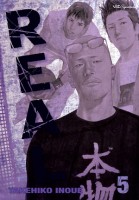
Real, Volume 5Creator: Takehiko Inoue
U.S. publisher: Viz Media
ISBN: 9781421519937
Released: July 2009
Original release: 2005
Awards: Japan Media Arts Award

When I first started reading Takehiko Inoue’s prize-winning manga series Real, I didn’t expect to appreciate it as much as I do. Real has actually become one of my favorite series. I wasn’t particularly interested in wheelchair basketball, one of the main subjects of Real, although that has since changed. Instead, I was initially drawn to the manga because it was created by Inoue, whose artwork I greatly admire. I also am very impressed by his storytelling skills, especially in Real, but also in his other manga available in English, Slam Dunk and Vagabond. As much as I enjoy those two series, in the end it’s Real that I find to be the most compelling. It is a very powerful work. I’ve said it many times before, but it is still true–I honestly believe Real to be one of the best comics that is currently being released in English. The fifth volume of Real was originally collected in Japan in 2005 while the English-language edition, released under Viz Media’s Signature imprint, was published in 2009.

Ever since his motorcycle accident, Nomiya’s life has been falling apart. Although he has tried to earn his drivers’ license, it has taken him quite some time since he is terrified to be on the road. Nomiya is even more terrified of facing Natsumi, the young woman who was in the accident with him. While Nomiya was barely injured, Natsumi has lost the ability to walk and must now use a wheelchair. Nomiya blames himself for the accident and Natsumi’s current condition. The guilt has nearly brought his life to a standstill. He wants to do all that he can to move forward, but this means confronting his fears and confronting Natsumi. Unsurprisingly, she’s not particularly interested in seeing Nomiya, either–she blames him for the accident, too. Her rehabilitation is going well, but Natsumi’s life has been changed forever. Takahashi’s rehabilitation has actually taken a turn for the better, too, after a visit from Nomiya that ends rather badly. It’s been about six months since Takahashi’s own accident which cost him the use of his legs, but he has recently shown enough improvement that he will soon be able to leave the hospital.

Whereas the previous volumes of Real thoroughly introduced the lead characters–Nomiya, Togawa, and Takahashi– and explored their personal, internal struggles, the fifth volume addresses some of the more practical problems and challenges experienced by those who are disabled in an world and environment designed for the able-bodied. This can particularly be seen when Takahashi is considering returning to Nishi High to finish school. Not only is he not yet in a position where he can take of himself, the school itself isn’t at all accessible to someone in a wheelchair and the needed accommodations are prohibitively expensive. These external issues and concerns are inexorably tied to how Takahashi and the others view themselves and and see themselves as people of worth. Takahashi in particular is obsessed with ranking people and assigning them value. He used to consider himself one of the elite, but now his self-worth has been severely compromised. It’s understandable that this is something that he continues to struggle with, especially as he no longer feels that there is a place for him.

Takahashi isn’t the only one suffering from a crisis of self-worth in the series. A major theme in Real deals with what it means to be a good person and a decent human being. Takahashi’s attitude and efforts to be the best in whatever he does comes across as extremely arrogant, but people are beginning to see through his facade of perfection. Nomiya has made, and continues to make, plenty of mistakes in his life, but his honest desire to improve himself and the care and acceptance that he offers others show that he is a much better person than he recognizes. This search for self-worth isn’t limited only to the series’ leads, either. All of their friends and family members are struggling with it as well. In a particularly heart-wrenching development, Togawa’s close friend Yama, who has always been vibrant and maintained an admirably positive outlook, is frightened of who is becoming now that his disease is overtaking his body and mind. Inoue’s characterizations in Real are fantastic. The series is compelling because it is so easy for anyone to identify with the personal struggles being portrayed in the manga even if the characters’ particular situations are unique.

Filed Under: REVIEWS Tagged With: Japan Media Arts Award, manga, real, Takehiko Inoue, viz media, VIZ Signature

Catching Up with Lynley and Havers

March 28, 2014 by Michelle Smith

carelessinredCareless in Red
It’s been a while since I talked about an Elizabeth George book on the blog. I did read With No One as Witness, but spent so long digesting my reaction to the surprise ending (which had, admittedly, been spoiled for me by the author’s website) that I forgot many of the other details. And I started the next book, What Came Before He Shot Her, but as it doesn’t revolve around our main characters and is massively depressing, I quickly abandoned it. Skipping ahead to Careless in Red runs counter to my typical completist sensibilities, but I’m glad I did, even if it is rather lame in various respects.

In short, a murder has been committed in a surfing town in Cornwall where many of the residents are sex-obsessed. The culprit is revealed to be exactly who I thought it was (though I didn’t know why) and then everyone proceeds to have a sudden change of heart. The much-put-upon husband casts off his horrid wife. The rebellious son decides to make a sincere attempt at learning his father’s business. The cantankerous grandpa decides to honor his granddaughter’s wish to become a nun. (Seriously, why were they even in this book? Their only contribution to the mystery was that the victim had once made a comment to the girl that she relayed to the police.) At least Lynley is the protagonist in this one and, even though we aren’t treated to any sections from her point of view, Havers has a decent role, as well. I swear she just brightened up the whole book when she appeared. I do so love Havers.

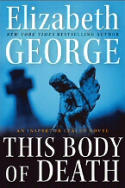
thisbodyofdeathThis Body of Death
Isabelle Ardery, a character from Playing for the Ashes who didn’t even merit a mention in my review of that book, is back, taking on the Acting Detective Superintendent role vacated by Lynley. And boy, is she unsympathetic. She’s an alcoholic for one and makes several bad decisions (often seemingly out of pride or pique) regarding the case at hand (a young woman has been murdered in a local cemetery). She is able, though, to get Lynley to come back to Scotland Yard, and in the end the thoroughly broken pair ends up as lovers. While I do not like her at all, it is at least in character for Lynley to have terrible taste in women (Deborah, anyone?) aside from Lady Helen.

Havers has more to do this time (yay!) but I object to some extreme rationalization at the end regarding her unwillingness to call for backup. Yes, Havers is very stubborn, but I just got the feeling that George knew a reasonable officer would’ve called for backup in the situation Havers found herself in, but in order to get her big, dramatic conclusion to work, she had to get Havers to wait. Also, is George trying to insinuate that Havers is in love with Lynley? Her reaction to Lynley and Ardery’s relationship makes me wonder. I really don’t want this to be true. They should be like Donna and The Doctor.

Overall, though, This Body of Death is an improvement over Careless in Red. The case is more interesting and twisty, with various elements that connect well in ways I did not predict. The only really obvious revelation—and I’m honestly not sure it was supposed to be a surprise to the reader, given the way the book is structured—regards one character’s involvement in a past crime. Not the best Elizabeth George, but not terrible, either.

believingthelieBelieving the Lie
AUGH! I HATE DEBORAH ST. JAMES SO FREAKING MUCH! I mean, I have intensely disliked her for some time, but her idiotic actions in this book, most irritatingly excused by Lynley and Simon, have caused my feelings to progress into outright hatred. When Lynley is tasked with quietly verifying that the accidental drowning of a rich dude’s nephew really was an accident, he enlists Simon and Deborah’s help. Deborah, true to irrational form, becomes obsessed with ferreting out a secret held by one of the peripheral characters and ends up running off on her own to pursue it, which ultimately leads to tragedy. And, of course, it all has to do with having babies, which is Deborah’s primary fixation, even though she’s such a damned moron that I’d feel bad for any kid growing up under her care.

The rest of the book wasn’t so great, either. Though it finishes with much drama, it starts off terribly dull. One subplot I could’ve done without entirely involved a tabloid reporter who was having trouble finding a story salacious enough to suit his editor. He ultimately served almost no purpose whatsoever, except to give Deborah a ride on several occasions. And I was mad at myself for getting a bit misty-eyed over the resolution to another subplot, since it replicates almost exactly one that appeared just two books ago! Lynley seems to be sleepwalking through most of what occurs, and though something spurs him at the end to begin trying to move on from Helen’s death, I’m not exactly sure what that was.

Once again, the best bits were the Havers bits. The volume ends with a cliffhanger that will lead us into the next book, and I’m glad I won’t have to wait years for it. I’m a little worried that Barbara is going to do something to jeopardize her career at Scotland Yard, but if it can lead to happiness in her personal life, or even a glimmer of hope for future happiness, it will probably be worth it.

justoneevilactJust One Evil Act
I wanted so much to love this book, but it persisted in being so thoroughly frustrating and awful that in the end, I very nearly hate it instead.

Angelina Upman, mother of Havers’ sweet nine-year-old neighbor Hadiyyah, returns to her former lover’s life briefly before absconding with her daughter to Italy, where her new man awaits. Azhar (Hadiyyah’s father) does something stupid to try to get Hadiyyah back, Angelina eventually ends up dead, and Barbara does so very, very many thunderingly stupid things throughout that she’s probably tarnished forever now in my eyes, which makes me quite sad indeed. It’s completely in character for her to do what she can for Azhar. I mean, I get that, and I get how he and his daughter are practically the only thing in her life besides her job, but she persists in believing she can bend a tabloid journalist to her will, but it only ever gets her further into the shit. (Meanwhile, readers are treated to innumerable, interminable conversations between the two of them. George also throws in tons of random Italian words throughout; it’s both annoying and pretentious.)

I wanted a book with Havers triumphant. A Havers showing that, despite her problems with professionalism and authority, she really has something amazing to offer. Instead, the best parts of this book were other people, namely Lynley, who makes progress in getting over Helen, and the charming Italian detective, who seems kind of sweet on Barbara.

It literally took me months to finish this. I cannot recommend it. And yet… can I give up a series I have stuck with for so long? Time will tell, I suppose.

Filed Under: Books, REVIEWS Tagged With: Elizabeth George

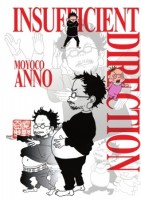
Insufficient Direction

March 28, 2014 by Ash Brown

Insufficient DirectionCreator: Moyoco Anno
U.S. publisher: Vertical
ISBN: 9781939130112
Released: February 2014
Original release: 2005

I picked up the first few volumes of Moyoco Anno’s manga series Happy Mania more on a whim than anything else. After reading them I immediately went out and tracked down all of the manga by Anno available in English that I could find. I have been a fan ever since and even went so far as to host the Moyoco Anno Manga Moveable Feast. Anno is an extraordinarily talented creator. I adore her work and so was extremely happy when Vertical released Insufficient Direction in 2014. Originally published in Japan in 2005, the manga is a somewhat fictionalized account of Anno’s married life with her husband Hideaki Anno of Neon Genesis Evangelion fame. Now, I know quite a few people who were interested in Insufficient Direction primarily because of the Hideaki Anno connection. In addition to being one of the manga’s main subjects, an essay in which he discusses Insufficient Direction is also included as part of the volume’s extra materials. But for me, my interest in Insufficient Direction was all about Moyoco Anno. I was excited to have the chance to learn a little more about her and her life directly from her own perspective.

Rompers (aka Moyoco Anno) and Director-kun (aka Hideaki Anno) are getting married. It just so happens that Director-kun is one of the “big four” of Japanese otaku. A director of both film and anime, he is also a huge fan and obsessive collector of Japanese pop culture. Rompers has her own otaku tendencies and enjoys manga, anime, and such, but she has tried to keep those impulses under control in order to lead a more “normal” life. However, Rompers’ marriage to Director-kun makes that almost impossible and she slowly becomes bona-fide ota wife. Although Rompers obsesses over some of her own interests, it’s nothing when compared to Director-kun. Instead of denying her otakuness, Rompers begins to embrace it, partly out of self-preservation. She and Director-kun are able to share their love of Japanese television, anime, and manga, but how much is too much? Their home quickly fills with their collections and they can be embarrassingly enthusiastic over the smallest bits of trivia. In the end, it is a way of life and they love it (although Rompers continues to have some reservations). But more importantly, they love each other.

There are a ton of references to tokusatsu, anime, manga, and other Japanese pop culture and celebrities. In fact, there are thirty pages of annotations to help interested readers keep a handle on everything. Sometimes reading the notes actually takes longer than reading the chapters they’re associated with. However, understanding all of the minutia and details isn’t absolutely needed to enjoy Insufficient Direction; simply recognizing the extreme levels of geekiness and nerd cred involved should be enough. Rompers and Director-kun make an adorable and loving couple. The reason that there are so many pop culture references isn’t just because that is what they are interested in, it’s also one of the ways they connect and communicate with each other. Entire conversations can be held that consist of nothing but quotes from anime and other media. Singing theme songs at the top of their lungs brings them even closer together. Vacations and excursions are based on locations from films and television shows. Fortunately, because they do share so many interests, they usually can happily spend time enjoying them as a couple.

Although Insufficient Direction is fictionalized–mostly to emphasize the more humorous aspects of Rompers and Director-kun’s relationship–I find it to be entirely and completely believable. As a bit of an otaku myself, I am very familiar with relationships that work in similar ways to theirs and am all too aware of some of the challenges faced by avid collectors. Insufficient Direction shows both of the Anno’s to be very relatable people. At least I could certainly identify with them. Insufficient Direction is quirky, smart, and very funny. Compared to some of Anno’s other manga, the artwork in Insufficient Direction tends to be simpler in style, suitable for what basically amounts to a real-life gag manga. The individual chapters are short and there isn’t really an overarching plot so much as there is an ongoing challenge for Rompers and Director-kun to put up with each other’s quirks and interests. There’s quite a bit of good-natured teasing in Insufficient Direction and quite a bit of love, not just for each other but for art and entertainment as well. I found Insufficient Direction to be a very enjoyable read and am very happy to have it in English.

Filed Under: REVIEWS Tagged With: manga, Moyoco Anno, vertical

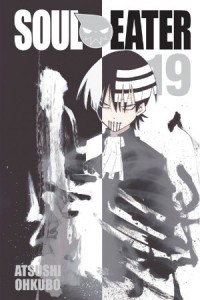
Soul Eater, Vol. 19

March 27, 2014 by Sean Gaffney

By Atsushi Ohkubo. Released in Japan by Square Enix, serialization ongoing in the magazine Shonen Gangan. Released in North America by Yen Press.

The high point of this volume for me was the flashback to Liz and Patti’s past, and how they met Kid. This was spoiled a bit by Soul Eater Not – which came out in Japan after this volume, but well before it here – but seeing Liz as an angry, cynical girl willing to take on the world as long as she and her sister find happiness – is striking given her current personality. The sequence of wordless panels showing the two of them working with Kid, realizing what an eccentric dork he is, and laughing at his obsessions is beautifully done, and leads to Liz realizing that Patti has gone from being merely crazed to genuinely being happy and cheerful. This causes her to have an emotional breakdown, as she realizes she may never get to thank Kid for everything he did for them. Luckily, Patti and Tsubaki are there to give out hugs.

souleater19

This also ties in with what’s going on with Kid, as Liz in her Brooklyn days wished for everyone else to stop existing as long as there was just her and Patti, and Kid opened up their worldview. (This is not helping my obsession with this OT3 at all, let me tell you.) Now it’s Kid who wishes for that, longing for the symmetry of nothingness. His fight with Black*Star, though it has a few cool moves, really ends up being more Black*Star talking him down, reminding him that total annihilation is the easy way out, and that trying to create balance from what’s already there, twisted though it may be, is the duty of a true shinigami. Black*Star is uncomplicated – he wants power so he can protect and help everyone, not for any ‘take over the world’ style goal.

As for Maka and Soul, the end of their arc shows what happens to those who can’t let go of their anger, as we see Giriko literally tear himself – or herself – apart with all the rage that’s been building up inside.Maka and Soul are better than that, and can accept things and move on – which is why they’re able to get out of the Sloth chapter, where moving on is the last thing it wants anyone to do. And so all our heroes unite so that Kid, stepping up and taking the leadership role he has inherited, can finally battle Noah, who has been busy punishing all the teachers who are trying to battle him in our heroes’ place. (Poor bear guy! I’ll miss you!)

Last time we had Maka unable to really get Soul because she didn’t really like Miles Davis’ Bitches Brew (she should try some of the first Quintet, such as Relaxin’). This time we have Justin’s madness work its way out by way of Radiohead songs. Ohkubo loves to bring Western music references into Soul Eater, and this one is particularly jarring – it likely just sounds like mad gibberish if you don’t know the song, but for a Radiohead fans, “Fitter, Happier” is one of the creepier songs off OK Computer, done with a ‘computer-style’ vocoder vocal. It’s a song meant to seem deeply wrong and also a bit sad, something that applies well to Justin here, who has gone into full minion mode here, determined to resurrect the evil god (even called a Great Old One here, in case the Lovecraft refs weren’t obvious enough).

Summing up: Soul Eater. Still one of the best shonen manga out there. Go get it. And it’s out digitally in 2 weeks too!

Filed Under: REVIEWS

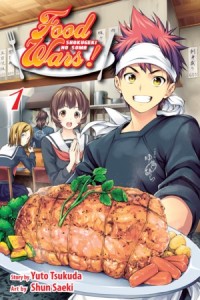
Food Wars!, Vol. 1

March 25, 2014 by Sean Gaffney

By Yuto Tsukuda and Shun Saeki. Released in Japan as “Shokugeki no Soma” by Shueisha, serialization ongoing in the magazine Weekly Shonen Jump. Released in North America by Viz.

The initial reaction to a series is very important, even if it turns out later that it changes. And just like some people read one volume of a series and can’t get over the unlikeable characters, even knowing that their development is the purpose of the narrative, so sometimes I read the start of a new Jump series and am so appalled by a piece of fanservice that I debate whether I even want to continue. I am happy I did end up continuing for the most part, as once you get past the service this is a very good start to a comedic Jump cooking manga, with an engaging male lead. But were I in a bookstore browsing, I think I’d have hit that initial two-page spread and put it right back.

foodwars1

For those wondering what I’m talking about, the manga stars Soma, the boy pictured on the cover. He’s worked in his father’s small local restaurant his entire life, and has inherited his father’s ability to cook yummy food… along with his desire to experiment, even if that experiment turns out to be a taste disaster. And, like a lot of cooking/foodie manga out there, there are many shots of those eating reacting to the food that they taste in a metaphorical way. Indeed, this is not the first manga to have a girl taste something and imagine herself naked. But since the food Soma made is bad, and since the food Soma made has squid as its main ingredient, we get his childhood friend (who promptly vanishes from the narrative, by the way, despite being on the cover and getting a short story at the end) envisioning herself being tentacle raped by a squid.

This really put me off. I was assured by others on Twitter that the service dies down a bit as the series goes on, but we do get at least two other shots in this volume of women basically moaning in orgasm while being sexually assaulted by food, sometimes with bonus little SD-Somas gathered around them leering lasciviously. (The real life Soma, being a Jump hero, seems to have little interest in women.) It sets a tone for the series in general that I ended up disliking. (One might argue I read a lot of series with female nudity used constantly, particularly in Shonen Magazine. But those are generally ‘tee hee, look at the naked bodies in the bath/hot springs’. The reactions here all have a flavor of assault that simply discomfits me, even if it’s all meant to be reactions to food that’s in their head.)

And I wouldn’t have been so annoyed if the series itself had not been as good otherwise. As I said, Soma makes a great protagonist, being confident but not cocky, loving his food and taking offense at those who belittle it, and being generally nice even to the arrogant, haughty girl who seems to be the series’ main female lead (though that’s not certain yet; we do get another potential female lead towards the end, the polar opposite, of course). The food preparation looks fun and completely absurd, things you want in a cooking manga. The premise involves Soma attending an elite cooking school, and I’ve no doubt that much of this will involve class wars and “how dare you speak like that to one whose plate you are not worthy to lick clean”, etc. And that egg dish does sound fantastic. (There is a recipe, of course.)

So I’ll be continuing with the series, which is getting its digital release a few months before it hits print in August. But I still feel compelled to point out it has that unpleasant ‘fanservice assault’ element to it, so I’ll be reading it while keeping a wary eye out for more. Thus, cautiously recommended to fans of Jump comedies and hardcore foodie manga people.

Filed Under: REVIEWS

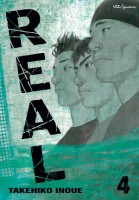
Real, Vol. 4

March 23, 2014 by Ash Brown

Real, Volume 4Creator: Takehiko Inoue
U.S. publisher: Viz Media
ISBN: 9781421519920
Released: April 2009
Original release: 2004
Awards: Japan Media Arts Award

I am a huge fan of Takehiko Inoue’s illustrations and manga. Everything that I have read by him has impressed me; his artistic skills and storytelling, as well as his complex characterizations, are fantastic. When I first began reading Inoue’s manga I fully expected to enjoy his series Vagabond the most. Vagabond is marvelous and I love it, but it was Inoue’s wheelchair basketball series Real that became my favorite. Real also happens to be the first manga by Inoue that I read. Since I don’t follow sports of any sort very closely, I was somewhat taken by surprise by how much I enjoyed Real. But the series is about so much more than basketball. Inoue adeptly portrays hard-hitting challenges and life-changing events in Real; basketball is just one part of the whole. The fourth volume of Real was published in Japan in 2004 while the English-language edition was released under Viz Media’s Signature imprint in 2009. Inoue received a Japan Media Arts Award Excellence Prize for Real in 2001, the same year the manga began serialisation.

After a violent falling-out with the captain of his wheelchair basketball team, Togawa has only recently returned to the game. There is still a fair amount of tension between the members of the Tigers, but with the Sunflower tournament coming up the team has started to pull together in a way that it hasn’t been able to in a long time. Togawa’s hard work and enthusiasm for basketball have served as an inspiration for some of his teammates. Unfortunately, some of the other players aren’t as appreciative of his attitude and the grueling practices that he leads. It is very likely that the Tigers forward momentum is only temporary and that the team will soon fall apart again. For Togawa, playing basketball and playing for the Tigers means everything to him. Having his right leg amputated as a middle school student because of bone cancer brought his dream of becoming a sprinter to an abrupt end. Togawa struggled immensely with this loss and it wasn’t until he discovered wheelchair basketball that he was able to find himself and his passion as an athlete again.

Just as the third volume of Real largely focused on the beginning of Takahashi’s rehabilitation, the fourth volume in the series delves more deeply into Togawa’s past, looking closely at the state of his life immediately following the amputation of his leg. It shows how the young track star, after having his ambitions crushed, came to play wheelchair basketball. The loss of his leg was devastating for Togawa. He became withdrawn, cutting himself off from his classmates and his friends, and his father unintentionally reinforced this isolation. Along with his leg, Togawa lost his sense of purpose, drive, and direction in his life. Even greater is the tremendous loneliness that he experiences. Togawa doesn’t want pity from others, he wants understanding. At the same time he is shunning contact and pushing people away, he is desperate to ease the loneliness that he feels. Togawa is extremely fortunate to meet a man by the name of Tora who helps drag Togawa back out of the shell he created for himself, serving as a much-needed role model–something that Takahashi has yet to find.

Despite all of the sweat and tears in Real, Volume 4, it tends to be slightly more ruminative and quiet than the volumes that precede it. One of the major themes that Inoue explores in the series–the meaning and purpose of a person’s life–becomes particularly prominent in the fourth volume. Both Togawa and Takahashi are faced with enormous challenges and changes in their lives which require them to completely reevaluate who they are as people. They are both struggling to rediscover and redefine their identities. Having lost something incredibly important to them, they anguish over the reasons why and what could have been done to prevent it. Ultimately, these are questions that don’t have an easy answer or solution. Over the course of the series, Takahashi frequently lashes out at those around him. In contrast, as seen in Real, Volume 4, Togawa tends to internalize his anger and despair. The similarities and differences in their situations and personalities are striking and an extraordinary effective part of the series. Real is a powerful and emotionally engaging work.

Filed Under: REVIEWS Tagged With: Japan Media Arts Award, manga, real, Takehiko Inoue, viz media, VIZ Signature

One Punch Man, Vol 1

March 21, 2014 by Anna N

I make no secret of my affection for shoujo manga, but occasionally even I want to read shonen manga featuring kicking or punching, preferably both. One Punch Man, as one might suspect, is centered on punching. This is available on the Viz Digital site for your various devices! One Punch Man provides an amusing twist on the typical shonen manga plot about a young protagonist who has to work hard to develop his extraordinary abilities. In this case the hero of the manga, formerly unemployed salaryman turned hero Saitama has already train to develop his powers with such intensity that all his hair has fallen out. He is called “One Punch Man” because he is so strong he can easily defeat any opponent with just one punch, and as a result is incredibly bored.

In One Punch Man, Saitama’s town seems to be an unfortunate focus of giant villains or monsters with satirical origin stories. One Punch Man punches Vaccine Man, who exists due to pollution, a crustacean made angry by graffiti, and a group of subterraneans. Throughout the manga, One Punch Man is vainly hoping for a non-boring battle, only to be disappointed every time. As drawn by Yusuke Murata, One Punch Man often resembles a slightly perturbed superhero with an egg-like head, which only serves to highlight the ridiculousness of his opponents. Towards the end of middle of the volume One Punch Man even takes on a sidekick Genos, “a lone cyborg fighting for justice.”

I found One Punch Man‘s send up of superhero conventions amusing, the art was well executed, and it perfectly fit in my desire to read goofy fighting shonen manga. The send-ups of villains and heroic origin stories mixed in with some spectacular punches made this manga fun to read, and I hope it does well for Viz as a digital first release. I’d buy the next volume, for sure.

Filed Under: REVIEWS Tagged With: one punch man, Shonen, viz media

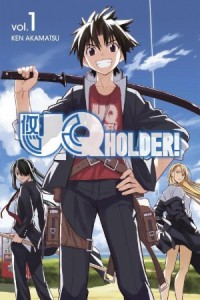
UQ Holder!, Vol. 1

March 20, 2014 by Sean Gaffney

By Ken Akamatsu. Released in Japan by Kodansha, serialization ongoing in the magazine Weekly Shonen Magazine. Released in North America by Kodansha Comics.

It’s pretty easy to tell that this is a sequel to Negima right off the bat – Evangeline appears on Page 1, talking about the difficulties inherent in immortality. It’s the following page that’s the gut-punch for all those who were hoping that this new series would see a lot of the Negima cast making cameos throughout – a metaphorical shot of Eva and the Negima cast slowly parting from one another as she continues on a solitary journey (not even Chachazero?), it’s also Ken Akamatsu telling us that this is 80 years after Negima proper, and most of the girls we loved are now dead. Is this the world that the shippers fought and died for in the “who is Negi’s wife?” wars?

uqholder

Luckily, this is not a grim ‘n gritty story of how the Negima cast dies over the years – at least not so far. No, it’s pure shonen adventure, a Akamatsu has resolved whatever the issues were with Kodansha that caused Negima to end so abruptly and has finally won what he’d been working towards for years – pure adventure, no harem comedy whatsoever. Now, this is not to say we won’t have a few love triangles or fanservice scenes down the road – there’s at least two bath scenes with naked people in this volume alone. But Negima was always held back, at least at first, by Kodansha demanding Akamatsu try to replicate Love Hina, and it’s good to see that this new series is not going to be doing the same.

By the way, I had mentioned Evangeline, and she is the exception to the dead cast list above, being an immortal vampire. Indeed, immortality is the point of this entire series, as our hero is a young man, Tota Konoe (note the last name), whose parents died in a war, who has no memories before he as twelve, and who Eva, under the guise of a schoolteacher, has been raising for the last two years. It’s quite a burden for a young man to bear, but luckily Tota is very much a traditional shonen hero, complete with nonsense about a man’s dreams. (I am pleased it’s immediately pointed out as the nonsense it is.) As for Eva, she goes by Yukihime now, and it’s striking how much she has mellowed out and gotten nicer. The Eva of Negima would never, ever have gotten as close to Tota as Yukihime has – or at least would keep up a facade of disinterest.

The other main character we meet here is Kuromaru, who is an intriguing Setsuna clone. Given this is a sequel to Negima, I’m not entirely sure how much of the character’s looks are down to the fact that Akamatsu can only draw a certain number of faces and how much of it is deliberate, but I will give him the benefit of the doubt here. Tota is not too far off from Kotaro, and earlier we met a young person who was a dead ringer for Shinobu from Love Hina (which took place in the same universe as Negima). Kuromaru not only looks exactly like what Setsuna and Asuna’s child would look like, but also appears to be from the Bird Tribe that Setsuna had so many difficulties with earlier… and Kuromaru is having similar difficulties. Possibly the most intriguing thing, however, is how Kuromaru’s gender is being withheld – not only from the cast but also the reader. It’s clearly being done on purpose, and I’m wondering what’s going on here. Is Kuromaru trans? Or genderless? If so, kudos to Ken, though I suspect that will just open up a lot more questions.

We wrap up UQ Holder with a statement of the premise, which is to find aliens, time travelers and espers… wait, wrong series. To find immortal being like Yukihime and Tota and make friends with them! Luckily Yukihime seems to have her own personal yakuza to help carry this off. UQ Holder is an excellent start for both Akamatsu fans and fans of shonen manga in general, and I have no doubt will be filled with adventure and heart.

(Also, my guess on Tota is that Konoka and Setsuna’s son (via Negi helping out, so to speak) and Kotaro and Natsumi’s daughter got married and had Tota. Because forget diamonds, ship wars are eternal.)

Filed Under: REVIEWS

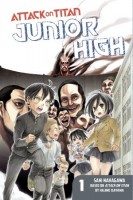
Attack on Titan: Junior High, Vol. 1

March 19, 2014 by Ash Brown

Attack on Titan: Junior High, Omnibus 1Creator: Saki Nakagawa
U.S. publisher: Kodansha
ISBN: 9781612629162
Released: March 2014
Original release: 2013

Attack on Titan: Junior High is one of several spin-off series inspired by Hajime Isayama’s hit manga Attack on Titan. Saki Nakagawa was selected to work on an Attack on Titan series after entering a manga contest. (Coincidentally, both Nakagawa and Isayama attended the same design school.) Although Nakagawa is the writer and artist for Attack on Titan: Junior High, Isayama has had some input into the series’ development. In fact, he was the one who suggested creating a manga along the lines of Tsutomu Nihei’s parody series Blame! Academy. And so Attack on Titan: Junior High was born–a comedy manga that somehow manages to combine Attack on Titan with contemporary Japanese school life. The manga began serialization in 2012 in Japan and the first two volumes were collected in 2013. Kodansha Comics is releasing Attack on Titan: Junior High in an omnibus edition. The first omnibus, collecting the first two Japanese volumes, was published in 2014 and Kodansha was kind enough to send me a review copy.

It has been five years since Eren was traumatized from an encounter with a Titan. Now that he’s in junior high he finally has the opportunity to seek revenge–both humans and titans are counted among the students and teachers of Attack Junior High. Of course Eren has other pressing matters to attend to even while his hatred of Titans remains at the forefront of his mind: making allies out of his classmates (which he’s not particularly good at), surviving epic games of dodgeball and choosing the perfect after-school club (which are both more dangerous than they might first appear), not to mention trying to stay on the upperclassmen’s good sides (which can actually be rather difficult). On top of all of that, Eren is a member of class four, a group of first years who all have their own quirks and issues to deal with. All together they’re a bunch of weirdos, but none of the other classes at Attack Junior High are much better. It’s really saying something when the Titans are the most normal ones at the school.

To really appreciate Attack on Titan: Junior High requires familiarity with the original Attack on Titan series and to some extent familiarity with Attack on Titan fandom as well. Some of Attack on Titan: Junior High will be funny, or at least amusing, even to those who haven’t read Attack on Titan, but the manga works best when it is directly parodying the original series and using it as its framework. All of Attack on Titan‘s most well-loved and reviled characters make an appearance in Attack on Titan: Junior High with some of their personality traits taken to a comedic extreme (although some were fairly over-the-top to begin with): Eren is a single-minded fanatic; Mikasa is overprotective of him to a fault; Sasha thinks about nothing but food; Jean is an arrogant ass; Hange succumbs to fits of ecstasy at the mere thought of Titans; Levi is obsessed with cleanliness, and so on. These characteristics were true of the original cast, too, but Nakagawa has stretched them to their limits in Attack on Titan: Junior High.

Nakagawa is clearly a fan of the original Attack on Titan series and is having a lot of fun with Attack on Titan: Junior High. In addition to using Isayama’s characters and taking them to their ludicrous yet logical conclusions, Nakagawa also uses pivotal and memorable scenes from Attack on Titan, giving them utterly ridiculous and absurd twists to emphasize their more comedic possibilities. The darkness, death, and destruction found in Attack on Titan is almost completely missing from Attack on Titan: Junior High. It can be just as frantic and frenetic, but as a parody the manga is much more lighthearted in tone. Even characters who have long been dead in the original series have an active role to play in Attack on Titan: Junior High; it seems as though no one really has to worry about dying in Nakagawa’s series. The worst thing that really happens in the first omnibus of Attack on Titan: Junior High is some stolen lunches. Granted, for students that can be an extremely tragic event, indeed.

Thank you to Kodansha for providing a copy of Attack on Titan: Junior High, Omnibus 1 for review.

Filed Under: REVIEWS Tagged With: attack on titan, kodansha, Kodansha Comics, manga, Saki Nakagawa

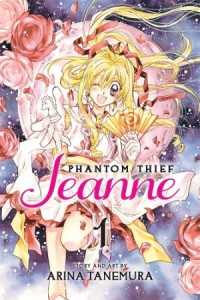
Phantom Thief Jeanne, Vol. 1

March 18, 2014 by Sean Gaffney

By Arina Tanemura. Released in Japan as “Kamikaze Kaitou Jeanne” by Shueisha, serialized in the magazine Ribon. Released in North America by Viz.

Having almost run out of Tanemura titles to release, Viz has gone back to the early days with this one and license rescued it from the clutches of CMX. And I’m very pleased that they did, because if you were to ask me to take only one Tanemura title with me to a desert island, this would be the one. Her first really big hit, Phantom Thief Jeanne is a magical girl manga that is not afraid to examine the core of darkness that lies at its heart – and yet still be a fun magical girl title for kids. Madoka Magica this is not.

jeanne1

The phantom thief subgenre of magical girls should be familiar to everyone by now – not only through Jeanne, but also via Saint Tail, which uses very similar stylings, and CLAMP School Detectives/Man of Many Faces, where Akira is the male version of this. Naturally, given the thief is a young girl, they are stealing FOR GOOD. Indeed, Maron Kusakabe, our heroine, is a descendant of Joan of Arc (hence the title), and the plot is set up as quite religious – she is using God’s Power to extract the evil from paintings, evil that is being used by Satan to gain human hearts. (This is definitely the French Joan of Arc – Shakespeare would stare in sheer horror at the myth of Joan Puzel today.)

It’s not just the religious themes that give this manga extra depth. Maron has more going on in her background than the usual chirpy magical girl. She’s living alone, her parents having split up and separately decided to leave for another country (suspicious), her magical familiar Finn dashes off her origin story in less than a page (suspicious… though it could just be I live in a post-Kyubey world), and while she does quickly fall for the boy destined to be her love interest (who is also a rival thief with a rival familiar), she absolutely does not want to deal with these feelings, her parents having convinced her that falling in love in a horrible thing to happen to someone. There’s a depth and solidity to Maron’s life that I really enjoyed here.

Of course, it’s not all sadness and broken homes. This is still a Ribon title. There’s lots of fun and silliness, mostly in the form of Maron’s best friend Miyako, whose father is a police officer and who is dedicated to capturing the thief who keeps stealing paintings (as always, the world itself is unaware of the supernatural part of things). There’s lots of love triangle shenanigans as well, with the shy kid in love with Maron leveling up due to demon possession, but amazingly staying leveled up afterwards and trying to become strong enough to court Maron properly. (He clearly doesn’t know what genre he’s in.)

Essentially, this takes the basic beats of the Phantom Thief genre and simply writes them really well. It’s paced well, the characterization is doled out at the right moments, and I can even get used to Tanemura’s trademark GIANT EYES. Anyone wanting to read this will find a cornucopia of details to enjoy, and it has excellent rereadability. Definitely worth buying, even if you already own the CMX version.

And, most importantly, the lead guy is a blond and the runner-up is a brunet! Do you know how little that happens in shoujo? More blond leads!

Filed Under: REVIEWS

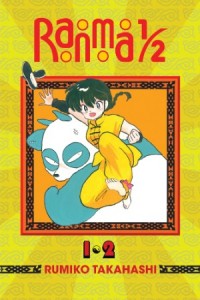
Ranma 1/2, Vols. 1 & 2

March 16, 2014 by Sean Gaffney

By Rumiko Takahashi. Released in Japan by Shogakukan, serialized in the magazine Shonen Sunday. Released in North America by Viz.

(pre-review note #1: I use ‘Ryouga’ and ‘Ukyou’ when I romanize, though otherwise stick to Viz romanization. It’s a 90s fanfic writer quirk that I am unlikely to break the habit of, as I am stubborn.)

(pre-review note #2: Few comment on my reviews anyway, but just in case: please do not character bash in the comments, at all.)

It’s quite odd seeing reviews of the new Ranma 1/2 omnibus from people who haven’t read it before, as they talk about all the craziness that simply doesn’t register with me anymore. I am almost saturated with the first two volumes of Ranma contained here. Not only have I read it when Viz first released it in 32-page pamphlet comics, and then again as collected works, but so much Ranma fanfiction uses the same opening as a springboard for its own ideas (or lack thereof) that I can almost recite some of the dialogue. “And I’m better built to boot!” “She’s really a sweet girl, she’s just a violent maniac.” And so many others. So, in a sense, there’s no real way I can review this for a newbie. As such, this is more of a look at Ranma in retrospect, and will be liberally laced with spoilers. Short review for those who don’t want to read on: Ranma 1/2 is a lot of fun, and in these first two volumes you can see Takahashi shift her characters to where they are funniest.

ranma1-2

For those who picked up the last iteration of Ranma, the scans used do look better – there’s still no color pages (there weren’t in the Japanese volumes either), but it’s not as dark and muddy as it once was. The translation is ‘spiffed up’ a bit, but is still essentially the same, so anyone who wants honorifics is out of luck. There’s a bubble order error on Page 1 (which everyone has noticed), but otherwise things seem well put together.

It’s worth noting that this was the new series Takahashi had in Shonen Sunday to replace her breakaway hit, Urusei Yatsura. For all that it repeatedly failed in North America, the manga was an instant classic in Japan, and I imagine there was some pressure on her to keep the comedy she did best while making things slightly different. Akane in these first couple of volumes is not all that far off from Shinobu Miyaki, Ataru’s long-suffering childhood friend and ex-girlfriend. Same general sweetness when not placed in stressful situations, same hair-trigger temper, same ability to beat up anyone who activates that hair-trigger temper. As such, it’s refreshing that Ranma is so different – at least at first. Sure, he shoots his mouth off without thinking, but he’s quite observant here, noticing people’s emotional states without commenting and playing off that. Most importantly, Ranma’s interest in scoring with women is zero, and this will not change for the next 18 omnibuses after this one. Ataru was a giant lech who wanted every cute girl in the universe. Ranma has issues dealing with girls, and tends to prefer fighting instead.

As for the others, Genma comes from a line of horrible Takahashi fathers that extends from Mr. Fujinami all the way to Rin-Ne’s horrible debt-ridden dad. Genma is obsessed with fighting and training, but is too dumb to listen when people tell him there’s a cursed spring ahead – though, to be fair, so is Ranma. He also tends to stay in his panda form almost as much as Ranma does his girl form, possibly for the same reason – he looks cuter that way. Meanwhile, Soun is something of a nonentity, and this will not change much either – his observation is the opposite of Ranma, as he is in the bath when P-chan leaps in and Ryouga leaps out, but presumably does not ever think “should I stop this man with a pig curse from sleeping with my innocent daughter every night?”.

Kasumi and Nabiki seem quite different at the start of the series. Nabiki is the ‘normal’ girl, who’s clearly OK with being engaged if the guy is cute, but is unwilling to put up with the guy being weird – which Ranma definitely is. Kasumi seems actually vexed at several points in Chapter One, and talks about how she prefers older men – clearly meant to hint at the start of her plot with Dr. Tofu that goes nowhere. As the volume moves on, though, we see the light bulb go off over Takahashi’s head as to how they’ll be handled in the future. With Nabiki it’s selling the photos to Kuno, something for which she is gleefully unapologetic. It’s the start of something big. And Kasumi gets to visit Dr. Tofu, but he’s so oblivious to anything and everything while she’s around that it’s obvious to anyone what she does to him – obvious to anyone but her. Kasumi’s breezy Yamato Nadesico-ness, and her tendency to think the best of everyone while missing the darker points, will become her standard character trait.

So far, the only supernatural aspect of Ranma we’ve seen is the curse itself, as opposed to Urusei Yatsura’s aliens bringing the excuse for any sort of plot whatsoever simply by virtue of being from another world. But that’s OK, as Ranma is far more focused on fighting. Not only are Ranma and Genma perfecting their own style of Japanese martial arts – which utilizes many different styles, most of which I suspect are ‘what looks really cool?’ – but we also get to see Akane’s kempo-influenced style (her family and Ranma’s supposedly have the same ‘anything goes’ background, but Akane has not been training around Asia for the last 10 years either) and Kuno’s kendo training with a wooden sword. Ranma is shown to be an excellent fighter, but is thankfully not perfect – he tends to underestimate his opponents, such as Kuno and Ryouga here, and ends up not giving his best effort till he’s already injured as a result.

Speaking of Kuno and Ryouga, let’s talk about them. Shutaro Mendou had his moments of complete idiocy, but could at heart behave like a normal person if pressed or girls were watching him. Tatewaki Kuno has no such normalcy filter, for reasons that we won’t find out for some time but are essentially similar to Ranma’s – “boy, my entire family is screwed up”. It’s worth noting that he and Nabiki interact purely by dint of being in the same class, and he even notes casually that he despises her at one point. Well, that’s one ship sunk. No one could possibly write Tatewaki/Nabiki after reading that. :) As for Ryouga, what most struck me wasn’t all of the anger he possesses – Ryouga is an out-of-control berserker here, with none of the sweetness and depression that will flesh him out later – but how much he looked like Ataru. It won’t be as obvious to those who haven’t seen the final few volumes of UY – Takahashi’s art evolved exponentially during that series – but put a bandana on Ataru by the end of UY and he’s basically Ryouga here. Ryouga, notably, DOES have a libido, but knows better than to do more than snuggle in Akane’s boobs as a pig – we don’t have a true lecherous pervert in the series. Yet.

I was amused at Ryouga not caring about Akane at all during the first fight – Ryouga tends to be focused only on fighting and revenge in this volume, and it’s only when Akane kisses his pig-form that he’s smitten – possibly as it’s the most affection he’s ever gotten from anyone. Ryouga’s sense of direction also comes up for the first time here, and it’s already exaggerated to its maximum – we see him at the Northern and Southern ends of Japan. As for P-chan, his arrival in the Tendo household sets up an obvious tension about how long it will be before his secret is revealed and Akane finds out who he is. The answer, of course, is never – this never comes up, likely as Takahashi knew it would require a response that would be too serious to cope with in the series.

Other characters we’re introduced to include Dr. Tofu, who’s an excellent doctor who’s useless once he sees Kasumi. This was once an amusing running gag, but seeing Tofu suffering the same effects when he sees a middle-school Kasumi show up with her elementary-school aged Akane feels horribly creepy now, and I won’t be sorry when he’s quietly phased out of the manga in a few more volumes. We also meet Kodachi, though she barely gets to appear before the omnibus ends. It’s still enough time to see that she’s a little bit crazy, and also tends to win her matches by crippling the opponent beforehand. As for her own family situation, it will have to wait till next time.

Lastly, it’s worth noting how well Ranma and Akane get along, despite the bickering and occasional misunderstandings. Usually everything is resolved in a chapter or so, and Ranma is not QUITE as thoughtless as he gets later on. They have common interests, and tend to work well when fighting together. Takahashi had gotten burned on UY when Lum became so popular she had to change the story to make her the lead girl, and though she came to approve of that, it wasn’t going to happen again. So here we get two whole volumes setting up how well Ranma and Akane go together, with the villains/rivals that we see so far mostly being comedic and/or focused entirely on revenge against Ranma for non-romance reasons. It will take a villain of a higher caliber to really create the first big rift between these two, one that will leave self-confidence and trust issues that never really get settled throughout the series. But Shampoo is in the next volume. For now, we’re introduced to Ranma Saotome and the craziness that surrounds him, and there’s a lot of it. If you’ve read Ranma, read it again. If you haven’t, go read it. And for God’s sake, please don’t take it seriously! That’s the WORST thing to do with this series! (looks up at backscroll, coughs a bit)

Filed Under: REVIEWS

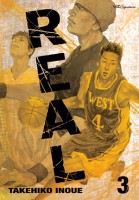
Real, Vol. 3

March 15, 2014 by Ash Brown

Real, Volume 3Creator: Takehiko Inoue
U.S. publisher: Viz Media
ISBN: 9781421519913
Released: January 2009
Original release: 2003
Awards: Japan Media Arts Award

Takehiko Inoue is probably best known for his basketball manga series Slam Dunk. Now, I enjoy Slam Dunk quite a bit. However, it’s another basketball manga by Inoue that is my personal favorite–Real, which specifically features wheelchair basketball. Although Real and Slam Dunk both share some similar themes, Inoue’s approach in Real tends to be much more serious and realistic, which make sense as the series is intended for a more mature audience. Real began serialization in the manga magazine Weekly Young Jump in 2001. Later that year, Inoue would win a Japan Media Arts Award Excellence Prize for the manga. The third volume of Real was released in Japan in 2003. Viz Media published Real under its Signature imprint, releasing the English-language edition of Real, Volume 3 in 2009. Real is a fantastic series that starts strongly and only continues to get stronger with each volume.

Things always came easily for Takahashi and he naturally excelled at both school and sports. But now he is faced with one of the most daunting challenges of his life. The question is whether or not he will be able to meet that challenge. After being hit by a truck, Takahashi has lost all feeling in his legs along with his ability to walk. He is in complete denial about his condition and is convinced that with only a little effort he’ll be back to playing basketball in no time. Takahashi is in for quite a shock when he begins his physical rehabilitation and he doesnt’ take it well. Recovery, both mental and physical, will be a long and excruciating process and in the end Takahashi will never have the mobility he once enjoyed. Coming to terms with that fact and facing reality are the first steps that Takahashi needs to take in order to move on with his life, but they may be some of the most difficult ones to accomplish.

Although Takahashi is largely the focus of the third volume of Real, he is not the only one who is facing a significant crossroads in his life. Moving forward after a traumatic experience is one of the themes addressed in Real, Volume 3. Nomiya still feels incredibly guilty over the accident that he was in which caused Natsumi to lose the use of her legs. She, like Takahashi, has begun her rehabilitation. It’s a painful and exhausting process for the body, the mind, and the spirit. Seeing this, Nomiya desperately wants to change the direction his life is heading and to become a better person. This, too, is not an easy process. At this point in the series, Togawa serves as proof that these sorts of challenges can be overcome. Things certainly aren’t perfect for him and he still harbors intense anger and frustration, but even with a missing leg he leads a full life. However, it took hard work and effort to get to where he is now. Whether or not Takahashi will be able to do the same remains to be seen.

One of the things that impresses me about Real and Inoue’s work in general is his ability to create incredibly flawed characters who are still sympathetic. Takahashi in particular can be extremely harsh and unlikeable, but I still care about him and his situation. His tormented feelings over no longer being able to walk and how he believes that makes him a lesser person are counterproductive. But he is not the only person who shares them; others struggle with those types of feelings as well. Tamura, the captain of Togawa’s basketball team, has repeatedly expressed similar sentiments which either deflates the other players or pisses them off. (Togawa is particularly sensitive to this issue and has hauled off and punched Tamura at least once because of it.) Inoue’s adept handling of these concerns, while specific to the context of Real and its characters, is also more universally applicable. Almost everyone, no matter who they are, has experienced feelings of inadequacy and disappointment at some point in their lives. Real simply shows what can happen when that reality is faced head on.

Filed Under: REVIEWS Tagged With: Japan Media Arts Award, manga, real, Takehiko Inoue, viz media, VIZ Signature

Kisses, Sighs, and Cherry Blossom Pink

March 14, 2014 by Ash Brown

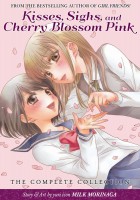
Kisses, Sighs, and Cherry Blossom PinkCreator: Milk Morinaga
U.S. publisher: Seven Seas
ISBN: 9781937867317
Released: June 2013
Original release: 2012

Kisses, Sighs, and Cherry Blossom Pink is the second yuri manga by Milk Morinaga to have been licensed in English. The first, and my introduction to her work, was her series Girl Friends. I quite enjoyed Girl Friends and so was looking forward to reading more of her manga, in this case one of her earlier series. Kisses, Sighs, and Cherry Blossom Pink was released in English by Seven Seas in 2013 in a single-volume omnibus edition. Morinaga first began creating the stories included in Kisses, Sighs, and Cherry Blossom Pink in 2003. In Japan, the earlier stories were collected into a single volume in 2006. However, Kisses, Sighs, and Cherry Blossom Pink was later released again in 2012 in two volumes that collected additional stories, including some that were previously unpublished. This two-volume edition of Kisses, Sighs and Cherry Blossom Pink is the one upon which Seven Seas’ omnibus is based. As such, the English-language edition of the manga collects nearly a decade’s worth of material into a single volume.

Nana and Hitomi were best friends who grew up together and attended the same elementary and junior high schools. Nana was looking forward to becoming a student at Sakurakai Girls’ High School, but that was when she thought Hitomi would be enrolling as well. However, Hitomi was accepted at Touhou Girls’ High School. Finding it too painful to continue to suppress her love for Nana after being rejected, Hitomi chooses to attend Touhou instead. Despite how close the two of them used to be, Nana finds Hitomi drifting away and she misses her terribly. But recognizing her own feelings is only the first step in mending their relationship as is begins to evolve into something more than just friendship. Similarly, several of the other young women at Sakurakai and Touhou are faced with their own first loves and crushes on classmates. It isn’t always easy to confess their feelings and falling in love with a person of the same gender often brings along challenges that other couples don’t have to deal with.

The stories collected in Kisses, Sighs, and Cherry Blossom Pink follow a vague chronological order, but many of them aren’t directly related to one another. They share the same setting and to some extent the same characters, but only Nana and Hitomi are the focus of multiple stories in the volume. I actually really enjoyed Morinaga’s structural approach to Kisses, Sighs, and Cherry Blossom Pink. Nana and Hitomi’s relationship provides a more developed, ongoing narrative, creating a framework which supports the supplementary side stories about their classmates and friends. Overall, I feel this gives the manga slightly more depth. Also included in Kisses, Sighs, and Cherry Blossom Pink is a diagram that visually shows how all of the different stories and characters overlap and are connected to one another. Although they are interrelated and occasionally make references to previous developments and chapters, most of the stories do stand perfectly well on their own in addition to contributing to the manga as a whole.

Kisses, Sighs, and Cherry Blossom Pink tends to be very cute, sweet, and romantic, which is not to say that every story is a happy one. I appreciated that some of the chapters in Kisses, Sighs, and Cherry Blossom Pink have touches of angst, sadness, and bittersweetness to them. Nana and Hitomi’s relationship, despite having its ups and downs, does have an ending that seems to tie everything up a little too easily and nicely, but I won’t deny that it made me smile. Morinaga also addresses some very real issues and concerns, such as homophobia, that are encountered by same-gendered couples, but many of the feelings expressed are relevant for any romantic relationship. The manga may be a bit melodramatic at times, but it is emotionally resonant. Kisses, Sighs, and Cherry Blossom Pink also incorporates a fair amount of humor. It’s a highly enjoyable and charming collection of short manga with likeable characters, a generally optimistic outlook, and a satisfying amount of realism to go along with its sweetness.

Filed Under: REVIEWS Tagged With: manga, milk morinaga, Seven Seas, Year of Yuri

Indian Summer

March 12, 2014 by Ash Brown

Indian SummerAuthor: Mieko Kanai
Translator: Tomoko Aoyama and Barbara Hartley
U.S. publisher: Cornell University East Asia Program
ISBN: 9781933947556
Released: August 2012
Original release: 1988

My introduction to Mieko Kanai was through her short novel Oh, Tama!, the second volume in her Mejiro series. I enjoyed it so much that I wanted to read more of her work, which is how I came to pick up Indian Summer. Although Indian Summer was Kanai’s first novel to be released in English, and only the second volume of hers to be translated (the first being the short story collection The Word Book), it’s actually the third book in the Mejiro series. Each novel in the Mejiro series, though they share some of the same characters, settings, and events, largely stands on its own. While it isn’t necessary to read one novel to enjoy another, it may add some additional depth. After being serialized between 1985 and 1987, Indian Summer was collected into a single volume with some slight modifications in 1988. The English translation of Indian Summer by Tomoko Aoyama and Barbara Hartley, published by Cornell University’s East Asia Program as part of its New Japanese Horizons series in 2012, is based on the later 1999 Japanese edition of the novel.

Momoko is a new student at a university in Tokyo. She’s looking forward to leaving her home in the country behind and setting out on her own in the city. Unfortunately, her overbearing mother isn’t about to let her nineteen-year-old daughter live unsupervised and plans for Momoko to stay with her aunt Chieko instead. The arrangement is meant to be temporary. In a year, Momoko’s younger brother Jun’ichi is also expected to be attending a Tokyo university and their mother intends for them to live together so that Momoko can look after him. Momoko isn’t at all interested in either of these plans, but happily she and her novelist aunt get along fairly well with each other. Chieko has her quirks, as does Momoko, but the two of them are doing what they can to make the best out of a rather awkward situation and to appease Momoko’s mother. Although the arrangement isn’t ideal, life does go on for Momoko as she beings university, makes friends (her classmate Hanako just so happens to be a huge fan of Chieko’s writing), and deals with any of the other curveballs that are thrown her way.

The structure of Indian Summer is particularly interesting. The novel is primarily told from Momoko’s point of view, but her narration is interspersed with the essays and stories that her aunt has written. Generally they are somehow related to whatever is currently going on in the story, but they do break it up somewhat. Much as in Oh, Tama!, Kanai frequently makes references to other works of literature as well as cinema in Indian Summer. Although I know there were some references that I didn’t recognize, I was delighted by those that I did, such as an homage of sorts to Nobuko Yoshiya’s Hana Monogatari. However, enjoyment of Indian Summer doesn’t depend on familiarity with the works being referenced, some of which are Kanai’s own. In Oh, Tama!, Kanai mentions that the characters in her Mejiro series are all based on real people. Indian Summer makes it fairly clear that she herself is at least partly if not primarily the inspiration for Chieko.

In Oh, Tama!, Momoko, Hanako, and Chieko were side characters. In Indian Summer, their roles are very much center stage. Momoko makes a genuinely appealing lead. She’s self-aware, a bit headstrong, forthright, and very capable of speaking her mind. Indian Summer, like Oh, Tama!, is lighthearted and humorous, focusing more on the characters themselves rather than on a complicated or involved plot. Not much actually happens in the novel. Mostly it’s about a young woman expressing herself and even venting a little as she deals with the very normal events in her life. Granted, while the actual events aren’t particularly unusual, the characters in Indian Summer all tend to be rather eccentric in one way or another. As Momoko begins to experience life away from home, the novel explores themes of family, interpersonal relationships, sexuality, and gender roles in a very amusing manner. Indian Summer was a wonderfully delightful and witty read. I can only hope that more of the Mejiro series will be translated in the future.

Filed Under: REVIEWS Tagged With: Mejiro Series, Mieko Kanai, Novels

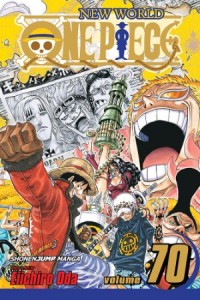
One Piece, Vol. 70

March 11, 2014 by Sean Gaffney

By Eiichiro Oda. Released in Japan by Shueisha, serialization ongoing in the magazine Weekly Shonen Jump. Released in North America by Viz.

Sometimes you’re reading a manga and you get to one page, or even just one particular panel, that makes you grin so hard and flail around because it perfectly encapsulates everything about that series into one compressed image of fabulous. For One Piece 70, it was, believe it or not, Law giving his sandwich preferences. After everyone is setting sail again, Luffy demands food, which Sanji notes will be sandwiches today. The crew start giving their preferences, and Law briefly joins in, noting how he doesn’t want bread. He them stops and gasps, horrified. THEY’VE SUCKED HIM IN.

onepiece70

Once again we see in this volume how Luffy and his crew are different from the norm. They’re contrasted with the other pirates elsewhere in the world, particularly Donflamingo. They don’t want power as such (Luffy wants to beat the Four Kings, but it’s not so that he can take their domain away, it’s for the thrill). They don’t abuse, kill, or sexually assault anyone. They are the idealized kid version of a pirate, only actually making it happen. As the Marines note, they have to constantly belittle them and talk about how evil they are, as if they didn’t the Straw Hats would be far too easy to love.

This volume wraps up Punk Hazard, so as you’d expect there’s a lot of sections where the crew does awesome things. Usopp and Nami both get to show off (it’s even lampshaded, as Law talks about how they don’t have time to fool around, then later shows his grudging respect after they both do exactly what they bragged they would), Zoro gets to cut things, and of course Luffy gets to punch Caesar Clown into next week. As I sort of expected, the deadly poison gas is not quite as immediately deadly as it looks, so we were even able to rescue the marines who were hit by it. It calls for an arc-ending giant party, this time with Straw Hats and Marines, however grudgingly.

There’s a nice scene here where Tashigi begs Nami to be allowed to take care of the recovering children, and Nami agrees to it, noting she has a soft spot for ‘lady sailors’. I like that Bellemere and her upbringing is still very much a part of her life, and it helps to make sense of some of Nami’s maternal attitude during this arc – we’re not sure of all the details about her early childhood, but she and Nojiko were adopted, so seeing these kidnapped children probably spoke to her on that level.

So now we’re off to a new adventure, this time on the island of Dressrosa. Law and the captured Caesar are coming with the crew, however, and this is an island that Donflamingo already controls. We also get a harrowing shot of him beating Smoker nearly to death (hello, Aokiji cameo! Please arrive in the nick of time more) just to show how badass he is. Is the combination of Luffy and Law enough to stop Donflamingo? Well, yeah, probably. But can it stop… a TOURNAMENT ARC? (shudder)

Filed Under: REVIEWS

  • « Go to Previous Page
  • Page 1
  • Interim pages omitted …
  • Page 256
  • Page 257
  • Page 258
  • Page 259
  • Page 260
  • Interim pages omitted …
  • Page 346
  • Go to Next Page »
 | Log in
Copyright © 2010 Manga Bookshelf | Powered by WordPress & the Genesis Framework