• Skip to primary navigation
  • Skip to main content
  • Skip to primary sidebar
  • Home
  • About Us
    • Privacy Policy
    • Comment Policy
    • Disclosures & Disclaimers
  • Resources
    • Links, Essays & Articles
    • Fandomology!
    • CLAMP Directory
    • BlogRoll
  • Features & Columns
    • 3 Things Thursday
    • Adventures in the Key of Shoujo
    • Bit & Blips (game reviews)
    • BL BOOKRACK
    • Bookshelf Briefs
    • Bringing the Drama
    • Comic Conversion
    • Fanservice Friday
    • Going Digital
    • It Came From the Sinosphere
    • License This!
    • Magazine no Mori
    • My Week in Manga
    • OFF THE SHELF
    • Not By Manga Alone
    • PICK OF THE WEEK
    • Subtitles & Sensibility
    • Weekly Shonen Jump Recaps
  • Manga Moveable Feast
    • MMF Full Archive
    • Yun Kouga
    • CLAMP
    • Shojo Beat
    • Osamu Tezuka
    • Sailor Moon
    • Fruits Basket
    • Takehiko Inoue
    • Wild Adapter
    • One Piece
    • After School Nightmare
    • Karakuri Odette
    • Paradise Kiss
    • The Color Trilogy
    • To Terra…
    • Sexy Voice & Robo
  • Browse by Author
    • Sean Gaffney
    • Anna Neatrour
    • Michelle Smith
    • Katherine Dacey
    • MJ
    • Brigid Alverson
    • Travis Anderson
    • Phillip Anthony
    • Derek Bown
    • Jaci Dahlvang
    • Angela Eastman
    • Erica Friedman
    • Sara K.
    • Megan Purdy
    • Emily Snodgrass
    • Nancy Thistlethwaite
    • Eva Volin
    • David Welsh
  • MB Blogs
    • A Case Suitable For Treatment
    • Experiments in Manga
    • MangaBlog
    • The Manga Critic
    • Manga Report
    • Soliloquy in Blue
    • Manga Curmudgeon (archive)

Manga Bookshelf

Discussion, Resources, Roundtables, & Reviews

Reviews

Outbreak Company, Vol. 8

April 26, 2019 by Sean Gaffney

By Ichiro Sakaki and Yuugen. Released in Japan by Kodansha. Released in North America by J-Novel Club. Translated by Kevin Steinbach.

After an up-and-down volume of short stories last time, we’re back to one plot for this volume, which I am very grateful for. The premise is that Petralka needs a body double for security reasons, and our heroes get the brilliant idea (it actually is pretty smart, given how magic works here) to construct a puppet Petralka, much like the puppet dragon we saw in previous volumes, and have the puppet stand in for Her Majesty. This will be controlled by Lauron, a young dwarf woman with an immense talent for controlling such things. There are, however, two problems. First, magic has been occasionally vanishing and coming back in the kingdom, and they’re trying to figure out the reason. Secondly, Lauron may be fantastic at manipulating puppets but she has underlying emotional issues that may lead to everything falling apart. Oh yes, and there’s the fact that Shinichi is being accused of “adding to his harem”, which baffles him but merely makes everyone else sigh.

Honestly, for a book with a premise like this, you’d expect more deconstruction of tropes, but frequently the author just decides to write things as they are. As such, Shinichi really is the dense harem protagonist, with not only no idea that a lot of young women have fallen in love with him but no idea that he even has much worth at all. It takes several people to point out that it’s his influence and words that have led so many others in Eldant to grow and change, and even after having it pointed out he still doesn’t quite get it. This does not stop him from figuring out Lauron, an overly serious dwarf who had an incident in her past that led to her being incredibly precise about following rules to the point where breaking ANY rule leads her to become an emotional mess. This is not the subtlest of plots, but I enjoyed it nonetheless, and will be interested in seeing how Lauron factors into the cast.

As for the magic part of the plot, it’s almost an Outbreak Company version of Sharknado, as a giant twister is sucking up all the magic in Eldant, and it’s centered on the portal between the fantasy kingdom and Eldant. This leads Shinichi and Minori to briefly realize that fixing this could lead to their being stranded here forever, but fortunately it’s dealt with before that happens, by the fantasy equivalent of hurling a nuclear bomb at it – a bomb that Shinichi and Lauron are able to walk into the castle, gab, and take off, thanks to the crisis and also (it has to be said) really inept security. Shinichi being lectured about not stealing any more nukes amused me, but I was more intrigued by the revelation that some magic has leaked out onto the Japan side of the portal. We haven’t actually been back to Japan proper in the series yet, and I wonder if future books may actually see that happen, if only to stop magical girls from becoming real.

This was a surprisingly strong volume of Outbreak Company, and even had a low quotient of Shinichi leering at boobs. Definitely recommended for fans of the series.

Filed Under: outbreak company, REVIEWS

Saint Young Men, Vol. 1

April 25, 2019 by Sean Gaffney

By Hikaru Nakamura. Released in Japan as “Saint Onii-san” by Kodansha, serialization ongoing in the magazine Morning Two. Released in North America digitally by Kodansha Comics. Translated by Alethea and Athena Nibley.

Over the past few years, there have been fewer and fewer series that you can point to and say “It’s fantastic, but will never be licensed”. The manga market right now is such that risk-taking can be rewarded, and we’ve been very happy to get things like Captain Harlock, Silver Spoon, and (theoretically) Rose of Versailles. That said, Saint Young Men is a special case. Immensely popular both in Japan and here since its debut in 2006, its basic premise made it seemingly radioactive for a long time, and it was assumed that either the author or the publisher had indicated that it was not the right time for it. But times have changed, and even if it’s only digitally for now, we can all now enjoy the adventures of Jesus Christ and Gautama Buddha living in a small apartment in modern-day Japan and having the time of their afterlives. Having finished the first volume, it’s as fun as advertised.

There’s no real plot to speak of. Each chapter shows us the two leads experiencing something new, be it going to a local pool/sauna, a festival, or (of course) a Buddhist temple. They can both take turns as the boke and tsukkomi, though over the course of the volume Boke Jesus tends to move to the foreground – he’s the more happy go lucky of the two, and doesn’t worry about actual expenses and rent as much as the tighter-wound Buddha. They’re experiencing modern-day Japan, and how they take to it depends very much on what the gag needs to be – sometimes it’s clear they’re fairly new to everything, but then there are the chapters showing us Jesus’ blog, where he reviews all manner of things. Throughout, of course, their character is also informed by their own pasts – we hear about how they both died, and various religious miracles they’ve performed. And the Virgin Mary gets a mention as well. She apparently loves to buy T-shirts.

As you might imagine, there are a lot of obscure references in this volume. The translation is good, but you will find yourself flipping to the endnotes in the back quite a bit. There’s a lot of them – I don’t think I’ve seen so many notes since the days of Sayonara, Zetsubou-sensei. I do hope that this book does eventually get a print edition, because flipping to the back of the book in a digital version can be a pain – on first read, I just let the references wash over me, and read the notes afterwards. Which is fine when it’s discussing sutras and stigmata, but less so when Jesus starts talking about Leah Dizon. That said, one of the first references, which is that Jesus looks a lot like Johnny Depp, works well in both Japanese and English.

This is probably not a series I’m going to be doing full reviews for every time – it’s a slice-of-life comedy with no plot to speak of. But it’s fun, and funny, and you actually do learn quite a bit about Jesus and Buddha – over half the notes are religion-based. If you’ve been waiting forever to read this officially, now is the time to go get it.

Filed Under: REVIEWS, saint young men

Didn’t I Say to Make My Abilities Average in the Next Life?!, Vol. 6

April 24, 2019 by Sean Gaffney

By FUNA and Itsuki Akata. Released in Japan as “Watashi, Nouryoku wa Heikinchi de tte Itta yo ne!” by Earth Star Entertainment. Released in North America by Seven Seas. Translated by Diana Taylor. Adapted by Maggie Cooper.

By the time this volume came out from Earth Star Entertainment, the author already had two other series coming out at the same time via a larger publisher – I Shall Survive Using Potions! and Saving 80,000 Gold in Another World for My Retirement are both Kodansha books. Despite that, this is obviously the “flagship” series. I mention it because in my review of the first Potions book I mentioned that Kaoru was a lot more selfish and morally ambiguous than our sweet, lovable Mile. Which is still… mostly true? I have to say, at times it feels like Mile has sort of lost any of the few restraints that she may have had in the series previously. It’s hard to tell, mostly because Mile had so few restraints, but the chapter with the fairies especially almost features Mile in villain mode. It’s weird. I like Mile sort of sweet and cartoonishly overpowered.

Having featured Adele on the cover of the first book, and Mile on the 4th, we now get Misato on the 6th. She’s the subject of one of the short extras after the main storyline, where we meet her family and learn what she was like before her death that sent her to the world we know. It’s a very interesting chapter, and pretty much distracted me from the rest of the book. Misato’s parents are such old-school otaku that they have a reinforced house to hold the weight of all their manga/VHS tapes/games. And Misato takes after them 100% in terms of her media consumption. That said, Misato is also socially awkward to the nth degree – if it weren’t for her little sister she’d have trouble functioning. The description of her (perfect in school, perfect in athletics, no one wants to get close to her) reminds me a lot of Ran the Peerless Beauty, a shoujo manga I recently reviewed. The text also mentioned Misato has partial face blindness, which I really liked seeing as you rarely see that come up in any fiction. The story shows us that it’s the “Adele” part of Mile that has the extroverted personality, and the “Misato” part is the one with the otaku leanings and the brains.

Speaking of which, one of the stories in this book features a pun so bad that Mile has to lampshade it immediately lest the reader not realize just how bad it is. (You have to know your old robot shows.) The Crimson Vow run rampant through this book, defeating a party of demons, exploring ancient factories, curing a princess of her terminal illness (which turns out to be “she’s a picky eater” and also involves my 2nd favorite moment, when Mile’s overenthusiastic nanomachines invent multivitamins), and running into another all-female hunter team who are rather annoyed that their marriage prospects have suddenly plummeted now that the better-in-every-way Vow have come along. This series is very episodic, so for every clunker of a chapter (one chapter seems to involve Mile being the only one who realizes incest is wrong) there’s another fun one down the road (the other three Vow members trying to live for a few days without Mile, and realizing just how dependent on her they are).

I hear this is getting an anime soon, and you can see why. Each volume reminds you how much fun this is, and also how ridiculously overpowered Mile is. I hope the series survives cranky anime fans yelling about her. It should.

Filed Under: Didn't I Say to Make My Abilities Average in the Next Life?!, REVIEWS

Restaurant to Another World, Vol. 1

April 22, 2019 by Sean Gaffney

By Junpei Inuzuka and Katsumi Enami. Released in Japan as “Isekai Shokudou” by Shufunotomosha. Released in North America by Seven Seas. Translated by Elliot Ryouga. Adapted by Nino Cipri.

By now we have had enough of these “foodie” titles out here in the West that it’s not a surprise anymore. Indeed, the light novel was the last one to get a license here, as we’ve already seen Restaurant in Another World’s manga (on the Crunchyroll site) and anime over here. And there are any number of other titles doing very similar things, including Othewrworldly Izakaya Nobu, Cooking with Wild Game, Campfire Cooking in Another World, etc. That said, Restaurant in Another World seems the purest of the titles we’ve seen here. If you’re not fond of descriptions of people eating delicious food, this is absolutely not the book for you, because that’s all it is. Well, OK, that’s not ALL it is. There’s actually a very interesting and varied fantasy world being slowly laid out here. But there’s no plot beyond “fantasy people eat delicious food” until the very, very end.

If you’ve read the manga, or seen the anime, or hell, even looked at the cover art, you may be surprised at who isn’t in this book. Aletta does not show up until the very last chapter, and I believe the other adaptations wrote her into the earlier chapters specially. Instead we get a very simple premise, repeated over and over. Someone comes across a door with a cat picture on it, in the middle of a cave,. or a forest, or a basement, etc, goes through it, and finds themselves in a modern Japanese restaurant that specializes in “Western” cuisine, although how much that specialty is enforced is something of a running gag. There they discover that the food served there is much, MUCH more delicious than the food they get back in their world. The gimmick is that their world is a standard fantasy one, with elves, dwarves, magic users, and adventurers. Once every seven days… they can eat good food.

The chapters are self-contained to a degree. New person, new favorite food, new descriptions of how that food is the absolute best. But they stack on top of each other, so you see the regulars coming back and eating and arguing with each other about food, not necessarily in that order. Another running gag is that they’re known to each other only by their standard meal, so the adventurer girl is “minced meat cutlet”, and the knight is “fried shrimp”, etc. The cast, as I said, run the gamut. There’s dragons who arrive at the very end of the day for beef stew (don’t worry, she can assume human form). There’s vampires in a Romeo and Juliet-style runaway, only they get away with it. There’s Lilliputians who go as an entire village to eat pancakes. And there’s human kids living there too, who get what most human kids in a restaurant want… burgers and fries. And there’s the unnamed chef throughout, smiling and making their food, and occasionally enforcing the peace.

This light novel series is 5+ in Japan, and I’m not sure how long it can sustain its basic premise without adding SOME plot. That may be why Alette was added in the last chapter, so there’s some more regular regulars. But if you enjoyed the manga and anime, or just like food, you should enjoy this. Also, terrific illustrations by Enami, who also illustrates Baccano!.

Filed Under: restaurant in another world, REVIEWS

Invaders of the Rokujouma!?, Vol. 20

April 20, 2019 by Sean Gaffney

By Takehaya and Poco. Released in Japan as “Rokujouma no Shinryakusha!?” by Hobby Japan. Released in North America digitally by J-Novel Club. Translated by Warnis.

As was possibly easy to predict, after the excitement of the last two books, we’re getting a short story collection here. In fact, the author notes that the plot will basically alternate with these sorts of books from now on, so as not to alienate those who enjoy the lighthearted comedy bits. As such, we get three short stories that were first published online, and one original novella. They all pretty much fulfill the lighthearted part, but as with a lot of Rokujouma, comedy has slowly been replaced by heartwarming as the go-to thing. This is a sweet group of girls, all best friends, all in love with the same guy, and things are great. For a lot of people, this might be annoying, showing off a lack of conflict that helps to drive most series. I find it refreshing. The conflict comes from the enemies in the main plotline. As such, this is basically just pure cuteness.

To no one’s surprise by now, let me focus on my favorite character first. Yurika gets the first story as a focus, and it shows that even though she’s seriously matured and leveled up in the past few books, she is still the same old somewhat whiny, lazy girl who has to be prodded. The difference now is that she CAN be prodded… as well as now Koutarou realizes how he feels about her. The first story deals with the cosplay club hearing (by mistake) that Yurika is going to stop wearing magical girl “costumes”. They know the main reason why girls stop cosplaying – they get a boyfriend. The rest of the story is them hilariously finding they’re right – sort of. To the outside observer, Yurika has become a “reajuu” – she has a great boyfriend, a nice best friend, and a fulfilling life. To the outside observer only, of course. The other two short stories deal with a) Sanae and Ruth peering into Koutarou’s dreams, and realizing he has a ways to go to be healed, and b) Maki and Theia finding that though they may be opposites in many ways, they can still bond as good friends.

The story that takes up the second half of the book is a cooking competition for the school festival, with all the girls competing and Koutarou the judge. This ranges from the obvious (Kiriha and Ruth are great cooks) to the good character building (Yurika is forcibly taught by Shizuka, and her efforts pay off for Koutarou if not anyone else – she didn’t burn or otherwise ruin it) to amusing fun (everything about Clan’s SCIENCE! dish). Moreover, it helps to hammer home one of the main themes of this “harem” series – Koutarou likes them all equally. He gives everyone the same score – even Clan’s “meal” – as to him, they’re all great as the girls all put their heart into them. For a lot of other series, this would make Koutarou into a bland milquetoast protagonist, and to be fair he had elements of this at the start. But he’s developed too, to the point where the reader can smile and nod when this occurs.

So overall a really nice volume, and a good break before we no doubt go off into SPAAAAAAAACE! next time.

Filed Under: invaders of the rokujouma!?, REVIEWS

Yona of the Dawn, Vol 17.

April 18, 2019 by Anna N

Yona of the Dawn Volume 17 by Mizuho Kusanagi

I’m always curious when a new arc of Yona of the Dawn starts, because Kusanagi manages to create situations and plot elements that seem new and fresh in the context of a long-running series. At the same time she continues to explore themes that are present throughout the series with more depth, like Yona grappling with the legacy of her father’s lack of consideration and thought for the people who he used to rule.

Yona and her companions head towards the border of Kai, where they meet a young boy named Kalgan who proposes marriage to Yona after she shoots a bird to provide him with with some money. Kalgan wandered over from the Kai empire and is stranded, so Yona decides to escort him back to his village, a border town that has been fought over between Kai and Kohka for years. Yona’s Dragon Warriors begin to fall ill, and they need to recuperate for a time in the village where most of the residents are deeply suspicious of them. War is drawing near as well, as Su-Won and his army start to attack the Kai empire.

So far, most of the Dragon Warriors have gotten some solid character development and backstory in Yona of the Dawn, but Zeno has largely been an enigma. This volume finally showcases his unique abilities and role as Yona’s protector. For the Hak fans (and who isn’t a Hak fan!?) there are some great scenes of him taking on a wayward army, determined to take out their anger at losing a battle on innocent civilians. As Yona learns more and more about the dark side of human nature, she becomes more resolute about helping people. I’m curious to see how she manages to resolve the current crisis, I’m not sure if even she can pull of pacifying an angry army. This series is consistently rewarding to read, and one of the best fantasy shoujo series that Shojo Beat has published.

Filed Under: Manga Reviews, REVIEWS Tagged With: shojo beat, shoujo, viz media, yona of the dawn

Mushoku Tensei: Jobless Reincarnation, Vol. 1

April 18, 2019 by Sean Gaffney

By Rifuin Na Magonote and Shirotaka. Released in Japan as “Mushoku Tensei – Isekai Ittara Honki Dasu” by Media Factory. Released in North America by Seven Seas. Tranlated by Kevin Frane and Paul Cuneo. Adapted by JY Yang.

As the URL of this review may indicate, I had reviewed the first volume of the Mushoku Tensei manga when it came out back in the day. I wasn’t all that impressed with it. That said, having finished the light novel that the manga is based on, I am changing my tune slightly. This reads much better in prose. In particular, it works its isekai tropes into the plot better than the manga, which tended to gloss over Rudy’s every action being influenced by his previous life. This was one of the first really popular isekai novels, and to a certain degree many other series either rip off or parody what’s going on here, meaning that sometimes you can be reading things and waiting for a punchline that isn’t coming because it’s taking things seriously. On the bright side, that’s rather refreshing, and I also enjoy that the series has time to flesh out the rest of its non-Rudy cast.

The book starts with a portrait of our hero’s previous life, and I would not blame the reader for giving up here, as he’s rather loathsome. Luckily, Truck-kun is there to take care of things, and in no time he finds himself reborn in a different world, with his previous memories intact. He resolves that he’s going to do a better job with his life this time around, and sets about trying to learn magic, learn swordplay, and be a good son. All this before he turns seven years old! Rudy tends to be a bit too perfect, much to the consternation of the family maid, and contrasts with his flaky father. But he’s also allowed to have some standard light novel character flaws, most notably being a perv (which can be unsettling given his age) and also mistaking a young elf girl for a guy just because she has short hair and is wearing pants.

I figure most people reading this are very familiar with reincarnation/isekai titles, and you’re not going to be surprised at what happens within when it comes to the setting. Lots of discussion of magic to a somewhat tedious degree, etc. Rudy’s teacher Roxy is quite interesting, and I was annoyed that she vanished halfway through the book – she deserves a spinoff manga of some sort. Possibly one coming out next week. Most impressive to me was Rudy’s family, and the depth they all had – his father Paul has trouble keeping it in his pants, and this could have led to disaster were it not for peacemaker Rudy. That said, Rudy may grow up to be like dear old Dad. There are a few moments in this book where the author suddenly remembers he has to be perverse, and they stick out oddly (Rudy coming across Roxy masturbating while watching his parents having sex) and sometimes creepily (infant Rudy likes breasts based on his past life, and NO THANK YOU). At least the maid notices that it’s creepy.

I may not see much of Rudy’s family for a bit – in order to make sure that he and his somewhat codependent childhood friend don’t damage each otehr’s growth, his father sends him off to tutor some ways away, and that is presumably where the second book will start off. Moments of awkward sleaziness aside, I was pleasantly surprised with Mushoku Tensei, which takes its reincarnation premise seriously and doesn’t subvert, satirize or parody it.

Filed Under: mushoku tensei, REVIEWS

Kitaro: Kitaro’s Yokai Battles

April 17, 2019 by Sean Gaffney

By Shigeru Mizuki. Released in Japan as “Gegege no Kitaro” by Kodansha and Shogakukan, serialized in various magazines. Released in North America by Drawn & Quarterly. Translated by Zack Davisson.

This is not the first time that we’ve seen Shigeru Mizuki write himself and his family into a manga. Heck, it’s not even the first time he’s been in Kitaro. But the story “Oboro Guruma”, which is the highlight of this volume, really takes it further and involves Mizuki in the most metatextual way possible. At a coffeeshop he’s going to to avoid work and family (remember, no one puts himself down quite like Mizuki does), he runs afoul of the yakuza, but is saved by… Kitaro and Nezumi Otoko, who are in the same coffeeshop. He brings them home and lets them stay with his family, and they start to bond with the local neighbors. But then the entire town is covered in a strange gas, isolating it from the rest of Japan. The story alternates between what’s actually happening (it’s a yokai – try to contain your shock) and how Mizuki is dealing with it (by being somewhat weak and lazy – again, try to contain your shock).

Every single review of these titles I seem to talk about Nezumi Otoko, so I will confine myself this time to noting that the volume opens with him seeing Kitaro on a horse, hitting him over the head with a club, dope slapping him, and stealing the horse. It’s so beautifully in character I wanted to cry. Instead, though, I will talk about Kitaro, who actually isn’t at his best here. Kitaro tends to be a cypher at the best of times, and while he can sometimes be pretty righteous for the most part he tends to go with the flow in a stoic sort of way. The usual Kitaro way of fighting is to somehow get killed/beaten up, come back in a weird supernatural way, and then find a way to defeat the yokai that did him harm. In this volume, though, he really seems to be put through the wringer, and there’s less of him being clever.

Kitaro as a manga tends to be somewhat silly, particularly in the resolutions, and this one tops itself quite a bit. I was highly amused at Kitaro almost getting killed by having teeth spit at him, and the poop gags that tend to be rife in shonen manga of this period are here as well, as at one point the victims of a yokai are excreted. Topping them all, though, is Kitaro getting the crap kicked out of him, to the point where his head is covered in bumps (cartoon-style)… and then having those bumps launch as missiles to counterattack. It’s so incredibly silly, and yet it also shows off the sheer brilliance of Mizuki’s imagination. He may confine himself to yokai here, but you see why – despite telling essentially the same story over and over (a yokai is doing bad things, Kitaro stops it), the series is never boring.

I believe that the next volume, out early next year, will be the final one in these omnibus collections. They’re all worth picking up. Kitaro is a style of manga that is both very reminiscent of the late 60s manga style and yet also timeless. It’s also very re-readable. Highly recommended.

Filed Under: kitaro, REVIEWS

No Game No Life, Vol. 8

April 16, 2019 by Sean Gaffney

By Yuu Kamiya. Released in Japan by Media Factory. Released in North America by Yen On. Translated by Daniel Komen.

It’s a No Game No Life volume, so you sort of know what you’re going to get by now. A lot of faffing around and being stupid and/or appalling while Steph (and the reader) tries to figure out what Sora and Shiro are thinking. Sora being reprehensibly perverted, and honestly I think him being a cowardly virgin deep down makes it MORE annoying. The fact that this is a writer who writes awkward prose in Japanese being translated awkwardly into English, meaning sometimes you have to go reread the previous paragraph to figure out what was just said. In amongst this, however, there are the usual good things lurking near the bottom, including a good discussion of war games vs. actual war, and the “villain” of the book, whose road towards becoming more emotional in her constant inquisitiveness is a good one in the end. And Steph. Steph is always good, though you have to put up with her being constantly belittled by everyone in the world.

We pick up where we left off last time, with Sora and Shiro (and Steph) being forced to replicate the last War and understand how it was resolved. This is, of course, impossible, mostly as, despite the obvious attempts by the narrator to make us think it in Book 6, Sora and Shiro are not Riku and Schwi, nor can they be. More to the point, as Sora point out, there’s a big difference between a game of war and war in reality: a game ends. When you “win” in war, you have to think about what happens next, unlike your typical game of Axis and Allies. Moreover, while this is going on on Old Deus’ gaming board, the remaining players are all trying to betray each other in the real world, which doesn’t go well. For anyone. And then there’s the matter of the traitor who was mentioned before, which is actually one of the subplots I felt was handled quite well.

In any case, by the end of the book we have what appears to be a new regular, and we also have some old “friends”, Chlammy and Fiel, who are also going to be hanging around now that Sora has, in effect, ruined their lives. Steph helped, and possibly my favorite moment in the book was when she looked away guiltily – but not that guiltily. Steph may dislike Sora’s perversions – I do as well – but she gets how he thinks, and was the first to point out a major aspect of [ ]’s gaming strategy, as well as Tet’s, which is to have fun. A lesson that everyone else in the cast, as well as many “serious” gamers in real life, could use. Of course, now that we’ve resolved this plot another is coming, as we appear to be gearing up for another invasion by …German robots?

As ever, No Game No Life remains intensely frustrating and annoying (everything about the elves in the war game was appalling and awful, and I don’t care that it was deliberately so), and it’s genuinely difficult to read at times. But there are moments when you can see the talent of the author shine though, and they’re excellent. Mildly recommended.

Filed Under: no game no life, REVIEWS

Witch Hat Atelier, Vol. 1

April 15, 2019 by Sean Gaffney

By Kamome Shirahama. Released in Japan as “Tongari Boushi no Atelier” by Kodansha, serialization ongoing in the magazine Morning Two. Released in North America by Kodansha Comics. Translated by Stephen Kohler.

With a title like this, it’s tempting to leave the review at (flailing around) PRETTY!, which is certainly true, but there’s more to the title than the art – the story is also quite compelling, and I’m enjoying the characters. That said, boy is it pretty. I suspect most people were drawn to it by the cover, and the inside is even better. This is a world of magic, though at first our heroine doesn’t seem to have any. But there are magic pools and the like. And there are witches, who are both male and female here. Coco desperately wishes she was a witch, but doesn’t seem to have the power, despite having been sold a mysterious magical book at a fair years ago by a mysterious masked stranger, something that is completely not suspicious at all. So you can imagine her delight when a real witch shows up one day, and she gets to observe how magic is made. The delight has consequences, though…

For the most part, this is a title filled with whimsy and wonder, and Coco is a bubbly, happy hero. I say for the most part because the circumstances that lead to her becoming a witch are creepy and scary, and essentially a child’s worst nightmare. Fortunately the witch from the earlier chapter is able to help her, and she gets taken away to magic school to essentially start starring in Harry Potter. She gets a few new friends, and also a roommate who really does not like her, in the best boarding school tradition. Most of this volume hinges on the fact that Coco has absolutely no training in this sort of thing whatsoever, and things that are common knowledge to all witches are new to her. This allows the reader to receive an explanation, of course, but also helps to show off how Coco seems to be a prodigy as well – she soaks up the information quickly, and can extricate herself from life-threatening situations.

The rest of the cast is not as fleshed out as Coco, but it’s a good start. Mostly we focus on Qifrey and Agott. Qifrey seems to be the sort of pleasant mentor who will have a bit of a dark side later on, sort of like Dumbledore (well, hopefully not THAT much like Dumbledore). Agott makes the stronger impression, and it’s not a good one at first, with the line “such a shame about your mother” wriggling with unspoken contempt. Agott and Coco are meant to contrast heavily, and Agott is also clearly meant to be the favored student who gets shown up straight away by the new girl. Will they eventually bond as friends? Not sure, but things aren’t looking good right now, as Agott sends Coco out on a deadly test and does not seem to be punished for it at all.

So, to sum up: magical fantasy, spunky young protagonist, rivals and companions, a mysterious past, and excellent artwork. It’s a terrific start to a series.

Filed Under: REVIEWS, witch hat atelier

Durarara!!, Vol. 12

April 12, 2019 by Sean Gaffney

By Ryohgo Narita and Suzuhito Yasuda. Released in Japan by ASCII Mediaworks. Released in North America by Yen On. Translated by Stephen Paul.

Around about the time that Shizuo is seen to punch a forklift out of the way, it struck me that he is one of the most beloved characters in DRRR!! solely because it is set in “reality”. Now, it’s an urban fantasy, but you know what I mean. If Shizuo were a NEET who died and was transported into the world of DRRR!!, it would be appalling. He’d be the most overpowered male power fantasy imaginable. Heck, he even got a love triangle (of a sort) devoted to him a few volumes ago. All we lack are monsters… oh wait. This whole volume explores one of the series’ main themes, which is what makes a monster and what makes a human. Celty spends almost the entire book in a state of pure emotional rage, not even remotely resembling a human being. Anri is still (always) thinking that she doesn’t think or feel the way “humans” do. And then there’s Izaya, who finds the idea of Shizuo offensive, but let’s face it, is the most monstrous of them all.

Getting back to Anri, the scenes with her and Saki are some of my favorites in the series, if only as the whole thing is so anticlimactic. Saki arrives trying to gauge if Anri is a threat. Why wouldn’t she? Masaomi talks about her constantly, she’s cute, and is literally defined in the DRRR!! universe by her large breasts. But of course Anri is a sweetie-pie with no self-esteem, and once Saki gets that everything gets more relaxing. Anri also takes a large step forward by being the first of the trio of friends to actually break their “agreement” – she asks Saki to tell her about Masaomi’s past. Given that said agreement has only hurt everyone involved, I have to approve. Of course, Anri is still hiding some things (Saika is not brought up in front of Saki), but it’s still a step forward, and might lead to her making a big emotional leap forward.

Narita confessed in the afterword that this was meant to be the final volume and it got too long, which is not a surprise – there’s no more setup in this book, and though there are strings of long conversations as always, they’re not there to drop hints for the future. Haruna’s teacher is trying his hardest to become the Big Bad of the series, using Saika to possess half of Ikebukuro and create a “zombie attack”, but I suspect his chances of making us respect him are nonexistent. We’re far more interested in the final fight between Izaya and Shizuo, triggered by Izaya’s attempt to kill Shizuo accidentally injuring Vorona. The fact that Izaya is finally going to try to kill Shizuo is mentioned several times in the book by various groups and people, and they all have the same reaction: Izaya is going to commit suicide. Given that the two rarely confront each other in the novels, I expect the fight to be epic.

Oh yes, and Mikado’s got a gun, so things ain’t never gonna be the same. I didn’t talk about Mikado at all this book, but given that I suspect the 13th and final volume will revolve around him, it’s best to save something for later. Till then, enjoy a very good DRRR!!, though I’d sort of like it if Anri’s breasts weren’t a separate character of their own (complete with the usual “lol, molestation is funny!” interior art).

Filed Under: durarara!!, REVIEWS

Accel World: Cradle of Stars

April 10, 2019 by Sean Gaffney

By Reki Kawahara and Hima. Released in Japan by ASCII Mediaworks. Released in North America by Yen On. Translated by Jocelyne Allen.

For the most part this is a “downtime” volume of Accel World, a breather after the action of the last few books. We get Niko and Kuroyukihime coming over to Haruyuki’s house for a sleepover, where he suddenly goes into great detail about his family, presumably in order to make a future arc not come out of nowhere. He and Takumu are also confronted by a classmate who wants them to join her in running for the student council, something that really hammers on Haru’s “I hate myself” buttons. There is, of course, a pool episode, with swimsuits galore and Haruyuki accidentally seeing more than he should. Nega Nebulus adds to its ranks with the Chocolat Puppeter trio (complete with an explanation of why her name is written wrong in English). And we get a big confrontation with the Green team, as they discuss how to defeat the Acceleration Research Society. The cliffhanger shows that one of Green’s group is very familiar to Nega Nebulus. Who could it be?

…and then it promptly shows us who it is in a short story set after the main book, where we see a younger Kuroyukihime getting ready to level up to Level Nine with the help of her teacher and companion in Nega Nebulus. It does sort of undercut the cliffhanger considerably. I’m also not sure I like our teasing creator suggesting something that clearly isn’t going to be true. Kawahara is already well aware that fandom thought Kirito and Asuna were Kuroyukihime’s parents, and went out of his way to shoot that down. But here we see a mysterious black figure, with two swords as his main feature, who pretty much describes himself as a sword, and who occasionally shows signs that he’s not in elementary school like the rest of them (such as his knowledge of what a pencil is). It screams “COULD THIS BE KIRITO?!” so much that it clearly isn’t, but I’m not sure I appreciate the author trolling in quite this way.

We see Nega Nebulus expand a great deal in this book, as I said earlier. In addition to Chocolat Puppeter’s group challenging Haruyuki so that they can ask to join their group (which leads to the funniest fight in the book, as even Silver Crow shows he is not above eating his way out of a problem), Metatron’s “bug” form is introduced to Kuroyukihime and Fuko, and there’s a brief amusing confrontation as to who gets to be his master/teacher. Haruyuki’s life in the Accel World is expanding, with friends and loved ones. He’s still having trouble transitioning that into the real world, though, despite the basketball game a few volumes ago (which is brought up here) and despite everyone literally pointing out all the great things he’s been doing. Once you start regarding yourself as pathetic, it’s really hard to stop it, and I appreciate that we’re seeing this with Haruyuki, even if it can be frustrating.

So, since the cliffhanger was sort of given away after the fact, the real question for next volume is why is their old friend now working for the enemy? Also, wasn’t he trapped in the palace the way that the others were? And will Haruyuki run for office? Or finally choose a level-up bonus? Still a good series, despite my criticisms.

Oh yes, and don’t spend 15 pages building up why the next world will be a Space world and then have it NOT be a Space world. What was the point?

Filed Under: accel world, REVIEWS

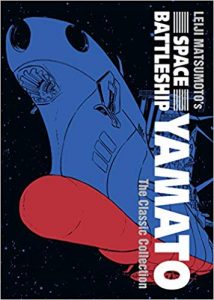
Space Battleship Yamato: The Classic Collection

April 9, 2019 by Sean Gaffney

By Leiji Matsumoto. Released in Japan as “Uchuu Senkan Yamato” by Akita Shoten, serialized in the magazine Bouken Ou. Released in North America by Seven Seas. Translated by Zack Davisson. Adapted by J.P. Sullivan.

There’s been a wonderful glut lately of both classic 70s manga and also Leiji Matsumoto’s works (frequently those are the same thing). We got Captain Harlock and Queen Emeraldas, and we’re getting the modern rewrite of Harlock. And now we’re getting the original Space Battleship Yamato, with the modern version of that coming out this summer. No sign of a rescue of Galaxy Express 999, but I suspect that’s more complicated. In the meantime, it’s time for more of the best of what Matsumoto has to offer as a manga artist… and also the worst, as Matsumoto is not perfect, nor is this collection. But it does give you exactly what the title promises: Space, and lots of it. Impressive battleships sailing through space. And, wonder of wonders, and ending that, although rushed, actually wraps up the series! Unfortunately, that ending is 1/3 through the book, and the actual ending is the open non-ending we’ve come to expect from Matsumoto.

For those who are unaware, Yamato was conceived as an anime, and Matsumoto was brought into it later on in development. He quickly made it his own, though, and the manga began about a month after the anime started. (The anime was also “adapted” into Star Blazers, for those with long memories…) The premise has aliens dropping radioactive bombs on Earth, and the only ones who can stop them is the Earth Fleet… which isn’t doing so hot. Fortunately, they have a secret battleship, Yamato, that can battle the Gamilans, as well as try to seek aid from mysterious blonde-haired, gorgeous, and mostly dead alien babes. (This isn’t Harlock, so the gorgeous aliens aren’t evil here.) Together with trusted old Captain Okita, young and impetuous yet destined for greatness Susumu Kodai, and only woman in the Earth Fleet Yuki Mori, they will defeat the Gamilans… and then have to escape Earth after it grows smug and proud in the aftermath.

The main reason to get this manga, in my opinion, are the many pages of the expanses of space. Each chapter features at least 5-6 pages of just space, planets, and stars, and it’s here to show off the wonder of it all. Characterization, on the other hand, fares less well, with everyone pretty much matching to a type. There’s a sense this is trying to adapt an anime rather than be its own thing (which may be true). In addition, I have to say it, I’m not a fan of the way Matsumoto uses humor. His leads tend to be the brooding, serious types, so he balances it out by having the dumbest Milton Berle-style comedy, complete with drunken vets butchering pigs, etc. An exception to this is the robot Analyzer, who would be an R2-D2 ripoff if this weren’t a good three years before Star Wars. His snarky comments did spark amusement from me, especially when they verged on verbal abuse.

This doesn’t really hit the heights that Harlock and Emeraldas do; it tries to be majestic, but can’t quite make it. But it’s entertaining as a space opera, and I do love those expanses of darkness with only stars. If you enjoy Matsumoto, give this a try.

Filed Under: REVIEWS, space battleship yamato

The Saga of Tanya the Evil: Abyssus Abyssum Invocat

April 8, 2019 by Sean Gaffney

By Carlo Zen and Shinobu Shinotsuki. Released in Japan by Enterbrain. Released in North America by Yen On. Translated by Emily Balistrieri.

The subtitle of this volume is translated as “Hell Follows Hell”, or more colloquially, one mistake leads to more. Tanya learns that here in a book that shows off how imperfect all the sides are. Tanya herself, due to her rabid anti-communist mindset (and the salaryman inside her, who I honestly tend to forget about most of the time) is slow to realize that the not-Russians fighting them are actually fighting for their homes and native land… not for communism. This is huge because it changes the entire way they have to fight the enemy. She also runs into Mary Sue for the first time, and while there’s clearly a much larger fight still to come, it’s a difficult battle that depletes her elite unit of a quarter of its entire force. (That said, rest assured all the characters whose names we can remember survive.) And of course Britain and Russia are having their own issues with lack of manpower, lack of supplies, lack of materials… we’ve reached the attrition stage of the war.

The cover art has Tanya standing at the gravesite of the soldiers who fell in that battle, and it reminds us that just because the title is “Tanya the Evil”, and Tanya frequently does morally reprehensible things, does not means she is 100% black of heart. She cares about her subordinates, mourns them, and has long passed the Tanya of the first book who was merely looking for “meat shields”. Likewise, General Zettour, at the end of the book, as he attempts to coerce/cajole the separatist parts of the Federation to join them, thinks that as a good person, he’s appalled, but as a soldier fighting for the Empire, he’s willing to be evil. A person who commits mass murders but feels really bad about the whole thing is still a mass murderer. And, on the other side of the coin, we have Mary, who is bright and shiny and filled with thoughts of revenge and I suspect is so naive that she will be led by the nose whenever she runs into someone manipulative.

Other things to note: as I feared, Loriya is still around, and still a pedophile. It’s not played for laughs as much, but still disturbing. Speaking of which, the soldiers joke at one point about Tanya marrying Visha for her coffee-making skills, and Tanya briefly ponders whether, as a male mind inside the body of a young girl, he would qualify as gay or not, but then promptly decides to not think about it. Which is fine, I won’t either. Tanya is twelve. In fact, the fact that Tanya is twelve comes up an awful lot here: after four volumes of mostly having everyone ignore the fact that she’s so young, we get a bunch of scenes to reinforce it: she can’t interrogate the Federation prisoners as they won’t take her seriously, she can’t get into the celebratory party at the Officer’s Mess as she can’t drink, etc. It’s a nice reminder that the basic premise of this entire series is meant to be, deliberately, very screwed up. War makes people send a child to battle.

I’ve heard that Tanya light novel fans and Tanya anime fans disagree quite a bit, and I suspect this book definitely falls on the reader side, being interesting more for the discussion of warfare than for the short, yet well-written battles. There’s also a lot of great wartime sarcastic banter between the soldiers here, which I enjoyed. For those who don’t mind long, lecturing tomes, this is still very good.

Filed Under: REVIEWS, saga of tanya the evil

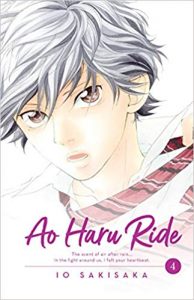
Ao Haru Ride, Vol 4

April 7, 2019 by Anna N

Ao Haru Ride Volume 4 by Io Sakisaka

Oh, the agony of teenage love triangles! Ao Haru Ride explores this in the form of two best friends having crushes on the same boy, but the unique twist here is that they actually manage to remain friends as they wrestle with their emotions. The fact that one of the characters is dealing with profound loss creates a backdrop of melancholy that makes the teen romance have a timeless and nostalgic quality.

Ao Haru Ride 4

This volume delves more into Kou’s backstory as the recently formed friend group of Futuba, Yuri, Shuko and Aya are determined not to let Kou fail out of school. Kou’s issues are not because of a lack of ability, but he has difficulty getting himself to truly try at anything. Kou is still struggling with the death of his mother, and the reader gets a flashback to see how he was put into a caregiving role during her illness at a young age. Kou’s walls of isolation from his friends don’t last forever as Futuba is determined to get through to him. There’s some great paneling and action sequences as they tumble together down a hill in a scene made for a romantic movie. As Kou embraces Futuba, she stays still so he won’t be embarrassed by her seeing him cry.

One of the earlier themes in Ao Haru Ride is Futuba’s difficulty relating to traditionally feminine behaviors, and this is brought out again when the group decides to attend a summer festival together. Yuri shows up looking strategically adorable in a yukata, and Futuba starts to feel jealous. But when Kou sees another boy talking to Futuba it is clear that he’s not as indifferent as he pretends to be. Yuri observes his reactions, but the girls continue to affirm their own friendship even while navigating their crushes. Overall, this series just continues to be wonderfully executed shoujo. Sakisaka excels at capturing quiet moments between the characters that show the glimmerings of first love.

Filed Under: Manga Reviews, REVIEWS Tagged With: Ao Haru Ride, shojo beat, shoujo, viz media

  • « Go to Previous Page
  • Page 1
  • Interim pages omitted …
  • Page 148
  • Page 149
  • Page 150
  • Page 151
  • Page 152
  • Interim pages omitted …
  • Page 346
  • Go to Next Page »
 | Log in
Copyright © 2010 Manga Bookshelf | Powered by WordPress & the Genesis Framework