• Skip to primary navigation
  • Skip to main content
  • Skip to primary sidebar
  • Home
  • About Us
    • Privacy Policy
    • Comment Policy
    • Disclosures & Disclaimers
  • Resources
    • Links, Essays & Articles
    • Fandomology!
    • CLAMP Directory
    • BlogRoll
  • Features & Columns
    • 3 Things Thursday
    • Adventures in the Key of Shoujo
    • Bit & Blips (game reviews)
    • BL BOOKRACK
    • Bookshelf Briefs
    • Bringing the Drama
    • Comic Conversion
    • Fanservice Friday
    • Going Digital
    • It Came From the Sinosphere
    • License This!
    • Magazine no Mori
    • My Week in Manga
    • OFF THE SHELF
    • Not By Manga Alone
    • PICK OF THE WEEK
    • Subtitles & Sensibility
    • Weekly Shonen Jump Recaps
  • Manga Moveable Feast
    • MMF Full Archive
    • Yun Kouga
    • CLAMP
    • Shojo Beat
    • Osamu Tezuka
    • Sailor Moon
    • Fruits Basket
    • Takehiko Inoue
    • Wild Adapter
    • One Piece
    • After School Nightmare
    • Karakuri Odette
    • Paradise Kiss
    • The Color Trilogy
    • To Terra…
    • Sexy Voice & Robo
  • Browse by Author
    • Sean Gaffney
    • Anna Neatrour
    • Michelle Smith
    • Katherine Dacey
    • MJ
    • Brigid Alverson
    • Travis Anderson
    • Phillip Anthony
    • Derek Bown
    • Jaci Dahlvang
    • Angela Eastman
    • Erica Friedman
    • Sara K.
    • Megan Purdy
    • Emily Snodgrass
    • Nancy Thistlethwaite
    • Eva Volin
    • David Welsh
  • MB Blogs
    • A Case Suitable For Treatment
    • Experiments in Manga
    • MangaBlog
    • The Manga Critic
    • Manga Report
    • Soliloquy in Blue
    • Manga Curmudgeon (archive)

Manga Bookshelf

Discussion, Resources, Roundtables, & Reviews

Reviews

Can Someone Please Explain What’s Going On?! ~A Sign-on-the-Line Wedding Story~, Vol. 1

March 18, 2020 by Sean Gaffney

By Tsuredurebana and Rin Hagiwara. Released in Japan as “Dareka Kono Joukyou wo Setsumei Shite Kudasai! ~Keiyaku Kara Hajimaru Wedding~” by ArianRose. Released in North America by J-Novel Club. Translated by Mattias Hirsch.

Sometimes you go into a book with expectations. Perhaps the book is part of a new line of romance novels for young women the publisher is putting out. Perhaps the title features the words ‘wedding story’. Perhaps the cover, which shows the heroine in a wedding gown and a handsome young man, draws you in. Perhaps you read the manga version, which is available on the Renta ebooks site, and every single chapter was filled with a breathless romantic description of what was happening. Indeed, the book does indeed hit all these points. There is indeed a wedding. There are balls where the heroine shines. There is another woman, constantly trying to call out the heroine so that she can prove who’s top dog. There’s even the tried and true “hero asks for marriage of convenience and then gradually falls in love anyway” plotline. The startling thing about this book, though, is that its heroine, Viola, starts the book completely uninterested in romance and Cercis, the hero… and ends it the same way.
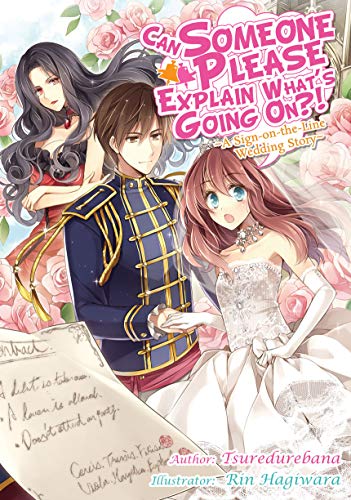
Viola is the daughter of an Earl whose landholdings have fallen on hard times, and is used to doing most things herself with a minimum of fuss and servants. She is rather startled when Duke Cercis arrives at her door with a proposal. Well, more of a contract. He has a woman he already loves, but she’s a dancing girl and therefore he can’t marry her and his family won’t approve. So Viola is to be his “show wife”. Viola, after securing enough funding to save her family’s debt, agrees very matter-of-factly, and a year later they are married and she’s living in a fabulous mansion. Wondering what to do with herself at first, she’s soon winning over the servants (and indeed dressing as one), cutting back on the extravagant meals, brightening up the gardens and house, and putting her own stamp on everything while the Duke and his lover live in the cottage elsewhere on the estate. All well and good… but why is the Duke coming over more and more often?

Viola’s narrative voice is all over this book, and it’s a fun one. She has a fair amount of snarkiness to her, but there’s also a heaping helping of unawareness, and those two don’t usually go together. She’s the sort to describe herself as scrawny, plain and flat-chested, and has absolutely no idea why her maids, when given the opportunity to put her in real fashion and jewelry, go absolutely ga-ga. The answer, of course, is that Viola’s scrawny and flat-chested is everyone else’s tall and willowy, and she looks fantastic dressed up. She doesn’t put on airs, she actually cares about the people around her, and she shows absolutely no interest in getting involved with the Duke and his mistress. Indeed, I was sort of hoping for more Duke and mistress – there’s a running gag where the mistress keeps showing up looking for the lady of the manor and runs into Viola (dressed in her normal black “maid dress” and therefore unrecognizable), but for the most part the book is content to gradually work its way up to the inevitable breakup that comes when the Duke realizes he does love Viola after all.

This leads to the climax, where the duke confesses his love, and Viola says she doesn’t really think of him that way. Given that the series is nine volumes long to date, one would assume he will eventually get his point across, but if he’s going to be wooing her, he’d better try a bit harder – rewriting their contract (which had said she, as a “show wife”, could also have lovers) to say she can only love him is not a terrific start. Still, the combination of the oddly shaped not-romance and the intelligent (if somewhat too self-deprecating) heroine makes me want to read further.

Filed Under: can someone please explain what's going on?!, REVIEWS

Re: ZERO ~Starting Life in Another World~, Vol. 12

March 16, 2020 by Sean Gaffney

By Tappei Nagatsuki and Shinichirou Otsuka. Released in Japan by MF Bunko J. Released in North America by Yen On. Translated by Jeremiah Borque.

Subaru is much improved as a protagonist in these newer volumes of Re: Zero, to the point where I find I barely have to yell at him in my head at all. Most of the times that he dies and has to return by death are the fault of external forces or things he doesn’t know about, rather than his being a stubborn dumbass. And he gets two points here where he shows that his love for Emilia and Rem (still in that order, sorry Rem fans) is more than just saying it – he can tell when their own responses are either distorted or out-and-out falsified. That said, the last third of this book did a great job of reminding me just how flawed a protagonist Subaru can be. After all, every time he dies and starts again at his save point… he leaves behind a dead Subaru. And those who cared about him. Something he learns all too well when he gets to take the Second Test.

The cover art features our villains of the book, one very familiar to us, one not so much. Unfortunately, despite returning to the mansion in record time, I think Subaru is going to have to come up with another plan, because time is not on his side no matter what. It does, however, given us another very emotional confrontation with Beatrice. I knew going in that this fourth Arc would give some time to Emilia, but it must be back-loaded, as so far there’s been very little. Beatrice, though, also gets an incredible amount of attention and care, showing us how much she is suffering and also showing how little Subaru can seemingly do about it. It also throws into stark relief the end of the book, where Echidna offers to make a pact with him – the fact that he’s desperate enough to accept it despite EVERY OTHER WITCH saying it’s a bad idea shows he’s still very, very fallible.

Speaking of the other witches, Echidna, who had been nice, police and helpful so far this arc, is starting to show her true colors and her stunning lack of empathy – well, no, it’s not really that stunning, we knew this was coming. I will give kudos to the author for making the Witch of Lust a crybaby moe sort of girl, and the Witch of Sloth the one who has the Red Hot Mama vibe you’d normally give to Lust. The cliffhanger ending shows the 7th and final witch showing up at the tea Party, which may end up being as bloody as Umineko’s sometimes were. On the bright side, she’s probably come as herself this time – the earlier parts of the book features a Satella who had literally possessed Emilia, and it was not a pretty sight. (That said, the prize for creepiest moment of the book easily goes to the scene where Emilia, her mind utterly broken by the tests, gives Subaru a lap pillow and a kiss – a kiss that he gets right as he dies. Brr.)

We’re now halfway through this arc, and I get the feeling, revelations about Roswaal aside, we’re not much closer to getting a happy ending. Still, fans of the series will definitely enjoy what they get here, though as always it can be difficult to read. Everyone suffers: The Novel.

Filed Under: re: zero, REVIEWS

Monthly Girls’ Nozaki-kun, Vol. 11

March 15, 2020 by Sean Gaffney

By Izumi Tsubaki. Released in Japan as “Gekkan Shoujo Nozaki-kun” by Square Enix, serialization ongoing in the online magazine Gangan Online. Released in North America by Yen Press. Translated by Leighann Harvey.

As Tsubaki’s other major series, Oresama Teacher, reaches its end soon in Hana to Yume, it does feel odd that Nozaki-kun also looks to be headed towards an endgame. You’d think that she’d want to be able to devote even more attention to it. And yet it’s understandable. First of all, because ‘headed’ towards an endgame is an exaggeration. Slouching towards and endgame, perhaps. Meandering. Secondly, because no matter what happens to all the other couples in the series, Nozaki and Chiyo will always be lagging behind. The first two chapters in this volume deal with Kashima’s little sister, who is nothing like her at all, and also enjoys imagining everyone around her – everyone – in a pairing. Except, of course, Nozaki and Chiyo. She just can’t see it, much to Chiyo’s intense frustration. Then again, she only has herself to blame. She could try being a little more direct. Not that this always helps… look at Seo for a good example.

Seo has pretty much played out having fun with Wakamatsu over the Lorelei thing, and is also coming closer to wanting them to be a real couple, so finally decides to tell him outright. Well, almost outright. She goes to Nozaki and Chiyo for her plan, and they all try to imagine very manga-influenced scenarios that range from quite realistic to the usual completely ludicrous. The payoff comes towards the end, when Seo a) feels nervous talking to Wakamatsu about it, another sign of her growings feelings, and b) didn’t think of the immediate, most obvious result of this: Wakamatsu doesn’t trust her and doesn’t believe her. You’d feel bad for her if it weren’t Seo, but it is. So it’s just funny. (Incidentally, her brother does even worse in his own doomed romance, and we also discover that even the couples who DO get together in this series are giant flaming wreckages.)

As for Hiro and Kashima, it’s always been the most popular pairing in this series by far, and the end of the volume deals with it, as a hypnotism attempt gone wrong leads to Kashima forgetting who Hori is, which naturally upsets him a lot more than he’d like. The endgame of this, after the usual silliness, leads to a rare genuine moment in this manga with Hori saying (with a blush) he prefers the normal Kashima, and her (with a blush) actually understanding what he’s saying. Now, there’s a minimal chance this will actually lead to anything next time, but it’s still nice to have this bone thrown to us in a manga that still enjoys mocking romances more than having them (witness Chapter 103, which cycles through almost every single shoujo manga cliche in one single chapter).

There was a long break between volumes this time, so I’m not sure when we’ll see the next one. (Oresama Teacher is also down to about a volume a year now.) But it was worth the wait, giving the usual mix of hilarious subversion of manga romance while also trying to eat its cake as well.

Filed Under: monthly girls' nozaki-kun, REVIEWS

Love Me, Love Me Not, Vol 1

March 15, 2020 by Anna N

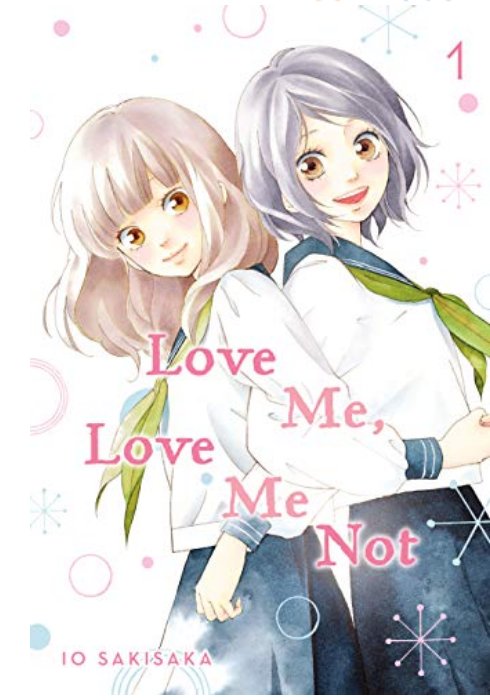
Love Me, Love Me Not, Volume 1 by Io Sakisaka

Strobe Edge was good, and Ao Haru Ride is a special series, so I was very excited when I saw that another Io Sakisaka series was going to be put out under the Shojo Beat imprint. Sakisaka changes things up a little bit by focusing just as much on female friendship as romance. Yuna is a girl who loves reading shoujo manga. She’s a bit shy and not very confident, but she’s quietly very nice. She meets the more outspoken Akari when she asks Yuna for train fare. Yuna also encounters a mysterious, but somewhat crass boy who resembles her long-dreamed of storybook prince. Akari and Yuna bond when they realize that they are both living in the same apartment building and attending the same high school. Yuna shares her romantic dreams, and Akari counters with her much more pragmatic approach of going out and meeting people instead of quietly waiting for a destined love to show up. Akari is surprised when Kazuomi drops by – he’s Yuna’s childhood friend and Yuna’s shyness disappears when she talks to him because she thinks of him like a brother.

Love Me Love Me Not

The characters are all introduced in a series of slice of live scenes that feel very naturalistic. They run into each other on the sidewalk, in convenience stores, walking to and from school, and visiting outside their part-time jobs. As Yuna gets to know Akari better she discovers that her fabled prince is named Rio, and he’s actually Akari’s brother! Akari is concerned about what would happen if Yuna gives in to her crush, because Rio is a bit of a player and is constantly turning down confessions of love from girls. Akari concludes that Yuna should get together with Kazuomi, but she also finds his forthright ways attractive. There’s a not super surprising twist at the end that sends Love Me, Love Me Not firmly into Marmalade Boy territory. This first volume does a great job setting up four sympathetic characters who are all equally engaging despite having very different personalities. Yuna might spend a great deal of time averting her eyes and blushing, but she is willing to push herself to stand up for Akari when some false rumors start going around. Akari is outspoken and always strategizing about what to do when it comes to her friends, but not always great at sharing her own feelings. While Rio is treated in a certain way due to his looks, it is easy to see from his body language and facial expressions, that he’s also burdened by girls developing crushes on him without even taking the time to talk to him. Kazuomi has an open personality, combined with the ability to occasionally come out with pronouncements about life and relationships that make him seem irresistibly cool.

Sakisaka does a great job setting up a new series in the first volume of Love Me, Love Me Not. I like the idea of a shoujo series that will focus just as much on female friendship as it does on romance, and will be eagerly waiting to see how this tangled web of potential teen romance develops in future volumes.

Filed Under: Manga Reviews, REVIEWS Tagged With: love me, love me not, shojo beat, shoujo, viz media

The Invincible Shovel, Vol. 1

March 14, 2020 by Sean Gaffney

By Yasohachi Tsuchise and Hagure Yuuki. Released in Japan as “Scoop Musou: “Scoop Hadouhou!” (`・ω・´)♂〓〓〓〓★(゜Д゜ ;;) .:∴DOGOoo” by MF Bunko J. Released in North America by Seven Seas. Translated by Elliot Ryoga. Adapted by Renee Baumgartner.

First of all, I apologize for not using the full title in the header, which is “The Invincible Shovel: “Wave Motion Shovel Blast!” ( `・ω・´)♂〓〓〓〓★(゜Д ゜ ;;;).:∴KA-CHOOOM”. It turns out that this title literally breaks the URL. Which seems appropriate for this book, which may break a few brains, particularly those who are not ready for the true path of the shovel. The word ‘shovel’ and its variations are in this book 708 times, and after finishing it you’ll be surprised it’s that low. “Variations?”, I hear you cry. Why yes. We get shovely, shoveltastic, shoveltronic, and many, many more, courtesy of the cover heroine, Lithisia, who, as with everyone else who meets our hero, starts off seemingly normal and then leaps off the deep end. Now, mind you, this is not to say that Alan, the hero, is any less completely unbelievable – though in his case it’s his own stoic acceptance of all things shovel that’s the issue. Basically, this book is very, VERY silly.

Indeed, the book starts off silly and never stops, as we begin with Alan, a miner who somehow forgets to die or age, finding that his shovel can now fire beams. As he lives longer and mines more, the shovel and Alan gain more and more powers. Now, one thousand years later, he’s so used to it that it never occurs to him that shovels can’t do everything. One day he runs into a runaway princess who is trying to save her land, Lithisia. Saving her from bandits, she rapidly, through both him showing off his shovel’s powers and her amazing skill of misinterpretation, falls in love with Alan and then later essentially becomes the High Priestess of the new Shovel religion (which she creates). As they try to gather the orbs to save her people, they run into her best friend, a knight who fills the straight man function; an elf who is the last of her kind; a princess who’s now an undead queen; and a water priestess who’s been sold into slavery. No worries, though. The shovel solves all.

This book is here for one reason and one reason alone: to be funny. Everything runs on humor. Lithisia quickly thinks that Alan uses the word ‘shoveling’ to mean sex (he does not), and rapidly the other heroines (with Catria, the sensible one, excepted) also fall into this thinking. (Alan, who is 1000 years older than them, and also dense, does not try anything despite their best attempts.) Alan shows the cast and the reader new uses for his shovel almost by the page, which range from actual digging to the titular wave motion gun to time travel, raising the dead and flight. The latter half of the book is Alan doing something mind-boggling, explaining it with a “of course, this is obvious” look, having everyone marvel at him, and having Catria scream that it is not, in fact, obvious. All this, and also Lithisia converting more to her shovel religion.

I had already heard that this title had a reputation for being hilarious, and was worried it would fail to live up to that. No fear. Only the biggest “OP is always bad” light novel fans would find this aggravating. For everyone else, all hail the Mighty Shovel!

Filed Under: invincible shovel, REVIEWS

Is It Wrong To Try To Pick Up Girls In A Dungeon? On The Side: Sword Oratoria, Vol. 11

March 11, 2020 by Sean Gaffney

By Fujino Omori and Kiyotaka Haimura. Released in Japan as “Dungeon ni Deai o Motomeru no wa Machigatte Iru Darou ka? Gaiden – Sword Oratoria” by Softbank Creative. Released in North America by Yen On. Translated by Dale DeLucia.

(Note: I spoil the ending for this one, be warned.)

Sigh. I can’t say it wasn’t hinted – it’s been hinted since she first showed up, and there’s a massive deadly flag in this volume where Lefiya and Filvis promise to visit the elven country after they finish this next battle. I almost smacked my forehead. But yeah, there are two characters in this series who are fairly obviously coded as lesbians, and Lefiya has protagonist armor, so the other one had to go. The death is handled well and all – Filvis is not shot by an impossible bullet or anything – but yes, I am grumpy that we get to throw another dead lesbian on the pile of dead lesbians. Lefiya is in a sort of grief coma after this, so I’m not sure whether she’ll turn evil and try to destroy the world. Probably not. And Aiz makes for a poor Buffy in any case. And now I will drop this stretched analogy and look at the rest of the book.

For about three-quarters of this book, it’s actually fairly triumphant. Finn and company are getting ready to defeat the evils once and for all. It’s a plan in two stages, the first of which is to map out as much of Knossos as possible, with help from other families – including the Hermes Family, with Hermes being fairly straightforward for once, and the Dionysus Family, with him basically begging to come along so that he can avenge the deaths of his other family members. Things go well. They have a SUPER POWERFUL healer with them on this one, and therefore cursed weapons don’t work like they should. They manage to defeat the guy who makes the dungeons and his hideous monster form. All is going pretty swimmingly, in fact, till Dionysus sees something off to the side and splits off down a different corridor…

I have to admit that I’m much of the same mind as Loki and Hermes are at the end of this – I suspect Dionysus to be a double agent of sorts. That said, I also do wonder if there might be some self-brainwashing going on, as he really does seem to care about the fate of his family. Which, every single one, is killed off at the end of this book, in one of the biggest massacres we’ve seen in DanMachi to date. And Levis is alive and has escaped again, which is frustrating as the start of this book, which features Aiz making a deal with the devil and being told exactly why she’s having trouble fighting Levis – implied that a great final battle was coming. The reader feels as frustrated as Loki does.

The next volume is huge, and the afterword implies it may wrap up this plotline once and for all. As always, it’s very well told and has some great fights. But yeah, at the end of the day, what a miserable ending to a book.

Filed Under: is it wrong to try to pick up girls in a dungeon?, REVIEWS

Love Me, Love Me Not, Vol. 1

March 10, 2020 by Sean Gaffney

By Io Sakisaka. Released in Japan as “Omoi, Omoware, Furi, Furare” by Shueisha, serialized in the magazine Bessatsu Margaret. Released in North America by Viz Media. Translated by JN Productions. Adapted by Nancy Thistlethwaite.

I was, at first, rather surprised to see this new volume of Io Sakisaka’s coming out, given that we still have a few volumes of Ao Haru Ride still in the queue. But after reading it, I’m glad we’re seeing it now, as this is a good one. The cover features two heroines, with the love interests relegated to the back cover, and the first volume makes it clear that, while this is all about love and romance, as usual for this author, the girls are co-protagonists and will carry most of the action. As for the premise, it’s not only about the growing friendship of these two girls, who immediately get on like a house on fire, but their tw3o opposing views of love, neither of which is looked down on. Yuna is looking for her Prince Charming, a “love at first sight” sort, while Akari thinks you can get to know a guy and then fall in love based on your everyday interaction. As we’ll see, both are right – and wrong.

Yuna, the light-haired girl on the cover, is the one who is looking for her Prince. Unfortunately, she’s also painfully shy around guys, with the exception of her childhood friend Inui. One day she is saying goodbye to her best friend, who is moving away, when she is accosted by another girl who forgot her wallet and desperately needs money for the subway so SHE can say goodby3e to HER moving friend. This is Akari, the dark-haired girl, who is currently in a relationshi0p, though that doesn’t last the book. The two find they live near each other, and quickly bond discussing the concept of love, and compare their own views. Akari wants to ship Yuna and her childhood friend Inui together. Yuna, though, falls instantly for Akari’s brother, Rio. It’s… well, a recipe for fun shoujo manga.

I enjoyed almost all of this, so let’s quickly get to the bit that made me groan. Given that the concept of this manga reads very much like “love square”, the moment Akari and Rio were shown to be related my brain went “nope, gotta be a remarriage or adoption”, and sure enough. I would be really happy to not see “we’re not really siblings” in a manga ever again, to be honest, and Akari’s loud arguing that it’s not like that to her mother does not help my thought that it is going to be like that down the road. Fortunately, the rest of the book is excellent. Yuna and Rio really do have that ‘instant love’ bond, and also some really heartwarming scenes as we learn about Rio’s “playboy” ways. And Akari may be trying to ship Yuna with Inui, but the audience is, I suspect, thinking that Akari/Inui is the preferred pairing here.

This is about a dozen volumes, which is typical for successful series by this writer. It’s also getting a live-action film this summer. For those who love romance manga and strong friendships, this is a winner.

Filed Under: love me love me not, REVIEWS

My Youth Romantic Comedy Is Wrong As I Expected, Vol. 9

March 9, 2020 by Sean Gaffney

By Wataru Watari and Ponkan 8. Released in Japan as “Yahari Ore no Seishun Rabukome wa Machigatte Iru” by Gagaga Bunko. Released in North America by Yen On. Translated by Jennifer Ward.

The first half of this book is rough going, as it continues to mine the trough of awkward despair that our heroes are going through. Hachiman is still dealing with the unspoken fact that he screwed up the Student Council Election for Yukino, though honestly the bigger problem is that it IS unspoken. Isshiki is now student council president, but is having trouble dealing with the rest of the council and also out of her depth. So when she has to come up with a Christmas event with the help of another school, she naturally comes running to the Service Club. Unfortunately, Hachiman’s guilt makes him take on helping her on his own, and he has to confront not only the most irritating character in the entire series to date, but also Orimoto, that girl from middle school, who goes to the other school. And, as a result of his doing this secretly, the Service Club is falling apart. It’s all very depressing.

Thank God for Hiratsuka, then. Acting a bit more proactively than she usually does, the teacher is there to give Hachiman the push he needs to finally confront the club and show actual emotions. This is very much the best scene in the book, and a real emotional breakthrough, at least for him. Yukino is a bit of a tougher nut to crack (as always), but a trip to an amusement part even allows her to open up about her rivalry relationship with her sister… and with Hachiman. Yui doesn’t feature as heavily, basically reduced to her role as the emotional center. That said, solving the situation requires all three of them – Hachiman plans, Yui bonds with everyone, and Yukino takes a firm hand in telling people when to shut the hell up and decide. Which is desperately needed.

As I indicated above, I don’t think I’ve ever found a character quite as punchable as I did Tamanawa, the student council president from the rival school. Honestly, I’d almost have liked it better if he were evil, or at least doing this on purpose for some petty reason. But no, this just seems to be how he deals with things, with the rest of the council (sans Orimoto, who like Hachiman is a dragooned helper) joining in on his business-talk doublespeak. This is hilarious at first, with even Hachiman having trouble following the plethora of buzzwords, but gradually the reader gets as exhausted as he does, and by the end of the book you just want a steamroller to run over Tamanawa (this does not happen). It was also odd seeing the return of Rumi, the young girl Hachiman tried to help in a previous book, though it goes along with the theme of this book and the last one: Hachiman’s help doesn’t always really work. Rumi is still having troubles. Maybe the play will help.

This book is about as well written as the previous one, but the fact that it ends on a big, positive note makes all the difference, and makes it feel much better overall. Not having a sour taste in your mouth is key. Next time, we get another book of short stories as we leap back in time with Vol. 6.5 (which, in Japan, did indeed come out after Vol. 9).

Filed Under: my youth romantic comedy is wrong as i expected, REVIEWS

Urusei Yatsura, Omnibus 5

March 8, 2020 by Sean Gaffney

By Rumiko Takahashi. Released in Japan in two separate volumes by Shogakukan, serialized in the magazine Shonen Sunday. Released in North America by Viz Media. Translated by Camellia Nieh.

One of the well-known factoids about the Urusei Yatsura manga is that is is unsentimental. Now, this is not really all that true. There’s plenty of sweet moments scattered throughout its pages. But it is, when compared to its anime adaptation, a lot more interested in laughs than heartwarming. There’s a chapter in this volume where the Moroboshi house is dealing with a hurricane that’s flooded the entire place thanks to some of Lum’s technology, and the manga does not have the touching Ataru/Lum moments the anime put in. Even the manga moments that clearly ARE sentimental are subordinate to the comedy – the longest extended story in this volume has Ataru hitch a ride on Ten’s spaceship to stop Lum getting married off by her dad. Ten being tiny, Ataru spends most of his time stuck in a funny crouch – it’s especially funny when he stops a guy from hitting on Lum by stomping on him, then goes back to pretending he’s not really there. But Lum recognizes him, and smiles. See? Sentimental. Just.

No new major characters are introduced here, though we do get a few two-or-three chapter girls for Ataru and company to deal with. The best of these is the girl who, thanks to her dad, is literally followed by rain everywhere she goes. Miserable, she is nonetheless touched when Ataru insists on dating her anyway, even if it means he just gets a cold. (Unfortunately, her father looks exactly like an abusive dad we will meet later in the series, which sort of threw me off as I was reading it.) And there’s a ghost who everyone tries to help move on to the next world, but is far more interested in mooching off of everyone in this one. Lastly, we get an elderly vampire and his bat companion, most noteworthy for the male bat transforming into a human girl to trick Ataru… something very quickly regretted.

Ataru and Lum have mostly settled into their permanent characterization here. Mendou and Shinobu are here as well, but they mostly function as part of the Greek chorus, so don’t get as much face time. Shinobu has not yet gotten to the point where she can rip trees out of the ground to threaten people with. As a result, these chapters feel very much like a relaxing rest stop for the series, where we can sit back and enjoy the chaos caused, with one exception, on Earth. Soon the “main cast” aliens will return in a big way, and the plots will get even sillier. Certainly there’s not going to be much romantic development – Ataru may not want Lum to get married, but he’s not about to stop trying to date anyone and everyone. Even Tsubame and Sakura, who are an actual couple, can’t settle down to make out without everyone horning in.

Fortunately, a new semi-regular debuts next volume. Unfortunately for you, she’s my favorite character in the whole series. So if you want to hear me gush – a lot – about Kodachi Kuno only done WELL, tune in next time. Till then, this is still a must read.

Filed Under: REVIEWS, urusei yatsura

Sword Art Online Alternative: Gun Gale Online: One Summer Day

March 7, 2020 by Sean Gaffney

By Keiichi Sigsawa and Kouhaku Kuroboshi, based on the series created by Reki Kawahara. Released in Japan by Dengeki Bunko. Released in North America by Yen On. Translated by Stephen Paul.

I honestly feel a bit suckered in. We’ve had, for the last five volumes, a bunch of goofy fun gun battles, with some nice characterization and an ongoing plotline about what people game for. The author, who is known for writing endless amounts of spinoffs for other people’s work, also wrote himself into the series as a complete loser who exists to get mocked and humiliated. And, really, for about 85% of this 6th book, we get much the same thing. People are here to read the gun battles. There’s a reason for that: they’re good gun battles. There’s a lingering plotline, which we think will be dealt with in the epilogues, that has Karen wondering why she does GGO anyway – what’s in it for her? But no, this gets answered in the climax of the book. Instead, the 2nd epilogue is there to make you say “Oh, right. This is ALSO the author of Kino’s Journey. He can create something absolutely stunning as well.”

LLENN and the others are invited to a different kind of event in GGO. They’re trying to develop some NPCs, and want to test them using the top teams in the previous Squad Jams. So the teams are invited to storm a castle which is being defended by other guns. They can either work together or fight each other – indeed, the first half of the book shows off some of the teams wanting to fight – particularly LLENN, who has not realized that her inability to fight SHINC is the series’ running gag. Once they get intel on the group in the castle they’re up against, the book becomes a puzzle – how to get into the castle and/or kill those inside it without dying three times (they get multiple lives here, which is good, as the book starts with LLENN getting killed in a flashforward).

I’m going to try not to spoil the ending, which is hard, as it leaves me with not much to talk about. Suffice to say there are some good hints dropped here and there, particularly the scenes between LLENN and Jacob, one of the NPCs. Other than that, we’re left with a game situation which does not really rev up Putohui’s bonkers-ometer, and as a result she’s rather rational and awesome, much to LLENN’s surprise. LLENN is also able, through the course of this battle of attrition, to recall why she does this sort of thing in the first place. The side story helps there as well, when Miyu suggests to Karen a much of parodies of games which help to solidify her feelings. Basically, playing GGO for LLENN, with its mock battles and not-really-murders, is fun. Gaming is fun. And, as the epilogue I am not spoiling shows us, it can also be valuable in other, more tactile ways.

So, congratulations to Keiichi Sigsawa, who with one plot twist made this probably my favorite volume in the series. The 7th book is not scheduled yet, so it may be a while till we see LLENN and Pitohui again. (Clover’s Regret in between, perhaps?). That said, when we return I expect Squad Jam IV will bring things back to the sort of book Sigsawa normally writes in this series – happy little gamers killing things.

Filed Under: REVIEWS, sword art online

My Hero Academia: School Briefs, Vol. 4

March 5, 2020 by Sean Gaffney

By Kouhei Horikoshi and Anri Yoshi. Released in Japan by Shueisha. Released in North America by Viz Media. Translated by Caleb Cook.

These books have gotten stronger as they go on, which is a good thing, and also expected of a tie-in series – they’ve gotten better at character development as there’s been more in the main series, and the novel author has more to draw on. The book takes place, with one exception (the first chapter takes place during Vol. 15) around the school festival arc, which conveniently makes it tie into the current anime as well. We get chapters showing the preparations, we get to actually read about Class 1-B’s play instead of just having it be a gag, we get a prequel for the beauty pageant, and we see cooldown post-festival for both students and teachers. I’ve talked before about how the series narrates events Horikoshi didn’t have time to write into the main series, and that feels especially true with this book, as a lot of these feel very in character. (That said, the art is more minimal and reused than usual – I think he was very busy at this time.)

The first chapter is not a school festival chapter, but does have Fatgum, Kirishima and Amajiki patrolling an Osakan float festival, where Kirishima meets a cartwright who is having seconds thoughts because of a past accident, something which makes Kirishima recall his own past with Ashido. We then see Shinso walking around campus during festival prep, seeing how the other classes are doing while trying to figure out how to tell his friends in the General Studies class he’s putting in for a transfer. We then get the 1-B play in all its glory, followed by a story just before the beauty pageant, which is from Kendo’s POV. We end with a few scenes showing Izuku’s candy apple prep and some other 1-A antics, and finally see the teachers having an alcohol-fueled after party.

The character work is the main reason this is so good. Shinso and Kendo get some excellent development here, getting inside their heads. Shinso still feels a little guilty and shamed about his own quirk, though this has improved post-Sports Festival, and eavesdrops on some folks who make him feel better. Kendo was even more fascinating, as we see her struggling with being the beauty contest competitor even as she’s uncomfortable with her own gender dynamics, feeling out-of-place in a dress and preferring activities most would say were for men. While she does say that she’s definitely a girl, it would not be a very broad leap to see her as a bit agender. I also really enjoyed the 1-B play, both for its copyringht-dodging elements and also for making Monoma look less obnoxious (always a hard task). Even the beauty pageant girl Bibimi Kenranzaki, written entirely as a one-panel gag by Horikoshi, gets to drive a tank and bond with Mei Hatsume (whose not bathing is the running gag of the chapter).

Flaws? Mineta is still in this, though less so than previous books, and Shinso wonders (as do we all) why he hasn’t been expelled yet. The teacher’s chapter at the end is also a bit weaker than the others, and Midnight’s whipping talents jar a bit given the rest of the book is easily accessible to 10-13 year olds. Still, overall this is the strongest entry in the series to date. We’re also caught up with Japan, so a new volume will be a bit.

Filed Under: my hero academia, REVIEWS

The Promised Neverland, Vol. 14

March 4, 2020 by Sean Gaffney

By Kaiu Shirai and Posuka Demizu. Released in Japan as “Yakusoku no Neverland” by Shueisha, serialization ongoing in the magazine Weekly Shonen Jump. Released in North America by Viz Media. Translated by Satsuki Yamashita.

This review will contain a spoiler for the volume, but the manga has not exactly been trying to hide it, and the cover makes it even more obvious, so let’s just come right out and say it: hey, Norman is back! And he’s Mr. Minerva! And he’s a lot taller than Emma now (which leads to a very funny interstitial gag). This reunion has been building up ever since the reader first saw that Norman was, in fact, non dead after all, and I appreciated how it’s given room to breathe. Emma and Ray both have very in-character reactions to his presence here, and even have a nice talk and snuggle. That said, things may not be as easy as “yay, I’m back!” – Norman has a definite agenda, and it’s one that Emma doesn’t agree with, though at the moment she can’t really think of a solution that isn’t Norman’s. Fortunately, Ray, who is awesome, tells Emma not to bottle it up but just tell him.

Norman has to step up his plan because Emma, in a brief action sequence at the end where she helps to get medicine for one of their dying companions, and is discovered by some demons, who now know Grace Fields kids are nearby. This sequence also shows off how much everyone in this manga thinks about things. First we see an argument about why Anna and Ray should be going on this mission as well. Then later Hayato splits off from Emma and Anna to go with Ray, as that makes things more chaotic, and, as Emma sagely notes, will stop Ray from doing something that will get himself killed. These kids have been together a long time, and even those who just joined from other farms are starting to know everyone like the back of their hands. In fact, it also leads to a funny sequence at the end – Norman’s minions only know him as cold and aloof, and threaten Emma and Ray to get them to spill stories about Normal being goofy and childlike.

The big news going forward, however, is Norman’s revelation about the demons, why they want to eat humans so much (hint: it’s not just because they find them super delicious), and how best to deal with them going forward. Norman’s plan makes perfect sense, as even Emma admits: these demons have been the villains the entire book, they’ve viciously murdered a number of children, and they’re mostly a nasty set of characters. But Emma is gonna Emma, and can’t help but think of the demons that are living their own lives and raising demon families. And then there’s Sonju and Mujika, the two demons who helped the group a few volumes ago… who do NOT eat humans (so they say), and thus put a giant wrench into Norman’s plan, provided Emma opens up to him about it, which I think will come next volume.

In fact, I suspect next volume will have a big Emma vs. Norman fight. Idealist vs. Realist is a classic manga scenario we’ve seen time and time again, and I have some bad news for Norman: in fictional works, the realist rarely wins. In the meantime, enjoy this tense yet heartwarming volume.

Filed Under: promised neverland, REVIEWS

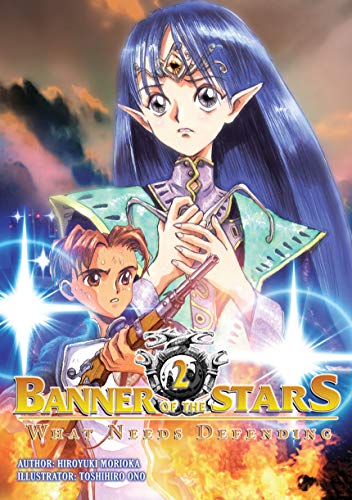
Banner of the Stars: What Needs Defending

March 3, 2020 by Sean Gaffney

By Hiroyuki Morioka and Toshihiro Ono. Released in Japan by Hayakawa Bunko. Released in North America by J-Novel Club. Translated by Giuseppe di Martino.

I think that I’ve mentioned before that this series reminds me quite a bit of Legend of the Galactic Heroes in places. They’re both Space Operas, but more importantly, we’re meant to root for the Empire much of the time. In LOGH we have Yang Wen-Li and company to balance that out, but the enemy in Crest/Banner of the Stars rarely gets any face time at all, and so naturally we root for the Abh because they’re the POV characters, even when they’re doing things that may be seen as rather heartless or odd. And while Jint may not have been born an Abh, a lot of his emotional reactions to things, particularly in the first half of this book, is starting to feel very similar. Admittedly, he’s helped out by the situation he’s placed in, a plotline which will make the reader cry out for more space battle banter. We get a bit of that as well (thank heaven for Sporr), but for the most part this is a story about a sordid little prison planet and their rebellion.

Jint and Lafier end up coming across this planet, one of the ones in the Abh’s freshly conquered territory. It’s divided into thirds: all men, all women, and mixed, with the men given vasectomies so that the prison won’t be overrun with children. All this overseen by a warden and guards. But now there’s a rebellion, helped along by a nasty drug trade on the planet as well as the men-only group deciding that they want to go over to the women-only group and start making babies. (The novel takes an emotionally distant approach to this – the word ‘rape’ is not mentioned in the book, but it’s clearly what the men, for all their talk about fatherhood being their dream, want to do, and Jint and Lafier do make sure the women-only side of the prison is evacuated first.) All sides want to get off planet, even to other prison planets. Jint is caught in the middle… and when a revolution does come, Lafier, who is dealing with the space battle end of things, cannot stick around to save him.

As always with this series, it’s the interpersonal relationships that make it good, particularly Jint and Lafier. Little things like a near-death Jint writing poetry in Abh on the walls of where he’s hiding for Lafier to find, or the whole “Abh do not cry’ thing that’s a running thread throughout the book (and, unsurprisingly, total bullshit). By the end of the novel they’re closer than ever. And I do love the caustic yet hilarious relationship between Sporr and Cfadiss (and was very surprised at Sporr basically sacrificing a LOT to help Lafier here). That said, while I do appreciate what the author wants to do with the Abh linguistics and the space battle logistics, when the book is NOT about interpersonal relationships it can get quite boring. Sometimes it can even get annoying, particularly when one side of a group of prisoners is arguing about their inalienable rights to rape the other side.

As such, I’d call this volume more ‘variable’ than anything else, though the Jint and Lafier moments are fantastic. Next time they apparently return to his original homeworld. That should be safe and fun! But at least they’re going together.

Filed Under: banner of the stars, crest of the stars, REVIEWS

The World’s Strongest Rearguard: Labyrinth Country’s Novice Seeker, Vol. 2

March 1, 2020 by Sean Gaffney

By Tôwa and Huuka Kazabana. Released in Japan as “Sekai Saikyou no Kouei: Meikyuukoku no Shinjin Tansakusha” by Kadokawa Books. Released in North America by Yen On. Translated by Jordan Taylor.

As you might imagine, this is not quite as hilariously bad as the first volume was. Many of the same elements are in play, and now that we’re familiar with them, they don’t provoke hilarity as they once did. That said, there is a certain amount of amusement taken in counting the number of times that Arihito meets a new woman and has them fall in love with him almost immediately. We add two more members to the party in this volume, though we met them in the first book: merchant Madoka (who has sisters named Manami and Kurumi, making me wonder if the author had been watching KOR while writing this) and monster dissector Melissa, whose mother turns out to have been a demi-human, which explains (I guess) her emotional reserve. Oh yes, and there’s a Guild Savior, Seraphina, whose job it is to save those who are in big trouble. Which is not Arihito: he’s always got this. That said… I dunno, this series remains hard to dislike.

Our party starts the book having risen to the top of the rankings, which is good, as there’s a monster breakout they have to deal with, as well as rescuing another top-level party from a dangerous monster forest, where they ran into a Named Monster that ended up possessing 4/5 of the party. And after that they have to deal with another giant loot box, which they are warned (by the goddess who now supports them) has a dangerous weapon inside of it. None of these pose TOO much of a problem for Arihito and company – indeed, they spend far more time figuring out what new skills to pick now that they’ve leveled up than they do actually fighting. They don’t even have to take the test to get to the 7th level – which they party they rescued were doing – because they’re that fantastic. But they all remain humble, generally shifting praise to other people in the party while downplaying their own strength and saying how much of it was pure luck. Arihito especially does this, as befits a light novel protagonist.

I just reread that paragraph, and God, it makes this sound wretched, doesn’t it? But as you’re actually reading it, it’s surprisingly relaxing and peaceful. This isn’t really a ‘slow life’ book – far too much happens (indeed, the events of this very long second book take place over only two days) for that to be the case – but at times it does sort of feel like a slice of overpowered isekai life. The girls are falling for Arihito more and more every day, mostly due to the usual Japanese protagonist reason of him being nice to them, but there’s precisely zero romantic rivalry. They’re suggesting who gets to bathe with him, but washing backs is all anybody does. For a book with an overpowered hero and the nine or ten different girls who are all devoted to him, it’s surprisingly wholesome, with a few “wow, those breasts are large” exceptions. And Theresia, the demi-human lizard, continues to be the best thing about the novels – her emotional range and interactions with the others show a deft touch in the writing which is completely absent from every other part of the book.

At the end of the book everyone (including Louisa, their handler, who is not about to lose the greatest party that’s ever happened to her) move up to the next level, where things are supposedly much tougher. That said, they arrive at the level being Rank 294 out of 10,000 parties, so they’re already able to afford the mansion they’re used to. What happens next? God knows – I’m guessing more leveling up, more choosing skills, and more women to add to the pile. This is hard to take seriously, but also hard to hate. I’ll be reading more.

Filed Under: REVIEWS, world's strongest rearguard

Sweat and Soap, Vol. 1

February 29, 2020 by Sean Gaffney

By Kintetsu Yamada. Released in Japan by Kodansha, serialization ongoing in the magazine Weekly Morning. Released in North America by Kodansha Comics. Translated by Matt Treyvaud.

I will note right off the bat that the lead couple get together very fast in this manga – which makes sense, as the first chapter was written as a one-shot. It’s also a good thing, because if this had been a slow-burner I might have dropped it. There’s a weird consent thing going on at the start, where Asako, the heroine, is clearly uncomfortable with the attention of Kotaro, but also finds him immediately attractive and magnetic. He’s also doing his best to hold back while also begging her “let me smell you every day!”. Fortunately, there’s a better reason in this manga than the usual one you’d expect. Also fortunately, once the manga settles in beyond one chapter it becomes less about smelling this woman’s natural body odor and more about a shy and awkward woman navigating her first romance, with all the highs and lows that this entails. It ended up being quite a sweet read… especially as it does end up doubling back and talking about when things are appropriate and wne they aren’t. Mostly.

Asako has grown up sweating a lot, which caused her to be a bit of an outcast as a kid, and now as an adult she still has the same issues. As a result, she’s happy to be working at Liliadrop, makers of soaps, toiletries, and other bath products that help her get through her day. Then one day she runs into the chief product developer… who can smell her natural scent. And really likes it. Like, really REALLY likes it. To a somewhat inappropriate level. Of course, he’s also attracted to her as a shy, sweet girl. And so, after saving her from a subway creeper, they go back to her place and make love. Now she has to negotiate this new relationship in reverse, getting to know Kotaro and finding boundaries where he can feel free to smell her but perhaps not when it’s too embarrassing. That said, he’s very popular at the company, so she chooses to hide their relationship for now. A choice she may regret…

I really liked the two leads, which was a bit of a surprise given one of them is introduced by “I’m not going to hurt you, I just want a good sniff”. But Kotaro is merely socially inept, and when he realizes how uncomfortable he’s making Asako, he backs off… mostly. Well, somewhat. Fortunately for the reader, the artist is good at drawing embarrassment, and Asako is very cute. The best chapter is the one where they go on a date, and we see a) Kotaro trying to stop himself smelling her in public, and consequently getting more and more uncomfortable, and b) Asako thinking this means he’s having a horrible time. In the end, it’s about good communication, as always. The manga is not that explicit, but it’s worth noting that there are a couple of sex scenes here… including the morning after where we see blood on Asako’s bedsheets, something not normally seen in titles like these.

So yes, there is a bit of fetishism here for the natural body odor of a woman. But come for that, and stay for the attractive leads and their adorable if hella embarrassing romance.

Filed Under: REVIEWS, sweat and soap

  • « Go to Previous Page
  • Page 1
  • Interim pages omitted …
  • Page 125
  • Page 126
  • Page 127
  • Page 128
  • Page 129
  • Interim pages omitted …
  • Page 346
  • Go to Next Page »
 | Log in
Copyright © 2010 Manga Bookshelf | Powered by WordPress & the Genesis Framework