• Skip to primary navigation
  • Skip to main content
  • Skip to primary sidebar
  • Home
  • About Us
    • Privacy Policy
    • Comment Policy
    • Disclosures & Disclaimers
  • Resources
    • Links, Essays & Articles
    • Fandomology!
    • CLAMP Directory
    • BlogRoll
  • Features & Columns
    • 3 Things Thursday
    • Adventures in the Key of Shoujo
    • Bit & Blips (game reviews)
    • BL BOOKRACK
    • Bookshelf Briefs
    • Bringing the Drama
    • Comic Conversion
    • Fanservice Friday
    • Going Digital
    • It Came From the Sinosphere
    • License This!
    • Magazine no Mori
    • My Week in Manga
    • OFF THE SHELF
    • Not By Manga Alone
    • PICK OF THE WEEK
    • Subtitles & Sensibility
    • Weekly Shonen Jump Recaps
  • Manga Moveable Feast
    • MMF Full Archive
    • Yun Kouga
    • CLAMP
    • Shojo Beat
    • Osamu Tezuka
    • Sailor Moon
    • Fruits Basket
    • Takehiko Inoue
    • Wild Adapter
    • One Piece
    • After School Nightmare
    • Karakuri Odette
    • Paradise Kiss
    • The Color Trilogy
    • To Terra…
    • Sexy Voice & Robo
  • Browse by Author
    • Sean Gaffney
    • Anna Neatrour
    • Michelle Smith
    • Katherine Dacey
    • MJ
    • Brigid Alverson
    • Travis Anderson
    • Phillip Anthony
    • Derek Bown
    • Jaci Dahlvang
    • Angela Eastman
    • Erica Friedman
    • Sara K.
    • Megan Purdy
    • Emily Snodgrass
    • Nancy Thistlethwaite
    • Eva Volin
    • David Welsh
  • MB Blogs
    • A Case Suitable For Treatment
    • Experiments in Manga
    • MangaBlog
    • The Manga Critic
    • Manga Report
    • Soliloquy in Blue
    • Manga Curmudgeon (archive)

Manga Bookshelf

Discussion, Resources, Roundtables, & Reviews

Features & Reviews

Bunny Drop, Vol. 10

May 1, 2014 by Sean Gaffney

By Yumi Unita. Released in Japan as “Usagi Drop” by Shodensha, serialized in the magazine Feel Young. Released in North America by Yen Press.

Yen Press very helpfully published an interview with Yumi Unita at the end of this final volume of Bunny Drop. In it she states that she had planned what happened in Bunny Drop from the start, and that she wanted to contrast it with the manga she was writing for rival publisher Takeshobo, Yoningurashi. A quick Google search led me to learn that Yoningurashi, aka The Four of Us, was a series about a couple raising two young children. And suddenly a lot of what happened in Bunny Drop makes more sense. Or more accurately, what didn’t happen.

bunnydrop10

See, I had expectations when I started reading Bunny Drop, before *those* spoilers came out. I expected what we got for the first four volumes, aka Daikichi’s learning how to be a parent and raising Rin in adorably heartwarming ways. But I also expected that he’d end up hooking up with Kouki’s mother, and that they’d raise Rin and Kouski as a family. Sure, I expected Rin and Kouki to hook up later in life, but honestly, I’ve been reading about ‘but we’re not really siblings’ love since the days of Marmalade Boy, so it didn’t really bother me.

Of course, we did not get that. Instead, Unita contrasted Bunny Drop with her other series by subverting every expectation we had. And I’ve got to hand it to her, it certainly worked, though in the end I’m still left with a feeling of massive frustration. This is not helped by the stories in this last volume, which go back and fill in some blanks from earlier in Rin’s life. We see heartwarming and amusing parenting as Daikichi tries to explain ‘why we don’t always kill bugs’ to young Rin. We get a tortuous ship teasing scene between Daikichi and Kouki’s mother after Kouki gets in an accident and Daikichi has to take care of things, where by the end you are screaming at the two of them to just kiss already. (Spoilers: they don’t.) We get some backstory explaining how Rin’s mother ended up with her manga assistant/lover, and how Kouki fell into delinquency (and then out of it) in middle school. Honestly, they’re all well-written and pretty fun.

And then we get a final story showing Rin and Daikichi, who have now been a couple for several months. And really, seriously, nothing has changed. I approve of Unita not showing us their sex life, but honestly without that you’re left wondering why any of this happened at all. (Things are not helped by adding a girl who not only Kouki but also the reader had forgotten, and seeing about hooking him up with her at the VERY last minute.) Unita noted that she tried to avoid Rin’s inner monologue in the ‘pre-timeskip’ period, and avoid Daikichi’s afterwards, but honestly all this has done is made us wonder about how any of this came about, particularly with Daikichi, whose love for Rin and desire to let her do this seems to come down to ‘well, OK, I guess.’

So in the end I liked individual parts of this story, but am very dissatisfied with how it came together as a whole. Particularly as there was a story that was being made really obvious and heartwarming that wasn’t told here. Now, part of that may be me as a reader projecting out on what wasn’t really intended, but given the general negative reception Bunny Drop has had post-timeskip, I don’t really think it’s just me. I’d suggest someone write some fixfics, but I’m not sure the series has enough of a fandom. In the end, Bunny Drop was an interesting, fascinating, and uniquely annoying series that amazingly I still think is worth reading anyway, provided your dentist doesn’t mind the loss of enamel you’ll have from grinding your teeth.

Filed Under: REVIEWS

Manga Giveaway: Fullmetal Alchemist Giveaway

April 30, 2014 by Ash Brown

It’s the last Wednesday of April (not to mention the last day of April) which means it’s time for the monthly manga giveaway here at Experiments in Manga to begin! This month you have the opportunity to win the first omnibus of Hiromu Arakawa’s wonderful manga series Fullmetal Alchemist as published by Viz Media. The omnibus collects the first three volumes of the series in one convenient package and makes a great introduction to Fullmetal Alchemist. (And for you collectors who like your manga to match, never fear! The final volume of the omnibus edition is currently scheduled for release this November.) As always, the giveaway is open worldwide!

Fullmetal Alchemist, Omnibus 1

Gender has been a fairly hot topic in comics over the last few years (if not longer). The discussion isn’t just about who is represented in comics, but who’s reading and creating comics as well. Amazing women creators are out there, and they have been for a long time.  This is not only true for comics in general, but for manga specifically. Women are and have been creating for all demographics. I am aware of plenty of women mangaka working in seinen and shounen, which are primarily aimed at men and boys, not to mention those who are working in josei and shoujo, which are primarily aimed at women and girls. Of course there are all of those manga that don’t neatly fit into one of the four main demographics and women are creating those, too.

Now, when I’m looking for manga to read, I’m looking for great characters, great stories, and great art. Whether the creator is a woman or a man (or any other gender for that matter) can be important, but for me it usually isn’t a deciding factor when it comes to choosing what to read. Sadly, that’s not true for everyone. I know of readers who will intentionally avoid the work of women creators, authors, and artists simply because they’re women. And they’re missing out on some fantastic material because of it. Take Fullmetal Alchemist as an example.

So, you may be wondering, how can you win a copy of the first Fullmetal Alchemist omnibus?

1) In the comments below, simply name one of your favorite women mangaka and tell me what you enjoy about her work.
2) For a second entry, name a shounen or seinen manga series (which hasn’t been mentioned by me or by someone else) that is written and/or illustrated by a woman.
3) If you’re on Twitter, you can earn a bonus entry by tweeting about the contest. Make sure to include a link to this post and @PhoenixTerran (that’s me).

And there you have it! Each person participating in the giveaway can earn up to three entries and has one week to submit comments. If you have trouble leaving a comment, or if you would prefer, entries may also be submitted via e-mail to phoenixterran(at)gmail(dot)com. I will then post the comments in your name. The giveaway winner will be randomly selected and announced on May 7, 2014. Good luck!

VERY IMPORTANT: Include some way that I can contact you. This can be an e-mail address, a link to your website, Twitter username, or whatever. If I can’t figure out how to get a hold of you and you win, I’ll just draw another name.

Contest winner announced–Manga Giveaway: Fullmetal Alchemist Giveaway Winner

Filed Under: FEATURES Tagged With: fullmetal alchemist, Hiromu Arakawa, manga

Sword Art Online, Vol. 1

April 29, 2014 by Sean Gaffney

By Reki Kawahara and abec. Released in Japan by ASCII Mediaworks. Released in North America by Yen Press.

So I greatly enjoyed the manga omnibus of Sword Art Online, and said so in my earlier review. However, I had not actually read the novels or seen the anime, as I noted. Most folks who had said the manga was rushed and poorly paced. So I looked forward to reading the first Aincrad novel, and wondered how it would handle things and what new feelings I would get out of it.

saonovel1

The most obvious is that this is written in first person from the POV of our hero, Kirito. This is very common in Japanese novels, with Haruhi Suzumiya being another obvious example. It works particularly well with Kirito as he’s normally an aloof character to begin with, so this allows us to see how he frames things and deals with people. Kirito and Asuna are not Mary Sues (I’m trying to avoid using that term at all these days), but I will agree they are both hypercompetent to a degree that may annoy some readers who are used to modern-day flawed heroes. I grew up reading Heinlein, so this sort of characterization is no problem for me. Besides, Kirito’s narration shows he has a bit of PTSD after being in the game and dealing with his first guild, so it’s not all ‘showing off his awesomeness’ here.

Another thing that’s added is the description of the game world and gaming functionality itself. I’m not much of a gamer, so feared this would bore me, but it’s handled smoothly and fluidly, showing off how things work in Aincrad without seeming out of place – indeed, the book begins with Kirito giving Klein a tutorial. There’s discussion of eating and sleeping (necessary) and using the bathroom (not necessary), as well as those pesky ethics codes that can be turned off when you want to spend the night with the one you love. (By the way, the fact that these are on to begin with, and send out an alarm for sexual harassment, pleases me greatly, especially given the large male-to-female imbalance the game shows.)

Asuna doesn’t get any POV narration, but she’s expanded on as well. For one thing, it’s made quite apparent from the moment we meet her that she’s fallen for Kirito, and it only gets stronger the more they interact. I’ve been told that as the SAO novels go on, Kirito gains more women who fall for him (including his sister… oh, Japan…), but I’m not sure how far they’ll get, as Asuna is not the typical “Baka, who ever said that I loved you?” heroine, and seems very proactive and comfortable in her feelings for Kirito, even if actual physical intimacy makes her as nervous as we’d expect for a 17-year-old. Oh yes, I read the ‘Chapter 16.5′ that was removed from the series’ original web format when Japan made it into a physical book series (it’s not hard to track down). It’s not missed, the sex scenes weren’t well-written, but I did appreciate a discussion of the fact that a lot of gamers are underage (Kirito was 14 when the series began, and is 16 now), and how ‘removing the ethics setting’ would lead to a lot of problems down the road…

This volume ended sooner than I expected, but then I found that Vol. 2 will go back and fill in some blanks in Aincrad, including that Yui story I saw from the manga, before it moves on to Kirito and Asuna meeting up in the real world (we hope). I greatly look forward to it, this is still a terrific series, with a refreshingly non-ambiguous lead couple.

Filed Under: REVIEWS

Bookshelf Briefs 4/28/14

April 28, 2014 by Michelle Smith, Sean Gaffney and MJ 1 Comment

This week, Michelle, Sean, and MJcheck out recent releases from Yen Press, Viz Media, and Seven Seas.

bunnydrop10Bunny Drop, Vol. 10 | By Yumi Unita | Yen Press – This final volume of Bunny Drop (comprised of short stories) does nothing to clarify the mixed feelings I have about the series. I appreciate having more time with Rin and Kouki as kids, especially seeing how Kouki reacted to having a father figure like Daikichi in his life, or how he ended up on a delinquent trajectory in middle school. There’s also a fun chapter about how Rin’s mangaka mother met her assistant/husband. If the whole volume had been set in the past, that might have been ideal, but the final story, “And Then,” affords readers a glimpse of Rin and Daikichi’s married life, which basically looks just like their pre-marriage life. Their dynamic seems exactly the same to me, and though I suppose I prefer that to scenes of them making out, it’s also kind of depressing that Rin never really got out and experienced life on her own. – Michelle Smith

magi5Magi, Vol. 5 | By Shinobu Ohtaka | Viz Media – Inequity is a sad reality in most worlds, fictional or no, and Magi is no exception, as Alibaba’s flashback shows us his origins and reveals how much of the ‘villainous gang’ presented her are simply fighting for basic needs. The current ruler, of course, is a typical ‘they deserve to starve to death’ type King, but at least the good guys now have Sinbad on their side. That said, the real highlight of this volume is the debut of Judar, who has a real over the top villainy to him that appalls the senses. Naturally, he’s a magi as well, meaning he’ll have to fight with Aladdin – a fight that is evenly matched even with Ugo’s help. In fact, Ugo seems to be almost enraged. A nice solid volume of Magi. – Sean Gaffney

pandora20Pandora Hearts, Vol. 20 | By Jun Mochizuki | Yen Press – While it may seem a bit unbelievable that I’ve waited this long to delve into the newest volume of Pandora Hearts, I’ll admit that the fact that we’re nearly caught up with Japan (and are therefore now experiencing longer wait times between volumes) has me feeling a bit anxious. How can I survive without my regular dosage? How? And volume twenty does nothing to relieve my condition, what with its increasingly tense plot, relationship building, joyous reunions (welcome back, Alice!), and dramatic (if not wholly unexpected) ending. Sean recently joked that the site might have to shut down in mourning when this series ends, and I suspect he’s on to something. Oh, Pandora Hearts, how I love the way you hurt me. Still recommended. Y’know. Just in case you wondered. – MJ

strike2Strike Witches: Maidens in the Sky, Vol. 2 | By Humikane Shimada, Projekt Kagonish and Yuuki Tanaka | Seven Seas – I had my issues with the first volume of this series, but it did in fact make sense and have an actual story that introduced the main heroes. This second volume, unfortunately, drops that in favor of pandering to those who have seen the anime, dropping in at least 10 different characters who apparently starred in that version of the story. Which is nice for those who wanted to see them, but for me it’s just a parade of names and quirks. Between that, the ‘look, panties!’ art, and the fact that our heroine is incompetent except when people’s lives are at stake, I’m afraid that I found Strike Witches intensely frustrating overall. – Sean Gaffney

rein2Sweet Rein, Vol. 2 | By Sakura Tsubasa | Viz Media. – The lead relationship in this manga is a bit fuzzy to me (Kaito, in particular, needs more to do besides be the perfect reindeer boyfriend), so I am pleased to see that we had a lot of focus on Kaito’s brother, Rihito, and his much more grumpy and standoffish relationship with his newfound Santa, who is a young man working extra jobs in order to support his younger sister after their parents died. There’s a bit of BL tease here, but mostly it draws on the reindeer/Santa relationship, and how it manages to draw out Rihito’s nicer side almost despite itself. On the whole, though, and not helped by a very weak unrelated one-shot at the end, this isn’t as strong as its first volume. – Sean Gaffney

voiceover4Voice Over! Seiyu Academy, Vol. 4 | By Maki Minami | Viz Media – One thing I really like about this manga is that the romance barely exists. This series is about Hime’s acting career, and even if she does bond with Senri, there’s no sense that it’s going to resolve anytime soon, nor should it. Right now this is about Hime learning how far she has to go (I loved her realization that all her lines sounded the same), and dealing with a highly competitive and biased acting world that may be out to get her before she even begins. As with Minami’s previous series, Special A, the reader has to accept the fact that Hime’s shininess is one of the things that will never go away. The key is finding out how to use that shininess for good… and by good, I mean good acting. – Sean Gaffney

Filed Under: Bookshelf Briefs

My Week in Manga: April 21-April 27, 2014

April 28, 2014 by Ash Brown

My News and Reviews

Last week was another week with two reviews here at Experiments in Manga. The first review was of Fumi Yoshinaga’s What Did You Eat Yesterday?, Volume 1, one of the manga I was most looking forward to being released this year. I really enjoyed the debut of the series and look forward to reading more. The second review posted last week was of Jen Lee Quick’s Off*Beat, Volume 2. The third volume in the series will be released soon, so I decided to revisit the previous volume in preparation. Off*Beat is a comic that simply makes me happy and I think I enjoy it more with each rereading.

And now for some interesting found online: Jason Stroman wraps up his manga advice series at Organization Anti-Social Geniuses with 20 Things I Learned from the Manga Advice Series. Joe McCulloch takes a close look at some of the pre-Tezuka manga available in English at The Comics Journal. No Flying No Tights has updated its list of must have manga for teens. A recent poll of Japanese parents asked “Which manga do you want your kids to read?” RocketNews24 lists the top ten, eight of which are currently available in English either digitally or in print.

Quick Takes

Attack on Titan, Volume 12Attack on Titan, Volume 12 by Hajime Isayama. The English-language release of Attack on Titan has now more or less caught up with the Japanese release of the series, which means the time between volumes has increased. Granted, those who are impatient have option of reading the most recent chapters on Crunchyroll, but I’ve personally been waiting since January to see what happens next. I am still impressed by just how many twists and turns Isayama is able to incorporate into the plot of Attack on Titan. Even though the twelfth volume is more about the action than it is about the story, there are still some surprises in store. Granted, each revelation in Attack on Titan only seems to raise more questions. In this volume the Survey Corp is tasked with rescuing Eren, who is in bad shape and being held captive along with Ymir by Reiner and Bertolt. Facing off against Titans is one thing, but having to attack those who at one point seemed to be allies is another thing entirely. Attack on Titan has always been intense and the twelfth volume is no different.

Border, Volume 1Border, Volumes 1-3 by Kazuma Kodaka. Although Border is an ongoing series at five volumes and counting, only three of those volumes have so far been released in English. I’m not sure if Digital Manga plans on licensing more at this point or not. Border is the most recent of Kodaka’s boys’ love manga to be translated. Though calling it boys’ love might be a bit misleading. The manga’s lead, Yamato, is gay and all of the characters seem to be in love with him to one extent or another, but so far the series seems to be more about detective agency he runs with his two foster brothers and his cousin than it is about romance. The first volume, which focuses on ex-soldier Yamato and his tragic past, is the most boys’ love-like (including explicit sex scenes), but subsequent volumes turn to the other characters–his brothers Kippei, a computer genius, and Tamaki, a hair designer whose skills are handy when disguises are needed. Their backstories are likewise tragic. I like this narrative structure of Border. And if the pattern continues, the next volume in the series should focus on Yamato’s cousin Sogo, which I would be very interested in reading.

Eyeshield 21, Volume 32Eyeshield 21, Volumes 32-34 written by Riichiro Inagaki and illustrated by Yusuke Murata. Often I find that reading sports manga makes me at least temporarily more interested in the games which they’re about, but for whatever reason that hasn’t been the case for Eyeshield 21. I probably have developed more of an appreciation for American football, but it still isn’t a sport I care very much about. Eyeshield 21 on the other hand, I’ve come to love. The artwork is phenomenal and the characters are engaging and distinctive. At this point, much of the humor and many of the running gags from the start of the series have faded into the background; Eyeshield 21 has become much more serious and dramatic, but it’s still a tremendous amount of fun. The series has been building up to the Christmas Bowl where the Deimon Devil Bats are playing against the Teikoku Alexanders, an all-star team which has never lost the tournament. The games in Eyeshield 21 have always been exciting but the Christmas Bowl match is fantastic. I fully anticipated Eyeshield 21 to end with the Christmas Bowl, but no, there are still three more volumes to go!

xxxHolic: Rei, Volume 1xxxHolic: Rei, Volume 1 by CLAMP. It’s been a while since I’ve read any of the original xxxHolic manga, and I never did finish reading the series before it went out of print (happily, Kodansha will be re-releasing the series in an omnibus edition), but I was still happy to see Rei licensed. As indicated in the translation notes, rei in this instance means return, “signaling a return to the series and to its roots.” It’s not really clear yet exactly how, or if, Rei will tie into the main series. I do have a few ideas how it might, though. Those who have read at least some of xxxHolic will be at a slight advantage over those who haven’t since the characters aren’t thoroughly introduced, but even new readers should be able to make sense of most of Rei. I love Clamp’s artwork in this series. The high-contrast and relatively simple illustration style is very evocative and elegant, and creepy and disconcerting when required. The supernatural elements in the manga tend to be dark in tone, but at the same time the main characters and their interactions tend towards the more comedic. It’s an interesting mix that somehow works; even the humorous scenes have something menacing lurking underneath.

Filed Under: FEATURES, My Week in Manga Tagged With: attack on titan, border, clamp, Eyeshield 21, Hajime Isayama, Kazuma Kodaka, manga, Riichiro Inagaki, xxxholic, Yusuke Murata

Higurashi: When They Cry, Vol. 25

April 27, 2014 by Sean Gaffney

Story by Ryukishi07; Art by Karin Suzuragi. Released in Japan as “Higurashi no Naku Koro ni: Matsuribayashi-hen” by Square Enix, serialized in the magazine Gangan Joker. Released in North America by Yen Press.

As I review this final volume of the main Higurashi series, it’s worth noting something: Ryukishi07 really, REALLY loves his shonen cliches. It’s something I’m sure I’ve said before, but to properly enjoy this volume you really have to buy into the fact that it is going to be totally ridiculous. A majority of this volume is a counterintelligence task force from Tokyo getting their asses kicked by a group of 12-17 year old teenagers.

higurashi25

The manga actually tones down the original source a bit – Mion brags about her leadership skills briefly, but the narration praising her to the skies is mercifully cut. Even so, the physical battle between her and Okonogi (who has elf ears just so you know he’s EVIL) should spell out how this has become an action movie. Everyone gets to do their thing – Keiichi beats up soldiers with his bat, Rena pounds ‘adowable’ guys with cute kitty buckets stuck to their heads, Satoko deals out horrible traps to Amakusa from Umineko’s manga (making a brief cameo here, possibly to remind us not to trust him in the other series) and Rika, her future finally secured, gets to pat people on the head.

There’s another team sent to deal with the clinic – they’re there to rescue Tomitake and move the comatose Satoshi somewhere else. Shion, by the way, does NOT get to be awesomely shonen like everyone else – possibly as repentance from her former villain status, she runs off half-cocked and gets captured. But then, she’s just found out that Satoshi is alive, and is not in the best of mindsets. I did like Rika forgiving her – in our eyes for the events of the Eye Opening Arc, but to Shion more of a general ‘you are a good person after all’ forgiveness.

Of course, there’s still Takano to deal with, but we’ve spent 6 volumes showing how she’s not so much an evil villain as a horribly broken PTSD-afflicted tragic villain. The scene at the start with Tomitake is one of the best in the book, where she says that after all this is over she’ll return to the orphanage to die – i.e., kill herself. Even more lucid Takano knows she’ll be killed once her usefulness is over. And she’s absolutely correct, as Okonogi, whose team is working for Nomura and not her, gives her a gun to blow her brains out with.

But she doesn’t want to die, so instead runs off to have a final confrontation with Hanyuu, who is her mirror in many ways – especially spelled out in this final scene, where Hanyuu also notes that after all this is over she plans to die, or at least return to her incorporeal state. It’s Rika who, pulling one last deus ex machina from her deck, stops time and stops the bullet Takano fires from hitting anyone. (She shows off the bullet afterwards, and it seems totally ridiculous, but I wonder if Rika simply grabbed a bullet casing and is using narrative structure to bend reality to her story? But that way lies Umineko…)

So in the end everyone lives, and we get a long epilogue showing the happy endings. Rika planning for her first post-June 1983 days. Mion mildly preparing for college, but still stuck on Keiichi and unable to get past his denseness. Rena in the same boat, but happier about it. Satoko learning cooking and awaiting her missing brother, Shion reading to him in hopes he’ll wake up. Even Takano, recovering in the clinic from Hinamizawa Syndrome, isn’t condemned, and Hanyuu wonders if she’ll be up and about telling everyone scary stories before long. (Optimistic, I suspect, Hanyuu. Have you discussed this with Rika?)

Two odd discordant notes in the happily ever after, by the way. Firt, we get the report done with the Tokyo Government, with edits by Nomura. She gets away with everything 100% here, and Ryukishi07 admitted in interviews that this was on purpose, as he wanted to show that not everything gets wrapped up in a big bow (likely why Satoshi doesn’t wake up either.) Second, we get the odd epilogue where an adult Rika meets a child Miyoko Tanashi, on the morning her parents are killed, and manipulates her into going with them. History is changed, though, and no one dies in the crash. No more Miyo Takano… which means many, many things change in the future. Where could this be leading?

If we see the Dice-Killing Arc, we may find out. In the meantime, this is an excellent (if at times ridiculous) conclusion to a series that proved to be far more than just “Lol killer lolis”, as I expected from opinions from anime fans. I really came to adore the franchise, and have since read the sound novels it was based on, and urge everyone to do the same (it’s out in English via Mangagamer, though beware when you buy – it’s their one non-porn title.) And if you enjoy Ryukishi07’s writing, there’s still more Umineko to go!

Filed Under: REVIEWS

Off*Beat, Vol. 2

April 25, 2014 by Ash Brown

Off*Beat, Volume 2Creator: Jen Lee Quick
Publisher: Chromatic Press
ISBN: 9780991946617
Released: May 2013
Original release: 2006

The first two volumes of Jen Lee Quick’s graphic novel series Off*Beat were originally published by Tokyopop as part of its line of original English-language manga. A third volume was planned but never released by Tokyopop and Off*Beat sadly went out of print. I enjoyed the series and so was trilled when Chromatic Press brought Off*Beat back in a new edition with additional bonus content that previously hadn’t been released. The long-awaited third volume began serialization in Chromatic Press’ Sparkler Monthly as well. Off*Beat, Volume 2 was first released in 2006 while the Chromatic Press edition was released in 2013. By this point I have read the first two volumes of Off*Beat several times. My fondness for the series seems to only grow with each re-reading. I love the characters in all of their delightful awkwardness and I enjoy Quick’s sense of humor and the series’ drama a great deal. Off*Beat is a series that makes me happy to read and I’m even happier that it’s back in print so that more people can have a chance to enjoy it.

Tory has developed a bit of an obsession with his new next door neighbor Colin who moved in under strange circumstances. Intensely curious about the mysterious young man, Tory even managed to convince his mother to allow him to transfer to Colin’s high school so that he could learn more about him. (Of course, that wasn’t the reason that he gave her.) Colin is fairly introverted and isn’t really out to make friends but Tory did find a way to get closer to him by offering his services as a physics tutor. The extra attention that Colin receives from Tory hasn’t gone unnoticed. Although Colin has started to open up to Tory, he questions the other young man’s motives. Tory tries to pass off his always being around as a mere coincidence and says that he’s simply interested in becoming friends. But he is also interested in uncovering more information about “The Gaia Project,” a top-secret program that Colin has some sort of connection to. Unfortunately, Tory’s prying is about to get him into some trouble, just as he was beginning to figure out his relationship with Colin.

Most of Off*Beat, Volume 2 follows Tory’s perspective of events, but portions are also seen from Colin’s point of view as well as from those of Tory’s mother, their friend and neighbor Paul, and Tory’s classmate Mandy. Although I like all of the characters and enjoy the realism of their connections, one of my favorite parts of Off*Beat is the slow, natural development of Tory and Colin’s relationship. Tory’s interest may have begun out of mere curiosity, but Colin has become very important to him. Tory hasn’t quite realized it himself yet, but his friends and family (and the readers) can tell he has a crush. And it’s absolutely adorable. Quick captures perfectly the teenage awkwardness of a potential romance. Tory is almost constantly flustered and even Colin has begun to wonder confusedly why they seem to be drawn to each other. However, their relationship began under dubious circumstances at best. In addition to navigating the normal challenges of a budding romance, they will also have to deal with the fact that it all started because Tory was spying on Colin.

In part because of that, Tory is understandably under a fair amount of stress, something that exhibits itself through his dreams and his propensity for flights of fantasy. This is just one example of some of the excellent characterization in Off*Beat. Tory and Colin and all of the others have their good points and their bad, making them well-rounded characters with believable relationships. There is a fair amount of humor in their interactions and sarcasm is a common way that they communicate, which amuses me tremendously. Off*Beat also has an air of mystery about it. Both Colin an Tory have secrets that they’re keeping from each other and the enigma of Gaia Project is looming ever larger over the series. Quick has been slowly revealing more and more about the project, and about Colin, but there are still plenty of questions left to be answered. On top of that, Off*Beat, Volume 2 ends on one heck of a cliffhanger. I’m so glad that now, almost a decade after the series first began, that the conclusion will finally be revealed. I can’t wait to see how everything is resolved in the final volume. I truly love Off*Beat.

Filed Under: REVIEWS Tagged With: Chromatic Press, comics, Jen Lee Quick, off*beat

Manga the Week of 4/30

April 24, 2014 by Sean Gaffney, Ash Brown, Michelle Smith, Anna N and MJ 1 Comment

SEAN: As usual with a fifth week, it’s small, but not as small as you’d think!

Another DMP blast from the past, as we get the 2nd volume of Otodama: Voice From The Dead, the first having come out in 2010. Does anyone remember what it was like?

ASH: Wow, that is from a ways back!

MICHELLE: I thought I had read and reviewed this one, but evidently not!

vanguard

SEAN: There’s also Vertical, with its debut of a new series that surprised me when they announced it. Cardfight Vangaurd is a card fighting game, along the same lines of Yu-Gi-Oh!, and has a large cult following. Its manga ran in KeroKero Ace magazine.

Everything else this week is Kodansha. We see the 12th Attack on Titan manga, and I greatly enjoyed it. Which may be the last time for a while, as having read the chapters on Crunchyroll, the series is getting into some very problematic areas for me.

ASH: I’ve been waiting for the print releases, so I’m interested to see where things head with this volume.

SEAN: Sankarea rolls on, and no one is permanently dead yet, nor has anyone consummated their harem relationship. Still, it’s a lot of fun and has some exciting sequences.

They also debut the 2nd series from Dessert magazine in 2 months, this one called Say “I Love You” (Kodansha left off the quote marks from the Japanese version, which I think is a shame). It has an anime I expect a lot of folks have already seen.

MICHELLE: I haven’t! But I’ll definitely be checking this one out.

SEAN: Vinland Saga hits its third omnibus, meaning I’m now 4 volumes behind. The curse of omnibus releases.

ASH: Vinland Saga has become one of my favorite series currently being released. What are you waiting for?

ANNA: Vinland Saga is wonderful. I agree with Ash, I’m surprised you aren’t reading it!

SEAN: Lastly, xxxHOLIC begins its sequel… or is it a reboot? What on Earth is going on here anyway? In any case, it has the Sean seal of approval, i.e. it does not mention Syaoran once.

MICHELLE: I must admit that I never actually finished the original xxxHOliC! But the omnibus releases will make it easy for me to finally get the final volumes I missed picking up. But, nevertheless, it’ll be a while before I read the sequel/reboot thing.

MJ: xxxHolic xxxHolic xxxHolic, that is all I have to say this week! Also, <3

SEAN: Are April Showers bringing manga flowers?

Filed Under: FEATURES, manga the week of

Devils and Realist, Vol. 1

April 24, 2014 by Sean Gaffney

By Utako Yukihiro and Madoka Takadono. Released in Japan as “Makai Ouji: Devils and Realist” by Ichijinsha, serialization ongoing in the magazine Comic Zero Sum. Released in North America by Seven Seas.

It’s timely that Dictatorial Grimoire has just ended, because this series has a very similar feel to it. A young, somewhat serious man discovers that he has a larger role to play in the supernatural, and is attended by a somewhat smug older man who can explain the plot to him. The man in this case is William Twining, whose family business (I’m guessing tea, from the name) has just collapsed, leaving him struggling to figure out how to stay at his expensive English public school. Luckily, he stumbles across a magic circle that summons a Duke of Hell, which is having a bit of a succession crisis.

devils1

This is the sort of series that lies of dies by its protagonist, and luckily Devils and realist has a protagonist who is up to the job. William Twining is the Number One Reason to read this manga, as his humorless bullheaded approach to life is alternately his one saving grace and also completely hilarious. We sympathize with his inability to immediately accept that such things as Dukes of Hell and Goat Butlers exist (clearly he hasn’t read enough Umineko), but as the volume goes on and more and more supernatural things and people come into play, his denial starts to drive the humor as well as the plot. He can calmly explain to his friend what’s really going on, and then immediately denounce everything he just said with cries of “SCIENCE!”. I loved him.

I am less enamored with the rest of the volume. Dantalion, the Duke of Hell in question, is a lot less interesting, though it’s good that he doesn’t have the completely invulnerable aura of smug that so many of these characters do. (It’s there, it’s just not invulnerable.) William’s friend Isaac seems to be thrown into the mix merely as contrast, as he’s a magic user and believer in all sorts of occult things (naturally, this means he gets our heroes into trouble.) And far too much of the plot relies on people explaining the machinations of Hell and its elections to William, instead of them coming naturally from the plot. Honestly, I want to go back to Hell for a bit, rather than lurking around the school.

Still, there’s a good foundation to build on here. The cast can be pleasingly snarky, particularly William. There’s clearly something going on with his one remaining servant, Kevin, which I’m sure we’ll see in future volumes. There’s also lots of BL tease for those who are inclined. I’m not sure whether I really care who ends up being the new King of Hell (the Kings seem to be the Permanent Secretaries to Lucifer’s Prime Minister), but I do very much want to see William having to decide everything and finding it incredibly annoying. And saying so. At length. A good fantasy, recommended for fans of Black Butler, Dictatorial Grimoire, and the like.

Filed Under: REVIEWS

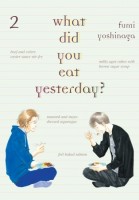
What Did You Eat Yesterday?, Vol. 1

April 23, 2014 by Ash Brown

What Did You Eat Yesterday?, Volume 1Creator: Fumi Yoshinaga
U.S. publisher: Vertical
ISBN: 9781939130389
Released: March 2014
Original release: 2007

I have been a fan of Fumi Yoshinaga and her work for quite some time now. English-language readers have been fortunate in that so many of her manga have been translated. I and many others were very excited when Vertical announced the license of her series What Did You Eat Yesterday?, a series that I have been hoping would be picked up for years. The first volume was one of the manga releases that I was most looking forward to seeing in 2014. What Did You Eat Yesterday?, Volume 1 was originally published in Japan in 2007; I am thrilled that it is now available in English. There were several reasons why I was particularly interested in reading What Did You Eat Yesterday?. It’s by Yoshinaga, from whom I’ve come to expect great stories and complex characters. The series is also a food manga, a niche that I am known to enjoy. (Actually, food often plays an important role in Yoshinaga’s manga.) And I was especially interested in the incorporation of contemporary Japanese gay life in What Did You Eat Yesterday?–the two main characters are boyfriends in their forties who live together.

Shiro Kakei is a successful lawyer at a small firm, but his real passion is food. He’s a great cook, and an extremely frugal one, too. Kakei simply enjoys a good meal. The palate of his boyfriend Kenji Yabuki, a flamboyant hairstylist, isn’t nearly as refined as Shiro’s but he certainly appreciates his partner’s creativity in the kitchen. The two of them have been dating for three years, so their relationship is well established, but they still face some challenges. Although both of their families know that they are gay, Shiro prefers to be much more discreet about his homosexuality when dealing with his coworkers and strangers. Kenji, on the other hand, is happy to have a chance to brag about his boyfriend. And just because they’ve been together for so long doesn’t mean that they don’t have to deal with old flames and jealousy. But at least they can always depend on delicious cuisine to help smooth over the bumps in their relationship.

The food in What Did You Eat Yesterday?, both the description of the meals and the care that Yoshinaga has put into drawing them, can be mouth-watering. Even the most simple dishes are beautifully portrayed, in part because food is so important to Shiro and he puts time and effort into its preparation, but also because Yoshinaga shares that same passion. There is enough instruction in What Did You Eat Yesterday? that adventurous readers could easily duplicate the featured recipes. However, the food in What Did You Eat Yesterday? works best when it is directly tied into the manga’s plot and story. Occasionally that ideal balance is missing in the first volume. The meals, while lovely, can from time to time feel tangential, almost as if there are two different manga sharing the same series–one focusing on food and one focusing on people.

I do enjoy the food and the important role that it plays in What Did You Eat Yesterday?, but in the end I’m even more interested in the characters, their relationships, and their lives. Shiro and Kenji make an intriguing couple. Out of the two of them, Shiro is the least secure with who he is and is very concerned with keeping up appearances. He comes across as very brusque and some find him unlikeable as a result, but it’s a defense mechanism. Kenji seems to be much more comfortable with himself. The two of them aren’t frequently affectionate, at least not overtly so, but they do care about each other. It can be seen in the little things that they do–such as simply offering to carry a heavy bag–and in their more subtle interactions. Shiro often tries to smooth over arguments and hurt feelings the best way he can: through cooking. And that’s one of the things What Did You Eat Yesterday? does best–showing how people connect and communicate through food.

Filed Under: REVIEWS Tagged With: fumi yoshinaga, manga, vertical, what did you eat yesterday?

Vinland Saga, Vol 2

April 22, 2014 by Anna N

Vinland Saga Volume 2 by Makoto Yukimura

It says a lot about the quality of writing in Vinland Saga that the most memorable moments in the manga for me aren’t the Viking battle scenes but instead quiet moments that reveal more about the characters in the story. The clash of wills between determined young warrior Thorfinn and the conniving Askeladd becomes even more intriguing with the plot development in this volume. The story opens with a bit of a flashback to Thorfinn’s early adventures in infiltration for Askeladd, when he is taken in by an English family who he ends up having to betray. Thorfinn attempts to tell them to run before the Viking invasion is about to crush their village, and his concern turns to resignation as he sees the destruction coming at the hands of the Vikings.

Thorfinn has an encounter with a crazed Viking commander named Thorkell. Thorkell’s glee in battle contrasts with Askeladd’s more cerebral and cynical approach. Thorfinn is defeated, but Thorkell cheerfully waves goodbye with the stumps of the fingers that Thorfinn sliced off, saying of the fight “I enjoyed our battle! We should do it again!” The name of Thorfinn’s father still functions as an element of protection, because Thors was such a legendary warrior that Thorfinn’s Viking opponents are immediately curious about his capabilities.

Askeladd has his own agenda to execute as his band begins to march across the English countryside. They encounter the timid Prince Canute, and Askeladd strikes an unusual bargain with the Welsh. There’s an element of impending doom referenced multiple times, as Askeladd references a prophesied end of the world. The clash of religions between Christianity and paganism is also explored, as is the absolute brutality of the Vikings as they plunder a village in the winter. Yukimura’s art is always strong, and I appreciate the clarity of the battle scenes, as well as the attention to detail with the characters’ emotions as they react to the events on their journey.

While Thorfinn fits in with the traditional model of a hero, I’m finding myself more intrigued by Askeladd, simply because he’s such an unreliable narrator. I’m not sure if his stated reasons for acting are the truth, which creates quite a bit of dramatic tension in the story. The deluxe production for these volumes is always a treat, and I’m looking forward to the next volume of this saga continuing.

Filed Under: REVIEWS Tagged With: kodansha, Vinland Saga

A Certain Scientific Railgun, Vol. 9

April 22, 2014 by Sean Gaffney

By Kazuma Kamachi and Motoi Fuyukawa. Released in Japan as “Toaru Kagaku no Railgun” by ASCII Media Works, serialization ongoing in the magazine Dengeki Daioh. Released in North America by Seven Seas.

Last time I noted that Academy City was fostering an entire world of superheroes, and this new volume shows us how dark that world really is. Every time we’ve seen a science or research project in either Index (now licensed by Yen Press!) or Railgun, it’s been bad news for those being experimented on, those uncovering the conspiracy, and even random passersby. And now with this new volume we have two of the bigger ‘experiments’ meeting each other, as Misaka and Shokuhou reluctantly team up to try to save the sisters. Unfortunately, the sisters are not the endgame of our latest mad researcher villain, Misaka is – which means we once again get a really nasty cliffhanger.

railgun9

It is not particularly a surprise that Shokuhou turns out to not be quite as evil as she seemed, but her similarities and differences with Misaka are fascinating nevertheless. They both grew up as lab rats and are now having to deal with the results of that, either a) through destruction (Misaka) or b) through manipulation (Shokuhou). Of course, growing up as a mind reader and manipulated the way she was, Shokuhou also ends up being VERY PARANOID INDEED, which is what drove most of her actions against Misaka in Vols. 7 and 8. She doesn’t want to deal with anyone whose mind she can’t get at. As for Misaka, once she finds out that there’s a different enemy behind all this she allies with Misaki, though there’s a halthy dose of mistrust on her end as well (leading to a wonderfully amusing scene where Misaka thinks she’s been betrayed only to find it’s just Shokuhou’s bad physical exertion.)

The rest of the cast get some nice things to do, bar Uiharu who is sadly just used as bait this time around. Kuroko gets to be badass with a wheelchair, one of the most dynamic shots of the entire volume. (I’m a little annoyed at her ‘I’m straight’ towards Misaka at one point (this is during her memory loss). Are we supposed to read this as her not being gay but just obsessed with Misaka? Either way it makes me grumpy, really, but then Kuroko’s character is problematic in general.) As for Saten, she gets to do some detective work and show off that being a Level 0 does not mean you are merely cannon fodder in this world. Oh yes, she also meets A Certain Protagonist for the first time…

I’m not sure how I feel about Touma showing up here, particularly as I suspect it will lead to Misaka being in peril and having to be saved by him (judging from the cliffhanger). Now admittedly the entire plot of Index can be summed up by “X in in peril, Touma saves them”, but this is Misaka’s series, and so far the only time she’s really had to rely on Touma bailing her out is during the Sisters arc, which was already canon in Index so couldn’t really be written around. We’ll see how well the manga carries it off, but I suspect we’ll be seeing a lot of Touma’s right hand in Vol. 10.

Another excellent volume, overall, though, with a pleasingly smug villain who it will be lovely to see get his eventually. Sadly, given we’ve caught up, we’ll have to wait till January to see what happens next. In the meantime, enjoy everyone fighting against the conspiracy (which, this being the Indexverse, is almost all true).

Filed Under: REVIEWS

My Week in Manga: April 14-April 20, 2014

April 21, 2014 by Ash Brown

My News and Reviews

There were two in-depth reviews posted at Experiments in Manga Last week. The first review was of Torajiro Kishi’s manga Maka-Maka: Sex, Life, and Communication, Volume 1 as a part of my Year of Yuri review project. Maka-Maka is definitely a mature title and there’s quite a bit of sex and physical intimacy, but I think it’s one of the best adult-oriented yuri manga to have been released in English. Sadly, it’s very out-of-print. The second review was of The Black Lizard and Beast in the Shadows, a collection of two of Edogawa Rampo’s better known short novels of suspense. I though they were pretty great, but then again I tend to be rather fond of Rampo’s works.

As for a few other interesting things: Jason Thompson takes a look at the mahjong manga The Legend of Koizumi in the most recent House of 1000 Manga column. (Ed Chavez apparently wanted to license the series. It’s unlikely to ever actually happen, but we can dream!) Yen Press had quite a few license announcements of its own to make, including the establishment Yen On, an imprint specifically devoted to light novels. Dark Horse also announced some exciting licenses–more manga by CLAMP and Satoshi Kon. Toh EnJoe won the Philip K. Dick Award Special Citation for his work Self-Reference Engine, one of my favorite books released last year. And speaking of awards, the 2014 Eisner Award Nominees have been announced. Manga up for an Eisner Award include The Heart of Thomas, The Mysterious Underground Men, Showa: A History of Japan, 1926–1939, The Summit of the Gods, Volume 4, and Utsubora: The Story of a Novelist in the Best U.S. Edition of International Material—Asia category and The Strange Tale of Panorama Island in the category for Best Adaptation from Another Medium.

Quick Takes

Bad Teacher's Equation, Volume 4Bad Teacher’s Equation, Volumes 4-5 by Kazuma Kodaka. Bad Teacher’s Equation has come a long way since its first volume. The series was nearly a decade in the making, so it probably shouldn’t be too surprising that it underwent some significant evolution in both artwork and storytelling, including some unexpected plot developments. In the series’ afterword, Kodaka notes that Bad Teacher’s Equation “mirrored the history of boy’s love comics throughout the ’90s” and that it was her first foray into the genre. It started out as a comedy, but by the end of the series, while there is still a fair amount of humor, it has become much more serious and even addresses some of the challenges that face same-sex couples in a more realistic fashion. I particularly enjoyed the fourth volume because of this and because of its focus on Masami and Toru’s relationship. They are the most consistently believable couple in Bad Teacher’s Equation. Although I wasn’t always convinced by Masayoshi and Atsushi’s relationship in the series, for the most part I did really like how things played out for them in the final volume.

Click, Volume 1Click, Volumes 1-4 by Youngran Lee. The basic premise of Click is fairly absurd–Joonha’s family has a strange genetic mutation which causes their bodies to change sex shortly after they reach puberty. Of course, this was never actually mentioned to Joonha and so he’s understandable concerned when at the age of sixteen all of a sudden he seems to have turned into a girl. At first, I thought that Click was going to be a comedy, but that’s not entirely the case. There are humorous elements, Joonha’s parents, for example, are a rather unusual pair and their scenes are generally played for laughs, but the manhwa is much more about the drama (and melodrama). It might not be the most realistic series, but there’s actually some interesting exploration of gender, gender roles, and gender identity in Click. Joonha isn’t a particularly pleasant person and on top of that he’s a misogynistic jerk, too. His sex change is a rather traumatic event for him and he’s now stuck in between genders. His body is female, and he tries to live as a girl, but his personality and way of thinking hasn’t really changed that much.

Drifters, Volume 3Drifters, Volume 3 by Kohta Hirano. I’m still not sure that I entirely understand what the underlying plot of Drifters is supposed to be, but I’m not entirely certain that it matters much at this point, either. At least not to me. I enjoy Drifters for the series’ outrageous characters and battles more than any sort of coherent story. I also appreciate Hirano’s use of historic figures in the series, although it does help to have at least some vague idea of who they are outside of the manga. Admittedly, Hirano’s interpretations are extraordinarily liberal and irreverent. Most of the characters exhibit varying degrees of insanity and there’s not much subtlety or nuance to their characterizations, either. So far, Drifters has been a very violent series. The third volume is no exception to this and battle after battle is fought. I have noticed some continuity errors in the artwork which can be distracting or confusing, especially when they occur in the middle of a fight scene. (Past volumes had this same problem, too.) In the end, Drifters still doesn’t make much sense yet, but I continue to find it to be highly entertaining.

Fairy Tail, Volume 37Fairy Tail, Volume 37 by Hiro Mashima. It’s the final day of the Grand Magic Games, the results of which will literally determine the fate of the world. The danger of course is that Mashima may have over-hyped the Games’ finale; the victory of the guild that ultimately wins is described as being impossible and highly unusual. But if there’s going to be a tournament arc, that’s certainly one way of making it crucial to the development of the story. I consider it to be a good thing. While the Grand Magic Games were diverting, for a while there they didn’t seem to have much of a point except to serve as an excuse to have high-powered wizards doing battle. And there’s plenty of fighting in the thirty-seventh volume, including several confrontations that occur simultaneously. Sadly, compared to previous battles, I didn’t find them to be especially engaging. The most interesting fight is the one between Erza and two other extremely skilled and strong women, Kagura and Minerva, which has several scenes which are particularly dramatic. Mashima does have to cheat and mislead readers with the artwork a bit to achieve some of those moments, though.

SamuraiFlamencoSamurai Flamenco directed by Takahiro Omori. Samurai Flamenco is an anime series that celebrates superheros and superhero shows. It uses a strange mix of silliness bordering on parody and seriousness, but it somehow works. Samurai Flamenco begins very realistically, with Hazama acting as a vigilante. He’s not particularly competent at first, but he makes up for that with his enthusiasm, passion, and belief in justice. It also helps that other people are drawn to him and his cause. On the surface, the middle portion of the series seems like a very typical superhero show with monsters and evil organizations. The villains’ character designs are frankly ridiculous. But then the anime returns to a more serious approach and the final episode pulls everything together perfectly. I did enjoy the humor of the series but I probably appreciated the more realistic examination of what it means to be a superhero even more. I quite enjoyed Samurai Flamenco and found the characters, all of whom are just a little bit strange, to be both likeable and interesting.

Filed Under: FEATURES, My Week in Manga Tagged With: anime, Bad Teacher's Equation, Click, Drifters, Fairy Tail, Hiro Mashima, Kazuma Kodaka, Kohta Hirano, manga, manhwa, Samurai Flamenco, Youngran Lee

Weekly Shonen Jump Recap: April 7, 2014

April 21, 2014 by Derek Bown 3 Comments

WSJ Cover April 7, 2014If you like western themed fantasy then you really need to pick up The Seven Deadly Sins. The storytelling is very much in the style of other manga, but the aesthetic of the design is one hundred percent medieval european. Even the swords are styled properly, which for a manga artist must take an insane amount of self control not to insert any curved or katana styled swords in there.

That’s about it for my reading this week, I haven’t had much free time to read during so I haven’t had a chance to read anything new. Besides the latest chapters that is.

Naruto Ch. 671
I warned you Kishimoto. I warned you what would happen if you went the clichéd and tired route. That’s it. I’m done. Call me when the manga ends so I can see how much that is screwed up too.

Okay so not really, I’d really like to use this as an excuse to stop reading this manga forever, but the truth is that this is hardly the worst thing Naruto has ever done. Oh it’s terribly written, and a complete bore to boot. The truth is that Naruto long ago lost any chance it ever had for me to be invested. So to see a plot development like the one in this chapter doesn’t really make me angry as much as it just makes me shake my head and move on.

Basically my review comes down to this: Copy and paste my opinion from last week only this time double it.

Naruto

Stealth Symphony Ch. 007
Again, I feel like I’m supposed to care about what’s happening, but the fact that I haven’t had any time to develop a connection to any of these characters before we start moving into a fight is pushing Stealth Symphony onto my naughty list. the few chapters that were meant to serve as our introduction to the characters just didn’t hack it because the characterization does not ever extend beyond basic tropes that manga authors keep repeating. So to see the manga try and focus on battles and spectacle gives me a bad vibe, suggesting that this manga will not last much longer.

One Piece Ch. 743
I imagine there are two things people are growing tired of in my writing, how often I dump on Naruto and how often I do the exact opposite for One Piece. The difference is that one tries to pass something the author thought of last week as an overarching thread, while One Piece manages to not only make a great spectacle, but also drop subtle hints suggesting how the story will progress. I dare not spoil anything, but in regards to the climax of this chapter, let us remember that not all is necessarily as it seems. This arc isn’t over yet.

One Piece

World Trigger Ch. 055
I’d normally hate a series that has to stop and explain what is going on, rather than focusing on the action. But with World Trigger those short breaks in the action really help me appreciate the action a lot more. Would I appreciate what I’m seeing if I didn’t know that Tamakoma use a special kind of trigger? Probably not. And the flow of who has the advantage over whom really is handled quite expertly. While Border does seem to be at a disadvantage, there is still enough room to let the flow of battle ebb towards the side of our protagonists.

Bleach Ch. 575
Kenpachi is badass, do I really need to say anything else about this chapter? There really isn’t a plot worth speaking of, so I’ll just let the chapter speak for itself.

One-Punch Man Ch. 034.3
While I do have my reservations with One-Punch Man being a straight up action series, I do have to say that Saitama does make a good serious action lead. In that he’s completely not serious even when the battle seems to be going against him. There’s just a certain refreshing nonchalance to him that makes me wish more time was focused on him rather than the ancillary characters.

One-Punch Man

Nisekoi Ch. 117
Besides making me incredibly nervous about my recent stomach aches, this week’s Nisekoi is a perfectly told joke. One does not normally think of manga being structured in terms of a joke, but from the setup to the punchline this chapter just might have been perfect. Add in Marika being the best character ever and you have my favorite Nisekoi chapter since the short Ruri story we had a couple weeks ago.

All You Need Is Kill Ch. 011
Oh yeah, Keiji, he’s the main character isn’t he? I wouldn’t have thought we’d get any kind of emotional resonance with this series, but this chapter’s end was pretty well done, and worked well because the setup had been done properly through the last several chapters. I do ask myself how Rita can be uncertain of Keiji being trapped in a timeloop, but I suppose it makes sense if she herself is not caught in the same timeloop. She may have realized it during the battle, but in the morning she would have forgotten, which is why Keiji answering the question she was going to ask tomorrow is relevant.

Toriko Ch. 272
It was a nice little break to see all the characters from the manga’s past before we set off on the long arc that the gourmet world will be. I hope it won’t be too long before we see some of these characters again, because I would be really disappointed if we do not.

Toriko

I also still stand by my opinion that Rin is being written as a beard for Toriko by Shimabukuro. “Please don’t mind that I’m leaving behind a hot woman who wants to marry me to go on a trip with four other guys.” Still, it’s refreshing that a shonen manga artist besides Toriyama actually has his main character discussing marriage, it seems so oddly absent from almost every other series I read, so this is a nice breath of fresh air and the source of many jokes for me.

Blue Exorcist Ch. 056
Dr Gedoin is an odd character, on the one hand he is too disgusting to keep around, but on the other hand he was moderately amusing this chapter, mostly because he is so clearly oblivious to how things will turn out that it’s almost endearing. Ignoring of course the lolicon vibes the guy gives off. And the fact that he’s clearly a misogynist. Can we please move away from him? But at least we get weird Frankensteinian zombies, which despite the fact that they are different from the ghouls we saw at the beginning of the series clearly resemble the ghouls at the beginning of the series. Hopefully the characters will realize next month that the doors in their cells have clearly been left open.

Blue Exorcist

Special Bonus Story – Dragon Ball
When it comes to sharing my opinion about manga I normally do so without fear. After all, it doesn’t matter what I say, I’ll step on someone’s toes. But it’s not often that I find myself on the precipice of writing something that I know will piss off pretty much every manga fan online. But I am committed, so here I go.

I didn’t think this bonus story was very good.

Besides the fact that Toriyama’s art looks strange coming back to Dragon Ball after such a long time, all the characters look oddly proportioned, too skinny I might say. It was really neat to find out what Planet Vegeta looked like before it blew up (though it reminds me a lot of Namek, and earth for that matter with how Toriyama draws them). I think everyone can agree that Goku’s mom looks like nothing we imagined, and in general this was a fun little experience.

The problem is that it’s impossible not to draw comparisons between this little chapter and a very famous story relating to a comics icon. Almost beat for beat this is the origin story for Superman. Planet about to be destroyed, father called it, sends son away. I’d always imagined Goku was legitimately on a mission to destroy earth, not sent away to save his life, and that would have been a perfectly fine story. This version works in that it lines up with everything Toriyama wrote in the past about it. But at the same time the similarities are so close that I can’t help but wonder why no effort was made to avoid the comparisons?

It’s a fun little chapter, but anyone with a passing knowledge of western comics will more more than a little distracted while reading it.


If you want to hear more, check out the Manga^3 Podcast Archives.

Filed Under: FEATURES & REVIEWS, WSJA Recaps Tagged With: bleach, blue exorcist, Dragon Ball Z, naruto, nisekoi, One Piece, one punch man, Seraph of the End, toriko, world trigger

Bookshelf Briefs 4/21/14

April 21, 2014 by MJ, Sean Gaffney and Michelle Smith 1 Comment

This week, MJ, Sean, and Michelle look at recent releases from Yen Press, Seven Seas, Viz Media, and Vertical, Inc.

bunnydrop10Bunny Drop, Vol. 10 | By Yumi Unita | Yen Press – For many fans, Bunny Drop was a tricky series (for reasons documented by nearly everyone), and though I found the final volumes more palatable than I expected, I was never able to buy the supposed attraction between Rin and her much older guardian, Daikichi. For me, like most fans, I suspect, volume ten provides a single-volume capsule of exactly what I loved most and least about Bunny Drop. On one hand, this collection of side stories offers a welcome return to the series’ early charm. Most of the volume is devoted to tales from Rin’s childhood (along with a Masako side story that is surprisingly delightful). Unfortunately, its final chapter, depicting Rin and Daikichi’s married life, further illustrates the complete lack of romantic chemistry between them. Still, as a huge fan of the early series, I consider this volume a win. Thanks, Yen Press! – MJ

grimoire3Dictatorial Grimoire: Red Riding Hood | By Ayumi Kanou | Seven Seas – The dramatic arc behind this final volume is not really Red Riding Hood – who’s also the wolf, in an excellent plot twist – but rather the relationship between Otogi and Cinderella, who turns out to be not quite what he seemed. But then given that this is based around Grimm’s Fairy Tales, it makes sense that things would get darker towards the end. Luckily, Otogi is better than his father and uncle, and is able to save the day and come to terms with Cinderella’s past. I wish that the volume had more of Hatsushiba kicking ass (she literally gets locked in a birdcage towards the end), but won’t carp too much. This has been a fun little series, with lots of amusing characters. – Sean Gaffney

happymarriage5Happy Marriage?!, Vol. 5 | By Maki Enjoji | Viz Media – Anytime we see Chiwa interacting with Hokuto’s family I get fascinated, which is a good thing, as Chiwa and Hokuto’s struggles to communicate with each other are really starting to frustrate me otherwise. It’s a decent example of people who fall in love but barely know how the other person works, but man, is it teeth-grinding to read. Much better are the machinations behind the scenes of Hokuto’s family, and Chiwa trying to be supportive and yet learn more at the same time. (There is also a gag showing how ignorant Hokuto is about things like foreplay that made me laugh out loud.) It’s not a happy marriage yet, but we’re only halfway through the series, and it’s been worse. But please, take the time to speak with each other! – Sean Gaffney

knights8Knights of Sidonia, Vol. 8 | By Tsutomu Nihei | Vertical, Inc. – This volume focuses primarily on the relationship between Tanikaze, Izana, and Tsumugi, and their bonding into a family unit – they even find an apartment off in the far reaches of the ship and move in together. This is awkward not just because Tsumugi is a gauna hybrid who looks like a snake-worm thing (if I’m being charitable… please don’t sneak into Tanikaze’s bed looking like that, Tsumugi, it leads to filthy thoughts), but also because Izana’s love for Tanikaze is starting to reach a breaking point, especially as he still seems oblivious to Izana. Is it just because Izana is a hermaphrodite? Is it because Tanikaze still can’t get over the death of Hoshijiro? And does it even matter given that Izana may not live to see the next volume? Dang, this manga is addicting. – Sean Gaffney

rein2Sweet Rein, Vol. 2 | By Sakura Tsukuba | Viz Media – I’m hard-pressed to think of how this manga could possibly be more frothy and insubstantial. Kurumi (a Santa Claus) and Kaito (her reindeer) spend their second Christmas together bringing joy to a bunch of orphans, then it’s summer and their bond is tested by a “Dark Santa,” and then it’s Christmas again, but they’re still 17. Meanwhile, Kaito’s brother finds his Santa and they somehow get into an argument with another beach hut noodle vendor (yeah, it’s summer again) that can only be settled by… a beach volleyball tournament. Ye gods. And yet, despite it giving me multiple things to roll my eyes over, I don’t dislike Sweet Rein. It probably helps that the way Tsukuba draws reindeer is so darn cute. It also doesn’t hurt that it’s only three volumes long; I’ll probably be completing the series as a result. – Michelle Smith

whatdidyoueatyesterdayWhat Did You Eat Yesterday?, Vol. 1 | By Fumi Yoshinaga | Vertical, Inc. – I was campaigning for this series to be licensed when there was only one volume of it out in Japan, so it’s a relief to find that something I lobbied for sight unseen has turned out to be so good. (I mean, it’s by Fumi Yoshinaga, so the odds really were in its favor.) Shiro Kakei (lawyer) and his boyfriend Kenji Yabuki (salon stylist) have been together for a few years. Budget-conscious Shiro shops the sales and every evening prepares a multi-dish meal for them to share. The food segments are fun, no doubt, but what’s even better is when the food serves as a springboard for gay life topics, like their conflicting opinions regarding how open to be about their relationship or Shiro’s profound relief that he never got married to make others happy. It’s great stuff, and I’m so grateful that it’s here at last! – Michelle Smith

Filed Under: Bookshelf Briefs

  • « Go to Previous Page
  • Page 1
  • Interim pages omitted …
  • Page 344
  • Page 345
  • Page 346
  • Page 347
  • Page 348
  • Interim pages omitted …
  • Page 538
  • Go to Next Page »
 | Log in
Copyright © 2010 Manga Bookshelf | Powered by WordPress & the Genesis Framework