• Skip to primary navigation
  • Skip to main content
  • Skip to primary sidebar
  • Home
  • About Us
    • Privacy Policy
    • Comment Policy
    • Disclosures & Disclaimers
  • Resources
    • Links, Essays & Articles
    • Fandomology!
    • CLAMP Directory
    • BlogRoll
  • Features & Columns
    • 3 Things Thursday
    • Adventures in the Key of Shoujo
    • Bit & Blips (game reviews)
    • BL BOOKRACK
    • Bookshelf Briefs
    • Bringing the Drama
    • Comic Conversion
    • Fanservice Friday
    • Going Digital
    • It Came From the Sinosphere
    • License This!
    • Magazine no Mori
    • My Week in Manga
    • OFF THE SHELF
    • Not By Manga Alone
    • PICK OF THE WEEK
    • Subtitles & Sensibility
    • Weekly Shonen Jump Recaps
  • Manga Moveable Feast
    • MMF Full Archive
    • Yun Kouga
    • CLAMP
    • Shojo Beat
    • Osamu Tezuka
    • Sailor Moon
    • Fruits Basket
    • Takehiko Inoue
    • Wild Adapter
    • One Piece
    • After School Nightmare
    • Karakuri Odette
    • Paradise Kiss
    • The Color Trilogy
    • To Terra…
    • Sexy Voice & Robo
  • Browse by Author
    • Sean Gaffney
    • Anna Neatrour
    • Michelle Smith
    • Katherine Dacey
    • MJ
    • Brigid Alverson
    • Travis Anderson
    • Phillip Anthony
    • Derek Bown
    • Jaci Dahlvang
    • Angela Eastman
    • Erica Friedman
    • Sara K.
    • Megan Purdy
    • Emily Snodgrass
    • Nancy Thistlethwaite
    • Eva Volin
    • David Welsh
  • MB Blogs
    • A Case Suitable For Treatment
    • Experiments in Manga
    • MangaBlog
    • The Manga Critic
    • Manga Report
    • Soliloquy in Blue
    • Manga Curmudgeon (archive)

Manga Bookshelf

Discussion, Resources, Roundtables, & Reviews

Features & Reviews

Weekly Shonen Jump Recap: June 23, 2014

July 6, 2014 by Derek Bown 4 Comments

June 24 2014 CoverSomething that I never considered when I started reviewing manga as a hobby was how much it would change how I enjoy manga. When reading manga I suddenly realized that I was not just allowed to have an opinion, but in order to have a proper review I was expected to have an opinion. Just saying “It left no impression on me whatsoever” could only work once before I had to elaborate. It was then that I realized forming an opinion out of necessity is a lot harder than a naturally grown opinion. One is pure and from the heart, the other can become a cynical exercise of no value to anyone if I allowed laziness to trick me into reaching for the low hanging opinions.

What I’m trying to say is that writing reviews is hard and you should all feel sorry for me. Whereby I hope you will forget that I’m several weeks behind in writing these reviews. Has it worked?

One Piece Ch. 750
If nothing else the return of One Piece to Weekly Shonen Jump is as good a reason as any to start writing again. While I was expecting a flashback after the cliffhanger two weeks ago, I have to say a little bit of setting the scene before the flashback never hurt anyone. The chapter jumps around, giving us just a couple pages each for the characters in the arc, making it hard to really focus on any one element.

Though I will say that Rebecca’s reunion with her aunt was just perfectly adorable. Now would someone please get that poor girl some clothes?

King Riku’s distrust of the Strawhats somewhat comes out of nowhere, he was okay with a former street punk marrying his daughter, but doesn’t trust the people that helped him remember who said former street punk son-in-law of his is? Seems a bit disingenuous and out of place all things considered. It does allow Oda to fit in a monologue about the evils of injust social elites but as a favorite writer of mine says, “Story first, then message” and it seems beneath Oda to insert a character trait on a character that has not shown any signs of said trait before just to bring across a message.

If nothing else, Oda continues to show that he knows just how long to string us along before we get the big payoff. He’s clearly not rushing this story, and the Dressrossa arc is all the better for it.

One Piece

Naruto Ch. 681
It’s probably good that I haven’t been reviewing Naruto for the past several weeks. Because I know for a fact that I would have made the promise to quit reading this series several times, and then would have to go back on said promise. Let’s keep things simple by saying that this climax is quite possibly the worst thing Kishimoto could have ever done. How anyone that knows even the slightest thing about writing could possibly defend making the final boss a character we only just learned about within the last couple months of a decade long series is beyond me. Madara being the big bad instead of someone like Orochimaru or Pein is a big enough stretch, but to suddenly have Kaguya, a character who I’m convinced was only created in Kishimoto’s mind this year, be the big bad is quite possibly the worst thing this series has ever done. And here I thought Naruto and Sasuke being the reincarnations of two characters we only just found out about a couple months ago was the worst thing that could happen. And Kaguya doesn’t even do us the courtesy of being an interesting character.

This series has gotten so convoluted that ever “twist” added on top of this burning, sinking wreckage just elicits another annoyed “Whatever” from me.

I used to just hate the characters, but now the writing is just as bad for Naruto. I am at my last wit’s end here. Someone, if any of you still exist, that likes this manga, please tell me why. I can’t get beyond how awful this plot is to even consider what good could possibly exist here.

Hunter X Hunter Ch. 344
I would review Hunter X Hunter, but let’s be fair besides the past couple chapters I’ve only reaad the first volume of this series. Until I catch up there is absolutely nothing important I could have to say about this series. Get back to me in a couple weeks when I’m hopefully caught up.

Though for the two page spread, I have to say it kind of reminds me of what the Toriko world would look like if it was drawn by Kentaro Miura.

Hunter x Hunter

Nisekoi Ch. 127
Funniest chapter in months. I really don’t feel like I need to say anything else. Just go read this one if you’re not reading the series. It stands alone well enough that you’ll get how the characters relate to each other, and the jokes will convince you to read it from the beginning.

Stealth Symphony Ch. 017
I really hate how modern manga publishing has ruined the stories. What we’ve got here is an interesting story that would actually work if the author had bothered to actually develop any of his characters. As it is we’re getting a plot that should not have been written until several years of publication. I see things happening, but I don’t care because none of these characters matter. I see focus given to quite possibly the most shameless example of fanservice that still apparently is supposed to be a serious character. For those of you that enjoyed Fullmetal Alchemist, imagine how Olivier Armstrong would have come across if she had walked around in a miniskirt with her top undone and her character design drawn by someone that seems to think that interesting characters must come with breasts that would make Kubo, Oda, and Mashima hold an intervention for him.

It’s the same problem you see with all new manga that just can’t get the rankings early on. They skip developing the characters and instead try to fit as much of the story that must have sounded amazing in their heads into their manga before getting cancelled. There really should be some kind of grace period that allows manga artists to actually develop their characters. Then they can start their plot and hope it attracts enough interest to not get cancelled.

Stealth Symphony

Bleach Ch. 585
Ichigo didn’t even get a chance to look cool before he’s shown to have helped the big bad with his plan yet again. Either way, I enjoy having Ichigo back in the story so it annoys me that we’re going to get a bunch of the Soul Reapers facing off against the Stern Ritter. That’s totally what I was hoping for, more boring fights to distract from the fact that the main character doesn’t have an interesting character arc anymore.

Bleach

One-Punch Man Ch. 035.2
I can’t really build up any enthusiasm for this series anymore. The art is gorgeous, but the story is laking and just not funny anymore. I came here for comedy, not another action series. Sure it’s a very well rendered action series. But we’re running into the problem of the invincible superman here. If you have an invincible hero you really need to find a better way to show tension rather than just have them beat their enemy easily. Like maybe make it a comedy series. That might work.

One-Punch Man

Filed Under: FEATURES & REVIEWS, WSJA Recaps Tagged With: bleach, blue exorcist, Dragon Ball Z, naruto, nisekoi, One Piece, one punch man, Seraph of the End, toriko, world trigger

Black Rose Alice, Vol 1

July 3, 2014 by Anna N

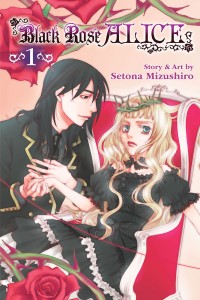
Black Rose Alice Volume 1 by Setona Mizushiro

I am always happy to read silly paranormal shoujo series, as evidenced by my affection for series like Midnight Secretary and Demon Love Spell. But it is also nice to read some supernatural shoujo that is genuinely creepy, so I’m excited to see the addition of Black Rose Alice to the Shojo Beat lineup. North American readers may already be familiar with Setona Mizushiro through the series After School Nightmare, which was a very surreal series I’ve always regretted not finishing. The first volume of Black Rose Alice shows a unique and visually arresting take on the vampire genre.

The manga starts off by telling the story of Dimitri, an up and coming tenor in 1900s Vienna. He’s been taken in by a wealthy family and given the benefits of education and training that allows him to live in upperclass circles, but he’s still held apart from his adopted family in many ways. Dimitri is in love with Agnieska, the fiancee of his Theodor. Seething with unexpressed emotions, Dimitri gets trampled by a horse and almost dies. A butterfly alights on his prone body. Shortly after he wakes up he sings in a rehearsal, and shortly thereafter all the other musicians start dying in a series of improbable incidents. Dimitri notices a strange rose mark appear on the back of his neck, and a strange man names Maximillian greets Dimitri, telling him “You don’t appear to have noticed…but you are a vampire.”

Vampires in the world of Black Rose Alice are a bit like plants, as the seed of a vampire master implants itself on the fresh corpse of a handsome young man. Maximillian warns Dimitri that he may start exhibiting the personality traits and attitudes of the previous vampire that is now using Dimiri as a vessel. Dimitri scoffs at Maximilian’s advice and later sings a few bars to one of his lovers, who promptly throws herself off a balcony. As Black Rose Alice progresses, the effects of vampirism become more visually arresting. Mizushiro has a great talent for portraying horrific scenes in a surreal and yet oddly delicate way. Dimitri’s transition soon starts to have a terrible impact on the people who surround him. The concluding half of the volume flashes forward to Japan in the year 2008, where a fully vampiric Dimitri entangled himself in the lives of a high school student and his teacher for his own evil vampire reasons.

Black Rose Alice does a great job setting up an intriguing mystery through the contrast between 1900s and 2000s Dimitri, he’s innocent and tormented at first and the cold and dispassionate personalty he exhibits later in the volume represents a stark change. Mizushiro’s art does a great job portraying Dimitri’s personality shift, as well as the elements of visual horror that make the feeding habits of vampires in the world of Black Rose Alice extremely disturbing. Vampires as plants is an unusual twist on the genre, and I would recommend this manga to anyone looking for a unique supernatural shoujo series.

Filed Under: REVIEWS

Manga the Week of 7/9

July 3, 2014 by Sean Gaffney, Michelle Smith, MJ, Anna N and Ash Brown 1 Comment

SEAN: It may not be hot where you are, but Connecticut? It’s hot. Too hot. Can manga save us from the doldrums of summer?

MICHELLE: I am in Florida. Such hot. Very yuck.

MJ: New England, also hot. And stormy. Which sounds sexier than it is.

ANNA: I will be in Central Illinois, which will be hot and humid!

heyclass5SEAN: Digital Manga Publishing has another BL series trundle along, with Vol. 5 of multi-punctuated Hey Class President!!.

Kodansha unveils a slew of July titles. Seven Deadly Sins hits its third volume, and I have no doubt will give us a little more background on the newly-introduced Ban/Greed.

ASH: It took a few chapters to hook me, but at this point I’m looking forward to reading more of Seven Deadly Sins.

SEAN: Sherlock Bones has leapt forward in time to show our leads as adults (or adult dogs) right as the series hits its penultimate volume.

ASH: I was happy to see that the protagonists weren’t going to be stuck in high school forever.

SEAN: Fans of Akamatsu may have been keeping up with UQ Holder via Crunchyroll’s site, but for those who crave print, the 2nd volume also drops next week.

MICHELLE: I wish I had something to say about any of these, but I do not.

MJ: Same.

SEAN: And we have some more goodies from Viz. 07-GHOST has Vol. 11 come out, and I think the Manga Bookshelf team finds itself falling further and further behind?

MICHELLE: Yep. I look at the growing pile on my shelf periodically and remind myself that I need to read it.

ANNA: Me too! It is a really good series, I am looking forward to binging on back issues once I do start reading it.

SEAN: Speaking of impossible catchups, Case Closed is now at Vol. 51.

fmaomnibus8Fullmetal Alchemist is down to its last two omnibuses. If you get all nine, you’ll have the truly essential parts of this manga – which is to say, all of it.

ASH: Fullmetal Alchemist is great!

MJ: Yes, it is! And to Sean’s point, one of the things I love best about it is that, unlike a lot of long-running manga, it is a single, coherent story with a real beginning, middle, and end. Nothing is superfluous, so yes, every volume is essential.

ANNA: I need to finish this series one day! Actually, I think I’ll start by rereading from the beginning.

SEAN: The third Ranma 1/2 omnibus introduces a major antagonist (Cologne); a major antagonist/butt-monkey (Mousse); and a minor yet incredibly irritating thorn in Ranma’s side (Gosunkugi). All this plus the usual Takahashi comedy and non-romance.

And if that’s not enough Takahashi for you, the 15th volume of Rin-Ne drops the same week, forcing unfortunate comparisons between its sedate, mild couple and Ranma 1/2’s violent, boisterous one.

MICHELLE: Some Takahashi sounds awfully appealing right now, actually.

SEAN: What manga cools you down the most?

Filed Under: FEATURES, manga the week of

Phantom Thief Jeanne, Vol. 3

July 3, 2014 by Sean Gaffney

By Arina Tanemura. Released in Japan as “Kamikaze Kaitou Jeanne” by Shueisha, serialized in the magazine Ribon. Released in North America by Viz.

There are spoilers here, FYI for those who want to avoid them.

I’d mentioned in previous reviews of this title that it’s a standard magical girl series with a core of darkness. Of course, that applies to most magical girl series, to a greater or lesser degree – Madoka Magica did not invent the genre, they only removed the optimism. Jeanne’s background as a parentless child has been a core of the series, and we’ve also seen how difficult it is for her and Chiaki to trust each other given they’re on opposite sides. This new volume takes us even further down the rabbit hole, giving us dead, sexual assault, and a shocking plot twist that pretty much alters everything we’ve seen to this point.

jeanne3

What seems to be the big event of this volume happens with the arrival of a new teacher, Hijiri. He’s the one who saw Maron at the end of the last volume, and he’s not afraid to take advantage of that. He also seems to know far more about what Maron is doing as Jeanne regardless of whether he saw her or not. This culminates in a fight over the next victim, an isolated dying boy whose demon is the only thing keeping him alive. The boy, Zen, naturally falls for Jeanne (we still have to obey the rules of the genre here) and Maron is desperate to find a way to keep him alive and still not have the evil consume him. This is not helped by Sinbad, who, having had something explained to him offscreen by his magical familiar (we conveniently don’t hear it) is more determined to stop Jeanne than ever.

The aftermath of what happens devastates Jeanne and she’s clearly unwilling to discuss it with Chiaki. This is exactly what Hijiri wanted, as he turns out to be a figure from her past… no, not Maron’s past, Jeanne’s past as Joan of Arc. This culminates in the most disturbing scene in the volume, even worse than the cliffhanger, where Hijiri attempts to rape Maron in order to seal off her powers (which are said to be only due to her virginity). This scene goes on for quite some time, and I’d actually put a trigger warning on the volume for those who want advance knowledge. Unfortunately, while Hijiri does get beaten up and stopped, he does not leave the plot or Maron’s life, which is rather annoying.

Finally, everything seems to be resolving. Chiaki doesn’t outright say he loves Maron, but he comes close. They go on what is clearly a date, even if it’s because he promises to “tell Maron everything” – in fact, it’s such a date that Miyako, who was spying on them, flees the scene, finding herself more devastated that she’s not the closest one to Maron right now than that Chiaki is in love with someone else. Unfortunately, Chiaki then tells Maron something that she absolutely does not believe – so much so that she returns to her apartment just to verify it’s not true. But it is true – Jeanne has not been collecting chess pieces for good, but for evil! The revelation comes out of nowhere to a certain degree – not that Maron is being deceived, but who’s doing the deceiving, as Finn has been mostly an annoying ditzy mascot to this point. But there was some signposting, and we still have 2/5 of the series to go, so I’m sure we’ll see what’s going on.

There’s a lot of Arina Tanemura out there thanks to Viz, and I’ve never really been grabbed by much of it. This is the exception. Phantom Thief Jeanne is shaping up to be her best work, though, with thrills, romance, humor (Maron’s obsession with getting swine flu here is highly amusing) and a very deep plot. It’s a fantastic license rescue, and I can’t wait for the next volume.

Filed Under: REVIEWS

Haganai: I Don’t Have Many Friends, Vol. 7

July 1, 2014 by Sean Gaffney

By Yomi Hirasaka and Itachi. Released in Japan as “Boku wa Tomodachi ga Sukunai” by Media Factory, serialization ongoing in the magazine Comic Alive. Released in North America by Seven Seas.

Much as I try to tell my readers whether or not they will enjoy a particular volume or series, in the end this is still my review blog where I mostly review to my tastes. I tend to like most of what I review. And my taste can be unpredictable from series to series. I do sometimes wonder about it. Why am I OK with fanservice in Cage of Eden or Negima when it drives me nuts in Food Wars or Monster Musume? Sometimes predicting what I like doesn’t really work. Usually a series I think I’ll dislike or drop early turns out to have some hidden depth or plotline or characterization that I latch on to, and suddenly it’s on my ‘surprisingly good’ list.

haganai7

No series typifies this more than Haganai: I Don’t Have Many Friends. I decided to review this new volume, the 7th in the series, mostly as I saw that the ALA convention had a Best/Worst manga of the last three years panel. This is thankfully mostly dedicated to spectacular manga that the panelgoers may not have seen, but there is a section devoted to, shall we say, the bottom feeders. The results were both surprising and non. The surprising was Bakuman, which I knew had a healthy crowd that disliked its ongoing issues with sexism (including me – I dropped it early), but I wasn’t aware it was that healthy. The other two titles, Haganai and High School DxD, were firmly in the otaku harem grenre.

I get this. The harem genre is far more popular in Japan than it is in the US, and has large inherent sexism issues, just like Bakuman. It tends towards blatant fanservice, generic ‘nice’ heroes, and heroines who tend to fall into very obvious types. And no argument about High School DxD, whose first volume I was sort of lukewarm to but additional research has shown I’ll likely be dumping it pretty soon. That said… c’mon, voters, Haganai over Mayo Chiki? Over Triage X? Over I Don’t Like You At All, Big Brother!!? Is it just Haganai’s increased visibility?

I have perhaps chosen a non-typical volume with which I defend my enjoyment of Haganai. This particular volume does not have Kodaka’s gothloli younger sister in it at all, and the other resident loli, Maria, makes only a token appearance (though a cliffhanger implies Vol. 8 may be quite different). And Sena does not run through the pages naked with her breasts bouncing up and down in a grotesque parody. Instead, for the most part, this deals with the aftermath of Yozora cutting her hair, and subsequent jogging of Kodaka’s memories.

There’s still plenty of humor here, which is (more than the harem possibilities) the main reason to read Haganai. Yozora’s becoming a “pretty boy” to troll Maria is wonderful, Yozora and Rika trolling an oblivious Sena into a truly ridiculous hairstyle is magnificently over the top, and the entire parody of yaoi manga artwork is worth the price of the book alone. That said, the best parts of this volume are showing off how close the “not friends” have become, or seeing their vulnerability.

Yozora gets the bulk of the pages here, and it’s sweet yet also depressing seeing her inability to socialize, which is far more crippling than Kodaka and Sena’s simple mild personality quirks. A bonus chapter shows is the events of the start of the series from her POV, and her frustration is palpable. I also liked Sena’s immediate acceptance of Yozora’s new hair, and though she attempts to bully her about it it’s really a token attempt – these two are actually getting along quite well now. And Rika with her glasses off is actually briefly vulnerable, before the front comes slamming back up.

I get why folks would dislike Haganai, and admit it’s not for everyone. But there’s a lot of depth, humor and heart here, and compared to some of the other titles we’ve seen lately in the same genre, I can’t agree it’s among the worst. I’ve come to greatly enjoy this series. Now we’ll see if I can still say the same after what promises to be a loli-nun heavy Vol. 8.

Filed Under: REVIEWS

Bookshelf Briefs 6/30/14

June 30, 2014 by Sean Gaffney, Anna N and Michelle Smith 1 Comment

This week, Sean, Anna, & Michelle look at recent releases from Viz Media, Yen Press, Seven Seas, and Kodansha Comics.

arata18Arata: The Legend, Vol. 18 | By Yuu Watase | Viz Media – The central premise of Arata is that a Japanese high school student, Arata Hinohara, has switched places with the Arata of a world called Amawakuni. In this volume, we learn that five of the “six sho,” the most powerful hayagami-wielders whom Hinohara is tasked with defeating, are actually from our world, as well. Not only that, the whole reason they attempted to assassinate the princess in the first place was to fully open the passageways so they can return with their swanky powers “to conquer or destroy.” That’s a pretty intriguing development. Unfortunately, when one of these guys confronts members of Arata’s entourage whom he could easily kill and put this story to an end, he inexplicably decides to turn them into kids instead. Because I guess we needed some hijinks. This lapse in logic dampens my enjoyment of an otherwise possibly significant volume. – Michelle Smith

bloodycross3Bloody Cross, Vol. 3 | By Shiwo Komeyama | Yen Press – Honestly, the plot in this series seems almost irrelevant, which is a good thing as so little actually happens here. But the manga gives its readers what they really want: shots of cool-looking battles, cool-looking heroes, and our heroine snarking at each other. Hinata is absent for most of this volume, so we bring in a new cursed character who fulfills many of the same functions but gets to be a bit goofier. This is a pretty fun, tasty manga when you read it, but it’s light as air – it performs its function and nothing more. That said, hot demons and angels, the occasional cutaway sex scene, and lots of pseudo-religious fantasy… if this sounds good to you, definitely pick this up. – Sean Gaffney

centaur3A Centaur’s Life, Vol. 3 | By Kei Murayama | Seven Seas – To a certain degree, much of A Centaur’s Life could have been written with normal humans as a normal 4-koma. We’d see a bunch of rambunctious kids trying to amuse themselves without getting in trouble, a kindergartener enduring bullying and helping her nursery school schoolmates, etc. But they’d be much duller, as it’s the frisson of oddness that makes this series readable. Seeing all the centaur/dragon girl/sheep girl etc. days in the life, watching what television programs are like in a world like this, that sort of thing. The manga still feels awkward a lot, but it’s beginning to improve. And the cliffhanger, involving a new transfer student, promises a lot of change for the next volume. – Sean Gaffney

magi6Magi, Vol. 6 | By Shinobu Ohtaka | Viz Media – What does it mean to be a ruler – and does everyone have what it takes? From the moment Sinbad appeared in this manga, it was clear that he was a natural-born leader, confident in his abilities and there to lend support to those who need it. This is why he is NOT the main character of this manga. Instead we have Alibaba, taking the spotlight with Aladdin unconscious for most of the volume, who spends much of his time wrestling with doubts and fears. Even Sinbad isn’t sure Alibaba can be what’s needed right now. But Morgiana believes in him, and we slowly start to see his love of the people and desire to fight injustice come to the fore. Development of characters like Alibaba is why Magi is still a riveting read. – Sean Gaffney

phantom2Phantom Thief Jeanne, Vol. 2 | By Arina Tanemura | Viz Media – In this volume of Phantom Thief Jeanne the reader gets a bit more of Maron and Chiaki’s tumultuous relationship issues, as well as a bit of back story as Maron deals with her abandonment by her parents, a plot device that will never really make sense to me. Chiaki’s father is next on the demon possession hit list, and Jeane manages to rescue him despite the danger of being transformed into a life-sized creepy doll. Everything calms down a little bit, but Maron next has to deal with all of the girls who are showering Chiaki with chocolate on Valentine’s Day! Towards the end of the volume Jeanne gets even more power, so it will be interesting to see if the demons she battles will be even more menacing. There’s a nice side story featuring Miyako that examines why she is so obsessed with catching Jeanne, and shows how much importance she places on her friendship with Maron. Overall, a great second volume for this series, I’m really enjoying having an excuse to read it again in this new edition! – Anna N

sayiloveyou2Say I Love You., Vol. 2 | By Kanae Hazuki | Kodansha Comics – My verdict for volume one of Say I Love You. was “It’s kind of great,” and I’m happy to report that it applies to volume two, as well. The main strength of the series is in the characterization. “Prickly loner” Mei Tachibana is falling more in love with her popular boyfriend, Yamato Kurosawa—gradually allowing herself to trust him and feeling like a woman for the first time. And Yamato isn’t as idealized as many shoujo love interests (though he does rescue a litter of abandoned kittens). Contrasted against them are Hayakawa, a guy from an unhappy family background who pursues warmth in a series of fleeting physical encounters while avoiding acknowledging the feelings of the one girl who actually loves him, and Aiko, whose image issues and history with Yamato render her much more complex than your typical antagonist. I’m really enjoying watching this story unfold. Definitely recommended! – Michelle Smith

toriko22Toriko, Vol. 22 | By Mitsutoshi Shimabukuro | Viz Media – Another transitional volume, as we finish the end of the fight with Chiyo and then transition to a threat to the entire human world, as the Four Basts have awoken and love to eat humans. (How apropos in a series like Toriko,) The cover features more of the top Gourmet Hunters in the world, who get shown off to us in one huge scene and who I hope we’re not supposed to actually remember in the future. Mostly, though, this is fighting, eating, ans shonen idiocy, as Zebra deliberately turns off the message to our heroes about the Four Beasts right as it was going to tell them vital information. I therefore expect the fights they’re all having to have a nasty twist come the next volume. – Sean Gaffney

voiceover5Voice Over! Seiyu Academy, Vol. 5 | By Maki Minami | Viz Media – Given how much of Special A was devoted to love and romance, and the frustrations thereof, it’s actually quite refreshing to see that the heart takes a back seat to the career here, as Senri is almost entirely absent here. Instead, we deal with the trials of voice acting, as Hime is still not doing particularly well, but is also now dealing with two stars’ rivalry – both over their star qualities and over Hime, who they both have crushes on (despite her pretending to be a boy – I didn’t say romance was ENTIRELY absent). As with Special A, though, and indeed many other shoujo series, our heroine gets by by being extra shiny, nice, earnest and all around great. Now, can we bring the male lead back into the story? – Sean Gaffney

Filed Under: Bookshelf Briefs

My Week in Manga: June 23-June 29, 2014

June 30, 2014 by Ash Brown

My News and Reviews

Another three posts last week! It’s the end of June, so I decided to have a Juné Manga Giveaway. The winner will be announced on Wednesday, so there’s still some time left to enter for a chance to win a copy of Momoko Tenzen’s boys’ love one-shot Flutter. Last week I also took a closer look at the two Gengoroh Tagame manga recently published by Bruno Gmünder, Endless Game and Gunji. (And speaking of Bruno Gmünder, more titles for its Gay Manga line have been announced! Look for Mentaiko Itto’s Priapus, Takeshi Matsu’s More and More of You, and Tagame’s Fisherman’s Lodge in English later this year.) Finally, I posted a review of Kaoru Ohno’s historical novel Cage on the Sea which is about the survival and eventual repatriation of the Japanese holdouts on Anatahan Island after World War II. It was a story that was sensationalized in the 1950s,  but Ohno’s thoroughly researched novel is a much more nuanced portrayal of the events and people involved.

Quick Takes

Fairy Tail, Volume 38Fairy Tail, Volume 38 by Hiro Mashima. While the battles and challenges could be entertaining, I’ll admit that I had started to grow a little weary of the Grand Magic Games arc of Fairy Tail. Thankfully, a secondary (which has now become primary) plot was introduced which has much higher stakes than who will be declared the winner of the tournament. The possibility of the world being destroyed by the return of the dragons is a pretty big deal, after all. The lengthy buildup of the Grand Magic Games pays off in this volume though as the tournament reaches its conclusion. Actually, I think it’s one of the better volumes of Fairy Tail to have recently been released. Most of it is devoted to the various battles which are taking place, the Guild members showing just how much they’ve grown and how strong they’ve become in a very dramatic fashion. Friendship, loyalty, and teamwork have always been vital to Fairy Tail, but it really shows in this volume. Even though there is a focus on the action and fighting, there are also some important plot twists and story developments in the thirty-eighth volume, too.

My Love Story!!, Volume 1My Love Story!!, Volume 1 written by Kazune Kawahara and illustrated by Aruko. I absolutely adored the first volume of My Love Story!!–it’s funny and charming, and the characters are incredibly amusing and endearing. Although Takeo is heroic, enthusiastic, loyal, manly, and strong, he’s not traditionally good-looking, so people often overlook his better qualities. He falls in love easily, but all of the girls he likes fall for his attractive best friend Suna instead. (So far, Suna’s turned them all down, though.) But when Takeo saves a girl named Yamato from a groper on the train it seems as though his chance at love has finally arrived, if he isn’t too dense to realize it, that is. Takeo’s developing romance with Yamato is delightful, but his close friendship with Suna is marvelous, too. I’m not sure for how long the creators will be able spin the series’ basic premise without it feeling drawn out, but the manga is currently still ongoing at six volumes in Japan. Regardless, I’m looking forward to the next volume immensely; My Love Story!! is easily one of my favorite manga debuts of 2014.

Sankarea: Undying Love, Volume 7Sankarea: Undying Love, Volume 7 by Mitsuru Hattori. Bub’s condition continues to decline, so Rea has decided to leave for the ZoMA research facility, hoping that her unusual form of zombism will provide a clue to save him. (Is it sad that an undead cat is actually my favorite character in Sankarea?) Chihiro isn’t about to let her go on her own though, in part because he still feels responsible for Rea and wants to protect her, but also because he’s very interested in visiting the “zombie holy land.” Sankarea is a quirky series which tries to balance horror and romantic comedy. This volume actually succeeds fairly well in that. Chihiro has always expressed interest in zombie girls, and he is very excited to meet more of them at ZoMA, which causes him to reevaluate his relationship with Rea. Does he like her simply because she’s a zombie? Would he still like Rea even if there was a way to revive her? Considering Chihiro’s reactions to the other zombies, I could actually see Hattori going either way with the story. The seventh volume is a solid addition to the series, and ends on a pretty intense cliffhanger.

Filed Under: FEATURES, My Week in Manga Tagged With: Aruko, Fairy Tail, Hiro Mashima, Kazune Kawahara, manga, Mitsuru Hattori, My Love Story, Sankarea

Cage on the Sea

June 29, 2014 by Ash Brown

Cage on the SeaAuthor: Kaoru Ohno
Translator: Giles Murray
U.S. publisher: Bento Books
ISBN: 9780983951384
Released: March 2014
Original release: 1998

Cage on the Sea is the first book by Kaoru Ohno to be translated and released in English. The novel, originally published in Japan in 1998, was released in English by Bento Books in 2014 with a translation by Giles Murray. It was Bento Books’ involvement that brought Cage on the Sea to my attention. Though he has written novels, Ohno is primarily known as a journalist and as an author of nonfiction works with a particular emphasis on Japanese military history and World War II. Cage on the Sea suits Ohno’s interests perfectly. Based on a true story and meticulously researched, Cage on the Sea is about a group of Japanese holdouts on Anatahan, a remote island in the Marianas, and their eventual repatriation after World War II. Their tale of survival was sensationalized by the mass media in the 1950s and has served as an inspiration for various other films and novels in addition to Ohno’s Cage on the Sea. Though once a well-known story, more than fifty years later relatively few people are as familiar with this particular history of Anatahan.

In 1944 three Japanese ships–the Hyosukemaru, Akebonomaru, and Kaihomaru–were destroyed by American air raids on the Mariana Islands, stranding the surviving crew on the sparsely populated island of Anatahan. They expected reinforcements and rescue to follow soon afterwards, but days, weeks, months, and eventually years passed before they would leave the island. Initially sheltered by employees of the South Sea Development Company supervising copra production on Anatahan, the more than thirty men quickly exhausted the food stores and supplies meant for less than a handful of people. With resupply increasingly unlikely and with the continued bombardment by the Americans, the group fled for the island’s forested interior, doing their best to survive off of the land by foraging and growing what they could and by capturing lizards and bats for food. After the war in 1950, James B. Johnson, a United States naval commander, began attempts to peacefully remove the Japanese holdouts from the island, hoping to prevent additional casualties on both sides. But by that point, due to injury, disease, and infighting, only twenty men and a single woman, Kazuko Higa, were still alive.

Despite the multitude of named characters (all of whom are based on actual people), Cage on the Sea primarily follows the perspectives of three men: Lieutenant Commander Johnson, Sugataro Nakai, a seaman aboard the Hyosukemaru and a balladeer, and Seargent Junzo Itami of the Kaihomaru, the highest ranking member of the Japanese military present on Anatahan. But the person with the most vital role in Cage of the Sea, the focus to the point of obsession for many of the men and the reason for so much of the group’s conflict and strife, is Kazuko Higa. Johnson’s account actually provides the framing story for the novel, looking back on the events surrounding the repatriation of the Anatahan holdouts from the perspective of his retirement. In particular, he wonders what has become of Higa. Nakai and Itami’s narratives deal more specifically with the efforts to survive on a nearly uninhabited island for seven years, capturing the constantly shifting social dynamics and alliances among the group–a mix of civilians, seamen and fishermen, and enlisted men.

Frequently, Cage on the Sea almost feels as though it’s a documentary. Ohno has put a tremendous amount of research into the work, motivated by the question of what it must have been like to have lived and survived from one day to the next on Anatahan Island for all of those years. He read the memoirs of Michiro Maruyama, one of the survivors; he spoke with and interviewed the holdouts and those who knew them; perhaps most importantly, he gained access to Johnson’s personal archives and to the materials recording the efforts to peacefully rescue the Japanese from Anatahan. Prior to the Anatahan mission, holdouts who resisted surrender were met with force. Johnson’s innovative approach unquestionably saved lives. In the end, Cage on the Sea is a novel, so to some extent the events and key players have been fictionalized and dramatized–but Ohno treats the story with realism, sympathy, and respect, avoiding sensationalism and presenting a much more nuanced version of the events and the people involved than had previously been seen.

Filed Under: REVIEWS Tagged With: Bento Books, Kaoru Ohno, Novels

Random Musings: Two from Tagame

June 27, 2014 by Ash Brown

Endless GameGengoroh Tagame is an extraordinarily important creator of gay erotic art and manga. He is extremely influential in Japan, but his talent is also recognized worldwide. Tagame’s work has been published in French, Spanish, and Italian, but it wasn’t until 2012 that any of his manga received an English-language release when “Standing Ovations” was collected in the third issue of the erotic comics zine Thickness.

There was a persistent rumor that Tagame didn’t want his work to be published in English, which may have been one of the reasons it took so long for a major release of Tagame’s manga to emerge. Happily, that rumor was unfounded and not at all true; 2013 saw the publication of The Passion of Gengoroh Tagame: The Master of Gay Erotic Manga, which collected stories from over a decade of Tagame’s output.

In part, The Passion of Gengoroh Tagame and the efforts of its editor Graham Kolbeins and its producer and translator Anne Ishii led to the establishment of Massive, a line of apparel and goods inspired by gay manga (and especially by the work of Tagame and Jiraiya). Massive also imports, produces, and translates gay manga and collaborates directly with creators of gay Japanese art and comics. I’m very much looking forward to Massive and Fantagraphics’ release of Massive: Gay Erotic Manga and the Men Who Make It in late 2014 which will include interviews, photography, essays, illustrations, and manga. Tagame will be one of the nine artists featured in the volume.

The publication of The Passion of Gengoroh Tagame may have also helped to open the doors for the German publisher Bruno Gmünder to release two more collections of Tagame’s work in English: Endless Game and Gunji. Bruno Gmünder specializes in high quality releases of gay fiction, nonfiction, comics, art, and photography, so Tagame’s manga fits the publishing house perfectly. In addition to the manga themselves, the volumes also include color illustrations by Tagame. Endless Game and Gunji are the first volumes in Bruno Gmünder’s Gay Manga line of comics. 2014 will also see the release and English debuts of works by Takeshi Matsu and Mentaiko Itto, as well as one of Tagame’s most recent manga, Fisherman’s Lodge. Tagame was also included in Bruno Gmünder’s 2014 artbook Raunch.

Interestingly enough, Bruno Gmünder’s release of Endless Game was actually the volume’s world debut. The English-language edition of Endless Game was published in 2013, while the Japanese edition of the manga wasn’t collected until 2014. Endless Game originally began serialization in 2009 and was completed in 2012. I was particularly interested in the volume because prior to its publication I had only had the opportunity to read selections of Tagame’s short manga; all one-hundred-seventy-six pages of Endless Game are devoted to a single story about a young jock named Akira and his descent into prostitution.

GunjiTagame is particularly well-known for the hardcore BDSM themes found in his manga and artwork and he doesn’t shy away from rape scenarios in his work. The sex in Endless Game however, while still being hardcore and exceptionally explicit, is entirely consensual. Granted, Akira might not be aware of the extent to which he is being manipulated. But everything that he does, all of the filthy and degrading acts in which he participates, he does so willingly. Akira has an insatiable sexual appetite and even when he is being taken advantage of, he revels in it. There is still power play and intense sexual scenarios in Endless Game, but the extreme brutality seen in some of the shorter manga collected in The Passion of Gengoroh Tagame is missing, making this volume more approachable as a whole to a wider audience.

Gunji collects two of Tagame’s earlier works: the Gunji tetralogy (“Gunji,” “Scars,” “Flash Rain,” and “Pyre”), which was serialized between 2002 and 2003, as well as a slightly revised version of “The Ballad of Ôeyama” from 2004. Both of those manga had previously been released in Japanese and in French before the English translation was published in 2014. The Gunji series was serialized in the Muscle Man manga magazine. The anthology became a crossover of sorts between boys’ love and gay manga and attracted both female and male readers and creators. Because of this, Tagame deliberately incorporated more boys’ love-esque elements into the story. The men, while still very masculine, have considerably less body hair compared to some of his other works. “Gunji” was initially written as a one-shot story, but proved to be popular enough that Tagame followed it up with a serialized prequel. Whereas sex drove the plot in Endless Game, in the Gunji manga the plot drives the sex. The titular Gunji is a skilled sushi chef who is tormented by the sadistic son of his late master, whom he loved.

“The Ballad of Ôeyama” is a historical period piece set in 10th-century Japan. The short manga was inspired by the military commander Minamoto no Yorimitsu (also known as Raikō) and the legend of the oni Shuten Douji. In the afterword, Tagame notes that “The Ballad of Ôeyama” was also greatly influenced by Osamu Tezuka’s 1969 manga General Onimaru which he enjoyed reading as a child. (Even Tagame is influenced by Tezuka!) Raikō and two of his followers are sent to quell a demon which has been terrorizing the people of Ôeyama but find themselves captured instead. The demon, it turns out, is a shipwrecked foreigner who after being shunned for so long desires human contact and forcibly takes Raikō. Tagame’s reinterpretation of the Shuten Douji myth is spun into a surprisingly romantic tragedy. As with the Gunji tetralogy, while the erotic content is certainly important to “The Ballad of Ôeyama,” the story itself seems to take slightly more precedence in the development of the manga. Granted, Tagame himself would be the first to admit that his work is pornography and he is very candid about that fact. But one of the things that I appreciate the most about Tagame’s manga is that in addition to being gorgeously and viscerally drawn they also have interesting narratives and compelling psychological elements.

Filed Under: FEATURES Tagged With: Bruno Gmünder, Gay Manga, Gengoroh Tagame, manga

Manga the Week of 7/2

June 26, 2014 by Sean Gaffney, Ash Brown, MJ, Michelle Smith and Anna N 3 Comments

SEAN: It’s not QUITE as bad as last month’s pile, but there’s a ton of things out the first week in July. Let’s to’t.

Dark Horse continues to give us omnibuses showcasing Lone Wolf & Cub in larger trim size and far more pages. Here’s the fifth.

ASH: Excellent! I’ve been needing to do a binge read of Lone Wolf & Cub and the omnibuses make that much easier.

MJ: I’m always happy to see more of these!

SEAN: Six volumes is an awfully long time for a Blue Sheep Reverie from DMP. Maybe the sheep should come out of it soon.

MICHELLE: *snerk* I actually kind of liked this one—at least it tried to have a plot—but just sort of drifted away from it. I’m glad it continues to exist.

SEAN: And another ‘we’re not just BL!’ title from DMP, as they put out the first volume of seinen dog-focused manga Kinokoinu – Mushroom Pup, which runs in Comic Ryu (home of A Centaur’s Life), and involves a man who can’t get over the death of his pet dog.

MJ: That sounds… heartbreaking.

Seven Seas has a quartet of titles dropping. Knight’s Knowledge is a Country of Clover title from the Alice franchise. It stars Ace. I’ve found titles where Ace is supporting are much better than titles starring him, but maybe this will be different.

ANNA: It probably says something about me that Ace is my favorite because he is so murderous. I haven’t read any of his solo titles, maybe I will give this a try.

arpeggio1

The new series from SS this month is Arpeggio of Blue Steel, which runs in Young King Ours, home of Excel Saga and Hellsing. I warn you in advance, this is another ‘sentient warfare/battleships shown as cute girls’ series. That said, I’ve heard this one is a slight cut above the usual fare, so we’ll see what it brings to the table.

Haganai is a popular series, both here and in Japan, so it makes sense that we’d see a few of the spinoff manga. Now With 50% More Fail is apparently filled with cute comedic one-shots that don’t impact the plot (such as it is).

Lastly, The Sacred Blacksmith continues to nudge its way forward towards its own main plot, here with Vol. 5.

Flowers of Evil 10 is a good 3 volumes over what I expected it to be, but hey, more creepy arty manga is always welcome, even if I dropped the series ages ago. Others here like it, right?

ASH: I do, indeed! The series seems to get better and better with each arc.

MJ: Indeed!

SEAN: The rest is Viz. They’re still giving readers of D.Gray-Man a chance to see it again, with the 4th 3-in-1 due out.

Demon Love Spell features what I believe is the 6th and final volume, and therefore I suspect will finally have a love scene that takes place in the *real* world, unless Mayu Shinjo has been corralled by the Margaret editorial department.

MICHELLE: Will Miko become more powerful than her dad and break his spell so she can get it on with her boyfriend?!

ANNA: I think this is the series where Shinjo effectively blends the sexy angst that was the trademark of her earlier series like Sensual Phrasewith the comedy stylings of Ai Ore. I’ve really enjoyed this series, and I hope Viz has another Shinjo series waiting in the wings.

MJ: I have fallen behind on this series, and am feeling very regretful!

SEAN: Midnight Secretary is almost over, this being the penultimate volume, so no doubt things will get far more serious and dangerous for our vampire and human couple.

ANNA: EEEEEEEE, Midnight Secretary!!!!!!!!

MJ: Heeeeee.

mylovestory1

SEAN: Viz’s new shoujo series, My Love Story!!, is one I’ve been looking forward to. By the author of High School Debut, it’s about a guy who longs for a shoujo romance (and this is a shoujo title), despite looking like your typical big, burly, not bishonen at all guy. His struggle begins here.

MICHELLE: I am looking forward to this so much!

ANNA: This sounds great. Planning on picking this up!

ASH: My copy arrived early and I’ve already read it and I loved it and Takeo is the best!

MJ: I am so on board with this.

SEAN: Naruto hits Vol. 66. Be careful! That’s the Third Cousin Once Removed of the Beast!

Nisekoi drops the print volume of Vol. 4. Will it continue to juggle the girls it has, or add a new one to the mix? The eternal question of every harem title.

Phantom Thief Jeanne has Vol. 3, and I suspect things will get even more serious soon, given we’re just about halfway through this omnibus-ish rerelease.

MICHELLE: I’m enjoying this quite a lot.

ANNA: This is my favorite Tanemura series. I’m glad it is getting reissued with an updated translation.

SEAN: Speaking of omnibuses, though not ish in this case, Skip Beat! has its 8th omnibus pop up as well.

MICHELLE: Yay, Skip Beat! Now if only the next standalone volume would hurry up and come out!

ANNA: Skip Beat! is the best.

SEAN: Sweet Rein comes to an end with its third volume, ending inappropriately enough in mid-summer. Expect more Santa and reindeer antics.

ANNA: This was sweet and cute, if not very deep.

MJ: I can’t say that I’m sad to see it go. Does that make me a grinch?

SEAN: Lastly, there is a Yu-Gi-Oh Zexal 5, which I can’t even make jokes about. Here it is, Yu-Gi-Oh fans.

What’s tickling your fancy?

Filed Under: FEATURES, manga the week of

Sword Art Online: Fairy Dance, Vol. 1

June 26, 2014 by Sean Gaffney

By Reki Kawahara, abec, and Tsubasa Haduki. Released in Japan by ASCII Mediaworks, serialized in the magazine Dengeki Bunko. Released in North America by Yen Press.

As I’ve mentioned a couple of times before, after my highly positive reviews of the first Sword Art Online manga, several people told me that the series took a big nosedive with the next arc. I was therefore quite interested to see what happened here, and how exactly the series lost all of the goodwill it gained. I initially though I might have to wait until the arc finished to get the full story, but no, that’s not the issue here. Everything that I suspect people hated about this arc is laid out right at the beginning of the story, to the point where I wonder if the author did this deliberately to tweak fans a little bit. After all, he is having to come up with a way to continue what was a fairly self-contained story.

fairydance1

Let’s run through the basic problems, which I think fall into three big categories. First, there is the introduction of Suguha, the younger sister of Kazuto/Kirito, our hero. As we hear from her angsty narration, she was told that she and Kirito were not really siblings, but cousins, while he was trapped in SAO. This allows her to have ‘legal in Japan’ feelings for Kazuto, which given that the reader spent the last two volumes marveling at Kirito and Asuna’s relatively quick and happy relationship can be a bit grating. Moreover, we discover she’s also playing an MMO to see what Kazuto found so amazing about them, and is now teaming up with him – without either one knowing that they’re really teaming up with their real-life sibling. Wackiness, as they say, ensues. (Oh yes, and there’s fanservice of Suguha’s naked, buxom form in the shower.)

Secondly we get introduced to the villain of the piece, Sugou, aka Oberon. I feel that it’s OK to spoil that he is the villain given that the story does so immediately after his first appearance. His entire personality is designed to be evil, which means he gets all the usual evil attributes, including gloating about his evil plans (which he explains in great detail to both Kazuto and Asuna), and openly discussing sexually assaulting a girl who openly hates him without her content. He’s a loathsome prick, and one wishes he had a bit of the subtlety of SAO’s first villain, who at least had better justification in his head for mass murder.

Lastly, after expecting a tearful reunion of Kirito and Asuna in the real world, we find that not only has Asuna not woken up, not only is she trapped in another MMO designed by her evil fiancee, but she is literally being kept in a BIRDCAGE and tormented by Sugou/Oberon, unable to even escape (though she may be trying to change that at the end of this volume). Seeing our favorite action girl as a prize to be won, passive and caged, is possibly the one thing that grated on me the most here, if only as her role is then handed over to Leafa/Suguha.

That said, there are things I did greatly enjoy here. The basic premise is still solid, if ridiculous. (The fact that these VR MMOs weren’t banned after SAO’s mass deaths came out is totally ludicrous.) Kirito is a very likeable hero, and I admired his resolve and willingness to use his cheat skills to get ahead in order to save the one he loves. The reunion with Yui was too short for my liking, but still very heartwarming, and I’d love to see her reunite with her mother as well. The narrative flows smoothly, with the battles being interesting and not taking over the entire book. The new game is sufficiently different from the first to add new depth. We have a new artist here, who seems to mostly be an artist-for-hire on light novels, and the artwork is pretty decent. And I did enjoy the brief glimpses we got to see of the real world – I wish we’d seen a bit more. (I wonder if the novel, due out in December, has some of the missing depth here.)

So overall, no, I didn’t loe this as much as the first series, for the reasons I mentioned above. It’s clearly retooling itself to attract new readers, and in order to do that burning a few of its bridges. That said, it’s still a lot of fun, and I would really like to see what happens next, so I’d call it a success overall. Let’s not lock up our heroines for the entire story in the future, though.

Filed Under: REVIEWS

Manga Giveaway: Juné Manga Giveaway (Flutter)

June 25, 2014 by Ash Brown

The end of June is almost here, which means it’s time for Experiments in Manga’s monthly manga giveaway. And, because it’s June, I thought that I would hold a Juné manga giveaway. (I can’t help it, the wordplay amuses me.) This month (almost) everyone has an opportunity to enter for a chance to win a copy of Momoko Tenzen’s boys’ love one-shot Flutter! The giveaway is open worldwide, but if boys’ love and yaoi is illegal in your country, please don’t participate. (Sorry!) You must also be at least eighteen years of age for this particular giveaway.

Flutter

Last year I received a request to do a Juné manga giveaway. I actually do take requests, for giveaways as well as for reviews, though it might take some time for me to be able to follow through. Still, a Juné manga giveaway was something that I was pretty sure I could make happen. Juné is one of Digital Manga’s boys’ love imprints, taking its name from Japan’s earliest boys’ love magazine June. It’s also one of Digital Manga’s largest imprints with currently over four hundred manga and novels in its catalog. Juné’s first title, Satoru Kannagi and Hotaru Odagiri’s Only the Ring Finger Knows, was released in August 2004, which means the imprint will be celebrating its tenth anniversary very soon. With so many Juné manga to choose from, and with so many that I’ve immensely enjoyed, I had a difficult time picking just one to give away. After putting some thought into it, I finally settled on one of the imprint’s newer one-shot manga that I’ve read recently: Momoko Tenzen’s Flutter. It’s an enjoyable volume with endearing characters and a slowly, quietly developed, slightly awkward romance between two grown men. Plus, one of them happens to be legitimately, and openly, gay. This isn’t particularly common in many of the boys’ love manga that have been translated, so it always makes me happy to see.

So, you may be wondering, how can you win a copy of Flutter?

1) In the comments below, tell me a little about your favorite Juné manga, if you have one. (And if you don’t, simply mention that.)
2) If you’re on Twitter, you can earn a bonus entry by tweeting about the contest. Make sure to include a link to this post and @PhoenixTerran (that’s me).

It’s as easy as that! For this giveaway, each person can earn up to two entries and has one week to submit comments. Entries may also be submitted via e-mail to phoenixterran(at)gmail(dot)com if you prefer or if you encounter problems trying to leave comments. (I will then post the entry in your name.) The giveaway winner will be randomly selected and announced on July 2, 2014. Good luck, and happy June!

VERY IMPORTANT: Include some way that I can contact you. This can be an e-mail address, a link to your website, Twitter username, or whatever. If I can’t figure out how to get a hold of you and you win, I’ll just draw another name.

Contest winner announced–Manga Giveaway: Juné Manga Giveaway Winner

Filed Under: FEATURES Tagged With: manga, Momoko Tenzen

The Hentai Prince and the Stony Cat, Vol. 2

June 24, 2014 by Sean Gaffney

By Sou Sagara and Okomeken. Released in Japan as “Hentai Ouji to Warawanai Neko” by Media Factory, serialization ongoing in the magazine Comic Alive. Released in North America by Digital Manga Publishing.

I was a bit ‘meh’ about the first volume of Stony Cat, which I felt showed promise but also had several flaws. The second volume is for the most part better, even though it has many of the same flaws, because the flaws are starting to look like they’re built into the work as a whole. This is not a manga about easy fixes – its very premise shows off the dangers of trying to fix your personality quirks with mere wishes – and we delve deeper into that here, as Yoto’s attempt to cheer Azusa up fail on a spectacular level, partly due to his being unable to avoid telling the truth but mostly due to his misconception about how deep her issues run.

hentaiprince2

There is a certain awkwardness that permeates the entire volume – indeed, the adaptation helps it along with some translation quirks that I’m not certain are deliberate. Azusa’s two old ‘friends’ from middle school, in the aftermath of the botched ‘date’, speak in a sort of stilted robotic tone, ending everything in ‘I did’ or ‘we did’. Indeed, everyone seems to talk a bit more formally in this series. It’s likely just a case of ‘how can I deal with this regional dialect’, but it helps to add an additional disconnect to what’s going on in the series.

Azusa is merely the most obvious example of someone whose ruined self-image is causing great pain in her life (even her mother, who seems to be one of those standard ditzy anime moms, is not really helping her). Tsukiko is pretty unhappy with Yuto’s plan, but of course can barely express it thanks to her wished-for stoicism (unlike Yuto, who is able to get his wish reversed halfway through this book, she’s still stuck with her face being the way it is.) Yuto himself is the typical well-meaning but overzealous teen guy, deciding that he knows how to fix things without really thinking about how they’ll affect the person he’s trying to fix. Getting his ability to lie back allows him to defuse things with Tsukiko’s sister (who turns out to be the “Iron King” track star we saw in Vol. 1), but I suspect his basic personality flaws will continue to plague him.

Aside from that, this series has most of what you’d expect from a harem romance based on a light novel that runs in Comic Alive. There’s lots of comedic violence, misunderstandings, some blatant nudity at the end of the book. The aforementioned Iron King gets to show off her physical prowess, but also shows off how little she understands the human brain (similar to the rest of the cast) when she accepts Yoto’s ‘that was my evil twin brother’ story at face value. Despite the added depth revealed in this volume, it’s still filled with flaws, and I wouldn’t recommend it except to those who like its genre to begin with. But for those people, there’s things to like here, or at least things to muse upon in the hope that future volumes will run with them further.

Filed Under: REVIEWS

My Week in Manga: June 16-June 22, 2014

June 23, 2014 by Ash Brown

My News and Reviews

Well, it wasn’t entirely intentional, but both of my in-depth manga reviews from last week featured manga released by Kodansha Comics. I managed to get my hands on an early copy of Hikaru Suruga’s Attack on Titan: No Regrets, Volume 1, the first installment in a short shoujo series focusing on Erwin and Levi and their pasts. It’s a welcome addition to the Attack on Titan canon and I enjoyed it a great deal. The second review was of Hinoki Kino’s No. 6, Volume 7 which may very well be the best volume yet in the series; it’s intense. I’d still love to read the original novels, but I’m glad that the manga adaptation is being released. I also had a bonus post last week–Random Musings: Cherry Bomb, Cinderseed, and Skyglass. Cherry Bomb is the mature imprint of Chromatic Press. Cinderseed was released through Cherry Bomb and is the prologue to the illustrated novel Skyglass which debuted earlier this month. I’m absolutely loving what I’ve seen of Skyglass so far.

And speaking of great stuff from Chromatic Press, I encourage everyone to check out its Kickstarter to release Gauntlent in print. As for other interesting things found online: The fifth part of Revealing and Concealing Identities: Cross-Dressing in Anime and Manga was posted at The Lobster Dance and focuses on Takako Shimura’s Wandering Son. Sean has a roundup of the recent license announcements from Seven Seas at A Case Suitable for Treatment. The UK-based comics publisher Breakdown Press is launching a series of classic and avant garde manga in translation, starting with Seiichi Hayashi’s Flowering Harbour in July. And last but not least, I discovered manga brog a newish site which already has some extremely interesting content, like a translation of a conversation between Taiyo Matsumoto, Inio Asano, and Keigo Shinzo.

Quick Takes

Click, Volume 5Click, Volumes 5-8 by Youngran Lee. The relationship dynamics in Click are exceptionally complicated, made more complicated by the fact that Joonha’s sex and gender are in flux. After spending sixteen years of his life physically and mentally as male, the fact that he now has a female body has presented some problems. Initially he tried to separate himself from those closest to him, but now they’re back in his life. For better and for worse, Joonha still hasn’t fully explained the situation or his peculiar genetic condition. Some people treat him as the boy he once was, others treat him as the girl he seems to be now. Surprisingly enough, Joonha seems to care less and less about gender, more or less ignoring it in order to focus on other aspects of life. (Which really is how it should be.) Click is extremely melodramatic, emotions run high, and the plot can occasionally take some absurd turns. Despite being somewhat of a jerk, most everyone seems to be in love with Joonha and those feelings are returned. As a result, the manhwa forms an extraordinary mess of romantic entanglements.

Crimson Spell, Volume 4Crimson Spell, Volumes 3-4 by Ayano Yamane. The first two volumes of Crimson Spell were originally released in English by Media Blasters. I was thrilled when SuBLime rescued the license; Crimson Spell is my favorite Yamane series, and there are relatively few boys’ love manga set in a sword and sorcery fantasy world. On rereading the series, I realized that I had forgotten just how funny it can be, too. Granted, the third volume takes a fairly serious turn when Halvir is captured and Vald must go to his rescue. The plot is getting more involved, more and more characters are introduced, and Vald’s curse and the bond between him and his demon self are growing stronger. Halvir and Vald desperately need to sort out their feelings for one another, a particular thorny issue since Vald has now discovered that Halvir has been taking great pleasure in satisfying the carnal needs of the demon without Vald’s knowledge (or consent). Understandably, Vald isn’t particularly happy to learn this. With all of the drama, magic, and sword fights, and all of the smut to go along with it, I’m still loving Crimson Spell.

Eyeshield 21, Volume 35Eyeshield 21, Volumes 35-37 written by Riichiro Inagaki and illustrated by Yusuke Murata. These last three volumes of Eyeshield 21 feel like an afterthought to the series more than anything else. The Christmas Bowl is over, but with the Youth World Cup about to begin Japan needs to pull together its all-star team. Basically this final arc amounts to an excuse to bring all of the favorite characters from the various Japanese teams together one last time. Despite it being a world championship, Eyeshield 21 seems to have lost the sense of urgency and emotional investment that was present during the battles in the Christmas Bowl. In part this is probably due to the fact that most of the members of the other national teams are new to the series, so any established rivalries or histories are missing. As expected, the championship game in the Youth World Cup comes down to Japan versus America. It’s a good game, but I found it to be rather anticlimactic in the end. Still, Eyeshield 21 is a lot of fun and as always Murata’s artwork is fantastic. I mean, the image of Ceasar riding a dinosaur? That’s some great stuff there.

My Little Monster, Volume 2My Little Monster, Volume 2 by Robico. I’m quite enjoying My Little Monster. I particularly appreciate the series’ quirky, offbeat characters–a group of misfits with varying degrees of social awkwardness, ineptitude, and obliviousness. Shizuku is currently struggling to find the balance between her accidental friendships, her feelings towards Haru, and her studying, which had been the only thing in her life that had been constant. As for Haru, he’s starting to become more comfortable at school and around other people. But, though he means well, his more violent tendencies still cause some problems. Haru’s older brother is introduced in this volume and some of Haru’s troubled family life is revealed as well, adding some mystery and ominous undertones to what is generally a fairly lighthearted series. I like Robico’s dry sense of humor in My Little Monster. So far, the series has achieved a nice blend of more serious and more comedic elements. There are certainly some uncomfortable moments, but at this point the series has avoided becoming too heavy. I’m looking forward to reading more of My Little Monster.

JJBATV1JoJo’s Bizarre Adventure directed by Kenichi Suzuki and Naokatsu Tsuda. The first season of the JoJo’s Bizarre Adventure television anime series covers the first two parts of Hirohiko Araki’s inter-generational action manga epic. Phantom Blood is adapted in a mere nine episodes but still manages to hit most of the major plot points and remains coherent despite its quick pace. The remaining seventeen episodes are devoted to the second story arc, Battle Tendency. While they both obviously belong to the same anime series, the individual parts have their own stylistic quirks in the music and animation that give each its own feel. Phantom Blood has a classically oriented soundtrack and palette while Battle Tendency introduces dubstep and bright, fluorescent colors. Some shortcuts were taken with the animation in order to keep to a budget, some of which are more effective than others. However, the story remains entertaining and engaging, a mix of horror, revenge, and intense battles and action with strong psychological elements. JoJo’s Bizarre Adventure can be, well, bizarre and over-the-top, but I’ll gladly admit that I get a huge kick out of it.

Filed Under: FEATURES, My Week in Manga Tagged With: anime, Ayano Yamane, Click, Crimson Spell, Eyeshield 21, JoJo's Bizarre Adventure, manga, manhwa, My Little Monster, Riichiro Inagaki, Robico, Youngran Lee, Yusuke Murata

Seraph of the End: Vampire Reign Vol 1

June 22, 2014 by Anna N

Seraph of the End: Vampire Reign Volume 1 by Takaya Kagami, Yamato Yamamoto, and Daisuke Furuya

I highly enjoy vampire manga, so I was looking forward to checking out Seraph of the End. I think this series is a manga spin-off of a light novel series set in the same world. I was expecting more detailed world building from this manga, and I wasn’t disappointed. The series starts off by introducing a dystopian society where a virus has destroyed adults, leaving behind vampires and the young children they use as a blood bank. Yuchiro Hyakuya is the brash young hero who spends most of his time researching vampire lore and attempting to make himself stronger so he can fight back against his captors. His best friend and adoptive brother Mikeala is a bit sneakier, outwardly appeasing his vampire masters in order to gather useful intelligence. When Mikeala finds a map indicating a pathway to the surface, the orphans band together and try to make a break for the outside, only to find out that it was all a set-up. Yuchiro’s siblings are killed by vampires, and Mikeala is mortally wounded and urges his brother to continue the escape attempt. Yuchiro makes it up to the surface of the earth only to discover that it looks vastly different from what he was taught to expect.

Yuchiro is promptly picked up by the Japanese Imperial Demon Army, a vampire fighting paramilitary organization, and enrolled in a school. Several years later he’s older but still in the same mental space – eager to fight vampires, not following orders, and not yet finding his place in the world. Guren Ichinose, a Lieutenant Commander in the Army says that Yuchiro can’t progress and function as a vampire hunter until he is actually able to demonstrate that he gets along with his classmates. Towards the end of the volume Yuchiro has made some progress in his number of vampires killed, as well as beginning to form some bonds of friendship with his monitor Shinoa and his classmate Yoichi. Overall, I was impressed with the amount of ground Seraph of the End managed to cover in one volume. Yuchiro’s world and back story were set up, we see his character progress a bit both in terms of fighting demons and gaining a tiny bit more emotional maturity.

The art is clear and easy to follow, except I thought the character designs for Yuchiro and Yoichi were a bit too similar. Sometimes I had to doublecheck and read back a bit to remind myself who was who. While Yuchiro is very much the typical shonen hero, his back story is filled in here and there with flashbacks, which helped a lot in terms of explaining his motivations. I found the supporting cast interesting too. Guren Ichinose (the main character in the light novels) shows up and demonstrates his badass vampire fighting abilities at key points, and Shinoa as the main female character is both snarky and weird. I also enjoyed the power imbalance between her and Yuchiro, since serves as a bit of an instructor and is keeping track of his behavior improvements to report back on to command. Overall, I found this first volume enjoyable and am looking forward to the second. I can see this series easily appealing to fans of Blue Exorcist, or even (a bit of a stretch) Full Metal Alchemist, since there are some similar plot elements and themes shared by all three series. Definitely recommended if you’re looking for a solid shonen vampire series to try!

Filed Under: REVIEWS

  • « Go to Previous Page
  • Page 1
  • Interim pages omitted …
  • Page 339
  • Page 340
  • Page 341
  • Page 342
  • Page 343
  • Interim pages omitted …
  • Page 538
  • Go to Next Page »
 | Log in
Copyright © 2010 Manga Bookshelf | Powered by WordPress & the Genesis Framework