• Skip to primary navigation
  • Skip to main content
  • Skip to primary sidebar
  • Home
  • About Us
    • Privacy Policy
    • Comment Policy
    • Disclosures & Disclaimers
  • Resources
    • Links, Essays & Articles
    • Fandomology!
    • CLAMP Directory
    • BlogRoll
  • Features & Columns
    • 3 Things Thursday
    • Adventures in the Key of Shoujo
    • Bit & Blips (game reviews)
    • BL BOOKRACK
    • Bookshelf Briefs
    • Bringing the Drama
    • Comic Conversion
    • Fanservice Friday
    • Going Digital
    • It Came From the Sinosphere
    • License This!
    • Magazine no Mori
    • My Week in Manga
    • OFF THE SHELF
    • Not By Manga Alone
    • PICK OF THE WEEK
    • Subtitles & Sensibility
    • Weekly Shonen Jump Recaps
  • Manga Moveable Feast
    • MMF Full Archive
    • Yun Kouga
    • CLAMP
    • Shojo Beat
    • Osamu Tezuka
    • Sailor Moon
    • Fruits Basket
    • Takehiko Inoue
    • Wild Adapter
    • One Piece
    • After School Nightmare
    • Karakuri Odette
    • Paradise Kiss
    • The Color Trilogy
    • To Terra…
    • Sexy Voice & Robo
  • Browse by Author
    • Sean Gaffney
    • Anna Neatrour
    • Michelle Smith
    • Katherine Dacey
    • MJ
    • Brigid Alverson
    • Travis Anderson
    • Phillip Anthony
    • Derek Bown
    • Jaci Dahlvang
    • Angela Eastman
    • Erica Friedman
    • Sara K.
    • Megan Purdy
    • Emily Snodgrass
    • Nancy Thistlethwaite
    • Eva Volin
    • David Welsh
  • MB Blogs
    • A Case Suitable For Treatment
    • Experiments in Manga
    • MangaBlog
    • The Manga Critic
    • Manga Report
    • Soliloquy in Blue
    • Manga Curmudgeon (archive)

Manga Bookshelf

Discussion, Resources, Roundtables, & Reviews

Features

My Week in Manga: May 8-May 15, 2017

May 15, 2017 by Ash Brown

My News and Reviews

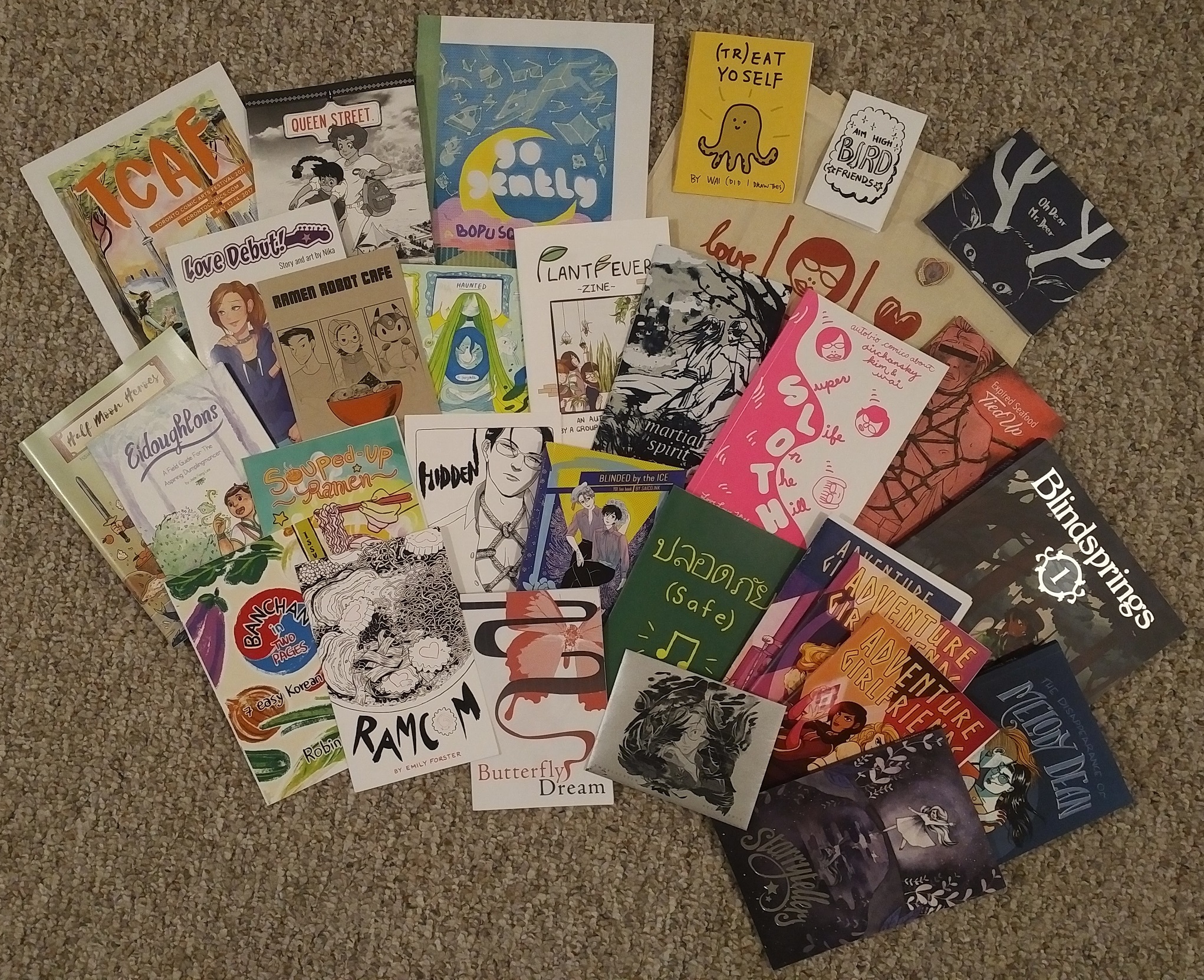
The Bookshelf Overload for April was posted at Experiments in Manga last week; otherwise, things were pretty quiet. Initially I had an in-depth feature scheduled for this week, but I’ll probably end up pushing that back to next week instead. I spent last Thursday through Sunday in Canada with the family for vacation and the Toronto Comic Arts Festival (TCAF) which I’ll be writing up like I have in years past. We had a great time, although not everything went exactly as planned.

Speaking of TCAF, Heidi MacDonald, Brigid Alverson, Deb Aoki, and Erica Friedman were apparently all sharing a hotel room for the event. I haven’t had a chance to listen to it yet, but they took advantage of that fact by recording a podcast in which they (and eventually Robin Brenner and Eva Volin as well) discuss a wide variety of topics including manga, queer comics, food, libraries, and more: Episode 1, Episode 2, Episode 3, Episode 4. I only found out about the details after I got back home, but once again some people had trouble crossing the border between the United States and Canada in order to attend TCAF. In one notable case, Anne Ishii, one of the folks behind Massive and Gengoroh Tagame’s interpreter and translator, was detained for over two hours before eventually being allowed to enter the country.

A few things from elsewhere online last week: Anyone who picked up the Attack on Titan choose-your-own-path book from Kodansha Comics will want know about the corrections and errata that were recently released online. Kodansha also confirmed it would be releasing the Neo Parasyte M manga anthology (a sort of companion volume to Neo Parasyte F which I greatly enjoyed). In other licensing news, although an official public announcement hasn’t been made, The OASG received some confirmation that Udon Entertainment is currently “deep into the localization” of Rose of Versailles and Sugar Sugar Rune. No release dates have been set yet, though. Seven Seas hasn’t mentioned any release dates for its most recent set of licensing announcements, either, though I wouldn’t be surprised to see Okayado’s MaMaMa: Magical Director Mako-chan’s Magical Guidance, Mintarou’s DNA Doesn’t Tell Us, Tekka Yaguraba’s Sorry For My Familiar, Hiroaki Yoshikawa’s Crisis Girls, Tsuina Miura and Takahiro Oba’s High-Rise Invasion, and Coolkyoushinja’s Mononoke Sharing all released first.

A couple of Kickstarters that have recently caught my attention, too. Chromatic Press’ latest campaign is raising funds to print the first volume of Magical How? by Eurika Yusin Gho (aka Eyugho). Though on occasion I’ve mentioned Magical How? on Twitter, I haven’t really wrote much about the comic here at Experiments in Manga. (Or at least not yet.) It’s a pretty fun series though, a sort of magical girl/boys’ love mashup with energetic, full-color artwork and lots of humor. The other project I specifically want to mention is for the second volume of Beyond, a queer speculative fiction comics anthology. If successful, the project will also allow the award-winning first volume (which is great) to be reprinted.

Quick Takes

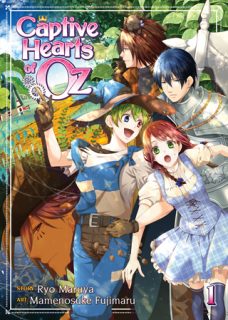
Captive Hearts of Oz, Volume 1Captive Hearts of Oz, Volume 1 written by Ryo Maruya, illustrated by Mamenosuke Fujimaru. One of the most interesting things about Captive Hearts of Oz is that the English-language release is actually the first time the manga has been published; rather than licensing existing content, the series is a direct collaboration between Seven Seas and the creators. Captive Hearts of Oz is Maruya’s debut work in English, but Fujimaru already has a notable presence due to the numerous Alice in the Country of… manga that have been translated. I suspect that it’s intentional then that Captive Hearts of Oz has a similar vibe to those series. Interestingly, there’s no explicit romance in the series yet although the manga is reminiscent of an otome game. Dorothy has simply been swept into an unfamiliar world where she meets a number of unusual people, many of whom just happen to be attractive young men. Captive Hearts of Oz is a somewhat unusual reimagining of a Western classic which may (or may not) have more depth to it than initially appears. At the very least there’s something dark and mysterious going on, although after only one volume it’s not entirely clear exactly what that is. The narrative is frustratingly disjointed in places, but I am curious to see how Captive Hearts of Oz continues to develop.

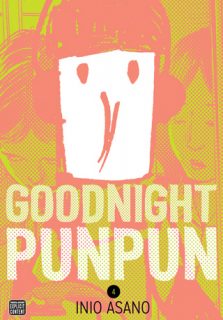
Goodnight Punpun, Omnibus 4Goodnight Punpun, Omnibuses 4-5 by Inio Asano. At this point in Goodnight Punpun, the series’ titular protagonist has entered early adulthood and his life largely remains a directionless disaster not entirely of his own making. He’s not completely blameless, though. I find that I have to time my reading of Goodnight Punpun very carefully. The manga has a very pessimistic worldview with which I can very easily identify, so if I’m already feeling mentally or emotionally exhausted, it’s usually a good idea for me to wait to tackle the series. On the other hand, it can sometimes be extremely cathartic to completely acknowledge the unfairness and darkness of the story and its real-life parallels. Either way, Goodnight Punpun is an incredible and powerful work, but it’s also very hard-hitting. Asano seems to be very aware of this and very aware of some of the related criticisms that have been leveled at the series. I, for one, have at times questioned whether or not all of the pain and suffering in Goodnight Punpun ultimately serves a purpose or if the manga is simply reveling in gloom and despair. I’ll admit that I’m still not sure and probably won’t be convinced one way or another until the manga’s conclusion, but Asano does directly recognize those concerns by having the creative work of some of the series’ characters similarly criticized.

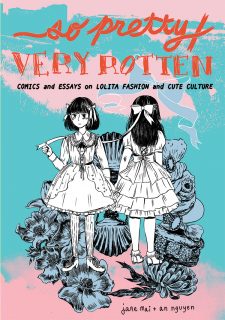
So Pretty / Very RottenSo Pretty / Very Rotten: Comics and Essays on Lolita Fashion and Cute Culture by Jane Mai and An Nguyen. I don’t have a particular interest in fashion, so if it wasn’t for the fact that I make a point to follow the work of Nguyen (aka Saicoink) I might not have gotten around to reading So Pretty / Very Rotten for quite some time. That would have been a shame because So Pretty / Very Rotten is both a terrific and fascinating work. I was certainly aware of Lolita culture previously, but I can confidently say that I have a much better understanding of it and even appreciation for it after reading So Pretty / Very Rotten. The volume examines numerous topics related to Lolitas–history, culture, fashion, identity, gender, expression, community and more–through approachable and accessible essays, both personal and academic (the Lolita lifestyle is one of the areas of Nguyen’s research), as well as through comics and illustrations. It’s a mix that works quite well. The essays are informative and the comics are cute and engaging, effectively demonstrating the concepts addressed through visual narratives. So Pretty / Very Rotten also includes an interview with and essay by Novala Takemoto, a prominent figure in Lolita culture who is probably best known in North America as the creator of Kamikaze Girls.

The Whipping Girl by Nuria Tamarit. I’m not entirely certain, but I believe that The Whipping Girl is the first published solo comic by Tamarit, an illustrator from Valencia, Spain. Even if it’s not, I certainly hope that there will be more in the future if for no other reason than Tamarit’s striking artwork is gorgeous. Color pencils are prominently used to illustrate The Whipping Girl and the effect is lovely. Writing-wise, the work isn’t quite as strong; The Whipping Girl feels like it ends rather abruptly, even considering that it’s a short comic to begin with, but it’s still an enjoyable tale. The story largely follows Agape, the whipping girl of Prince Dalibor. He’s a bit of a jerk, intentionally behaving improperly in order to get back at Agape who is generally much more capable than he is. She finally gets so fed up with the whole situation that she decides to make a run for it. Neither she nor Dal are able to anticipate the complete extent of the repercussions of her actions, and both are surprised to discover how close their bond really is. Overall, The Whipping Girl is a very satisfying comic with beautiful artwork, expressive characters, and a great sense of humor. Agape in particular is a delight, an intelligent, strong-willed young woman with an attitude.

Filed Under: FEATURES, My Week in Manga Tagged With: Captive Hearts of Oz, comics, Goodnight Punpun, Inio Asano, Jane Mai, Mamenosuke Fujimaru, manga, Nonfiction, Nuria Tamarit, Ryo Maruya, Saicoink

Manga the Week of 5/17/17

May 10, 2017 by Sean Gaffney 1 Comment

SEAN: Thanks to Kodansha’s INCREDIBLY AGGRESSIVE digital plan, there’s a large amount to talk about in what would normally be a very small week.

MICHELLE: I’m not complaining, but it is pretty overwhelming.

ANNA: I think I would be buying more of these if they were coming out at a slower pace. I feel like I can’t keep up. But I’m not complaining about more manga!

SEAN: J-Novel Club starts us off, though, with the third volume of I Saved Too Many Girls and Caused the Apocalypse. There’s only one girl on the cover this time – is he slipping?

And they also have the 3rd My Little Sister Can Read Kanji.

Kodansha takes up a great deal of what follows. First, there’s new volumes of Alive (15) and Yozakura Quartet (11) for your Del Rey rescue needs.

The first of THREE new digital debuts next week, Aoba-kun’s Confessions is from Ema Toyama, the author of Missions of Love, which I hate and also love. This is her new Nakayoshi series.

Meanwhile, some may remember Cage of Eden, which put out 20 volumes before dropping off the face of the earth. It’s back with its final, 21st volume. Will they get off the island? Will they find out the truth? Will the girls show off their large breasts? One of these things is sure to be true!

Chihayafura gets a 2nd digital-only volume, and I cannot wait for more HOT KARUTA ACTION.

MICHELLE: Yaaaaaay!

ANNA: I am here for this!!!!

SEAN: Clockwork Planet also gets a 2nd volume.

And there’s a 2nd volume of sports manga DAYS (digital-only). Remember when those were rare?

MICHELLE: Vaguely!

SEAN: The 2nd digital debut is Drowning Love (Oboreru Knife), a more mature, dramatic shoujo from Betsufure. Its author, George Asakura, had A Perfect Day For Love Letters out here eons ago.

MICHELLE: The art style (at least on the cover) is not the most appealing, but I’ll be checking this out.

MJ: I’m looking forward to this, It think.

ANNA: Me too.

SEAN: GTO: Paradise Lost has a 2nd digital volume of Onizuka antics.

The last digital debut is Our Precious Conversations (Boku to Kimi no Taisetsu na Hanashi), a Dessert series from Robico, the author of My Little Monster. I loved that series, so really look forward to this one.

MICHELLE: Same here!

ASH: I love the huge variety in these digital titles! I do hope that some eventually make their way into print, though, since I don’t really read digital manga. That may have to change soon.

ANNA: This sounds intriguing.

SEAN: On to other publishers. One Peace has a 6th volume of the Rise of the Shield Hero manga, which they oddly still keep calling “Manga Companion”, which makes it sound like a guidebook to me.

Seven Seas has a 2nd volume of Bloom Into You, a more dramatic yuri title than the cute fluffy ones we’ve seen recently.

MICHELLE: I enjoyed the first volume.

ASH: The first volume intrigued me; I’m very curious to see how the story unfolds.

SEAN: They also have a 2nd volume of spooky supernatural fantasy The Girl from the Other Side: Siúil, A Rún.

MICHELLE: <3 <3 <3 <3

MJ: Michelle tells me I’d like this!

MICHELLE: You would!

ASH: You really, really would! This series is already one of my absolute favorites for the year.

MICHELLE: I enjoyed your review, Ash. And your perfect image choice. I sent just that one picture to a friend—pointing out the flower crown—and it convinced her to want to read the series.

ANNA: I also love this series, going to be picking this up for sure!

SEAN: Viz gives us a 2nd volume of the Gangsta spinoff Cursed.

ASH: Though I haven’t actually read the first volume yet, I do plan on picking this one up.

ANNA: I need to pick up both, and I will!

SEAN: There’s also a 3rd Mobile Suit Gundam Thunderbolt.

Lastly, they have an 8th volume of Ultraman. For all your tokusatsu needs.

Which of these will you be getting next week? And how many will be digital?

Filed Under: FEATURES, manga the week of

My Week in Manga: May 1-May 7, 2017

May 8, 2017 by Ash Brown

My News and Reviews

Last week at Experiments in Manga, the winner of the Queen Emeraldas manga giveaway was announced. The post also includes a list of some of the manga available in English which are at least partially set in space. Otherwise, it was a fairly quiet week. I’m still very busy at work, training for the new job, but things are largely going well on that front. Later this week I’ll be leaving for a long weekend in Toronto for the Toronto Comic Arts Festival, so hopefully I’ll still be able to remember everything that I’ve been learning when I get back.

Elsewhere online, Brigid Alverson recently reported back on manga at the C2E2 conference for Publishers Weekly. The Anime Feminist continues to host interesting features on manga; most recently freelance translator Jenny McKeon took a look at yuri manga. The San Diego Comic-Con is fast approaching which means that this year’s Eisner Award nominations have been announced. As usual, most of the nominated manga are found in the Best U.S. Edition of International Material—Asia category (Goodnight Punpun by Inio Asano, Orange by Ichigo Takano, The Osamu Tezuka Story by Toshio Ban, Princess Jellyfish by Akiko Higashimura, and Wandering Island by Kenji Tsuruta) but Takeshi Obata’s artbook Blanc et Noir was also nominated for Best Comics-Related Book.

Quick Takes

Cigarette GirlCigarette Girl by Masahiko Matsumoto. Although touted as the first collection of Matsumoto’s work in English (which may technically be true), Cigarette Girl is actually the second volume of manga by Matsumoto to be translated. Granted, Cigarette Girl was likely to be the first licensed (it was first announced by Top Shelf back in 2010), but it didn’t end up being released until 2016, two years after The Man Next Door was published by Breakdown Press. Matsumoto, like Yoshihiro Tatsumi (who provides the introduction to Cigarette Girl), worked in the gekiga tradition of manga. Cigarette Girl collects eleven of Matsumoto’s short gekiga manga, originally created for several different magazines in the early 1970s. Most of the stories could be considered romances of one sort or another. While an exploration of love isn’t necessarily the focus of the volume, the manga are all about relationships between people and often those relationships between men and women have a romantic bent to them. The stories in Cigarette Girl tend to be fairly quiet and focus on the everyday life of everyday people, but they’re also rather quirky and surprisingly funny, too. I enjoyed Cigarette Girl a great deal and would definitely be interested in reading more of Matsumoto’s work.

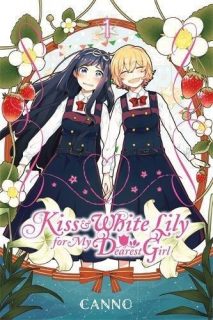
Kiss and White Lily for My Dearest Girl, Volume 1Kiss & White Lily for My Dearest Girl, Volume 1 by Canno. Lately, most of the yuri and other lesbian-themed manga translated in English are currently being released by Seven Seas, but other publishers have been starting to explore (or re-explore) the genre as well. One of Yen Press’ most recent yuri offerings is Canno’s Kiss & White Lily for My Dearest Girl, an ongoing series about the lives and loves of the students at an all-girls school. So far two main couples have been introduced and the short manga between chapter breaks implies that most of the background characters are in one way or another paired off together as well. As for the lead couples, first there is Ayaka and Yurine, the school’s top students. Ayaka is used to being first academically but finds that no matter how hard she tries, Yurine’s natural genius is tough to beat. Yurine, bored with how easy everything is for her, is delighted to finally have someone that she can consider a rival. While Ayaka and Yurine currently have something of a love-hate relationship going on, the affections of the second main couple are much sweeter and more clearly romantic–Ayaka’s tomboyish cousin Mizuki has been in a close relationship with Moe for years.

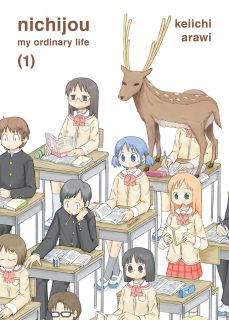
Nichijou: My Ordinary Life, Volume 1Nichijou: My Ordinary Life, Volumes 1-2 by Keiichi Arawi. I’ve heard great things about Nichijou, both the original manga and it’s anime adaptation and so I was fully expecting to enjoy the series. But while I tend to like absurd humor, for whatever reason the offbeat comedy found in the first two volumes of Nichijou just didn’t work for me. Or at least not consistently. While many of the gags fell flat, there were definitely individual bits that I found to be extremely funny. Some even made me laugh out loud. I was frequently amused by the manga as well as delightfully bemused. But as a whole, Nichijou seems to lack real substance. Granted, that’s not necessarily a bad thing and may very well be part of the point. The series mixes the mundane with the strange and completely unexpected,  but that randomness can be difficult to follow at times. On top of the nearly nonexistent narrative logic, action and movement isn’t always conveyed clearly by Arawi’s artwork. As a result, the series’ humor can be difficult to interpret. Even so, Nichijou is admittedly silly and entertaining. But I was very surprised to discover that I didn’t enjoy the manga more than I actually did; it seems like it should haven been a series I loved.

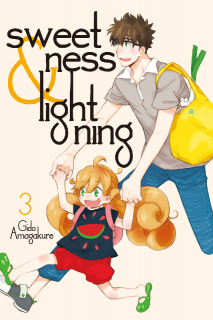
Sweetness and Lightning, Volume 3Sweetness & Lightning, Volumes 3-5 by Gido Amagakure. As I’ve mentioned many times previously, I love food manga and Sweetness & Lightning is no exception. The series is an absolute delight. There’s the food, of course, which I find appealing, but perhaps even more so I enjoy the manga’s focus on friendship and family. Granted, all of this is all tied together in the story–food is what brings people together, creates connections, and deepens relationships. Preparing and sharing a meal is shown as a way of expressing love for another person. Food can also help keep memories alive. Inuzuka keenly feels the loss of his wife and their daughter Tsumugi misses her mother dearly. But as they learn to cook together, recreating family dishes and traditions, they can still be close to her even though she is gone. There are moments of intense sadness but there is also a tremendous amount of joy in Sweetness & Lightning. Amagakure’s illustrations are very expressive, finding an easy balance between these moods. In addition to more exaggerated expressions, the artwork also captures subtle changes. As Tsumugi grows older, for example, her character design matures slightly as well. Sweetness & Lightning is a wonderful series.

Filed Under: FEATURES, My Week in Manga Tagged With: Canno, Gido Amagakure, Keiichi Arawi, Kiss and a White Lily for My Dearest Girl, manga, Masahiko Matsumoto, Nichijou, Sweetness and Lightning

Manga the Week of 5/10/17

May 6, 2017 by Sean Gaffney, Ash Brown, Anna N, Michelle Smith and MJ Leave a Comment

SEAN: 2nd week, and things are popping. What’s coming down the pike?

Dark Horse has the debut of another comedic gag Evangelion manga, this one called Legend of the Piko Piko Middle School Students.

It also has the 3rd omnibus of its slice-of-life dumb-it-down Evangelion manga, The Shinji Ikari Raising Project.

ASH: Though I’ve seen the original anime series, I’ve never actually read any of the Evangelion manga.

ANNA: Me too.

SEAN: J-Novel Club has another debut, Bluesteel Blasphemer. Yes, it’s another “transported to a fantasy world” series, but this one has guns, and it’s by the author of Chaika the Coffin Princess.

And a 2nd volume of the popular title How a Realist Hero Rebuilt the Kingdom. Will they go to war?

Del Rey catchups are mostly taking the week off, but we do get a 13th Princess Resurrection.

There is still plenty of new Kodansha Digital, though, as we have Ace of the Diamond 3, Domestic Girlfriend 2, House of the Sun 5, *and* Tokyo Tarareba Girls 3!

MICHELLE: Yay for 75% of those!

ANNA: I am glad these are all out and sad I am so far behind in my reading!!!

SEAN: In print, we have the 10th volume of Genshiken 2nd Season. Will we finally resolve Madarame’s endless harem issues?

And a 4th In/Spectre, which promises to take a turn back towards the grim.

Interviews with Monster Girls 4 will hopefully be less grim, despite also featuring yokai.

One last Kodansha Digital title, which I mention only as it’s a series I never noticed began sometime last year. Unlimited Fafnir ran in good! Afternoon, and this is the 4th and final volume. It’s a light novel adaptation.

Seven Seas has a 3rd volume of Miss Kobayashi’s Dragon Maid, which has quite a following now that the anime’s done.

ASH: I enjoyed the first volume much more than I thought I would.

SEAN: And a 2nd There’s a Demon Lord on the Floor.

SuBLime has a 4th volume of not-boxing manga Ten Count.

ASH: Nope, definitely not boxing. The series actually comes across to me as dark, psychological horror more than anything else right now.

ANNA: The first couple volumes that I read were pretty grim.

MJ: Oh, Ten Count… I never really made it past volume two.

MICHELLE: I made it to volume three, but I’m really done now.

SEAN: People, people, it’s supposed to be a TEN count.

Vertical Comics gives us a 9th volume of My Neighbor Seki, which always makes me smile.

ASH: Me, too! :)

SEAN: A fourth Legendary Edition for The Legend of Zelda, this one has The Minish Cap and Phantom Hourglass.

Lastly, there’s a 6th volume of Requiem of the Rose King, and I can hear everyone in Manga Bookshelf breathe a sigh of relief. Also, shouldn’t Henry be dead soon?

ASH: I love this series so much!

ANNA: Yay!!!

MJ: This! Always! THIS!!!!

SEAN: It’s Mother’s Day next week! Which of these titles would you buy for your mother?

Filed Under: FEATURES, manga the week of

My Week in Manga: April 24-April 30, 2016

May 1, 2017 by Ash Brown

My News and Reviews

Last week at Experiments in Manga I posted two features in addition to the usual My Week in Manga. First up was the monthly giveaway. The winner will be announced on Wednesday, so there’s still time to enter for a chance to win the first volume of Leiji Matsumoto’s Queen Emeraldas. All you have to do is tell me a little about your favorite space manga (if you have one). Also posted last week was the long-form manga review for April. I took a look at The Girl from the Other Side: Siúil, a Rún, Volume 1 by Nagabe. The manga was one of my most anticipated debuts of 2017 and it is easily one of my favorites to be released so far this year. Last week was also the first week at my new job so I was rather preoccupied and busy with settling in there and so wasn’t online all that much. However, I did catch an interesting feature on the recent josei renaissance over at Anime Feminist. The article is written by Megan from The Manga Test Drive, one of the manga review blogs that I make a point to follow and particularly like.

Quick Takes

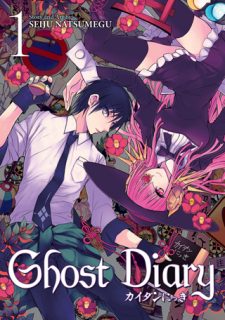
Ghost Diary, Volume 1Ghost Diary, Volume 1 by Seiju Natsumegu. My experience reading Ghost Diary was a little odd. I can’t say that I was overly impressed by the first volume while I was reading it, but by the time I reached the end I found that I actually had enjoyed myself and was interested in reading the rest of the short series. The individual elements of Ghost Diary aren’t particularly original, but as a whole it’s horrific fun. In some ways the manga feels like it’s a mashup of other existing stories which deal with the supernatural and the occult. Even the illustrations reminded me of other works, in particular some of CLAMP’s darker series. I was actually expecting Ghost Diary to be much more serious than it actually was. The manga definitely has a disturbing side to it, but to me it comes across as a dark comedy more than anything else. It’s both goofy and grotesque. The story follows Sukami Kyouichi, the youngest son in a long line of exorcists whose older sister (also an exorcist and far more powerful than he is) mysteriously disappears after he angers a god due to his inexperience, ineptitude, and ignorance. Now he’s desperately searching for her which proves to be a very dangerous venture.

Princess Jellyfish, Omnibus 4Princess Jellyfish, Omnibus 4 (equivalent to Voluems 7-8) by Akiko Higashimura. At this point the Princess Jellyfish manga has progressed much further along in the story than the content that was adapted for the anime series (which was my introduction to the work). So far, my love for the series has yet to diminish. In this omnibus the women of the Amamizukan apartments (along with Kuranosuke) somehow manage pull off a successful fashion show which is intended, in a roundabout way, to save their home from being demolished and redeveloped. However, for that to work, their success will have to extend to actually launching the Jelly Fish brand as well, and reality is much more challenging than a dream. Princess Jellyfish is intentionally outrageous and comedic in the telling of its story but the underlying heart of the manga is believable earnest. I find the manga’s style of humor to be immensely entertaining, but probably what I enjoy most about Princess Jellyfish are its characters and their relationships with one another. I especially liked how Shuu and Kuranosuke’s brotherly affections were developed and portrayed in these two volumes.

Twinkle Stars, Omnibus 1Twinkle Stars, Omnibuses 1-2 (equivalent to Volumes 1-4) by Natsuki Takaya. Probably like most people, my introduction to Takaya’s work was through the series Fruits Basket, a landmark title in the North American manga industry. It would seem, then, that Takaya’s next major series, Twinkle Stars, would be an obvious license choice, but the manga only began to be released in English relatively recently. Other than the fact that Takaya was the creator, I actually didn’t know much about Twinkle Stars before reading it. The series turns out to be an incredibly compelling and emotionally resonant work even if some of the story developments do seem a little convenient and trope-worn. The lead of Twinkle Stars is Sakyua Shiina, an endearing highschool third-year whose outward cheerfulness goes a long way to hide her inner struggle with depression and self-worth, the result of a troubled family life. Fortunately, she now has people in her life who care for her dearly. Under some rather peculiar circumstance she meets and ultimately falls in love with Chihiro, a young man who likewise is left dealing with the aftermath of past tragedies. At times Twinkle Stars can be absolutely heartbreaking but this countered by the immense kindness that is also exhibited in the series.

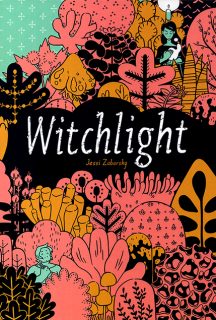
WitchlightWitchlight by Jessi Zabarsky. Before being edited and published in a collected edition with additional content, most of Witchlight had previously been released as a series of individual comic chapters. Described as a shoujo adventure, Witchlight is a delightful fantasy comic about the close bond of friendship and love which slowly develops between two young women as they travel together on a quest. They don’t start out on good terms, though. Sanja is kidnapped by Lelek, a candle witch who demands that she teach her how to use a sword. Lelek is searching for a part of herself that has been lost and magic isn’t always enough to protect her. While being abducted isn’t exactly a promising beginning to a relationship, Sanja is more curious than afraid and her good nature and openness has a positive influence on the untrusting Lelek who has kept her heart closed off from others for so long. Lelek and Sanja’s emotional journeys are the most important aspects of Witchlight, but their physical journey is also wonderful to watch unfold as they encounter other cultures and and types of magic. The characterizations, worldbuilding, artwork in Witchlight are all lovely.

RevengeRevenge: Eleven Dark Tales by Yoko Ogawa. I find the cover design and even the title selected for the English-language edition of Ogawa’s Kamoku na shigai, midara no tomurai to be somewhat misleading. Revenge, although it does make a few appearances throughout the volume, is not at all an overarching theme. And while there is death and violence, most of the gruesomeness implied by the cover occurs off-page. That being said, Revenge is a marvelously disconcerting work of subdued horror. Everything in Revenge is told from a first-person perspective, giving the collection a surprisingly quiet and contemplative atmosphere which becomes increasingly dark as the volume progresses. The individual stories can all be read and function well on their own, but what makes Revenge such a phenomenal collection is how they are all entangled with one another. Often the connections are tangential–similar turns of phrases and references are used, main characters and plot points from one story appear and reappear in the backgrounds of others, and so on–but sometimes they have a profound impact on the interpretation of the various narratives. A close, careful reading of Revenge is rewarded with the revelation of a complex, strange, and surreal web of the macabre.

Your NameYour Name directed by Makoto Shinkai. Originally I thought I would be waiting to watch a home video release of Your Name but the film actually ended up being shown at one of my local theaters and a friend invited me out to see it over the weekend. Your Name is a beautiful film, both visually and thematically, and not quite what I was expecting. (Granted, I’m not entirely sure exactly what it was that I was expecting.) To me it almost feels like three different films have been merged into one. Initially Your Name is about Mitsuha and Taki, two young people who don’t really know each other but who have started to spontaneously and erratically switch bodies when they fall asleep. But when the switching suddenly and unexpectedly stops, the film changes its focus to Taki as he tries to locate Mitsuha, keenly feeling the absence of the close intimacy that the two understandably developed over time. From there the urgency of Your Name increases even more as Taki uncovers the truth and he and Mitsuha struggle to prevent further disaster and loss. In part a romantic comedy, in part a meditation on love and spirituality, and in part (it would seem) a response to the Fukushima disasters, Your Name largely remains cohesive even while bending and shifting between genres.

Filed Under: FEATURES, My Week in Manga Tagged With: Akiko Higashimura, anime, comics, Ghost Diary, Jessi Zabarsky, makoto shinkai, manga, natsuki takaya, Princess Jellyfish, Seiju Natsumegu, twinkle stars, Yoko Ogawa

Manga the Week of 5/3/17

April 27, 2017 by Sean Gaffney, Anna N, Ash Brown, Michelle Smith and MJ Leave a Comment

SEAN: It’s May, and a young man’s thoughts turn to … well, hopefully things other than manga. But if you want manga, we have you covered.

ASH: I always want manga.

SEAN: We also have light novels covered. J-Novel has the debut of Arifureta: From Commonplace to World’s Strongest. It’s one of the most popular “isekai” titles out there, and unlike most examples of the genre we’ve seen lately, I think it plays it perfectly straight, for good or ill.

I was blown away by the readability of In Another World With My Smartphone, though I would not remotely call the book good. Vol. 2 is out next week, and I expect to be equally entertained.

ANNA: Well, things don’t have to be good to be entertaining!

SEAN: Kodansha has some more old Del Rey titles out digitally. Alive 14, Pumpkin Scissors 12, Yokazura Quartet 10… and sadly we can’t count down by 2s any more.

In new Kodansha digital releases, we have the 3rd All-Rounder Meguru and the 3rd (and final?) Museum.

In addition, Kodansha schnookered me with a last-minute title. The 3rd Wave, Listen to Me! is already out. I was not able to inform you a week ahead of time. I am filled with shame.

MICHELLE: But a hearty “Yay!” anyway.

ANNA: Arrgh, haven’t even read the first volume.

SEAN: And in print Kodansha news, a 4th volume of Cells at Work!.

ASH: This series is ridiculous fun. And informative, too.

SEAN: I’ve been waiting for this one since it was announced. Pantheon has the debut omnibus of My Brother’s Husband, a manga by Gengoroh Tagame about a Japanese man whose brother passes away, and the brother’s Canadian husband then moves in with him and his young daughter. It runs in Fuitabasha’s Manga Action, and I believe just announced it’s finishing with 4 volumes, meaning we should get a 2nd omnibus at some point. Go get this release.

MICHELLE: So excited for this one.

ANNA: Sounds great!

ASH: This is absolutely one of my most anticipated releases for this year. I’ve been collecting the Japanese volumes, but I’m so excited that it’s being translated and will definitely be picking up the English-language edition.

MJ: So very much on board with this!

SEAN: Seven Seas has a quartet of titles, starting with the 10th Arpeggio of Blue Steel.

Dreamin’ Sun is their first debut, and any other week it’d be the title I’m most excited about. It’s by the creator of orange, and is the title she had success with before that one. It ran in Bessatsu Margaret, a Shueisha title. Yay, shoujo!

MICHELLE: !!!! How did I miss this?! I loved orange and usually love things that rain in Margaret or its offshoots.

ANNA: Woo hoo for shoujo!

ASH: I loved orange, so I’m looking forward to giving Dreamin’ Sun a try.

SEAN: Another Hatsune Miku spinoff comes out, as we get Vol. 1 of Bad End Night. This seems to be Hatsune Miku meets Alice in the Country of, and it ran in Zero-Sum Online.

And there is a 2nd volume of Magical Girl Site, no doubt featuring more dead young girls, because that’s what kids like these days.

Vertical has an 8th volume of Nichijou, and this is the volume where the plot really starts kicking in… OK, not really.

And the rest is Viz. Anonymous Noise gets a second encore… I mean volume.

ANNA: I find this title both entertaining and frustrating, but I keep getting drawn in by the stylish cover art.

ASH: I feel much the same.

MJ: Yep. I guess we’ll see if it gets less frustrating, eventually.

SEAN: Bleach has a 19th 3-in-1.

Guess what’s back from the dead? That’s right, D.Gray-Man, with its 25th volume out a mere 2 and a half years after its 24th.

And speaking of necromanced properties, we begin the release of Dragon Ball Super, taking place sometime after Z but before its epilogue, and apparently being more of a tie-in to the anime than anything else. Which is to be expected given it runs in tie-in paradise V-Jump.

It’s not a Viz release party without a Haikyu!!. Here’s Vol. 11.

MICHELLE: Woot.

ANNA: Woo hoo vollebyall!!!!

ASH: Yeah!!

SEAN: JoJo’s Bizarre Adventure continues its hardcover release of what is becoming its most boring arc, though I’ll keep trucking along. Have the 3rd Stardust Crusaders book.

ASH: Just you wait, Sean, things will start to pick up again.

SEAN: Last time I said we got the penultimate Maid-sama! omnibus, showing I can’t count. Instead THIS is the penultimate volume, and I expect we’ll get the last in August.

MICHELLE: Actually, I had it in my head that the series was 16 volumes long, too, so you’re not alone.

SEAN: The 8th My Hero Academia will show off more Superhero School, as they try to pass their finals in the most awesome way possible.

Speaking of penultimate volumes, here’s the 2nd to last My Love Story!!. Just typing that is making me sad.

MICHELLE: Me, too.

ANNA: NO, IT MUST NEVER END!!!!!

ASH: My Love Story!! has been such a treasure. I love the series so much.

SEAN: Nisekoi continues to trundle towards its ending as well with Vol. 21.

One Piece’s 82nd volume will hopefully tell us what’s going to happen to Sanji, though knowing Oda no doubt it will be drawn out.

Toriko has ended in Japan, and its schedule is slowing down here. This is the 38th volume.

MICHELLE: Someday I really will read this.

SEAN: And what would a list of Viz releases be without a Yu-Gi-Oh volume at the end? This is the 10th 3-in-1.

Do you feel the PASSION pouring through your veins? BUY SOMETHING FROM THIS LIST!

Filed Under: FEATURES, manga the week of

Manga Giveaway: Queen Emeraldas Giveaway

April 26, 2017 by Ash Brown

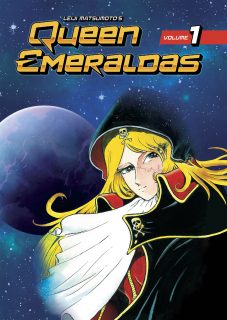
It’s that time again! The end of the month is fast approaching which means another giveaway at Experiments in Manga is now underway! This month’s giveaway features Queen Emeraldas, Volume 1 by Leiji Matsumoto as published in English by Kodansha Comics. (It’s a hardcover!) The second and final volume of the series will be released later this year (I believe it’s scheduled for July), so this giveaway is a great opportunity for a chance to win the first volume to give the series a try. And, as always, the giveaway is open worldwide!

Queen Emeraldas, Volume 1

I have been a long-time fan of speculative and science fiction of all types, but I do seem to particularly fond of those that somehow involve space. Taking that into consideration, it probably shouldn’t be too surprising that manga about space travel and exploration especially tend to appeal to me. When Leiji Matsumoto’s Queen Emeraldas was licensed it immediately caught my attention. Not only does it take place in space, it’s also a series from the 1970s. “Classic” manga aren’t frequently released in English (unless they’re by Osamu Tezuka), so that aspect of Queen Emeraldas interested me, too. And indeed, I enjoyed the first volume a great deal.

So, you may be wondering, how can you a copy of the Queen Emeraldas, Volume 1?

1) In the comments below, tell me about your favorite manga set in space. (Don’t have a favorite or have never read one? Simply mention that instead.)
2) If you’re on Twitter, you can earn a bonus entry by tweeting, or retweeting, about the contest. Make sure to include a link to this post and @PhoenixTerran (that’s me).

And there you have it. Everyone participating in the giveaway can earn up to two entries and has one week to submit comments. If needed or preferred, entries can also be sent directly to me at phoenixterran(at)gmail(dot)com. The comments will then be posted here in your name. The giveaway winner will be randomly selected and announced on May 3, 2017. Good luck!

VERY IMPORTANT: Include some way that I can contact you. This can be an e-mail address in the comment form, a link to your website, Twitter username, or whatever. If I can’t figure out how to get a hold of you and you win, I’ll just draw another name.

Contest winner announced–Manga Giveaway: Queen Emeraldas Giveaway Winner

Filed Under: FEATURES, Giveaways Tagged With: Leiji Matsumoto, manga, Queen Emeraldas

My Week in Manga: April 17-April 23, 2017

April 24, 2017 by Ash Brown

My News and Reviews

Well, I didn’t manage to post my in-depth manga review for April last week after all. Today I’m starting in a new position at a different library, meaning that last week I spent most of my time tying up as many loose ends as possible at my previous job. This included writing a lot of documentation. And since I was doing so much writing for work, by the time I got home I didn’t want to do anything but read, so that’s what I did. (Which goes to explain why I ended up finishing Cixin Liu’s excellent novel The Three-Body Problem much sooner than I had originally anticipated.) But never fear, I’ll be posting my review of Nagabe’s The Girl from the Other Side later this week in addition to the monthly manga giveaway.

In other news, Seven Seas continued its string of licensing announcements, adding Orikō Yoshino and Z-ton’s light novel series Monster Girl Doctor, Kazuki Funatsu’s Yokai Girls manga, and Saki Hasemi and Kentaro Yabuki’s To Love Ru and To Love Ru Darkness manga to the slate. Recent announcements from Viz Media included Sankichi Hinodeya’s Splatoon manga, a Hello Kitty coloring book, picture books of Hayao Miyazaki’s Castle in the Sky and Princess Mononoke, as well as the My Little Pony: The Movie artbook. Kodansha Comics had a couple of announcements to make recently, too, such as the upcoming release of full-color hardcover edition of Gun Snark’s Attack on Titan: No Regrets (I’ve previously reviewed the series’ first English-language release) and a hardcover omnibus edition of Yukito Kishiro’s Battle Angel Alita. (The series was originally published in English by Viz Media but has been out-of-print for quite some time.)

I also came across a few other interesting things last week: Over at The OASG, Justin interviewed Mariko Hihara and Kotoyo Noguchi, two independent manga creators in Japan. Noguchi also had some questions to ask in return. Frederik L. Schodt (whose work I greatly enjoy) was recently profiled at Nippon.com. The article takes a look at his involvement as an ambassador for manga over the last four decades. Caitlin from I Have a Heroine Problem presented a panel called “Is This Feminist or Not? Ways of Talking about Women in Anime” at Sakura Con 2017 and has made her slides available. A very nicely designed site called Persona Problems offers criticism of Persona 5‘s English localization and delves into translation theory and practice that even people who don’t play the game may find interesting. Finally, the author and designer Iku Okada has started a series of autobiographical essays called Otaku Girl and Proud which explores Japanese gender inequality and identity and how popular culture can impact that experience.

Quick Takes

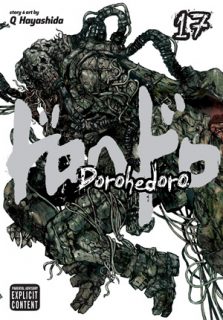
Dorohedoro, Volume 17Dorohedoro, Volumes 17-20 by Q Hayashida. Despite being one of my favorite ongoing series currently being released in English, I seem to somehow always forget how incredibly much I love Dorohedoro. I tend to forget how tremendously horrific the manga can be, too, mostly because it simultaneously manages to be surprisingly endearing. Hayashida’s story and artwork is frequently and stunningly brutal, gut-churning, and grotesque, but Dorohedoro also carries with it a great sense of humor. Granted, the comedy in Dorohedoro tends to be phenomenally dark. Lately, as Dorohedoro continues to steadily progress along what I believe will be it’s final major story arc, the series has become fairly intense and serious, but it remains exceptionally weird and has yet to completely lose its humor. The plot of Dorohedoro does meander a bit and because it’s been so long since I’ve read the previous volumes I’m sure that I’ve forgotten a few important details as the story takes multiple convoluted turns along the way. Ultimately, it doesn’t seem to really matter though since the world and characters of of Dorohedoro follow and operate under their own peculiar sort of logic; Dorohedoro doesn’t need to make a lot of sense in order to be bizarrely enjoyable.

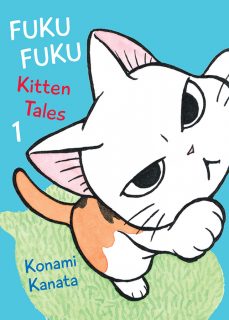
FukuFuku: Kitten Tales, Volume 1FukuFuku: Kitten Tales, Volumes 1-2 by Kanata Konami. Before there was Chi’s Sweet Home there was FukuFuku Funyan, Konami’s cat manga which started in the late 1980s. The series featured an elderly woman and her cat FukuFuku. More recently, Konami created FukuFuku: Kitten Tales, a spinoff of FukuFuku’s first series which, as can be accurately assumed by the manga’s title, shares stories from the loveable feline’s youth. While Konami’s artwork in FukuFuku: Kitten Tales is black-and-white rather than being full-color and the manga is only two-volumes long rather than being twelve, the series is otherwise very similar in format to Chi’s Sweet Home. It’s actually been quite a while since I’ve read any of Chi’s Sweet Home, but FukuFuku: Kitten Tales feels like it might be a little more episodic as well. However, it is still an incredibly cute series. Each chapter is only six pages or so but manages to tell a complete story, accurately portraying the everyday life and antics of a kitten. FukuFuku: Kitten Tales isn’t especially compelling or creative as far as cat manga goes, but it is an adorable series which consistently made me smile and even chuckle from time to time.

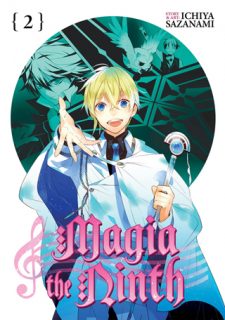
Magia the Ninth, Volume 2Magia the Ninth, Volume 2 by Ichiya Sazanami. I enjoyed the first volume of Magia the Ninth immensely. I’m not really sure I could call it a good manga per se, and I don’t think I would necessarily recommend it broadly, but personally I got a huge kick out of it. That being said, I can’t say that I’m surprised that the series only lasted two volumes. (I don’t know for certain, but I get the feeling that Magia the Ninth was cancelled.) What did surprise me was how well Sazanami was able to pull everything together to conclude the manga in a coherent (and almost satisfying) fashion when obviously it was intended to be a series on a much grander scale. To be honest, Magia the Ninth probably would have done much better for itself if the manga had had that level of focus from the very beginning. Magia the Ninth is a strange and somewhat goofy little series about demons, magic, and music. While the series wasn’t always the most comprehensible, it’s stylishly drawn, has tremendous energy, and even manages to effectively incorporate legitimate music history into the story. Magia the Ninth may not have lived up to its potential, but I had fun with it.

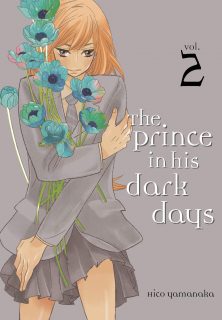
The Prince in His Dark Days, Volume 2The Prince in His Dark Days, Volumes 2-3 by Hico Yamanaka. More and more of The Prince in His Dark Days seems to revolve around Itaru, but at this point I would still consider Atsuko, who is serving as Itaru’s double, to be the real lead of the manga. Unfortunately, Atsuko is casually threatened with sexual violence on a regular basis in the series which frankly makes me uncomfortable. In general, the power dynamics in The Prince in His Dark Days tend to be fairly disconcerting. It doesn’t really help when other characters’ try to play it off as a joke, either. If anything, it only seems to emphasize the fact that so many of them are unrepentant jerks. I know that I’m supposed to empathize with some of their personal struggles, but I find it difficult to spare a lot of sympathy for entitled assholes. However, the themes that Yamanaka explores in The Prince in His Dark Days are of tremendous interest to me, most notably those of gender expression and sexual identity. I also appreciate the manga’s melancholy mood and the slow blossoming of love in unexpected places. There’s only one volume left in The Prince in His Dark Days and despite some of my reservations about the series I am curious to see how it ends.

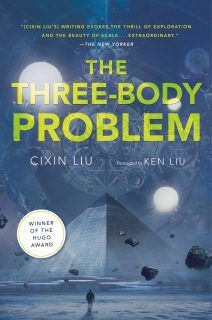
The Three-Body ProblemThe Three-Body Problem by Cixin Liu. If my memory serves me right, The Three-Body Problem is actually the first contemporary Chinese novel that I’ve read. It initially came to my attention when it became the first work in translation to win the Hugo Award for Best Novel. Interestingly, when The Three-Body Problem was translated into English by Ken Liu, the order of the chapters was restored to what the author originally intended and a few additional changes were made in consideration of some of the real-world scientific advances that had developed since the novel was first published in China. As a novel that leans heavily on hard science, I found The Three-Body Problem to be fascinating. (At one point in my life, I actually considered going into theoretical physics.) But what makes The Three-Body Problem so compelling are the social aspects of the narrative. In particular, China’s Cultural Revolution and the characters’ responses to it play a critical role in the story’s development. The Three-Body Problem is the first book in a trilogy, Remembrance of Earth’s Past, and so while largely being a satisfying novel on its own, it’s obviously only the beginning of a larger work. I definitely plan on reading the rest.

Filed Under: FEATURES, My Week in Manga Tagged With: Cixin Liu, dorohedoro, FukuFuku, Hico Yamanaka, Ichiya Sazanami, Konami Kanata, Magia the Ninth, manga, Prince in His Dark Days, Q Hayashida, Remembrance of Earth's Past

Manga the Week of 4/26/17

April 20, 2017 by Sean Gaffney, Ash Brown, Anna N and Michelle Smith 1 Comment

SEAN: For a non-Yen final week of the month, this is pretty ridiculously busy.

J-Novel Club has the 2nd volume of The Faraway Paladin, whose first volume I greatly enjoyed. Looking forward to this more serious take on the ‘reincarnated in another world’ genre.

Kodansha has piles of new volumes for fans of their old Del Rey series out digitally. Gakuen Prince 12, Nodame Cantabile 18, Princess Resurrection 12, Pumpkin Scissors 11, and School Rumble 19.

ASH: Oh! Nodame Cantabile! I actually still have the volumes that Del Rey released; glad I’ll be able to finish the series. (Though, as always, I will continue to hope for a print edition, as unlikely as it is.)

SEAN: There’s also new digital volumes of their newer series. The Full-Time Wife Escapist 2, House of the Sun 4, and Peach Heaven 2. Definitely interested in more Wife Escapist, which I really enjoyed.

MICHELLE: Yay for Nodame and House of the Sun and escapee wives!

ANNA: I can’t believe I’m so far behind in digital releases, wait, it it is totally believable. Sounds like I need to check out the Full-Time Wife Escapist for sure.

SEAN: In new digital releases, though you can’t seem to preorder them yet, we have DAYS, another soccer manga from the creator of Over Drive that runs in Weekly Shonen Magazine.

MICHELLE: Being sports manga, I am of course duly excited for DAYS. In fact, I think I’ve now officially lost count of how many sports manga series are being released here.

ASH: I’m enjoying this surprising sports manga renaissance, too!

SEAN: And there’s also Tsurezure Children, a 4-koma romance series from Bessatsu Shonen that deals with a varied cast. It looks cute.

In print Kodansha, we have the 21st volume of Attack on Titan. Will we finally get to that pesky basement of Eren’s dad?

ASH: One of these days, maybe!

SEAN: The 4th and final volume of the Fairy Girls spinoff is out.

And a 4th volume of Happiness.

ASH: I already need to get caught up with Happiness. I’m not especially interested in vampires, but I really liked the first volume.

SEAN: Seven Seas has an 11th volume of D-Frag!. Get your tsukkomi ready!

And also a 12th Devils and Realist.

Magical Girl Apocalypse has somehow made it to 11 volumes, despite all the hate rays coming from my eyes.

And Monster Musume has a Vol. 11 as well.

Mushoku Tensei: Jobless Reincarnation’s 5th volume will satisfy fans of (again) reincarnated in another world series.

And My Monster Secret has a 6th volume. I always look forward to this series.

Vertical has the 3rd and final volume of the Bakemonogatari novels, this one focused on Tsubasa Hanekawa, the bespectacled class president. Fear not, though, Nisemonogatari begins in June.

Vertical Comics has the 8th and I believe final omnibus of Tokyo ESP.

Viz has a digital only debut this week: ēlDLIVE, a shonen sci-fi series from the creator of Reborn! and will likely appeal to fans of same, though I’m not sure if it has as much BL tease as Reborn! did. It’s definitely harder to type, though.

Yen Digital has a 9th Aoharu x Machinegun, and a 10th Corpse Princess.

Lastly, Yen On shuffles out four more volumes of the Spice & Wolf novel series digitally – Books 11-14.

April brought a shower of manga and light novels. What are you getting?

Filed Under: FEATURES, manga the week of

My Week in Manga: April 10-April 16, 2017

April 17, 2017 by Ash Brown

My News and Reviews

Last week at Experiments in Manga was relatively quiet, but I did post the Bookshelf Overload for March. As mentioned in that post (and I think sometime prior to that as well), I’m currently in the process of changing jobs, so I’ve been a bit preoccupied to say the least. (If you follow me on Twitter, this largely explains my sporadic appearances there.) This week is my last week in my current position, so I’m understandably pretty busy with meetings and tying up loose ends and such. I still plan on finishing up and posting my review of the first volume of Nagabe’s The Girl from the Other Side sometime this week, but it will probably be towards the end.

Over the last week, Seven sees announced a couple more new licenses: Yoshikazu Takeuchi’s Perfect Blue novels (which were the basis for Satoshi Kon’s anime film of the same name) as well as Jin and Sayuki’s manga series Nirvana. Yen Press also had a slew of announcements: Natsume Ono’s ACCA 13 (probably the one I’m most excited about), Kudan Naduka and Nakoto Sanada’s Angel of Slaughter, Matoba’s As Miss Beelzebub Likes, Rihito Takarai’s Graineliers, Afro’s Laid-Back Camp?, Mufirushi Shimazaki’s The Monster Tamer Girls, Koromo’s A Polar Bear in Love, Matcha Hazuki’s One Week Friends, Fuse’s Regarding Reincarnating as Slime light novel (Kodansha Comics has licensed the manga), both the light novel and manga of Carlo Zen’s The Saga of Evil Tanya, Okina Baba’s light novel So I’m a Spider, So What?, Keiichi Shigusawa and Tadadi Tamori’s Sword Art Online: Alternative Gun Gale Online, Abec’s Sword Art Online Artworks artbook, Reki Kawahara and Shii Kiya’s Sword Art Online: Calibur, Mai Tanaka’s Terrified Teacher at Ghoul School, Kakashi Oniyazu’s Though You May Burn to Ash, and Ryousuke Asakura’s Val X Love.

As for crowdfunding efforts, Digital Manga will be launching its most recent Juné Kickstarter sometime later today in an effort to publish print editions of some of Psyche Delico’s manga which were previously only released digitally. (This is in addition to recently announced print licenses of Psyche Delico’s Even a Dog Won’t Eat It and Choco Strawberry Vanilla.) Another Kickstarter project to keep an eye on is Retrofit Comic’s Spring 2017 collection which includes Yuichi Yokoyama’s Iceland. (In general Retrofit Comics releases some great books, but this will be the publisher’s first manga to be translated.) Finally, the wonderful people behind Queer Japan are currently raising funds for the film’s post-production as well as some of the non-profit organizations featured in the documentary.

Quick Takes

Dawn of the Arcana, Volume 7Dawn of the Arcana, Volumes 7-13 by Rei Toma. I enjoyed the first part of Dawn of the Arcana a great deal and so was looking forward to reading the rest of the series. As the manga progresses it becomes less reliant on the standard fantasy tropes that form its base, although it never escapes them entirely. However, even considering this, Dawn of the Arcana is still a satisfying and enjoyable series. The story’s most dramatic plot twist I guessed at long before it was actually revealed, but there were still developments and directions that the story took that managed to surprise me. At times it felt like Dawn of the Arcana was only scratching the surface, as if the manga was only providing a summary version of a much more complicated narrative. The characters and story have depth to them, but not everything is thoroughly and completely explored, much of the more nuanced interpretations being left to the readers to form. I really liked Dawn of the Arcana. It can be heartbreaking–the characters’ struggling with circumstances that have no easy resolutions–but also thrilling as they find ways to take control of their own fates.

Murciélago, Volume 1Murciélago, Volume 1 by Yoshimurakana. I was forewarned about the violence, gore, and otherwise explicit nature of Murciélago, so I was well aware of what I was getting myself into by picking up the manga. Murciélago is ridiculous, absurd, extreme, over-the-top, and a great deal of fun if someone doesn’t have a problem with the series’ aforementioned blood and brutality. Interestingly, the risqué lesbian sex scenes which both open and close the first volume, while being deliberately lewd, scandalous, and outrageous are also entirely consensual and in a way are bizarrely one of the more wholesome aspects of the manga. The lead of Murciélago is Kuroko Koumori, a dangerous, murderous, and lecherous woman who has been sentenced to death for her crimes. Kuroko is a monster and is portrayed as such. (She’s an awful person, but I really like her as a character.) The only reason that she’s still alive is that the police have indefinitely postponed her execution in order to take advantage of her impressive skills as an assassin. So, yeah, Murciélago definitely isn’t a series for everyone, but I certainly plan on reading more of it.

Triton of the Sea, Omnibus 2Triton of the Sea, Omnibus 2 (equivalent to Volumes 3-4) by Osamu Tezuka. It has been a very long time since I read the first half of Triton of the Sea. So long ago in fact that I had forgot that I hadn’t actually finished the series yet. Fortunately, the manga was pretty easy to pick up again. I seem to like Triton of the Sea best when the story centers its focus on family. In the first omnibus, it was Triton’s relationships with his human family that really captured my attention and in the second it was his experiences as a new father that most delighted me. (It probably didn’t hurt that the baby merfolk were super cute.) Triton of the Sea is also a story of revenge. Triton is determined destroy the Poseidon clan for the sake of his people who have been nearly driven to extinction, his desire for retribution blinding him from seeing other courses of action that might allow the two clans to establish a lasting peace. This of course only serves to continue the cycle of violence that puts him and his loved ones in danger. Triton of the Sea isn’t Tezuka’s strongest or most notable work, but I did appreciate the themes that Tezuka was exploring with the series.

Wandering Island, Volume 1Wandering Island, Volume 1 by Kenji Tsuruta. The premise of Wandering Island is fairly simple: Mikura Amelia is a pilot for an air delivery service based in the Izu Islands that she and her grandfather established together. When he unexpectedly passes away, she understandably takes it pretty hard. While in mourning she discovers package among her grandfather’s belongings with an address on it that shouldn’t exist, leading Mikura to become obsessed with a search for a mysterious, disappearing island. Although there are some wonderful scenes of Mikura in flight, there’s not really much action in Wandering Island. Instead, the manga is rather leisurely paced with a contemplative and melancholic feel to it. Wandering Island is also beautifully illustrated, Tsuruta’s artwork being one of the series’ highlights. I love how Tsuruta is able to capture a sense of place and the people who live there. I’m not sure when or if the second volume of Wandering Island will be published in English (the Japanese edition itself isn’t even scheduled to be released until next month), but I would definitely like to see it translated.

Horses, Horses, in the End the Light Remains PureHorses, Horses, in the End the Light Remains Pure: A Tale That Begins with Fukushima by Hideo Furukawa. Fukushima has been on my mind lately which reminded me of the fact that I had yet to read Furukawa’s Horses, Horses, in the End the Light Remains Pure, one of the first major literary responses to the earthquake, tsunami, and nuclear disasters associated with March 11, 2011. The work is rather curious, but it’s also worthwhile and powerful. In part it’s a sequel of sorts to Furukawa’s novel Seikazoku (The Holy Family), which hasn’t actually been released in English. However, familiarity with that earlier work isn’t at all necessary. Horses, Horses, in the End the Light Remains Pure also delves into the history of Fukushima as a whole, both before and after 2011. But perhaps most importantly, it’s an incredibly personal memoir. Though he was away at the time, Furukawa was originally from Fukushima. Soon after the disasters struck, he traveled back to the area in order to witness the aftermath of the events himself. A fair amount of the volume is devoted to Furukawa’s profound experiences while on that trip, combining fiction, history, and biography in a compelling way.

Filed Under: FEATURES, My Week in Manga Tagged With: dawn of the arcana, Hideo Furukawa, Kenji Tsuruta, manga, Murciélago, Nonfiction, Novels, Osamu Tezuka, Rei Toma, Triton of the Sea, Wandering Island, Yoshimurakana

Manga the Week of 4/19

April 13, 2017 by Sean Gaffney, Ash Brown, Anna N, Michelle Smith and MJ Leave a Comment

SEAN: It’s another one of those weeks next week. Hunker down.

We start off with J-Novel Club, which has the 3rd volume of Grimgar of Fantasy and Ash. This is the first book that wasn’t adapted to the anime (which stopped with Book 2), and is apparently even more grim than Grimgar normally is.

Kodansha has its usual plethora of digital-only license rescues next week. Alive 13, Gakuen Prince 11, Pumpkin Scissors 10, and Yozakura Quartet 9.

ANNA: I liked some of these when they were coming out, but probably not enough to snag them as digital only. Still, this is so nice for fans of these series who were left in limbo before!

SEAN: If you enjoy Attack on Titan’s anime adaptation, which has just started up again, Kodansha has Attack on Titan: The Anime Guide.

And Attack on Titan: Before the Fall has now reached double-digits, and still has more plot to go.

ASH: Overall, I do like the Before the Fall manga more than I like the original light novel; it seems more well-developed to me.

SEAN: Kodansha had some digital-only debuts THIS week, which I didn’t mention last week as Kodansha didn’t announce them till the day they came out, much to my frustration. The first is Domestic Girlfriend, a shonen romantic drama from the creator of fan-favorite GE Good Ending. It’s the shonen equivalent to those “shoujo potboilers” I talk about.

The second is a more familiar face: GTO: Paradise Lost has its first volume out. This has been running on Crunchyroll’s manga list for some time. It features Onizuka… in jail?

MJ: Hmmmm, I’m always a fan of GTO, so I may check this out.

SEAN: Back to next week: Kiss Him Not Me! has also reached double digits, and will likely go longer now that Kae has been reassured she doesn’t have to worry about stringing her guys along.

Maga-Tsuki has 13 volumes, and this is the 7th, so it’s the halfway point.

And there’s a 4th Welcome to the Ballroom, which I expect features our lead collapsing in exhaustion.

MICHELLE: Heh.

ANNA: Already behind on this series!

SEAN: One Peace has more than one title out this week! The first is the 4th volume of heartwarming, oddball, and sort of creepy Kuma Miko.

And there’s a 7th volume of Rise of the Shield Hero, for those who like isekai-style male power fantasies.

Seven Seas has an 11th Dragonar Academy.

Ghost Diary is the debut from Seven Seas, a supernatural fantasy from Dengeki Daioh that, at 3 volumes, is at least short. That said, it looks more on the Ancient Magus’ Bride end of the spectrum.

ASH: I’m really curious about this one! (Also, I didn’t realize it was only three volumes.)

ANNA: Huh, that sounds manageable.

SEAN: I missed a SuBLime title last week; they also have a 2nd volume of Spiritual Police.

MJ: Somehow I must have missed this first volume. But based on the title alone, I’m inclined to check it out.

SEAN: Vertical Comics gives us a 4th volume of Immortal Hounds.

Viz has a double dose of Tokyo Ghoul. Not only do we get the 12th volume, but we also get another novel based off the series, called Past.

And now let’s jump into Yen, starting with the light novels from Yen On. The Asterisk War has a 3rd volume of magical school battles.

Baccano! has a 4th volume the last one to be adapted to the anime. That said, the anime cut about half the novel from its adaptation, so there’s lots of new content for fans to get into here.

Black Bullet’s 6th volume wraps up another two-volume arc. Will it be depressing? Bet on it.

The Devil Is a Part-Timer! has a 7th volume that is composed of short stories set towards the start of the series.

Goblin Slayer’s 2nd volume promises a lot more… well, goblin slaying.

The Irregular at Magic High School’s 4th volume will wrap up its tournament arc, and is a very long book. It would be the longest out this month except…

Is It Wrong To Try To Pick Up Girls In A Dungeon? tops it, with this 8th volume (ALSO composed of short stories) hitting 400 pages or so.

KonoSuba rolls out its 2nd volume only two months after its first (I think the first was meant to be December), and hopefully will be as hilarious as that first volume was.

The debut novel is much anticipated. Rokka: Braves of the Six Flowers, a fantasy with heroes and stuff that… OK, I know extremely little about, but I look forward to finding out.

Sword Art Online has a 10th volume, and Kirito is still stuck in Alice-land. Will he and Eugeo be able to rescue her? And will our other regulars get mentioned at all?

MJ: i have fallen way behind in my SAO reading… going to have to fix that.

SEAN: As for Yen’s manga titles, there’s a 10th Akame Ga KILL!.

Alice in Murderland has a 6th volume of very very pretty looking murder.

Aoharu x Machinegun has a 4th print volume.

ASH: So far I’ve only read the first volume of Aoharu x Machinegun, but I found it entertaining and so plan on reading at least a few more volumes.

SEAN: And A Certain Magical Index’s 9th manga volume is adapting the 7th light novel.

Fruits Basket’s Collector’s Edition comes to an end with the 12th and final omnibus. Given the series only had 23 volumes, I expect there will be a lot of extra content at the end to fill it out.

ASH: I’m really glad that Fruits Basket is back in print again. I’ve been meaning to give it a re-read; looks like the time is right for that.

MICHELLE: There was at least one fan book, and maybe two. So I guess a bunch of that stuff will be at the end.

MJ: So much love for this. So much.

ANNA: Looking forward to fan books!

SEAN: Horimiya’s 7th volume will have great romantic comedy and hopefully not have the binding fall apart on me like the 6th volume did.

ASH: Oh, no!

MICHELLE: Yay, Horimiya!

SEAN: KonoSuba also has a 3rd volume of its manga adaptation.

Liselotte & Witch’s Forest has a 4th volume, for a double shot of Takaya.

And everyone’s favorite guilty pleasure, Scum’s Wish, has volume 3.

ASH: I was surprised by how much I enjoyed the first two volumes.

MICHELLE: Me, too.

SEAN: Taboo Tattoo has a 6th volume, and I’m sorry this is starting to sound like a broken record, but I have little to say about these titles.

And I believe this is the 3rd and final volume of survival game manga Tohyo Game.

Finally, Yowamushi Pedal gives us a 5th omnibus or this cycling manga and its desperately earnest hero.

ASH: Woo-hoo! I enjoy Yowamushi Pedal so much! I wish there wasn’t such a wait between omnibuses.

MICHELLE: Same! For a series so long, even the omnibus treatment is going to take forever.

SEAN: That’s a ridiculous amount of manga. Are you getting any?

Filed Under: FEATURES, manga the week of

My Week in Manga: April 3-April 9, 2017

April 10, 2017 by Ash Brown

My News and Reviews

Last week at Experiments in Manga the winner of the Miss Kobayashi’s Dragon Maid manga giveaway was announced. The post also includes a list of some of the manga available in print in English which feature dragons. Also posted last week was a guest review by my friend Jocilyn. She was inspired to write about Canno’s Kiss & White Lily for My Dearest Girl, Volume 1, the most recent yuri manga to be released by Yen Press. As mentioned previously, I’m currently working on my own in-depth review of the first volume of The Girl from the Other Side: Siúil, A Rún by Nagabe. It looks like I should be on track to post it sometime next week.

Elsewhere online, Seven Seas has completely revamped its website, adding new features like browsing by genre, launching a newsletter, and so on. It looks great and what’s more, there will be a regular survey which provides readers an opportunity to give feedback and submit license requests. As part of the launch of the new website, Seven Seas also announced a few new licenses: Touki Yanagimi and Youhei Yasumura’s Anti-Magic Academy: The 35th Test Platoon, Shin Mashiba’s Yokai Rental Shop (I loved Mashiba’s Nightmare Inspector, so I’m really looking forward this one), and an omnibus of Fumiyo Kouno’s In This Corner of the World (Kouno is the creator of Town of Evening Calm, Country of Cherry Blossoms which is also excellent).

In other publishing news, some of Kodansha Comics digital-only titles were recently called digital-first, so there may yet be hope for print editions of some of the manga. I missed (or maybe forgot about) the initial announcement, but Titan Comics will be releasing Ravina the Witch? by Junko Mizuno in English later this year. (Ravina the Witch? was originally released in French in 2014.) In sadder news, Bruno Gmünder recently announced its bankruptcy (again). I’m not entirely sure what this will mean for the publisher’s past and future comics releases, including the Gay Manga line, but they might not stay in print long. (I’ve featured some of Bruno Gmünder’s releases here before; I’ll be sad to see them go if the publisher folds.)

As for a few of the interesting Kickstarters that I’ve discovered lately: Emily Cheeseman is raising funds to release the print edition of Gawain and the Green Knight, a beautiful webcomic that she’s been working on since 2015. I wasn’t previously familiar with the work of Elise Schuenke, but Living Space looks like it should be another great queer-themed comic. And speaking of queer-themed comics, the initial campaign for the Tabula Idem tarot anthology wasn’t successful but the creative team has revised and relaunched the project. Finally, anyone interested in Weird Al may be curious about Kelly Phillips’ comic memoir Weird Me about her experiences as the webmaster of a Weird Al fan site in her teens. (Weird Al’s music was a major touchstone for me growing up.)

Quick Takes

Dissolving ClassroomDissolving Classroom by Junji Ito. Lately there has been a resurgence in manga by Ito being released in English. In many cases they’ve actually been re-releases, but there have been a few newly-translated manga being published as well, Dissolving Classroom from Vertical Comics being the most recent example. I love Ito’s brand of horror manga and Dissolving Classroom was originally serialized in a josei magazine, so the volume was an obvious candidate for one of my most anticipated releases of the year. As expected, I thoroughly enjoyed the manga, but Dissolving Classroom didn’t end up leaving as strong of an impression on me as some of Ito’s earlier works. The loosely connected stories in Dissolving Classroom follow the demise of the people who meet Yuuma, a young man whose constant apologizing will literally make a person’s brain melt, and his incredibly creepy little sister Chizumi. Neither of the siblings are quite what they initially seem. Yuuma in particular comes across as a troubled but largely benign individual; very few people actually realize what’s going wrong before it’s too late. Dissolving Classroom is bizarre but certainly not the strangest manga that Ito has created. The visuals aren’t as shockingly memorable as some of Ito’s other series either, but they are still successfully disconcerting.

Everyone's Getting Married, Volume 1Everyone’s Getting Married, Volume 1 by Izumi Miyazono. While josei manga have recently become more common in translation (a trend that I would love to see continue), there still aren’t all that many to be found. I’ve generally enjoyed the josei manga that I’ve read in the past and I like to show my support for new releases, so I made a point to try Everyone’s Getting Married. Asuka is well-admired for her successful career, but what she really wants in life is to get married and become a housewife. When her boyfriend of five years unexpectedly dumps her, she suddenly finds herself looking for a new long-term relationship. That proves to be more difficult than she expected and unfortunately for her most likely candidate is Ryu, a man who has made it very clear that he has no interest in marriage. I’ve growing a little weary of high school romances, so I found Everyone’s Getting Married to be a wonderfully refreshing change of pace; I enjoyed reading about adults and their lives and relationships for once. I also like Asuka a great deal. She’s independent, knows what she wants out of life, and is willing to work hard for what is important to her. I’m looking forward to reading more about her and reading more of Everyone’s Getting Married.

Ghost in the Shell, Volume 1.5: Human-Error ProcessorGhost in the Shell, Volume 1.5: Human-Error Processor by Masamune Shirow. While I had previously read the first and second volumes of Ghost in the Shell, I had never actually read the manga’s third volume, something that I didn’t realize until Kodansha Comics recently re-released the entire series in a deluxe, hardcover edition. Even though it was the third volume of Ghost in the Shell to be collected and released, the events of Human-Error Processor take place between the first and second volumes (thus being numbered 1.5). The episodic chapters focus almost entirely Section 9 and the cases that group is investigating. A few intriguing new characters are introduced, but sadly the Major only makes the occasional guest appearance. Out of the three Ghost in the Shell volumes, Human-Error Processor is the most straightforward and easy to follow. While that’s something that I would generally welcome, the volume was somehow less interesting as a result even if it was more readable. As with the previous volumes in the series, some of the most interesting parts of the world-building in Human-Error Processor are actually only found in the footnotes instead of being directly incorporated into the manga.

NightlightsNightlights by Lorena Alvarez. It was the bold, vibrant colors and gorgeous illustrations of Nightlights that initially caught my attention. Alvarez is a Columbian illustrator; Nightlights is her first comic and my introduction to her work. Nightlights is about a little girl, Sandy, whose imagination takes flight at night. She gathers together small, mysterious, glowing lights and uses them to create anything that she can dream of. Come the day, she spends her time alone drawing what she has seen. It’s an innocent enough premise, but Nightlights can actually be pretty dark and some of the comic’s themes are fairly heavy. Nightlights could be described as an all-ages comic, but some younger readers might find it scary in places. There is also a depth and nuance to the comic and its narrative that only more mature readers will likely pick up on. Although the stories are notably different, Nightlights actually reminded me a little bit of the animated film The Secret of Kells which I likewise greatly enjoyed. Each in their own way the works are fairytale-like, telling stories about imagination, creation, and the unknown. Nightlights was a beautiful comic and I sincerely hope to see more work from Alvarez in the future.

Gone: A Girl, a Violin, a Life UnstrungGone: A Girl, a Violin, a Life Unstrung by Min Kym. In 2010, Kym’s Stradivarius was stolen from her in a London cafe. The violin was an integral part of her identity, not just as a musician but as a person, and its loss was devastating. Her burgeoning career as a soloist came to a sudden halt. The violin was recovered three years later, but circumstances didn’t allow Kym to reclaim the instrument as her own. Ultimately she had to put it up for auction, losing it once again. In part, Kym’s memoir Gone was written in an attempt to process these traumatic events, rediscover who she is, and move forward with her life. Telling her side of the story she recounts growing up as a child prodigy–as the youngest daughter, her family’s devotion to her talent as a violinist was at odds with their South Korean heritage–her development as a musician, and her relationships with the Stradivarius and the people around her. Gone is an incredibly heartfelt and personal memoir but it can be somewhat discursive; Kym’s style of writing is very informal and at times even chaotic. Her voice as an author isn’t as clear as her voice as a violinist, but her passion and pain resonates throughout Gone. Complementing the release of Kym’s memoir is a companion album available from Warner Classics.

Filed Under: FEATURES, My Week in Manga Tagged With: comics, everyone's getting married, Ghost in the Shell, Izumi Miyazono, Junji Ito, Lorena Alvarez, manga, Masamune Shirow, Min Kym, Nonfiction

Kiss & White Lily for My Dearest Girl, Vol. 1

April 7, 2017 by Jocilyn Wagner

It’s been some time since Experiments in Manga has hosted a guest post, but my friend Jocilyn was once again inspired and is back to review one of the more recently released yuri manga, the first volume of Canno’s Kiss & White Lily for My Dearest Girl. (Also if you’re interested, you can find some of Jocilyn’s non-manga writings over at her delectable tea blog Parting Gifts!)

* * *

Kiss & White Lily for My Dearest Girl, Volume 1Seeing Canno’s name on the cover of a book in English feels like quite the sea change. Not only is she somewhat obscure with only one full manga series and a couple of one-offs and anthology contributions to her name, her writing style also leans heavily toward the heart-throbbingly romantic yuri (which English publishers have traditionally avoided as being too risky/niche). Also, although not an uncommon setting for yuri manga, Canno’s Kiss & White Lily for My Dearest Girl is the first genre title in English in a decade (i.e. Hakamada Mera’s Last Uniform and Hayashiya Shizuru’s Hayate X Blade, neither of which are exactly realistic), to give us a long look at dorm-life in a prestigious all-girls’ school. Finally, in case those weren’t enticing enough reasons, “Ano Kiss” has been translated by the matchless Jocelyne Allen, easily the most talented and enjoyable manga translator in the industry (and kind of my personal heroine). Hands down, Kiss & White Lily was my most anticipated manga of the year, and it has not disappointed.

To briefly summarize the plot, Ayaka Shiramine was told as a child that a 95/100 was an unacceptably low grade and ever since has never settled for anything less than no.1 in her class. Enter Yurine Kurosawa, a genius transfer student who can work academic and PE miracles with seemingly zero effort, who’s constantly seen sleeping in class. Indignant of the presumptuous upstart, Shiramine tries even harder than usual but still only manages second place on their midterms. In a fit of pique, Shiramine rips up her 98/100 test in front of Kurosawa declaring “It’s no good unless it’s perfect. If only you weren’t here, I would still be no.1” Kurosawa who had initially been impressed and quite smitten with Shiramine, amps up the rivalry and lords her superiority over Shiramine as a means to get closer to her. Before long Kurosawa has stolen Shiramine’s first kiss and being somewhat tsundere, Shiramine goes into total denial mode before being caught in a compromising position by her roommate cousin. Naturally, being a yuri manga, the cousin represents a B-story involving the boyish star of the track team and a hotly akogared sempai. Yada Yada Yada.

Kiss & White Lily for My Dearest Girl, Volume 1, Chapter 2I won’t belabor the obvious parallel to Kare Kano in overall plot. Kurosawa’s utter genius and complete ambivalence to nearly everything that doesn’t involve Shiramine is oddly cute and compelling. One scene that paints Kurosawa as particularly superhuman had me in stitches for a while the first time I read it, but I won’t spoil it for you here. Although Shiramine might be outwardly cool and dissembling toward Kurosawa, when they’re alone together she manages to unwittingly send all the right signals. As with its inspiration, the honor students’ relationship is all blushes and awkward but swoon-worthy and adorable.

Kiss & White Lily variously waxes exciting shoujo romance and lighthearted school girl fun in an enticing mixture. Although Canno does tend to use a lot of screen tones to the point of necromancing Kare Kano, her art style is very cute and emotive, moreso reminiscent of Shimura Takako. I very much enjoyed the gorgeous full-color introductory pages Yen was good enough to reproduce. Naturally Kiss & White Lily’s translation is nigh seamless perfection. I honestly cannot produce a single gripe this time. A thoroughly fabulous read!

Filed Under: FEATURES, Guest Posts Tagged With: Canno, Kiss and a White Lily for My Dearest Girl, manga, yen press

Manga the Week of 4/12

April 6, 2017 by Sean Gaffney, Ash Brown, Anna N, MJ and Michelle Smith 1 Comment

SEAN: Unlike Viz and Yen, Kodansha doesn’t usually pile it all on in one week. That said, hope you like Kodansha this week.

But first, J-Novel Club has a 2nd volume of Playing to Win in a VRMMO, the bulk of which is apparently a flashback to the time gap in the first book.

Kodansha continues to pump out digital-only series, both new and old Del Rey castoffs. For the former, we have the 2nd Ace of the Diamond, another Museum, and the second Tokyo Tarareba Girls. For the latter, new volumes of Gakuen Price, School Rumble, Yagyu Ninja Scrolls and the omnipresent Pumpkin Scissors.

MICHELLE: I kind of fell behind on keeping up with these, alas.

ANNA: I bought the first volume of Tokyo Tarareba Girls but haven’t read it yet, so far behind already.

ASH: I don’t know how much it really means, and I’m trying not to get my hopes up lest they be dashed, but Kodansha actually called some of these titles digital-first recently. I’d love to see more print editions!

SEAN: And there’s lots of print as well. Attack on Titan is so popular it’s not getting a Choose Your Own Adven… (cough) sorry, Choose Your Own Path Adventure, a totally not-litigious title, called Year 850: Last Stand at Wall Rose.

ASH: I’m really curious about this one; I loved gamebooks growing up. (And I have to admit, I still do.)

SEAN: Fairy Tail is up to Vol. 59, but I believe that this may be the final arc.

The Prince in His Dark Days is at Vol. 4. Are the days still dark?

MICHELLE: I believe this is the final volume, too.

SEAN: Princess Jellyfish’s 4th volume is probably the release I’m most excited about in this bunch.

MICHELLE: Me too.

ANNA: Indeed.

ASH: Still incredibly happy this series is being released!

MJ: Ack! I’m behind!

SEAN: But there’s also the debut of a new Kosuke Fujishima series. Toppu GP is the somewhat awkward title, and after combining fast bikes/cars with policewomen, goddesses and college kids, Kodansha is finally letting him actually do a racing manga. Should be fun.

MICHELLE: Huh. I suppose I should check it out.

SEAN: Seven Seas has a 5th volume of Not Lives, which I have Not Read in some time.

And a 7th volume of my “favorite” guilty pleasure (and by favorite I mean it makes me cringe so much but I read it anyway) Pandora in the Crimson Shell: Ghost Urn.

SuBLime has a 6th volume of The World’s Greatest First Love. (Spoil me, is it really that great?)

MICHELLE: No clue.

ASH: I find the series’ supposed romance much less compelling than its behind-the-scenes portrayal of the shoujo manga publishing industry.

SEAN: And Vertical gives us a 6th volume of Devil’s Line.

Lastly, there’s some more Viz. We have a 62nd volume of Case Closed. Catch up before you’re 63 volumes behind!

And a 20th Itsuwaribito, which I think may be nearing its end soon.

Magi reaches Vol. 23, and always makes me happy.

ANNA: So, so far behind on this title as well.

SEAN: And a 7th volume of Monster Hunter: Flash Hunter.

Lastly, the Revolutionary Girl Utena box set which got delayed at the last minute is now out in stores (unless Diamond shipped it to you early, like they did me). It’s the shoujo manga version of Utena, and I will leave it at that.

ASH: I actually haven’t read the series, but I have read the standalone manga The Adolescence of Utena which I loved and which is also included in this absolutely gorgeous box set.

SEAN: There’s a lot of variety this week. What appeals to you?

Filed Under: FEATURES, manga the week of

My Week in Manga: March 27-April 2, 2017

April 3, 2017 by Ash Brown

My News and Reviews

As regular readers of Experiments in Manga know, on the last Wednesday of every month I host a giveaway of some sort (usually manga-related) for which participants have a week to submit their entries. This time around the monthly giveaway is for the first volume of Coolkyousinnjya’s surprisingly delightful Miss Kobayashi’s Dragon Maid. The winner will be announced this coming Wednesday, so you can still enter for a chance to win if you haven’t already. Also later this week, look for another guest review by my friend and fellow yuri manga fan Jocilyn. Elsewhere in the Manga Bookshelf sphere of blogs, The Manga Critic has started a monthly manga review index. There have been similar features in the past, perhaps most notably at MangaBlog, and I’ve always found them incredibly useful and valuable, so I’m glad to see Kate Dacey taking it on. Also in general, I highly recommend the content at The Manga Critic–Kate’s actually one of my major inspirations when it comes to manga blogging.
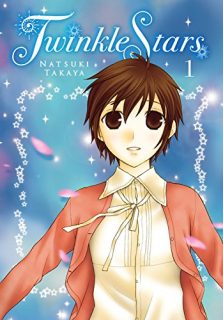
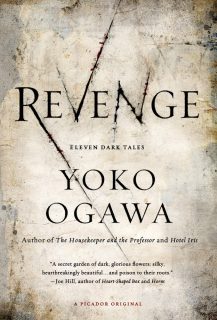
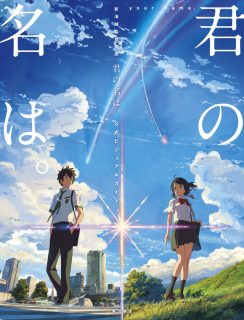
As for other interesting things I’ve come across recently: Chic Pixel’s Anne Lee has posted a really fantastic list of bibliographic resources for those curious about the academic study of boys’ love. (I’ve read quite a few books and articles myself, and even reviewed Jeffery Angles’ Writing the Love of Boys: Origins of Bishōnen Culture in Modernist Japanese Literature at Experiments in Manga a few years ago.) And if that’s not enough of BL studies for you, J. R. Brown has posted the slides from her Anime Boston panel “Boys’ Love, Otome Culture, and Gender” which covers everything from the origin of shoujo manga to gay comics and more. On their own the slides are fairly informative, but I’m looking forward to seeing the annotated version, too.

Also at Anime Boston, Viz Media made quite a few licensing announcements. Some were digital-only while others were digital-first or print-only. Here’s a quick list of the books that will eventually make their way into print: Kenta Shinohara’s Astra Lost in Space, Abi Umeda’s Children of Whales (I’m particularly curious about this series), an omnibus edition of Tsugumi Ohba and Takeshi Obata’s Death Note collecting the entire series and a bonus epilogue in a single volume, Nisioisin’s Hikaru Nakamura’s novel Juni Taisen: Zodiac Warriors (I’m not familiar with the novel, but the creators involved have certainly caught my attention), Kenji Taira’s Naruto: Chibi Sasuke’s Sharingan Legend, Kaiu Shirai and Posuka Demizu’s The Promised Neverland (which is supposed to be fantastic), a collection of nine Junji Ito stories and accompanying material selected by Ito himself called Shiver (always glad to see more Ito being released in English), Maki Enjoji’s SP Baby, and Sui Ishida’s artbook Tokyo Ghoul Illustrations.

A couple of Kickstarter projects recently launched which may be of interest as well: All the Anime/Anime Limited is joining forces with Studio 4°C to create a home video release of Masaaki Yuasa’s directorial debut Mind Game. Digital Manga has entered the fray again with a campaign to release more of Osamu Tezuka’s manga in print: Ambassador Magma, Dust 8, The Euphrates Tree, Metamorphose, Say Hello to Bookila, The Thief Inoue Akikazu, Wonder 3, and Yakeppachi’s Maria. It looks as though the print runs will be very limited and Kickstarter may be the only way to get a hold of some of the titles. (I have to admit, I certainly have my qualms about Digital Manga’s business practices in general and over-reliance on crowdfunding specifically. The quality of Digital Manga’s releases has really gone downhill over the last few years, too. Honestly, I’ve lost most of my confidence in the company as a publisher, but it’s managed not to completely go under yet.)

Quick Takes

Dawn of the Arcana, Volume 1Dawn of the Arcana, Volumes 1-6 by Rei Toma. I generally enjoy epic fantasy of the shoujo variety, so I’m not entirely sure why it’s taken me so long to finally get around to reading Dawn of the Arcana. So far, I’m enjoying the manga tremendously. Nakaba is a princess who has been married off to a prince of the neighboring kingdom despite her questionable ancestry in a half-hearted attempt to secure peace between the two countries. But instead, gifted with the ability to see both into the past and into the future, Nakaba may find herself in the unlikely position of leading a revolution. Dawn of the Arcana does come across as a rather typical example of high fantasy–all the way down to the heroine’s fiery red hair–but even though it hasn’t really made itself stand out yet, the manga is a solid series. I greatly enjoyed the manga’s mix of court and political intrigue, action, and complicated interpersonal relationships. Much like the story, the artwork tends to be somewhat standard although attractive. Toma’s backgrounds are generally fairly sparse, but the details put into things like the characters’ clothing is lovely. I definitely look forward to reading more of Dawn of the Arcana in the very near future.

Hana & Hina After School, Volume 1Hana & Hina After School, Volume 1 by Milk Morinaga. I believe that Morinaga is currently the most well-represented yuri manga creator available in English. So far, five of Morinaga’s manga have been translated, the most recent being Hana & Hina After School. Interestingly, in Japan the manga was serialized in a magazine aimed at a general audience rather than one specifically catering to yuri fans. The titular Hana and Hina are two young women working part time at a store specializing in cute character goods even though their high school forbids its students from holding jobs. The story follows their relationship as they become friends and slowly realize that their feelings may evolve into something else. Like most of Morinaga’s other manga that I’ve read, Hana & Hina After School tends to be rather cute and sweet. The series is enjoyable and pleasant even if it is at times a little silly and somewhat unbelievable. However, the end of the first volume does introduce some sobering concerns when Hina is confronted by a few of her classmates homophobia, an unfortunate reality that many yuri manga tend to gloss over or ignore entirely in favor of pure fantasy. (Granted, that fantasy is important to have, too.)

Scum's Wish, Volume 1Scum’s Wish, Volumes 1-2 by Mengo Yokoyari. I wasn’t initially planning to pick up Scum’s Wish, but after reading a few positive reviews of the series I decided to give it a try after all. The cover art of the first volume is deliberately provocative, but the manga isn’t nearly as salacious as it might imply. In fact, the series can actually be surprisingly contemplative. Scum’s Wish is a manga about unrequited love. Almost every character in the series is pining for someone with whom an involved romance would seem to be impossible or at least inadvisable, resulting in a complex web of personal relationships fraught with loneliness and anguish. (There is one heck of a love polygon going on in Scum’s Wish and nearly everyone who is introduced is connected to it somehow.) Hanabi is in love with Narumi, her childhood friend who now also happens to be her homeroom teacher. Mugi is in love with Akane, a music instructor who used to be his tutor. Recognizing that they are suffering under very similar circumstances and hoping to ease some of the pain, Hanabi and Mugi agree to find comfort in a relationship together. Neither one of them is in love with the other, but they are both aware of and take advantage of that fact.

Deep RedDeep Red by Hisashi Nozawa. Although perhaps best known as a screenwriter, Nozawa was also recognized as an accomplished novelist. Deep Red, which earned Nozawa an Eiji Yoshikawa Prize in 2001, is his first novel to be released in English. Kanako is the only survivor of the mass murder of her family, simply because she happened to be away on a school trip when her parents and two younger brothers were killed. Understandably, their deaths have left a great wound, but Kanako isn’t the only one left troubled and hurt–the life of Miho, the daughter of the murderer, has also been irrevocably changed. At times, Deep Red is uncomfortably voyeuristic and there’s a peculiar fixation on Kanako’s body and sex life with her boyfriend. I was never entirely convinced by Kanako as a character, either. However, Deep Red does provide an interesting psychological exploration of hate, anger, and misplaced revenge. The novel is instantly engaging. However, the middle portion of the narrative is repetitive and does drag a fair bit; I admittedly started to lose my interest and patience with the story. But once Kanako becomes obsessed with and decides to pursue Miho, Deep Red picks up speed again and the novel’s ending is very satisfying.

Filed Under: FEATURES, My Week in Manga Tagged With: dawn of the arcana, Hana and Hina After School, Hisashi Nozawa, manga, Mengo Yokoyari, milk morinaga, Novels, Rei Toma, Scum's Wish

  • « Go to Previous Page
  • Page 1
  • Interim pages omitted …
  • Page 38
  • Page 39
  • Page 40
  • Page 41
  • Page 42
  • Interim pages omitted …
  • Page 114
  • Go to Next Page »
 | Log in
Copyright © 2010 Manga Bookshelf | Powered by WordPress & the Genesis Framework