• Skip to primary navigation
  • Skip to main content
  • Skip to primary sidebar
  • Home
  • About Us
    • Privacy Policy
    • Comment Policy
    • Disclosures & Disclaimers
  • Resources
    • Links, Essays & Articles
    • Fandomology!
    • CLAMP Directory
    • BlogRoll
  • Features & Columns
    • 3 Things Thursday
    • Adventures in the Key of Shoujo
    • Bit & Blips (game reviews)
    • BL BOOKRACK
    • Bookshelf Briefs
    • Bringing the Drama
    • Comic Conversion
    • Fanservice Friday
    • Going Digital
    • It Came From the Sinosphere
    • License This!
    • Magazine no Mori
    • My Week in Manga
    • OFF THE SHELF
    • Not By Manga Alone
    • PICK OF THE WEEK
    • Subtitles & Sensibility
    • Weekly Shonen Jump Recaps
  • Manga Moveable Feast
    • MMF Full Archive
    • Yun Kouga
    • CLAMP
    • Shojo Beat
    • Osamu Tezuka
    • Sailor Moon
    • Fruits Basket
    • Takehiko Inoue
    • Wild Adapter
    • One Piece
    • After School Nightmare
    • Karakuri Odette
    • Paradise Kiss
    • The Color Trilogy
    • To Terra…
    • Sexy Voice & Robo
  • Browse by Author
    • Sean Gaffney
    • Anna Neatrour
    • Michelle Smith
    • Katherine Dacey
    • MJ
    • Brigid Alverson
    • Travis Anderson
    • Phillip Anthony
    • Derek Bown
    • Jaci Dahlvang
    • Angela Eastman
    • Erica Friedman
    • Sara K.
    • Megan Purdy
    • Emily Snodgrass
    • Nancy Thistlethwaite
    • Eva Volin
    • David Welsh
  • MB Blogs
    • A Case Suitable For Treatment
    • Experiments in Manga
    • MangaBlog
    • The Manga Critic
    • Manga Report
    • Soliloquy in Blue
    • Manga Curmudgeon (archive)

Manga Bookshelf

Discussion, Resources, Roundtables, & Reviews

Blog

Gakuen Polizi, Vol. 1

June 19, 2014 by Sean Gaffney

By Milk Morinaga. Released in Japan by Futabasha, serialized in the magazine Comic High!. Released in North America by Seven Seas.

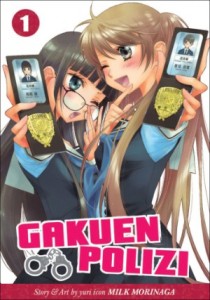
First off, this is clearly a series meant to be marketed to the same group that loved reading Girl Friends, and is touted as a top new yuri series. All I can say is, unless things progress a whole lot in Vol. 2, some folks might wonder what the fuss is all about. Midori occasionally blushes or wonders why she feels a need to connect with Aoba despite everything, Aoba sometimes reflects on her overly touchy-feely hijinx, but honestly, this is a high school comedy far more than it’s a yuri series. That said, everything ELSE people liked about Morinaga Milk’s manga is here – cute art, over the top characters reacting in funny ways, and a core of serious story underneath it.
gakuen1

Our hero is Aoba, a naive yet vibrant girl who grew up wanting to be a defender of justice and, since magical girls and sentai warriors are hard to come by in real life, has joined the police while still in high school to still defend what’s right. For her first assignment, however, she’s sent to a school that seemingly has no issues – the most that happens here is girls fighting over a diet. She runs into the seemingly stoic Midori, a stoic girl whose stoicness lasts about five seconds in the face of the overwhelmingness of Aoba. Midori has a tragic past where her partner was hurt because of her actions, and has been sent to this school to sit tight until she graduates (her dad is chief of police, so they can’t just fire her). Naturally, she’s a bit sour on justice, and wants nothing more but to sit quietly and draw her yaoi manga. Hands up, who thinks that’s going to happen?

There’s no real attempt to move these characters beyond their obvious stereotypes – Aoba in particular is cheerful, naive, acts before she thinks, mood swings wildly, etc. But that’s OK here, really, as this is a series where you want to watch Aoba do dumb stuff and slowly bring Midori out of her shell of tragic past. They’re supposed to be secret police – the school doesn’t acknowledge their jobs exist – which of course leads to Aoba whipping out her badge at the slightest provocation. It also allows the series to touch on the difficulties of reporting things to the *real* police – discussion of a train groper notes that since all the girls say the groper is a “ghost”, the cops wouldn’t do anything, and in a later story involving a stalker, Aoba feels that he got let off far too lightly. It’s noted that different officers respond to cases differently, and that’s certainly the case with our heroines.

By the end of this fist volume Midori seems to have taken it upon herself to ensure that Aoba maintains her idealistic demeanor, something that may be disrupted by the cliffhanger, which shows us that her old partner is returning to the school to reunite. (Please don’t be evil, please don’t be evil… she’s gonna be evil, isn’t she?) Gakuen Polizi is not going to win any awards for depth of yuri feelings. But it has more depth of character than I was expecting, and I hope its second volume continues to touch on how Aoba and Midori can bring out the best in each other as partners.

Filed Under: REVIEWS

Attack on Titan: No Regrets, Vol. 1

June 18, 2014 by Ash Brown

Attack on Titan: No Regrets, Volume 1Creator: Hikaru Suruga
Original story: Gun Snark

U.S. publisher: Kodansha
ISBN: 9781612629414
Released: June 2014
Original release: 2014

I think it’s probably safe at this point to call Hajime Isayama’s manga series Attack on Titan a worldwide phenomenon. It has spawned successful anime adaptations as well as multiple manga spinoffs, a series of novels, and games, among other media. Most of those have been, or soon will be, released in English, too. When it comes to the side manga, I was especially curious about Attack on Titan: No Regrets because so far it has been the only explicitly shoujo offering to be included as part of the franchise. (I was therefore very happy to receive a review copy.) The short manga series in an adaptation by Hikaru Suruga of a Nitroplus visual novel written by Gun Snark and supervised by Isayama himself. The first volume of No Regrets was released in Japan, and then soon after in English by Kodansha Comics, in 2014. Kodansha’s English-language release also collects the story’s prologue chapter, which was included as part of Japan’s special edition of Attack on Titan: No Regrets, Volume 1.

Behind Wall Sheena lies the royal capital and the surrounding city where those who are lucky enough are able to live in luxury. But below it all is the Underground, where outcasts and criminals live in slum-like conditions. It’s there that Levi and his two comrades Isabel and Furlan call home, but they swear to one another that one day they will leave their criminal pasts and the Underground behind and live up above. Their chance comes in the form of Erwin, a young, talented, and devoted Survey Corps squad leader. Levi’s exceptional vertical maneuvering skills have caught Erwin’s attention and after some effort he has caught Levi as well. Erwin offers Levi and his crew a choice: join the Survey Corps themselves, lending their natural strengths to humanity’s fight against the Titans, or submit to the Military Police to answer for their many crimes. The decision isn’t a difficult one to make, but being forced to join the Survey Corps against their will doesn’t sit at all well with Levi; he plans to have his revenge against Erwin.

Arguably, Erwin and Levi are two of Attack on Titan‘s most beloved characters. (Not to mention one of the pairings that I’ve most frequently seen shipped.) There’s a certain intensity to their relationship in the original series–it’s obvious that they share a history and a past with each other–which means exploring their origins and how that bond developed in No Regrets makes a good deal of sense. Personally, I’ve always found Levi and Erwin to be particularly interesting characters, making No Regrets a welcome addition to the Attack on Titan canon. In the first volume of No Regrets their relationship is a volatile and antagonistic one. It’s an extremely important element of the series, but the manga also explores who they are as individuals, which is just as crucial. Each in their own way, both Levi and Erwin are intimidating and formidable men. Erwin may actually be the more terrifying of the two–he’s cool, calm, collected, and incredibly calculating–but Levi’s more obvious aggressiveness and propensity towards violence also leaves an impression.

In addition to focusing on Erwin and Levi, No Regrets features cameos from a few of the other key players from the original Attack on Titan and also introduces new characters, most notably Furlan and Isabel. Granted, seeing as this is still Attack on Titan and that No Regrets already has a considerable death count, there’s certainly no guarantee of their survival. All of the main characters in No Regrets, and to some extent the series’ side and background characters as well, have very distinct personalities which are exhibited through their facial expressions, body language, and individual manners of speech. Suruga’s artwork in No Regrets takes its cues from Isayama’s original series but in general is much cleaner and consistent. Story-wise, the series exhibits an excellent balance between political intrigue and action, including fantastically dynamic vertical maneuvering sequences. For the most part No Regrets stands fairly well on its own, although those familiar with Attack on Titan will get the most out of it. I quite enjoyed the first volume of No Regrets and look forward to reading the rest of the series.

Thank you to Kodansha for providing a copy of Attack on Titan: No Regrets, Volume 1 for review.

Filed Under: REVIEWS Tagged With: attack on titan, Gun Snark, Hikaru Suruga, kodansha, Kodansha Comics, manga

Seven Seas License roundup

June 17, 2014 by Sean Gaffney

Seven Seas has this odd habit of waiting till I do a post talking about new licenses and then revealing their own, partly to ensure they get noticed but mostly I suspect to annoy me. Still, they’ve announced four new titles for late this year into next year, so let’s see what they have.

scarlet

First, and least surprising, is the sequel to dance in the Vampire Bund, Scarlet Order, which runs in comic Flapper. Along with the alice books, Vampire Bund has been one of Seven Seas’s moneymakers, so it was a no brainer to get this one. It has vampires. And lolicon. And lolicon vampires!

Clay Lord is a relatively recent title from Ichijinsha’s Comic Zero-Sum, which means it’s sort of josei but technically sui generis. The story of a boy and his golem, this one may appeal to fans of Black Butler and similar stories.

evergreen

Evergreen is probably the title I’m most excited about, mostly because I’m very fond of Toradora!, which is by the same author. (As for the artist, after glancing through her other works, I think I will merely whistle and pass gracefully by.) I had actually expected to see Golden Time next, also by Takemiya, and also running in Dengeki Daioh, which serializes Evergreen and Toradora!. The plot description reminds me a bit of Book Girl, as it stars a male lead who’s closed off and reclusive due to some tragedy in his past. Instead of Touko, though, we get the class beauty helping him out.

Lastly, we have Hitomi-sensei no Hokenshitsu, which runs in the dreaded Comic Ryu. Given the monster success of Monster Musume, it’s not hard to see why Seven Seas went looking for other titles in this magazine, particularly this one, which also involves monsters and comedy. This looks a bit less skeevy than Monster Musume, and involves a cyclops nurse at a monster high school helping kids out with their problems, and the emphasis seems to be firmly on the comedy. I’d give it a shot.

What interests you most?

Filed Under: NEWS, UNSHELVED

Bookshelf Briefs 6/16/14

June 16, 2014 by Sean Gaffney and Michelle Smith Leave a Comment

This week, Sean and Michelle take a quick look at recent releases from Viz Media, Digital Manga Publishing, and Vertical, Inc.

dengeki14Dengeki Daisy, Vol. 14 | By Kyousuke Motomi | Viz Media – Much of the discussion of this volume will likely center around Teru and Kurosaki finally kissing, and it’s just as sweet and adorable as you’d expect. But they can’t really move forward till the main plot is solved, and for all that it’s a romance manga, Dengeki Daisy is intrinsically tied to its thriller plotline driving everything. Be it adding backstory to Akira in order to make the reader better understand him and contrast him with Teru; having the enemy use Teru’s own darker impulses to drive a wedge between her and Kurosaki; or just plain kidnapping her to give us our cliffhanger. Without the thriller, we wouldn’t have this sweet romance. Let’s hope they can work everything out. – Sean Gaffney

itazura10Itazura Na Kiss, Vol. 10 | By Kaoru Tada | Digital Manga Publishing – Hooray! A new volume of Itazura Na Kiss! And it’s actually less frustrating than most! Kotoko will probably never stop being incredibly dense and Naoki will probably never stop saying unnecessarily hurtful things, but there are still plenty of good moments for them as a couple nowadays. I especially liked the chapter where he asks to accompany Kotoko and her dad on their annual trip to pay their respects to her mother’s grave. There’s also some fun stuff here with Yuuki and the stupid yet good-hearted girl who loves him. It’s been fun seeing him grow up on the sidelines, and I especially like that although he is very similar to Naoki, he’s still his own person, and is ultimately more free with his emotions. I do have to wonder now: will we see Kotoko become a competent nurse at last before the series is ultimately cut short? I have my doubts… – Michelle Smith

knights9Knights of Sidonia, Vol. 9 | By Tsutomu Nihei | Vertical, Inc. – Say what you will about Sidonia, it’s never dull. The battle scenes are tense and gripping, but that’s not really what I mean. I mean more the bizarre not quite porn between Tanizake and the Hawk Moth *during* the battle. I mean the constant wacky comedy between Tanizake, Tsumugi, and Izana (Tanizake walks in on Izana again, reaching Keitaro Urashima levels here). And I mean acknowledging that Izana’s love for Tanizake is not just a crush – her body is adapting itself to be more like what he’s attracted to (i.e., female). While giving her two cliffhangers in a row seems a little unbalanced, I’m greatly enjoying her development, contrasting itself with Tanizake’s harder-to-read hero. – Sean Gaffney

nura21Nura: Rise of the Yokai Clan, Vol. 21 | By Hiroshi Shiibashi | Viz Media – There’s a lot of shonen battle in this volume, but I was trying to focus on the little things. Like seeing Wakana, Rikuo’s mother, put in danger – I’d honestly forgotten she existed, particularly as she looks as young as Rikuo and his friends. Speaking of which, as I said last time, I love seeing that the ‘normal’ high schoolers aren’t getting left out of the final battle, and how they try to find a way to be useful throughout. I also liked that Tsurara, even if she still tends towards constant jealousy, manages to recognize that Rikuo needs Kana in his life, and seeing them bond over his stubbornness. I think the arc after this one will be the last, but I’m ready for it. Let’s see what more yokai madness the author can bring. – Sean Gaffney

natsume16Natsume’s Book of Friends, Vol. 16 | By Yuki Midorikawa | Viz Media – And speaking of yokai, after the plot-heavy stuff going on in the previous volume, we take a break here for smaller, quieter stories. Tani deals with a yokai that she gave directions to but hasn’t left her house, and we see the inherent issues with yokai affection for humans. Then Natsume and Tanuma go to an inn and deal with a piece of Tanuma’s past and a mystery. Through both of these stories, we get echoes of one of the main threads of this series: whether the worlds of yokai and humans can ever come together, and if they do, will it be a bad thing on both sides? Even the angst seems pretty light in this one, making it a good choice for those who enjoy Natsume, his friends, and an earned peace. – Sean Gaffney

Filed Under: Bookshelf Briefs

Pick of the Week: Old Favorites & New

June 16, 2014 by MJ, Sean Gaffney, Michelle Smith, Ash Brown and Anna N 1 Comment

potw-6-16MJ: Though I’m interested in a few of this week’s releases, including the latest from the author of Girl Friends, I’m unable to restrain myself from recommending the second omnibus volume of CLAMP’s xxxHolic. These volumes are some of my favorites in the early series, responsible for much laughter, tears, and for my everlasting Watanuki/Doumeki ‘shipping (seriously, if you are not on board by the end of volume six, there’s no help for you). In fact, I think I must reread them in honor of this release. If you never picked up this gorgeous and occasionally maddening series, now is your chance!
SEAN: I’ll chime in here, then, and make Gakuen Polizi my pick for this week. It’s got a lot of things that people like Morinaga Milk for: yuri tease (though a lot less than Girl Friends, obviously), broad comedy between an outgoing young girl and her more introverted friend, and of course high school antics (even though our leads are technically police officers). Sometimes you just want to read something FUN. This should fit the bill nicely.

MICHELLE: I’m going to have to cast my vote for the xxxHOLiC omnibus, too. Especially since this reissue will give me the opportunity to pick up the final few volumes of the series that I originally missed!

ASH: Vertical’s deluxe release of Mobile Suit Gundam: The Origin is always worth mentioning, but my pick of the week actually goes to Battle Royale: Angels’ Border. In addition to a new translation of the original novel and The Battle Royale Slam Book (which was great), the manga makes the third Battle Royale release from Viz this year.

ANNA: Since no one else is picking Mobile Suit Gundam: The Origin, I’ll have to go with that! Civil war! Mecha! Space! Char Aznable being evil! Seriously, what else does a reader need?

What looks good to you this week?

Filed Under: PICK OF THE WEEK

My Week in Manga: June 9-June 15, 2014

June 16, 2014 by Ash Brown

My News and Reviews

I posted two in-depth manga reviews at Experiments in Manga last week. The first was of Baku Yumemakura and Jiro Taniguchi’s The Summit of the Gods, Volume 3. It’s the middle volume of a five-volume, award-winning series and is a critical turning point for the story and characters. The Summit of the Gods is my favorite Taniguchi collaboration as well as one of my favorite manga series in general. And if manly mountain men don’t interest you, perhaps my review of Mari Okazaki’s out-of-print josei collection Sweat & Honey might entice you to track down a copy for yourself. The short manga included in the anthology focus on the close and often complicated relationships between women. The post is a part of my Year of Yuri monthly review project and makes the seventh installment. Only five more reviews to go!

Elsewhere online there were plenty of interesting things to read. Yen Press has a new set of license announcements. Organization Anti-Social Geniuses had two posts last week that I particularly liked: an interview with Cho, the founder of the site English Light Novels (which is an incredibly useful resource that I was previously unaware of), and a look at some of the reasons why people tell publishers they read illegal version of manga. Otaku USA has a nice interview with Helen McCarthy, whose newest book A Brief History of Manga will be released soon. The Lobster Dance has posted Revealing and Concealing Identities: Cross-Dressing in Anime and Manga, Part 4, with at least one more part to come. Lastly, the second manga studies column at Comics Forum is now available, focusing on the history of manga and Kitazawa Rakuten.

Quick Takes

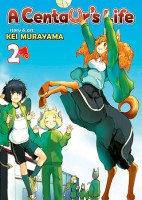
A Centaur's Life, Volume 2A Centaur’s Life, Volumes 2-3 by Kei Murayama. The more I read of A Centaur’s Life, the more I like the series. It can be incredibly sweet and adorable, and Murayama’s world-building is fascinating. Not all of that world-building makes it into the series proper (at least not yet), but the extra material between chapters and at the beginning and end of the volumes. Is interesting, delving into the politics, history, and mythology of A Centaur’s Life. It’s obvious that a lot of thought has been put into the series to make it as realistic as possible; Murayama takes into account even the smallest details of everyday life and how things like cars, furniture, and buildings have to be modified to accommodate races with completely different anatomies. A Centaur’s Life is fairly episodic, but more and more recurring characters are introduced as the series progresses. These two volumes in particular frequently feature the youngest generation of centaurs and other folk. Like any kids, they can be hellions but they can be super cute, too.

Same Cell OrganismSame Cell Organism by Sumomo Yumeka. Much like Yumeka’s later manga, The Day I Become a Butterfly, Same Cell Organism tends to be fairly quiet and subdued. Yumeka’s artwork is lovely, with a light, airy touch to it, though her character designs from one story to the next are similar enough to cause some brief confusion from time to time. Same Cell Organism is a collection of some of her earliest boys’ love manga. It’s a somewhat uneven volume, mostly do to the fact that one of the stories, “To Make an Angel” was never actually completed. All of the set up is there, but then it suddenly ends with no real conclusion. However, I absolutely adored the titular story “Same Cell Organism” and its subsequent chapters. The story follows two young men in high school who might seem like unlikely friends because their personalities are so different: Yokota is loud, enthusiastic, and outgoing while Nakagawa is much quieter and reserved and has a more difficult time expressing himself. However, their relationship develops naturally and is delightfully loving and sweet.

Say I Love You, Volume 2Say I Love You, Volume 2 by Kanae Hazuki. I was a little surprised by how much I enjoyed the first volume of Say I Love You and so was very interested in seeing how the characters’ stories and relationships continued to develop in the second. I particularly like the leads, Mei and Yamato. Mei especially is marvelous; she’s confident enough in herself to avoid bad situations involving other people, which made me very happy to see. Yamato obviously cares for Mei and is very respectful of her. However, many of the other characters aren’t likeable at all, and much of the second volume is devoted to them. Hayakawa is a womanizer and an absolute asshole. His story arc in this volume is a bit uncomfortable–he gets his comeuppance, but he also gets the girl. (I worry about her, so I truly hope that his colors have changed having been redeemed by love.) Aiko, who apparently used to be a lovely young woman, is simply not a nice person at all anymore. She has her reasons, but she’s still not sympathetic. Say I Love You deals very honestly with sex and its emotional repercussions at such a young age. Some of the relationships in the series aren’t at all healthy, making the budding romance between Mei and Yamato refreshing in comparison.

Sherlock Bones, Volume 5Sherlock Bones, Volume 5 written by Yuma Ando and illustrated by Yuki Sato. Sherlock Holmes reincarnated as a puppy is still a rather silly premise, but I’ll admit that I’ve largely been enjoying the series. Occasionally there’s an unnecessary flash of underwear, but generally that’s fairly easy to pass over. The mysteries in the series are interesting with some very clever, though sometimes outlandish, twists. The artwork provides clues for readers to pick up on if they’d like a more interactive story experience, too. One of the things that I actually liked best about this particular volume of Sherlock Bones is that the story moves from Takeru being a high school student to his entry into the workforce. Unsurprisingly, coming from a police family and considering his recent work solving crimes with Sherdog, Takeru becomes a patrol officer. Already it’s proving to supply even more cases for him and Sherdog to investigate, and a few new characters are introduced as well. Sherlock Bones continues to be an entertaining series, and I look forward to reading the remaining two volumes.

Filed Under: FEATURES, My Week in Manga Tagged With: Centaur's Life, Kanae Hazuki, Kei Murayama, manga, Say I Love You, Sherlock Bones, Sumomo Yumeka, Yuki Sato, Yuma Ando

A Mostly Yen License Roundup

June 13, 2014 by Sean Gaffney

Yen Press had a lot of license announcements today, and this post is mostly going to talk about those. But first.

Amazon blew a couple of Viz licenses the other day, though they were quickly taken down. One was not commented on, so I won’t either. The other, which Viz was forced to admit “Yes, we have it, wait till AX for details”, was the first arc of Jojo’s Bizarre Adventure. This legendary Shonen Jump manga has long been known over here in the States for its ridiculous powerups and battles, its sheer weirdness, the musical name jokes, and a truly ridiculous amount of not-quite-BL, to the point where the female fandom is huge, and it may even have been more influential than Slam Dunk or Saint Seiya in bringing in those fans to Jump. Viz had published the 3rd arc of the series (considered to be the most accessible) a while back, but it didn’t really sell well. But recent anime adaptations have brought it back into the limelight, and Viz is now going back to release the “Phantom Blood” arc, the first JoJo’s adventure. I suspect it will be the 3-volume re-release from the early 2000s, but we’ll wait for more details. In the meantime, get hyped. JoJo’s is addictive, fun, tragic, and ridiculous.

Now, let’s talk Yen Press and Yen On. First off, in already released news, I was pleased to see that the 2nd Magical Index light novel is scheduled for February 2015. This would point to the series being on a quarterly release, as opposed to SAO’s three times or Book Girl’s twice a year. Given the sheer SIZE of Index, this is likely necessary to keep fandom invested.

There are some more volumes of the Kingdom Hearts franchise that Yen is putting out! I’ve never really kept up with this series, but I know it was huge when Tokyopop put out the manga, and my guess is it’s still huge. Secret was also officially announced; it’s been coming out digitally in chapter format recently. it’s the latest from the author of Judge and Doubt, so my guess is it has a lot of dead teens.

akame1

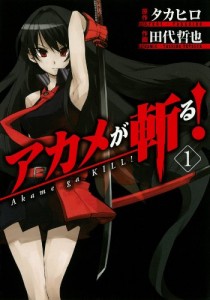
Akame ga Kill! hails from Gangan Joker, a favorite target of Yen Press. Featuring an idealistic young man getting caught up in a hideous international conspiracy, it apparently has a very high body count, lots of assassins and psychopaths, and is filled with shonen GUTS. Sounds like it will fit right in alongside Higurashi and company.

Sword Art Online is just getting started, with its 3rd light novel, the first part of Fairy Dance, coming out this December. But Yen On has also just announced their license of the Progressive series, which began to come out 10 years after the original. This apparently retells the events of the first two books from Asuna’s perspective, showing a lot more of how she developed into the badass we bet at the start of the first SAO novel. They’ve also licensed the manga adaptation, which runs in Mediaworks’ Dengeki G’s magazine.

kagerou

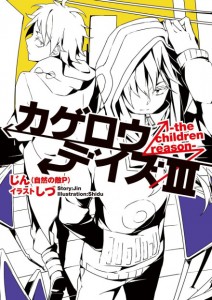
Kagerou Days is selling like hotcakes, which is less surprising when you realize it’s a spinoff of the insanely popular Vocaloid franchise. Based on a series of songs, it’s been adapted into a light novel and a manga (which runs in Media Factory’s Comic Gene), its plot is about a shut-in who is forced to leave his apparently after getting sent a cyber-girl though an email. It is apparently far more interesting than it sounds, and an anime based off of it aired this spring.

Lastly, Yen have already licensed Sword Art Online (and Progressive) and Accel World, now we her they’re getting a new series of novels by the same author, which is not even out in Japan yet. It’s called Absolute Solitude, and will no doubt be exciting, whatever it is.

No, there’s no Baccano! license here, but lots of exciting stuff. Anything you plan to pick up?

Filed Under: NEWS, UNSHELVED

Sweat & Honey

June 13, 2014 by Ash Brown

Sweat & HoneyCreator: Mari Okazaki
U.S. publisher: Tokyopop
ISBN: 9781591827979
Released: February 2005
Original release: 2002

Back in 2005 Tokyopop launched a short-lived line of josei manga called Passion Fruit, describing it as a collection of innovative and edgy works. Only two volumes were ever released before Passion Fruit faded out of existence: Mari Okazaki’s Sweat & Honey and Junko Kawakami’s Galaxy Girl, Panda Boy. I learned about all of this long after the fact and only discovered the Passion Fruit line while searching for more translated manga by Okazaki after rereading her series Suppli (which was sadly left incomplete in English after Tokyopop’s decline.) Currently, Sweat & Honey is her only other work available, which is a shame. Sweat & Honey was originally published in Japan in 2002 before being released in English in 2005. I didn’t realize it when I first picked up a copy–initially I was interested in the fact that it was by Okazaki more than anything else–but Sweat & Honey incorporates sapphic elements and yuri undertones which made me even more curious to read it.

Sweat & Honey collects five short, unrelated manga, most of which focus on the close, personal, and intimate relationships between women, ranging from friendship to love and even more complicated bonds. The volume opens with “After Sex, A Boy’s Sweat Smells Like Honey,” from which the collection draws its name. In it, a young woman is staying with her cousin; her attitudes toward and dislike of men has her cousin reevaluating her own romantic relationships as the two women grow closer. In “About Kusako,” Moeko stumbles upon a girl literally growing out of the ground. It’s a curious story and the most fantastical one included in Sweat & Honey. “Sister” follows Chinami, a highschool girl, and Kayo, her 35-year-old neighbor who leads a much more fulfilling life than most realize. The longest story, “The Land Where Rain Falls,” is told in three parts. It delves into the intense and twisted connections between Kumi, her classmate Kaya, and Kaya’s older brother. The volume closes with “Iced Tea,” in which a young man looks back on one of his first crushes, his seventh-grade teacher.

Sweat & Honey, though occasionally lighthearted, is a manga that deals with very mature themes–death, coming of age, self-discovery, nostalgia–and can frankly be disturbing from time to time. Okazaki’s artwork aids tremendously in creating this atmosphere in the volume. Her illustrations are sensuous and provocative, with a languid heaviness to them. They are beautiful, but also somewhat disconcerting and ominous, too. The page layouts in Sweat & Honey are also interesting, often featuring a large background panel which sets the scene with smaller, overlapping panels that focus a reader’s attention on a particular detail of the people who inhabit it. The elegant line of a neck, hesitant glances or a sly smile, an exposed breast, shifting legs and feet, entwined fingers or tightly clasped hands, all are accentuated. Because of this, the young women in Sweat & Honey seem to exist both in their world and apart from it. Okazaki reveals their personal and private thoughts and feelings while at the same time exposing their physical selves.

Although the short manga collected in Sweat & Honey aren’t related by characters or by plot, they all share an emphasis on the inner and outer lives of women and their relationships with each other. Even “Iced Tea,” which is told from the perspective of a young man, is focused on his female teacher. Although the ties between the women in Sweat & Honey are the most crucial, their associations with men and how those associations impact their other relationships are also very important. The older cousin in “After Sex, A Boy’s Sweat Smell s Like Honey” has a boyfriend, but she isn’t able to connect with him in the same way that she does with her younger relative. Moeko drifts away from Kusako when a boy enters the picture. Kayo’s seeming lack of romantic involvement is one of the things that bothers Chinami the most. And in “The Land Where Rain Falls,” the nearly incestuous relationship instigated by Kaya is one of the key elements of the story. But in the end, while the men have their place in the manga, the true focus of Sweat & Honey is on its young women and their experiences.

Filed Under: REVIEWS Tagged With: manga, Mari Okazaki, Passion Fruit, Tokyopop, Year of Yuri

Manga the Week of 6/18

June 12, 2014 by Sean Gaffney, Michelle Smith, Ash Brown, Anna N and MJ 1 Comment

SEAN: It’s no Week 1, but the 3rd week of the month gives us a chunky pile of manga, which should have something for most everyone.

The Shinji Ikari Raising Project manga from Dark Horse has now reached the same number of volumes as the regular Evangelion manga, and I don’t think it’s finished. Will this lighter take on the Evaverse surpass its predecessor? …mmmm, probably not. But it’s fun.

I swear I’ve had Alice the 101st Vol. 4 coming out from DMP before this week. But in any case, here it is again, and I suspect I will be confused all the way to Vol. 101.

MICHELLE: I forgot this series existed.

hentaiprince2

SEAN: I enjoyed Vol. 1 of Hentai Prince and the Stony Cat, which came out right before DMP’s print hiatus. Now that it’s back, I look forward to seeing what wacky comedy Vol. 2 can give us, especially since the anime has now come and gone.

Fairy Tail has hit its Jack Benny volume, and I am starting to fall behind. I believe this is one of the more serious volumes. Lotsa harsh battle scenes. (Vol. 39, for those of you who are wondering what the hell I’m talking about.)

There’s also the 7th volume of No. 6, which simply ruins the symmetry and makes me bitter. So bitter. Why must manga be numbered anyway? Manga should be free!

ASH: The beautiful symmetry may have been ruined, but this is one of the best volumes in the series yet!

SEAN: The 2nd xxxHOLIC omnibus has some really excellent stories, and a minimal amount of crossover with Tsubasa. Neither of those two will last.

ANNA: I feel sort of bad that I never finished either xxxHOLIC or Tsubasa, and then I remember how long they are and I feel OK with it all.

MICHELLE: I didn’t finish them either, actually. But I intend to one of these days!

ASH: And the omnibus releases make it easier than ever!

MJ: I feel somewhat out of place here admitting that I finished them both, and with great enthusiasm! I’m very happy to see these omnibus releases coming out.

SEAN: In case you thought Seven Seas had put out everything Dance in the Vampire Bund-related, here are some Forgotten Tales. Probably fell behind the desk or something.

Haganai: I Don’t Have Many Friends hits the 7th volume of wacky comedy with Kodaka and the friends he insists he doesn’t have.

gakuen1

I’m a big fan of Morinaga Milk, author of Girl Friends, so am looking forward to the new series from Seven Seas, Gakuen Polizi. Which is not translated as School Police, for reasons why I do not know. I don’t think this one’s yuri, but I bet it’s cute.

ASH: I’ve enjoyed the other manga by Morinaga released in English, so I’m looking forward to this series’ debut.

MJ: Same here!

SEAN: The Sky That Connects Us is the next in the Strike Witches franchise, and will give you lots of cute girls and aerial battles, but less pants than most series.

Vertical’s deluxe release of Mobile Suit Gundam hits its 6th collection, which I believe may be the halfway point? In any case, still essential.

ANNA: So deluxe! I’ve been buying these as they come out but am a couple volumes behind. I see a Gundam reading binge in my future.

MICHELLE: Much mecha.

ASH: I believe this volume will once again feature a fair amount of Char, which pleases me greatly.

SEAN: Lastly, Viz has the Battle Royale: Angels’ Border manga, which ran in Akita Shoten’s Young Champion and focuses on six girls who got short shrift in the main series.

ASH: As a fan of the original novel, I’ve been enjoying the recent Battle Royale releases from Viz, so I’m happy to see this one, too.

SEAN: Is there something here that appeals to you?

Filed Under: FEATURES, manga the week of

Seraph of the End: Vampire Reign, Vol. 1

June 12, 2014 by Sean Gaffney

By Takaya Kagami, Yamato Yamamoto, and Daisuki Furuya. Released in Japan as “Owari no Seraph” by Shueisha, serialization ongoing in the magazine Jump Square. Released in North America by Viz.

I’m always a little bit wary when I see more than two names on a book’s cover, particularly when it’s a manga and yet one of the names is credited for ‘storyboards’. I checked to see if this is based off of an anime or video game property, but apparently not. Its author does specialize in light novels, however, most recently Itsuka Tenma no Kuro Usagi, which got an anime. The artist seems to specialize in adapting light novels as well, having drawn Kure-nai for Jump Square as well. And now we get Owari no Seraph, which already has its own spin-off light novel focusing on the commander we briefly see being an ass to our hero. The manga itself, though, focuses on three core people.

seraph1

Of course, they aren’t the three people that you might expect when you pick up this volume. We meet our antisocial hero, Yu, as a young boy growing up in an orphanage along with several other children. They live in a world where vampires have taken over after a virus killed everyone over the age of thirteen. Together with his strategist best friend, Mika, and his likely love interest, Akane, he will find a way to fight back against those who… oh wait, everyone except him just died. Nevermind. What this is actually about is Yu four years later, forced by the military that he hooked up with upon escaping to attend school in order to cure his jerkass tendencies and make friends. And perhaps kill a few vampires along the way.

It’s hard to read this series and not be reminded a little of Attack on Titan. The vampires aren’t nearly as impossible to kill as the Titans, but that’s made up for by Yu’s berzerker rage whenever he sees them – he’s not quite as bad as Eren, but it’s a close thing. He’s also part of a friendship trio, though they don’t have the strong bond Eren, Mikasa and Armin do – at least not yet. Shinoa, who seems to be his minder, exists mostly to point out when he’s being stupid and watch him do it anyway. Yoichi is the stock earnest, bullied character, whose idealism will no doubt contrast with the cynical viewpoint of the other two. They’re all likeable, or at least will be once Yu sheds a lot of the walls he’s put up around him, which I suspect will happen soon.

Amongst this background, there’s some interesting worldbuilding (the world’s population has been decimated, so everyone is encouraged to repopulate the Earth – this is mostly an excuse to have Shinoa get away with calling Yu a virgin constantly), some well-choreographed fight scenes (perhaps this is where the storyboarder came in), and some disturbing horror, as you’d expect from a series where the vampires are, for once, the bad guys. Though the cliffhanger for this volume makes me wonder how long that villainy will truly last. If you like Attack on Titan, or maybe Blue Exorcist, another series which this seems similar to, give Seraph of the End a try – it’s a strong, solid first volume.

Filed Under: REVIEWS

  • « Go to Previous Page
  • Page 1
  • Interim pages omitted …
  • Page 602
  • Page 603
  • Page 604
  • Page 605
  • Page 606
  • Interim pages omitted …
  • Page 1048
  • Go to Next Page »
 | Log in
Copyright © 2010 Manga Bookshelf | Powered by WordPress & the Genesis Framework