• Skip to primary navigation
  • Skip to main content
  • Skip to primary sidebar
  • Home
  • About Us
    • Privacy Policy
    • Comment Policy
    • Disclosures & Disclaimers
  • Resources
    • Links, Essays & Articles
    • Fandomology!
    • CLAMP Directory
    • BlogRoll
  • Features & Columns
    • 3 Things Thursday
    • Adventures in the Key of Shoujo
    • Bit & Blips (game reviews)
    • BL BOOKRACK
    • Bookshelf Briefs
    • Bringing the Drama
    • Comic Conversion
    • Fanservice Friday
    • Going Digital
    • It Came From the Sinosphere
    • License This!
    • Magazine no Mori
    • My Week in Manga
    • OFF THE SHELF
    • Not By Manga Alone
    • PICK OF THE WEEK
    • Subtitles & Sensibility
    • Weekly Shonen Jump Recaps
  • Manga Moveable Feast
    • MMF Full Archive
    • Yun Kouga
    • CLAMP
    • Shojo Beat
    • Osamu Tezuka
    • Sailor Moon
    • Fruits Basket
    • Takehiko Inoue
    • Wild Adapter
    • One Piece
    • After School Nightmare
    • Karakuri Odette
    • Paradise Kiss
    • The Color Trilogy
    • To Terra…
    • Sexy Voice & Robo
  • Browse by Author
    • Sean Gaffney
    • Anna Neatrour
    • Michelle Smith
    • Katherine Dacey
    • MJ
    • Brigid Alverson
    • Travis Anderson
    • Phillip Anthony
    • Derek Bown
    • Jaci Dahlvang
    • Angela Eastman
    • Erica Friedman
    • Sara K.
    • Megan Purdy
    • Emily Snodgrass
    • Nancy Thistlethwaite
    • Eva Volin
    • David Welsh
  • MB Blogs
    • A Case Suitable For Treatment
    • Experiments in Manga
    • MangaBlog
    • The Manga Critic
    • Manga Report
    • Soliloquy in Blue
    • Manga Curmudgeon (archive)

Manga Bookshelf

Discussion, Resources, Roundtables, & Reviews

Blog

Manga Giveaway: Yukarism Giveaway Winner

April 1, 2015 by Ash Brown

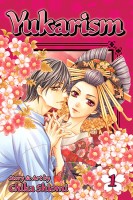
Yukarism, Volume 1And the winner of the Yukarism manga giveaway is… Haley!

As the winner, Haley will be receiving the first volume of Chika Shiomi’s manga series Yukarism as published by Viz Media’s Shojo Beat. Because Yukarism has a plot that prominently features reincarnation, I was curious to know what other reincarnation stories people have enjoyed and so asked participants in the giveaway to tell me. Check out the giveaway comments for everyone’s responses, and check out below for a list of reincarnation manga!

Some of the manga licensed in English featuring reincarnation:
07-Ghost by Yuki Amemiya
9th Sleep by Makoto Tateno
Angel Sanctuary by Kaori Yuki
Apollo’s Song by Osamu Tezuka
Aquarion Evol written by Shoji Kawamori, illustrated by Aogiri
The Betrayal Knows My Name by Odagiri Hotaru
A Bloody Kiss Tonight by Makoto Tateno
Bride of Deimos written by Etsuko Ikeda, illustrated by Yuho Ashibe
Ceres: Celestial Legend by Yuu Watase
Enchanter by Izumi Kawachi
Gate 7 by CLAMP
Genju no Seiza by Matsuri Akino
Himeyuka & Rozione’s Story by Sumomo Yumeka
Immortal Rain by Kaori Ozaki
InuYasha by Rumiko Takahashi
Kamunagara: Rebirth Of The Demonslayer by Hajime Yamamura
Kannazuki No Miko: Destiny of Shrine Maiden by Kaishaku
Mouryou Kiden: Legend of the Nymph by Tamayo Akiyama
Night of the Beasts by Chika Shiomi
NG Life by Mizuho Kusanagi
Ninth Life Love by Lalako Kojima
Oyayubihime Infinity by Toru Fujieda
Phantom Thief Jeanne by Arina Tanemura
Phoenix by Osamu Tezuka
Please Save My Earth by Saki Hiwatari
Pieces of a Spiral by Kaimu Tachibana
Sailor Moon by Naoko Takeuchi
Seimaden by You Higuri
Sengoku Nights written by Kei Kusunoki, illustrated by Kaoru Ohashi
Sherlock Bones written by Yuma Ando, illustrated by Yuki Sato.
Tower of the Future by Saki Hiwatari
Tale of a White Knight by Tooko Miyagi
Tuxedo Gin by Tokihiko Matsuura
Yukarism by Chika Shiomi
Vampire Game by Judal

I know for a fact that the above list is incomplete and that there are more reincarnation manga out there, but it’s probably a decent place to start for anyone looking for a reincarnation story to read. Thank you to everyone who shared your favorites with me; I hope you’ll join in for the next giveaway, too!

Filed Under: UNSHELVED Tagged With: Chika Shiomi, manga, Yukarism

Dark Horse Rescues Planetes

March 31, 2015 by Katherine Dacey

planetesGood news for sci-fi fans: Dark Horse announced that it will be reissuing Makoto Yukimura’s award-winning series Planetes, which was originally published by Tokyopop ten years ago. Look for an omnibus in stores on December 23rd.

Over at Robot 6, Brigid Alverson interviews Blade of the Immortal editor Philip Simon about the final volume of this long-running series, which Dark Horse licensed in 1996.

Just when you thought it was safe to go back in the water, VIZ announced that it would be releasing a new edition of Junji Ito’s Gyo on April 21st. VIZ also revealed that it will be adding Yuki Tabata’s Black Clover to the digital edition of Weekly Shonen Jump.

Erica Friedman shares all the yuri news that’s fit to print.

The Manga Bookshelf gang discuss this week’s best new manga.

Brigid’s latest contribution to the Barnes & Noble Sci-Fi blog examines Western pop culture through the lens of manga.

News from Japan: Already in Naruto withdrawal? Fear not: Shonen Jump just announced a new Naruto Gaiden story, “The Seventh Hokage and the Scarlet Spring Month,” which will debut in the April 27th issue. After a nine-month hiatus, Kanata Konami will resume work on Chi’s Sweet Home. Yoiko Hoshi’s Aisawa Riku was awarded the Grand Prize by the 19th Annual Tezuka Osamu Cultural Prize committee.

Reviews: Sean Gaffney and Michelle Smith post brief reviews of Love at Fourteen, Sankarea, and other recent releases.

Joseph Luster on vol. 3 of Ajin: Demi-Human (Otaku USA)
Sakura Eries on vol. 2 of Barakamon (The Fandom Post)
Johanna Draper Carlson on vol. 4 of Food Wars: Shokugeki no Soma (Manga Worth Reading)
Rebecca Silverman on vol. 5 of Food Wars: Shokugeki no Soma (Anime News Network)
Matthew Warner on vol. 9 of Happy Marriage?! (The Fandom Post)
Sakura Eries on vol. 2 of Kiss of the Rose Princess (The Fandom Post)
Megan R. on Kyo Kara Maoh! (The Manga Test Drive)
Ash Brown on Lêttera (Experiments in Manga)
Rebecca Silverman on vol. 1 of Log Horizon (Anime News Network)
Johanna Draper Carlson on vol. 2 of Meteor Prince (Manga Worth Reading)
Johanna Draper Carlson on vol. 1 of My Neighbor Seki (Manga Worth Reading)
Thomas Maluck on vol. 1 of My Neighbor Seki (No Flying No Tights)
AJ Adejare on vol. 47 of Oh! My Goddess (The Fandom Post)
Andrew Shuping on Princess Mononoke: The First Story and The Art of Princess Mononoke (No Flying No Tights)
Ken H. on vol. 3 of Prophecy (Sequential Ink)
Erica Friedman on vol. 1 of Puella Magi Tart Magica: The Legend of Jeanne d’Arc (Okazu)
Ash Brown on vol. 1 of Requiem of the Rose King (Experiments in Manga)
Kate O’Neil on vol. 1 of Requiem of the Rose King (The Fandom Post)
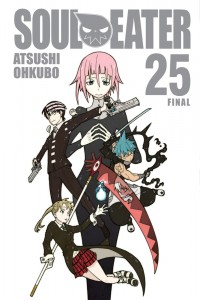
Sean Gaffney on vol. 25 of Soul Eater (A Case Suitable for Treatment)
Katherine Dacey on vol. 1 of Tokyo Ghoul (MangaBlog)
Matthew Warner on vol. 26 of Toriko (The Fandom Post)
Helen on Yamada-Kun and the Seven Witches (Organization Anti-Social Geniuses)

Filed Under: MANGABLOG

Soul Eater, Vol. 25

March 31, 2015 by Sean Gaffney

By Atsushi Ohkubo. Released in Japan by Square Enix, serialized in the magazine Shonen Gangan. Released in North America by Yen Press.

And so here we are at the end of another long-running shonen series. And it’s a good, solid ending, wrapping most plotlines up neatly, giving readers a big battle scene with lots of awesome moves and attacks, and resolving Crona as much as Crona was ever going to get resolved. The cover, as you can see, has Crona looming over our protagonists, and that seems appropriate, as in the end the fight is not so much to defeat Asura as it is to get a chance to try to talk Crona down one last time. And, of course, it would not be long-running shonen without the death of one of the main characters, which is done in such a way that even Excalibur is briefly not annoying. (It’s only briefly though.)

souleater25

It’s also interesting to see the attention paid to Soul and his growth. Soul’s struggles as a weapon have always been closely tied to Soul’s struggles as a musician, and he clearly has a life-or-death performance here. That fact that his music works most effectively when he accepts the madness that roils within himself, and the black blood within, is actually quite well done, even if it makes me wonder if Ohkubo was trying to say something about jazz artists and recreational drugs. But that’s probably just me. More to the point, he and Maka now trust each other completely, which after everything they’ve been through, is a relief. I liked his support when Maka is trying to convince Crona – he says “we believed in what Maka believed in”.

There’s a lot left open after this ending. Kid’s now the new Shinigami, and has already shown that his OCD is not going to magically go away anytime soon. Crona may be rescued someday, but today is not that day, and given all the crimes committed by Crona, it seems appropriate to end with moon sealage. (I have been endeavoring not to gender Crona through these reviews – unlike, say, Hange in Attack on Titan, where an author’s casual joking has spiraled completely out of control, I do believe Crona is quite deliberately not shown to be male or female, and that it works with their character.) As for romance, it was always on the back burner, and remains so – the only couples at the end are Kim and Ox, who get a dance, and Stein and Marie, who are creating new life. You could argue other things might happen in the future (I was rather startled by Maka’s response to Blair’s comment), but for now, things are up in the air.

This wasn’t a perfect ending – the boob jokes at the end fell totally flat with me, even if they do try to justify it in plot as Crona’s subconscious desires, and the “Noah-samas” were just as bad. But it made me happy overall. Eruka Frog was a character I always felt sorry for, so it was nice to see her pardoned and at peace. Rachel had been dropped from the manga the moment she was unpossessed, so it was fantastic to see her with her parents and showing she wasn’t completely broken by what happened to her. And it ends with a party, with everyone singing and dancing in the best One Piece tradition. Well, that and a shot of the city, with its bizarre sun and moon still hovering in the sky. Soul Eater’s world is still strange as hell, and it’s the world that is the main reason I recommend reading every volume of this series.

Filed Under: REVIEWS

Bookshelf Briefs 3/30/15

March 30, 2015 by Sean Gaffney and Michelle Smith Leave a Comment

This week, Sean and Michelle look at recent releases from Viz Media, Yen Press, and Kodansha Comics.

blackrosealice3Black Rose Alice, Vol. 3 | By Setona Mizushiro | Viz Media – Perhaps the most fitting adjective to describe this third volume of Black Rose Alice would be “immersive.” One of Alice’s four potential propagation partners doesn’t have long to live, and so urges Alice to choose him without actually telling her the truth, lest she pick him out of mere sympathy. In the end, this leads to her seeing a side of closed-off Dimitri that she hasn’t seen before. The experience of reading this series is a special one, and I must conclude this is actually partly due to Mizushiro’s art—it seems to me she uses more establishing “shots” and detailed interior backgrounds than other shojo manga, which gives one a palpable sense of being in this house with these people. She gets an A+ in Atmosphere, for sure. Even if you think you’re weary of vampires, you really owe it to yourself to check this one out. – Michelle Smith

yukichan7The Disappearance of Nagato Yuki-chan, Vol. 7 | By Puyo and Nagaru Tanigawa | Yen Press – It’s hard sometimes to review these slice-of-life series, even if they are spinoffs, as there really isn’t much to say beyond ‘it’s adorable’. Much of the volume is devoted to Yuki going over to Kyon’s house and playing games with him and his sister, and it’s adorable. The two of them are getting closer and closer to admitting their feelings for each other, leading up to an absolutely adorable cliffhanger. Even stressed-out Ryouko beating Haruhi up is adorable in its own way. I’m not sure how much longer this series is going to go on – I had thought 8 was the finale, but apparently not – but no matter how long it goes on, I’m fairly certain ‘adorable’ will be the watchword. – Sean Gaffney

vampire2He’s My Only Vampire, Vol. 2 | By Aya Shouoto | Yen Press – Both of Shouoto’s current NA series balance out supernatural action with some very amusing comedy, and nothing quite defines that like the start of this volume, which defuses the cliffhanger from the first in the most amusing way possible. Then we’re back to school, showing off where the plot is going from here: our three leads form a club devoted to ‘curious events’, i.e. events the mysterious Student Council President does not want to get directly involved in. There’s also, fair warning, an attempted rape in here as well, something I wish manga in general would drop but it never does. Despite that, this is another very good volume, and I do prefer this series to Kiss of the Rose Princess. – Sean Gaffney

loveatfourteen2Love At Fourteen Vol. 2 | By Fuka Mizutani | Yen Press – See my Nagato Yuki review for discussing adorable slice-of-life series, and almost everything from it applies here as well. The two leads are just too cute. As for the rest of the cast, we meet a shy girl here with a massive crush on one of our heroes, but the surprise is which one. She also is a budding writer, who narrates her own life in the third person, which is both cute and also a clever way of doing a narrative voice. Meanwhile, Hinohara-sensei is still enjoying teasing Nagai as well as trying to acclimate him, but I will warn you, it does look like we might be edging towards a teacher/student romance here, something which I know bothers folks. Despite that, this volume is still highly recommended to anyone who loves relaxed, cute love stories. – Sean Gaffney

Sankarea11Sankarea, Vol. 11 | By Mitsuru Hattori | Kodansha Comics – This series has tried its best to balance its comedy, romance, and horror aspects and I wondered how it would wrap everything up. It’s… OK, but it’s only a single rather than a home run. The return of Rea’s sociopath father bothered me, particularly since it appeared to be ignoring his past actions. Chihiro’s return was also a massive deus ex machina, though I suppose it’s better than simply ending it in a horribly depressing way. The best part of the volume is Rea and Chihiro’s date, with trips to the zoo, long walks to park benches, and confessions… leading to an amazingly horrible reveal. In the end, I think Sankarea did horror better than it did romantic comedy, leading to an imperfect end to a very good series. – Sean Gaffney

tigerbunny6Tiger & Bunny, Vol. 6 | Mizuki Sakakibara, Sunrise, Masafumi Nishida, and Masakazu Katsura | Viz Media – In a move reminiscent of the villains on CW’s Arrow, NEXT supremacist leader Jake Martinez has barged in on the mayor and declared his intention to take over. Naturally, our heroes rally to prevent this, infiltrating the ranks of Martinez’s faithful, a move culminating with Barnaby in a televised standoff against the man who killed his parents. Ordinarily, a three-month wait for the resolution to a cliffhanger would provoke at least a little whining, but luckily, Tiger & Bunny is not a manga that I think about in between volumes. Still, I do have fun while I’m reading it. I guess sometimes I just want something fast-paced and not too deep, and this story certainly fits the bill! I’ll keep following it, though alas not fervently. – Michelle Smith

Filed Under: Bookshelf Briefs

Pick of the Week: Yoshinaga & More

March 30, 2015 by Anna N, Michelle Smith, MJ, Ash Brown and Sean Gaffney 1 Comment

potwANNA: This week has the ending of a long-running series with Blade of the Immortal and a couple debut volumes. What looks good to you this first week of April? While there is plenty of manga coming out this week, the main volume that has my attention is What Did You Eat Yesterday? Volume 7.

MICHELLE: Yep, same here. As much as I admire Blade of the Immortal, my heart just belongs to Yoshinaga. I canna help it!

MJ: Same. Yoshinaga + food + relationships = the key to MJ’s heart. Forever. What Did You Eat Yesterday? can be my only choice this week.

ASH: I guess it’s up to me to make Blade of the Immortal an official pick! I’m always up for another course of What Did You Eat Yesterday?, but Blade of the Immortal holds a very special place in my heart as one of the first manga that I ever read. I’m looking forward to its conclusion.

SEAN: And as I hinted in Manga the Week of, my pick is the new Kodansha series Yamada-kun and the Seven Witches. If nothing else, I’m a sucker for delinquent stories.

What looks good to you this week?

Filed Under: PICK OF THE WEEK

Random Musings: Kôsen’s Lêttera at Sparkler Monthly

March 30, 2015 by Ash Brown

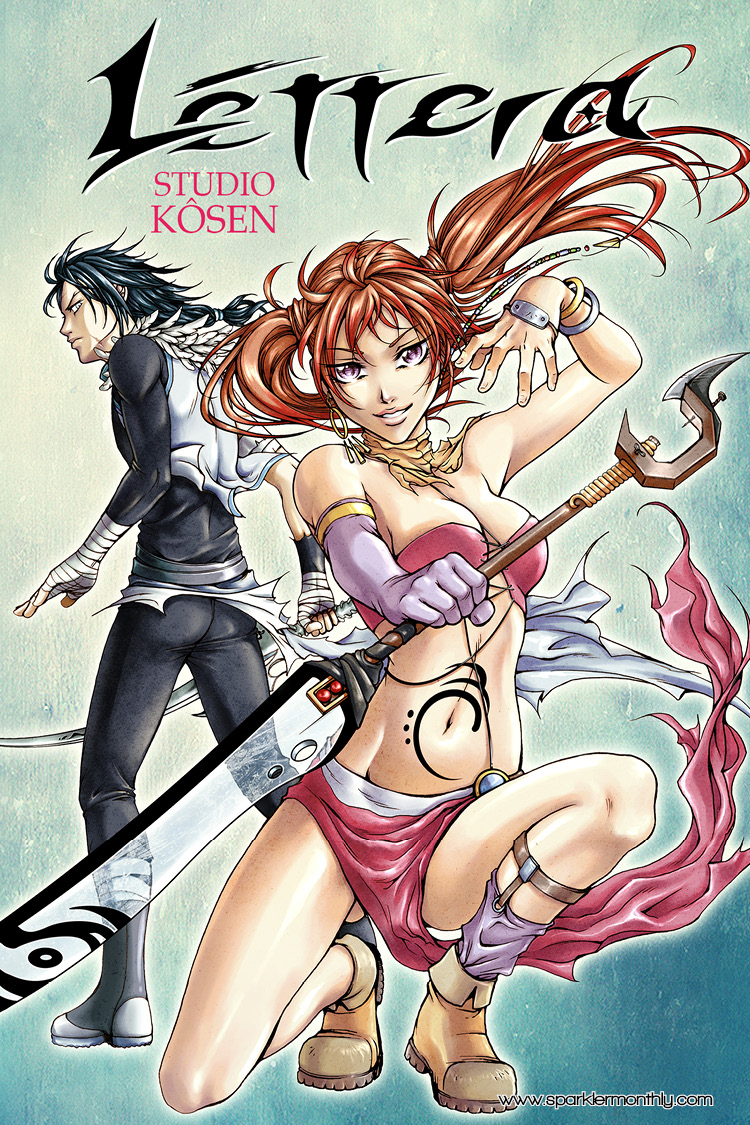
Lêttera, Volume 1Studio Kôsen, also known simply as Kôsen, is a creative team made up of two Spanish artists: Aurora García Tejado and Diana Fernández Dévora. In Spain, they have been working together creating comics and drawing illustrations since 1998. Beginning in 2004, they started releasing translations of their work in English in the United States, but their comics have been released in other countries as well, including Germany, Poland, Italy, and Argentina.

I was first introduced to Kôsen through their comic Saihôshi: The Guardian, the English-translation of which was initially released by Yaoi Press in 2006. An amusing fantasy with magic and exciting sword fights to go along with its dramatic romance, Saihôshi is representative of what I’ve come to expect from and love most about Kôsen’s work: beautifully drawn, highly entertaining, sexy tales of adventure with a strong sense of humor.

One of Kôsen’s most recent efforts is the ongoing, original English-language comic Windrose, currently being serialized in the online multi-media magazine Sparkler Monthly. It’s a delightful series about a young Spanish lady named Danielle in the 17th century who, when her father goes missing, sets out to find him. In the process she becomes involved with a pair of travelers, Angeline and Leon, who have their own reasons for wanting to help Danielle.

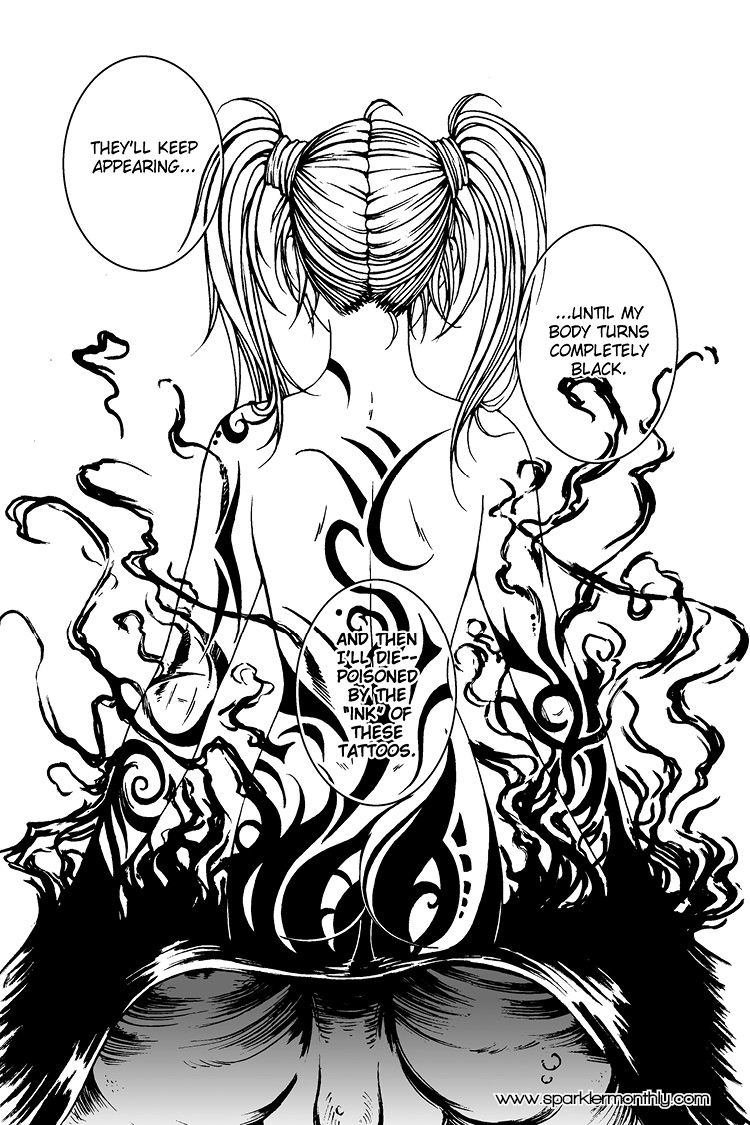
Lêttera, Volume 1, page 26And now there will be even more of Kôsen’s work at Sparkler Monthly! I am pleased to have the privilege to announce that the site will also be hosting Kôsen’s Lêttera, the comic that the duo was working on immediately before Windrose. The three-volume series was released in Spain between 2010 and 2014, but this will be the first time that Lêttera will be made available in its entirety in English.

Garnet Rune is a young, impetuous sorcerer whose tendency to abuse her magic for her own amusement and gain has gotten her into a bit of trouble—she’s been cursed so that every time she casts a spell, a poisoned mark appears on her body, slowly killing her. This forces Garnet to become more mindful of her actions, but it hasn’t really improved her attitude much. Though things don’t always go according to plan, she’s determined to lift the curse by any means necessary.

Lêttera debuts on Sparkler Monthly today with the release of the complete first chapter. The comic will continue to update on Mondays, Wednesdays, and Fridays—six pages a week—until the entire series has been released. Lêttera will be free to read online, but in the near future the ebook edition will be available for purchase. And, if we’re lucky, there may one day be a print edition of Lêttera in English as well.

Personally, I’m very excited to see more of Kôsen’s work translated, and I’m very happy to see Sparkler Monthly involved in making that happen. I was already a huge fan of Sparkler Monthly, but I’m thrilled with the magazine’s recent expansions to include even more comics. With magic, adventure, and a healthy dose of comedy, Lêttera should be a tremendous amount  of fun and a great addition to the Sparkler Monthly lineup.

Filed Under: FEATURES Tagged With: Chromatic Press, comics, Kôsen, Lêttera

My Week in Manga: March 23-March 29, 2015

March 30, 2015 by Ash Brown

My News and Reviews

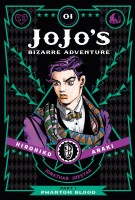
Well, it wasn’t really intentional, but last week at Experiments in Manga was apparently Viz Media week. Both of the in-depth manga reviews posted as well as the most recent manga giveaway feature Viz Media titles. The winner of this month’s giveaway will be announced on Wednesday, so there is still time to enter for a chance to receive Chika Shiomi’s Yukarism, Volume 1. The first review posted last week was of JoJo’s Bizarre Adventure, Part 1: Phantom Blood, Volume 1, the very beginning of Hirohiko Araki’s long-running, outlandish, supernatural epic. It can be pretty brutal and the manga certainly won’t be to everyone’s taste, but I’m very happy to finally see it being released in English. Over the weekend I posted my review of Aya Kanno’s Requiem of the Rose King, Volume 1, a moody historical fantasy inspired by William Shakespeare’s Henry VI and Richard III. The debut of this series was one of the manga I was most looking forward to this year. I’m very happy to say that I loved it.

And speaking of Aya Kanno, it was recently announced that she will be one of the featured guests at this year’s Toronto Comic Arts Festival! (TCAF is currently the only large comics event that I attend.) Gengoroh Tagame, who was a featured guest in 2013, will be returning to TCAF this year as well. Ken Niimura (whose collection of short manga Henshin I thoroughly enjoyed and reviewed back in February) will also be an exhibitor. And since I mentioned Niimura, I would also like to point out Organization Anti-Social Geniuses’ interview with him from last week. Completely unrelated to TCAF, Seven Seas made a new license announcement—the first volume of Arata Yamaji’s manga series A Certain Scientific Accelerator is currently scheduled for release in October.

Quick Takes

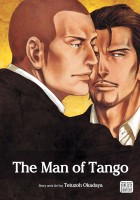
The Man of TangoThe Man of Tango by Tetuzoh Okadaya. Originally licensed but never actually published by Aurora’s Deux Press, I was very happy when Sublime Manga picked up Okadaya’s boys’ love manga The Man of Tango. The English-language edition of The Man of Tango includes the story’s debut one-shot as well as previously unpublished material, making it the most complete version of the manga currently available. Though technically a boys’ love manga, with its burly character designs and emphasis on physicality, the tone of The Man of Tango is fairly masculine and the volume feels more like a gay manga. (Interestingly enough, Okadaya apparently didn’t even know what BL was before being invited to create the story.) As can be safely assumed from the title alone, tango plays a very prominent role in The Man of Tango. Dance is portrayed as a means of passionate expression and communication. Angie is a skilled dancer who teaches Argentine tango in Japan. Although he has been in many relationships, it isn’t until he meets Hiro, who exhibits a natural talent for tango, that he has completely fallen for someone.

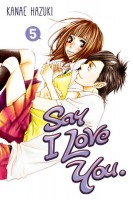
Say I Love You, Volume 5Say I Love You, Volumes 5-6 by Kanae Hazuki. I become more and more impressed with Say I Love You the more I read of the series. Hazuki has captured the turmoil and insecurities of adolescence incredibly well. Sometimes the characters do seem a little wise or mature for their age, but generally the series remains well within the realm of believability. At the very least, the constantly shifting and messy interpersonal relationships of the series feel very realistic. Say I Love You excels at character growth and development. The recent introduction of new characters have complicated matters greatly for Mei and Yamato. Kai has started to develop feelings for Mei and he tends to be honest to a fault, which results in a significant amount of drama and strife as Yamato struggles with how to deal with his jealously. Another source of discord is Megumi. Her advances were rejected by Yamato and so she is doing everything that she can to disrupt Mei’s friendships and make her miserable. Mei, who is still learning to have confidence in herself and in her relationships with other people, is particularly susceptible to this sort of attack.

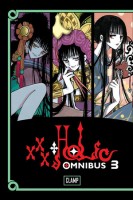
xxxHolic, Omnibus 3xxxHolic, Omnibuses 3-4 (equivalent to Volumes 7-12) by CLAMP. I only read the first few volumes of xxxHolic when it was initially being published in English by Del Rey Manga, so the material included in these omnibuses is completely new to me. While Watanuki still tends to be extreme in his reactions—quickly moving between utter joy and absolute despair—for the most part the tone of xxxHolic has started to even out and the balance between the series’ humor and the horror is better. There continue to be comedic elements, but the manga’s more serious nature has come to the forefront. Though frequently it’s deliberately cryptic, at times the manga can actually be fairly thought-provoking. xxxHolic has turned out to be far less episodic than I thought it was going to be. Some of the chapters don’t have a dramatic or direct impact on the story, but an overarching plot has developed. The series also ties in with Tsubasa: Reservoir Chronicle, but the connection between the two manga occasionally seems a little forced. I find that I enjoy xxxHolic more when it’s completely free to be its own work.

Filed Under: FEATURES, My Week in Manga Tagged With: clamp, Kanae Hazuki, manga, Say I Love You, Tetuzoh Okadaya, xxxholic

Requiem of the Rose King, Volume 1

March 29, 2015 by Ash Brown

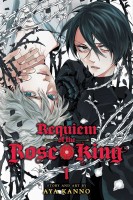
Requiem of the Rose King, Volume 1Creator: Aya Kanno
U.S. publisher: Viz Media
ISBN: 9781421567785
Released: March 2015
Original release: 2014

The English-language release of Aya Kanno’s Requiem of the Rose King was one of the manga that I was most looking forward to in 2015. Several of Kanno’s series have previously been translated into English—Soul Rescue, Blank Slate, and Otomen—all of which are quite different from one another, and Requiem of the Rose King is different still. I tend to enjoy Kanno’s work, but I was particularly interested in Requiem of the Rose King because the series is based on William Shakespeare’s Henry VI and Richard III, the first tetralogy of a series of plays that dramatize the Wars of the Roses, a dynastic conflict over the English crown in the fifteenth-century. I adore Shakespeare (I actually used to perform monologues competitively as part of my high school’s speech and drama team back in the day) and so was excited to learn about Kanno’s adaptation and thrilled when Viz Media licensed it. Requiem of the Rose King, Volume 1 was first released in Japan in 2014 while Viz’s English-language edition was published in 2015.

Young Richard is the third son of the Duke of York, a man who many believe to be the rightful successor to England’s throne. The current king, Henry VI, inherited rulership from his father as a child, but the Lancasters are accused of usurping the crown when their house executed King Richard II for treason. Richard desires nothing more than to see his father crowned king and as his son to prove himself worthy of his noble lineage. But Richard’s fate is a troubled one. His body, not fully male, is considered to be deformed and weak, a sign of demonic influence. He is plagued by nightmares, visions, and seemingly prophetic dreams. Richard is adored by his father and loved by his older brothers, but his mother despises him, believing his cursed existence to be a harbinger of evil and death and ashamed of her role in bringing him into the world. Whether or not it is because of Richard’s presence, that world is about to descend into chaos and civil war as the Yorks and the Lancasters vie for the crown.

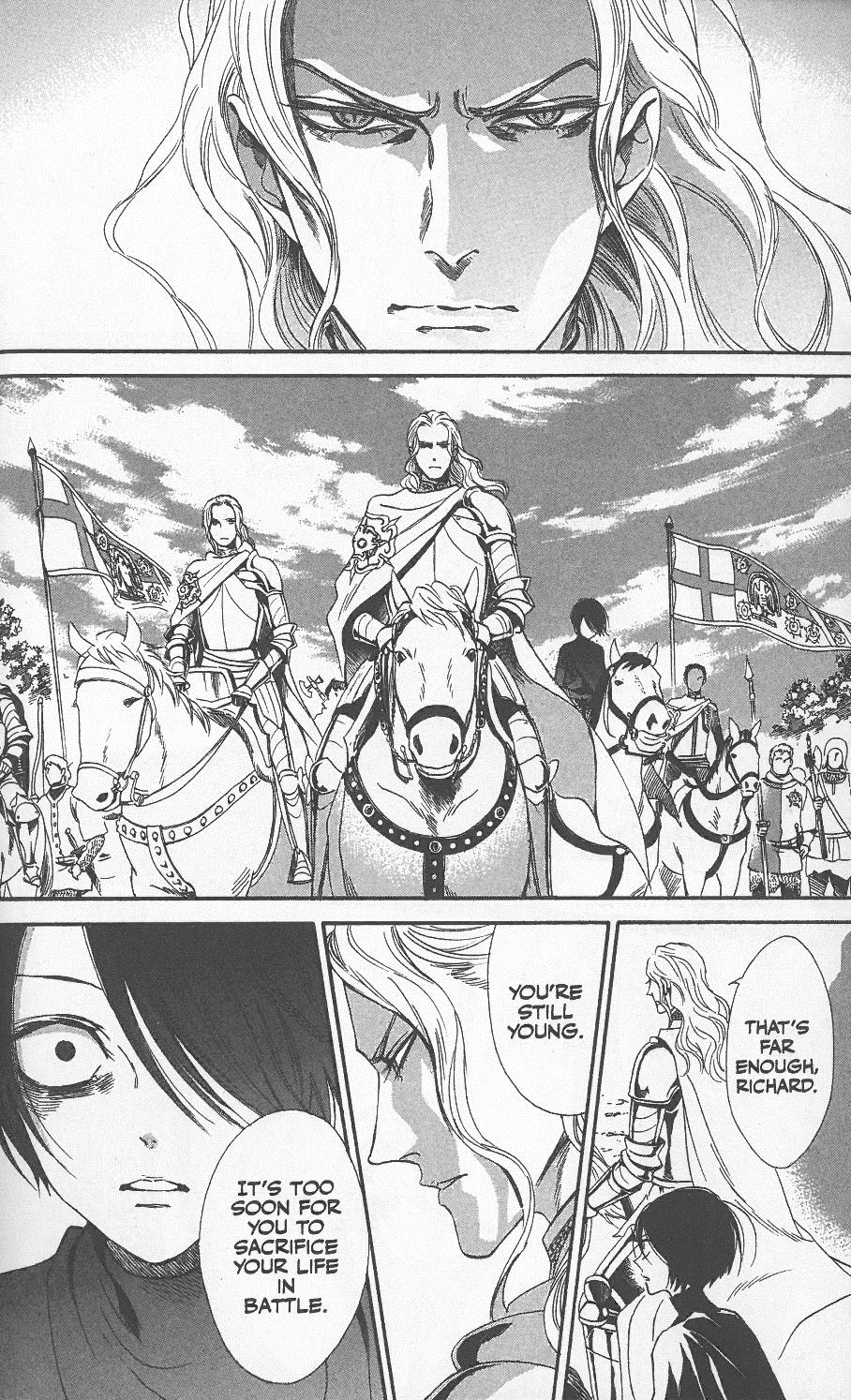
Requiem of the Rose King, Volume 1, page 58Requiem of the Rose King is not a strict adaptation of Shakespeare’s plays. Instead, Kanno uses them as a source of inspiration, remixing, as she describes it, the characters, dialogue, and settings of Shakespeare’s originals to create a distinct work of her own. The manga’s English translation is excellent. With their refined formality and elegance, the patterns of speech, dialogues, and monologues are reminiscent of Shakespeare without necessarily quoting directly from his plays. A reader does not at all need to be familiar with Henry VI or Richard III to enjoy Requiem of the Rose King. One of the most striking differences between Requiem of the Rose King and Shakespeare’s dramas is the portrayal of Richard. At this point in the series, Kanno’s Richard is a much more sympathetic character than Shakespeare’s ever was. However, there is still a tense and ominous atmosphere that surrounds him in Requiem of the Rose King. It is very clear that the first volume of the manga is a prelude to even grater tragedies to come.

There is always a danger of disappointment when anticipating a manga to such a great extent, but I can honestly say that I loved the first volume of Requiem of the Rose King. It’s theatric and dramatic, with appealing artwork and interesting interpretations of historical figures. Because Requiem of the Rose King is based on plays that were already dramatizations of actual persons and events, the series isn’t rigorous in its historical accuracy. However, I find Kanno’s version to be both fascinating and immensely engaging. The manga is a bit fragmented in its storytelling, quickly moving from one scene to the next and to from time to time overlapping dreams and reality, but I feel this effectively reinforces the turmoil of the era as well as the unrest experienced by the individual characters. Requiem of the Rose King is a beautifully dark and compelling historical fantasy. I’m very much looking forward to reading the second volume and seeing how the rivalry between the Lancasters and the Yorks continues to play out.

Filed Under: REVIEWS Tagged With: Aya Kanno, manga, requiem of the rose king, viz media

Sword Art Online: Progressive, Vol. 1

March 29, 2015 by Sean Gaffney

By Reki Kawahara and abec. Released in Japan by ASCII Mediaworks. Released in North America by Yen On.

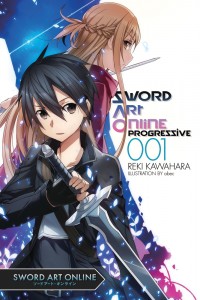
I’ve already discussed some of the ideas behind this concept in my review of the first manga, so I’ll try to skim over that and discuss what I enjoyed about SAO:P as a novel. Again, I don’t think it’s a sort of ‘reboot’ where you can read it in place of the original – I think knowing the characters already adds to the depth. But the main reason to read this is to see how Kawahara develops Aincrad, a world he introduced and essentially abandoned in the first book, sequels and side stories aside. And we also get the addition of Asuna’s POV narration, though sadly only for part of the first arc, after which it’s back to all Kirito all the time.

progressive1

Despite this, Asuna benefits enormously from the added face time. We see her at the start, having essentially decided that she wants to attempt to die with dignity, or at least on her own terms, something that Kirito is able to talk her out of. As the book goes on (and it is a BIG book – at 360 pages, almost as big as Fairy Dance put together) and Asuna starts to actually pay attention to the rules of the game and how to succeed, she becomes just as good if not better than Kirito – the skills she’s used her entire life as a girl who has to be in the top of the class for everything now benefit her in the RPG environment, and she also has more socialization than Kirito, meaning she can see people in a way that he’s unable to – this really becomes apparent in the second half of the book, where Kirito has pegged himself as an evil person, and Asuna has to side-eye him several times and go “really?”. Kirito, meanwhile sees potential in Asuna, and wants her to be the role model for the game world that he feels unworthy of being himself. They’re not a couple here, but you definitely see why they’re perfect for each other – they’re both quite similar, and their differences complement each other.

There’s no Klein, Lisbeth or Silica here, and Agil is mostly just support. The new addition is Argo, though she’ll be familiar to fans of the anime. She doesn’t vanish after the first few pages, however, and actually gets to show off some character depth and an awesome ‘to the rescue’ bit. In addition, the “Interlude” focusing on her and Kirito is hilarious, the second funniest part of the book. (The funniest part of the book involves Asuna’s inventory and Kirito’s complete ignorance of a maiden’s true heart, as well as measuring rage in gravitational units – I’ll leave it at that.)

The most interesting part of the book takes place right at the end, where a scheme is uncovered that led indirectly to the death of a player (or so they hear), and the concept of PKing comes up for the first time, this time as capital punishment. When does justice become vigilante justice? Kirito has definite views on the subject, but he’s already burned so many bridges (or at least he thinks he has) that he doesn’t want to make any rallying speeches. Luckily, things defuse before we can go there, but everyone is now thinking about it. We’re not at Laughing Coffin just yet, but the seed has been planted.

This book covers the first two floors of Aincrad, and the afterword says there should be 2 floors per novel, so things will likely continue to move quite slowly. This is the main goal of this series, of course, and I’m greatly enjoying what it’s trying to do. And of course there’s also an additional bonus – this is 8 years after the author first wrote SAO, and his prose has improved a great deal. Sword Art Online fans will love this. (Also, I appreciate that ‘Kuroko’ was likely impossible to translate without a footnote, but ‘Blackie’? Geh.)

Filed Under: REVIEWS

JoJo’s Bizarre Adventure, Part 1: Phantom Blood, Vol. 1

March 27, 2015 by Ash Brown

JoJo's Bizarre Adventure, Part 1: Phantom Blood, Volume 1Creator: Hirohiko Araki
U.S. publisher: Viz Media
ISBN: 9781421578798
Released: February 2015
Original release: 1987-1988

Hirohiko Araki’s multi-generational epic JoJo’s Bizarre Adventure is one of the longest-running manga series in Japan. Araki began the series in 1986 and the manga is still ongoing at well over a hundred volumes. Between 2005 and 2010, Viz Media published the sixteen volumes of the third story arc, Stardust Crusaders, arguably on of the most popular, or at least well-known, parts of the series. In 2012, NBM Publishing released Rohan at the Louvre, a largely standalone manga related to Diamond Is Unbreakable, the fourth arc of JoJo’s Bizarre Adventure. Finally, in 2015, the first part of the epic, Phantom Blood was released in print in English by Viz in a beautiful, deluxe hardcover edition. Phantom Blood was originally published in Japan in five volumes between 1987 and 1988, but was reissued in three volumes in 2002. That release is the basis for Viz’s English-language edition. JoJo’s Bizarre Adventure, Part 1: Phantom Blood, Volume 1 includes the entirety of the first volume and the majority of the second volume of the original Japanese release.

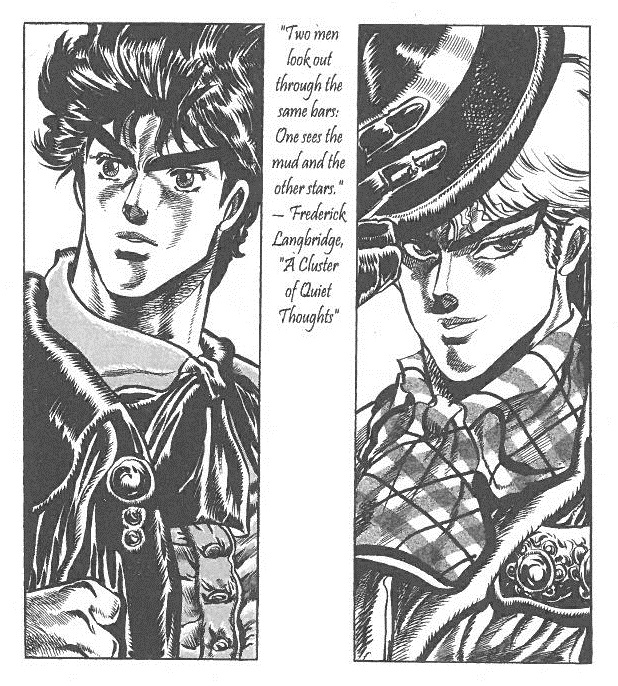
Jonathan Joestar, known as JoJo, is the son of a wealthy 19th-century English nobleman. He lost his mother while still an infant when the entire family was involved in a tragic carriage accident. JoJo survived, but his mother and the driver died and his father was severely injured. Years later, a young man named Dio Brando is sent to live with the Joestars. His father, who recently passed away, was the first person upon the scene of the carriage accident. Lord Joestar believes himself to be in Brando’s debt, under the mistaken impression that he saved his life, and so welcomes Dio with open arms. But Dio isn’t the upright character he often portrays himself to be. His intention is to destroy the Joestar family and take its wealth for his own using anyone and any means necessary, including a mysterious stone mask that grants vampiric powers. JoJo is the only person to suspect Dio isn’t all that he seems, and Dio is determined to make his life miserable. The two of them are raised as brothers, but despite JoJo’s initial attempts at friendship, there is no love lost between them.

Phantom Blood, Volume 1, page 80JoJo’s Bizarre Adventure is a very aptly named series. Phantom Blood is strange and outlandish, proceeding at a breakneck pace with a tremendous amount of drama and flying fists. It’s not subtle by any means, but the series’ uninhibited, over-the-top nature is part of Araki’s style. Heightened action and drama often take precedence over logical consistencies or realism in the manga’s artwork and story. Devastating injuries that would maim or kill most people are easily disregarded or overcome by the series’ heroes and villains, although the pain and suffering they incur certainly leave an impression. JoJo and Dio fight it out on several different occasions in the first volume of Phantom Blood, each battle becoming increasingly more violent and destructive, and they are pretty bloody to being with. And that’s not even taking into account the psychological damage that also results. JoJo’s Bizarre Adventure can be brutal.

Dio is one of the most fabulous antagonists that I’ve come across in manga. Extraordinarily charismatic and completely without scruples, he makes an extremely dangerous opponent. But Dio does have flaws, and he is a much more interesting character because of them. While he is often unable to control his intense anger and arrogance, even at a young age he is able to hold people under his thrall. JoJo on the other hand, especially in comparison to Dio, is astoundingly honest, naive, and kindhearted, a gentleman through and through in both mind and deed. He uses his strength of character and impressive physical fortitude to protect his family and other people he cares about. JoJo’s repeated confrontations with Dio force hem to become even stronger as the series progresses. He grows into a formidable opponent in his own right with a firm sense of and desire for justice. The stark contrast between the two young men and the extreme dynamics of their relationship are a large part of what makes Phantom Blood such an engaging manga.

Filed Under: REVIEWS Tagged With: Hirohiko Araki, JoJo's Bizarre Adventure, manga, Shonen Jump, viz media

  • « Go to Previous Page
  • Page 1
  • Interim pages omitted …
  • Page 552
  • Page 553
  • Page 554
  • Page 555
  • Page 556
  • Interim pages omitted …
  • Page 1049
  • Go to Next Page »
 | Log in
Copyright © 2010 Manga Bookshelf | Powered by WordPress & the Genesis Framework