• Skip to primary navigation
  • Skip to main content
  • Skip to primary sidebar
  • Home
  • About Us
    • Privacy Policy
    • Comment Policy
    • Disclosures & Disclaimers
  • Resources
    • Links, Essays & Articles
    • Fandomology!
    • CLAMP Directory
    • BlogRoll
  • Features & Columns
    • 3 Things Thursday
    • Adventures in the Key of Shoujo
    • Bit & Blips (game reviews)
    • BL BOOKRACK
    • Bookshelf Briefs
    • Bringing the Drama
    • Comic Conversion
    • Fanservice Friday
    • Going Digital
    • It Came From the Sinosphere
    • License This!
    • Magazine no Mori
    • My Week in Manga
    • OFF THE SHELF
    • Not By Manga Alone
    • PICK OF THE WEEK
    • Subtitles & Sensibility
    • Weekly Shonen Jump Recaps
  • Manga Moveable Feast
    • MMF Full Archive
    • Yun Kouga
    • CLAMP
    • Shojo Beat
    • Osamu Tezuka
    • Sailor Moon
    • Fruits Basket
    • Takehiko Inoue
    • Wild Adapter
    • One Piece
    • After School Nightmare
    • Karakuri Odette
    • Paradise Kiss
    • The Color Trilogy
    • To Terra…
    • Sexy Voice & Robo
  • Browse by Author
    • Sean Gaffney
    • Anna Neatrour
    • Michelle Smith
    • Katherine Dacey
    • MJ
    • Brigid Alverson
    • Travis Anderson
    • Phillip Anthony
    • Derek Bown
    • Jaci Dahlvang
    • Angela Eastman
    • Erica Friedman
    • Sara K.
    • Megan Purdy
    • Emily Snodgrass
    • Nancy Thistlethwaite
    • Eva Volin
    • David Welsh
  • MB Blogs
    • A Case Suitable For Treatment
    • Experiments in Manga
    • MangaBlog
    • The Manga Critic
    • Manga Report
    • Soliloquy in Blue
    • Manga Curmudgeon (archive)

Manga Bookshelf

Discussion, Resources, Roundtables, & Reviews

Blog

Kiss of the Rose Princess Vol. 4

May 19, 2015 by Anna N

Kiss of the Rose Princess Volume 4 by Aya Shouto

This series continues to be a ridiculous fantasy reverse harem manga, and I enjoyed this volume mostly because it features evil idol singers.

The first half of this story delved more into the very Cardcaptor Sakura-like plot where Anise and her Rose Knights have to capture Arcana cards in order to reinforce the seal to the underworld and defeat the demon lord, as you do. Of course, the only way to do this is to enter an all boys idol competition at school, where Anise ends up cross-dressing as a boy, because the arcana card is second prize and their group is in danger of winning it all if the cutest Rose Knight Seiran enters the contest. In keeping with the long-cherished shoujo tradition of male models or idols being secretly evil, the duo Rhodecia are revealed to be artificial Rose Knights created by Anise’s evil (but HOW evil?) father. The battle for school supremacy involves magic tricks, even more cross dressing, and a horribly awkward comedy act.

While all of this is going on, the Black Rose Mutsuki is struggling with some dark emotions stirred up by a mysterious outside influence. Anise makes a new acquaintance at school named Mikage who asks Anise to set up a date between her and Kaede, which Anise does because she is an idiot who is absolutely unaware that Kaede is in love with her. The date ends up taking place at a Gothic carnival, where Anise and the other Rose Knights tag along in order to sleuth out the location of another arcana card.

Kiss of the Rose Princess is a super silly shoujo manga, but it is really just the thing if you happen to be in the mood for light entertainment. The art continues to be attractive, with all the cool poses one would expect from a reverse harem manga. I’m intrigued by the hints of psychological struggle that Mutsuki is starting to exhibit, which does create a bit more interest than the more typical “gotta catch them all” arcana card collecting plot that is currently developing.
Filed Under: REVIEWS Tagged With: kiss of the rose princess, shojo beat, shoujo, viz media

My Week in Manga: May 11-May 17, 2015

May 18, 2015 by Ash Brown

My News and Reviews

Well, I was hoping to post the recap of my recent visit to the Toronto Comic Arts Festival last week, but I haven’t actually managed to finish writing it yet. (Things have been very busy at work and home, and the taiko performance season is ramping up, too.) So, the plan is to post it sometime later this week instead. Fortunately, I did have a couple of in-depth manga reviews in reserve for last week just in case the TCAF post fell through. The first review, Yuki Urushibara’s Mushishi, Volume 3, is a part of my ongoing monthly horror manga review project. Mushishi continues to be one of my favorite series. This particular volume is notable as it reveals some of Ginko’s backstory. Last week I also reviewed the most recent installment of Bruno Gmünder’s Gay Manga line, Mentaiko Itto’s Priapus, which is a highly entertaining collection of gay erotic manga. The volume marks Itto’s official English-language debut and contains some pretty ridiculous stories and characters.

While I haven’t managed to fully report back on TCAF 2015, other TCAF posts are already being made. The Comics Reporter is making an effort to create an index of stories and references, but I specifically wanted to point out the recordings of some of the panels at The Comics Beat. Other items of interest from elsewhere online include Ryan Holmberg’s most recent What Was Alternative Manga? column at The Comics Journal—Blood Plants: Mizuki Shigeru, Kitaro, and the Japanese Blood Industry—and the 2015 edition of Advice on Manga Translation from Manga Translators over at Organization Anti-Social Geniuses. As for licensing news, Kodansha Comics announced a deluxe omnibus edition of Fairy Tail and Dark Horse will be adding a few new titles: Kentaro Miura’s Giganto Maxia, Spike Chunsoft and Takashi Tsukimi’s Danganronpa, and Kengo Hanazawa’s I Am a Hero, in addition to rescuing CLAMP’s RG Veda.

Quick Takes

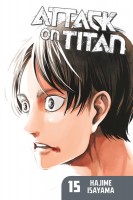
Attack on Titan, Volume 15Attack on Titan, Volume 15 by Hajime Isayama. Although it certainly has its moments and its own peculiar charm, Isayama’s artwork has never really been one of the strengths of Attack on Titan. There has certainly been improvement over the course of the series, and some of the individual panels and sequences are fantastic, but the artwork in this particular volume is terribly inconsistent and sometimes doesn’t even make sense to the point of distraction. But what Attack on Titan lacks in artistic finesse, the series makes up for with its large, engaging cast of characters and its constantly evolving story. Granted, with plot twist after plot twist after plot twist, the story is frequently on the verge of getting out of hand. Fortunately, Isayama reins it in a bit with this volume, allowing several of the story threads to play out and come to some sort of resolution before throwing something completely new into the mix, once again ending with a cliffhanger. Sometimes I miss the days when Attack on Titan was closer to being straight up horror, but all of the recent political intrigue can be interesting, too.

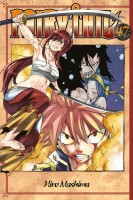
Fairy Tail, Volume 47Fairy Tail, Volumes 47-48 by Hiro Mashima. Thanks to Mashima’s afterword in the forty-seventh volume, I think I’ve finally figured out why Fairy Tail has been frustrating me recently—it’s his admitted lack of foreshadowing. The sudden plot developments that seem to come out of nowhere, although some of them are admittedly pretty great, make the series feel very disjointed and to some extent even directionless. Instead of inspiring feelings of excitement in how the story is progressing, Fairy Tail often inspires bafflement over its twists and revelations. In the same afterword Mashima indicates that he hopes to improve the foreshadowing, but he also says that he’ll be including plenty of red herrings as well, so I’m not sure how much that’s going to help. But even considering the unevenness of the series’ narrative, there’s still some good fun to be had in these two volumes. There are dragons, epic battles, and plenty of opportunities for the characters to demonstrate just how powerful they have become and just how badass they can be. Mashima is even able to work in some additional backstory for some of the characters amidst all the chaos.

Love at Fourteen, Volume 1Love at Fourteen, Volumes 1-2 by Fuka Mizutani. I was actually taken by surprise by how much I ended up enjoying the first two volumes of Love at Fourteen. I had heard good things about the series, but I didn’t really expect that I would be so taken with a series about the romantic turmoils of middle school students. Tanaka and Yoshikawa have been close friends for some time and that friendship has started to blossom into something greater. They are becoming more aware of themselves and of each other. But their school doesn’t allow dating at such a young age, so they do what they can to keep their relationship a secret. So far the series is a chaste, slowly developing romance, but realistically that’s how it should be. Love at Fourteen is charming and somewhat nostalgic without being syrupy sweet. There’s even some queer representation—a girl who has fallen in love with another girl—which I’m always happy to see. However, I will admit that I am a little concerned about how the relationship between the music teacher and one of the other students may develop since some of her behavior towards him has been has been borderline if not blatantly inappropriate.

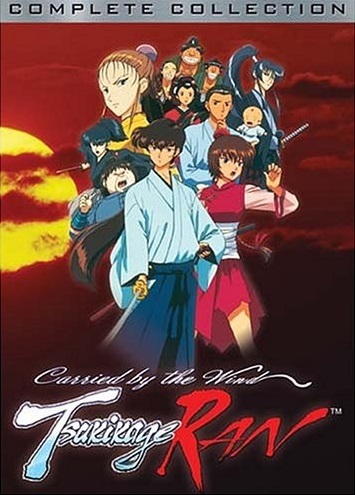
Carried by the Wind: Tsukikage RanCarried by the Wind: Tsukikage Ran directed by Akitaro Daichi. I am just now discovering Carried by the Wind; I completely missed when it was first released and happened across the thirteen-episode series more by accident than anything else. I’m glad that I did, though, because it is a tremendous amount of fun. Carried by the Wind is a comedic homage, without quite being a parody, of samurai films and television series. Tsukikage Ran, a skilled swordswoman, is a wandering ronin who would much rather drink a good bottle of sake and take a nap than get into a fight. Meow is a talented Chinese martial artist who means well but tends to get herself into trouble with her meddling. Although their attitudes and personalities are almost complete opposites—Ran is cool and collected while Meow is brash and prone to outbursts—the two end up becoming traveling companions of sorts. Each episode of Carried by the Wind stands completely on its own and generally follows a somewhat predictable story arc with Ran and Meow righting some sort of wrongdoing. But with its humor, marvelous lead characters, and great fight scenes, Carried by the Wind is a highly entertaining series.

Filed Under: FEATURES, My Week in Manga Tagged With: anime, attack on titan, Carried by the Wind, Fairy Tail, Fuka Mizutani, Hajime Isayama, Hiro Mashima, Love at Fourteen, manga

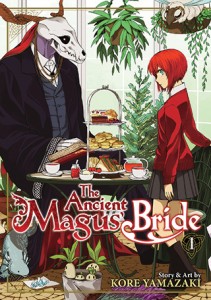
The Ancient Magus’ Bride, Vol. 1

May 17, 2015 by Sean Gaffney

By Kore Yamazaki. Released in Japan as “Mahou Tsukai no Yome” by Mag Garden, serialization ongoing in the magazine Monthly Comic Garden. Released in North America by Seven Seas.

There have been so many fantasy series released over the past few years that it can be a bit difficult to sort out the wheat from the chaff, and you find yourself looking for some plot point or character that makes the new license stand out from the pack of selkies, vampires, goblins and fairies that dot the manga landscape. I’m not sure that The Ancient Magus’ Bride possesses anything that makes it immediately leap out at a reader, expect perhaps for the skull of said magus himself. But what it does have it a strong plot, likeable characters, solid, pretty art and a desire to get the next volume in the series the moment you set the first one down. In other words, no flashy stuff here, just a very, very good book.

magus1

The premise is that a teenage girl who has spent most of her life shunned by friends because she can see “invisible things”, and whose mother has passed away, is kidnapped by a bunch of alchemists, who realize that she is a Sleigh Beggy, which is to say a giant magical sponge. Luckily for her, the one who purchases her is Elias, who may have a face like a cow skull and claim that he plans to make her his bride one day, but in practice seems happy to take her on as an apprentice, showing her the joys and dangers of a world where magic is slowly dying but still present, and allowing her to use her considerable power to try to help those in need.

As I said above, I’m not sure where the ‘bride’ thing is going, but given that Chise is 15, I hope it’s nowhere anytime soon. Chise herself is a fairly quiet, reserved type, as you’d expect from a child with her past – we see her pondering suicide in one flashback – but she is also very much attuned to the wonders of the world she is now part of. This can be dangerous – in the first chapters, she’s almost kidnapped again by “helpful” fairies who try to take her to their own land – but also tremendously heartwarming, as when she’s kidnapped AGAIN, but this time manages to help a dying dragon have a vivid and wonderful final dream before he passes on.

It’s a bit difficult to know what else to say in a review like this, as I don’t want to spoil too much, but I will say that I was smiling a great deal as I read it. There’s likeable supporting characters – Angelica in particular is awesome, and there are some interesting bad guys who pop up near the end as well. As I said before, the art is excellent, showing off the world it’s creating without being too complex or showy. And you really want to see Chise learning more and growing into her power fully, as well as realizing what life can hold for her and learning to love herself after spending so long on the edge of despair. There’s also some humor, mostly from Elias – or rather, against Elias, who gets beaten up for not remotely recognizing the trembling of a young maiden’s heart.

There’s nothing specifically outstanding about this title so far, but it doesn’t put too many feet wrong, and as such ends up adding up to something excellent. Mag Garden’s titles are somewhat genreless, but I think this is a title that could appeal to both men and women, even if it has a bit of a shoujo feel to it. Seek it out immediately.

Filed Under: REVIEWS

New Licenses, May Manga Roundup, Vinland Saga Love

May 16, 2015 by Brigid Alverson

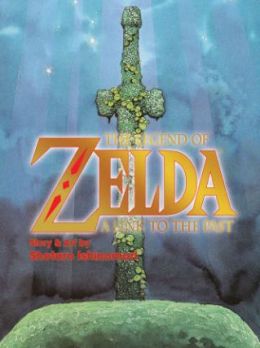
Legend of ZeldaLots of fantasy, gaming and supernatural series are launching in May, starting with Shotaro Ishinomori’s Legend of Zelda: A Link to the Past, which was originally drawn for Nintendo Power magazine back in the 1990s; I rounded up some of the most promising May releases at the Barnes & Noble Sci-Fi/Fantasy Blog.

Also at the B&N blog, I celebrate the return of Vinland Saga with a look at what sets it apart from your average Viking story.

This blog has been a bit quiet because I went to TCAF last week, where I interviewed both Aya Kanno, the creator of Otomen and Requiem of the Rose King, and Gurihiru, the two-woman team that illustrates Dark Horse’s Avatar: The Last Airbender graphic novels. I’ll have more to say about that later, but for now, it’s worth taking a few minutes to read Jocelyne Allen’s essay on Aya Kanno and the importance of Otomen. Jocelyne was Kanno’s translator at TCAF and she did a superb job; she’s also the translator of Requiem of the Rose King, but this post is about why Otomen matters. I have to admit I had only glanced at Otomen before TCAF, but I prepped for the interviews (one individual and one onstage) by reading not only Otomen and Requiem but also Kanno’s earlier series, Blank Slate. Taken together, they are a remarkable body of work. Kanno is versatile, working in a number of styles, but also very smart, and as Jocelyne points out, Otomen gets really interesting after the first few volumes.

Seven Seas has announced three new manga licenses: The high school zombie series Hour of the Zombie (a.k.a. Igai—The Play Dead/Alive); a fanservice-y shonen title, The Testament of Sister New Devil, which is based on a light novel series; and an action comedy, My Monster Secret.

Of the Red, the Light and the Ayakashi

Of the Red, the Light and the Ayakashi

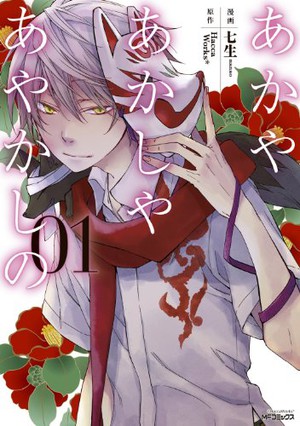
Yen Press announced two new licenses last week: School-Live! (Gakkō Gurashi!), by Sadoru Chiba and Norimitsu Kaihō (Nitroplus), and Of the Red, the Light and the Ayakashi (Aka ya Akashi ya Ayakashi no), by HaccaWorks* and Nanao

Meanwhile, Viz has some license rescues, all digital: Eureka Seven, formerly published by Bandai; two vintage Tokyopop titles, Glass Wings and Flower of Deep Sleep; and Cheeky Angel, a Viz title that’s out of print.

And Crunchyroll has the digital release of Inuyashiki, by Gantz creator Hiroya Oku. Kodansha comics will start releasing it in print in August.

Big convention news:

  • Naruto creator Masashi Kishimoto will be coming to New York Comic Con in October;
  • Yu-Gi-Oh! manga-ka Kazuki Takahashi will be at Comic-Con International in San Diego in July;
  • And Julietta Suzuki, creator of Kamisama Kiss and Karakuri Odette (remember that one?) will make her first U.S. appearance at Anime Expo, also in July.

The Manga Bookshelf team discuss their Pick of the Week and take a look at the coming week’s new releases.

Justin Stroman has another one of his excellent insider posts up at Organization Anti-Social Geniuses; this time he interviews four manga translators about their work. He also investigates why he can’t read mature manga in the Viz apps.

Also, Ryan Holmberg has a longish but fascinating piece at The Comics Journal about blood banks and selling blood and why that pops up so often in manga.

In preparation for Kishimoto’s visit, Vernieda Vergara answers all your questions about Naruto. Well, some of them, anyway.

Shonen Jump is bringing back Jump Start, running a couple of chapters of new manga from the Japanese magazine; Lori Henderson takes a look at two new series.

Least surprising news item of the week: Shotaro Ishinomori’s Legend of Zelda: A Link to the Past tops this week’s New York Times best-seller list.

Here’s a preview of Batman: The Jiro Kuwata Batmanga #46.

News from Japan

  • Kodansha has announced the winners of the 39th Kodansha Manga Awards. The Seven Deadly Sins and Yowamushi Pedal (recently licensed by Yen Press) tied for best shonen manga, Nigeru wa Haji da ga Yaku ni Tatsu got the nod for best shojo title, and Knights of Sidonia was named Best General Manga. Tochi Ueyama’s long-running series Cooking Papa got a special award as well.
  • The monthly magazine Zero-Sum Ward is shutting down, but several series, including Wild Adapter, are being farmed out to other publications or online.
  • Do you like Magi? So do lots of other people: A recent issue of Shonen Sunday reports that there are 18 million volumes in print.
  • Kadokawa is launching Comic Walker GLOBAL, a companion to its Comic Walker digital manga site that features non-Japanese titles (mostly translated into Japanese).
  • Shueisha will be selling a full-size reproduction of Masashi Kishimoto’s original art for the first chapter of Naruto.

Reviews

Kristin on The Angel of Elhamburg (Comic Attack)
John Rose on vol. 18 of Black Butler (The Fandom Post)
Ash Brown on Blade of the Immortal, vol. 31: Final Curtain (Experiments in Manga)
John Rose on vol. 5 of Blood Lad (The Fandom Post)
Day on vol. 2 of Citrus (Okazu)
AstroNerdBoy on vol. 1 of D-Frag (AstroNerdBoy’s Anime and Manga Blog)
Sean Gaffney on vol. 1 of Evergreen (A Case Suitable for Treatment)
John Rose on vol. 38 of Fairy Tail (The Fandom Post)
Kory Cerjak on vol. 43 of Fairy Tail (The Fandom Post)
Ken H on vols. 2 and 3 of The Heroic Legend of Arslan (Sequential Ink)
Matthew Alexander on vol. 3 of High School DxD (The Fandom Post)
AJ Adejare on vol. 1 of Kagerou Daze (The Fandom Post)
Erica Friedman on vol. 3 of Kampfer (Okazu)
Lori Henderson on vol. 1 of Let’s Dance a Waltz (Manga Xanadu)
Kate O’Neil on vol. 1 of Let’s Dance a Waltz (The Fandom Post)
Matthew Warner on vol. 13 of Library Wars (The Fandom Post)
Anna N on vols. 1-3 of Magi (Manga Report)
Dave Ferraro on vol. 1 of Maria the Virgin Witch (Comics and More)
Erica Friedman on Murcielago (Okazu)
Ash Brown on vol. 3 of Mushishi (Experiments in Manga)
John Rose on vol. 1 of No. 6 (The Fandom Post)
Laura on No. 6 (Heart of Manga)
Jessica Uelmen on Ouran High School Host Club (The Mary Sue)
Lori Henderson on vols. 12-20 of Pandora Hearts (Manga Xanadu)
Chris Beveridge on Panty and Stocking with Garterbelt (The Fandom Post)
Ash Brown on Priapus (Experiments in Manga)
Rebecca Henely on Puella Magi Oriko Magica: Extra Story and vol. 1 of Puella Magi Tart Magica (Women Write About Comics)
Nick Smith on Puella Magi Tart Magica, vol. 1: The Legend of Jeanne (ICv2)
Erica Friedman on Renai Manga (Okazu)
Sean Gaffney on vol. 1 of A Silent Voice (A Case Suitable for Treatment)
John Rose on vol. 3 of Soul Eater NOT! (The Fandom Post)
Erica Friedman on Starlight Melody (Okazu)
Kristin on vols. 2 and 3 of Terra Formars (Comic Attack)
Justin Stroman on vol. 1 of Tokyo Ghoul (Organization Anti-Social Geniuses)
Matthew Alexander on vol. 8 of Triage X (The Fandom Post)
Scott Cederlund on Uzumaki (Panel Patter)
Ken H on vol. 6 of Wolfsmund (Sequential Ink)
Kory Cerjak on vol. 1 of Yamada-Kun and the Seven Witches (The Fandom Post)
Sakura Eries on vol. 1 of Your Lie in April (The Fandom Post)

Filed Under: MANGABLOG

Priapus

May 15, 2015 by Ash Brown

PriapusCreator: Mentaiko Itto
Publisher: Bruno Gmünder
ISBN: 9783867877947
Released: April 2015

Mentaiko Itto’s Priapus is the fifth volume to be released by Bruno Gmünder as part of its relatively new Gay Manga line. Although the publisher is based in Germany, so far all of the manga have been translated into English. With the publication of Priapus in 2015, Itto joined Gengoroh Tagame and Takeshi Matsu as one of the few creators of gay erotic manga to have had an entire collection of their work released in English. However, unlike Tagame and Matsu, who both had examples of their work translated before being published by Bruno Gmünder, Priapus is Itto’s official English-language debut. Although the release of Priapus provided my first opportunity to read any of Itto’s manga, the creator does have a fairly strong presence online and so I was already somewhat familiar with his artwork and illustrations. But, I don’t actually know much about Itto beyond the fact that he seems to have garnered a global following; Bruno Gmünder describes him as “one of the most exciting young voices in gay manga today.”

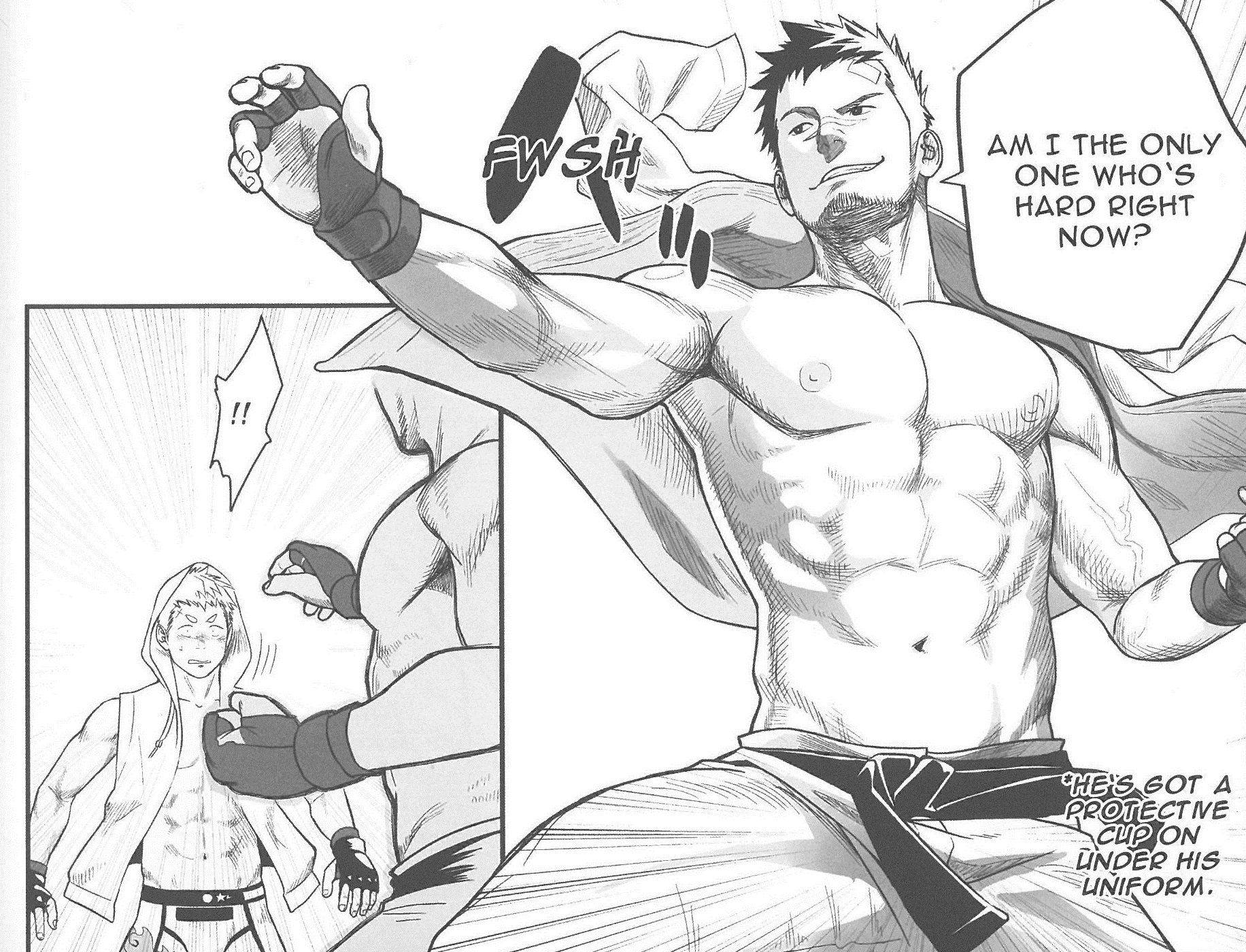
Priapus collects several of Itto’s short manga and doujinshi. The volume opens with the first three episodes of “Priapus,” an ongoing series of stories featuring a contemporary erotic reimagining of the titular Greek god of fertility. Zeus, fed up with humans and their pointless wars, has decided to eliminate the entire race. Believing more violence will do nothing to solve the problem or teach humanity a lesson, he orders Priapus to bring about their demise bloodlessly in a way that only he can—by turning all of the men gay in a great Homopocalypse. “Gachinko Battle” is a spinoff of sorts from “Priapus.” The Gachinko Budokai is an epic mixed martial arts tournament, the winner of which is granted a wish by the gods. However, the rules of the competitions change according to the gods’ whims, and with Priapus in charge that means the champion will be whoever makes his opponents orgasm first during a fight. The gods have their fun in “1/4” as well, shrinking a young man to less than a quarter of his size and cursing him to stay that way until he successfully has sex with someone he likes. Priapus concludes with the completely unrelated “1000 Meters Deep” which is about the intimate relationship between the two last remaining members of a swim club.

Priapus, page 106In general, there isn’t a lot of depth to the stories and characters of Priapus. The setups mostly serve as an excuse for a copious amount of sex, and there is plenty of vigorous, uninhibited sex included in the manga. But so much of Priapus is intentionally ridiculous that, for the most part, it’s not intended to be taken too seriously to begin with. Ultimately, the result is highly entertaining. At times the volume is even surprisingly cute and sweet. As expected, Priapus is a stunningly virile god who takes great delight in being given free rein to have as much sex as he wants with as many men as he would like using wide a variety of divine tools and techniques to achieve his goals. But it soon becomes clear that he actually and honestly cares for the men he seduces. He even takes the time to set them up with other guys when he needs to move on to his next target. The men in the other stories, too, make emotional and romantic connections with each other, not just physical ones. The erotic content of Priapus tends to be the focus of the manga, but there are some rather charming character moments as well.

Although in part some of the characters in Priapus are inspired by Greek mythology, Itto’s stories and interpretations are entirely his own. Humor pervades Priapus, everything from the basic premises of the stories, to the references to anime and adult videos, the breaking of the fourth wall, the interactions between the characters, and even the imaginative sex itself. (By necessity, the sex in “1/4” has to be particularly creative.) Initially it would seem that “1000 Meters Deep” would be the exception to this trend. Overall, the story has a much more melancholy and introspective feel to it. Even the artwork is more delicate, setting it further apart from the rest of the manga collected in Priapus. But it also ends with a bit of levity. Itto mentions in the afterword that he’s very happy that his work has now been published uncensored; his lean, trim, muscular, and well-built men are on full display in all of their frequently naked glory. The artwork in Priapus is attractive and the stories and characters are amusing and even heartwarming on occasion, making for a very appealing collection of erotic gay manga. I certainly wouldn’t mind seeing more of Itto’s work translated.

Filed Under: REVIEWS Tagged With: Bruno Gmünder, Gay Manga, manga, Mentaiko Itto

Manga the Week of 5/20

May 14, 2015 by Sean Gaffney, Ash Brown, Anna N, Michelle Smith and MJ 2 Comments

SEAN: Did you enjoy this week’s small week? Good. That isn’t next week.

Dance in the Vampire Bund’s Scarlet Order may have ended (somewhat surprisingly) in Japan, but Seven Seas still has more of it to bring you here, with Vol. 2 arriving next week.

Lucifer and the Biscuit Hammer’s third omnibus takes us over halfway through this highly underrated superheroes story.

ASH: I’ve largely been enjoying this rather peculiar series.

dreamfossil

SEAN: Satoshi Kon gets a collection of his short stories from Vertical Comics, called Dream Fossil.

ASH: This should be good. (And unlike Dark Horse’s Kon releases, aren’t unfinished works.)

ANNA: Good to know! I hadn’t realized that the Dark Horse releases were unfinished works.

SEAN: Dorohedoro has reached Volume 15, and things are continuing to get darker and darker in this already dark manga.

ASH: Always happy to see more Dorohedoro!

SEAN: In fact, it’s a depress-o-rama from Viz this week! We also get a 6th volume of Gangsta, a 4th Resident Evil, and a 6th volume of Terra Formars. If you like action and people dying and having bits of them cut off, you should be very happy indeed.

ASH: Oh, more Gangsta, too? Excellent.

ANNA: Gangsta is great. So stylish, so violent, so seinen.

SEAN: Well, I was wrong, it was a short wee—oh right, Yen Press. I knew I was missing 17 or so titles. First off, we have the third A Certain Magical Index light novel, and the one most everyone agrees is one of the best in the entire series.

The other novel is a debut. Kagerou Daze began life as a series of Vocaloid songs about a group of friends with powers, and has now become a fairly large franchise, of which the light novel is one part.

Back to manga, we have the third volume of Ani-Imo, which is shoujo in that odd way that only Aria titles can be shoujo.

A 6th Blood Lad omnibus. I’ve become really fond of this series, and always enjoy seeing more of it.

MICHELLE: I was pleasantly surprised that the sixth omnibus is out so soon, given that we’re essentially caught up to Japan.

SEAN: And a 10th volume of BTOOOM!, a series of which I am far less fond. Honestly, once you do the bomb bouncing off the breast thing, where else is there to take a story? It’s the pinnacle.

If you’d rather have a manga version of the Magical Index novels, then Yen Press is here to help you, as here’s the first manga volume.

emma1

One of the most exciting license rescues ever, Yen is releasing the seinen classic Emma in omnibus hardcover format. It will be read by everyone. (glare) I said, everyone.

ASH: I’m absolutely thrilled; I’ll actually be able to buy the series this time around!

MJ: Same here! This is honestly thrilling!

MICHELLE: I am clutching my CMX editions tightly!

ANNA: Nice. This is a series that deserves to be in print, and the deluxe Yen editions are always a treat. I might buy it again!

SEAN: Well, everyone except the Manga Bookshelf team, who may be distracted by the 18th Goong omnibus.

MJ: Also, THIS.

MICHELLE: Not only is it new Goong, it’s also the end, as this omnibus contains the final volumes (27-28 by the original Korean numbering) of the series!

ANNA: I need to get caught up on Goong, it is such a great soap opera.

SEAN: The Manga Bookshelf team is unlikely to be distracted at all by the 3rd Gou-dere Sora Nagihara volume.

If you’d rather have a manga version of the Is It Wrong To Try To Pick Up Girls In A Dungeon? novels, then Yen Press is here to help you, as here’s the first manga volume. (Have I typed this before?)

After seven volumes of No Matter How I Look At It, It’s You Guys’ Fault I’m Not Popular!, I’m beginning to think she needs to take some responsibility here.

ASH: Heh.

MICHELLE: Srsly.

SEAN: It has been a common complaint that Sword Art Online features Kirito, occasionally Asuna, and not much else. So those readers should enjoy the spinoff Girls’ Ops, which focuses on the rest of the female cast getting involved in new MMORPG adventures.

trinityseven

Another debut for the more action-oriented crowd, we have the first volume of fantasy series Trinity Seven, which is also a harem series if the cover art and blurb don’t deceive me. I admit I know little about it.

On the darker fantasy side, there’s a 3rd Ubel Blatt omnibus, helpfully called Vol. 2.

ASH: Very helpful.

SEAN: Umineko: When They Cry’s new omnibus, End of the Golden Witch, sees the series shaken up with a new detective, who arrives on the island. Will things continue to be horribly tragic as we continue the adventures of manga’s most toxic family? Even this level of reasoning is possible for Furudo Erika. (Please note: Furudo Erika, Frederica Bernkastel, and Furude Rika are totally different people. Honest.)

Lastly, we get a 9th omnibus of Until Death Do Us Part, another series I’ve fallen incredibly behind on.

Is this too much manga? Or just right?

Filed Under: FEATURES, manga the week of

A Silent Voice, Vol. 1

May 14, 2015 by Sean Gaffney

By Yoshitoki Oima. Released in Japan as “Koe no Katachi” by Kodansha, serialized in the magazine Weekly Shonen Magazine. Released in North America by Kodansha Comics.

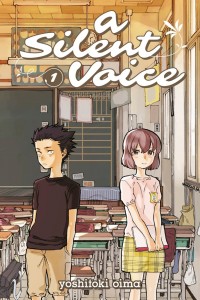
There have been many manga releases here in North America that deal with the subject of childhood bullying – it’s a theme in Japanese manga that is getting more and more of a workout lately, as the ability to simply blame the victim and look away gets harder to do. This doesn’t mean, however, that it’s always accepted or welcomed. A Silent Voice won an award for its original one-shot chapter, but took years to get released as a series – in fact, there were apparently lawsuits. This is likely due to the fact that it has not one but two things that there is a desire to gloss over and not bring out into the open – childhood bullying, and disabilities.

silentvoice1

The blurb on the back cover says the word heartwarming was made for a manga like this, and I can only imagine readers will finish the first volume and want to give the writer of that blurb a good swift kick, as this initial volume is all heartbreaking instead. You can see why this title was shied away from. It’s not shy about showing exactly how a culture of bullying works, and how quickly it can turn against anyone. It shows the apathy and outright cruelty of teachers, how parents can seethe with anger or merely stand there unable to do anything. And in the end our hero, who’s a childish brat who discovers that harassing a deaf girl is a good outlet for his anger and boredom, is driven to the point where at the end of this volume he’s looking to put all his affairs in order so that he can kill himself. This is a heavy book.

If there’s a fault in this initial volume, it’s that there’s really TOO many characters who we simply don’t like. Shoya’s boredom and desire for excitement (and lack of desire for learning) is understandable, but you desperately hope he will mature, and cringe as the book goes deeper and deeper into how he feels about Shoko’s mere presence. The children are quick to go along with what Shoya does, mostly as they find it incredibly annoying to have to deal with Shoko’s disability. And the kid’s teacher is loathsome, wanting nothing more than to shuffle these kids on and make sure they don’t do anything embarrassing, with a side dose of cruelty.

As for Shoko, she’s a bit of a cipher right now, aside from being shy, but there’s a bit of deliberateness in that. She is the outsider, the different one, the one who NEEDS special attention over the other kids. It’s notable that she’s deaf but doesn’t know sign language – a well-meaning but easily cowed teacher tries to get the kids to learn it, but that goes precisely nowhere. Shoko’s disability doesn’t automatically make her better, faster, or stronger like other cliched works – she’s an average kid, can’t sing because of her hearing… honestly, it’s seeing her insistent effort on trying to br friendly with everyone despite all the abuse that is the most heartwarming part of this series.

We end on a bit of a cliffhanger, and I suspect that this reunion will go poorly, but I really want to see more. Most of these characters are horrible, but the author does a great job of making you want to see them mature. And it’s also a good, non-shiny look at how disabled children might be treated in a society that believes the nail that sticks up must be hammered down. Definitely recommended.

Filed Under: REVIEWS

Mushishi, Vol. 3

May 13, 2015 by Ash Brown

Mushishi, Volume 3Creator: Yuki Urushibara
U.S. publisher: Del Rey
ISBN: 9780345496454
Released: February 2008
Original release: 2002
Awards: Japan Media Arts Award, Kodansha Manga Award

Mushishi, Volume 3 by Yuki Urushibara was originally published in Japan in 2002. The volume was initially released in English in print by Del Rey Manga in 2008. Although that particular edition is no longer available, Kodansha Comics did re-release Mushishi, Volume 3 digitally in 2014. I count myself lucky to own the entirety of Mushishi in print. I fell in love with the series after reading the first volume and so made a point to begin collecting it. Fortunately, Mushishi was being released in English around the same time I first started to really get into comics and manga and I didn’t have a difficult time finding the series. To this day, Mushishi remains one of my favorite manga. I like its quiet yet often creepy atmosphere and its folktale-like nature. I’m not the only one who appreciates Mushishi. The series was a recipient of a Kodansha Manga Award and has also been the basis for a live-action movie as well as multiple anime adaptations and other media.

Unseen to most people but found throughout nature are mushi—creatures that are still very close to the original form of life. They can be benign forces but often their presence is a source of trouble when it encroaches upon the human world. Illness and disease and even seemingly natural phenomena can all be attributed to mushi. Some people with the ability to see mushi make their living as mushishi by traveling across the country, studying the creatures, and trying to return balance where disturbances have occurred. But there are also those who can see mushi who are not mushishi. Frequently they are unaware of what the creatures truly are, and many times the people around them don’t believe them when they try to describe their experiences with mushi. This lack of understanding can cause significant strife, even within tightly knit communities. People who can see and are aware of mushi, whether they be mushishi or not, are treated differently, sometimes out of concern and sometimes out of fear.

Mushishi, Volume 3, page 202While the previous volume of Mushishi seemed to place a particular emphasis on mushishi, the fourth volume mostly features stories in which Ginko—a mushishi and the series’ protagonist—is dealing with incidents where people who can see mushi but who are not formally trained as mushishi are somehow involved. In “The Cry of Rust,” the unique quality of a young woman’s voice attracts mushi, bringing calamity to her village. “From the Ocean’s Edge” follows a man whose wife has been missing at sea for three years after they both saw peculiar creatures in the water. “The Heavy Seed” tells the story of a village that has strangely bountiful harvests during times of famine. Children fall deathly ill in “White Living in the Inkstone” when they accidentally release dormant mushi while playing in Doctor Adashino’s storehouse without permission. (Adashino is one of the very few recurring characters in Mushishi; his slightly antagonistic relationship with Ginko is absolutely delightful.)

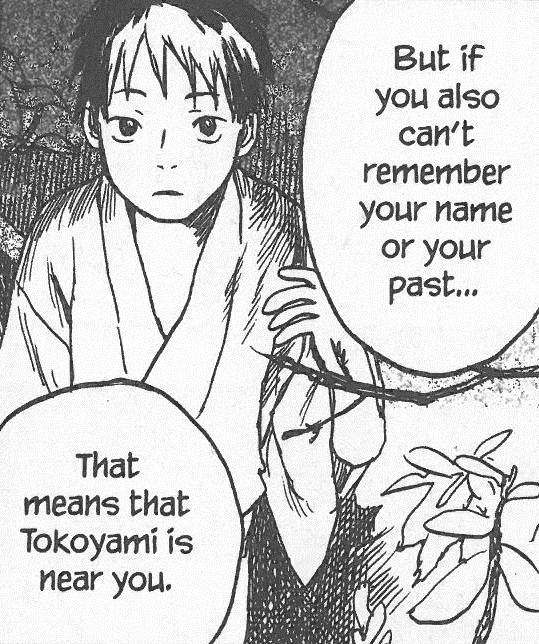
Although during serialization it followed “The Cry of Rust,” the final chapter collected in Mushishi, Volume 3 is “The Fish Gaze.” The episode is particularly notable because it reveals some of Ginko’s backstory. Even though it’s a past that he himself is unable to remember—a rare example of a time when the reader is more knowledgeable than he is—this specific part of Ginko’s life story plays a very important role in who he later becomes. Mushishi tends to be episodic, but elements of Ginko’s character and personality have been revealed throughout the series. However, “The Fish Gazee” is the first chapter to really delve into his history. Like many of the other stories in Mushishi, Ginko’s tale has elements of darkness and tragedy, but the emphasis placed on the ultimate perseverance of life in the face of death and sorrow remains. Mushishi frequently incorporates sadness, but the manga is not without hope; Urushibara seems to be able to navigate a fine balance between melancholy and wonder with ease.

Filed Under: REVIEWS Tagged With: del rey, Japan Media Arts Award, Kodansha Manga Award, manga, mushishi, Yuki Urushibara

Pick of the Week: Ancient Love

May 13, 2015 by Ash Brown, Michelle Smith, Anna N, Sean Gaffney and MJ Leave a Comment

potwASH: This may be one of the smallest shipping weeks for manga that we’ve seen this year, but there are still some interesting releases coming out. In particular, I’m curious about the debut of the award-winning series The Ancient Magus’ Bride which, if nothing else, has beautiful artwork.

MICHELLE: I suppose I’ll go for Love Stage! this week, as it’s been ages since I’ve read anything by Eiki Eiki and Taishi Zaou.

ANNA: There isn’t a ton to choose from, I will also pick The Ancient Magus’ Bride as the most interesting release this week.

SEAN: Yeah, of all the titles, Ancient Magus’ Bride is the one that leaps out at me.

MJ: I’m definitely interested in The Ancient Magus’ Bride, but for the sake of balance here, I’ll join Michelle in anticipation of Eiki Eiki and Taishi Zaou’s Love Stage!. I was a big fan of their collaboration Color when it came out here in 2009, so I’ll certainly give Love Stage! a try!

What looks good to you this week?

Filed Under: PICK OF THE WEEK

Evergreen, Vol. 1

May 12, 2015 by Sean Gaffney

By Yuyuko Takemiya and Akira Kasukabe. Released in Japan by ASCII Media Works, serialized in the magazine Dengeki Daioh. Released in North America by Seven Seas.

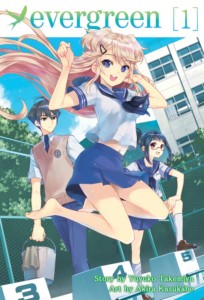
Sometimes a series has to work hard to get out from under the preconceptions it carries and also the tropes it seems inspired by. Evergreen is from the author of Toradora!, something I was rather surprised wasn’t mentioned at least on the back cover, and therefore already has some expectations since Toradora! is one of those rare harem series that actually is enjoyed by female readers. Unlike the author’s other series, this one is a manga original, though. It also has the extreme misfortune of coming out scant weeks after Kodansha’s shonen series Your Lie in April, which features a sullen teen who has given up on any hopes or dreams who is inspired by a gorgeous beauty who turns out to be rather eccentric. As it turns out, the series don’t really share much in common besides that, but there is a threat of “Manic Pixie Dream Girl” hanging over the whole thing.

evergreen1

Having gotten that out of the way, there’s a lot I enjoyed here. On-chan (if she gets a full name, I missed it) is really fun, carrying most of the comedy on her back, and having a nice love-hate relationship with Sora, who she will clearly end up with but for now is content to simply beat up. As for the two leads, the awkwardness both of them have interacting with each other is handled very well, and I like Hotaka’s imaginary “I am smooth and cool” fantasies that occasionally intrude before reality ensues. The awkwardness doesn’t just end with his relationship with Niki, though – his past guilt and physical condition have left him a bit broken, and I empathized with him a great deal when he visited his paternal grandmother, who is dying in the hospital.

I am interested to see if the plot goes in the direction that it’s hinting at, and how the manga will handle it. Hotaka’s heart condition seems to have a parallel with the sudden nosebleed that Niki got, and the visit to the grandmother reveals that there is another sibling who is supposed to be involved that we don’t know about. It’s not hard to put two and two together, but if I skipped every manga because of potential incest these days, I’d never read anything. I am pretty confident, having read Toradora!, which handles various serious plots like parental neglect and abandonment with a deft hand, that Evergreen is not likely to go down that road. And the art is quite pretty (fanservicey color page aside), making this a very smooth read. It’s only four volumes long, so I don’t think that any of the major plot bombs hinted at should drag on too long, and these are good kids, so I want to see them overcome their difficulties.

To sum up: Evergreen is not exceedingly original, and may rely a bit too much on some well-worn cliches, but its heart appears to be in the right place, and I want to see how it deals with the reveal I have a sneaking suspicion is coming soon.

Filed Under: REVIEWS

  • « Go to Previous Page
  • Page 1
  • Interim pages omitted …
  • Page 545
  • Page 546
  • Page 547
  • Page 548
  • Page 549
  • Interim pages omitted …
  • Page 1049
  • Go to Next Page »
 | Log in
Copyright © 2010 Manga Bookshelf | Powered by WordPress & the Genesis Framework