• Skip to primary navigation
  • Skip to main content
  • Skip to primary sidebar
  • Home
  • About Us
    • Privacy Policy
    • Comment Policy
    • Disclosures & Disclaimers
  • Resources
    • Links, Essays & Articles
    • Fandomology!
    • CLAMP Directory
    • BlogRoll
  • Features & Columns
    • 3 Things Thursday
    • Adventures in the Key of Shoujo
    • Bit & Blips (game reviews)
    • BL BOOKRACK
    • Bookshelf Briefs
    • Bringing the Drama
    • Comic Conversion
    • Fanservice Friday
    • Going Digital
    • It Came From the Sinosphere
    • License This!
    • Magazine no Mori
    • My Week in Manga
    • OFF THE SHELF
    • Not By Manga Alone
    • PICK OF THE WEEK
    • Subtitles & Sensibility
    • Weekly Shonen Jump Recaps
  • Manga Moveable Feast
    • MMF Full Archive
    • Yun Kouga
    • CLAMP
    • Shojo Beat
    • Osamu Tezuka
    • Sailor Moon
    • Fruits Basket
    • Takehiko Inoue
    • Wild Adapter
    • One Piece
    • After School Nightmare
    • Karakuri Odette
    • Paradise Kiss
    • The Color Trilogy
    • To Terra…
    • Sexy Voice & Robo
  • Browse by Author
    • Sean Gaffney
    • Anna Neatrour
    • Michelle Smith
    • Katherine Dacey
    • MJ
    • Brigid Alverson
    • Travis Anderson
    • Phillip Anthony
    • Derek Bown
    • Jaci Dahlvang
    • Angela Eastman
    • Erica Friedman
    • Sara K.
    • Megan Purdy
    • Emily Snodgrass
    • Nancy Thistlethwaite
    • Eva Volin
    • David Welsh
  • MB Blogs
    • A Case Suitable For Treatment
    • Experiments in Manga
    • MangaBlog
    • The Manga Critic
    • Manga Report
    • Soliloquy in Blue
    • Manga Curmudgeon (archive)

Manga Bookshelf

Discussion, Resources, Roundtables, & Reviews

Blog

Random Musings: Toronto Comic Arts Festival 2016

May 20, 2016 by Ash Brown

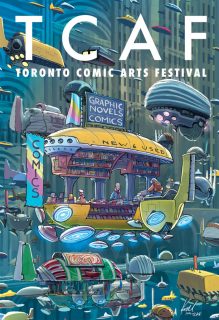
TCAF 2016 Poster - Kazu Kibuishi

©Kazu Kibuishi

As of 2016, I have now attended the Toronto Comic Arts Festival (TCAF) for four years running. TCAF is still the only large comics event that I make a point to attended, although I guess technically I went to an anime/manga/cosplay convention earlier this year since I and the rest of the taiko group I’m a part of were featured guest performers. Anyway, I digress. TCAF is an amazing event and I’m able to enjoy a fair amount of it even though my anxiety (social and otherwise) sometimes prevents me from doing everything that I’d really like to. Each year I attend seems to be a little easier for me, though it’s still certainly not easy. But, I do think TCAF is totally worth trying to push through my issues when I can, which probably says a fair amount about the event itself.

Like last year, TCAF 2016 turned into a family trip, which made me happy. The four of us arrived in Toronto late Thursday afternoon, settled into where we were staying, stretched our legs in a nearby park (which was much needed after spending hours cooped up in the car), and eventually found something to eat for dinner before turning in for the night. Originally, I was hoping and planning to go to the opening of Shintaro Kago’s solo exhibition at Narwhal, but for a variety of reasons I ended up deciding to chill with the family all night instead. Which was also good, since for all intents and purposes TCAF ends up being a vacation of sorts for us all.

Friday, too, was more of a family day, although I did meet up with Jocelyne Allen (who translates Japanese novels and manga, and who is one of the interpreters for TCAF) for coffee in the morning. We chatted about taiko, translation, TCAF, Toronto, Tokyo and all sorts of other things, which was highly enjoyable. It was nice being able to find some time to talk with her in person since we primarily only know each other online and she’s understandably very busy during TCAF. Most of the rest of the day was spent exploring Toronto with the family, including the Royal Ontario Museum which had a really interesting exhibit—A Third Gender: Beautiful Youths in Japanese Prints—about gender and sexuality in Edo-era Japan. Finally, that evening I made my way to the tail end of Sparkler Monthly‘s annual TCAF mixer. It was a fairly small group when I got there, but a good time was had by all, myself included.

Saturday marks the beginning of TCAF proper, although there are plenty of related events that occur both before and after TCAF weekend. As was the case for the previous couple of years, I started off the 2016 festival in the in the exhibitors’ area before most of the main programming began. I ended up spending my entire comics budget for the weekend before the first day was over, but I was pretty happy with my haul which included some pre-orders, a couple of Kickstarter pickups, a few things I knew beforehand that I wanted to buy, as well as several unplanned, spur-of-the-moment purchases.
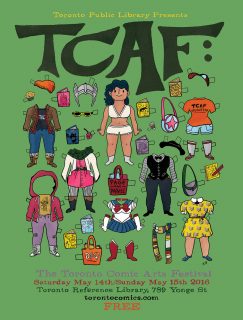
TCAF 2016 Poster - Kate Beaton

©Kate Beaton

This year I actually spent even more time on the exhibit floors buying comics, collecting sketches and signatures, and talking to creators than I have in the past. (A few highlights: I was particularly excited to meet Saicoink, whose comic Open Spaces and Closed Places I love, made a point to tell Kori Michele Handwerker how much Portals meant to me, and discovered some wonderful new-to-me creator’s like GQutie‘s Ronnie Ritchie.) That, combined with prioritizing the family more and considering the need for flexible schedules when dealing with a not-quite-two-year old, meant that I didn’t make it to as many panels this year. In some ways, TCAF 2016 for me felt more like TCAF-lite, but I still greatly enjoyed the festival and was thoroughly satisfied by all of the events, panels, and interviews that I was able to attend.

On Saturday, I ended up making it to four panels. The first was the Spotlight on Shintaro Kago, one of TCAF’s featured guests for 2016, who was interviewed by Youth in Decline’s Ryan Sands. Kago is particularly well-known for his horrific, erotic, and grotesque manga and illustrations. Many of Kago’s works are released ero-manga magazines. As he pointed out, his manga isn’t the type of work that would be published in Jump; there is a limited number of magazines (generally erotic or alternative) that would even consider releasing his work. But by submitting to ero-magazines, Kago is allowed a tremendous amount of editorial freedom. As long as the minimum erotic requirements are met, he is able to do almost anything that he wants to with his manga, including highly experimental techniques. An example of this is a work known in English as “Abstraction” which gained a fair amount of international attention when it was translated by a fan and posted online. When asked about his feelings regarding fan translations, Kago responded that in his case he was satisfied with his work becoming more readily available to a worldwide audience since the benefits he received from the original release (page rates, etc.) didn’t amount to much anyway. Another of Kago’s short manga, “Punctures,” was officially translated in English in the anthology Secret Comics Japan. Anecdotally, it was one of the few works by Kago that the editors felt would be safe enough to include and sell. At the beginning of his creative career, Kago actually wanted to be involved in making films. However, he realized that movies are very difficult to make alone, and since he didn’t have any friends to make movies with, he turned to manga as a way to express himself so that he wouldn’t need to rely on others.

After spending a bit more time wandering the exhibitor areas, I then made my way to the panel “Depictions of Sex in Comics” which was moderated by Rebecca Sullivan, a scholar specializing in sex and media as well as gender and cultural studies. The panel featured a variety of comics publishers and creators: Zan Christensen, Chip Zdarsky, Erika Moen, Cory Silverberg, C. Spike Trotman, and Shintaro Kago. Each of the panelists has their own approach to sex in regards to how it is related to and portrayed in their work, whether their focus is on sex education, erotica, some combination of the two, or something else entirely. One cultural difference that emerged during the conversation was that while erotic comics are currently seeing a resurgence in North America (Oni Press recently announced a new imprint devoted to sex positive comics, and there have been numerous, highly-successful crowd-funded projects for feminist and queer erotic comics in the last few years), the market for erotic manga in Japan has always been very strong. A very specific set of constraints exist in Japan in regards to the depiction of sex in media, what can and cannot be shown and so on, but the country probably has the most well-established and easily navigable erotic comics scene in the world. Many Japanese creators (including Kago himself) got their start working in erotic media before moving on to other and more mainstream projects. Interestingly, Kago also mentioned that BL isn’t necessarily always recognized as being “erotic” (possibly because its target demographic is women) and so in some ways the genre can actually get away with more than hentai aimed at heterosexual men which, in his experience, seems to come under public scrutiny and fire more quickly and more often.
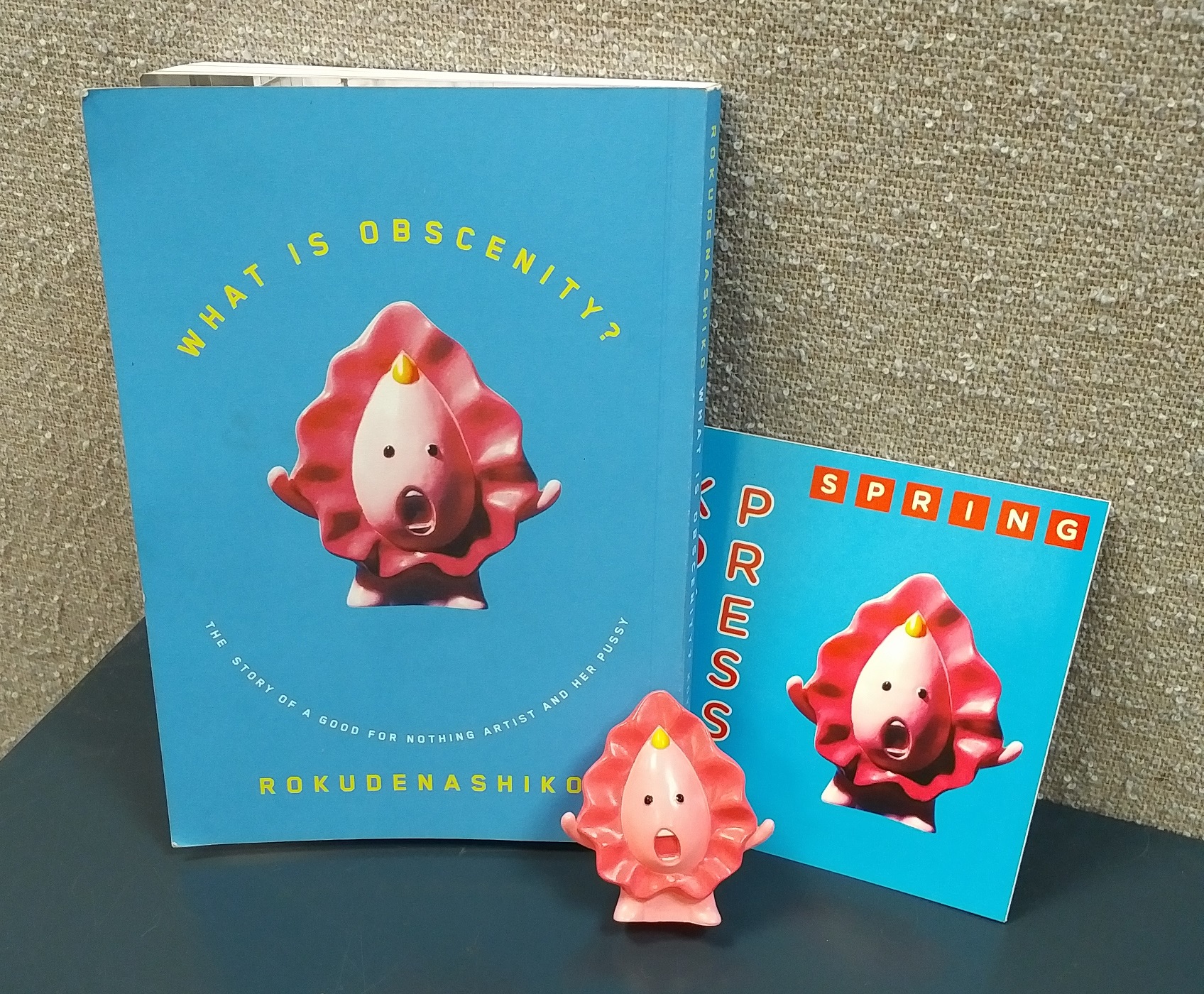
Rokudenashiko's Manko-chan

Manko-chan… in 3D!

The third panel I attended on Saturday was Rokudenashiko’s Spotlight which was absolutely delightful. After a brief introduction by Rebecca Sullivan, Rokudenashiko began by telling her story of how she came to be a vagina artist and activist and how she was subsequently arrested multiple times. Accompanying Rokudenashiko’s talk was a slide show of some of her artwork, and she brought along some of her small sculptures to show as well, including a remote-controlled “Gundaman.” Much of what she talked about I was already familiar with having read her manga What Is Obscenity? (which I highly recommend), but it was wonderful to see and hear her in person. Just like her work, Rokudenashiko is incredibly charming, cheerful, and funny. The humor and cuteness that Rokudenashiko brings to her manga, illustrations, and sculptures is very deliberate on her part. She noted that many feminist creators dealing with similar subject matter frequently use their art to express their anger and sadness which makes for very heavy work. So instead, Rokudenashiko wanted to do something that was more lighthearted and amusing. It was only after she realized that some people couldn’t laugh and have fun with it that she became more aggressive in her activism efforts, but without ever losing her sense of humor and positivity in her artwork. However, some critics and academics don’t appreciate this, feeling that she’s making too light of a serious subject. Rokudenashiko was very pleased with her reception in North America, saying that the long lines of people waiting to meet her would never happen in Japan where most people are generally too embarrassed to engage so publicly even if they recognize her and are interested in and support what she is doing.

Last year at TCAF I attended a panel on manga translation which was fascinating, so when I saw the “Translation” panel listed as part of the programming for 2016 I was immediately interested. This year the panel was moderated by Deb Aoki and featured three panelists: Jocelyne Allen, who translates from Japanese to English, Samuel Leblanc, a Canadian creator primarily working in French whose debut comic Perfume of Lilacs was released in English, and the French creator Boulet who (after a disastrous attempt to work with fans) currently translates his own comics into English. Leblanc was able to work directly with his translator and was able to provide feedback on the translation being done whereas Allen very rarely had the opportunity to be in contact with the creators of the works that she was translating. Although each of the panelists brought their own perspective to the conversation, they all agreed that capturing the appropriate tone and style is one of the most difficult things about translation. That and the fact that it’s nearly impossible to make everyone happy with a translation since so many people are invested in it each for their own reasons, whether it be the original creators, the translators, the publishers, or the readers. Lately however, the trend in comics translation seems to err on the side of the artists’ original choices and intent rather than focusing on localization. There are also different types of translation work which require different sets of skills—translating comics isn’t the same as translating prose literature which isn’t the same as translating technical manuals and so on. One thing that can be particularly challenging for comics translation is that the amount of space allowed for text is often limited. The visual element of the comics can have a great impact on the interpretation of a scene and the resulting word choices as well.
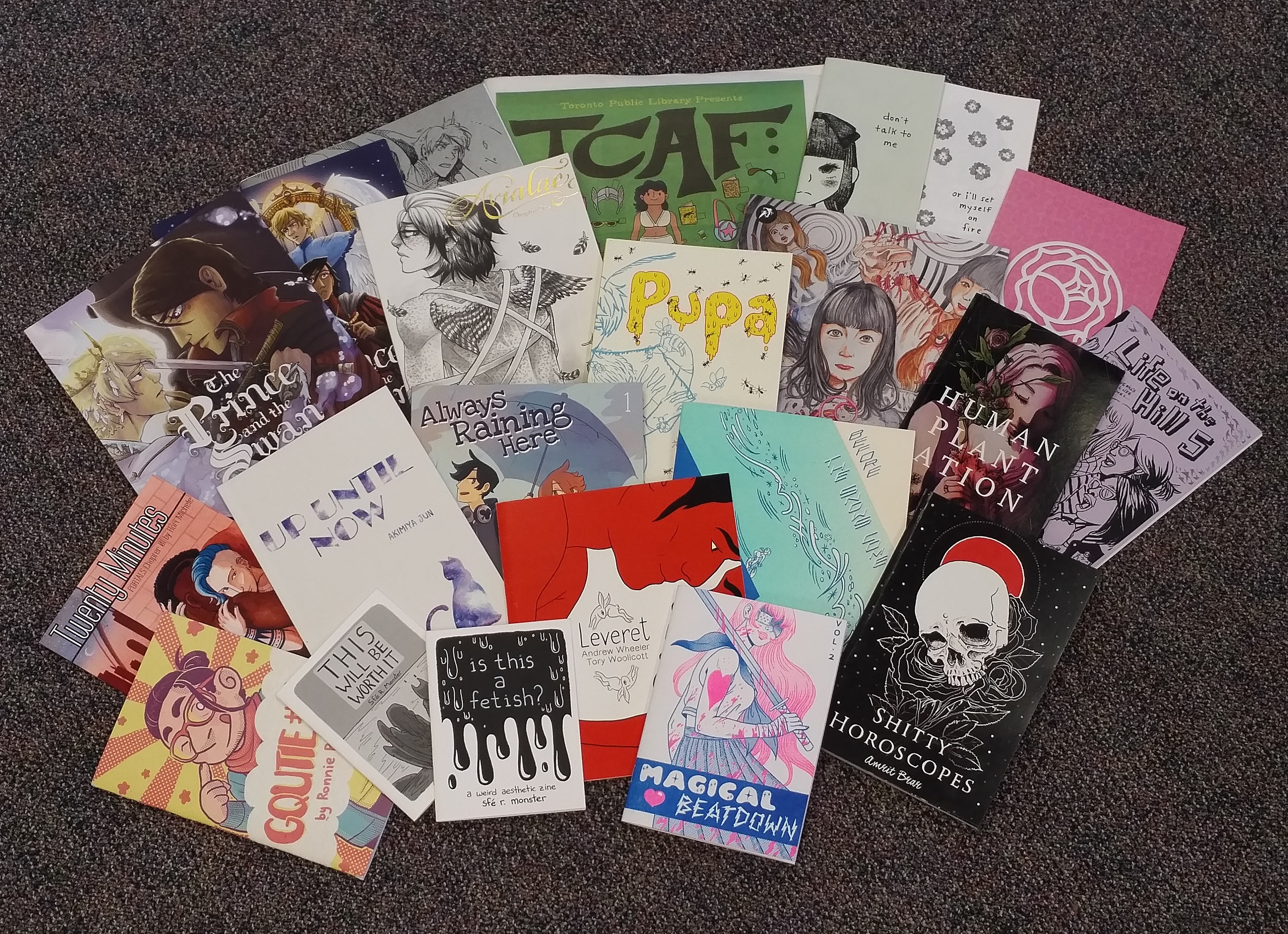
TCAF 2016 Haul

It’s not everything, but it is most of this year’s TCAF haul

On Sunday I was only able to make it to two panels before heading back home. One of the reasons that I enjoy TCAF so much is that it is an incredibly queer-friendly and queer-positive event, both in the exhibitor areas and in its programming. I was especially looking forward to “Queer Science Fiction and Fantasy,” a panel moderated by Melanie Gillman and featuring Megan Rose Gedris, Jeremy Sorese, Dylan Edwards, Andrew Wheeler, Taneka Stotts, and Gisele Jobateh, all of whom are queer creators of queer comics. Historically, queerness in speculative fiction has been relegated to subtext, but more and more that queerness is becoming increasingly obvious and in some cases is even the focus of a work. Speculative fiction allows for the creation and exploration of worlds that reflect upon current societal issues while showing what other possibilities could exist. Several of the panelists mentioned that when they were growing up speculative fiction provided some of the only representation of queerness that they saw in media, such as alternative relationship and social structures or a wider variety of genders and sexualities. Frequently, it was the non-human characters that they were most easily able to identify with and the inherent queerness of speculative fiction helped them to understand and discover their own identities. (All of this rings very true for me, too.) Webcomics and self-publishing efforts have been huge in changing the landscape of the comics market to the point where more mainstream publishers, which are slow to evolve and risk-averse, are now reaching a tipping point where queer content isn’t being automatically rejected. Deliberately, intentionally, and unquestionably queer speculative fiction is an evolving genre. Whether they mean to or not, independent creators are currently defining the expectations, tone, language, and tropes that are being set for queer representation in comics and what queer speculative fiction looks like.

The final panel I attended on Sunday was “Discussing Diversity (More or Less)” which was moderated by David Brothers. The panelists included Karla Pacheco, Cathy G. Johnson, Gene Luen Yang, Anne Ishii (one of the marvelous people behind Massive Goods), Ant Sang, and Bill Campbell. Diversity is a huge buzzword right now and not just in comics and other media. (Even my workplace is trying to focus on issues surrounding diversity, so it’s something I’m thinking about a lot these days.) In many of the conversations taking place in North America, diversity is often broadly defined as being non-straight/white/male which, in reality, is actually most of the world. The panel’s incredibly refreshing approach to discussing diversity was simply to talk about it as if was normal, because it is, rather than treating it as an exception or something unusual. As the panelists spoke about their own personal experiences and work, several common themes emerged, probably the most important being that there absolutely is a market, and a need, for diverse media. Though it can be a deliberate initiative, diversity in comics is a natural and often unintentional extension of creators’ own lives, interests, identities, and perspectives. There is also a distinct difference between providing more diverse representation in mainstream media and allowing a more diverse pool of creators to participate and express themselves within that context. While it might be a starting place, non-straight/white/male characters being written by straight/white/male creators sets an extremely low bar in terms of diversity. New voices and perspectives are just as critical if not more so in order to ensure that the comics market remains healthy as it continues to grow and evolve.

Sadly, because the kidling was getting cranky, I had to leave the festival before the food in comics panel which I was really hoping to attend. I was sad to miss most of the “What Women Want” panel’s third year, too. But I have come to realize that even if I wasn’t leaving “early,” it is impossible to see and experience everything that TCAF has to offer and choices must be made. Actually, this is something that I’ve known since the very beginning. There are always going to be panels I miss or that conflict with one another, and after the fact I’m always going to end up discovering comics that I would have been interested in and creators that I wish I had known about. But even so, that doesn’t detract from my overall enjoyment of the event and I am tremendously happy with what I was able to attend this year. TCAF is such a truly wonderful festival. As always, I’m already looking forward to and planning for my trip to Toronto for the event next year.
Filed Under: FEATURES Tagged With: comics, manga, Rokudenashiko, Shintaro Kago, TCAF

The Manga Revue: Guardians of the Louvre

May 20, 2016 by Katherine Dacey

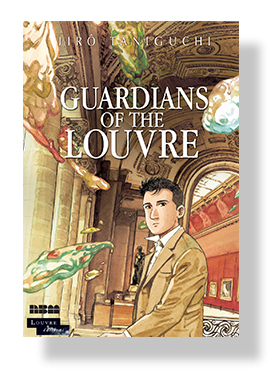
Whew–it’s been a while! Life got in the way of blogging for a few months, but the summer forecast looks good for manga reviewing. On the docket this week: Jiro Taniguchi’s Guardians of the Louvre, part of an ongoing graphic novel series published by NBM/Comics Lit that also includes Glacial Period, On the Odd Hours, and Rohan at the Louvre.

COVERLAYOUT.inddGuardians of the Louvre
By Jiro Taniguchi
No rating
NBM Graphic Novels, $24.99

One part Times of Botchan, one part Night at the Museum, Jiro Taniguchi’s Guardians of the Louvre is a stately, handsomely illustrated manga that never quite rises to the level of greatness.

The premise is simple: a Japanese artist lies ill in his Parisian hotel room, feverishly dreaming about the museum’s galleries. In each chapter, the hero is temporarily transported to a particular place and time in the Louvre’s history, rubbing shoulders with famous artists, witnessing famous events, and chatting with one of the museum’s most famous works–the Nike of Samothrace, who takes the form of a stone-faced tour guide. If the set-up sounds like The Times of Botchan, it is, though Guardians of the Louvre is less ambitious; Taniguchi’s primary objective is to celebrate the museum’s collection by highlighting a few of its most beloved works, rather than immersing the reader in a specific milieu.

The artist-as-time-traveler schtick is a little hackneyed, but provides Taniguchi with a nifty excuse to showcase the breadth of his artistry, offering the reader a visual feast of rural landscapes, gracious country manors, war-ravaged cities, and busy galleries. Using watercolor and ink, Taniguchi convincingly recreates iconic paintings by Van Gogh and Corot, effortlessly slipping into each artist’s style without slavishly reproducing every detail of the originals. Taniguchi’s characters are rendered with a similar degree of meticulousness, though their waxen facial expressions sometimes mar scenes calling for a meaningful display of emotion.

What prevents Guardians of the Louvre from taking flight is its relentlessly middlebrow sensibility. In one scene, for example, the Nike of Samothrace leads our unnamed hero through an empty Salle des États, home of the Mona Lisa. The artist examines the painting closely, musing about the tourist hordes that normally throng the gallery. “It’s not about art appreciation anymore. It’s wholly a popular tourist destination” he says wistfully. If his character was anything more than an audience surrogate, his comment might have registered as a thoughtful meditation on the commercialization of fine art, or the outsized fame of Da Vinci’s canvas. Absent any knowledge of who he is or what kind of art he creates, however, his remarks sounds more like a moment of bourgeois snobbery: don’t these peasants realize the Louvre is filled with other remarkable paintings?

A similarly pedestrian spirit animates the chapters documenting the 1939 evacuation of the Louvre. To be sure, the mechanics of packing and transporting the art are fascinating; Taniguchi’s expert draftsmanship conveys the complexity and physical demands of the task in vivid detail, inviting us to ride along with Delacroix’s monumental Raft of the Medusa on its perilous journey from Paris to Versailles. The dialogue that frames these passages, however, is rife with cliches. “They were ready to risk everything to evacuate the paintings,” the Nike solemnly informs our hero before implying that this operation was a little-known episode in French history–a strange claim, given the story’s romantic treatment in popular culture: surely the Nike has read All the Light We Cannot See or watched The Monuments Men?

The manga’s most effective passages, by contrast, are wordless. We see our hero wander through a forest where Corot silently paints the undulating boughs, and a medieval town where Van Gogh sets up his easel in a sun-drenched hay field. In these fleeting moments, Taniguchi’s sensual imagery allows us to step into the artist’s shoes and relive the creative process that yielded Recollection of Mortefontaine and Daubigny’s Garden for ourselves. If only the rest of the manga wasn’t so insistent on telling us how to appreciate these paintings.

Reviews: Sean Gaffney gives Rokudenashiko’s autobiographical manga What Is Obscenity? the thumbs-up. Over at The Fandom Post, Matthew Alexander jumps in the WABAC Machine for a look at Shaman Warrior, one of the first manhwa published by Dark Horse.

  • Julie on Abby and the Playboy Prince (Manga Maniac Cafe)
  • Helen on A Centaur’s Life (The OASG)
  • Megan R. on Earthian (The Manga Test Drive)
  • Frank Inglese on vol. 10 of Food Wars!! Shokugeki no Soma (Snap 30)
  • Richard Prenice on vol. 11 of Food Wars!! Shokugeki no Soma (Three if By Space)
  • Matt on vol. 2 of Forget Me Not (Ani-TAY)
  • Seth Hahne on A Girl on the Shore (Good OK Bad)
  • Michael Burns on vol. 2 of Handa-kun (Ani-TAY)
  • Matthew Alexander on vol. 1 of He Is My Master (The Fandom Post)
  • Infinitespeech on vol. 1 of I Am a Hero (The Fandom Post)
  • Kory Cerjak on vol. 3 of JoJo’s Bizarre Adventure, Part 2: Battle Tendency (The Fandom Post)
  • Nick Creamer on vol. 4 of My Hero Academia (Anime News Network)
  • Nick Creamer on vol. 1 of Mysterious Girlfriend X (Anime News Network)
  • Chris Beveridge on vol. 2 of Nichijou (The Fandom Post)
  • Dustin Cabeal on vols. 13-15 of Nisekoi: False Love (Comic Bastards)
  • Dustin Cabeal on vol. 1 of Prison School (Comic Bastards)
  • Kristin on vol. 1 of Shuriken and Pleats (Comic Attack)
  • Frank Inglese on vol. 5 of Tokyo Ghoul (Snap 30)
  • Robert Prentice on vol. 6 of Tokyo Ghoul (Three If By Space)
  • Julie on Wife by Contract, Mistress on Demand (Manga Maniac Cafe)
  • Frank Inglese on vol. 9 of World Trigger (Snap 30)
  • ebookgirl on vol. 11 of Yotsuba&! (Geek Lit Etc.)

Filed Under: MANGABLOG, REVIEWS

Manga the Week of 5/25

May 19, 2016 by Sean Gaffney, Ash Brown, MJ, Michelle Smith and Anna N 2 Comments

SEAN: Does it say something that having only 25 titles out the week of a Yen Press release dump is rather mild now? I keep thinking “it could be worse!”. I think it’s the new normal.

There are other publishers, of course. Kodansha Comics gives us a 2nd volume of Real Account, a title with good buzz despite being a survival game series.

ASH: I was surprised; it has the potential to become really interesting.

SEAN: There’s also an 8th Tsubasa Reservoir Chronicle omnibus, and I believe this is about the time when I started to actively mock the series.

MJ: Poor Tsubasa. So much abuse.

SEAN: Vertical has a new series debuting again, this one called Devils’ Line. It is also a dark fantasy series, just like last week’s To the Abandoned Sacred Beasts, and features vampires. It runs in Kodansha’s Morning Two.

ASH: Not particularly interested in vampires, but I do tend to like dark fantasy.

SEAN: OK, that’s it for other publishers. On to Yen Press, starting with its novel line. Another was a under-the-radar horror novel that was released a while back digitally, and did well enough to get a hardcover release later on. Now it’s done well enough to get a sequel licensed, Another Episode S/0.

ASH: I’m looking forward to reading this! The volume includes the manga as well as the novel, too.

baccano1

SEAN: Baccano! is easily one of my most awaited novel releases in the history of ever, and it’s finally here. From the creator of Durarara!!, this actually came first, and shows us the story of a group of Mafia (cough) sorry, Camorra gangs in 1930s New York City and their run in with a mysterious elixir. Read this. It’s in hardcover and digital.

The other big novel (also in hardcover and digital) this month is Overlord, whose description sounds like it’s another SAO/Log Horizon knockoff, but I’ve been assured that that’s not actually true, and that this is a fantasy series that goes to a lot of interesting places as it examines what it’s like to be a monstrous creation in an RPG. Looking forward to seeing what the fuss is here.

MJ: Well, hm.

SEAN: Lastly, there’s a 3rd Strike the Blood, a title that has underperformed for me previously, but maybe the third time is the charm.

Yen Digital seems to be the week after this, so let’s dig right into Yen proper, starting with a third volume of Aldnoah Zero Season One, which is still not Gundam.

Anne Happy: Unhappy Go Lucky! is a new debut that falls somewhere between shonen and seinen, as it runs in Manga Time Kirara Forward, also home of Aldnoah Zero and School-Live!. It’s about a high school class made up of those with natural bad luck, and their struggles to overcome it.

Black Butler has a 22nd volume, and the butler is still buttling onward, while also, yes, being a hot and sexy demon.

Corpse Party: Blood Covered is the first in a series of omnibuses (2 volumes per book) based on a game that came out in 2008. A group of kids find themselves in an alternate dimension that is haunted by the ghosts of some murdered schoolchildren. If you liked Higurashi’s mystery and gore, you should like this.

There’s a second Dimension W.

And a third Dragons Rioting. I need a title I care about stat.

inuboku11

Ah, here we go! Inu x Boku SS wraps up with its 11th volume, and I hear it’s a good ending despite the unfortunate death of its creator right around when it was written. I have enjoyed this series far more than I expected, and am sad to see it go.

Is It Wrong to Try To Pick Up Girls In A Dungeon? has a 5th manga volume, and I suspect will start coming out slower, as we’ve caught up to Japan.

There’s a third Monthly Girls’ Nozaki-kun, hooray! The cover features Kashima and Hori, who may be the series’ most popular fan pairing.

ASH: This series is so great. I love it.

MICHELLE: Yay, I’m looking forward to this!

MJ: I obviously need to start reading this, looking at my colleagues’ comments.

ANNA: I’m also very much looking forward to this.

SEAN: Its novel may have gotten delayed to September, but the manga is still here, as we get the debut of My Youth Romantic Comedy Is Wrong As I Expected (just call it OreGairu, everyone else does). The story may sound familiar – a pair of misfits end up in the school Service Club trying to help others despite horrible personalities. It does, however, have one very important quality – there are no fantasy elements to it.

Another Madoka spinoff bites the dust, with the final volume of Puella Magi Suzune Magica.

School-Live! gets a third volume of heartwarming friendship and terrifying zombies.

Strike the Blood gets a third manga volume. Don’t confuse it with the third Strike the Blood light novel, out the same day. Yes, we’re still doing that.

Trinity Seven has hit volume 5, and I believe will be getting that Blake’s Seven crossover any minute now.

We also get the 6th Ubel Blatt omnibus, Ubel Blatt Vol. 5. Yes, we’re still doing that as well.

dawn1

Umineko: When They Cry begins a new arc, despite Beatrice being, y’know, dead. But that hardly stops anyone in this series. Dawn of the Golden Witch is here! We’ll meet more weird “furniture”, and see how murders happen when it’s Battler that’s writing it. Oh yes, and Erika is there too. The artist also did the Higurashi: Massacre Arc manga.

I believe the 12th Until Death Do Us Part omnibus catches us up with Japan, so it’s a perfect time to go read the 2500 or so pages you may have missed.

Lastly, yay! A lucky Volume 13 of Yotsuba&!, the first new volume since 2013! (It was on hiatus in Japan as well.) Are you ready to see Koiwai’s mother? Yotsuba sure is!

ASH: I am so far behind in reading Yotsuba&!, but it is an absolutely delightful manga.

MICHELLE: Yay!!!!

MJ: Finally! I feel like Yen has largely moved towards series that are just not going to be my cup of tea, but this is a reminder that it hasn’t always been so!

SEAN: Aside from Baccano!… yes, OK, and Yotsuba&!… what are you getting this week?

Filed Under: FEATURES, manga the week of

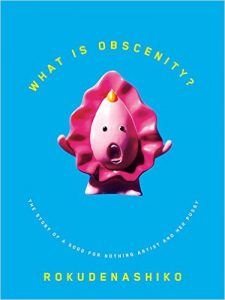
What Is Obscenity? The Story of a Good-For-Nothing Artist and Her Pussy

May 19, 2016 by Sean Gaffney

By Rokudenashiko. Released in Japan by Kinyobi, Inc., partially serialized in the magazine Shuukan Kinyobi. Released in North America by Koyama Press.

Like many people, I first heard about Rokudenashiko via news reports retweeted and reblogged around the internet. In fact, it may have been watching The Daily Show, which covered her arrest (she makes reference to it here). But when I saw that she had a panel at TCAF and was promoting a manga discussing what happened, I decided to seek it out. and I’m delighted that I did, as this manga is fascinating, managing to make the reader angry and outraged at her mistreatment while at the same time laughing hysterically. It actually comes in two parts. The first, written for the weekly magazine, is a light-hearted (but the events are serious) look at her arrest and imprisonment for distributing 3D copies of her vagina via crowdsourcing. The second half retells some of the same events, but as part of her life story, and it’s more serious and personal.

obscenity

The amazing double-standards of Japanese culture, which has no issues with the word ‘chinko’ (which means dick), but can’t abide the word ‘manko’ (which means pussy) is on display throughout, from the initial sneering and TV-cop stereotype of her arrest to the hilarious points where the officers try to take her statement and she humiliates them by insisting on saying ‘manko’ as many times as possible. We get a lovely tour of Japanese women’s prison, which is as unpleasant as you’d imagine, and she has a variety of cellmates, ranging from the normal to the intensely strange. Interspersed through the manga are various textual articles discussing the nature of obscenity, Japanese law (yes, it really is far more like Phoenix Wright than you’d expect), and the campaign on the outside to petition for her freedom (which we barely see as we’re following her POV).

As I said earlier, the second part of the manga is a short biography of her life, and how she ended up becoming an artist who used her ‘manko’ as an inspiration for various art projects and showcases. The most amusing part for me was that her initial reasoning was seeing that you can have “vaginal surgery” and thinking “whoah, cool!”. She was later told by her editors to change it and make her more ashamed of her body in order to sell to readers better. I am reminded of many other editorially demanding manga series. That said, we also see that using ‘manko’ in her art also led to her divorce, to her friends abandoning her, and to suicidal thoughts. None of that was in the more commercial first part of the book, but it adds a sense of depth and realism that touches the heart.

So rest assured, this is a highly entertaining and moving memoir. But it’s also a wonderful look at the standards that go into defining what is obscene, and the struggles that an artist has to go through in order to be able to express themselves properly. The behavior of the police and courts in this book is jaw-dropping, and if nothing else, I’m hoping that more awareness of the these issues might lead to international pressure for change. In the meantime, the story of Rokudenashiko and her artistic triumphs and struggles is a must-read for anyone who loves freedom of expression.

Filed Under: REVIEWS

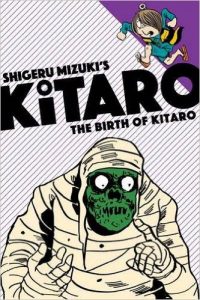
The Birth of Kitaro

May 17, 2016 by Sean Gaffney

By Shigeru Mizuki. Released in Japan as “Gegege no Kitaro” by (among others) Kodansha, serialized in various magazines. Released in North America by Drawn & Quarterly.

There was already a sampler of Kitaro a few years back, also by Drawn & Quarterly, but this new collection appears to be the equivalent of a multi-volume best-of, apparently signed off on by Mizuki himself, who gave the editor a test to see if he could choose the stories that Mizuki himself would have chosen (he got all but one). And so we see some earlier Kitaro manga from the late 60s, including a lengthy chapter from the magazine Garo that shows off how Kitaro came to be, and helps you understand that the otherwise generic zombie on the cover really is one of the main characters. It’s a grim little tale, more serious than the rest of the stories in this volume, possibly as it lacks the series’ main drawing point.

birthofkitaro

See, Kitaro is a nice kid, mostly (his ethics can be rather questionable from a human perspective), but he is essentially Mickey Mouse. He’s the title character and appears in every story, but what the readers really want is someone a bit more fallible and funny. And you can’t get much funnier or more fallible than Nezumi Otoko, which translates to Rat Man. He is the Donald Duck of this series, only Donald was never quite so evil. Nezumi Otoko will do absolutely anything for money, including tricking old rich men out of their life savings, luring respectable young manga editors to their yokai-influenced deaths, and take advantage of the dead – multiple times. Even when he’s not being an ass, he’s usually a coward, always the first to run away. This, of course, makes him a marvelous character, the best reason to read this series. He’s beloved in Japan (for a certain definition of beloved), and was used as narrator for Mizuki’s Showa history.

The other big reason to read the series is the yokai, who veer from the silly to the terrifying, but they’re all dangerous. Neko Musume shows up here, and those who recall her cute moe appearance in some of the more recent Kitaro animes will be startled by this bowl-cut girl who tries to literally eat Nezumi Otoko when she first sees him (to be fair, he deserved it – he always does). The Gyuki and Hideri Gami are more typical straight-up monsters, in the former case even managing to possess Kitaro, who gets to enjoy a rare turn attacking people. Kuckily, Kitaro is made of stern stuff, able to survive even being dropped in a volcano. Also luckily, this is very much not a serialized story. Tales need to end in a certain number of pages, so the yokai rarely get to do much before Kitaro has won and they’re off on their next adventure. (The anime was airing as these manga chapters were running, and you can see references to the insanely catchy theme song in these final ‘the adventure continues’ panels.)

Even if you aren’t a fan of manga history or yokai stories, this is still a must purchase. It’s also fairly child-friendly, despite a few scares. I am eagerly awaiting more.

Filed Under: REVIEWS

Bookshelf Briefs 5/16/16

May 16, 2016 by Sean Gaffney and Michelle Smith Leave a Comment

genshi8Genshiken: Second Season, Vol. 8 | By Shimoku Kio | Kodansha Comics – The first half of this volume has a lot of amusing antics, but let’s face it, the second half is where the truly eye-popping stuff happens. Madarame is still having trouble getting his head around the fact that four different people are interested in him, and confesses to Kugayama (when did we last see HIM in this series?) that he thinks he’s just nervous as he’s still a virgin. So he gets talked into going to a host club, and naturally it’s the one Keiko works at. What follows shows off that Madarame has more issues than just his lack of experience to work through—if he can’t notice Keiko trying to get into his pants THAT blatantly, then there’s something terribly wrong. Will this subplot be ending anytime soon, however? Or is it the main plot? – Sean Gaffney

knt24Kimi ni Todoke, Vols. 24 | By Karuho Shiina | Viz Media – Usually, I don’t mind the slow pace of this series, as it has a mood that would be somewhat ruined by Hakusensha-style fast-paced violence. I will admit, though, I did think this volume dragged a bit, as we wait endlessly for Sawako to realize what everyone else does first: she wants to go to the educational university, not the one Kazehaya is going to. As for our other couples (or ex-couples), Chizuru and Ryu are dating but she still struggles with the fact that cheering him on means separating. And Yano is discovering that getting into a top-flight university really is as hard as it seems. This is still an excellent series, of course, and I’m hoping the next volume will give us more forward progression. – Sean Gaffney

lovestage5Love Stage!!, Vol. 5 | By Eiki Eiki and Taishi Zaou | SuBLime – After showing signs of improvement in the previous volume, Love Stage!! trots out some truly eyeroll-inspiring material in volume five. After arguing with Izumi about the time he’s spending with their lecherous producer and being intimidated by Izumi’s acting talent, Ryoma is rendered incapable of performing. Instead of dwelling on their professional rivalry, which might’ve been interesting, we instead get a plot in which the producer’s hypnosis causes Ryoma to forget Izumi entirely, leading to much angst and, ultimately, the two of them falling off a cliff. Yes, really. And then they have to huddle together for warmth because a freak thunderstorm has delayed the search party. Siiiiigh. And yet, I will probably read the next volume anyway. – Michelle Smith

oresama20Oresama Teacher, Vol. 20 | By Izumi Tsubaki | VIZ Media – With Hayasaka’s memory now restored, volume twenty first clears up his (needlessly) complicated family circumstances before moving on to reveal the nature of the arrangement Momochi and Hanabusa have made. I like that Hanabusa has been shown to be a good guy, and liked too that Aki was disgruntled that the gang kept Hayasaka’s recovery a secret from him in order to ensnare Momochi, but this is a series that doesn’t delve deep into its characters, so instead of more time with either of them, we get an interlude about Mafuyu and Okegawa unknowingly being penpals (bonus: there are panels from the overworked carrier pigeon’s POV!) and a fast-forward to a Christmas party, during which Hayasaka might’ve figured out Mafuyu is Super Bun! I hope he really did, but I expect comedic deflection in the next volume. We shall see! – Michelle Smith

shominsample1Shomin Sample: I was Abducted by an Elite All-Girls School as a Sample Commoner, Vol. 1 | By Risumai and Takafumi Nanatsuki | Seven Seas – I almost didn’t get this simply because of the reprehensible cover, and I still cringed every time there was a blatant panty shot in this series. That said, there were one or two moments in the book that I was indeed amused, which shows off my low standards if nothing else. The story is pretty much given in the subtitle above, and most of the good humor relies on the sheltered young girls being naive about everything, The bad humor relies on things like panty shots, walking in on someone in the bath, and whenever our hero isn’t being a smartass (as that’s his best trait). If you read Seven Seas and Yen’s skeezier titles, this is right up your alley. For others, I’d pass, even though it wasn’t the worst thing in the world. – Sean Gaffney

wallflower36The Wallflower, Vol. 36 | By Tomoko Hayakawa | Kodansha Comics – Spoilers: no, they don’t. But honestly, if that surprises you, you were reading the wrong series. Hayakawa has said for eons she’s good at comedy and bad at romance, and that shows in the final volume of The Wallflower, which at least makes an effort to hit the series’ core themes: Sunako likes dark, Halloween-ish stuff; Sunako can be quite the lady when she tries, but doesn’t care to; and Kyohei and Sunako are perfect for each other and both are ignoring that fact heavily. There’s more non-SD Sunako here than in many, many volumes, which is a nice treat for the readers. I’ve always enjoyed this series even past its sell-by date, but admit it’s time for it to end. And so it has. – Sean Gaffney

Filed Under: Bookshelf Briefs

My Week in Manga: May 9-May 15, 2016

May 16, 2016 by Ash Brown

My News and Reviews

Despite being in Toronto for the majority of last week for the Toronto Comic Arts Festival (which I should hopefully have a write-up about soon), I still managed to post a few things here at Experiments in Manga. For those interested in what sorts of manga and other books make their way onto my shelves, April’s Bookshelf Overload is now available. The feature used to be posted fairly early on in the month, but at least for the time being it’s more likely to appear sometime in the second week as I’m following a more relaxed posting schedule. Last week I also reviewed Philip K. Dick’s award-winning novel The Man in the High Castle which explores an alternate history in which Germany and Japan won the Second World War and occupy most of what was the United States. It’s a fascinating, thought-provoking, chilling, and frankly terrifying work.

A few interesting things that I came across online last week while I wasn’t wandering around Toronto: The lead lawyer of Rokudenashiko’s legal team wrote a nice summary and explanation of the recent verdict in her obscenity trial, including the next steps that will be taken in the case. (I reviewed Rokudenashiko’s What Is Obscenity? a couple of weeks ago; the manga is excellent, and I was thrilled to have the chance to meet Rokudenashiko at TCAF.) Over at Publishers Weekly, Brigid Alverson writes about Hachette and Kadokawa’s recently announced partnership and what it means for Yen Press. Finally, Leah Zoller and Kathryn Hemmann have started to post a series of articles at The Lobster Dance based on their panel The Sparkling World of 1970s Shojo Manga, which should be fantastic.

Quick Takes

Noragami: Stray Stories, Volume 1Noragami: Stray Stories, Volume 1 by Adachitoka. Even though I have fallen behind in reading the main series, I have been enjoying Adachitoka’s Noragami. I’m apparently not the only one as the manga has been doing quite well for Kodansha, enough so that the publisher also licensed Stray Stories, a multi-volume series of Noragami side stories. For the most part, the short manga of Stray Stories don’t appear to rely on the main Noragami storyline although it is assumed that readers are at least already vaguely familiar with the manga’s characters and basic premise. So far, Stray Stories reminds me a bit of Noragami‘s earlier, more episodic nature before the series’ overarching plot began to take precedence. The short manga collected in Stray Stories also tend to be more comedic than serious, which I greatly enjoyed. The first volume was a lot of fun, and I’m glad that there will be more side stories to come. Stray Stories allows Adachitoka to expand on the world and characters of Noragami in ways that wouldn’t make sense in the main series but that are still enjoyable in their own right.

RealAccount1Real Account, Volume 1 written by Okushou and illustrated by Shizumu Watanabe. I’ll admit, I actually wasn’t expecting all that much from Real Account, so I was a little surprised by how much liked the first volume of the series even if there were a few things that didn’t quite work and even if there was at least one minor plot hole. Quite a few manga seem to have come out over the last few years with a similar basic premise in which a group of people find themselves trapped in an online environment where they must survive. If they die onlie, they will die real world as well. In the case of Real Account, that online environment is greatly influenced by social media and the users’ survival depends on them having at least one follower. The titular “Real Account” is something closely akin to Twitter with a few additional elements, like games, mixed in. Some of the deadly games those who are being held hostage are forced to play are actually quite clever and highly psychological, relying on the unpredictable nature of human relationships when self-preservation is on the line. At this point in the series it’s still unclear who is behind it all and what their motivations are, but there is definite and not particularly subtle social commentary being made.

Sense & SexualitySense & Sexuality by You Higashino. Originally released in English in print as part of Media Blaster’s Kitty Media line, Sense & Sexuality is now available digitally from Sublime Manga. I haven’t come across very many manga that take place during Japan’s Taishō Era, but it’s a really interesting time period in the country’s history and one of the reasons Higashino’s boys’ love one-shot Sense & Sexuality was first brought to my attention. The manga follows the sexual conquests of Hanamura and Takakura, two close friends from noble families whose lives are filled with decadence, leisure, and hedonism. They have turned their romances into a game, betting on who will be the first to bed the various attractive young men they have identified as their targets. Eventually though, their sights are set upon each other. For the most part, Sense & Sexuality is fairly episodic. There’s just enough story to hold it all together, but what little plot there is simply provides the excuses needed for the manga’s plentiful and explicit sex. High literature it is not, nor does it need to be. I really liked Sense and Sexuality‘s setting, the characters have a bit more depth to them than it initially seems, and the manga can be surprisingly humorous even though I wouldn’t necessarily describe it as a comedy.

Filed Under: FEATURES, My Week in Manga Tagged With: Adachitoka, manga, Noragami, Okushou, Real Account, Shizumu Watanabe, You Higashino

VIZ Has Banner Year, Kodansha Offers Humble Bundle

May 16, 2016 by Katherine Dacey

PokemonBrigid is wrapping up a busy stint TCAF, so I’ll be subbing for her this week. Here’s a quick round-up of new and noteworthy developments:
ICv2 buries the lede in this interview with Viz Media’s Beth Kawasaki, who tells them “This last fiscal year was our best ever, in the history of the company, and we do have some hit kids’ titles contributing greatly to that.” Emphasis ours. The most popular of those kids’ properties are Pokemon, Yo-kai Watch, and Legend of Zelda, and there’s a Pokemon cookbook on the way. [ICv2]

The latest volume of Akame ga Kill! tops the New York Times Manga Bestseller List, followed by the first volumes of I Am a Hero, Tokyo Ghoul, and One-Punch Man. [The New York Times]

Yen Press announced a new light novel license: Goblin Slayer! [Anime News Network]

There are just two days left to download Kodansha Comics’ Humble Bundle, which includes the first three volumes of Attack on Titan, the first two volumes of Ajin: Demi-Human and Inuyashiki, and the first volumes of The Seven Deadly Sins, Parasyte, and Space Brothers. Proceeds benefit The Comic Book Legal Defense Fund. [Crunchyroll]

Should vendors and guests of Anime Expo be subject to background checks? The Society for the Promotion of Japanese Animation (SJPA) is considering such a policy; Christopher MacDonald, however, worries that this initiative may backfire. [Anime News Network]

In case you missed it: Ryan Holmberg posts a new installment of What Was Alternative Manga?, focusing on the work of Nakashima Kiyoshi. [The Comics Journal]

What’s arriving in your local bookstore this week? The Manga Bookshelf gang investigates. [Manga Bookshelf]

Despite the backlash against DreamWorks’ Ghost in the Shell film, Hollywood seems bullish on manga and anime properties. Among the projects currently in the pipeline are Death Note (courtesy of Netflix) and AKIRA (courtesy of Warner Brothers). [The Hollywood Reporter]

News from Japan: Of the Red, the Light, and the Ayakashi will finish its run in Monthly Comic Gene on June 15th… This dedicated cosplayer trekked to Mongolia to recreate scenes from Kaoru Mori’s A Bride’s Story… Which Shonen Jump character is sexiest? Japanese readers recently voted, expressing a strong preference for villains… Yotsuba&! creator Kiyohiko Azuma will share the Tezuka Cultural Prize with Kei Ichinoseki, author of Hanagami Sharaku.

Reviews: Over at The Comics Journal, Robert Kirby reviews the provocatively titled What Is Obscenity? The Story of a Good-for-Nothing Artist and Her Pussy. Closer to home, Michelle Smith and Sean Gaffney offer a fresh batch of Bookshelf Briefs that include the latest installments of Barakamon, Maid-Sama!!, and What Did You Eat Yesterday?

Johanna Draper Carlson on vol. 1 of Anne Happy: Unhappy Go Lucky! (Comics Worth Reading)
Johanna Draper Carlson on vol. 4 of Emma (Comics Worth Reading)
Erica Friedman on vols. 1-2 of Futaribeya (Okazu)
Incendiary Lemon on The Gods Lie (Anime UK News)
Terry Hong on Guardians of the Louvre (Book Dragon)
Lori Henderson on The Infernal Devices Trilogy (Manga Xanadu)
Ian Wolf on vols. 1-2 of Maga-Tsuki (Anime UK News)
Sheena McNeil on vol. 1 of Midnight Stranger (Sequential Tart)
Megan R. on Mr. Flower Groom (The Manga Test Drive)
SKJAM! on vol. 1 of Mysterious Girlfriend X (SKJAM! Reviews)
Sean Gaffney on vol. 78 of One Piece (A Case Suitable for Treatment)
Rebecca Silverman on vol. 1 of The Other Side of Secret (Anime News Network)
Mariko S. on vol. 2 of Otome no Teikoku (Okazu)
Megan R. on Passion (The Manga Test Drive)
Ken H. on vol. 1 of Princess Jellyfish (Sequential Ink)
Johanna Draper Carlson on vol. 1 of Servant x Service (Comics Worth Reading)
Laura on vol. 1 of Shuriken and Pleats (Heart of Manga)
Megan R. on Three Wolves Mountain (The Manga Test Drive)
Johanna Draper Carlson on vol. 10 of What Did You Eat Yesterday? (Comics Worth Reading)
Terry Hong on vol. 10 of What Did You Eat Yesterday? (Book Dragon)
Ash Brown on What Is Obscenity? The Story of a Good-for-Nothing Artist and Her Pussy (Experiments in Manga)
Matt on vol. 2 of Yowamushi Pedal (Ani-TAY)
Sean Gaffney on vol. 2 of Yowamushi Pedal (A Case Suitable for Treatment)

Filed Under: MANGABLOG

The Man in the High Castle

May 13, 2016 by Ash Brown

The Man in the High CastleAuthor: Philip K. Dick
Publisher: Houghton Mifflin Harcourt
ISBN: 9780544916081
Released: October 2016
Original release: 1962
Awards: Hugo Award

Philip K. Dick’s The Man in the High Castle is one of those classic science fiction novels that I’ve been meaning to read for ages but for one reason or another never quite got around to. Recently, though, the novel seems to be popping up wherever I turn: Viz Media’s speculative fiction imprint Haikasoru takes its name from the title; it was mentioned multiple times in the tenth volume of Mechademia which I read not too long ago; and in 2015 it was adapted as a live-action television series. Originally published in 1962, The Man in the High Castle can be counted as among the first major works of fiction written in English to examine an alternate history in which Germany and Japan emerged victorious from the Second World War, a historical turning point which has since become one of the most popular for the subgenre to explore. Winning the Hugo Award for best novel in 1963, The Man in the High Castle is also regarded as one of Dick’s most well-known and highly-acclaimed works. The novel has been re-published around the world numerous times with the most recent US edition scheduled to be released in 2016 by Houghton Mifflin Harcourt.

After being defeated, the United States of America was divided into three political entities at the end of World War II. The Pacific States of America is overseen by Japan and the Eastern United States is occupied by Germany while the central third of the country, the Rocky Mountain States, remains an independent buffer zone. Less than two decades have passed since the end of the war. Nazi Germany, having become a major power, continues to dominate and conquer the rest of the world and has even extended its reach to space. However, internal power struggles threaten to throw the precariously-balanced international political landscape into war and turmoil once again. In the meantime, Americans have had to either learn to adapt to their occupiers’ whims or to flee their homeland. The Japanese rule is fairly benign, especially when compared to that of the Germans, but it is still grating and demeaning for the Americans who are slowly losing their national identity along with the freedoms and respect that they once enjoyed in the past.

The alternate history that Dick envisions in The Man in the High Castle is honestly terrifying and horrifying. Under the global influence of a fascist, totalitarian regime, extreme racism and prejudice is rampant and genocide isn’t a thing of the past but of the present and future. People live in a world in which insidious fear, hatred, anger, and uncertainty have come to dominate. The Man in the High Castle follows several different and fairly ordinary characters from a variety of backgrounds who are all ultimately connected to one another, either directly or tangentially: an antiques dealer making his living selling Americana to Japanese clients, an American craftsman and jewelry maker who must hide his Jewish identity and heritage, a Japanese trade official stationed in what was once California, an American woman who teaches judo in the Rocky Mountain States, and a Nazi defector trying to prevent impending atrocities from becoming a reality. By the end of the novel, both together and separately, they have all taken a stand against the status quo and have made a difference, however small, in the world around them.

In addition to being a work of alternate history itself, there is a novel within The Man in the High Castle—The Grasshopper Lies Heavy—which explores yet another potential reality. That novel plays a pivotal role as does the Chinese classic the I Ching which many of the characters consult as an oracle or use to make major decisions and which Dick himself used to guide the story and plot of The Man in the High Castle. The writing style of The Man in the High Castle did take some time for me to get used to. Much of the novel consists of the characters’ internal monologues and thought processes, resulting in a work that frequently feels like fragmented stream-of-consciousness. Parts of the novel are also written in deliberately stilted English which, while clever and effective (and while I can understand and appreciate Dick’s intentions), doesn’t necessarily always make for the most pleasant reading experience. However, the underlying ideas and themes behind The Man in the High Castle are tremendous. Ultimately, The Man in the High Castle is a fascinating and chilling read, and a novel that is remarkably relevant and thought-provoking even today.

Filed Under: REVIEWS Tagged With: Hugo Award, Novels, Philip K. Dick

Bookshelf Overload: April 2016

May 11, 2016 by Ash Brown

April was a fairly reasonable month when it came to the number of manga and other books that I acquired, but by far my biggest acquisition was a house! It took nearly six months and a lot of stress to get everything to align properly, but I was finally able to close on the house that my family and I have had our eyes on since the the beginning of the process. We aren’t moved in yet, though we hope to be by the end of May. One of the (many) reasons that I’m especially excited about the new place is that it’s large enough that I’ll be able to devote an entire room to books. Now I’ll finally have a place to properly house my absurdly large library.

Anyway! Back to April’s manga. I happened across a bunch of Kaze Hikaru volumes for only a dollar each at my local comic book store, which made me very happy. As for preorders, there were several April releases that I was particularly happy to see, including Kaori Ozaki’s The Gods Lie (I loved Ozaki’s series Immortal Rain/Meteor Methuselah, so am glad to have the opportunity to read more of her manga) and the newly revised and expanded edition of The Passion of Gengoroh Tagame (I reviewed the original collection back when it was first released). However, what I think is probably one of the most notable and most important manga from April is Rokudenashiko’s What is Obscenity? I believe the official release date was technically in May and my copy simply arrived early, but that certainly didn’t stop me from reading and reviewing it.

Manga!
The Ancient Magus’ Bride, Volume 4 by Kore Yamazaki
I Am a Hero, Omnibus 1 by Kengo Hanazawa
The Gods Lie by Kaori Ozaki
Guardians of the Louvre by Jiro Taniguchi
Kaze Hikaru, Volumes 12-13, 15-18 by Taeko Watanabe
Library Wars: Love & War, Volume 15 by Kiiro Yumi
Midnight Stranger, Volume 1 by Bohra Naono
Of the Red, the Light, and the Ayakashi, Volume 2 by Nanao
The Passion of Gengoroh Tagame by Gengoroh Tagame
What is Obscenity?: The Story of a Good For Nothing Artist and Her Pussy by Rokudenashiko
Yowamushi Pedal, Omnibus 2 by Wataru Watanabe

Comics!
Broken Frontier edited by Frederik Hautain and Tyler Chin-Tanner
The Nameless City by Faith Erin Hicks
Two Keys, Volume 1 by Chloe Chan and Aliena Shoemaker
Vertoscope edited by Nechama Frier and Ten Van Winkle

Artbooks!
Bearutus by Cauro Hige
Blanc et Noir by Takeshi Obata
Living with Yuko Shimizu by Yuko Shimizu

Anthologies!
In Light of Shadows: More Gothic Tales by Kyōka Izumi

Nonfiction!
Straight from the Heart: Gender, Intimacy, and the Cultural Production of Shōjo Manga by Jennifer Prough

Filed Under: Bookshelf Overload, UNSHELVED

  • « Go to Previous Page
  • Page 1
  • Interim pages omitted …
  • Page 488
  • Page 489
  • Page 490
  • Page 491
  • Page 492
  • Interim pages omitted …
  • Page 1049
  • Go to Next Page »
 | Log in
Copyright © 2010 Manga Bookshelf | Powered by WordPress & the Genesis Framework