• Skip to primary navigation
  • Skip to main content
  • Skip to primary sidebar
  • Home
  • About Us
    • Privacy Policy
    • Comment Policy
    • Disclosures & Disclaimers
  • Resources
    • Links, Essays & Articles
    • Fandomology!
    • CLAMP Directory
    • BlogRoll
  • Features & Columns
    • 3 Things Thursday
    • Adventures in the Key of Shoujo
    • Bit & Blips (game reviews)
    • BL BOOKRACK
    • Bookshelf Briefs
    • Bringing the Drama
    • Comic Conversion
    • Fanservice Friday
    • Going Digital
    • It Came From the Sinosphere
    • License This!
    • Magazine no Mori
    • My Week in Manga
    • OFF THE SHELF
    • Not By Manga Alone
    • PICK OF THE WEEK
    • Subtitles & Sensibility
    • Weekly Shonen Jump Recaps
  • Manga Moveable Feast
    • MMF Full Archive
    • Yun Kouga
    • CLAMP
    • Shojo Beat
    • Osamu Tezuka
    • Sailor Moon
    • Fruits Basket
    • Takehiko Inoue
    • Wild Adapter
    • One Piece
    • After School Nightmare
    • Karakuri Odette
    • Paradise Kiss
    • The Color Trilogy
    • To Terra…
    • Sexy Voice & Robo
  • Browse by Author
    • Sean Gaffney
    • Anna Neatrour
    • Michelle Smith
    • Katherine Dacey
    • MJ
    • Brigid Alverson
    • Travis Anderson
    • Phillip Anthony
    • Derek Bown
    • Jaci Dahlvang
    • Angela Eastman
    • Erica Friedman
    • Sara K.
    • Megan Purdy
    • Emily Snodgrass
    • Nancy Thistlethwaite
    • Eva Volin
    • David Welsh
  • MB Blogs
    • A Case Suitable For Treatment
    • Experiments in Manga
    • MangaBlog
    • The Manga Critic
    • Manga Report
    • Soliloquy in Blue
    • Manga Curmudgeon (archive)

Manga Bookshelf

Discussion, Resources, Roundtables, & Reviews

Blog

Sword Art Online, Vol. 8: Early And Late

September 15, 2016 by Sean Gaffney

By Reki Kawahara and abec. Released in Japan by ASCII Mediaworks. Released in North America by Yen On. Translated by Stephen Paul.

This is the second of two short-story collections in the SAO series, though two of the three stories aren’t so short. The Safe Haven Incident was written early enough to actually be used in the first season of the anime, though they sadly cut the funniest scene. Calibur (as in Excalibur) is more recent, and was adapted into the 2nd season. The final story here, The Day of Beginnings, was written specially for this book, and is also the darkest story in the book, showing off a scared, desperate Kirito and why he’s so insistent on being a solo player. All of the works are good, fleshing out this world further and giving fans a bit of a treat before we jump headlong into the next arc, which is ten whole volumes long.
sao8

The Safe Haven Incident is a murder mystery, though the murder and its investigation are probably the least interesting part of it. What is good is seeing Kirito and Asuna bond with each other immediately, almost despite themselves, and showing off the two of them seamlessly working together before they became a couple. (Kawahara apologizes to the reader for the continuity not matching the first two books precisely. Given that SAO: Progressive has kicked continuity in the groin and stolen its stuff, I think that’s the least he has to worry about.) We also see Laughing Coffin here, including some retroactive setup for the Phantom Bullet arc that we get as readers even if Kirito doesn’t. As always, a group of players who kill for fun are chilling. The best part of the story, though, bar none, is Kirito and Asuna’s talk with Heathcliff in a ramen restaurant. From Heathcliff’s deadpan hatred of the ramen (his asking “why is this restaurant even here?” is twice as funny after you know his secrets) to Asuna saying the ramen “felt lonely” and determined to figure out how to make soy sauce in Aincrad, it’s pure comedy gold, and it’s a crime the anime had to cut it.

Calibur is more lighthearted, even with a sort of apocalyptic deadline forced on the story. It takes place in Aflheim, so there’s no danger of actual player death, but there is a very real chance the game might ruin itself by starting Ragnarok. But mostly it’s an excuse to see the full cast all reunited one last time and working towards a common goal as a unit. Even Klein gets in on the action, and in fact it’s his samurai desire to help a lady in distress that accidentally ends up winning the day, though of course Klein does not get the girl. Oh, and more comedy cold, as Kirito’s immature pulling of Sinon’s tail (Kawahara tries not to state outright that the tail pull’s effect on its characters is arousing, but it’s somewhat obvious) results in her getting epic revenge later by taking advantage of the fact that every girl in the group is in love with Kirito.

The new story is last, but in terms of continuity it’s first, as it shows what Kirito did immediately after leaving Klein when the game first began. For all the times we’ve seen players complain about “beaters”, here we see they had a point – Kirito absolutely it trying to level up as fast as possible using knowledge only the beta players have, and that will adversely affect the area for other players. We also meet another player, Kopel, who contrasts with Kirito by trying to kill him to save his own skin, though Kirito is not as far from Kopel as he might like. As I said, this is a dark and sad story showing us how a somewhat antisocial young man becomes even more so in a game of death.

This isn’t a book to get if you haven’t read any of SAO before – there’s too much continuity, broken or otherwise, going on – but it’s a nice little addition to the series, and a bit of a breather after the drama of Mother’s Rosary. In the meantime, there’s another Progressive in October, and then in December SAO begins its epic arc: Alicization. Be afraid.
Filed Under: REVIEWS

Is It Wrong To Try To Pick Up Girls In A Dungeon?, Vol. 6

September 13, 2016 by Sean Gaffney

By Fujino Omori and Suzuhito Yasuda. Released in Japan as “Dungeon ni Deai o Motomeru no wa Machigatte Iru Darou ka?” by Softbank Creative. Released in North America by Yen On. Translated by Andrew Gaippe.

I spent a lot of time in my last review complaining about Book 5’s use of Hestia as a character, so it feels especially good to see how well she fares here. In a volume where her entire life with Bell is destroyed and then offered up as sacrifice to an arrogant God, she shines, not in terms of being a badass but in terms of doing what she’s meant to do best – unite people who care about each other and get *them* to fight. After spending most of the last volume jealous of various women’s dealings with Bell, especially Lily, she doesn’t even think twice about rescuing her from Soma Familia’s clutches. And then there’s her confession to Bell, which sadly takes place during a deadly escape so she can’t press more. That said, once again, Bell just doesn’t see you that way, Hestia.

danmachi6

The girl he does have romantic chemistry with is of course Aiz, though it’s arguable whether that’s only on his end – I remain convinced that Aiz is not so much confused about her love for him as confused about her jealousy of him. Still, their dance at the Gods’ ball is a highlight of the book, and we get another round of training the only way Aiz knows how – beat Bell up till he learns. There’s also some new additions to Hestia Familia, taking it over the count of ‘two’ we’ve had for the first five books. No, not Aiz, but Lily, Welf, and Mikoto (remember her? From the last book?) all join up in order to help Bell and Hestia, though Welf and Mikoto may only be there temporarily. When they all combine, and with the aid of Lyr from the bar once again showing off how badass she is while trying not to reveal her true identity, they’re unstoppable.

They are perhaps a little too unstoppable, and yes, there’s elements of male power fantasy here. Speaking of which, the main villain this time around is Apollo, whose followers are all basically picked up by him because he wants to sleep with them, but are nevertheless very competent – and arrogant, as Bell finds in the first of the book’s four extended fights, which in page count take up nearly 3/4 of the book itself. I was a little irritated at the ‘depraved bisexual’ trope being played completely straight, especially when we’ve seen Freya’s desire for Bell played with a lot less creepiness in previous books. The other flaw in the book is during the battle for Lily at Soma Familia – Lily overcoming the power of the wine/drug to beg that she be able to help Bell is a powerful scene, but Soma is *such* a cipher that it’s not as big as it can be.

So now, at the end of Book Six, the cat is out of the bag as far as Bell Cranel being a badass. Everyone in the entire city watched him and the Familia stomp Apollo’s people, and Hestia’s secret isn’t anymore. I suspect that will affect the next book greatly. Before that, though, we have a spinoff coming in October, which will deal with Aiz and her adventures in the Loki Familia. Usually we get spinoff manga, not novels, so I’m looking forward to this. As for the main series, this volume is absolutely worth your time.

Filed Under: REVIEWS

Pick of the Week: Taking the Blame

September 12, 2016 by Michelle Smith, Sean Gaffney, Ash Brown, MJ and Anna N 1 Comment

blame1MICHELLE: Although I’m happy to see more of Blue Morning, I have to admit that my heart belongs entirely to BLAME! this week. This is the title that made me a major fangirl for Tsutomu Nihei’s art style, and even if plot clarity is not his top priority with this title, there’s just something about his detailed rendering of the setting that gives me geekbumps. Thanks for the rescue, Vertical!

SEAN: I feel bad for not picking Hayate the Combat Butler, because if I don’t no one else will. But Michelle is right, BLAME! is clearly the pick of the week here, and I look forward to delving into it and being completely baffled by what is going on.

ASH: While I’m definitely interested in the re-debut of BLAME!, my pick this week is the most recent volume of Blue Morning. I’m not as voracious a reader of BL as I once was (maybe I’ve just become pickier) but I’ve been awaiting the continuation of Blue Morning with great anticipation.

MJ: I’m also pretty psyched for more Blue Morning, but having fallen so hard for Knights of Sidonia, I gotta jump on the BLAME! wagon here. Michelle’s endorsement goes a long way as well. I missed it the first time around, so count me in!

ANNA: I’m excited to have a chance to read BLAME! finally, and am glad Vertical picked it up because they always have great production values for their manga.

Filed Under: PICK OF THE WEEK

My Week in Manga: September 5-September 11, 2016

September 12, 2016 by Ash Brown

My News and Reviews

Last week was a relatively quiet week at Experiments in Manga (granted, that’s true of most weeks these days), but the winner of to Tokyo Ghoul giveaway was announced. The post also includes a list of some of the manga available in English which feature half-humans of one type or another. Elsewhere online, there were plenty of interesting things posted: Massive and gay manga were featured at Edge Media Network, and it sounds like we should be seeing more of Jiraya’s work in English later this fall; Alice Nicolov wrote an article on queer representation in manga for Dazed and Confused Magazine; Nami Sato, the creator of Haven’t You Heard? I’m Sakamoto was interviewed for the first time in either English or Japanese; and Publishing Perspectives posted some of the highlights of a conversation with Allison Markin Powell and Hiromi Kawakami about Japanese literature translation. Also, the Kickstarter project for Power & Magic, a queer fantasy comics anthology about witches of color (which looks like it should be fantastic), was recently launched.

Quick Takes

Attack on Titan: Before the Fall, Volume 8Attack on Titan: Before the Fall, Volume 8 written by Ryo Suzukaze and illustrated by Satoshi Shiki. It’s been a while since I’ve read Suzukaze’s Before the Fall light novels so I may be misremembering, but the novel adaptation seems to include characters and storylines not found in the original. It also expands on some of worldbuilding and characterizations of the franchise as a whole, so readers interested in the most comprehensive Attack on Titan experience will want to read the manga even if they’ve already read Suzukaze’s novels. Sharle, while still managing to come across as a stereotypical maiden in distress at times, is a more well-rounded and independent character in the manga. Her brother plays a more prominent and slightly more sympathetic role as well although he’s still one of the main human antagonists (and an ass). The Titans actually don’t even make an appearance in this volume and are barely mentioned as the manga focuses on the conflict and intrigue among the military, political, and religious factions. Overall, it’s an exciting volume with some interesting twists. Unfortunately it suffers some from Shiki prioritizing cool-looking panels and scenes over continuity and logical plot developments. (I’m sorry, if someone is going to daringly scale a wall to sneak into a city, they really shouldn’t be attempting the maneuver above the few guards that are present unless there’s a good reason for it.)

Devil Survivor, Volume 6Devil Survivor, Volume 6 by Satoru Matsuba. I wasn’t especially enamored with the first volume of Devil Survivor and so haven’t really been following the manga very closely. However, the series had potential, and I’m glad to see that the sixth volume delivers on that promise. The Devil Survivor manga is based on a video game in the Shin Megami Tensei franchise, one of many adaptations from the megaseries to have recently been translated in English. Probably my biggest criticism of the first volume of Devil Survivor was that it read too much like a video game and not enough like a manga. If the sixth volume is anything to judge by, the series has greatly improved in that regard. While the video game elements are still readily clear, the manga seems to be focusing more on plot and characters. I actually really like the underlying story and find some of the characters to be interesting as well. The artwork is serviceable, understandably keeping close to the designs of the video games, but the way Matsuda draws the more well-endowed women can be a bit awkward to say the least. Many of the demons invading Tokyo look pretty good, though. The sixth volume is a turning point in the story as the series enters its final arc. Important revelations are made, a major boss battle is fought, and already dangerous situations become even more dangerous as the characters prepare to do all that they can to survive and save Tokyo from destruction.

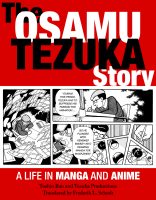
The Osamu Tezuka Story: A Life in Manga and AnimeThe Osamu Tezuka Story: A Life in Manga and Anime by Toshio Ban. While I certainly understand why Stone Bridge Press chose to release the entirety of The Osamu Tezuka Story in a single volume, the book is huge, amounting to over nine hundred pages of material. Most of the volume consists of Ban’s manga, but it also includes an excellent introduction by the translator (and friend of Tezuka) Frederick L. Schodt and one of the most exhaustive lists of Tezuka’s work that I’ve seen in one place. I’ve read my fair share of works examining the life and career of Tezuka so I wasn’t especially surprised by anything in the manga, but The Osamu Tezuka Story provides one of the most comprehensive, engaging, and accessible biographies. The manga, which is largely chronological, is divided into three parts which delve into Tezuka’s childhood, his entry into manga, and the expansion of his career into anime. Commissioned following Tezuka’s death in 1989, the biography incorporates many of Tezuka’s own words taken from his essays and earlier interviews. Ban, who was one of Tezuka’s sub-chiefs in the manga department, adopts an illustration style very similar to that of Tezuka and excerpts from some of Tezuka’s manga and anime are also used. The Osamu Tezuka Story reveals just how remarkable and influential a creator Tezuka was and is highly recommended for anyone interested in the history of Japan’s manga and anime industries.

Our Little SisterOur Little Sister directed by Hirokazu Kore-eda. I’m not sure when (or if) Our Little Sister will receive a home video release, but I recently had the opportunity to see the film in a theater. Our Little Sister is actually a live-action adaptation of Umimachi Diary (the title more literally translates to “Seaside Town Diary”), an award-winning ongoing manga series by Akimi Yoshida who some will likely recognize as the creator of Banana Fish. I’ve seen one other film by Kore-eda (Like Father, Like Son) which is similar in both theme and tone to Our Little Sister. Both films, despite intense interpersonal drama, are fairly quiet and gentle without becoming saccharine and focus on the complexities of familial relationships. In the case of Our Little Sister, the story primarily follows three sisters whose father left their mother for another woman more than fifteen years ago and whose mother largely left them behind to be raised by their grandmother. After their father dies they meet their half-sister, the daughter of his second wife (out of three), for the first time while at the funeral. For a variety of reasons, they invite her to live with them. While this does cause some raised eyebrows and strain in the family, both immediate and extended, the decision is ultimately a healing one as all four sisters grow closer as they pull together their fragmented lives. Our Little Sister is simply a lovely film. (And I’d certainly be interested in reading the original manga, too!)

Filed Under: FEATURES, My Week in Manga Tagged With: attack on titan, Devil Survivor, film, manga, Osamu Tezuka, Ryo Suzukaze, Satoshi Shiki, Shin Megami Tensei, Toshio Ban

The Devil Is A Part-Timer!, Vol. 5

September 11, 2016 by Sean Gaffney

By Satoshi Wagahara and 029. Released in Japan by ASCII Mediaworks. Released in North America by Yen Press. Translated by Kevin Gifford.

As the series has gone on, the astute reader may have realized that Enta Isla is not simply a place where fantasy devils and angels lived, but a place where an actual War in Heaven broke out and humans were caught in the middle. In other words, where I’d mentioned before that the series was a bit like A Certain Magical Index in the way that it used religious themes for its own ends, I apparently didn’t know the half of it. Here we see Angels descending to Japan to try to discipline one of their own, and Maou gets caught in the middle because a) it’s his series, and b) Chiho ends up hospitalized due to a series of unfortunate coincidences extending back to the start of the series.

devil5

Of course, the main people who get character building here are not Maou and Chiho, but rather Emi and Suzuno. Emi is forced to deal with the fact that her mother is in Japan, her father may be alive, and her very EXISTENCE is an affront to Heaven. And Suzuno, who had already had a bit of a crisis of faith in the second book, is now having to deal with the fact that the Angels who inhabit Heaven may not be all that angelic, and in fact may simply be equivalent to just another gang. Again, using Western religious imagery as the impetus for fantasy plotting is not unique to Japan, but it works particularly well here as we come to realize that there really aren’t good and bad guys here, just a bunch of people struggling for power and worship. That said, I do still want to find out one day why Maou was so horrible pre-series.

To be honest, though, the real joy of this book isn’t really the plot revelations or the depth of character. It’s not even the action sequences, or the sight of a busty teenage girl in pink pyjamas flying though the air and firing beams of energy. No, it’s the entire cast spending the first third of the book discussing digital TV and what makes really good udon. Devil Is a Part-Timer has good backstory, don’t get me wrong, but the best reason to read it is still the tiny minutiae of life in Japan as being lived by a bunch of fantasy heroes. Rika’s stunned reaction when none of her companions know who Toshiba is; Maou’s middle management skills saving the day once again and coming up even in the oddest situations and possibly best of all, Suzuno’s obsession with the delicious cheap udon they get at once shop. It’s simply fun to read.

I could say that about the series as a whole. Everyone’s likeable by now – Emi gets less tsundere by the book, though she’s still got a ways to go – and the prose is smooth and clear, one of the best of Yen On’s light novel efforts. It’s still in the top tier of light novels currently being released.

Filed Under: REVIEWS

Manga the Week of 9/14

September 8, 2016 by Sean Gaffney, Michelle Smith, Ash Brown and Anna N Leave a Comment

SEAN: In a month this big, even the smaller 2nd and 3rd weeks can be packed with manga titles, and that proves to be the case here.

Dark Horse has its 24th volume of Vampire Hunter D, showing that it was way ahead of the vampire curve.

Devil Survivor has come out so fast from Kodansha it’s hard to believe it’s almost done. Vol. 7 is the 2nd to last.

There’s also a 4th volume of shonen romance Forget-Me-Not.

spoof1

If you want a parody of Attack on Titan but would like it to be closer to its source material as opposed to a high school AU, Spoof on Titan may be for you. It’s a cute 4-koma gag series that originally ran on the Mangabox app a few years back. It’s quite amusing.

One Peace has now caught up with the old Maria Holic releases, so I believe Vol. 7 is new content.

The description of Lord Marksman and Vanadis, Seven Seas’ debut this week, on a manga info site has keywords like ‘based on a light novel’, ‘big breasts’, ‘tsundere’, and the like. Still, it’s in Comic Flapper rather than Comic Alive, so maybe it’s not as cliched as it sounds…

And we also get the 2nd volume of Masamune’s Revenge, whose first volume surprised me by not being terrible, so there’s always hope.

And a 2nd volume of The Other Side of Secret, which… nah, can’t say the same. Moving on.

Remember Blue Morning? From so long ago? We now have a 6th volume of it, courtesy SuBLime. Yay!

MICHELLE: Yay, indeed!

ASH: I’ve been waiting for this! I’m loving the series.

SEAN: And they also have a 2nd 2-in-1 omnibus of Don’t Be Cruel.

MICHELLE: I had major issues with the first volume, but I admit that I kind of want to read this.

SEAN: Udon has a 4th volume of the manga adaptation of Persona 4.

blame1

Vertical has what I think most Manga Bookshelf peeps will consider the big release of the week, the first omnibus re-release of BLAME!, rescued from the out of print Tokyopop doldrums thanks to the performance of Knights of Sidonia by the same author. I actually never read this back in the day, so look forward to seeing what it does. And if it has bears.

MICHELLE: I’ve read all of BLAME! and enjoyed it very much, especially the art and labyrinthine setting. Alas, I don’t recall any bears.

ASH: It’s also a literal big release–the volume is huge!

ANNA: I haven’t read it before, so I am excited!

SEAN: Hayate the Combat Butler, from Viz, is exciting no one this week but me, but I am still excited to see a 28th volume of another of my ‘lost cause’ series.

Lastly, a 16th Ranma 1/2 omnibus gives us more of what you like from Rumiko Takahashi, unless you like character development, it doesn’t have that. But it’s funny, so who cares?

ASH: Still happy to see Ranma 1/2 back in print.

SEAN: What are you getting from this list?

Filed Under: FEATURES, manga the week of

Monthly Girls’ Nozaki-kun, Vol. 4

September 8, 2016 by Sean Gaffney

By Izumi Tsubaki. Released in Japan as “Gekkan Shoujo Nozaki-kun” by Square Enix, serialization ongoing in the online magazine Gangan Online. Released in North America by Yen Press. Translated by Leighann Harvey.

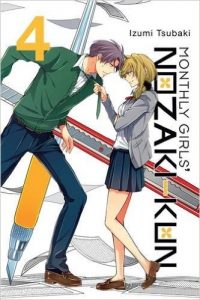
For those who greatly enjoyed the Nozaki-kun anime, this volume in particular contains some of the most beloved parts of that anime. Here is where you can find Hori desperately trying to teach a lazy Nozaki about background, which leads to the wonderful “Lately everyone’s been really into boxes!”. We have Nozaki, Hori and Wakamatsu playing the otome game, and boggling at the “good-heartedness” of the lead girl, even when it turns out she can date Satan. And we have the festival, which doesn’t have the sweet ending the anime tacked on to make it more of a finale, but does have Wakamatsu thinking Kashima is a guy and Seo’s date, and the beloved candy apple eating. Basically, everything here is a gem.

nozaki4

(Also, we have that cover, which is absolutely wonderful. You don’t normally think of this title as being sexy, but trust Seo to upend that with one pull of a tie.)

We also meet the rest of Nozaki’s family, though his brother is the one who will actually show up on an occasional basis in future. Like many manga families, the children turn out to have similar personalities to the parents, though both Nozaki and Mayu both seem to be a bit more like their stoic mother. Mayu actually manages to top Nozaki in the “can’t be bothered” sweepstakes, which makes it even more amusing later in the book when he’s paired with the emotionally draining Mikoshiba. Indeed, circumstances have them both end up at the apartment of Tanuki manga author Miyako’s apartment, and Tsubaki shows us why much of the comedy that comes from Nozaki-kun can simply be taking people who’ve never interacted and throwing them together. Turns out their strip, who knew?

And of course there’s Nozaki’s manga, which continues to roll along, even if I imagine its core audience must read it for the eccentricities. Ken can’t possibly smooth them all out. Nozaki trying to “surprise” Sakura ends up failing miserably till he’s not trying anymore, at which point he wins her heart all over again. And speaking of non-romance, Wakamatsu still hates Seo but adores Lorelai, which frustrates Nozaki no end. Seo, of course, is quite happy to go along with this as long as it amuses her, but amusingly, when Wakamatsu ends up being too preoccupied with it to be irritated by her, SHE loses interest in singing! Personality-driven comedy needs to keep surprising, which can be especially difficult in titles like these that don’t really allow for character development, and seeing Tsubaki achieve it every volume is fun.

As always, caveats apply: This is a 4-koma book, which the punchline being a shouted “what the heck?” 90% of the time. But if you don’t mind that, this remains gloriously funny stuff, with a cast that’s extremely strange but fascinating nonetheless.

Very few tanukis this time round, though. Alas.

Filed Under: REVIEWS

Manga Giveaway: Tokyo Ghoul Trio Winner

September 7, 2016 by Ash Brown

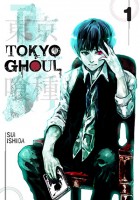
Tokyo Ghoul, Volume 1
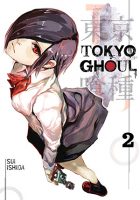
Tokyo Ghoul, Volume 2
Tokyo Ghoul, Volume 3

And the winner of the Tokyo Ghoul Trio manga giveaway is… Briell Saunders!

As the winner, Briell will receive the first three volumes of Sui Ishida’s manga series Tokyo Ghoul as published in English by Viz Media. For this giveaway, I asked that participants tell me a little about their favorite half-human characters from manga. Kaneki Ken, the protagonist of Tokyo Ghoul, was mentioned a fair number of times, but he’s not the only well-liked half-human. Check out the giveaway comments for everyone’s details responses, and check out the list below for some of the manga that feature half-humans of various types.

Some of the manga licensed in English featuring half-humans:
Bleach by Tite Kubo
Blue Exorcist by Kazue Kato
Ceres: Celestial Legend by Yuu Watase
Cirque du Freak by Takahiro Arai
Claymore by Norihiro Yagi
D.Gray-man by Katsura Hoshino
Dawn of the Arcana by Rei Toma
The Devil Is a Part-Timer by Akio Hiragi
Franken Fran by Katsuhisa Kigitsu
Fullmetal Alchemist by Hiromu Arakawa
InuYasha by Rumiko Takahashi
Jiu Jiu by Touya Tobina
My Girlfriend Is a T-Rex by Sanzo
My Monster Secret by Eiji Masuda
Negima by Ken Akamatsu
Nura: Rise of the Yokai Clan by Hiroshi Shiibashi
Parasyte by Hitoshi Iwaaki
Rin-ne by Rumiko Takahashi
Rust Blaster by Yana Toboso
That Wolf-Boy Is Mine! by Yoko Nogiri
Three Wolves Mountain by Bohra Naono
Tokyo Ghoul by Sui Ishida
Übel Blatt by Etorouji Shiono
Wolf Children: Ame & Yuki by Mamoru Hosoda
YuYu Hakusho by Yoshihiro Togashi

Thank you to everyone who participated in the giveaway and took the time to share your favorites with me. I hope to see you all again!

Filed Under: Giveaways, UNSHELVED Tagged With: manga, Sui Ishida, Tokyo Ghoul

Black Bullet: Vengeance Is Mine

September 6, 2016 by Sean Gaffney

By Shiden Kanzaki and Saki Ukai. Released in Japan by ASCII Mediaworks. Released in North America by Yen On. Translated by Nita Lieu.

I’ve talked before about Black Bullet’s flaws – from its shoehorning of “lolicon’ style humor into the text to its simple unrelenting grimness – so let’s try to take this review to talk about what it does well. Because it does do some things very well. Black Bullet has a plan, and that plan is to let you know about the horrors of war. And over the course of this book’s 220-odd pages, you learn over and over again that the noble soldier fighting an unwinnable fight against an unkillable enemy is something that is going to result in hundreds, indeed thousands of casualties. Sometimes, I will admit, Black Bullet overdoes its message – there’s a scene with a cute 8-year-old getting her head cut off that was just so grand guignol it actually turned silly – but for the most part it’s just a sea of horror that hammers its point home nicely.

bb4

The other excellent thing in the book, though again it’s hard to enjoy, is Kisara. I had been ready to gripe about her being underused in the volume again, particularly as there were many times when we were told that she was the most dangerous and deadly of them all – including by the resident insane tykebomb – but we still don’t actually see her doing anything, given that for the most part Rentaro is the hero of this series and it follows his POV. And then we get the Epilogue, and boy howdy. Kisara discovers that one of her brothers is, in fact, responsible for the decay of the monument that led to the events of books 3 and 4 in the first place, and duels him. It’s interesting, because the brother is presented to the reader as being a Grade-A snake, horrible and loathsome, and you are totally not wrong to want to see her take him out.

No, the issue is that she takes joy in doing so, and, in her chosen method, drives a (semi) innocent bystander insane. Her glee and delight as she discusses her revenge being started reminds you what the subtitle of this volume was, and you realize that it was about her all along. Rentaro is, of course, shocked, as this is not the Kisara she normally shows to him. In fact, he realizes that one day he may in fact have to be the one to kill her if she keeps going on like this. I’m not sure when that will play out – final book in the series, I’m guessing – but certainly his utilitarian views are at odds with her “only evil can combat evil” revenge fantasy. It’s a stunning final 30 pages or so.

Of course, my own personal tastes remain an issue here too. This is well-written, the lolicon was at a minimum, and I enjoyed its themes and what it’s trying to say. I just hated reading it as a book for pleasure. It’s very good, bordering on excellent, but I felt the opposite of enjoyment. It was a slog. As such, Black Bullet remains a series that’s hard to recommend, though fans of the anime and of ‘grimdark’ style series will get a lot out of it.

Filed Under: REVIEWS

Bookshelf Briefs 9/5/16

September 5, 2016 by Sean Gaffney, Michelle Smith and Anna N Leave a Comment

anne2Anne Happy, Vol. 2 | By Cotoji | Yen Press – This would appear to be one of those titles that is fun and cute provided you do not take it remotely seriously, because serious analysis of this sort of this can be horrifying. Hanako’s bad luck is really pretty terrible, Botan’s consecutive injuries would have her hospitalized or dead in any other title, and Hibari must be close to exhaustion from having to play the straight man all the time. In this volume the girls show they can’t even win a simple board game or cook a decent meal without disasters, though they do manage to achieve a scavenger hunt. I’m with the new, as yet unnamed teacher, though—even assuming this IS bad luck, is it really something to be cured with this class? Fun but frustrating. – Sean Gaffney

behindscenes2Behind the Scenes!!, Vol. 2 | By Bisco Hatori | Viz Media – I was hoping that the second volume of this series would focus more on the extended cast of the Art Squad, so I was happy to see chapters with Maasa and Izumi as a focus. The first part of this volume focuses on the Art Squad intervening in a romance gone wrong, where their abilities to make a girl’s room look filthy makes exactly the right kind of wrong impression. Maasa reveals that she’s interested in getting a college boyfriend, but her deep devotion to special effects make-up might be getting in the way. Izumi’s personality ends up having consequences for his health. Overall, this was another pleasantly diverting volume with a focus on people making things, I’m enjoying this series. – Anna N

kisshim6Kiss Him, Not Me!, Vol. 6 | By Junko | Kodansha Comics – If Kiss Him, Not Me hadn’t been that big a hit, or if the popularity was fading, this might have been the final volume, and indeed much of the first half seems to be leading up to Kae finally making a decision about which guy she likes (or which girl—it’s impressive that they really do have Shima’s confession be as earnest as the four guys). But Kae is not after romance, she is after BL, and thus in the end the choice is obvious—choosing nobody because she’s obsessed with a new TV series. The second half is more light-hearted, showing off the dangers of BL pairing wars and how just ‘who tops?’ can lead to hurt feelings and declarations of war. I shouldn’t be enjoying this as much as I am, but it’s just dumb, cute fun. – Sean Gaffney

kuma1Kuma Miko: Girl Meets Bear, Vol. 1 | By Masume Yoshimoto | One Peace Books – Lately we’ve seen quite a bit of the ‘cute fluff that should be for kids, but is written for an adult audience’ type of manga, and Kuma Miko falls squarely into that category. Taking place in the middle of the country, most of the volume does indeed deal with the relationship between Machi, a young miko who’s easily flustered and overcompensates a lot of the time, and Natsu, a bear who sometimes enjoys messing with her but mostly acts like a sort of sempai. The manga had an anime recently, and was infamous for the history of the village involving human/bear sexual relations. It’s actually a bit more explicit here. If you enjoy bizarre manga, you’ll like this, but it’s no Chi’s Sweet Home, be warned. – Sean Gaffney

skip37Skip Beat!, Vol. 37 | By Yoshiki Nakamura | VIZ Media – Skip Beat! is consistently good, but I found this volume to be especially so. Since the beginning, Kyoko’s inevitable reunion with her cold-hearted mother has been looming on the horizon, and now that it’s finally here, it does not disappoint. At first, Kyoko succeeds in telling herself that she isn’t hurt when she runs into her mother and is totally ignored, but when Saena Mogami later denies on national television that she even has a child, it’s a devastating blow. I love how worried everyone is for Kyoko—even Sho—and I really, really love the final scene where she “mistakes” Ren for Corn and hurls herself into his arms, finally allowing herself to cry. The expressions he makes are amazing. Way to keep us on tenterhooks ’til the next volume, Nakamura-sensei! – Michelle Smith

wolfboy1That Wolf-Boy Is Mine!, Vol. 1 | By Yoko Nogiri | Kodansha Comics – Saying that your manga is perfect for fans of Fruits Basket is a somewhat high bar to clear, but Kodansha thinks that it’s on to a winner. And indeed, this fist volume is very enjoyable. Komugi transferred from Tokyo to Hokkaido after being bullied at school, and tries to start her life over, but immediately stumbles upon the secret of the school’s hottest guys—they’re all animals who live as humans. It’s sort of a reverse Furuba, where the animals can turn human but are really beasts. This may be why the budding feelings Komugi has for Yu, the wolf of the group, are expressly forbidden, and indeed somewhat awkward to think about if you go too deep. If you don’t, this is quite sweet and touching. – Sean Gaffney

yowapeda3Yowamushi Pedal, Vol. 3 | By Wataru Watanabe | Yen Press – Many sports manga involve the same tropes. Training camps, prefectural tournaments, aiming for the inter-high championships… The fact that this volume of Yowamushi Pedal features all three of these things does not dim my enjoyment in the least, because it uses them to motivate its three primary characters while at the same time fleshing out some of the older members of Sohoku’s cycling team. I especially love that, unlike in some series, the talented rookies are not the team’s saviors. In fact, the third-year members are all amazing, and the second-years have been working hard, too. The gruelling training camp is the proving ground for who’s got what it takes to make it to the inter-high battle, and another standout moment is Onoda’s willingness to do whatever he can to see that his two best friends are able to make it. Once again, I was bummed when another hefty volume drew to a close. – Michelle Smith

Filed Under: Bookshelf Briefs

  • « Go to Previous Page
  • Page 1
  • Interim pages omitted …
  • Page 473
  • Page 474
  • Page 475
  • Page 476
  • Page 477
  • Interim pages omitted …
  • Page 1048
  • Go to Next Page »
 | Log in
Copyright © 2010 Manga Bookshelf | Powered by WordPress & the Genesis Framework