• Skip to primary navigation
  • Skip to main content
  • Skip to primary sidebar
  • Home
  • About Us
    • Privacy Policy
    • Comment Policy
    • Disclosures & Disclaimers
  • Resources
    • Links, Essays & Articles
    • Fandomology!
    • CLAMP Directory
    • BlogRoll
  • Features & Columns
    • 3 Things Thursday
    • Adventures in the Key of Shoujo
    • Bit & Blips (game reviews)
    • BL BOOKRACK
    • Bookshelf Briefs
    • Bringing the Drama
    • Comic Conversion
    • Fanservice Friday
    • Going Digital
    • It Came From the Sinosphere
    • License This!
    • Magazine no Mori
    • My Week in Manga
    • OFF THE SHELF
    • Not By Manga Alone
    • PICK OF THE WEEK
    • Subtitles & Sensibility
    • Weekly Shonen Jump Recaps
  • Manga Moveable Feast
    • MMF Full Archive
    • Yun Kouga
    • CLAMP
    • Shojo Beat
    • Osamu Tezuka
    • Sailor Moon
    • Fruits Basket
    • Takehiko Inoue
    • Wild Adapter
    • One Piece
    • After School Nightmare
    • Karakuri Odette
    • Paradise Kiss
    • The Color Trilogy
    • To Terra…
    • Sexy Voice & Robo
  • Browse by Author
    • Sean Gaffney
    • Anna Neatrour
    • Michelle Smith
    • Katherine Dacey
    • MJ
    • Brigid Alverson
    • Travis Anderson
    • Phillip Anthony
    • Derek Bown
    • Jaci Dahlvang
    • Angela Eastman
    • Erica Friedman
    • Sara K.
    • Megan Purdy
    • Emily Snodgrass
    • Nancy Thistlethwaite
    • Eva Volin
    • David Welsh
  • MB Blogs
    • A Case Suitable For Treatment
    • Experiments in Manga
    • MangaBlog
    • The Manga Critic
    • Manga Report
    • Soliloquy in Blue
    • Manga Curmudgeon (archive)

Manga Bookshelf

Discussion, Resources, Roundtables, & Reviews

Blog

Sweet Blue Flowers, Omnibus 1

September 30, 2017 by Sean Gaffney

By Takako Shimura. Released in Japan as “Aoi Hana” by Ohta Shuppan, serialized in the magazine Manga Erotics F. Released in North America by Viz. Translated by John Werry.

The reason for the somewhat awkward ‘omnibus 1’ up there is that I’ve already reviewed the first volume of this series back in April 2014 when DMP did a somewhat aborted digital release of it. But now we have a handsome paperback of the first two volumes, with a new translation and looking excellent. As for the series itself, it’s odd coming at it now after so many of the series that came after it have done the same thing. The average reader interested in yuri may well ask what they can get from this they aren’t getting from Bloom Into You, or Kiss & White Lily for My Dearest Girl, or even Citrus (well, OK, don’t bring Citrus into this). The biggest answer, of course, is that this is written and drawn by Takako Shimura, and thus is simply well-crafted, with characters whose school days and intimate lives are laid out in sometimes crushing precision by an expert.

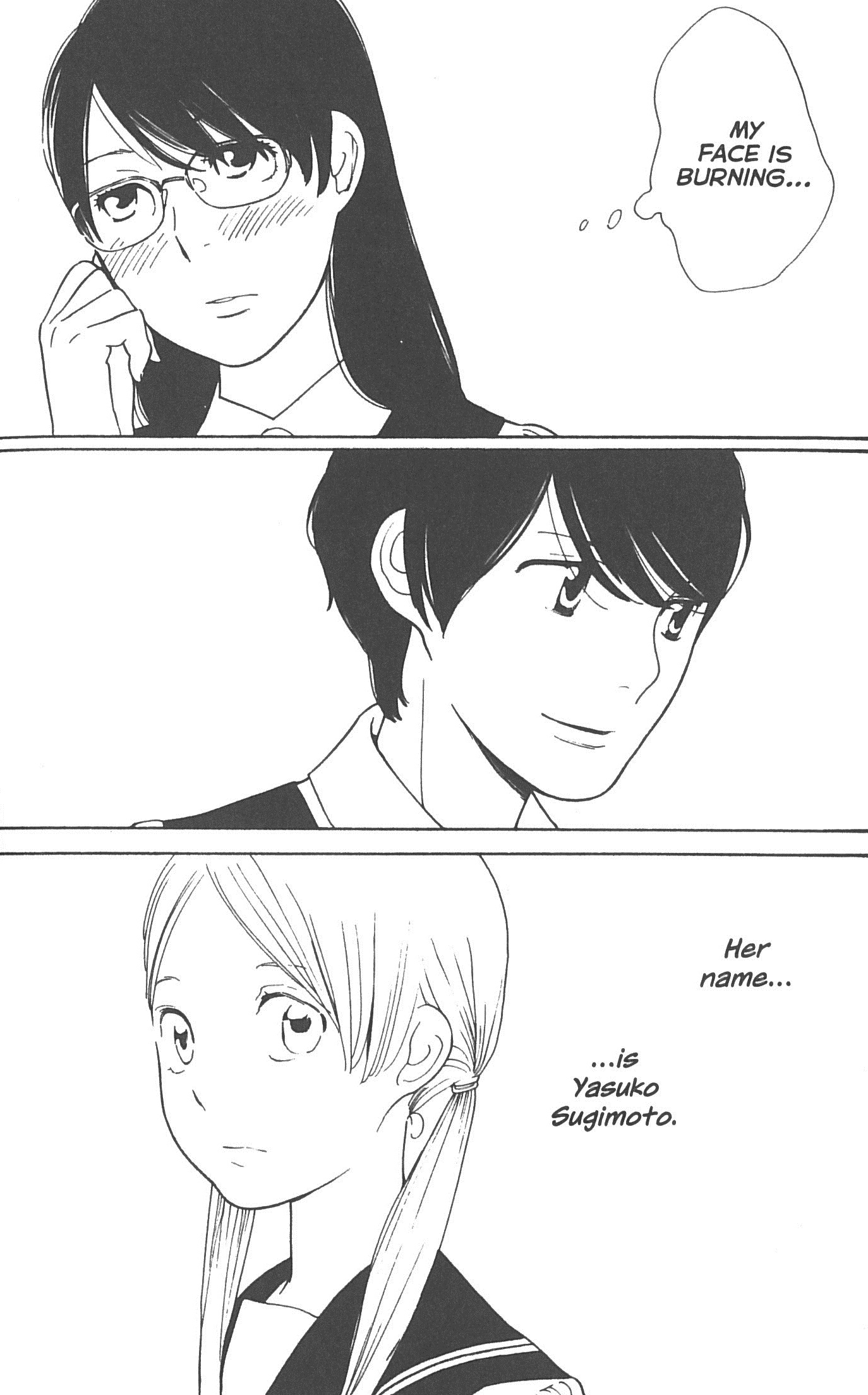
One thing that sets this series apart from other ‘girls fall for other girls at a school’ series is that we’re dealing with two different schools. Akira (sailor uniform school) is bright, bubbly, a bit overearnest and not particularly interested in romance at all, at least not at first (though the arranged fiancne of one of her friends seems interested in her). She’s just reunited with childhood friend Fumi (apron-like dress uniform school), who was a big crybaby back in the day and, well, still is. She’s also in love with her cousin, and therefore somewhat devastated when said cousin ends up marrying a guy. She’s quick to rebound, though not with Akira – even though she slowly realizes over the course of the book that Akira was her real childhood crush, she’s now head over heels with Yasuko, who is a charmer and a Takarazuka type if ever there was one. Unfortunately, Yasuko also has issues in her life, namely a crush she used to have on a male teacher. So that’s not likely to work out either.

As you can see, this tends more towards the melodramatic side of the scale, at least when you write out what’s actually going on. As with Shimura’s other classic, Wandering Son, though, it doesn’t feel overwrought as you read it – the emotions feel real without attempting to drown the reader, and everyone reacts (mostly) sensibly. You’ll also note that I mentioned men a few times – even though both schools our heroines attend are girls only, this is not a series where men simply never pop up. And sexuality is not precisely binary either – Yasuko’s somewhat exasperating family note the fact that Yasuko dating Fumi means she’s bisexual now, and we see a few examples of the classic ‘I’m in love with a girl while in school but I will ‘grow up’ and marry a guy’ trope which is, well, very indicative of real life in Japan, though that’s starting to change.

So yes, Sweet Blue Flowers is absolutely worth reading and checking out, both if you like yuri and if you like Takako Shimura. It’s also only four omnibuses, so shouldn’t devastate your bookshelf too much.

Filed Under: sweet blue flowers

Hergé à Québec

September 29, 2017 by Katherine Dacey

One of the highlights of my August visit to Québec City was the Hergé à Québec exhibition at the Musée de la civilisation. The show, which has already made stops in Paris, Geneva, and London, offers a retrospective on the life and work of Georges Prosper Remi (1907 – 1983), better known to children around the world as Hergé, creator of Tintin, intrepid boy reporter, and Snowy, his sardonic canine companion.

Hergé à Québec spans Remi’s entire career, from his first childhood drawings to his late-in-life brush with contemporary art. As a means of introducing Hergé to visitors, the show begins with a gallery of items culled from his formative years, including a comic drawn when he was a sixteen-year-old Boy Scout. This room is followed by a sequence of exhibits exploring three seminal Tintin stories, Tintin in the Land of the Soviets (1930), The Blue Lotus (1932) and Cigars of the Pharoah (1934). Through a series of well-chosen projections, photographs, and pages, the curators define Hergé’s ligne claire (clear line) style, and state the main thesis of the show: that Tintin teaches young readers about the world through his adventures — in which Tintin is subject to the slings and arrows of fortune as he travels through foreign lands — and missions — in which he pursues a specific objective, such as finding a lost object. This idea is further developed in later galleries, culminating in a charming display of pages from and items associated with Tintin’s two lunar adventures: Destination Moon (1953) and Explorers on the Moon (1954).

The show also includes a gallery featuring commercial posters designed by his production company l’Atelier Hergé-Publicité. These advertisements, rendered in a bold, colorful style reminiscent of Cassandre’s, urge consumers to fly Sabena Airlines, read Le Vingtième Siècle, and buy Parein biscuits. As playful and striking as many of these images are, the inclusion of one toy company’s poster — an image of a thick-lipped African child holding an umbrella — points to one of the exhibition’s main flaws: it misses the opportunity to address Hergé’s racist depictions of colonized people in a historically responsible fashion.

A selection of posters produced by l’Atelier Hergé-Publicité.

In tracing the development of Hergé’s storytelling from Tintin in the Land of the Soviets to The Blue Lotus, the show only tacitly acknowledges the two works that fell between them: Tintin in the Congo (1931) and Tintin in America (1932). Instead, the curators focus on Hergé’s relationship with Chinese artist Zhang Chongren, whom Hergé befriended shortly before writing The Blue Lotus. Through his interactions with Zhang, they argue, Hergé learned the importance of researching the places Tintin visited, rather than defaulting to popular stereotypes about their peoples. And while the discussion of Hergé and Zhang’s friendship offers evidence that Hergé was capable of taking a more nuanced view of other cultures, the show never examines Hergé’s paternalistic view of Belgium’s African subjects, an issue that’s explicitly addressed in both Benoit Peeters’ Hergé: Son of Tintin and Pierre Assouline’s Hergé, The Man Who Created Tintin.

The exhibition does a better job of addressing Hergé’s stint at Le Soir (1939-1944), the official newspaper of occupied Belgium. After the war, Hergé was arrested four times on suspicion of collaborating with the Nazi regime — charges that almost cost him his citizenship. To the curators’ credit, the show includes a brief video interview with Hergé about this episode in his life. By acknowledging his involvement with Le Soir in such a neutral fashion, however, the show misses another opportunity to present a more nuanced picture of Hergé’s political beliefs, warts and all.

Where the show excels is in its ability to immerse the visitor in Hergé’s creative process, from crude storyboards — with cross-outs, arrows, and editorial notes — to published work. Throughout the exhibition, there are numerous pairings of early drafts with finished products, allowing the viewer to trace the development of characters and scenes from concept to completion. The galleries also include several side-by-side comparisons of objects with the images they inspired, most notably in Tintin and the Broken Ear (1937). Although some of these pages are presented in their final form, with word balloons and dialogue, many are not. This decision allows the visitor to more fully appreciate the role of Hergé’s line work and colorful palette in creating Tintin’s world — without the mediating influence of text.

The exhibition also makes a strong case that Hergé deserves serious consideration as both an art collector and painter. The final gallery juxtaposes Hergé’s acquisitions — including Roy Lichtenstein’s Rouen Cathedral (1967) — with his own original canvases. And as fascinating as it was to contemplate Hergé’s taste in art, I found the modernist work that he produced under the tutelage of Belgian painter Louis Van Lint (1909-1986) more striking than the work he’d collected. His own paintings demonstrate strong affinities with Joan Miró and Marc Chagall, but also demonstrate strong affinities with his cartooning, as evidenced by his careful delineation of space and strong sense of color.

This 1973 mural greets visitors to the Musée de la civilisation.

It’s a shame that the curators didn’t explore Hergé’s life with the same zeal; doing so would have provided valuable context for understanding him as a product of a specific place and time, immersed in ideas that shaped the characters he created and the stories he told. Yet for all the show’s limitations, Hergé à Québec gave me new insight into Hergé’s evolution as an artist and storyteller, and a deeper appreciation of his craft. For an artist’s perspective on Hergé à Québec, see Ben Towle’s thoughtful evaluation of the exhibit.

Hergé à Québec is on display at the Musée de la civilisation in Quebec City through October 22nd. For information and tickets, click here. Note that the show is not included in the general admission price to the museum.

Filed Under: Comics, Manga Critic Tagged With: Exhibitions, Herge, Musée de la civilisation, Tintin

Manga the Week of 10/4/17

September 28, 2017 by Sean Gaffney, Michelle Smith, Ash Brown and Anna N 1 Comment

SEAN: Next week is October! Are you ready for your pumpkin-spiced manga?

Technically I’ve no idea when in October this will be out, but Bruno Gmuender has listed House of Brutes 1 on Amazon for ‘Oct 2017’, so let’s stick it here. If you like burly gay men getting tied up, you’ll love this.

ASH: The publisher declared bankruptcy earlier this year, so some of the releases are up in the air or have been moved around in the schedule. But should this actually exist, I’ll definitely be picking it up.

SEAN: We’ve seen a lot of male power fantasies this year, but Arifureta: From Commonplace to World’s Strongest may be the most iconic. The 3rd light novel arrives from J-Novel Club next week.

We also get the 3rd Bluesteel Blasphemer novel, from the creator of Outbreak Company, which J-Novel Club just licensed.

And our monthly dose of Invaders of the Rokujouma!?, Vol. 7 this time.

Kodansha Digital celebrates October with a 14th Pumpkin Scissors, and also a 17th Yozakura Quartet.

ASH: There really is pumpkin manga for October!

SEAN: Speaking of license rescues, they also are releasing ALL of Rave Master digitally next week. I assume these are the Tokyopop editions with the serial numbers filed off, but it’s nice to see them available again.

As for newer digital titles, we have a 5th Ace of the Diamond and a 7th Domestic Girlfriend. No print for Kodansha next week!

MICHELLE: Yay for Ace of the Diamond!

SEAN: Seven Seas has a 6th volume of revenge comedy Masamune-kun’s Revenge, although “revenge angst” might be more appropriate at this point.

And a 2nd Tales of Zestiria, which I think I may have mentioned in a prior post – did its date slip?

Vertical, Inc. has the Anime Supremacy! novel, which I know nothing about but looks pretty cool.

ASH: I’ve heard it described as a prose version of the Shirobako anime, which I know has more than a few fans.

SEAN: And also the 9th Devil’s Line from Vertical Comics.

Viz has a pile of titles, as always. The 6th 7th Garden seems numerically off somehow.

Assassination Classroom 18 features that most popular holiday, Valentine’s Day! Will anyone hook up?

The Demon Prince of Momochi House reaches double digits with Vol. 10.

ASH: I’ve fallen a little behind in the series; it’s probably about time I catch up!

ANNA: I enjoy it a lot. It surprises me sometimes!

SEAN: And Food Wars! has gotten to Vol. 20.

Haikyu!! is at sweet sixteen – will it still be popular now that we have a woman’s volleyball title as well? (Hint: yes.)

MICHELLE: There’s definitely room in my heart for both of them.

ANNA: One day I will wrestle the volumes of this series away from my kids and get caught up.

SEAN: We have a lot of final volumes next week, starting with the 8th and final Honey So Sweet!. My guess is it will live up to its name as always.

MICHELLE: It does.

ANNA: Aww, I think Shojo Beat needs another super cute series to fill the void left by Honey So Sweet and My Love Story!!.

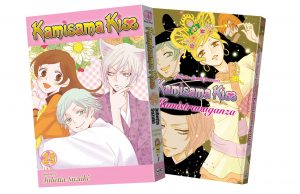
SEAN: Kamisama Kiss comes to an end with its 25th and final volume. There’s also a limited edition with extra content – you may want to get that.

MICHELLE: So many shoujo conclusions recently!

ANNA: Glad it is getting a nice sendoff with a special edition.

SEAN: Back to series not ending anytime soon, Kuroko’s Basketball’s 8th 2-in-1 shows the end of the big game – well, the big game of the moment.

MICHELLE: Woot. I still haven’t read the seventh omnibus, so I will have fun tackling four volumes’ worth of sportsy goodness at once.

ANNA: Will Kuroko be invisible AGAIN!?

SEAN: Naruto has a 20th 3-in-1.

More omnibuses! Rurouni Kenshin’s 4th 3-in-1.

Another series ending, with the 15th and final volume of So Cute It Hurts!!!!!!!!!!!!!!!. And my last attempt to make that lame joke as well.

Twin Star Exorcists also joins the double digits club with Vol. 10.

The Water Dragon’s Bride as a 3rd volume.

MICHELLE: This series has grown on me—not surprising since I really liked Dawn of the Arcana—and I find I’m looking forward to volume three quite a bit.

ANNA: I love this series. Everyone should be reading this!

SEAN: And we have a 17th World Trigger, which hopefully will resume in Japan soon.

Lastly, there’s an 8th Yona of the Dawn, always guaranteed to put a smile on the face of the Manga Bookshelf crowd.

MICHELLE: The closest thing to Basara coming out currently, I will always be on board for this.

ASH: Same here!

ANNA: EEEEE!!! for Yona of the Dawn!!!!

SEAN: So what’s your preferred title?

Filed Under: FEATURES, manga the week of

Is It Wrong To Try To Pick Up Girls In A Dungeon?, Vol. 9

September 28, 2017 by Sean Gaffney

By Fujino Omori and Suzuhito Yasuda. Released in Japan as “Dungeon ni Deai o Motomeru no wa Machigatte Iru Darou ka?” by Softbank Creative. Released in North America by Yen On. Translated by Andrew Gaippe.

DanMachi is not a game world per se, but it runs on game mechanics. Adventurer’s levels are literally written on them, and most of the plot involves killing monsters, drinking healing potions, etc. And this means that the villains tend to be mindless, unthinking monsters. Which makes for good fight scenes – in fact, it has to. If you hesitate or lose it for a moment, you’re dead. We’ve seen Bell Cranel and his group come perilously close to this several times. Be swift, be strong, and kill the monsters. That’s how you survive. So when Bell comes across a newborn monster that not only is not trying to kill him, but is crying – and can talk! – his world is upended a bit. And so is the reader’s, as it’s made clear that this is a game-changer.

The girl on the cover is the monster in question, a vouivre, which may require a little googling – it seems to be related to wyverns. In any case, she shows consciousness, awareness, and intelligence, something previously unknown in the dungeons. Bell being Bell, he decides to take her back to the mansion with him, much to the chagrin of everyone else, who would probably protest more if it weren’t for the fact that they’ve all been rescued from bad situations by him in the exact same manner. Naming her Wiene (not sure how this is pronounced – I went with “vine-uh” while reading), she learns incredibly rapidly, and also bonds with most of the family (sorry, Lilly, you’re destined forever to be the grumpy suspicious one) very quickly. The difficulty is with what she is. If monsters have intelligence now and can be nice, will that make adventurers think twice before killing them? That will lead to a lot of dead adventurers. How do you tell a populace born and raised on ‘monsters are evil’ that some aren’t? And if you spend your life devoted to killing monsters, and now some are folks like Wiene, are you a murderer?

DanMachi 9 doesn’t focus on these questions quite as much as I’d like, but it’s also not finished – the author apologizes for this being a two-parter, and says that the next volume will resolve the subplot. It becomes clear that this is an ongoing thing, and that some of the gods are trying to advance it – using Bell’s ever-loving kindness as a catalyst – so that monsters and humans can live together. Easier said than done, though. Speaking of catalysts, Hestia serves once more as an exposition catalyst, though honestly that’s preferable to some of her former jealous antics. She learns what’s going on, and what price her family could now pay… a price that I think the next volume may deal with.

As always, DanMachi is well-written, with excellent fights, nice characterization (less fanservice than usual this time), and smooth prose, so that you don’t tend to notice how much larger these books are compared to some other light novels. Is this new development going to change the course of the series? Or will everything turn tragic in Book 10? Luckily, as Vol. 9 was pushed back a month, we only have a 3-month wait to find out. Ignore the gimmickey title – this is one of Yen On’s best series.

Filed Under: is it wrong to try to pick up girls in a dungeon?, REVIEWS

Manga Giveaway: Assassin’s Creed Giveaway

September 27, 2017 by Ash Brown

The month of September brings a number of things along with it, such as the autumnal equinox (for us in the Northern Hemisphere, at least) and yet another manga giveaway at Experiments in Manga. For some, other September delights include International Talk Like a Pirate Day. As such, a manga about pirates would seem to be thematically appropriate for a giveaway, and so this month you all have a chance to win the first trade volume of Takashi Yano and Kenji Oiwa’s Assassin’s Creed: Awakening as published in English by Titan Comics. As usual, the giveaway is open worldwide!

Assassin's Creed: Awakening, Volume 1

Pirates, noble or otherwise, are a fairly popular character type in all sorts of media. The presence of pirates in a story generally brings along with it a promise of action, adventure, and sometimes even a bit of romance. Often their portrayal in fiction tends to be fairly glamorized when compared with historical and modern-day realities although there are certainly some stories that favor a more gritty approach.  When it comes to manga, there’s one particularly successful series that most people probably immediately think of when considering pirates (Eiichiro Oda’s One Piece), but there are plenty of other, lesser-known manga that feature pirates of one ilk or another as well. Part of Assasin’s Creed: Awakening, for example, takes place on the high seas during the early eighteenth century and, yes, there are most certainly pirates to be found.

So, you may be wondering, how can you win a copy of Assassin’s Creed: Awakening, Volume 1?

1) In the comments below, tell me a little about your favorite pirate from a manga. (If you don’t have a favorite, or haven’t read any, simply mention that instead.)
2) If you’re on Twitter, you can earn a bonus entry by tweeting, or retweeting, about the contest. Make sure to include a link to this post and @PhoenixTerran (that’s me).

And there you have it! Anyone participating in the giveaway has one week to submit comments and can earn up to two entries. Comments can also be sent to me directly at phoenixterran(at)gmail(dot)com if either needed or preferred. Those comments will then be posted here in your name. The giveaway winner will be randomly selected and announced on October 4, 2017. Good luck!

VERY IMPORTANT: Include some way that I can contact you. This can be an e-mail address in the comment form, a link to your website, Twitter username, or whatever. If I can’t figure out how to get a hold of you and you win, I’ll just draw another name.

Contest winner announced–Manga Giveaway: Assassin’s Creed Giveaway Winner

Filed Under: FEATURES, Giveaways Tagged With: Assassin's Creed, Kendi Oiwa, manga, Takashi Yano

Shojo Fight!, Vol. 1

September 27, 2017 by Sean Gaffney

By Yoko Nihonbashi. Released in Japan by Kodansha, serialization ongoing in the magazine Evening. Released in North America digitally by Kodansha Comics. Translated by Rose Padgett.

One of the benefits of the wave of digital-only titles we’re seeing in 2017 is the glut of a genre that was almost invisible until a few years ago – sports manga. Kodansha in particular has been pouring out titles devoted to soccer, baseball, soccer, rugby, soccer… and now we have women’s volleyball, with the emotionally gripping Shojo Fight!. You’d expect, given that all the male-oriented soccer manga run in either shonen or seinen magazines, that this might be a shoujo title. The title might also make you think that. But no, this runs in Kodansha’s Evening magazine, a counterpart of the mainstream Weekly Morning and the otaku-oriented Afternoon. So Shojo Fight! is reaching an older male audience. Fortunately, this does not mean that the series is filled with cheesecake. Shojo Fight! is a sports title first and foremost.

The series seems to begin in medias res, but it turns out that the first volume is about the end of middle school, and we’re setting up for high school to be the main event. Our hero is Neri, a strong but short young woman with a natural talent for volleyball and a tragic past, which keeps her mostly benchwarming. Her teammates include Koyuki, who is the school idol but whose volleyball skills don’t measure up as much, and Chiyo, who is absolutely furious at Neri and yells at her all the time in that “I am only angry because I see you have given up” sort of way. Neri is in danger of getting cut from the team, which prioritizes tall girls, and she seems to be OK with that, despite pushback from various others. One accidental injury later, however, and Neri is playing in a real game. Can she keep her emotions under control and not let the driving need to play volleyball take over?

It seems to be a sort of cliche to mention that the art in this looks a bit like OEL, so I will say that as well. More to the point, though, the art fits the subject matter. The volleyball matches that we see are straightforward, lacking the ‘cool’ art that we see from titles such as Haikyu!, but being quite understandable and easy on the eyes. I also really liked Neri’s facial expressions, particularly when she’s traumatized in the second half of the book. That dazed, emotionally hollow look makes your heart ache, and you’re grateful for her future coach (I assume) from coming by to stop her making a choice that would be terrible. I’d mentioned the lack of cheesecake: Neri’s male friend Shigeru is a massage therapist, and when Neri strains her back he massages her – in the girl’s bathroom stall, as student’s aren’t supposed to fraternize. It’s quite innocent, but turns into a nasty rumor that gets people punished, and the art shows both the innocent act while signposting how it’s going to be viewed.

It looks like the cast is going to expand vastly in the second volume, not unusual with sports titles. There are some eccentrics in the high school team, and I have to admit the idea of a barbed-wire volleyball net made me laugh. The series isn’t perfect (some of the exposition about the tragedy was really shoehorned in), but it was highly enjoyable, and I can’t wait for future volumes to see if Neri comes into her own as a player.

Filed Under: REVIEWS, shojo fight!

A First Look at Shojo FIGHT!

September 26, 2017 by Katherine Dacey

We’re in the middle of a sports-manga renaissance in the US, with publishers offering an unprecedented range of titles from Kurokuro’s Basketball and Haikyu!! to Yowamushi Pedal and Welcome to the Ballroom. Leading the pack is Kodansha Comics, which is making an astonishing range of titles available through their digital-only and digital-first initiatives. And astonishing it is: alongside obvious choices like the baseball-centric Ace of the Diamond, you’ll also find soccer manga (Days, Giant Killing, Sayanora, Football), rugby manga (All Out!!), mixed-martial arts manga (All-Rounder Meguru), and card game manga (Chihayafuru). Kodansha’s latest acquisition is Shojo FIGHT!, a volleyball series that reads like Dynasty with knee pads.

I mean that as a compliment.

The first chapter briskly introduces us to the three principle members of the Hakuumzan Private Academy Middle School volleyball team: Neri, a talented but difficult personality who has trouble playing well with others (literally and figuratively); Koyuki, a telegenic setter who moonlights on the Junior National team; and Chiyo, a jealous teammate who slots into the Joan Collins role of Queen Bitch. As we learn in the opening pages, Neri’s temper frequently relegates her to the bench, even though her teammates firmly believe that she’s in a league of her own as both a setter and a hitter — a point that Chiyo lords over the emotionally vulnerable Koyuki. Koyuki, for her part, feels isolated from her teammates who say nice things to her face but trash her playing when she’s not around. Though Chiyo bluntly dismisses Neri as “a wolf in sheep’s clothing,” Koyuki makes a concerted effort to befriend Neri, whom she views as a peer on the court.

The dynamic between these three players would be enough for an entire series, but Yoko Nihonbashi surrounds them with a boisterous cast of supporting characters who run the gamut from Odagiri, a shy Neri fangirl, to the Shikisama brothers, two gifted volleyball players who are, of course, handsome, sharp-witted, and fiercely loyal to their childhood friend… well, I’ll let you figure out that particular triangle on your own, though it’s not hard to guess who she is. While these figures are sketched more hastily than the principle trio, Nihonbashi offers tantalizing clues about how they will figure into the conflict between Neri and her teammates.

What will make or break this series for most readers is the art. As numerous folks have observed, Nihonbashi’s thick lines, wide-eyed characters, and computer-generated fills more closely conform to Americans’ perception of what OEL manga looks like — think Peach Fuzz or Van Von Hunter — than a licensed seinen or shojo title. I think that’s a valid observation, though it’s worth noting that Nihonbashi is a Japanese artist writing for Evening magazine, not a Tokyopop Rising Star of Manga. The boldness of Nihonbashi’s linework, and her dense but well structured layouts, aren’t the least bit amateurish or unpolished. If anything, they demonstrate a good understanding of game mechanics and a flair for drawing expressive, animated faces that telegraph the characters’ emotional states; the malicious twinkle in Chiyo’s eye speaks more loudly than her poisonous words — and that’s saying something.

My suggestion: try before you buy! The first 50 pages of Shojo FIGHT! can be viewed for free at the Kodansha Comics website. There’s enough drama packed into that opening chapter to hook any soap opera fan or sports enthusiast, and if the sudsy plotting isn’t enough to pique your interest, Neri will be: she’s prickly and complicated but appealing, not least because she seems like a real teenage athlete struggling to reconcile her desire to dominate the court with her desire to be part of the team.

The entire first volume goes on sale today (September 26th) via Amazon, B&N, ComiXology, and other digital book platforms.

Filed Under: Manga, Manga Critic, REVIEWS Tagged With: Kodansha Comics, Seinen, Shojo Fight!, Sports Manga, Volleyball, Yoko Nihonbashi

My Youth Romantic Comedy Is Wrong As I Expected, Vol. 3

September 26, 2017 by Sean Gaffney

By Wataru Watari and Ponkan 8. Released in Japan as “Yahari Ore no Seishun Rabukome wa Machigatte Iru” by Shogakukan. Released in North America by Yen On. Translated by Jennifer Ward.

In many ways this third volume of OreGairu actually moves backwards: having seen Hachiman seemingly blow up his burgeoning friendship with Yui in the second book, much of this third one consists of he and Yukino trying to get Yui to return to the Service Club, if only as the teacher demands a certain number of people in the club. They are impeded by Yui’s hurt awkwardness, Yukino’s inability to really interact with people normally, and above all Hachiman being who he is. The point of this series to a degree is amusing the reader with Hachiman’s narration and analysis of himself and others, and I am frequently amused. But I do hope that eventually we get some sort of deconstruction of this mindset or attempt to take it apart, because it also reminds you how incredibly annoying this kind of guy really is. For someone in their late teens, Hachiman must seem awesome. He frequently exhausts me.

Yukino, on the other hand, does get quite a bit of attention devoted to her as well, and we start to see a few reasons why she is the way she is, first and foremost being the appearance of her older sister. Haruno is bright, vivacious, communicative, and seemingly nothing whatsoever like Yukino… except Hachiman, who is quite clever in ways that don’t involve himself, realizes is a false front. I’m not sure if Haruno is meant to be a villainous character here – she doesn’t actually seem to be secretly needling Yukino as you’d expect if she were, and the delight over Yukino having a boyfriend seems genuine, false front or no. Yukino is also more apparently making an effort to get closer to Hachiman, though because of who he is and who she is, this doesn’t go far at all, even with Hachiman’s sister trying to set them up.

The book ends with a “bonus chapter” that is the novelization of a drama CD included with the volume, but you get the sense that if it hadn’t come with a drama CD the author would have included it anyway, as it’s in no way irrelevant. By the end of the story Hachiman and Yui have made up and gone back to baseline, they’ve all had a cute birthday party at a karaoke place, and Hachiman has had romantic thoughts about his cute male friend Saika about 80,000 times, which has gotten less amusing as the book go on, and I wasn’t all that amused by it to start with. That said, there are also some very funny jokes here as well – I loved Yui completely misreading Hachiman’s present to her, as well as the brief narrative from Shizuka’s POV, showing that the teacher is every bit as bad as the students who she’s trying to rehabilitate.

The main reason to read this is still Hachiman’s first person snark and the jokes. But so far if I wanted to read a series about a quirky cynical narrator and a frosty socially awkward brunette beauty, I have the Monogatari Series. I’m hoping that in the next book we try to do a bit more with these people than just circling each other warily and grudgingly getting along.

Filed Under: my youth romantic comedy is wrong as i expected, REVIEWS

Bookshelf Briefs 9/25/17

September 25, 2017 by Michelle Smith and Sean Gaffney Leave a Comment

Arpeggio of Blue Steel, Vol. 11 | By Ark Performance | Seven Seas – One of the good things about this series is the way that not all of the ‘traitor’ mental models are changing sides due to love on Gunzou—in fact, almost none of them are. We’re gradually seeing that the mental models, as they gain more experience, are becoming more and more like humans. Which means they can screw up—I laughed out loud at Haruna’s “fake name.” But it also means they can bond with other humans, like Iona and her crew, or save other humans when it doesn’t gain them anything, like the two chibis who help Iori to not die in the engine room. As you can see, I may be very bad at names in this series, but that doesn’t mean I don’t enjoy it every time. – Sean Gaffney

Barakamon, Vol. 14 | By Satsuki Yoshino | Yen Press – We’re back on the island for this volume, as Handa goes forward with his decision to start a calligraphy school rather than try to follow in his father’s footsteps. That said, trying to make a real living at a school on an island where no one wants to pay that much money is going to be tough. Meanwhile, Miwa’s family is also having issues with finances, as her father decides to close the liquor store as he’s losing to the larger chain. Miwa’s frustration and indecisiveness is quite realistically shown—she doesn’t just go “I’ll take over for you, Dad” but has to be led there slowly because her future hasn’t really occurred to her. And the best news of all, Kanzaki goes back to Tokyo, and will not hopefully irritate future volumes with his presence. – Sean Gaffney

Dreamin’ Sun, Vol. 3 | By Ichigo Takano | Seven Seas – After Zen infuriating me in the second volume, I’m pleased to state that he’s much more tolerable here, possibly as I’m now sure that he’s not going to be endgame. That said, I do now suspect that endgame is going to be her landlord, which… well, on the bright side, he’s not her teacher. Much of this volume follows a theme of ‘dramatic shoujo,’ with the desire to chase your dreams warring with the reality of needing to actually deal with life crises, which may mean abandoning those dreams. Zen works much better in this plot than he did getting really angry at Shimana because he had no idea how to deal with love. This isn’t my favorite series by this author (I prefer orange), but it’s nice and solid shoujo. – Sean Gaffney

Everyone’s Getting Married, Vol. 6 | By Izumi Miyazono | Viz Media – While I’d appreciate this even more if Kamiya weren’t a creep and stalker, I do like the fact that the author is well aware of it and not really playing it as oh-so-sexy. In fact, sometimes it manages to be funny. A large part of this book involves Asuka and Ryu, still not getting married, deciding to get an apartment together—and naturally guess who their neighbor is. I also really enjoyed Asuka’s family, as her mom explains the reasoning behind why she got married, and her brother manages to be protective but not a brat. More to the point, I just really love Asuka and Ryu as a couple, married or not. The cliffhanger implies fresh disasters, but that’s OK. This series has really leveled up. – Sean Gaffney

Honey So Sweet, Vol. 8 | By Amu Meguro | VIZ Media – It feels like so many shoujo series have ended recently, and here’s one more. It doesn’t quite take the pair-the-spares approach, as one guy in the group remains single, but I do admit the sudden love interest for Sou is out of left field. However, seeing Yashiro and Misaki finally get together was freakin’ adorable, as is Onise’s crying when he realizes how much Sou loves Nao, followed by Sou actually laughing at Onise’s blinding honestly. A brief glimpse at the future six years hence is followed by the original short story that was the basis for the series. It’s cute, it’s frothy, and I’m totally okay with that. – Michelle Smith

Kiss Him, Not Me!, Vol. 12 | By Junko | Kodansha Comics – On the bright side, the couple I wanted to get together actually got together, and the author’s notes implied this was something she actually planned in advance (never a guarantee with this series). On the other hand, I’m always wary in a reverse harem (or indeed a regular harem) when the couple gets together and the series is still ongoing. Is this really going to last? It also doesn’t help that we get a lot of backstory of how they got to know each other in a flashback after the fact. Still, it’s sweet enough, The comedy comes from them behaving like a newlywed couple in class, much to the frustration of nearly everyone. As for the drama, god help us, we have another pissed off third party breaking things up. Variable even when it’s good. – Sean Gaffney

Nisekoi: False Love, Vol. 23 | By Naoshi Komi | Viz Media – Well, it’s finally become clear what the endgame is, as Raku realizes what his feelings really are. That said, we’ve got two more volumes after this, and he isn’t sure if his love for Chitoge is greater than his love for Onodera, even if the audience is. And so all the heroines who are still in Japan get one last lap around the track so show off why they would also be an awesome choice for any guy reading this series. What interested me most was 1) Fu-chan, Haru’s friend, who is as close to a girl in love with her female best friend as you can get in a Jump series, and 2) the ongoing beta pairing, which seems to get closer and closer to reality the more violent Ruri gets. (She’s not a lead girl, so isn’t attacked for violence, I guess.) Good but dragging on. – Sean Gaffney

Of the Red, the Light, and the Ayakashi, Vol. 8 | By nanao and HaccaWorks* | Yen Press – I’ve grown increasingly frustrated with the euphemisms “eating” and “taking a meal” in this series, so it’s nice to see that it’s made more explicit here—no, they don’t say “kill,” but you literally see the endgame happening on a pile of corpses that are the previous “meals.” We also see Tougo getting guilt-tripped into accepting his own sacrifice, showing him flashbacks that give us a lot more context regarding Akane’s disappearance. Combine that with the role his younger sister played now being complete, and what can he do except be eaten? That said, we have two more volumes to go after this, so I’m fairly confident that this isn’t the endgame. How do we avoid the meal, though? – Sean Gaffney

Sweetness & Lightning, Vol. 8 | By Gido Amagakure | Kodansha Comics – Tsumugi has started elementary school, which means tasty school lunches that she and her father replicate at home and a field day for which Tsumugi powers up by eating tonkatsu (lucky!) the night before and during which she runs with such determination that it actually made me cry. Meanwhile, Kotori has managed to convince her parents that she’s serious about taking over the restaurant. It looks like the series might be doing something new going forward—now that Inuzuka has enough skill to tackle new things on his own, he might be doing that while Kotori trains with her mother. That’d be interesting, too! Also, I am seriously considering attempting to make my own tonkatsu! – Michelle Smith

Filed Under: Bookshelf Briefs

My Week in Manga: September 18-September 24, 2017

September 25, 2017 by Ash Brown

My News and Reviews

I was running a little behind my intended schedule last week (and today for that matter–this seems to be somewhat par for the course lately), but over the weekend I was finally able to post my review of the ninth omnibus of Vinland Saga, an award-winning historical manga by Makoto Yukimura which has become one of my favorite series currently being released in English. Last week I also attend a talk by Hiroshi Yoshioka, a professor at Kyoto University’s Kokoro Research Center, called Hiroshima, Fukushima, and Beyond: Borders and Transgressions in Nuclear Imagination. Yoshioka’s research addresses the portrayal of nuclear power within popular culture, whether that be manga like Keiji Nakazawa’s Barefoot Gen, Sunao Katabuchi’s In This Corner of the World anime adaptation, other visual arts, or even Giant Baba’s “atomic drop” in professional wrestling. I won’t be doing a full write-up of the talk (although perhaps I should), but I did find it to be fascinating. A couple of other interesting things that I’ve come across recently include Ryan Holmberg’s two part article “Yokoyama Yuichi and Audiovisual Abstraction in Comics” as well as an edited version of a talk by Tyran Grillo, the translator working on the Legend of the Galactic Heroes novels, about the series and its author Yoshiki Tanaka.

Quick Takes

Frau Faust, Volume 1Frau Faust, Volume 1 by Kore Yamazaki. The German legend of Faust, a scholar who sells his soul to the Devil in order to gain great knowledge and worldly delights, has had numerous interpretations over the centuries. (Considering my background in music, I’m personally most familiar with the various operatic and symphonic renditions of the tale.) Faust being the subject of a manga would be enough for me to take an immediate interest, but the fact that Frau Faust is by Yamazaki, the creator of The Ancient Magus’ Bride which I greatly enjoy, made it a series that I absolutely knew I needed to read. One volume in, not only am I intrigued, I am completely on board with Yamazaki’s reimagining of the classic tale. As can be gathered from the title, Faust in this case is a woman. Johanna is strikingly enigmatic, the complexity of her true nature slowly revealed over the course of the first volume of the manga. The pacing of Frau Faust is excellent. Plenty of mystery remains by the first volume’s end, but rather than the story feeling like it’s being unnecessarily drawn out, it simply makes me want to read more. The only real complaint I have about the manga, and it’s a relatively minor one at that, is Johanna’s eyeglasses which tend to inexplicably appear and disappear from one panel to the next and I can’t tell if it’s meant to be intentional or not.

Kiss of the Rose Princess, Volume 1Kiss of the Rose Princess, Volumes 1-2 by Aya Shouoto. Since I’ve been enjoying The Demon Prince of Momochi House I’ve been making a point to try some of the other manga by Shouoto available in English. Sadly, I haven’t been nearly as taken with Kiss of the Rose Princess, one of Shouoto’s earlier series. I think that part of my lack of interest in the series stems from the fact that there’s not much of a plot even hinted at until the second volume. It’s almost as if the first volume, and much of the second, is devoted to a side quest before really getting to the meat of the story. Anise is a high school student who quite unexpectedly finds herself in command of a quartet of knights (who are also her classmates) that she can magically summon, a situation that hasn’t been fully explained. More than anything else, the setup comes across as a convenient excuse for the series’ heroine have a number of young men who are in some way bound to her if not vying for her attention. There’s nothing inherently wrong with that, but at this point most of the characters come across as “types” and any convincing romantic tension is nearly nonexistent. Everyone is very prettily drawn, however. Shouoto seems to be favoring silliness over seriousness in Kiss of the Rose Princess, which again isn’t necessarily bad, but a satisfying balance between the tones hasn’t been reached yet.

Queen Emeraldas, Volume 2Queen Emeraldas, Volume 2 by Leiji Matsumoto. In addition to being a classic manga, which I’m always happy to see more of in translation, I found the first half of Queen Emeraldas to be wonderfully engrossing, so I was looking forward to reading the conclusion of the series. One of the things that particularly appeals to me about the Queen Emeraldas is the mood that Matsumoto is able to create–the melancholic atmosphere of the manga as well as the portrayal of the great expanse and loneliness of the universe. (I also adore Matsumoto’s illustrations of space.) Emeraldas is a woman traveling the stars, her ship her only constant companion. However, her destiny still frequently crosses paths with those of others. Hiroshi Umino repeatedly finds himself drawn into her orbit as he tries to establish a life of freedom in space. The chapters of Queen Emeraldas are loosely-connected stories with the presence of Emeraldas as the uniting factor. She herself is frequently the narrator of the tales, but the focus is often on the follies and arrogance of the men she meets. I was actually hoping to learn more about Emeraldas and her personal story, but by the end of the series very little has been explicitly stated about her past. Even so, Emeraldas is a marvelously charismatic character, capable of great empathy and compassion but dedicated to justice.

Filed Under: FEATURES, My Week in Manga Tagged With: Aya Shouoto, Frau Faust, kiss of the rose princess, Kore Yamazaki, Leiji Matsumoto, manga, Queen Emeraldas

  • « Go to Previous Page
  • Page 1
  • Interim pages omitted …
  • Page 406
  • Page 407
  • Page 408
  • Page 409
  • Page 410
  • Interim pages omitted …
  • Page 1048
  • Go to Next Page »
 | Log in
Copyright © 2010 Manga Bookshelf | Powered by WordPress & the Genesis Framework