• Skip to primary navigation
  • Skip to main content
  • Skip to primary sidebar
  • Home
  • About Us
    • Privacy Policy
    • Comment Policy
    • Disclosures & Disclaimers
  • Resources
    • Links, Essays & Articles
    • Fandomology!
    • CLAMP Directory
    • BlogRoll
  • Features & Columns
    • 3 Things Thursday
    • Adventures in the Key of Shoujo
    • Bit & Blips (game reviews)
    • BL BOOKRACK
    • Bookshelf Briefs
    • Bringing the Drama
    • Comic Conversion
    • Fanservice Friday
    • Going Digital
    • It Came From the Sinosphere
    • License This!
    • Magazine no Mori
    • My Week in Manga
    • OFF THE SHELF
    • Not By Manga Alone
    • PICK OF THE WEEK
    • Subtitles & Sensibility
    • Weekly Shonen Jump Recaps
  • Manga Moveable Feast
    • MMF Full Archive
    • Yun Kouga
    • CLAMP
    • Shojo Beat
    • Osamu Tezuka
    • Sailor Moon
    • Fruits Basket
    • Takehiko Inoue
    • Wild Adapter
    • One Piece
    • After School Nightmare
    • Karakuri Odette
    • Paradise Kiss
    • The Color Trilogy
    • To Terra…
    • Sexy Voice & Robo
  • Browse by Author
    • Sean Gaffney
    • Anna Neatrour
    • Michelle Smith
    • Katherine Dacey
    • MJ
    • Brigid Alverson
    • Travis Anderson
    • Phillip Anthony
    • Derek Bown
    • Jaci Dahlvang
    • Angela Eastman
    • Erica Friedman
    • Sara K.
    • Megan Purdy
    • Emily Snodgrass
    • Nancy Thistlethwaite
    • Eva Volin
    • David Welsh
  • MB Blogs
    • A Case Suitable For Treatment
    • Experiments in Manga
    • MangaBlog
    • The Manga Critic
    • Manga Report
    • Soliloquy in Blue
    • Manga Curmudgeon (archive)

Manga Bookshelf

Discussion, Resources, Roundtables, & Reviews

Sean Gaffney

Rascal Does Not Dream of Santa Claus

September 1, 2024 by Sean Gaffney

By Hajime Kamoshida and Keji Mizoguchi. Released in Japan as “Seishun Buta Yarou wa Santa Claus no Yume wo Minai” by Dengeki Bunko. Released in North America by Yen On. Translated by Andrew Cunningham.

You know, Rascal Does Not Dream turned into a horror series so gradually, I didn’t even notice. Oh sure, each volume has had its share of horror and suspense – far more than you’d normally expect from a high school romcom. Starting with Mai potentially disappearing and Sakuta’s horrible scars, each volume has sometimes looked deep into the abyss. But I don’t think we’ve had a volume lean quite so hard into actual horror than this one. Even Vol. 6 and 7 was meant to be a tragedy, not horror. Here we get the ongoing Touko plot blending into loss of identity, and over the course of the book we realize that it’s not just Nene who’s dealing with the loss of identity, but A LOT of other people. And now they’re all invisible Santas. And they’re trying to kill Mai. As I said. Creepy as hell. Sakuta manages to resolve the immediate issue this time around, but only by getting physically injured to protect his love. Also, the ending is not reassuring.

Sakuta has a Christmas dream that Mai is singing at a concert, then announced publicly that she is Touko Kirishima. What’s worse, a whole lot of other people had similar dreams. Other, more disturbing dreams are also happening. Kaede dreamed she had reverted to her alternate self again. Futaba dreamed that she and Kunumi were on a happy date together, which is ominous given that he’s still together with Kamisato. And Mai… didn’t have a dream at all. It all has to relate to the Santa-wearing Touko, and Sakuta spends most of the book looking into Touko, as well as the girl he thinks she is, Nene. The answer to how to solve her problem is a lot closer to Sakuta than he thinks, but… is that really the actual problem? Is he just treating a symptom? And what’s with the dream of Mai getting injured and falling into a coma?

As I said, there’s a lot of scary stuff here. Particularly the ending, showing Mai surrounded by about 100 Santa-clad Toukos that no one else seems to be able to see. I did enjoy the wrapup on Nene’s plot specifically, but it also made me wonder how she and all the other Toukos are meant to reintegrate into society after having “vanished” for about 10 months. The book, unsurprisingly, decides to elide over that. I also enjoyed seeing the friendship/codependent helper relationship that he and Ikumi have, is only because it’s just nice to see him have someone reliable to talk to who can help deal with everything even when no one else can. And, honestly, that may end up tying into the next book. Because anyone who thinks the next book is not going to start with Mai saying that she’s Touko is fooling themselves. The whole volume is a setup for that.

There are two books to go, and they come out only two months apart (the final one is in October in Japan), so Yen may wait and try to release them the same way here. The identity of the antagonist is not hard to guess (hint: what major girl hasn’t got a cover yet?) but I have no idea how it’s going to resolve. In the meantime, there is fun banter here, I promise, but it’s getting thin on the ground.

Filed Under: rascal does not dream, REVIEWS

Sabikui Bisco, Vol. 8

August 31, 2024 by Sean Gaffney

By Shinji Cobkubo and K Akagishi. Released in Japan by Dengeki Bunko. Released in North America by Yen On. Translated by Jake Humphrey.

OK, this is starting to irritate me. This is not the first time we’ve had a volume of Bisco that felt like the final volume except that there are clearly more coming, but it’s the first time I felt angry about it, because this really was a fantastic ending. It wrapped up most of the plots we’d had so far, it featured an epilogue that screamed “this is it, I have finished the series”, and it’s also one of the best books in the series. Sadly, after that ending you get the usual “movie trailer” preview that says Book 9 will be BISCOOOO… IN… SPAAAACCCEEE!. Now, this could be quite good, and I’ll definitely be reading it. But I’m getting kinda tired of this author wrapping everything up and then just continuing to roll along. Sometimes series can just END, y’know. In any case, back to Book 8 itself. If you’ve been annoyed by the heterosexuality in this book, particularly Bisco and Pawoo having a kid, boy do I have good news for you. It’s mpreg time, baby!

A mysterious ark, led by someone who looks and acts suspiciously like a United States President (not a specific one, honest, just… in general) is sucking up valuable specimens around the world, which ends up including most of our cast. Meanwhile, Milo has been trying to hide from Bisco that he’s been having mysterious morning sickness. That’s right, when they merged their powers earlier, it led to a magical daughter with Milo as the “mother” and Bisco as the “father”, who they name Sugar. Sugar rapidly grows to be a child from hell, especially when Milo and Bisco are taken in by the ark and made into specimens. Fortunately, she has a cat guardian to help… except she’s not really listening to them. More fortunately, Maria, Bisco’s mother, has shown up to help out… wait, WHAT?!? Wasn’t she dead? And is she really helping?

Maria is easily the best addition to this book, and she’s exactly what you’d imagine Bisco’s mother to be like. Her reasons for faking her death are… well, understandable is the wrong word, but they make sense for the character. I also really enjoyed her scenes with Pawoo, who still doesn’t get a lot to do here, but gets a lot more to do than she has in the last few Bisco books. This includes giving birth, which surprised me. The cover art made me think we’d get a time skip, but no, Sugar just grows up almost immediately. Then I thought we’d get one near the end, as Pawoo was only a couple months pregnant…but we live in magical mushroom country, and we’re also here to fight God, so babies need to be born when it suits them. I also really enjoyed the epilogue, which I don’t want to spoil too much, but I feel may have drawn from the author’s own experience… and also reminds us that, no matter how big a fantasy this is every time, it’s still Japan, not an isekai.

So yeah. Space Bisco. FINE, I guess. In the meantime, this was fantastic, and a great ending to the series.

Filed Under: REVIEWS, sabikui bisco

My First Love’s Kiss, Vol. 1

August 30, 2024 by Sean Gaffney

By Hitoma Iruma and Fly. Released in Japan as “Watashi no Hatsukoi Aite ga Kiss Shiteta” by Dengeki Bunko. Released in North America by Yen Press. Translated by Kiki Piatkowska.

Tempted as I am to just write “Christ on a cracker” and let that be my review, I suppose I should get into the nuts and bolts of this thing. First of all, I feel retroactively annoyed with Adachi and Shimamura 11. I’ve mentioned many times before how this author has a cast of characters that are all part of the same “world”, and they flit in and out of each other’s series. That was the case with Adachi and Shimamura 11’s review as well. Little did I realize just how MUCH those characters took up all of Book 11, to the point where it now reads as nothing more than an ad for the author’s darker yuri series. (A&S 11 came out the same day as the final volume of this one.) The author also states in the afterword that this is a “romantic comedy”, then admits readers will get annoyed at them for saying it. Which is very true. This is a trawl through the sewers of love, and it will make you feel dirty.

Takasora is very, very surprised when her mother one day brings home someone she knew when she was in school, along with the woman’s teenage daughter, and announces that they’re now living there. The other teen, Umi, is very pretty (a fact Takasora will mention over and over again throughout this book), but also doesn’t seem all there, and there’s clearly something going on behind the scenes that Takasora… really doesn’t want to get involved with. Unfortunately for her, not only does she slowly begin to get obsessed with Umi as the days go by, but she also notices Umi going out late at night and frequently staying out all night. And there are rumors that she’s doing compensated dating. Are the rumors correct? The other half of the book is Umi’s story, which tells us that a) yes, they are correct, and b) it’s far more desperately awful than we’d like.

So, first of all, the opening of this novel features physical abuse of one of the heroines. FYI. Secondly, the rest of the book features emotional manipulation of the same heroine. Takasora is the easier part of this book. She’s immediately very attracted to Umi, can’t really work out why, and spends the book realizing that she’;s in love. Umi has spent most of her life bouncing from house to house with her mother. The better households ignore her, the worse ones abuse her. Then six months ago, she meets a gorgeous older woman who wants to pay her lots of money to have sex with her. And Umi falls for this lady HARD. It’s the first caring and affection she’s ever really received, and even though she knows the woman is a creepy pervert, and that this is illegal, and that love is not involved, she still confesses and begs her to NOT pay her anymore and just date her normally. (Something which the other woman notably does NOT do.)

A brief extra note to talk about the connections to Adachi and Shimamura, for fans of that series who I know are curious. The first half of A&S 11 can pretty easily be understood after reading this volume. The “kimono lady” 15-year-old Shimamura meets, who acts creepy but states straight up that Shimamura is one year too young for her, is the lady who is involved with 17-year-old Umi in this series. The last half of the book might be more confusing, as I’m pretty sure the senpai that Shimamura meets on her vacation with Adachi in Takasora from this book, only their personality is literally NOTHING like this Takasora, so I may be wrong. Most ominously, Chiki (the kimono lady) at one point apologizes to Umi for being a) late and b) in an out-of-place yukata, as she was “visiting Hino”. Hino as in Hino and Nagafuji Hino?!?! It’s even implies she stays at their estate. Given everything about Chiki makes me recoil in horror, I kind of hate this.

I will probably read the other two books in this series, as I want to see what happens and how it ties in to a yuri series I do enjoy. But man, I cannot recommend this at all unless you revel in the most toxic yuri and do not mind feeling like your skin is crawling while reading most of this.

Filed Under: my first love's kiss, REVIEWS

Alya Sometimes Hides Her Feelings in Russian, Vol. 5

August 29, 2024 by Sean Gaffney

By Sunsunsun and Momoco. Released in Japan as “Tokidoki Bosotto Russia-go de Dereru Tonari no Alya-san” by Kadokawa Sneaker Bunko. Released in North America by Yen On. Translated by Matthew Rutsohn.

It’s been about ten months since the last non-short story volume of Alya, and since then we’ve started the anime, which is doing a pretty good job, even if it’s also reminding us how hard it can be to watch Alya herself at times. It’s also facing stiff competition from Too Many Losing Heroines!, another anime that is very interested in light novel cliches. But while Makeine uses the tropes straight on occasion but for the most part wants to call attention to them and deconstruct them, Roshidere positively revels in the tropes. It will give you the fake incest, the boob measurements, the “I saw the girls I like changing” gags, walking in on a girl naked out of the shower is literally engineered here. Now, it’s not the point of the series. The point of the series is seeing Masachika and Alya both struggle to have any self-worth at all despite both being ludicrous geniuses. But it *is* why people obsess with this series.

We start by “resolving” the cliffhanger from the fourth volume. It’s not actually resolved at all, really – even if Masha isn’t already aware she’s the forgotten childhood friend, anyone in a light novel who confesses and then says you don’t have to give me an answer right away is already digging a massive hole it will be impossible to climb out of. In the meantime, it’s culture festival time, and the student council are stepping in where needed. In fact, they’re stepping even above and beyond – Hikaru’s band collapsed due to romantic drama, and they need three new band members… which might be a good opportunity to Alya to sing and show leadership skills. More importantly, there’s a quiz game where Yuki and Alya will be competing against each other. Supposedly a fun contest, you know it’s actually a proxy war in the election.

Alya is doubting herself. She wants to be able to stand on her own, to not have to depend upon Masachika as much as she has in previous books. (She also wants Masachika to ask her out on dates, but let’s leave that aside for the moment.) She does a great job in this book! Possibly too great a job. Masachika’s ridiculously huge self-hatred has driven everything he’s done in this series since the start, and we wallow in that in this book, whether it drives his cowardice in not actually asking Alya for that date, to his jealousy over seeing her get along with his other male friends, to his despair at realizing that she is growing and becoming able to stand on her feet… without him. His final words to her at the end of this volume imply that once she’s won, he’s going to quietly bury himself so that she can move forward without him holding her back. I do hope that before he finishes his self-loathing Samson act he at least crushes the asshole piano prodigy who’s trying to destroy Alya first, however.

If you enjoy seeing insecure and pessimistic kids avoid being in love with each other and lots of girls in underwear or even naked, this series is written just for you.

Filed Under: alya sometimes hides her feelings in russian, REVIEWS

Manga the Week of 9/4/24

August 29, 2024 by Sean Gaffney, Michelle Smith, Ash Brown and Anna N Leave a Comment

SEAN: School time! Send those beloved youngsters back to school to learn new things and avoid getting COVID.

ASH: Yeah…

SEAN: We begin with Viz, which debuts a classic manga from way back in the 1990s, before most of you were even born! It’s also from Ai Yazawa! Last Quarter (Kagen no Tsuki) ran in Ribon, this features a girl who, after almost dying, sees another girl in her dreams. I think it’s coming out in two 300-page volumes.

MICHELLE: Woo!

ASH: Oh, nice! I’d forgotten this had been picked up.

ANNA: I had no idea but I am excited!

SEAN: Also from Viz: Chainsaw Man 16, Dark Gathering 9, Let’s Do It Already! 2, Like a Butterfly 8, Mashle: Magic and Muscles 17, Sakamoto Days 13, Wolf Girl and Black Prince 9, and Yona of the Dawn 42.

MICHELLE: I desperately need to catch up with Yona!

ASH: Same.

ANNA: Me too, but this is such a fun series to binge.

SEAN: Udon Entertainment has an interesting release. Giga Town: The Guide to Manga Iconography (Giga Town – Manpu Zufu) is a look at all the things readers take for granted that everyone knows. Sweat drops, anger marks, etc.

ASH: Looking forward to this one!

ANNA: Sounds cool.

SEAN: Tokyopop debuts Let’s Eat Together, Aki and Haru (Aki wa Haru to Gohan wo Tabetai), a foodie title with a dash of BL as two roommates try to feed themselves properly. It runs in bamB!.

Steamship debuts Loved by Two Fiancés (Futari no Konyakusha ni Dekiai Sarete). This smutty title from Ichijinsha’s Lovebites is about a woman who’s engaged to a sweet, caring, loving man… then she finds he has a hidden sadistic side!

ANNA: Oh no!

SEAN: Also from Steamship: Before You Discard Me, I Shall Have My Way With You 2.

From Square Enix we get The Apothecary Diaries 12, My Clueless First Friend 7, and Smoking Behind the Supermarket with You 3.

ASH: The Apothecary Diaries is another one I’ve been meaning to catch up on sooner rather than later.

SEAN: Seven Seas has a debut, I Quit My Apprenticeship as a Royal Court Wizard to Become a Magic Item Craftswoman (Kyuutei Madou-shi Minarai Oyamete, Mahou Aitemu Shokunin ni Narimasu), which runs in Piccoma. The plot is that a Royal Court Wizard apprentice quits her job to become a craftswoman of magical items. Funny, that.

They also have a novel debut, which is not Airship, or danmei, but it’s Korean, which I guess is why it’s not with the light novels. Lout of Count’s Family sure has the plot of a standard “male villainess” story, though, as a guy wakes up in the body of the arrogant lord the hero beats up in his favorite book. Screw that, he will forge his own destiny!

ASH: A Korean novel, interesting!

SEAN: Also from Seven Seas: CALL TO ADVENTURE! Defeating Dungeons with a Skill Board 8, My Sister Took My Fiancé and Now I’m Being Courted by a Beastly Prince 2, Reincarnated as a Dragon Hatchling 6, Sword of the Demon Hunter: Kijin Gentōshō 5, This Is Screwed Up, but I Was Reincarnated as a GIRL in Another World! 13, True Love Fades Away When the Contract Ends 2, We Started a Threesome!! 3 (the final volume), and Yakuza Fiancé: Raise wa Tanin ga Ii 8.

Lots of Kodansha Manga titles next week, but no debuts. We get Anyway, I’m Falling in Love with You 4, I Got Reincarnated in a (BL) World of Big (Man) Boobs 2, I’m Giving the Disgraced Noble Lady I Rescued a Crash Course in Naughtiness 7, Initial D Omnibus 3, Medalist 4, ORIGIN 6, Rent-A-Girlfriend 26, and Vinland Saga Deluxe 4.

ASH: Those deluxe volume sure do look pretty.

SEAN: And digitally we see Blue Lock 27, A Condition Called Love 15, Even Given the Worthless “Appraiser” Class, I’m Actually the Strongest 11, How to Grill Our Love 10, Life 18, My Wife is a Little Intimidating 9, Sayabito: Swords of Destiny 4, Shangri-La Frontier 17, and Those Snow White Notes 21.

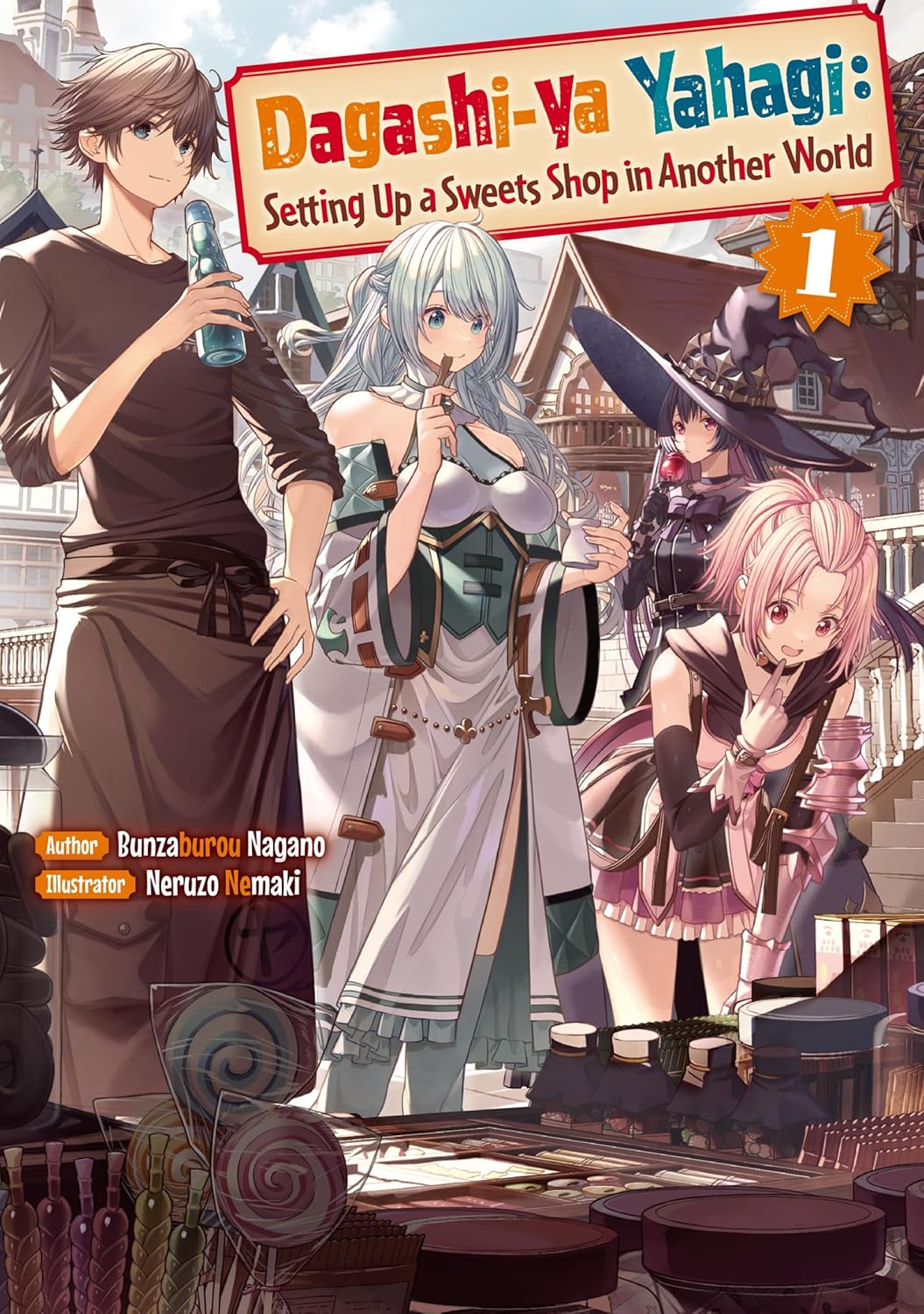
J-Novel Club has one debut: Dagashi-ya Yahagi: Setting Up a Sweets Shop in Another World (Dagashiya Yahagi Isekai ni Shutten Shimasu). Our “hit by a truck” hero ends up in a fantasy world with classes and skills… but his destined role is “penny candy shop owner”. Can he eke out a slow life, or will the fact that he’s a main character in a Japanese light novel make that impossible?

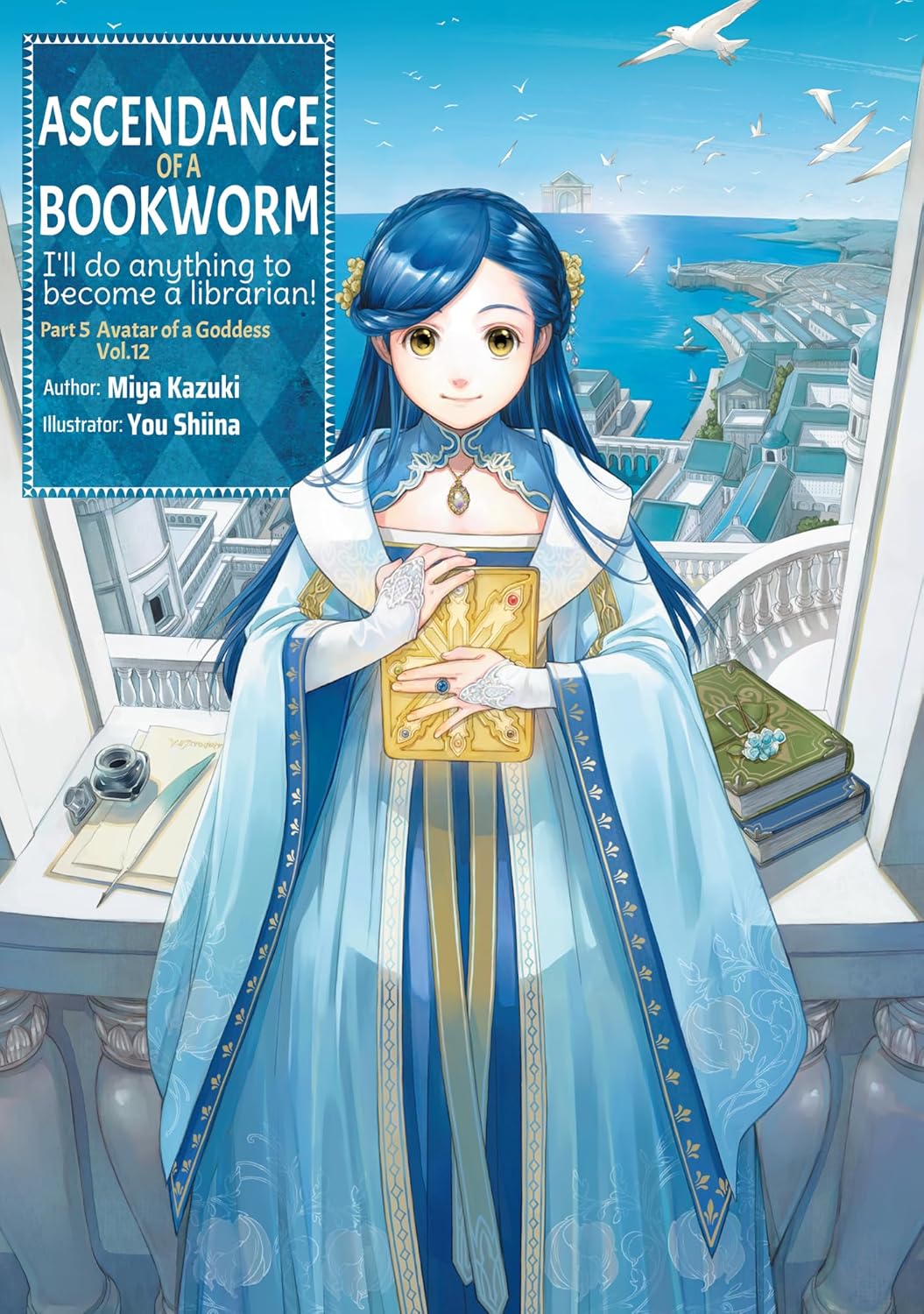
Also from JN-C: After-School Dungeon Diver: Level Grinding in Another World 3, Ascendance of a Bookworm 33 (the final volume), Campfire Cooking in Another World with My Absurd Skill 15, Cooking with Wild Game 25, the 3rd manga volume of A Livid Lady’s Guide to Getting Even: How I Crushed My Homeland with My Mighty Grimoires, The Misfit of Demon King Academy 7, the 2nd manga volume of My Quiet Blacksmith Life in Another World, and Seirei Gensouki: Spirit Chronicles 25. Bye, Rozemyne! Hopefully we’ll get the Hannelore spinoff soon!

ASH: Bookworm!

SEAN: Guess who forgot a publisher again last week. Meeeee! Hanashi Media has My Pet Is a Saintess 3 out THIS week.

ASH: There are so many smaller presses these days, which I love to see, though it can be challenging to keep track of them all.

SEAN: There’s a Mature Manga debut from Seven Seas that I can slot into the Ghost Ship section. At 25:00 in Akasaka (25ji, Akasaka de) is a BL title with a live-action movie out now. Two actors and old school acquaintances have to research the role of gay men they’re playing. Well, one of them does. The other one might not need to?

ASH: Hmmm, I think I’ve read an older series with a similar premise.

SEAN: And from actual Ghost Ship, Ayakashi Triangle 11.

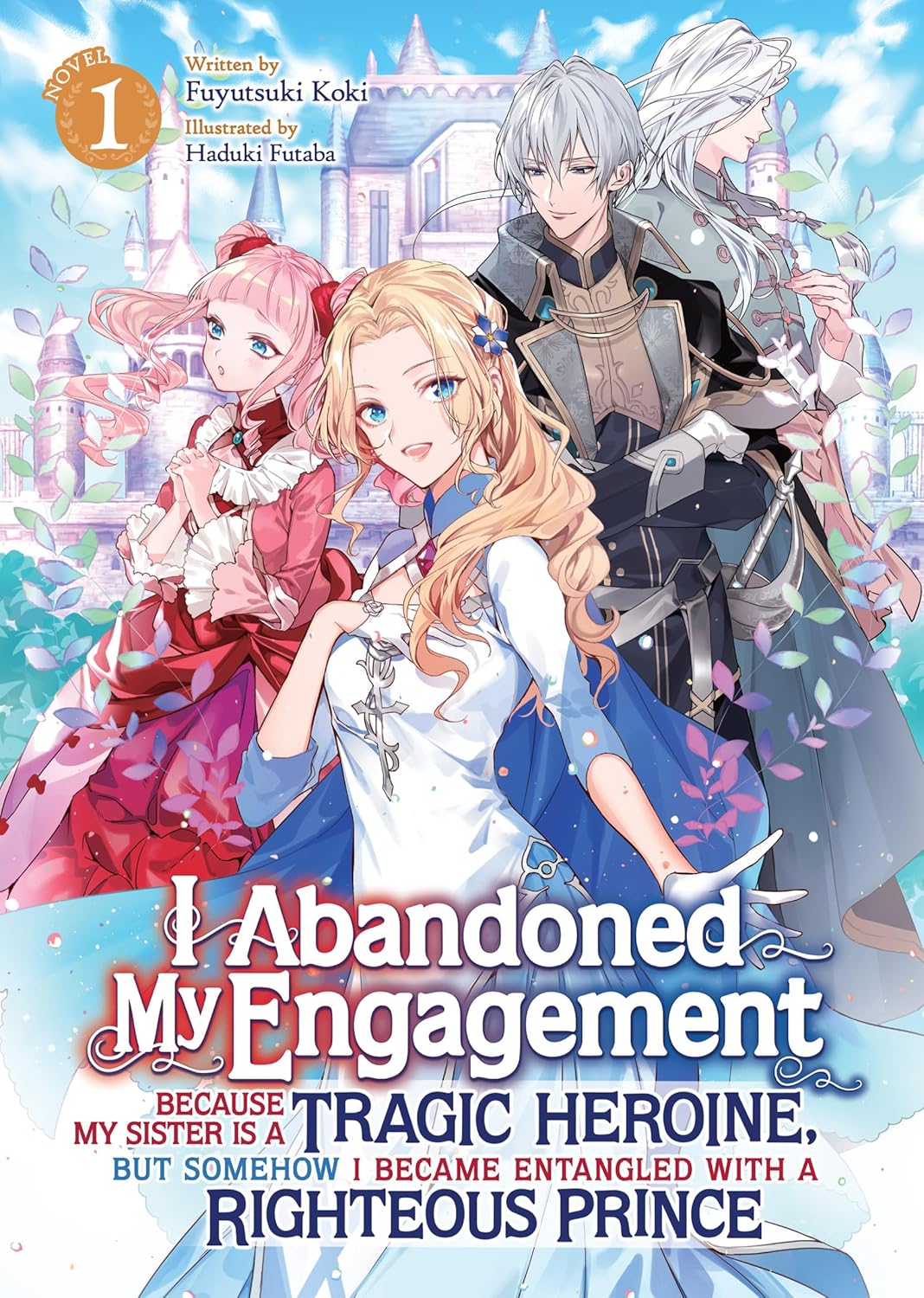
That lout and his Korean webtoon-self has ensured there are no print novels from Airship, but we do get an early digital debut: I Abandoned My Engagement Because My Sister is a Tragic Heroine, but Somehow I Became Entangled with a Righteous Prince (Higeki no Heroine Buru Imouto no Sei de Konyaku Hakishita no desu ga, Naze ka Seigikan no Tsuyoi Outaishi ni Karamareru you ni narimashita). A saint is rather stunned when her little sister says she’s a villainess, and even more stunned when this means her fiance breaks off the engagement to her. And now the Crown Prince is investigating her? Isn’t this all about her sister?!?!

And we also see Reborn as a Space Mercenary: I Woke Up Piloting the Strongest Starship! 10.

What will you be reading instead of listening to the teacher next week?

Filed Under: FEATURES, manga the week of

My Happy Marriage, Vol. 7

August 28, 2024 by Sean Gaffney

By Akumi Agitogi and Tsukiho Tsukioka. Released in Japan as “Watashi no Shiawase na Kekkon” by Fujimi L Bunko. Released in North America Yen On. Translated by David Musto.

Every so often, I hot a point in a book where a plot point bounces off me so hard that I just go “NOPE” and throw the book away. Usually it’s pretty easy, as it’s in the first or second volume in a series and I can easily just drop it and never look back. It’s much harder when it’s in a series I really like. I don’t WANT to drop this series. And yeah, the second half of the book is basically everything we wanted to have happen. But man alive. I absolutely did not need the main plotline of this volume, whose entire purpose (and it’s clearly, deliberately on purpose) is to fill this volume with drama even though all the roadblolcks and evil villains have been taken care of. It is there to pile on the pain and suffering once more, and I’m not sure it makes the resolution sweeter for that fact. Basically, there is a scene (it has the words “I hate you” in it) that made me want to jump into the sea. Anyway. Moving on.

It’s finally time. We’re at the wedding, Miyo looks gorgeous, the guests are here, everything is prepared… and the groom is absent. Clearly it’s time for a flashback to show how we got to this point. Miyo is doing her best to get ready for being an actual wife, including facing up to the fact that she will need to be intimate with her husband (when she can’t even say the word “darling” without falling over with a red face) and also trying to brush up on her cooking skills, which are already miles better than her sister-in-law but could use some work. While at a cooking demonstration, she runs into an old classmate from elementary school, who was the other “quiet, shy girl nobody liked” in class, and Miyo gets told a rather depressing story about a sacrificial marriage. She then goes home… and has the scene I mentioned at the start.

The good and bad thing about this series is that it is filled with the supernatural, and there are tons of things that have something evil, monstrous, or twisted as their cause. This is bad because it means that we get everything that happens in this book, which involves curses, evil from the previous generation seemingly trying to rise up and make Kiyoka late for his wedding, and in the end, straight-up murder attempts. The good thing is that it means that we don’t have to have all those horrible romance cliches of “I misheard you and we must now not talk to each other for the next five volumes” miscommunication. It turns out to really be a curse. We also get to see discount bargain-basement Kiyoka and Miyo, who are there as an object lesson in how sometimes you can try to escape a terrible life by entering into an arranged marriage with a stoic, cold man and it goes really badly. I don’t think there’s supposed to be a moral here, like “they should have tried harder”, I think it’s just meant to be “there but for the grace of God go I”.

The good bits of this book were very good. The wedding was fantastic, the ceremony afterwords was heartwarming, the wedding night was moved offscreen but we assume it happened without a lot of blushing and awkwardness, and after that there’s only one minor knife to the heart to deal with and we can get our happily ever after. Except we get an 8th volume soon, so now we get My Happy Married Life. I’ll be reading more. Just… perhaps fewer road cones for the sake of being road cones?

Filed Under: my happy marriage, REVIEWS

Is It Wrong to Try to Pick Up Girls in a Dungeon?, Vol. 19

August 27, 2024 by Sean Gaffney

By Fujino Omori and Suzuhito Yasuda. Released in Japan as “Dungeon ni Deai o Motomeru no wa Machigatte Iru Darou ka?” by GA Bunko. Released in North America by Yen On. Translated by Dale DeLucia.

I needed this almost as much as Bell did. I suspect there are a few people who will be disappointed by this volume. After the highs and lows of the last few arcs, something like this, which is a deliberate “let’s do something totally different” thing, might feel out of place. But the volume is also filled with hints that we’re getting close to, if not the end of the series, then at least the beginning of the end of the series. Bell is being prepared for heroism, and he is going to be a hero. He’s being forced to pay attention to the world outside of Orario, and we see m,any signs that things outside Orario are not happy and peaceful. And, of course, despite yet another addition to the harem this time around, there’s still one main couple that is holding everything back. (Aiz is entirely absent from this book, pointedly so.) So yeah, let’s do it, why not a magical academy volume?

We pick up after the end of the last book. Freya Familia is no more, and in fact a large number of them are now staff at The Benevolent Mistress, presumably to watch over Syr, who is getting absolutely worked to death by irritated gods who are still upset about everything Freya did. Another large number of them are watching over Haruhime, whose secret level up powers are now known to all, and Lyu, who has returned from seeing off Astrea and has made peace with her past at last (and joined Hestia Familia) in order to make sure they are not kidnapped. Bell thinks his Familia,. now with added Lyu, should head right back into the dungeon, but Eine tells him it’s a good time to relax. It has been (good lord) six months since the start of the series. That’s a LOT to happen to Bell in that little time. He deserves a break. He deserves… to be abducted by Hermes and forced to infiltrate the massive floating school that’s just docked at Orario for the next few months.

There’s almost a deliberate lack of originality here. After nearly getting caught infiltrating the high security school, Bell has to disguise himself as an ordinary Level-1 rabbit boy and pretend to be meek and still learning. And then he promptly gets assigned with all the class losers, who can’t work together to save their lives, even though they’re powerful. Also in the group is Nina, Eine’s younger sister, who is having a lot of trouble living up to her sister’s standards and it’s crushing her. Her scenes with Bell are some of the best of the book. I also enjoyed seeing Bell studying hard, and his studies later proving useful in actual dungeon battles. Bell was always naive and inexperienced, but he was never stupid, and now that he’s no longer inexperienced (we’ll put a pin in naive for now), his smarts are really impressive.

Basically, by the end of this book you definitely see WHY the gods are pinning all their hopes on Bell. Unfortunately, we’re caught up with Japan again. Fortunately, we’re getting the last volume of depress-o-thon Astrea Record soon, as well as the first Sword Oratoria light novel in over four years. So there’s plenty of stories to be told in this world. This is just a “Bell is a student” one.

Filed Under: is it wrong to try to pick up girls in a dungeon?, REVIEWS

Sword Art Online Alternative: Clover’s Regret, Vol. 1

August 27, 2024 by Sean Gaffney

By Soitiro Watase and Ginta, based on the series created by Reki Kawahara. Released in Japan by Dengeki Bunko. Released in North America by Yen On. Translated by Stephen Paul.

So, just like the Re: Zero SS collection, we’re getting this one a bit late. The first volume of Clover’s Regret, the second in the “Alternative” spinoff series, came out in 2016, after the 5th volume of the Gun Gale Online books. But we had to wait till we’re caught up with both the main series, its Progressive rewrite, *and* the GGO series before we get this spinoff. Part of that is because, unlike GGO, this never got an anime, and it features none of the main SAO cast. It doesn’t have an obvious hook to pull in Kirito casuals. The other reason, I think, is that unlike other Yen On light novel series from hell with extensive spinoffs, SAO has always been Stephen Paul’s baby, and I think we may have waited for this one just so that he can translate it properly rather than try to get someone new in. In any case, you’re not “missing” anything like we were with Re: Zero SS. This is pretty standalone.

Asuka Empire may not have the #1 ranking of ALfheim Online, but it tries harder. A far more Japanese-based MMORPH, it’s been struggling to keep its high ranking now that everyone has access to the Seed. As such, it has a new event that’s horror-based, and it’s also allowing users to submit their own game ideas to the event. Meanwhile, our heroines, matter of fact, somewhat emotionless Nayuta and genki, lovable scamp Koyomi are trying to clear one of the quests, which involves a mysterious ghost orchestra. While doing this, they meet a rarity in games like this – an old man, who has never gamed before but is really desperate to solve the ghost orchestra game for some reason. He was told about an in-game detective named Klever who might be able to help him. Why is he so interested in this quest? And what’s with that fox-faced detective?

This is another slow burner. About halfway through, I wondered, as I sometimes do with other spinoffs of popular franchises, why this could not have been a book on its own with no ties to Sword Art Online at all. But that’s just because the book saves all its twists for the second half, piling them on one after another. Not only do half the cast have a personal connection to the original Aincrad SAO game, but the ghost orchestra quest itself is written by a member of the Sleeping Knights… a member who, like so many other members of that party, has now died. (We’re told in this volume that Yuuki died “a few days ago”, which nails down the timeline.) The cast are excellent, particularly Nayuta and Klever… I’d argue that Koyomi is mere comic relief, but the author agrees with me, and states that her part was supposed to be smaller but she kept butting in. I hope she gains more depth next time.

Sorry not to go into my usual spoilers, but this book has good spoilers, so I recommend experiencing them yourself. Also, unlike GGO, this is a limited series of 3 books, so should not take up too much of your time. Go check it out.

Filed Under: REVIEWS, sword art online

Re: ZERO ~Starting Life in Another World~ Short Story Collection, Vol. 1

August 26, 2024 by Sean Gaffney

By Tappei Nagatsuki and Shinichirou Otsuka. Released in Japan as “Re: Zero Kara Hajimeru Isekai Seikatsu: Tanpenshuu” by MF Bunko J. Released in North America by Yen On. Translated by Sarah Moon.

First of all, I appreciate that we have a new translator for the short stories. The plan seems to be to release these volumes one month after the main volumes till we catch up, so putting all that on the same person would be a strain. Secondly, of course, we’re getting this a bit late. This volume first came out in 2014, in between Volume 5 and 6 of the regular series. It also introduces us to Liliana, someone who appears as a major supporting character in the 5th arc and who we are expected to have known about from this story. So, kinda like the Index SS books. Also like the Index SS books, it’s great to see these licensed anyway. They provide a lot of really good fluffy fun, introduce a character who’s important later, and give important backstory to two more supporting characters. And, perhaps most importantly, it gives Subaru a chance to really get in a ton of tsukkomi. Especially in the first story. Comebacks for all.

There are four short stories in this book. Two of them were written to appear in my nemesis, Monthly Comic Alive, and two of them are original for this book. The first, which ran in Comic Alive over 3 issues right after the 3rd volume came out, has a traveling bard named Liliana arrive at the mansion, looking to compose a song about a hero that hasn’t been composed yet. She also, unfortunately, has some people trying to kidnap her, who also come to the mansion. The second story has Subaru trying to give Rem a day off, after seeing how she basically does everything in the mansion, and Rem’s struggles to actually not work. This appeared after the 4th novel. Then we get the two original stories. The first shows Priscilla, having just chosen Al as her knight, returning to her newest husband, and Al learning what said husband has planned for her. The other one shows Emilia falling asleep and ending up in a parody of Alice in Wonderland.

The biggest thing I noticed while reading this book, which I would not remotely have noticed had I read it in publication order, is just how long it’s been since we’ve had Rem in this story. The second story is all about Rem, of course, and the first one has a heaping helping of her. She gets to show off her strength, speed, and pure adoration of Subaru here, and her fans should eat this up. Liliana’s introduction is also good, and she and Subaru have an instant boke/tsukkomi relationship that feels different from the one he already has with Emilia. Emilia’s Wonderland story is mostly silly, but the Priscilla story may be the best in the book. We get another good look at Al’s own “talent” in beating the odds, and we get to see exactly why Priscilla is one of the chosen candidates and why people absolutely revere her. She’s an arrogant, abusive ass, but she earns every bit of the adoration she expects to receive.

So yeah, this was fun. Nothing really serious, apart from bits of the Priscilla story. Fans should love it.

Filed Under: re: zero, REVIEWS

Pick of the Week: Pigeons, Glitches, and Hokuto

August 26, 2024 by Michelle Smith, Sean Gaffney, Ash Brown and Katherine Dacey Leave a Comment

MICHELLE: I’ll cast my vote for the fourth and final volume of Glitch. Not that I have managed to read any of the earlier volumes yet, but it’s still the most compelling release for me this week.

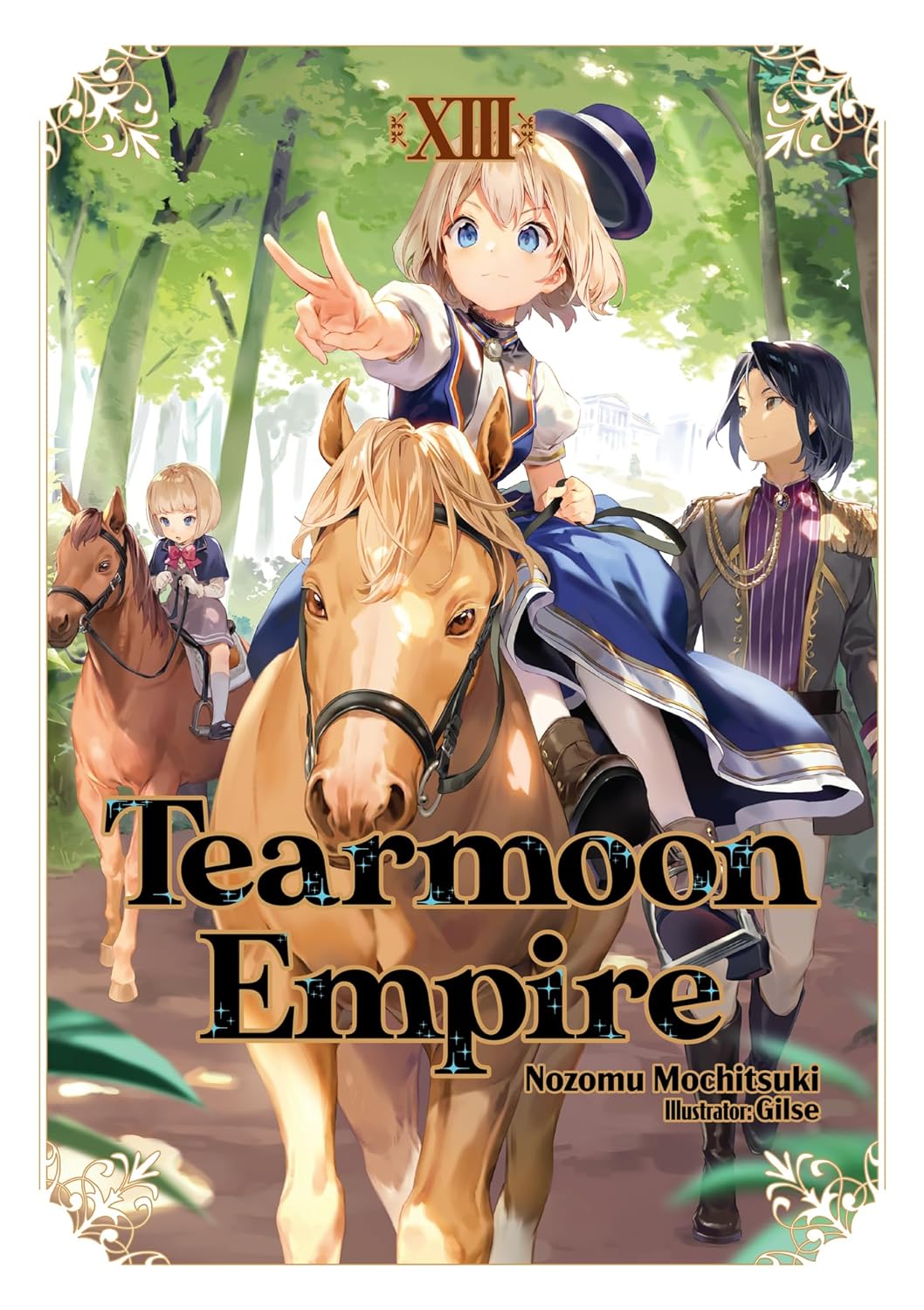
SEAN: There’s a new Tearmoon Empire, tra-la, tra-la, let’s avoid the guillotine together!

ASH: This week I’m going to go with raunchy romantic comedy danmei with a delightfully ridiculous premise. It’s You’ve Got Mail: The Perils of Pigeon Post for me!

KATE: This is one of those weeks where I’m overwhelmed by how many titles are being released but underwhelmed at the selection. If I had to make a choice, though, my vote would go to volume four of the new deluxe edition of Tokyo Babylon. Yes, Dark Horse and Tokyopop have both issued their own editions of this CLAMP classic, but the new Yen Press version looks pretty snazzy and is giving me Borders-in-2006 vibes.

Filed Under: PICK OF THE WEEK

Anime NYC 2024, Sunday

August 26, 2024 by Sean Gaffney

Sunday is usually my quietest day at Anime NYC, usually because I need to leave with enough time to get home before it gets too late. (Which is why I missed the Loner Life in Another world premiere, sorry, Haruka, I hope you were super annoying). I had two panels to cover, though, starting with one that is always a favorite, J-Novel Club! Sam Pinansky was nice enough to explain that the timing of this particular convention means that they had fewer titles than usual to announce, as they usually announce 8-9 titles every two months, and this falls into the gap. Joining him was Madison Salters, their business director.

Before we got to the announcements, though, there was a recap of the first J-Novel Club Original Light Novel Contest, which had a grand prize of 10,000 dollars, and in addition to the JN-C staff had, as one of the judges, Saga of Tanya the Evil author Carlo Zen. Generally speaking, the ones that got a prize (who were announced at AX) were the ones who recognized how to hew close to the spirit of what “light novel” means these days, gliding along the paths while making everything interesting. The grand prize winner was ATLAS: Her, the Combatant and Him, the Hero, by John W. Rohman. It impressed Carlo Zen so much that he lobbied a publisher to have it translated and released in Japan!

They also announced there will be a second contest, which, after gaining experience from the first one, will be divided into two categories. The first is books that work well as a stand alone, that feel complete in one volume, even if there may be a sequel hint. The second category is books that are clearly part of an ongoing series, and leave plot threads dangling by the end of the book. The word count for the second category is deliberately shorter, as they also ask the contest entry to have 10,000 words with a detailed plot breakdown of how the series will go and descriptions of the major characters. The submission form will be on J-Novel Club’s website starting in September.

We then got to the announcements. The biggest for me, which means that I’m moving it to be first, is The Trials and Tribulations of My Next Life as a Noblewoman (Tensei Reijou to Suki na Jinsei wo). This one has a LOT of buzz from LN readers – it was in the top 10 of the Kono Light Novel ga Sugoi! lists, some fans call it “josei Game of Thrones”, and its volumes are bricks – in fact, the volumes are so long Sam is asking the publisher (Hayakawa, who normally do science fiction, so this, like JK Haru, is outside their wheelhouse) to divide future books in two. Karen is reincarnated as a noble, living the easy life. Then she’s banished! Now she’s scrounging as a commoner. But then she’s brought back into the family! Except she has to choose between suspicious marriage #1 and suspicious marriage #2. Apparently twists and turns are this book’s bread and butter. Don’t let the simple, generic title fool you.

The actual first announcement was From Villainess to Healer: I Know the Cheat to Change My Fate (Kaifukushoku no Akuyaku Reijō). This is just the manga for now, though stay tuned regarding the light novel. It’s another girl with dark magic whose engagement is broken. Her ex wants to marry a healer. So she changes classes to become a healer… and goes off on adventures. Because who wants to deal with her loser ex anyway? The Dorky NPC Mercenary Knows His Place (Kimo Ota Mob Yōhei wa, Mi no Hodo o Wakimaeru) is a sci-fi series (and Sam begged readers to buy more SF, as they don’t sell nearly as well as the fantasy isekai stuff) about a merc who is familiar with how stories go, and knows he doesn’t want to be a hero of any story. He wants to be “space pilot #6” in the credits. Unfortunately… he keeps attracting gorgeous women! This is apparently more of a deconstruction.

Lastly, we have Dimension Wave, from the author of The Rising of the Shield Hero. This one is lighter in tone than Shield Hero, and apparently is what the author writes when they want to take a break. A young man decides to join his sisters in playing in a popular game where you can live years in just 24 hours. But he’s tricked, and now he’s in the game as a girl. With a name that’s totally cringe. Oh well, I’m sure he’ll do fine as long as he finds enough wacky, eccentric characters to hang out with. This seems to be fluffier and hopefully a bit less edgelord than Shield Hero.

I then attended my final panel of the day, A History of Manga by Decade. The moderator was Jillian Rudes, the panelists were Erica Friedman and Zack Davisson. The panel was designed in part to promote a new book coming out, Manga: A Visual History. Coming out next year, it’s a big coffee table book that covers manga’s entire history, though Zack and Erica start with the 1940s for the purposes off this panel. The authors are Frederik Schodt, Rachel Thorn, Zack, Erica, and Jonathan Clements. They talked about how it was a commissioned book – the publisher wanted the book, then found writers, rather than the writers shopping a book to a publisher.

The authors were assigned titles. Sometimes this means they got a series they didn’t like, and they grew to like it, such as Zack with Initial D. Sometimes they ended up hating it even MORE, like Erica with a series she refused to name. The series it’s part of is very regimented, so they had to deal with word counts, sidebars, having your sidebars rejected, etc. It’s definitely a book that you might get for a family member who wants to know what the fuss is all about with this manga stuff. For this panel, they took a decade and Zack and Erica each picked one title they felt exemplified that decade.

In the 1940s, Zack’s book was Shin Takarajima, aka New Treasure Island, the first manga drawn by Osamu Tezuka. Tezuka is the manga who created so much of what we now think of as the manga style. He made manga feel like a film. This was one of the first manga that was a story, rather than a collection of gags or bits. Erica chose Sazae-san, by Machiko Hasegawa. One of the most iconic manga in all of Japan, even people who have no idea what manga or anime is know and have read Sazae-san at some point. It’s a simple daily life of a woman and her family, and she’s described by Erica as a “little feminist”.

For the 1950s, they both picked Tezuka, though not the same title. Erica’s choice was Jungle Taitei, aka Kimba the White Lion, one of the first of Tezuka’s series to really hammer on environmental issues, which he championed his whole life. It was also the inspiration for the famous anime… and yes, also the inspiration for The Lion King, Disney’s 1990s musical which changed the landscape of animated movies. Zack’s choice was Tetsuwan Atom, aka Astro Boy, the ultimate “robot boy with real human emotions” story, which also spawned a legendary anime, as well as the modern retelling Pluto by Naoki Urasawa. It’s not about robots, it’s about people – and about class structure, with the differences between the rich and the poor really showing.

For the 1960s, Zack chose (we all knew this was coming) Gegege no Kitaro, by Shigeru Mizuki. If you ask who was the most influential manga artist who wasn’t Osamu Tezuka, Shigeru Mizuki is the obvious answer. He wrote in the days of “rental manga”, cheaply made and printed, and also grubbier and more punk. The yokai genre, and really any manga series with a monster in it at all, would be noting without him. Speaking of genre defining, Erica picked Cyborg 009, by Shotaro Ishinomori. Ishinomori is known as the father of “sentai” shows, and this was an early example, with nine people being experimented on and then fighting back. It’s the first superhero team manga.

Time for the 1970s, and here again the answer was obvious for Erica, who picked The Rose of Versailles, by Riyoko Ikeda. Summed up as “the greatest shoujo manga epic ever”, this story of Marie Antoinette and “Lady Oscar”, the captain of the royal guard, allowed Ikeda to show readers revolution and popular uprising within a manga supposedly for young girls to read. And young girls definitely read it – and loved it. Zack chose Harenchi Gakuen, aka Shameless School, by Go Nagai. Nagai is better known for his giant robot and mecha titles, as well as the titillating Cutey Honey, but Shameless School went beyond titillating. A scandalous sensation at the time, parents of Weekly Shonen Jump readers demanded it be toned down. Instead, they made it worse. A comedy high school series filled with enough lechery that Ataru Moroboshi would blush, this one is still probably too hot to be licensed in North America.

Both Erica and Zack agreed on the author in the 1980s, but once again had two different series. Zack chose Maison Ikkoku, by Rumiko Takahashi, which he describes as a perfect love story that still makes him swoon when he reads it. It’s Takahashi making an effort to be realistic, despite including her signature funny and incredibly annoying characters (including the leads). Erica also picked Takahashi, but her choice was Ranma 1/2. She pointed out that Takahashi excelled at writing romance manga that was also really funny, and also in giving the reader exactly what they wanted. Ranma was also a breakout hit in the West, one of the most influential series in terms of gathering fans. (including myself – I got into anime as a major fan via Ranma.)

Erica once again has a really obvious choice for the 1990s: Bishoujo Senshi Sailor Moon by Naoko Takeuchi. This series had magical girls that *everyone* could identify with, not just young girls. It changed the way that people saw anime. Zack’s choice was one I wasn’t expecting, but makes sense: Monster, by Naoki Urasawa. Any number of Urasawa titles could be picked, including the 80s-90s hit Yawara – the Fashional Judo Girl. But Monster was really amazing, a deep, literary work that forced the medium to move to the next level.

If you thought Zack’s 1990s title was a surprise, wait till his 2000s title: Dārin wa Gaikokujin, aka My Husband Is a Foreigner, by Saori Oguri. Zack identifies hard with this title for personal reasons, but it’s also a great example of the biographical manga format that was springing up at this time, with a wife who can’t stop finding weird things about her foreign husband. Erica’s pick is Yokohama Kaidashi Kikou, by Hitoshi Ashinano, a melancholic yet also peaceful and relaxing look at a world that is slowly dying and the android Alpha who can still find joys in it even as life moves on around her. A gorgeous title, that Zack said he has not read but he now plans to.

For the 2010s, Erica chose Shimanami Tasogare, aka Our Dreams at Dusk, by Yuhki Kamatani. Not only is the art in this series absolutely jaw-dropping, but the cast features a variety of LGBTQ people – young, old, gay, lesbian, asexual, agender, and trans. It’s groundbreaking. Zack’s choice was I Am A Hero, by Kengo Hanazawa – a choice that, for once, Erica did NOT agree with. Zack admits that the manga has its problems, and may not be one of the best, but it’s also a zombie story where the first zombie doesn’t appear for two hundred pages. Zack, who has worked for Marvel Comics, appreciates a slow build title that allows the story to grow and does not need to have a plot point on every page.

Finally, we get the 2020s, and Erica picks She Loves to Cook and She Loves to Eat, a queer manga by a queer creator published by a major publisher about women falling in love and eating some really delicious food. It’s a sign of how far the manga industry has come that this has been a huge success. Zack chooses Akane-banashi, a Weekly Shonen Jump title that he and Erica both love. It’s about the Japanese storytelling art of Rakugo, and is refreshing for having no romance in it, but instead being about a young woman’s passion for the craft and art of its subject.

This panel was so packed it left little time for Q&A, and I had to leave to go catch my train. It was a lovely end to an excellent Anime NYC, though, which felt well-organized and lacked any major issues that I noticed. One of the best conventions in North America right now.

Filed Under: anime nyc, NEWS

The Hero and the Sage, Reincarnated and Engaged, Vol. 1

August 26, 2024 by Sean Gaffney

By Washiro Fujiki and Heiro. Released in Japan as “Eiyū to Kenja no Tensei Kon: Katsute no Kōtekishu to Konyaku Shite Saikyō Fūfu ni Narimashita” by HJ Bunko. Released in North America by J-Novel Club. Translated by Joey Antonio.

So, I have good news and bad news about this title. Let’s start with the bad news, as I suspect that a lot of you were suspect some really good AO3-style Enemies to Lovers with this book, based on the title and premise. And, I mean, before reincarnation, they were on opposing sides in a war and really loved to fight each other. But “enemies” is the wrong word, as both of them turn out to be kind people who always end up making the battle all about them in order to minimize casualties for everyone around them. They’re secretly sweetie pies. And once they’ve been reincarnated, there’s no awkward reunions or tsundere denial in sight. They’re both on the same side now, they can (well, with a few conditions – see below) fight each other, and they can be utterly goddamn adorable and ludicrously badass. That’s the audience that this book is for. OP Sweethearts to OP sweethearts.

Years and years ago, the hero Raid Freeden and the sage Eluria Caldwin fought each other for ages, both equally matched – he with his ludicrous strength, her with her incredible elven magic. Then one day he hears that Eluria has died. In sheer disbelief that anything could kill her (she was young for an elf), he runs straight into their country, taking multiple mortal wounds, just to arrive at her coffin, confirm her death, and then pass away himself. Now it’s centuries later and everyone can use magic… everyone, that is, except Raid Fredeen, commoner in a small village, who ends up breaking magical devices when he touches them. Then, when he’s about 16 years old, Eluria (now a human) shows up at his village. Like him, she was reborn with all her old memories, and she’s spent over a decade searching the country to try to find him. Sure, his lack of magic means he’s a second-class citizen. But she’ll do anything to make sure they can fight each other again… even get engaged!

This is cute and fun, and that’s all it’s trying to be. Don’t expect amazing plot twists here. The plot is basically that it’s unclear how Eluria, who was perfectly healthy, suddenly died in the past, why they were reincarnated with all their memories, and if someone is behind that. But we’re reading it for Eluria being so “floaty” when she’s half-asleep that she hangs all over her new fiance, and Raideen being cool and suave. We get the standard one (1) male friend, with glasses and a fondness for magical support equipment; one (1) female friend who’s also from the country and is mostly there to be comic relief, and one (1) obnoxious noble who thinks he’s better than everyone and needs to have reality beaten into him. Fortunately, this is a noble who learns his lesson pretty fast and actually *is* competent, which already ;puts this over other cliched magical academy books.

Most modern light novels let you know if you’ll like it or not by the cover art and premise. If you like cute, fluffy romance between two people who could kill you a million times over, this is right up your street.

Filed Under: hero and the sage reincarnated and engaged, REVIEWS

Anime NYC 2024, Saturday

August 24, 2024 by Sean Gaffney

Friday was a relaxed, fluffy bunny day. I had three panels, all far apart, all fan-run and calm. Today I had five industry panels, running from 12 to 8pm, with only a break from 4-5:30 for a meal. I am wiped.

Helping me be wiped is Yen Press, who actually started their Saturday on Friday by announcing a bunch of titles on Twitter and not telling me. I’ll Become a Villainess Who Will Go Down in History! (Rekishi ni Nokoru Akujo ni Naru zo) is a Yen On title that’s one of those “I’m trying to be evil, why is everyone saying I’m so sweet?” books. Victoria of Many Faces (Tefuda ga Oume no Victoria) is a manga from Flos Comic about an ex-spy who is having difficulty staying an ex-spy. Liar, Liar is the manga version of the light novel that Yen already releases, and it runs in my nemesis, Monthly Comic Alive. Whoever Steals This Book (Kono Hon wo Nusumu Mono wa) is the light novel version of a manga that Yen already releases about a girl who has to travel through stories to catch a book thief.

Is It Wrong to Try To Pick Up Girls in a Dungeon? Minor Myths and Legends is a short story volume with stories spanning the entire series to date. Sword Art Online: Ordinal Scale is the latest SAO manga adaptation, based on the movie. It ran in Comic Walker. Sacrificial Princess and the King of Beasts Heir: White Rabbit and Prince of Beasts is another sequel, as you may have guessed. It features Sariphi and Leonhart’s son Richard, and also ran in Hana to Yume.

Then we got the stuff actually announced at the panel itself, which featured their marketing director and three of the editors. They pointed out a new manga store at the Turnstile underground at Columbus Circle, talked about Delicious in Dungeon winning an American Manga Award on Thursday for Best Continuing Series, and also gave away copies of Tougen Anki, a Momotaro takeoff from the oni perspective, and Finding Camilla, a “I must disguise myself as a boy” manwha.

Then it was time for new announcements. Helena and Mr. Big Bad Wolf was originally a Chinese doujin, and was then picked up by Kadokawa Taiwan. A tragically orphaned girl meets her favorite author and they bond. In the Heavenly Prison, the Devil Enchants Me (Tengoku de Akuma ga Boku wo Miwaku Suru) is a series from Dra-Dra-Dra-Sharp#, about a boy who wants to be seen as manly who ends up at a school on an island of succubi. It’s definitely ecchi. The Failure at God School (Kami-sama Gakkou no Ochikobore) is a Hana to Yume manga based on a light novel by the author of The Apothecary Diaries about a girl who gets an invitation to join a school for gods?! But she’s now the bottom of her class! If It’s You, I Might Try Falling in Love (Kimi to Nara Koi wo Shite Mite mo) is a BL series from Manga Park. A high schooler has given up on serious relationships after getting burned in the past, and won’t open his heart again. THEN… he meets this other guy. Nomi x Shiba is also BL, and runs in Shueisha’s Kimikoi. It was described as ‘Sasaki and Miyano, but thirstier’.

We the moved to Yen On licenses. The Only Thing I’m Allowed to Do in a No-Boys-Allowed Gaming World (Danshi Kinsei Game Sekai de Ore ga Yarubeki Yuitsu no Koto) is sort of an anti-yuri series. A yuri fan is truck-kun’d and ends up in a world where only women can do anything and men are second-class. Fortunately, he can change sex. Unfortunately, it doesn’t last forever. Even more unfortunately, all these yuri characgters are now falling for him! YMMV. Miri Lives in the Cat’s Eyes (Miri wa Neko no Hitomi no Naka ni Sundeiru) is a Dengeki title about a boy who can relive the past by looking into someone’s eyes meeting a girl who can see the future through the eyes of a cat. Described as magical realism.

Did You Think My Yuri Was a Sales Pitch? (Watashi no Yuri mo, Eigyou da to Omotta?) is a one-shot yuri light novel about a struggling voice actress depressed over her favorite idol retiring being stunned when the same idol shows up at their agency as a newbie voice actress… and is coming on to her? Recommendations for Bad Children (Warui Ko no Susume) is a revenge fantasy light novel about two students at a terrible abusive school who decide to drop out… and destroy it before they do. Lastly, they have Maboroshi, by Mari Okada herself, a novelization of her film from 2023.

The Anemone Feels the Heat (Anemone wa Netsu o Obiru) is a Manga Time Kirara Forward yuri series. A girl who failed her exam for an elite school because she saved someone finds, at her new school, the same girl she saved! Can she get past this girl accidentally ruining her life? Also from Kirara Forward is meth-e-meth, a one-shot omnibus about a girl learning how to control golems. It’s All Your Fault (Zenbu Kimi no Seida) is a comedic cosplay yuri title that runs in Ultra Jump. The Boy Who Ruled the Monsters (Kaibutsu-tachi wo Suberu Mono) is a seinen title from Isekai Comic, and J-Novel Club already has the light novel it’s based on. It’s a Banished from the Party genre story. Finally, easily the silliest announcement: Super Ball Girls is a Big Comic Superior title from the creators of Blue Lock and Prison School, about a boy who finds naked girls inside super balls one day. Yeah.

Directly after their panel we had … Seven Seas! It’s rare that they appear at conventions at all, and this is not only their first Anime NYC but their 20th anniversary! Appearing were publisher Lianne Sentar, Marketing Director Lauren Hill, and Managing Editor Alyssa Scavetta. They started by defining all their various imprints – Ghost Ship, Steamship, etc. – as well as which titles get the marker of Boys’ Love or Girls’ Love. They then did a recap of some of their other more recent announcements, before turning to new titles.

I Got Married to the Girl I Hate Most in Class (Class no Daikirai na Joshi to Kekkon suru Koto ni Natta) is about a boy and a girl who are bitter rivals in school… and are now forced into marriage? Can they learn to love each other? This is based on an unlicensed light novel, and runs in Shonen Ace Plus. They’re also doing an omnibus rescue of the old series Pet Shop of Horrors, with a new translation and in bigger volumes, so it will be 7 rather than 10. This josei horror series was put out by Tokyopop back in the day. And speaking of old series, Ichi the Killer (Koroshiya 1) is a seinen title from Young Sunday about a supposed wimp who turns into a killing machine when he cries. It was made into a live action movie and an OVA.

The new Ghost Ship license was Betrayed by the Hero, I formed a MILF Party with His Mom (Yuusha ni Zenbu Ubawareta Ore wa Yuusha no Hahaoya to Party wo Kumimashita!), which I had actually heard of before its license, as it has, well a reputation. It runs in Isekai Comic, and the title is the plot. For the Steamship line, a long-running series called Loving Moon Dog (Koi Suru Moon Dog) about a dog groomer who meets a young man who can turn into a dog? This runs in Hana to Yume Ai, can can get steamy but “not in a furry way”. And, in possibly the biggest surprise of the night, we get a Chinese non-danmei novel. Love Between Fairy and Devil (Cāng Lán Jué) is a fantasy drama with a Netflx series, and honestly sounds like a typical danmei series only one of the leads is a woman.

There’s a new webtoon series, What It Means to Be You, coming out, where a husband and wife who are miserable together swap bodies, and now must try to understand each other more. It’s tearjerking, apparently. For new BL we get I Didn’t Mean to Fall in Love -double-, a sequel series. Bowing to Love: The Noble and the Gladiator is a BL novel by the author of S, and apparently has ancient Roman BL. EAT, from Nagabe, author of The Girl from the Other Side, is a … vore fetish BL. Okay. It ran in Be x Boy Gold. No new yuri series per se, but they are finishing two series that sort of got left by the wayside after being licensed a while back. Tough Love at the office and SHWD will both get omnibuses that will complete the series. Lastly, we get a danmei title, Joyful Reunion, a serious story about politics and power.

Right after that was Kodansha Manga, another powerhouse, though they did not have quite as much to announce as usual (the moving of the con to August, right after other major cons, means this is a common thread. See below as well). Ben Applegate and Tomo Tran were the panelists, and they were quick to promote the AMA awards that Witch Hat Atelier picked up on Thursday for translation and lettering! The digital license for September is Manchuria Opium Squad (Manshuu Ahen Squad), a young magazine title about a man who is down on his luck and decides to make opium. “Very Breaking Bad.”

They then revealed the design for the Twilight Out of Focus box set, which looks very pretty, and showed off Takehiko Inoue’s new cover art for an updated version of the famous novel bestseller Musashi. They did have a few new print titles for summer 2025. Last Samurai Standing (Ikusagami) is a Weekly Morning title about samurai at the end of the shogunate (in other words, out of work samurai) who end up competing in a death game. Two BL titles from the same author. You’re All Mine Tonight (Konya Kimi to Nemuritai) about a salaryman who can’t get a one-night stand with a male sex worker out of his head, and Light of My Life, about two high school friends who found their dreams shattered and now try to reconnect as adults. Both titles ran in Gateau.

Lastly, there’s another deluxe Attack on Titan volume coming with art, an interview with the author, various special things, and a new chapter that focuses on Levi after the events of the series. I had assumed that we were in a post-Attack on Titan world, so I was very amused that Kodansha proved me wrong. Lastly, there’s a new… something coming to Soho in October, called Kodansha House. I assume it’s a manga shop.

I then had a break to eat and vaguely relax, before the last two panels of the night. SuBLime went through all of their most recent titles as well as some of their upcoming works, such as The Metalhead Next Door (sweet BL) and Worst Soulmate Ever (a “fuckfest”), both of which are out in December. They also talked about licensed they announced earlier in the month on 801 day (yaoi), the funniest of which turned out to be A Man Who Defies the World of BL (Zettai BL ni Naru Sekai VS Zettai BL ni Naritakunai Otoko), a josei series that isn’t BL, mostly as the guy (who realizes he’s in a BL world) does his level best to avoid being in a gay relationship. It runs in Manga Jam. Unfortunately, they did not have new to the convention announcements.

The final panel of the day was Denpa and KUMA. They too showed off all their recent titles, and mentioned some of the upcoming ones. They Were 11 is coming, they just need to get Moto Hagio to sign off on the cover. By the end of 2024. Ed also talked about how grateful he is that March Comes in Like a Lion is selling so well for them, and I was too – it’s nice to see a small publisher take a big risk on a series and have it pay off. They had a panel at AX, so announced those series, including the oddball Little Nuns, which has ducks, dogs, and cute nuns. Unfortunately, they too did not have new to the convention announcements.

In news that happened while I was at other panels, Dark Horse announced the first new volume of Berserk since the author’s death (it’s being taken over by another artist), and the publisher PEOW2 announced the legendary manga Stop! Hibari-kun!, a Weekly Shonen Jump series from the early 80s about a boy who meets a yakuza family’s four beautiful daughters… one of whom is really a boy who crossdresses. This may actually be the biggest title of the day, to be honest.

And now I am exhausted. Fortunately, tomorrow will have fewer things.

Filed Under: anime nyc, NEWS

The Royal Hostage Has Vanished: The Black Wolf Knight Yearns for the Persecuted Princess, Vol. 1

August 24, 2024 by Sean Gaffney

By Ajigozen and Yura Chujo. Released in Japan as “Hitojichi Hime ga, Shōsoku wo Tatta. Kuro Ōkami no Kishi wa Rinkoku no Shiitagerareta Hime wo Zenryoku de Aishimasu” by DRE Novels. Released in North America by J-Novel Heart. Translated by Emily Hemphill.

This is another in the Heart imprint that is primarily narrated by the male love interest, though the princess does get several POV scenes throughout. It’s important in this story because it helps drive the narrative more if we’re following the Knight gradually realizing what has happened to the princess and the circumstances she’s had to live with before we move to her side and get her own thoughts on this. It also helps sell the love a bit better, which is good, as this is a series that very, very much runs on “love at first sight”, and if that’s not a favorite of yours you should be very aware. But it’s fine, they’re both good kids, and frankly it’s a lot less terrifying than the power couple that may have happened if the royal hostage had not vanished. Sonia and Alphonse are, at their core, far too similar to work in a series like this.

Brigandia and Sylvario were at war, and Brigandia has won. Now it’s time for reparation, but Sylvario suggests that in return for less of those, they offer their fourth princess in marriage to Brigandia’s third prince. Which is fine… but the princess leaves Sylvario and never turns up in her new country. Ark, the head of the knights, goes to figure out how in God’s name a princess’ carriage with full guards and accoutrements could have been waylaid by bandits or other such reasons for “vanishing”. Unfortunately, he rapidly finds that no one in the towns along the way even noticed a royal carriage. And when he gets to the royal residence, he finds to his horror that Princess Sonia was an unwanted child who was abused by everyone around her. The reason she vanished… is she left in an unmarked carriage with two servants and zero guards.

This book assumes that you are familiar with and enjoy the tropes associated with this sort of series, and therefore does not need to go into great detail about them. Sonia’s only loyal servants, Laura and Tom, are both clearly far more than they seem and trained as spies/fighters/etc., but that never comes up in the actual narrative because “battle maid/butler” is just what you’d expect from the only loyal servants of an abused princess. I also appreciated Sonia’s intellect and craftiness, with possibly the best scene in the book having her take on a rival love interest in what amounts to a rapid-fire quiz game. She’s a sweet girl, and the dorky love that she and Ark fall into is cute, assuming you like dorks who blush a lot, but I also appreciate that she’s not the usual “nice and forgiving” trope we tend to see, and that she really does want to see her abusive family destroyed, and will happily do what it takes to help that along.

This will not set any originality records, but it hit all the right buttons for me. I greatly look forward to the second book (which is apparently the final book).

Filed Under: REVIEWS, royal hostage has vanished

Anime NYC 2024, Friday

August 23, 2024 by Sean Gaffney

I am back at Anime NYC in person! And you know what that means… I have horrible muscle pain and can barely move. But I have so much to talk about for you, my readers. This was a day where I pretty much did entirely fan-oriented panels, saving the bulk of the industry stuff for tomorrow, as Anime NYC stacked most of those in a row. So the first panel I went to was Love and Friendship through Sailor Moon.

Moderated by Erica and featuring Moonie, Erica (yes, two Ericas), Kristen, and Rebecca. It was a fun pamel which really showed off how much they all love Sailor Moon and how much it has impacted their lives. (The other varieties of Sailor Moon came up, and everyone is looking forward to Cosmos, but for the most part it limited itself to the 1990s anime. The words “Crystal” were not uttered.) The second Erica and Kristen are also sisters, and frequently cosplay together.

They discussed favorite characters – as you can imagine, Usagi was first, showing off her good and bad points and feeling very human. For Rei it was her fierceness and ability to “tell it like it is”, but also the isolation that she feels as a shrine maiden. Ami was also one where identifying with her came up, as a “quiet overachiever”. And of course Haruka, the cool one. (Everyone loves the cool girl.) One of the panelists mentioned Hotaru as well, because they, like Hotaru, were sick a lot as a young person.

They talked about what Sailor Moon taught them, including how love can take many forms – romantic, deep friendships, familial, etc. The “cousins” thing was brought up, and it was noted that Japanese fans were horrified when they heard about the change. Perseverance and pushing through a problem even when you’re failing badly comes up all the time in the series. Also, not everyone immediately bonds as friends, and sometimes it can take time to really get to know a person and become friends with them. The power of bonds, how so many of the characters were lonely before they met Usagi, and how they are stronger together. It was a really heartwarming discussion.

Then they discussed how their lives were impacted by Sailor Moon, and all of them admitted it has completely changed their lives. They are all involved in cosplaying and craft-related stuff via the series. The two sisters said that even though they fought as kids, they ended up bonding over watching Sailor Moon. Meeting friends in the fanbase years and years ago who you are still friends with today thanks to Sailor Moon. (I can attest to this, as I am the same.) And of course the LGBT fanbase and its love for the series resonates with the panelists as well. The word “Passion!” was used a lot in this panel, and I think it really described all of the panelists – the love for the series and its fans came through loud and clear.

The second panel I went to was about The Rise of Queer Manga. Moderated by Erica Friedman (yes, this is the 3rd Erica of the con), the panel also had Also on the panel are TJ Ferentini, an editor for Kodansha; Jacqueline Fung, a translator for Kodansha, Seven Seas, and KUMA; and Nicole Roderick, who is a letterer with most of the major publishers. They started by discussing the sort of queer manga that we had since the late 80s/early 90s. Zetsuai/Bronze 1989 for BL, and Sailor Moon for yuri. The cliches that both of those series had in terms of how they defined how publishers would use queer narratives, and how little it changed for a long time after that. What changed? We demanded better representation, and eventually our voices were heard. Publishers were reluctant, they wanted to make sure there was a readership.

The panelists then discussed what their first queer manga was. Gravitation came up twice (and probably should not have been read at the age they read it!). TJ also talked about how much Revolutionary Girl Utena resonated with them, and how the realization hit that they CAN want to be a prince. Nicole wasn’t as fond of all the forced drama in a lot of the BL series of the time, and she enjoyed series with a more real, adult situation such as “I can’t get a job due to my sexual orientation”, which also resonated for her as she is black. Jacqueline talked about the BL series Only the Ring Finger Knows, which hit her with its discussion of having to hide when you’re in love. Erica said hers was Sailor Moon, and particularly Haruka and Michiru, which ended up taking up all her time and money for a long time to come.

The panelists had all chosen queer manga they wanted to discuss. TJ started with Boys Run the Riot, a monumental trans series from a few years ago, made even more important by the fact that the entire localization team was trans. A transgender boy finds happiness in the world of street fashion. The author, Keito Gaku, was at a convention in Columbus and was blown away by the fan reaction they received. Is Love the Answer? is a one-volume title that examines a college-aged woman who wonders why she doesn’t really get love the way all her friends do, and learns about asexuality. The author used their own experiences to write this series. Two other series, Sasaki & Miyano and Whisper Me a Love Song, both show off the normalization of BL and yuri in their respective worlds. There isn’t the big “wait,you mean you like boys/girls???” that you get in other series, instead you get the same reactions that you’d get in straight romance titles.

Jacqueline has a fondness for trauma manga, and started off with A Home Far Away, a tragedy about a religious gay boy in Texas who decides to leave home and go, well, to a home far away. The author has won awards for other titles. Our Dreams at Dusk is a huge title, being absolutely filled with queer representation of all types, and featuring a cast of various ages, including older queer characters, a rarity in a genre that tends to focus on high school students. Lastly there was a brand new title just out, Hate Me But Let Me Stay, which is an omegaverse title, but we are assured it’s a really GOOD omegaverse title, with an omega single mother and a young alpha who has to learn how to be a dad.

Nicole really loved Until I Met My Husband, a historical memoir from an activist and gay man who was in the first same-sex marriage (religious, not political) in Japan. This also has a manga version. Delinquent Daddy and Tender Teacher pretty much tells you its premise in the title, it’s a sweet title about reconnecting with past loves. The kid is smarter than everyone else in the series. Twilight Out of Focus blends its BL with a film club, and the activities of the club and their love of film is equally important. It has an ongoing anime right now. It also has multiple couples, so allows for (ironically) multiple focuses). This series also lacks one of the cliches of the genre we’ve seen too often in the past, which is the “I can fix him” trope.

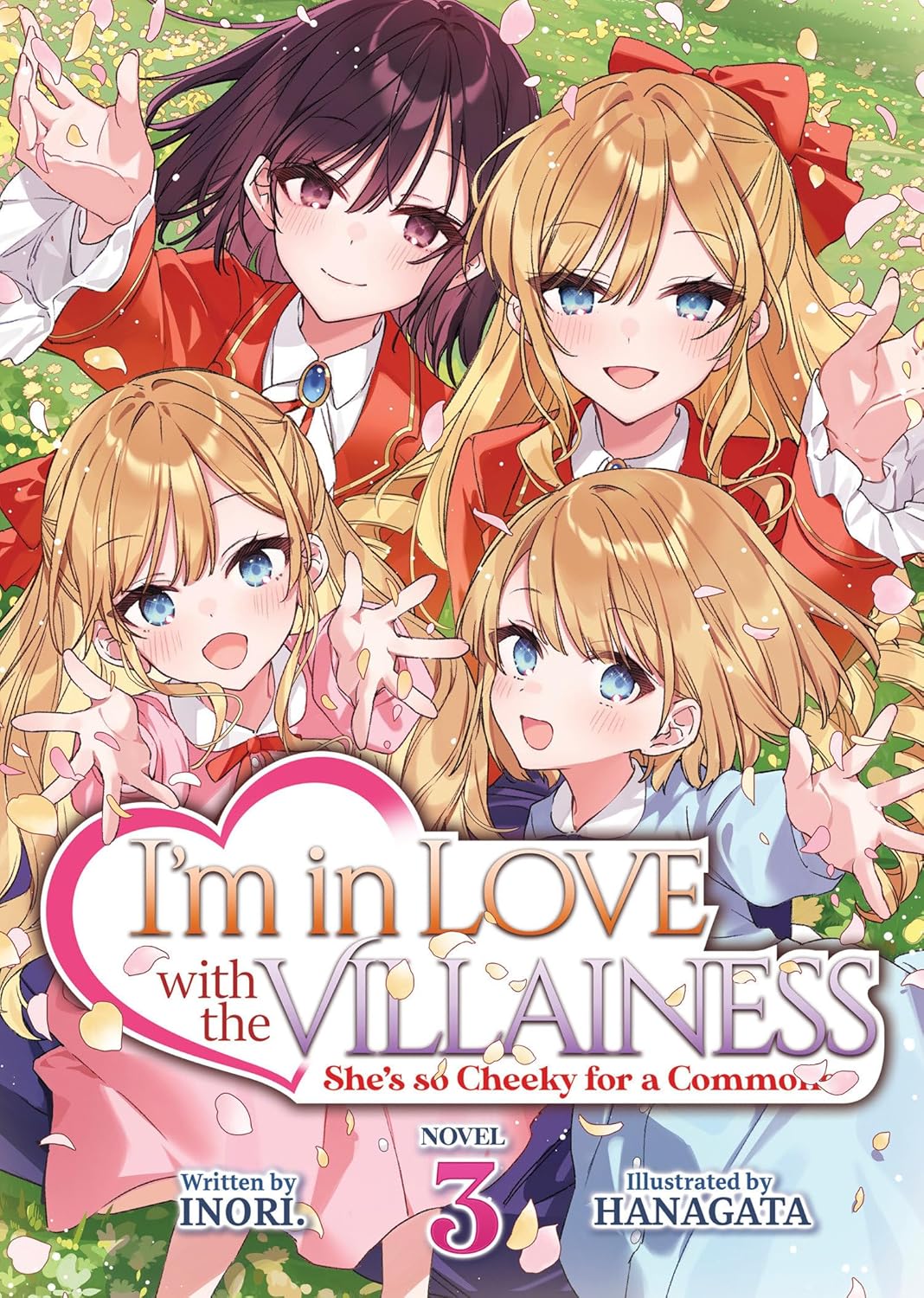
Erica discusses She Loves to Cook & She Loves to Eat, which is also an award nominee and has a live-action series in Japan as well. It’s a great example of two women who had not really considered their sexuality before meeting each other and immediately going “…oh!”. Otherside Picnic is great because it’s not romance focused – it’s sci-fi horror. It’s an incredibly weird story about how everything is NOT normal, and it forces you to think about that. Even Thought We’re Adults is a series Erica called “Ahakaijin Yuri”, which is to say that it’s about grownups. It’s a messy series, and does not have any obvious bad guys – you want to dislike the husband, but he’s sympathetic as well. I’m in Love with the Villainess is an isekai fantasy with piles of queer representation (and revolution), and the spinoff She’s So Cheeky for a Commoner features an original character for the spinoff who is disabled, so that is represented as well. Lastly, The Moon on a Rainy Night has both queer and disability representation, and features two girls who meet, become friends, and help each other to become better people.

They were then asked what title “moved the bar” when it came to queer visibility? A surprising but also obvious answer from Jacqueline was Ranma 1/2. It was a lot of folks first exposure to “someone who can be, and behave, as both a boy AND a girl”. Nicole mentioned Banana Fish, a shoujo title whose BL was not obvious or blatant, but very natural and believable. TJ mentioned Boys Run the Riot again, also talked about My Lesbian Experience with Loneliness, which also opened the door for a number of queer “memoir” manga. And the huge seller My Summer of You, which has two high school boys falling for each other and bonding over movies.

So many series were recommended for the “what unlicensed series do you want to see” that I could not keep up with them all. Highlights included the new subgenre of “cake manga”, where instead of alpha and omega you have “cakes and forks”; Super Seme-Sama to Toki wo Kakeru Ore, a gag manga whose cover alone made me laugh out loud, and will delight those familiar with the BL tropes of very long faces and very big hands; Kawaii Kimi ni, Nedarasetai, a shoujo title about a boy who hates being called girly… unless it’s HIM doing that; Odoriba ni Skirt ga Naru, a yuri series about ballroom dancing and body dysphoria; And Boyish² – Butch x Butch Yuri Anthology, which spotlights titles that avoid the classic yuri trope of “butch/femme” or the popular modern yuri “two femmes”.

The final panel I went to was Gender, Genre and Games in Sports Manga. Liz and Alix were our panelists, and they watched over 400 hours of sports anime to prepare for this. Which s why they apologize if they don’t mention a beloved sports MANGA that they could not get to (and indeed, at the end of the panel, someone mentioned the recent Dogsred, which does not have an anime). They define a sports anime as an anime about sports (duh) where characters bond through teamwork, rivalry and competition.

They started off with a shoujo title, Attack No. 1, which stated in 1969 and ran for 104 episodes. Most of the cliches that we associate with sports anime – the big rival, teeth-clenched teamwork, etc. – stem from this series. There is an earlier show they watched – the shonen baseball series Star of the Giants; however, this one is more tragic, ending when the protagonists injures his arm and is forced to retire. Its plotlines are not something future sports anime followed. Likewise, Ashita no Joe is brutal, also tragic, and its “cross counter” punch is pastiched and imitated across all anime, not just sports.

They divided the typical sports anime into two types: Good at Sport and Bad at Sport. Good at sport features either well-trained athletes who love and are good at what they do, or untrained athletes who nevertheless have an immediate affinity for the sport. A lot of these types feature family drama, as usually there’s a sense of keeping up the family tradition. (Aoi from Birdie Wing is a good example.) They then discussed the Love Interest vs. The Rival, and how the Love Interest, in the typical sports anime, is not nearly as important as The Rival. Rivals to Besties is essentially Enemies to Lovers: Sports Edition. And yes, this is even more true when the rival dies.

The classic “bad at sport” anime is Aim for the Ace!, a 1973 tennis anime (shoujo again) where a girl starts off bad at the sport but is driven to improve herself and eventually does. It was mentioned (more than once) that Haikyu! owes a hell of a lot more to shoujo sports anime tropes than it does typical shonen like, say, Hajime no Ippo (another brutal boxing manga). Aim for the Ace! Also introduces the ojou-sama rival, the sempai everyone adores who inevitably is paired with the heroine in doubles. This is another trope that we’ll see again and again in more modern titles.

Attack on Tomorrow!, from 1977, another shoujo title, is the first example of the “getting the band back together” sports title, where something bad happened in the past (in this case, the death of another player), the club is on the verge of being disbanded, and everyone has to rally around and rediscover their love of the sport. But it’s not all shoujo. Captain Tsubasa may be the most influential sports anime in the entire world, and Tsubasa himself was referred to as the “Goku of soccer” in terms of his abilities.

Yawara! Fashionable Judo Girl is a 1989 series that starts a genre that can best be described as “anime about women in sports, but the intended audience is men”. Bamboo Blade, Saki, Minami-ke, etc. There’s also (theoretically, the creators won’t confirm this for reasons that should be obvious) “anime about men in sports where the audience is women”, such as Free!, Salaryman’s Club, and Fanfare of Adolescence. But what, you may ask, about sports series about girls in sports, for a female audience? Does karuta count? If so, then 2011’s Chihayafuru would slot in there. Before that? You have to go back to 1998, and Princess Nine.

And you can’t really discuss sports anime, especially not at an anime con, without discussing the homoerotic subtext. Naturally, Prince of Tennis was the big example here. Since sports tend to divide by gender, a lot of the rivalries, friendships, and battles tend to be homoerotically charged as a function of the cast. Prince of Tennis is essentially a samurai story with lords, only… it’s tennis-based. The BL subtext is also unintentional. What happens when the subtext IS intentional? Well, you get Saki, whose fanservice verges on the ridiculous. Or Keijo!!, whose fanservice is so ridiculous it’s not that sexy. Or Free!, whose one main female character is there to ogle the hot guys and tell you, the viewer, that it’s OK to do the same.

Yuri on Ice, in 2016, of course, changed everything… or did it? It was canonically queer, and had a kiss. Yet when Sk8 the Infinity, in 2021, did a scene that beat for beat almost matches the iconic one in Yuri On Ice… there’s just a hug, no kiss. Birdie Wing, a series that features golf eugenics and the golf mafia, revolves around Aoi and Eve betting over a kiss… which Eve never has to give Aoi. It’s a bit of a step back. On the other hand, Eve does combine her rainbow shot with Aoi’s rainbow shot to make a golf shot baby. The panelists agreed that Birdie Wing was a lot more explicitly queer than Sk8 the Infinity. But… they don’t kiss.

The panel wrapped up with Q&A, which included sports that haven’t been done yet (Skiing! Women’s fencing!… no, Utena doesn’t count.), whether Food Wars! is a sports anime (yes), whether Beauty Pop, about competitive hairdressing, is a sports manga (yes), and the fact that, amazingly, no one mentioned Hikaru no Go. They also discussed the biggest surprises of their watching all this sports anime, which included the brutality of the boxing anime, especially Ashita no Joe, and the brutality of the shoujo sports anime as well, with Attack No. 1 having abusive coaches and abuse by getting hit with volleyballs. It’s not all sparkles and tears.

Honestly, these were all great fan-run panels today, and I was thrilled with each of them. Which is why I spent so long tying this up. Time to sleep – tomorrow will be a bear.

Filed Under: anime nyc, NEWS

  • « Go to Previous Page
  • Page 1
  • Interim pages omitted …
  • Page 43
  • Page 44
  • Page 45
  • Page 46
  • Page 47
  • Interim pages omitted …
  • Page 380
  • Go to Next Page »
 | Log in
Copyright © 2010 Manga Bookshelf | Powered by WordPress & the Genesis Framework