By Reiko Yoshida and Mia Ikumi. Released in Japan by Kodansha, serialized in the magazine Nakayoshi. Released in North America by Kodansha Comics.
I have to admit that I was looking forward to this one. When Kodansha announced the Love Hina omnibus, they mentioned this as well. I hadn’t read it the first time around, but I recall fans talking about it quite a bit. Cute heroines, magical girl battles, etc. They also seemed to get annoyed when folks compared it to Sailor Moon. So I wanted to see what it was like.

Well, it was all a bit underwhelming, wasn’t it? I admit that my brain is somewhat influenced by the many magical girl series that are already out there, but I didn’t really see much in Mew Mew that made it stand out above the pack. The heroine is cheerfully cute but clumsy, in love with a cute normal guy, and can turn into a catgirl superhero after a magical experiment gone awry. She is met by the two cute bishie guys responsible for this accident (including one who teases her constantly, and whom I suspect may be a love interest or rival later), and she must find her four other teammates, because groups of 5 magical girls as a team is nothing like Sailor Moon at all. (Or indeed every other sentai series, as Sailor Moon is, to a degree, the magical girl as sentai motif.)
As for the team itself, we find the rich girl/snooty one, the shy and meek one, the airheaded athletic one (who seems to be on the lookout for ways to make money, which makes sense as she is Chinese and Japan does love its stereotypes just as North America does), and the cool aloof loner who will no doubt be breaking down in tears before the end of the series. And they too transform into magical girls that are based around endangered species. Together, they are told, they must battle aliens who are bent on destroying our world by polluting its natural resources.
The environmental angle, I admit, is somewhat interesting. It’s a bit overly earnest, but then, we’re reading a Nakayoshi title, not Evening. The alien plot is not entirely clear now beyond the fact that they have a snarky and rude underling, but I did find it amusing that one of the alien’s first targets is a cherry blossom park. Heathens! They cannot dare to ruin the majesty of the cherry blossom festival! The authors know how to push the right emotional buttons.
There’s also Aoyama, the guy Ichigo is in love with, who actually manages (so far) to be fairly nice and not overly rude to our heroine. (One of Ichigo’s allies fulfills that role, though he’s more on the teasing end of the spectrum. It helps that other characters get to be clumsier than she is.) Yes, you get the sense that he’s hiding something important, but hey, welcome to magical girl manga. I’m not sure if he’ll end up with Ichigo, but I am pretty sure he’ll tie into the plot somehow.
Overall, though, while the manga didn’t do much that was annoying or irritating, this ended up being a standard magical girl zap the monsters and save the world plot. Most series like this are slow burners, and I’ve no doubt it will pick up, but there’s only 7 volumes, so I was hoping for a bit more oomph here. Pleasant, but not exceptional.


 MJ: We’ve got an odd assortment of manga coming it to
  MICHELLE: I certainly intend to snap up the X 3-in-1 edition, but since ample reasons for doing so have been ably supplied by my cohorts, I’ll cast my vote for the second volume of Kazuma Kodaka’s
  SEAN: Too many people have already picked X. So I’m exercising my right to say I had no power last week and picking a title from last week’s list, namely the 11th volume of


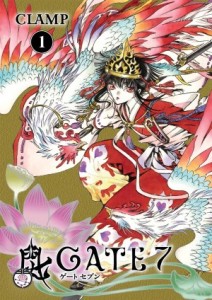


 SEAN: It’s a fairly small week this time round, and so I’m glad to devote my pick of the week to the 11th volume of
  MJ: It is a small week indeed, and though there are a few things on the list I plan to buy (including Sayonara, Zetsubou-sensei), I’ll give my pick this week to the second volume of the manga adaptation of
  KATE: Since I’m not following any of the titles on the list, I’m going to recommend the second issue of Skottie Young and Eric Shanower’s


