• Skip to primary navigation
  • Skip to main content
  • Skip to primary sidebar
  • Home
  • About Us
    • Privacy Policy
    • Comment Policy
    • Disclosures & Disclaimers
  • Resources
    • Links, Essays & Articles
    • Fandomology!
    • CLAMP Directory
    • BlogRoll
  • Features & Columns
    • 3 Things Thursday
    • Adventures in the Key of Shoujo
    • Bit & Blips (game reviews)
    • BL BOOKRACK
    • Bookshelf Briefs
    • Bringing the Drama
    • Comic Conversion
    • Fanservice Friday
    • Going Digital
    • It Came From the Sinosphere
    • License This!
    • Magazine no Mori
    • My Week in Manga
    • OFF THE SHELF
    • Not By Manga Alone
    • PICK OF THE WEEK
    • Subtitles & Sensibility
    • Weekly Shonen Jump Recaps
  • Manga Moveable Feast
    • MMF Full Archive
    • Yun Kouga
    • CLAMP
    • Shojo Beat
    • Osamu Tezuka
    • Sailor Moon
    • Fruits Basket
    • Takehiko Inoue
    • Wild Adapter
    • One Piece
    • After School Nightmare
    • Karakuri Odette
    • Paradise Kiss
    • The Color Trilogy
    • To Terra…
    • Sexy Voice & Robo
  • Browse by Author
    • Sean Gaffney
    • Anna Neatrour
    • Michelle Smith
    • Katherine Dacey
    • MJ
    • Brigid Alverson
    • Travis Anderson
    • Phillip Anthony
    • Derek Bown
    • Jaci Dahlvang
    • Angela Eastman
    • Erica Friedman
    • Sara K.
    • Megan Purdy
    • Emily Snodgrass
    • Nancy Thistlethwaite
    • Eva Volin
    • David Welsh
  • MB Blogs
    • A Case Suitable For Treatment
    • Experiments in Manga
    • MangaBlog
    • The Manga Critic
    • Manga Report
    • Soliloquy in Blue
    • Manga Curmudgeon (archive)

Manga Bookshelf

Discussion, Resources, Roundtables, & Reviews

Sean Gaffney

Bookshelf Briefs 7/24/11

July 25, 2011 by Sean Gaffney, Michelle Smith, MJ and Katherine Dacey Leave a Comment

This week, Michelle, MJ, Kate, & Sean check out recent releases from Kodansha Comics, Viz Media, Seven Seas, & Vertical, Inc.


Dengeki Daisy Vol. 5 | By Kyousuke Motomi | Published by Viz –I cannot help but compare the cover of this volume of Dengeki Daisy to those of Black Bird, which runs in the same magazine in Japan. Black Bird’s covers always reminded me of sexual assault, with inappropriately placed blood and a terrified heroine. Dengeki Daisy also features a somewhat bloody hero clutching his heroine, but the image here is meant to invoke protection, and she isn’t frightened of him at all. I find that much better. As for the story itself, the plot continues to get more and more dangerous, as Tasuku is even briefly hospitalized. The enemy is trying to confront Teru psychologically, and it’s to her credit that she’s keeping it together as much as she is. Meanwhile, she and Tasuku are still hiding things from each other about her knowledge of Daisy, and are finding it increasingly hard to deal with their burgeoning feelings. Tense, gripping stuff, this series is a real page-turner.– Sean Gaffney

Ikigami: The Ultimate Limit, Vol. 7 | By Motoro Mase | Viz Media – Every volume of Ikigami: The Ultimate Limit follows the same template: Motoro Mase introduces the victim, then shows us how he or she copes with the news of his impending death. Though a few victims have violently resisted their fates, almost all the stories have an uplifting ending in which the victim reaches out to an estranged relative, apologizes to a friend for callous behavior, or gives a final performance. I think these stories are meant to underscore how unjust the National Welfare Act really is, but the cumulative effect induces numbness, not outrage. Death messenger Fujimoto’s own journey to conscientious objection is unfolding at such a slow pace that it’s hard to know if he’ll ever have the courage to resist his charge. And with no one actively fighting the government, Ikigami is rapidly devolving into an unpleasant hybrid of Afterschool Special and snuff film. In a word: grim. -Katherine Dacey>

RIN-NE, Vol. 6 | By Rumiko Takahashi | Published by VIZ Media – Even though RIN-NE is now up to its sixth volume, nothing has really changed much. (Sort of) shinigami Rinne is still stingy and still besotted by perpetually calm classmate Sakura Mamiya, who assists him in aiding spirits to pass on. The addition of a female shinigami with the hots for Rinne (Ageha) and the continued presence of incompetent exorcist Jumonji (with the hots for Sakura) do little except fuel occasional episodic diversions, such as when Jumonji is tricked into cursing Rinne. Storylines are usually wrapped up within three or four chapters, with few lasting repercussions aside from a slowly growing cast of recurring characters. Speaking of which, I am seriously weary of Sabato, Rinne’s irresponsible dad, whose deceitful ways just bring more misfortune upon our hero. It’s probably expecting too much to hope for his comeuppance to happen any time soon, alas. – Michelle Smith

Shugo Chara!, Vol. 11 | By Peach-Pit | Published by Kodansha Comics – Three of Amu’s Guardian Characters have disappeared and, led by the fourth in an effort to find them, she embarks upon a journey along the wibbly-wobbly, timey-wimey (not to mention sparkly) “road of stars,” catching glimpses of various characters with whom she interacted over the course of the series—friend and foe alike—who are all now working hard and having fun. What would be a warm and fuzzy conclusion is marred slightly by the fact that the mystery of the Embryo is never explained and one of Amu’s friends never divulges an important secret, but maybe these things will be rectified in the final volume, which “explores the side stories of the other characters.” My advice is to try not to think too hard about the dangling plot threads and just enjoy the good-hearted vibe of this delightful magical girl series. – Michelle Smith

Toradora! Vol. 2 | By Yuyuko Takemiya and Zekkyo | Published by Seven Seas –Memo to the manga artist for Suzumiya Haruhi: take a few lessons from Toradora’s adaptation. The series finishes up Vol. 1 of the light novels here and starts Vol. 2, and manages to keep the romantic comedy aspects going without it ever becoming tiresome. Taiga can be incredibly overbearing, but we see a lot more of her softer side than most manga tsunderes, and her facial expressions make this worth the purchase price alone. The artist knows when to do exaggeration and when to keep it real, fortunately. As for the plot, well, after the worst love confession I’ve seen in a long time, Taiga and Ryuuji seem to be back to Square One. But they’re not giving up, not even as a new girl arrives on the scene to make everything much worse. A fun, breezy read for those who like comedic romance hijinks and don’t mind tsunderes.– Sean Gaffney

Twin Spica, Vol. 8 | Kou Yaginuma | Vertical, Inc. – I often worry that I don’t have enough new to say about continuing volumes of Twin Spica, not because there is little worth noting, but because it so faithfully maintains its high quality over the course of its run that it’s hard to keep topping my own praise. The truth is, no matter how much I’ve raved about any particular volume, each new installment renews those feelings ten-fold, as mangaka Kou Yaginuma continues to dig deeper into the minds and hearts of his young student astronauts. This volume is largely about partings (or the prospect thereof) and left me teary at several points, while also steadily building up my anticipation and imagination as I ponder what’s in store for its characters, personally and professionally. Yaginuma’s nostalgia-tinted artwork is especially effective in this volume, and I’m constantly surprised by how expressive it is, despite its simple aesthetic. Still recommended. – MJ


Filed Under: Bookshelf Briefs Tagged With: Dengeki Daisy, ikigami, rin-ne, shugo chara!, toradora!, twin spica

Naruto Volumes 4-6

July 25, 2011 by Sean Gaffney

By Masashi Kishimoto. Released in Japan by Shueisha, serialization ongoing in the magazine Weekly Shonen Jump. Released in North America by Viz.

And this is why everyone should give Jump series about 5-6 volumes before they give up on them. This omnibus is definitely a big step up from the first, with the leads being slightly more likeable, lots of interesting new characters introduced, and a new arc that promises to be much more thrilling – and possibly more deadly.

First, however, we have to finish up the cliffhanger from last time, with Naruto and company defending the bridge and its creator from the evil ninja and the mob boss who hired him. Once again, we are reminded that small, petty villains are always MUCH WORSE than noble yet evil guys in the Shonen Jump world, and while Zabuza spends a lot of time showing us what a horrible person he is, he does manage to get some redemption, as does his gender-malleable assistant. I was rather startled at the death of Haku here – it’s quite gory, and from a blow by Kakashi, no less (if accidentally). Clearly ‘nobody dies in Naruto’ is not a meme that’s going to take hold. Well, not yet anyway.

Once that’s over with, we head back to the village and begin our next big arc – the exams are coming up for journeyman ninja, and despite only having worked together for a short time, Kakashi recommends that they all do it. This is a huge exam with over a hundred ninja apprentices from all walks of life, most of whom we meet in this book. I have no idea who will be important later or not – the only ones that really stuck with me are Hinata, who clearly has a crush on Naruto that’s a mile wide; Ino, who has some sort of rivalry/friendship with Sakura; and Gaara, who gives off the appearance of being one of the next big villains, so must not be one.

And then there’s Rock Lee, who really deserves a paragraph of his own. Even though I’d never read Naruto before this, I still knew of Rock Lee – how could I not? Amazingly, he’s exactly as I anticipated, being a larger than life Sylvester Stallone type bruiser in the midst of all these tricky ninjas. His master Guy looking pretty much like him only older also amuses me, and I was rather startled to note that Guy can apparently hold his own with Kakashi – even the comedy characters here are tough cookies.

As for the exam itself, it’s a ninja exam, so naturally there’s lots of secret cheating, given they all assume the point of the exam is to see how good they are at not getting caught. The final question is psychological, something that works on many of the exam takers but not on Naruto, who is far too stubborn for such tactics. (Note: not dense – Naruto seems to fully understand what he’s sacrificing. It’s the principle of the thing that bothers him.) And then we get Round 2, featuring a survival match through a deadly forest – one that has been infiltrated by one of the villains, Orochimaru.

This last third of the omnibus is far more serious than the volume before it, and once again shows that the author is not afraid to laughter its minor cast members in the way of drama. There’s lots of good stuff here – Sasuke shows that he’s not all smug jerk, though unfortunately seems to get infected (possessed?) by the enemy anyway. Even better is Sakura, who while she doesn’t accomplish much does show a plucky streak that’s very endearing, and is at least clever enough to not fall for the minor mook’s traps. The three leads are all coming along, and I’m interested in seeing how they get out of all this.

This still hasn’t reached the heights of One Piece for me – the battles still have trouble keeping my attention, for one, and introducing 25-30 new cast members in 2 volumes is over the top even if you *aren’t* meant to remember who they all are. But it’s definitely come along from the first omnibus, and this new Exam Arc is indeed as exciting as people said it would be. I’m looking forward to seeing how things go from here on.

Filed Under: REVIEWS

SDCC Round-Up

July 23, 2011 by Sean Gaffney

Yes, it may still have two days to go, but for most manga fans, the news is done now due to a heavily overbalanced schedule. And who better to give you a breakdown of all of it than me, a person who wasn’t there and mostly followed everything on Twitter! Onward!

First up we have Kodansha, who sadly did not have any new announcements. A bit worrying, given that they have really announced one new title since their debut – Code Name: Sailor V. Sailor Moon, Love Hina and Tokyo Mew Mew are all new editions of previously issued stuff, though I suspect Sailor Moon’s differences between Tokyopop and Kodansha will be large enough that it will seem new.

They did announce that the Negima omnibuses will continue “till they catch up with the new volumes”, which I presume means catching up to where the Nibleys began translating/adapting it. They also showed off the cover (as yet not online) for the first Love Hina omnibus, which will be 5 volumes, each containing 3 of the original (the last will have 2).

The other unsurprising but disappointing news is that they indicated that, due to poor sales and a poor economy, there are currently no plans to go back and grab other Del Rey series left hanging that aren’t already coming out. Yozakura Quartet and Pumpkin Scissors were mentioned specifically, but I expect this also includes titles such as Nodame Cantabile, Moyasimon, and School Rumble. They also indicated they have no digital plans at this time. Most likely as they’re still concentrating on getting back up to speed book-wise.

The big news of the weekend was the J-Manga panel, which debuts in North America in August. It’s a collective between 39 manga companies (basically everyone you can think of which the exceptions of Square Enix (who have their own initiative) and Mag Garden (no Aria for you!) to have their manga available here. To my surprise and happiness, this is *not* an Apple-only iPad app, but web-based. The price point will be determined by publisher, but they’re also trying to get a wider variety of content than just ‘Jump/Hana to Yume’ licenses that tend to come out over here. The readers can apparently message the authors, and there will be exclusive content, including videos. And yes, some brave soul did ask why we should care when we have scanlations. Brave soul. :) It’s web-only right now, but they’re working on mobile apps.

The site hasn’t debuted yet, but this was much more than I was expecting, so I am greatly pleased. There are still some unanswered questions (who’s doing the translation work? How are they being paid?), but I am now greatly looking forward to the opening of the site.

Speaking of online manga, Viz debuted their new web-based manga site Thursday evening. I have not yet had a chance to try it out, though I will do so this weekend, but all signs point to it being exactly what we asked them for – a non-iPad way to pay to read their manga online. The titles are mostly what you’d expect, being their best-sellers, along with a few Signature titles for ‘cool’ readers. I wonder in future if they might use it as a way to access volumes that are out of print and don’t sell well enough to justify a reprint (yes, I am thinking of Excel Saga). In any case, kudos to Viz!

Viz had two new manga licenses, both in the Shojo Beat line. The first I’m very excited about, and have been hoping Viz would pick it up. January sees the debut of Devil and Her Love Song, which is about a blunt, no-nonsense girl who was expelled from her classy all-girls’ academy and is now attending a public school. Her ‘devil’ personality causes her no end of problems, but does attract the attention of two guys – one cheery, one grumpy. No, it’s not the most original thing ever, but it’s great fun, and I can’t wait to see it in English.

The other one is Earl and Fairy, based on a very long (25 volumes and counting – don’t expect it to be licensed) light novel series about a woman who is attuned to fairies, and her interaction with a roguishly handsome young man seeking a legendary sword. It’s Victorian Fantasy, so no doubt will appeal to Black Butler fans, and its general feel should also draw in the Vampire Knight crowd.

And given the success of the shonen ‘omnibus’ formats (which, word of warning, will likely all end about 9-12 volumes in – these are teasers to make you buy, not full re-releases), Viz is now doing two popular shojo series in the 3-in-1 style: Hana-Kimi and Skip Beat! I never got a chance to take in Hana-Kimi back in the day, so will be looking forward to this.

The Shonen Jump panel following did announce a new chapter of a just-begun-in-Japan Jump title available in English – St&rs, which can be accessed from their website – but did not announce any new licenses. This is possibly as the one they announced last year, Psyren, still has yet to debut in graphic novel form. It’s also possibly due to the fact that the other ‘mid-range’ Jump titles running right now all have potential difficulties with NA sales. Sket Dance is a Gintama clone, and Viz just cancelled that. Beelzebub has a lot of Satanic backstory, and also has a naked baby and his naked penis in many, many chapters – Viz has already censored this sort of thing in titles like Dr. Slump. Kuroko no Basket is a basketball manga, at a time when they’re still putting out Slam Dunk. And Medaka Box… is Medaka Box. They may wait to see if the Gainax anime takes off to do something about that. :)

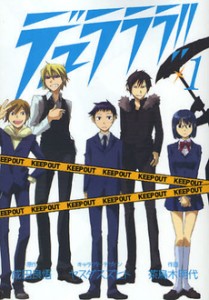
Onward to the Yen panel! They win the prize for total number of new licenses, piling up three. The first one was spoiled a bit ahead of time for some, but is not a surprise given the anime got a TV deal: Durarara!!, the manga adaptation of the light novel series about a group of Ikebukuro residents and their interactions and misadventures, centering around several rival gangs and a young woman searching for a missing past – and her missing head. It’s from Square Enix, and runs in their female-oriented shonen magazine GFantasy, home of Black Butler and Pandora Hearts. It just finished ‘Stage one’ in 4 volumes, but will be restarting a second arc soon.

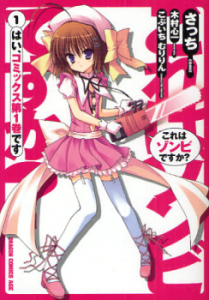
Then there is Kore Wa Zombie Desu Ka?, a comedic title that just started last year in Kadokawa Shoten’s fanservicey shonen magazine Dragon Age. Also based on a light novel that won’t come out over here (DRRR!! is a far more likely pickup, though still very unlikely), it’s about a young man who gets killed, then resurrected as a zombie by a silent young necromancer woman. Then he runs into a magical girl with a chainsaw – and accidentally steals her powers. Now he has to deal with the trials of being a zombie cross-dressing magical girl. Didn’t I read this plot on Fanfiction.net with Naruto and Usagi?

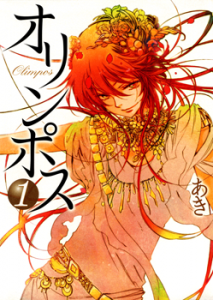
Lastly, we have what appears to be another omnibus, but a bit more high-end than Dragon Girl and Sasameke were. Olimpos is from the author of Utahime, which DMP put out over here, and is apparently based around the mythical Greek Gods. It ran for 2 volumes in Ichijinsha’s josei magazine Comic Zero-Sum (and its sister publication Zero-Sum Ward), and I suspect will be the most ‘blogger-friendly’ of the titles announced at SDCC. Yen also mentioned a 4-volume color omnibus for High School of the Dead, and noted they were working on an Android app for their stuff.

The last thing I heard about was the Best and Worst manga of 2011, which I was delighted to hear spent so much time talking about the best that they barely managed to mention the worst. Always a good thing, IMO.

That’s it for now! Otakon will be a much easier write-up, as there’s only one manga industry panel there – Vertical. And as for New York Comic Con, I will actually be present at that one. :)

Filed Under: UNSHELVED

Looney Tunes Platinum Collection announced

July 22, 2011 by Sean Gaffney

To go along with my post on the new Tom & Jerry Golden Collection collector’s set, Warners has announced their first Looney Tunes Blu-Ray release. Unlike Tom & Jerry, this one is Blu-Ray only. Most likely because, while the T&J set will have restorations not out on DVD yet, this first LT collection will feature a lot of cartoons previously restored on DVD. That said, Jerry Beck and company have indicated the picture quality is really incredible, as one would expect from the new medium, and this is really more ‘Warners dipping its toe into Blu-Ray’ than anything else.

The contents list reads very much like ‘what would a cartoon fan want in a ‘best ever’ Looney Tunes set, along with some lesser cartoons that star such fan favorites as the Tasmanian Devil and Marvin Martian, both of whom have popularity that far outweighs the few cartoons they were in. Some contents are apparently not announced yet, but here’s what we have. I’ll note which DVD collection the cartoon first appeared on if applicable (and when I say new to DVD, I mean new to Blu-Ray, of course, but also not on a DVD collection before):

DISC ONE
1) Hare Tonic (1945, Jones) (Golden Collection 3)
2) Baseball Bugs (1946, Freleng) (GC1)
3) Buccaneer Bunny (1948, Freleng) (GC5)
4) The Old Grey Hare (1944, Clampett) (GC5)
5) Rabbit Hood (1949, Jones) (GC4)
6) 8 Ball Bunny (1950, Jones) (GC4)
7) Rabbit of Seville (1950, Jones) (GC1)
8) What’s Opera, Doc? (1957, Jones) (GC2)
9) The Great Piggy Bank Robbery (1946, Clampett) (GC2)
10) A Pest in the House (1947, Jones) (GC5)
11) The Scarlet Pumpernickel (1950, Jones) (GC1)
12) Duck Amuck (1953, Jones) (GC1)
13) Robin Hood Daffy (1958, Jones) (GC3)
14) Baby Bottleneck (1946, Clampett) (GC2)
15) Kitty Kornered (1946, Clampett) (GC2)
16) Scaredy Cat (1948, Jones) (GC1)
17) Porky Chops (1949, Davis) (GC1)
18) Old Glory (1939, Jones) (GC2)
19) A Tale of Two Kitties (1942, Clampett) (GC5)
20) Tweetie Pie (1947, Freleng) (GC2)
21) Fast and Furry-ous (1949, Jones) (GC1)
22) Beep Beep (1952, Jones) (GC2)
23) Lovelorn Leghorn (1951, McKimson) NEW TO DVD
24) For Scent-I-Mental Reasons (1949, Jones) (GC1)
25) Speedy Gonzalez (1955, Freleng) (GC1)

DISC TWO
1) One Froggy Evening (1955, Jones) (GC2)
2) Three Little Bops (1957, Freleng) (GC2)
3) I Love to Singa (1936, Avery) (GC2)
4) Katnip Kollege (1938, Hardaway/Dalton) (GC2)
5) The Dover Boys (1942, Jones) (GC2)
6) Chow Hound (Jones, 1951) (GC6)
7) Haredevil Hare (1948, Jones) (GC1)
8) Hasty Hare (1952, Jones) NEW TO DVD
9) Duck Dodgers in the 24 1/2th Century (1953, Jones) (GC1)
10) Hare-Way To The Stars (1958, Jones) NEW TO DVD
11) Mad As a Mars Hare (1963, Jones) (BB:HE)
12) Devil May Hare (1954, McKimson) (GC1)
13) Bedevilled Rabbit (1957, McKimson) (BB:HE)
14) Ducking the Devil (1957, McKimson) (DD:FF)
15) Bill of Hare (1962, McKimson) NEW TO DVD
16) Dr. Devil and Mr. Hare (1964, McKimson) (BB:HE)
17) Bewitched Bunny (1954, Jones) (GC5)
18) Broom-Stick Bunny (1956, Jones) (GC2)
19) A Witch’s Tangled Hare (1959, Levitow) NEW TO DVD
20) A-Haunting We Will Go (1966, McKimson) (GC4)
21) Feed the Kitty (1952, Jones) (GC1)
22) Kiss Me Cat (1953, Jones) (GC4)
23) Feline Frame-Up (1954, Jones) NEW TO DVD
24) Fram A to Z-Z-Z-Z (1954, Jones) (Academy Award Collection)
25) Boyhood Daze (1957, Jones) (GC6, special features)

As one can see, the cartoon set above has some fantastic cartoons, but it is also very conservative. Nothing in black-and-white, no cartoons with controversial ethnic gags (save Chow Hound), and a lot of Chuck Jones, whose films are here 3-1 over everyone else. The first set has the LT stars, with Bugs, Daffy, Porky, Tweety, Roadrunner, Pepe, and Speedy cartoons. The second starts with famous one-shots, and then throws in a bunch of Marvin Martian, Tasmanian Devil, Witch Hazel, Pussyfoot and Ralph Phillips cartoons to appeal, my guess is, to the casual fan. Still. Dear WB, stop appealing to the casual fan. There’s only 3 cartoons here from the 1930s, as well. At the same time, it’s hard to begrudge the set, as it’s filled with the very best WB cartoons, as you would expect from a debut Blu-Ray set. Aside from Porky Chops (which Jerry has always loved, for some weird reason) and Katnip Kollege (ditto, though I love this one too), everything before the Marvin cartoons start is a bona fide Looney Tunes masterpiece.

Are there extras? Of course there are! Behind the Tunes mini-documentaries (most likely taken from the DVD sets), Chuck Jones documentaries (ditto), the 1944 FDR propaganda cartoon Hell-Bent for Reelection (by Chuck Jones, and I believe NEW TO DVD), the 1955 Army short A Hitch in Time (Jones again, also NEW TO DVD), the antiwar WB short The Door, from 1968, directed by Ken Mundie (also NEW TO DVD), and 2 new documentaries on Marvin and Taz. Plus no doubt a few more unannounced goodies.

It can be hard to take when technology moves so quickly. Especially in a crappy economy, where the WB Golden Collections were scrapped for poor sales. Having to not-only re-buy cartoons you have but also invest in a new player to view them (I don’t have Blu-Ray myself yet, though obviously will be getting a player soon) is asking a lot of the hardcore cartoon fan. Still, it’s not surprising to see this as the debut set, and more are promised. Hopefully the set will do well, and we’ll see cartoons like Porky in Wackyland and some more unreleased to DVD stuff in the future.

Filed Under: UNSHELVED

Kekkaishi Volumes 4-6

July 21, 2011 by Sean Gaffney

By Yellow Tanabe. Released in Japan by Shogakukan, serialized in the magazine Shonen Sunday. Released in North America by Viz.

The second omnibus edition of Kekkaishi continues the demon hunting plotline of the first, and adds such popular shonen tropes as the elite older brother who the hero looks up to but is also jealous of, as well as the grumpy new guy who insists he can do everything himself. Both are in the ‘I will not be nice to you as you are TOO WEAK’ school of characters, so Yoshimori is having an especially difficult time.

Of course, Yoshimori is NOT actually too weak, he’s simply too inexperienced and too eager to use his power as a blunt object. Many times throughout the volume, characters are impressed with how long he can keep his kekkai going, and how powerful they are. Of course, Masamori, his elder brother, really is pretty awesome in his own right, and demonstrates several times in this omnibus his coolness under fire. Judging by how he deals with both his little brother and Yomi, the minor villain from an earlier arc, he seems to favor the carrot and stick approach to learning.

One thing that intrigued me greatly throughout these three volumes was Yoshimori’s decision to seal off the Karasumori site. Given it’s what’s attracting all the demons they have to keep fighting, it’s a good idea at its core, but the 87 billion things wrong with it also make themselves known. To his credit, Yoshimori knows this, and spends a lot of the next couple of volumes trying to figure out the secrets of the site and how he can possibly accomplish such a thing. Seeing him deep in thought is also quite amusing, as he tends to squat down with this constipated look on his face – it’s no wonder Tokine figures out he’s hiding something right off the bat.

And then there’s Gen, who would appear to be the new regular character. He has ties with Yoshimori’s brother, and would appear to be there to be the ‘darker’ version of the hero, especially as we see the classic ‘he’s a wastrel who’s absolutely nothing like me – oh wait, except that we’re a lot alike after all’. I liked what his fighting revealed about Yoshimori, and how he’s the sort who thunders ahead without thinking, but as the battle rages gets craftier and more tactical. As for Gen’s own issues, briefly seen here, clearly they’re going to become more important in future arcs.

There’s more to talk about, like all the politics and rivalries going on around the land, and Tokine, who is a presence throughout the book, even if I don’t have as much to say about her this time. But as with Volume 1, Kekkaishi is a good example of solid, well-written shonen manga. It’s not breaking any new ground, but it’s exciting and fun to read. It also features one of the creepiest ‘retired professor’ types I’ve ever seen. He’s probably evil. (Remember, kids, always judge by appearances!)

Filed Under: REVIEWS

Manga the week of 7/27

July 20, 2011 by Sean Gaffney

Right, Midtown is really starting to irritate me. I don’t know where their distributor has wandered off to, but the Kodansha titles are just passing them by. With that in mind…

Stuff that’s come out from Kodansha but hasn’t hit Midtown in the last 2 months: Well, we have (deep breath) Air Gear 18 (back to single volumes), The Wallflower 25 (ditto), Negima Neo 7 (the final volume, and thank God for that), and Sayonara Zetsubou-sensei 9. Reviews of Zetsubou and Wallflower are already on my site. That’s June.

From July, we have out already the 14th volume of Fairy Tail, the 3rd of the blogger favorite Arisa, the final volume of Shugo Chara proper (the last volume is a collection of the sequel, Shugo Chara Encore), and a new Ninja Girls, which is… not a blogger favorite. Those came out today.

Next week, from Diamond but not Midtown, we have the 30th volume of Mahou Sensei Negima!. It’s in the middle of a kickass arc that doesn’t let up. And while I can’t confirm this (as I didn’t order it), we may see the new Deltora Quest as well. Hey, Midtown! Fix this!

Rant over, so what *is* Midtown getting in? Well, there’s the 6th volume of Gurren Lagann, from Dengeki Daioh. There’s also a large stack of stuff from Digital Manga Publishing, who apparently finished a bunch of Taiyo Tosho stuff at once. All one-volume sets, with such suggestive titles as I Give To You, This Night’s Everything, and Entangled Circumstances. All these come from their two yaoi magazines, Hertz and Craft.

(Side note to DMP: If you license one more yaoi manga where a seme has one hand cupping the chin of his lover while the uke is staring back at him with this sort of tortured ‘do what you will, you callous ruffian of my heart’ look, I shall be very cross with you indeed.)

And that’s it. What appeals to you this week?

Filed Under: FEATURES

Wandering Son Volume 1

July 19, 2011 by Sean Gaffney

By Shimura Takako. Released in Japan by Enterbrain, serialization ongoing in the magazine Comic Beam. Released in North America by Fantagraphics.

I will admit I sometimes get intimidated by manga that are ‘important’ or ‘worthy’ in some way. Given a choice between discussing the latest gegika masterpiece from Drawn and Quarterly and the seventeenth volume of shoujo series X, I’m going to take the easy route every time. It’s the sort of book that reminds you that you’re actually meant to be reviewing, not just rambling on. And I felt a bit like this while seeing Wandering Son’s fancy, well put-together hardback sitting on my pile. Which is amusing, of course, as the manga itself is quite unassuming and easy to read.

Wandering Son is about a time in life when every single interaction with anyone is fraught with awkwardness. Especially for a shy kid like Nitori. Things are in flux, and you start to get a sense that even though you really want to do something, that doesn’t necessarily solve the problem if it will just lead to laughter and being thought of as ‘weird’. Yoshino is more self-confident, both in her general personality and in her feelings regarding how she wants to be seen, but her own body is the one reminding her that things aren’t simply cut and dry.

And then there’s Saori, who winds up driving much of the plot in this first volume. Saori interested me quite a bit, if only as she made my skin crawl at times with her trying to force things onto people. The combination of the dress and suggesting the play was interesting enough, but then there’s her reaction after Nitori returns the dress. Christianity is growing in Japan, but I think for a young girl such as herself, the appeal of penance and forgiveness is what’s drawing her more than the faith itself. I’ll be interested to see how this pans out.

The mood of the manga itself is sort of ‘slice-of-life’, but the plot really doesn’t follow the same format as your typical school 4-koma. The basis of this story is transgender issues, and that’s what you get for these first eight chapters. It just so happens that the issues are part of Nitori and Yoshino’s lives, so they aren’t presented with a huge amount of heft the way they would in an after school special. The other classmates have not made much of a name for themselves (indeed, the author admits she hasn’t yet come up with a name for Nitori’s perky friend yet), but I expect that will change.

As for the art style, it’s handled with an amazing deftness. The characters are subdued much of the time, but not in a way that, say, Adachi’s Cross Game characters are. We do see a lot of emotion here, particularly towards the end where Yoshino’s growing up gets thrown back in her face by the class troublemaker (via a proxy, another thing I found quite true to life). But what I liked best was seeing the looks on Nitori’s and Yoshino’s faces when they did try to dress as the other gender. Nitori’s look of bashful happiness as he wears the hairband. Yoshino’s stunned joy and pride after she’s ‘hit on’ by a woman at a fast-food place. They’re expressions you remember, and make for a stronger work.

Fantagraphics has done a great job with this. It’s a handsome volume, well-bound and with sturdy paper. Matt Thorn’s translation and adaptation are seamless, and his essay on the use of honorifics is both enlightening and amusing, inasmuch as he wouldn’t want to use them for most titles, but this is an exception.

So intimidation aside, in the end this is simply a well-crafted story, well-told. You want to read Volume 2 right away to find out how Nitori, Yoshino and Saori continue to deal with these feelings as they grow older. I’m very pleased that it was brought over here, and hope that it sells well enough so that we might see other titles in a similar vein. Not necessarily transgender, but handling difficult issues with such a light touch.

Filed Under: REVIEWS

Bookshelf Briefs pointer

July 18, 2011 by Sean Gaffney

For those who read my site by looking at the category archives, I have reviews of Eyeshield 21 36 and Skip Beat 24 on this week’s Bookshelf Briefs. They can be found here: Bookshelf Briefs

Filed Under: REVIEWS

Pick of the Week: Something for everyone

July 18, 2011 by MJ, David Welsh, Katherine Dacey, Michelle Smith and Sean Gaffney 5 Comments

It’s a relatively slow week at Midtown Comics, but what’s there is well worth reading, as the Manga Bookshelf bloggers reveal below!


MJ: I’m feeling pretty indecisive this week, with new volumes of a couple of my favorite series shipping into Midtown Comics, as well as new work from a favorite creator. Viz Media’s releases are few but fantastick, as they offer up the latest volume of Fumi Yoshinaga’s Ooku as well as the older (but new to us!) La Quinta Camera from the ever-glorious Natsume Ono. Still, I’ll throw my vote to volume eight of Kou Yaginuma’s Twin Spica, just out from Vertical. Twin Spica contains everything I look for in a series, thoughtful characterization, carefully crafted plot, awesome female characters, and more than a dash of bittersweet whimsy. It’s one of my favorite series currently running, and I wouldn’t miss this volume for the world. Neither should you!

DAVID: Ono and Yoshinaga have become linked in my thinking, as they’re both creators who seem to tell precisely the kind of stories that please them, and if someone would like to publish those stories in their magazines, that’s lovely, but neither is inclined to accommodate the house style. And I love that in a creator. So, while it’s cruel of Viz to force me to pick just one of their works, circumstances demand it. As a result, I’ll go with Yoshinaga’s Ooku, as it’s been longer since I’ve read a new volume of her work than Ono’s. I’m looking forward to more mesmerizing period drama about women in power.

KATE: Tempting as it is to join the chorus of folks praising La Quinta Camera, Ooku: The Inner Chambers, or Twin Spica, I’m going a little further off the reservation with my Pick of the Week: Marvel Comics’ 15 Love. Anyone who’s read my site knows that I’m not a Big Two kinda gal; I’m not keen on superhero comics, and seldom find much outside of DC’s Vertigo imprint that appeals to me as a reader. But I’m genuinely excited to buy 15 Love, a three-issue mini-series about a teenage tennis player who’s juggling competition, school, and a modeling career. The series has an interesting history: originally commissioned in 2003, the project was completed but never published — until now. I’m not sure who Marvel hoped would read it, but the concept and preview art have a pleasant, shojo manga vibe. (You can view a few pages at The Beat.) Even if the story doesn’t live up to Sho Murase’s awesome cover, art 15 Love seems like the kind of comics project that deserves my support as a female reader.

MICHELLE: I am a huge fan of Takehiko Inoue’s Slam Dunk, and though I must admit that I have yet to actually read his other VIZ series, Real and Vagabond, I have been buying them faithfully. I started picking up the Vagabond VIZBIG editions when I had a Border’s gift certificate to burn and, seeing the first one on the shelf, proceeded to flip through it, whereupon I encountered color illustrations so gorgeous I immediately, and without hesitation, proceeded to the checkout counter. My pick this week, therefore, is the tenth VIZBIG edition of Vagabond, collecting what I presume is volumes 28 to 30 of the series.

SEAN: I will be picking the latest Natsume Ono, La Quinta Camera. I didn’t really get into not simple, which I found a bit too depressing for my taste. This new one-shot seems to be more along the lines of Ristorante Paradiso and Gente, however, which is fantastic, as I loved those to death. Ono seems to be at her best when people are sitting around having a conversation, usually while not looking at each other. And this still isn’t quite all of her backlog, either, as we’re supposed to get the short-story collection Tesoro later in the year.


Readers, what looks good to you this week?

Filed Under: PICK OF THE WEEK

Bookshelf Briefs 7/18/11

July 18, 2011 by Michelle Smith, MJ, David Welsh, Katherine Dacey and Sean Gaffney 1 Comment

This week, Michelle, MJ, David, Kate, & Sean check out recent releases from Kodansha Comics, Viz Media, Yen Press, & Vertical, Inc.


Arisa, Vol. 3 | By Natsumi Ando | Kodansha Comics – With the help of classmate Manabe, Tsubasa continues to look for the identity of the “king,” an unknown person who grants wishes and made her twin sister Arisa his target. In this volume, suspicion falls on Midori, Arisa’s boyfriend, who is nearby after a nicely creepy fun-house mirror King sighting, and who is also one of the chosen five, an elite group of students allowed to submit their wishes to the king. Tsubasa can’t believe he’s involved, though, as his friendliness seems too genuine, but she may have to do some untrustworthy things herself if she wants to help her sister. Fast-paced, spooky, and yet thoroughly shoujo, Arisa is a great deal of fun to read. Each time I finish a volume I lament that I do not already have the next in hand. – Michelle Smith

Black Butler, Vol. 6 | By Yana Toboso | Yen Press – The sixth volume of Yana Toboso’s Black Butler finds young aristocrat Ciel Phantomhive and his devilish (literally) butler Sebastian infiltrating a circus upon Queen Victoria’s orders. They’ve been assigned to investigate a string of missing children whose last-known whereabouts coincide with the troupe’s itinerary, and the bulk of the volume sees them first qualifying to join and then attempting to find an opportunity to do some poking around while contending with chores and the appearance of an unfriendly grim reaper. It’s not a bad volume by any means—certainly better than the recent silliness involving a curry competition—but suffers some from being only the first half of the story. Still, the creepy atmosphere Toboso creates for the circus is fun, and there’s a certain satisfaction to be derived from watching imperious Ciel peel potatoes. – Michelle Smith

Black Jack, Vol. 15 | By Osamu Tezuka | Vertical, Inc. – Readers who love Tezuka in his crazy, kitchen-sink mode will find plenty of over-the-top stories in volume fifteen. Black Jack performs a full-body skin graft on a porphyria patient, saves a boy who’s begun sprouting leaves from his body, and gets trapped not once but twice in caves with critically injured people. Entertaining as these stories are, the real highpoint of volume fifteen is “A Surgeon Lives for Music,” in which a famous doctor finds an ingenuous way to circumvent a totalitarian regime’s ban on “decadent” music. “A Surgeon” may not be Tezuka’s best work, but it’s a deeply personal story, touching on two of the most important things in his life: his medical training, and his passion for Ludwig van Beethoven. Highly recommended. – Katherine Dacey

Cross Game, Vol. 4 | By Mitsuru Adachi | Viz Media – Due to an error on Viz’s Facebook page, some of us were afraid that this was the final volume that Viz would publish. Unpleasant as those hours of uncertainty were, they served as a reminder that this series should be praised as often as decency allows, if not somewhat more frequently. The most consistently amazing thing about Adachi’s tale of high-school baseball players is that there’s absolutely no contrivance to it – not in the evolution of the team, not in the prickly relationship between star pitcher Ko and childhood frenemy Aoba, not even in the endearing bits of fourth-wall demolition that Adachi occasionally indulges in. I can think of few manga where the reader is invited to know the characters so well and like them so much, and even fewer examples where that was accomplished with this kind of gentle understatement. Just read it. You won’t be sorry. – David Welsh

Eyeshield 21, Vol. 36 | By Riichiro Inagaki and Yusuke Murata | Viz Media – This is the penultimate volume of Eyeshield 21, and like the volume before it there is a sense that it should have ended with the Christmas Bowl. Much as it’s nice to see Sena take on Panther one last time, this feels more like a victory lap than an actual plot point. Still, it’s a fun victory lap, as we see lots of what make shonen sports manga so great – thinking you’re the strongest and then finding guys who are even stronger, faster, and smarter than you. The second half is the football game, and it’s great seeing all the Japanese stars on the same team. But the highlight is earlier in the book, watching Hiruma and Clifford in a high-stakes poker game, where both parties come out feeling like they’ve lost. Tense stuff. – Sean Gaffney

Seiho Boys’ High School!, Vol. 6 | By Kaneyoshi Izumi | Viz Media – For shoujo manga veterans, the fact that this volume begins with preparations for a school festival (one that involves slapstick humor mixed with cross-dressing, no less) does not bode particularly well. Fortunately, the real purpose of the festival plotline is to explore further one of the series’ most unconventional relationships—that between crude student Nogami and school nurse Fukuhara. The fact taht Izumi is the first creator since Fumi Yoshinaga to make me even remotely interested in a high school student/faculty affair is noteworthy on its own, and if Izumi doesn’t quite have Yoshinaga’s genius, her work still stands out, and in a decidedly positive way. This volume remains true to the tone of the series so far, with its refreshing mix of thoughtful drama and boy-centric humor. Still recommended. – MJ

Skip Beat!, Vol. 24 | By Yoshiki Nakamura | Viz Media – From the creator of Tokyo Crazy Paradise, still unlicensed! (Yes, it never gets old.) After the method acting controversy of the last volume (which apparently bothered me a lot more than it did everyone else), we move on to romance again for this Skip Beat!, as Kyoko is dealing with Valentine’s Day attacks on three fronts: she’s missed Ren’s birthday, and is debating a Valentine gift for him; the loathsome Reino blackmailing her into chocolates; and Sho’s jealousy becoming almost its own separate character. Misunderstandings fuel that last one, but it’s a reminder that it’s not all the Ren and Kyoko show yet. Sho still has a hold of her heart, and isn’t about to give it up easily, as we find out in a gripping cliffhanger. Sho and Kyoko are far more alike than either is really comfortable with. – Sean Gaffney

Skip Beat!, Vol. 24 | By Yoshiki Nakamura | VIZ Media – Valentine’s Day is a staple of shoujo manga, but never has it been so awesome as in volume 24 of Skip Beat!. Just about every male character is hyper-interested in who Kyoko is giving chocolates to and why, from first love and current enemy Sho, who mistakes the “go to hell” chocolates Kyoko makes under duress for Reino (his musical rival) for the real thing, to Ren, who already receives a plethora of chocolates that he never eats but who would still secretly like to receive something romantic from Kyoko. There’s so much misunderstanding—of the justifiable, non-annoying variety, thank goodness—that I’m almost reminded of a Shakespearean comedy. And if that isn’t high praise, I don’t know what is! – Michelle Smith

The Story of Saiunkoku, Vol. 4 | Art by Kairi Yura, Story by Sai Yukino | Viz Media – The latest volume of Saiunkoku focuses on masked Minister Ko, revealing the real reason he hides his face from all but a few close associates. Though these passages have a delicious, soap opera quality to them, volume four feels a little pokey whenever the spotlight shifts to one of the other supporting cast members. The script often bogs down in expository dialogue and voice-overs; a little judicious pruning of subplots and minor characters would do wonders for improving the story’s pace. On the whole, however, Saiunkoku remains an engaging read, thanks to its smart, capable heroine and her dedication to becoming the first woman to take Saiunkoku’s civil service exam — think Yentl with bishies. – Katherine Dacey

Yotsuba&!, Vol. 9 | By Kiyohiko Azuma | Yen Press – I was listening to a podcast in which the participants were discussing some of the pop culture artifacts that they particularly missed. One that came up was Bill Watterson’s Calvin and Hobbes, that marvelous ten-year look into the mind of a rambunctious little boy and his stuffed tiger. This volume of Yotsuba&! reminded me forcefully of Watterson’s strip, and not just because the title tot gets her own teddy bear. Like Watterson, Azuma absolutely respects the inner life and logic of the kid at the center of his storytelling. Azuma’s approach may be less fanciful than Watterson’s, but it has the same combination of raucous humor and emotional truth. Highlights here include an extended trip to a hot air balloon festival and dinner out for grilled meat. Lovely and spot-on as the balloon outing proved to be, few things delight me as much as seeing Yotsuba hang out with her father and his friends. – David Welsh

Filed Under: Bookshelf Briefs Tagged With: black butler, black jack, cross game, eyeshield, seiho boys high school, Skip Beat!, the story of saiunkoku, yotsuba!

Cross Game Volume 4

July 18, 2011 by Sean Gaffney

By Mitsuru Adachi. Released in Japan in 2 separate volumes by Shogakukan, serialized in the magazine Shonen Sunday. Released in North America by Viz.

Summer is here, and that means it’s time for another volume of Cross Game, which Viz has cleverly set up to be released one per season for the next 2 years. (OK, that may be coincidence, but it’s nice to think about.) There’s lots of baseball here, as well as lots of Ko and Aoba. It’s just what we want in an Adachi manga.

For starters, we meet the guy who showed up at the end of last volume, Mizuki. He’s clearly nuts about Aoba, ad just as clearly is not going to get anywhere. This is played with nicely – Aoba has to change the way she gallivants around the house with a boy living there now, and Momiji is quick to pick up on this and tease her for it. Moreover, he manages to kill the rumors that Ko and Aoba are dating – which admittedly doesn’t lead to much yet, but that’s likely as the focus of the last half of this omnibus is baseball. For the most part, though, as a rival Mizuki fails. But since he was never intended to be serious, that’s not all that bad a thing.

(And yes, as noted, you can marry your first cousin in Japan, though it’s done far less frequently than it once was. Hence the need to make the belabored joke here.)

Meanwhile, we continue to see Ko and Aoba’s similarities, which are almost eerie at times. It’s shown time and time again how they think almost exactly alike, and can read each other better than anyone else out there. This can be a plus – neither of them can hide a minor injury form each other for long – but is also serving to keep things distant between the two, as Aoba is quick to note that Ko and Wakaba weren’t just hanging out all the time, they were a genuine couple – even if Ko wouldn’t admit it. At least we get to see Aoba actually get flustered by Ko for once, when he gets right in her face trying to show what the cameras at Koshien will be like.

I mentioned Wakaba, and her presence is still felt here. Aside form the aforementioned discussion, we see a nice scene of Ichiyo, the oldest sister, trying to show Ko that it’s possible to move on and find new love. Ko, of course, remains reticent on the subject. There’s also a lovely montage of Momiji’s memories of playing with Wakaba and Ko when she was a little girl, and her realization that time will eventually move on. But not yet – Ko buys Wakaba a sparkly pendant for her 17th birthday, just as her list asked.

And of course there is baseball. We meet Mishima, a player on the rival Ryuou team, and you know that he’s meant to be a feature of the series because Azuma remembers his name. He’s good too, with Ko noting that he’s the one batter that he’s really worried about. Of course, he’s not actually PLAYING due to another slugger wanting all the glory and convincing the coach to leave him on the bench. It’s been rather startling how much power politics has been in these volumes – and how it’s nice to see Ko’s team as the one who’s there to play the game, with everyone contributing.

The volume ends on a cliffhanger, of course, so the outcome of the game isn’t known. Still, at this halfway point, the series shows no signs of flagging or getting boring. I will admit that we have had it hammered home a great deal how alike Ko and Aoba are, and indeed they seem to be slowly inching towards a realization. The male rival didn’t do anything to sway Aoba’s heart at all. Hrm… perhaps a distaff counterpart?

Filed Under: REVIEWS

Sasameke Volume 2

July 15, 2011 by Sean Gaffney

By Ryuji x Gotsubo. Released in Japan by Kadokawa Shoten, serialized in the magazine Shonen Ace. Released in North America by Yen Press.

Having just read through my review of the first volume of this manga, I did not particularly like it at all. So it may be somewhat of a surprise to see me reviewing the 2nd volume. I’m a stubborn guy, though, and one feature of that review was that I was defending the second volume’s right to exist, saying that it should not be cancelled based on bad word of mouth, even if it was a horrible manga. Well, Yen has now put out the second volume, and I thank them for that.

That will be the last word of praise you hear in this review. This volume actually managed to be worse than the first. MUCH worse.

On the somewhat bright side, there is a lot more soccer in this volume than there was in the first. Given this is a soccer manga, that can only be a good thing. Sadly, we continue to follow the exploits of the most annoying team ever, so the soccer does not rise to the occasion. We meet new players who hadn’t appeared (or barely) in Volume 1, such as Antonio. We then meet his four older brothers, who are playing for the other team, and who are all better than him. We have another team where the two stars are brothers, and the younger one tries to sabotage our heroes by kidnapping Inae because he loves his brother so much. Oh, and Rakuichi meets his archrival who he knew in Italy.

But wait, I hear you cry. What happened to the large amount of plot in Volume 1 regarding Maiko’s mother? Well, it was totally abandoned. She doesn’t appear in this volume. Hell, Maiko barely appears in this volume, mostly showing up as a comedic foil for whatever foolishness is going on and to provide the book’s climax. Indeed, every time we seem to be getting any plot development, it simply ends. Matsuri rescues a child, and proceeds to flirt with the kid’s mother, who is the wife of the opposing coach… except that’s it. Done just so the opposing coach can cry.

Then there’s Rakuichi, who spends this volume much like he did the last one, whining and bitching. He gets no chance to score a goal or justify everyone calling him talented (OK, he can run downfield with the ball well), and still has no desire for teamwork whatsoever. The author admitted in a note that he wanted to try drawing a team where the heroes were all lazy slackers, but he ended up with this instead. I’ve got news for him – he succeeded. There are precisely zero characters that you feel any empathy towards or want to see succeed.

Despite all of this, they manage to get through the qualifying rounds and end up in the final tournament in Tokyo. I was rather leery at this point, as I saw we only had about 40 pages left in the book. And then we get the ending. Oh my god. I’ve seen endings where the author was told “you’re cancelled next issue, wrap it up” before, but this really takes the cake. The team gets disqualified due to its president’s financial irregularities (which was lampshaded a bit earlier, somewhat incoherently, but lampshaded), and the school forces the team to disband.

My jaw dropped. This isn’t just ‘we only got to the second round, but next year we’ll be the champions’ ending you see in so many sports mangas, this is an active ‘screw you’ to everyone who has been reading this. It reminded me of the final episode of Seinfeld in the way that it seemed to show a total antipathy to its readers. Then it spends the last 10 pages showing everyone but Rakuichi is now successful, and dissolves into incoherence. No really, the last page is merely shonen one-liners spouted off, even the author notes it’s incoherent.

I haven’t mentioned the art, I notice. Suffice to say that it didn’t improve from Volume 1, and has the same issues. It reads like the author put out his first draft every week due to time constraints, without bothering to fix anything. Heck, the plot reads like that too, not only dropping things from chapter to chapter, but sometimes form page to page!

Apparently this manga did succeed fairly well when it first came out. The author mentions merchandise for sale a few times, and it doesn’t seem to read like a put on. There’s also some fanart on deviantart that seems to date from 2007, so some folks must have enjoyed it. And there’s a 4-volume sequel, god help us all. But to be honest, I spent most of my time reading this wondering what possessed Yen Press to license it in the first place? It being a sports manga doesn’t seem to be a big selling point, and it’s not a parody of sports manga or a gag manga, despite flirting with both of those slots unsuccessfully. It’s just a formless shapeless mess.

I did note, on Googling, that the author is known for one other thing besides his manga (which apparently continue in Shonen Ace to this day). When Twilight came out in Japan, they added illustrations and manga covers to the books, to make it more like a ‘light novel’. And Ryuji Gotsubo did those illustrations. Now, this is mere baseless speculation, but I wonder if, upon Yen getting the rights to the Twilight graphic novels they’re doing, there was a rider indicating they had to put out some of this author’s work? After all there have been weirder contracts.

I worry that some people, on reading this review, might think that Sasameke is one of those ‘fun’ bad manga, something to enjoy along the lines of Mystery Science Theater 3000. Let me tell you straight out, it isn’t. It is one of the most frustrating, irritating, and annoying manga ever put out in North America, and you will be grinding your teeth by the end if you even manage to get through it. Yen put out Volume 2, and good for them, but I beg them now: don’t license the sequel. Please?

Filed Under: REVIEWS

The Stellar Six of Gingacho Volume 3

July 14, 2011 by Sean Gaffney

By Yuuki Fujimoto. Released in Japan as “Kirameki☆Gingachou Shoutengai” by Hakusensha, serialized in the magazine Hana to Yume. Released in North America by Tokyopop.

And so sadly we come to the end of this series in North America. I’m not optimistic about any license rescues, so it looks as if Volumes 4-10 will only be available in Japanese for the foreseeable future. Which is a shame, as this is a great volume of slice-of-life shoujo manga, and we’re finally starting to see at least one of the four other friends get some development.

The last volume of this series seems to have only come out via Diamond Distribution’s comic book stores – Amazon and Right Stuf never shipped it. Indeed, it was very hard to find any cover art at all that didn’t have ‘art not final’ stamped on it.

As for the volume itself, thankfully there seems to be only one of the ‘Mike wants everyone to be best friends 4-evah’ type of story we saw so often in the first two volumes. This leaves us with more regarding the relationship between Mike and Kuro. Mike is mostly as dense as ever (Q even tries hugging her close to show that she only feels ‘weird’ about it when Kuro does it, though this backfires on him spectacularly), but after the final story where she cheerfully agrees to go on a date with another guy without realizing what it actually is, she seems to at least start to get the idea that life is not all about happy smiles and that eventually real love and affection is going to have to come into play.

The character who gets the best focus here is Sato, the shy wallflower girl of the six friends. She’s at a different school from the others, and doesn’t stand out as much among the insane eccentrics in her group, so not only is she feeling depressed and inadequate, other kids are talking about her as the odd one out. Naturally, they stick her with the class rep job, the traditional job given in manga to the last person who wants it. Nothing unique or surprising happens here – with the help of her friends who show her that they love her no matter what, she’s able to overcome her fears and worries – but it’s still a heartwarming story nonetheless.

Mike and Kuro have been the focus of the romance to date, so it’s intriguing to see that we may be seeing the other four get in on the act. Kuro drags Sato along to pose as his date while he stalks Mike on hers, which shows that in many ways he can be Mike’s equal in cluelessness, as we note that she seems to have a crush on him. More intriguingly, in the funniest chapter of the book, where the three boys are candidly snapped for a gossip magazine and then become local ‘hottie’ celebrities, we get Kuro implying Q also has a crush. Indeed, Kuro’s angry “Mr. Eternally Unrequited Love” gets Q rather annoyed, and clearly it’s a plot point we would learn more about in future volumes were they coming out.

As I noted when I reviewed Happy Cafe, this type of shoujo manga is something we saw quite a bit of from CMX and Tokyopop but less from Viz. As a result, I suspect we won’t be seeing much of this genre, the manga where romance is there but not the focus, and you end up simply smiling at reminiscence of those happy childhood/teenage memories. Despite my above cynicism, I do hope that one day we find out how Mike and Kuro will get together, and see if the other four also find happiness (with each other? Well, it is that type of manga, so I wouldn’t be surprised). Try to track down a copy of this if you can.

Filed Under: REVIEWS

Manga the week of 7/20

July 13, 2011 by Sean Gaffney

After the first two weeks of July were very busy, this third week, as is traditional with comic shops, is fairly quiet. (Quick note: Midtown, where I get my list from, is very behind in getting Kodansha Comics. My shop (not Midtown) lists Fairy Tail 14 as coming in next week, and I suspect that means Arisa 3, Ninja Girls 6 and Shugo Chara 11 might also show up via Diamond. But we won’t know till Monday.)

First off, Bandai has a new one-volume Code Geass spinoff, Tales of An Alternate Shogunate. It’s essentially Code Geass in 1853, assuming that 1853 had giant mecha. It ran in one of Kadokawa’s media magazines, Kerokero Ace, but does not feature anyone from Sgt. Frog. I think.

Udon’s line of child-friendly manga never really got as much attention as it probably deserved. They licensed several titles from Japanese publisher Poplar, which specializes in the ‘kodomo’ genre, aka manga for children ages 3-6. The longest title Udon picked up was the 5-volume magical girl manga The Big Adventures of Majoko, and its final volume hits shelves next week.

Vertical has Volume 8 of its quietly fantastic space manga Twin Spica. Which I believe is actually the 2nd half of 8 and all of 9 in Japan, as Vertical is starting to release these in longer chunks. Very much worth your money in any case.

And Viz has its prestige items. La Quinta Camera is the latest in Viz’s quest to license everything by Natsume Ono they possibly can (that is not either yaoi or owned by Kodansha). This ran, like Not Simple did, in Penguin Shobo’s magazine Comic SEED!, and from the reviews I’ve read I expect I will enjoy it quite a bit.

The 6th volume of Ooku is also coming out. This runs in the Japanese magazine Melody, which tends to straddle the line between shoujo and josei so much that folks get confused. A good rule of thumb is to see which imprint the collected editions come out under. Gatcha Gacha, for example, ran in Melody and was put out under the Hana to Yume imprint. Hence, shoujo. Ooku, on the other hand, comes out in the much sleeker and more adult Jets imprint. This one’s josei. Enjoyable no matter where it slots, however.

Lastly, there’s the 10th VIZBIG Edition of samurai thriller Vagabond, which I believe is the last until Japan gets a few more volumes out, as I think the collections have almost caught up with the individual volumes.

Anything appealing to you yet?

Filed Under: FEATURES

Bookshelf Briefs pointer

July 12, 2011 by Sean Gaffney

For those who read my site by looking at the category archives, I have reviews of Happy Cafe 8 and Amnesia Labyrinth 2 on this week’s Bookshelf Briefs. They can be found here: Bookshelf Briefs

Filed Under: REVIEWS

  • « Go to Previous Page
  • Page 1
  • Interim pages omitted …
  • Page 377
  • Page 378
  • Page 379
  • Page 380
  • Page 381
  • Go to Next Page »
 | Log in
Copyright © 2010 Manga Bookshelf | Powered by WordPress & the Genesis Framework