• Skip to primary navigation
  • Skip to main content
  • Skip to primary sidebar
  • Home
  • About Us
    • Privacy Policy
    • Comment Policy
    • Disclosures & Disclaimers
  • Resources
    • Links, Essays & Articles
    • Fandomology!
    • CLAMP Directory
    • BlogRoll
  • Features & Columns
    • 3 Things Thursday
    • Adventures in the Key of Shoujo
    • Bit & Blips (game reviews)
    • BL BOOKRACK
    • Bookshelf Briefs
    • Bringing the Drama
    • Comic Conversion
    • Fanservice Friday
    • Going Digital
    • It Came From the Sinosphere
    • License This!
    • Magazine no Mori
    • My Week in Manga
    • OFF THE SHELF
    • Not By Manga Alone
    • PICK OF THE WEEK
    • Subtitles & Sensibility
    • Weekly Shonen Jump Recaps
  • Manga Moveable Feast
    • MMF Full Archive
    • Yun Kouga
    • CLAMP
    • Shojo Beat
    • Osamu Tezuka
    • Sailor Moon
    • Fruits Basket
    • Takehiko Inoue
    • Wild Adapter
    • One Piece
    • After School Nightmare
    • Karakuri Odette
    • Paradise Kiss
    • The Color Trilogy
    • To Terra…
    • Sexy Voice & Robo
  • Browse by Author
    • Sean Gaffney
    • Anna Neatrour
    • Michelle Smith
    • Katherine Dacey
    • MJ
    • Brigid Alverson
    • Travis Anderson
    • Phillip Anthony
    • Derek Bown
    • Jaci Dahlvang
    • Angela Eastman
    • Erica Friedman
    • Sara K.
    • Megan Purdy
    • Emily Snodgrass
    • Nancy Thistlethwaite
    • Eva Volin
    • David Welsh
  • MB Blogs
    • A Case Suitable For Treatment
    • Experiments in Manga
    • MangaBlog
    • The Manga Critic
    • Manga Report
    • Soliloquy in Blue
    • Manga Curmudgeon (archive)

Manga Bookshelf

Discussion, Resources, Roundtables, & Reviews

Sean Gaffney

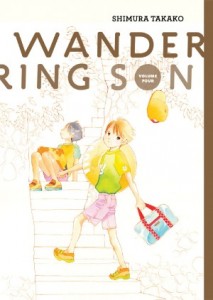
Wandering Son, Vol. 4

June 27, 2013 by Sean Gaffney

By Shimura Takako. Released in Japan by Enterbrain, serialization ongoing in the magazine Comic Beam. Released in North America by Fantagraphics.

In my last review, I noted that all the characters were just starting to reach that age where love would come into the picture, and wondered what would happen when it arrived. Well, that moment is here, and the answer is simple: a trainwreck of feelings and emotions. There’s actually not as much regarding Nitori and Takatsuki’s gender identity disorder here, but there doesn’t need to be. Takako-san has set up all the characters’ wants and needs in the first three volumes, and now can send them careening everywhere confident that we’ll follow along.
wanderingson4

This is not to say that everyone is embracing these new-found feelings. Nitori and Anna’s feelings for each other, for example, almost read like they’re out of Bob’s Big Book Of Manga Cliches. Anna is clearly attracted to Nitori, but is still a bit weirded out by Notori’s gender issues, so this tends to come out as abuse. Honestly, I wasn’t expecting Anna to be as utterly tsundere as she is here, given this is a very realistic, subtle work. And Nitori is also attracted to Anna, but she’s sending all the wrong signals, so he just ends up frustrated. And then there’s Takatsuki to consider…

Sometimes friends fall out, particularly in the elementary school/middle school years. The tragedy of what happens with Saori is that she can see it – hell, she excoriates herself for it, quoting from Anne of Green Gables again – but still can’t help what her heart feels, and this causes her to lash out at Takatsuki. Meanwhile, Takatsuki’s relationship with Nitori is all over the school – there’s a rumor they were seen kissing, and it won’t quite die down. It’s getting to the point where Nitori and Takatsuki are starting to dream of each other… erotic dreams. Takako-san’s subtleties excel here, as you clearly know that we’re seeing wet dreams without there being anything racy or suggestive.

In the end, almost everyone ends up unhappy or unfulfilled here, which is not a surprise given the age of the protagonists. Saori seems to have shut down (the unwanted attention she’s getting from a male friend at church isn’t helping), and the others are simply trying to keep it together. The other friend in their little group, Sasa, barely appears, but it’s noted a couple of times they want to try to stay on an even keel for her – she seems to be the heart of the group. There is, however, one romance that does work out, and fittingly, it’s for a slightly older couple. Maho is finally able to get over her own shyness and panic, and she and Seya become a couple. (His own feelings for Nitori-as-a-girl are still an issue, of course.)

So another solid volume that really makes me love these characters even more. My favorite part of the entire book was probably a chapter where Nitori, frustrated by his sister, Anna, and everything going on at school, decides to run away. Not being able to afford to go anywhere, though, as the day progresses Nitori just ends up at a zoo. In the end, the day passes and on Nitori’s return, no one realizes he’s even been gone. Nitori’s imagination and emotions are further along than his maturity level, and it’s causing him great pain. Will middle school help to guide him? Can’t wait to find out.
Filed Under: REVIEWS

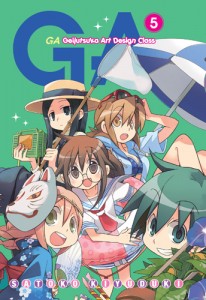
GA: Geijutsuka Art Design Class, Vol. 5

June 25, 2013 by Sean Gaffney

By Satoko Kiyuduki. Released in Japan by Houbunsha, serialization ongoing in the magazine Manga Time Kirara Carat. Released in North America by Yen Press.

As I have mentioned before, there are an awful lot of 4-koma series coming out featuring a bunch of eccentric, yet cute and lovable girls around high school age. Indeed, most of them are also being put out by Yen. And yet I’ve always enjoyed reading GA the most, particularly as it rewards detail-observant readers. There’s a lot going on here, not least of which is how much this series has taught me about art. And about how to draw a panda properly.

Kiyuduki_GA_V5

Actually, much of this volume takes place over the summer break, meaning we get the opportunity to observe the girls outside of the school environment. (Though this does mean we get less of the ‘B’ cast, i,e, Awara and company.) We even get to see a couple more family members, particularly Namiko’s sister, who turns out to be the sort of aggressively good at everything big sister that would drive Namiko insane (which is indeed what happens). We also get a brief view (back only) of Noda’s gorgeous big sister of legend. The siblings in GA tend to show off a lot of that ‘we can’t stand each other, but love each other deep down’ dynamic you like to see in comics like these.

The ‘art’ parts of the volume focus on the four seasons, and how you get your piece to show off what spring means, or summer, etc. This includes several examples of works that do precisely thins, both Western and Japanese, so you can go to Google and look up paintings like ‘Autumn in the Village’ by Marc Chagall or ‘Beach Baskets in Holland’ by Wassily Kandinsky. The art actually helps you to understand the girls better, as you see how they might see the world, and what kind of canvas they want to create with it.

The girls, by the way, are exceedingly cute here, as you would expect. A trip to a summer festival is enlivened by a fox spirit briefly taking the place of one of the girls (Kisaragi being Kisaragi, she goes to the fox shrine the day after to thank them for having fun with the rest of the girls). A trip means postcards, which the girls hand-draw, and discussion of how to balance picture and words (it also shows Namiko and Noda talking about getting married one day – sorry, yuri fans!). Perhaps the most poignant chapter shows Noda unknowingly showing up for school the first day of summer break, and having lunch while pretending her friends are there around her. Noda surrounded by people is the best Noda, I think we all agree.

As ever, if you’re looking for a deep manga with a lot to say about the human condition, this isn’t the one for you. It’s a 4-koma about cute high school kids, and no amount of praise from me is going to change that. If you do enjoy this genre, however, GA is fantastic, balancing humor, cuteness, and an appreciation of art, even if you aren’t artistic. It doesn’t come out very often (it’s caught up with Japan), but is always recommended.

Filed Under: REVIEWS

Pick of the Week: Gundam All Around!

June 24, 2013 by Sean Gaffney, Anna N, Michelle Smith and MJ 1 Comment

gundam2SEAN: Um, Gundam the Origin, pretty much. As for why, see my Manga the Week of post.

MICHELLE: Yep, Gundam: The Origin for me, too. With the exception of Fairy Tail (and I’m so far behind on that), nothing else this week interests me.

ANNA: Gundam: The Origin forever!!!!!

MJ: I’m right there with you. This week, it’s all about Gundam, and really it’s not due to the lack of competition. Though I wish the series was a bit more character-driven rather than plot-driven, its stunning artwork is enough to keep me coming back for more.

What looks good to you this week?

Filed Under: PICK OF THE WEEK

Bookshelf Briefs 6/24/13

June 24, 2013 by Michelle Smith, Sean Gaffney and Anna N 2 Comments

This week, Michelle, Sean, and Anna look at recent releases from Viz Media, Seven Seas, and Yen Press.


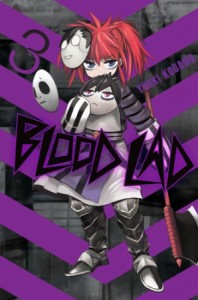
bloodlad3Blood Lad, Vol. 3 | By Yuuki Kodama | Yen Press – Blood Lad remains the frontrunner for the “Surprise Favorite of 2013” award in my book. True, I could not possibly be less interested in the machinations of Staz’s dastardly older brother, Braz, but there are plenty of characters that I unexpectedly like quite a lot, including Staz’s little sister, Liz, who is like the Yotsuba of the demon world, and the slouchy, laid-back dragon in this volume, who ends up steering our leads onto a new and intriguing path. And true, the fanservice is not my style, but the humor usually is. Also, I especially like that the series goes places I don’t expect—we begin the volume with Fuyumi (the ghost of a human) having been kidnapped, and I was all set for some demon power struggle to ensue, but that is actually not where things go at all. I look forward to more! – Michelle Smith

demon3Demon Love Spell, Vol. 3 | By Mayu Shinjo | Viz Media – I have to admit, Shinjo is doing a really good job making me sympathize with the incubus here, particularly in the first half of this volume. In particular, the confrontation between Kagura and Miko regarding her semi-arranged marriage is one of the best scenes so far, really laying out how conflicted Miko is, but also that how she’s handling it is absolutely the wrong way to go about things. As for Kagura, while he admits to pretending to be weaker than he is so that he can get more from Miko, he’s actually being fairly considerate given his creator. I’m not sure if we’ll be seeing his “human” self again, though. The second half is less interesting, but still pretty solid, and shows why these two haven’t gone further in their relationship – Miko’s feelings are still too fragile. Good stuff. – Sean Gaffney

Haganai3Haganai: I Don’t Have Many Friends, Vol. 3 | By Yomi Hirasaka and Itachi | Seven Seas – This volume exists pretty much to introduce the rest of the main cast. Maria, the 10-year-old nun who’s somehow supposed to be their faculty advisor, is there to be adorable and brattish, just like a typical 10-year-old, and piss off Kodaka’s little sister. That said, I am so grateful Kadota continues to treat both his sister and Maria as cute little kids rather than the manga getting into lolicon areas. Well done. Then again, with a new character like Rika, is more sexual talk really needed? Adding her to the cast is like throwing a bomb into a room, and while she’ll best be remembered in this volume for the mech-on-mech BL doujinshi she shows the others (which is indeed the highlight of the volume), I’m more interested in what her presence will do to Kodaka, Sena and Yozora’s friendship. – Sean Gaffney

librarywars10Library Wars, Vol. 10 | by Kiiro Yumi | Viz Media – This volume wraps up the somewhat silly banned words storyline and sends Kasahara on a mission in her hometown to protect freedom of expression in an art exhibit. There are catty librarians and subverted organizational hierarchies to deal with! In addition, Kasahara’s secret of being a combat member of the Library Defense Force may be exposed to her family. The feelings between Kasahara and Dojo are growing, and it is fun seeing how capable and mature Kasahara has become as she manages to handle a bad hazing incident all by herself. This was a solid volume in the Library Wars series, with a bit more emotional depth than usual. – Anna N

nura15Nura: Rise of the Yokai Clan, Vol. 15 | By Hiroshi Shiibashi | Viz Media – The good news it it looks like the Kyoto arc will wrap up with the next volume. The bad news is that it’s still going on in THIS one, meaning there’s a lot of fighting, and a lot of minor villains whose faces I struggle to remember. That said, there is one very interesting thing going on here: the villains appear to be winning. Even if they may not destroy Kyoto, I’m pretty sure they’re going to pull off their resurrection no matter how much Rikuo tries to get Hagoromo-Gitsune to remember who she really is. As for the fights themselves, they look OK, but can be pretty chaotic – and honestly, I’m not reading Nura for the fights. Let’s finish up the equipping and fearing and get back to more slice-of-life yokai plots, as this arc is trying my patience. – Sean Gaffney

tigerbunny2Tiger & Bunny, Vol. 2 | By Mizuki Sakakibara, et al. | Viz Media – Although it feels nearly as much like a Saturday morning cartoon as the first volume, the second installment of Tiger & Bunny at least gives readers a few welcome glimpses into the life of a corporate Hero and fleshes out its supporting cast a little bit. Unfortunately, I find practically all of the supporting cast more interesting than the lead characters—veteran Hero Kotetsu (a.k.a. Wild Tiger) and his newcomer partner Barnaby (unwillingly nicknamed “Bunny”)—and their relationship, which is characterized by much repetitive bickering and questioning whether their company-mandated partnership can really work. Even giving Barnaby some dead parents and a shadowy organization to seek out can’t make him compelling, but maybe it means we’re in for a storyline deeper than “Oh noes, a gang of thieves stole a diamond from a museum!” Here’s hoping. – Michelle Smith

toriko16Toriko, Vol. 16 | By Mitsutoshi Shimabukuro | Viz Media – As opposed to Nura, Toriko’s arcs are usually just about the right length: Mellow Cola wraps up here, after a suitable amount of fighting and cooking, and we’re off on new adventures. I like the way Komatsu, despite remaining a non-combatant, is being worked into the fights in ways that don’t involve him just constantly being rescued. His use of the ancient cookbook to tell Toriko and Zebra how to stop the Salamander Sphinx. That said, the lack of major females in this series tends to mean that Komatsu serves that purpose as well – it’s hard not to hear Toriko and Zebra arguing about who’ll partner with him and not think of various BL answers. Still, Toriko and Komatsu are more concerned with the return of Starjun, and what evil he’s going to be bringing to the table. Not the best, but still good. – Sean Gaffney

Filed Under: Bookshelf Briefs

Higurashi: When They Cry, Vol. 22

June 23, 2013 by Sean Gaffney

Story by Ryukishi07; Art by Karin Suzuragi. Released in Japan as “Higurashi no Naku Koro ni: Matsuribayashi-hen” by Square Enix, serialized in the magazine Gangan Joker. Released in North America by Yen Press.

And so, finally, welcome to the Good End, as well as the longest of the arcs – it’s 8 volumes, or 4 omnibuses. We’ve come a long way to get to this point, seeing most of the main characters at their worst, and then later seeing them at their best. Well, mostly. The adults in Higurashi haven’t really gotten a good backstory yet. Particularly the villain of the piece. We knows that she’s insane and sociopathic – witness her face at the end of the Massacre Arc, as well as the plot she’s cooked up – but “she’s evil like that” is not a motivation, and Ryukishi07 has gone to great pains in previous arcs to show us how important someone’s past and the way their life unfolded can be to the actions they may take in the future. So, what’s Miyo Takano’s past?

Ryukishi07_Higurashi_22_CVR

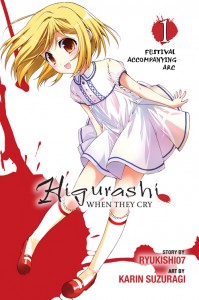
Well, it starts with a little girl named Miyoko Tanashi. That’s her on the cover, isn’t she a cutie? She lives with a loving mother and father, and her hobbies are collecting flags of the world from a local restaurant chain. She is living a great childhood. Then… there’s a train accident. Miyoko went out to play with her friends instead of going shopping with her parents. From that, comes one of the most horrific childhoods we’ve seen in all of Higurashi, even managing to top Satoko and Rena’s. Miyoko’s father, before he dies, tries to get Miyoko to contact a researcher friend of his, but to no avail – Miyoko is sent to the local orphanage instead.

Orphanages in fiction are usually never a good deal, but this one goes above and beyond. (I have no idea if this is what orphanages in Japan were like in the early 60s – I hope it’s heavily exaggerated for dramatic effect.) It’s a prison camp for children, with daily beatings and abuse. Then comes the most striking scene of the volume, where Miyoko and her three other friends make an escape attempt from the orphanage – led by Eriko, who has heard there’s another orphanage a few miles away that’s loving and happy. What follows is… bad. They don’t escape – indeed, the whole “other orphanage” doesn’t seem to even exist. They are taken back. Eriko is tortured and killed by having her unconscious body tied down and covered in chicken feed, so she is basically pecked to death. I mention this as a spoiler because it’s so grotesque and graphic – everyone who reads the manga remembers this. The other two girls are rolled into a mat (which is then beaten with sticks) or put into a metal shower cage (and then beaten with sticks till they go deaf).

As for Miyoko, before capture she was able to accomplish a few things. First, she found a phone and managed to call her father’s friend. More importantly to the story, though, she screams at God to kill her, and a lightning bolt then comes down… directly behind her, missing her body. She takes this as a sign. It doesn’t go into effect right away – I won’t spoil her punishment, except that it’s the ugliest of the four, and the only reason she isn’t killed is that her father’s friend, Hifumi Takano, shows up to adopt her. (Note there is no suggestion the orphanage is ever shut down or stopped – only Miyoko is saved. I am reminded of the fact that everyone accepts Mion will be a yakuza head when she grows up. Morality in Higurashi can be starkly realistic when it wants to be.)

So, ten points to Hifumi for rescuing Miyoko, who changes her name to Miyo Takano. However, just putting her in a loving home and having her help with his research into brain parasites is not going to do the trick. Miyo clearly has post-traumatic stress disorder – we see her reliving the events of the orphanage more than once – and really should be getting therapy that she never gets. As a result, the PTSD will never really leave her, and drives her actions and descent into madness. Especially when the government mock and ridicule his research into parasites, and this drives him into deep despair. And so Miyo makes it her life’s dream to prove her father’s research is correct and that he was right all along. His research… into Hinamizawa Syndrome.

That leads us to the second half of the omnibus, where an adult Miyo is putting all her pieces into place. She’s not going to be stopped by some nasty old government officials – indeed, at one point, she believes that bullets won’t kill her (flashing back to the lightning bolt missing her as a sign). She delves further into his research, and also makes connections, showing that she’s an up-and-coming woman whose drive is not merely frivolous. (We briefly see her fighting a bit of “but gosh, why is a girl interested in parasites?” male doctors.) And finally, she gets what she wants – a research facility in Hinamizawa, with a helpful doctor in Kyousuke Irie, and a liaison in Jiro Tomitake. she notes Tomitake looks like an easy sucker, something that does not bode well for their relationship.

Irie is more complicated, though, and our sympathy shifts to him in this second half as Takano starts to slip deeper into madness. Turns out Irie, due to his parent”s crumbling marriage after his father had a head injury, has made it his life’s work to study brain injuries. Unfortunately, he was doing this around the time lobotomies were discredited, and therefore his career was somewhat ruined. Here in Hinamizawa, he’s trying to start over – being a nice helpful doctor, encouraging a young and stress-out Satoshi to take an interest in baseball – while also researching Hinamizaqwa Syndrome and trying to stop it. He’s a good guy, mostly.

Then they bring in a live specimen. The murderer of the dam construction manager, who is at Level 5 and trying to claw out his throat. And Takano blackmails Irie into dissecting his brain – while he’s alive. This really doesn’t bode well for Satoko Hojo, as she’s also showing signs of Hinamizawa Syndrome, and her parents fell off of a bridge just now in a very suspicious manner. Miyo isn’t too bothered – more live dissections! – but with Irie draw the line and cutting open a little girl?

As you can see, there’s a lot of backstory here, but it’s presented with a lot of dramatic effect – indeed, one might argue too much at times. This is really over the top grotesque in places, and the images of Eriko, and later the live dissections, are some of the more nightmare inducing of the entire series. That said, I think we can now see how Miyo Takano got to be the way she is, even if we can’t sympathize with her. Irie’s role in the series expanding is also a good thing, taking him away from “comedy lolicon doctor” and into a man trying to hold onto his ethics while still doing surgery FOR SCIENCE.

Karin Suzuragi did the Keiichi and Rena arcs, and her art is back as well for the final arc. It’s not my favorite of the artists, but it’s pretty good – although she’s not good at showing younger versions of our leads. Satoko in 1980 looks exactly the same as Satoko in 1983, and given that’s going between age 8 and age 12 or so, I’m not sure I buy that. Overall, though, for an omnibus whose job is to pour out backstory and explanations, this remains an amazingly gripping read, though of course I only recommend it for fans who’ve read the other books.

Filed Under: REVIEWS

Manga the Week of 6/26

June 20, 2013 by Sean Gaffney, Michelle Smith, MJ and Anna N 1 Comment

SEAN: Given that I got in Yen books this week but the rest of you get it next week, my own Next Week list is somewhat short. But not without interest.

dissociationFirst, I forgot this last week, but the 9th light novel of the Haruhi Suzumiya series, The Dissociation of Haruhi Suzumiya, is out this week. This one is part of a 3-book set (Books 10-11 are coming out here as one big book around Thanksgiving) that revitalized the franchise, giving the series a shot in the arm, as well as a new rival for Kyon’s affections… or is she? Good stuff.

MICHELLE: I think I read the first one of these a long time ago, but never managed to continue.

MJ: I’d like to read these light novels, because the manga adaptation has mostly not done a lot for me. Maybe I’ll like it better in its original form.

SEAN: Now on to 6/26 proper. Dark Horse has the third volume of OreImo. With Haganai, coming out via Seven Seas, it managed to be just interesting enough that I continued it despite its skeeziness. This title is just skeezy enough that I dropped it despite its interestingness.

MICHELLE: Ugh.

MJ: So much skeeze these days, it seems. What’s up with that?

SEAN: Kodansha is still speeding up Fairy Tail. Vol. 26 ended with out heroes in a bad spot. Will they continue to get the crap kicked out of them here as well? Oh, probably, this arc is 7 books long and this is only Book 4 of that.

MJ: This is one of those long series I keep thinking I’d like to try (Hiro Mashima is such a charming guy!) but I’m perpetually intimidated by its length. Should I start it anyway?

SEAN: There’s also a new Negima omnibus for those who missed it, this one taking us into the Magic World arc that proved to be much better than anyone was really expecting.

MICHELLE: An omnibus cannot tempt me to read Negima.

MJ: What she said.

gundam2

SEAN: Lastly, and most important, we have the 2nd volume of Gundam the Origin. Vol. 1 blew me away with how cinematic it looked, how easy it was for a Gundam newbie to get into the story, and how much care went into its design – this is a gorgeous book intended to stay on shelves for long periods. Get it now, it’s also a limited item.

MICHELLE: Finally, something to look forward to, and I agree with you completely, Sean. My only complaint is the focus on plot over characters, but that’s not enough to dissuade me from picking up volume two.

MJ: Same here. I thought the artwork in the first volume was absolutely stunning. I’m looking forward to more!

ANNA: I agree, Gundam the Origin is the only thing I’m excited about this week. Given the limited print run for this special edition, I’d advise fans to pick up their copy sooner rather than later.

SEAN: What manga makes you go three times faster just to get it?

Filed Under: FEATURES, manga the week of

Blood Lad, Vol. 3

June 20, 2013 by Sean Gaffney

By Yuuki Kodama. Released in Japan by Kadokawa Shoten, serialization ongoing in the magazine Young Ace. Released in North America by Yen Press.

I’d mentioned in my previous review that Blood Lad had become a very solid shonen series (that runs in a seinen magazine, yes). I’ll go further with Vol. 3: this is really excellent. The previous volume showed us the main characters being quite clever, something which continues here. But this volume also shows us the writer being very clever. Kodama has crafted a plot that makes me want to dig deeper, with no elements so far dominating the others. The internal power struggle for the demon world, the Frankenstein monster corpse-robbing from last time, and Staz’s quest to restore Fuyumi to life all get about the right weight, with few pointless side journeys. Best of all, we have Fuyumi’s backstory, which I’ll delve into further.

bloodlad3

I knew coming in that Fuyumi’s family was going to somehow be connected to the demon world, given all the hints we’d had in the previous book. And indeed, that turns out to be exactly the case. But there’s no secret adultery or trips to the demon world here. Instead, there’s a very clever (and fairly creepy) use of doppelganger legends to show how Fuyumi is related to Bell and her brother while still remaining completely human. What’s more, it actually plays out what happens after with Bell and Fuyumi’s fathers, and shows us that the demon world is not the only one to have scary guys. This is easily my favorite part of the book.

Of course, Fuyumi’s reaction to this is pretty much the same as it’s been since the start of the series: dull surprise. This is actually lampshaded in the series, as she notes after discovering her mother’s real identity that she’s been too overwhelmed by events to process anything since she came into the demon world, and seems to have been fairly mellow even before her death. Still, it can be frustrating, especially given how often she’s meant to be fanservice for the reader, how passive she is. Her stepfather gives Staz two very important conditions to satisfy before he’ll let Fuyumi put herself in danger by journeying with him, and both of them amount to the same thing: give Fuyumi agency to decide things herself.

Which is good, because while Staz is not your typical shonen ‘rush into fights’ dolt, he has not really given much thought to what Fuyumi wants, something else pointed out to him. He has to stop treating Fuyumi like an object (and then, perhaps, the manga itself will stop doing the same thing). Staz is already suffering from the fact that, as a vampire, he’s almost trained since birth to see himself as an evil person. So his desperate attempts to restore Fuyumi, without asking her what she really wants to do, are indicative of this. He thinks that this is something that makes him evil, and that, by listening to Fuyumi and doing what she really wants, he can become a hero for her. (This also brings up the question of whether they love each other – everyone except the two of them seem to think this is the case.)

Staz is, of course, already a hero, and I hope that this change of lifestyle for him does not involve more charging ahead and less cunning in fights. (The fanservice this volume went to Bell, by the way, and the fight between her and Staz is a great example of how to combine Staz’s intelligence and cunning and his complete lack of awareness when it comes to women’s feelings.) How all this plays out, though, is something I really am desperate to find out. Though I may have to wait a while: we’re caught up with Japan, at least as caught up as Western publishers like to get. In the meantime, read this series.

Filed Under: REVIEWS

Kisses, Sighs, and Cherry Blossom Pink

June 18, 2013 by Sean Gaffney

By Milk Morinaga. Released in Japan by Futabasha, serialized in the magazine Comic High! (earlier stories serialized by Ichijinsha in the magazine Comic Yuri Hine). Released in North America by Seven Seas.

When I was growing up, the generally accepted “yes, you can now be nostalgic about this” period was about 20 years. Happy Days being the primary example, but the same thing applied as the 1980s wore on. Then, sometime around the early 90s, nostalgia started to speed up. Suddenly we can’t get enough of revisiting things that only happened 5-10 years ago. And this makes sense, given how fast culture has been moving lately thanks to the Information Superhighway and such. (See what I told you about nostalgia?) What this means in practice is that we can be startled that things we read only a few years back suddenly seem like products of a bygone age, and Kisses, Sighs and Cherry Blossom Pink is an excellent example.

kissessighs_vol1_full

When these stories first came out in 2003 or so, it was fantastic. They were in a magazine devoted exclusively to ‘yuri’ stories, and many of them sailed along based solely on that premise. Girls! In love with other girls! And even kissing and stuff! This particular story was actually a group of one-shots that ended up centering around the same school, which is attended by Nana and her friends (Hitomi’s school gets far less attention, possibly as it seems to be far less yuri-friendly). It’s not just Nana – there’s ghosts in love, and unrequited love, and a Takarazuka ‘prince’ who’s actually a bit of a weirdo. It’s a whole yuri subculture. And, in 2003, this was fantastic.

Why does it seem to old and cliched now? It’s partly because Morinaga Milk essentially rewrote and improved Nana and Hitomi’s story in Girl Friends a few years later for Futabasha (after first wrapping it up, as we see in the second volume of this collection.) But it seems to me to be primarily that this sort of story is now old hat. There’s so much more yuri out there, and not all of it has to be “Girl meets girl, girl likes girl, they like each other, the end.” Actually, at the time this collection went FURTHER than a lot of the stories in Yuri Hime. Nana and Hitomi are sexually active, and we see that – again, something that was a real wow in 2003.

But nostalgic doesn’t necessarily mean bad, it simply means “wow, I can’t believe this is only 10 years old”. These stories are cute and sweet, and even the story that doesn’t end with two girls getting together still manages to be adorable. There’s not a lot of “couples buying refrigerators” here – indeed, the manga ends literally right before Nana and Hitomi will have to do that – because in 2003, this was enough. Girls being gay and in love (well, as gay as they’re allowed to be – the word ‘lesbian’ isn’t used much here) at their local schools, and some of them even (gasp!) staying together after they leave school.

I really enjoyed this series, as it brought back a lot of happy memories, and the stories set up a lot of other series that I’ve also enjoyed that followed its example. Nana and Hitomi are sweet, everyone is happy (though the final Nanan and Hitomi story does have a deus ex machina so blatant you could drive a moving truck through it), and the series is quaint. Quaint and twee, you’re in 2003. Nostalgia is the new nostalgia. Recommended.

Filed Under: REVIEWS

Pick of the Week: Subverting Expectations

June 17, 2013 by MJ, Michelle Smith, Sean Gaffney and Anna N 2 Comments

potw-6-17-13MJ: My obvious pick this week would be volume 16 of Pandora Hearts, and I am sure that’s what everyone expects (you can read about how much I love this volume in today’s Bookshelf Briefs). But sometimes it’s the unknown that has the greatest allure, and I’ll admit that I’m most anxious to get a look at Asumiko Nakamura’s Utsubora: the Story of a Novelist, out this week from Vertical. I’ve had a shaky relationship with Vertical’s titles from Manga Erotics F—the magazine this title comes from—but Vertical’s track record with me overall is pretty stunning (and the magazine has housed some of my favorites as well), so I’m more than willing to give them the benefit of the doubt. Familiar favorites are a wonderful thing, but nothing beats the mystery of the unknown. I can’t wait to see what this manga has in store!

MICHELLE: I was so sure that you were going to pick Pandora Hearts that I was all set to pick Utsubora myself. I’m definitely looking forward to checking it out, but I’ll go ahead and give Pandora Hearts my official love, as I’m really looking forward to getting caught up with that one.

SEAN: I’m deciding to go with the manga that’s down to a yearly release rather than the quarterly one, so despite my Higurashi obsession, my pick of the week is for GA Art Design Class. There’s an awful lot of 4-koma series about girls in high school out there, and this is one of the ones that makes me smile the most. The cast is amusing in just the right amount, it’s filled with cute, funny and heartwarming moments, and it’s taught me a hell of a lot about art. It’s likely not for you unless you enjoy moe 4-koma manga, but if you do it’s one of the best.

ANNA: I’m also going to have to throw in my vote for Utsubora: The Story of a Novelist simply because it is the only manga this week that I felt compelled to pre-order! The premise about an upcoming novelist who is suddenly found dead also sounds very intriguing. I think a bit of mystery will balance my usual shoujo and sci-fi manga reading habits.

What looks good to you this week?

Filed Under: PICK OF THE WEEK

Bookshelf Briefs 6/17/13

June 17, 2013 by Sean Gaffney, MJ and Anna N 2 Comments

This week, Sean, MJ, and Anna look at recent releases from Viz Media, Yen Press, Kodansha Comics, and Vertical, Inc.


crossgame6Cross Game, Vol. 6 | By Mitsuru Adachi | Viz Media – I’m finally finishing out this series! Picking up the 6th volume after a gap in my Cross Game reading reminded me again what a master of manga Adachi is. For a series where on the surface not much happens other than a bunch of kids preparing to play baseball, there’s so much subtext and subtle psychological development being portrayed, that this manga is a delight to read. Ko continues to hone his skills, but the sudden appearance of Akane, a dead ringer for his childhood love Wakaba, causes a bit of consternation in the neighborhood. Romance is more of an undercurrent in this volume as Aoba slowly realizes that people may appreciate her for something other than her pitching skills. – Anna N.

devil9A Devil And Her Love Song, Vol. 9 | By Miyoshi Tomori | Viz Media – Well, that went south in a hurry, didn’t it? The first half of this volume is actually quite heartwarming, despite the opening. It gives the message “forcing yourself on others is wrong”, but also allows the others to forgive Shintaro and allow him back into their inner circle. Moreover, Maria is bonding even more with her friends, and Shin is getting over his own hangups regarding the piano. He decides to do a big, extravagant performance for Maria, at the end of which he will tell her his real feelings. AND THEN IT ALL GOES SO WRONG. Leaving aside horrible assault guy, who ensures she never gets to the performance, it’s more of a classic “misunderstanding comfort as a confession” that leads to the depressing cliffhanger we get here. I really cannot wait for Vol. 10. – Sean Gaffney

saika2Durarara!! Saika Arc, Vol. 2 | By Ryohgo Narita, Akiyo Satorigi, and Suzuhito Yasuda | Yen Press – We continue to have two different stories going on here, and they aren’t quite interweaving with each other until the very end… or so we think. First off, there’s the attempts by Celty to find out what’s going on with Saika, the demon blade that’s slashing people and has professed a deep, stalkerish love for Shizuo. Secondly, and probably more interesting to me, there’s Anri and her attempts to deal with her teacher’s sexual harassment. Anri’s natural emotionless facade doesn’t make the discomfort of this situation any less striking, and the occasional dream she’s having of a happy birthday with her parents turns into a nightmare rather rapidly. Plus, for all that the blade supposedly loves Shizuo, it does seem to be going after Anri an awful lot. A fun, complicated mess (yes, that’s a compliment). – Sean Gaffney

fairytail26Fairy Tail, Vol. 26 | By Hiro Mashima | Kodansha Comics – Well, the villains are posing on the cover of this volume, so it is not a particular surprise that they come in and completely kick our heroes’ asses, as shonen villains often do at first. Even worse is the identity of the old man who seems to be behind the group of villains… and Makarov’s betrayed reaction. There are one or two jokes here, mostly revolving around Elfman and Evergreen, the couple that isn’t. But for the most part, this is simply pure serious fighting, with lots of people getting knocked unconscious and/or near death. And hovering over all of this is Zeref, who just wants to be left alone – supposedly – but Ultear isn’t having any of that. It looks like we’ve got a long way to go before any of this is wrapped up, to be honest. Oh and hey, was that a Laxus cameo I just saw? Foreshadowing! – Sean Gaffney

knights3Knights of Sidonia, Vol. 3 | By Tsutomu Nihei | Vertical, Inc. – I’ll admit, this volume really surprised me. No, not the deaths of even more pilots. And no, not the flashback which showed us the origins of Tanikaze’s birth (at least once I figured out it was a flashback – come on, use black borders like other mangaka do!). No, what really startled me was the middle of this volume, where all of a sudden it became a wacky romantic comedy with a love triangle. It’s actually even more amusing given the artist’s usual unexpressive style. That said, that’s just a moment, and for the most part this volume is serious business, as we try to figure out why Tanizake is piloting every single goddamn mission, learn more about the placenta they captured, which is a little TOO good at mimicking humans, and depressing the hell out of Izana. Still riveting. – Sean Gaffney

pandorahearts16Pandora Hearts, Vol. 16 | By Jun Mochizuki | Yen Press – Recent volumes of Pandora Hearts have been so chock-full of twists and revelations, that every time I’ve thought that I discovered what was really going on, I’ve been proven wrong in the next volume. This continues with volume sixteen, and it is by no means a bad thing. Things start out lightly, as though to provide a healing balm for last volume’s tragedies. Yet, just when I thought I’d been shocked to the core, something much more shocking is revealed, and oh… GAH. I’m kind of dying at this point. It’s all extremely well-plotted (better than I thought Mochizuki had in her, to be frank) and cleverly painful. Meanwhile, Xerxes Break continues to be the most endearing character ever, and his relationship with Sharon is almost too charming to bear. Thanks, Pandora Hearts, you always come through. Increasingly recommended. – MJ

Filed Under: Bookshelf Briefs

One Piece, Vol. 67

June 16, 2013 by Sean Gaffney

By Eiichiro Oda. Released in Japan by Shueisha, serialization ongoing in the magazine Weekly Shonen Jump. Released in North America by Viz.

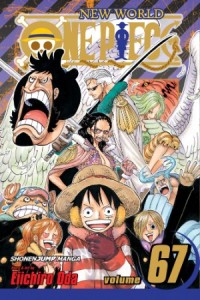
If you had not been following along with One Piece and were trying to come into this volume totally unspoiled, well, sorry. The cover totally spoils one of the funniest gags Oda’s come up with in some time, unashamedly. There’s a whole lot going on in Punk Hazard, and I’ll get to some of it later. But mostly what people remember from this volume is the bodyswapping. The reasoning behind it is somewhat flimsy – Law doesn’t want the Strawhats getting away, so does this to create chaos, I believe – but the consequences are pure gold, even if it means putting up with Sanji trying to feel himself up half the time. Even Smoker and Tashigi get in on the act, with a bodyswap that makes your head hurt even more. (Tashigi is still, I note, dealing with “we’ll obey our captain because she’s really hot!” from the crew, and is totally unable to do anything against Law. But then again, neither is Smoker.)

onepiece67

Oh yes, Law! One of the most popular of the Supernovas, we knew he’d show up again, but not quite so soon. He doesn’t seem to be entirely behind what’s going on here, but he’s involved in some way, and it’s interesting seeing him scheme and plan when compared with Luffy’s “well, whatever” style of piracy. As for who is behind things, well, it would appear to be ex-government scientist Caesar Clown, who is basically the Joker from Batman, only as a mad scientist. He is creepy as hell, and it’s pretty obvious that he’s the guy Luffy will have to fight a few volumes down the road. His plot involves kidnapping and experimenting on young children, which is pretty damn dark, but then I remember the other backstories that this series has given us.

I would be remiss in this review if I did not stop to talk about my favorite character. Robin gets a lot to do here, including, to my surprise and pleasure, a huge number of jokes. No, she’s not making goofy faces, but we do see her imagining Usopp and Zoro as Duck Ferry Rides, and joining with the others in stealing the villains’ clothes for warmth, and absolutely shutting Franky down when he tries to make his usual poses and faces in Chopper’s cute body. (Robin has always had a soft spot for Chopper. Also, I sense this may be Oda trying to sink the Franky/Robin ship a bit – she’s clearly REALLY IRRITATED here.) And of course she’s making her usual references to all her comrades possibly being dead on pools of blood. If it’s Robin humor you want, this is the volume for you.

And I haven’t even mentioned the goofy samurai who’s just a head, or Nami’s maternal instincts oddly popping up (I’ll buy it, but only just – I have to wonder if she’s thinking of her own childhood pre-Bellemere), or Brownbeard, of all people, making a comeback, or the really creepy chamber of corpses, or the bird woman and what role she’s playing. As ever, there’s just so much going on here. By the time you finish this volume of One Piece, you could have read 5 Bleaches! Absolutely recommended.

Filed Under: REVIEWS

Manga the Week of 6/19

June 13, 2013 by Sean Gaffney, Michelle Smith, MJ and Anna N 4 Comments

SEAN: Sometimes the images we feature with this post work out perfectly. And sometimes we have weeks like this. Where the images I want to use are all in a row next to one another. Sigh. By the way, my shop’s getting in Yen early, so WE ARE AS WELL!

Kodansha has the final volume of their Kitchen Princess omnibus. If you hadn’t picked this up earlier, it’s now available in 4 handy volumes! And there are recipes!

MICHELLE: I regret to say that I still haven’t managed to read Kitchen Princess, despite owning the original edition in its entirety. I wonder how it compares to Arisa… is it less ridiculous?

MJ: This is one of those series I planned to catch up with in omnibus form, but have yet to pick up. Someone want to tell me how foolish I’ve been?

ANNA: Kitchen Princess is cute and sweet and a little bit weird. I need to finish the series too.

SEAN: And there’s the 28th volume of Air Gear. Which is a whole lot of Air Gear.

utsuboraVertical has a done-in-one series coming out. Utsubora: the Story of a Novelist is a psychological drama that comes from the pages of Manga Erotics F, a magazine that has given us more polarizing titles than any other, I believe. Will this one also divide readers who love it and hate it? Find out by reading it!

MICHELLE: Looks interesting!

MJ: I will usually try anything Vertical thinks I should–their track record is pretty good. So I will definitely check it out.

SEAN: Viz has the final volume of Children of the Sea, which was one of its first Ikki titles but ran up against the dreaded “the final volume isn’t out in Japan yet”. It’s been two and a half years, and honestly I think I may have to re-read. But I do recall being very fond of this series about love, loss and the sea.

MICHELLE: I have actually been hoarding Children of the Sea, so now I’m glad of a chance to read the series all in one go.

MJ: I have missed this series! Though, like Sean, I may have to start from the beginning again at this point.

ANNA: I’ve read a couple volumes of this and it is lovely.

SEAN: And the rest is all Yen. I am very fond of GA Art Design Class, which has a very entertaining cast of moe stereotypes, but more importantly, due to this series I have learned SO MUCH MORE about art. Vol. 5 is out. (And yes, it is still not Shoulder-a-Coffin Kuro.)

Higurashi22At least, what we’ve been waiting for: the home stretch of the main Higurashi Storyline. Not to spoil or anything, but this is, finally, the one with the Good End. Festival Accompanying Arc starts with this omnibus, which gives us Miyo Takano’s backstory, and needs a giant TRIGGER WARNING: ABUSE applied to it. But still good stuff.

MICHELLE: I just can’t make myself read Higurashi. It’s like you said in your recent Umineko review, Sean. We’re not supposed to like these people or care what happens to them personally; we’re just supposed to care about the mystery. But I guess I can’t simply stick around for that if I don’t like the protagonists at least a little.

SEAN: I’d argue that the big difference between Higurashi and Umineko is, in fact, that the characters ARE more likeable in Higurashi. Sure, they can be horribly screwed up, particularly in the earlier arcs, but we get to see them learn from past iterations and grow as people. Umineko is more about trying to figure out what’s going on and solving the mystery, and the development of a bunch of gold-happy adults is quite secondary. (The kids fare a bit better.)

MICHELLE: That does sound more like something I’d enjoy.

SEAN: Kingdom Hearts has a new volume out, called Chain of Memories. I still don’t know much about this except it has Donald and Goofy in a fantasy game world setting.

Pandora Hearts 16! MJ? Tag!

MICHELLE: How have I gotten so far behind on this one?! I’ve only read through twelve!

MJ: I’m sure nobody will be surprised to hear that I CAN’T WAIT. Seriously, though, things have really gotten intense. Every volume at this point is a source of great anticipation. So. Y’know. GIMME.

spicewolf8SEAN: For those who enjoyed the mindscrew that was Madoka Magica and want more, here’s the first of two spinoff manga licensed by Yen. Kazumi Magica features a different lead, but no doubt will still have the same old Kyuubey lurking around.

MJ: I found the manga to be a little disappointing, but I’ll probably give this spinoff a shot.

SEAN: Soul Eater has a big artbook coming out. Considering that one of the top three reasons I read Soul Eater is the amazing art, this is a pretty big deal. Even casual fans should give this one a look.

Spice & Wolf! Did you know it had a manga as well, to go along with the light novels? It does! It’s also caught up to Japan, so be prepared to wait a bit.

And lastly, there’s volume 3 of Triage X. If you like BTOOOM! but wanted more motorcycles, try this series.

MICHELLE: Ugh. I am very tempted to christen BTOOOM! “the-manga-that-must-not-be-named,” that’s how little I’d like to think about it in the future.

MJ: Heh.

SEAN: What manga are you getting for your father? (Please don’t say Triage X.)

Filed Under: FEATURES, manga the week of

Atomcat

June 13, 2013 by Sean Gaffney

By Osamu Tezuka. Released in Japan by Sekai Bunkasha, serialized in the magazine Nico Nico Comic. Released in North America by Digital Manga Publishing.

I have been noticing, around the internet, a lot less enthusiasm for this particular title as opposed to other Tezuka titles. Usually the comment will start by saying “Well, any Tezuka is good Tezuka, BUT…” and then moving on to note its fluffiness and lack of deep, tragic history. This is a marked contrast to the other type of Tezuka fan, which is the “we must have every single Tezuka work ever created translated into English as soon as possible!” sort. I have sympathy for both camps. Tezuka wrote a TON of stuff, and not all of it is going to be on the scale of Apollo’s Song or Buddha. At the same time, I do want to see his lighter comics that are just moments of everyday life or dumb humor. And that’s why I’m quite pleased to see Atomcat, which is both.

Atomcat

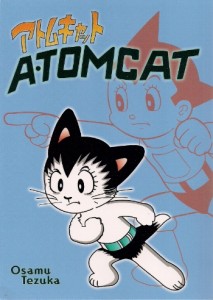
The story of a young boy and his Astro Boy-themed superhero cat, this manga actually intersperses moments from the actual Astro Boy manga (redrawn by Tezuka) as contrast and compare. Usually Tsugio reads about another aspect of Atom’s fairly crappy life, and sympathizes, then has to deal with his own issues, such as an eccentric father, overbearing mother, and the ever-present school bullies. He tries to take home a stray cat as a pet, but the cat is an absolute disaster, destroying everything in the house in a great comedy sequence. Taking it away so he can abandon it, he and the cat and struck by a car… driven by Princess Diana. Only not really, she and Prince Charles are actually ALIENS. The boy is fine, but the cat is dead, so they fix him using the boy’s memories… with are filled with Astro Boy. So now the cat is intelligent and has superpowers. This doesn’t help quite as much as you think, although he’s a few levels above Doraemon.

This is a very 1980s manga – leaving aside Charles and Di the space aliens, we also have the school bully being named Gaddafi. It’s also very much for kids – Unico was too, but it had an undercurrent of melancholy at its core that Atomcat simply doesn’t possess. This is broad comedy with lots of funny faces. Our hero’s father is an absentminded freak, and his wife is the typical cartoon wife – all she needs is a rolling pin to beat her husband with. Atomcat and Tsugio fight mummies and gangsters, search for island treasure, and plunge through the sewers of Japan.

There’s no real character arc here – Tsugio starts the series as a bit of a wimp, and ends that way as well, and the series does not so much end as stop. But it’s fun! The dialogue is snappy, the Astro Boy inserts work well with the themes of the stories, and there’s lots and lots of comedic slapstick, which Tezuka was very good at indeed. I read this title and thought of Mitsuru Adachi’s Cross Game, or Rumiko Takahashi’s Ranma 1/2. Everyone says they’re influenced by Tezuka, but we tend to look for it in series like Ayako. In reality, these manga artists were more likely to grow up reading stories like these – and these are the stories that influenced a future generation. Fluff, but IMPORTANT fluff.

Filed Under: REVIEWS

No. 6, Vol. 1

June 11, 2013 by Sean Gaffney

By Atsuko Asano and Hinoki Kino. Released in Japan by Kodansha, serialization ongoing in the magazine Aria. Released in North America by Kodansha Comics.

Dystopias are, as a general rule, not my cup of tea. Those who read this blog on a regular basis already know that I’ll forgive a lot of a story if it has a happy ending; likewise, if a series is just unrelentingly grim, all I really feel is exhausted. But that isn’t to say that a series can’t still win me over with enough interesting things going on. No. 6 is indeed one of those series. It takes place in a supposed elite utopia that turns out to have many deep, dark secrets, and our hero quickly finds out how fast events can turn against him. It’s also shoujo – it runs in Aria, Kodansha’s upscale magazine that’s competing with titles like Asuka and Wings to get the teen “not quite BL” market.

number6

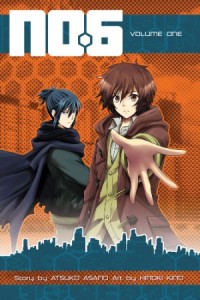
Our hero’s name is Shion, a stoic and reserved young man who is on the fast track for the elite school (and this is among a city of elites) until he lets a young fugitive, who seems to be called Rat, briefly stay at his place, and sews up his wounds. This causes him to lose that elite privilege, something which… really doesn’t bother him much. Several years later, he’s working part-time jobs and staring blankly at his female best friend, who blatantly says she wants to sex him up but is just not registering on his radar, when he comes across a hideous government conspiracy that is killing people by aging them to death. He’s rescued by Rat, and is forced to abandon his life and go on the run, where he’ll find out what the city is really like.

Passive characters like Shion have to be handled very carefully not to be boring. Luckily, these creators are doing a good job so far. Shion may be reserved, but he’s not unemotional, and I like his youthful enthusiasm (which sadly wears down as the volume goes on) and bluntness when he first meets Rat. The scenes with Safu, the aforementioned best friend, are also both quite funny and very telling. It’s not entirely clear if he’s uninterested because he’s not into girls (certainly he bonds better with Rat than he has with Safu) or if the concept of sexual love has simply never occurred to him, but it’s another thing that serves to make him watchable. (By the way, Safu will be dying at some point in this series, sacrificing her life for Shion. I don’t know any spoilers, but bank on this happening anyway, because DUR HEY.)

Rat is less successful, being more of a standard smug pretty boy who has learned not to trust anyone but can’t help but be drawn to our hero. Likewise, the government conspiracy itself, along with its Orwellian officers who administer it, are very much out of the school of Dystopias 101. The aging-to-death thing is pretty horrific, but we don’t know either of the victims long enough for it to really sink in. And the art is serviceable, but doesn’t really pull you in much.

That said, I’m interested to see what happens with Shion, who’s an intriguing enough character that I’ll try another volume of this. The genre isn’t my cup of tea, but the lead may be. And it’s a definite must-buy for anyone who likes conspiracy thrillers with overtones of possible BL romance.

Filed Under: REVIEWS

Pick of the Week: Loveless & More

June 10, 2013 by MJ, Michelle Smith, Anna N and Sean Gaffney 2 Comments

potw6-10MJ: It’s a bit of an odd week in the shipping department, and though I’m certainly tempted by volume four of SuBLime’s adorable His Favorite, and intrigued by Kodansha debut series No. 6, I going to do the predictable thing by choosing the latest volume of my beloved Loveless. Though I won’t be able to dig into my copy until next month, when Viz’s omnibus releases finally catch up with their single volumes, I’ll be treasuring it all the while. For an emotionally complicated, morally challenging, and thoroughly engaging read, you can’t do better than Loveless.

MICHELLE: While I’m also anticipating being able to get caught up on Loveless, I’ll award my pick this week to Kano Miyamoto’s Sleeping Moon. Some of her works were previously published by Deux Press (remember them?), and I found Lovers and Souls in particular to be touching and memorable. And I also like it when BL attempts to have a genuine plot, so this supernatural historical mystery seems to be right up my street.

ANNA: There’s not much on the print manga front that truly excites me. I’m going to pick Alice 19th #1, since it is newly released on Viz’ digital platform. This is one of my favorite non-Fushigi Yuugi Watase series, and as you might expect the art is gorgeous.

SEAN: Hrm. Yeah, it’s one of those weeks. I guess I’ll pick Atomcat. It’s one of Tezuka’s sillier ideas (as well as a horrible pun, something I’m sure he loved), but it sounds like a lighter, fluffier Tezuka title, which makes for a wonderful change of pace from his more serious stories we’ve seen Lately. Heck, even Unico was a bummer most of the time. Let’s hope Atomcat cheers me right up.

What looks good to you this week?

Filed Under: PICK OF THE WEEK Tagged With: alice the 19th, atomcat, loveless, sleeping moon

  • « Go to Previous Page
  • Page 1
  • Interim pages omitted …
  • Page 337
  • Page 338
  • Page 339
  • Page 340
  • Page 341
  • Interim pages omitted …
  • Page 382
  • Go to Next Page »
 | Log in
Copyright © 2010 Manga Bookshelf | Powered by WordPress & the Genesis Framework