• Skip to primary navigation
  • Skip to main content
  • Skip to primary sidebar
  • Home
  • About Us
    • Privacy Policy
    • Comment Policy
    • Disclosures & Disclaimers
  • Resources
    • Links, Essays & Articles
    • Fandomology!
    • CLAMP Directory
    • BlogRoll
  • Features & Columns
    • 3 Things Thursday
    • Adventures in the Key of Shoujo
    • Bit & Blips (game reviews)
    • BL BOOKRACK
    • Bookshelf Briefs
    • Bringing the Drama
    • Comic Conversion
    • Fanservice Friday
    • Going Digital
    • It Came From the Sinosphere
    • License This!
    • Magazine no Mori
    • My Week in Manga
    • OFF THE SHELF
    • Not By Manga Alone
    • PICK OF THE WEEK
    • Subtitles & Sensibility
    • Weekly Shonen Jump Recaps
  • Manga Moveable Feast
    • MMF Full Archive
    • Yun Kouga
    • CLAMP
    • Shojo Beat
    • Osamu Tezuka
    • Sailor Moon
    • Fruits Basket
    • Takehiko Inoue
    • Wild Adapter
    • One Piece
    • After School Nightmare
    • Karakuri Odette
    • Paradise Kiss
    • The Color Trilogy
    • To Terra…
    • Sexy Voice & Robo
  • Browse by Author
    • Sean Gaffney
    • Anna Neatrour
    • Michelle Smith
    • Katherine Dacey
    • MJ
    • Brigid Alverson
    • Travis Anderson
    • Phillip Anthony
    • Derek Bown
    • Jaci Dahlvang
    • Angela Eastman
    • Erica Friedman
    • Sara K.
    • Megan Purdy
    • Emily Snodgrass
    • Nancy Thistlethwaite
    • Eva Volin
    • David Welsh
  • MB Blogs
    • A Case Suitable For Treatment
    • Experiments in Manga
    • MangaBlog
    • The Manga Critic
    • Manga Report
    • Soliloquy in Blue
    • Manga Curmudgeon (archive)

Manga Bookshelf

Discussion, Resources, Roundtables, & Reviews

Sean Gaffney

Is It Wrong to Try to Pick Up Girls in a Dungeon?, Vol. 14

January 18, 2020 by Sean Gaffney

By Fujino Omori and Suzuhito Yasuda. Released in Japan as “Dungeon ni Deai o Motomeru no wa Machigatte Iru Darou ka?” by GA Bunko. Released in North America by Yen On. Translated by Winifred Bird.

This was long. Hideously long. Even by the standards of DanMachi, which has had some very long books, it’s long. It’s longer than Book 8, the previous record holder. It’s longer than almost all the Tanya the Evil books. Arguably, it uses its length wisely, which may come as a surprise given how much of it is just straight up monster fights. But it doesn’t just have fight after fight with no purpose. Each of the fights is meant to develop the character of one of the regulars, mostly Bell and Lyu, who do the heavy lifting in the book, but also Welf, Cassandra, and the rest of the other party who are desperately trying to find them. It earns its length. That said, I do think it could have bee a BIT shorter. I love the way the author writes fights, but by the end of the book I felt like Bell and Lyu do, i.e. mostly dead.

The book is divided into two halves, or rather one third and two thirds. The first third features the rest of the cast down in the dungeon on the 26th floor trying to survive without Bell, and finding strength beyond simply supporting him in his own dream. Welf in particular comes off well here, making an even more magic sword than his others, but Cassandra has perhaps the best emotional arc of the section, even if I’d have liked a bit more payoff where everyone actually admits she was right. Which, yes, goes against her character name. The second part of the book features Bell and Lyu down on the 37th floor, where Bell has to battle Killer Sheep Skeletons, The Juggernaut that he thought they’d killed off earlier back for revenge, a battle arena filled with infinitely spawning monsters, and perhaps most dangerous of all, Lyu’s suicidal tendencies.

Lyu’s backstory is finally given in full here, and it’s pretty much what I expected. It’s broken her to such an extend that, experiencing almost the same events as well as Bell seemingly trying to throw his own life away to save her (which happens… I lost count, but a LOT in this book) is making her want to give up, and the only reason she keeps trying is she wants to save Bell and see him safely off before she allows herself to be destroyed. It’s heartbreaking, and those who wanted Lyu to be a bit more emotional will be happy but also sad. (That said, I could have done without the comedy epilogue with her losing her top… but I guess after the emotional wringer you needed SOME comedy.) As for Bell, he’s had other books that have helped to show off his development more, and this is more Lyu’s. Here he’s just the almost indestructible rabbit that will save everyone in the world. Of course, this also means that Lyu has fallen in love with him. Honestly, given the sheer amount of focus she’s gotten in this series, she may be second only to Aiz in the “what if it’s not Hestia?” love interest sweepstakes.

Thankfully, the next book in the series looks to be much shorter than this, and also less emotionally devastating. Unfortunately, it’s not scheduled yet for North American release, so it may be a bit. Till then, this is one of the best books in the series, assuming you survive the read.

Filed Under: is it wrong to try to pick up girls in a dungeon?, REVIEWS

Bookshelf Briefs 1/16/20

January 16, 2020 by Ash Brown, Sean Gaffney and Michelle Smith Leave a Comment

Anonymous Noise, Vol. 18 | By Ryoko Fukuyama | Viz Media – Welp, I was wrong. Romantically, the final pairing is not what I expected. That said, romance, as always in this series, takes a back seat to the music, and musically the pairing is exactly what I expected. It’s actually quite interesting to see the basic “final volume” beats of a shoujo manga framed in terms of career and musical partner, while the heroine actually ends up with someone else. It’s quite a choice. Elsewhere, the book wraps up the one remaining unresolved pairing. But most of all for me, it goes back to its roots and shows what I loved most about it—Nino screaming the songs like they’re primal. I’ll miss this series, and am interested in what the author is going to do next. – Sean Gaffney

Bakemonogatari, Vol. 2 | By NISIOISIN and Oh!great | Vertical Comics – One thing about the artwork in this manga adaptation, particularly of its lead character, is that it does not shy away from how relentlessly creepy and sexually harassing Araragi can be. The novels made you question how much of it was a narrative device, the anime framed it as so over the top it was almost parody, but the manga makes you squirm at seeing Araragi’s face as he simultaneously beats up and pervs on a little girl. This second volume finishes Hitagi Crab and gets almost halfway through Mayoi Snail, and does a good job at making itself distinct—here the park is a normal park, not the grandiose wonder as seen in the anime. Provided you can tolerate Araragi, an excellent adaptation. – Sean Gaffney

Daytime Shooting Star, Vol. 4 | By Mika Yamamori | VIZ Media – Believing that Shishio has gotten back together with his ex, Suzume tries to see it as an opportunity to forget him. It’s not true, though, and after her friends arrange for them to have an aquarium date, Shishio starts acting different around her. I certainly don’t want him to return her feelings, but it’s also pretty shitty that he treats her like she’s special and gives her false hope when he has already rejected her. At least he’s aware of this. There’s a great sequence where they both stop themselves from calling out to the other in the hallway, trying to avoid falling into their typical patterns, but by the end he’s rushing to rescue her from overbearing upperclassmen and falling pots. I really, really am enjoying this series, but continue to hope that she’s eventually going to get over him once and for all. – Michelle Smith

Dirty Pair | By Haruka Takachiho and Hisao Tamaki| Seven Seas – I was both looking forward to this and also dreading it, and in the end the dread won out. I suppose every generation gets the Lovely Angels it deserves. It’s not as if the original novels did not have Kei and Yuri walking around in Bikini tops and short shorts and cracking wise, and they do here as well. And the novels did indeed have the “we are psychically bonded and get hints about solving crimes that way” jazz as well. But this manga adaptation takes the fanservice to eleven, with the Angels making out and getting orgasm faces as they use their psychic powers. The plot of these is essentially very similar to the originals, and the basic “they solve the mystery, but everything is destroyed” premise is still there and valid. That said, the fanservice makes me recommend this only to hardcore fans of the Lovely Angels. – Sean Gaffney

Haikyu!!, Vol. 36 | By Haruichi Furudate | VIZ Media – After losing the first set to Nekoma, Karasuno wins the second. As Furudate-sensei elegantly shows through a series of panels comparing past scoreboards to the current one, this is the first time that has ever happened. Indeed, throughout the volume, Furudate excels at conveying the significance of things, particularly when the most reserved players on each team experience a moment in which they recognize how much fun volleyball can be. Tsukishima actually smiles when he’s finally able to score a point against his rival/mentor Kuroo while Kenma, whose predictions are usually correct, is happy when Hinata is able to surprise him with a trick shot. And, in turn, Kuroo is happy that the friend who’s been indulging him all these years is finally enjoying himself. It’s all about appreciating the people who get you and who challenge you. I love this series so much. – Michelle Smith

Himouto! Umaru-chan, Vol. 8 | By Sankakuhead | Seven Seas – I always enjoy the way that there is slow, methodical character development for Umaru in these books. She may still be incapable of taking care of herself without her brother around, but she’s beginning to grow up and demonstrate she might be able to function in society. Of course, there is also the usual Umaru humor, particularly when dealing with Hikari, who not only looks and acts like Umaru but is trying to occupy the same place in her brother’s life. (Speaking of which, we also get more shots of Kanau, Hikari’s older sister and Taihei’s boss, who also might have a thing for him, though I suspect if there’s any romance in this series at all it will be with Ebina, who’s had longer to develop.) Cute, cute, cute. – Sean Gaffney

Kaguya-sama: Love Is War, Vol. 12 | By Aka Akasaka | Viz Media – I get the sense that the author has figured out how many volumes he wants this series to be now, as the pacing seems to have become more rapid. Not in terms of the gags, but in terms of the plot—Shirogane’s desire to resolve his relationship with Kaguya by the Culture Festival seems to mean it will happen next volume or the one after, and for once he seems quietly determined—I think committing to Stanford lit a fire in him. Elsewhere, Chika once again tries to cheat her way to victory and is punished, and also tries to teach Shirogane something easy and is punished. And there’s a chapter advertising the We Want to Talk About Kaguya spin-off, which… we’re not getting here. A lot of fun as usual. – Sean Gaffney

To Be Next to You, Vol. 1 | By Atsuko Namba | Kodansha Comics (digital only) – Nina Uemura is in love with her next-door neighbor, Kyosuke Tachibana, who has just started his first year of high school. She ends up witnessing the moment when one of his new classmates, Yuiko Asou, kisses him. This ultimately spurs Nina to confess, but when he goes in to kiss her, she freaks out. Meanwhile, Kyosuke and Asou seem to be getting closer. Because Asou is written so sympathetically (she’s genuinely a good person, and her once-kind boyfriend has become a jerk) and Nina comes across as quite immature comparatively, this manga so far reads like she’s the interloper onto Kyosuke’s love story. He’s moving ahead and she’s desperate to stay by his side, even if he’s entering a world that she’s not yet prepared for. It’s good stuff! I look forward to volume two. – Michelle Smith

Vinland Saga, Vol. 11 | By Makoto Yukimura | Kodansha Comics – It’s been a year and a half since the last omnibus volume of Vinland Saga was released. Somehow in that amount of time I had forgotten just how much humor Yukimura incorporates into what is otherwise an incredibly serious narrative. It helps keep the manga from becoming overwhelmingly bleak, but the balance of between the comedy and tragedy in the eleventh omnibus feels a little off—the jokes and occasional pop culture references (while entertaining) at times lessen the impact of the surrounding scenes. Even so, Vinland Saga remains an intensely compelling and powerful work. These volumes bring to a close the battle at Jomsborg. Throughout the conflict, Thorfinn repeatedly comes up against his decision to live without taking the lives of others. His resolve is severely tested when he confronts the man behind his father’s death and the warriors who likewise seek the deaths of Thorfinn and his companions. – Ash Brown

Filed Under: Bookshelf Briefs

Manga the Week of 1/22/20

January 16, 2020 by Sean Gaffney, Michelle Smith, Anna N, Ash Brown and MJ Leave a Comment

SEAN: More January, More Manga.

ASH: Huzzah!

SEAN: J-Novel Club gives us another debut, Her Majesty’s Swarm (Joou Heika no Isekai Senryaku), again from Kodansha’s new Legend Novels imprint, and by the author “616th Special Information Battalion”. Yes, that’s the real pen name. A college woman who plays a game as an evil character is now trapped in a very similar world… as said evil character.

We also get Altina the Sword Princess 2 and Ascendance of A Bookworm 5.

ASH: I need to catch up on Bookworm.

Kodansha, in print, gives us Cells at Work! Code BLACK 3, I’m Standing on a Million Lives 5, Sailor Moon Eternal Edition 7, and The Seven Deadly Sins 36.

In digital releases, the debut is MabuSasa (Mabuichi-kun to Sasagawa-san), which runs in Kodansha’s shoujo title Palcy. a BL loving girl and a scary guy… can they bond?

MICHELLE: It could be cute!

ANNA: It does sound potentially cute!

MJ: I’d give this a look!

SEAN: There’s also Cosplay Animal 10, Defying Kurosaki-kun 14, My Boss’s Kitten 4, My Boy in Blue 14, and The Quintessential Quintuplets 11.

No debuts for Seven Seas, but they have the 5th Arifureta manga, Magical Girl Site 11, Nurse Hitomi’s Monster Infirmary 10, and Sorry for My Familiar 6.

Tokyopop has a 7th Konohana Kitan.

And Vertical has the 7th CITY.

Viz has Black Lagoon 11. Black Lagoon 9 came out in 2010. I think this series may have a bit of a problem.

MICHELLE: I really loved the first three volumes when I read them long ago, and this release makes me want to get caught up. But then I’ll be waiting years again for the next, most likely.

ASH: Black Lagoon can be really great, but the long wait between volumes can be really hard.

MJ: My memories of Black Lagoon are so fuzzy now…

SEAN: They also have Beastars 4, Children of the Whales 14, Levius/Est 2, No Guns Life 3, and The Way of the Househusband 2.

MICHELLE: Hooray for The Way of the Househusband! I need to check out Beastars, too.

ANNA: I need to catch up on Beastars, and I’m happy about Way of the Househusband 2, the first volume was hilarious.

ASH: Beastars and The Way of the Househusband are what I’m particularly excited about this week.

MJ: I need to catch up with both!

SEAN: And there’s a bunch of Yen. Yen On gives us The Asterisk War 12, Death March to the Parallel World Rhapsody 10, and Strike the Blood 14.

Yen also has, on the manga side, Angels of Death 9, A Certain Magical Index 20 (manga), Hatsu*Haru 10, DanMachi: Sword Oratoria 10, Karneval 9, Nyankees 5, Overlord: The Undead King Oh! 2, Reborn As a Polar Bear 2, and Teasing Master Takagi-san 7.

Manga? Manga!

Filed Under: FEATURES, manga the week of

Sword Art Online, Vol. 18: Alicization Lasting

January 15, 2020 by Sean Gaffney

By Reki Kawahara and abec. Released in Japan by Dengeki Bunko. Released in North America by Yen On. Translated by Stephen Paul.

This is not, of course, the final volume of Sword Art Online. There’s a 2-part Underworld arc after this one, and Kawahara just started a new arc with surprise twists that’s still ongoing in Japan. But this has the feel of an ending, and you certainly get the sense that had they wanted to, the series could happily have ended here. It’s a good ending, despite all the issues I’ve had with Alicization in the past, A very strong beginning, then a middle that gets a bit tedious and annoying, before a stronger finish. A word of warning to those who love Sword Art Online but hate Kirito: he’s back, and is absolutely ridiculous in this book. He flies, like Superman. It’s even lampshaded. (I was actually startled when the book shifted back to his first-person narration, as I’d forgotten that was the standard.) Do the others get anything to do? Um, no, Kirito’s back. Didn’t you hear? But they do cheer him on really well.

To be fair, Asuna does some things as well. In fact, this leads to what may be my favorite part of the book. The book itself is not shy about showing that, haremettes aside (with Alice a strong #2 at this point – sorry, Sinon) there is only one ultimate pairing, and it’s Kirito and Asuna. That said, when the chips are down and they need some inner strength and resolve, they do not turn to each other. It’s no surprise that Kirito hears Eugeo’s voice telling him to get up and save everyone – their bond is the most important part of this arc, Alice or no, and Underworld is the sort of world where the spirit of a dead person taking form to spur on the living would be par for the course. That said, Yuuki was never in the Underworld, but she’s here as well, reassuring Asuna and giving readers one last chance to see Mother’s Rosario in action. I like how the relationships between Kirito and Eugeo, and between Asuna and Yuuki, are shown to be so impactful and important on their lives going forward.

For those who want to see Kirito being a bit merciless, there’s his dealing with both PoH (who gets an abbreviated backstory here showing his childhood) and Gabriel Miller – both of whom he essentially murders, though Gabriel’s actual ending back in “the real world” is a bit more fantastical than I’d like in a non-game setting, and also reminded me of the end of the movie Ghost. Unfortunately, Kayaba is also still around, despite dying 16 books ago, and Kawahara continues to try to show him as a true hero saving everyone while occasionally dropping the odd “he also killed over 4000 people and there’s no forgiving that” paragraph which really does not convince anyone. To be honest, after Underworld resolves, the rest of the battle on the Ocean Turtle reads as a letdown, and I was relieved when we got to the epilogue.

We get a good look at Kirito’s self-destructive tendencies in his relationships with other people here, and how Asuna and the others have helped cure that mostly. He’s now actively thinking of a future, for both himself and the Underworld, at a Japanese college. (Given what Lisbeth said about them being at a special school and getting counseling that assumes they’re all going to snap at any moment, I assume the government will lean on organizations hard to employ/educate them in the future, as otherwise I can’t see anyone hiring a SAO survivor.) He has Asuna at his side, of course. And also Alice, who is now in the real world via a robot body, which is eyebrow-raising but does lead to the best joke in the book, which I won’t spoil but involves a big box. (It’s also hinted on the back cover.)

And so Alicization is over, and thank Goodness. Kirito is back and taking the spotlight from everyone else, so haters will be thrilled they can get very angry again. That said, there was a very obvious story not told in this book – what happened to Kirito and Asuna in the two hundred years they were trapped in Underworld? We might find out in the 19th book, which stars… Ronie?

Filed Under: REVIEWS, sword art online

The Promised Neverland, Vol. 13

January 14, 2020 by Sean Gaffney

By Kaiu Shirai and Posuka Demizu. Released in Japan as “Yakusoku no Neverland” by Shueisha, serialization ongoing in the magazine Weekly Shonen Jump. Released in North America by Viz Media. Translated by Satsuki Yamashita.

Well, last time I said that Lucas and Yugo probably were not long for this world, but would go out in a blaze of glory, and I turned out to be 100% right there. This is the fate of ‘mentor’ characters in a lot of series, not just manga, and it makes sense in a story way – their work here is done, they’ve saved Emma and the others, and now they can get the classic ‘yes, they’re really dead this time’ moment (unlike, say, Norman, who didn’t get this and isn’t dead) when they see all their dead friends in the afterlife welcoming them. It really is a cool death, though, and will likely look fantastic animated. Sadly, they did have the main bad guy get away so that he can threaten our heroes once more, and also let them know that they need a new safe space – as Emma cheerfully says at the end of the volume, nowhere is safe for them right now – that’s why they’re doing this.

This is not to say that Emma does not suffer quite a bit in this book. Yugo’s death in particular – which plays out as his coming to visit and give her new advice, then point out that he’s just a dream she’s having – is heartbreaking, and it hits all the kids, including the Goldy Pond ones, really hard. So hard that they’re about to go off half-cocked and try to find Lucas and Yugo. Fortunately, the villain of this arc is so wretchedly horrible that he manages to drive the point home that they have to move on. That said, Andrew’s fate is nasty, as befits someone who is hell bent on murdering about 60 kids. It does feel a bit of a copout that he’s taken out by a demon, though – you get the sense the author is trying to keep Emma’s hands clean. This is even lampshaded by Andrew, who says Emma won’t be able to shoot him dead.

We’re getting more of a sense that the kids here are not the only force fighting back. We’ve heard about William Minerva, even though it seems doubtful he’s still alive. We also see another group of humans trying to save farms… or at least give those within them mercy killings. Given the attitude and personality of some of these people we meet, I suspect that Emma and Ray’s pile of idealistic children may be running into a pragmatic brick wall soon. We also see “William Minerva” from the back, and he looks vaguely familiar… in a way I think the reader is supposed to be able to guess. That said, before they meet Mr. Minerva, they need to save the dying Chris, so there may be another action sequence to go.

This is the sort of manga that cries out to be animated as well, so we’re fortunate that more is coming. Till then, enjoy another solid volume, which promises many changes still to come.

Filed Under: promised neverland, REVIEWS

Pick of the Week: Sports and Wine

January 13, 2020 by Michelle Smith, Sean Gaffney, Katherine Dacey, Ash Brown, Anna N and MJ Leave a Comment

MICHELLE: There are several volumes of sports manga coming out this week, which delights me to no end. I will happily read all of them, but my pick goes to the one with a premise slightly different from the rest. Giant Killing, that means you. In this seinen title, we’re dealing with a pro soccer club, not a high school team, and I’m loving it.

SEAN: Speaking of sports manga, will the race that can never end finally end in this Yowamushi Pedal? It’s my pick for this week.

KATE: We’re still six or so weeks out from Lent, so my pick is Liquor and Cigarettes.

ASH: As it appears Yowamushi Pedal is covered, I’ll make Legend of Zelda: Twilight Princess my pick this week. This adaptation has been a bit more involved than Himekawa’s other Zelda manga; I’ve been enjoying seeing the team’s skills applied to a longer series.

ANNA: There’s not a ton that appeals to me this week so I’m going to trust Kate’s manga instincts and pick Liquor and Cigarettes as well.

MJ: I’m pretty much exactly where Anna is this week, so I’ll also go along with Kate! Liquor and Cigarettes it is!

Filed Under: PICK OF THE WEEK

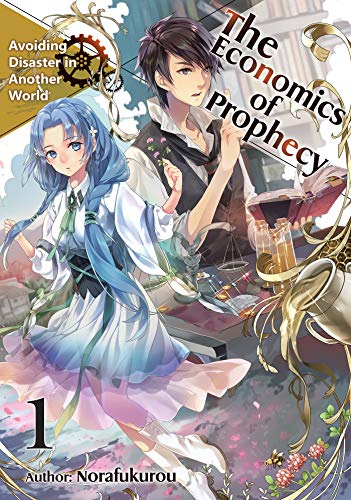
The Economics of Prophecy: Avoiding Disaster in Another World

January 13, 2020 by Sean Gaffney

By Norafukurou and Rei Shichiwa. Released in Japan by Legend Novels (Kodansha). Released in North America by J-Novel Club. Translated by Hikoki.

So you want to read an isekai, but instead of being a horny Japanese teenager, you’re a late 30s-early 40s Japanese officer worker. You’re married, have a couple of kids. You really are not looking for a fantasy involving game systems, harem building, and fanservice. You don’t even need illustrations. You’re looking for something a bit more highbrow. Fortunately, Legend Novels, a fairly new Kodansha imprint, has you covered. The Economics of Prophecy is not kidding about its economics, and so will replace discussion of gaming stats with correlation coefficients. There is more than one girl interested in the hero, but they are more understated and political about it. As for the hero, well, yes, he’s a bit bland, but he’s bland in an ADULT way. All that said, this is still a young Japanese man transported to another world with monsters and magic, who goes to an elite private school along with his unlucky childhood friend and the gorgeous, naive princess. Not ALL the tropes are gone.

The actual “reincarnated and growing up in a new world” part of Ricardo’s life is glossed over in about two paragraphs – we jump right into him as a young businessman, trying to attend school and get his family honey-making business off the ground. Unfortunately, rival companies are bigger and richer than he is. All he has is his knowledge from Japan of economic theory and his secretary/childhood friend Mia. The fourth princess of the realm, Alfina, even does a taste test between the companies. Unfortunately, as Ricardo finds, once you start meeting this princess you can’t stop meeting her. And she’s actually an oracle with a different prediction than the usual “everything’s fine again this year” – there will be a disaster. What kind? She doesn’t know. Exactly where? She’s not quite sure. Can Ricardo help her figure out what and where is going to happen? And will it even matter given the complacency of this kingdom?

The plot and the main leads are the strongest part of this book. There is a lot of economic stuff, but it never quite gets to the point where you want to flip ahead. Ricardo is one of those “I am scheming and clever but also secretly really nice to people” sorts, a bit like the Genius Prince in Yen’s recent series – he works best when he’s being pressured. Alfina manages to be a very naive, innocent royal without becoming annoying, and she’s really sweet. On the flip side, Mia is vastly underused – we clearly see she has a thing for Ricardo, but given that she (like he) is also emotionally minimal this mostly comes out as disapproval when he’s around other women. I would have liked more of their childhood backstory. Alfina also has an aide that ends up getting relatively humiliated, but I’m not entirely sure that the crime merited the punishment – it wasn’t clear enough that Claudia had abandoned Alfina, so it seemed sort of mean instead.

This is still definitely strong enough that I’d recommend it, and I’ll be reading the second volume. It’s respectable, an isekai you could happily introduce to your parents.

Filed Under: economics of prophecy, REVIEWS

The Irregular at Magic High School: Ancient City Insurrection Arc, Part I

January 12, 2020 by Sean Gaffney

By Tsutomu Sato and Kana Ishida. Released in Japan as “Mahouka Koukou no Rettousei” by Dengeki Bunko. Released in North America by Yen On. Translated by Andrew Prowse.

Just because a large majority of the cast go “eurgh” whenever Miyuki is snuggling up to her brother does not mean that the writer is not leaning on the incest subtext as hard as he possibly can. Indeed, one can’t happen without the other. And since a lot of this book is Minami suffering through watching the siblings be “embarrassing”, or noticeably avoiding saying anything in order not to upset the powerful teenager with a hair-trigger killer ice move, there is an awful lot of my least favorite plot element in this series in this book. I made a promise to myself that I would hold out till the 16th book – this is, after all, one of Dengeki Bunko’s ‘flagship’ series, alongside titles such as Sword Art Online and A Certain Magical Index… which also have issues. We’ll see why I chose Book 16 in the summer. Till then, fortunately, there is more to this book than just snuggling against Tatsuya, though it suffers from being part one of two.

The Thesis Competition is coming around again, though this year Tatsuya is not involved – at least not directly. He’s going to be doing security, given what happened at the last event. Unfortunately, he’s also still dealing with fallout from the last couple of books – in particular, Gongjin Zhou’s whereabouts, which likely will impact a lot of things going forward. The ancient magicians are taking interest in him and his friends as well. Fortunately, trying to locate the base of these magicians allows him to travel to Nara and make a new friend. Possibly unfortunately, Minoru is, of course, probably going to be a major enemy down the road, particularly if they’re dealing with the parasites that have been cropping up for a while. Fortunately, he’s on their side for now, and is a nice, polite, pretty and very powerful young man. Possibly unfortunately, Minami falls for him – hard.

When you snip out discussion of magic and incest, what little is left in this series is action, and the action is very good. We even get the death of a character we’d seen before, which surprised me, and their death also impacts Mayumi, who is unable to get much information out of her “I am evil and sneering” dad. (Their relationship makes em think of Tokiomi and Rin.) Mayumi also gets to be in possible the funniest scene of the book, where she’s having lunch and discussing things with Mari and tries to deny that she’s in love with Tatsuya, a denial that is rather pathetic – she’s trying to say they’re like a big sister and little brother, but this is NOT the series to say that in. And it is nice – although, as Tatsuya and Miyuki acknowledge, rather odd – for Maya to actually ask Tatsuya to do a thing, rather than order him.

As I noted, this is Book 1 or 2, so I expect the second half will have a lot more action and payoff. Till then, this remains a good series provided you strip out the incest and magic talk – which, alas, leaves about 50 pages per book.

Filed Under: irregular at magic high school, REVIEWS

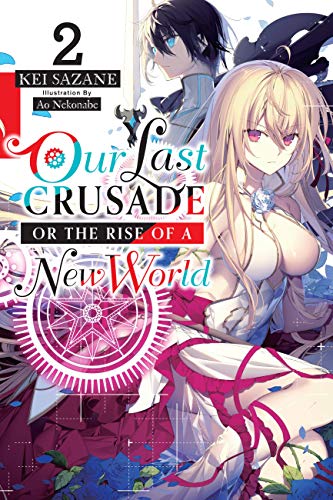
Our Last Crusade or the Rise of a New World, Vol. 2

January 10, 2020 by Sean Gaffney

By Kei Sazane and Ao Nekonabe. Released in Japan as “Kimi to Boku no Saigo no Senjou, Aruiwa Sekai ga Hajimaru Seisen” by Fujimi Fantasia Bunko. Released in North America by Yen On. Translated by Jan Cash.

The days when people were begging for a light novel – any light novel – to be released are long since past. We live in a glut of light novels, with new titles releasing several times a week, and it’s impossible to keep up with them all. This is difficult for someone like me, as I have a very high tolerance when it comes to entertainment. I have started to try to find reasons to drop series so that I don’t have to get even further behind in reading all the other series I read. And, honestly, Our Last Crusade seemed a perfect candidate for this after its second volume. Its plot was OK but not earth-shattering. The women in the book are… not great, particularly in this volume. There are some decent fights, but less of the self-analysis of the respective regimes we saw in the first book beyond “the empire tortures witches”. It seemed like a good place to leave off. Alas, then came the epilogue.

A vortex has appeared in the world, one that can give the right people amazing powers. Unfortunately, it’s desired by both sides. And so once again Iska and Alice are fighting against each other… or so it would seem. But unlike the last book, this time they keep missing each other, turning a Romeo and Juliet-style fated romance into drawing room farce. Most of the emphasis of the book is on Iska’s end, where his battalion has a very rude and uncaring leader and also a traitor, which is not good news for Captain Mismis, who is captured by said traitor. On Alice’s end, there’s a smug masked man and a powerful woman named “Kissing” with a blindfold and an attitude, but mostly there’s just Alice getting very, very annoyed that she isn’t making out with… erm, pardon me, fighting Iska to the death like she should be doing.

I’m gonna be honest here, Alice whining over wanting to fight Iska about every single page is going to get very boring very fast, and given that I suspect that once she gets over this it’s going to turn into “a young maiden in love” I’m not looking forward to future developments. Mismis, also, really really needs to develop beyond a captain who reads more like a mascot, and spending most of the second half of the book captured and in peril does not help. The book doesn’t really slide into being actively annoying or bad… it’s well-written, the pacing is good, and you can simply grump at Alice and Mismis as you go. But it lacks a hook that made me want to read past this volume. Or at least it did till the end. I will not reveal what the two hooks are, but I will say they’re perfectly delivered for maximum “dammit, now I have to get the next book in the series” effect. In particular, I’m cautiously optimistic one of the two issues I had with the book might change because of this? Maybe?

It could also be I’m just a soft touch who’s too easily pleased. But I am hoping that the third book in the series gets a bit more political and also does more with its female leads than having them be cliches.

Filed Under: our last crusade or the rise of a new world, REVIEWS

Manga the Week of 1/15/20

January 9, 2020 by Sean Gaffney, Ash Brown, Michelle Smith, Anna N and Katherine Dacey 1 Comment

SEAN: Remember when January was the smallest month of the year? No more!

ASH: Ha!

SEAN: Ghost Ship gives us a 14th volume of To-Love-Ru Darkness.

J-Novel Club has three debuts, the first of their massive wave of Anime NYC licenses. The Economics of Prophecy (Yogen no Keizaigaku) is from Legend Novels, a Kodansha fantasy imprint. Can an ignored oracle and a reincarnated economist save the kingdom?

Kobold King is also from Legend Novels. A famous warrior who has become so powerful that everyone is too afraid of him tries to show a tribe of kobolds that he’s really a sweetie at heart.

ASH: I was previously unaware of Legend Novels, but with these two titles make the imprint seems like it could be a source with some potential.

ANNA: Ok, light novels featuring economists does sound amusing, but I am not a light novel person.

SEAN: The Underdog of the Eight Greater Tribes (Hachi Dai Shuzoku no Saijaku Kettousha) is from HJ Bunko, and is a battle fantasy, though apparently not involving literal magical academies this time.

Also from J-Novel is the 9th volume of If It’s For My Daughter, I’d Even Defeat a Demon Lord, Infinite Stratos 11 and Seirei Gensouki 8.

In print, Kodansha has Hitorijime My Hero 6, If I Could Reach You 3, and Yamada-kun and the Seven Witches 21-22.

ASH: I’ve been meaning to give If I Could Reach You a try at some point.

SEAN: Digitally, the debut is GE: Good Ending, which has been rumored to get a license over here since it began, but never did. Now it’s over, and we have a digital license. It’s by the creator of Domestic Girlfriend, ran in Weekly Shonen Magazine, and is a potboiler, just like its successor.

We also have digital volumes for 1122: For a Happy Marriage (4), Ace of the Diamond (24), Domestic Girlfriend (23), Ex-Enthusiasts: Motokare Mania (2), Farewell My Dear Cramer (6), and Giant Killing (18).

MICHELLE: So much sports manga! *rubs hands together in anticipation*

SEAN: One Peace Books has a 6th volume of Hinamatsuri.

ASH: I’m a few volumes behind, but this series continues to amuse me.

SEAN: Seven Seas gives us an 8th Himouto Umaru-chan, the 5th Mushoku Tensei novel digitally, and a 2nd volume of Uzaki-chan Wants to Hang Out!!.

Debuting from SuBLime is Liquor and Cigarettes, a title from Gentosha’s Lynx magazine. It’s by the author of Coyote. They smoke. They drink. They smoke and smoke and drink… OK, sorry.

Vertical has a 4th volume of the Knights of Sidonia Master Edition.

Viz has a debut title. You thrilled to Persona 3, you cried at Persona 4, now, at last, we see Persona 5! This runs in Shogakukan’s Ura Sunday, and (surprise!) adapts the game.

Viz also gives us Case Closed 73, The Legend of Zelda: Twilight Princess 6, Radiant 9, and Splatoon 8.

ASH: I’ve been enjoying the Twilight Princess adaptation!

SEAN: Lastly, Yen Press has a 2nd Do You Love Your Mom (and Her Two-Hit Multi-Target Attacks?) manga, and a 13th Yowamushi Pedal omnibus. I suspect Manga Bookshelf folks will have little trouble choosing between these two.

ASH: Yup. It’s definitely Yowamushi Pedal for me!

MICHELLE: See above re: anticipatory hands.

SEAN: Do you like any of these titles? Or do you not like manga at all, but read this column just for the hell of it?

KATE: I don’t like (much) manga, but I always enjoy this column. :D

Filed Under: FEATURES, manga the week of

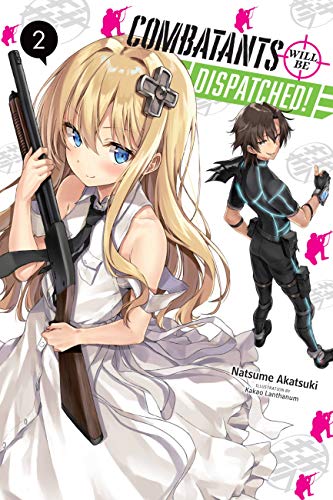
Combatants Will Be Dispatched!, Vol. 2

January 8, 2020 by Sean Gaffney

By Natsume Akimoto and Kakao Lanthanum. Released in Japan as “Sentouin, Hakenshimasu!” by Kadokawa Sneaker Bunko. Released in North America by Yen On. Translated by Noboru Akimoto.

Given that this is a series by the creator of KonoSuba, featuring characters who bear great similarities to those in KonoSuba, has a sequence where our “heroes” use The Destroyer from KonoSuba, and finally features a literal crossover with KonoSuba at the end, where a different evil operative goes to that world and is horrified by the overpowered nature of Aqua, Megumin and Darkness, it would not be unreasonable for a potential reader to ask me if Combatants Will Be Dispatched! is as good as KonoSuba. And the answer is… no, of course it’s not. Even if you weren’t aware that this was an earlier work that was dusted off and published by Kadokawa after KonoSuba became ludicrously successful, the fact is that KonoSuba’s characters are all likeable and you root for them, despite their many, many deep personality flaws. Even Kazuma. Whereas Agent Six, Alice and the others are just as flawed, but are really unpleasant people at heart. Rose comes closest, but it’s bad when the author has to say in the afterword “they’ll get more heroic soon, I hope.”

Alice is on the cover, and Akimoto states she’s the “featured girl” of the book, but honestly she doesn’t get much to do beyond what she did in Book One – snark at Six. Even her saving the day at the end of the book is only mentioned secondhand, because Six was knocked unconscious for all of it. To be fair, she is VERY good at snarking at Six – she’s still my favorite part of the book. With the Kingdom desperately short of water, the King missing, and the princess unwilling to say Six’s stupid password to a large crowd, he and his group are charged with negotiating water from a neighboring kingdom. Well, actually, he and the group are bodyguards for Snow, who is supposed to seduce the horny and easily led ruler of that kingdom. Unfortunately, due to a ridiculous chain of events, they end up starting a war. And also reviving an ancient superweapon. Fortunately, Six can still do what he does best – be petty and horrible till he wins the day.

I mentioned on Twitter that this feels like a KonoSuba with all the brakes removed, and I still stand by that. Snow is still a horrible combination of Darkness and Aqua with the flaws of both characters, and I longed for her to get run over by a bus. Rose comes off best of the crew, as I said before, but is driven by her appetite, which unfortunately leads to a lot of cannibalism jokes… not to mention sex = food jokes… when they have to cross a desert for several days with no food. Grimm is less fun here, with her one personality trait seeming to be “desperate”. There is a long-running argument over the course of the book between her and Alice over the nature of magic, which Alice, as an artificial human, rejects entirely. This could lead somewhere good, but it will have to be in future books, as nothing comes of it here.

Fortunately, this book does have one big thing still going for it: it’s funny. I laughed quite a bit. But with KonoSuba I laugh and also care, and I haven’t gotten to that point with this cast. They need a third dimension. Hopefully in future books.

Filed Under: combatants will be dispatched!, REVIEWS

Pick of the Week: Jump to the Beat

January 6, 2020 by Sean Gaffney, Michelle Smith, Katherine Dacey, Anna N, Ash Brown and MJ Leave a Comment

SEAN: It’s Jump/Beat week, so we have an embarrassment of titles. I’ll pick the final Anonymous Noise, which is not quite as gripping now that it’s not showing its heroine screaming her song at the reader, but still a very good read.

MICHELLE: I’m definitely going to read the finale of Anonymous Noise, which won me over after the first few volumes but never quite captured my heart, but what I’m really jonesing for is a hit of some volleyball action in Haikyu!!.

KATE: Lest anyone accuse me of being predictable, I’m going to pick… actually, I’m going to stay on brand and choose volume 13 of The Promised Neverland. Why break my streak?!

ANNA: I’m never going to pass up a chance to highlight some josei, so my pick is An Incurable Case of Love Volume 2. The first volume featured a few twists on the workplace romance genre, so I’m curious to see what happens next.

ASH: This really is a good week for Viz releases! But to be contrary, and because I just finished reading and liked the first volume, I’m going to pick Animeta!.

MJ: It doesn’t seem like this should be a difficult week to come up with something, but I admit it’s been a struggle! But I have finally started getting into Snow White with the Red Hair, so I think I’ll toss my vote in for that. I need to read more manga in 2020!

Filed Under: PICK OF THE WEEK

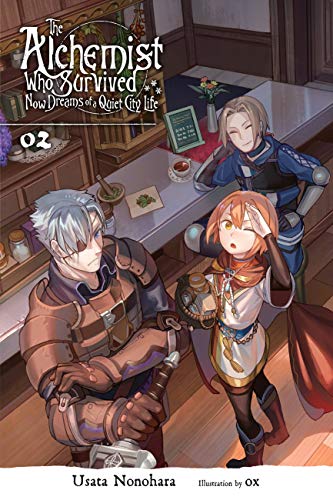
The Alchemist Who Survived Now Dreams of a Quiet City Life, Vol. 2

January 6, 2020 by Sean Gaffney

By Usata Nonohara and ox. Released in Japan as “Ikinokori Renkinjutsushi wa Machi de Shizuka ni Kurashitai” by Kadokawa Shoten. Released in North America by Yen On. Translated by Erin Husson.

The second volume of this series has many of the same strengths and weaknesses that the first has. The writing is good and makes you want to see what’s coming next. There is slightly less detail about the creation of potions, which pleased me. Those who are into deep worldbuilding will love it. But it seems tonally off in a way that means I can never quite love it. The author still wants to use slavery and critique it, but also shows us that all the slaves we meet are “bad guys being punished for robbery and murder” so that we’re still OK with it in this series. More to the point, there’s a disconnect between the world this book exists in and Mariela herself, and I don’t just mean that she’s displaced by 200 years from her old world, though that might explain it. It’s a slice of grim-n-gritty life, with Mariela being a bright ball of sunshine bringing joy into everyone’s life. The two don’t always mesh.

There’s a lot going on in this 2nd volume, even longer than the first – and the first was quite long. Mariela and Sieg are trying to run her shop, meet new people, and avoid having her outed as an alchemist, as she’d rather not be shut up in a building and worked to death. We see as the book moves along that her fears are not entirely unfounded. The Kingdom is still trying to beat the Labyrinth once and for all, helped out by Mariela’s Holy Water. And a noble family has a dark secret, one not entirely known to the nice girl who befriends Mariela and shows her the wonders of modern appliances, but her older brother certainly knows and is obsessed with it. What is concealed in a secret passageway in their mansion? And what kinds of things are being done to slaves to ensure the safety of the royal family?

If it sounds like this turned into a different story, you’re thinking along the lines I was. The last part of the book is quite dark and disturbing, with sacrifices, blood magic, and graphic descriptions of people’s heads cut open and brains showing. It contrasts with the childlike Mariela, who is shown to be even more childlike than she had been before in these scenes, as if the author wanted to emphasize the contrast but took it too far. Indeed, for most of the book the author can’t quite decide whether Mariela is meant to act like a 16-year-old or a 6-year-old, and it pinwheels between the two. This is especially discomfiting given that both Sieg and Lynx are shown to be falling for her. Innocent is fine, immature is less so.

Despite this, the book overall is very readable, and while it has many parts that annoy me I don’t actually feel the need to drop it yet. The flashback scenes showing Mariela’s first learning of alchemy and the relationship with her master are excellent. I just wish the author would stay in the fantasy-slice-of-life lane and stop making detours to the wrong side of the tracks.

Filed Under: alchemist who survived now dreams of a quiet city life, REVIEWS

A Double Dungeon review

January 5, 2020 by Sean Gaffney

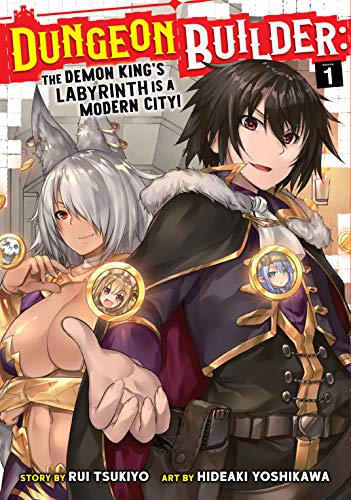
Dungeon Builder: The Demon King’s Labyrinth Is a Modern City!. By Rui Tsukiyo and Hideaki Yoshikawa. Released in Japan as “Maou-sama no Machizukuri! ~Saikyou no Danjon wa Kindai Toshi~” by Overlap, serialization ongoing in the magazine Comic Gardo. Released in North America by Seven Seas. Translated by Elina Ishikawa-Curran. Adapted by Julia Kinsman.

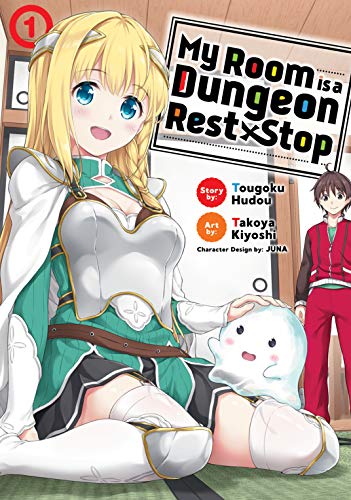
My Room Is a Dungeon Rest Stop. By Tougoku Hudou and Takoya Kiyoshi. Released in Japan as “Boku no Heya ga Dungeon no Kyuukeijo ni Natteshimatta Ken” by Takeshobo, serialization ongoing on the online site Web Comic Gamma. Released in North America by Seven Seas. Translated by Wesley O’Donnell. Adapted by Kim Kindya.

After reading both of these titles I decided to review them together. Yes, they both have ‘dungeon’ in the title, but more than that, they’re both clearly catering to the exact same audience: light novel fans who enjoy fantasy manga, or in this case adaptation of light novels we don’t have licensed over here. They both have suitably generic male leads – one may be a demon lord and the other may be a schlub in a tracksuit, but at the end of the day they’re not why you’re reading this. And there’s also plenty of fanservice. Which is why folks are reading this.

Dungeon Builder might be an isekai – we do see the new Demon Lord has lost his memories but knows what guns are – but the isekai part is mostly irrelevant. Procel is new Demon Lord of Creation, and has to create minions and dungeons that feed on people’s despair and fear. As the flash forward at the start of the book tells you, however, he is too nice a guy, so decides to make his dungeon the happiest place on Earth. It’s not clear yet how he’ll do this – the first volume doesn’t get too far into the story. He’s joined by Marcho, his busty demon lord mentor (that’s her on the cover) and two cute minions, both of whom look underage (something cheerfully pointed out by Marcho, who nicknames him “Lolicel”. This has slightly less service than the other title, and might develop into something interesting, but also seems to run on cliche power – his rival Demon Lord of Wind is a classic tsundere with shaky self-esteem that shows as arrogance. There’s also a dwarf girl who ticks the “rei Ayanami Expy” box.

My Room Is a Dungeon Rest Stop is more of a reverse isekai. Our hero Touru (Why? What that romanization now for that specific name? Don’t get me wrong, I was an ‘ou’ fan for the longest tine, but really?… sorry, back to the review) gets an apartment that’s dirt cheap… because once he moves in, the front door turns out to lead to a dungeon! Luckily, he can go out the window to his modern-day life. Exploring the dungeon, he comes across a passed-out adventurer girl and takes her back to his apartment, where she discovers the wonders of modern lie and explains a bit to him about dungeon life. Like Dungeon Builder, this title has barely gotten started. It’s a lot heavier on the fanservice – there’s a long sequence regarding the girl wetting herself from fear and the consequences of this that I really did not need to read about – and Touru is slightly more generic than the already generic Procel. As with Dungeon Builder, it opens with a brief flashforward showing us other characters who have fallen into our lead’s orbit.

I’d argue that both titles deliver what the intended audience wants, and will irritate anyone who is not in that narrow audience bracket. I’d say Dungeon Builder, based on its first volume, has more promise than Dungeon Rest Stop. I may get a second volume of the former. Still, if you like fantasy dungeon series with cute girls, these two books exist for you.

Filed Under: dungeon builder, my room is a dungeon rest stop, REVIEWS

Bookshelf Briefs 1/4/20

January 4, 2020 by Ash Brown, Sean Gaffney and Michelle Smith Leave a Comment

Dead Dead Demon’s Dededede Destruction, Vol. 7 | By Inio Asano | Viz Media – Every time a new volume of this fantastic series comes out I avoid reading it, possibly as I still expect it to end with everyone depressed or dead, because Asano. Despite that, things trundle along in this volume. Oran’s starting to have ominous feelings that she’s seen some of this before, and even the main cast heading to the beach, with lots of silly beach comedy, can’t quite stop you thinking things aren’t going to be the same anymore, especially after that cliffhanger. Makoto is on the cover, and gets a fair number of scenes as well, something you can’t always say about the covers. Most of all, this continues to examine the nature of conspiracies and media frenzies. Great stuff. – Sean Gaffney

My Hero Academia, Vol. 22 | By Kohei Horikoshi | Viz Media – What I remember about this volume’s chapters when they came out weekly was the fandom going ballistic attacking Momo after her loss. Possibly because the main cast praised her abilities regardless, possibly as she lost another fight and Jump fans are all secret wrestling fans complaining about “Jobbers.” It’s an excellent battle, though. The other fights are good as well. You’d expect Todoroki to clean up, but that battle too does not go as expected. Bakugo shows off that he can be kind and heroic while STILL being a loud asshole, and Izuku shows that the fact that he’s trying to learn his powers on the fly is leading to bad things. Fortunately, Uraraka and Shinso are there. Excellent. – Sean Gaffney

Queen Bee, Vol. 3 | By Shizuru Seino | Kodansha Comics (digital only) – In Queen Bee’s second volume, Toma realized he had feelings for Hirata while on a forest field trip, during which she displayed extreme competence (and fought off a bear). Now, they’ve become an official couple, but Hirata’s insecurity, coupled with the reveal of a junior high ex-girlfriend that Toma might still have feelings for, makes her worry that he’s just trying to make himself love her. Ordinarily, the emergence of a love rival in the latter half of the final volume of a short series would irritate me a great deal, but I actually liked that it gave Hirata one more opportunity to show that Toma’s happiness is her top priority. She may look scary, but she’s pure and valiant, and in the end, this series kind of gave me gender-flipped My Love Story!! feels. Truly delightful. – Michelle Smith

Queen’s Quality, Vol. 8 | By Kyousuke Motomi | Viz Media – Answers are here, with extended flashbacks showing us what actually happened years ago, and who Fumi is. It’s helpful to have Kyutaro’s late mother explaining things to them, admittedly, and she’s super cool—I’d be OK with more adventures of her. Meanwhile, as Fumi tries to take this all in, Kyutaro adds to things by confessing to her, something which is perhaps not timely but is at least heartfelt. That said, it may be relatively irrelevant, as the cliffhanger suggests that we may be seeing some memory loss/destruction of alternate selves going on. Still, as far as dream-laden fantasy shoujo with comedic undertones go, QQ is tops. And love that they still have Dengeki Daisy cameos in them. – Sean Gaffney

Saint Young Men, Vol. 1 | By Hikaru Nakamura | Kodansha Comics – The premise of Saint Young Men is both simple and kooky. Jesus and Buddha have rented an apartment in Japan to enjoy some well-earned time off, where they enter into a sort of odd-couple existence, with Buddha being the serious guy who does all the chores and Jesus being the carefree guy who has a popular TV review blog. The situations are pretty fun—the guys go to an amusement park and ride a roller coaster, they experience a packed commuter train, Jesus buys a Shinsengumi costume to wear as pajamas, Buddha wins a statue of himself while trying to win a trip to Okinawa…—but I’m sad to report that I never actually laughed at anything. Perhaps that will change with later volumes, as I did think this one got more amusing as it went along. We shall see! – Michelle Smith

Species Domain, Vol. 7 | By Shunsuke Noro | Seven Seas – The bulk of this volume is based around the school athletics festival, which gives us a chance to revisit several ongoing issues: Kazamori trying to live up to the “elf” standard everyone sees in her, ship tease between Hanei and Mikasagi, and the usual athletic festival cliches. The most interesting part of the book was showing us that Mizuno, who is frustrated at the mermaid classmate who’s going to put the swimming competition out of reach, also is a mermaid. That said, the reason they’ve been hiding it is fascinating, getting into both monster cliches and the sort of thing that LGBTQ people deal with daily, and I thought the reaction of the class was great. All in all, another solid volume. – Sean Gaffney

Sword Art Online: Hollow Realization, Vol. 5 | By Tomo Hirokawa, based on the story by Reki Kawahara | Yen Press – Despite Genesis being a clear bad guy, one who’s even taking drugs to enhance his gaming “performance,” he’s still able to make a huge impression on Tia. Sadly, when he is then “killed,” that proves the impetus for her to pick up where he left off, and she’s now out to remove humans from this MMORPG. As always with SAO lately, there’s some good discussion of what constitutes an NPC, and Premiere also goes through some emotional crises, especially given Tia is her dark twin. The next volume is the final one, so we’ll see if Kirito and the cast of every other video game spinoff can help. Despite the high entry level of this series, it’s pretty decent. – Sean Gaffney

The Trial of Kitaro | By Shigeru Mizuki | Drawn & Quarterly – Collecting five short manga originally published in shonen magazines between 1968 and 1971, The Trial of Kitaro brings to a close Drawn & Quarterly’s delightful seven-volume compilation of selections from Mizuki’s influential series GeGeGe no Kitaro. Combining creepiness with comedy (including some literal potty humor—beware haunted mountainside toilets), the stories in this volume are tremendous fun. As with previous installments, the episodic chapters were in part chosen specifically to be kid-friendly, so there’s a certain amount of grossness and just plain strangeness to them. But, regardless of intended audience, I’m enamored with these yokai tales of horror. I love how Mizuki has taken traditional Japanese folklore and incorporated his own ideas and even some Western legends to create something truly special. Along with the other volumes, I will treasure The Trial of Kitaro. I am sad that this is the series’ end, but I am so incredibly happy that these stories were translated. – Ash Brown

Filed Under: Bookshelf Briefs

  • « Go to Previous Page
  • Page 1
  • Interim pages omitted …
  • Page 175
  • Page 176
  • Page 177
  • Page 178
  • Page 179
  • Interim pages omitted …
  • Page 382
  • Go to Next Page »
 | Log in
Copyright © 2010 Manga Bookshelf | Powered by WordPress & the Genesis Framework