• Skip to primary navigation
  • Skip to main content
  • Skip to primary sidebar
  • Home
  • About Us
    • Privacy Policy
    • Comment Policy
    • Disclosures & Disclaimers
  • Resources
    • Links, Essays & Articles
    • Fandomology!
    • CLAMP Directory
    • BlogRoll
  • Features & Columns
    • 3 Things Thursday
    • Adventures in the Key of Shoujo
    • Bit & Blips (game reviews)
    • BL BOOKRACK
    • Bookshelf Briefs
    • Bringing the Drama
    • Comic Conversion
    • Fanservice Friday
    • Going Digital
    • It Came From the Sinosphere
    • License This!
    • Magazine no Mori
    • My Week in Manga
    • OFF THE SHELF
    • Not By Manga Alone
    • PICK OF THE WEEK
    • Subtitles & Sensibility
    • Weekly Shonen Jump Recaps
  • Manga Moveable Feast
    • MMF Full Archive
    • Yun Kouga
    • CLAMP
    • Shojo Beat
    • Osamu Tezuka
    • Sailor Moon
    • Fruits Basket
    • Takehiko Inoue
    • Wild Adapter
    • One Piece
    • After School Nightmare
    • Karakuri Odette
    • Paradise Kiss
    • The Color Trilogy
    • To Terra…
    • Sexy Voice & Robo
  • Browse by Author
    • Sean Gaffney
    • Anna Neatrour
    • Michelle Smith
    • Katherine Dacey
    • MJ
    • Brigid Alverson
    • Travis Anderson
    • Phillip Anthony
    • Derek Bown
    • Jaci Dahlvang
    • Angela Eastman
    • Erica Friedman
    • Sara K.
    • Megan Purdy
    • Emily Snodgrass
    • Nancy Thistlethwaite
    • Eva Volin
    • David Welsh
  • MB Blogs
    • A Case Suitable For Treatment
    • Experiments in Manga
    • MangaBlog
    • The Manga Critic
    • Manga Report
    • Soliloquy in Blue
    • Manga Curmudgeon (archive)

Manga Bookshelf

Discussion, Resources, Roundtables, & Reviews

Ash Brown

Pick of the Week: Jellyfish Princesses

March 21, 2016 by Michelle Smith, MJ, Sean Gaffney, Anna N and Ash Brown Leave a Comment

pj1MICHELLE: It’s almost here! It’s almost here! How could I be anything but asquee about Princess Jellyfish being almost here?!

MJ: This! This! So much this! And yet… I just have to be the one person here who will give my pick to the final (final, I said, FINAL) volume of my beloved Pandora Hearts. I’m sorry, I just gotta. Sweet Pandora Hearts, I will miss you.

SEAN: There is far too much coming out this week, and normally I’d be picking Shoulder-a-Coffin Kuro easily. But yeah, the need to pick Princess Jellyfish cannot be denied – it’s such an obvious Pick this week. So I will pick it.

ANNA: I feel like we’ve been waiting for Princess Jellyfish forever! I am so excited it is finally coming out. If I could double or triple pick one title for pick of the week, this would be it!

ASH: I’m not at all sorry to say that Princess Jellyfish is my pick, too! I really enjoyed the anime adaptation and am looking forward to reading the original manga series a great deal.
Filed Under: PICK OF THE WEEK

Mushishi, Vol. 8, 9, and 10

March 18, 2016 by Ash Brown

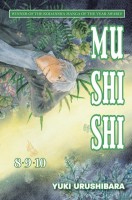
Mushishi, Volumes 8-10Creator: Yuki Urushibara
U.S. publisher: Del Rey
ISBN: 9780345505606
Released: July 2010
Original release: 2007-2008
Awards: Japan Media Arts Award, Kodansha Manga Award

Every once in a while I come across a work that stays with me long after I first finish reading it and that I find myself revisiting time and again. Yuki Urushibara’s ten-volume debut manga series Mushishi is one such work. Heavily influenced by traditional Japanese folklore but retaining modern sensibilities, Mushishi is a nuanced and layered manga which can either be simply enjoyed as a collection of atmospheric and subtly unsettling stories or more deeply appreciated for its complex underlying themes and philosophies. Mushishi quickly became and remains one of my favorite manga. The series has been received positively by fans and critics alike, earning Urushibara several awards and recognitions including a Japan Media Arts Award and a Kodansha Manga Award. Mushishi has also been the basis for multiple anime among other media adaptations. In English, the series was first published in print by Del Rey Manga and was later released digitally by Kodansha Comics.

The final volume of the English-langauge edition of Mushishi, first printed in 2010 and released digitally in 2014, is equivalent to the eighth, ninth, and tenth volumes of the series’ original Japanese release published between 2007 and 2008. Keeping with the episodic nature of Mushishi, the volume collects fourteen stories that for the most part aren’t directly tied to one another or to earlier chapters, but which share similar ideas and themes with the rest of the series. Family relationships are very important in Mushishi as a whole, but stories like “The Milk of the Valley,” “The Hidden Channel,” “Aquamarine,” and “The Thread of Life” in particular explore the deep bonds between mothers, including surrogate mothers, and their children. Other stories, like “The Final Bit of Crimson,” “Stars in the Jar of the Sky,” and “The Scented Darkness,” are about other realities and worlds, or at least about aspects of the natural world that aren’t fully understood by humankind. On the other hand, “Sunshowers,” “The Mud Weeds,” “The Whirlwind,” and “The Eternal Tree” are stories which show that when dealing with possession by or control of mushi, greater understanding can be both a curse and a blessing.

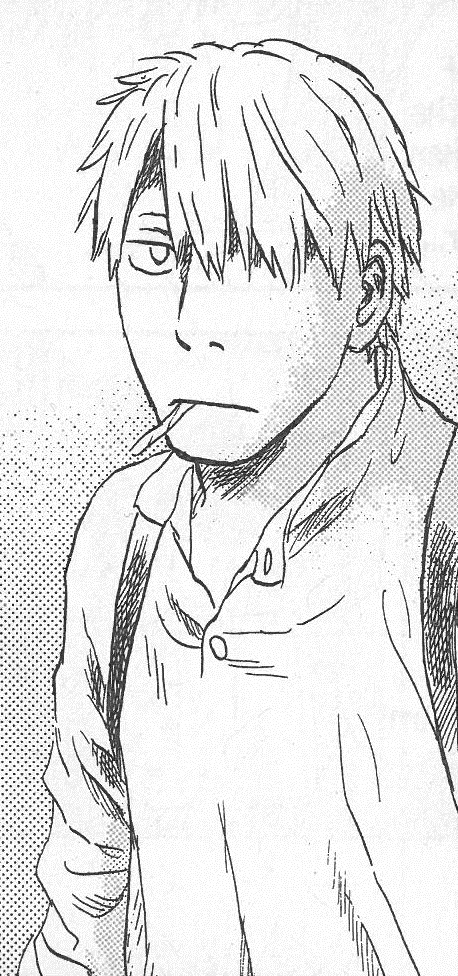
Mushishi, Volume 10, page 155The remaining three stories collected in the volume, including the series’ two-part finale, specifically involve Ginko (the manga’s protagonist and linking character), his personal relationship to mushi (primordial creatures that are closest to the original form of life), and what are known as “masters” in the world of Mushishi. Each master is associated with a specific geographic area and are responsible for maintaining the connection and balance between the natural world and all of the beings found within it. They are described as the living embodiment of the promise and rule of life. Although each of the three stories are technically found in different volumes of the series, taken together they form a particularly interesting narrative and are very illuminating when it comes to Ginko’s character. “The Bed of Grass” returns to Ginko’s past, firmly establishing why he is who he is and revealing the origin of his deep connection to and somewhat unusual attitude towards mushi. That connection is extremely critical to and further developed in “The Bottom of Winter” and in the series’ conclusion “Drops of Bells.”

Ginko’s devotion to life, whether it be human, mushi, or some other form, is perhaps the most prominent narrative driving force behind the entirety of Mushishi. At the same time, Ginko is also very aware that sometimes life cannot and should not always be preserved and that coexistence isn’t always an option. The intent is to find an appropriate balance, but what that balance should be is often debatable and mistakes are made. Ginko frequently acts in a role akin to that of a master and on several occasions throughout the series even considers taking the responsibilities of master upon himself. The decisions that he makes as he considers all of this in the final volumes of Mushishi are especially poignant. Mushishi is a manga series about many things, but at its very heart it’s an exploration of relationships, not only between humans and the natural world of which they are only one, inextricable part, but between people as individuals and as members of larger social groups. Mushi provide a seemingly supernatural element to the series, but ultimately the focus of Mushishi is on the very real, varied, and changing struggles of individuals living in an evolving world that they cannot completely control or understand.

Filed Under: REVIEWS Tagged With: del rey, Japan Media Arts Award, Kodansha Manga Award, manga, mushishi, Yuki Urushibara

Manga the Week of 3/23

March 17, 2016 by Sean Gaffney, Michelle Smith, Ash Brown, MJ and Anna N Leave a Comment

SEAN: It is somewhat sad that with the huge number of manga out towards the end of every month, I can be relieved that there are “only” 33 titles out next week. Let’s plow through them.

Dark Horse has a 3rd Astro Boy omnibus.

Kodansha has an awful lot of stuff. There’s a 4th volume of that pesky Devil Survivor.

And Noragami is still sped up with its 12th release.

If you prefer 4 to 3, then the debut of Persona Q: Shadow of the Labyrinth Side P4 will delight you. I’ll be in the corner looking baffled.

pj1

At long last, North America sees the debut of possibly the most anticipated josei title ever: Princess Jellyfish, which runs in Kiss magazine, gets an omnibus release, and it is fantastic. The Manga Bookshelf team would normally all pick it as Pick of the Week automatically, but see below. (FYI: PJ’s creator, Akiko Higashimura, has a younger brother, who happens to draw My Neighbor Seki.)

MICHELLE: I feel like I have been waiting for this for ages and ages. So excited!

ASH: Same here! (Also, I had no idea Akiko Higashimura and Takuma Morishige were related!)

MJ: So ready for this!

ANNA: I feel like I’ve been waiting for this FOREVER! Very much looking forward to reading this.

SEAN: Also debuting is Real Account, which is a survival game manga, and zzzzzzzzzzzzzzzzzzsnooooore – sorry, fell asleep there. Moving on.

MICHELLE: It can’t be worse than BTOOOM!, can it?

MJ: We shouldn’t underestimate it, Michelle. We should give it a chance to prove that it’s worse. It’s only fair.

SEAN: And a 7th volume of Yamada-kun and the Seven Witches. One volume per witch!

Seven Seas gives us a 5th volume of Servamp, which I believe still has vampires.

And Vertical has a 7th volume of Ajin, a series I know many people are excited about.

ASH: Especially now that there’s an anime series.

SEAN: Viz finally debuts the new shoujo title from the Vampire Knight creator, who has switched from Vampires to Ninjas with Shuriken and Pleats.

MICHELLE: I didn’t love Vampire Knight, but I’m still looking forward to checking this out.

MJ: Same.

ANNA: I will read this!

SEAN: And now it’s Yen time, starting with the Yen On light novel imprint. Accel World gets a 6th volume, as we try to figure out if our hero is going to turn possessed and evil or not.

The third Durarara!!, meanwhile, focuses on Masaomi, the third member of our high school power trio.

Log Horizon has a 4th volume, resolving the cliffhanger from the third, and possibly featuring Shiroe pushing his glasses up his face a few more times.

And there’s a 4th No Game No Life, which I wasn’t as pleased with as usual. I reviewed it here.

agkz1

Akame Ga KILL! ZERO is the new spinoff series of the week, a prequel taking place a few years before the main series and focusing, appropriately enough, on Akame.

There’s a third Black Bullet manga, with plenty of disturbing yet well choreographed loli assassin action for you.

Bloody Cross nears its end, but isn’t there yet, even as we hit double digits with Volume 10.

And we get the 2nd to last volume of Chaika the Coffin Princess as well, which is sadly far below the most important coffin carrying manga this week. More later.

Demon from Afar must have run out of cast members, as the 6th volume is its last.

So The Disappearance of Nagato Yuki-chan has resolved its main romance, and has finished promoting its anime. It has to wrap up soon. Right? Right?

He’s My Only Vampire is only half finished, but I’m enjoying it more than Shouoto’s other titles, and so I look forward to Vol. 6.

MICHELLE: Same here, though Demon Prince of Momochi House is pretty pleasant, too.

SEAN: The second The Honor Student at Magic High School continues to tell an alternate viewpoint of the novel we haven’t quite gotten to yet.

There’s also a 4th omnibus of Karneval’s circus mysteries.

And if you enjoy seeing a girl attempt to do life correctly and fail constantly, you no doubt are already aware that No Matter How You Look At It, It’s You Guys’ Fault That I’m Not Popular!! has an 8th volume next week.

And if you enjoy pretty supernatural people, have a 2nd Of The Red, the Light, and the Ayakashi.

MICHELLE: Yay! Volume one was a surprise delight!

ASH: I actually just finished reading the first volume; I’m intrigued and look forward to more.

MJ: Hm, I guess I should check out that first volume!

ph24

SEAN: Poor Princess Jellyfish! An obvious Pick of the Week… except oh look, here’s the final Pandora Hearts volume! Michelle, MJ, you aren’t allowed to pick both this time. (evil grin)

MICHELLE: Oh, man. Well, I’m pretty sure where MJ’s heart lies, but I am less committed.

MJ: Oh, the final one. Oh. Oh.

SEAN: And a third Prison School volume, which I think will give readers all the excess bodily fluids they could possibly want.

ASH: And then some, most likely.

SEAN: Rose Guns Days has a third volume of its Season 1 arc.

The only coffin manga that matters next week, we finally see a 5th volume of Shoulder-a-Coffin Kuro. Yay!

Spice & Wolf has a 12th manga volume, and for those who want to catch up with the series, 1-12 will also now be available digitally starting next week.

Sword Art Online begins the Mother’s Rosary arc, despite having just started the Phantom Bullet arc as well. The series ran at the same time in Japan, and will do so here as well.

Lastly, there’s a 4th volume of Sword Art Online Progressive’s manga, featuring Argo!, and also those other two I guess.

Even if you don’t get a lot of manga, there’s STILL a lot to get next week. Can you keep up?

MICHELLE: Not really, no!

Filed Under: FEATURES, manga the week of

A Girl on the Shore

March 16, 2016 by Ash Brown

A Girl on the ShoreCreator: Inio Asano
U.S. publisher: Vertical
ISBN: 9781941220856
Released: January 2016
Original release: 2011-2013

Several of Inio Asano’s manga have been released in English in the past—Solanin, What A Wonderful World!, and Nijigahara Holograph—and I’ve read every one. While they all left a significant impression on me and can be difficult works, Nijigahara Holograph in particular floored me, further convincing me to seek out more of Asano’s manga. Vertical Comics published one of Asano’s more recent manga series A Girl on the Shore in early 2016. While the English-language edition of A Girl on the Shore is complete in a single omnibus, in Japan the series was originally released in two volumes which were published in 2011 and 2013. I didn’t actually know much about A Girl on the Shore before picking it up beyond the fact it was by Asano, but I rightfully anticipated that it would be a fairly challenging read in addition to being beautifully drawn.

Junior high can be a trying time for anyone as students become more aware of themselves and each other while hormones and the intense desire to belong complicate relationships and they make decisions that will greatly influence their futures. Koume has a crush on her upperclassman Misaki, but he turns out to be something of a playboy, taking advantage of her interest by receiving sexual favors with no intention of returning her feelings. In order to cope, Koume turns around and does the same thing to her classmate Keisuke who she had previously rejected after he confessed that he liked her. Keisuke and Koume both know that they’re manipulating and using each other, but that doesn’t stop their increasingly intimate relationship from evolving and their feelings from changing. Both of them are searching for some deeper connection and meaning in their lives. For a time, having sex together seems to satisfy that need, but in the end the physical relationship only obscures their underlying emotional crises.

A Girl on the Shore, page 147A Girl on the Shore contains numerous and frank depictions of teenage sex. However, the sexual content of the volume is integral to the story that Asano is telling and carries meaning beyond titillation. In fact, A Girl on the Shore provides a deliberately uncomfortable and voyeuristic reading experience, often showing events and personal encounters unfolding directly from the characters’ perspectives. Sex isn’t romanticized or idealized in the manga and carries with it significant repercussions. Koume and Keisuke’s relationship has consequences not only for them both, but for the others around them as well. Physically the two are intimate and daring, but there continues to be a separation between them and they remain emotionally distant. Their relationship is an incredibly important one and their feelings and needs become progressively intertwined, but they are never quite able to completely and truly connect with each other.

Asano’s works tend to be emotionally intense and A Girl on the Shore is no exception. The manga is filled with discontent and sadness that occasionally erupts in physical or psychological violence. A Girl on the Shore is coming-of-age story that can be brutally unsettling and hard-hitting. Koume finds herself drawn more and more towards Keisuke and the complicated power dynamics of their intimacy, seemingly oblivious of the toll that the relationship is taking on them both. Independent of that, Keisuke is also dealing with some heavy family matters and emotional issues of his own. Ultimately, one of the most prominent themes of A Girl on the Shore is loneliness and isolation even in the midst of a relationship. This is beautifully emphasized by Asano’s artwork in which detailed backgrounds, dramatic perspectives, layout and use of space form settings in which people seem set apart not only from others but the world around them as well. At times A Girl on the Shore can tend to be overwhelmingly bleak and tragic, but there is a deliberate narrative purpose and intent behind the pain and pessimism.

Filed Under: REVIEWS Tagged With: Inio Asano, manga, vertical, Vertical Comics

Pick of the Week: Real or Surreal?

March 14, 2016 by Sean Gaffney, Michelle Smith, Ash Brown, MJ and Anna N 3 Comments

real14SEAN: Though I sometimes regard reading Inio Asano as being like that required 19th century literature book in 8th grade – you know it’s worthy, but you’d rather something slightly less bleak – I have to admit that Goodnight Punpun has me intrigued, as even for Asano fans this one has more buzz than usual. And it’s a big omnibus, so good value for money.

MICHELLE: It’ll be a while before I am ready for more Asano — which is a compliment, really, given the impact A Girl on the Shore left with me, so I’m looking elsewhere. I’ll be picking up Paradise Residence, I think, but probably it’s no surprise that my real squee lies with volume 14 of Takehiko Inoue’s Real.

ASH: One way or another, it’s Viz that’s getting my pick this week. Like Sean, I am intrigued by the debut of Goodnight Punpun, and like Michelle, I am very excited for the most recent volume of Real. I don’t think I can bring myself to pick just one!

MJ: I’m pretty much where everyone else is this week! I can’t possibly turn down more Asano, so I’m definitely going for Goodnight Punpun, but a new volume of Real? That’s such a gift! I gotta get both.

ANNA: Goodnight Punpun and Real coming out in the same week is an embarrassment of riches. I can’t pick just one either!

Filed Under: PICK OF THE WEEK

My Week in Manga: March 7-March 13, 2016

March 14, 2016 by Ash Brown

My News and Reviews

I was finally able to post February’s Bookshelf Overload at Experiments in Manga last week, a few days later than I originally intended, but at least it’s up. I’ve been intentionally decreasing the number of new manga and other things that I’m buying at the moment, which means that I’ll be happily digging into my backlog and catching up on older series. I also posted an in-depth review last week, though perhaps it’s more of a summary. Either way, Mechademia, Volume 10: World Renewal contains some interesting material for those looking for a more scholarly approach to the study of manga, anime, and other Japanese popular culture. The volume also includes “Nanohana,” a short manga by Moto Hagio, and a story by Tomoyuki Hoshino called “Good Morning.” I am very fond of both creators’ work, so that made me especially happy to see.

Interesting things found online last week: Viz Media will apparently be releasing a new volume of Haikyu every month after it’s debut in July until the English edition catches up with the Japan’s releases, which is rather impressive. Yokai scholar and manga translator Zack Davisson wrote a great piece for The Comics Journal called Confessions of a Manga Translator. (Some of the comments are worth reading, too.) VICE has an interview with Gengoroh Tagame, who will also be participating in the Queer Japan documentary. (The Kickstarter campaign for the project ends very soon and could use some additional support; if it at all interests you, please consider contributing!) Graham Kolbeins, the filmmaker behind the documentary was recently interviewed as well.

Quick Takes

Alice in the Country of Clover: Cheshire Cat Waltz, Volume 1Alice in the Country of Clover: Cheshire Cat Waltz, Volumes 1-4 by Mamenosuke Fujimaru. With the extraordinary number of retellings, spinoffs, and sequels to Alice in the Country of Hearts, it can be somewhat daunting to know where to start. Fortunately, I have people looking out for me; Cheshire Cat Waltz was one of the series that was repeatedly recommended by multiple individuals. Although it still has the same vaguely ominous atmosphere (which I like), the Country of Clover is actually a slightly different setting than the Country of Hearts. Even the personalities of the characters that are shared between the two are somewhat changed as they adapt to their modified roles. I found Boris, the Cheshire Cat, an especially interesting character in the first manga series, so it probably makes sense that I would enjoy a series where he plays a leading role. Admittedly, the pairings in the various Alice in the Country of manga that I’ve read certainly shouldn’t be lauded as examples of healthy relationships. Boris, as sweet and considerate as he can sometimes be, is also very possessive. The story is engaging, though, and Cheshire Cat Waltz is surprisingly steamy as well.

Behind Story, Volume 2Behind Story, Volumes 2-3 by Narae Ahn. I enjoyed the first volume of Behind Story more than I thought I would, so I wanted to be sure to read more of the boys’ love manhwa. At the time, I didn’t even know how long the series was, and I wasn’t able to find out much about the creator, either. It turns out Behind Story is only three volumes, was Ahn’s debut series, and was originally published online. The final two volumes of Behind Story take place three years after the first. Johann has survived his teacher’s attempted murder-suicide, but his life is still a complicated mess; he’s more or less forced transfer out of school, leaving Taehee—one of the very few people who legitimately cared for him and his well-being—behind with no way to contact him. Eventually the two of them do reunite, but they’ve both changed over the years and neither are sure what direction their relationship will take in the future. Behind Story is a fairly solid debut with interesting characters and a story that, for the most part, moves beyond the genre’s standard tropes. The series’ ending does perhaps wrap up a little too quickly and nicely and could have used a little more development, but overall the manhwa is enjoyable.

Monthly Girls' Nozaki-kun, Volume 1Monthly Girls’ Nozaki-kun, Volume 1 by Izumi Tsubaki. I absolutely loved the anime adaptation of Monthly Girls’ Nozaki-kun, so I was very happy when Yen Press announced that it would be releasing the original manga series. The success of four-panel manga can be rather hit-or-miss in the North American market as their comedy is often firmly situated within a Japanese sense of humor and context. A few of the jokes in the first volume of Monthly Girls’ Nozaki-kun I may not have immediately understood if I hadn’t already seen the anime (which was able to more fully expound on things due to its format) but overall the manga and its gags are largely accessible and very funny. The series revolves around Nozaki—a relatively successful shoujo mangaka who has a difficult time convincing many of his high school classmates of that fact due to his large stature and seemingly stoic nature—and the various students who become his assistants or the inspiration for his characters. The manga is good-natured fun, much of the humor the result of the differences between the characters’ personalities and how most other people actually perceive them. I especially appreciate the series’ willingness to play with gender roles and expectations.

Filed Under: FEATURES, My Week in Manga Tagged With: Alice in the Country of, Behind Story, Izumi Tsubaki, Mamenosuke Fujimaru, manga, manhwa, Monthly Girls' Nozaki-kun, Narae Ahn

Mechademia, Volume 10: World Renewal

March 11, 2016 by Ash Brown

Mechademia, Volume 10: World RenewalEditor: Frenchy Lunning
Publisher: University of Minnesota Press
ISBN: 9780816699155
Released: November 2015

Mechademia, one of the few academic journal’s in English specifically devoted to the study of manga and anime, began publication in 2006. Since then, under the editorial guidance of Frenchy Lunning, a new thematic volume has been released every year and the journal has grown to include research and analysis of other areas of Japanese popular culture, such as film, television, games, novels, and fandom. I’ve previously read individual articles published in Mechademia, and even own several of the volumes, but I’ve never actually read one of the annuals from cover to cover until now; I had the happy opportunity to receive a review copy of Mechademia, Volume 10: World Renewal from University of Minnesota Press. It’s an aptly themed volume, signalling the end of one era and ushering a in a new one for the journal—World Renewal, released in 2015, is the last volume with Lunning serving as editor-in-chief.

After Lunning’s acknowledgements and introduction, World Renewal is divided into four main sections which collect articles, essays, stories, and even a short manga. The first part of the volume, Passages of As Not, uses the March 2011 Tōhoku earthquake, tsunami, and nuclear disaster as a touchstone. Akira Mizuta Lippit’s “Between Disaster, Medium 3.11” examines the experience of disaster, time, and space through Koreda Hirokazu’s film After Life. Similarly, “The Land of Hope: Planetary Cartographies of Fukushima, 2012” by Christophe Thouny uses Sion Sono’s film The Land of Hope to discuss fictionalized portrayals of disaster and changing landscapes. Sabu Kohso’s “Tokyo Apparatus (Version 1.0)” looks beyond the Tōhoku disaster towards the 2020 Tokyo Olympics. The section concludes with a translation of Tomoyuki Hoshino’s “Good Morning: A Postdisaster Palm-of-the-Hand Story” which I was particularly happy to see as I find Hoshino’s works in general to be especially powerful.

While as a whole I found World Renewal to be interesting and rewarding, the second section, Positions of What If, dealing with alternate histories, presents, and futures, was perhaps my personal favorite. I especially liked Andrea Horbinski’s “Record of Dying Days: The Alternate History of Ōoku” which explores one of Fumi Yoshinaga’s most tremendous manga series. Susan W. Furukawa’s “Deconstructing the Taikō: The Problem of Hideyoshi as Postwar Business Model” is a fascinating analysis of the various interpretations of Hideyoshi Toyotomi in Japanese popular culture of the 1950s, ’60s, and ’70s. (Eiji Yoshikawa’s Taiko from the 1940s is also mentioned in passing.) Matthew Penny presents a fictional essay outlining a future history of Japan based on the ideals of the political far right in “A Nation Restored: The Utopian Future of Japan’s Far Right” which was a remarkably effective technique. I was also extraordinarily pleased to discover that Moto Hagio’s short manga “Nanohana” was included in this section as well.

World Renewal continues with the third part, Worlds of As If, which collects three case studies investigating possible emerging worlds through an examination of evolving methods of creation, experience, and engagement. Satomi Saito uses Sword Art Online, Vampire Hunter D, and The Melancholy of Haruhi Suzumiya as examples of the varying and changing approaches used in the development of cross-media franchises in “Beyond the Horizon of the Possible Worlds: A Historical Overview of Japanese Media Franchises.” Sandra Annet’s “What Can a Vocaloid Do? The Kyara as Body without Organs” in part focuses on how fans use, reuse, and reimagine official characters and narratives to create their own media. The third section closes with “A World Without Pain: Therapeutic Robots and the Analgesic Imagination” by Steven R. Anderson which discusses Oriza Hirata’s dramatic play Sayonara and Katsuhiro Otomo’s Roujin Z anime among other works.

The final and fourth section of World Renewal, Loops of Just Then, largely deals with parallel narratives, worlds, and temporal loops. In “The Girl at the End of Time: Temporality, (P)remediation, and Narrative Freedom in Puella Magi Madoka Magica,” Forrest Greenwood compares the anime’s narrative structure to those that are commonly used in visual novels. Pamela Gossin delves into the complexities and connections between Hayao Miyazaki’s life and work in “Animated Nature: Aesthetics, Ethics, and Empathy in Miyazaki Hayao’s Ecophilosophy.” The Higurashi franchise forms a platform for Brett Hack’s examination of Japanese news coverage and media commentary on youth violence in “Ominous Image of Youth: Worlds, Identities, and Violence in Japanese News Media and When They Cry.” Finally, World Renewal concludes with “Parallel Universes, Vertical Worlds, and the Nation as Palimpsest in Murakami Ryū’s The World Five Minutes from Now” by Kendall Heitzman, an analysis of Murakami’s dystopic alternate history novel which I would love to one day read in translation.

Overall, I found World Renewal to be a thought-provoking and intellectually stimulating volume. Some of the essays can be fairly dense—this especially seemed to be true of those included in the first section—so the volume is difficult to recommend to a casual reader in its entirety, but there are also essays that are more readily accessible. For most people, picking and choosing among the various submissions according to their own particular interests will likely be the most satisfying approach to take. Personally, while I enjoyed reading about some of my own favorite series and creators in World Renewal, I greatly appreciated the analysis of works that I was less familiar with. In fact, my curiosity has been piqued and I’m much more interested in experiencing first hand some of the media examined in World Renewal that I had previously passed over or was unaware of. I also particularly liked the thematic nature of the volume which allows for a wide variety of material to be explored while still retaining some focus and cohesiveness. World Renewal understandably tends towards the academic which will at times prove challenging for a general audience, but the topics and material discussed are fascinating and many of the ideas expressed are quite interesting.

Thank you to University of Minnesota Press for providing a copy of Mechademia, Volume 10 for review

Filed Under: REVIEWS Tagged With: anime, film, manga, Mechademia, Nonfiction

Manga the Week of 3/16

March 9, 2016 by Sean Gaffney, Michelle Smith, Ash Brown, MJ and Anna N Leave a Comment

SEAN: Third weeks are usually the most diverse manga weeks. And that’s the case here, with lots of new titles debuting. Let’s see what we’ve got.

dangan1

Dark Horse gives us the first volume of Dangan Ronpa: The Animation, which contrary to its name is indeed a manga. It’s based on a game and has had tons of adaptations – this is the Shonen Ace one. A lot of folks I know like it, but it is set in a school where people die one by one, so be warned.

And there’s a 3rd Oh My Goddess! omnibus as well.

Kodansha has a couple of debuts next week. Forget Me Not (aka Soredemo Boku wa Kimi ga Suki) is a somewhat ecchi romance from the Shonen Magazine group (it’s been in both Weekly and Betsu), and should appeal to fans of Suzuka and other titles where you just scream in rage and bafflement at the male lead for months on end.

MICHELLE: Heh.

SEAN: There’s a second volume of supernatural mystery series Livingstone.

Kosuke Fujishima, author of Oh My Goddess!, actually finished that series, and so needed something to draw. That something is Paradise Residence, whose first omnibus volume is due out next week. It runs in Afternoon. I’m not sure if this collects Vol. 0 and 1 or 1 and 2 – it’s that kind of series. It also has a female lead at an all girls’ school, because Fujishima knows no one reads his series for the men.

MICHELLE: I’m kind of interested in this one, though I know virtually nothing about it.

SEAN: Seven Seas has a 4th omnibus of Freezing, with lots of girls fighting and being busty.

And the fourth and final volume of Evergreen, the bittersweet not-quite-romance from the author of Toradora!.

Vertical has the 7th My Neighbor Seki, which I think catches us up with Japan, so it may be a while till Seki 8.

ASH: My Neighbor Seki is still an utterly delightful series.

MJ: This, yes.

SEAN: They also debut a quirky romance called Mysterious Girlfriend X, which also ran in Afternoon. It’s an omnibus of the first two volumes, and should be fun to read provided you’re OK with drool. If you aren’t, this is probably not the title for you.

MICHELLE: Ew.

ASH: I actually know quite a few people who are excited about this series; I may need to check it out, drool and all.

ANNA: I know I am not ok with drool and will be skipping this.

MJ: I… wow, drool?

punpun1

SEAN: The big debut this week for bloggers, who never met a depressing artsy manga they didn’t love, is Goodnight Punpun, a series by Inio Asano, author of Solanin, Nijigihara Holograph, etc. This is his longest series, I believe, and ran in Young Sunday (then Big Comic Spirits when YS folded). It’s extremely weird, extremely cruel, and extremely heartwarming. It too is an omnibus with 2 volumes inside.

MICHELLE: I am still not recovered from A Girl on the Shore, honestly. I don’t know if I can take more Asano right now.

ASH: Asano can be rough, but I’m looking forward to this one.

ANNA: I own but have not read A Girl on the Shore because I haven’t felt up to it, but I’m going to get this and I think that more Asano is always a good thing.

MJ: I am always ready for more depressing artsy manga, as long as it’s from Asano.

SEAN: There’s also a 6th volume of insurance madness with Master Keaton.

ANNA: Yay!

SEAN: And Manga Bookshelf peeps will be delighted to hear we’re getting a 14th volume of Real as well.

MICHELLE: Yay!!!!!!!!!!!!

ASH: Excellent.

ANNA: Extra Yay!!!!!

MJ: Hurray!!

SEAN: Lastly, Terra Formars has Volume 11 coming out.

A whole bunch of new series next week. Which ones are you getting?

Filed Under: FEATURES, manga the week of

Bookshelf Overload: February 2016

March 9, 2016 by Ash Brown

February was a rather reasonable month for me when it came to additions to my collection, though I did end up with a little bit of everything. After a small delay, Persona 4, Volume 1 by Shuji Sogabe was finally released which I was particularly curious about, so I made sure to review it. I’ll have a review posted of Mechademia, Volume 10 in the very near future as well, which may be of interest to those looking for a scholarly approach to the study of Japanese pop culture. I finally got around to importing Takako Shimura’s Illustration Works, an artbook that includes some Wandering Son material among other artwork. (I don’t expect that we’ll ever see an English-language release, but it’s mostly illustrations, anyway.) As for February releases, some of the things that I was most excited about weren’t manga-related at all. The most recently translated volume in Keigo Higashino’s Detective Galileo series, A Midsummer’s Equation, is now available, for one. (I also discovered that another of Higashino’s works, Journey under the Midnight Sun, was released in translation a few months ago, but only in the United Kingdom. I’m not sure if there will be a North American release or not, but either way I’ve got some catching up to do!) And surprising no one who is aware of my obsession with Lianne Sentar’s Tokyo Demons, I’m also thrilled that the collection of the series’ sexually-charged short stories Know What You Want has now been released! I should hopefully have a review of that one at some point, too.

Manga!
A Bride’s Story, Volume 7 by Kaori Mori
Ding Dong Circus and Other Stories, 1967 to 1974 by Sasaki Maki
Does the Flower Blossom?, Volume 2 by Shoko Hidaka
Franken Fran, Omnibus 1 by Katsuhisa Kigitsu
Hey, Class President!, Volumes 1, 4-5 by Kaori Monchi
JoJo’s Bizarre Adventure, Part 2: Battle Tendency, Volume 2 by Hirohiko Araki
Ouran High School Host Club, Volumes 1-3 by Bisco Hatori
Pandora Hearts, Volume 10 by Jun Mochizuki
Persona 4, Volume 1 by Shuji Sogabe
Tomodachi x Monster, Volume 1 by Yoshihiko Inui

Manhwa!
Behind Story, Volume 3 by Narae Ahn

Artbooks!
Guin Saga Artbook by Naoyuki Kato
Illustration Works by Takako Shimura

Novels!
Journey under the Midnight Sun by Keigo Higashino
A Midsummer’s Equation by Keigo Higashino
Silence by Shusaku Endo

Anthologies!
Mechademia, Volume 10: World Renewal edited by Frenchy Lunning
Tokyo Demons: Know What You Want by Lianne Sentar

Anime!
Free! Eternal Summer directed by Hiroko Utsumi
Library War directed by Takayuki Hamana

Filed Under: Bookshelf Overload, UNSHELVED

My Week in Manga: February 29-March 6, 2016

March 7, 2016 by Ash Brown

My News and Reviews

Last week at Experiments in Manga, I announced the World Trigger Giveaway Winner. As usual for such announcements, the post also includes a thematic list of manga. In this case, I’ve put together a list of some of the manga licensed in English that feature parallel worlds, dimensions, and universes. Speaking of which, last week I also reviewed the first volume of a series that was included on that list–Shuji Sogabe’s Persona 4, Volume 1. I haven’t played any of the Persona 4 video games yet, but the manga adaptation is off to an intriguing start. I’m looking forward to reading more, and I’ll likely give the anime a try as well.

I found quite a few interesting things to read last week. Frederik L. Schodt (whose work I greatly admire) wrote about translating manga for World Literature Today. ICv2 has been busy interviewing folks from the North American manga industry, including a two–part interview with Viz’s Kevin Hamric and another two–part interview with Dark Horse’s Michael Gombos and Carl Horn.

There have been a few interviews with manga creators posted recently, as well. Manga Brog translated an interview with Tsutomu Nihei from earlier this year. Kazuo Koike participated in a Reddit Ask Me Anything. And Kodansha Comics has a new creator interview with Chuya Koyama, the mangaka of Space Brothers. Related to that interview is an autograph sweepstakes and survey about Space Brothers which is a great opportunity to let Kodansha know if, like me, you’d be interested in seeing a print release of the series.

In licensing news, Seven Seas slipped in an announcement for Kanekiru Kogitsune and Kobayakawa Haruyoshi’s Re:Monster manga adaptation. There’s also currently an Indiegogo campaign to add an English dub to and generally improve the quality of the upcoming North American DVD and Blu-ray release of the Skip Beat! anime adaptation.

Quick Takes

A Bride's Story, Volume 6A Bride’s Story, Volumes 6-7 by Kaoru Mori. Every time I pick up A Bride’s Story I can’t help but be impressed by Mori’s stunningly detailed and beautiful artwork. The manga is gorgeous to look at, but the storytelling is lovely as well. These two volumes fall at the opposite ends of the spectrum when it comes to tone, but they’re both still wonderfully engaging. Though it has its quiet moments, the sixth volume is dominated by exciting action sequences and battles as Amir’s original clan struggles to find a way to survive now that it has lost access to grazing lands. The intensity of the sixth volume isn’t found in the seventh, but there’s still plenty of drama as the series shifts to follow more of Mr. Smith’s journey. The story itself focuses Anis, a young Persian woman whose husband is quite wealthy. Because of this she leads a somewhat lonely and secluded life until, at the urging of her maid, she starts going to the public baths where she can spend more time with other women. (Much of the volume takes place at the baths, so there is a fair amount of tasteful nudity.)

TokyoESP1Tokyo ESP, Omnibus 1 (equivalent to Volumes 1-2) by Hajime Segawa. It took me a couple of chapters to completely warm up to Tokyo ESP, but by the end of the first omnibus I was completely engaged. Segawa’s artwork doesn’t particularly grab me, but I’m immensely enjoying the quirkiness of the manga’s characters and the weirdness of its story. Tokyo ESP is ridiculous in a good sort of way. One morning, Rinka wakes up to discover that she has the ability to pass through physical objects. She’s not the only Tokyoite to have suddenly gained strange superpowers, but Rinka does appear to be one of the few to try to use her newfound skills for justice rather than personal gain. Though reluctant at first, wishing that she could just go back to normal, Rinka is quite capable and soon finds herself caught up in gang war fighting other espers. Tokyo ESP is a violent, action-packed series with a goofy sense of humor. Rinka can literally kick ass, but she also gets her fair share of beatings. The manga can actually be surprisingly brutal at times.

The World's Greatest First Love: The Case of Ritsu Onodera, Volume 1The World’s Greatest First Love: The Case of Ritsu Onodera, Volumes 1-3 by Shungiku Nakamura. I know quite a few people who we extraordinarily pleased when SuBLime announced that it would be releasing The World’s Greatest First Love. It was their enthusiasm that led me to giving the manga a try–I had read and even enjoyed parts of Nakamura’s earlier series boys’ love series Junjo Romantica, but overall I wasn’t especially enamored with it so I wasn’t necessarily intentionally seeking out more of the creator’s work. But I will admit, so far I am consistently amused and entertained by The World’s Greatest First Love even if I am more interested in the series’ hilarious (and I’m told accurate) portrayal of the inner workings a shoujo magazine than I am in any of the manga’s dubious romances. The World’s Greatest First Love works best for me when it’s a bit over-the-top and not trying to be taken too seriously. Though the anatomy of the characters can occasionally be rather awkward, Nakamura excels at reaction shots and the artwork is well-suited for a comedy.

Filed Under: FEATURES, My Week in Manga Tagged With: Bride's Story, Hajime Segawa, Kaoru Mori, manga, Shungiku Nakamura, Tokyo ESP, World's Greatest First Love

Pick of the Week: Legend of the Galactic Heroes

March 7, 2016 by Michelle Smith, Ash Brown, Sean Gaffney, MJ and Anna N Leave a Comment

logh1MICHELLE: Is there really any doubt? Legend of the Galactic Heroes!

ASH: No doubt here! It may not be manga, but it’s Legend of the Galactic Heroes for me this week, too.

SEAN: It is absolutely Legend of the Galactic Heroes, as I have said before. Cannot wait for this epic classic novel series, so influential on so many other anime and manga.

MJ: See above, re: Legend of the Galactic Heroes.

ANNA: What’s happening? Could it be a unanimous pick for Legend of the Galactic Heroes? I think it is!

Filed Under: PICK OF THE WEEK

Persona 4, Vol. 1

March 4, 2016 by Ash Brown

Persona 4, Volume 1Creator: Shuji Sogabe
U.S. publisher: Udon Entertainment
ISBN: 9781927925577
Released: February 2016
Original release: 2009

Shin Megami Tensei is a sprawling multi-media franchise that began as a series of video games in 1987 and has grown to include manga, anime, novels, merchandise, and more. One of the most popular series within Shin Megami Tensei is Persona, which has its own multitude of spin-offs and adaptations. Persona 4 was initially developed as a role-playing game for the PlayStation 2, but the story and characters have inspired multiple other games, novels, anime, and manga series. The first Persona 4 manga was created by Shuji Sogabe, who was also responsible for the earlier Persona 3 manga adaptation. Sogabe’s Persona 4 manga, currently ongoing, has been licensed in English by Udon Entertainment. After a slight delay, the first volume of the series, originally published in Japan in 2009, was released in early 2016. My personal experience with Shin Megami Tensei as a whole is somewhat limited and up until now my knowledge of Persona 4 had largely been earned vicariously through others.

Soji Seta has grown used to transferring from one school to another due to the demands of his parents’ careers, but when they are both sent overseas, Soji is sent to stay with his uncle and young cousin in the small rural town of Inaba. Because Soji has moved so often he doesn’t have many friends and tends to keep his distance from other people. And as a city boy he’s also a bit out-of-place in the countryside. Even so, he’s warmly welcomed by his classmates and is quickly included in their social circles. Only there’s something unsettling about Inaba and Soji finds himself suffering from disorientation and strange dreams. Soon after his arrival, a string of bizarre deaths begin to occur which somehow seem to be connected to a local urban legend. It is said that on rainy nights, staring into the reflection of a television screen will reveal the face of one’s true love. But the truth behind the rumor is even more peculiar. Suddenly, Soji and the others find themselves pulled into another world as they pursue the mysteries surrounding the murders.

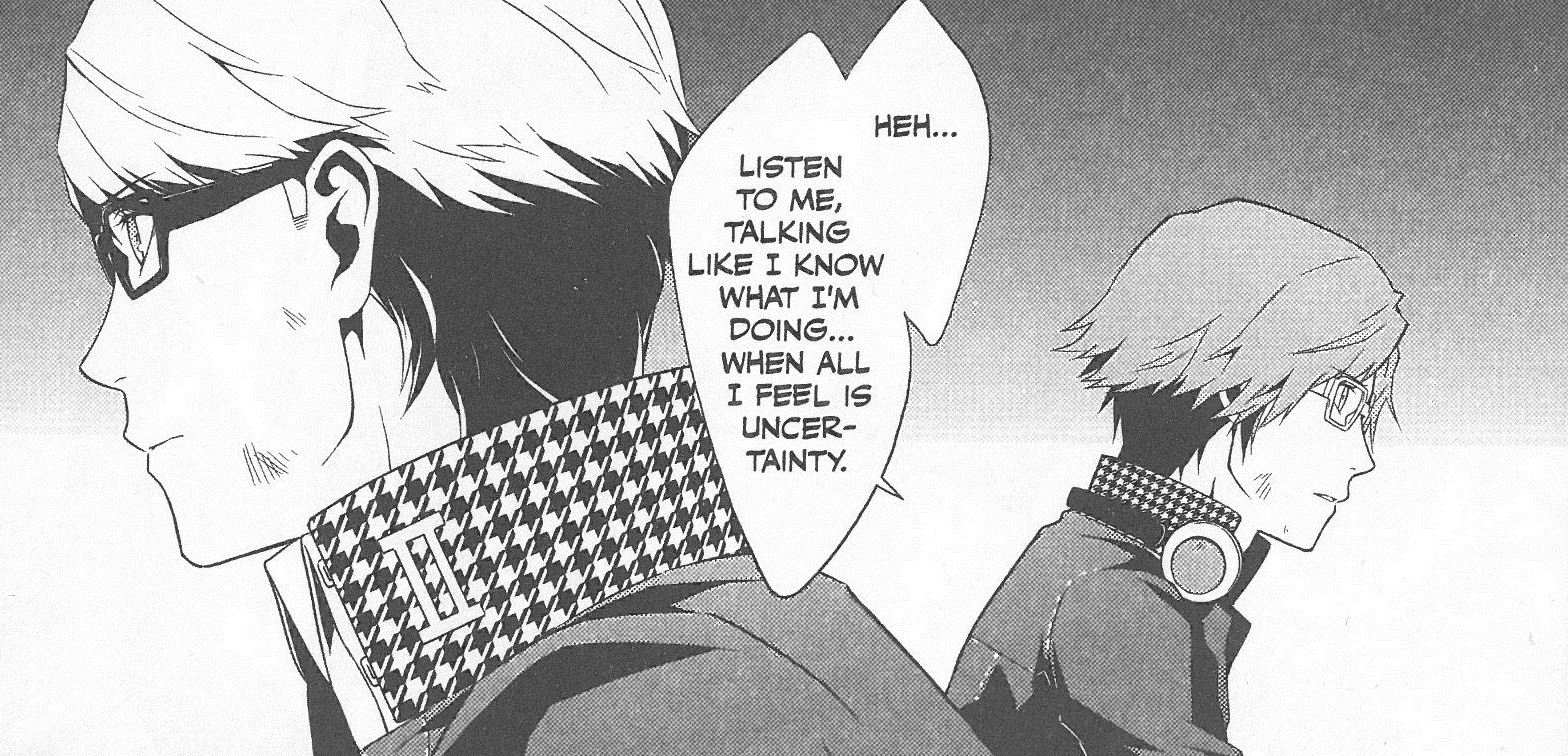
Persona 4, Volume 1, page 151Soji would arguably be the main protagonist of the Persona 4 manga (he’s the player character in the original video game, among other things), but except for the initial chapter most of the first volume is actually told from the perspective of Yosuke Hanamura. Like Soji, Yosuke is a transfer student, having moved to Inaba from a large city six months earlier due to his parents’ work. Although his character is more complex than is initially implied, Yosuke tends to be an easygoing and somewhat clumsy goofball. This provides an interesting contrast to Soji’s colder, more reserved personality. Over the course of the first volume they begin to form a close friendship which will likely become one of Soji’s most important relationships. The connection will also be meaningful for Yosuke whose outwardly upbeat attitude hides feelings of discontent, inadequacy, and doubt. I’m looking forward to seeing how their bond evolves as it seems to be something that they both need.

Not having yet played any of the Persona 4 video games, I’m not in a position to comment on Sogabe’s manga as a derivative work, but at this point it does appear to be an adaptation that can largely stand on its own. Some elements of gameplay can still be detected, though for the most part they have been convincingly incorporated into the story itself. In addition to the plot and characters, I find the manga’s settings to be particularly intriguing. Sogabe’s stylish artwork and use of shadows and fog create an effectively disconcerting environment in both Inaba and the TV world. But one of the most fascinating and potential-laden aspects of Persona 4 is that while in that alternate reality, fragments of a person’s psyche can physically manifest to either great benefit or great harm. Persona 4, Volume 1 is the introduction to the series so there is a fair amount of setup, but the sense of mystery and danger has already been well-established. So far, I am intrigued by the Persona 4 manga and am curious to see how it continues to develop.

Filed Under: REVIEWS Tagged With: manga, Persona, Shin Megami Tensei, Shuji Sogabe, Udon Entertainment

Manga the Week of 3/9

March 3, 2016 by Sean Gaffney, MJ, Ash Brown, Anna N and Michelle Smith 1 Comment

SEAN: I love quiet weeks. I love them so much more given we’re in a new manga boom where the first and fourth weeks of the month can be crippling on the wallet. But don’t worry, there’s still big things afoot next week.

logh1

The big release, and I will warn in advance this is absolutely my Pick of the Week, is the debut of the space opera novel series Legend of the Galactic Heroes. Viz’s SF imprint Haikasoru has picked up the first 3 volumes, with promises of more if it sells well. Old-school anime fans will recall its adaptation being a gateway series in the 1990s, trading fansubs and joking about “That man, Yang Wen-Li”. It is also filled with very handsome young men, so has a large female fanbase as well. This isn’t space opera like the Irresponsible Captain Tylor – it takes itself Very Seriously Indeed. But don’t let that stop you getting this, it is an absolute Must Buy.

MJ: Okay, you’ve sold me. Which is good, because nothing else here really does.

ASH: I am so incredibly excited for this!

ANNA: I am also incredibly excited for this! Space Opera for the win!!!!

MICHELLE: What is that I spy, sitting in my Amazon cart? Why, it’s the first volume of Legend of the Galactic Heroes!! Hi there, little guy!

SEAN: Dance in the Vampire Bund’s spinoff, Scarlet Order, ends with its 4th volume from Seven Seas.

Seven Seas also has a 3rd volume of Haven’t You Heard? I’m Sakamoto. I’ve heard it’s selling poorly, which is a shame, as I’m very fond of it. Go get this! It’s weird and funny! It has an anime coming soon!

ASH: Oh, that is a shame; I really enjoy the series. Hopefully the anime will help sales.

SEAN: After a few false starts, I believe that we do have the 4th World’s Greatest First Love volume from SubLime.

ASH: I actually just started reading this series. Guess I’ll have to add the fourth volume to the pile!

SEAN: Ranma 1/2 omnibus 13 contains two of the more beloved arcs of the franchise, as it wraps up the Herb story and also has Shinnosuke’s arc, which highlights Ranma and Akane’s awkward love story. Oh yes, and we meet Hinako-sensei as well.

Lastly, there’s a 20th Rin-Ne volume, and I admit I waved a little white flag last time around at the extreme lack of anything happening in the series.

Aside from IMPERIAL SPACE OPERA, what interests you this week?

Filed Under: FEATURES, manga the week of

Manga Giveaway: World Trigger Giveaway Winner

March 2, 2016 by Ash Brown

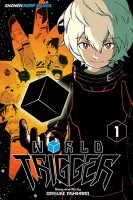
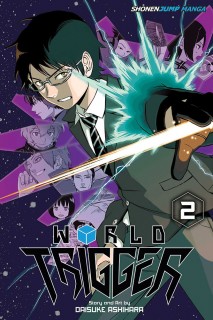
World Trigger, Volume 1World Trigger, Volume 2And the winner of the World Trigger manga giveaway is… Serene!

As the winner, Serene will be receiving the first two volumes of Daisuke Ashihara’s World Trigger as published in English by Viz Media. One of the most notable aspects of World Trigger is it’s setting in which gates between parallel worlds appear. I asked participants of the giveaway to tell me a little about some of their favorite manga that feature parallel dimensions, worlds, or universes. Be sure to check out the giveaway comments to read all of the detailed responses.

Some manga available in English featuring parallel worlds:
Alice 19th by Yuu Watase
Arata: The Legend by Yuu Watase
Blue Exorcist by Kazue Kato
Drifters by Kohta Hirano
From Far Away by Kyoko Hikawa
Gate written by Takumi Yanai, illustrated by Satoru Sao
Higurashi: When They Cry written by Ryukishi07
Into Illusion written by Rieko Yoshihara, illustrated by Ryo Tateishi
Kyo Kara Maoh! by Temari Matsumoto
Magic Knight Rayearth by CLAMP
MeruPuri by Matsuri Hino
Orange by Ichigo Takano
Pandora Hearts by Jun Mochizuki
Persona 4 by Shuji Sogabe
Reborn! by Akira Amano
Steins;Gate by Yomi Sarachi
Tsubasa: Reservoir Chronicle by CLAMP
World Trigger by Daisuke Ashihara
xxxHolic by CLAMP

The above list is certainly not exhaustive, and I’ve deliberately left off a few titles in order not to be too spoilerific, but it’s a decent place to start for anyone interested in reading manga with parallel worlds or dimensions. Thank you to everyone who shared your favorites with me; I hope to see you all again for the next giveaway!

Filed Under: Giveaways, UNSHELVED Tagged With: Daisuke Ashihara, manga, world trigger

Pick of the Week: Kyoko vs. Saitama

March 1, 2016 by Sean Gaffney, Michelle Smith, Anna N, Ash Brown and MJ Leave a Comment

skipbeat36SEAN: There’s a lot of good titles out this week, but only one that has me waving my arms around and going “AT LAST!” So the pick, as you may have guessed, is the 36th volume of Skip Beat!.

MICHELLE: I am solidly in Skip Beat!‘s corner, as well. It’s telling when a series as long as this still makes me excited to get the next installment.

ANNA: I have to join in the group picking Skip Beat!. Having a new volume to read is a great excuse for celebration!

ASH: I’m shockingly far behind in my reading of Skip Beat! so I’m not quite ready for this week’s volume even though I’m looking forward to it. However, I’m not nearly as far behind in One-Punch Man, another series I’m thoroughly enjoying, so this time I’ll be making that one my pick.

MJ: I’m going to surprise everyone, I guess, by joining Ash here on picking One-Punch Man! I somehow actually missed it in this week’s releases, but now that I realize it’s there, I’m psyched. Count me in!

Filed Under: PICK OF THE WEEK

  • « Go to Previous Page
  • Page 1
  • Interim pages omitted …
  • Page 87
  • Page 88
  • Page 89
  • Page 90
  • Page 91
  • Interim pages omitted …
  • Page 140
  • Go to Next Page »
 | Log in
Copyright © 2010 Manga Bookshelf | Powered by WordPress & the Genesis Framework