• Skip to primary navigation
  • Skip to main content
  • Skip to primary sidebar
  • Home
  • About Us
    • Privacy Policy
    • Comment Policy
    • Disclosures & Disclaimers
  • Resources
    • Links, Essays & Articles
    • Fandomology!
    • CLAMP Directory
    • BlogRoll
  • Features & Columns
    • 3 Things Thursday
    • Adventures in the Key of Shoujo
    • Bit & Blips (game reviews)
    • BL BOOKRACK
    • Bookshelf Briefs
    • Bringing the Drama
    • Comic Conversion
    • Fanservice Friday
    • Going Digital
    • It Came From the Sinosphere
    • License This!
    • Magazine no Mori
    • My Week in Manga
    • OFF THE SHELF
    • Not By Manga Alone
    • PICK OF THE WEEK
    • Subtitles & Sensibility
    • Weekly Shonen Jump Recaps
  • Manga Moveable Feast
    • MMF Full Archive
    • Yun Kouga
    • CLAMP
    • Shojo Beat
    • Osamu Tezuka
    • Sailor Moon
    • Fruits Basket
    • Takehiko Inoue
    • Wild Adapter
    • One Piece
    • After School Nightmare
    • Karakuri Odette
    • Paradise Kiss
    • The Color Trilogy
    • To Terra…
    • Sexy Voice & Robo
  • Browse by Author
    • Sean Gaffney
    • Anna Neatrour
    • Michelle Smith
    • Katherine Dacey
    • MJ
    • Brigid Alverson
    • Travis Anderson
    • Phillip Anthony
    • Derek Bown
    • Jaci Dahlvang
    • Angela Eastman
    • Erica Friedman
    • Sara K.
    • Megan Purdy
    • Emily Snodgrass
    • Nancy Thistlethwaite
    • Eva Volin
    • David Welsh
  • MB Blogs
    • A Case Suitable For Treatment
    • Experiments in Manga
    • MangaBlog
    • The Manga Critic
    • Manga Report
    • Soliloquy in Blue
    • Manga Curmudgeon (archive)

Manga Bookshelf

Discussion, Resources, Roundtables, & Reviews

Ash Brown

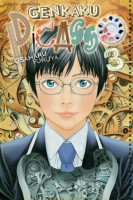
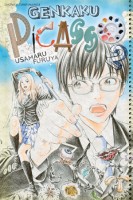
Genkaku Picasso, Vol. 3

January 24, 2014 by Ash Brown

Genkaku Picasso, Volume 3Creator: Usamaru Furuya
U.S. publisher: Viz Media
ISBN: 9781421539201
Released: May 2011
Original release: 2010

The third and final volume of Usamaru Furuya’s short manga series Genkaku Picasso was originally published in Japan in 2010. Viz Media released the English-language edition of the volume in 2011 under its Shonen Jump imprint. Genkaku Picasso was initially serialized in the manga magazine Jump SQ. Furuya mentions in the series’ afterword that he was somewhat surprised to have been approached to create a manga by one of the Jump SQ editors since he didn’t consider his previous work to have had much popular, mass appeal. (Furuya made his debut in the alternative manga magazine Garo and is particularly well-known for some of his more avant-garde work.) Genkaku Picasso was originally intended to be only two volumes long. Happily, Furuya was able to expand the series to three volumes, which allowed him to tie everything together in the way that he wanted. Although I enjoyed the first volume of Genkaku Picasso the manga starts out a little unsteady. But by the end, Furuya has created a fantastic series.

For most of his life, Hikari Hamura has been content to keep to himself and concentrate on his drawing. He’s earned himself the nickname of Picasso from his classmates (much to his dismay as he greatly prefers the work of Leonardo da Vinci), but up until recently they have mostly ignored him. Picasso is as strange and gloomy as he ever was, if not more so, but many of his classmates are beginning to feel drawn to him for some unknown reason. What they don’t realize is that Picasso has been helping to solve their personal problems. After nearly dying in a bizarre accident Picasso has gained a strange ability that allows him to see and draw the darkness that exists in another person’s heart. He can enter into those sketches, and by changing them he influences his classmates lives, hopefully for the better. This power is something that Picasso has tried to keep hidden from the others but it becomes difficult for them to disregard his increasingly odd behaviour, especially when he seems to know things that they would never reveal to someone else.

Genkaku Picasso starts out as a fairly episodic series. Generally, I found the longer stories–those lasting several chapters–to be more successful than the shorter ones as they feel less rushed and more thoroughly developed. It’s only really during the second volume that it becomes clear that there is also an overarching plot. The details of that larger story are completely reveled in the third volume of Genkaku Picasso. With a little bit of a lead in, “Hikari’s Story” takes up nearly half of Genkaku Picasso, Volume 3. It’s the longest story in Genkaku Picasso and is what pulls together the entire series. Up until this point in the manga, while Picasso has certainly been the protagonist, the stories have largely focused on his classmates and the issues that they are struggling with. But in “Hikari’s Story” their roles are reversed and it’s Picasso who needs help. It’s an extremely effective turn of events that brings the series full circle quite nicely.

The ending of Genkaku Picasso is actually a little heart-wrenching. Picasso starts the series almost a complete loner. Except for Chiaki, who hung out with him despite his protests, most of his classmates simply took no notice of him. Picasso was perfectly fine with this, or at least that’s what he told himself. As Genkaku Picasso progresses, Picasso slowly gathers people around him as he helps them with their problems. But it’s not until the third volume that he actually admits that he has friends and that he actually wants friends. Picasso has to be completely honest with himself and with the others, which in reality is a very terrifying thing to have to do. With “Hikari’s Story” the entire series becomes about Picasso and shows the tremendous amount of growth that he has gone through. I’m very glad that Furuya was able to extend Genkaku Picasso and give it a marvelous conclusion. Even considering its somewhat awkward start, Genkaku Picasso is a wonderful series. I thoroughly enjoyed its quirky humor and characters, its engaging artwork, and its somewhat peculiar but ultimately heartfelt story.

Filed Under: REVIEWS Tagged With: genkaku picasso, manga, Shonen Jump, Usamaru Furuya, viz media

Manga the Week of 1/29

January 23, 2014 by Sean Gaffney, Michelle Smith, Ash Brown and MJ 1 Comment

SEAN: Next week is the last week of the month, and as ever this means few titles arrive (unless you get stuff from Diamond – all this week’s missing stuff is arriving next week). But not without worthy things to discuss.

gantz30

Dark Horse really hit on a winner when they licensed Gantz from Shueisha (leaving aside the amazing fact that they licensed something from Shueisha and were not named Viz). It’s been a consistent seller for them, particularly among the ‘comic shop buyer’ fan. And now it’s hit Vol. 30.

MICHELLE: Wow, I had no idea Gantz went on for so long.

ASH: Yup, it ended last year in Japan with thirty-seven volumes. It’s been quite a while since I’ve actually read any of the series, though.

SEAN: DMP’s Deflower the Boss seems like one of those BL titles that I’d expect to do quite well simply due to the title alone. Also, just by giving you the title, you can likely guess the plot. I’m hoping it’s at least fun and silly.

MICHELLE: …

MJ: What she said.

SEAN: Lastly, Kodansha’s Attack on Titan finishes its speed-up with Vol. 11. It now lines up with Japan, meaning we’ll see Vol. 12 in April. That said, get a Crunchyroll subscription and you can read right up to this month’s magazine chapter.

ASH: I’ve gotten so used to new volumes of Attack on Titan coming out every month that April now seems to be very far away.

SEAN: What manga are you deflowering this week?

MICHELLE: *snerk*

Filed Under: FEATURES, manga the week of

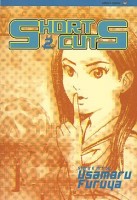
Short Cuts, Vol. 2

January 23, 2014 by Ash Brown

Short Cuts, Volume 2Creator: Usamaru Furuya
U.S. publisher: Viz Media
ISBN: 9781591160694
Released: August 2003
Original release: 1999

Originally serialized in Young Sunday, Short Cuts was Usamaru Furuya’s first manga created for a major, mainstream publication. It was also his first manga to be completely released in English. His debut work, Palepoli, was serialized in the alternative manga magazine Garo and has only partially been made available in English. (Select excerpts from Palepoli are available in Japan Edge: The Insider’s Guide to Japanese Pop Subculture and Secret Comics Japan: Underground Comics Now.) Short Cuts began its serialization in 1996, two years after Furuya made his manga debut. The second collected volume of Short Cuts was initially published in Japan in 1999. The English-language edition of the volume was released by Viz Media in 2003. This was after Pulp, the magazine in which Short Cuts was being serialized in English, was canceled. I very much enjoyed the first volume of Short Cuts and so am happy that both volumes, though sadly now out of print, were released.

Short Cuts is a darkly comedic and vaguely surreal gag manga and satire. Each cut–there are exactly one hundred of them in the second volume–is a short manga only a page or two in length. As in the first volume, there are some recurring jokes, characters, and setups, but even the related cuts can generally be read on their own. Any sort of overarching plot is nearly nonexistent. Kogals and the kogal subculture, which were particularly prominent in Japan while Short Cuts was initially being serialized, remain the most common topics in the manga. However, there are plenty of other subjects that Furuya uses for his material, often the stranger the better. He draws inspiration from Japanese pop culture and celebrities, other manga creators (frequently mimicking their individual styles in the process), and even history and contemporary politics.

In the afterword to the series, Furuya mentions that Short Cuts was initially intended to be “light, pop, and sexy” but as the series progressed it became a bit stranger until “old people and weirdos stood out.” I’m pretty sure Furuya includes himself when he is talking about weirdos. Increasingly, the gags in Short Cuts refer to the trials and tribulations of manga artists and illustrators. Furuya has several personal avatars in Short Cuts who either break the fourth wall to interact with the cuts or are the stars of their very own. With the second volume the humor in Short Cuts has become even more self-aware. Furuya is not afraid to make fun of himself or his manga. Another recurring character is a kogal named Mai. (The frequency of her appearances actually becomes a joke in and of itself.) She’s a delightfully peculiar young woman with an even odder family. In some ways, Mai and Furuya together are representative of the series as a whole and the relationship between creation and creator. The ending of Short Cuts–if a series without much of a plot can be said to have an “ending”–is actually rather touching because of this.

Short Cuts is a very strange manga, which is probably one of the major reasons that I like it so well. I enjoy Furuya’s chameleon-like artwork in the series as well as his absurd, dark, and surreal humor, all of which can admittedly be rather raunchy and vulgar from time to time. Many but certainly not all of the gags in Short Cuts rely on the reader having at least passing familiarity with Japanese culture and society, but there are plenty of notes from the translator included for those who might need a bit of extra help. Overall, I think I slightly preferred the first volume of Short Cuts over the second, though I can’t seem to identify exactly why that is. I was still consistently amused by Short Cuts, Volume 2 and Furuya can still make me laugh out loud. Short Cuts remains one of my favorite gag manga, but its peculiar sense of humor and sharp social commentary definitely won’t be to everyone’s taste.

Filed Under: REVIEWS Tagged With: manga, Short Cuts, Usamaru Furuya, viz media

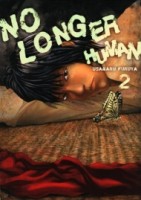
No Longer Human, Vol. 2

January 22, 2014 by Ash Brown

No Longer Human, Volume 2Creator: Usamaru Furuya
Original story: Osamu Dazai

U.S. publisher: Vertical
ISBN: 9781935654223
Released: December 2011
Original release: 2010

Usamaru Furuya’s manga series No Longer Human is an adaptation of Osamu Dazai’s 1948 semi-autobiographical novel No Longer Human. Furuya’s manga adaptation began serialization in Weekly Comic Bunch in 2009. The second volume of the series was published in Japan in 2010 while the English-language edition was released in 2011 by Vertical. No Longer Human was the second manga by Furuya that was published by Vertical, the first being the one-volume Lychee Light Club. Although Furuya’s No Longer Human is based on Dazai’s novel, he has taken a few liberties with his rendition, one of the most notable changes being that the story is now set in the 2000s instead of the 1920s and ’30s. Furuya has also inserted himself into the manga as a framing character. These changes, as well as others, are actually quite effective. It is not at all necessary to have read the original No Longer Human to appreciate Furuya’s interpretation of the story.

Yozo Oba attempted a double suicide with a club hostess named Ageha, but only she drowned while he survived. He’s come to the realization that although he doesn’t want to die, he doesn’t want to live, either. Yozo has long since been disowned by his family and the one person for whom he held any sort of honest feelings is now gone. He spends his days directionless and in despair, slowly recovering from a torturous situation partly of his one making. He desperately wants some meaning to his life, but has failed to discover what that might be. At one point he thinks he’s found it, only to have it snatched away from him. Yozo was once adored by all and even in his current pitiful state people are drawn to him and dare to care about him. He uses this to his advantage, putting on airs to get what he wants and needs, recognizing all the while how distasteful it is. Yozo uses people and he knows it. To him, life is still an act.

No Longer Human is a dark and troubling manga series. Yozo doesn’t treat himself well and treats those around him even worse. He is extremely manipulative and frankly can be a terrible person. And yet at the same time Yozo is a tragic figure; No Longer Human is heart-wrenching. While I don’t find his portrayal in the manga to be as sympathetic as it is in the novel, there are still points with which I can empathize. Yozo has a fear of people and their expectations of him that prevents him from being authentic. He’s repeatedly told that he is a good, sweet, and kind person, but this is the last thing he wants to hear. Yozo’s extraordinarily anxiety-ridden and conflicted over it because he see the life he is living as one big lie. He is very aware of his dishonesty and how he misleads people, but continues to do so because he is so desperate to be liked and accepted. Occasionally he manages to express some feelings of legitimate remorse and genuine caring, but more often than that it is already too late to undo any of the damage done.

No Longer Human, Volume 2 follow Yozo from the depths of despair to the heights of happiness and back again. Those glimmers of hope that Yozo will be able to turn his life around make his failure to do so even more anguished as he lets chance after chance to slip through his fingers. Furuya’s artwork in No Longer Human suits the story well, capturing Yozo’s internal and emotional turmoil and dragging the readers along for the ride. Furuya provides disconcerting glimpses into Yozo’s psyche, visually expressing his suffering through imagery of suffocation (harkening back to his near-drowning) and showing the ugliness he sees in the world. No Longer Human isn’t necessarily an easy read and it can be emotionally exhausting, but I find it to be incredibly compelling and difficult to turn away from as well. Yozo may not often be particularly likeable, but as with so many of the other characters in the series I can’t help but wish the best for him no matter how doomed he seems.

Filed Under: REVIEWS Tagged With: manga, no longer human, Osamu Dazai, Usamaru Furuya, vertical

Genkaku Picasso, Vol. 2

January 21, 2014 by Ash Brown

Genkaku Picasso, Volume 2Creator: Usamaru Furuya
U.S. publisher: Viz Media
ISBN: 9781421537542
Released: February 2011
Original release: 2009

Genkaku Picasso was the second multi-volume manga series by Usamaru Furuya to be released in English. The first was a seinen gag manga called Short Cuts which, like Genkaku Picasso, was published by Viz Media. Genkaku Picasso is very different from Short Cuts. It’s an example of one of Furuya’s few shōnen manga and is currently his only shōnen series available in English. Furuya is an extremely versatile artist, changing styles, genres, and demographics to suit his needs. He had his start in alternative manga, but Genkaku Picasso, while quirky, is a more mainstream title. Initially serialized in Jump SQ, the second volume of Genkaku Picasso was released in Japan in 2009. Viz Media published Genkaku Picasso, Volume 2 under its Shonen Jump imprint in 2011. I found the first volume of Genkaku Picasso to be intriguing, but more uneven and less compelling than some of the other manga by Furuya that I had read. But with the second volume, the series finds its footing.

After a bizarre near-death experience, Hikari Hamura, given the nickname Picasso by his classmates, finds himself in an even stranger predicament. Chiaki Yamamoto, a victim of the same accident that nearly killed Picasso, is now small enough to fit in his pocket and is sporting angel wings. Picasso himself has gained the ability to see into people’s hearts and minds. Compelled to draw what he sees, he can literally enter into the psyches of others through his illustrations. Using this newfound power, Picasso is able to help his fellow classmates. Not that he really wants to go to all that effort. In fact, he’d much rather be left alone to concentrate on his artwork. But unless he wants to let his arm rot away–another peculiar consequence of his accident–Picasso must do what he can to help those around him. With Chiaki’s assistance and prodding he has successfully resolved some of his classmates problems and has even gained a few friends in the process, but Picasso is still incredibly reluctant to get involved.

Although there has always been an ongoing story in the series, the beginning of Genkaku Picasso felt fairly episodic. However, with the second volume the series starts to become a bit more cohesive. The stories in the first volume seemed to be resolved a little too simply and cleanly, but as Genkaku Picasso progresses it becomes apparent that it’s not really that easy. Picasso has helped some of his classmates (though they are only aware of that subconsciously) but they continue to have problems; he hasn’t solved everything for them. The first volume’s stories had a “one and done” sort of feel to them while the issues in the second volume, even after they are initially resolved, are long-lasting challenges. They are things that the characters may very well struggle with for the rest of their lives. I much prefer this approach since realistically matters of the heart and mind are not so easily mended. I think Genkaku Picasso becomes a stronger, better series with the inclusion of these more complicated and nuanced narratives.

From the very beginning one of Genkaku Picasso‘s strengths has been its artwork, something that continues to be a highlight in the second volume. Furuya uses a variety of art styles in the series. Picasso enters the drawings he creates of other people’s hearts. They are filled with beautiful, surreal, and even disturbing imagery, allowing Furuya to creatively illustrate and explore the characters’ internal states of mind. But probably the greatest reason that I find the second volume of Genkaku Picasso to be more effective than the first is that the problems that Picasso must help to try to solve happen to be more relevant to me personally. For me, many of the stories in the first volume were little far-fetched while those in the second volume are a bit more realistic and universal. Most of them focus on love, romance, gender, or sexuality which are themes that I have a particular interest in. I could personally identify with the characters in Genkaku Picasso, Volume 2 in ways that I previously couldn’t. I did enjoy the first volume of Genkaku Picasso, but I was able to appreciate the second volume even more.

Filed Under: REVIEWS Tagged With: genkaku picasso, manga, Shonen Jump, Usamaru Furuya, viz media

My Week in Manga: January 13-January 19, 2013

January 20, 2014 by Ash Brown

My News and Reviews

There were three posts at Experiments in Manga last week, only two of which were mine. First up was my review of Negi Banno’s S.S. Astro, Volume 1, a yonkoma manga about a group of young, twenty-something high school teachers. Sadly, the series was canceled before a second volume could be released. The review is the second manga for my Year of Yuri review project. My other post last week is a part of my continuing efforts to track down manga podcasts. Discovering Manga: Podcasts, Part 3 takes a look a three ongoing podcasts that started in 2013. Also last week, I was happy to welcome Jocilyn Wagner as a guest to Experiments in Manga with her review of Hiroki Ugawa’s Shrine of the Morning Mist, Volume 1.

On to interesting things found online! Alexander Hoffman posted a Lessons from the Crater Project over at Manga Widget, which is a great summary of the events surrounding the Kickstarter project for Osamu Tezuka’s The Crater. The Daily Dot has an excellent overview of the debate over Zoë Hange gender in Attack on Titan, which has apparently become rather heated in some circles. Opening Ceremony took time to talk to the wonderful folks behind Massive–New-to-OC Brand MASSIVE on Husky Gay Asian Erotica. I also particularly enjoyed reading Tony Yao’s post The Beautiful Negativity of Seinen over at Manga Therapy.

One last thing: Usamaru Furuya’s birthday is on January 25. In honor of that, I’m declaring this week Usamaru Furuya Week at Experiments in Manga. Basically, it’s an excuse for me to get around to reviewing the rest of his manga, which I’ve been meaning to do ever since I hosted the Usamaru Furuya Manga Moveable Feast a couple of years ago. So, I’ll be posting a whopping five reviews this week! I hope you enjoy.

Quick Takes

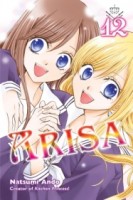
Arisa, Volume 12Arisa, Volume 12 by Natsumi Ando. Since its beginning Arisa has gone through so many disconcerting twists and turns, how is it possible that the twins look so utterly happy on the cover of the final volume? For the most part, I was satisfied with the ending of Arisa. Things aren’t resolved as happily as the cover might imply, which I find appropriate considering the darker aspects of the story. And I wouldn’t want everything to be tied up neatly. Once again though, some of the plot twists are a little ridiculous and over-the-top. I’m all for heightened drama, but I also like it to at least make some logical sense. Admittedly, Arisa can be a bit of a mess. Even so, I really enjoyed reading the series. Also included in this volume is a rather silly side story that takes place before the events of the main series. In this case it’s Arisa posing as her sister instead of the other way around. The results are amusing though not particularly believable. Granted, at this point I’m not expecting Arisa to be particularly believable anyway.

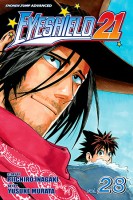
Eyeshield 21, Volume 28Eyeshield 21, Volumes 28-31 written by Riichiro Inagaki and illustrated by Yusuke Murata. I’ve discovered that, for some reason, I really like sports manga, even when that sport is something that I’m not particularly interested in in real life. For example, American football. Yet here I am thoroughly enjoying Eyeshield 21, completely caught up in the Deimon Devil Bats’ fight to reach the Christmas Bowl. And a fight it is. These volumes focus on the game between the Devil Bats and the Hakushu Dinosaurs with an emphasis placed on football as a combat sport. (I’ve actually never really thought of football that way before, so that was an interesting take on the sport for me.) The Dinosaurs have a habit of intentionally sending their opponents to the hospital, so it’s a fairly rough game. The face-off between the two teams also shows just how far Sena has come as a player since the beginning of the series. Once a weakling pushover, he’s now become much more confident in his abilities and in himself. I’m very excited to read more of Eyeshield 21.

Hetalia: Axis Powers, Volume 4Hetalia: Axis Powers, Volumes 4-5 by Hidekaz Himaruya. I know just as many people who absolutely hate the Hetalia franchise as I do people who absolutely love it. I wouldn’t necessarily call myself a rabid fan, but it is a series I follow. I do, however, generally prefer the anime adaptation over the original manga. For some reason, even though the anime and the manga both make the same jokes, I find the anime to be funnier. There are times that I just can’t seem to figure out what the punchline is supposed to be in the manga. The manga still can make me laugh, though, and I even occasionally learn a bit of history in the process, which I appreciate. The number of countries involved in Hetalia continues to grow with these volumes, including more female personifications which is nice to see. The Netherlands in particular seems to get a fair amount of page time this time, too. Hetalia does rely heavily on stereotypes for its humor, but I don’t get the feeling that they’re being used maliciously or to be deliberately offensive.

White BrandWhite Brand by Youka Nitta. Although I didn’t realize it until reading the afterword, apparently White Brand was Nitta’s first collection of boys’ love short stories. I’ve now read several of Nitta’s manga, but it seems that they tend to be fairly hit-or-miss for me. Despite Embracing Love actually being one of my favorite yaoi series, none of Nitta’s other works have really grabbed me. That hasn’t especially changed with White Brand, though I did like it more than The Prime Minister’s Secret Diplomacy. White Brand collects five short boys’ love manga. I’m not sure if it was an intentional or not, but a recurring theme throughout most of the stories is opposites. “White Brand” is about cousins with different color skin tones. “Teal End” is about two men from different countries. “Exhibition Painting” features men from very different classes and walks of life. “One Size Fits All” is somewhat frivolous story about a tall model and a much shorter man. “Hasta la Vista, Baby” is the only story that this play on opposites isn’t immediately obvious.

MushishiMushishi: Sun-Eating Shade directed by Hiroshi Nagahama. I won’t lie–I love both the Mushishi manga and the anime. I was very excited when the special episode was announced and thrilled when Crunchyroll picked it up so that I could actually watch it. Although about twice as long as the individual episodes of the anime series, Sun-Eating Shade matches the tone, atmosphere, and ambiance perfectly. I was very happy to see that the same animation style was kept for the special episode. The backgrounds are still gorgeous, the music is still haunting, the pacing is still relaxed and unhurried. Mushishi has always been a rather episodic series, but I liked how Sun-Eating Shade made references to and loosely tied together several stories adapted in the first season of the anime. If someone didn’t enjoy the original anime series, there is nothing in Sun-Eating Shade that will change their mind. But established Mushishi fans (like me) probably won’t be disappointed with the special episode. I’m looking forward to the second season of Mushishi a great deal.

Filed Under: FEATURES, My Week in Manga Tagged With: anime, arisa, Eyeshield 21, Hetalia, Hidekaz Himaruya, manga, mushishi, Natsumi Ando, Riichiro Inagaki, Youka Nitta, Yusuke Murata

Pick of the Week: Manhwa & More

January 20, 2014 by Michelle Smith, Ash Brown, Sean Gaffney and MJ 1 Comment

potw-1-19MICHELLE: Typically when a series I read is ending, I devote my pick of the week to its final volume, but not even that can compel me to rank Arisa above Goong: The Royal Palace this week. I am just so very grateful that Yen Press has resumed publishing this series that I will avail myself of every opportunity to encourage folks to check it out!
ASH: Oh, this is a tough week for me, there’s so much that I’m interested in! I’m very excited to read the next omnibus of Vinland Saga, I’m always glad to see more Ooku, and I’m curious to see how No Matter How You Look at It, It’s You Guys’ Fault I’m Not Popular! develops. But in the end, I think I’ll have to go with the most recent volume of one of the first manga that I ever read, Blade of the Immortal.

SEAN: As one might expect, my pick of the week is Book Girl And The Scribe Who Faced God, Part 2. The whole series has been terrific, even if the lead male has been intensely frustrating, and the sheer love of books and reading that drips through every page is worth its weight in gold. I hope the series does well enough that we can get a couple of the short story and side story collections, but even if we don’t, it’s been a terrific run of light novels.

MJ: Oh, what a choice! Being faced with any new volume of a Fumi Yoshinaga manga and not choosing it is a bit of a PotW nightmare for me, but if I’m being really honest, the truth is that I’m with Michelle all the way this week. There are few soapy things I love with the kind of fervor I feel for Goong, and anticipating a new volume is almost too much to handle. I, too, am grateful that Yen Press has continued this series–the last remnant of its once-generous catalogue of Ice Kunion manhwa. I simply can’t wait to dig in.

What looks good to you this week?

Filed Under: PICK OF THE WEEK

Discovering Manga: Podcasts, Part 3

January 17, 2014 by Ash Brown

Manga Dome PodcastOver the last few years, I’ve made an effort to track down podcasts that feature manga. I haven’t found that many that focus on manga exclusively, but there are anime and comics podcasts that address manga at least on occasion. A few months ago I posted Discovering Manga: Podcasts Redux which was a quick update and overview of podcasts that I had discovered and written about in the past. The post also included a list of podcasts that I was aware of but hadn’t written about yet. And so, as promised, here is a quick look at a few of the podcasts from that list, all of which happen to have started in 2013.

The first episode of the Manga Dome Podcast was released in April 2013. The podcast generally updates weekly around Sunday and is the work of Lori Henderson of Manga Xanadu, a manga blog that I’ve been following for a few years now. The blog has written posts as well, but nowadays the focus seems to be on the podcast. Generally, Manga Dome is a one-person show although recently the podcast had its first guest. Each episode is around ten minutes or so in length and features news, reviews, and other commentary. As might be implied by its name, the focus of Manga Dome is on manga. Lori knows her own taste in manga quite well but is still willing to try manga that might be out of her comfort zone. She doesn’t tend to enjoy manga with heavy ecchi elements, nor is she a particular fan of horror and gore. Shoujo, mysteries, and fantasy are more to her liking. What I probably appreciate most about Manga Dome is Lori’s emphasis on digital manga. It’s nice to be able to get a quick rundown on the digital landscape as well as other manga news.

Another podcast devoted to manga is the Weekly Shonen Jump Podcast which started in May 2013. This podcast is put together by a crew of manga editors and others who work for Viz Media. It provides an insider’s look into Viz’s digital Weekly Shonen Jump and includes a recap of the most recent issue. Released on Mondays, each episode is around an hour in length and generally follows the same format, starting out with introductions (which is handy as different people participate each week), followed by news, the Weekly Shonen Jump review, and ending with questions from listeners (gathered from the show comments, Twitter, Facebook, and surveys.) Although the focus of the Weekly Shonen Jump podcast is on Weekly Shonen Jump, it’s also about manga in general. I particularly like listening to the Weeekly Shonen Jump podcast to learn more about the publishing side of the manga industry, but everyone participating are fans as well. Since there is a group involved the podcast’s style tends to be somewhat conversational, which I enjoy.

As part of August 2013’s 801 Manga Moveable Feast, Otaku Champloo’s Khursten Santos invited two of her fellow fujoshi to talk with her about boys’ love manga. It went over very well and she had so much fun that the Fujojocast was born. Fujojocast doesn’t have a set schedule and there have only been three episodes so far, all over an hour in length. Despite some sound and microphone issues, I’ve enjoyed them all. Fujojocast features fans, translators, and academics from all over the world who share an unabashed love for boys’ love. I appreciate the women’s enthusiasm and intelligent conversation immensely. As the host, Khursten sets the episodes’ themes and leads and organizes the discussions. Fujojocast isn’t always about manga specifically, and it’s not always strictly about boys’ love, either. Other topics discussed include anime (the second episode is all about Free!: Iwatobi Swim Club, for example), conventions, merchandise, shipping, and general fujoshi fandom. I’m definitely looking forward to future episodes, whenever they might come out.

Filed Under: FEATURES Tagged With: manga

Manga the Week of 1/22

January 16, 2014 by Sean Gaffney, Ash Brown, Michelle Smith, Anna N and MJ 1 Comment

SEAN: Here is a list of what everyone except me will be getting next week in manga. I will not be getting any of this because Diamond Comics never met a street date they didn’t hate. And yes, I am incredibly bitter.

Dark Horse, which is the exception to my Diamond whining, has Blade of the Immortal 28 coming out. We’re getting near the end of this series, I believe, though I’m not sure how near.

ASH: We are indeed getting near the end. Assuming Dark Horse continues as it has been recently, there should be three more volumes after this one.

arisa12SEAN: Kodansha gives us the 12th and final volume of Arisa, which was a good attempt at combining shoujo with a mystery thriller-type story. Also, twins!

MICHELLE: Arisa gets a little ridiculous as it progresses, but I still plan to read the ending!

ASH: The series does get a little ridiculous, but I’m really curious to see how Natsumi Ando wraps everything up.

SEAN: Kodansha also has the 2nd hardcover for Vinland Saga, which hopefully will be a bit easier to order from Amazon than the first was. It has Vikings, and bloodshed.

ANNA: I love vikings and bloodshed! Really looking forward to this!

ASH: As am I! I really enjoyed the first omnibus.

SEAN: Seven Seas gives us the 5th Haganai: I Don’t Have Many Friends, one of the winners from the recent otaku-friendly licenses, mostly as it tends to go light on the obvious fanservice and heavy on the friendships and comedy.

There’s also Love In Hell 2. I was somewhat ambivalent about the first volume, but we’ll see if this can improve as it goes along, as many series I am ambivalent about do.

Vertical has the 2nd volume of From the New World, its dark science-fiction manga with fanservice. It’s done pretty well for them, so fans should be pleased to see more.

ASH: I loved the dark science-fiction aspects of From the New World. I was less enamored with its gratuitous fanservice.

SEAN: Viz has Vol. 9 of Ooku, which has slowed to the Japanese release schedule, meaning it comes out once every blue moon. On the bright side, this makes every new volume a bigger deal.

MICHELLE: Yay, Ooku. This inspired me to check and see when Yoshinaga’s What Did You Eat Yesterday? comes out. The answer is March 25!

ANNA: I’m behind on Ooku, but looking forward to getting caught up one day. Also looking forward to What Did You Eat Yesterday?!

ASH: More Fumi Yoshinaga manga in English is always a good thing in my book!

MJ: This is one my few highly-anticipated releases this week. I’m such a fan of this series. And I, too, am anxious to see What Did You Eat Yesterday?!

SEAN: Yen has a huge giant pile of stuff, made even higher by a few omnibuses. First we have the 16th volume of Black Butler, which must be looking at Attack on Titan and thinking “You know, I remember when I used to own 5 of the 10 places on the NYT bestseller list. Kids these days…”

MICHELLE: The recent arc, in which Ciel goes undercover at a public school and must curry favor with prefects and such, is actually rather fun.

bookgirl8SEAN: The final volume (of the main series; future short story collections are possible) of Book Girl is coming out, with Book Girl And The Scribe Who Faced God, Part Two. Will Konoha finally get it together? Let’s find out.

ASH: I’m behind with Book Girl, but I like the volumes that I’ve read.

SEAN: Durarara!! is another series caught up to Japan, hence the 8-month wait before we got this 3rd volume in the Saika arc. I expect a lot of red eyes and possessive swords.

MICHELLE: I didn’t expect to like Durarara!!, but I do!

SEAN: There is no Pandora Hearts this month, to the collective sadness of the MB team. However, we do get the 14th volume of Goong, that should make them happy.

MICHELLE: Very happy indeed! I’m so grateful that they started releasing this again!

ANNA: Hooray for Goong! . Is Amazon still listing the kindle volumes with the single volume numbering next to the print omnibus versions? That being out of sync is really confusing.

MJ: Yes, yes, YES!! I love this series so.

SEAN: Higurashi: When They Cry is nearly complete (barring any side-story licenses) with the 3rd Festival Accompanying Arc omnibus, as the plot to defeat Takano switches into high gear, and everyone goes from ‘horror manga’ mode to ‘shonen ACTION manga!’ mode.

Inu x Boku SS, like Haganai, proved to be far more interesting than I had expected from what looked like ‘moe yokai’. I am looking forward to the 2nd volume.

souleater18
WataMote Volume 2 (OK, it’s technically No Matter How You Look At It, It’s You Guys’ Fault I’m Not Popular! Volume 2) will continue to test the resolve of its readers who war between finding its heroine funny and finding her desperately horrifying.

ASH: The first volume was simultaneously one of the funniest and most depressing manga that I’ve read. I’ll definitely be picking up the second volume.

SEAN: Omamori Himari has hit its 11th volume, and I must admit I still don’t actually know what the hell it’s about. One day I will remedy this.

Soul Eater is at Volume 18, and will hopefully continue to pay off the excellent genderbending setup that the 17th volume left off with.

Triage X reaches Vol. 5, and yet still has enough fanservice to fill 50 more volumes without blinking an eye.

Lastly, Umineko: When They Cry returns with Banquet of the Golden Witch, which also sees the artist from the first arc return. (If you like her, you’ll be happy to hear she’ll also be back to wrap up the series when we get to Arc 8 in 2018 or so.) This arc focuses more heavily on the adults, particularly Eva, the sharp-tongued and bitter woman who graces the front cover.

Assuming you don’t order from Diamond Comics, what are you getting this week?

Filed Under: FEATURES, manga the week of

S.S. Astro: Asashio Sogo Teachers’ Room, Volume 1

January 15, 2014 by Ash Brown

S.S. Astro, Volume 1Creator: Negi Banno
U.S. publisher: Yen Press
ISBN: 9780759528987
Released: August 2008
Original release: 2007

S.S. Astro: Asashio Sogo Teachers’ Room is a yonkoma, or four-panel, manga created by Negi Banno. The first volume of S.S. Astro was originally published in Japan in 2007. Yen Press released the English translation of the manga in 2008, around the same time that it was licensing several other yonkoma manga series. As for S.S. Astro, only one volume was ever released. As far as I can tell, the series has been on hiatus since 2007 in Japan. Although I believe that Banno has created more S.S. Astro strips than those found in the first volume, there have not been enough to collect into a second volume. I have no idea if Banno plans to ever return to the S.S. Astro manga, but because so many years have passed it seems increasingly unlikely. S.S. Astro was actually one of the first yonkoma manga that I ever read. I originally came across it a few years back while searching for manga in English with yuri elements, which used to be a little more difficult to find than it is now.

Seven years after she graduated, Izumi Maki is back at her old high school. Except this time she’s one of the ones responsible for molding the young minds of Tokyo’s Asashio Integrated Public High School. It’s her first year as a teacher. Maki’s now in charge of both health and physical education classes, not to mention a home room with nearly forty students. (Now she just somehow needs to find a way to remember all of their names.) Maki’s not the only fresh blood at Asashio. Her good friend Yuko Nagumo, the new Japanese instructor, is also a first year teacher. The nursing teacher Setsuna Arai has a couple of years of experience on them and Maki’s backup teacher Kaname Karasuma, the instructor for the school’s English course, has even more. She also has a huge crush on Maki, not that Maki has noticed. Throw in all of the other teachers and their quirks, as well as Maki’s older brother, and high school is just as entertaining and complicated as it was the first time around.

Yonkoma manga tend to be fairly hit-or-miss for me, but in the case of S.S. Astro it’s mostly a hit. As with many four-panel manga, whether or not someone actually likes the series will depend on whether or not the reader likes the characters as they are. Although there are plenty of running jokes in S.S. Astro, the series tends to be episodic without much of an overarching plot and very little in the way of character development. Fortunately, I do like the characters. Quite a bit, actually. Maki’s a scatterbrain but earnest. Nagumo can put away an impressive amount of food and is closet fujoshi. Arai has a delightfully sadistic streak. Of the four main characters, Karasuma is the most responsible one, at least when she isn’t completely lovestruck. About halfway through the first volume of S.S. Astro the rest of the Asashio staff are more thoroughly introduced. Prior to that they were largely relegated to the background. I like the other teachers as well and wish more time could have been spent getting to know them better, too.

Quite a few manga licensed in English take place in a school setting. What helps to set S.S. Astro apart is that it focuses on the teachers rather than on the students. I find this to be a refreshing change of pace. One of the reasons that I’m particularly fond of S.S. Astro is that the manga focuses on the adults and their lives and relationships. Granted, the main cast are all relatively young and still in their twenties, but there are some older characters as well. Maki and the others can be immature at times, but in the end they are adults with adult responsibilities. Which is not to say there isn’t room for fun in S.S. Astro; being an adult has its perks, too. Video games, drinking parties, and a little bit of workplace romance (straight and otherwise) all have their place in the series. The artwork tends to be rather cute, too. In general, I find S.S. Astro to be fun and funny. S.S. Astro may not be a manga that I go out of my way to recommend to people, but it is one that I quite enjoy. I only wish that there was more of it.

Filed Under: REVIEWS Tagged With: manga, Negi Banno, S.S. Astro, Year of Yuri, yen press

Pick of the Week: Spreadsheets FTW

January 13, 2014 by Sean Gaffney, Michelle Smith, Anna N, Ash Brown and MJ 2 Comments

excel27SEAN: My Pick of the Week is obvious to anyone who reads this site at all. It is Excel Saga. The final Excel Saga. You should all BASK IN ITS GLORY! BOW, FOOLISH MORTALS! BOW TO THE FINAL VOLUME OF EXCEL SAGA!

MICHELLE: Huh. I somehow feel this strange compulsion to choose Excel Saga. Weird. Anyway, my pick of the week is Excel Saga. No, wait, I meant to say NightS. Quite frankly, I don’t really know what it’s about, but I liked Kou Yoneda’s No Touching At All so much that I’m willing to bet it’ll be good.

ANNA: Actually there isn’t much that really excites me this week, but I recently went to my public library and picked up a ton of manga! So my pick of the week is the manga selection at your local public library!

nightsASH: Public library manga are always a great choice! But I think I’m with Michelle this week. The manga I’m most looking forward to is NightS. I really enjoy Kou Yoneda’s work, so I’m happy to see more of it being released in English. Though, I guess there’s some manga called Excel Saga being released this week, too?

MJ: In reality, I’m most likely with Michelle and Ash. I’ll be picking up NightS for sure. But in the interest of extending Sean’s giddy mood for at least another day, I’ll say only this: Save a manga critic. Buy Excel Saga.

What looks good to you this week?

Filed Under: PICK OF THE WEEK

My Week in Manga: January 6-January 12, 2014

January 13, 2014 by Ash Brown

My News and Reviews

Two reviews were posted at Experiments in Manga last week! The honor of the first in-depth manga review of the month (and of the year, for that matter) goes to Tetsu Kariya and Akira Hanasaki’s Oishinbo, A la Carte: Fish, Sushi & Sashimi. I love food, I love manga, and so I love Oishinbo, too. I happen to really like fish and sushi as well, so I particularly enjoyed this volume. I also posted a review for Edogawa Rampo’s mystery adventure The Fiend with Twenty Faces which is the first novel in his series The Boy Detectives. I’ve read some of his stories and essays written for adults, but this was his first work for younger audiences that I read. It’s a lot of fun.

As for news and other interesting things found online: The English translation of Toh EnJoe’s Self-Reference Engine (one of my most notable release of 2013) has been nominated for a Philip K. Dick Award. The University of Michigan will be hosting an international conference on Natsume Sōseki from April 18 through April 20. (If you happen to be in Michigan around then, it’s be free and open to the public!) After months of no news, it looks like those who supported the Kickstarter for Osamu Tezuka’s The Crater may actually receive their rewards. And finally, Joe McCulloch takes a look at some of Suehiro Maruo’s most recent work over at The Comics Journal. Now if only more of his manga would be licensed in English!

Quick Takes

Basara, Volume 6Basara, Volumes 6-10 by Yumi Tamura. I love this series so much! It really is a shame that Basara is going out-of-print in English, but at least Viz has begun to release it digitally as well. The story is epic and engaging and the characters are complex and multi-layered. These particular volumes of Basara include the Okinawa story arc, which I especially enjoyed. It’s very interesting to see how Tamura is using events and politics from throughout Japan’s history to inform her post-apocalyptic world and culture. There are definite echos from the Warring States period, World War Two, and so on. Just as it was historically, in Basara Okinawa is a separate country from Japan that maintains its own traditions, relies heavily on trade, is largely at the mercy of foreign military influence, and is beset by natural disasters. Also, it’s the homeland of karate, which plays a part in some of the battles. (As a karateka myself, I couldn’t help but appreciate this.) I’m really looking forward to reading more of the series.

Entangled CircumstancesEntangled Circumstances by Kikuko Kikuya. I ended up enjoying Entangled Circumstances much more than I thought I would. I found the first chapter or so to actually be a little boring, but by the end of the volume Entangled Circumstances had managed to turn itself into a rather funny, and even a little sweet, boys’ love story. Actually, bonus chapters after the main story were the funniest and probably the favorite part of the manga for me because of that. Shibui and Himeko were once college classmates, but now they work at the same advertising agency. Himeko’s been in love with Shibui for a while now, but after a past awkward love confession, things have been strained between the two men. Often they seem to act like high schoolers rather than full-grown adults, so it’s difficult to take Entangled Circumstances completely seriously. It’s a lighthearted and fluffy sort of manga. The manga is nothing extraordinary, and I don’t know that I will necessarily need to read it again, but it was quite enjoyable.

ZooZoo by Andy MacDonald. I haven’t read the original novel Zoo, a science fiction thriller written by James Patterson and Michael Ledwidge, but MacDonald’s graphic novel adaptation somehow came into my possession, so I figured I’d give it a try. Since I haven’t read the original, I can’t definitively say how the graphic novel works as an adaptation, but I get the impression that MacDonald has been very faithful to the source material. The Zoo graphic novel can be somewhat text-heavy and some of the plot lines are a little compressed (though not exactly rushed) but I was never confused as to what was going on. Even so, I may have rolled my eyes a bit at the plot’s development and some of the rather predictable “twists.” Unfortunately, Zoo just doesn’t have that original or great of a story to begin with and I had a difficult time suspending my incredulity. The ending in particular was rather disappointing. Zoo starts out as a fairly action-packed, and bloody, doomsday scenario, but its heavy-handed moral can be a bit much.

MeganebuMeganebu! directed by Soubi Yamamoto. I already knew that I enjoyed Yamamoto’s visual style from her previous work and so I wasn’t disappointed by Meganebu!‘s brightly colored and slightly eccentric animation. Even so, it took a few episodes for the series to really grow on me. There’s not really much of a plot to Meganebu!. There are the members of the Glasses Club and their continuing efforts to create a pair of glasses with X-Ray vision (with some very unexpected and explosive results) but mostly the series just follows their daily lives and the trouble they all get into. Once I got over the fact that Meganebu! is fairly pointless, I could sit back and enjoy its peculiar sense of fun. As a glasses wearer myself, I could particularly appreciate all of the humor surrounding eyeglasses. To the members of the Glasses Club, glasses are more than just a fashion accessory. Neither are they simply used to correct vision. Glasses have the power to change the world. Meganebu! is an absurd anime, but I’ll admit to enjoying it.

Filed Under: FEATURES, My Week in Manga Tagged With: Andy MacDonald, anime, basara, comics, Kikuko Kikuya, manga, Meganebu, Yumi Tamura

The Fiend with Twenty Faces

January 10, 2014 by Ash Brown

The Fiend with Twenty FacesAuthor: Edogawa Rampo
Illustrator: Tim Smith 3

Translator: Dan Luffey
U.S. publisher: Kurodahan Press
ISBN: 9784902075250
Released: March 2012
Original release: 1936

Edogawa Rampo, the pen name of Tarō Hirai, was one of Japan’s preeminent authors of the erotic grotesque nonsense movement. However, he was also well-known for his detective and mystery stories. Later in his career he even wrote a series for children called The Boy Detectives. The first and possibly best-known novel in this series was The Fiend with Twenty Faces, originally serialized in the boys adventure magazine Shōnen Club in 1936. The English translation of The Fiend with Twenty Faces by Dan Luffey was published by Kurodahan Press in 2012 with illustrations by Tim Smith 3. Although Rampo was a prolific and extremely influential author in Japan, relatively few of his works have been translated into English. So far, The Fiend with Twenty Faces is the only example of Rampo’s stories for a young audience to have been made available. As a fan of Rampo’s ero guro works, I was curious to read something a little different of his.

Terrorizing the wealthy of 1930s Tokyo is a criminal known only as Twenty Faces, a master of disguise who can change his appearance with such ease that no one has been able to uncover his true identity. Using his skills of disguise and his tremendous intellect, he steals whatever suits his fancy–priceless jewels, family heirlooms, works of art–nothing is safe. He has even been known to resort to kidnapping. To make things even worse, Twenty Faces announces exactly what it is he intends to steal and when. But even armed with this knowledge, no one has yet been able to put an end to his crime spree. The only person who might be a match for Twenty Faces is the famous detective Akechi Kogorō. Unfortunately, he is currently overseas working on an important case. However, he has left behind Kobayashi Yoshio, his young assistant and protégé, to attend to his affairs. Kobayashi may be extremely clever, but Twenty Faces is cleverer still. With Akechi away, there is little hope that the criminal can be stopped, but maybe Kobayashi can at least make things a little more difficult for him.

Rampo very clearly draws from other great mystery writers in his creation of The Boy Detective series in general and in The Fiend with Twenty Faces specifically. Influences from Maurice Leblanc’s series featuring the infamous gentleman thief Arsène Lupin and Arthur Conan Doyle’s mysteries with the master detective Sherlock Holmes can particularly be seen in The Fiend with Twenty Faces. Twenty Faces shares similarities with Lupin and Akechi exhibits many of the same skills that Holmes possesses. Having previously read many of Rampo’s short stories (at least those available in English), I was already familiar with Akechi from his mysteries aimed at adult audiences. I’m actually rather fond of Akechi and so was quite pleased when he made his appearance in The Fiend with Twenty Faces, even if it did take nearly half of the novel before he finally returns from overseas.

The Fiend with Twenty Faces was highly entertaining and a tremendous amount of fun. Despite being a mystery, the novel is a fairly straightforward adventure story written for a younger audience. As someone who is fairly well-read, I was able to anticipate most of the twists and turns in the plot of The Fiend with Twenty Faces. If something seemed to be too convenient or unlikely to be a coincidence, it’s most likely because it was. However, I still enjoyed the story a great deal. The characters are also fairly engaging. Twenty Faces himself is a bit of an arrogant bastard and his rivalry with Akechi is marvelous to watch unfold. I could easily imagine reading the novel aloud; Rampo’s writing addresses the reader directly and would be well-suited for performance with very little modification needed. I’m not sure if any more of the novels in The Boy Detectives series will be translated, but I’m glad to have had the opportunity to discover firsthand one of the other reasons why Rampo’s influence has been so enduring in Japan.

Filed Under: REVIEWS Tagged With: Boy Detectives, Edogawa Rampo, Kurodahan Press, Novels

Manga the Week of 1/15

January 9, 2014 by Sean Gaffney, MJ, Ash Brown, Michelle Smith and Anna N 2 Comments

excel27

SEAN: This is it, folks! The 27th and final volume of Excel Saga ships next week! There will be laughs! Romance! Resolution! … Perhaps less resolution than we would like, but hey! Everyone in the entire world will be buying this volume!

MJ: Or we will at least pretend to, in order to keep you smiling.

SEAN: So, what are you reading this week?

…

Oh right, there are other releases as well, which are being nice enough to share their release date with the majesty that is the final volume of Excel Saga, so I suppose I should discuss them.

Kodansha has the 6th volume of Missions of Love, which keeps riding the edge between trashy good and trashy bad, but as long as it keeps riding that edge, I’ll keep reading.

ASH: As will I!

MICHELLE: I read the first couple of volumes last year and just never went back to it.

SEAN: There’s also the 3rd Sherlock Bones volume, combining mysteries and cute dogs as only Japan can.

And for those who enjoyed Tokyo Mew Mew and wish it had a followup, well, here’s Tokyo Mew Mew A La Mode in one omnibus. It is not controversial at all, and is beloved by all TMM fans. Really. Trust me.

SubLime has the 6th volume of His Favorite, whose cover is slightly less silly looking than previous ones, but which hopefully is still just as much fun for BL fans. I’ve heard good things about this series.

MJ: I’ll be looking forward to see how well this series wears, six volumes in.

SEAN: A brief reminder that NONE of these series are Excel Saga. Ask your local bookseller for EXCEL SAGA 27 by name. Accept no imitations!

nights

SubLime also gives us a short story collection with the oddly capitalized title NightS. The S stands for… who knows. Seme? Sadist? Saucy?

ASH: I have no idea, but I do know I love Kou Yoneda’s work. I’ve been looking forward to this release.

MICHELLE: Me, too. I really liked No Touching At All.

MJ: Apparently, it stands for $. I’ll be picking it up, too.

SEAN: Vertical has the 3rd volume of Medieval manga Wolfsmund, which I have no doubt will continue to be depressing as hell, but I know some others on the Bookshelf enjoy it.

ASH: Yeah, that would be me. The first two volumes were extremely dark and intense to say the least.

SEAN: Viz has the 8th volume of 07-Ghost, still packed with ghosts, gods, and bishops, and still featuring heavily in my “I need to catch up with that” list.

MICHELLE: And mine, as well.

MJ: And mine!

ANNA: Mine too. I need to schedule a catch up with 07-Ghost day, because I did really enjoy the first few volumes, and the subsequent volumes keep piling up.

SEAN: And there’s Vol. 49 of Case Closed, which began in Japan in 1994, and thus manages to be the only series on this list older than Excel Saga. It is also 22+ volumes longer than Excel Saga. And it also has some very well written mystery and suspense… which, by the way, Excel Saga also had, to the surprise of those expecting what the anime gave them.

So, to sum up, Excel Saga. Final Volume. Get It. And some other stuff. What are you getting next week (hint: Excel Saga)?

MICHELLE: *snerk*

MJ: Yep. Totally Excel Saga. Yep.

ANNA: What is this about? I’m assuming it is about office workers and spreadsheets.

SEAN: You will all be first against the wall when Il Palazzo conquers the world. Hrmph.

Filed Under: FEATURES, manga the week of

Oishinbo, A la Carte: Fish, Sushi & Sashimi

January 8, 2014 by Ash Brown

Oishinbo, A la Carte: Fish, Sushi & SashimiAuthor: Tetsu Kariya
Illustrator: Akira Hanasaki

U.S. publisher: Viz Media
ISBN: 9781421521428
Released: July 2009
Original release: 2005
Awards: Shogakukan Manga Award

With over one hundred volumes, it is very unlikely that the award-winning food manga Oishinbo will ever be licensed in its entirety in English, especially considering that the series is still ongoing at this point. However, seven volumes of Oishinbo, A la Carte have been released by Viz Media under its Signature imprint. These volumes are thematic collections which select stories from throughout the series proper. Fish, Sushi & Sashimi was the fourth Oishinbo, A la Carte collection to be published by Viz and was released in 2009. However, in Japan Fish, Sushi & Sashimi was actually the fifth volume in the series and was published in 2005. As a lover of both food and manga, it probably shouldn’t be too surprising that I enjoy Oishinbo immensely. And I’m not the only one. The series, written by Tetsu Kariya and illustrated by Akira Hanasaki, has been in serialization since 1983 and in 1987 the creators received a Shogakukan Manga Award for their work.

Because Oishinbo, A la Carte is a selection of stories from Oishinbo, the overarching story of the original series is obscured. Instead of the ongoing plot, the focus of Oishinbo, A la Carte is very much on the food itself. Fish, Sushi & Sashimi collects eight different stories centered around fish. Sushi rolls are probably one of the first things that come to many people’s minds when considering Japanese fish dishes, but not a single one will be found in Fish, Sushi & Sashimi. Generally, the fare tends to be simpler and fish the primary ingredient. The fish specifically featured in Fish, Sushi & Sashimi include white trevally, chub mackerel, sweetfish, tiger blowfish, freshwater goby, flounder, salmon, and shinko, many of which are considered to be some of the best and most desirable or delectable fish in Japan. There is also a wide variety of preparations shown, everything from raw sashimi to fried tempura.

When dealing with fish as a source of food, freshness is key. This is true for most seafood, too, and is something that most people probably know. However, Fish, Sushi & Sashimi shows that there is much more involved in the freshness of fish than just how long it has been since it has been caught. Fish are very sensitive to changes in the environment in which they live. Simply put, quality fish come from quality waters. The healthier and less polluted those waters, the better the fish. Additionally, the same fish can taste significantly different due to seasonal changes, where it is caught (and how far it has traveled afterwards), or when in its life-cycle it is eaten. As is often the case in the Oishinbo, A la Carte stories that I have so far read, Fish, Sushi & Sashimi emphasizes the importance of locally sourced and sustainable foods, which is particularly true of fish.

One of the highlights of Oishinbo, A la Carte is Hanasaki’s artwork. The people tend to be stylized but the food is always realistically drawn. The catching and cleaning of the fish, the steps in the various dishes’ preparations, and the skilled knife-work employed are all important to Fish, Sushi & Sashimi. Because Fish, Sushi & Sashimi focuses on aquatic life both in and out of its natural environments, Hanasaki also has the opportunity to beautifully illustrate Japan’s oceans, rivers, and other waterways. Another thing that particularly struck me about this volume of Oishinbo, A la Carte was how many young people were included in the stories. Family drama has always been a part of Oishinbo with the intense father-son rivalry between Kaibara Yūzan and Yamaoka Shirō. It’s extremely entertaining to watch them battle it out over and with food, but it’s also nice to see some more wholesome family relationships in the series, too.

Filed Under: REVIEWS Tagged With: Akira Hanasaki, manga, Oishinbo, Shogakukan Manga Award, Tetsu Kariya, viz media, VIZ Signature

  • « Go to Previous Page
  • Page 1
  • Interim pages omitted …
  • Page 127
  • Page 128
  • Page 129
  • Page 130
  • Page 131
  • Interim pages omitted …
  • Page 140
  • Go to Next Page »
 | Log in
Copyright © 2010 Manga Bookshelf | Powered by WordPress & the Genesis Framework