• Skip to primary navigation
  • Skip to main content
  • Skip to primary sidebar
  • Home
  • About Us
    • Privacy Policy
    • Comment Policy
    • Disclosures & Disclaimers
  • Resources
    • Links, Essays & Articles
    • Fandomology!
    • CLAMP Directory
    • BlogRoll
  • Features & Columns
    • 3 Things Thursday
    • Adventures in the Key of Shoujo
    • Bit & Blips (game reviews)
    • BL BOOKRACK
    • Bookshelf Briefs
    • Bringing the Drama
    • Comic Conversion
    • Fanservice Friday
    • Going Digital
    • It Came From the Sinosphere
    • License This!
    • Magazine no Mori
    • My Week in Manga
    • OFF THE SHELF
    • Not By Manga Alone
    • PICK OF THE WEEK
    • Subtitles & Sensibility
    • Weekly Shonen Jump Recaps
  • Manga Moveable Feast
    • MMF Full Archive
    • Yun Kouga
    • CLAMP
    • Shojo Beat
    • Osamu Tezuka
    • Sailor Moon
    • Fruits Basket
    • Takehiko Inoue
    • Wild Adapter
    • One Piece
    • After School Nightmare
    • Karakuri Odette
    • Paradise Kiss
    • The Color Trilogy
    • To Terra…
    • Sexy Voice & Robo
  • Browse by Author
    • Sean Gaffney
    • Anna Neatrour
    • Michelle Smith
    • Katherine Dacey
    • MJ
    • Brigid Alverson
    • Travis Anderson
    • Phillip Anthony
    • Derek Bown
    • Jaci Dahlvang
    • Angela Eastman
    • Erica Friedman
    • Sara K.
    • Megan Purdy
    • Emily Snodgrass
    • Nancy Thistlethwaite
    • Eva Volin
    • David Welsh
  • MB Blogs
    • A Case Suitable For Treatment
    • Experiments in Manga
    • MangaBlog
    • The Manga Critic
    • Manga Report
    • Soliloquy in Blue
    • Manga Curmudgeon (archive)

Manga Bookshelf

Discussion, Resources, Roundtables, & Reviews

Ash Brown

Pick of the Week: A Broad Spectrum

July 27, 2015 by Michelle Smith, Ash Brown, Sean Gaffney and Anna N 2 Comments

silentvoice2MICHELLE: If you missed out on the single volumes of Chi’s Sweet Home as they came out, now’s your chance to get caught up with a new omnibus collecting the first three volumes. Honestly, I think I will probably hang on to my originals and this larger-trim edition, as this has been a very popular series in my personal lending library. If you like kitties, or know a kitty-loving young person, you should check it out!

ASH: Chi is indeed a tough kitty to beat, but my pick this week is the second volume of A Silent Voice. Admittedly, the first volume was a bit of a tough read due to the series’ subject matter. The manga is heartbreaking in many ways, but it is an incredibly well-crafted story.

SEAN: I agree with the pick of A Silent Voice. This manga really has something to say, and I want to hear what it is, no matter how uncomfortable it (deliberately) makes me.

ANNA: I will have to go with the Chi’s Sweet Home omnibus, out of all the manga about to be released that sounds the most appealing to me.

What looks good to you this week?

Filed Under: PICK OF THE WEEK

My Week in Manga: July 20-July 26, 2015

July 27, 2015 by Ash Brown

My News and Reviews

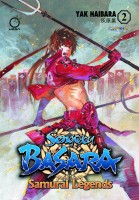
I posted one in-depth manga review last week, Sengoku Basara: Samurai Legends, Omnibus 2 by Yak Haibara. It’s the final omnibus in the series, collecting the third and fourth volume of Haibara’s Sengoku Basara 2 manga adaptation. I get a huge kick out of Sengoku Basara. It’s incredibly over-the-top but actually does manage to incorporate some legitimate history. Samurai Legends stands fairly well on its own, too, so no previous knowledge of the franchise is necessary. The other post last week (other than the usual My Week in Manga feature, of course) was something a little different: I was tagged in a game of manga tag, so I had an excuse to talk a bit about my collection. It was fun, so I hope others found it interesting.

Otakon was last week and there were some pretty great licenses announced. Viz Media picked up Inio Asano’s Goodnight Pun Pun as well as Takeshi Obata’s artbook Blanc et Noir and Keiko Ishihara’s The Heiress and the Chauffeur. Vertical will be releasing Riichi Ueshiba’s Mysterious Girlfriend X, Ryo Hanada’s Devil’s Line, and Kaori Ozaki’s The Gods Lie. (Ozaki is also the creator of Immortal Rain, which I love, so I’m especially excited for this one.) Kodansha Comics has plans to publish Yui Sakum’s Complex Age, Nao Emoto’s Forget Me Not, and most notably Leiji Matsumoto’s classic manga Queen Emeraldas! Also of note, Sekai Project, which primarily releases visual novels, has a new manga publishing initiative, starting with Satoru Sao, Takumi Yanai, and Daisuke Izuka’s GATE.

Elswhere online, Viz posted an interview with Canadian comics creator Faith Erin Hicks talking about many things, including her love of manga. (Also, her comics are great and well-worth checking out.) Organization Anti-Social Geniuses interviewed Kurt Hassler from Yen Press’ at Anime Expo. (All those manga recently licensed for digital release? There is a possibility we’ll be seeing them in print!) Graham Kolbeins of MASSIVE posted an impassioned but thoughtful explanation of how online piracy negatively impacts creators of gay manga. Deb Aoki has posted the audio and transcript of the gay manga panel from TCAF earlier this year. (It’s was a great panel that I only touched upon briefly in my TCAF roundup, so I’m glad it’s now available for anyone to read/listen to!) Finally, I’d like to draw everyone’s attention to an excellent post by Christopher Butcher about “othering” in the comics industry: Shifts and Living History

Quick Takes

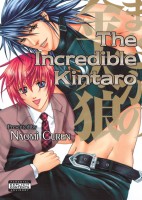
Incredible KintaroThe Incredible Kintaro by Naomi Guren. In Japanese folktales, Kintaro is a young boy with incredible strength who, among other things, runs around in the mountains with his trusty axe wearing nothing but a bib and wrestling bears. Those legends partly inspire The Inncredible Kinato, except that the youth is now a virile bishōnen. He does still spend a lot of time with very little clothing on and his junk hanging out, though. Currently, Kintaro is working as a janitor in order to protect his childhood love and friend Makoto. After his grandfather dies, Makoto is serving as the acting principal at the private high school where he is also a student, becoming a target of all the other men who would like to take control of the institute. And since the school’s motto is “Heart, Lust, Body,” that means it’s his virginity that’s at stake. The Incredible Kintaro is an intentionally ludicrous boys’ love manga. Makoto finds himself in all sorts of dubious situations, the teachers coming up with some rather creative scenarios to win his body if not his heart. The characters are shallow, so The Incredible Kintaro must rely on its bizarre premise and sense of humor to carry the story. Readers will need a high tolerance for the absurd to really enjoy the volume.

Johnny Wander, Volume 1Johnny Wander, Volume 1-3 written by Ananth Panagariya and illustrated by Yuko Ota. I was first introduced to the online comic Johnny Wander through several of the strips devoted to the cats in the character’s lives. They were hilarious and I was hooked. Johnny Wander isn’t always about cats, though. Actually, it really isn’t about anything. Johnny Wander is a sequence of short, one-page, autobiographically-inspired comics. Although there are recurring characters, scenarios, and even the occasional running joke, most of the individual comics stand completely on their own merits. They’re brief glimpses into somewhat nerdy, after-college, daily life and they’re very funny. The cast consists of family, friends, and roommates (and cats). The setting is made up of the various cities and apartments (some of which are kind of sketchy even if they’re fondly remembered) in which they’ve lived. It’s incredibly ordinary and wonderful at the same time. Johnny Wander is entertaining, delightful, and charming, made up of the types of stories and jokes that people who know each other well will reminisce about, and tell and retell over the years. I really do love this series, and it just recently began updating again!

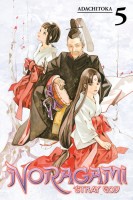
Noragami: Stray God, Volume 5Noragami: Stray God, Volume 5 by Adachitoka. Although it hasn’t completely disappeared, at times I miss the quirky humor that was fairly prevalent in the early volumes of Noragami. But I must say, the drama in recent installments has been increasingly intense and engaging. The fifth volume in particular is an especially excellent addition to the series, and it ends on one heck of a cliffhanger. Although not everything has yet been revealed, the fifth volume delves into the unfortunate history between Yato and Bishamonten, which turns out to be much more complicated than many realize. Importantly, with Bishamonten finding it difficult to control her numerous shinki, it seems as though the two of them are now facing a very similar situation. It didn’t end well the first time, which ignited their current feud and Bishamonten’s desire for vengeance, and it looks like they are now on the brink of another tragedy. Kugaha is manipulating the entire situation, successfully igniting a confrontation between Yato and Bishamonten in the hopes that she will die in the process. The intrigue in Noragami has reached new heights and the battles between gods has become even more perilous; I need to know what happens next.

Filed Under: FEATURES, My Week in Manga Tagged With: Adachitoka, Ananth Panagariya, Johnny Wander, manga, Naomi Guren, Noragami, Yuko Ota

Random Musings: Manga Tag

July 24, 2015 by Ash Brown

Earlier this month, Megan of The Manga Test Drive (which is one of my favorite manga review blogs and worth checking out if you haven’t already) gave a tour of her manga shelves and answered some questions about her collection as part of a game of manga tag. And wouldn’t you know it, I was tagged at the end! I thought it would be fun to participate, and it gives me a chance to talk a bit about my own manga collection, so here goes!

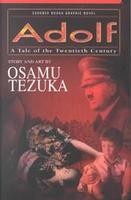
Adolf, Volume 1: A Tale of the Twentieth Century1. What was your first manga?
The first manga that I ever read was Osamu Tezuka’s Adolf as published by Viz way back in the day. I came across it while helping a friend locate materials for his thesis about the Jewish population in Japan during World War II. I’m fairly certain that the first manga I purchased for myself was Blade of the Immortal by Hiroaki Samura at the recommendation of my fantastic local comic book shop.

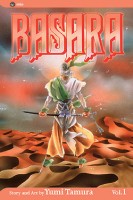
Basara, Volume 12. What is your most expensive manga?
Considering the amount of manga that I accumulate, I try very hard to keep my habit as inexpensive as possible. But sometimes it just can’t be helped and exceptions must be made. I discovered and fell in love with Basara after most of the series went out of print and ended up spending more than I really wanted to find a complete set. But I did get a couple of Basara artbooks out of the deal, too, which was cool.

Gunslinger Girl, Omnibus 13. What was your least expensive manga?
Relatively recently, my good friend Traci (who did a guest video review for me a couple of years ago) gifted me with her collection of Yu Aida’s Gunslinger Girl. She was moving out of the state and had to be very selective with the books she could take with her. As a result, I inherited a bunch of comics, most of which I still need to actually read. (I dread my next move; my collection is huge.)

Project X: Cup Noodle4. What is the most boring manga you own?
This was probably the question that I found the most difficult to answer. I’m going to guess that Project X: Cup Noodle by Tadashi Katoh might be the most boring manga that I own, but it doesn’t seem entirely fair to say that since I haven’t actually read it yet. However, I don’t expect that the manga will be terribly exciting, even though it may be interesting and at the very least educational. I could be wrong, though!

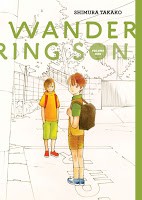
Wandering Son, Volume 15. What is your favorite manga series?
I have way too many favorites to narrow it down to one, so instead I’ll just highlight the series that has been the most personally meaningful—Takako Shimura’s Wandering Son. As someone who is all sorts of queer, the manga’s earnest and sensitive exploration of personal identity, including gender identity, made a huge impact on me; it’s not an exaggeration when I call Wandering Son life-changing.

Real, Volume 16. What is the most relatable manga series you own?
This took some thought, but in the end I’m going to go with Takehiko Inoue’s Real. It might seem like an odd choice for me seeing as I’m not really a basketball enthusiast and am currently fortunate enough not to need a wheelchair, but Inoue’s characterization in Real is phenomenal. He has created incredibly complex individuals with whom I can strongly identify with even though they’re unlike me in many ways.

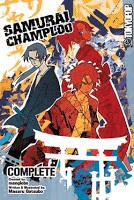
Samurai Champloo: The Complete Series7. What is one manga you own that is based off an anime?
It’s certainly not always the case, but many manga based on anime often leave something to be desired. I’ve still collected a few, though. Samurai Champloo was one of the first anime series I ever watched and it remains a favorite. Sadly, the Samurai Champloo manga by Masaru Gotsubo didn’t overly impress me. But, it has its moments, and I’m enough of a completist that I’ve held onto it.

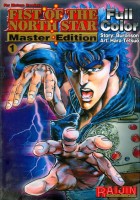
Fist of the North Star: Master Edition, Volume 18. What is your rarest manga?
I’m not certain it’s necessarily the rarest manga that I own, but let’s just say I hope I never need to purchase the colorized master edition of Buronson and Tetsuo Hara’s Fist of the North Star ever again. The sixth volume alone, even used, would cost several hundred dollars to replace. But I’ve actually got all sorts of interesting, uncommon, and unusual things kicking around.

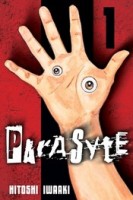
Parasyte, Volume 19. What is the most reprinted manga you own?
Well, assuming we’re talking about the different releases of a manga rather than the number of printings, that would be Hitoshi Iwaaki’s Parasyte. In English, the manga started out in Tokyopop’s MixxZine before being collected as individual volumes. Tokyopop eventually lost the license and Del Rey Manga picked it up. Kodansha Comics rescued the series after that. (I have the Del Rey version, though.)

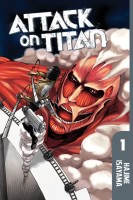
Attack on Titan, Volume 110. What is the most popular manga you own?
At the moment, that would probably be Hajime Isayama’s Attack on Titan along with its numerous spinoffs. The immense popularity of Attack on Titan fascinates me, so I like to keep up with the series. (In some ways, I’m almost more interested in the fandom than I am in the franchise itself.) Even though I do find parts of the manga to be extremely frustrating, other parts can be very engaging.

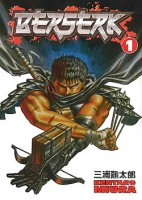
Berserk, Volume 111. What is the most damaged manga you own?
I try to take very good care of my collection and am largely successful, but thanks to my cat Lysander (affectionately and sometimes not-so-affectionately known as Stupid), I have a few volumes of Kentaro Miura’s Berserk that I need to get around to replacing. Lysander used a box of full of manga as a scratching post, so some of them look like they were mauled by a tiger. I’ve still not forgiven him for that.

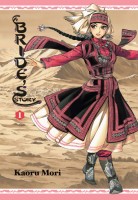
A Bride's Story, Volume 112. Which manga has the most amazing art?
I’m with Megan on this one. Kaoru Mori’s work in A Bride’s Story is absolutely stunning. It’s incredibly detailed, beautifully drawn, and thoroughly researched. There are a lot of mangaka whose artwork that I love and appreciate, but the illustrations in A Bride’s Story really do amaze me. In addition to the frequently breathtaking artwork, I also enjoy the series’ story, characters, and setting immensely.

The Four Immigrants Manga13. What is the oldest published manga that you own?
I’m pretty sure the oldest manga that I have in translation is The Four Immigrants Manga by Henry (Yoshitaka) Kiyama. The Japanese compilation was published in 1931. I’ve also collected the work by Masaichi Mukaide released in North America the 1970s, some of the earliest manga to be published in English. Granted, depending on the definition of “manga” being used, those may or may not count.

Prison School, Omnibus 114. What is the newest published manga you own?
Let’s see… what came out this week? I actually picked up the first omnibus of Akira Hiramoto’s Prison School. I’m intensely curious about this manga since it’s such an extreme shift in tone from Hiramoto’s earlier series, Me and the Devil Blues. I have a feeling Prison School will be a very divisive series. If for no other reason, it’s something that I want to read myself in order to have an informed opinion.

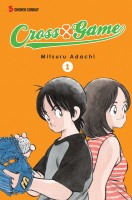
Cross Game, Omnibus 115. What are some of the most recent manga you have purchased?
Not counting all of the preorders that I’ve recently placed (and there have been many) the most recent manga that I purchased was a complete set of Cross Game by Mitsuru Adachi. I’ve actually been meaning to do this for a while now. (Sorry, Viz, for taking so long!) And as for my most recent out-of-print find, I was very happy to finally get my hands on Akimi Yoshida’s Banana Fish!

So there you have it! A very brief look at a very small selection of my manga collection. (Where is all the shoujo and josei?! The alt manga?! And everything else!?) Like Megan, I’m next going declare a free-for-all. If you’d like to answer some manga tag questions about your collection, either in the comments below or elsewhere, go for it! I’d love to keep talking about manga with you all. I’m also specifically going to tag my fellow bloggers manjiorin at Manga Connection and Lori Henderson at Manga Xanadu in case they’d like to participate, too. It’s been fun; hopefully you’ve found this diversion interesting!

Filed Under: FEATURES, Random Musings Tagged With: manga

Pick of the Week: Big week, small pick

July 23, 2015 by Sean Gaffney, Michelle Smith and Ash Brown Leave a Comment

Durarara-Novel-1SEAN: There’s a huge pile of stuff this week, most of it Yen. My pick goes to the debut of Durarara!! in light novel form. Narita specializes in huge casts of eccentrics and crazies and disparate plots slowly coming together in a chaotic climax. I prefer his work on Baccano, but that’s coming soon enough. In the meantime, enjoy seeing the origin of ‘Bacon Lettuce’ in all its glory.

MICHELLE: I admit experiencing Durarara!! in its original form has some appeal, but what I really am looking forward to most is the ninth volume of Kodansha’s My Little Monster. I really enjoy this series, and how it allows me to actually believe there’s a tiny sliver of a chance the two leads won’t have a happily-ever-after sort of ending. I don’t expect that, but it’s nice that it seems even a remote possibility.

ASH: Okay, I admit it, I’m intensely curious about Prison School if for no other reason than it’s an astoundingly different work than the creator’s previous manga released in English, Me and the Devil Blues (which I did like). I have a feeling that there won’t be much middle ground with this one and that a reader will either love or hate it.

What looks good to you this week?
Filed Under: PICK OF THE WEEK

Manga the Week of 7/29

July 23, 2015 by Sean Gaffney, Anna N, Michelle Smith, Ash Brown and MJ Leave a Comment

SEAN: It’s become almost musical, the way manga comes out. Huge week… quiet week. Huge week… quiet week. The occasional 5th week trips up the manga dancer with the brief shift into 5/4 time. How is our quick-quick-slow week?

Dark Horse is doing it again, folks. Here is the first omnibus volume of a seinen manga series called Oh My Goddess!, about a young man who calls the wrong number and gets a goddess as his girlfriend. Perhaps you’ve heard of it when it was released by Dark Horse before. And before that. And before that. And before that. This will have the first three volumes, for those who have been curious but never tried it before. All three of you.

Kodansha has a 49th volume of Fairy Tail, which I’m surprised isn’t getting omnibus volumes as well, frankly.

ANNA: Fairy Tail is not on my radar, but I am stunned it is up to 49 volumes. Wow.

SEAN: There’s also a 2nd volume of A Silent Voice. Volume 1 was excellent writing but very hard to actually read, being filled with realistically flawed and terrible kids (and teachers). Will the second volume give us some glimpses of light amongst the darkness?

ANNA: This sounded a bit too grim for my tastes, which is why I haven’t read the first volume yet.

MICHELLE: Yeah. I am glad something like that exists but I still am in the “I read manga ‘cos it’s fun” camp.

ASH: The first volume was incredibly well done and one of the best things that I’ve read this year, but yeah, not the happiest of stories.

MJ: I suspect I would like this.

chiomnibus1

SEAN: And a third volume of Yamada-kun and the Seven Witches. Will we actually get witches this time?

ASH: We shall see!

SEAN: Seven Seas has a fourth volume of Magical Girl Apocalypse, for those who thought Madoka Magica wasn’t violent or cynical enough.

Lastly, Vertical is giving readers who missed earlier Chi’s Sweet Home volumes a chance to catch up with an omnibus of the first 3 volumes. As they’ve only released this once before, I’ll give them a pass here.

ANNA: Actually, I have not read Chi’s Sweet Home before, and I know it is both very good and popular, so I might finally check out this series!

MICHELLE: You should!

ASH: You really should! Plus, the omnibus has a larger trim size and some additional content, too.

MJ: Yes, yes!!

SEAN: I can’t tell a waltz from a tango, but can you tell what you’re buying this week?

Filed Under: FEATURES, manga the week of

Sengoku Basara: Samurai Legends, Vol. 2

July 22, 2015 by Ash Brown

Sengoku Basara: Samurai Legends, Omnibus 2Creator: Yak Haibara
U.S. publisher: Udon Entertainment
ISBN: 9781926778594
Released: February 2013
Original release: 2008-2009

Yak Haibara’s four-volume manga series Sengoku Basara 2 is an adaptation of the video game known by the same name. The manga was released in English by Udon Entertainment in two omnibus volumes under the title Sengoku Basara: Samurai Legends. The second omnibus, collecting the third and fourth volumes of Haibara’s Sengoku Basara 2 released in Japan in 2008 and 2009 respectively, was published in 2013. The Sengoku Basara franchise had its beginnings in 2005 as a series of video games but it has since spawned multiple manga and anime series among other things. Samurai Legends was actually my introduction to Sengoku Basara as a whole and it stands fairly well as its own work. Prior exposure to Sengoku Basara isn’t really necessary to enjoy or understand Samurai Legends, although it might not hurt to have some basic knowledge of Japan’s Warring States period upon which it is very loosely based.

In the aftermath of the devastating defeat of the armies of both Kai Takeda and Kenshin Uesugi at Kawanaka Island, very little stands between the forces of Hideyoshi Toyotomi and Masamune Date to prevent them from clashing head on. While there are now fewer contenders vying for control over Japan, the battle for supremacy is still fierce. Toyotomi relies on his own power and strength as well as the skills of his master strategist Hanbei Takenaka, destroying anyone and anything in his path and using fear to rule. Date, too, has an excellent strategist in the talented Kojuro Katekura, but his rise to power has been significantly less destructive, at least when compared to that of Toyotomi. Knowing that they must contend with each other, the two warlords have set their sights on Odawara Castle, a fortress that if conquered will grant the victor an immense advantage in claiming Japan as his own.

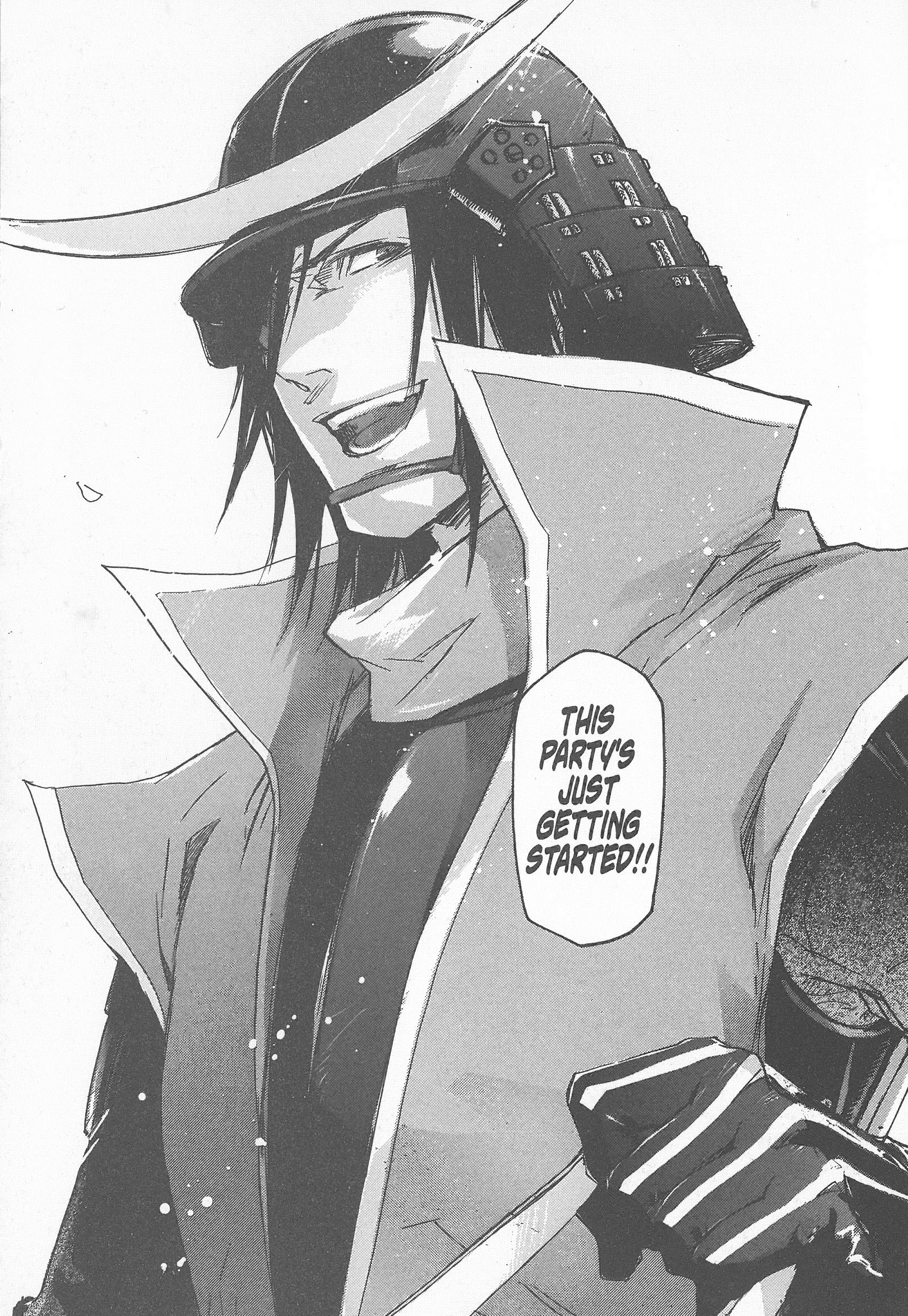
Sengoku Basara: Samurai Legends, Omnibus 2, page 209While Samurai Legends is inspired by actual historical figures and events from Japan’s sixteenth-century, the manga, like the rest of Sengoku Basara, makes no attempt at realism or authenticity. Quite the opposite in fact—the series is deliberately over-the-top and anachronistic. The dialogue and trash talk is very contemporary in its style, giving the characters tremendous attitudes with a modern bent. (“Dude, seriously? You wanna dance with me!?”) Additionally, Date’s army is basically portrayed as a bōsōzoku gang, complete with pompadours, although his forces do ride horses instead of motorcycles. And when it comes to actually battling things out, a frequent occurrence in Samurai Legends, the amount of damaged caused and incurred by the overpowered fighters is impressive to say the least, though hardly believable. But that’s part of what makes Sengoku Basara so great. It’s ridiculous and outrageous.

The first omnibus of Samurai Legend moved fairly quickly from one battle to the next. The second omnibus also as plenty of action, but the pacing doesn’t seem quite as frantic. Haibara takes more time to delve into the personal motivations of the primary players in the series’ conflict, revealing what drives them to conquer and unify Japan. While in the end the characters still aren’t particularly subtle or nuanced, this does provide them with more depth. I appreciate it when there is more complex meaning behind a fight than a simple lust for power; the second omnibus clarifies the underlying purpose of the war, making the battles even more thrilling. Samurai Legends is a bombastic series, and a least one major continuity error does slip in amid all of the excitement. However, I’m actually willing to forgive this simply because the manga is so incredibly entertaining otherwise. In the immortal words of Keij Maeda, “As long as you’re having fun, it’s all good.”

Filed Under: REVIEWS Tagged With: manga, Sengoku Basara, Udon Entertainment, Yak Haibara

My Week in Manga: July 13-July 19, 2015

July 20, 2015 by Ash Brown

My News and Reviews

Two in-depth reviews were posted at Experiments in Manga last week. The first took a look at Mushishi, Volume 4 by Yuki Urushibara. The review is part of my monthly horror manga review project; next month I’ll be bouncing back to Setona Mizushiro’s After School Nightmare. Mushishi continues to be one of my favorite manga series. The second review was of A Sky Longing for Memories: The Art of Makoto Shinkai, the most recent artbook to be released by Vertical. It’s a gorgeous volume to simply look at, but I also learned a little about art design and digital illustration while reading it, too. Also of note, over at Organization Anti-Social Geniuses, I and six other manga and anime enthusiasts weighed in on the question “What Was the Biggest Announcement at Anime Expo/SDCC?”

There were a few other manga-related posts at OASG last week, too, including some great tips on getting manga for cheap, advice from manga letterers, and an interview with Kodansha’s Ben Applegate from San Diego Comic-Con. A couple of other convention-related articles that I came across: Brigid Alverson talked to Tokyopop’s Stu Levy and Deb Aoki summarizes some of the recent manga news. Also, the audio recordings of some of the SDCC panels, including the Best and Worst Manga panel, have been posted.

In licensing news, Seven Seas announced The Other Side of Secret manga series by Hideaki Yoshikawa. Seven Seas will also be releasing a newly-illustrated omnibus of L. Frank Baum’s The Wonderful Wizard of Oz & The Marvelous Land of Oz. (This will be similar to Seven Seas’ edition of Lewis Carroll’s Alice’s Adventures in Wonderland and Through the Looking-Glass which was quite charming.) Finally, a couple of interesting reads I happened upon: Léopold Dahan wrote about studying the magazine Garo and Kevin Frane discussed gender in Quantum Devil Saga: Avatar Tuner. (Frane is the translator of the series in English, and I really enjoyed the first volume, but I’m looking forward to the following volumes even more now.)

Quick Takes

After I WinAfter I Win by Kaname Itsuki. Out of all the boys’ love manga that I’ve so far read, I think After I Win is the one that is the quickest to reach the all-important love confession. Only three pages into the manga and the leads—the beautiful Hiyori and his underclassman and roommate Kasumi—have admitted their feelings for each other. Granted, it takes most of the rest of the volume for them each to realize that the other young man actually meant what he said. After I Win is probably also the boys’ love manga with the most masturbation scenes that I’ve come across. (In the afterword, Itsuki mentions that it was her intention to feature at least one such scene in every chapter.) Hiyori and Kasumi spend so much time getting it on on their own rather than getting it on together for two main reasons: the aforementioned confusion regarding how seriously they should take each other’s confession, and the fact that Hiyori gets so nervous with anticipation and excitement that he tends to get nauseous. But even considering this, and despite his angelic appearance, Hiyori is very dirty-minded and looks forward to the opportunity to cement his relationship with Kasumi physically. After I Win, perhaps surprisingly, is actually pretty cute.

Alice in the Country of Hearts: My Fanatic Rabbit, Volume 1Alice in the Country of Hearts: My Fanatic Rabbit, Volumes 1-2 by Psyche Delico. After reading and enjoying the first Alice in the Country of Hearts manga series, I asked fellow enthusiasts to recommend which among the multitude of Alice manga I should follow-up with. My Fanatic Rabbit wasn’t mentioned a single time. So why did I tackle it next? Mostly because Psyche Delico was involved. (I loved her other manga released in English, Love Full of Scars.) My Fanatic Rabbit is more or less a retelling of Alice in the Country of Hearts, except that Alice has decided to stay with the Hatter mafia rather than Julius, ultimately falling in love with the March Hare. There are some cute romantic parts scattered throughout the series, especially towards the end, as well as some genuinely funny moments, but overall the manga really isn’t especially strong. It doesn’t stand well on its own and those who have read the first series won’t find much new, either. Maybe in part because it’s a shorter series, neither the characters nor the world have much of chance to develop and simply must be taken as is. My Fanatic Rabbit will likely appeal most to those who want to see Elliot and Alice together.

Aquarion Evol. Volume 1Aquarion Evol, Volumes 1-3 written by Shoji Kawamori, illustrated by Aogiri. Despite taking place twelve thousand years after Genesis of Aquarion, its sequel Aquarion Evol doesn’t make much sense at all to those who aren’t already familiar with the franchise. At least that’s the case for the ongoing manga series; perhaps the anime does a better job of initiating newcomers. Having seen neither of the anime series, I can only say that the story of the Aquarion Evol is a mess and nearly impenetrable at first. By the third volume things begin to be explained a little more coherently, but the manga seems to be taking a lot of shortcuts with the plot and character development. Probably because of my confusion, I generally wasn’t overly impressed with the Aquarion Evol, but there were still some things that I liked about it. The various supernatural powers are interesting (there’s even a music-based one!) as are the somewhat bizarre gender dynamics and curious sexual overtones. The artwork is attractive, too, with exciting action sequences and nice character designs. The mecha are difficult to tell apart at first glance, though. I wonder if I might actually enjoy the Aquarion Evol anime, but I find the manga to be frustrating.

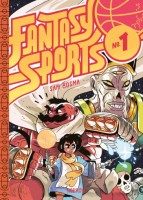
Fantasy Sports, Volume 1Fantasy Sports, Volume 1 by Sam Bosma. Before stumbling upon Fantasy Sports, I hadn’t previously read any of Bosma’s work. I definitely want to read more now because Fantasy Sports was fantastic. It apparently started out as a self-published, black-and-white comic called Fantasy Basketball, but it was later expanded and colored for release by Nobrow and made the first installment in an ongoing series. I absolutely loved the comic and can’t wait to read future volumes of Fantasy Sports. The story follows Wiz, a young magic user and intern at The United and Ancient Order of Mages. Her mentor in the guild is Mug, a hulk of a man who usually solves his problems through brute strength and who doesn’t know a thing about magic. They don’t really get along very well, making their job raiding and searching for treasure even more difficult. During their most recent expedition, they encounter an ancient mummy who they must defeat in a game of basketball if they hope to escape with the fortune and their lives intact. It’s a slim volume, but with great art, great colors, and great characters, not to mention just enough silliness and adventure, the first volume of Fantasy Sports is a tremendous amount of fun.

Filed Under: FEATURES, My Week in Manga Tagged With: Alice in the Country of, Aogiri, Aquarion Evol, comics, Fantasy Sports, Kaname Itsuki, manga, Psyche Delico, Sam Bosma, Shoji Kawamori

A Sky Longing for Memories: The Art of Makoto Shinkai

July 17, 2015 by Ash Brown

A Sky Longing for MemoriesCreator: Makoto Shinkai
Translator: Maya Rosewood
U.S. publisher: Vertical
ISBN: 9781941220436
Released: June 2015
Original release: 2008

I was introduced to the work of Makoto Shinkai through his animated film 5 Centimeters per Second, which left a huge impression on me. The beautifully melancholic story about lost and unrequited love was simple enough, but the visuals were stunningly gorgeous. A Sky Longing for Memories: The Art of Makoto Shinkai is an artbook that was originally released in Japan in 2008, the year after 5 Centimeters per Second debuted. I was very pleased when Vertical Comics announced its intention to publish an English-language edition. That volume was ultimately released in 2015 with a translation by Maya Rosewood. Vertical hasn’t released very many artbooks, but A Sky Longing for Memories is a good fit for the publisher. Not only has Vertical published other nonfiction works about Japanese film, it has also released two Shinkai manga: 5 Centimeters per Second and The Garden of Words.

A Sky Longing for Memories primarily consists of stills and background artwork from four of Shinkai’s projects initially released between 2002 and 2007. Prominently featured are three of his animated films—5 Centimeters Per Second, The Place Promised in Our Early Days, and Voices of a Distant Star—as is the television commercial he created for Shinano Mainichi Shimbun, “Say Something Important.” More than half of A Sky Longing for Memories is devoted to 5 Centimeters Per Second, the volume opening with some of Shinkai’s most visually refined and impressive work. The three sections that follow are dedicated to each of the earlier films and “Say Something Important.” Also included in the volume is a glossary—useful for readers who are unfamiliar with some of the technical terms used in the animation industry—as well as “Makoto Shikai’s Colors,” a section exploring the methods and techniques used by Shinkai, and “Testimonials of Makoto Shinkai’s World,” a collection of brief interviews with Shinkai and ten other members of Shinkai Works.

Although A Sky Longing for Memories can simply be appreciated and enjoyed as a collection of stunning artwork, the volume also provides insight into the creative processes and artistic direction required to achieve such impressive images. Many of the individual pieces are accompanied by brief descriptions of the decisions that were made in their overall design in addition to the specific considerations and techniques used in their creation. It’s unclear who actually wrote much of the text in A Sky Longing for Memories, but from the context it would seem to either be one (or several) of Shikai’s staff members or someone else who was close to the work being done. Either way, I was glad for the inclusion of the various descriptions and explanations; I don’t have a strong background in visual art or design and so found A Sky Longing for Memories to be illuminating and intellectually stimulating as well as beautiful to look at.

One of the key components of Shinkai’s style is his use of color. With this in mind, Vertical has taken great care to faithfully reproduce Shinkai’s artwork in A Sky Longing for Memories; the volume uses thick, glossy paper on which the colors in particular are beautifully presented. Simply put, it’s a gorgeous book of gorgeous illustrations. A Sky Longing for Memories reveals Shinkai not only as a talented artist but also as a skilled director. While he solely handled almost every aspect of Voices of a Distant Star except for the film’s music, by the time 5 Centimeters per Second was produced Shinkai was guiding and coordinating the work of an entire staff. Interestingly, most of the team members were traditionally trained artists from outside of the animation industry who had to learn digital techniques and illustration methods on the job. As can be seen from A Sky Longing for Memories, the result of their combined efforts is spectacular.

Filed Under: REVIEWS Tagged With: 5 centimeters per second, anime, Artbooks, makoto shinkai, Nonfiction, vertical, Vertical Comics

Manga the Week of 7/22

July 16, 2015 by Sean Gaffney, Ash Brown, Michelle Smith and Anna N Leave a Comment

SEAN: Oooooh man, here we go again. Let’s just buckle down.

gantz36

We’re aaaaaalmost done with Dark Horse’s release of Gantz, but not quite. Vol. 36.

ASH: So close!

SEAN: Kodansha has a 9th My Little Monster, which hopefully will continue the development the 8th volume had.

MICHELLE: Yay!!!

SEAN: Seven Seas gives us a 5th volume of SF action series Arpeggio of Blue Steel, my favorite of the ‘young girls and military’ licenses.

Viz has another volume of its Monster Perfect Edition, the 5th. Expect happiness and rainbows.

ASH: This is the volume with the epic library scene, isn’t it? And who doesn’t love libraries?

ANNA: Honestly this is the one title this week that I’m happy about, because I do want to tackle reading Monster at some point. Sometime after I read all my stockpiled volumes of 20th Century Boys.

SEAN: And a 5th Resident Evil, with puppies and kittens.

Lastly, Terra Formars 7, with love and peace for all. Please do not try to read all three Viz releases at once this week. You will die.

ASH: That is a distinct possibility.

drrr1

SEAN: And now Yen. Light novels first. The 4th Accel World should resolve the cliffhanger from the last one. Will Chiyuri be a traitor? I highly doubt it.

The debut this week is the highly anticipated Durarara!!. Yen has had the manga for some time now, but the novels are also excellent.

MICHELLE: Hm! I liked the manga more than I thought I would, but drifted away when the Saika Arc started.

ASH: I really should give at least one of the versions of Durarara!! a try at some point.

SEAN: Log Horizon’s 2nd volume will hopefully give us the hinted plot from Vol. 1 about the twins, if the cover doesn’t lie.

And there’s a 2nd No Game No Life, which I hope will have less naked 11-year-olds and more awesome mind games.

On the manga side, we have the 4th Accel World manga, still not the novel.

A third Akame Ga KILL! will live up to its name, if the previous two are any indicator.

Black Butler hits a new milestone with Vol. 20. It’s sad when a series catches up with Japan, isn’t it?

MICHELLE: I continue to read this, even though I am not madly in love with it.

ANNA: I stopped after the first couple volumes.

diaptmanga2

SEAN: A Certain Magical Index’s manga will continue to adapt Novel 1 with Vol. 2. Really, we need graphs and charts.

The Devil Is A Part-Timer! joins the growing list of manga adaptations of light novels also coming out, with Vol. 2 of the main manga. Wait till next month, it gets more confusing.

ASH: Heh. That it will.

SEAN: And now we get DRRR’s manga, which has a 3rd volume of the Yellow Scarves arc. At least that novel won’t be out till 2016.

Final Fantasy Type-0 Side Story, Vol. 1: The Ice Reaper is one of those manga whose title pretty much sums it up. I think the Main Story manga came out with the English release of the game.

First Love Monster is another one of those Aria shoujo titles, which means we’ve no idea what we’re going to get. The artist has done some Book Girl manga adaptations.

MICHELLE: It looks sort of kooky, but that might be fun!

ANNA: I will wait to see if Michelle likes it before reading it!

SEAN: Inu x Boku SS has an 8th volume – will it reset again? Or just give us more yokai action?

prisonschool1

More manga adaptations of light novels, as we get a 2nd Kagerou Daze, which finishes adapting the first LN and starts the 2nd.

Karneval oddly ended up on the worst manga of the year list at SDCC, though I found the first omnibus more… diffuse than anything else. Vol. 2 will have more focus, maybe?

ASH: More focus would be good.

ANNA: I was curious about the first volume, but now I’m sort of glad I skipped it.

SEAN: Another Puella Magi Madoka Magica spinoff begins, with Homura’s Revenge. Can’t be a depressing manga with a title like that!

Prison School is a much anticipated omnibus that many said was too ecchi to actually get a North American release. But no, here it is. I wonder what it’s about?

ASH: B-but it’s by the creator of Me and the Devil Blues! (I’ll admit, I’m curious about this one.)

So I Can’t Play H! has a 2nd volume, and gloriously no light novel license yet, meaning I only have to worry about this for the moment.

Lastly, we get the final – I checked this time – volume of Soul Eater NOT!, bringing the Soul Eater franchise as a whole to a close.

Is there something in this giant list that catches your eye?

Filed Under: FEATURES, manga the week of

Pick of the Week: Pick of a Future Week?

July 16, 2015 by Michelle Smith, Anna N, Sean Gaffney and Ash Brown 1 Comment

rov1MICHELLE: I’m feeling in the mood for some Takahashi, so I reckon my pick of the week is going to be RIN-NE. That said, my real affection this week is directed towards Udon Entertainment for licensing The Rose of Versailles!

ANNA: I think I’m just going to pick Rose of Versailles every week for the next few months.

SEAN: Sticking with Takahashi, I’m picking the new Ranma 1/2 omnibus, mostly as I love Nabiki Tendo. You may assume I am over the moon about Rose of Versailles as well.

ASH: I am beyond thrilled that Udon was able to license Rose of Versailles, but this week I’ll happily (and appropriately) be distracting myself from the wait for its release with the utterly charming and delightful My Neighbor Seki.

What looks good to you this week (or in future months)?

Filed Under: PICK OF THE WEEK

Mushishi, Vol. 4

July 15, 2015 by Ash Brown

Mushishi, Volume 4Creator: Yuki Urushibara
U.S. publisher: Del Rey
ISBN: 9780345499233
Released: May 2008
Original release: 2003
Awards: Japan Media Arts Award, Kodansha Manga Award

Although the ten-volumes series Mushishi was Yuki Urushibara’s professional debut as a mangaka, it has been very well-received by both critics and fans. The manga began its serialization in 1999 and would go on to win a Japan Media Arts Award in 2003 and a Kodansha Manga Award in 2006 among other honors and recognitions. Mushishi, Volume 4 was originally published in Japan in 2003. In 2008, Del Rey Manga released the first English-language edition which is now sadly out-of-print. However, as of 2014, the volume has been made available digitally by Kodansha Comics. Mushishi was a series that I stumbled upon when it was initially being released in English. The manga quickly became and continues to be one of my favorite series; Mushishi was one of the first manga that I made a point to collect in its entirety. I love the series’ quiet, creepy atmosphere, its emphasis on life and nature, and the influence of traditional Japanese culture and folklore on the stories being told.

Mushishi, Volume 4 collects five stories. The volume opens with “Picking the Empty Cocoon,” telling the tale of a family with close connections to both mushi and mushishi. They are the caretakers of uro, a particularly useful but dangerous type of mushi. In “One-Night Bridge,” Ginko is invited to a remote village in a deep valley to investigate the case of a young woman who fell to the bottom of the gorge but somehow survived. Except that she’s never been the same since her accident. Plants growing out of season allow a brother and sister to weather harsh winters in “Spring and Falsehoods,” but the mushi that cause the phenomenon aren’t as benign as they first appear. In the fourth story, while traveling through the mountains, Ginko stumbles upon a small family living in a vast bamboo grove. They seem to be trapped there, unable to leave no matter how hard they try; they always end up circling back to their home. The volume concludes with “The Sound of Trodden Grass,” which provides a little more insight into Ginko’s past.

Mushishi, Volume 4, page 112For the most part, Mushishi tends to be fairly episodic. Except for the presence of Ginko, out of all of the stories included in the fourth volume only “The Sound of Trodden Grass” has an explicit connection to any of the other chapters in the series, and it’s only a tangential one. Although none of the stories in Mushishi, Volume 4 are directly related to one another plot-wise, there was one similarity shared between them all that particularly struck me: the prominent role played by families. Looking back, this actually isn’t at all an uncommon theme in Mushishi—families, as well as other tightly knit communities and groups, are frequently featured in the manga. However, through the illness and other problems that follow them, mushi are shown to cause great strife in those relationships. Circumstances caused by mushi’s existence can drive people apart, but in some cases they may actually draw them together. Familial ties are strong and not easily broken, but mushi’s close connection to nature and life and death (including those of humans) is sometimes in conflict with them and they are just as enduring.

The stories in Mushishi are often reminiscent of folktales and legends originating from Japan; Urushibara clearly draws some inspiration directly from that lore. For example, “In the Cage” with its children born of bamboo recalls the story of Kaguya-hime. The fourth volume of Mushishi is influenced by Japanese history, as well. “The Sound of Trodden Grass” features a group of wanderers displaced by mushi known as the Watari who are based on the Sanka people of Japan. (This is even more meaningful to me now after having read Kazuki Sakuraba’s novel Red Girls: The Legend of the Akakuchibas in which the Sanka also play a part.) Some of Mushishi‘s stories can be rather spectacular, with mushi causing phenomena verging on the paranormal, while others are more subdued. Mushi are said to be very close to the original form of life and are therefore inseparable from nature, but they remain mysterious. Mushishi is a collection of tales that delve into that terrifying unknown. Urushibara combines elements of folklore and history along with her own imagination to successfully create a series that feels familiar while still being new.

Filed Under: REVIEWS Tagged With: del rey, Japan Media Arts Award, Kodansha Manga Award, manga, mushishi, Yuki Urushibara

My Week in Manga: July 6-July 12, 2015

July 13, 2015 by Ash Brown

My News and Reviews

So, apparently last week was Shark Week, an annual event on the Discovery Channel. I don’t watch much television or pay attention to programming schedules, therefore it was a complete coincidence that both of the manga that I reviewed last week happened to include sharks! First up was my review of the deluxe hardcover omnibus of Junji Ito’s (comedy?) horror manga Gyo: The Death-Stench Creeps. It’s an incredibly gross and absurd manga and will certainly not be to everyone’s taste. I was entertained by its outrageousness, but overall much prefer his earlier work Uzumaki: Spiral into Horror. The second review last week was of The Legend of Kamui, Volume 1, an influential historical drama by Sanpei Shirota. The manga was actually one of the earliest series to be released in English back in the 1980s. Fortunately, it’s still relatively easy to find even though it’s long been out-of-print. I really wish that more of the series had been translated, though; The Legend of Kamui is excellent.

A couple of interesting things that I came across last week: Shojo Beat’s tenth anniversary celebration continues with five questions for Julietta Suzuki and Haikasoru posted a translation of a conversation between authors Paolo Bacigalupi and Taiyo Fujii from 2013. (I recently reviewed Fujii’s debut novel Gene Mapper, and reviewed Bacigalupi’s novel The Windup Girl, which has been very well received in Japan, at my old review blog Experiments in Reading several years ago.) Last week was the San Diego Comic-Con, but most of the news and announcements seemed to be repeats of Anime Expo. However, there was one newly announced license that was huge: Udon Entertainment will be releasing Riyoko Ikeda’s influential shoujo classic Rose of Versailles! Among other good news, Udon rescued Moyoco Anno’s marvelous shoujo series Sugar Sugar Rune, which makes me very happy. (I reviewed Del Rey’s edition of the first volume a couple of years back.) Udon will also be releasing Yomi Sarachi’s Steins;Gate manga. Kodansha has picked up Kousuke Fujishima’s manga series Paradise Residence. Dark Horse will be re-releasing Hiroaki Samura’s epic Blade of the Immortal in an omnibus edition which is great news since some of the individual volumes are out-of-print and hard to find. (The series is also a favorite of mine.) A couple of other interesting SDCC/manga-related posts: myths from the Manga Publisher Roundtable and a summary of 2015’s Best and Worst Manga panel. Oh, and Shigeru Mizuki’s Showa: A History of Japan won an Eisner Award!

Quick Takes

The Demon Prince of Momochi House, Volume 1The Demon Prince of Momochi House, Volume 1 by Aya Shouoto. There were mainly two things that initially drew my attention to The Demon Prince of Momochi House, the beautiful and somewhat provocative cover illustration and the promise of beautiful and somewhat provocative yokai. Himari Momochi unexpectedly inherits a house when she turns sixteen. As an orphan, it’s the only connection that she has to a family that she has never known. But when she arrives, she discovers a couple of complicating factors: the house is a gateway between the human and supernatural realms, and it is already occupied. Honestly, the story’s setup feels a little forced and employs a few well-worn shoujo tropes; it remains to be seen whether or not Shouoto will do anything clever with them. However, the artwork is attractive and I actually really do like the underlying premise of the manga. Although I wasn’t blown away by the first volume of The Demon Prince of Momochi House, I did enjoy it. The series has great potential and the manga certainly delivers on its promise of beautiful spirits. While I’m not in a rush to read the next volume, I’ll likely continue with the series to see if it develops into something really special or if it will merely remain something that is enjoyable in passing.

Dengeki Daisy, Volume 13Dengeki Daisy, Volumes 13-16 by Kyousuke Motomi. It’s been awhile since I’ve read Dengeki Daisy, but it is a manga that I tend to enjoy. Since the final volume of the series was released in English relatively recently, I figured it was about time for me to catch up. Dengeki Daisy isn’t always the most realistic or believable series—frequently things will happen because they’re convenient for the sake of moving the story forward or are being used as a punchline rather than being a convincing development—but it’s still pretty great. The manga also handles the romance between Teru and Kurosaki very well, especially considering the eight-year gap in their ages. Interestingly, while the last volume quickly wraps up the main story, it’s actually mostly devoted to a small collection of side and bonus stories, generally of a humorous nature. The volume also includes Motomi’s debut manga, “No Good Cupid.” It’s kind of a fun send off for the series, especially as the final story arc is focused more on intense action and drama rather than the manga’s humor or the quirkiness of its characters. However, I always find Motomi’s author notes and commentary to be endlessly entertaining. I definitely plan on reading more of her work in the future.

NightSNightS by Kou Yoneda. Only a few of Yoneda’s boys’ love manga have been released in English, but I enjoy her work immensely and would love to see even more of it licensed. NightS is a collection of stories: “NightS,” about a transporter for the yakuza and an older man with whom he becomes entangled (in more ways than one); “Emotion Spectrum,” a high school romance with a bit of a twist on the usual sort of love triangle; and “Reply,” featuring the blossoming relationship between a car salesman and a mechanic. Although the anthology is called NightS, “Reply” is actually the longest and most involved work in the volume. But even the shorter manga feature well-developed stories and characters. They each come across as an individual with a distinctive personality. This is a particularly important aspect of Yoneda’s manga since the plots tend to be very character focused and driven—people and their relationships, romantic or otherwise, are key to her stories. There is a maturity to the storytelling, as well. And a great sense of humor. Though they aren’t comedies, at times the manga collected in NightS can be quite funny. Also, Yoneda’s artwork is excellent; especially impressive is her use of light and shadow to create drama, mood, and atmosphere.

Filed Under: FEATURES, My Week in Manga Tagged With: Aya Shouoto, demon prince of momochi house, Dengeki Daisy, Kou Yoneda, Kyousuke Motomi, manga

The Legend of Kamui, Vol. 1

July 10, 2015 by Ash Brown

The Legend of Kamui, Volume 1Creator: Sanpei Shirato
U.S. publisher: Viz Media
ISBN: 9781569313183
Released: August 1998
Original release: 1990

Sanpei Shirato’s The Legend of Kamui had its beginnings in 1964 as one of the first series to be published in the influential alternative manga magazine Garo. In the 1980s, Sanpei would continue the manga with a second series, Kamui Gaiden. It was Kamui Gaiden that became one of the earliest manga series to be translated into English and widely published in North America. Between 1987 and 1988, Viz and Eclipse Comics released thirty-seven issues of Kamui Gaiden under the title of The Legend of Kamui, serializing edited versions of two stories: “The Island of Sugaru” and “The Sword Wind.” “The Island of Sugaru,” which was later compiled by Viz into two volumes in 1998, is probably one of the most well-known Kamui stories, and not just because of the Kamui Gaiden live-action film adaptation from 2009. The Legend of Kamui, Volume 1 collects the first half of “The Island of Sugaru,” material from a volume of Kamui Gaiden that was originally published in Japan in 1990.

Kamui is an apostate ninja during Japan’s Edo period, on the run from the members of his clan who consider him to be a traitor when he tries to leave. While traveling through Yumigahama he encounters a woman who, like him, once belonged to a clan of ninja. Sugaru has been able to avoid capture and death long enough to establish a new life with a husband and three children who love her, but she is still being hunted and must be constantly vigilant. Sugaru has managed to survive because she doesn’t trust anyone, and that includes Kamui. Although he helped to save her life when she was attacked by Iga ninja, Sugaru can’t take a chance that Kamui might be trying to kill her as well. After an intense battle in which they are both injured, they part ways. But in a strange twist of fate, Kamui is later shipwrecked on the very island where Sugaru and her family reside. Kamui lives peacefully for a time in the small, remote fishing village and Sugaru’s family becomes very fond of him, but Sugaru would rather see him dead.

The Legend of Kamui, Volume 1, page 255From reading The Legend of Kamui, Volume 1 alone, not much is known about either Sugaru or Kamui’s past lives beyond the fact that they are trying to escape them. The hunted versus the hunter, whether the prey chooses to flee or to fight, is a theme that recurs throughout the manga, mirrored in both nature and human society. Kamui and Sugaru do have the advantage of being exceptionally adept fighters. Although Sugaru does strain under the burden of keeping both herself and her family safe, she is actually one of the strongest characters in The Legend of Kamui, Volume 1, exhibiting both great determination and martial prowess. Her skills rival and in some cases surpass those held by Kamui. Tragically, and understandably, due to her circumstances Sugaru has lost her ability to trust others; it’s simply no longer an option for her. Kamui, on the other hand, has so far managed to retain that part of his humanity, even though it has put his life in danger on multiple occasions.

I really wish more of The Legend of Kamui had been released in English because the series is excellent. The characters are complex, as are their personal struggles and their searches for freedom in an era that could be unforgiving, harsh, and violent. The action sequences are exciting and dynamic. Although a few ninja tricks are employed during the life-or-death battles—secret techniques, impressive acrobatics, illusions and transformations—there is a sense of realism that pervades The Legend of Kamui. In between the dramatic conflicts are the quieter moments of everyday life in a fishing village. Initially it appears as though Kamui, like Sugaru, will be able to outrun his fate and have a chance at a peaceful, happy existence. He learns to fish and becomes friendly with the villagers who are more than happy to welcome a strong young man into their midst. The Legend of Kamui, Volume 1 offers hope that such changes are possible, but ultimately taking charge of one’s own destiny is a difficult path to follow.

Filed Under: REVIEWS Tagged With: Legend of Kamui, manga, Sanpei Shirato, viz media

Pick of the Week: Plenty of Shoujo

July 9, 2015 by Sean Gaffney, Michelle Smith, Anna N, Ash Brown and MJ Leave a Comment

what9SEAN: There’s some nice Viz stuff out this week, both new and old, as well as a few choice titles from other publishers. I suspect the MB team will be warring between What Did You Eat Yesterday? and Sunny. I will be picking My Love Story!!, because it’s still the most adorable shoujo out there.

MICHELLE: Actually, although What Did You Eat Yesterday? was indeed my initial impulse, especially since I won’t be able to pick it again for who knows how long, I’m going to vote for Yukarism because volume two really won me over and I’m excited to check out volume three.

ANNA: There’s a ton of great manga coming out this week. Since Michelle already picked Yukarism, I’m going to swing my vote over to The Demon Prince of Momochi House because I am shallow and enjoy manga about handsome spirits.

ASH: Well, so as not to completely disappoint Sean, I’ll throw my pick to the most recent volume of What Did You Eat Yesterday?. Actually, I was going to pick that anyway. Or, was I?! My Love Story!! is an excellent choice, as is Sunny. It’s a great week for great manga!

MJ: I’m pretty torn here, but I don’t really have anything original so I’ll simply echo Ash’s sentiment! I choose What Did You Eat Yesterday? as my official pick, but that won’t stop me from picking up the rest as well! Sorry, Sunny, for leaving you in the cold. Yoshinaga always wins.

What looks good to you this week?

Filed Under: PICK OF THE WEEK

Manga the Week of 7/15

July 8, 2015 by Sean Gaffney, Michelle Smith, Ash Brown, MJ and Anna N Leave a Comment

SEAN: Mid-July is a good-sized week, but not completely overwhelming like the first/third weeks tend to be. Let’s see what’s happening.

Dark Horse has the second volume of Oreimo spinoff Kuroneko, marketed to the six remaining Oreimo fans who didn’t scream in anger at the end of the main series.

Kokoro Connect has proven to be a fast favorite of mine, and so I am very happy to see the fourth volume from Seven Seas.

msas1

Magika Swordsman and Summoner is the new series debut of the week. It’s fantasy, it has a magical school, our hero is bullied by the students for his status, he amasses a crew of girls who like him, *and* it runs in Comic Alive. If ever a series screamed “License me, Seven Seas!”, this is it. And so they did.

The Sacred Blacksmith also has a new volume, its eighth.

For BL fans, there is the second volume of Love Stage!! from SubLime.

MICHELLE: I wasn’t entirely sold on volume one, but I’m at least willing to check out the second.

ASH: I actually still need to read the first volume…

MJ: Same here.

SEAN: And also a 2nd volume of The World’s Greatest First Love.

I’m loving Vertical’s My Neighbor Seki as much as I thought I would, and the arrival of a third volume fills me with glee.

ASH: My Neighbor Seki is an incredibly delightful series!

ANNA: I haven’t read this yet and I feel guilty.

MJ: I second the glee!

07gh17

SEAN: The rest is Viz. I believe that Vol. 17 is the final volume of 07-GHOST, though Anna can likely confirm that. Bye, 07-GHOST! You were a good license rescue that I fell so far behind on I may never catch up.

MICHELLE: I still intend to read it, one of these days!

ANNA: I also have not caught up on this series and feel even more guilty, because I liked the first few volumes.

SEAN: Case Closed has Vol. 55, which is not the final volume, or even close to the final volume. It’s a long series is what I’m saying.

The 9th Ranma 1/2 omnibus has one of my favorite arcs of the series, where Akane gets so mad she declares that Nabiki can be Ranma’s fiancee instead, and the fallout that happens is magical. Oh, and we’ll also meet Pantyhose Taro, who… I will not spoil.

There is an 18th volume of RIN-NE, where the plot finally comes into focus and nothing will be the same anymore… OK, I can’t even type that with a straight face.

MICHELLE: I still like RIN-NE, though, particularly when I’m in the mood for something not mentally challenging.

SEAN: Lastly, a 7th volume of superhero manga with BL tease Tiger & Bunny.

Is there a favorite here for you?

Filed Under: FEATURES, manga the week of

  • « Go to Previous Page
  • Page 1
  • Interim pages omitted …
  • Page 98
  • Page 99
  • Page 100
  • Page 101
  • Page 102
  • Interim pages omitted …
  • Page 140
  • Go to Next Page »
 | Log in
Copyright © 2010 Manga Bookshelf | Powered by WordPress & the Genesis Framework