• Skip to primary navigation
  • Skip to main content
  • Skip to primary sidebar
  • Home
  • About Us
    • Privacy Policy
    • Comment Policy
    • Disclosures & Disclaimers
  • Resources
    • Links, Essays & Articles
    • Fandomology!
    • CLAMP Directory
    • BlogRoll
  • Features & Columns
    • 3 Things Thursday
    • Adventures in the Key of Shoujo
    • Bit & Blips (game reviews)
    • BL BOOKRACK
    • Bookshelf Briefs
    • Bringing the Drama
    • Comic Conversion
    • Fanservice Friday
    • Going Digital
    • It Came From the Sinosphere
    • License This!
    • Magazine no Mori
    • My Week in Manga
    • OFF THE SHELF
    • Not By Manga Alone
    • PICK OF THE WEEK
    • Subtitles & Sensibility
    • Weekly Shonen Jump Recaps
  • Manga Moveable Feast
    • MMF Full Archive
    • Yun Kouga
    • CLAMP
    • Shojo Beat
    • Osamu Tezuka
    • Sailor Moon
    • Fruits Basket
    • Takehiko Inoue
    • Wild Adapter
    • One Piece
    • After School Nightmare
    • Karakuri Odette
    • Paradise Kiss
    • The Color Trilogy
    • To Terra…
    • Sexy Voice & Robo
  • Browse by Author
    • Sean Gaffney
    • Anna Neatrour
    • Michelle Smith
    • Katherine Dacey
    • MJ
    • Brigid Alverson
    • Travis Anderson
    • Phillip Anthony
    • Derek Bown
    • Jaci Dahlvang
    • Angela Eastman
    • Erica Friedman
    • Sara K.
    • Megan Purdy
    • Emily Snodgrass
    • Nancy Thistlethwaite
    • Eva Volin
    • David Welsh
  • MB Blogs
    • A Case Suitable For Treatment
    • Experiments in Manga
    • MangaBlog
    • The Manga Critic
    • Manga Report
    • Soliloquy in Blue
    • Manga Curmudgeon (archive)

Manga Bookshelf

Discussion, Resources, Roundtables, & Reviews

Archives for December 2015

Attack on Titan, Vol. 17

December 22, 2015 by Sean Gaffney

By Hajime Isayama. Released in Japan by Kodansha, serialization ongoing in the magazine Bessatsu Shonen Magazine. Released in North America by Kodansha Comics.

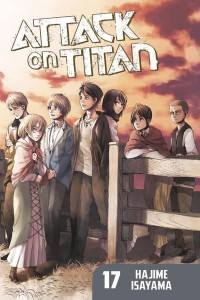
It’s no secret that the development of Historia’s character has been one of my favorite parts of Attack on Titan, and this volume continues to feature that, as she refuses to be treated like precious china merely because she has the Reiss lineage, saddles up to help defeat a titan who is actually her father, takes credit for it to further Erwin’s plan to stabilize the city, and finally is crowned Queen, though arguably her best moment comes shortly afterwards, where she somewhat falteringly punches Levi as a callback to where he abused her in order to get what he wanted. Of course, he has, and his genuine smile of thanks is rather touching here.
titan17

Moreover, we see what the effect of being ruled by someone who did not get controlled by the Firt King is that actual progress is allowed to be made. Underground inventions are allowed to come to light, leftovers from the giant titan battle are used in new and exciting ways, and Historia herself spends most of her time seemingly running an orphanage on a farm outside the city. (See: front cover, which looks like it should be called Little Titan on the Prairie.) This comes after the rest of Kenny Ackerman’s flashback, where he meets a young, starving orphan Levi and teaches him how to fight and get by in the streets. Again, Kenny’s search for something to strive for is relatable, and I like the description of everyone being “drunk on something”, but in the end he’s still a villain.

And then there’s Eren, who spends a lot of time being his usual emo self, then sees what Historia has been doing and literally punches the whine out of himself. This might come back to haunt him, of course, as following this we see him overextending himself to the point of physical exhaustion, as he realizes that right now he is the only one who can do these things. I suspect he sees Historia more as an inspiration than as someone to be romantically interested in, though naturally Mikasa takes offense at anyone female getting remotely close to Eren. I’ve sort of given up on the idea that Mikasa’s feelings for Eren are going to remain familial, as the author has far too much fun with her repressed jealousy, but I don’t enjoy it. There was some genuine amusement late in the volume involving Marlowe, who has transferred to the Survey Corps despite Hitch’s tsundere exhortations, which everyone but he and Eren can see through (Eren being similarly clueless about any romance).

There’s still quite a bit of mystery here, which I suspect will get solved a bit more in 18, when we go back to training to visit our old instructor. In the meantime, this is a nice solid Titan volume, with a good fight, the usual somewhat questionable politics (yay, isn’t military rule great?), the usual questionable art (Isayama is good at terror, not so good at non-terror), but excellent plotting and characterization, and makes you want to keep reading.

Filed Under: REVIEWS

Bookshelf Briefs 12/21/15

December 21, 2015 by Michelle Smith and Sean Gaffney Leave a Comment

Sean and Michelle give the gift of briefs!

bm1Bloody Mary, Vol. 1 | By Akaza Samamiya | VIZ Media – I’m not really sure how I feel about this one. The basic premise is that “Bloody” Mary is a vampire who can’t be killed by normal means, so he seeks out Maria (also male) who supposedly possesses a power that could kill him. Only Maria doesn’t—we later find out some other family is devoted to making sure he doesn’t learn about it—and, tired of fending off ravenous vampires out for his delicious blood, Maria conscripts Mary as a bodyguard until he can learn how to kill him. This might sound kind of interesting, and it kind of is, but it’s also repetitive as heck! About 90% of Bloody’s dialogue consists of entreaties to Maria to kill him, and the other 10% is him resisting consuming Maria’s blood. Both characters have missing memories, too, which are hinted at a few times. I’ll keep reading for now, but I’m underwhelmed so far. – Michelle Smith

kisshim2Kiss Him, Not Me!, Vol. 2 | By Junko | Kodansha Comics – This is a bit less over-the-top and silly than the first volume, and therefore it makes me slightly more uncomfortable. The four leads (well, more accurately the 3 leads and Mutsumi, who seems to be the only person concerned with Kae’s boundaries) are all still very much trying to show to Kae that they really like and want to date her, and she’s not only still having none of it, but is freaking out a bit at all the attention, to the point of having a nervous breakdown. It’s framed as her disliking reality over fantasy, but more accurately it could simply be sheer overload of new feelings. The best chapter was likely the last, where the gang goes to Comiket and we see Kae rescued by a new character. Problematic fun, let’s keep it silly. – Sean Gaffney

komomo2Komomo Confiserie, Vol. 2 | By Maki Minami | VIZ Media – I enjoyed the second volume of Komomo Confiserie more than the first, largely because Komomo herself has become a better person. She’s made a friend in classmate Rise, and proves to be very reliable when it comes to helping Rise confess her feelings to a guy who, unfortunately, turns out to be a creep. Somehow, this experience convinces Komomo that she wants to be in love, and though a pretend romance with Natsu quickly fizzles, it seems she might have met a contender by the end of the volume. I appreciate how Komomo’s commanding presence helps her friends in times of need, and how she’s still content with the life that she’s living even if she’s now poor, but must confess that, overall, this series has so far failed to live up to Voice Over! in my esteem. Oh well. Can’t win ’em all. – Michelle Smith

magi15Magi: The Labyrinth of Magic, Vol. 15 | By Shinobu Ohtaka | Viz Media – After getting a lot to do last time, Aladdin is confined to the final pages in the new volume. And Morgiana gets to show off her awesomeness, but it’s all too brief. So it’s up to Alibaba to provide the bulk of the shonen awesome here, as he enters gladiator school and immediately has to deal with a hideous monster, who in true shonen tradition he not only beats but befriends. I love that Cassim and his influence have not faded into backstory. That said, what everyone will be talking about here is the political turmoil and civil war in the Kou Empire, and Kogyoku may prove to be the one sympathetic character in the entire family, as we meet the Empress Consort, and she’s pretty evil. Magi is addictive. – Sean Gaffney

Magi: The Labyrinth of Magic, Vol. 15 | By Shinobu Ohtaka | VIZ Media – There is quite a lot to like in this volume. We begin with Alibaba seeking to join gladiator training school and, in the process, achieving clarity of purpose by incorporating Cassim’s strength into his own and realizing what he must do for his country. Meanwhile, Hakuryu shows a similar determination regarding the Kou Empire’s destiny, ruled now by his messed-up yet extremely powerful mother, while Aladdin becomes top student at the magic school and Morgiana takes a literal leap of faith on her own journey. On top of the satisfying shounen rite of our heroes becoming stronger, we also get a healthy dose of the expanding world and introductions to several women in positions of leadership. Magi is a skillfully crafted series and I recommend it most highly. – Michelle Smith

toriko31Toriko, Vol. 31 | By Mitsutoshi Shimabukuro | Viz Media – As with most books starting a new arc, much of this volume is dedicated to worldbuilding, which in Toriko means new monsters and new foods. This can be terrifying (the leech heel), hilarious (the travel frogs), or both (the Soylent Mean, which I suspect was a different but equally horrible pun in Japanese). Toriko and company show off their new awesome skills, and Komatsu shows he’s not just being dragged around and can literally cook anything at all as well as having amazing ‘food luck.’ We also get the return of Brunch the Tengu, which leads to more goofiness just by his very presence. Nothing earthshaking happens here, but if you follow Toriko, this volume is not going to change your mind—it’s solid. – Sean Gaffney

Filed Under: Bookshelf Briefs

My Week in Manga: December 14-December 20, 2015

December 21, 2015 by Ash Brown

My News and Reviews

Only one in-depth review was posted at Experiments in Manga last week. I should be getting back to my regular blogging schedule very soon, though. As for the said review, I took a look at Setona Mizushiro’s After School Nightmare, Volume 7 as part of my monthly horror manga review project. After School Nightmare is an effectively unsettling work, but it’s also engrossing. The seventh volume has some particularly chilling developments and revelations. (And that’s it from me at the moment!)

Quick Takes

Black Rose Alice, Volume 4Black Rose Alice, Volumes 4-6 by Setona Mizushiro. From what I can tell, Black Rose Alice is currently on hiatus in Japan. Fortunately, the first six volumes appear to complete the first major story arc of the manga. While I certainly hope that the Black Rose Alice continues, and I look forward to seeing how it develops, at least readers are provided with some resolution and closure for what could be a long wait. This second half of the first arc deals with the aftermath of Leo’s demise. The relationship dynamics in Black Rose Alice have always been a little peculiar and unnerving, but as they begin to fracture under the strain of the loss of Leo it’s shown just how strong and just how tenuous they can be at the same time. These volumes also include the reappearance of Koya, which throws the situation into even more turmoil, and the revelation of the twins tragic backstory. Emotions run high and the drama is intense as everything seems to be falling apart. Black Rose Alice continues to be dark and creepy and Mizushiro’s vampires are still some of the most unusual ones that I’ve come across.

Itazura na Kiss, Volume 1Itazura na Kiss, Volumes 1-3 by Kaoru Tada. Considering the number of boys’ love titles that Digital Manga releases in print (as well as its recent efforts to translate all of Osamu Tezuka’s works and its foray into hentai) it can be easy to forget that the publisher has other interesting manga in its catalog, too. Itazura na Kiss is one such series, a classic shoujo manga from the nineties which was extremely successful in Japan and elsewhere in Asia. The story is about Kotoko, an academically-challenged young woman in high school who has fallen in love Naoki, another student who is a legitimate genius. He also turns out to be a huge jerk, but every once in a while he shows a warmer, kinder side of himself. So far, I have been enjoying Itazura na Kiss, perhaps more than I expected. Kotoko shows wonderful strength of character and even Naoki’s unpleasant personality has more depth to it than initially appears. Despite the best efforts of their parents who would love to see them married, the romance between the two of them is believably slow to develop. I also like that the story doesn’t get stuck in high school and follows Naoki and Kotoko as they enter college.

Merman in My Tub, Volume 1Merman in My Tub, Volume 1 by Itokichi. Seven Seas has made something of a name for itself as the publisher of monster girl manga, but with Merman in My Tub monster boys are now better represented as well. The basic and appropriately ridiculous premise of Merman in My Tub is that Wakasa, a merman, has become a permanent resident in the bathtub of Tatsumi, a young man who rescued him from a polluted river. His mere presence causes all sorts of problems and inconveniences for Tatsumi, especially when his other aquatic acquaintances begin showing up, too. The series is a largely episodic four-panel comedy manga although there are some small story arcs, recurring characters, and running jokes. There is also plenty of boys’ love tease and innuendo. (In part Itokichi seems to have created the series as an excuse to draw half-naked men.) At the same time, Merman in My Tub makes use of some of the vaguely incestuous little sister/big brother tropes that can be fairly prevalent these days. As a result, though it has its charm, the series sometimes seems a little confused about which audience it’s trying to appeal to.

Filed Under: FEATURES, My Week in Manga Tagged With: Black Rose Alice, itazura na kiss, Itokichi, Kaoru Tada, manga, Merman in My Tub, Setona Mizushiro

SJ to Publish Boruto One-Shot and Series

December 21, 2015 by Brigid Alverson

Boruto

Shonen Jump will publish a Boruto one-shot, by Naruto creator Masashi Kishimoto, and an ongoing Boruto series by Mikio Ikemoto and Ukyō Kodachi, this spring, simultaneously with the Japanese releases. [Anime News Network]

This was an unusually good year for new manga series; my roundup of my favorites includes Planetes, A Silent Voice, and Prophecy—plus a lot more. [Barnes and Noble Sci-Fi/Fantasy Blog]

I also picked some notable titles from this month’s new releases. [Barnes and Noble Sci-Fi/Fantasy Blog]

Log Horizon creator Mamare Tounu was placed under house arrest on Thursday due to allegations of tax evasion; the Toyko Public Prosecutor’s Office claims that his rights management company, m2ladeJAM, owes 30 million yen ($250,000) in unpaid taxes. In a statement made last April, when the case first came to light, Tounu said that he had cooperated with investigators and paid his back taxes. [Anime News Network]

The Manga Bookshelf team looks at the coming week’s new manga releases—both of them. [Manga Bookshelf]

Erica Friedman checks in with the latest edition of Yuri Network News. [Okazu]

Reviews

Ash Brown on vol. 7 of Afterschool Nightmare (Experiments in Manga)
Matthew Warner on vol. 4 of Akame ga KILL! (The Fandom Post)
A Library Girl on Alice in the Country of Clover (A Library Girl’s Familiar Diversions)
A Library Girl on Alice in the Country of Hearts: The Clockmaker’s Story (A Library Girl’s Familiar Diversions)
A Library Girl on vols. 1 and 2 of Are You Alice? (A Library Girl’s Familiar Diversions)
A Library Girl on vol. 2 of Attack on Titan: No Regrets (A Library Girl’s Familiar Diversions)
A Library Girl on vols. 15-20 of Black Butler (A Library Girl’s Familiar Diversions)
Anna N on vol. 6 of Black Rose Alice (Manga Report)
Matthew Warner on vol. 8 of Bloody Cross (The Fandom Post)
Kristin on vol. 1 of Bloody Mary (Comic Attack)
Anna N. on Boys Over Flowers, Season 2 (Manga Report)
A Library Girl on vol. 11 of Chi’s Sweet Home (A Library Girl’s Familiar Diversions)
G.B. Smith on vol. 8 of The Disappearance of Nagato Yuki-Chan (The Fandom Post)
Ken H. on vol. 50 of Fairy Tail (Sequential Ink)
Erica Friedman on vol. 3 of Hayate x Blade 2 (Nyan) (Okazu)
Lori Henderson on vols. 1 and 2 of Is It Wrong to Try to Pick Up Girls in a Dungeon? (Manga Xanadu)
Johanna Draper Carlson on vol. 1 of L♥DK (Comics Worth Reading)
Sakura Eries on vol. 10 of My Little Monster (The Fandom Post)
A Library Girl on vol. 55 of Naruto (A Library Girl’s Familiar Diversions)
A Library Girl on vols. 1-8 of Natsume’s Book of Friends (A Library Girl’s Familiar Diversions)
Sean Gaffney on vol. 1 of Planetes (A Case Suitable for Treatment)
A Library Girl on vol. 1 of Secret (A Library Girl’s Familiar Diversions)
Sean Gaffney on Shigeru Mizuki’s Hitler (A Case Suitable for Treatment)
A Library Girl on vols. 33 and 34 of Skip Beat! (A Library Girl’s Familiar Diversions)
Rebecca Silverman on vol. 4 of So Cute It Hurts!! (ANN)
Rebecca Silverman on vols. 3 and 4 of Tokyo Ghoul (ANN)
Matthew Warner on vol. 3 of Ubel Blatt (The Fandom Post)
A Library Girl on vols. 1-5 of Wandering Son (A Library Girl’s Familiar Diversions)
Nick Smith on vols. 1 and 2 of Yo-Kai Watch (ICv2)

Filed Under: MANGABLOG

Is It Wrong To Try To Pick Up Girls In A Dungeon?, Vol. 4

December 20, 2015 by Sean Gaffney

By Fujino Omori and Suzuhito Yasuda. Released in Japan as “Dungeon ni Deai o Motomeru no wa Machigatte Iru Darou ka?” by Softbank Creative. Released in North America by Yen On.

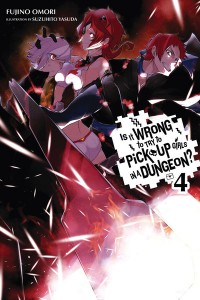
This volume of Bell Cranel and his ongoing adventures has the main story only take up 2/3 of the book, the rest being filled in by two character developing short stories. While both stories are enjoyable, and I did like the main tale, it does feel a bit like the author wanted to hold off on the next big twist till Vol. 5, but could not quite come up with enough material to squeeze into this volume to pad it out. Welf Crozzo’s backstory is mostly given in an infodump, and his issues are resolved simply by having Bell be who he is – Bell is the sort to not go after someone for his own personal gain, and Welf has had nothing but that most of his career.

danmachi4

Welf adds a needed dynamic to Bell’s group, though, especially given this is essentially a shonen manga in light novel form. He adds the loud, brash type who rushes in first, which complements Bell’s extremely skilled but self-loathing personality and Lilly’s savvy yet cynical not-a-hobbit-honest girl. Which is good, as it’s also made apparent in this volume that in order to delve further into the dungeons they’ll need more people – don’t be surprised if Vol. 5 brings us another regular, and I bet she’s female. As usual, the story is presented smoothly and with a minimum of fuss, showing off an amusing sequence where the gods give Bell a nickname (and remind us of Freya, otherwise absent from this book) and a brief look at Aiz, who is trying to go beyond the impossible as Bell has and finds it’s not as easy as he’s making it seem.

The two short stories both have large amounts of Hestia in them, which makes up for – once again – a fairly small part in the main book. Hestia can’t go dungeon crawling with Bell, which given that’s the main thrust of the book means she’s always going to be getting the beginning, the end and not much else. The better short story was the second one, a simple character piece showing us Hestia three days after taking Bell in, and how she starts to fall in love with him. The other piece develops a small house that specializes in potions, and how unfortunate circumstances have led them to try to put one over on easy suckers – meaning Bell, who luckily has Lilly with him to be genre savvy. The best part of this story had Hestia and Lilly describing how oblivious Bell is and how the two of them are delegated to ‘goddess who isn’t even female’ and ‘cute little sister’ in his eyes. Given the ‘rivalry’ scene in the last volume, I’m pleased to see them bonding over lack of affection.

While not as strong as the other volumes of the series, this is still a very easy read, and I suspect we’re due for a major crisis point soon. Also, for fans of the anime, they adapted this into a single episode, so pick it up to see how much was cut out.

Filed Under: REVIEWS

Manga the Week of 12/23

December 18, 2015 by Sean Gaffney, Michelle Smith, Ash Brown, Anna N and MJ 2 Comments

ng9SEAN: Last month I believed Dark Horse rather than Diamond, and got burned for it. This time I’m believing Diamond, so no Dark Horse next week. That leaves…

Ninja Slayer Kills 2 and Noragami 9, both from Kodansha.

MICHELLE: Hm… Well, someone is probably happy about these, I guess.

ASH: Wow, only two manga releases?! Personally, I’ll be passing on Ninja Slayer Kills, but Noragami has been developing nicely.

ANNA: It is weird to have only two new releases! It is probably not so weird that I have nothing to say about them.

MJ: I, too, am here to say basically that I have nothing to say. But there’s a lot to catch up on from last week, at least!

SEAN: Thoughts?

Filed Under: FEATURES, manga the week of

After School Nightmare, Vol. 7

December 17, 2015 by Ash Brown

After School Nightmare, Volume 7Creator: Setona Mizushiro
U.S. publisher: Go! Comi
ISBN: 9781933617626
Released: April 2008
Original release: 2007

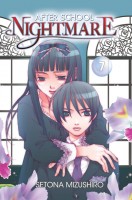
After School Nightmare, and more specifically the first few volumes of the series, was my introduction to the manga of Setona Mizushiro. The beginning of the series left a strong impression on me, so I sought out more of her work released in English, namely X-Day and more recently Black Rose Alice. But for a very long time, I didn’t ready any further in After School Nightmare. The manga is a dark psychological drama with elements of the fantastic, which is a type of story that I tend to enjoy, but some of the series’ themes could occasionally hit uncomfortably close to home. I have since found the courage to read the rest of After School Nightmare and so far have continued to find the series to be both engrossing and disconcerting. After School Nightmare, Volume 7 was first published in Japan in 2007. The English-language edition, now out-of-print, was released by Go! Comi in 2008.

After rejecting Sou and after his breakup with Kureha, Mashiro now finds himself more alone than ever. The distance between himself and others is made even more painfully clear when the relationship between Kureha and Sou, once rivals in love, begins to deepen. At first they merely commiserate with each other, having both been hurt by Mashiro, but eventually they become very close. Meanwhile, Mashiro is struggling to come to terms with the confusion and turmoil of his feelings, and his identity, on his own. Physically, his body has both male and female characteristics, but for his entire life Mashiro has striven to be seen and accepted as a man. More recently, however, his desire to express himself as a girl has grown. One of the reasons that Mashiro refused to recognize his developing feelings for Sou, seeking refuge in his relationship with Kureha, was that he was trying to deny this feminine part of himself. However, that avenue of escape may no longer be an option for him.

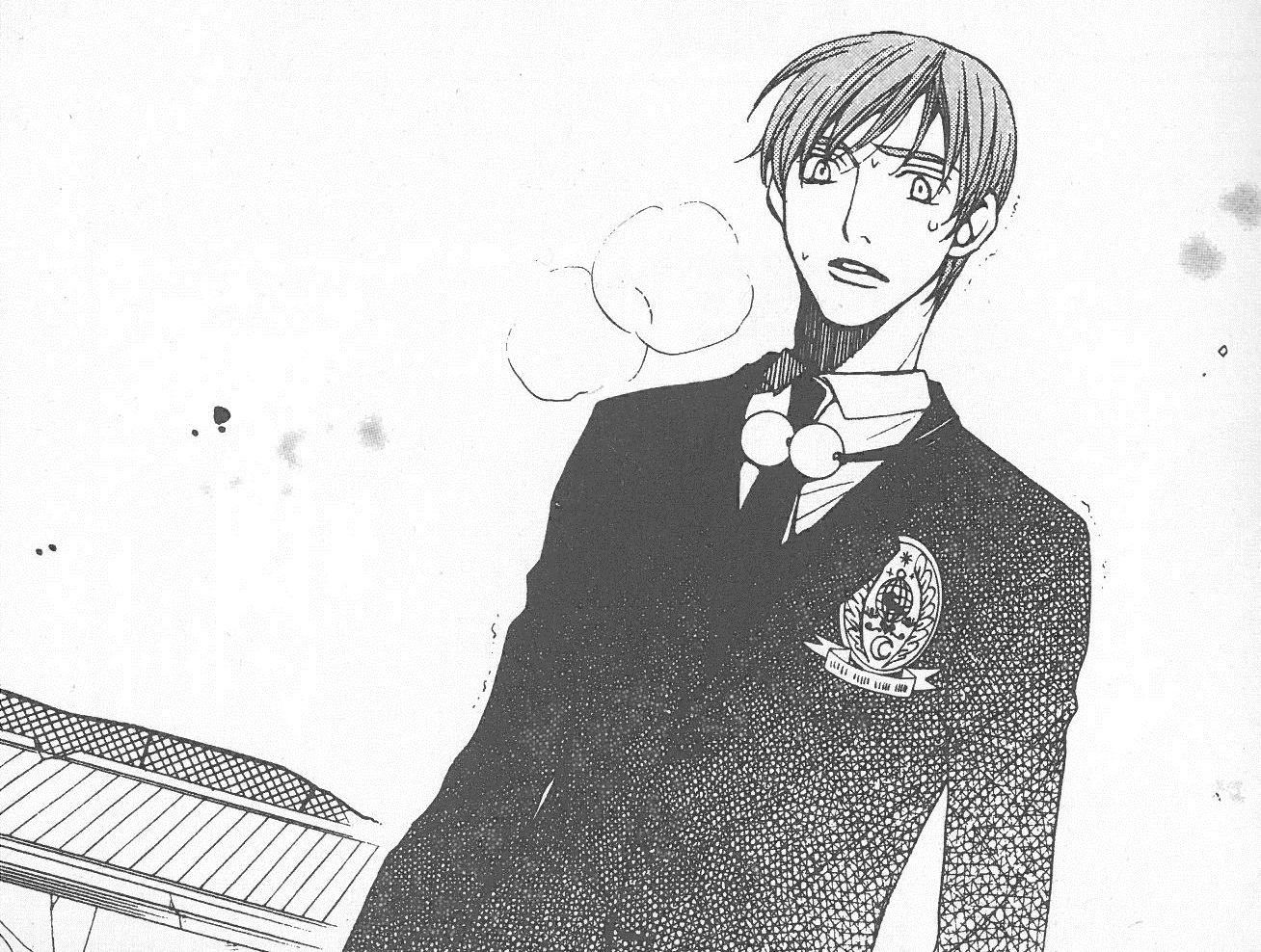
After School Nightmare, Volume 7, page 35While Mashiro is the lead character in After School Nightmare and much of the manga’s focus in on his personal struggles and growth, both Kureha and Sou have major roles to play as well. After School Nightmare, Volume 7 reveals more about them and their unfortunate family circumstances than ever before. Surprisingly, Kureha actually returns home to visit her parents for a time, though she still harbors ill-feelings towards them due to the trauma she suffered in the past. The exact nature of the unpleasant ordeals that Sou has lived through and has never quite recovered from are exposed in the volume as well. Mizushiro isn’t afraid to go in some very dark directions with After School Nightmare. Many if not most of the characters are dealing with the lasting repercussions of abuse, whether it be mental, physical, emotional, sexual, or some combination of the four. Perhaps even more tragically, at times this maltreatment is even self-inflicted.

In addition to Sou and Kureha, there is another character whose backstory is specifically explored in After School Nightmare, Volume 7—Koichiro Kurosaki, Mashiro and Sou’s upperclassman from the kendo club. Throughout the series, Koichiro has been something of a cipher. He comes across as well-adjusted and mature, but also distant and reserved. Frequently Mashiro comes to him seeking advice and Koichiro, calm and collected, provides guidance seemingly without judgement. However, in the seventh volume, it is revealed that he, too, is struggling with his own family problems and personal issues. Koichiro’s very careful in how he presents himself, but his vaguely unsettling cool exterior is a cover for a much more troubled and darker personality. Because he has earned the respect and trust of others, Koichiro is in a position to inflict some truly significant harm should he choose or allow himself to do so. This sort of intense, psychological drama in After School Nightmare is part of what makes the series so chilling.

Filed Under: REVIEWS Tagged With: after school nightmare, Go! Comi, manga, Setona Mizushiro

Black Bullet: Against A Perfect Sniper

December 17, 2015 by Sean Gaffney

By Shiden Kanzaki and Saki Ukai. Released in Japan by ASCII Mediaworks. Released in North America by Yen Press.

Tempting as it may be, I can’t simply point to my review of the first volume of Black Bullet and say “Exactly what I said before, only with an added loli.” And it is tempting. Black Bullet’s strengths – its action scenes and politics – are still very strong, and its weaknesses – all of its anime cliches – are still there and pandering. There were mercifully a few less pedophilia jokes this time around, but that was made up for by added harem and boob jokes. But its strengths are quite strong, and given that this is a text medium and the illustrations aren’t too bad, it’s easier for me to ignore the service and focus on the grim dystopia of this world and the shiny, shiny young woman attempting to change things despite everything.

bb2

We get far more of what makes Seitenshi tick in this volume, and like Rentaro, I can appreciate what she’s doing while worrying about her good sense. People like her tend to have low survival rates in crapsack worlds like this one, and when she’s up against a stronger politician like the leader of Osaka, she doesn’t give in but does seem to be working from a weaker position. It’s very telling that Rentaro tells her to her face that her main force of bodyguards are basically goons, and by the end of the book… they’re still her bodyguards, they just got yelled at for trying to kill a who had, admittedly, tried to kill Seitenshi numerous times.) As I did with Kisara in the first novel, I wish we could get more from Seitenshi’s POV, but I know better than to expect something like that.

The other new character is Tina Sprout, a Cursed Child whose character arc, while heartwarming, is almost entirely predictable. She befriends Rentaro without either of them knowing who the other one is, and he becomes the one person who doesn’t treat her horribly. She’s also very broken, as all the Children are, and tries to avoid killing when she doesn’t have to (though she manages to take out Enju enough that she’s absent from the 2nd half of the book – which allows her and Rentaro to have a one on one battle). And naturally, he is able to see the good inside of her and decides to save her. As I said, there’s nothing particularly bad about her story as it’s written, it’s just that if I described the character and asked a reader to tell me what happens to her, most could do so without even looking.

This is still a grim book series, and the humor that it has tends to revolve around a) people thinking Rentaro is a lolicon, or b) Kisara and her rival, the student council president girl introduced here, getting furious with each other and attempting to seduce a deliberately oblivious Rentaro. That said, I did laugh out loud at one passage, possibly my favorite in the book, where Seitenshi and Rentaro are preparing to meet with the leader of the Osaka area. Rentaro has met him before when he was a child and being trained to rule the world (or at least that’s what his training seems like from flashbacks). Seitenshi asks him nicely not to get angry or say rude things. He then walks in and is even ruder than I expected him to be, gets even angrier, and never even bothers to apologize. It’s possibly the most emotion he shows all book, and I hope we get more of this sort of thing next time around.

Filed Under: REVIEWS

Boys Over Flowers: Season 2

December 15, 2015 by Anna N

Boys Over Flowers Season 2 by Yoko Kamio

Boys Over Flowers Season 2 is available for free on a chapter by chapter basis on the Viz Manga app, Comixology, and on the Kindle.

I was a little hesitant about starting this series, which is a bit odd, because I absolutely adore Boys Over Flowers. I’ve collected the manga, and watched many of the tv adaptations of the property. I was worried that a return to Eitoku Academy would feel a bit stale. While this series doesn’t exactly feel fresh and new, Kamino is such an assured creator, it mostly won me over.

bof2

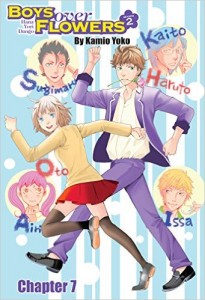
The social gap that was caused by the departure of the F4 has been filled by a new gang of students – the Correct 5. They are but a pale imitation of the F4, and they are lead by Haruto, a short boy with a penchant for superstition and ordering random quack objects out of the back of magazines. Haruto is joined in his misadventures by his right hand man Kaito, who seems reasonable and sane. There are two other male members, Sugimaru (the strong one), and Issa (mostly invisible). The Correct 5 is rounded out by Airi, a girl who you can tell is evil due to her curly pigtails.

The not-Tsukushi main female character is Oto, who is attending Eitoku while working a variety of side jobs. She used to be rich, but her family has fallen on hard times. She’s keeping up the pretense that she can actually afford to go to Eitoku, but the Correct 5 are determined to drive any poor students out of school, in order to try to better its standing. It seems like when the F4 left, much of the glamour that attracted students went too, and the school is struggling especially when compared to upstart Momonozono Academy.

Oto and Haruto meet when he isn’t able to send his butler in to the convenience store where she works to pick up his bizarre mail order packages. Haruto is worried about his secret being uncovered, and Oto isn’t afraid to try to blackmail him in order to keep her status as a student. One of the things I appreciated about Oto was her guarded personality. The first Boys Over Flowers was a bit more dynamic because Tsukushi was always so vocal, but Oto is doing her best to stay under the radar, to the point where she’s actually repressing her impulses.

bof2b

Haruto is an absolute idiot, but he’s somewhat adorable in his lavish lifestyle, slavish devotion to the memory of Tsukasa, and bumbling reactions to Oto as he begins to realize that he has a crush on her. One of the things that I didn’t like much about the chapters that have been released so far, is that the rest of the Correct 5 haven’t really had their personalities filled in yet. I thought that the first Boys Over Flowers did a better job balancing out and introducing the cast of characters and giving everyone a chance to develop. To be fair, Kamino does realize this, there’s a side story about Issa making the point that he never actually shows up in the manga, so I’m hoping that there will be more plot development later on.

Kamio’s art is great – she has a facility with facial expressions that make the funny scenes teeter on the edge of caricature while still seeming fully human. Really, my main quibble with this series is that it does suffer in comparison with the original. It was a bit telling that one of the most exciting moments in this series was when one of the original members of the F4 popped back for a very brief cameo. There are cliffhangers at the end of every chapter, and it did want to keep reading once I got going. I appreciate that Viz is experimenting with a free, digital release for Boys Over Flowers Season 2 and I hope it leads to more digital shoujo!

Filed Under: REVIEWS Tagged With: boys over flowers second season, shoujo, viz media

Shigeru Mizuki’s Hitler

December 15, 2015 by Sean Gaffney

By Shigeru Mizuki. Released in Japan as “Gekiga Hitler”by Jitsugyou no Nihonsha, serialized in the magazine Manga Sunday. Released in North America by Drawn and Quarterly.

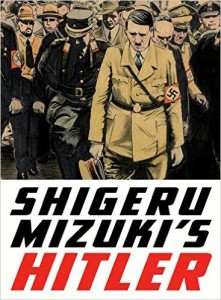
It saddens me to be writing this review now that Mizuki has passed on, but I am pleased that his work is still coming out to entertain and fascinate us all. Showa just completed, we have this new Hitler volume, and Kitaro finally gets a broader release in 2016. He spent his life creating works that will remain behind long after his death. And that includes this book, which was called something like Hitler: The Graphic Novel in Japan, but has been retitled here. And it fits, as the Hitler we’re seeing here feels more like Mizuki’s than it does history’s. This isn’t to say that Mizuki hasn’t done his research: everything is carefully couched in the history that we know (which is not as much as we’d like to). But as the book goes on and we dig deeper and deeper into the darkness of Hitler and the Nazi party, he becomes his own caricature.

hitler

We start off with Hitler as a starving artist, not looking unlike what Kitaro might look if he grew up. Those familiar with Showa will know what we’re getting here, though he did this work first: a combination of historical textbook mixed with dramatized scenes. The dialogue not taken directly from Hitler’s speeches is very perfunctory and drab, deliberately so, I believe: these are real human beings deciding to commit all these atrocities in the name of power, and it wouldn’t do to make their evil more grandiose than it needs to be. As the book goes on, we continue to see Hitler’s rise to power and eventual realization, during World War II, that he’s on the losing side. Most of the major points are kept: his disturbing relationship with his niece, his failing health towards the end, his power of rhetoric swaying opinions – and when that doesn’t work, killing anyone who opposes him.

The introduction notes that Western readers might be surprised at how little the Holocaust was mentioned. I was *very* surprised – it gets one page, right near the end, but other than that and Hitler ranting about Jews a few times in the first half of the book, we get almost nothing about concentration camps or anything else – most of the WWII history is confined to troop movements and leadership positions. To be fair, there are a LOT of famous people in this book, and Mizuki wants to keep it simple by focusing on the politicians he’s sure Japanese readers will know. Still, it’s a startling gap in the book.

The best reason to read this book is Mizuki’s art, in particular his facial expressions. This has always been a strong point of Mizuki’s, but it’s almost sublime here, as his Hitler’s desperate, snorting face gives the pent-up emotion that the dry dialogue can’t necessarily carry. (Some of the funniest moments have Hitler reacting to horrible events with a simple “gyah!”.) Goebbels in particular is amazing, as Mizuki decides about 3 pages after his introduction to try to draw him like some sort of twisted Picasso face, attempting to slide off the page every time we look at it. It’s so fitting for Goebbels that I can’t help but laugh. Each caricature looks like the man portrayed, yes also exaggerates them to ridiculous heights.

If you’re looking for a good overview of Hitler’s rise to power, I think there are better books. But for a book showing us Shigeru Mizuki’s unique take on Hitler, and his ability to show off the man’s unique evil in his own style, this is a great choice. Also for amusement, try to add up the times we see Hitler doing the standard “Mizuki snort of rage” pose.

Filed Under: REVIEWS

Pick of the Week: Overabundance

December 14, 2015 by Sean Gaffney, Ash Brown, Anna N, Michelle Smith and MJ 2 Comments

kizuSEAN: There’s about a dozen titles I could pick here, including any number of debuts from Yen, or final volumes from Vertical, or even fantastic shoujo from Kodansha and seinen from Viz. But my pick of the week will be Kizumonogatari, the novel by Nisioisin that is the introduction to the popular Monogatari universe, showing how our hero got to be what he is today. I’ve loved this author’s work ever since I read the first Zaregoto back in 2008, and can’t wait to bury myself in it.

ASH: Sean’s right, there are plenty of great releases to choose from this week, including some of my personal favorites like Dorohedoro. However, I’m especially excited for the debut of Yowamushi Pedal. I’m very happy to see sports manga being released in English again and I don’t at all mind the series’ BL undertones, whether they be real or imagined.

ANNA: I’m also going to throw my vote to Yowamushi Pedal. Sports manga comes out so rarely here, I feel like every new title should be celebrated.

MICHELLE: My pick goes to volume one of Of The Red, the Light, and the Ayakashi. The art and the emphasis on the supernatural remind me of Natsume’s Book of Friends, which is one of my favorite series, but there are quite a few active mysteries and questions in this new series that presumably relate to its visual novel origins. Check it out!

MJ: There’s a lot to be happy about this week, including all my colleagues’ picks, so I’ll do my duty here and keep banging the drum for my beloved Pandora Hearts! We’ve been waiting a long time for this volume, and there is so much hanging in the balance! You can be sure this is at the top of my list this week.

Filed Under: PICK OF THE WEEK

My Week in Manga: December 7-December 13, 2015

December 14, 2015 by Ash Brown

My News and Reviews

Okay! Last week I submitted my promotion dossier at work, which means I’ll be able to start paying more attention to Experiments in Manga again. I still have a few other life things preoccupying me at the moment, but I’m hoping to get back to my normal posting schedule by the beginning of the new year if not before. That being said, I only posted one in-depth review last week. Soji Shimada’s classic mystery novel The Tokyo Zodiac Murders was recently re-released in English, which seemed as good an excuse as any to get around to reading it. According to this interview with Shimada, if The Tokyo Zodiac Murders does well, the next book in the series might be translated, too, which I would definitely like to read.

As for other interesting things found online: Seven Seas’ ten-day licensing spree has now wrapped up. (The new license tag on Seven Seas’ tumblr is probably still the easiest place to see them all at once.) Out of all the announced titles the one I’m most curious about is Ichiya Sazanami’s Magia the Ninth which features master composers as demon hunters with music-based magic. (Sazanami is the creator of Black Bard which I likewise couldn’t resist because of the combination of music and magic.) And in case you need to catch up on all of the anime, manga, and light novel licenses announced in 2015, Reverse Thieves has you covered. Also of note, Manga Brog has translated an excerpt of an interesting interview of Kentaro Miura, the creator of Berserk.

Quick Takes

Captain Ken, Volume 1Captain Ken, Volumes 1-2 by Osamu Tezuka. I think that I’ve mentioned here before that I happen to have a particular fascination with Mars, which was one of the primary reasons that I was interested in reading Captain Ken. Of course, it didn’t hurt that series was also created by Tezuka. (Though granted, I would love to see more classic manga that isn’t by Tezuka released in English.) Captain Ken is basically a western in space—Mars has been deliberately developed to be reminiscent of the American Southwest, the primary mode of transportation is by (robotic) horse, and the Martians have met with the same tragic fate as the Native Americans. The series is an odd mashup of science fiction and western genre tropes and American history, including references to World War II and the dropping of the atomic bomb. (The portrayal of Americans, perhaps justifiably, isn’t especially flattering.) Captain Ken explores the same themes of anti-war and anti-discrimination found in many of Tezuka’s other manga. Overall, it’s an entertaining adventure story with a rather bittersweet ending.

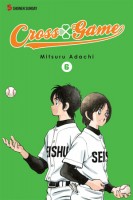
Cross Game, Omnibus 6Cross Game, Omnibuses 6-8 (equivalent to Volumes 12-17) by Mitsuru Adachi. I still don’t have much of an interest in baseball when it comes to real life, but I’m completely invested in the sport when it comes to Cross Game. I’ve come to care tremendously about the characters in the series and, because baseball is incredibly important to so many of them, by proxy the baseball is important to me as well. Cross Game‘s last three omnibuses focus on the final year of high school baseball for Ko and his classmates. In fact, the eighth omnibus is almost entirely devoted to a single game—the last opportunity for the Seishu team to make Wakaba’s dream of seeing them play at summer Koshien a reality. They’ve worked hard as a team and have several players who are individually impressive as well, but that never guarantees a win. I’ve watched the Cross Game anime series, which turns out to have been a very faithful adaptation, so I knew how things would end. Even so, the manga is incredibly engaging and has a ton of heart. I never expected to be so taken with a baseball manga, but Cross Game is excellent.

U Don't Know MeU Don’t Know Me by Rakun. After a somewhat dubious beginning, I ended up really enjoying U Don’t Know Me. Plot-wise there’s a lot packed into this one-volume boys’ love manhwa and the characterization is quite good as well. Seyun and Yoojin are childhood friends who have only recently come to realize that they share feelings for each other which are much more lustful in nature. While the manhwa is primarily about Seyun and Yoojin and the evolution of their friendship into a romance, their relationships with their friends and families are also extremely important to the story. Context is provided for their love for earch another and the implications of that love. My favorite part of U Don’t Know Me was actually the response of the boys’ parents upon discovering their sons’ intimate relationship. Initially they were shocked and upset, but they ultimately give their love and support and are very involved in ensuring the well-being of both young men. The realistic portrayal of this sort of positive acceptance seems to be something of a rarity in boys’ love, so it makes me particularly happy when I see it.

Filed Under: FEATURES, My Week in Manga Tagged With: Captain Ken, cross game, manga, manhwa, Mitsuru Adachi, Osamu Tezuka, Rakun

Bookshelf Briefs 12/14/15

December 14, 2015 by Sean Gaffney and Michelle Smith Leave a Comment

Sean and Michelle are at it again.

bm1Bloody Mary, Vol. 1 | By Akaza Samamiya | Viz Media – Given the glut of vampire titles on the market these days, I usually try to find something different about a debut that helps it to stand out from the pack. Sadly, I’m not sure I got anything from Bloody Mary, which has just gotten started but didn’t really leave me with a desire to continue. While not a BL title, the author has done a lot of BL, and the subtext is certainly there—the two leads are a somewhat puppyish uke and a somewhat sadistic seme. And there’s lots of secrets, and traditions, and amnesia, and a somewhat smug female vampire who I suspect will be dead in 2-3 more volumes. Honestly, while not a BL title, that may be its best audience—there’s something for them here. Vampire fans might want to look elsewhere. – Sean Gaffney

choc3Chocolate Cosmos, Vol. 3 | By Nana Haruta | VIZ Media (digital only) – There’s no escaping the fact that Chocolate Cosmos is a stereotypical shoujo manga. In this volume, for example, Valentine’s Day has arrived and Sayuki Sakurai is determined to confess her love to baby-faced teacher Katsuya Hagiwara, oblivious to the fact that her childhood friend has feelings for her. That said, I applaud Hagiwara for shutting down her fantasies, and must say that I really do have no idea who Sayuki is going to end up with (though this is partly due to having zero insight into Hagiwara’s thoughts and feelings). Probably if this series were any longer, I would not feel so charitably towards it, but it’s short (concluding in the next volume) and pleasant, and sometimes those attributes are enough to induce me to see a series through to the end. – Michelle Smith

thorns1Crown of Thorns, Vol. 1 | By Yoko Kamio | VIZ Media (digital only) – Prickly loner Nobara Fukami has no patience for her fake and manipulative classmates. She’s also been hearing an eerie voice in her head since the age of five, and when she turns sixteen, the demon finally manifests corporeally and tasks her with creating orbs of human negativity that he’ll consume to gain rank in the demon hierarchy. There are reasons why Nobara is obliged to comply, but she’s a strong heroine and resists being cast in the servant role. After demanding to be treated as an equal partner, she ultimately finds that the demon (whom she dubs Lucio) understands her better than anyone else ever has. I really enjoyed this debut volume and am kind of bummed that the series is complete in two volumes. I hope we get Cat Street next! – Michelle Smith

foodwars9Food Wars!: Shokugeki no Soma, Vol. 9 | By Yuto Tsukuda and Shun Saeki | Viz Media – Soma may be the star of the show, but as a Jump manga we also get to see the supporting cast develop and grow. Megumi’s arc was my favorite in this particular volume—she lost, yes, that was expected given the genre and the fact that it’s a tournament arc. But her excitement and drive to test herself further is what’s really important here. Likewise, Alice’s defeat is a humbling lesson on needing to see the entire picture when making a meal. I’m not sure if Soma’s going to win this thing—given the clichés of the genre, he should be defeated before the finals—but whatever happens, he’ll get something important out of it as well. Also, as always, completely hungry after reading this, this time for hamburgers. – Sean Gaffney

komomo2Komomo Confiserie, Vol. 2 | By Maki Minami | Viz Media – Komomo was a bit of a spoiled brat in the first volume, but having been appropriately humbled, she may be shifting a bit too much to the other direction, as she’s almost a saint in this book. Admittedly this is something that Maki Minami does in all her titles, as the men in them stand agog at the perfection of their respective love interests. This one’s not as long as Special A or Voice Over!, so we’ll see if it wears out its welcome before the end. ‘Til then, this isn’t deep, but is fun and light. Also, if you believe that “arranged marriage is likely void” line, I have a bridge in Brooklyn to sell you. Don’t be surprised if this is a future plot twist—indeed, we may have met the other party already. – Sean Gaffney

ayakashi1Of the Red, the Light, and the Ayakashi, Vol. 1 | Story by HaccaWorks*, Art by nanao | Yen Press – I didn’t know anything about this series before I started reading it. Literally, I judged it by its cover (“Ooh, pretty!”) and was intrigued enough to flip through it. The charmingly wispy-looking artwork convinced me that it was indeed my sort of manga, and now that I’ve read it I’m happy I took the chance. In look and feel, Of the Red… reminds me of Natsume’s Book of Friends, one of my favorite series, but it’s more plot-driven (thanks to its visual novel origins, I presume), as it takes place in a town whose station passing trains never seem to notice and whose inhabitants have a way of disappearing. Yue and his two new friends resolve to find out who’s responsible, but he hasn’t told them that he’s supposed to choose one of them for his next meal. I’m really looking forward to volume two! – Michelle Smith

silentvoice4A Silent Voice, Vol. 4 | By Yoshitoki Oima | Kodansha Comics – As predicted, things continue to get complex for our lead couple… well, not really a couple. Shoko may have realized she loves Shoya, but she can’t communicate this to him. And given Shoya is having trouble understanding the concept of basic friendship, I’m fairly certain he’s not remotely ready for love. Meanwhile, Naoka proves to be even more appalling than I was anticipating, trying to get us to understand that her victim blaming is just as valid. And worst of all, a tragedy leaves Shoko and her sister without one of the few good things in their life. A Silent Voice may not be a romance, but it’s certainly a dramatic potboiler, and I worry things will get even worse before they get better, but I’m there reading it anyway. – Sean Gaffney

Filed Under: Bookshelf Briefs

Black Rose Alice, Vol 6

December 13, 2015 by Anna N

Black Rose Alice Volume 6 by Setona Mizushiro

I was disappointed when I realized a couple volumes in to this series that it was on hiatus in Japan. But by that time I was thoroughly won over by Mizushiro’s surreal and unique take on vampires and the tragic tone of the manga in general. It turns out that I shouldn’t have been worried too much, because while this volume doesn’t wrap up all the possible loose ends in the series, it does provide a satisfying conclusion.

Dimitri is away, and Alice and the twins are living in the house, dealing with the aftermath of Leo’s death. The twins’ backstory is told through flashbacks, and it is just as dark as one might expect from this series. Neither twin seemed like particularly great humans, but Kai’s actions are particularly despicable, making his current more winning personalty stand out in contrast to his past actions. There’s a moment of levity injected into the household when Dimitri returns home with a human woman who he once saved from a horrible assault, promising to make her his vampire bride. Now Akari is all grown up, and determined to experience the most cliched date possible with Dimitri by her side. This prompts feelings of jealousy in Alice, and an emotional confrontation.

As far as endings go, this volume concludes with one that is about as happy as it is possible to get, considering that everyone is doomed. Black Rose Alice is such a delightfully odd series, one that doesn’t turn aside from the darkness in human (or vampire) nature. It is a more mature, and quirky addition to the Shojo Beat family. I highly recommend it. This is one of those series that I’ll take down from the bookshelf and reread every few years.

br6

Filed Under: REVIEWS Tagged With: Black Rose Alice, shojo beat, viz media

Planetes, Vol. 1

December 13, 2015 by Sean Gaffney

By Makoto Yukimura. Released in Japan by Kodansha, serialized in the magazine Weekly Morning. Released in North America by Dark Horse Comics.

This title has been a fan favorite ever since Tokyopop first released it back in 2003. Now it’s rescued, with a new translation, color artwork throughout, and a larger trim size as two omnibuses. This first one covers the first 12 chapters, ending with Hachimaki’s vision quest, which is an excellent cliffhanger. Rereading it, I was reminded why I found the series so enthralling – it combines interesting and flawed characters, a political thriller plot, and of course the beauty of space exploration, and why people want to go to space, though it makes sure to note that sometimes what people do to get to space can be morally questionable.

planetes1

Like many titles, the series starts off feeling like a series of one-shots, possibly as it was – many titles are given a chapter or two before they get picked up, which also explains such glitches as Hachimaki’s hair. From the start, though, we have the basical – Hachimaki, Yuri and Fee command a debris collecting ship, making sure that the worst of the objects that litter space are removed so that there’s less risk of an accident. We open on one such accident, which weights heavily on Yuri, the first of our cast we really meet. Ironically, his character arc pretty much finishes in this volume, as he is able to let go of his wife’s death and move on. Likewise, Fee is a wife and mother whose biggest issues are trying to find a place to have a smoke in peace – she’s more of a mentor figure, as well as providing comedy through physical and verbal violence and in her spare time saving all of Earth from cosmic disasters.

No, it’s clearly Hachimaki, and later Tanabe, who are going to be the stars of our show. Hachi is really irritating in that “I am 23 and therefore know better than anyone else” sort of way, and spends much of his time angry at the world, his colleagues, and himself, not in that order. He wants to control his own destiny, but his idea of doing whatever it takes to achieve it feels wrong, especially since we get to contrast it with the creepy villain Locksmith, who is able to write off the death of hundreds in an explosion as good data for his next attempt. In contrast, Tanabe is all heart, and while she’s just as angry and headstrong as Hachi the narrative seems to be on her side most of the time. The two of them are also falling for each other hard, though Hachi finds this idea irritating more than anything else.

This is an expansive series that is not afraid to shift its focus and open up its cast. We meet Hachi’s eccentric father, down-to-earth mother and determined brother; a young girl who’s lived her whole life on the moon due to health issues; and of course various terrorists, who pepper the entire book trying to destroy everything Locksmith and Hachi are working on. No one is presented as totally right or wrong here, though certainly violence is shown to be the wrong answer in general. Towards the end of the book Hachi finally gets onto the crew headed to Jupiter, but a combination of three near-death experiences over the course of the first volume have him questioning everything about himself and what he’s doing. This reaches a point of ridiculousness at the end, when he’s able to somehow stay alive for a week in his spacesuit while having a vision quest.

Planetes is simply a great manga. It has an interesting plot, character growth and depth (Hachi is far less hotheaded by the end), and some gorgeous art. It also rewards us by showing the joys and sorrows of space travel, and why we should still strive to achieve it, despite everything. Even if you’ve already got the Tokyopop volumes, I recommended getting this spiffed up new edition. You can fall in love with it all over again.

Filed Under: REVIEWS

  • « Go to Previous Page
  • Page 1
  • Page 2
  • Page 3
  • Page 4
  • Go to Next Page »
 | Log in
Copyright © 2010 Manga Bookshelf | Powered by WordPress & the Genesis Framework