• Skip to primary navigation
  • Skip to main content
  • Skip to primary sidebar
  • Home
  • About Us
    • Privacy Policy
    • Comment Policy
    • Disclosures & Disclaimers
  • Resources
    • Links, Essays & Articles
    • Fandomology!
    • CLAMP Directory
    • BlogRoll
  • Features & Columns
    • 3 Things Thursday
    • Adventures in the Key of Shoujo
    • Bit & Blips (game reviews)
    • BL BOOKRACK
    • Bookshelf Briefs
    • Bringing the Drama
    • Comic Conversion
    • Fanservice Friday
    • Going Digital
    • It Came From the Sinosphere
    • License This!
    • Magazine no Mori
    • My Week in Manga
    • OFF THE SHELF
    • Not By Manga Alone
    • PICK OF THE WEEK
    • Subtitles & Sensibility
    • Weekly Shonen Jump Recaps
  • Manga Moveable Feast
    • MMF Full Archive
    • Yun Kouga
    • CLAMP
    • Shojo Beat
    • Osamu Tezuka
    • Sailor Moon
    • Fruits Basket
    • Takehiko Inoue
    • Wild Adapter
    • One Piece
    • After School Nightmare
    • Karakuri Odette
    • Paradise Kiss
    • The Color Trilogy
    • To Terra…
    • Sexy Voice & Robo
  • Browse by Author
    • Sean Gaffney
    • Anna Neatrour
    • Michelle Smith
    • Katherine Dacey
    • MJ
    • Brigid Alverson
    • Travis Anderson
    • Phillip Anthony
    • Derek Bown
    • Jaci Dahlvang
    • Angela Eastman
    • Erica Friedman
    • Sara K.
    • Megan Purdy
    • Emily Snodgrass
    • Nancy Thistlethwaite
    • Eva Volin
    • David Welsh
  • MB Blogs
    • A Case Suitable For Treatment
    • Experiments in Manga
    • MangaBlog
    • The Manga Critic
    • Manga Report
    • Soliloquy in Blue
    • Manga Curmudgeon (archive)

Manga Bookshelf

Discussion, Resources, Roundtables, & Reviews

viz media

Real, Vol. 2

March 9, 2014 by Ash Brown

Real, Volume 2Creator: Takehiko Inoue
U.S. publisher: Viz Media
ISBN: 9781421519906
Released: October 2008
Original release: 2002
Awards: Japan Media Arts Award

Although I wouldn’t necessarily consider myself to be a sports fan, I have come to the realization that I really enjoy sports manga. Out of all of the sports manga that I’ve so far read, Takehiko Inoue’s wheelchair basketball series Real is the one that stands out for me the most. (Actually, Real happens to be one of my favorite manga series in general.) But it’s really more than just a sports manga. Yes, basketball is an important part of the series, but to an even greater extent Real is about challenges faced in life and how people deal with them. It’s a mix of human drama, tragedy, and hope that earned Inoue a Japan Media Arts Award Excellence Prize in 2001. The second volume of Real was first published in Japan in 2002 while the English edition was released in 2008 by Viz Media under its Signature imprint. Real, Volume 1 did a fantastic job of introducing the series’ main characters and establishing some of the themes that the manga begins to explore more deeply in the second volume and those that follow.

After his accident, Takahashi no longer has the use of his legs. Confined to a hospital bed and with very few visitors he has had to come to terms with his condition largely on his own. He had good grades and excelled at whatever he applied himself to, becoming the captain of his high school’s basketball team with ease. No longer having the ability to walk is a devastating blow to Takahashi and how he is viewed by others and by himself. It won’t be an easy process to compensate for what he has lost. It’s been five years since Togawa lost one of his legs to bone cancer and that’s something he continues to struggle with. He still has most of his mobility, but having a leg amputated brought his dream of becoming the fastest sprinter in Japan, if not the world, to an abrupt end. An extremely competitive athlete he has redirected his ambitions towards wheelchair basketball, now one of the few things in his life for which he has any enthusiasm. Nomiya has a strong love for basketball as well, but as a high school dropout he currently has no outlet for that passion.

A large portion of Real, Volume 2 is devoted to Togawa and part of his backstory. The series turns to his middle school days as he is discovering his love of running, struggling with his relationship with his father, and developing strong, lasting friendships. Immensely talented, it is crushing to know that Togawa will never achieve his dream even as everything seems to be going his way. Just as Takahashi is now being forced to admit his limitations, Togawa also had to deal with events in his life that were beyond his control. The interplay between their two stories in Real is handled extraordinarily well. The two young men have never met, their only direct connection at this point is that they both know Nomiya, but Inoue draws on the parallels between their experiences to great effect. Takahashi is at the beginning of his recovery while Togawa has made years of progress, but the challenges that they face are very similar. Their personalities and how they handle things are very different, though.

Parallels also exist between Togawa and Nomiya. They are both very focused and intense, taking any and all opportunities that they can to practice and improve their game. Even when Togawa, Nomiya, and Takahashi’s stories don’t directly intersect, they are all still very closely tied together. The second volume of Real is very much about beginnings and endings. After originally leaving his basketball team, Togawa has found new drive and inspiration that brings him back. Nomiya doesn’t have the option of returning to his old team and can only watch from the sidelines as his former teammates play their last game. As for Takahashi, he can’t even do that. His denial is slowly turning into agonizing despair as he comes closer to admitting to himself that his life will never be the same. Inoue captures all three of their struggles in a very realistic way. The story is emotionally intense without being melodramatic and the artwork is fantastic, making Real and incredibly effective series.

Filed Under: REVIEWS Tagged With: Japan Media Arts Award, manga, real, Takehiko Inoue, viz media, VIZ Signature

Real, Vol. 1

March 2, 2014 by Ash Brown

Real, Volume 1Creator: Takehiko Inoue
U.S. publisher: Viz Media
ISBN: 9781421519890
Released: July 2008
Original release: 2001
Awards: Japan Media Arts Award

When I first began reading Takehiko Inoue’s manga series Real it was simply because it was the only work of his that my local library had at the time. I was already familiar with and loved Inoue’s fantastic artwork but I hadn’t actually yet read any of his manga. The series that I really wanted to read was Vagabond, but it happened to be Real that was more readily available. Little did I know that Real would not only end up being my favorite series by Inoue, it would become one of my favorite manga period. I honestly believe that Real is one of the best comics currently being released in English. The first volume of Real was published in Japan in 2001, the same year that Inoue won a Japan Media Arts Award for the series. Viz Media released the English-language edition of Real, Volume 1 in 2008 under its Signature imprint.

Ever since he quit the Nishi High School basketball team, nothing seems to be going right for Tomomi Nomiya. His life is changed forever when he is involved in a motorcycle accident. Nomiya comes through it relatively unharmed, at least physically, but Natsumi Yamashita, the young woman who was riding with him, is no longer able to walk. While visiting her at the hospital Nomiya meets Kiyoharu Togawa, another young man who, like him, has a passion for basketball. He’s incredibly talented, but with only one leg it’s wheelchair basketball that has become his outlet. Thus begins a somewhat antagonistic friendship between Togawa and Nomiya. And then there is Hisanobu Takahashi, one of Nomiya’s former classmates and the current captain of Nishi High’s basketball team. He may have the skills on the court, but he has an extremely arrogant attitude and delights in making Nomiya and his friends miserable. But soon he’ll have some serious challenges to face in his own life as well.

In general, Inoue’s artwork in tends to be very realistic, with a particular focus on characters and their designs. This is certainly true for Real, and his style suits a story that emphasizes real-life issues as the source of its drama incredibly well. The characters’ personalities and attitudes can easily be determined by their actions and how they are drawn. When Nomiya is first introduced, he seems to be nothing more than a delinquent. And to some extent he is a delinquent, frequently getting into fights and finding ways to scam rich kids out of their money. But he is also exceptionally kindhearted and accepting of others. Nomiya’s facial expressions and body language range from pure anger to utter delight. Togawa, on the other hand, more often than not has a smirk or sneer on his face and barely manages to suppress his extreme irritation. He has absolutely no patience for people who can’t take themselves or what they are doing seriously and it shows. At times Nomiya and Togawa’s respective intensity can be both frightening and exhilarating.

At its heart Real is very much a manga about its characters and how they deal with the challenges and setbacks in their lives. Basketball is simply a part of that because the game is important to the characters as individuals. The first volume of Real does an excellent job of introducing the main players of the series–Nomiya, Togawa, and Takahashi. In one way or another, each one of them is searching for some direction in their lives. It is their passion for basketball that provides some of that needed purpose. Nomiya struggles a great deal with the guilt he feels over the incident that cost Natsumi the use of her legs; his love of basketball is the only thing that really remains from before the accident. Togawa holds onto a tremendous amount of anger that playing basketball helps to keep under control. As for Takahashi, his talent for basketball was one of the few things that secured his popularity. But even considering the important role that basketball plays in Real, it is not at all necessary to be a fan of the game to be able to appreciate the manga.

Filed Under: REVIEWS Tagged With: Japan Media Arts Award, manga, real, Takehiko Inoue, viz media, VIZ Signature

Dawn of the Arcana Vols 11 and 12

February 19, 2014 by Anna N

Dawn of the Arcana Vol 11 by Rei Toma

Dawn of the Arcana is a series that I think is best experienced in mini bursts of 2 or 3 volumes, simply due to the deliberate pace of the storytelling in the manga, as well as the fact that it sometimes takes a half volume or so for my brain to kick in with my memories about what happened in the previous volume due to all the relationships developing and the shifting nature of the geopolitical situations happening in Toma’s world. Usually I’m far too impatient to let the volumes pile up like this though!

After 10 volumes, the new status quo for red haired socially outcast with alarming powers of precognition Princess Nakaba and formerly arrogant but really a nice guy who has a social conscience inspired by the power of love Prince Caesar is to be separated. Nakaba has returned to Senan, determined to do some ruling in her own right, and Caesar is back in his home country of Belquat, dealing with his evil family. This volume shows the emotional impact of Nakaba’s power, the Arcana of Time, as she is determined to save the outcast child of a village that is in the direct path of an avalanche. This becomes a story that further explores the position of the humanoid animal hybrid race called ajin, as Lala the child with bunny ears is actually the product of a human/ajin encounter, leading to her abandonment. Lala has one human friend, and Nakaba’s ever present ajin protector Loki is there to save the day as always.

Loki always seems to have a new revelation every few volumes, either about his emotions or background, and a secret is revealed in this volume that shows that he and Nakaba have even more in common than I previously thought. While there’s the more conventional romantic storyline with Caesar and Nakaba, I actually find Nakaba’s relationship with Loki much more interesting, as they trade off protector duties in unexpected ways. Nakaba decides to take power in her home country, and her choices are largely driven by wanting to prevent Loki from going too far for her.

Dawn of the Arcana Vol 12 by Rei Toma

Everything keeps zipping along, as now that Nakaba and Caesar are in power in their respective countries, they have a chance to finally see each other again, when Caesar is ordered to invade Senan. Nakaba’s been looking in on Caesar and remarks that he’s going to start a revolution, so she’s “Here to lend a hand.” Nakaba’s power also provides Toma with a great way of providing more backstory about her characters. Nakaba looks back at Caesar’s father when he was young, even though Loki warns her that it might be difficult for her to see because she’s “too kind”. Nakaba sees King Guran’s first meeting with his unconventional first queen, the commoner Sara. The unhappy ending of this romance provides a reason for why King Guran might have ended up so twisted and bitter, but it doesn’t prevent a confrontation that is sure to cause even more fallout to happen in the volumes ahead.

One of the things that I really like about the art in this series is that it is so clear and easy to read. Toma might not have the most intricate backgrounds or innovative approach to paneling, but I’m never left puzzled about action scenes or finding that I have to go back and reread a page to make sure I understand the sequencing. The wordless exchanges between Nakaba and Caesar and the sidelong glances between Loki and Caesar do more to express the tensions between the characters than several pages of dialog. Overall, these were two very solid volumes in a fantasy series that is always surprising me with unexpected depths. I’m looking forward to the next few volumes to see what will become of Nakaba, Caesar, and Loki (well, really mostly Loki).

Filed Under: REVIEWS Tagged With: dawn of the arcana, shojo beat, shoujo, viz media

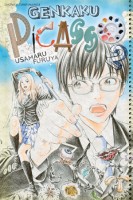
Genkaku Picasso, Vol. 3

January 24, 2014 by Ash Brown

Genkaku Picasso, Volume 3Creator: Usamaru Furuya
U.S. publisher: Viz Media
ISBN: 9781421539201
Released: May 2011
Original release: 2010

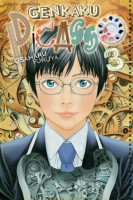
The third and final volume of Usamaru Furuya’s short manga series Genkaku Picasso was originally published in Japan in 2010. Viz Media released the English-language edition of the volume in 2011 under its Shonen Jump imprint. Genkaku Picasso was initially serialized in the manga magazine Jump SQ. Furuya mentions in the series’ afterword that he was somewhat surprised to have been approached to create a manga by one of the Jump SQ editors since he didn’t consider his previous work to have had much popular, mass appeal. (Furuya made his debut in the alternative manga magazine Garo and is particularly well-known for some of his more avant-garde work.) Genkaku Picasso was originally intended to be only two volumes long. Happily, Furuya was able to expand the series to three volumes, which allowed him to tie everything together in the way that he wanted. Although I enjoyed the first volume of Genkaku Picasso the manga starts out a little unsteady. But by the end, Furuya has created a fantastic series.

For most of his life, Hikari Hamura has been content to keep to himself and concentrate on his drawing. He’s earned himself the nickname of Picasso from his classmates (much to his dismay as he greatly prefers the work of Leonardo da Vinci), but up until recently they have mostly ignored him. Picasso is as strange and gloomy as he ever was, if not more so, but many of his classmates are beginning to feel drawn to him for some unknown reason. What they don’t realize is that Picasso has been helping to solve their personal problems. After nearly dying in a bizarre accident Picasso has gained a strange ability that allows him to see and draw the darkness that exists in another person’s heart. He can enter into those sketches, and by changing them he influences his classmates lives, hopefully for the better. This power is something that Picasso has tried to keep hidden from the others but it becomes difficult for them to disregard his increasingly odd behaviour, especially when he seems to know things that they would never reveal to someone else.

Genkaku Picasso starts out as a fairly episodic series. Generally, I found the longer stories–those lasting several chapters–to be more successful than the shorter ones as they feel less rushed and more thoroughly developed. It’s only really during the second volume that it becomes clear that there is also an overarching plot. The details of that larger story are completely reveled in the third volume of Genkaku Picasso. With a little bit of a lead in, “Hikari’s Story” takes up nearly half of Genkaku Picasso, Volume 3. It’s the longest story in Genkaku Picasso and is what pulls together the entire series. Up until this point in the manga, while Picasso has certainly been the protagonist, the stories have largely focused on his classmates and the issues that they are struggling with. But in “Hikari’s Story” their roles are reversed and it’s Picasso who needs help. It’s an extremely effective turn of events that brings the series full circle quite nicely.

The ending of Genkaku Picasso is actually a little heart-wrenching. Picasso starts the series almost a complete loner. Except for Chiaki, who hung out with him despite his protests, most of his classmates simply took no notice of him. Picasso was perfectly fine with this, or at least that’s what he told himself. As Genkaku Picasso progresses, Picasso slowly gathers people around him as he helps them with their problems. But it’s not until the third volume that he actually admits that he has friends and that he actually wants friends. Picasso has to be completely honest with himself and with the others, which in reality is a very terrifying thing to have to do. With “Hikari’s Story” the entire series becomes about Picasso and shows the tremendous amount of growth that he has gone through. I’m very glad that Furuya was able to extend Genkaku Picasso and give it a marvelous conclusion. Even considering its somewhat awkward start, Genkaku Picasso is a wonderful series. I thoroughly enjoyed its quirky humor and characters, its engaging artwork, and its somewhat peculiar but ultimately heartfelt story.

Filed Under: REVIEWS Tagged With: genkaku picasso, manga, Shonen Jump, Usamaru Furuya, viz media

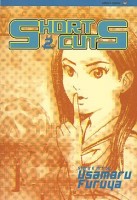
Short Cuts, Vol. 2

January 23, 2014 by Ash Brown

Short Cuts, Volume 2Creator: Usamaru Furuya
U.S. publisher: Viz Media
ISBN: 9781591160694
Released: August 2003
Original release: 1999

Originally serialized in Young Sunday, Short Cuts was Usamaru Furuya’s first manga created for a major, mainstream publication. It was also his first manga to be completely released in English. His debut work, Palepoli, was serialized in the alternative manga magazine Garo and has only partially been made available in English. (Select excerpts from Palepoli are available in Japan Edge: The Insider’s Guide to Japanese Pop Subculture and Secret Comics Japan: Underground Comics Now.) Short Cuts began its serialization in 1996, two years after Furuya made his manga debut. The second collected volume of Short Cuts was initially published in Japan in 1999. The English-language edition of the volume was released by Viz Media in 2003. This was after Pulp, the magazine in which Short Cuts was being serialized in English, was canceled. I very much enjoyed the first volume of Short Cuts and so am happy that both volumes, though sadly now out of print, were released.

Short Cuts is a darkly comedic and vaguely surreal gag manga and satire. Each cut–there are exactly one hundred of them in the second volume–is a short manga only a page or two in length. As in the first volume, there are some recurring jokes, characters, and setups, but even the related cuts can generally be read on their own. Any sort of overarching plot is nearly nonexistent. Kogals and the kogal subculture, which were particularly prominent in Japan while Short Cuts was initially being serialized, remain the most common topics in the manga. However, there are plenty of other subjects that Furuya uses for his material, often the stranger the better. He draws inspiration from Japanese pop culture and celebrities, other manga creators (frequently mimicking their individual styles in the process), and even history and contemporary politics.

In the afterword to the series, Furuya mentions that Short Cuts was initially intended to be “light, pop, and sexy” but as the series progressed it became a bit stranger until “old people and weirdos stood out.” I’m pretty sure Furuya includes himself when he is talking about weirdos. Increasingly, the gags in Short Cuts refer to the trials and tribulations of manga artists and illustrators. Furuya has several personal avatars in Short Cuts who either break the fourth wall to interact with the cuts or are the stars of their very own. With the second volume the humor in Short Cuts has become even more self-aware. Furuya is not afraid to make fun of himself or his manga. Another recurring character is a kogal named Mai. (The frequency of her appearances actually becomes a joke in and of itself.) She’s a delightfully peculiar young woman with an even odder family. In some ways, Mai and Furuya together are representative of the series as a whole and the relationship between creation and creator. The ending of Short Cuts–if a series without much of a plot can be said to have an “ending”–is actually rather touching because of this.

Short Cuts is a very strange manga, which is probably one of the major reasons that I like it so well. I enjoy Furuya’s chameleon-like artwork in the series as well as his absurd, dark, and surreal humor, all of which can admittedly be rather raunchy and vulgar from time to time. Many but certainly not all of the gags in Short Cuts rely on the reader having at least passing familiarity with Japanese culture and society, but there are plenty of notes from the translator included for those who might need a bit of extra help. Overall, I think I slightly preferred the first volume of Short Cuts over the second, though I can’t seem to identify exactly why that is. I was still consistently amused by Short Cuts, Volume 2 and Furuya can still make me laugh out loud. Short Cuts remains one of my favorite gag manga, but its peculiar sense of humor and sharp social commentary definitely won’t be to everyone’s taste.

Filed Under: REVIEWS Tagged With: manga, Short Cuts, Usamaru Furuya, viz media

Genkaku Picasso, Vol. 2

January 21, 2014 by Ash Brown

Genkaku Picasso, Volume 2Creator: Usamaru Furuya
U.S. publisher: Viz Media
ISBN: 9781421537542
Released: February 2011
Original release: 2009

Genkaku Picasso was the second multi-volume manga series by Usamaru Furuya to be released in English. The first was a seinen gag manga called Short Cuts which, like Genkaku Picasso, was published by Viz Media. Genkaku Picasso is very different from Short Cuts. It’s an example of one of Furuya’s few shōnen manga and is currently his only shōnen series available in English. Furuya is an extremely versatile artist, changing styles, genres, and demographics to suit his needs. He had his start in alternative manga, but Genkaku Picasso, while quirky, is a more mainstream title. Initially serialized in Jump SQ, the second volume of Genkaku Picasso was released in Japan in 2009. Viz Media published Genkaku Picasso, Volume 2 under its Shonen Jump imprint in 2011. I found the first volume of Genkaku Picasso to be intriguing, but more uneven and less compelling than some of the other manga by Furuya that I had read. But with the second volume, the series finds its footing.

After a bizarre near-death experience, Hikari Hamura, given the nickname Picasso by his classmates, finds himself in an even stranger predicament. Chiaki Yamamoto, a victim of the same accident that nearly killed Picasso, is now small enough to fit in his pocket and is sporting angel wings. Picasso himself has gained the ability to see into people’s hearts and minds. Compelled to draw what he sees, he can literally enter into the psyches of others through his illustrations. Using this newfound power, Picasso is able to help his fellow classmates. Not that he really wants to go to all that effort. In fact, he’d much rather be left alone to concentrate on his artwork. But unless he wants to let his arm rot away–another peculiar consequence of his accident–Picasso must do what he can to help those around him. With Chiaki’s assistance and prodding he has successfully resolved some of his classmates problems and has even gained a few friends in the process, but Picasso is still incredibly reluctant to get involved.

Although there has always been an ongoing story in the series, the beginning of Genkaku Picasso felt fairly episodic. However, with the second volume the series starts to become a bit more cohesive. The stories in the first volume seemed to be resolved a little too simply and cleanly, but as Genkaku Picasso progresses it becomes apparent that it’s not really that easy. Picasso has helped some of his classmates (though they are only aware of that subconsciously) but they continue to have problems; he hasn’t solved everything for them. The first volume’s stories had a “one and done” sort of feel to them while the issues in the second volume, even after they are initially resolved, are long-lasting challenges. They are things that the characters may very well struggle with for the rest of their lives. I much prefer this approach since realistically matters of the heart and mind are not so easily mended. I think Genkaku Picasso becomes a stronger, better series with the inclusion of these more complicated and nuanced narratives.

From the very beginning one of Genkaku Picasso‘s strengths has been its artwork, something that continues to be a highlight in the second volume. Furuya uses a variety of art styles in the series. Picasso enters the drawings he creates of other people’s hearts. They are filled with beautiful, surreal, and even disturbing imagery, allowing Furuya to creatively illustrate and explore the characters’ internal states of mind. But probably the greatest reason that I find the second volume of Genkaku Picasso to be more effective than the first is that the problems that Picasso must help to try to solve happen to be more relevant to me personally. For me, many of the stories in the first volume were little far-fetched while those in the second volume are a bit more realistic and universal. Most of them focus on love, romance, gender, or sexuality which are themes that I have a particular interest in. I could personally identify with the characters in Genkaku Picasso, Volume 2 in ways that I previously couldn’t. I did enjoy the first volume of Genkaku Picasso, but I was able to appreciate the second volume even more.

Filed Under: REVIEWS Tagged With: genkaku picasso, manga, Shonen Jump, Usamaru Furuya, viz media

Nisekoi: False Love Vol 1

January 12, 2014 by Anna N

Nisekoi: False Love Vol 1 by Naoshi Komi

I don’t tend to track trends in English releases of shonen manga as much as I do shoujo manga, but it certainly seems like it has been some time since we’ve seen a shonen romantic comedy set in high school. Raku is the typical shonen protagonist who (say it together with me!) “just wants a normal high school life.” Unfortunately while Raku has set his goal as becoming a reliable civil servant, his desire to be boring and normal is foiled by the fact that he’s the heir to a yakuza clan. Raku also is dealing with the aftermath of an encounter in his youth, when he exchanged vows of love with a girl he cannot remember. He has a special pendant in the shape of a lock, and his faceless beloved is holding on to the key. But Raku doesn’t remember her name!

Raku starts school awkwardly failing to ask out the nicest and prettiest girl in school, Ondera. His romantic ambitions are foiled when a new girl appears in his class. Chitoge is cute, athletic, and brash and she and Raku naturally start bickering immediately. They are assigned desks next each other as well as duties after school and they spend most of their time arguing so much, their classmates start to wonder if they are especially close. Things get even worse for Raku when he agrees to pretend to be romantically involved with the daughter of a rival gang boss in order to preserve peace, only to find out that his new “girlfriend” is Chitoge. Under the watchful eyes of retainers from both families, Raku and Chitoge go through the motions of a weekend date, only to find out that their romantic status has been announced at school as well, leaving them no rest from their charade.

There’s plenty of humor in this title even though it doesn’t reach the laugh out loud heights of Oresama Teacher. Komi frequently draws rictus-like facial expressions when his characters are in the grips of strong emotions. While the love triangle in this book is predictable, it certainly isn’t more derivative than the typical shoujo title. Chitoge and Raku’s similar backgrounds and tendencies to freak out often make them seem like natural friends with something in common, whereas Ondera’s more retiring personality makes her someone that Raku can easily admire from afar even though he doesn’t know her very well. While I didn’t connect with this title the same way I do my treasured shoujo romances, for anyone looking for shonen romantic comedy I think this will be an enjoyable manga to read. The art is well-executed, the personalities of the characters are interesting if a bit broadly drawn, and random yakuza thugs make everything more fun.

Filed Under: REVIEWS Tagged With: nisekoi, Shonen, viz media

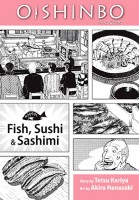
Oishinbo, A la Carte: Fish, Sushi & Sashimi

January 8, 2014 by Ash Brown

Oishinbo, A la Carte: Fish, Sushi & SashimiAuthor: Tetsu Kariya
Illustrator: Akira Hanasaki

U.S. publisher: Viz Media
ISBN: 9781421521428
Released: July 2009
Original release: 2005
Awards: Shogakukan Manga Award

With over one hundred volumes, it is very unlikely that the award-winning food manga Oishinbo will ever be licensed in its entirety in English, especially considering that the series is still ongoing at this point. However, seven volumes of Oishinbo, A la Carte have been released by Viz Media under its Signature imprint. These volumes are thematic collections which select stories from throughout the series proper. Fish, Sushi & Sashimi was the fourth Oishinbo, A la Carte collection to be published by Viz and was released in 2009. However, in Japan Fish, Sushi & Sashimi was actually the fifth volume in the series and was published in 2005. As a lover of both food and manga, it probably shouldn’t be too surprising that I enjoy Oishinbo immensely. And I’m not the only one. The series, written by Tetsu Kariya and illustrated by Akira Hanasaki, has been in serialization since 1983 and in 1987 the creators received a Shogakukan Manga Award for their work.

Because Oishinbo, A la Carte is a selection of stories from Oishinbo, the overarching story of the original series is obscured. Instead of the ongoing plot, the focus of Oishinbo, A la Carte is very much on the food itself. Fish, Sushi & Sashimi collects eight different stories centered around fish. Sushi rolls are probably one of the first things that come to many people’s minds when considering Japanese fish dishes, but not a single one will be found in Fish, Sushi & Sashimi. Generally, the fare tends to be simpler and fish the primary ingredient. The fish specifically featured in Fish, Sushi & Sashimi include white trevally, chub mackerel, sweetfish, tiger blowfish, freshwater goby, flounder, salmon, and shinko, many of which are considered to be some of the best and most desirable or delectable fish in Japan. There is also a wide variety of preparations shown, everything from raw sashimi to fried tempura.

When dealing with fish as a source of food, freshness is key. This is true for most seafood, too, and is something that most people probably know. However, Fish, Sushi & Sashimi shows that there is much more involved in the freshness of fish than just how long it has been since it has been caught. Fish are very sensitive to changes in the environment in which they live. Simply put, quality fish come from quality waters. The healthier and less polluted those waters, the better the fish. Additionally, the same fish can taste significantly different due to seasonal changes, where it is caught (and how far it has traveled afterwards), or when in its life-cycle it is eaten. As is often the case in the Oishinbo, A la Carte stories that I have so far read, Fish, Sushi & Sashimi emphasizes the importance of locally sourced and sustainable foods, which is particularly true of fish.

One of the highlights of Oishinbo, A la Carte is Hanasaki’s artwork. The people tend to be stylized but the food is always realistically drawn. The catching and cleaning of the fish, the steps in the various dishes’ preparations, and the skilled knife-work employed are all important to Fish, Sushi & Sashimi. Because Fish, Sushi & Sashimi focuses on aquatic life both in and out of its natural environments, Hanasaki also has the opportunity to beautifully illustrate Japan’s oceans, rivers, and other waterways. Another thing that particularly struck me about this volume of Oishinbo, A la Carte was how many young people were included in the stories. Family drama has always been a part of Oishinbo with the intense father-son rivalry between Kaibara Yūzan and Yamaoka Shirō. It’s extremely entertaining to watch them battle it out over and with food, but it’s also nice to see some more wholesome family relationships in the series, too.

Filed Under: REVIEWS Tagged With: Akira Hanasaki, manga, Oishinbo, Shogakukan Manga Award, Tetsu Kariya, viz media, VIZ Signature

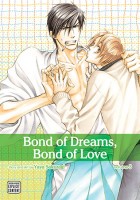
Bond of Dreams, Bond of Love, Vol. 3

December 18, 2013 by Ash Brown

Bond of Dreams, Bond of Love, Volume 3Creator: Yaya Sakuragi
U.S. publisher: Viz Media
ISBN: 9781421549781
Released: February 2013
Original release: 2010

Yaya Sakuragi has had several of her boys’ love manga released in English. Bond of Dreams, Bond of Love was the second of her series to be licensed. Bond of Dreams, Bond of Love is loosely connected to her earlier series Tea for Two. Reading Tea for Two isn’t at all necessary to understand Bond of Dreams, Bond of Love, but it does provide more details about one of the character’s back stories. Sakuragi was actually my introduction to yaoi and boys’ love manga and I continue to be very fond of her work. I like her particular sense of humor and lanky character designs. Bond of Dreams, Bond of Love isn’t my favorite of her works, but I’m still largely enjoying the manga; it’s a rather goofy series. The third volume of Bond of Dreams, Bond of Love was originally published in Japan in 2010. The English-language edition was released in 2013 by Sublime Manga, the boys’ love imprint associated with Viz Media.

There are some big changes occurring in Ao’s life. One of the biggest is that he might be moving out of his grandmother’s place and transferring schools in order to live with his mother and his twin brother Aka. Ao’s not too keen on the idea, especially since it would mean he would see Ryomei less, but more than one person has encouraged him to make the move, believing it to be in his best interest. Even though Ao’s life has been thrown into turmoil his preoccupation with Ryomei is still foremost on his mind. He somehow even manages to convince the older man to go on a date with him, though it doesn’t exactly turn out how either of them expected it would. As for Ryomei, he continues to be somewhat baffled by and conflicted over Ao’s advances. He’ trying to work out just what his feelings really are for the younger man, but it hasn’t been an easy process. And with Ao potentially moving away, Ryomei had better figure it out sooner rather than later.

Bond of Dreams, Bond of Love started with a wet dream (Ao’s, to be specific) and dreams and daydreams have continued to be a recurring element in the series. But now with the third volume, Ryomei has to deal with them, too. It’s a nice way to tie the narrative together and show the parallels between Ryomei and Ao’s feelings as the develop. Another way that Sakuragi show these parallels is through Ryomei and Ao’s not-quite-date, which is handled exceptionally well in the manga. Though the two of them are on the same outing they are experience it very differently. As a reader it’s interesting to be able to simultaneously see and compare their thoughts and reactions while they themselves are completely unaware of how the other person is interpreting the events. It’s a situation in which the lack of communication is completely believable. Both Ao and Ryomei are holding back, but for different reasons–Ao is worried about scaring Ryomei off while Ryomei is understandably concerned about his changing feelings for Ao.

For me, Bond of Dreams, Bond of Love works best as a comedy and shouldn’t be taken too seriously, which is not to say there aren’t some genuinely touching and occasionally bittersweet moments. However, the series excels in its humor and reaction shots. In general the characters’ faces are all very expressive and dynamic, but Ryomei, who tries so hard to be serious and reserved, has some of the best expressions. He has become hyper-aware of how he interacts with Ao and it shows. Despite the focus of Bond of Dreams, Bond of Love being on Ao and Ryomei, the series actually has a fairly large cast of secondary characters who all have their roles to play, too. This includes a fair number of important female characters, which can be a rarity in boys’ love manga. However, it’s Ao’s best friend Shunpei who remains one of my favorites. (Shunpei is also the character from Tea for Two; I’d love to see him get his own series at some point.) Ao’s twin brother Aka, who is constantly on edge, can be pretty entertaining, too. With its slightly ridiculous and over-the-top characters and interactions, Bond of Dreams, Bond of Love has really grown on me, and there’s still one more volume to go.

Filed Under: REVIEWS Tagged With: Bond of Dreams Bond of Love, manga, Sublime Manga, viz media, Yaya Sakuragi

Happy Marriage, Vol. 3 & Demon Love Spell, Vol. 5

December 5, 2013 by Anna N

Happy Marriage Volume 3

I continue to enjoy Maki Enjoji’s series about an office lady who abruptly finds herself married to a seemingly cold and domineering company president. Chiwa and Hokuto have gradually grown closer over the first two volumes of this series, and the relationship continues to develop further in the third volume. Chiwa finally deals with Hokuto when he’s in a vulnerable position when he suddenly becomes ill, and she has to tend to him at home. One thing I enjoy is the way Enjoji slips into showing action without words or thought balloons in order to show events with more emotional impact. When Hokuto wakes up in the middle of the night and sees Chiwa sleeping by the side of his bed, he looks absolutely shocked, then silently pulls her over so she can sleep more comfortably beside him. There are still some slice of life humorous moments in the manga, like when Chiwa deals with Hokuto’s hidden slovenly habits at home and her tendency to become an “Octopus Woman” when she sleeps.

The big emotional breakthrough in the volume occurs when Chiwa and Hokuto have to go visit his family, and Chiwa sees how poorly he’s treated by his relatives. This explains a great deal about his personality and motivations, and Chiwa gets so angry she is more emotionally honest about her feelings for her husband as she’s sticking up for him than she’s ever been when talking to Hokuto directly. I’m looking forward to what happens next! It is a bit odd to root for a married couple to get together, but Enjoji manages to pull this situation off with an engaging story and sympathetic characters.

Demon Love Spell Volume 5

This volume will be particularly fun for any fans of Mayu Shinjo’s series Sensual Phrase. Demon Love Spell can be depended upon to serve up plenty of humor and paranormal romance hijinks, and this volume picks things up with a funny plot device. Incubus Kagura and priestess Miko decide that they’re going to move out of Miko’s family home/shrine and her father promptly agrees! But before they go Miko’s father uses his priestly powers and puts a curse on Kagura so that he will be utterly incapable of romancing Miko in any capacity. The young teenager and incredibly old incubus struggle with finding an apartment. Miko starts working a part-time job to support them. They barely ever see each other, and it seems like their new apartment may also be haunted!

In any romance manga, misunderstandings get in the way of true love, and when Kagura decides to go into showbiz in order to make some money to support Miko, she promptly becomes jealous and concerned that he’s getting “powered up” from other women. Kagura’s demonic hotness ensures overnight success as a male model, and he soon becomes a pop sensation as well. Much is made of Kagura’s resemblance to the hero Sakuya from Sensual Phrase, and I found it hilarious that Shinjo’s habit of drawing her male heroes in a very similar fashion was acknowledged in this manner. All in all, this was another fun volume of this series. I’m definitely enjoying Demon Love Spell much more than Ai Ore, and I hope that more of Shinjo’s series get translated over here.

Filed Under: REVIEWS Tagged With: demon love spell, happy marriage, shojo beat, shoujo, viz media

Sweet Rein Vol 1

October 27, 2013 by Anna N

Sweet Rein Vol 1 by Sakura Tsukuba

I had totally forgotten that Sweet Rein was coming out, so when I saw it I got to be pleasantly surprised all over again. Sakura Tsukuba had two series published by CMX, Penguin Revolution and Land of the Blindfolded. Both of these series fit well into the low-fi, cozy vibe that was characteristic of many of CMX’s fantasy series. I was very happy to read Sweet Rein, and I’m calling it now – this is the perfect feel-good shoujo for the holiday season.

Sweet Rein has the sort of premise that is most enjoyed when the reader doesn’t think about it too hard. Kurumi is walking along alone when she bumps into a boy. Kurumi and the boy are suddenly tethered together, and he rushes up to her and yells “Master!” He then proceeds to explain “I’m your reindeer and you’re my Santa Claus!” It turns out that mystical reindeer with the power to take human form are bonded forever to a human Santa Claus, who is the only person who can release the reindeer’s magical powers. Kaito comes from a family of magical reindeer, and he cheerfully and happily fulfills all of Kurumi’s commands. Kurumi is extremely dubious about the invisible tether that connects them and also is very uncomfortable with the idea that she has any form of power over another being. Kaito is just happy that his Santa Claus is a nice and cute girl who is so concerned for him.

Kaito being at Kurumi’s beck and call is played more for gentle laughs than anything else, as he shoots away from her in the air when she yells “Get off of me!” and promptly appears outside her window when she wishes for his presence. Kurumi is genuinely kind, and Kaito’s presence eases her loneliness. She’s extremely careful not to get entangled in a romantic relationship with him, because she doesn’t want to abuse her power over him. In the meantime, Kaito’s enthusiasm serves as a counterpoint to Kurumi’s introspection, and it is clear that he’s fallen in love with her almost immediately.

For a manga dealing with Santa Claus and reindeer, it is actually a bit surprising how many stories in this volume take place in the spring or summer. Kurumi does deliver presents on Christmas Eve, but much of the manga is centered around Kurumi fulfilling a wish for a sick boy she encounters while on summer vacation. Readers also get a glimpse of Kaito’s extended magical reindeer family. I was actually a bit disappointed that a there was a lengthy vampire back up story, not because it was poorly executed, but I wanted to read a bit more of the main story. Tsukuba’s light and playful illustrations complement the story, ably depicting Kaito flying through the air or swooping in to comfort Kurumi. In the hands of a creator with less of a deft touch, the master/servant relationship in the manga might have seemed a bit off-putting or odd, but here it just seems like a way for two people to slowly discover how much they care about each other.

Filed Under: REVIEWS Tagged With: shojo beat, shoujo, sweet rein, viz media

Voice Over! Seiyu Academy, Vol. 1

September 24, 2013 by Anna N

Voice Over! Seiyu Academy Vol. 1 by Maki Minami

This was a book that I thought I wouldn’t like very much, but as I read through the entire volume I found myself begrudgingly enjoying it more than I expected. I ordinarily enjoy manga set in the world of show business. Here, the setting here of a specialized voice over training high school had the potential to both be a bit interesting due to the possibility of learning more about this specialized acting niche in Japan but it could also be somewhat infuriating if the plot devolved into the arcane hierarchical clique hijinks that tend to plague many a shoujo title. Also, in terms of the plots that I tend to enjoy over and over again, I will happily read multiple manga about office ladies forced to marry their harsh yet irresistibly handsome bosses, but high school clique wars tend to make my eyes glaze over unless I’m distracted by other plot elements like space aliens, juvenile delinquency, or magical powers. As I was reading Voice Over, I did think it would have strong appeal to younger teen readers.

Hime’s idol is a famous voice over actress on the anime Lovely Blazers named Sakura Aoyama. Hime’s accepted into a special voice acting school, but she has to fight against her natural tendencies towards emoting in a deep raspy voice. She’s quickly singled out and placed in the “stragglers” group that makes up the bottom students in her class. To add to Hime’s stress, Senri, the son of her idol is in her class and he is both incredibly gifted and a grouchy snob.

Hime is as plucky and determined as you would expect a shoujo heroine in her situation to be, even though she is promptly nicknamed Gorilla Princess by her classmates due to her deep voice. Hime’s motley crew of stragglers includes the super adorable Tsukino who can’t project her voice, an ex-juvenile delinquent named Sho, and boy with horrible nerves and an unfortunate accent named Mitchel. Hime’s initial overtures to Senri are met with determined rudeness. There is a voice over battle (isn’t there always) between the stragglers and their more high-class competition. Hime ends up using her deep voice to surprising effect when she subs in for Mitchel and ends up doing a superb job as the prince in a Snow White play. Hime and Senri keep running into each other, and she gradually sees his more human side. I found Senri’s habit of adoring kittens contrasted with his horrible manners to be lacking a bit of nuance. But I was very amused by some of the visual techniques Minami uses to portray the voice over acting of the cast. Little old ladies and old men appear in the background of the panels whenever Hime acts, providing an amusing way of showing how mismatched Hime’s voice is with the lines she’s speaking. I also enjoyed the glimpse of the almost too close to each other male idol duo at school with their legion of female fans who want to ward off any girl from getting close to them so they can continue to get their yaoi fix.

As I was nearing the end of the volume, I was surprised by how much I enjoyed it, simply because all the elements of humor were almost enough to distract me from a plot that I’m not particularly interested in. This manga doesn’t have the manic energy of an Oresama Teacher that makes the plot almost irrelevant though. If future volumes lean more on the high school clique fighting and less on wacky voice over antics, I expect I’ll be less entertained. I do think that readers less jaded than me would enjoy this manga quite a bit.

Review copy provided by the publisher.

Filed Under: REVIEWS Tagged With: shojo beat, viz media, voice over seiyu academy

Strobe Edge, Vols 5 and 6

September 15, 2013 by Anna N

One of the reasons why I keep reading manga is that it still has the capacity to surprise me. I found the fifth volume of Strobe Edge exciting to read, because it went in a totally different direction from what I was expecting. I’d always expected that the love triangle between Ren, Mayuka, and Ninako would have to be resolved somehow, but I wasn’t expecting a big change to come from Mayuka this early in the series. Ren is deliberately holding himself back from developing feelings for Ninako due to his sense of duty towards Mayuka. She’s emotional fragile and stressed out with the demands of her modeling career, school, and her parents’ divorce. Ren has a finely honed sense of integrity and wouldn’t do anything to hurt another person, with the expense of actually subverting his own feelings in the process.

I always expect anyone in a shoujo manga with a modeling career to be evil, but Mayuka shows that she’s been slowly picking up on Ren’s distance, coming to terms with her own goals for how she wants to live her life, and she realizes that she’s the one who is going to have to take a big step forward on her own. The change in Ren and Mayuka’s relationship isn’t without pain on both sides, but everything is handled with a degree of emotional maturity and sensitivity that is notable. It is fun to read a shoujo series that explores the shifting relationships between characters with such nuance.

In the meantime Ninako and Ando are in the grips of adorable teenage awkwardness, as she attempts to bury her own feelings for Ren and Ando tries to show her that he’s the better choice for her. Ando’s shifted from the cheerful flirtations personality that he displayed in the first few volumes to showing Ninako just how much he cares about her. There was a fun bonus story in this volume that delved into the past friendship between Ren and Ando, and just where it went wrong. This is the type of bonus story that I really enjoy, as it gives the reader a glimpse of the characters in a slightly different context, and provides more background as the manga moves forward.

There’s emotional turmoil ahead in the sixth volume of Strobe Edge, as Ando’s antagonism towards Ren resurfaces and Ren is dealing with the aftermath of his breakup with Mayuka. The burden of popularity and extreme handsomeness weighs heavily on Ren, as he is girlfriendless for barely a day before the girls at school start circling him. Ninako assumes that Ren is sad, and doesn’t want to do anything to add to his stress. Even with Valentine’s day coming up, she doesn’t want to add to the mountain of chocolate he’s going to be receiving from all the other girls.

There are some fun action scenes as Ren and Ando (mostly Ando) work through some aggression on the basketball court. The antagonistic relationship between them takes a turn towards the hilarious as Ando gets injured and when he wakes up and spots Ren he yells “You’re what I have to wake up to?” If Strobe Edge was only focused on the relationship between Ninako and Ren, it has the potential to get boring fairly fast. But seeing Ren and Ando start to work through their issues feels like an important emotional breakthrough. Ando instructs Ren not to smile, and Ren assumes that it is because his smile is somehow hideous, but really Ando doesn’t like the inadvertent effect a smiling Ren has on all the people in his vicinity. The end of volume six offers the promise of a new beginning at the start of a new school year, with Ren and Ninako being assigned to the same class.

Strobe Edge is a good example of why sometimes it is good to give a manga series a few volumes to develop before giving up on it. I was a bit on the fence about this series after reading only the first volume even though I generally enjoyed it. I wouldn’t have thought from just the first volume that Sakisaka would have built up the interesting relationships between the characters and handled some emotional journeys without relying on some of the standard shoujo plot elements. In some ways Strobe Edge is a less angsty successor to We Were There, as both series explore similar nuanced psychological territory.

Review copy of vol 6 provided by the publisher.

Filed Under: REVIEWS Tagged With: shojo beat, Strobe Edge, viz media

Red River, Vols. 1-7

August 25, 2013 by Anna N

When manga publishers first started their digital programs I was hoping for more backlist titles to become available, especially from Viz. I was particularly happy when Red River started coming out in a digital edition. I’ve long regretted not just buying this series when it was coming out, because I suspected I would really like it. At the time though I was buying a ton of other manga and I was leery of committing to a 28 volume shoujo series. I’ve been piecing together volumes of this series here and there, and I have a decent amount of both the first several books and a few concluding volumes, but nothing in the middle. I was glad I could switch back and forth between print volumes and my iPad to give the first part of this series a try. The arresting cover image of the first volume provides a nice overview of the series. A girl in modern clothing is being menaced by a bunch of people holding daggers, against a backdrop of a blue sky and stone buildings from another era.

The girl who is about to get stabbed on the cover of Red River is Yuri, a cheerful high school student who had just received her first kiss from her classmate Satoshi. Yuri goes to school and hangs out with her younger sisters, but a number of odd things seem to happen when she’s close to water. A glass bubbles over and hands reach out to her from a school fishtank. The incidents get worse and worse, to the point where Yuri is carried away in the middle of a date when she steps near a puddle. Yuri finds herself in a bathhouse in the capitol of the Hittite empire. Chased by armed men whose language she doesn’t understand, Yuri runs into a courtyard and encounters a handsome man who promptly sweeps her off her feet and kisses her. Prince Kail distracts the men and sends them on their way, claiming he knows nothing about a woman in strange clothing running through the city. Yuri can suddenly understand the language of the place she’s in, as princely kisses seem to serve as a universal translation device. Kail offers to swap Yuri in for the woman he was originally waiting for. Yuri concludes that he’s a jerk and runs off in the strange city yet again, only to be captured by Kail’s extremely evil stepmother.

Kail’s evil stepmother wants to use Yuri for a virgin sacrifice to work some strange magic to place her son as heir to the empire instead of Kail. Kail is an extremely quick thinker and prevents the sacrifice by showing up at the last minute to announce that due to his masterful powers of seduction, Yuri is no longer a virgin, and thus not suitable to be a sacrifice to anyone. Throwing her over his shoulder, Kail announces that he’s going to remove his “sullied baggage” from the room. Kail and Yuri start gradually falling in love, as he begins to appreciate her articulated moral sense and intelligence. Yuri soon realizes that Kail is doing the best he can in an extremely hostile court environment where his stepmother is doing whatever she can to plot his demise.

While there are a few references to magic here and there, Red River is much more of a historical adventure than it is a fantasy story. Yuri doesn’t really have magical powers, but she might as well have them due to the effect she has when Kail decides to announce that she’s the incarnation of the goddess Ishtar and uses her to inspire his troops as a gambit to protect her from his stepmother. While Kail gives Yuri the position of his concubine and they sleep in the same bed every night, she still remains a virgin, since he backs off when she mentions her boyfriend back home. The “will they or won’t they” tension that appears in the first few volumes is mainly due to Kail keeping his distance from Yuri because he knows he needs to send her back to his own time, and Yuri is determined not to care for Kail too much when she has to go back to her family.

While Yuri seems to have an unfortunate habit of getting kidnapped fairly often, she’s also extremely level-headed and pragmatic. Kail rescues her, but she also uses some quick thinking to rescue him a number of times. She throws herself into training when she’s given the role of Ishtar to play, determined not to embarrass herself and Kail. When she’s stolen away by a prince from a rival country, she spends her time improving the sickroom for prisoners of war that are deemed near death, and her introduction of modern sanitation helps the prisoners heal as well as providing herself with a slightly sick troop of soldiers inside the enemy walls.

Shinohara’s art has a bit of an old-school feel to it. This series was first published in 1995, so the character designs might look a tad old fashioned. But the many action scenes and the historical settings and costumes are handled with great clarity. Even when the paneling might focus more on the character’s emotions and interactions, there’s usually an architectural detail or background element that grounds the reader in the scene. Yuri believably shifts from tomboy to gorgeous depending on the situation and clothing she finds herself in, and Kail transforms from a slightly arrogant prince to a person who is much more kind and concerned.

I read these volumes over the weekend, and was very entertained! I think Red River is one of those series that benefits from being able to read many volumes at once, because the story lines are fast-paced and interesting, with plenty of cliff-hangers at the end of most volumes. While Red River is certainly a romance, it focuses much more on the expansion of the Hittite empire and the political machinations of the royal family. Yuri and Kail are a sympathetic couple, even if some of their issues would be solved if they were only able to sit down and have an honest conversation about their feelings. Fending off witchy evil stepmothers, dodging kidnappings, and dealing with bronze age military tactics do take up quite a bit of time. One thing I did miss in these volumes was author’s notes. I don’t know if there just weren’t any attached to this series, or if there was a decision made not to include them, but I would have found it interesting to hear about the author’s research. It seems like most of the historical shoujo manga that gets translated for English audiences tends to focus more on Japan as a setting, so Red River is certainly unique in that aspect. While there’s certainly enough romance to keep most shoujo fans happy, the setting and emphasis on action and adventure make this a very appealing series for readers.

Filed Under: REVIEWS Tagged With: red river, shoujo, viz media

Kaze Hikaru, Vol. 21

July 8, 2013 by Anna N


Kaze Hikaru Volume 21 by Taeko Watanabe

Kaze Hikaru is one of those titles that makes me feel happier just because it exists. The new volumes come out very slowly now, so when one appears it is always a good excuse to celebrate! This volume was particularly rewarding for any long-time reader of the series, as Sei and Soji begin to acknowledge their feelings about each other although they remain very much constrained by Sei’s disguise as a male Shinsengumi recruit and the customs of the times.

In the aftermath of Sei’s mission, it is announced that she’s going to be reassigned to Saito’s troop. Soji decides to create more distance between him and his young protegee by telling her that he requested the transfer and abruptly ordering her to leave him alone, saying “I got sick of your chasing me around like a girl.” Sei assumes that Soji thinks her feelings are burdensome and decides to run away. She leaves, fortunately during her rest period so she won’t be executed for desertion. Soji is relaxing, assuming that he’s fixed everything but he’s alarmed when Saito informs him that he’s in love with Sei.

Sei travels to a nunnery where she’s taken refuge before, learning about village healing from the head nun Suigetsuni. Sei has decided to sever the ties to her old life and join a nunnery, because it is the only way to sever her ties with her previous life. Soji becomes more and more worried as he realizes that no one knows where Sei is, and with his position in the Shinsengumi he can do nothing but sit, wait, and be forced to execute her for desertion if she doesn’t come back. The parallel stories shifting back and forth between the couple were particularly effective in this volume, as Soji’s growing concern forces him to confront his own feelings about Sei, and Sei grapples with her thoughts about healing and death as she learns more about Suigetsuni’s life story.

Watanabe is a master at spinning out a story, as 21 volumes into Kaze Hikaru, I’m in no hurry to see it wrapped up. Even though so much of this manga revolves around the characters being unable to express their emotions to each other, it is easy to see just how much Sei and Soji have changed each other through their unconventional friendship. As always, the author notes manage to distill an incredible amount of research into a few pages focusing on an element from the historical setting of the manga. This volume focuses on clothing and her reasons for depicting the Shinsengumi a certain way. If you aren’t reading this manga yet, give it a try! This is such a thoughtful, well-executed historical series that really stands out as having much more substance than most shoujo manga.

Filed Under: REVIEWS Tagged With: kaze hikaru, shojo beat, viz media

  • « Go to Previous Page
  • Page 1
  • Interim pages omitted …
  • Page 16
  • Page 17
  • Page 18
  • Page 19
  • Page 20
  • Go to Next Page »
 | Log in
Copyright © 2010 Manga Bookshelf | Powered by WordPress & the Genesis Framework