• Skip to primary navigation
  • Skip to main content
  • Skip to primary sidebar
  • Home
  • About Us
    • Privacy Policy
    • Comment Policy
    • Disclosures & Disclaimers
  • Resources
    • Links, Essays & Articles
    • Fandomology!
    • CLAMP Directory
    • BlogRoll
  • Features & Columns
    • 3 Things Thursday
    • Adventures in the Key of Shoujo
    • Bit & Blips (game reviews)
    • BL BOOKRACK
    • Bookshelf Briefs
    • Bringing the Drama
    • Comic Conversion
    • Fanservice Friday
    • Going Digital
    • It Came From the Sinosphere
    • License This!
    • Magazine no Mori
    • My Week in Manga
    • OFF THE SHELF
    • Not By Manga Alone
    • PICK OF THE WEEK
    • Subtitles & Sensibility
    • Weekly Shonen Jump Recaps
  • Manga Moveable Feast
    • MMF Full Archive
    • Yun Kouga
    • CLAMP
    • Shojo Beat
    • Osamu Tezuka
    • Sailor Moon
    • Fruits Basket
    • Takehiko Inoue
    • Wild Adapter
    • One Piece
    • After School Nightmare
    • Karakuri Odette
    • Paradise Kiss
    • The Color Trilogy
    • To Terra…
    • Sexy Voice & Robo
  • Browse by Author
    • Sean Gaffney
    • Anna Neatrour
    • Michelle Smith
    • Katherine Dacey
    • MJ
    • Brigid Alverson
    • Travis Anderson
    • Phillip Anthony
    • Derek Bown
    • Jaci Dahlvang
    • Angela Eastman
    • Erica Friedman
    • Sara K.
    • Megan Purdy
    • Emily Snodgrass
    • Nancy Thistlethwaite
    • Eva Volin
    • David Welsh
  • MB Blogs
    • A Case Suitable For Treatment
    • Experiments in Manga
    • MangaBlog
    • The Manga Critic
    • Manga Report
    • Soliloquy in Blue
    • Manga Curmudgeon (archive)

Manga Bookshelf

Discussion, Resources, Roundtables, & Reviews

Reviews

Goodbye Otherworld, See You Tomorrow: The Traveled Path and the Box of Hope

March 15, 2022 by Sean Gaffney

By Kazamidori and Nimoshi. Released in Japan as “Sayonara Isekai, Mata Kite Ashita” by Fujimi Fantasia Bunko. Released in North America digitally by J-Novel Club. Translated by MPT.

There’s a wonderful moment in this book where someone points out to Keisuke one of the big reasons that he’s constantly identified as someone from another world, and it’s because he actually has optimism and positivity despite the fact that the world has ended. It’s an important thing to have, especially going forward as there are fewer and fewer people. Fortunately, that’s not quite true, as Keisuke coming into her life has made Nito a massive ball of sunshine and cuteness, to the point where it’s practically weaponized to use against the rest of the cast in this book. That said, the book is not all good times and fluffiness. As you read you will feel a war going on between positivity and hope on the one hand, and melancholy and regrets on the other. One side does win, but it’s a struggle, and while we don’t have suicide attempts like the first book, this book has some people who have mostly given up on life.

While the previous book had Keisuke and Nito traveling around to various places and interacting with the folks they find there, this book mostly centers around one area. Arriving at a village temple, they stay there for a few days with the old woman who cleans it when she’s not busy running her shoe workshop. Also there is Charolles, a young woman who is searching for the ending of an incomplete book that she once read. A little ways away, in a more built-up area, is a theater containing Paula, a wannabe dancer, and Jill, a very shy singer, as well as Monty, a guinea pig the size of a man who smokes a pipe. Naturally, over the course of this book, Keisuke and Nito find that all these characters have pasts with each other in some way, and are also consumed by fears. There’s only one way to solve this: have a festival!

There is some terrific trans representation here, with the reunion of Paula and Fago hitting the reader hard. I also enjoyed seeing the terminally introverted Jill force herself to interact with the others and even sing in public in order to help Paula. That said, my favorite character here was Charolles, who gets the most screen time and also most of the art within the book. (I was vaguely annoyed we did not get art of Paula and Jill.) Charolles’ journey is very similar to Nito’s, but she’s older and more cynical, and she’s the one who I was most worried about finding dissolved in a pile of crystals by the end of the book. Fortunately that does not happen, but she also very pointed does not join Keisuke and Nito on their travels (possibly sensing their relationship is a lot more romantic than either wants to say.) I hope things work out for her.

This volume has an open ending, but there’s no more volumes out in Japan, so if it does continue it will be a while. Still, I definitely recommend it. Great characters, great moody writing, and emotional.

Filed Under: goodbye otherworld see you tomorrow, REVIEWS

Private Tutor to the Duke’s Daughter: Creating a New Legend with the Unbeatable Lady of the Sword

March 14, 2022 by Sean Gaffney

By Riku Nanano and cura. Released in Japan as “Koujo Denka no Kateikyoushi” by Fujimi Fantasia Bunko. Released in North America digitally by J-Novel Club. Translated by William Varteresian.

This book does not particularly advance much of the plot we saw in the first volume, and in fact reads a bit like “oh crap now it’s a series what do I do”, but I don’t think I care because this was so much fun to read. Apologies to the titular duke’s daughter, Tina, but Lydia is a delightful ball of tsundere cliches. We only saw a bit of her in the first book, but here she’s in full flower, bullying Allen, attacking him, defending him, beating nobles to death for him, and generally doing everything except saying “I-it’s not like I did it for you or anything!”. Wait, no, she does that too. Tina and Ellie, joined by Lydia’s little sister Lynne, are clearly infatuated with Allen, but they’re starting from so far back in the race that it’s kind of sad. And yes, I realize that a series like this is setting itself up to have Tina as the winning girl, but I’m not sure, at this point, how that is going to happen.

Allen is faced with a bit of a dilemma this volume. Lydia is having her ceremony to welcome her as a royal sorcerer at the same time that Tina and Ellie are having THEIR opening ceremony at the academy. There’s really no good way out of that (get used to me saying that about Allen and his romantic dilemmas), but he chooses the academy. There we meet his younger sister Caren, who only has a bit of a brother complex, and Tina’s older sister Stella, who has spent years proving her family wrong and making a name for herself at school only to have Tina waltz in and be better at everything. I expect her to snap and turn evil in Book 3 or 4. Unfortunately for Allen, without him at Lydia’s side, her investiture has gone to hell in a handbasket. the second prince, who is the reason why Allen is not also a royal sorcerer, has returned to claim what he feels is his, and… yikes.

Lydia may spend most of this book rather angry, as fits her character type, but it’s not without cause. The second prince is a cartoon villain, the sort of arrogant snot that has a face made for punching. Indeed, one of the climactic battles has as its main difficulty NOT killing him, as a living prince who can answer for starting it all in the first place is vastly preferable to a dead prince who will just lead to exile form the kingdom. But Lydia also has more important things to worry about. Allen seems far too close to Tina, as well as her sister, and let’s not leave out dark horse Ellie, who gets more head rubs than anyone else. Hell, even Lydia’s MOTHER is hitting on him constantly. Fortunately, Allen may still have the sexuality of a bowl of cold oatmeal, but even he knows that Lydia is in love with him. He’s just ignoring that.

Allen’s headspace may make this book too annoying for harem fans (who will also dislike Lydia’s cliched tsundere ways), but I find it equally hilarious. And we even get the standard head maid/assassin/spy” type here. Despite the presence of multiple 13-year-olds hitting on our hero, this series is simply hella fun.

Filed Under: private tutor to the duke's daughter, REVIEWS

Reflection of Another World, Vol. 1

March 13, 2022 by Sean Gaffney

By Haruko Kurimoto and Vinegar. Released in Japan as “Yugami no Kuni Monogatari” as a webnovel. Released in North America by Cross Infinite World. Translated by Amber Tamosaitis.

When it comes to light novels, especially ones that have ‘another world” in the title, there is usually a certain blueprint that gets followed, and this goes for those written for a men’s marketplace as well as a women’s marketplace. But isekai has been around long before its rise to popularity in the 2010s. Most older fans who disparage the cliches and characters of modern isekai are quick to say “El Hazard and Rayearth don’t count!”. And then there’s Fushigi Yuugi, which I suspect more than a few people are going to think of then they read Reflection of Another World. The main character and the basic plot beats are not the same as that iconic series, but it has a sort of Fushigi Yuugi-ish veneer that permeates it. It helps the book to feel more like a shoujo manga being novelized than an isekai book. Which is good… and also bad, as it features the best and worst of the genre.

Our heroine is Yura, an introverted girl who is best friends with Tomoko, a lively and outgoing girl who’s also smart and good at sports. The other girls can’t really bully her – but they can bully Yura, who’s quiet and never speaks up for herself. One day, while she’s visiting after school at an antique store owned by one of Tomoko’s relatives, she sees a huge and mysterious mirror with writing on the sides. After a bit more suffering through the Japanese school system, including the classic “get blamed for stealing by your bullies who are the actual perpetrators”, when even Tomoko is upset that she always folds like a card table at any sign of conflict, she runs off to the shop and looks closer at the mirror… and gets pulled through it! Now in another world, she must deal with accidental marriage, everyone calling her the most beautiful thing ever, and a handsome man who is called ugly and kicked and abused. What is going on here?

I’ll be honest, a lot of this book was a struggle to get through. Yura, unfortunately, does not get called to another world for any reason we can see, so she rarely gets explanations when she does things wrong or doesn’t understand what’s going on. Also, the King seems to be a jerk, and most of the rest of the cast who are not Yura or her assumed love interest Sei are also not very likeable. The good news is that Yura, while not always likeable herself, is a very compelling character, and the writing does an excellent job of taking us into the head of an introvert who is forced every day to confront things that she really does not want to. Becoming everyone’s center of attention is her worst nightmare, and it felt very realistic that it took till near the end of the book – and, more importantly, for the danger to be to someone else rather than herself – for her to actually take a stand.

There’s a lot unanswered at the end of this book, so we’ll see what happens next. If Tomoko somehow joins Yura in Book 2, I will raise another Fushigi Yuugi eyebrow. Till then, recommended not for isekai fans, but for shoujo fans.

Filed Under: reflection of another world, REVIEWS

The NPCs in This Village Sim Game Must Be Real!, Vol. 3

March 12, 2022 by Sean Gaffney

By Hirukuma and Namako. Released in Japan as “Murazukuri Game no NPC ga Namami no Ningen to Shika Omoe Nai” by Enterbrain. Released in North America by Seven Seas. Translated by Alexandra Owen-Burns. Adapted by Aysha U. Farah.

I imagine that a dream that a lot of mystery writers have is to be able to write a book that’s all mystery and no solution, where you can just coast on being cool and baffling the reader. For the first two volumes of The NPCs in This Village Sim Game Must Be Real!, that’s pretty much where we’ve been with each book giving us a few hints here and there but making up for it with exciting battle scenes, heartwarming character development, and awesome lizards. Unfortunately, we only get two of the three in this third volume, as the rest of Yoshio’s family and his childhood friend-turned-wannabe-girlfriend are shuffled to the side so that he and Carol can figure out what the heck is going on. The result is… I dunno, it’s explained well enough, I just really didn’t like it. Then again, I’m not sure, with this kind of setup, there was an answer that I *would* like.

After surviving the attack from his co-worker and Player Two, Yoshio now has to deal with the fact that Carol has, through the power of the Gods, managed to mail herself to him. Fortunately, his family is away the next few days, and Seika is giving him at least a bit of the benefit of the doubt. That said, he not only needs to get her back into the “game”, but also figure out what’s going on. This is not helped by other people continuing to attack him, as a hit has been put out: attack Yoshio and get the Book of the Gods and Carol, and get a big reward. So he’s got to try not to get killed, protect Carol, and find the creators of the game, who are in a small town in Hokkaido. When he finally gets there, the answer is not what he expected. More importantly, though, can he get Carol back to her game world? Did anyone else survive that last monster rush? And can Yoshio protect them himself?

I don’t want to get too deep into the mystery reveals that we get here, but I think the main issue is that I find it a bit tonally jarring with the rest of the series. It feels as if the author decided to take some characters from another series they’re working on and have them make an appearance as the cause of everything we’ve seen. Which is fine, and I’m sure that series has lots of yuri antics from what we see here, but it feels like it has nothing whatsoever to do with Yoshio and his struggles. His journey has been so personal in the first two books that it doesn’t work when he’s meant to sit there and passively hear what’s going on from a third party. I admit I was amused, though, when Yoshio has to explain that no, he actually does NOT want to stay in the other world with cool powers, he just wants to go home and confess to his long-suffering sweetheart. (We don’t get to see that either, also to my irritation.)

The author hints that if this is popular enough there might be more, but there’s no more of the webnovel it was based on, and I suspect this is it. It’s a bit of a misstep, in my opinion, but those who enjoyed the first two should still read it.

Filed Under: npcs in this village sim game must be real, REVIEWS

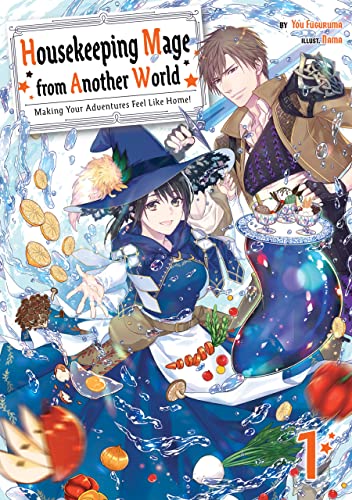
Housekeeping Mage from Another World: Making Your Adventures Feel Like Home!, Vol. 1

March 11, 2022 by Sean Gaffney

By You Fuguruma and Nama. Released in Japan as “Kasei Madoushi no Isekai Seikatsu: Boukenchuu no Kasei Fugyou Uketamawarimasu!” by Ichijinsha Bunko Iris NEO. Released in North America by J-Novel Heart. Translated by Elanor Sakamoto.

Sometimes, when you have a story you want to tell, you have to remember to tell it and not get distracted by other things. Indeed, sometimes the other things are completely unnecessary. You want to have an isekai with a love story between your heroine and a handsome adventurer, but urgh, isekai. That means you have to do the whole “why have you been summoned here/level up” stuff. But… do you NEED to have all that? As for your heroine, there’s a long sequence where she gets involved with the wrong party and is slowly ground down until she’s damn near suicidal. It’s needed setup for the romance to come… but do you NEED to have all that? Flashbacks are your friends! By jettisoning its tragic backstory to the very start of the book and keeping it in flashback, and by having the isekai be reduced to “it just happened, no reason”, the author of Housekeeping Mage is able to focus on telling the story they want. And that’s a good thing.

After a brief “I’m walking home from my grueling office lady job oh hey, isekai whooooosh” prologue, we meet our hero, Alec, an adventurer who’s just gotten back from a long job away from the capital. This means he has not met the capital’s new adventurer Shiori, whose magic power is minimal but who makes up for it in brilliant technique. No one is sure how she ended up there, at first unable to even speak their language. However, they know that when they take her on a multi-day quest, they get hot meals, hot baths, and reasonably soft beds, plus laundry service. Alec is, frankly, smitten pretty fast. There’s just one problem. Shiori was with a party previously who treated her like… well, like a maid, and drained her of her will to live… then abandoned her in a dungeon when forced to by greedy nobles. Frankly, Shiori has PTSD. But Alec, who has his own secret past and his own tragic backstory, wants to get to know her better anyway.

The book tries very hard to not have this be “Magical Maid”, to the point where her first party that does treat her like that are held up as the scum of the earth. (I was expecting to meet them towards the end of the book, but no, though they may show up later.) The rest of our main cast are quick to emphasize not only that what Shiori’s doing is a huge mental and physical help to adventurers, but also that it requires a fine technique that few mages possess – her mixing of different spells works for her because she DOESN’T have huge amounts of mana, those with more would likely be unable to do it. And later on she saves the day with both housekeeping knowledge AND knowledge from Japan. That said… Shiori is pretty broken in this first book. Alec realizes that, I think, and pursues her firmly but slowly, waiting for her to start to open up to him. Which she does, eventually.

There’s more of this in Japan, though as of this review the second book hasn’t begun on J-NC’s site. If you enjoy isekai written for women, or shoujo romance, this is a definite must read. It doesn’t skip the boring bits per se, but they’re shuffled to the side or left for dessert.

Filed Under: housekeeping mage from another world, REVIEWS

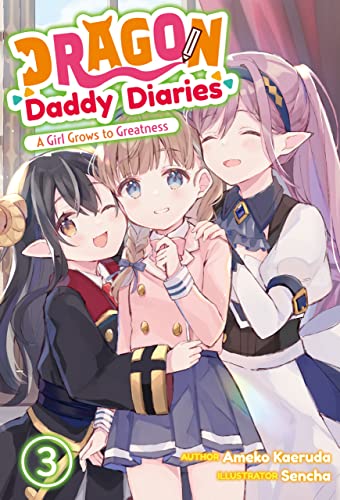
Dragon Daddy Diaries: A Girl Grows to Greatness, Vol. 3

March 8, 2022 by Sean Gaffney

By Ameko Kaeruda and Sencha. Released in Japan as “Totsuzen Papa ni Natta Saikyou Dragon no Kosodate Nikki: Kawaii Musume, Honobono to Ningenkai Saikyou ni Sodatsu ” by GC Novels. Released in North America by J-Novel Club. Translated by Nathan Macklem.

This series, and really all series that star protagonists who start out as the strongest in the land and stay that way, has a basic problem: there’s really not a lot of places for their growth to occur. The titular dragon daddy has an advantage here over his daughter as he’s still learning about how humans (and indeed demons) react to things and what their value systems are. But Olivia… sigh. I love this series, but if it has a weak point it’s Olivia, who is the best kid and the most powerful kid and not much else. She can’t really start the drama. She can’t make mistakes. The most she can do here is to suggest that their quest for magical items amount to a summer visit to her friend’s houses, because no one has any idea where these items are. Fortunately, we do have a character in this book who screws up all the time and it a bit of a mess. She shines here.

School’s out for summer, but the Queen has a project for Olivia and her father. There are several magic artifacts that need to be drained every 30 years or so, with the added bonus of granting a wish. Unfortunately, almost all of them have been missing for about a thousand years. They need to be found, despite no one knowing anything about them. So Olivia visits all her friends, and one by one she and her father see different sorts of miscommunication between parents and their children and teaching them a valuable lesson. It’s actually pretty heartwarming. Meanwhile, our resident Dark Queen is… sulking in her castle, wanting to hang out with everyone but also wanting to be a lazy shut-in. That said, she also has an idea where one of the magical googaws is… but it would involve returning to the demon realm and facing her comeuppance.

I’ve said before that I enjoy the wacky antics of Maredia and Clowria, but I enjoyed them even more here when things got more serious. OK, only a tiny bit more serious – we meet the rest of Maredia’s family, and it turns out they’re all chuuni NEET shut-ins just like her. But a lot of the behavior that she’s been trapped in a vicious cycle for was brought on by crushing expectations from the demon world, and she blames herself for failing them all. The trial that the ruler of the demon world must pass is in two stages, and the first is easy, as she elects to take it with her friends, two of whom are well-nigh indestructible. But the final test is her on her own, facing her worst fears. It can drive a person mad. Fortunately, Maredia is an old hand at screaming at herself in her own head.

As with the previous books, there’s no explicit yuri here, but I mean, Maredia and Clowria give each other rings, with Maredia even going down on one knee to do it. That’s near as dammit. I’m not sure when the next book in the series is coming out, but it’s likely the final one. I liked this a lot.

Filed Under: dragon daddy diaries, REVIEWS

My Daughter Left the Nest and Returned an S-Rank Adventurer, Vol. 3

March 7, 2022 by Sean Gaffney

By MOJIKAKIYA and toi8. Released in Japan as “Boukensha ni Naritai to Miyako ni Deteitta Musume ga S-Rank ni Natteta” by Earth Star Novels. Released in North America digitally by J-Novel Club. Translated by Roy Nukia.

This third volume returns to the same structure we saw in the first, moving back and forth between Angelica’s life in the big city and her father’s life back in the sticks. Of course, neither one of them lack for things to do. On Angelica’s end, she runs into Charlotte and Byaku, the child villains from the previous book, who are trying to repent but perhaps going about it the wrong way. On Belgrieve’s end, the forest next to his little village is getting increasingly dangerous, to the point where there has to be something behind it. He goes investigating with the help of Duncan, his battle-hungry new friend, Graham, a legendary elf warrior, and Marguerite, a not-so-legendary elf who’s more of a hothead than anything else. Their paths don’t intersect this book, but rest assured Belgrieve is always on Angelica’s mind: she’s trying to find him a wife!

I compared Charlotte to Ilya from Fate last time, and it’s pretty clear that this is the Ilya from the first route. Not that Charlotte is dying from being a homunculus anytime soon (though hold on to that thought) but more that she needs a stable family life in order to be able to recover from her tragic past and her present misdeeds. Angelica provides that for now, and is a pretty decent big sister, but it’s clear that she’s going to need Belgrieve to step in, as Angelica just can’t be doing this AND taking down the strongest enemies at the same time. I also enjoyed the discussion of how Charlotte is trying to apologize for her past religious scams – giving everyone their money back and saying the amulets are phony – and the others taking the time to explain to her why that’s not working and why people are angry with her, as well as what she can do to actually become a better person.

Now, back to the homunculuses. There is a plot to this book beyond cute daddy-daughter antics, and the villains seem to be creating supervillains, though how villainous they are is a matter for future books. Certainly Byaku is one of them, and they seem to be able to remove his super powers at will, leaving him mostly just a grumpy teen. That said, he can also see what we’ve suspected since the start of the series – Angelica is no normal kid, but more like him. She, of course, doesn’t want to believe this, because her being a foundling doesn’t really matter as all her strength comes from her father. Now, it may be true that her TRAINING comes from her father, but her strength certainly seems to be something more. This should be a very interesting plot going forward.

All this and a cute elf girl, though not the cute elf girl that Belgrieve has been pining for from his past. (Sorry, Angelica, your dad has a lost love that likely needs to be resolved before you can hook him up with anyone.) This remains a very enjoyable fantasy series, with a fun and slightly airheaded lead.

Filed Under: my daughter left the nest, REVIEWS

The Saint’s Magic Power Is Omnipotent, Vol. 6

March 6, 2022 by Sean Gaffney

By Yuka Tachibana and Yasuyuki Syuri. Released in Japan as “Seijo no Maryoku wa Bannou desu” by Kadokawa Books. Released in North America by Seven Seas. Translated by Julie Goniwich.

One of the better things about this new volume of The Saint’s Magic Power Is Omnipotent, aside from waiting till near the end of the book to justify that title, is that it’s committed to trying to figure out how the magic in this world works, rather than just seeing it as a stat. Of course, it IS a stat here, and we get lots of talk of HP and MP, But Sei realizes here that potions and medicine are not the same thing, and that in fact the use of potions may mean that diseases and maladies that might otherwise have been researched and analyzed are completely glossed over. That said, medicine takes years of testing and watching for side effects, and may not be all that potent, whereas potions are a magic cure-all that you just need to drink down. I don’t see one supplanting the other, especially given that Sei manages to invent the bestest potion of them all. The secret? Apples.

The bulk of this book concerns itself with the arrival of a visiting dignitary from the nation where Sei got her Asian food last volume, which continues to be very much not-China. One of the many princes in this country, he is here to study herbs and medicine, and despite the best efforts of the kingdom to hide Sei whenever he’s around, it’s pretty inevitable that they eventually run into each other. While she’s able to conceal her identity as the Saint to a certain degree, she can’t help but find a kindred spirit in the Prince, who really seems to know his herbs… and is also searching for a specific kind of cure. Can Sei manage to figure out what it is that the Prince’s mother has wrong with her? And if not, is there a way that she can weaponize her OPness to save the day?

The cover art shows off Prince Ten’yuu as a handsome bespectacled young man, but what I noticed more was the internal illustration, which showed him with the “spiral coke-bottle glasses” common to Chinese stereotypes in Japan (see Ranma 1/2 for the most famous instance). Fortunately the stereotypes seem to end there, with the main plot instead revolving around him as a sort of villain (everyone’s trying to stop him seeing Sei and figuring out who she is) who eventually becomes sympathetic (when we find the reason he’s there in the first place). It also reminds us that keeping Sei under wraps just is not going to fly as a long-term plan for much longer. Marrying her off to keep her in the Kingdom seems like the obvious answer, but again, she’s still in the ‘blushing maiden’ stage, and Albert is not inclined to push the matter. The politics remain boiling quietly in the background.

This is apparently one of the top ten light novel franchises in Japan right now, and I can see why. It’s solid and has likeable characters, and Sei is overpowered without being boring about it. She puts in the work.

Filed Under: REVIEWS, saint's magic power is omnipotent

The Most Heretical Last Boss Queen: From Villainess to Savior, Vol. 1

March 5, 2022 by Sean Gaffney

By Tenichi and Suzunosuke. Released in Japan as “Higeki no Genkyou Tonaru Saikyou Gedou Rasubosu Joou wa Tami no Tame ni Tsukushimasu” by Ichijinsha Bunko Iris NEO. Released in North America by Seven Seas. Translated by Emma Schumacker. Adapted by Michelle McGuinness.

I suppose it had to happen eventually. There can only be so many light novels brought over here with the exact same premise before you find yourself thinking “this is really a lot like the previous dozen or so villainess novels I’ve read this year”. Heroine tries to change her fate while at the same time convinced that her fate is inevitable. Everyone around her is gobsmacked by her skills and her emotional sensitivity, but she doesn’t see it as anything but normal friendship. Everyone her age falls in love with her, including her adopted brother. We get events from her POV, and the events are then repeated from the love interest’s POV. And this one started in 2018, a good four years after My Next Life As a Villainess, so it doesn’t get the excuse some others have. What’s more, this is 100% serious, so we don’t even get the parody of the genre that Bakarina has become. It’s certainly readable – and had one bit I found quite interesting – but still… been there, done that.

Our heroine doesn’t even get half a page in Japan before she’s hit by a car. She wakes up as Princess Pride Royal Ivy, the daughter of the Queen and first in line for the throne (a rare matriarchy in light novels). There’s just one slight problem – Pride is the evil Queen from our protagonist’s otome game Our Ray of Light, and after years of foul misdeeds she’s killed off at the age of eighteen. Pride, who is eight, only has ten years to fix things. She gets off to a good start, rewriting relationships with her adopted brother and younger sister-in-hiding, while also showing off the “precognition” unique to her family line… though in her case it’s just remembering the plot from the game. Unfortunately, there are people behind the scenes determined to portray her as a selfish evil princess. And the cast keep getting these nightmares…

Without a doubt the most interesting parts of this book are the parts of the “game” where we see the Evil Queen Pride. Generally speaking when we get otome game villainesses in these books they tend to be bullies who go after the main character for not knowing her place, etc. Pride goes above and beyond, ordering her adopted brother (who has signed a contract forcing him to obey her every order) to murder his own mother, and casually admitting to her guard knight that she let his father die because it was more important to kill the bad guys who were after her. She really does live up to her name, and it’s easy to see why THIS Pride is doing her absolute best to avoid going there. Unfortunately, the other side of the coin – why is everyone having nightmares of the game, and why is one of the characters secretly evil – is not answered here, so we’re unfortunately left with the main flaw of many villainess books, where the heroine simply cannot get it in her head that she’s not a bad person anymore. It’s frustrating.

I’m not sure if I’ll get Book 2 in the series, but I do see that, judging by the webnovel content, this is going to be at least 7 or 8 books in Japan, and I don’t think I can last that long. For villainess completists only.

Filed Under: most heretical last boss queen, REVIEWS

The Demon Sword Master of Excalibur Academy, Vol. 5

March 4, 2022 by Sean Gaffney

By Yu Shimizu and Asagi Tosaka. Released in Japan as “Seiken Gakuin no Maken Tsukai” by MF Bunko J. Released in North America by Yen On. Translated by Roman Lampert.

Before The Asterisk War went on hiatus here due to no new volumes in Japan (the artist has been sick), I was frequently asked by fans why I kept reading it given how generic and cliched it was. And granted, it absolutely is that. But my answer was, simply, “It hasn’t done enough wrong for me to stop reading it”. And The Demon Sword Master of Excalibur Academy feels a lot like that. There’s really nothing here you can’t get in other magical academy series, and they likely don’t have “lol, he’s in the body of a 10-year-old” dragging down the harem premise. But I dunno, it all feels so harmless. There’s goofy fun, there’s cool battles, there’s the occasional dribble of plot, and the girls are all beautiful. It is a series that you can read and immediately forget about, but when the next volume rolls around you’ll grab it and read it because it’s there. Plus, pool battle!

After the events of the last book, Leo now has to deal with the fact that a Dark Lord has been resurrected… albeit, like Leo, with only a fraction of her power. Also like Leo, that’s mostly irrelevant, because Veira is hella powerful even muted, and the first half of the book is mostly her getting a tour of the modern world and running our heroes ragged. That said, the second half gets more serious, as the Mysterious Organization that is behind all this has decided that the deadliest Dark Lord is the next one they want to bring back… the Undead King, Leonis. I, um, have some bad news for them about their timing. More seriously, there is also a problem of Holy Knights getting corrupted by a mysterious “voice of the goddess” and having their Holy Swords turn into Demon Swords. Which, unfortunately, also seems to send them into a rage.

Not gonna lie, I was startled to see the minor villain from the first novel come back to be a minor villain in this one as well. Arrogant jerkass shows he’s even worse is good only in small doses, so it’s absolutely fine that he gets taken down immediately. If there is a “focus heroine” beyond Riselia here it’s Elfine, who is suffering from PTSD from prior battles causing her sword to lose some of its power, and decides to go on the front lines with our team this time to do something about it. Good thing, too, as the other teams they’re paired up with to explore Leonis’ old underground tomb are being led by demon sword users. Elfine is able to get over her trauma and emerge victorious, but there’s a lot of others who also try hard but either get turned into demon sword users or lose their swords to said users, and unfortunately I don’t see a really good reason why Elfine is different from them other than “main character syndrome”. I wonder if we’ll ever see any of them again.

So yeah, if you like this series, this is a decent volume of it, and if you don’t, you dropped it ages ago. It’s still not doing enough wrong for me to stop.

Filed Under: demon sword master of excalibur academy, REVIEWS

I’m the Villainess, So I’m Taming the Final Boss, Vol. 2

March 2, 2022 by Sean Gaffney

By Sarasa Nagase and Mai Murasaki. Released in Japan as “Akuyaku Reijo Nanode Rasubosu o Katte Mimashita” by Kadokawa Beans Bunko. Released in North America by Yen On. Translated by Taylor Engel.

Given the sheer number of villainess novels and other similar “this is the same world as the game I played!” scenarios, it’s surprising that we’ve had so many of the protagonists accept that this is their new reality. Admittedly, VR technology has not gotten to the point where this sort of thing could be faked well, but “I’m dreaming” is probably a valid response. Of course, the main reason that we don’t see this too often is that if you think that you’re just inside some game world, you start to think of the world as not having real people but ‘target characters’, and that death is irrelevant because you can restart and they’ll all be alive again. That’s not true in these books, and the villainesses usually know it. But this is one of those ‘good villainess = evil heroine’ books, so it should come as no surprise that, when the heroine gets her OWN memories of Japan back at the start of this volume, she decides to send things off the rails.

Having successfully avoided her doom, Aileen is safe within the demon lord’s domain. Unfortunately, the game she played back in Japan had a sequel, which she also played. New heroine, new love interests, new bad guy. And now it seems someone is trying to make events in that game happen, which will be very bad news for the demons in this world. To try to prevent this, Claude is going to the duchy of Mirchetta to investigate. Aileen is told to stay behind. A ha. A ha ha ha. Disguising herself as a boy, she infiltrates the academy where the second game took place, then inveigles herself onto the student council and establish a guard unit to protect the students (mostly from each other). But investigating is going to be a little hard when her fiancee is the school principal. A clever disguise is needed. Or, failing that, the most bizarre disguise ever.

This book is more well-written than a lot of the villainess novels I’ve seen, and you really find yourself drawn in – I can see why an anime is coming. Aileen is a combination of clever and too-clever-by-half, and she gets a new cast of characters in the student council, who are all fun types. Given that the second game had a different heroine and a different villainess (though it takes place in the same world), it’s no surprise that Aileen quickly makes friends with said villainess, who turns out to be a sweetie pie with poor self-esteem, as you’d expect. This doesn’t really break new ground – mind controlling drugs as the main threat has been seen before, and the evil church being behind it surprises no one – but it’s fun to read, and Aileen is a hoot. If I had a complaint it’s that we only see one picture of her in her masterful disguise. More art was needed.

The end of this book established that we’re going to be seeing evil heroine vs. good villainess for some time to come, so it’s a good thing this is ongoing. Even if you’re tired of villainess books, this is worth the read.

Filed Under: i'm the villainess so i'm taming the final boss, REVIEWS

So You Want to Live the Slow Life?: A Guide to Life in the Beastly Wilds, Vol. 1

March 1, 2022 by Sean Gaffney

By Fuurou and Yuki Nekozuki. Released in Japan as “Shishi Kamori de Slow Life” on the Shousetsuka ni Narou website. Released in North America by Cross Infinite World. Translated by Andrew Attwell.

If you do want to read slow life books, you’re going to have to put up with the slow life. And that can sometimes be hard. I have a few slow life books I’ve had to drop simply because the everyday descriptions of their slow life were putting me to sleep. On the other hand, if you can come up with a good plot and characters, you can usually hook your reader enough that they will put up with your slow life anyway. That’s exactly what we get here. I have to tell you, there is a lot of food preserving in this book. A whole lot. Honestly, the book should have been titled “So you want to preserve food?”. And, having peeked at the webnovel itself, that is absolutely never going away. That said… likeable leads who are both adults, good worldbuilding in terms of how this sort of thing would work, and an occasional action scene. I enjoyed it.

Our main character is Mikura, who is decidedly NOT hit by a truck and does not end up in any sort of fantasy world. That’s because it’s already come here. There is a massive forest in Japan called the Beastly Wilds, host to Beastpeople. Grownups look like humans with animals ears and tails, but the kids look like animals wearing clothes. There are all sorts of rules and regulations about going into this forest at all. And Mikura’s great-grandfather had a house here, where he paid the beast people to tend to the chestnut and walnut trees and sat around preserving food as a hobby. Now that he’s passed away, Mikura decides to quit his fast-track office job and follow in his footsteps. Of course, there’s a bit more to it than just moving in… for one thing, he’ll need to deal with the locals.

I’ll be honest here, the best thing in the book by a mile is the main female lead, Techi. She’s essentially a grade school teacher/foreman/minder for all the kids who are working on Mikura’s farm (and there is a welcome discussion of child labor laws and how they apply to beastmen who essentially get a lot less agile as they get more human), and she takes a while to warm up to Mikura… or anyone, really. She is what I would call a ‘lovable grump’ and Her basic expression most of the time is :| or variations on it. Seeing her slowly start to fall for Mikura is the highlight of the book, even as she’s also helping him acclimate to this new situation and fighting off crooked chestnut dealers who want to use the beastfolk for their own ends. The first half of the book is all plot, for the most part, and I loved it. The second half is about 1/3 plot, 2/3 recipes, and I felt like I was googling ‘pancetta’ and having to read someone’s life story before I got to the recipe.

Despite that, and the risk of future volumes being worse, I really loved the lead couple, even if they aren’t a couple yet. (He sensibly sees her flirtation as more of a fascination with romance than him specifically, though I’ve no doubt that will change.). If you’re a cook, this is a must read. to everyone else, recommended if you like relaxed isekais or chipmunks.

Filed Under: REVIEWS, so you want to live the slow life

Re: ZERO ~Starting Life in Another World~, Vol. 18

February 28, 2022 by Sean Gaffney

By Tappei Nagatsuki and Shinichirou Otsuka. Released in Japan by MF Bunko J. Released in North America by Yen On. Translated by Dale DeLucia.

I always enjoy the books in this series that are more about rallying around the flag. The author in the afterword says that the series is always remembered for all the death and gore and terrible things, but that the hope and turning things around is just as important, and I agree with them. It does help that the plotline I was most worried about, Emilia being kidnapped, was handled in the best possible way. Certainly her would-be husband is a loathsome and terrible man, but she still manages to have agency, gaining valuable information and passing it off to allies before returning to her forced wedding because escaping would mean Regulus would take it out on his other wives. That said, for a series filled with Best Girls there are an awful lot of them this book. Crusch is mostly at death’s door, but manages to rally Subaru; Anastasia proves when it comes to actual administration she’s by far the best Royal candidate; and Priscilla… well, Priscilla just IS.

After the disaster of the City Hall assault last time, our forces regroup. Ironically, City Hall is now theirs, but there’s lots of bad things happening. Subaru’s leg… and Crusch’s entire body… are cursed. Emilia is, as I said, kidnapped. Wilhelm has figured out that one of the villains who attacked them was in fact someone he knows very well; heck, even Reinhard had a terrible time, though it was offscreen. What’s more, after Lust ups the demands (she now wants the Book of Knowledge (seemingly burned), an artificial spirit (i.e. Beatrice) and Regulus and Emilia’s wedding to go forward (that last one is obviously his addition). This means that all the citizens of this city are a bit scared and angry and upset. Can someone manage to win them over with a dramatic speech? And is that someone really Subaru?

As I said above; my God Priscilla’s presence in this book is just amazing. She’d be the worst person to interact with ever in real life, but her arrogance, confidence and strength here are just what the doctor ordered; her berating Liliana until she gives in and agrees to help is a thing of beauty. I would love to read some Re: Zero from her point of view. Speaking of points of view, it’s very amusing to see how everyone in the room reacts – particularly Julius and Al – when Subaru casually tells everyone that he loves Emilia. He may constantly regard himself as just this guy getting by, always scared and wanting to run away, but to everyone else he’s a tower of strength and confidence, saying things no one else has the courage to. He is topped, perhaps, only by Otto, who continues to be Best Boy, and unfortunately because he is Best Boy has to face the cliffhanger ending on his own.

The next book will be the counterattack against all the archbishops, and it promises to be a combat filled melee. Till then, enjoy a Re: Zero with no return by death by a whole lot of heartwarming moments.

Filed Under: re: zero, REVIEWS

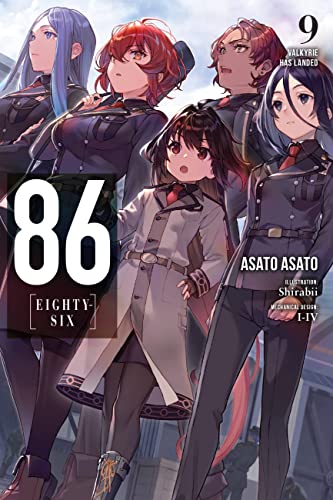
86 –Eighty-Six–, Vol. 9: Valkyrie Has Landed

February 27, 2022 by Sean Gaffney

By Asato Asato and Shirabii. Released in Japan by Dengeki Bunko. Released in North America by Yen On. Translated by Roman Lempert.

There is an awful lot going on in this volume of 86, but we have to start by talking about Kurena, who pretty much owns this book. When we last saw her at the end of Book 8, she was in a very bad place, her screw-up having cost lives, and throughout this book we see her fragile psyche try to recover from it. She’s grasping for a renewed purpose, which for the most part in previous books has been “Shin”, but now that she’s finally acknowledged that he’s in love with Lena she needs something else. It could be the war – after all, getting back her mojo and becoming the best sniper of all the 86 is certainly something that would be an excellent goal for this book. But, as she realizes to her growing horror, having something war-related as a goal is not cutting it anymore. It’s not what the others are doing. They’re all trying to END the war, to find a future that does not involve constantly fighting the Legion. And I’m gonna be honest, that nearly breaks her.

Our core unit that we’ve known since the first book is now down a member, as Theo is forced to retire from military service, something that he tries to cope with over the course of the book. As for the rest of the group, they’re all headed to The Holy Theocracy of Noiryanaruse, a country whose religion and military needs have combined in a disturbing way, and whose general is an odd mix of high priestess and idol singer. Several countries are sending units to try to take care of the Noctiluca, the Legion’s main weapon from the previous book, which has settled in a ruined and ash-filled area of the Theocracy. The battle will be tricky. The ash turns out to be very hard to navigate in, the entire plan hinges on a sniper who’s having a crisis of faith, and, most importantly, when you combine several countries to try to achieve a task, they may not always be on the same page – or even in the same book.

As usual, the bulk of the back half of this book consists of a large battle, which I can’t really review except to say “hey, nice combat, 5 stars!”. So I’ll go back to 86’s core theme, which is that war is terrible, the idea of “constant war” is an easy one to slip into, and that to prevent that everyone needs SOMETHING that they can think of doing when this war finally ends – because otherwise it never will. Shin has Lena, Anju has Dustin, Raiden… will be getting a book to himself soon, I expect, and this entire book is about Kurena’s journey to find a purpose in life. As for Theo, while I doubt we’ve seen the last of him, I suspect we’re going to see him about as often as we do Annette (who does show up here to rally his morale). His future is not in battle, much to his dismay. As for the war itself, our heroes are faced with actually having to fight soldiers who are not Legion… and they hate it.

This feels like we’re headed towards a grand finale, but we’re not there yet. Nevertheless, this is a fine entry in a very fine series.

Filed Under: eighty-six, REVIEWS

Prison Life Is Easy for a Villainess, Vol. 1

February 25, 2022 by Sean Gaffney

By Hibiki Yamazaki and Tetsuhiro Nabeshima. Released in Japan as “Konyaku Haki kara Hajimaru Akuyaku Reijou no Kangoku Slow Life” by Enterbrain. Released in North America by J-Novel Club. Translated by Sean McCann.

We’ve seen enough villainess stories by now that we’re used to the subgenres and deconstructions. We’ve seen ditzy villainesses, crafty villainesses, fleeing villainesses, and depressed villainesses. We’ve seen women who are aghast at how the relationships have changed around them, and other women who have no idea that they’ve become a beloved and cherished young lady. That said, for the most part even the most excessive of the villainess books has had a similar theme, which is “I am a villainess and I want to stop being one”. But what if our heroine is in fact a terrible person? What if she has not awoken to her past memories but simply been holding back her true self naturally? What if the world she lives in is, in fact, a cartoon? This novel is here to answer those questions. If you’ve been dying for some gaslighting, gatekeeping, and girlbossing, Rachel Ferguson is here for you. Even if she’s also behind bars.

Despite the villainess tag, there’s no past life from Japan or otome game hijinks here; it just describes our protagonist. Rachel is the duke’s daughter and the fiancee of the prince… however, he accuses her of bullying his new love, Margaret, and (as the King and Queen are conveniently away) tosses her into a cell. A… strangely full cell. What are all those packing crates doing there? Why is Rachel sitting on a chair eating canned food and sipping wine? Why does she have a COUCH? Most of all, why is she not sobbing and begging for mercy? Unfortunately for Prince Elliott, it turns out that Rachel’s somewhat detached, doll-like demeanor was hiding her true self… which everyone but him (and the other men Margaret is manipulating) seems to know about. And now that the beast has been let loose, Rachel is going to destroy him. Peacefully. While enjoying her prison life.

As noted, this book works best if you think of it as a cartoon, with Rachel as Bugs Bunny and Elliott as Yosemite Sam. The main reason for this is that if you try to find sympathy for any of these people, the story will collapse. The author wants the reader to be delighted at Rachel torturing people for her own amusement. Fortunately, for the most part, I am. Rachel is a bitchy delight. Elliott is the perfect dumb clown villain the book needs (it would not work with anyone smart of likeable). Oddly, Margaret, the commoner-turned-baroness’ daughter who started all this, ends up coming off as oddly cute, possibly as she’s clearly meant to be an innocent teenage brat rather than a scheming vixen. The book expands a lot on the original webnovel, and the author freely admits in the afterword that when you have a scene that doesn’t star Rachel in prison, it’s new to the light novel. These scenes don’t work quite as well, but they’re also fine.

If the idea of a woman casually destroying her idiotic fiancee over the course of 240 pages makes you go “hrm, not sure”, I’d avoid this book. If, like me, it makes you say “OH GOD, YES PLEASE”, then this will delight you. Also, the next volume is the last, so Rachel won’t wear out her welcome.

Filed Under: prison life is easy for a villainess, REVIEWS

  • « Go to Previous Page
  • Page 1
  • Interim pages omitted …
  • Page 83
  • Page 84
  • Page 85
  • Page 86
  • Page 87
  • Interim pages omitted …
  • Page 346
  • Go to Next Page »
 | Log in
Copyright © 2010 Manga Bookshelf | Powered by WordPress & the Genesis Framework