• Skip to primary navigation
  • Skip to main content
  • Skip to primary sidebar
  • Home
  • About Us
    • Privacy Policy
    • Comment Policy
    • Disclosures & Disclaimers
  • Resources
    • Links, Essays & Articles
    • Fandomology!
    • CLAMP Directory
    • BlogRoll
  • Features & Columns
    • 3 Things Thursday
    • Adventures in the Key of Shoujo
    • Bit & Blips (game reviews)
    • BL BOOKRACK
    • Bookshelf Briefs
    • Bringing the Drama
    • Comic Conversion
    • Fanservice Friday
    • Going Digital
    • It Came From the Sinosphere
    • License This!
    • Magazine no Mori
    • My Week in Manga
    • OFF THE SHELF
    • Not By Manga Alone
    • PICK OF THE WEEK
    • Subtitles & Sensibility
    • Weekly Shonen Jump Recaps
  • Manga Moveable Feast
    • MMF Full Archive
    • Yun Kouga
    • CLAMP
    • Shojo Beat
    • Osamu Tezuka
    • Sailor Moon
    • Fruits Basket
    • Takehiko Inoue
    • Wild Adapter
    • One Piece
    • After School Nightmare
    • Karakuri Odette
    • Paradise Kiss
    • The Color Trilogy
    • To Terra…
    • Sexy Voice & Robo
  • Browse by Author
    • Sean Gaffney
    • Anna Neatrour
    • Michelle Smith
    • Katherine Dacey
    • MJ
    • Brigid Alverson
    • Travis Anderson
    • Phillip Anthony
    • Derek Bown
    • Jaci Dahlvang
    • Angela Eastman
    • Erica Friedman
    • Sara K.
    • Megan Purdy
    • Emily Snodgrass
    • Nancy Thistlethwaite
    • Eva Volin
    • David Welsh
  • MB Blogs
    • A Case Suitable For Treatment
    • Experiments in Manga
    • MangaBlog
    • The Manga Critic
    • Manga Report
    • Soliloquy in Blue
    • Manga Curmudgeon (archive)

Manga Bookshelf

Discussion, Resources, Roundtables, & Reviews

Reviews

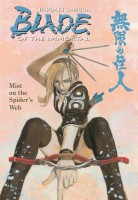
Blade of the Immortal, Vol. 27: Mist on the Spider’s Web

November 15, 2013 by Ash Brown

Blade of the Immortal, Volume 27Creator: Hiroaki Samura
U.S. publisher: Dark Horse
ISBN: 9781616552152
Released: September 2013
Original release: 2010
Awards: Eisner Award, Japan Media Arts Award

Mist on the Spider’s Web is the twenty-seventh volume in the English-language edition of Hiroaki Samura’s Blade of the Immortal manga series. Released by Dark Horse in 2013, Mist on the Spider’s Web is more or less equivalent to the twenty-sixth volume of Blade of the Immortal published in Japan in 2010. Blade of the Immortal is an award-winning series. Over the course of its long publication history the manga has earned Samura a Japan Media Arts Award and an Eisner Award among other honors. Blade of the Immortal is also a series of which I am particularly fond, so I am glad to see Dark Horse sticking with the manga through to its end. Mist on the Spider’s Web takes place during the fifth and final major story arc of Blade of the Immortal. The previous volume, Blizzard, was particularly good and so I was very interested to see where Samura would take things next with Mist on the Spider’s Web.

While Rin, Manji, and the others are recovering from their final confrontation with Shira, the hunt for the remaining Ittō-ryū swordsmen continues. The main group is well on its way to Hitachi under the guidance of senior members Abayama Sosuke and Kashin Koji. Before making their escape they hope to reunite with their leader Anotsu Kagehisa who has been delayed after his attack on Edō Castle. The three other Ittō-ryū fighters who also took part in the strike are either dead, missing, or severely wounded. Habaki Kagimura is in pursuit, chasing down the Ittō-ryū and its allies. He and his Rokki-dan warriors–death row convicts with little choice but to aid Habaki in his quest–are charged with annihilating the rogue sword school. The pressure on the Ittō-ryū continues to mount as more and more of Anotsu’s enemies draw ever closer.

If it wasn’t already apparent, Mist on the Spider’s Web makes it very clear how far the Ittō-ryū has fallen since its glory days. The most talented swordsmen are slowly being killed off, the new members are few and inexperienced, and the group has had to abandon some of its core ideals and principles just for the chance of survival. It is becoming increasingly likely that the Ittō-ryū may simply cease to exist in its entirety. The sword school is a mere shadow of what it once was. The Ittō-ryū, which destroyed so many other martial groups and caused so much chaos, is now faced with its own demise. However, its members are prepared to fight to the very end and by any means necessary. Despite the questionable methods that the Ittō-ryū has employed to reach its goals, Anotsu wasn’t entirely wrong in his ambitions. It is a little disheartening to see the Ittō-ryū’s idealism fading away.

Mist on the Spider’s Web has some fantastic action sequences, but there’s also quite a bit of standing around and talking, too. It can be somewhat tedious at times, but it does make sense within the context of what is going on. In general the focus of Blade of the Immortal on the Ittō-ryū has been directed towards its fighters, but the group also has members that rely more on their mental capacities rather than on their martial capabilities. Anotsu has always been shown to be a particularly impressive strategist in addition to being a skilled swordsman, but in Mist on the Spider’s Web it is old man Kashin who demonstrates his worth through his devious intelligence. He doesn’t need physical strength to overcome his enemies, only careful thought, thorough planning, and little bit of time. Of course, time is one of the things that the Ittō-ryū has less and less of these days.
Filed Under: REVIEWS Tagged With: Blade of the Immortal, Dark Horse, Eisner Award, Hiroaki Samura, Japan Media Arts Award, manga

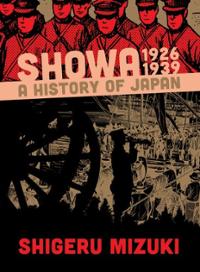
Showa 1926 – 1939: A History Of Japan

November 15, 2013 by Sean Gaffney

By Shigeru Mizuki. Released in Japan as “Comic Shouwashi” by Kodansha. Released in North America by Drawn & Quarterly.

The one thing that will strike you as you read this manga history of Japan by one of its preeminent creators is how it should not remotely work the way that it does. This book is over 500 pages, and a great deal of it is simply laying out the facts – they’re about 2/3 of the book, with the other third devoted to Mizuki’s own autobiography. It should be dry, didactic and boring. And yet it’s utterly compelling. Partly this is simply due to what’s going on – this is a dark and chilling time in Japanese history, and the facts really don’t need embellishment or excitement, as presented by themselves they can carry a book. But partly this is due to the fact that Mizuki isn’t just famous because he talked about a lot of yokai – he is a genius craftsman, writing a cyclical narrative where we constantly spiral back to see what’s happening in the most concise way possible.

showa

The narrative starts out as third-person omniscient, but Mizuki quickly comes to realize that an actual character voice is needed to help explain some of what’s going on. (He also does this via conversations between two people on the issues of the day, many of which point out how much of a narrative device this is. “Let me tell you about this.” “I know about it already, but tell me anyway.) As a result, Nezumi Otoko from Gegege No Kitaro insinuates himself into this narrative, so quietly that it takes a good 20 pages before he has to introduce himself. As D&Q point out in their endnotes, not only does this allow any children reading to get their narrative from a beloved character, but Nezumi Otoko is essentially untrustworthy, shifty, and always out for himself. Thus the narrative voice is skewed so that we aren’t meant to be quite as trusting of the facts as we would be if it were still Mizuki narrating. (He also gets in a few slaps, which pleased me.)

We also, as I noted, get the story of Shigeru Mizuki growing up during Showa, which provides relief from the historical facts. Some of this narrative will be familiar to those who’ve read Nonnonba, but this continues beyond that, and the yokai that appear here are few and fleeting. What struck me most about Mizuki’s story is how harshly critical he seems to be of his boyhood self. We’re presented with a young boy who goes off to do his own thing, doesn’t like school, gets involved in gangs, and by the end of the volume seems to be unfit for even the smallest and most menial jobs. His artistic talent is mentioned, but it’s described as sort of a side hobby that interferes with his ongoing life. This is not a likeable Mizuki, and it’s a striking choice.

Then again, it also fits with the bleak narrative as a whole. Growing up in the period covered here in this book meant knowing poverty, and hunger, and endless fatigue. It meant repression, and being imprisoned or executed for having the wrong views. It meant a military buildup that seemed to happen without the permission of any of the government, and reading about assassinations and murders seemingly every day. Mizuki needed to include the scenes with his family, as even if they are bleak, they still remind us that there are still good people at heart in the country, even as they get swept up in a tide of nationalistic fury. By the time the book ends, Tojo is making speeches, and Mizuki notes that he “is a man who never smiles, and because of that he takes away the smiles of the Japanese people.” This is almost a cliffhanger ending, leading into the events of the 2nd World War that will be covered in 1939-1944, due out this spring.

Make no mistake, this book can be very dry and factual. And yet there was no time when I ever felt the need to put it down and do something else. Reality makes for the best stories, even if they can be scary and oppressive. This book shows once again why Mizuki is one of the best creators in all of Japan. Highly recommended.

Filed Under: REVIEWS

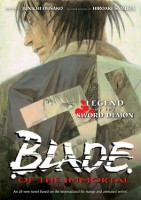
Blade of the Immortal: Legend of the Sword Demon

November 13, 2013 by Ash Brown

Blade of the Immortal: Legend of the Sword DemonAuthor: Junichi Ohsako
Illustrator: Hiroaki Samura

U.S. publisher: Dark Horse
ISBN: 9781595823380
Released: January 2010
Original release: 2008

Hiroaki Samura’s Blade of the Immortal was one of the first manga series that I began reading and it remains one of my personal favorites. When I learned that a novel based on the manga had been written I immediately picked it up. However, it did take me quite some time to actually get around to reading it. Blade of the Immortal: Legend of the Sword Demon, written by Junichi Ohsako with illustrations by Samura, was originally published in Japan in July 2008–the same month the anime adaptation of Blade of the Immortal began airing. I don’t know much about the author (Legend of the Sword Demon is the only novel by Ohsako to have been released in English), but I do know that Ohsako is a fellow fan of Blade of the Immortal. The English-language edition of Legend of the Sword Demon was translated by Camellia Nieh and released in 2010 by Dark Horse. Unsurprisingly, Dark Horse is also the publisher responsible for releasing the Blade of the Immortal manga and artbook in English.

Rin was the only daughter of Asano Takayoshi, the head of the respected Mutenichi-ryū sword school. A few years past he was brutally murdered before her very eyes, her mother was raped and abducted, and Rin was abandoned and left alone to fend for herself. Her family was destroyed at the hands of a group of renegade swordsmen known as the Ittō-ryū and their leader Anotsu Kagehisa. Now Rin is seeking her revenge, hiring an outlaw known only as Manji as her bodyguard. Rumored to be immortal, Manji has vowed to kill one thousand evil men to atone for hist past misdeeds. But is the Ittō-ryū truly evil? Whether it is or isn’t, Manji and Rin aren’t the only ones seeking the group’s demise. This complicates matters a great deal and it becomes difficult for Rin and Manji to determine who are friends and who are foes. Any alliances made in the fight against the Ittō-ryū can only be assumed to be temporary.

Legend of the Sword Demon is a very quick read. The story is a re-imagining of the early part of the Blade of the Immortal manga series. While the novel has some unique content of its own, including a dangerous enemy not found anywhere else, many of the scenes will be familiar to those who have read the original. All of the most popular characters make an appearance in the novel as well. (This was actually one of the conditions set by the publisher when the novel was initially commissioned.) Legend of the Sword Demon mostly focuses on the action of the story. Very little descriptive detail is given and the characters aren’t particularly fleshed out, either. It is interesting to see a slightly different take on Blade of the Immortal, but Legend of the Sword Demon almost requires that readers have a fairly firm grounding in the original series to really appreciate what Ohsako is doing with the story and characters. There might be enough in the novel to entice new readers to pick up the manga, but I am not at all confident of that.

In the end, I was actually rather disappointed with Legend of the Sword Demon. I can’t really recommend the novel to anyone but those who are Blade of the Immortal completists (a group of people to which I admittedly belong). Ultimately, Legend of the Sword Demon is a very insubstantial work and somewhat shallow, lacking the depth present in the manga series. It feels as though the novel is nothing more than tie-in promotional material. Ohsako may be a devoted fan of Blade of the Immortal but Legend of the Sword Demon isn’t long enough nor complex enough to really establish itself as noteworthy. It’s fun in places, but Legend of the Sword Demon is largely forgettable. The real highlight of the volume is Samura’s cover art and the handful of full-page illustrations that he created specifically for the novel. Otherwise, Legend of the Sword Demon is something that most people probably won’t regret passing over.

Filed Under: REVIEWS Tagged With: Blade of the Immortal, Dark Horse, Hiroaki Samura, Junichi Ohsako, Light Novels, Novels

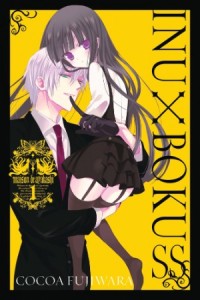
Inu x Boku SS, Vol. 1

November 13, 2013 by Sean Gaffney

By Cocoa Fujiwara. Released in Japan by Square Enix, serialization ongoing in the magazine Gangan Joker. Released in North America by Yen Press.

I hear there are spoilers for later volumes. Please don’t discuss them in comments.

A lot of times when there is a series that piles up a lot of cliches – be they plot, character, action sequences, or all three – you have to pick your tolerance level. I’m I’m going to be reading this, what’s the big draw that pulls me in and allows me to tolerate some otherwise generic stuff, even if it is well-written? In general, for me if a heroine is grumpy and sarcastic, I’m willing to forgive it a lot. And dropping such a heroine into a world of butler bodyguards is the basic premise of Inu x Boku SS, which also manages to be a yokai manga to boot.

inuboku

I have to say it – I kept thinking that the heroine was Rika from Higurashi. It doesn’t help that this began in Gangan Joker around the same time the final Higurashi arc was going. Rika was never quite as cutting and vicious as this, though. Ririchiyo simply can’t stop herself from saying what she thinks, and what she thinks is usually acidic and nasty. This has led her to have few friends. (Perhaps she should join a club… wait, wrong manga.) She moves to a high-rise complex, but finds that it comes with a loyal servant and bodyguard who will do anything for her. He’s nice and sweet to her, slowly coaxing her out of her shell of disinterest and loneliness, but he also has a dark secret which is hinted at towards the end of Volume 1.

See what I mean? The description of that bodyguard could fit any one of 2,000 shoujo manga. (This is shonen, but Square Enix has never quite been as caring about genre as the other companies, and I’d argue the pretty butler is as much a draw for female readers as Ririchiyo’s show of thigh is for the males.) We also get a goofy older brother guy, a perverse lesbian (well, faux-lesbian – because she’s perverse, nothing really ever happens. But one assumes…), and a quiet, shy girl. Also, one of the bodyguards is Walker from Durarara!! with bunny ears. (DRRR is also a Square Enix title… sometimes it’s really easy to notice the incestuous nature of the business as you read things.)

That said, this is quite competently drawn and written. You care about Ririchiyo, and want to both have her improve her social skills while not losing the biting retorts that make her interesting. The manga doesn’t take itself too seriously (at one point two of the male bodyguards flirt, and the yuri girl goes “eeew, disgusting”, a lovely hypocritical moment called out immediately), though there is also a hint that there is much darker stuff still to come. It’s just… there’s a lot of stuff here you’ve seen before in many other titles. If you enjoyed those types of works, Inu x Boku SS is definitely the manga for you. If not, I think it depends on how much you like Ririchiyo. I quite liked her, so will see what another volume brings.

Filed Under: REVIEWS

Josei from Vertical, Helter Skelter and Utsubora

November 12, 2013 by Anna N


Helter Skelter: Fashion Unfriendly by Kyoko Okazaki

It has been a very good year for fans of josei. Viz appears to be committed to disguising a few josei titles like Happy Marriage and Midnight Secretary as mature shoujo. I’m enjoying those very much, but I’m also very happy that Vertical is releasing josei as well, with the kind of more raw and uncompromising titles that you’d expect from them.

Helter Skelter: Fashion Unfriendly
is a slap in the face for fans of titles like Paradise Kiss or Walkin Butterfly. While neither of those titles presented a totally romantic view of the fashion industry, Helter Skelter’s story of a dysfunctional model is packed with both rage and almost unrelenting ugliness. Liiko is a supermodel at the top of her game due to massive plastic surgery. She’s incredibly self-obsessed and driven to achieve even more by her surrogate mother/manager. Liiko’s beauty and charisma serves as a snare that draws the people around her into her incredibly warped world, resulting in some incredibly warped plot twists that all make sense. Hada, Liiko’s young manager finds her own personality changing as she becomes more and more subservient to her mercurial boss.

Liiko’s surgeries are starting to break down, and there’s an unsettling theme of body horror that is prevalent throughout the title, as Liiko’s facade literally begins to crack, and she becomes more and more desperate to preserve her beauty. She’s a charismatic monster, but as the story progresses and her condition worsens it is almost possible for the reader to start viewing a broken down supermodel as the embodiment of raging id, albeit an id with a really good shoe collection. Okazaki’s art is deliberately rough and skewed, showing the fashion world as anything but glamorous. Liiko has a few panels of looking polished and perfect when she’s modeling, but mostly all the characters are portrayed in a sketchbook type style, with exaggerated features and the occasional rictus-like expression that serves to underscore just how false fashion industry concerns are.

Utsubora: The Story of a Novelist by Asumiko Nakamura

This manga is an interesting mix of genres. There are elements of noir, thriller, psychodrama, and a meditation on the meaning of identity in this story about a novelist who gets caught up in plagiarism and a young woman who turns herself into a character from one of his stories. The manga opens with the body of a young girl falling from the top of a building. Shun Mizorogi, a famous author who affects traditional Japanese clothing is called to the hospital to identify the body of the girl Aki. Sitting in the hallway of the hospital is a girl who is apparently Aki’s twin. Nakamura weaves together an intriguing mystery with Mizorogi and the supporting cast, which includes his painfully naive niece, the detectives investigating Aki’s death, and Tsuji the editor who is suspicious about Mizorogi’s sudden late in life outpouring of productivity. Mizorogi tries to unravel the mystery behind the sudden appearance of Sakura Miki, and all of the mysteries surrounding the death of Aki are about to converge in a very interesting way.

Nakamura’s style is both delicate and detailed, with some panels reminding me a little bit of art nouveau. This sophisticated illustration style makes the psychosexual developments in the book even more unsettling. Utsubora has some amazingly unsympathetic characters, but it reminded me very much of classic noir works where the dark side of human nature is fully explored.

Both Helter Skelter and Utsubora are omnibus editions, and as always the production from Vertical is a treat. Both manga have the type of memorable stories and characters that will linger in the minds of readers long after they’ve finished reading. For challenging josei manga with plenty of psychological twists, you can’t go wrong with picking up both of these titles.

Filed Under: REVIEWS Tagged With: helter skelter, Utsubora, vertical

Fairy Tail, Vol. 31

November 12, 2013 by Derek Bown Leave a Comment

fairytail31Fairy Tail, Vol. 31 | By Hiro Mashima | Kodansha Comics

After Lucy learns of her father’s fate, she and her friends return to Fairy Tail, where they discover that their seven year absence has put a significant gap between their powers and those of every other mage in the world. To make things worse, Fairy Tail is now the lowest ranking guild in the country. So they decide to enter a tournament to show off their stuff and rise back to the top. But they only have (insert time) to make up for seven years missed time.

Ever since the timeskip, I’ve been wondering why exactly Mashima felt the need to move his story seven years into the future. Fortunately this volume provides somewhat of an answer. What it allows Mashima to do is weaken his characters down from their excessively powerful levels and give them more of a challenge. I won’t say I like the development, but it does have a reason behind it beyond Mashima deciding to change things up on a whim.

This volume we’re introduced to two new Dragon Slayers, Sting and Rogue. For the most part they’re generic bad guys without being fully evil, but there’s something about their cats, Lecter and Froesch, that I just can’t stand. They just manage to have little to no character and yet the bits of character they do have is pure annoyance. And they haven’t even done much this volume!

Fairy Tail goes through phases, usually the beginning phase of an arc is pretty good and it’s not until later that the story starts to fall apart. So for what it’s worth, the story this volume is actually a lot of fun. ANd there are plenty of jokes that actually made me laugh, including a moment where Happy breaks the mood of a dramatic sequence in a way that actually works. It’s rare to see manga authors who know how to pull that kind of humor off so I have to give credit where it’s due.

Whatever you do, if you pick up this volume do not read it in a public place, because we not only get a beach scene, but a hot springs scene as well. If you don’t want people thinking you only read manga with lots of T&A then I recommend making this an “only in my room” reading.

While there are a couple concepts brought up that never see the light of day again I have to admit that I came away from this volume a lot more positive than I’ve been about past Fairy Tail volumes. For fans of the series this is definitely an enjoyable read, while new readers won’t find all that much besides a few jokes. If this was the first Fairy Tail volume you read and you laughed more than once, then I’d certainly recommend checking out earlier volumes.

Filed Under: FEATURES & REVIEWS, MANGA REVIEWS, REVIEWS Tagged With: Fairy Tail, manga

K-On! High School

November 11, 2013 by Sean Gaffney

By Kakifly. Released in Japan by Houbunsha, serialized in the magazine Manga Time Kirara Carat. Released in North America by Yen Press.

And so at last we come to the end of the K-On! gravy train, with the sequel that never really made sense. With the college series, at least we had several things going for it: it had the original characters we’d loved from the start, we could see their continued development and growth as a band, and they could finally stop telling school jokes. Well, that last one didn’t really happen, but still. But with the High School volume, we have one remaining main character, whose best moments came when she was interacting with Yui, who’s gone. She’s put together with a few of the supporting cast and two new girls. It’s not really that much of a surprise to see this is the less compelling of the two stories.

konhs

That said, Kakifly is making an effort, and this isn’t a total slog. Probably the best joke in the entire book comes right at the start, with Azusa deciding to ditch the pigtails to give herself a more mature, sempai-esque image. This doesn’t last long at all. Then Ui, who we all recall is identical to Yui despite not being a twin, takes her hair down and starts to glomp Azusa. The gag is then carried further when Ui announces she’s really Yui, who snuck back to high school just to snuggle some more. As Azusa herself notes, this makes perfect sense because Yui only thinks with her senses. Of course, it is still Ui in the end, having mastered the art of taking a joke to its logical conclusion. (I could do without the dumb bust-size capper, though.)

We get two new characters added to the threesome (sorry, did I forget to mention Jun? It’s because she makes that little impression on me), one of whom is there to emphasize similarities and one of whom is there to be different. The moment Sumire appeared we were going to compare her to Mugi just based on appearance alone, so it was a good choice to actually make her be Mugi’s maidservant. They’re both sweet and mellow, but Sumire tends towards the shy end of the spectrum, whereas Mugi… tends more towards the yuri end. As for Okuda, the quiet stoic girl is a type we hadn’t yet seen in the series, and it’s amusing to see her total lack of ability at singling or playing instruments, as well as seeing how she brings something to the club anyway.

Of course, this title was always going to be short-lived by virtue of 3/5 of its cast already being third-years. Azusa and company do their one big concert, it goes pretty well… but that’s it, it’s time for them to graduate. I’d hoped we’d get a better sense of whether Azusa would try to continue a band with Ui and Jun or just join back up with Afterschool Tea Time, But there’s not even that much closer, the series just sort of stops. There’s nothing actively boring or bad about this, and it was reasonably fun to read. But you forget most of it 90 minutes later, and the problem is that of all the K-On books, this one was the least necessary.

Filed Under: REVIEWS

Coffinman: The Journal of a Buddhist Mortician

November 10, 2013 by Ash Brown

CoffinmanAuthor: Shinmon Aoki
Translator: Wayne Yokoyama
U.S. publisher: Buddhist Education Center
Released: January 2002
Original release: 1993

Shinmon Aoki’s Coffinman: The Journal of a Buddhist Mortician was originally brought to my attention when I learned that Yōjirō Takita’s 2008 film Departures (which I love) was loosely based on the work. I came across the title again when I was looking into embalming practices in Japan. Embalmers are a rarity in a country where cremation soon after death is almost exclusively practiced. Instead, bodies are generally prepared for funeral by a nokanfu, or “coffinman.” Aoki’s autobiographical Coffinman was initially published in Japan in 1993. The Buddhist Education Center released the book in English in 2002 with a translation by Wayne Yokoyama. Also included in the volume is a foreword by Taitetsu Unno, the author of River of Fire, River of Water, a major work and introduction to Pure Land Buddhism in English.

Nearly thirty years before writing Coffinman, Shinmon Aoki pursued the unusual career more out of necessity than by choice when he and his family were facing bankruptcy. The profession, as well as others that deal with the dead, is looked down upon and even reviled by some, the taboo and impurity associated with death extending to those who make their living from it. After becoming a coffinman, Aoki lost friends and was shunned by family members. When his wife discovered what his new job entailed even she was incredibly upset by it. But Aoki provided an important and needed service to those left behind to grieve the loss of their loved ones as well as for the dead who had no one to mourn for them. Working so closely with corpses day after day put Aoki in a position to understand what death and life really means in both physical and spiritual contexts. It’s not happy work, but death is also not something to fear.

Coffinman is divided into three chapters but can also be seen as consisting of two parts. The first two chapters, “The Season of Sleet” and “What Dying Means” make up the first part of Coffinman. In them Aoki relates personal anecdotes and stories about his career as a coffinman–how he came to be employed, people’s reactions to him and the job, how working in an environment surrounded by death changed him and his way of thinking, and so on. He frequently uses poets and poetry as a way to express his thoughts to the reader. The third and longest chapter, “The Light and Life,” makes up the second half of the book. Although Aoki’s personal recollections can still be found in this section, the focus turns to the role of death in Shin Buddhism (the largest sect of Japanese Buddhism) from a layperson’s perspective.

Particularly when reading the second half of Coffinman it does help to have some basic understanding of Buddhism. However, it is not absolutely necessary as plenty of end notes are provided for guidance. Additionally, Aoki’s style of writing is very personable and approachable even for those who might not have a familiarity with Buddhism. Many of Aoki’s philosophical musings, such as those dealing with the relationship between religion and science or how society as a whole has come to view life and death, are not only applicable to Buddhist ways of thought. Although there is a strong sense of spirituality throughout the book, it is only the second half that focuses on the more religious aspects of the subject matter. As interesting as I found Aoki’s reflections on Buddhism, what appealed to me most about Coffinman were the more autobiographical elements of the work–the impact that becoming a coffinman had on his life and how that career fits into the culture of Japan.

Filed Under: REVIEWS Tagged With: Nonfiction, Shinmon Aoki

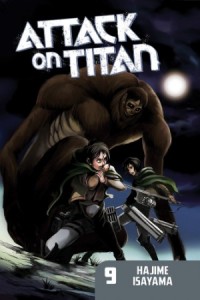
Attack on Titan, Vol. 9

November 9, 2013 by Sean Gaffney

By Hajime Isayama. Released in Japan by Kodansha, serialization ongoing in the magazine Bessatsu Shonen Magazine. Released in North America by Kodansha Comics.

(Note: This review is based on a review copy provided by the publisher. So was the Sailor Moon review yesterday, come to think of it. Also, DO NOT discuss spoilers for Vol. 10-present in the comments, even if it is legal on Crunchyroll now. Also, this review spoils shamelessly everything before Vol. 10.)

There’s so much to talk about in Volume 9 of Attack on Titan that there’s no way I can get to everything. So I apologize to Mike, who tried to have an awesome battle scene but showed off his human frailty instead, and Beast Titan, who is fascinating and clearly very important from here on out, and the horrible tragedy of Connie’s village, and Eren, who finds new resolve – again – in finding ways to destroy titans. Because I’m going to talk about Sasha right now.

attack9

It’s not exactly a secret that I am very fond of Sasha. Her scene in Volume 4 was not only funny, but came at a point where the author was finally trying to differentiate the non-stars from each other and help us remember who they were. We saw her resolve even in the face of stark terror when she chooses to join the Survey Corps, and see that resolve fail in action when she begs for her life after a Titan gets the upper hand. She, along with Connie and Jean, represent the “normal folks” of the 104th Trainees. And now she’s on a mission to notify the Northern villages that Titans are coming – including her own village.

The way this chapter is framed is fascinating, though I do wonder if I only see that because of extracanonical knowledge. The author apparently planned in this chapter to kill Sasha off, only to have his editor say “Doesn’t it feel like the wrong time to do that?”. And really, up until the moment Sasha slips out of the Titan’s wet, bloody grip, the whole chapter feels like an epic farewell. She was able to rescue the kid, and now she goes out fighting in a glorious death scene that contrasts against Mike’s stand against Beast Titan in the previous chapter.

We get a flashback to her father, which establishes Sasha as conservative, set in the old traditional ways, and (of course) ravenous. He calls her a “bit of a coward”, which apparently sticks in her craw, as it doesn’t seem like too long after that she’s joining up. We also get another flashback, seeing Sasha interacting with Krista and Freckled Girl Always With Krista, showing Sasha has been trying to hide her natural accent and talk formally so she doesn’t sound like a hick. Freckled Girl objects to her not being herself, while Krista notes that no matter how she acts, Sasha IS herself by definition. It’s a cute flashback, even if Sasha is somewhat puzzled as to why she’s thinking it as she heads for her death. We even get the “yes, my life was filled with moments like these” musings we always see before a character is killed off.

Except she doesn’t. She uses her hunting skills to get arrows in the Titan’s eyes, has a narrow escape, and meets up with the one survivor of the village, a little kid who has met up with… her own village, who are alive and OK. Including her father, who is rather stunned that the cool woman who took down a Titan as his daughter. So instead of going out in a blaze of glory, the entire chapter is recontextualized as a women coming into maturity, realizing what is selfish and what is selfless, and gaining the respect of her family. Love it.

By the way, Freckled Girl is actually relevant enough to get a picture in the front of the book now, though she’s listed as “Name Unknown”, which might surprise anyone reading this volume, who has forgotten that her name was never revealed till now. It’s a surprise as THE ENTIRE INTERNET knows her name. Luckily, we learn it here as well, in Sasha’s flashback, as Krista calls her Ymir. Hrm… where have we heard that name before? Not since Vol. 5, so the reader might be forgiven for forgetting. Hange doesn’t forget, though, and is stunned to find that someone named Ymir is among the 104th Trainees… especially as Krista seems to be hiding a big secret as well.

The Attack on Titan manga tends to veer back and forth between big revelations that are well signposted in advance (Annie’s true identity, Ymir) and things that come pretty much as “Wait, WHAT?” moments. Krista having a secret identity and being the one person who can choose to say why the Walls Are Full Of Titans is the latter. I suppose you can connect her general kindness to all things to a religious upbringing, but it still seems a bit much. That said, I like that we are slowly giving the rest of the squad their own backstories and motivations, and presumably we’ll hear about Reiner and Bertholt at some future date.

In the meantime, everyone wants to find Krista, which is a problem, as she and Ymir are trying to figure out where the wall is broken and how Titans got in. (The wall isn’t broken, but let’s leave that aside for now.) We get a nice little character sketch of her and Ymir here: Ymir wants Krista safe, and if that means being a coward or acting like an obnoxious jerk, well, that’s what it takes. Krista, meanwhile, placed 10th in the trainee exams, and knows that Ymir should have been there – indeed, may have been higher – but slacked off so Krista could get the choice to go with the MPs. Krista, of course, didn’t. Krista suspects that Ymir is always next to her because of her family, but Ymir notes no, it’s for her own sake.

The two search squads, having not found a hole in the wall, and forced by Titans to hole up in an old abandoned castle. This includes Ymir, Christa, Bertholt, Connie, and Reiner. First, off, we have an amazingly over the top scene where Connie, who has seen the devastation of his village with no actual bodies, and also a Titan who looks a lot like his mother, starting to wonder if his village all became Titans, similar to Annie. Ymir promptly laughs and starts mocking Connie in an amazingly loud voice while sweating, changing the subject away from humans who can turn into Titans entirely. It’s hard not to see this as incredibly suspicious.

They go scrounging for food, and we now hit the scene that forced the yaoi and yuri fandoms to unite as one in one giant pile of squee. Reiner sees Ymir in a storeroom looking at cans, and she jokes about guys creeping into a girl’s room at night. Ymir says she didn’t think that Reiner was the sort to be interested in girls, to which he responds that he didn’t think Ymir was the sort to be interested in guys. Attack on Titan is, at heart, a military-themed sci-fi thriller, with romance really, really low on the list. So seeing two characters casually joking about being gay in a non-romantic setting is just amazing. And if we weren’t guessing that Ymir was always around Krista because she was in love with her, we certainly are now. Also, she can apparently read ancient writing that no one else can.

Sadly, a Titan assault interrupts this before we can find out more, and we finally get to a cliffhanger. What a volume. I’m not sure the pacing always works (admittedly Ymir has been in the background since the start, but her sudden rise to main character status is still a bit of a shock), and there are still the usual art issues. But this is an amazing page-turner, and I fully support any shoehorned-in characterization as long as it deepens and expands their relationships with each other. And it’s nice to see an expanded sexuality in the series as well. In the end, how much did I enjoy this volume? Well, I wrote a review that’s almost three times as long as my normal reviews. Get it.

Filed Under: REVIEWS

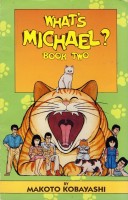
What’s Michael?, Vol. 2

November 8, 2013 by Ash Brown

What's Michael?, Book TwoCreator: Makoto Kobayashi
U.S. publisher: Studio Proteus
ISBN: 9781560600787
Released: February 1991
Original release: 1985
Awards: Kodansha Manga Award

Before there was Konami Kanata’s Chi’s Sweet Home there was Makoto Kobayashi’s What’s Michael?, proving that the international appeal of cats and cat manga is nothing new. What’s Michael? began serialization in Comic Morning in 1984 and ran for five years and nine volumes, winning a Kodansha Manga Award in the process. In addition to English, at least part of the series has been translated into French, German, and even Polish. What’s Michael?, Book Two is the second of two volumes to be released in English by Studio Proteus. The volume, published in 1991, collects material that was originally released in Japan in 1985. Although only two volumes of What’s Michael were released by Studio Proteus, Dark Horse later released the series almost in its entirety. (Some strips were left out due to potentially objectionable content.) Unfortunately, both the Studio Proteus and Dark Horse editions of What’s Michael? are long out of print.

Michael is an orange tabby tomcat, an American Shorthair with plenty of personality and representative of all cats and their quirks. What’s Michael? follows him and his interactions with other cats and humans, who are often just as peculiar as the felines they love. There’s the man who seems to be a living cat-magnet, the couple who didn’t completely think through the combination of claws and their new wicker furniture, the man who put far too much thought into living with a cat, a girl who delights in pestering Michael, the yakuza who despite their hardened demeanor have a soft spot in their hearts when it comes to four-legged fuzzballs, and all of the other people who can’t get enough of or who have had way too much of cats. Michael’s fellow felines, along with all their foibles and charms, also make frequent appearances. The result is an entertaining and highly amusing collection of short cat manga.

What’s Michael? works so well because Kobayashi is exceptionally attuned to cats and their behavior as well has how humans react when confronted by that behavior. Everything in What’s Michael? I have seen before with the cats, family members, and friends that I have known, which is what makes it so delightfully funny. One of the things that impressed me the most about What’s Michel?, Book Two was how little of the comedy relied on dialogue, which makes sense considering that cats don’t really communicate through words. Instead, Kobayashi relies on the actions, reactions, and overreactions of the cats and other characters to drive the humor of the series. And he succeeds magnificently–What’s Michael? is hilarious. It really is a shame that the series is currently out of print and somewhat difficult to find in English; it’s definitely worth tracking down.

Although there are recurring characters and running jokes, and even a few continuing storylines, What’s Michael? is largely episodic in nature. Before reading What’s Michael?, Book Two, I had only seen a few random chapters from the series; my unfamiliarity did not at all detract from my enjoyment of the volume. Each strip is only six pages long and range from the completely realistic to the utterly fantastic, but they are all authentic representations of the nature of cats and their owners. What’s Michael? is a genuinely funny and slightly surreal manga. Cat lovers will especially appreciate the series, but even those without a particular affinity for felines should at least occasionally find What’s Michael to be amusing. I know that I enjoyed What’s Michael?, Book Two immensely and would love to read more of the series, but then I live with cats and am quite familiar with their antics. Kobayashi captures them perfectly in What’s Michael?.

Filed Under: REVIEWS Tagged With: Kodansha Manga Award, Makoto Kobayashi, manga, Studio Proteus, What's Michael

Pretty Guardian Sailor Moon Short Stories, Vol. 2

November 8, 2013 by Sean Gaffney

By Naoko Takeuchi. Released in Japan as “Bishoujo Senshi Sailor Moon” by Kodansha, serialized from various sources. Released in North America by Kodansha Comics.

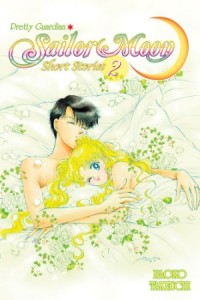
And so we come to the final final volume of the Sailor Moon manga. Kodansha has indicated there’s an artbook coming along, but for the moment, this is it. And I really wish that it ended better. I’ve been a huge supporter and preacher for this entire series, pointing out how awesome it is, and thus it saddens me that this collection of three short stories has only one that really measures up to the standards set by the series in the past. And no, that’s not the one the anime chose to adopt into a movie. (I do give big props for that cover, though, which has a post-coital Usagi and Mamoru in bed, with Usagi winking at the viewer. Fourth-wall breaking has always been in the Sailor Moon manga to a degree, but this really takes it in new directions of cute.)

smss2

Let’s start with the story that takes up over half this volume, Princess Kaguya’s Lover. This was adapted into the 2nd of the 3 Sailor Moon movies, Sailor Moon S. And indeed that’s quite deliberate: Takeuchi wrote it with a movie in mind. I don’t think it ran in a magazine, but instead appeared straight in the original tankobon. It also stars Luna. Luna, Artemis, and Diana have gotten dramatically less focus in the manga than they did in the anime, which ironically helps the story a bit here. We’ve never seen Artemis pining over Luna quite as much as we do in animated form, so there’s less bafflement at Luna’s treatment of him. And the invasion of yet another female villain poised to destroy the world is handled with the usual Sailor Moon aplomb. At heart, though, this is a love story about a cat and a human, and that’s just sort of uncomfortable, even if Sailor Moon does transform Luna into a human so she can say goodbye to her (already in love with his childhood friend) crush. (Also, Venus and Jupiter have birthdays 6 weeks apart! Throw them separate parties, sheesh.)

Casablanca Memory is the reason to pick up this volume, as it’s excellent. Given Rei had to share a short story with Minako last time (and that really was Minako’s more than Rei’s), it’s fitting she gets one of her own. This takes place early on in the Senshi’s lives, around the time they first met Jupiter. Rei’s background has been quietly mentioned before, but this story is all about it: her father is a prominent politician with no time for family, and has assistants to remember things like “when is Rei’s birthday” and “get her something nice.” Her mother was a quiet supporter of her father, but fell ill and died, which Rei has never forgiven him for. Then there’s Kaido, the assistant of Rei’s father, who’s like an older brother to her… or maybe something more. The story isn’t perfect – it’s never clear if Kaido is possessed or was posing as a Dark General all this time, and his death is also very ambiguous. But it really gives you a good sense of Rei, and is at least very much in character.

And so we come to Parallel Sailor Moon, the final story in the manga, and the nadir of the series. This was written a couple of years after the series ended for an artbook, and the author noted it was in an alternate universe AND THANK GOD, because everyone in this is shallow and awful. Takeuchi has, throughout the manga, had a bad habit of making her characters shallow and annoying for the sake of humor. Since this story is all humor, that’s all we get. The premise has our heroines all grown up and married, with kids of their own, and apparently not senshi as they all live in modern-day Tokyo. They’re all noted to be daughters of prominent families who had arranged marriages, and the kids are “wise above their years” cynics who would not be out of place on an 80s ABC sitcom. Usagi has had a 2nd child, Ko. Ko is hyper-annoying and loves to eat, and everyone hates her. There’s not even the “we love Usagi for all her faults” here, except for one panel where they realize she’s in trouble. It’s just “Ugh, her.” I just… I identify with the characters more than anything, so seeing them portrayed like this hurts my soul. I laughed once the entire story, when Hotaru remarked about how they were going to take over the world as civil servants. That was it.

There are a few extras here, with a timeline for the series (real-life timeline, i.e. publishing dates) and Takeuchi’s description of visiting Cape Kennedy to see space shuttle launches. But overall, despite Rei being cool and beautiful, this book is for those who want t have the complete collection, and I suspect that of all the re-releases it will be the one I dip into least. Still love Sailor Moon, though.

Filed Under: REVIEWS

Summer Wars, Vol. 1

November 6, 2013 by Sean Gaffney

By Mamoru Hosoda, Iqura Sugimoto, and Yoshiyuki Sadamoto. Released in Japan by Kadokawa Shoten, serialized in the magazine Young Ace. Released in North America by Vertical.

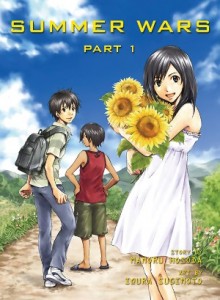
Adaptations of something into another form, be it a manga, anime, novel series, or movie always carries an inherent risk that it won’t recapture the moments you loved from the original material, or that people will say it’s dumbed down or exaggerated. And yet the appeal is there as well – I really loved this in one form, so why not take a look at it from a different angle? Certainly companies hope you’ll spend your money to check something out that you liked before. Luckily, with Summer Wars, I seem to be one of the few people who never saw the original movie this is based on, so I came at this adaptation fresh. And now I really want to see the movie, and worry the original won’t match up. As this first volume was just terrific.

summerwars1

Things start off looking like a very typical shonen romantic comedy. Kenji is a high schooler, somewhat shy, good at math but not good enough to be in a national competition. He has a crush on Natsuki, who takes kendo and is the pure awesome Japanese high school student. One day she asks for a favor, though is cagey about the details. Those with experience in such stories won’t be surprised by what happens next: he’s pretending to be her boyfriend, so that she can get through a huge family reunion without a lot of hassle. And a lot of the beats that follow are familiar as well, though they’re all handled deftly. Some of the family like the kid, some don’t. There’s an older cousin that Natsuki has a crush on, which makes Kenji feel awkward. And her awesome old grandma sees right through both of them, realizing that Natsuki made this up, but also that Kenji is a good kid.

But that’s only half the story, and this is also a techno-thriller. Much of the world works in the manga via a virtual reality network. One day the network is hacked, and it’s put out on TV that it was Kenji who did it. (This turns out to be false, and there are many culprits who were conned into doing this, which I think is a shame. I loved the joy on Kenji’s face as he solved the math problem that ended up being a hack, and wish he had been more culpable later on.) And now the world is slowly spiraling into chaos by an AI that turns out to be far smarter than it was previously thought. Natsuki’s family, who are huge, positioned in just the right places, and can work together awesomely, try to stop the AI… so the AI kills off Natsuki’s grandmother, in a way that reads “this could be a coincidence, but really probably isn’t.) Now things are at a crisis point.

This is a two-volume manga in the Vertical edition (originally 3 in Japan), and it’s paced almost perfectly, with every scene having meaning. Even the Summer Wars title works well – the Summer and the Wars balancing each other out – romantic comedy with heartwarming family, and computers destroying everything we must now stop them. I didn’t mention Kazuma, another of Natsuki’s cousins who’s a young (and androgynous -I thought he was a she for a while) prodigy who will no doubt have a larger part to play in Vol. 2, which also suggests that Kenji will find his inner General. This manga really makes me want to see the original, one of the best things you can say about an adaptation, but also works great as its own story. And the couple’s cute, too. Highly recommended.

Filed Under: REVIEWS

Wandering Son, Vol. 5

November 4, 2013 by Sean Gaffney

By Shimura Takako. Released in Japan by Enterbrain, serialization ongoing in the magazine Comic Beam. Released in North America by Fantagraphics.

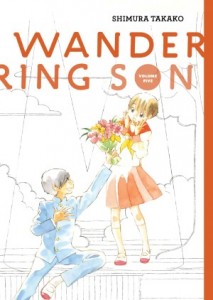
Switching to a new environment can be crippling to a young person, particularly if they’re going through a lot of other things as well. So it is with the cast of Wandering Son and middle school. Nitori tries to continue to define himself while also discovering something he’s genuinely good at, Takatsuki discovers she’s no longer the only one in the room doing what she does, and Chiba finds that even if she’s gone from overly emotional to overly stoic, she still has difficulty dealing with anyone. So, in other words, it’s an excellent depiction of anyone’s life in middle school.

wanderingson5

We also meet some new cast members, who basically fly into Takatsuki’s circle of friends and explode like a bomb. Sarashina also sometimes wears male clothing, but it’s nothing to do with gender identity and more to do with her being an eccentric loudmouth who does whatever the hell she wants. Naturally, Takatsuki is drawn to her, as not caring about what people think is something everyone else in this book has trouble getting past. She also has a best friend, though, Shirai, who clearly is very close to her, and is very unhappy with this new girl making advances on her… um, friend. There are no yuri overtones here, really, but Shirai certainly exhibits all the classic signs of jealousy. She’s written a little flatly, so I hope we find out more about her later.

As for Chiba, you really want to reach out and give her a hug, but there’s no way she’d let you. She can’t get over her own feelings of hatred/jealousy towards Takatsuki, and attempting to suppress all emotion is not working out very well when everyone around you is giving you an excuse to go off like a rocket. So the answer, clearly, is to be antagonistic to *everyone* – even the girls in a higher grade than her, a definite no-no in Japanese society. I really hope Chiba can eventually move on past her repressed and upsetting anger, because right now she’s on a very dark road, and given she’s only 12 or so that’s depressing in itself.

Meanwhile, our hero and heroine are both facing the realities of puberty. Nitori and Ariga record their voices on tape, so they’ll be able to remember what they were like before they change. Nitori is a little upset at the idea that he won’t be able to dress as a girl anymore. Takatsuki is having an even worse time… her sports coach is demanding she wear a bra to practice, another reminder that her gender is trying to impose limits on her. The two of them finally make up, sort of, in a touching yet somewhat sad scene as they both worry about the future. Nitori, however, seems to get an idea for it, and begins to start writing a story based on his own experiences. I like the idea of Nitori’s insecurities and dreams fueling his creativity, and wonder if Takatsuki will be able to help in the process besides just having her life give him ideas.

All in all, this was an excellent transitional book in the series. As we settle into middle school, things are bound to get even more awkward, and I hope our cast finds the strength to make it through.

Filed Under: REVIEWS

The Way of Taiko

November 3, 2013 by Ash Brown

The Way of TaikoAuthor: Heidi Varian
Publisher: Stone Bridge
ISBN: 9781611720129
Released: September 2013
Original release: 2005

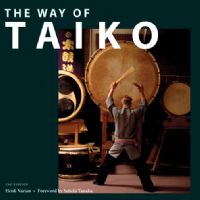
There are very few books available in English that are devoted to taiko–Japanese drums and drumming. In fact, there are only two that I know of: Heidi Varian’s The Way of Taiko and Shawn Bender’s Taiko Boom: Japanese Drumming in Place and Motion. Out of these two works, it was The Way of Taiko that first addressed the subject in depth. Originally published in 2005, by the time that I seriously started studying taiko a few years ago The Way of Taiko was already out of print and my dojo’s copy of the book was literally falling apart. And so, I was extremely pleased to learn that Stone Bridge Press was releasing a second edition of The Way of Taiko in 2013. In addition to Varian’s main text, the volume also includes an extensive glossary by David Leong and a foreword by Seiichi Tanaka–credited for introducing modern taiko to the United States.

After the prefatory material and introduction, The Way of Taiko is divided into three major sections which are then followed by the glossary and other resources for reference. The first part, “A Brief History of Taiko” is just that–a concise survey of the history of taiko drums and music from their mythological beginnings to their modern styles of performance. Notably, Varian addresses the place taiko holds in America as well as in Japan. The second section of The Way of Taiko, “Understanding Sounds and Movements,” takes a closer look at the drums themselves as well as other instruments and vocalizations used in taiko performance. Also explained in this section are some of the more visual elements of taiko, such as the players’ attire and movements. The main text of The Way of Taiko closes with “Training in the Way,” focusing on four major aspects of learning taiko: kokoro (spirit), waza (action), karada (body), and rei (etiquette).

For the most part, although updated and revised, the content of the second edition of The Way of Taiko is nearly identical to that of the first. What really makes the second edition stand out from the original printing is the increased values of production quality. The binding is much better and the colors are much sharper and more vibrant. Since the entire volume is in full-color, this really adds to the overall presentation of The Way of Taiko. The improved color is particularly welcomed for the dozens of photographs that are included in the volume exhibiting the power, dynamism, intensity, and beauty of taiko. Seiichi Tanaka’s San Francisco Taiko Dojo is predominantly represented in the photographs (Varian was associated with that dojo and it is the oldest taiko dojo in the United States), but other groups and soloists from both America and Japan are also featured. It is wonderful to be able to see the joy and spirit that the performers put into their art.

The Way of Taiko is a small but informative volume and very approachable, suited for those with a general interest in taiko as well as for those who are more actively involved in the art form. As a taiko player myself, I enjoyed learning more about its history, meaning, and form from a performance perspective. My dojo has a slightly different style and lineage than most of the groups discussed in The Way of Taiko, but I still found the book to be a very valuable resource. What will probably vary the most from school to school is the level of formality and the etiquette followed, but Varian describes the most proper forms so following her guidelines will aid in avoiding offense in most situations. What I probably appreciated most about The Way of Taiko was how many different aspects of taiko Varian addresses: its history and its future, its art and its science, and taiko’s total incorporation of mind, body, and spirit. The Way of Taiko is an excellent resource and I am very happy to see it back in print again.

Filed Under: REVIEWS Tagged With: Heidi Varian, Nonfiction, Stone Bridge Press

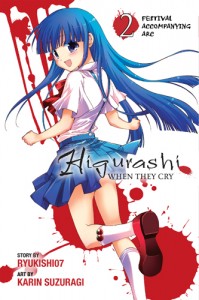
Higurashi: When They Cry, Vol. 23

November 3, 2013 by Sean Gaffney

Story by Ryukishi07; Art by Karin Suzuragi. Released in Japan as “Higurashi no Naku Koro ni: Matsuribayashi-hen” by Square Enix, serialized in the magazine Gangan Joker. Released in North America by Yen Press.

As I’ve been following the Higurashi manga, I’ve also been slowly going through the original visual novel, which MangaGamer has released here in North America (don’t look for their site – Higurashi is their token ‘not porn’ title). I just happen to be at the appropriate place in the novel as I am in the manga, so am able to compare them even more. It’s not clear how closely Ryukishi07 checked the content of the manga with the Higurashi artists – I know he’s very involved with the Umineko manga, particularly the final volumes, to correct certain issues with the novels – but certainly the manga glosses over a lot, being a sort of “greatest hits” compared to the deep immersion of the original. That said, where the manga does succeed is in the emotion. Be it heartwarming, sad tears, or dull horror, the manga delivers the goods here.

Ryukishi07_Higurashi_FestivalArc_V2_TP

Nothing better demonstrates the difference between the two than the fate of Rika’s mother. The visual novel has this scene from the perspective of Ooishi, who is at the Festival waiting to see if anyone is killed. He’s on hand for the death of Rika’s father, made to look like a heart attack, and tries to follow the group back to the Irie Clinic but is hamstrung by traffic. Thus, we only hear that the wife is later found missing, supposedly having drowned herself in the swamp with a suspicious letter left behind. The manga, on the other hand, follows Rika’s mother. Rika’s mom has always been fairly high-strung from what little we’ve seen of her. It’s not hard to figure out why… Rika must be an amazingly difficult child to bring up. And what with the clinic using her as a guinea pig, and her father basically going along with it, her nerves just stretch to the breaking point. As such, she is ill-equipped to deal with Takano.

Takano remains fascinating, and though I think the visual novel does a better job of showing that a lot of this is Hinamizawa Syndrome rather than “lulz, I’m evil like that”, there’s enough here to keep everyone happy. Notably, for the sake of her research, she grovels at the feet of Rika’s parents, and when that fails, seems genuinely at a loss until Okonogi suggests “taking care of” Rika’s parents. Murder comes as a surprise to her… but once it’s in her head, she doesn’t hold back, as Rika’s parents instantly make the transition from “people” to “research subjects”. As such, she can easily justify using Rika’s mother as a live test subject. The murder is terrifying, and does not remotely hold back, with blood flying everywhere and Takano’s insane rictus grin it’s straight out of an Italian horror film.

Later on, Takano faces an even bigger setback when her mentor dies, and it’s shown that he was basically the only thing keeping her project going. Higurashi has a very realistic and cynical take on the Japanese political system and how power-grabbing it can be, particularly in the early 80s when this takes place. Takano once again has everything almost crumble around her, and it becomes apparently that even though she’s the source of all of Rika’s misery, she herself is being manipulated throughout this story, not just by Okonogi, but also a new faction who wants to use her in order to facilitate their own rise to power. If it works, great. If she dies, meh. And it’s clear the Mountain Hounds work for them, not Rika *or* Takano. Honestly, those two really have so much in common. They should talk over a nice cup of tea when this is over.

The visual novel goes into great detail on the pasts of most of the characters, and the manga manages to include some of it – Okonogi’s mourning for his father, and meeting his mentor after WWII shows why things starting with that guy’s death have led to his own obsession, even if it’s misdirected at the Sonozakis. Speaking of the Sonozakis, we see Mion’s grief and anger over Satoshi’s disappearance (Shion is carefully absent here), and her grandmother doing her best to bring “new blood” into the town while still trying to look old and crotchety. That new blood is the Maebara family, with Keiichi trying to start over after the BB gun incident. Rika and Hanyuu are at their most blatant here, with Rika actively showing she knows who they are and relying on people not realizing she’s living the same life over and over again so they laugh it off.

We also see Hanyu’s past, several hundred years ago. She really is a supernatural being, and her earnest attempts to stop the violence between the two tribes occupying Onigafuchi is heartwarming. I do think the drama needed more time to develop – as it is, it’s not as effecting simply as it goes by so fast – Hanyu gets her own daughter to kill her with a giant sword, which should have been given more weight. But then, Hanyu in general is the most problematic character of Higurashi’s so this is likely appropriate.

There are a few other things I felt didn’t work. Given how much Rika is using her past knowledge to make events work for her, her memories “catching up” with her at the end isn’t explained well enough, and seems to be awkwardly shoehorned in so there can be a cliffhanger. Also, four years pass between the start and end of this volume, yet the kids – all growing like weeds, one would think – look exactly the same in 1980 as they do in 1983. (The visual novel has a similar issue – the sprites never change.) More realism, please.

So now, all the pieces are in place – even Akasaka is having memories of a past life where his wife died and Rika was slaughtered, and is prepared to make his way to Hinamizawa immediately. Will all this be enough to defeat Takano and the forces that are manipulating her? And will Shion ever show up in this again? We’ll find out in January. In the meantime, this is still a very good adaptation with a lot of tragic and emotional scenes.

Filed Under: REVIEWS

  • « Go to Previous Page
  • Page 1
  • Interim pages omitted …
  • Page 262
  • Page 263
  • Page 264
  • Page 265
  • Page 266
  • Interim pages omitted …
  • Page 346
  • Go to Next Page »
 | Log in
Copyright © 2010 Manga Bookshelf | Powered by WordPress & the Genesis Framework