• Skip to primary navigation
  • Skip to main content
  • Skip to primary sidebar
  • Home
  • About Us
    • Privacy Policy
    • Comment Policy
    • Disclosures & Disclaimers
  • Resources
    • Links, Essays & Articles
    • Fandomology!
    • CLAMP Directory
    • BlogRoll
  • Features & Columns
    • 3 Things Thursday
    • Adventures in the Key of Shoujo
    • Bit & Blips (game reviews)
    • BL BOOKRACK
    • Bookshelf Briefs
    • Bringing the Drama
    • Comic Conversion
    • Fanservice Friday
    • Going Digital
    • It Came From the Sinosphere
    • License This!
    • Magazine no Mori
    • My Week in Manga
    • OFF THE SHELF
    • Not By Manga Alone
    • PICK OF THE WEEK
    • Subtitles & Sensibility
    • Weekly Shonen Jump Recaps
  • Manga Moveable Feast
    • MMF Full Archive
    • Yun Kouga
    • CLAMP
    • Shojo Beat
    • Osamu Tezuka
    • Sailor Moon
    • Fruits Basket
    • Takehiko Inoue
    • Wild Adapter
    • One Piece
    • After School Nightmare
    • Karakuri Odette
    • Paradise Kiss
    • The Color Trilogy
    • To Terra…
    • Sexy Voice & Robo
  • Browse by Author
    • Sean Gaffney
    • Anna Neatrour
    • Michelle Smith
    • Katherine Dacey
    • MJ
    • Brigid Alverson
    • Travis Anderson
    • Phillip Anthony
    • Derek Bown
    • Jaci Dahlvang
    • Angela Eastman
    • Erica Friedman
    • Sara K.
    • Megan Purdy
    • Emily Snodgrass
    • Nancy Thistlethwaite
    • Eva Volin
    • David Welsh
  • MB Blogs
    • A Case Suitable For Treatment
    • Experiments in Manga
    • MangaBlog
    • The Manga Critic
    • Manga Report
    • Soliloquy in Blue
    • Manga Curmudgeon (archive)

Manga Bookshelf

Discussion, Resources, Roundtables, & Reviews

Reviews

Delavier’s Mixed Martial Arts Anatomy

January 4, 2014 by Ash Brown

Delavier's Mixed Martial Arts AnatomyAuthor: Frédéric Delavier and Michael Gundill
Illustrator: Frédéric Delavier

U.S. publisher: Human Kinetics
ISBN: 9781450463591
Released: October 2013
Original release: 2012

Delavier’s Mixed Martial Arts Anatomy was released by Human Kinetics in 2013. The volume is a translated and revised edition of Frédéric Delavier and Michael Gundill’s Musculation Pour le Fight et les Sports de Combat, originally published in France in 2012. Delavier and Gundill have collaborated with each other on many works focusing on strength training, bodybuilding, and anatomy, several of which have been released in English by Human Kinetics. I was particularly interested in Delavier’s Mixed Martial Arts Anatomy since I myself am a martial artist. I have had some cross-training in other styles (namely tai chi, aikido, and hung gar), but my primary focus in the martial arts has been on traditional Okinawan karate, specifically Shōrin-ryū and Shūdōkan, as well as kobujutsu. Even though I’m not currently active in mixed martial arts, I anticipated that Delavier’s Mixed Martial Arts Anatomy would still be applicable to my own martial arts training. I was very pleased when I was selected to receive a review copy of the work through LibraryThing’s Early Reviewers program.

After a short introduction that establishes why martial artists should pursue strength training, Delavier’s Mixed Martial Arts Anatomy is divided into three major parts: “Principles of Strength Training,” “Strength Training Exercises for Fighting,” and “Training Programs.” The first part covers the basics of strength training and how it can be applied by martial artists to complement their martial arts training. The section specifically focuses on techniques used to increase strength, power, and flexibility, to improve conditioning and endurance, and to prevent injury and support recovery. The strength training exercises are arranged by their practical applications: strengthening the neck, jaw, and core, improving punches, strikes, and kicks, and developing better grabs, pulls, chokes, and throws. The section devoted to training programs provides examples of basic, specialized, and customized strength training programs and circuits.

Delavier’s Mixed Martial Arts Anatomy could have just as easily, and perhaps more accurately, been called Strength Training for Martial Artists. The book outlines strength training principles, exercises, and programs that have been modified for use within any martial arts or combat sports context, and not just specifically in mixed martial arts. Traditional bodybuilding exercise have been modified to mimic fighting conditions to more effectively develop muscle strength and endurance for practical rather than simply aesthetic applications. There is also an emphasis on compound exercises over isolation exercises since martial arts require the use and engagement of the entire body instead of individual muscle groups. Delavier’s Mixed Martial Arts Anatomy focuses on five goals: increasing muscle mass and weight, increasing strength, increasing power, improving isometric endurance, and improving muscular endurance.

Fighters and martial artists who are just beginning to supplement their regular practice with strength training will benefit the most from Delavier’s Mixed Martial Arts Anatomy. However, those who are more experienced should also be able to find useful information and valuable recommendations in the volume. Delavier and Gundill do assume at least some basic familiarity with the use of weights, bands, and other equipment, but for the most part the book is suitable for beginners. All of the exercises described include variations which allow them to be adjusted to better suit a martial artist’s particular fighting style, body type, or current level of experience or strength. The risks and martial benefits of each exercise are also included which further helps to customize and tailor a program for a martial artist’s individual needs. Delavier’s Mixed Martial Arts Anatomy is a fantastic volume–accessible, well-organized, as well as practical. I know that my own training has already benefited from what I’ve learned by reading it.

Thank you to Human Kinetics for providing a copy of Delavier’s Mixed Martial Arts Anatomy for review.
Filed Under: REVIEWS Tagged With: Frédéric Delavier, Michael Gundill, Nonfiction

Wandering Son, Vol. 6

January 2, 2014 by Sean Gaffney

By Shimura Takako. Released in Japan by Enterbrain, serialized in the magazine Comic Beam. Released in North America by Fantagraphics.

Wandering Son has ended in Japan at 15 volumes, so we are now sure that we’re entering the middle third of this story. And things sort of simmer along here. There are no major crises this time around, as we slowly develop some of the things that started in the prior volume. Chiba and Mitori continue to rewrite Romeo and Juliet to suit their tastes and desires, though in the end neither one really get what they want. Nitori makes a confession to Takatsuki, but finds the answer far more ambiguous than he’d really like. And remember when I said Chiba was now stoic rather than emotional? Yeah, nevermind.

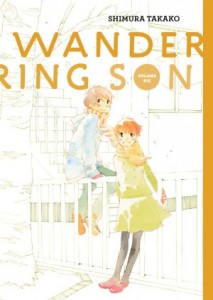
wanderingson6

Chiba continues to be the character that most interest me, which meant this volume was particularly suited towards me, as she stomps through it like Godzilla (Ariga even notes at one point that she walks angrily), taking offense at everything and particularly the fact that people’s feelings may not match up with her own. She gets a boy who likes her here, but the feeling does not seem to be mutual, and she’s more determined than ever to get closer to Nitori, even as he tries to get closer to Takatsuki. Both succeed about the same amount, which is to say not at all.

Speaking of Takatsuki, she’s still going through her own issues. The bra thing is really bothering her, and someone talking about wearing a chest wrapping may provide a solution. In the meantime, though, she clearly cherishes her relationship with Nitori, but gets uncomfortable when it’s made explicit that he likes her, something that I suspect will bounce back on her in a bad way in the future. They are really cute, though, going on picnics together and dates where they can each dress as they want to. It’s very cute, and very safe. Nitori is getting bolder as well, trying on his sister’s bra and panties despite his feelings of guilt – it reads as uncomfortably as it sounds, but that’s not necessarily a bad thing.

As for the rest of the cast, Ariga gets the most development here, as he ends up being cast as Juliet opposite Chiba’s Romeo. He seems to be the one who understands her the most, and tries occasionally to calm her raging emotions, though his success rate is low. It’s not helped by his own poor self-image, which drives Chiba nuts as she demands he have more confidence in himself. We only see bits and pieces of the play, but it’s good to see that after a bad start, he grows more confident in the role as he goes along.

Other things to note: I liked Sasa being asked about love, and noting that she hasn’t really loved anyone like that, both because I felt it realistic and also because it does sort of close her out of her immediate peer group, all of whom are dealing with crushes of one sort or another (I loved her reaction to Ariga noting he’d felt this way “a few times”). Sarashina hasn’t really advanced much beyond ‘being loud’ and ‘saying the wrong thing at the wrong time’, but I’m sure we’ll get more in the coming volumes. She does get the best gag, though, as Maho’s fellow models wear semi-obvious disguises and go to her culture festival, and Sarashina notes Anna is “the mean one”, to Maiko’s amusement.

Wandering Son continues to be a heartwarming series that is not afraid to focus on the awkward moments of teenage life and put them under a microscope. If you aren’t reading this series, you’re really missing out.

Filed Under: REVIEWS

Summer Wars, Vol. 2

December 31, 2013 by Sean Gaffney

By Mamoru Hosoda, Iqura Sugimoto, and Yoshiyuki Sadamoto. Released in Japan by Kadokawa Shoten, serialized in the magazine Young Ace. Released in North America by Vertical.

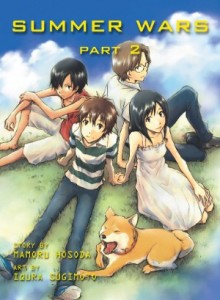
The second volume of Summer Wars is, by virtue of its plot, a lot more action-oriented than the first one was. All our guns have been set up, and we see them fired off. But this volume continues to give us the best parts of the first volume as well, showing the importance of family, maturing and growing up, taking responsibility for your own actions, and even throwing in a bit of a love story to boot.

summerwars2

I was especially pleased to see the development of Natsuki, who not only grows as a character but almost takes on a messianic role in the final showdown with the AI. She’s been fairly indecisive and uncertain so far – using Kenji as an excuse to avoid questions and conflict – well, the wrong sort of conflict – and the death of her grandmother puts her at a mental standstill for the first half of this book. Luckily, finding her grandmother’s late words galvanizes her, and she is able to do what her young cousin could not. (I actually liked that fakeout – we assumed, since King Kazma had lost once, that he would come back and defeat the AI once and for all. But no, in the end, our heroine needs an action equivalent to our hero, so instead of punching the problem to death we get a giant game of hanafuda.

I absolutely loved seeing the hanafuda game – or its variant used here, Koi Koi – in the final battle. It’s been a favorite of mine for a few years (it was included on an early Nintendo DS cartridge, Clubhouse Games) and is a good choice here as it relies on both luck AND skill in equal measure. Skill can’t always save a bad hand – but knowledge of strategy and what your opponent has discarded are a must, and we see that here. The virtual reality environment helps to dramatize what is still a card game, and we also get to have that comeback from when all is lost, as Natsuki loses all her accounts and then gains even more thanks to the trust of everyone watching her.

The 20 Minutes Into The Future aspect of this world works quite well – we do have this huge virtual reality thing that can, if taken over by a rogue AI, destroy the world. But mostly we see, things haven’t changed much, which feels right. It helps that Natsuki’s family lives out in the sticks. The rest of the family doesn’t get quite as much attention, but like Natsuki they also have to deal with the death of the family head, and we see how badly it affects the group – which splinters off into different groups before coming together. Then at the end everyone is there for the final battle of Kenji vs. the AI, even if it may mean certain death (the computer has decided to drop a satellite on everyone’s head), and they all hug each other as it descends (it gets diverted, in case you were worried).

In the end, Summer Wars is a sweet and heartwarming manga about the ties of family, becoming confident in your own abilities, and math. Definitely recommended for romance fans – or even those who like techno-thrillers.

Filed Under: REVIEWS

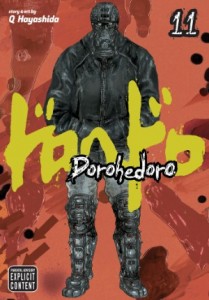
Dorohedoro, Vol. 11

December 29, 2013 by Sean Gaffney

By Q Hayashida. Released in Japan by Shogakukan, serialization ongoing in the magazine Ikki. Released in North America by Viz.

I’ll be honest, it can be pretty easy when you’re reading Dorohedoro to simply forget about the plot and characters and just let yourself be led along. Not that the plot and characters aren’t terrific – they are, even if 3 volumes a year means that ti can be hard to recall who is what much of the time. No, it’s just that Dorohedoro is possibly the most sensory manga being released over here now that Children of the Sea (also an Ikki title, you’ll note) has finished. Chapter 63 in particular would be hilarious or terrifying if it weren’t just so fascinating, watching these partial corpses go about their day inside the fractal dreams of Caiman and Nikaido – well, perhaps Caiman. We’re *really* not sure about him anymore.

dorohedoro11

See, that’s Caiman on the cover – only it isn’t. He has a regular head, and is calling himself Aikawa. In fact, the similarities to Ai from flashbacks are unmistakable. And he seems to have some memories from before – he certainly wants to avoid Nikaido, and after she forcibly makes him show his face, promptly runs off again. As for whether he’s a good guy or a bad guy, let’s remember that this is Dorohedoro. There are no good guys here. I assume he will continue to be a major plot point.

As for other heroes, they’re not having the best volume either. Nikaido is back in En’s clutches, but seems determined to not help even if it means her death – her memory of her childhood past is still holding her back. It looks as if En is going to force the issue… but then comes the end of the volume. Remember last time when I said it showed off how overpowered En was? Well, he’s just run into Curse, and may be firmly dead now. Yikes. Fujita fares slightly better, managing to restore Ebisu to something resembling life… sadly, she has a lucky hairpin stuck in her brain, and so her mind is somewhat broken. Of course, that’s not really a big change from before.

In a series where no one is quite what they seem, and identities change from day to day (oh look, there’s Risu – whoops), that may be why I keep getting drawn back to the art. It seems more sinister and horror-movie than usual this time around, and even the gratuitous fanservice comes in the middle of a big action sequence. The artist recently revealed that she’s trying to end the series with Volume 20 (one volume more than planned by her publisher), so we’ve just passed the halfway mark. As such, if everything is accelerating downward, it should be no surprise.

There’s not even a lot of humor here, beyond the dark as pitch kind. As I said, the images of all the head and torsoless bodies wandering around the city, doing their daily business is sort of creepy-amusing in a Shintaro Kago sort of way. And there’s the thought process of Judas’ Ear, one of the few characters, along with Natsuki of the Cross-Eyed gang, who can still be described as innocent. (You could throw Fujita in there as well, but I find it hard to do so in a volume he spends trying to resurrect his dead crush.)

In short, reading Dorohedoro remains a head trip, and you have little choice but to let it drag you along. Even if it’s headed to hell, as is becoming increasingly apparent.

Filed Under: REVIEWS

Virgin Slave, Barbarian King and Raintree: Haunted

December 27, 2013 by Anna N

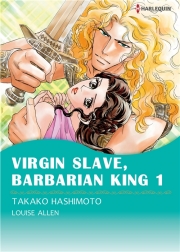
Virgin Slave, Barbarian King Vol 1 by Louise Allen and Takako Hashimoto

Available on emanga.com

vsbk1

This manga will appeal to historical romance fans, and people who enjoy a bit of sweeping adventure in their romance manga. Julia is a noble Roman woman who is quite horrified when her city is overrun by barbarians. She is even more horrified when a barbarian chieftain named Wulfric decides to carry her off in order to force her to serve as a slave. Wulfric’s long blond hair makes him look like a slightly more bloodthirsty version of Dorian from Eroica with Love, which I found amusing. Julia sees that Wulfric is far more humane in his treatment of Roman slaves as he’s sacking her city than their Roman masters were. She begins to start questioning her way of life and the way she unthinkingly took advantage of other people’s servitude. Julia is far too self-assured to meekly start serving anybody, and while she does start to fit in with the Visigoths, she also manages to fight back against Wulfric in some amusing ways. The art in this volume is much more detailed and assured than I usually expect to see in Harlequin Manga adaptations. As the story progresses, Julia begins to learn more of the pressures the barbarians face, as well as the political struggles that Wulfric has to deal with. My main quibble is that the ending felt a bit truncated, and I’m assuming that is because the adaptation of the story was actually split into two volumes. Still, this would be a fun manga for historical romance fans. I was reminded of Red River a bit, although this story didn’t have the complexity of story found in that manga. I’m happy that emanga.com is releasing some historical romance adaptations!


Raintree: Haunted Vol 1 by Kazuko Fujita and Linda Winstead Jones

Available on emanga.com

This manga is adapted from a series of Silhouette Nocturne Harlequin books, so I was expecting a contemporary paranormal romance and that’s exactly what I got. Gideon Raintree is a detective from a family with varied psychic powers. He can conveniently speak to ghosts, but he has issues emitting random bursts of electricity and thus will never know the joys of owning a smartphone. He is also occasionally visited by a ghost who claims to be the spirit of his future unborn daughter. Even Gideon finds this a bit disconcerting. Gideon gets assigned a tough yet beautiful new partner named Hope, who finds his numerous eccentricities suspicious even while she admits to herself that he is distressingly attractive. Gideon and Hope work to track down a female murderer who may have a connection to the occult, and along the way Gideon finds himself revealing more and more about his odd powers to his new partner. Kazuko Fujita has adapted a ton of Harlequin manga, and it shows in her attractive character designs and capable art. This is another Harlequin manga with much better than average art, and I enjoyed the way Fujita made the murderess look much more haggard and desperate than the other characters. Sometimes in manga-land everybody is portrayed as equally attractive, with just slightly different hairstyles, so I appreciated the extra attention to detail here. The story continues in the second volume of this manga, but the first volume also had a fairly satisfying conclusion. Also recommended!

Filed Under: REVIEWS Tagged With: emanga.com, harlequin manga

No. 6, Vol. 4

December 27, 2013 by Ash Brown

No. 6, Volume 4Creator: Hinoki Kino
Original story: Atsuko Asano

U.S. publisher: Kodansha
ISBN: 9781612623580
Released: December 2013
Original release: 2012

Hinoki Kino’s manga series No. 6 is an adaptation of a series of nine science fiction novels written by Atsuko Asano. The fourth volume of the No. 6 manga was originally published in Japan in 2012. The English-language edition of No. 6, Volume 4 was released by Kodansha Comics in 2013. My introduction to No. 6 was actually through the anime adaptation, but I have been enjoying the manga’s rendition of the story as well. I have had a fondness for dystopian fiction ever since I was introduced to the genre in high school and so I am particularly pleased that a manga series like No. 6 is being released in English. I did find the first volume to be a little rushed and disjointed in places, but each subsequent volume has continued to improve and the series has settled into an excellent pace. The characters and world-building have also been developing rather nicely. Because the series keeps getting better, I was looking forward to reading the fourth volume.

Shion’s close friend Safu has been arrested by the Security Bureau of No. 6 and taken to the Correctional Facility, which may very well mean her death. Rat has known about Safu’s predicament for some time, but it’s something that he has been keeping a secret from Shion, concerned that he would put his own life at risk in order to rescue Safu. Rat is soon proven correct when, by chance, Shion discovers that Safu has been taken. Shion is prepared to do anything that he can to save her, even if that means doing it alone. But, despite his reservations, Rat isn’t about to let that happen. Infiltrating the Correctional Facility won’t be easy. Both Shion and Rat have been classified as dangerous criminal fugitives by No. 6’s authorities which severely limits their movements outside of West Block. Simply getting information about what is happening in No. 6 is a difficult task which will require all of the connections and influence that the two young men can muster. They are at a definite disadvantage and their situation is nearly impossible, but Rat and Shion are determined to come out of it alive however unlikely.

While the previous volume or so took time to further establish the relationships between the characters in the manga, No. 6, Volume 4 ratchets up the pace again, moving the plot forward quite handily. This is not to say that Kino has forgotten the series’ main players for the sake of the story. In fact, there are some absolutely wonderful character moments in the fourth volume. These are critical for the development of both the plot and the characters themselves. It is quite clear by this point in the manga that Shion and Rat deeply care about each other. But in No. 6, Volume 4 Shion is forced to confront just how vicious Rat can be, something that he has been avoiding. Rat has never hesitated to intimidate or threaten other people and is a master manipulator. Though up until now he has largely (but not completely) kept his overt violence in check, when given a reason and opportunity he can be absolutely terrifying. Rat’s actions in this volume are nominally for Shion’s sake, but he also has an intense, deep-seated hatred and anger towards No. 6 which lends to his brutality.

West Block has always been a violent place, but at least its residents are honest and forthright about it. They hold no delusions as they often literally have to fight to survive. On the other hand, there’s No. 6. The city is presented as a perfect society even though it is anything but. Granted, most of No. 6’s citizens are completely unaware that anything untoward is going on and those who do suspect find themselves conveniently disappeared. Because of this, No. 6 is actually the more terrifying of the two places. What exactly is going on in No. 6 has yet to be made clear. There have been some hints, and Shion and the others have uncovered a few clues, but even some of No. 6’s highest ranking officials aren’t privy to that information. All that is known is that some sort of terrible experiment is being conducted on the city’s population. However, the goal, purpose, and motivation behind that experiment hasn’t been revealed yet. With plenty of questions remaining to be answered and the story increasing in intensity, I’m definitely looking forward to reading the next volume of No. 6.

Filed Under: REVIEWS Tagged With: Atsuko Asano, Hinoki Kino, kodansha, Kodansha Comics, manga, no. 6

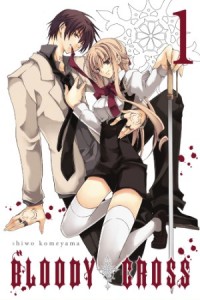
Bloody Cross, Vol. 1

December 26, 2013 by Sean Gaffney

By Shiwo Komeyama. Released in Japan by Square Enix, serialization ongoing in the magazine Shonen Gangan. Released in North America by Yen Press.

I was interested in what this title would be like the moment I saw it licensed. Shonen Gangan has a fairly high success rate for me – I am a big fan of Soul Eater, and of course Fullmetal Alchemist is one of the finest manga out there. And yes, it also had two things that made it almost inevitable that North America would license it: vampires, and religious imagery recoded in a fantasy world. (It does amuse me that a story where heaven is engaged in a bloody war of succession is absolutely fine, but Jesus and Buddha living in an apartment as best buds is something we are unlikely to ever see. Oh, North America, when will you learn…?) So after reading the first volume, I’m a bit disappointed that I wasn’t quite blown away.

bloodycross

Not to say that this is bad, and indeed it shows great promise. It’s worth noting that unlike most shonen manga you see these days, this one is totally fine with every protagonist, antagonist, and mook/minion being a self-serving, backstabbing, distrusting person. Our hero and heroine meet trying to kill each other, occasionally make a show of continuing to do this as the volume goes on, and while there is attraction between them it seems to be based on lust and desire more than the purer emotions. Which makes sense given that Tsukimiya is half-vampire, and she promptly infects Hinata with her cursed blood. That said, the angels we see in this book are, if anything, worse. I’d say it has an Angel Sanctuary vibe, except that had actual innocents in it. There’s nothing like that here.

There’s also quite a lot of action in this volume, which helps to pass the time between trying to build up the plot. Our protagonists start out looking for demon blood, then have to find a sacred book, then we move on to a sacred key, and finally can use the key and the book to try to break the blood curse. If it sounds a bit like a video game, well, the author’s only other major work was a Star Ocean spinoff manga, so she has that sort of feel to her writing already. The action flows pretty well, with a bit more gore than I’m used to from fantasy titles, but then this isn’t meant to be a fun or pleasant world. Everyone suffers fatal wounds here, except being combinations of angel, demon and vampire, these woulds are rarely genuinely deadly.

I suppose the main problem with Bloody Cross is that after only one volume, I don’t quite have a handle on it. I suspect this may become a series like Bleach, where it reads much better if you take in 5-6 volumes a year in one gulp rather than reading one every 3 months. It may also probably benefit from rereading. As it is, this is a Chapter One. It’s intriguing enough that I want to find out more, but it hasn’t quite grabbed me yet – possibly as there’s no one I’m quite willing to root for yet. Even Tsukimiya, who we’re clearly *meant* to be rooting for, seems like she hasn’t earned our favor yet. We shall see what happens next.

Filed Under: REVIEWS

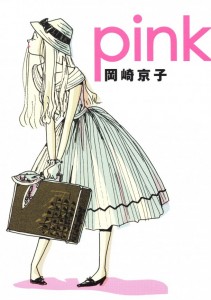
Pink

December 24, 2013 by Sean Gaffney

By Kyoko Okazaki. Released in Japan by Magazine House. Released in North America by Vertical.

It took me a while to get through reading Pink, and even after reading it I was somewhat confused at my basic reaction to the title. I’d enjoyed Helter Skelter, another josei work by Okazaki, but it was a walk through some very dark places, and the characters were ultimate very difficult to sympathize with. Pink is from a much earlier period in Okazaki’s career, but also deals with women who do a lot of horrible things to each other, and men who are unable to stop themselves from being drawn to said women. As for why I’m confused, well, it’s the fact that I found this title to be quite light-hearted and fun.

pink

I’m not really sure how I came away with that impression. Our heroine, Yumi, is an office lady by day (whenever she feels like she wants to work) and a prostitute by night (as that’s where she makes most of her money). She has a poor relationship with her step-mother, but a strong one with her little sister, who is a young tween who’s far too intelligent for her own good. Yumi tracks down Haruo, who is a college student and aspiring writer who is currently sleeping with her step-mother, but soon he’s also sleeping with Yumi. Oh yes, and she also has a pet crocodile, who she feeds dead animals to (she mentions several times feeding humans to it, but there’s no real sense she’s ever done that). As for her johns, some are sweet, some are nasty, some leave her huge piles of cash, and some just rob her. It’s not especially pleasant, but it gets her what she wants; cash to buy things.

Yumi’s attitude may have a lot to do with the feel of it. She’s constantly living in the moment, and tends to let bad news just pass her by bar the odd temper tantrum. She mentions at one point the close relationship she had with her mother, and how she found her body after she hung herself. So it’s a sort of calculated attitude, one that keeps people at arm’s length while allowing her to still have the benefit of their positive emotions. Despite her self-centredness and petulant actions, you never really see her as unsympathetic per se. Certainly you side with her against the stepmother.

But I think in the end I feel Pink is fun because of the way it’s written – it feels like fun. Even the ending, which could be considered suitably tragic, will affect our heroine only a little bit in the long run, I expect. The writing, particularly the narrative, feels very much like a Bridget Jones sort of work – I particularly liked the description of Haruo’s college classmate/lover as “shockingly skilled at cooking, skiing, and fellatio”. It’s not just Yumi – the author is also doing her best to make this a light, breezy work despite the content. The dissonance that provides is what will make it a good book for a reread. But on this first read, I felt it was a hell of a lot of fun. Even if that thought confuses me a bit.

Filed Under: REVIEWS

Tales of Moonlight and Rain

December 20, 2013 by Ash Brown

Tales of Moonlight and RainAuthor: Ueda Akinari
Translator: Anthony H. Chambers
Publisher: Columbia University Press
ISBN: 9780231139137
Released: December 2008
Original release: 1776
Awards: Japan-U.S. Friendship Commission Prize

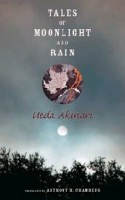
Ueda Akinari’s Ugetsu monogatari is a collection of nine short stories of ghosts and the occult that was originally published in Japan in 1776. The classic as a whole has been translated into English several times and some of the individual tales have been translated as many as ten. The most recent of these translations is a study by Anthony H. Chambers first published in 2007 by Columbia University Press as part of its series Translation from the Asian Classics. With his translation of Ugetsu monogatari, titled Tales of Moonlight and Rain, Chambers aimed to provide th most accurate, comprehensive, and faithful English edition of the work, conveying the meaning of the text while still capturing Akinari’s tone and style of writing. His efforts were rewarded with the 2007 Japan-U.S. Friendship Commission Prize for the Translation of Japanese Literature. The particular reason that Tales of Moonlight and Rain was brought to my attention was that Akinari was noted as being one of Yukio Mishima’s favorite authors in his biography, Persona.

The nine stories in Tales of Moonlight and Rain–“Shiramine,” “The Chrysanthemum Vow,” “The Reed-Choked House,” ” The Carp of My Dreams,” “The Owl of the Three Jewels,” “The Kibitsu Cauldron,” “The Serpent’s Lust,” “The Blue Hood,” and “On Poverty and Wealth”–all deal with the mysterious and the strange. Ghosts make frequent appearances, demons cause terror and strife, spirits seek revenge, people are cursed or succumb to possession, and so on. All of the stories are set in provincial Japan which, as Chambers note in the introduction, would emphasize the strangeness and otherness of the tales for Akinari’s original audience, a group mostly made up of people who lived in Japan’s major cities. Additionally, all but one of the stories takes place before the Tokugawa shogunate was established in 1603, which also had a distancing effect. Today’s readers are even further separated from the stories in Tales of Moonlight and Rain, but the tales are no less fascinating because of it.

In addition to Akinari’s nine stories, Tales of Moonlight and Rain also includes extensive notes and analysis as well as a bibliography listing texts and commentaries, secondary resources, and previous English translations of Akinari’s work. Chambers has written a lengthy introduction to the collection as a whole, but each of the stories has its own prefatory material which notes important details regarding the titles, characters, places, and time periods, explains useful background information and the stories’ relationships and affinities to other works (both classic and contemporary), and provides additional commentary and any other observations. Chambers uses both footnotes and endnotes in Tales of Moonlight and Rain–the footnotes for points critical to the immediate understanding of the text and the endnotes for more in-depth information. In theory, this is an excellent idea, but in practice I found it rather annoying and cumbersome to have to look in two different places for the stories’ notes. But this is really my only complaint about the volume and I consider it a minor one.

One of the most interesting things for me about the stories in Tales of Moonlight and Rain were all of the references and allusions that the collection contained to other classic works of Chinese and Japanese literature such as Murasaki Shikibu’s The Tale of Genji and the collection of poetry Manyōshū. Having read translations of some of the older works being referred to, I particularly appreciated Akinari’s use of them in Tales of Moonlight and Rain. However, it is not at all necessary to be familiar with the Chinese and Japanese literary classics in order to enjoy the collection. All of the stories stand completely on their own despite the borrowing and adapting that Akinari employs. I didn’t realize it before reading Tales of Moonlight and Rain, but I was actually already familiar with some of the adaptations of Akinari’s own work; Ugetsu monogatari was more influential than I knew. Personally, I enjoyed the entirety of Tales of Moonlight and Rain a great deal, including Chambers’ commentary and analysis. The stories may be more than two centuries old, but perhaps in part because of that they remain both evocative and spellbinding.

Filed Under: REVIEWS Tagged With: Japan-U.S. Friendship Commission Prize, Ueda Akinari

Sunshine Sketch, Vol. 7

December 19, 2013 by Sean Gaffney

By Ume Aoki. Released in Japan as “Hidamari Sketch” by Houbunsha, serialization ongoing in the magazine Manga Time Kirara Carat. Released in North America by Yen Press.

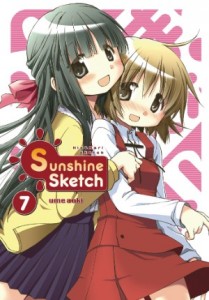
When I last reviewed this cute 4-koma series, I noted that this volume might be the last as clearly Sae and Hiro were close to graduating. Well, by the end of this volume, they’re definitely closer, but haven’t quite gotten there yet, and it seems that it will be Volume 8 where we find out how the series can keep going without two of its big players. That said, attention is paid to all six of the main cast here, along with a few of the bit players we’ve seen sprinkled throughout, so maybe it doesn’t need to end quite yet, despite the loss of its main not-yuri couple.

sunshinesketch7

Sae and Hiro haven’t left yet, though this volume gives them a bit less attention on the grounds that they’re studying for finals and applying to art colleges. We see some nice interaction with the first-years, as Hiro tries to teach Nazuna to cook (which doesn’t go as well as she hoped) and Sae discusses the nature of nightmares and the value of a printed book vs. an online one with Nori. We also get the most character development we’re ever likely to see for Natsume, the tsundere who loves Sae but can only express her affection through harsh words. Luckily, things thaw a bit as Natsume is invited to be part of a Christmas Party thrown by the gang, and cuteness ensues rather than frustration. Still no confession, though.

There really aren’t very many jokes here that we haven’t really seen variations on before, just with fresh settings and slightly redone. Yuno is short, Miyako is eccentric, Hiro constantly binge eats and then binge diets, and Sae frets (this is especially clear when her sister comes for a visit, annoyed that Sae may make her college choice based on what others want rather than what she wants.) Aside from Sae and Hiro’s college stress, the one sense that time is actually passing comes when Yuno runs into Arisawa, the sempai she’d met a few books back who’s now in college.

If there’s a theme to this book, it’s “even though life moves on, you should always treasure your friends no matter what”. I suspect Sae and Hiro leaving hasn’t quite hit Yuno yet (that may be in Volume 8), but when it does, it’s going to be tough. It will be less tough for Sae and Hiro themselves, as they’ve managed to find colleges that not only have the program they need but are also right next to each other! Yuri continues to tease but be mostly absent – in fact, there’s not even a lot of teasing here, beyond their beaming faces when they note their colleges. They really need to find an apartment to share once they get to college. With a big pluffy bed.

The art school aspect, as always, isn’t pushed as much as it is in GA Art Design Class, the other 4-koma art student manga. But in the end, even if it doesn’t really knock it out of the park, Sunshine Sketch inspires smiles and “awww, cute” remarks, and the occasional giggle. It’s an excellent comfort manga – provided, as ever, you don’t mind the characters being squished like pancakes sometimes.

Filed Under: REVIEWS

Bond of Dreams, Bond of Love, Vol. 3

December 18, 2013 by Ash Brown

Bond of Dreams, Bond of Love, Volume 3Creator: Yaya Sakuragi
U.S. publisher: Viz Media
ISBN: 9781421549781
Released: February 2013
Original release: 2010

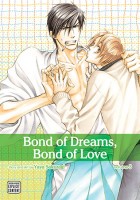
Yaya Sakuragi has had several of her boys’ love manga released in English. Bond of Dreams, Bond of Love was the second of her series to be licensed. Bond of Dreams, Bond of Love is loosely connected to her earlier series Tea for Two. Reading Tea for Two isn’t at all necessary to understand Bond of Dreams, Bond of Love, but it does provide more details about one of the character’s back stories. Sakuragi was actually my introduction to yaoi and boys’ love manga and I continue to be very fond of her work. I like her particular sense of humor and lanky character designs. Bond of Dreams, Bond of Love isn’t my favorite of her works, but I’m still largely enjoying the manga; it’s a rather goofy series. The third volume of Bond of Dreams, Bond of Love was originally published in Japan in 2010. The English-language edition was released in 2013 by Sublime Manga, the boys’ love imprint associated with Viz Media.

There are some big changes occurring in Ao’s life. One of the biggest is that he might be moving out of his grandmother’s place and transferring schools in order to live with his mother and his twin brother Aka. Ao’s not too keen on the idea, especially since it would mean he would see Ryomei less, but more than one person has encouraged him to make the move, believing it to be in his best interest. Even though Ao’s life has been thrown into turmoil his preoccupation with Ryomei is still foremost on his mind. He somehow even manages to convince the older man to go on a date with him, though it doesn’t exactly turn out how either of them expected it would. As for Ryomei, he continues to be somewhat baffled by and conflicted over Ao’s advances. He’ trying to work out just what his feelings really are for the younger man, but it hasn’t been an easy process. And with Ao potentially moving away, Ryomei had better figure it out sooner rather than later.

Bond of Dreams, Bond of Love started with a wet dream (Ao’s, to be specific) and dreams and daydreams have continued to be a recurring element in the series. But now with the third volume, Ryomei has to deal with them, too. It’s a nice way to tie the narrative together and show the parallels between Ryomei and Ao’s feelings as the develop. Another way that Sakuragi show these parallels is through Ryomei and Ao’s not-quite-date, which is handled exceptionally well in the manga. Though the two of them are on the same outing they are experience it very differently. As a reader it’s interesting to be able to simultaneously see and compare their thoughts and reactions while they themselves are completely unaware of how the other person is interpreting the events. It’s a situation in which the lack of communication is completely believable. Both Ao and Ryomei are holding back, but for different reasons–Ao is worried about scaring Ryomei off while Ryomei is understandably concerned about his changing feelings for Ao.

For me, Bond of Dreams, Bond of Love works best as a comedy and shouldn’t be taken too seriously, which is not to say there aren’t some genuinely touching and occasionally bittersweet moments. However, the series excels in its humor and reaction shots. In general the characters’ faces are all very expressive and dynamic, but Ryomei, who tries so hard to be serious and reserved, has some of the best expressions. He has become hyper-aware of how he interacts with Ao and it shows. Despite the focus of Bond of Dreams, Bond of Love being on Ao and Ryomei, the series actually has a fairly large cast of secondary characters who all have their roles to play, too. This includes a fair number of important female characters, which can be a rarity in boys’ love manga. However, it’s Ao’s best friend Shunpei who remains one of my favorites. (Shunpei is also the character from Tea for Two; I’d love to see him get his own series at some point.) Ao’s twin brother Aka, who is constantly on edge, can be pretty entertaining, too. With its slightly ridiculous and over-the-top characters and interactions, Bond of Dreams, Bond of Love has really grown on me, and there’s still one more volume to go.

Filed Under: REVIEWS Tagged With: Bond of Dreams Bond of Love, manga, Sublime Manga, viz media, Yaya Sakuragi

Attack on Titan, Vol. 10

December 17, 2013 by Sean Gaffney

By Hajime Isayama. Released in Japan by Kodansha, serialization ongoing in the magazine Bessatsu Shonen Magazine. Released in North America by Kodansha Comics.

(Note: this review is based on a copy provided by the publisher. Also, this review spoils this volume even more than my reviews normally do. I recommend reading it first. Also, don’t discuss post-Vol. 10 spoilers in comments.)

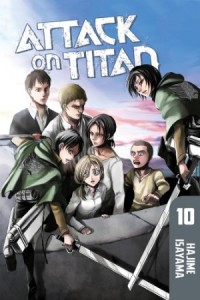
This is not exactly a relaxing, peaceful volume of Attack on Titan. Not that we’ve seen any of those to date, but this one in particular is pretty much wall-to-wall action, with only a few flashbacks to distract us from what’s going on. We get a few more Survey Corps deaths, as the Titans show that when they’re led by a clever bastard (the Beast Titan), they can be nastily effective. Luckily, so can our heroes, as even without gear on, they manage to take on a couple of Titans and survive, though not without injury.

titan10

This does lead to one of my favorite funny bits in the series, where Krista tears her skirt to make Reiner a sling/bandage and Ymir, watching silently from the sidelines, says “Hey, Krista, my hand got skinned.” Those of us watching Ymir from the start, however little attention has been paid to her until the previous volume, know that whenever she’s seen she’s looking at Krista, or protecting Krista, or otherwise does not have context without being next to Krista. After this volume, I think it’s pretty safe to say that Ymir is in love with Krista. (Indeed, the author’s website notes it is a romantic attraction.) Of course, this being Attack on Titan, that doesn’t mean it’s a healthy or pure love. Ymir and Krista both have issues beyond simply fighting Titans.

I must admit, I’m not really sure how well Krista’s martyr complex has actually been telegraphed in the story besides Ymir simply stating it. We do get a flashback after the fact to try to explain it, where we see more of what I’ve taken to be their usual relationship – Ymir being cutting and nasty, Krista being stubbornly nice to the point of near-death – as they try to rescue a wounded colleague in the middle of nowhere during the winter. Of course, the other characters are just as surprised by Ymir’s words as we are – they’ve never really seen much of Krista beyond “beautiful, angel, goddess”, etc.

As for Ymir’s secret, well, she’s a Titan Shifter. Not particularly a surprise given the hints and buildup we got leading up to it, though her being the Titan who destroyed Reiner and Bertolt’s hometown was a bit of a shocker. Needless to say, the reason this gets revealed is that they are at the very bring of death – or rather Krista is, I’m not sure that Ymir would really do this for any of the others, though she does show them affection. Ymir’s battle is pretty badass, even if she ends up seriously wounded – she clearly has experience doing this sort of thing. Also, given Krista’s reaction to Ymir’s fighting, I think it’s safe to say that Ymir’s feelings are not simply one-sided. Though in this series, a happy ending is almost impossible.

Speaking of Reiner and Bertolt… if Ymir’s reveal was given lots of buildup and flashbacks with Ilse’s Notebook and such, leading to a bit dramatic fight scene, then here we have the polar opposite – a conversation so casual that you turn the page before you even realize what was just said. It’s almost comedic in its own way – “Oh, by the way, Eren, we’re the Armored and Colossal Titan.” There is at least some attempt to show how so many Titan shifters managed to make it into the same squad – Annie, Reiner and Bertolt are all from around the same place, and the records were lost or damaged so it took hem this long to figure things out. Also they were damn good soldiers. Indeed, they still seem to be – Reiner and Bertolt’s motivations are somewhat murky here, and I presume future volumes will show why they feel that thanks to Eren, they can stop destroying humanity. Also, why they need Ymir, unless it’s revenge for what she apparently did to them as kids.

With more and more Titan shifters showing themselves, the question now becomes “are all the Titans transformed humans?” And if so, how innocent are they meant to be? A few of the Titans seen in the battle act much like kids would playing around their dad, and one shudders to think whether that’s really the case. There’s a nice little cliffhanger here, with the Shifter Titans on the run – some unwillingly – from the rest of the Military. Mikasa, for one, is likely to take this badly. Assuming she’s able to move – come on, some of these near-fatal wounds must slow her down, at least? In any event, despite some awkward exposition designed to move the characters around on the board to where the author needs them to be, the series remains as addicting as even. Beware, though – the speedup is almost over.

Filed Under: REVIEWS

Hetalia Axis Powers, Vols. 4-5

December 15, 2013 by Sean Gaffney

By Hidekaz Himaruya. Released in Japan by Gentosha, originally serialized as an online webcomic, then in Comic Birz. Released in North America by Tokyopop in association with Right Stuf, Inc.

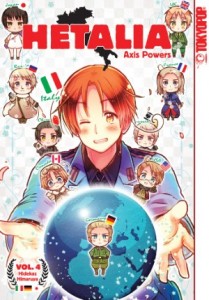
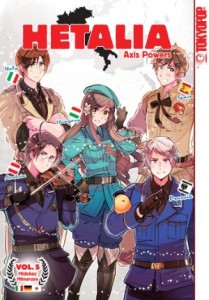
After a long wait, Tokyopop and Right Stuf bring us not one but two volumes of Hetalia just in time for the holidays. As you’d expect, there’s lots of historical in-jokes, wacky 4-koma humor, and stereotypes galore. You’d think that this would get tired eventually, but I’ve found myself enjoying the series even more, especially as the cast has widened from the main eight. Indeed, the back cover of Vol. 4 shows that Himaruya has done his best to add more female countries in order to balance things out – Hungary is a major player, of course, and Ukraine, Belarus, Belgium and Liechtenstein have had substantial roles. But in these two volumes we see Seychelles, Monaco, Vietnam, Taiwan, and even the Principality of Wy, though that last one may drive you to Wikipedia.

hetalia4

There seems to be a return to World War II after the previous volume, with many strips detailing the battles in Africa. These are all done with a light touch, of course, but there are historical facts sprinkled throughout – Italy’s poorly-designed tanks, Germany not realizing how hot Africa would be, and America barreling in ready to win at everything and getting his ass handed to him. There’s also examinations of prior military skirmishes, as Austria is forced to make a very dangerous decision when he’s on the verge of losing the Seven Years war and ask Russia and France to ally with him. And in the “Battle of the Ice”, a young Russia encounters Prussia and realizes that he is far too stupid to be allowed to live.

As you’d expect, there’s a lot of modern-day stuff as well. In fact, we get an alternate universe high school section in both volumes, based on the Hetalia otome game that came out in Japan a while back. Don’t worry, BL fans, Seychelles isn’t the star here. It has our three Axis Powers as the newspaper club, trying to do an article about the various school clubs and finding that almost all of them are eccentric and weird. In the 5th volume, we also get an examination of horror movies in many of the major countries, which vary greatly in mood and scare tactics.

hetalia5

There are two serious chapters in here, and strangely they both involve France, who is normally one of the most flamboyant of the Hetalia cast. In Volume 4 he runs into a young tourist visiting Paris, who is hinted to be a reincarnation of Jeanne D’Arc, France’s lost love. In the 5th, a construction worker meets France, and is somewhat taken aback by the fact that his grandfather had also met him, but France hasn’t aged a day. France has come to terms with it, but the man’s wife points out how sad it would be to never age while you watch your loved ones dying, and for a moment we understand the inner tragedy of what it must be like to be the personification of a country. (Himaruya has stated that Prussia lives on, by the way, first as ‘East Germany’ and now basically just as Prussia in modern times, living in Germany’s basement. I wonder how the nations face the death of a country.)

As long as there is history to be mined, there will still be Hetalia coming out, most likely. We get some development of Netherlands here as well, an amusing look at Southern Italy’s relationship with Spain, China dealing with a rebellious Hong Kong asking for more freedom, and Taiwan attempting to give Vietnam a makeover. There are character profiles which detail each nation’s flag, as well as the reasoning behind the design and colors of that flag. There are cute sidebars explaining weird laws in various countries, and a look at various foods. And we see Hungary forcing Austria to wear cat ears for Belgium’s festival, which satisfies the shipper in me. Those who find the premise rubs them the wrong way won’t want to pick this up, but fans of the series will find lots to love here. Definitely recommended.

Filed Under: REVIEWS

12 Days

December 13, 2013 by Ash Brown

12 DaysCreator: June Kim
Publisher: Tokyopop
ISBN: 9781598166910
Released: November 2006

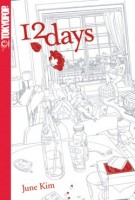
June Kim is a Korean-born comics artist and illustrator who currently lives and works in the United States. Although some of her short comics had previously been collected in various anthologies, 12 Days was her first and, as far as I know, only graphic novel to have been published. What I can say for certain is that 12 Days was my introduction to Kim and her work. 12 Days was released by Tokyopop in 2006. The book’s cover design is really quite lovely with silver foil line work and striking red accents. Tokyopop didn’t always take such care with the presentation of its releases, so this was nice to see. 12 Days is at least partially based on a true story–a sad tale that a stranger told to Kim about her ex-girlfriend. Kim herself originally developed the story of 12 Days while getting over a breakup in her sophomore year of college. However, it wasn’t until 12 Days was picked up by Tokyopop that she completed the graphic novel.

On the way back from her honeymoon, Noah was in a lethal car accident. That was a month ago. Noah’s death hits her ex-girlfriend Jackie hard. Already a wreck from their breakup, Jackie is faced with the reality that she has now completely lost the love of her life. And so she devises a way to forget and finally let go. Over the course of twelve days she will drink Noah’s ashes as part of a personal ritual. Somehow Jackie convinces Nick, Noah’s half-brother, to steal some of his sister’s ashes for her from the urn on his parents’ mantle. It’s under these strange circumstances that the two most important people in Noah’s life meet. Nick and Jackie are each struggling to accept and cope with Noah’s death in their own ways. Their shared experience becomes a source of comfort as much as it is a source of pain. They both loved Noah dearly and it will take far more than twelve days to ever change that.

Kim’s style in 12 Days is influenced by both manga and manhwa as well as by independent comics. A prominent theme in both the artwork and narrative of 12 Days is reflection. This can be seen in Kim’s use of mirrors in the graphic novel, but also in the page layouts and panel composition. Jackie and Nick’s actions and how they are captured in the artwork often parallel or echo each other, providing yet another tenuous connection between the two of them. The narrative itself isn’t linear. Much of the story is told through the flashbacks, dreams, and memories that intrude upon Nick and Jackie’s lives. It’s as if a mirror containing all of their thoughts of Noah has been shattered and they are left picking up the pieces–a fitting metaphor for the grieving process. Some of the transitions can be a little difficult to follow at first, but overall it as a remarkably effective approach.

As a whole 12 Days is a very reflective and introspective work. There is intensity and drama but it’s not overblown; the graphic novel tends to be rather intimate and quiet. Despite the realistic portrayal of the complexities of grief, family, love, and loss, 12 Days is not overwhelmingly bleak or depressing. The graphic novel can certainly be heartbreaking considering Noah’s death, the circumstances surrounding her and Jackie’s breakups, and some of society’s prevailing attitudes towards same-sex love, but there is also a fair amount of humor in 12 Days that keeps things from getting too heavy or dark. Even while dealing with the tragedies in their lives, Jackie and Nick, who are both endearingly eccentric, are still able to joke around and tease each other. Sometimes that humor can be a bittersweet reminder of what they have lost, though. 12 Days is a work that holds extraordinarily up well to multiple readings. In fact, I think I enjoyed and appreciated its subtleties even more after reading it several times.

Filed Under: REVIEWS Tagged With: comics, June Kim, Tokyopop, Year of Yuri

Harlequin Manga: Ordinary Girl in a Tiara and The Greek Tycoon’s Defiant Bride

December 12, 2013 by Anna N

I was excited when emanga.com announced that they were releasing a bunch of new Harlequin manga on their platform! I’m going to pretend that emanga wanted to give me an awesome holiday present, because I am always up for reading some Harlequin manga.

tiara

Ordinary Girl in a Tiara by Jessica Hart and Yuki Shiomiya

available on emanga.com

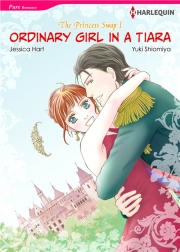
Harlequin stories are plenty formulaic, so much so that pulling off a Harlequin romance that is both familiar and enjoyable can be somewhat tricky. Part of the fun for me when reading Harlequin manga is encountering plot elements that I’ve seen before, but executed in an interesting way. This is one of my favorite recent Harlequin manga reads. Ordinary Girl in a Tiara is, as one would surmise, about an ordinary girl who ends up accidentally taking up with royalty. Caro has an intense love of vintage fashion and an interesting past where she went to school with the elite of Europe on scholarship. Caro’s best friend Charlotte is a princess of a tiny European country who calls upon Caro to provide a diversion by dating her distant cousin and rumored fiance Prince Phillipe.

Phillipe shows up at Caro’s door to ask her to be his fake girlfriend, and he is suitably horrified by Caro’s devotion to horrible crochet vests from the 1970s. Clearly he is a man of great taste and refinement. Caro agrees to go along with the charade of dating him, and goes back to his tiny European country only to get caught up in court politics. Phillipe is struggling to establish himself as the future ruler, and the fake couple gradually become a real couple as they begin to spend more and more time together. All too often in Harlequin stories, the hero acts like a big jerk, but while Phillipe does have is standoffish moments he and Caro are a very sympathetic couple. There are elements of humor in Caro’s unending parade of vintage fashion choices, and while the art isn’t terribly detailed, it doesn’t suffer from the lack of fluidity and expression that sometimes plagues Harlequin adaptations. Highly recommended!

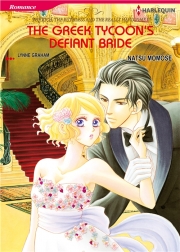
greektycoon

The Greek Tycoon’s Defiant Bride by Lynne Graham and Natsu Momose

available on emanga.com

Whenever I read Harlequin manga, I tend to go for the volumes that have the longest and most ridiculous titles involving Defiant Brides, Virgin Stable Girls, or Secret Agent Secretaries (I just found out that there is a romance with the title Secret Agent Secretary, I think I’m going to have to read it). This manga was exactly what you would expect from the title, as it does indeed feature a Defiant Bride of a Greek Tycoon!

Maribel is an ordinary girl (aren’t they always!) who is desperately in love with her deceased cousin Imogen’s ex-boyfriend Leonidas. Maribel sees Leonidas at a memorial service after running away from him years before, but she returns to her life as a single mother, confident that romance will not find her again (OR WILL IT!?). Leonidas shows up at Maribel’s house and is immediately suspicious when he discovers that she has a toddler with the name of his grandfather. The narrative structure of this manga was interesting, because it kept switching between the flashbacks where Maribel and Leonidas are just getting to know each other, and the present day where Maribel is desperately trying to get away from him in order to live an ordinary life. The relationship unfolds in both the present and the past, leading to a time when Maribel will perhaps not be quite so defiant about being in a relationship with Leonidas. I enjoyed the art in this volume. The paneling was a bit more varied and interesting than I tend to expect from a Harlequin manga, and Momose frequently cuts in detailed close-ups of the characters when they are in the grips of a dramatic emotion.

Filed Under: REVIEWS Tagged With: emanga.com, harlequin manga

  • « Go to Previous Page
  • Page 1
  • Interim pages omitted …
  • Page 260
  • Page 261
  • Page 262
  • Page 263
  • Page 264
  • Interim pages omitted …
  • Page 346
  • Go to Next Page »
 | Log in
Copyright © 2010 Manga Bookshelf | Powered by WordPress & the Genesis Framework