• Skip to primary navigation
  • Skip to main content
  • Skip to primary sidebar
  • Home
  • About Us
    • Privacy Policy
    • Comment Policy
    • Disclosures & Disclaimers
  • Resources
    • Links, Essays & Articles
    • Fandomology!
    • CLAMP Directory
    • BlogRoll
  • Features & Columns
    • 3 Things Thursday
    • Adventures in the Key of Shoujo
    • Bit & Blips (game reviews)
    • BL BOOKRACK
    • Bookshelf Briefs
    • Bringing the Drama
    • Comic Conversion
    • Fanservice Friday
    • Going Digital
    • It Came From the Sinosphere
    • License This!
    • Magazine no Mori
    • My Week in Manga
    • OFF THE SHELF
    • Not By Manga Alone
    • PICK OF THE WEEK
    • Subtitles & Sensibility
    • Weekly Shonen Jump Recaps
  • Manga Moveable Feast
    • MMF Full Archive
    • Yun Kouga
    • CLAMP
    • Shojo Beat
    • Osamu Tezuka
    • Sailor Moon
    • Fruits Basket
    • Takehiko Inoue
    • Wild Adapter
    • One Piece
    • After School Nightmare
    • Karakuri Odette
    • Paradise Kiss
    • The Color Trilogy
    • To Terra…
    • Sexy Voice & Robo
  • Browse by Author
    • Sean Gaffney
    • Anna Neatrour
    • Michelle Smith
    • Katherine Dacey
    • MJ
    • Brigid Alverson
    • Travis Anderson
    • Phillip Anthony
    • Derek Bown
    • Jaci Dahlvang
    • Angela Eastman
    • Erica Friedman
    • Sara K.
    • Megan Purdy
    • Emily Snodgrass
    • Nancy Thistlethwaite
    • Eva Volin
    • David Welsh
  • MB Blogs
    • A Case Suitable For Treatment
    • Experiments in Manga
    • MangaBlog
    • The Manga Critic
    • Manga Report
    • Soliloquy in Blue
    • Manga Curmudgeon (archive)

Manga Bookshelf

Discussion, Resources, Roundtables, & Reviews

Reviews

My Happy Marriage, Vol. 9

March 17, 2026 by Sean Gaffney

By Akumi Agitogi and Tsukiho Tsukioka. Released in Japan as “Watashi no Shiawase na Kekkon” by Fujimi L Bunko. Released in North America Yen On. Translated by David Musto.

It’s been over a year, but we finally have a new volume of My Happy Marriage. (And it’s likely going to be another year till the next one – Vol. 10 just came out in Japan earlier this month.) We’ve now resolved most of the difficulties between Miyo and Kiyoka, and the title is no longer ironic. They’re married and happy. Which means, of course, that normally you would end the series. But the anime of this did quite well. As a result, it’s time to continue, and since you don’t really want to mess up the lovely couple – yet – we need to concentrate on the other part of the plot. As such, this volume returns us to the Earth Spider that is such an important part of Kiyoka and Godou’s backstories. It also introduces new enemies, this time from abroad, who basically want to kidnap Miyo for her powers. But most of all it reminds you that extended family is still family, and it’s really hard to get away from toxic relatives.
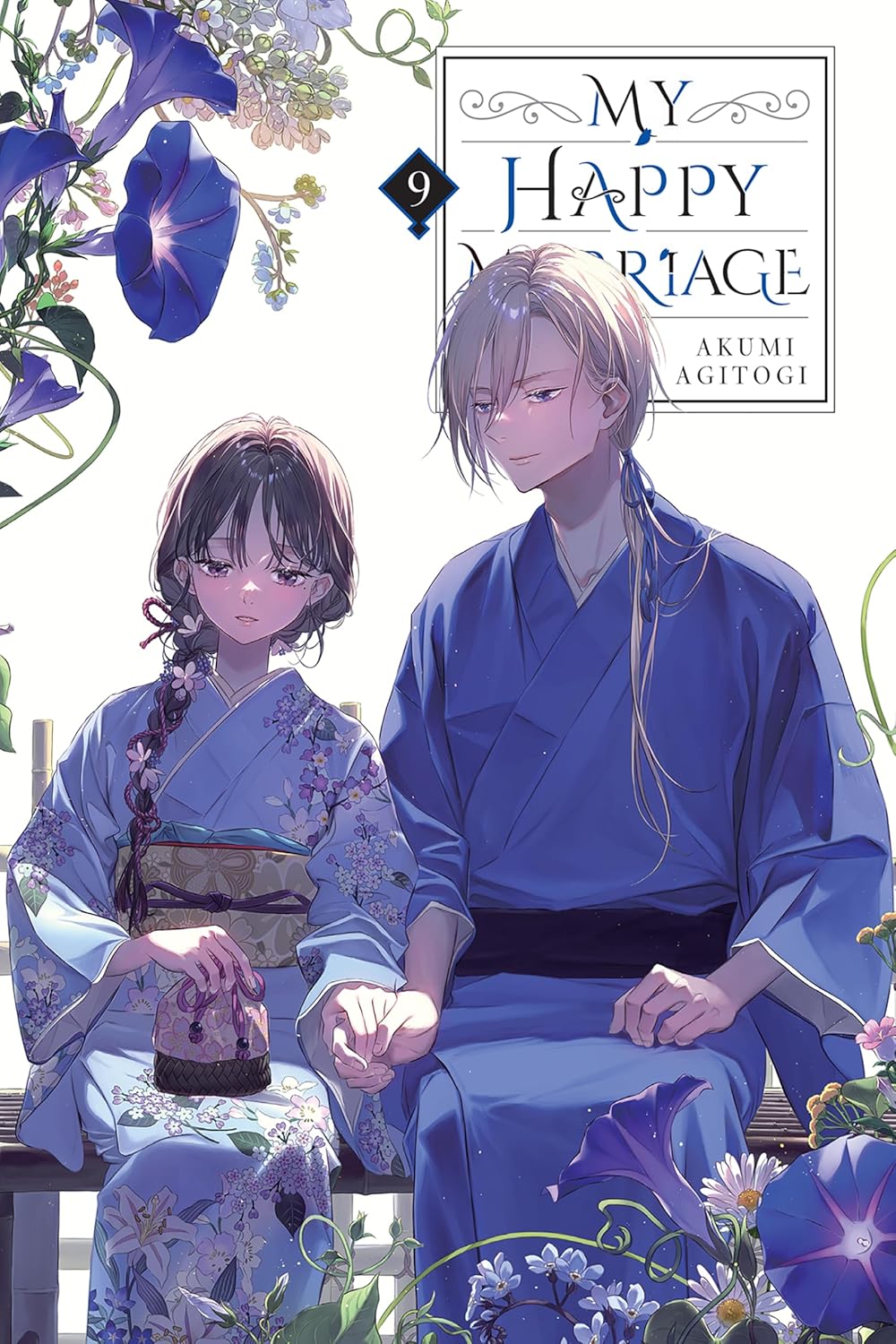
Now that Miyo and Kiyoka have dealt with the issues of his own family, as well as Miyo’s horrible former family, we are told that the Kudous are actually a splinter family from the main one, the Miyakoujis. As such, they have to go to the old capital to introduce Miyo to them and try to get their blessing. Miyo is nervous, Kiyoka just seems disgruntled. The head of the family is a very nice guy. The women in the family, fortunately, turn out to be great, and they quickly take Miyo under their wing. The men of the family, sadly, turn out to be horrible arrogant drunks, who are easily manipulated, especially if a passing English “shaman” is trying to stir up trouble for his own benefit. Kiyoka is also distracted because the Earth Spider has escaped from the seal that was put on it years ago, and no one knows where it is.

There’s also a little subplot about Miyo trying hard, now that she knows how powerful she is, to not use her dream powers that much. Naturally, we come across several situations where she has to use her dream powers, one of which helps a young girl (good) but also uncovers a history of family abuse dating back centuries (bad, though getting it out in the open may be good). The My Happy Marriage title and concentration on Miyo’s depression and growing love for her husband has made this feel like a romance most of the time, but the supernatural element is still very much present. Miyo is a hot commodity, and now that the series is willing to go outside Japan, I suspect it’s only a matter of time before she’s kidnapped, like most incredibly powerful people who are also introverted. Still, for the moment, she’s happy and back home.

I’m sometimes wary when a series that reached a natural stopping point keeps going, but this was a really solid volume. Fans should be pleased.
Filed Under: my happy marriage, REVIEWS

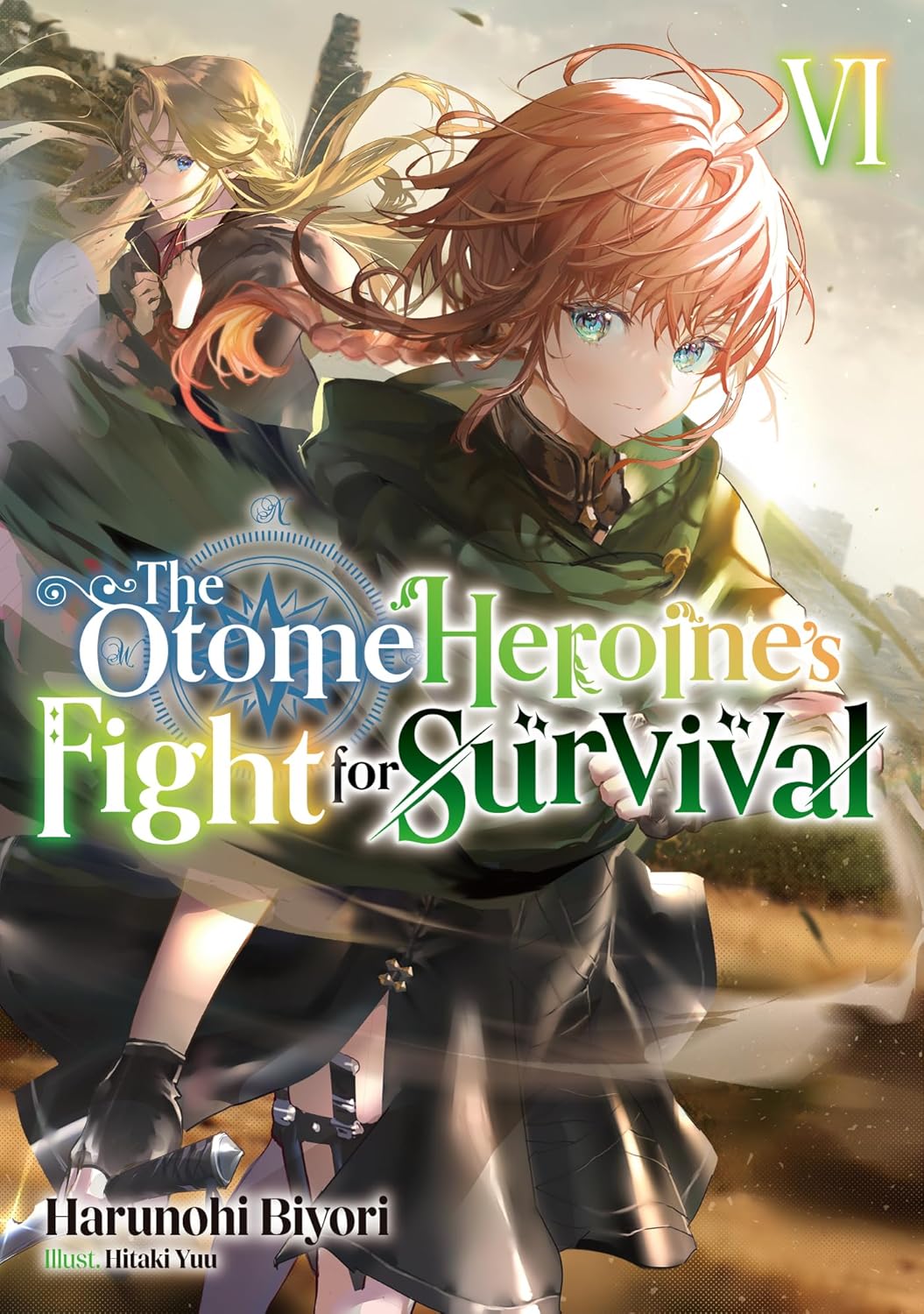
The Otome Heroine’s Fight for Survival, Vol. 6

March 15, 2026 by Sean Gaffney

By Harunori Biyori and Hitaki Yuu. Released in Japan as “Otome Game no Heroine de Saikyō Survival” by TO Books. Released in North America by J-Novel Club. Translated by Camilla L.

When I started this series, I had thought it was going to run about six volumes, and here we are at the sixth volume. That said, we’re nowhere near done, and in Japan the tenth volume just came out, and it doesn’t look like the final one either. This series is stretching itself, and I don’t think it’s just because of the long, lovingly detailed fight scenes. There are more of those than ever, of course, though blissfully we have a few less stat screens than usual this time around. One thing I did notice is that now that Alia is in a grim desert town, most of her opponents tend to be about her level, with the exception of her one big showcase fight, where she takes out two hundred mooks and five strong fighters without too much difficulty. There is, rest assured, actual plot in this book, but I need to tell you, this series is here to have fights and do otome game stuff, and it’s more interested in fights.

Alia and Elena are now in the middle of the desert, halfway between the demon lands they were meant to be teleported to and the Kingdom of Claydale. They find their way to a town that’s divided into four factions: merchants, dwarves, beastmen, and yakuza, and they have to negotiate their way around them while also trying to find a way to, if not get Elena back home, at least get word to Claydale that she’s not dead. Because trust me, back home if she’s gone more than three months they will move on. Speaking of back home, Alicia is continuing to be the most irritating girl in the world; Clara once again tries to achieve something and accidentally makes everything much worse; and Karla gets religion… and promptly butchers it. Karla remains my favorite part of this series. She’s awful. I love her.

It is rather interesting noticing the development of each of the female leads of this “otome game”. Elena, originally a villainess, has started to grow and realize what a ruler needs to actually do… and that she wants to do it. Clara is determined to get the prince she loves to love her back, and if this happens to destroy everything, oh well. Sadly, employing assassins who failed to kill Alia is not the answer. Karla is an immoral nightmare, but to be fair the people she murders here are literally torturing children in the name of God, so she gets a handwave. Alicia not only is ignoring the evil voice in her head telling her she’s being too evil, but actually gets a major power up in this book, which is terrible. And then there’s Alia, who is gradually starting to realize that she has friends that she likes and cares for, and not only wants them to live, but wants to live with them. Alia and Elena get the most development, and it’s no surprise that they’re the two I expect to live till the end of the series.

The volume ends with the “rescue Elena” team arriving and being told to attack if they see dark elves or Kal’faan royals, right as Elena arrives in the city with a dark elf and a Kal’faan royal as her bodyguards. That’ll go well. We will have to wait, however, as Vol. 7 hasn’t started yet on JNC, so it may be a while. For fans of beautiful girls covered in blood.

Filed Under: otome heroine's fight for survival, REVIEWS

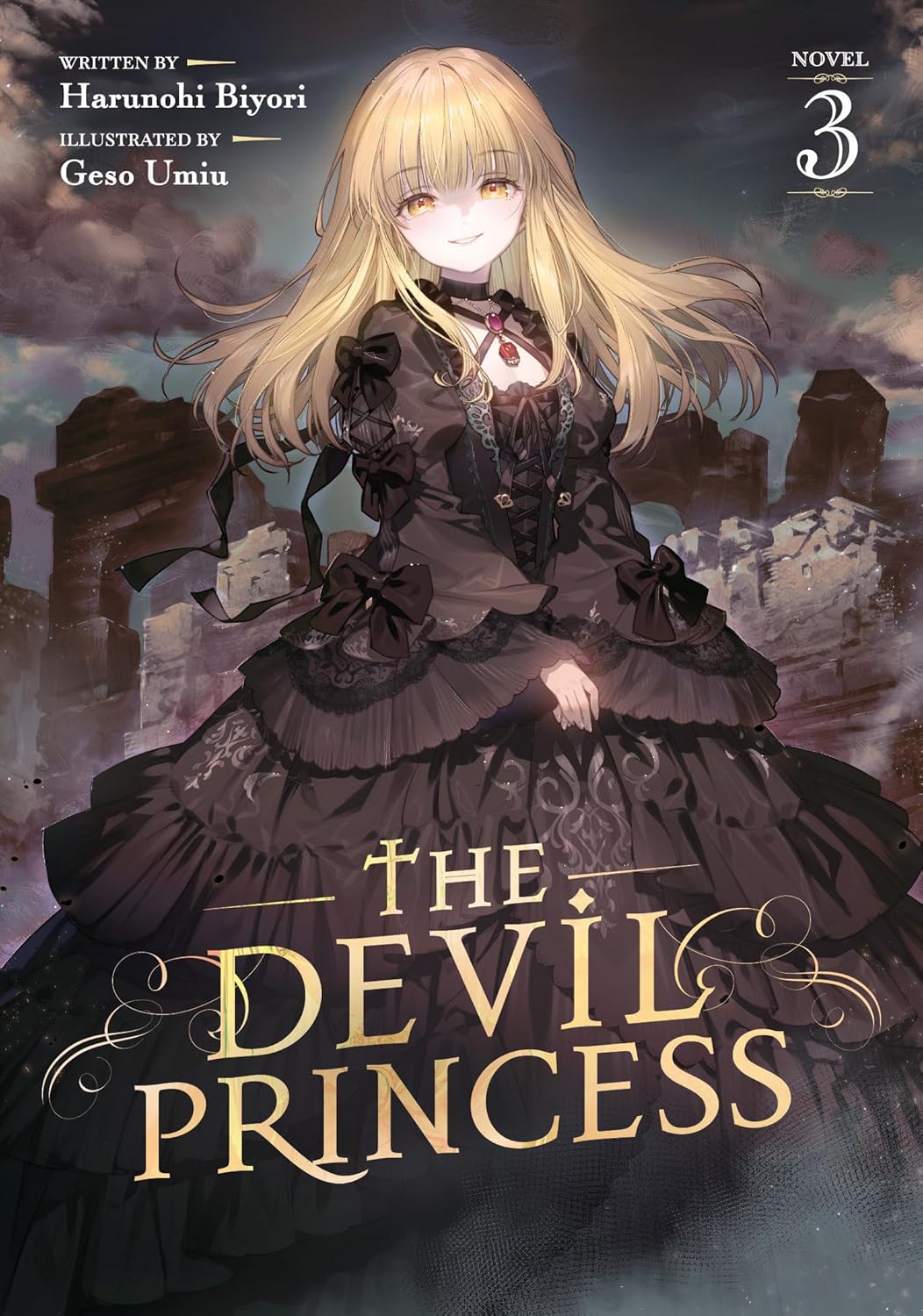
The Devil Princess, Vol. 3

March 15, 2026 by Sean Gaffney

By Harunohi Biyori and Geso Umiu. Released in Japan as “Akuma Koujo” by K Lanove Books. Released in North America by Airship. Translated by Julie Goniwich. Adapted by Emlyn Dornemann.

One reason that this series works so well is that, no matter how dark or serious the climax of each volume gets, or how many corpses pile up, the start of each new book is mostly fun and often funny. Yulucia spends some time in this volume at the standard noble academy, and her quest to make friends, or at least interact normally with people, suffers from everything about her presence. There’s a great side story about a young girl who also has memories of a past life, and knows that this is a “dating sim”, and is there to game the system… and runs into Yulucia, after which she reforms and we never hear from her again. You can almost hear the sad trombone. Alas for people like the second prince, they are too important to vanish from the narrative, and the second half of this book gets substantially darker, as we learn why it’s a bad idea to poison the saint and use her body to summon God.

This volume, like the others, takes in a 2-3 year period in the life of Yulucia, who is dealing with normal light novel things like “I can’t understand why this tsundere guy keeps hanging around me it can’t be love it must be something else” while also doing things unique to this book, such as eating souls in order to gain power and trying to cultivate evil people, who have the most delicious souls to eat. She also runs into the “so-called hero’s party”, which not only contains her two sisters, but also an elf, whose name is unfortunately a Japanese pun and so she can’t stop laughing. In the back half, though, she’s invited by the evil rival to her mother to come visit, and please bring the prince along as well to visit her sickly daughter. And it turns out the mother’s soul is just what Yulucia likes.

Yulucia literally eating souls is pretty evil, of course, but I will admit to loving my favorite part of the book. Cordelia is the daughter of Isabella, the evil rival woman, and she’s been trained by her mother to be a standard jealous catty bitch… till she meets Yulucia and witnesses her doing super powerful healing magic, at which point she undergoes a conversion and decides to be the best “big sis” ever to Yulucia. The funny part is Yulucia’s reaction to this, as Cordelia’s yummy evil soul has now turned all good and yucky. This author really loves playing in the “rooting for the bad guy” sandbox, and while Yulucia is not quite on the level of Karla from Otome Heroine’s Guide to Survival, she’s still pretty bad. That said, it is notable that even when she’s become a mindless monster lashing out and killing all around her, she tries to avoid killing people close to her. She’s not completely evil.

Which, as it turns out, may be the plot leading into the fourth book, where she’s likely to reunite with the demon who made her what she is today. If you like dark comedy, with the emphasis on dark, this is a good one.

Filed Under: devil princess, REVIEWS

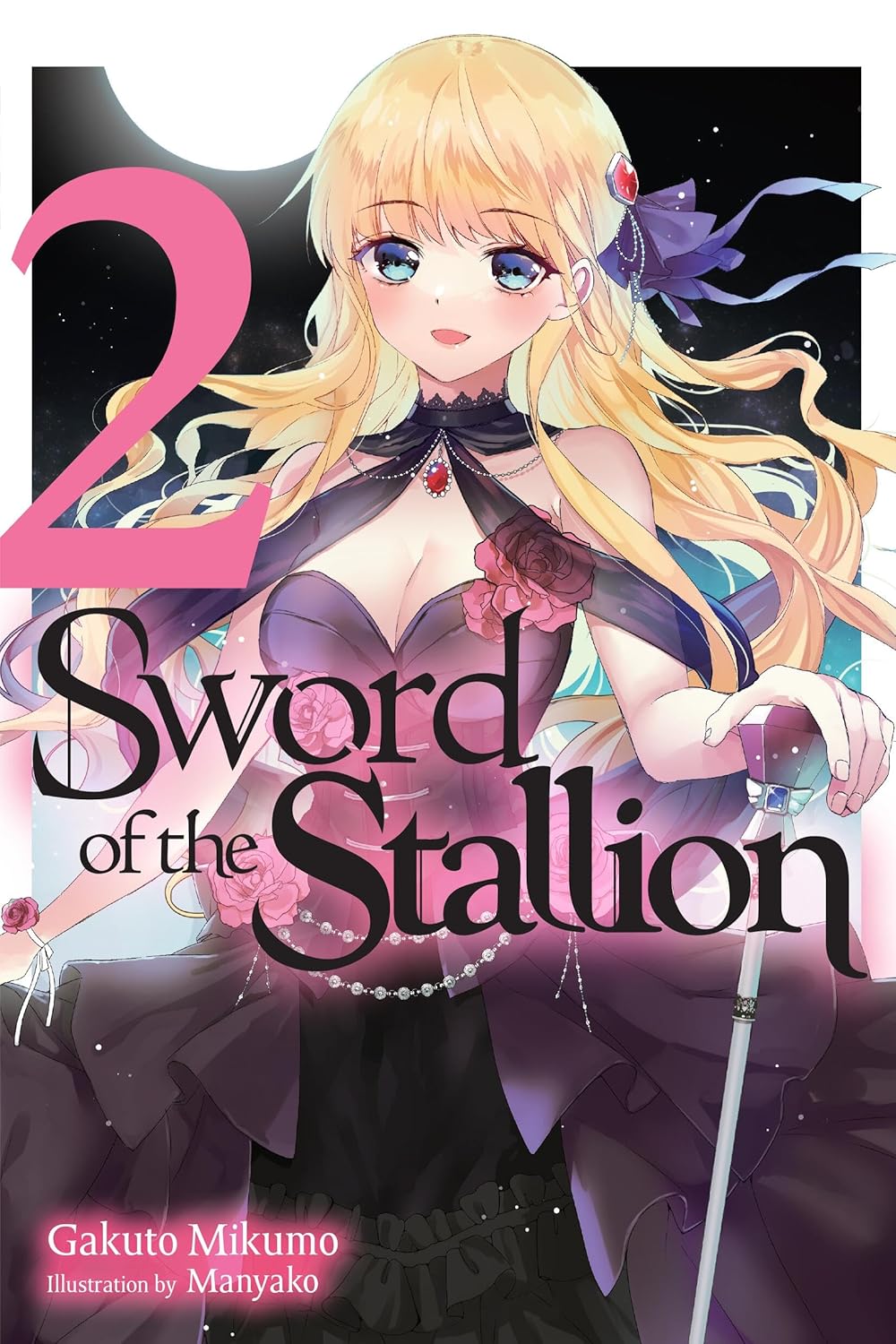
Sword of the Stallion, Vol. 2

March 14, 2026 by Sean Gaffney

By Gakuto Mikumo and Manyako. Released in Japan as “Sword of Stallion: Taneuma to Yobareta Saikyou Kishi, Ringoku no Oujo wo Netore to Meijirareru” by Dengeki Bunko. Released in North America by Yen On. Translated by Jake Humphrey.

Last time I said that this mecha fantasy might be meeting up with a villainess story, and this second volume leans right into that. Ras goes back to his country only to find that they’re immediately returning, as it turns out that Princess Tishna has an assassin that’s been hired to kill her. So they’re moving up their plans to try and cut this off at the past, all while dealing with their own internal politics – they attend an event that features the ex-fiancee of Auriol, the prince that Fiarca is currently impersonating, which is fun – and trying to figure out exactly what Tishna, a so-called Wicked Princess who acts selfishly and horribly but whose selfish actions always turn to be the right thing to do and uncover greater crimes – is up to. Oh yes, and she and Auriol – who is really Fiarca – are getting engaged. Given all this, it’s no wonder Ras has no time to deal with his increasingly poor reputation.

If you’re familiar with my reviewing style, and see that I put the summary of the volume before the cover art, you know spoilers are a-coming. Because I want to discuss my favorite part of the book, which examines the type of plot device that most “time loop” villainess stories use. Generally speaking, for the most part, the books rarely go into the mechanics of the loop itself beyond “stop dying” or “stop being evil” – the protagonist taking actions to prevent her (it’s always her) fate are what’s enough. The main part of this volume is no secret, as it’s discussed in the first few pages – Tishna has gone back in time and is redoing this life. This also explains why she’s being “wicked” in order to ferret out corruption. But she also plans, when she’s achieved her goal, to die. But… is her goal achieved? What evidence does she have that she won’t just wind up back in time again because she died? How much of a happy ending do you need? She can’t know, and thus they’re able to stop her.

Other than that, this is a perfectly decent book that is also not really exciting in any way. I’ve dealt with this author before in Strike the Blood, so I know how things are going to go. The fights are good, the interaction is solid, the characters are types. There’s never going to be anything here that will make you go “wow!” and punch the air. Likewise, you’re never going to go “ew” and put the volume down – even the so-called premise gets undercut at every turn so that we can be assured he’s not actually a sleaze. It is very much written to be adapted into an anime down the line. Whether that happens or not I don’t know – but this is just the sort of book to read on the beach, when you need something uncomplicated.

There’s a lot left up in the air at the end of this book, so I think when I tell you this book came out in 2023 in Japan and there’s no sign of a 3rd volume, you’re just going to be annoyed I made you read the review at all. Sorry! Tee-hee. (bonks head) We can just imagine that they solve everything and he ends up with multiple partners, just like Strike the Blood.

Filed Under: REVIEWS, sword of the stallion

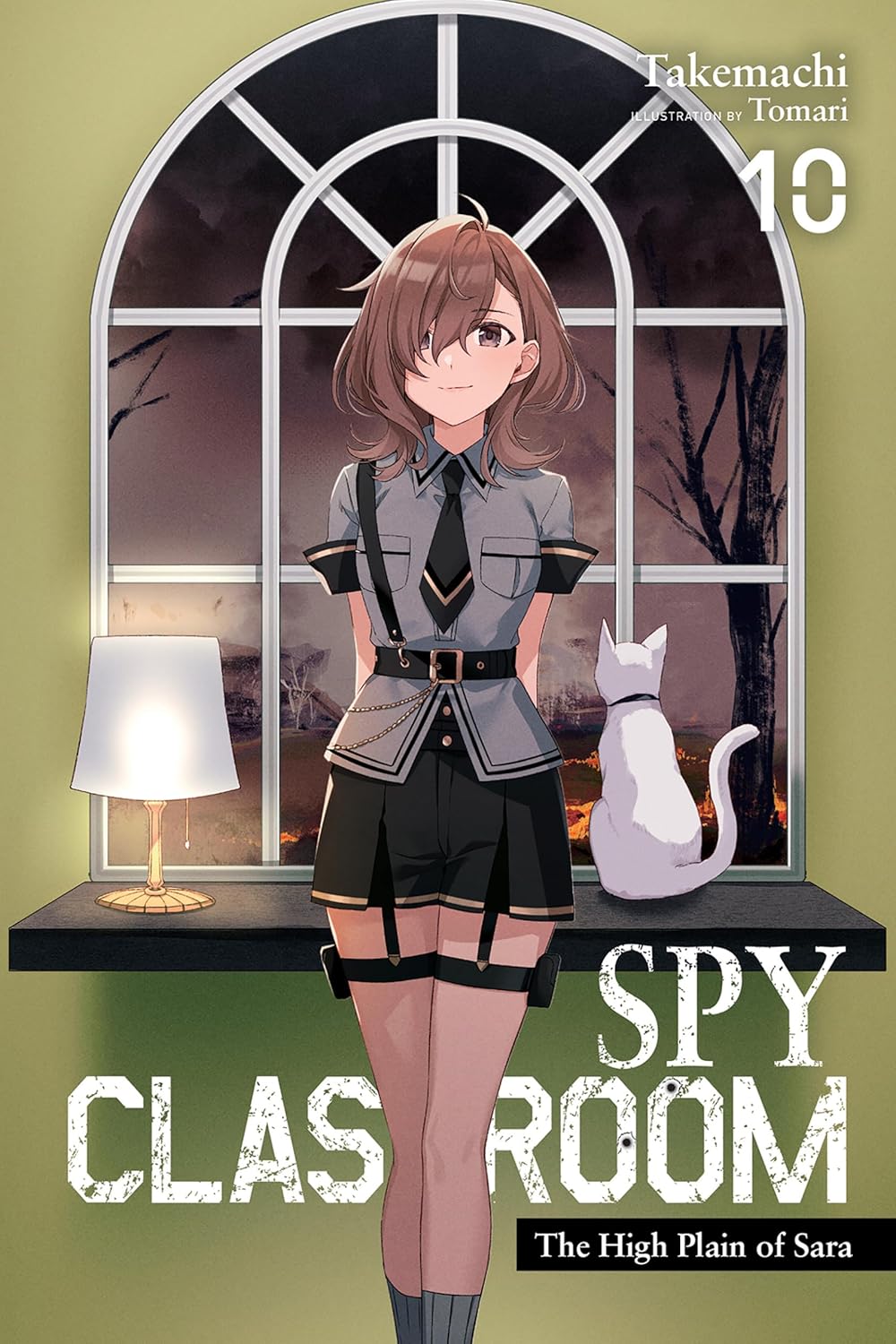
Spy Classroom: The High Plain of Sara

March 13, 2026 by Sean Gaffney

By Takemachi and Tomari. Released in Japan as “Spy Kyoushitsu” by Fujimi Fantasia Bunko. Released in North America by Yen On. Translated by Nathaniel Thrasher.

After the events of the last volume, which were dark but not as dark as the rest of the series, we’re back into pitch black with this volume, which does just about everything except kill one of the main cast off – and even that’s left up in the air at the end. It turns out, amazingly, that being a spy continues to be very hard! And that one of the few things harder than that is starting a revolution. Honestly, this particular book feels very relevant to our times right now in a way that I will try not to go into great detail about. Things aren’t helped by the fact that we’re down a good two-thirds of our regular cast. The team split up to do their big job at the end of the 9th volume, and it’s now over a year later, and they’re still split. Which is good news if you’re a fan of Sara, of course, as well as Erna and Annette, but fans of other girls will have to be patient.

The book consists of one main plotline interrupted by a subplot that happened before the start of it. The main plotline continues the adventures of Erna and Annette that we saw at the end of Volume 9, as they try to incite a revolution among the people, infiltrating an underground organization, investigating a very suspicious mine explosion, and trying their best to avoid getting noticed by Nike, who is the country’s top spy, and would absolutely destroy them. Oh yes, and Erna also has the added problem of Annette, who has basically resolved that she’s just going to get more and more evil as time goes on, and eventually will not be able to be held back. The subplot involved Sara, who objects to Klaus’ plan – not splitting everyone up, but pairing Erna and Annette, which she regards as a bad balance. Klaus takes the opportunity to show Sara how far ideals go in the spy world.

This is technically Sara’s book, despite the fact that the bulk of it is pretty much Erna’s show. I feel very bad for Erna, who after weaponizing her woobiefication finds that being a woobie is something that can happen whether she wants it to or not. By the end of this book she’s a wreck, but I’m sure she’ll get more opportunities for cool things later. Sara, probably not so much. Now, I am not so naive as to think that the author is going to kill off one of its more popular characters. I do, however, think Sara will probably sit the rest of this arc out. Which is fine, as this was a really killer performance by her. The theme of “you are a very competent spy but still about 5000 times less competent than everyone else” is a hard lesson to take in when you are trying to ensure everyone survives and lives happily every after, and it’s very Sara that she accepts the lesson and then decides to be an idealist to the end anyway. It’s no wonder that “big sis” Sybilla says about Sara, “She’s such a mom.”

By now you know what I’m going to say: next is a short story collection? Yup. Still, good start to this arc, which reminds you how difficult it can be to make folks understand who are the right people to hate.

Filed Under: REVIEWS, spy classroom

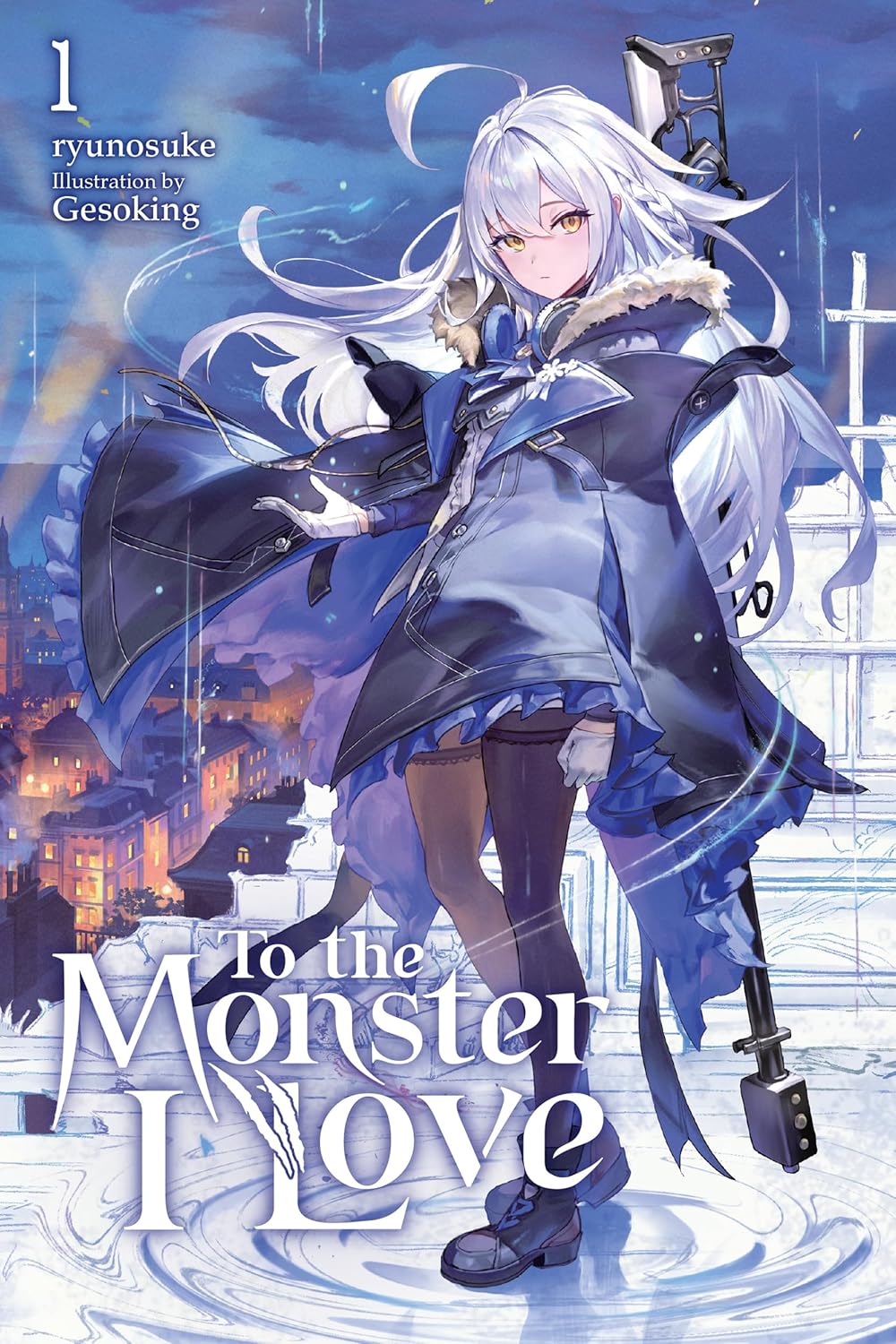
To the Monster I Love, Vol. 1

March 12, 2026 by Sean Gaffney

By ryunosuke and Gesoking. Released in Japan as “Bakemono no Kimi ni Tsugu” by Dengeki Bunko. Released in North America by Yen On. Translated by Laura Sitzer.

I was on the fence about picking this series up, as let’s face it, I read way too many light novels, and the first I heard about it was hearing complaints about the way the title is translated. (My Japanese is not good enough to go into what it should or shouldn’t be, but the title as chosen certainly can fit the book.) As it turns out, I enjoyed this a great deal. It may be a tad grimmer than I expected, with a high body count overall, but none of those deaths are in the main cast. Instead, the main cast are defined by basically being really sweet – almost ridiculously so at times. The series is about solving crimes, but at the end of the day it’s also about a man who is in love with four women, and they love him, and while the women may not be happy with each other, they’re very happy with what they have now. Also, unlike a lot of “contest winners”, this feels like the start of a series.

We open on an interrogation, as a frankly far too manic researcher has a young man tied to a chair, and wants to ask him questions about his actions of the last month. As it turns out, Norman, the tied-up young man, acts as a detective/detective’s assistant/minder/lover to four different girls, all of whom are designated Unlaw by this city – Unlaw meaning essentially they have magical powers. We hear about how he and Shizuku, a stoic musician, solve a gruesome society murder. About how he and Eltiel, a huge and loyal blonde woman, investigate a depressing string of murders in the slums. About how he and Lonsday, a brilliant but easily bored detective, look into a “phantom thief” stealing from a museum. And about how he and Clareth, a schoolgirl, are lured into a trap involving a train car full of corpses. Is Normal really just a protagonist in a light novel? Or is it something more sinister?

I had expected Normal to be the weak link, as frankly he’s mostly a blank space that the women project themselves on to. But as we find out, that’s on purpose, and I appreciated the fact that his love for the four girls wasn’t to keep them in line, or because that’s the best way to use them, but because he really does love them all as humans, not Unlaw. The girls are, let’s face it, all types set to appeal to a light novel reader in general and a Dengeki Bunko competition judge in particular. Eltiel in particular hits about 5 or 6 buttons alone with her backstory, powers, and appearance. (She’s also the nicest of the four, although that’s by design given the type of “monster” she is.) The final scene also has a really good battle between not-so-blank Norman and the villain, and shows that deep down, the man is a sweetie pie. Though admittedly a sweetie pie who will not hesitate to kill a lot of folks to protect his loved ones.

In the end, they’re all rewarded with a detective agency, which means that the girls may have to – shock, horror – interact more in Book Two. If you like supernatural mystery books, and don’t mind that it feels like a book written to be an anime rather than a light novel, this is quite well done.

Filed Under: REVIEWS, to the monster i love

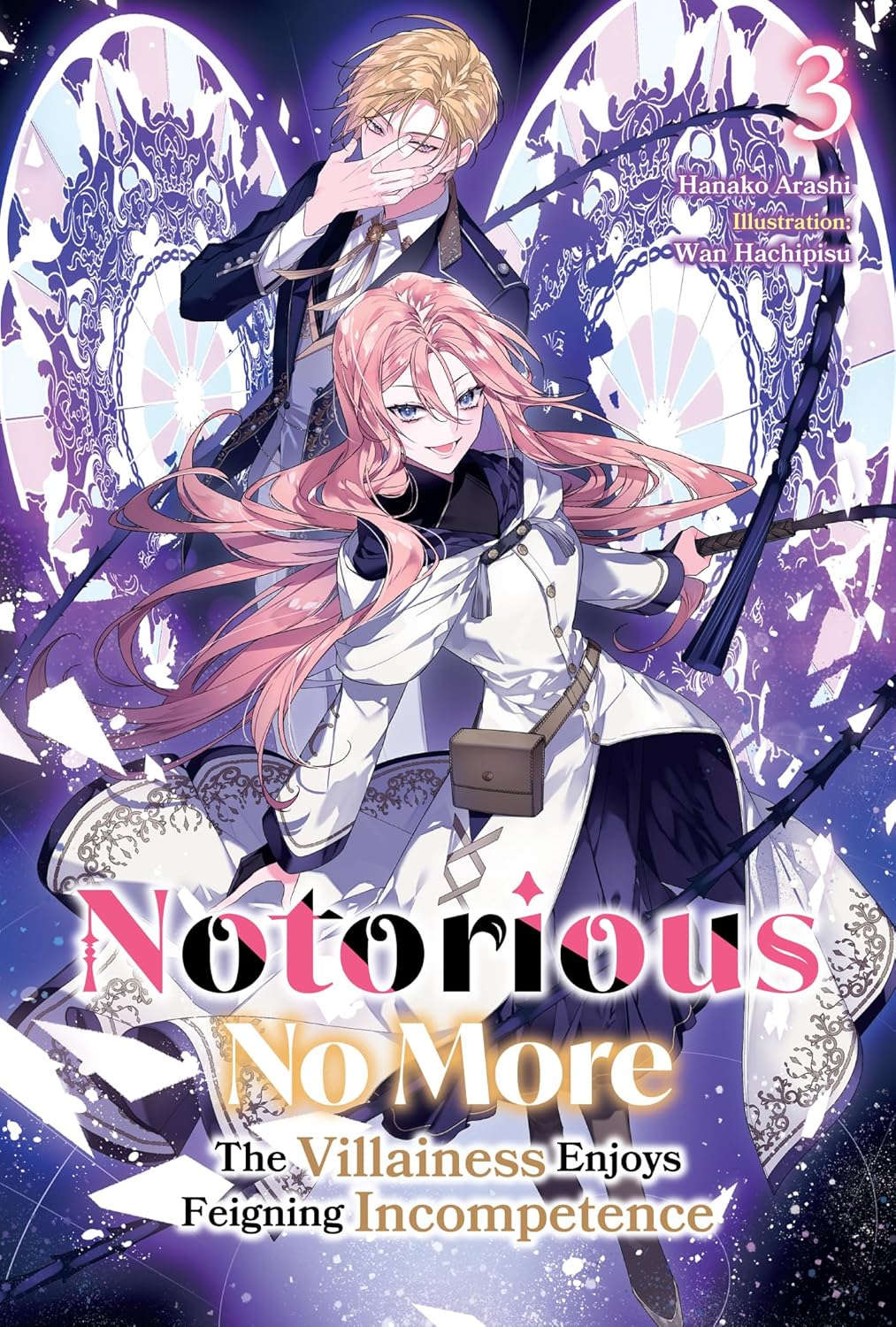
Notorious No More: The Villainess Enjoys Feigning Incompetence, Vol. 3

March 10, 2026 by Sean Gaffney

By Hanako Arashi and Wan Hachipisu. Released in Japan as “Kitai no Akujo, Sandome no Jinsei de “Musai Munou” wo Tanoshimu” by Kadokawa Books. Released in North America by J-Novel Heart. Translated by Mac B. Gill.

So this volume, at long last, gives us a good long look about what happened in the past, even if actual flashbacks to the death of Beljeanne, while there, don’t give the entire story either. One thing that has come up from those who know the real story is why, after Beljeanne’s death, the ones who benefited the most from it and ended up stronger than ever are the ones who hated her the most. Basically, Beljeanne’s plan did not differentiate between her allies and enemies. Towards the end of this book, while talking with one of the antagonists, Laviange makes it perfectly clear: Beljeanne grew up not knowing love, and so why did everyone expect that she would feel it towards other people? I called Laviange a sociopath and got some disagreement, though I think if I say “comedic sociopath” it would be accurate. Beljeanne, though, is the real deal.

Laviange is hanging out in some of the damaged lands that her class is trying to come up with ways to heal, with her sacred beast/puppy by her side. She is then interrupted by two new people: a priest who is trying to essentially get her on the side of the church at the behest of the pope, and a noble who she vaguely recognizes as Mirandalinda, Heinz’s ex-fiancee who desperately wants to get back together with him despite that now being pretty impossible. More importantly, though, Mirandalinda is also interested in looking at the pretty boys around her and imagining them in BL situations, so Laviange takes a shine to her right away, though Mirandalinda’s crippling shyness may not be helping. That said, it turns out that the reason the pope wants Laviange to come to the church is for a different reason. Something a bit more… evil.

I talked before about Laviange’s current life and her past life, but of course there was another life in between those, the one she lived in Japan, where she married, had kinds and grandkids, and died at a ripe old age. It’s very important, because while what little we’ve heard of her Japanese life suggests that she was eccentric, it also shows her capable of love and caring, something Laviange accepts as she thinks back upon that life… but something that she’s struggling with now that she’s back in her original world. This book is, in many ways, a broad comedy about a young woman who has no desire to deal with serious matters seriously – honestly, the book is really freaking weird in ways I can’t begin to describe – but at its core it’s about those who remember the broken woman she used to be and trying to get her to grow and change and learn to open her heart. And if I’m being honest, they’re still struggling.

Now that we have a major subplot, if not dealt with, at least expounded on, what’s next for Laviange? Whatever it is, she will likely be very silly at it.

Filed Under: notorious no more, REVIEWS

The Tale of a Little Alchemist Blessed by the Spirits, Vol. 2

March 10, 2026 by Sean Gaffney

By yocco and Junsui. Released in Japan as “Outo no Hazure no Renkinjutsushi: Hazure Shokugyou datta node, Nonbiri Omise Keieishimasu” by Kadokawa Books. Released in North America by Airship. Translated by Andria McKnight. Adapted by Lex Reno.

One of the issues that a lot of isekai/reincarnation books have is the desire to make the main character not only overpowered, but also the only one who’s overpowered. They can do ludicrous stunts that make the normal people around them shudder. They’ve got the finest sword, the best magic, the most potent… you know. And everyone around them exists to be amazed. That’s why I was particularly pleased with this second volume of Little Alchemist. Sure, Daisy is still incredible, doing things that astound everyone. But she’s paired here with a dwarf girl who also is blessed by a spirit and can also do ludicrous things, and then meets and elf girl who is incomprehensibly overpowered. Their bodyguards are the two top adventurers in the country. Daisy’s brother and sister may turn out to be magic users beyond comprehension. It’s nice to see, and makes Daisy feel less like an author’s pet. Overpowered traits for all!

Things are going great for Daisy, who at ten years old finally has her own shop, a combination alchemist’s shop/bakery. And both halves of that take up equal amounts of her time. Sure, she’s continually seeking to improve her alchemy, deploy healing spells by essentially hurling potions at the person in need, and saving the kingdom (again) from the horrors of lead and mercury-based cosmetics, but she’s also here to make cheese! And invent hamburgers! And fried chicken! Oh yes, and also going on a quest for ingredients with her new friend Lynn, a dwarf with a very big hammer. That leads them to challenge a tower that no one has ever made it to the top of – they all died. Can Daisy manage to get past the part where he kills you?

The book knows exactly what its readers want, frankly. The vibe is the most important part of an atelier book, and that means that we’re not going to see Daisy struggling or having anxiety about her work. Things work out in this book,. and that’s fine. She doesn’t QUITE make it to the top of that tower, but she does solve the part where he kills you, and no one gets killed (except him). She not only saves one of the three world trees that keep the nation from falling to ruin, but she also then heals it so that it’s better than ever before. Elves threaten her, only to bow when they figure out who she is. This book is here for a relaxed vibe, and you can have the bubblegum, it’s not needed. Even when she’s trapped in a cave that’s designed to murder people, she gets out – though she does exhaust her mana. I guess that could be a crisis? Ish?

And I didn’t even mention my favorite part, which is that adventurers are delighted with her high-quality potion, not because of the strength, but because having to drink 5-6 normal potions makes you have to pee. So yeah, regarding plot and characterization? There are probably better series. Regarding atelier vibes? This is just right.

Filed Under: REVIEWS, tale of a little alchemist blessed by the spirits

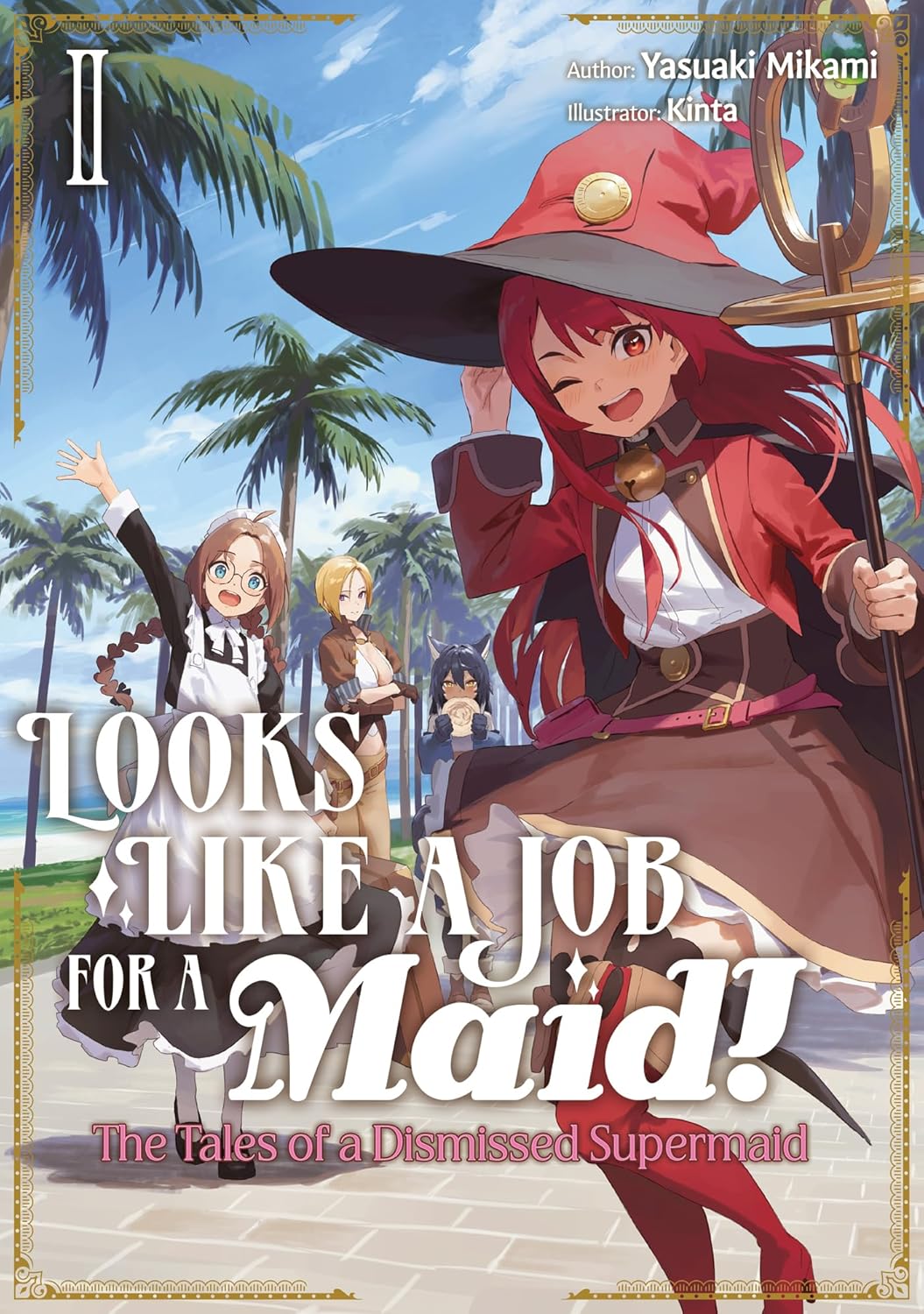
Looks Like a Job for a Maid! The Tales of a Dismissed Supermaid, Vol. 2

March 9, 2026 by Sean Gaffney

By Yasuaki Mikami and Kinta. Released in Japan as “Maid nara Touzen desu. Nureginu wo Kiserareta Bannou Maid-san wa Tabi ni Deru Koto ni Shimashita” by Earth Star Novel. Released in North America by J-Novel Heart. Translated by Sylvia Gallagher.

I do appreciate that, in a story that features a ridiculously overpowered maid, her friend the incredibly powerful mage, her friend the genius inventor, and her friend the incredibly strong wolf girl, that this is a series that still manages to have its feet firmly on the ground. Sure, it would be a lot of fun to see every single problem defeated through the power of being a really good maid, but that’s not the story the author is trying to tell. We especially see that in the longest part of the book, where our party arrives at a beach resort town that has a significant slum part, and while it would be easy for Nina to magically clean it better and hand out free meals, that won’t solve the underlying problem, which is capitalism. Besides, Nina is also dealing with larger issues. As we see in the second story in this book, she’s got a bit of PTSD.

This is an ongoing narrative, but the book can also be divided fairly easily into four parts. 1) Nina goes to thank the merchants responsible for helping her with the preservative issue at the end of Book 1, only to find they’re going under because of corporate espionage and also their manager is a love-besotted dimwit; 2) Their search for Tien’s parents leads then to a mercenary company that supposedly has lapalunes in their huge mansion… but won’t let them be seen; 3) The beach resort plot I mentioned above; and 4) Nina is accosted by both a noble who wants to make her his “third wife”, and his chief maid, who recognizes Nina has been trained by a “drunken psychopath” (Nina does not deny this), and demands that they have a maid battle! Meanwhile, Nina is finding it harder and harder to hide from whose who want to find her.

There are two really strong parts of this novel. (The weak part is the first story, which needs to rely on everyone being either incredibly dumb or incredibly forgiving or both.) The first is at the end of the second story, where Nina is set up in exactly the same way that she was at the start of the series, and accused of theft. This causes her to come close to a complete nervous breakdown, and I think if Tien hadn’t yoinked her away from there ASAP she would have. Nina tends to think of herself as a maid and has little sense of self, and they need to do something about that or this is going to come up again. The other is at the end of the maid competition, where the other maid claims victory by doing things the fastest, but Nina genuinely wins because she knows being a maid is not about laundry or cooking or errands, it’s about people and how to make their life better. You are a maid, not a robot or a slave.

The book ends with the party being summoned to the Empress, and I suspect there’s only so long that they can avoid having to deal with the main problem of this series: Nina is too valuable to be allowed to happily live her life adventuring with friends. She needs to be chained down somewhere and forced to be brilliant for the state. I look forward to seeing how the author gets out of this bind.

Filed Under: looks like a job for a maid, REVIEWS

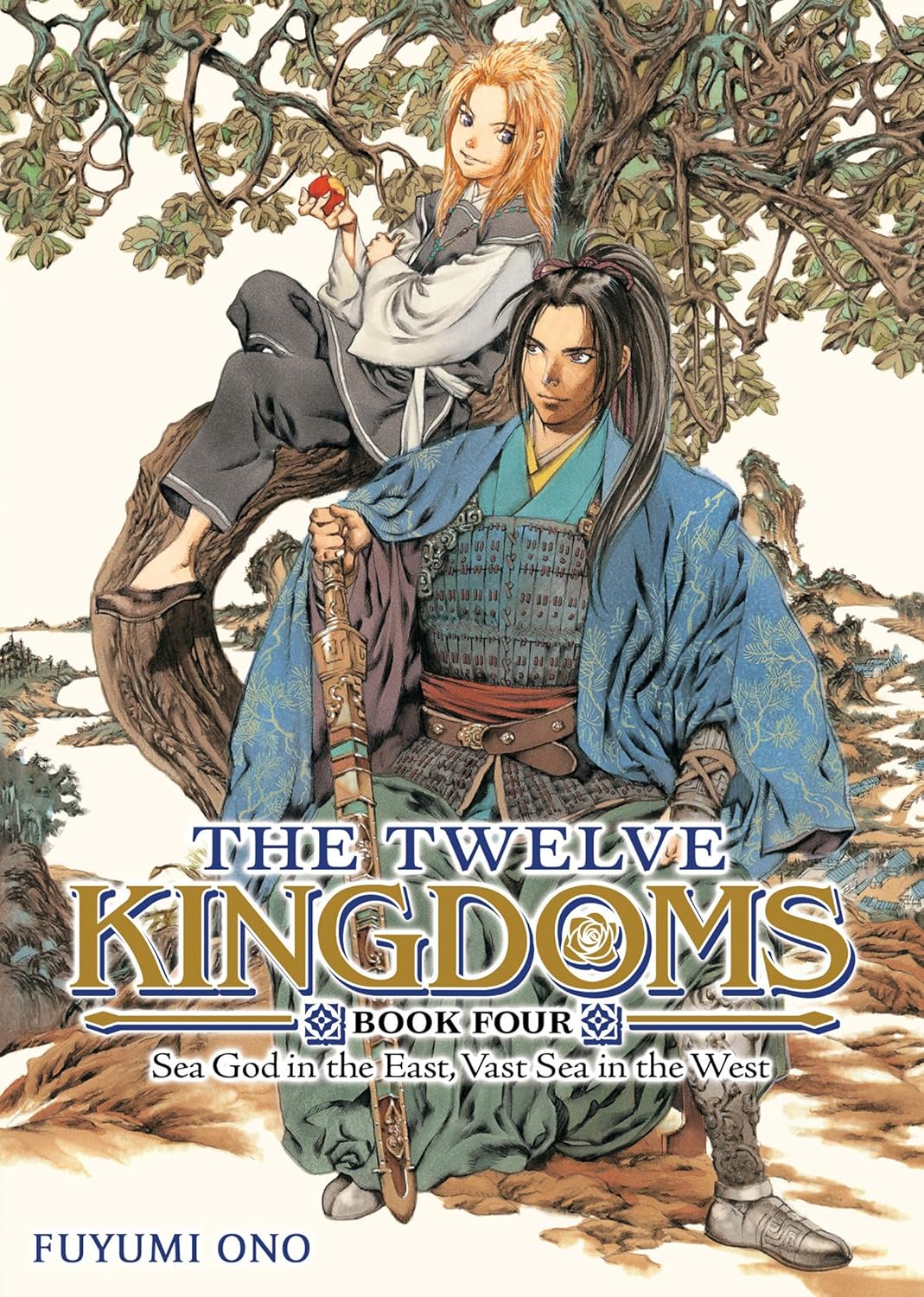
The Twelve Kingdoms, Book Four: Sea God in the East, Vast Sea in the West

March 8, 2026 by Sean Gaffney

By Fuyumi Ono and Akihiro Yamada. Released in Japan as “Juni Kokuki: Higashi no Wadatsumi, Nishi no Sōkai” by X Bunko White Heart. Released in North America by Seven Seas Entertainment. Translated by Kim Morrissy. Adapted by Monica Sullivan.

Everyone loves a good scoundrel who’s secretly smart and caring. They’re a very popular fictional trope. The scoundrel – almost always male, as in this book, though I have seen excellent scoundrel heroines as well – is the sort that always looks like they’re a good for nothing. They drink a lot, they don’t dress or stand properly, they’re always hanging out in the bad parts of town rather than, y’know, ruling the country. It’s always fun to read about how everyone gradually realizes that it was all part of a clever plan, and that in reality everything they’ve been doing had a very good reason. Note that I said it was fun to READ about. As it turns out, when the previous king was renowned for being awful, your kingdom is on the verge of collapsing, and you’re only just starting to recover. having a king who never goes to meetings and is hanging out in brothels can, in fact, be bad.

We’ve met the king of En and his kirin before, helping Youko establish herself and her own kingdom, and later on Taiki needing to choose a new ruler, but it’s clear in those that he’s well-established. Here we go back a bit and see what things were like when he was just getting started. The previous king was a tyrant who nearly destroyed the kingdom, and the land was arid and inhospitable. Twenty years later, the land is starting to recover and the domains that make up the kingdom are beginning to find their feet. But it’s a struggle, and things are not helped by the new king, Shouryuu, who seems to want to fire his most loyal subjects and replace them with people who dislike him. The king, as I noted above, avoids meetings and likes to hang out in brothels. As such, it’s not a surprise when the chancellor of the most prosperous domain decides to have the king step down and let him take over.

As always with this book, the writing is stellar and I barely know where to begin. Shouryuu *is* thinking about the kingdom, and wants to try to get by with the least amount of lives lost. Particularly as his kirin is so sensitive to blood and death. That said, it is interesting that this book pushes back against the idea of kings ruling in the way they do, especially given that this is a world with real gods who have kings chosen by what amounts to people with magical ruler sense. In a normal fantasy universe, there might be a much better argument against Shouryuu’s rule, but here the world is literally set up to show he’s the one they need – which turns out to be true, the guy starting the rebellion is a complete loser who you get to hate. Imagine Tenya from My Hero Academia, only evil. I will also warn you that there *is* bloodshed here, and it’s not the bad guys who die. Oh, and I haven’t even mentioned the kid who talks to youma, who turns out to be a far more interesting villain than the other guy, and I hope we see him again.

I hope I don’t need to tell people how good this is and that you should be reading it. Next time, it’s the first of a two-parter where we finally catch up with Youko and see how smoothly things have gone for her. (My guess: not very.)

Filed Under: REVIEWS, twelve kingdoms

If the Heroine Wants My Fiancé, I’ll Marry a Yandere Villain Instead!, Vol. 2

March 7, 2026 by Sean Gaffney

By Kobako Takara and Jun Natsuba. Released in Japan as “Heroine ni Konyakusha wo Torareru Mitai node, Akuyaki Reisoku (Yandere Character) wo Neraimasu” by B’s-Log Bunko. Released in North America by Cross Infinite World. Translated by Emma Schumacker.

One of the problems that a lot of fiction has, be it in English or Japanese, is the trouble with sequels. In North America it feels like you can’t sell a fantasy series these days without it being a trilogy of some sort. Japanese books are frequently contest winners, which means they’re self-contained in one volume, but if they do well then more volumes are always around the corner. And sometimes a series just doesn’t need to be ongoing. This is the trouble I’m running into with the second volume of Yandere Villain. It felt very self-contained when I finished the first book, even though we hadn’t hit a wedding. And now we have a second book, which introduces the inevitable plot complications, and it feels very half-baked. I feel as if the author didn’t really have a plan, so decided to write what they like instead. Which is good news if you like fluff and bratty teens.

Having gotten engaged and solved their immediate issues, Cynthia and Siraiya are ready for a nice, relaxing vacation at her family’s hot springs hotel. All to themselves, where Cynthia dreams of growing closer as a couple… though she’ll find over the course of this book that, due to no sex ed at all, Siraiya is not remotely ready for anything physical. Unfortunately for both of them, the crown prince shows up at the hotel as well… and he’s got cat ears and a tail. This turns out to be due to a book he opened, but Cynthia knows it’s really the subject of a special event in the game world. Unfortunately, this isn’t a game world, and there’s an actual power struggle between Adelberd and his younger brother. Cat ears and a tail are probably not going to win points. Can Cynthia find a way to break the curse? And wait, now the second prince is here as well!

I will admit, the author has a way of writing a bratty teen who’s forced into power struggles he doesn’t want and wants to be more mature than he really is. Rutherford feels very true to life. He also ground on my every nerve, especially when he developed his puppy love crush on Cynthia. We also finally get to meet Adelberd’s fiancée Estellise, and they too have a “oh no, but if we hold hands that would be far too much!” issue. Clearly the otome game they’re from is very G-rated. On the bright side, I did like the resolution of the plot, which allowed Cynthia to save the day in a completely ridiculous way. And the fact that the Japanese word ‘yandere’, unknown here, has been taken by everyone but Cynthia to have a completely positive and not creepy at all meaning is an amusing running gag.

There’s two more volumes apparently, but I think I’m stopping here. The final volume has a wedding cover, so I assume things go well. Which is… not what actual yandere fans want, I think? But oh well.

Filed Under: if the heroine wants my fiance i'll marry a yandere villain instead, REVIEWS

Goodbye, Horrible Fiancé, Hello, Fun Magic School Life!, Vol. 1

March 5, 2026 by Sean Gaffney

By Mashimesa Emoto and Nitou Akane. Released in Japan as “Konyakusha wo Sutetara, Tanoshii Mahou Gakkou no Seikatsu ga Matteimashita” by GC Novels. Released in North America by Cross Infinite World. Translated by piyo.

Now that we have a glut in the market when it comes to broken engagement light novels, it can be hard to really sell one to readers as a reviewer. I enjoyed this book, it has a likeable lead, some fun scenes, good support. It does not really, however, have that one thing that makes it stand out of the pack from other books with this exact premise. There’s no quirk, no eccentricity that made the publisher go “wow!”. The publisher put this out as the author has a proven track record (Expedition Cooking with the Enoch Knights, also released by CIW) and this was a title the author really wanted to see published (they bluntly state this in the afterword). So you don’t have to buy it. But again, if you do buy it, it’s a lot of fun… once you get past the first twenty pages or so. Because trust me, the horrible fiancé thing is not a lie.

Misha von Ritual is a viscount’s daughter in a snowy minor territory in the North. She’s engaged and ready to do her all for the territory. Then her fiancé shows up and says that he’s gotten her cousin pregnant. And is marrying her. But he still wants Misha as his second wife. To keep earning money for the child her cousin is now carrying. Who will take over the territory. Oh, and he says he has no plans to sleep with her. Needless to say, she punches the shit out of him, and after consulting with her parents, the errant fiancé and his pregnant girl are hurled out of the kingdom. The parents, who were very lax about this, offer Misha anything she wants, and she asks if she can go to the magic school in the center of the country. It will be hard to get in, but if she does she’ll be happy. Because she has (gasp!) past life memories from Japan, and remembers a certain series of novels about a magic school…

It’s never explicitly stated, so I’m gonna assume she means Diane Duane’s books rather than that other author. One thing I did like is that the application process has multiple tests, takes an entire year, and it’s very easy to fail. In fact, Misha would not have gotten in (her uncle dropped out, an automatic black mark for full scholarships like she needs) if she hadn’t impressed a teacher with her herb talents and ability to essentially work for her tuition. I also appreciated the character of Alice. I will always love a girl who appears at first to be a haughty, arrogant girl but who it turns out is just really awkward and has resting bitch face. As for her obvious love interest, I worried as he seemed to be a teacher, but the end of the book shows that isn’t the case, so I will allow them to be cute together. Also, she has a slime familiar. Everything’s better with slimes. (Don’t worry, he’s a super powerful slime spirit, and can basically do anything required of him.)

There’s at least one more volume of this, and I’ll read it. If you like magic academies and heroines who are quietly awesome without the narrative beating us over the head with it, this is a winner.

Filed Under: goodbye horrible fiance, REVIEWS

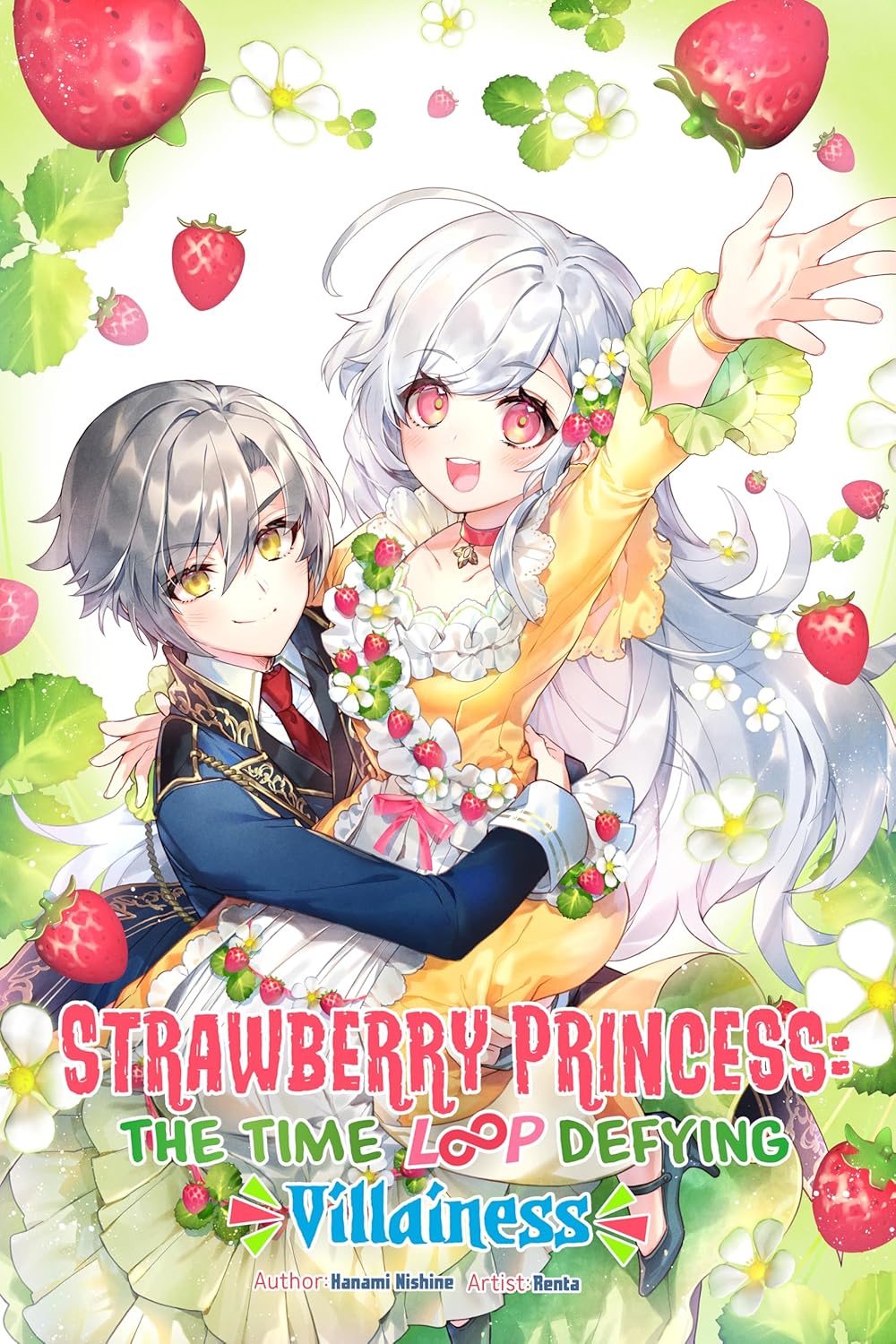
Strawberry Princess: The Time Loop Defying Villainess

March 5, 2026 by Sean Gaffney

By Hanami Nishine and Renta. Released in Japan as “Shiitagerareta Maihime wa Seijo no Loop ni Ichigo de Aragau” on the Shousetsuka ni Narou website. Released in North America by Cross Infinite World. Translated by Zihan Gao.

Now that we have so many of them, to the point where protagonists are actually familiar with the genre, I think it’s appropriate to say that some people are getting a little too into the “trapped in an otome game” mindset. Admittedly, in this particular case it appears to be a coping mechanism to try to ignore the main character’s wretched life to date, but still, a lot of things happen here because Amelia, the titular princess, is stuck in “there’s nothing I can do to stop this route from happening, so I’ll try something else”. Now, as it turns out, it is quite difficult to stop the route, but generally speaking, I’d like people to try. That said, I will forgive Amelia for this, as she is also a bit of an airhead, even before she gets her memories from Japan back, and therefore knows what can save her. Strawberries.

When we first see Amelia, she’s being pushed to the ground and having her late mother’s necklace stolen from her by her stepsister. She currently lives in bare poverty in the Fifth’s Consort’s home, which barely gets any food or supplies, forcing her to learn how to farm and climb walls, giving her a tanned look. (The artist presumably saw “silver hair” and proceeded to ignore this entirely.) She has one major thing she can do: she can summon strawberries and strawberry-themed things. (This is not as bizarre as it might sound, given her late mother summoned watermelons.) She’s very familiar with this scene, however, as this is the 5th time it’s happened. Her tormenter is looping routes, trying to complete every target male, and the last one on the list is Amelia’s own fiance. Time to fight back! Wait, no, she has little confidence and hasn’t seen her fiance in four years. Time to sell strawberries!

Amelia is a very familiar type, being naive, a bit daft, and unaware of her own charms, though that last one is explained by the abuse she’s suffered. Her one remaining servant is her butler/father figure, who stays on partly as he had a crush on her mother but mostly as it’s the right thing to do. As for the absent fiance, I liked him a lot as well. Once he figures out what’s actually happening, he’s quick to take steps. He also cries a lot, which is rare even among shoujo romantic male leads, and it’s not made fun of. The solution to all this comes as a slight surprise, but the clues are there if you look for them, so I accepted it. Most of all, this book, despite its dark backstory, has a light, silly core, doing things like tripping up the main villainess by having her slip on strawberry jam, etc. The heroine has a motif, and by god, she’s going to use it.

This is done in one, which makes sense – hard to see this plot getting stretched more. The author also writes The Dragon’s Soulmate is a Mushroom Princess!, but that doesn’t have strawberries, so can’t be as good.

Filed Under: REVIEWS, strawberry princess

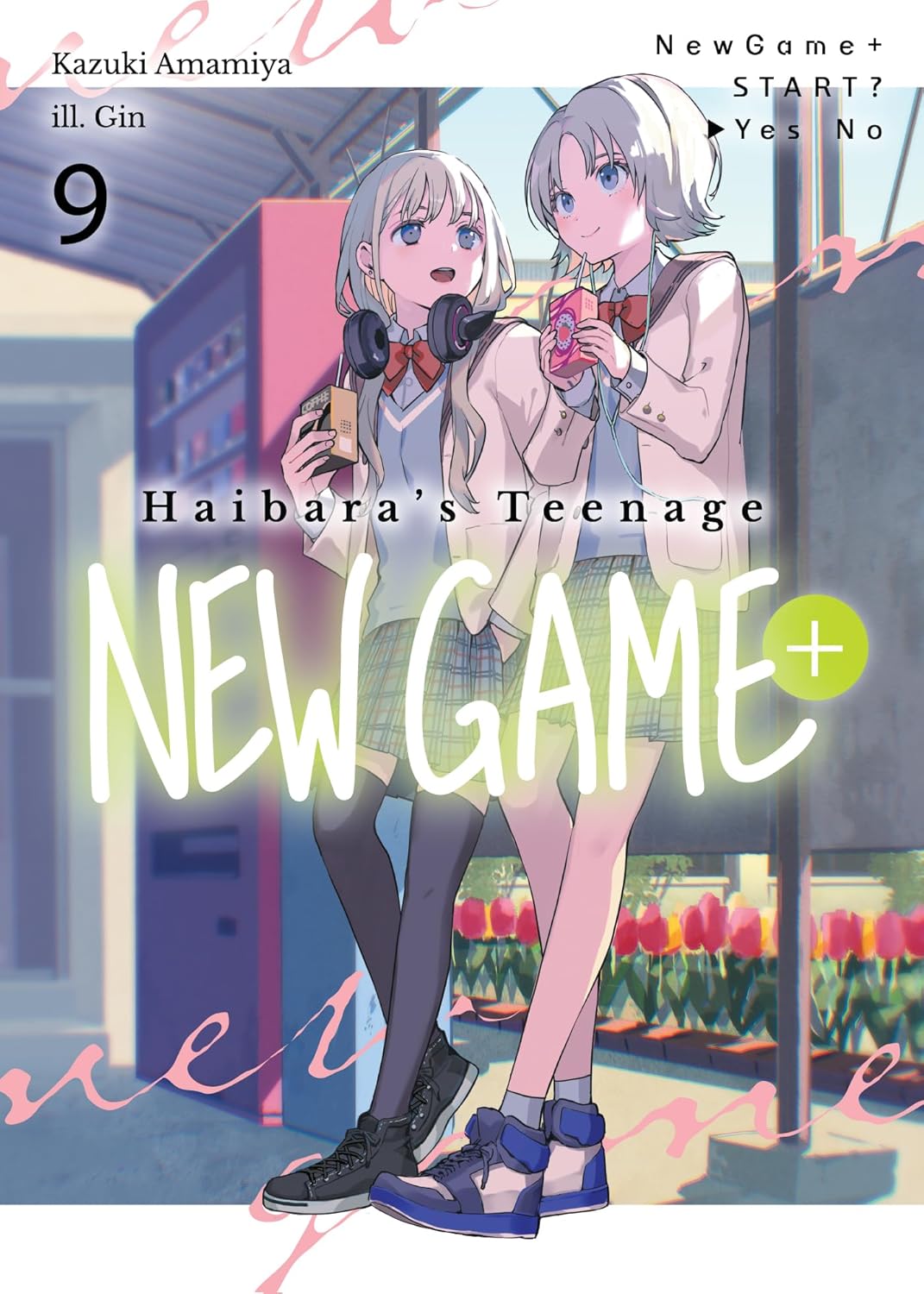
Haibara’s Teenage New Game+, Vol. 9

March 3, 2026 by Sean Gaffney

By Kazuki Amamiya and Gin. Released in Japan as “Haibara-kun no Tsuyokute Seishun New Game” by HJ Bunko. Released in North America by J-Novel Club. Translated by Esther Sun.

Natsuki’s do-over has been going pretty well. He’s got friends, he’s slimmed down and folks think he is handsome, he is able to hold conversations and help others – sometimes to a ridiculous shonen degree – and he has a girlfriend, and their relationship is sugary sweet (what little of it we see in this volume). So it makes sense that it’s time to move on to the next generation of socially inept malcontents, and that means Saya, the first-year who knew him in middle-school and is trying to achieve the same thing he did. Unfortunately, she’s blunt to the point of being mean, and doesn’t care about other people. Or anything other than music, really. And given that she’s in a band with Mei, whose self-confidence is low at the best of times, that’s not great. Is this band that he’s trying to help Serika take to Budokan doomed before it begins? Meanwhile, back in Natsuki’s original timeline, the author takes every reader who was socially inept in high school and murders them.

Let’s leave original Natsuki for later and talk about the main star of this series. He’s more visibly struggling this time around, which I regard as a positive – by now, everyone who is close to him knows that he’s not naturally extroverted and is working hard to change himself. He has been practicing like crazy for the band, but it’s notable that by the end of the book he’s still told he’s not very good – he can’t simply magically gain years of musical experience. It’s also a good thing Hikari is his girlfriend, because he still has a bad case of harem protagonist disease, not really understanding why all those girls want to be in light music till he has it explained for him. As for Saya, she’s also very relatable. One of the hardest things to do as a person is to listen and respond, and that means paying attention to others – knowing their names, hobbies, etc. She’s got to put in the work! At least her love song was so blatant that even Natsuki picked up on it. Oh yes, and Mei’s girlfriend had some of the funnier moments in the book.

So, interspersed with the main chapters we have the original Natsuki Haibara, in the first timeline, trying his best to have a high school debut. It’s genuinely painful to read. Much like Saya throughout this book, he just doesn’t get it, and the person who is trying their best to fit in and be active but cannot understand any social cues is a very hard person to be around when you are neurotypical. Why don’t they just get it? This leads to the epilogue, set in an original timeline where Natsuki did not go back in time to have a do-over. We see a 28-year-old Natsuki, who, without the benefit of time-travel and his past life memories, has had to do what the rest of us eventually did and learn how to be social and function in society by grinding it out day by day. He’s rewarded with a new co-worker… honestly, this final scene felt REALLY fast and tacked on. I understand that the author wanted to throw original Natsuki a bone, and probably does not intent to revisit this timeline. But sheesh, that feels like one of those fake game routes where everything looks fine and happy and then you realize there’s something wrong. It was too pat.

Still, that’s other timeline’s complaint. This timeline is going well, and things look great. Provided there’s not a new volume coming out soon in Japan with an oddly ominous cover, I think Natsuki should be just fine.

Filed Under: haibara's teenage new game+, REVIEWS

My Girlfriend Cheated on Me, and Now My Flirty Underclassman Won’t Leave Me Alone!, Vol. 1

March 3, 2026 by Sean Gaffney

By Yu Omiya and Ale. Released in Japan as “Kanojo ni Uwakisareteita Ore ga, Koakuma na Kouhai ni Natsukareteimasu” by Kadokawa Sneaker Bunko. Released in North America by Airship. Translated by Benjamin Daughety. Adapted by RFD.

I try not to carp too much about a book that fulfills all its goals and doesn’t really do much wrong, even if I personally was not entertained. I picked this up because it promised to be about college kids rather than the usual “second year of high school” start we tend to get in romcoms. Indeed, everyone in this is in college. There are drinking parties. The main character is not a virgin. (Well, according to him, but given the plot of this book, I’m not sure I trust his word.) The flirty underclassman is very cute. And very flirty. Our hero not only has a flirty underclassman, but also a BFF, who is also hitting on him constantly, not that he is aware of this. And there’s even the ex-girlfriend, who shows up in a couple of scenes. The main character makes questionable decisions, but rises slightly above “everyone falls for him as he treats women normally”. But only very slightly. As for my opinion? Meh.

Yuuta is preparing for his one-year-anniversary with his girlfriend Reina, but when he goes to her home he sees her holding hands with another man. Naturally, he breaks up with her. (I will pause in case you need to see a doctor for being unable to unroll your eyes.) Now, it’s Christmas, and he’s started smoking and is generally miserable, with only his incredibly hot best friend Ayaka to keep him company. Then he accidentally runs into a girl handing out flyers dressed as Santa, and helps pick them up after they fall. She’s Mayu, and she gloms onto Yuuta immediately, going out for a meal with him, then offering to clean his house, and by the end of the volume she’s almost moved in. Meanwhile, Ayaka keeps inviting Yuuta out to mixers and parties, which he reluctantly goes along with because they’re besties. Oh, and Reina? Says she wasn’t cheating on him.

If you thought “is this cheating going to all be one big misunderstanding because our college-aged young man has the emotional maturity of a nine-year-old?”, congratulations, you have read enough books in this genre. The girls in this are mostly fun, and Mayu, albeit a bit invasive, is genuinely likeable. Yuuta is frustrating. He’s mature except when the narrative needs him not to be. He knows how to compliment a woman, he knows when to ask what’s wrong and when to shut up, and he’s “safe” in a way that some other guys in this volume aren’t. But boy, you’d better be ready for “gosh, why are all these women in my life can’t imagine” obliviousness. As for the “she was holding hands with another man so I broke up with her”, we’re never actually shown the break-up or the aftermath, we just hear about it after the fact, so it could have been maturely done… but doesn’t sound like it.

If you like harem romcoms, this isn’t a bad one. I assume if you like harem romcoms, you’re used to the oblivious lead male. I do warn you, if you’re rooting for his best friend or his ex, please remember who’s on the cover of the first volume and in the title. I think I’m good with stopping here, though.

Filed Under: my girlfriend cheated on me and now my flirty underclassman won't leave me alone, REVIEWS

  • « Go to Previous Page
  • Page 1
  • Page 2
  • Page 3
  • Page 4
  • Interim pages omitted …
  • Page 346
  • Go to Next Page »
 | Log in
Copyright © 2010 Manga Bookshelf | Powered by WordPress & the Genesis Framework