• Skip to primary navigation
  • Skip to main content
  • Skip to primary sidebar
  • Home
  • About Us
    • Privacy Policy
    • Comment Policy
    • Disclosures & Disclaimers
  • Resources
    • Links, Essays & Articles
    • Fandomology!
    • CLAMP Directory
    • BlogRoll
  • Features & Columns
    • 3 Things Thursday
    • Adventures in the Key of Shoujo
    • Bit & Blips (game reviews)
    • BL BOOKRACK
    • Bookshelf Briefs
    • Bringing the Drama
    • Comic Conversion
    • Fanservice Friday
    • Going Digital
    • It Came From the Sinosphere
    • License This!
    • Magazine no Mori
    • My Week in Manga
    • OFF THE SHELF
    • Not By Manga Alone
    • PICK OF THE WEEK
    • Subtitles & Sensibility
    • Weekly Shonen Jump Recaps
  • Manga Moveable Feast
    • MMF Full Archive
    • Yun Kouga
    • CLAMP
    • Shojo Beat
    • Osamu Tezuka
    • Sailor Moon
    • Fruits Basket
    • Takehiko Inoue
    • Wild Adapter
    • One Piece
    • After School Nightmare
    • Karakuri Odette
    • Paradise Kiss
    • The Color Trilogy
    • To Terra…
    • Sexy Voice & Robo
  • Browse by Author
    • Sean Gaffney
    • Anna Neatrour
    • Michelle Smith
    • Katherine Dacey
    • MJ
    • Brigid Alverson
    • Travis Anderson
    • Phillip Anthony
    • Derek Bown
    • Jaci Dahlvang
    • Angela Eastman
    • Erica Friedman
    • Sara K.
    • Megan Purdy
    • Emily Snodgrass
    • Nancy Thistlethwaite
    • Eva Volin
    • David Welsh
  • MB Blogs
    • A Case Suitable For Treatment
    • Experiments in Manga
    • MangaBlog
    • The Manga Critic
    • Manga Report
    • Soliloquy in Blue
    • Manga Curmudgeon (archive)

Manga Bookshelf

Discussion, Resources, Roundtables, & Reviews

Reviews

The Manga Revue: Ultraman

August 21, 2015 by Katherine Dacey

Ultraman made his television debut in 1966, defending Earth from the dual scourge of aliens and giant monsters. What began as a 39-episode series soon blossomed into one of Japan’s most prolific franchises, yielding dozens of sequels, spin-offs, movies, video games–and now a manga, which has been running in Monthly Hero’s magazine since 2011. Today’s column looks at this incarnation of the Ultraman story, which arrived in stores on Tuesday.

For extra insight into Ultraman‘s history, I encourage you to check out Brigid Alverson’s interview with Tomohiro Shimoguchi and Eiichi Shimizu, the creators of the latest Ultraman manga.

Ultraman_2011Ultraman, Vol. 1
By Eiichi Shimizu and Tomohiro Shimoguchi
Rated T, for teens
VIZ Media, $8.99 (digital edition)

Dusting off a beloved franchise and making it appeal to a new generation is a hazardous undertaking: stray too far from the source material and incur the wrath of purists, but hew too closely to the original and risk camp. Manga-ka Eiichi Shimizu and Tomohiro Shimoguchi have found an elegant strategy for introducing Ultraman to contemporary readers, using the original premise of the 1966 TV show as a starting point for a new chapter in the story.

The prelude to volume one neatly outlines Ultraman’s origins. Shin Hayata, member of the Science Special Search Party (a.k.a. the Science Patrol), unwittingly becomes the host for Ultraman, a powerful alien tasked with ridding Earth of dangerous monsters. Only a few members of the Science Patrol know Ultraman’s true identity–a secret they keep from Hayata, who is unaware that he is the vessel for Ultraman’s powers. The story then leaps forward thirty years: Ultraman has returned to his own world, Hayata has retired from the Science Patrol, and his son Shinjiro is beginning to manifest powers of his own.

In contrast to the introduction, which is a model of economy, the first chapter sags under the weight of too much expository dialogue. The characters relate their histories and concerns in such bald declarations that the entire chapter reads like a rejected Mystery Science Theater 3000 script.  (A sample exchange: “We certainly don’t see much of each other these days.” “Right, even though I work at the Ministry of Defense, too.”) The pace improves with the sudden appearance of Be Mular–one of Ultraman’s old adversaries–who lures the inexperienced Shinjiro into a rooftop battle. Although the script has a familiar rhythm–powerful attacks punctuated by snappy one-liners–the fight choreography is well executed; you can almost feel the force of Shinjiro’s punches. Equally important, the fight’s outcome is not a foregone conclusion: the chapter ends on a cliffhanger just as Shinjiro realizes that he isn’t strong enough to protect his family from Be Mular… yet.

If the 2.0 version of Ultraman sounds like a radical departure from the original series, rest assured that Shimizu and Shimoguchi haven’t strayed too far from the show’s roots. The proof lies in the character designs: they’ve done a nice job of bringing Ultraman and Be Mular’s appearance in line with contemporary seinen aesthetics while preserving the look and feel of the original characters. Ultraman and Be Mular don’t exactly resemble their rubber-suited predecessors, but a long-time fan will recognize them as spiritual descendants–a fair compromise for a series that’s toeing the line between 1960s kitsch and 2010s pop culture.

The verdict: The first chapter is a tough slog, but the combat is staged with enough panache that I’ll be checking out volume two.

Review copy provided by VIZ Media.

Reviews: Here at Manga Bookshelf, Sean Gaffney and Michelle Smith tackle the latest volumes of Black Rose Alice, Citrus, Evergreen, and Food Wars! Further afield, Megan R. takes a nostalgic look at Kare Kano: His and Her Circumstances; Aimee A. deconstructs shojo stereotypes in Skip Beat!!; Seth Hahne praises Ajin: Demi-Human for its “fantastic cat-and-mouse” plotting; and Erica Friedman reviews Manga de Tsuzuru Yurina Hibi, a “non-fiction comic essay” about the relationship between a businesswoman and her girlfriend.

Alice Vernon on Akame ga Kill! (Girls Like Comics)
Wolfen Moondaugter on vol. 22 of Arata: The Legend (Sequential Tart)
Austin Lanari on The Art of Satoshi Kon (Comic Bastards)
Sean Gaffney on vol. 5 of Assassination Classroom (A Case Suitable for Treatment)
Nick Smith on Awkward (ICv2)
Emma Weiler on vols. 1-5 of Crimson Spell (No Flying No Tights)
Lesley Aeschliman on vol. 10 of Deadman Wonderland (WatchPlayRead)
Lori Henderson on vol. 1 of The Demon Prince of Momochi House (Manga Xanadu)
Frank Inglese on vols. 5-6 of Food Wars! Shokugeki no Soma (Snap30)
Sheena McNeill on vol. 7 of Food Wars! Shokugeki no Soma (Sequential Tart)
Johanna Draper Carlson on vol. 10 of Happy Marriage?! (Comics Worth Reading)
Rebecca Silverman on vol. 1 of Haven’t You Heard? I’m Sakamoto (Anime News Network)
Erica Friedman on vol. 2 of Hayate x Blade (Okazu)
Allen Kesinger on vols. 4-5 of High School DxD (No Flying No Tights)
Matthew Alexander on vol. 6 of Judge (The Fandom Post)
Sarah on vol. 2 of Karneval (Anime UK News)
Anna N. on vol. 5 of Kiss of the Rose Princess (The Manga Report)
Austin Lanari on The Kurosagi Corpse Delivery Service Omnibus Edition: Book One (Comic Bastards)
Ian Wolf on vols. 1-2 of Maid-Sama! (Anime UK News)
Kristin on Manga Classics: Emma (Comic Attack)
Ken H. on vol. 1 of My Hero Academia (Sequential Ink)
Ash Brown on The Science of Attack on Titan (Experiments in Manga)
Frank Inglese on vol. 1 of Tokyo Ghoul (Snap30)
Michael Burns on vol. 1 of Tokyo Ghoul (Ani-TAY)
Michael Burns on vol. 2 of Tokyo Ghoul (Ani-TAY)
Julie on vol. 2 of Tokyo Ghoul (Manga Maniac Cafe)
Lesley Aeschliman on vol. 1 of Ultraman (WatchPlayRead)
Elizabeth Lotto on vol. 1 of Ultraman (The Outer Haven)
Nick Lyons on vol. 1 of Ultraman (DVD Corner)
Rebecca Silverman on vol. 9 of What Did You Eat Yesterday? (Anime News Network)
Wolfen Moondaugter on vol. 2 of The World’s Greatest First Love: The Case of Ritsu Onodera (Sequential Tart)

Filed Under: MANGABLOG, REVIEWS Tagged With: Manga Review, Ultraman, viz media

Kiss of the Rose Princess, Vol. 5

August 20, 2015 by Anna N

Kiss of the Rose Princess Volume 5 by Aya Shouto

I find myself enjoying this series more and more, mostly because with each new volume my suspension of disbelief grows, and I just kick back and enjoy the ridiculousness of this reverse harem fantasy manga. This volume did a good job balancing out which knights were featured, with a bit more attention given to Tenjo the White Rose Knight. As ever, Kaede the Red Rose Knight lurks around and smolders in a few panels for each chapter.

The first part of this volume picks up at an area that is fraught with terror in most shoujo manga – an amusement park. Meek classmate Mikage with her overwhelming crush on Kaede has been hiding an even worse secret. Even more fake Rose Knights appear, leading to an excess of flower avatar people everywhere! Anise powers up a bit, triggering an awakening in Tenjo the White Rose that allows him to deal with their enemies easily. This throws off the balance of power and changes the dynamics in the group a little bit.

The fake rose idols Rhodecia make a brief appearance again, and there’s an extended comedy bit when Anise, Kaede, and Seiran dress as servants in an attempt to infiltrate Tenjo’s mansion to check up on him. There are plenty of gags involving both maid costumes and the odd decorating habits of the rich. One of the things I enjoy about the series is the way it switches back and forth between more lighthearted scenes and hints of upcoming ominous events. Shouoto’s dramatic art has plenty of flourishes that suit the dramatic and silly situations the protagonists find themselves in. Even though evil fake roses keep popping up, the mystery around Anise’s diabolical father is still touched on briefly with each volume, hinting at larger issues Anise is going to confront eventually. With the Black Rose Mutsuki seeming to take center stage at the end of this volume and I’m assuming the start of the next, it looks like there’s going to be more grim vampirific backstory to look forward to.

Filed Under: REVIEWS Tagged With: kiss of the rose princess, shojo beat, shoujo, viz media

Black Bullet: Those Who Would Be Gods

August 20, 2015 by Sean Gaffney

By Shiden Kanzaki and Saki Ukai. Released in Japan by ASCII Mediaworks. Released in North America by Yen Press.

One of the more difficult things about reading modern Japanese manga and light novels is a certain tendency to follow what’s popular and throw things in that appeal to a certain audience – even if they may not actually be appropriate for the book that’s being written. As an example, Fujino Omori wanted to call their new fantasy novel series Familia Myth, but editorial convinced them to use the ever popular ‘long long title’ in order to get readers, resulting in Is It Wrong To Try To Pick Up Girls In A Dungeon?. Which works OK, because there are other elements of that sort of genre in the books – harems, etc. But when you have a dark, brutal corpse-filled dystopian series about child soldiers, somehow populating it with lolicon jokes and tsundere grumbling seems even more jarring than it normally is.

bb1

There’s a very good dark action thriller in here as well. Rentaro spends most of the book talking about how useless he is, but this makes sense in terms of his characters and allows a genuinely surprising reveal towards the end of the book. Enju, like the other Cursed Children, is a giant bucket of adorable, and unlike most of the other cursed children she generally tends to be happy and upbeat – provided Rentaro is around. The relationship between them when she’s not going on about marrying him or trying to show off her prepubescent body is heartwarming. They’re contrasted well with Rentaro’s dark mirror and the villain of this first novel, Kagetane and his child Kohina. If Rentaro tries to be a big brother to Enju, Kohina sees Kagetane as her father, and he’s raised her, sadly, to be a sociopath. The fights between them are the high points of the volume.

I’d mention Kisara – that’s her on the cover, with a far bigger picture than Enju – except she really has a smaller part in this volume than you’d expect. Indeed, there were points, especially when she arrived in the middle of the council meeting with evidence of a conspiracy, that I really wish the book had a double narrative so that I could see what makes her tick. She seems to be driven by a white-hot anger against her grandfather, but what that is I’m guessing will have to wait till future books. As it is, so far she’s all potential. Oh yes, and Sumire is the classic eccentric weirdo scientist, complete with suggestions of necrophilia and a major role in Rentaro’s past.

If you removed all the elements that appeal to the typical Japanese otaku, this would not be out of place in Viz’s Haikasoru imprint. I know I’ve talked about this sort of thing earlier while reviewing No Game No Life, but that at least is fairly light-hearted and comedic with the occasional dramatic cliffhanger. Black Bullet is a brutal world where all that the heroes can hope for is making the world happy for the Cursed Children in the brief time they have available, and the last couple of pages show that even this rarely works, and that death is all that awaits. I really don’t need “tee hee, Rentaro is a pedophile’ jokes on top of it.

Filed Under: REVIEWS

The Science of Attack on Titan

August 19, 2015 by Ash Brown

The Science of Attack on TitanAuthor: Rikao Yanagita
Illustrator: Maru Fujishima

Translator: Ko Ransom
U.S. publisher: Kodansha
ISBN: 9781632361851
Released: June 2015
Original release: 2014

Hajime Isayama’s ongoing manga series Attack on Titan has become a worldwide phenomenon, spawning multiple spinoff manga series, anime, live-action films, games, and other media and merchandise. The franchise has been such a resounding success that Kodansha Comics, the manga’s English-language publisher, has even broken its rule of not releasing anything that isn’t manga. The first exception was the Attack on Titan Guidebook: Inside & Outside. More recently, in 2015, Kodansha published Rikao Yanagita’s The Science of Attack on Titan as translated by Ko Ransom (who also happens to the translator for the guidebook and the Attack on Titan: Before the Fall novels, among other things.) Since I’m fascinated by Attack on Titan and its immense popularity, I was particularly glad to have the chance to read a review copy of The Science of Attack on Titan. The volume was originally published in Japan in 2014 and is the first work by Yanagita to have been released in English. Credited as the Senior Researcher of the Sci-F/Fantasy Science Research Institute, Yanagita is a fairly prolific writer who has authored other “The Science of” books as well.

The Science of Attack on Titan is divided into four main sections. The first and longest, “Surprising Titan Fundamentals,” focuses on the Titans, specifically investigating their strengths and weaknesses. Once Titans have been established as the fearsome creatures that they are, in the next section Yanagita asks and answers the question “What Should I Do If Titans Attack?!” Appropriately, this is followed by “Anti-Titan Measures: How Effective Are They Really?,” a section exploring in-series technologies such as the vertical maneuvering equipment. (Also included: an entire chapter devoted to the awesomeness of Levi.) The final section, “Simple Questions about Attack on Titan,” is a sort of catchall for remaining topics that didn’t really fit into the previously established categories. There are also shorter one-page investigations called “Lingering Fantasy Science Questions” scattered throughout the volume. Accompanying the text are relevant panels and pages taken from the Attack on Titan manga as well as additional illustrations by Maru Fujishima that can be quite humorous.

The Science of Attack on Titan, page 17Although the readers who will probably be the most interested in or at least the most likely to pick up The Science of Attack on Titan are those who are already familiar with Attack on Titan as a whole, it is only fair to give the warning that the volume does include spoilers for the franchise. Most are fairly minor, but there are a few major twists that are discussed as well. The Science of Attack on Titan is based on the original Attack on Titan series up through the thirteenth volume in addition to the first volume of the Attack on Titan: No Regrets spinoff manga, the Before the Fall prequel novels, and the Attack on Titan Guidebook. Unless readers are trying to avoid spoilers at all costs, they shouldn’t be too daunted by Yanagita’s thoroughness; only a basic knowledge of Attack on Titan, and its characters and setting is required to enjoy and understand The Science of Attack on Titan. There is no need to be well-versed in all aspects of the franchise in order to follow the book. The Science of Attack on Titan is approachable and friendly for novices in science, too.

The Science of Attack on Titan may be inspired by Attack on Titan, but for the most part Yanagita spends more time discussing real-world physics, chemistry, biology, history, technology, and such than he does Attack on Titan itself. The franchise simply provides an excuse or jumping off point to explore interesting scientific concepts and how they might or might not apply to the series. Unsurprisingly, Yanagita’s analysis shows that many aspects of Attack on Titan could be nothing but fantasy, but it’s very exciting when it appears that something from the series could actually work. The Science of Attack on Titan is written to be both entertaining and engaging, though how funny it is will depend on an individual’s personal sense of  humor. While Yanagita address serious science, he recognizes that Attack on Titan is a fictional work and that subjecting it to such critical scrutiny can be inherently funny. As a result, his approach in The Science of Attack on Titan is informal and comedic, but also informative. Ultimately, the volume’s greatest value is probably in encouraging those who are interested in Attack on Titan to discover just how cool real science can be. Even I learned a few things that I didn’t previously know.

Thank you to Kodansha for providing a copy of The Science of Attack on Titan for review.

Filed Under: REVIEWS Tagged With: attack on titan, kodansha, Kodansha Comics, Maru Fujishima, Nonfiction, Rikao Yanagita

Assassination Classroom, Vol. 5

August 16, 2015 by Sean Gaffney

By Yusei Matsui. Released in Japan by Shueisha, serialization ongoing in the magazine Weekly Shonen Jump. Released in North America by Viz.

One of the things that makes this such an interesting manga is the tension between the standard cliched ‘teacher takes a class filled with losers abandoned by teachers and makes them care about learning and themselves’ cliche and the actual plotline that they are trying to kill their teacher to save the world by learning assassination. Koro-sensei is too straightforward and strange to really swell on this, and Irina is not at a point yet where she really particularly cares (she’s still mostly here for breast jokes and to get humiliated). But Karasuma is normal enough, even if he is a tactical military guy trained in dozens of methods of killing a person, to be aware of what they’re actually doing to these children. And to be disturbed when one of them shows signs of being really really GOOD at killing.

assclass5

Naturally, it’s Nagisa, who is the closest we have to a ‘main character’ amongst the students. We’ve already seen how he has a talent for research and tends to try to think his way to a better assassination. Now we see that he doesn’t even need to use strength and power to be able to achieve this – he can rely on his natural unassuming, slightly feminine personality (there are several jokes here about him looking like a girl) and go right for the kill. And thank goodness for that, because he’s up against the government’s replacement for Karasuma, who gets results by being a complete psycho, and thinks nothing about belting a 14-year-old girl across the chops.

This leads to the other interesting thing about this book, which is the school principal. He’s clearly the main antagonist of the series, and we’ve seen how his method of teaching requires Class E to be at the bottom of the heap for everyone to bully. I was, honestly, surprised at the ending of the baseball story – not necessarily because our heroes won, but more because the principal didn’t punish the main baseball team in retaliation. That said, as an antagonist he’s great, being able to almost hypnotize his students into doing what he wants, and sticking to his principles even if they are twisted. That’s why his appearance at the end of the arc with Takaoka is wonderful, as he strolls up to and casually talks about how dull and boring his class was. Not even worth sticking around like Irina does, he’s terminated right there and then.

Koro-sensei actually doesn’t have much to do in this volume – the main story is all Karasuma, with Koro-sensei merely commenting occasionally, and the revelation that he can’t swim will carry us into the next book, but doesn’t do much good now. Still, the series has now gotten to the point where we don’t need to have killing Koro-sensei being the focus of every chapter. There’s a lot going on here, and as the series hits Vol. 5 you can tell that Matsui has realized he’s not on the verge of cancellation and is drawing out a larger plotline. I look forward to seeing where it goes.

Filed Under: REVIEWS

The Manga Revue: A Brief History of Manga

August 14, 2015 by Katherine Dacey

I’m taking a break from shojo romances and shoot ’em ups this week and reviewing Helen McCarthy’s A Brief History of Manga, a slim introduction to the medium’s history, stars, and influential series.

9781781570982A Brief History of Manga
By Helen McCarthy
Ilex Press, $12.95

A Brief History of Manga is an odd duck: it’s too short and impressionistic to be a reference work, but too focused on historically significant titles to appeal to a casual Attack on Titan fan. That’s a pity, because Helen McCarthy’s generously illustrated book provides an accessible introduction to manga, from its prehistory to the present.

A Brief History of Manga begins with Toba Sojo’s famous Choju-jinbutsue-giga, a twelfth century scroll depicting frogs, rabbits, and monkeys engaged in human activities, then jumps ahead to the nineteenth century, when European ex-pats helped popularize new cartooning styles via influential publications such as The Japan Punch (1862). The rest of the book explores the emergence of longer-form storytelling, from the newspaper-style comics of Rakuten Kitazawa (1876-1955) to the cyberpunk manga of Masamune Shirow (b. 1961). Sprinkled throughout the book are callouts highlighting specific artists’ contributions to the medium, as well as summaries of famous series, thumbnail histories of important magazines, and milestones in the globalization of manga.

For a reader familiar with Frederick Schodt’s venerable Manga! Manga! The World of Japanese Comics (1983), many of McCarthy’s insights are old news. Schodt covered the early history of Japanese print culture in considerably more detail, painstakingly connecting the dots between Sojo’s frolicking animals, the birth of the Japanese publishing industry, and the emergence of the post-war manga market, bringing his narrative up to the 1980s. The final section of McCarthy’s book is a useful coda to Manga! Manga!, however, offering insights into more recent trends and titles, some well known–Boys Over Flowers, Death Note, Hetalia: Axis Powers–others less so–51 Ways to Save Her, Field of Cole, XX.

A Brief History of Manga has a more fundamental problem, however: its layout. Although the book’s designer has taken great pains to group images thematically, and link each entry with a timeline, the visual presentation is sometimes misleading. The 1931 entry, for example, pairs images of “manga pup” Norakuro with robot cat Doraemon without acknowledging the forty-year gap that separates the two characters. (Norakuro’s first story appeared in Shonen Club in 1931, while Doraemon debuted in 1969.) A caption informs the reader that Doraemon creator Hiroshi Fujimoto was born in 1933, but the main text never explicitly establishes the influence of Suiho Tagawa’s series on Fujimoto’s; even a simple, declarative sentence stating that Fujimoto had grown up reading Norakuro would have made this entry more valuable by demonstrating the role of pre-war children’s magazines in popularizing certain character types and storylines.

The first mention of gekiga–“1959: Manga’s Punk Movement Takes Root”–is similarly confusing. Although the text introduces gekiga pioneers Takao Saito (b. 1936) and Yoshihiro Tatsumi (1935-2015), the featured images are drawn from Fukushima Masami (b. 1948) and Kai Takizawa’s ultra-violent Prince Shotoku, a fascinating oddity from the late 1970s. While these images are among the most striking in the entire volume, they are not representative of early gekiga; it’s as if someone saw the word “punk” in the manuscript and set out to find the most visually outlandish artwork to emphasize McCarthy’s word choice. Complicating matters further is that the text never mentions Fukushima or Takizawa, or explains how their work built on the legacy of Saito and Tatsumi–no small oversight, given the pronounced differences between Prince Shotuko and Baron Air (1955) and Black Blizzard (1956), Saito and Tatsumi’s debut works.

I’m less bothered by McCarthy’s omissions than earlier reviewers were*; though it’s easy to cavil about missing works, McCarthy has chosen a representative sample of titles and authors across a wide spectrum of genres, demographics, and time periods. A manga newbie would find enough here to pique her interest, and perhaps steer her towards more comprehensive treatments of manga’s history. Knowledgable readers may find the quasi-encyclopedic format and emphasis on familiar material more frustrating, though they may be pleasantly surprised to discover new names and series through a careful scrutiny of the timeline. I did.

The verdict: A Brief History of Manga would make a swell gift for a new reader looking for information about the P.N.E. (that’s the Pre-Naruto Era).

* It’s worth noting that I heartily agree with Prof. Kathryn Hemmann’s concerns about the dearth of female creators in A Brief History of Manga. As Hemmann persuasively argues, this omission effectively silences some of the medium’s most influential and interesting voices. Click here to read Hemmann’s thoughts on the subject.

Reviews: Over at The Comics Journal, weekly columnist Joe McCullock compares the Dragon Ball comic with its most recent big-screen adaptation. Closer to home, Sean Gaffney and Michelle Smith post a new installment of Bookshelf Briefs. Kathryn Hemmann reviews Buchō wa onee, a bara title “about ferocious anthro muscleheads being adorable.”

Matt on vol. 11 of BTOOOM! (AniTay)
Sheena McNeil on vol. 55 of Case Closed (Sequential Tart)
Al Sparrow on vol. 1 of Chaika, The Coffin Princess (ComicSpectrum)
manjiorin on Clay Lord: The Master of Golems (Organization Anti-Social Geniuses)
Johanna Draper Carlson on Cool Japan Guide: Fun in the Land of Manga, Lucky Cats, and Ramen — A Comic Book Writer’s Personal Tour of Japan (Comics Worth Reading)
Ian Wolf on vol. 1 of The Demon Prince of Momochi House (Anime UK News)
Sheena McNeil on vol. 10 of Dogs: Bullets and Carnage (Sequential Tart)
Ken H. on vol. 49 of Fairy Tail (Sequential Ink)
Nick Creamer on Fragments of Horror (Anime News Network)
Austin Ganari on vol. 36 of Gantz (Comic Bastards)
Al Sparrow on vol. 1 of Is It Wrong to Try to Pick Up Girls in a Dungeon? (ComicSpectrum)
Matt on vol. 2 of Is It Wrong to Try to Pick Up Girls in a Dungeon? (AniTAY)
Lesley Aeschliman on vol. 3 of JoJo’s Bizarre Adventure, Part One: Phantom Blood (WatchPlayRead)
Sean Gaffney on vol. 3 of JoJo’s Bizarre Adventure, Part One: Phantom Blood (A Case Suitable for Treatment)
Kate O’Neil on vol. 2 of Let’s Dance a Waltz (The Fandom Post)
Ash Brown on vols. 1-2 of Maid-Sama! (Experiments in Manga)
Rebecca Silverman on vols. 1-2 of Maid-Sama! (Anime News Network)
Ash Brown on vol. 3 of Maria the Virgin Witch (Experiments in Manga)
Sean Gaffney on vol. 1 of My Hero Academia (A Case Suitable for Treatment)
SKJAM on vol. 1 of My Hero Academia (SKJAM! Reviews)
ebooksgirl on vol. 1 of Recorder and Randsell (Geek Lit Etc.)
Wolfen Moondaughter on vol. 18 of Rin-ne (Sequential Tart)
Julie on The Secret Princess (Manga Maniac Cafe)
Matthew Warner on vol. 5 of Seraph of the End (The Fandom Post)
Joceyln Allen on Sorairo no Kani (Book vs. Brain)
Anna N. on vol. 5 of Spell of Desire (The Manga Report)
Austin Lanari on issue 37-38 of Weekly Shonen Jump (Comic Bastards)
Wolfen Moondaughter on The World’s Greatest First Love: The Case of Ritsu Onodera (Sequential Tart)

Filed Under: MANGABLOG, REVIEWS Tagged With: A Brief History of Manga, Helen McCarthy, Ilex Press

After School Nightmare, Vol. 5

August 14, 2015 by Ash Brown

After School Nightmare, Volume 5Creator: Setona Mizushiro
U.S. publisher: Go! Comi
ISBN: 9781933617473
Released: October 2007
Original release: 2006

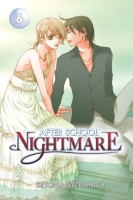
After School Nightmare by Setona Mizushiro is a manga series that I honestly find disconcerting, so much so that even though I also find it compelling, I could never bring myself to read past the first few volumes until recently. The manga is a dark and intense psychological drama dealing with issues of abuse, gender, and personal identity. Despite being a series that is quite obviously fantasy-horror, some of the themes actually hit fairly close to home for me. Mizushiro has skillfully crafted a chilling setting and ominous atmosphere for After School Nightmare in which to explore both nightmares and reality. The ten-volume series was published in English by the now defunct Go! Comi and so is sadly out-of-print, but it seems to still be fairly easy to find. After School Nightmare, Volume 5 was first published in Japan in 2006 while the English translation was released in 2007. The series reaches its halfway point with this volume, but the intensity of the drama and psychological horror shows no sign of letting up anytime soon.

After having let his feelings be pulled one way and then another, Mashiro has made his decision: In order to live as a man he has rejected Sou and his aggressive advances in favor of his girlfriend Kureha. Mashiro tells himself that it’s because Kureha is the one who needs him the most, never considering that Sou might need him, too. Ultimately though, Mashiro’s decision is a selfish one and not nearly as gallant as he would like to believe or portray. Although he has been living as a boy for most of his life, he is still incredibly insecure in his gender identity, mostly due to the fact that his body has both male and female characteristics. By dating Kureha and by becoming her self-proclaimed guardian and protector, Mashiro hopes to unequivocally establish his masculinity for himself and for others, something he doesn’t believe would be possible if he recognized having feelings for another guy. But even though Mashiro has made his decision, he still has lingering doubts.

After School Nightmare, Volume 5, page 52Many of the characters in After School Nightmare are broken, damaged, or incomplete individuals who are attempting to put the pieces of their lives together to form, or reform, some sort of whole. That is part of the purpose of the titular after school nightmare—a special class that, through shared dreams, forces them to confront their greatest fears and in the process reveal them to the other students as they all try to determine who they really are as people. It can actually be quite painful and heart-wrenching to witness the events unfold both within the nightmares and outside of them; truly terrible and horrifying things occur that strongly influence the characters’ physical, mental, and emotional well-being. At this point in the series Mashiro’s personal struggles and torments are the ones about which the most is known, but After School Nightmare, Volume 5 begins to reveal more about Sou’s tragedies which previously had largely only been hinted at.

From the beginning of After School Nightmare, Sou has been shown to be one of the strongest and most assertive characters in the series which is why seeing him in such a vulnerable state in the fifth volume is especially distressing. Sou is an unlikeable person in many ways—among other things showing a shocking lack of respect for Mashiro, the person he supposedly loves—but I can’t help but feel some empathy for him as he is caught up in multiple extremely unhealthy and manipulative relationships. And he’s not always the one doing the manipulating; his relationship with his sister and the control she seem to have over him is particularly troubling. Mashiro’s rejection hits Sou hard, too, certainly much harder than either of them really expected. At first Sou reacts in anger, but ultimately he tries to lives in forced denial of his feelings. Considering how the rest of After School Nightmare has progressed so far, I don’t anticipate that this method of coping will turn out well for any of the people involved.

Filed Under: REVIEWS Tagged With: after school nightmare, Go! Comi, manga, Setona Mizushiro

JoJo’s Bizarre Adventure: Phantom Blood, Vol. 3

August 13, 2015 by Sean Gaffney

By Hirohiko Araki. Released in Japan as “Jojo no Kimyou na Bouken” by Shueisha, serialized in the magazine Weekly Shonen Jump. Released in North America by Viz Media.

It’s striking how much of JoJo’s, particularly this first arc, has been embedded in anime fandom in general. I was unfamiliar with the arc till reading Viz’s version, but when Dio, about 3/4 of the way through this volume, begins screaming “WRRRRYYYYYYY!!!”, I laughed, finally knowing where another meme came from. One of the great joys of reading this series is seeing how easily it can get turned into memes – and that’s not a knock on its quality, it’s a sign that people are able to take the musing, exciting and horrifying that is JJBA and make it their own. Not every series is able to do that.

jjba3

That’s Dio on the cover, but for most of the first half he sits out the battle, content to sit on a throne and do evil things like having a mother beg for her child’s life, then zombifying the mother so she kills the child herself. In Volume 1 a token effort was made to give Dio a reason to be evil, but it was just token – Dio is the villain because he really really loves doing evil things, and adding ‘immortal vampire’ to the list only made it easier for him to be MORE evil. Once Bill Bruford and Tarkus – or however they’re spelled – are taken out, Dio finally manages to fight with JoJo and show off how he really is from the dark side – pure attacks don’t even affect him.

This is the last volume of the first arc, and you can tell by how much the violence steps up. This was already a very violent series – I’d mentioned the debt it owed to Fist of the North Star before – but it really amps it up here, with the aforementioned mother and child, with one of Dire Straits (I love the naming in this series, and it reminds me I miss Bastard!!) getting flash frozen and then shattered, with JoJo’s mentor remembering at a convenient time the prophecy that said he had to die, and finally with the apocalyptic ending where Dio, now just a head, finds a way to kill off Jonathan Joestar once and for all.

The ending shows off how much JoJo’s is also immersed in the tropes of tragedy, though I’d argue it’s not really pure tragedy as JoJo doesn’t have a fatal flaw like Hamlet or Lear. He just can’t escape Dio, not even after he gets to marry Erina and go off on a honeymoon. The last 30-40 pages are awash in corpses, and indeed the story ends with (seemingly) Erina the only one still alive. Somehow, though, I doubt Dio is dead. The author clearly planned to move on right after this – there are no breaks between this arc and the next one in the series, so it’s not like many modern manga where a reboot takes place after a break of several months/years. Instead, it shows off how all of this – the histrionics, the shouting, the battles and the tears – was a prelude, working p to something even bigger.

What will that be? Well, we’ll find out in November. Or now, if you like reading digitally.

Filed Under: REVIEWS

Maid-sama!, Omnibus 1

August 12, 2015 by Ash Brown

Maid-sama!, Omnibus 1Creator: Hiro Fujiwara
U.S. publisher: Viz Media
ISBN: 9781421581309
Released: August 2015
Original release: 2006-2007

Maid-sama! is an eighteen-volume manga series created by Hiro Fujiwara. The series was initially licensed for English translation by Tokyopop, which released the first eight volumes of the manga between 2009 and 2011. More recently, Maid-sama! was rescued by Viz Media. The manga is being released under the Shojo Beat imprint in an omnibus edition, each English-language omnibus collecting two volumes of the series’ original Japanese release. The first Maid-sama! omnibus was published in 2015 and includes the first and second volumes of the manga published in 2006 and 2007 respectively. (The first volume also contains Fujiwara’s earlier short manga “A Transparent World.”) Maid-sama! was Fujiwara’s first major success as a mangaka. However, it wasn’t until Viz’s release of Maid-sama! that the series came to my attention when I noted the enthusiastic response of fans surrounding its return. I was therefore very happy to have the chance to read a review copy of the first omnibus in order to see what the excitement was all about.

Seika High School, previously an all-boys’ school, has only been co-ed for a couple of years. The student population is still largely male—the boys outnumbering the girls four to one—and Seika High still has a bad reputation. And so Misaki Ayuzawa has decided to take things into her own hands, becoming Seika’s first female student council president in order to clean up the school’s act, improve it standing, and create a more welcoming environment for young women. Misaki rules over Seika with an iron fist, though not everyone appreciates her strength and intelligence or the changes she’s making. Because of that, she’s particularly careful to keep the fact that she works part-time at a maid cafe a secret; she doesn’t want to ruin her image or risk losing what little authority she has. But then her classmate Takumi Usui discovers how she’s spending her time after school. Misaki has caught his attention and interest, perhaps even romantically, though understandably she’s not very happy about the awkward turn of events.

Maid-sama!, Omnibus 1, page 34I absolutely adore Misaki. She’s a smart, strong, motivated, hard-working, competent, capable, and highly accomplished individual. She’s not perfect though. Her drive to overachieve and handle everything by herself along with her reluctance to rely on the help of others means that she frequently overextends herself, wearing herself down. Misaki could stand to relax a little, but the believable combination of her strengths and weaknesses make her the most well-developed character in the series. While I love Misaki, I am significantly less enamored with Takumi. Sometimes he can be a great guy, but on occasion he can be an utter creep. His skills and talents match and even surpass those of Misaki, often in superbly ridiculous ways which are admittedly amusing, but he seems to frequently be emphasizing that she’s a girl as if that somehow makes her inferior. I want to see the Takumi who supports Misaki for who she is and who doesn’t feel the need to dominate her. Early on in Maid-sama! it seems this would be a possibility, but the more of the omnibus I read the less likely it appeared that the series would be going in that direction.

Although in part Maid-sama! is a romance, ultimately that particular plot line in the manga is the one that interests me the least. (If I actually liked Takumi more than I currently do, I would probably feel differently.) I enjoy the series most when it focuses on Misaki as she grows as a person. I like seeing her become less of a tyrant as the president as she learns to consider other people and their needs instead of completely overruling them without making an effort to hear their concerns. At first she is disliked by almost all of the students, but as time passes more and more of them, male and female alike, come to admire, trust, and appreciate her and where she is leading Seika High. Although there are certain things about Maid-sama! that bother me—most notably the distinct possibility of Takumi being idealized as a romantic lead—overall I did find the beginning of the series to be entertaining and a lot of fun. And since I do like Misaki so incredibly well, at this point I definitely plan on reading more of Maid-sama!.

Thank you to Viz Media for providing a copy of Maid-sama!, Omnibus 1 for review.

Filed Under: REVIEWS Tagged With: Hiro Fujiwara, maid sama!, manga, shojo beat, viz media

Spell of Desire Vol. 5

August 11, 2015 by Anna N

Spell of Desire Volume 5 by Tomu Ohmi

It is the final volume of Spell of Desire! What’s happening in the conclusion of this paranormal romance series?

Throughout Spell of Desire Kaoruko has been heading towards a confrontation with her mother, the mysterious Witch Queen. She finds out that her mother sealed herself away as part of a spell to balance out the positive and negative energy that was building up in the world. The Witch Queen emerges, and Kaname confesses that he’s no longer able to serve as the Witch Queen’s knight due to his love for Kaoruko. The Witch Queen promptly wins an award for worst mother of the year when she announces that she’s going to curse her daughter’s boyfriend by taking all of his senses away, followed by taking his memories of Kaoruko away too. Kaname is blinded, and he slowly becomes more and more debilitated.

This curse presents quite the conundrum, and Kaoruko is determined to harness her power for once and for all in order to save Kaname. She’s been slowly inching towards claiming her power, so it was great to see her finally take charge and do something. She’s aided by an elderly black witch who shows up and indulges in a great deal of exposition as the volume wraps up.

Overall, I thought the pacing of this series was a bit off. I enjoyed the world building and character introductions in the first couple volumes a great deal, but the rest of the series felt like it was just marking time until the big witch battle happened in the final volume. Kaoruko’s rise to self-assurance and command of her power felt a bit rushed, but I still appreciate that by the end of the series she was making her own decisions and acting heroically in order to create her own happy ending. While Spell of Desire wasn’t the best example of paranormal romance, Ohmi’s clear visual storytelling made it easy to read.

I see that this manga hasn’t sold as well as Ohmi’s other series to be translated into English, Midnight Secretary. This is a bit of a shame, because I was hoping that Viz would bring out her earlier series Kindan no Koi de Ikou, since there is such a dearth of werewolf manga romance being translated into English. We have all the vampires we need, what about some werewolves for a change? I’d still recommend Spell of Desire and Midnight Secretary to romance manga fans, and I hope more of Ohmi’s work gets translated here.

Filed Under: REVIEWS Tagged With: shojo beat, spell of desire, viz media

My Hero Academia, Vol. 1

August 11, 2015 by Sean Gaffney

By Kohei Horikoshi. Released in Japan by Shueisha, serialization ongoing in the magazine Weekly Shonen Jump. Released in North America by Viz.

It has to be said, if you’re looking to succeed in Weekly Shonen Jump, ‘write the same thing as everyone else, only your way’ is a pretty good description of how to go about doing it. And to a degree, that’s what the author does with this new series. Even though the front cover parodies Marvel and DC Comics, and the kids are ‘superheroes’ in a Western sense, this is very much in the classic Jump mold – indeed, some of the amusing yet insane superpowers reminded me of the late lamented Medaka Box. Our hero as well is a sweet kid, the Naruto sort who starts off weak and bullied but will improve by leaps and bounds because he tries hard and refuses to back down when his principles tell him it’s wrong.

academia1

Our hero Izuku (abbreviated to ‘Deku’ for reasons that Viz won’t explain because Jump titles don’t have endnotes) is the small guy on the cover, as you no doubt guessed. The world about 25-30 years ago evolved superpowers in about 80 percent of the population. And Izuku really, really loves superheroes – he’s pretty much an otaku. Sadly, he’s in the 20% that doesn’t have powers. This, naturally, leads to bullying on the part of all his school classmates, particularly Katsugi, who plays the role of the selfish ass quite well in this volume, though I suspect he will gain greater depth as the title goes on, particularly give his childhood past with Izuku.

Luckily, Izuku gets a superpower transferred to him from the other guy on the cover. Even more luckily, the power does not just magically make him a superhero – he has to go through an amusing and heartwarming training montage, complete with the usual ‘drag a refrigerator across the beach’ stuff, till he’s no longer a wimpy kid but rather a wimpy kid with a muscular build. And he doesn’t really get a chance to train with his powers, either – which means he’s in trouble when he applies to Superhero School, where the goal is to be awesome immediately.

Nothing here is really original, but also nothing here is really poorly done, either. The author has learned from Barrage, his previous series. Izuku is a bit of a shy coward without being unlikeable, All Might’s secret allows him to be hilarious as well as inspiring, and his new friend Ochako is cute, and not Shiemi from Blue Exorcist despite all appearances saying she is. The fight scenes look smooth and non-confusing, and there is actual tension as you wonder how this will get resolved – it also allows Izuku to be clever, which is the best way to advance when you also have cool superpowers. Add on a reluctant mentor and some random giant woman fanservice, and you can see exactly why this became a bit hit while Barrage was cancelled after 2 volumes.

If you want something you’ve never seen in Jump before… why do you read Jump, exactly? But if you want something light and fun, with potential for more, My Hero Academia may be right up your alley.

Filed Under: REVIEWS

Maria the Virgin Witch, Vol. 3

August 9, 2015 by Ash Brown

Maria the Virgin Witch, Volume 3Creator: Masayuki Ishikawa
U.S. publisher: Kodansha
ISBN: 9781632360823
Released: June 2015
Original release: 2013

Maria the Virgin Witch is a three-volume manga series (four volumes if counting the sequel Exhibition) created by Masayuki Ishikawa. It was actually because the series was by Ishikawa, who is also the creator of Moyasimon (which I enjoy), that it first came to my attention. The first volume of Maria the Virgin Witch intrigued me, and the second ends with the heroine in a rather dire-looking situation, so I was very curious to see how the story would continue to play out in the third. Happily, Kodansha Comics was kind enough to send a review copy along to me. Maria the Virgin Witch, Volume 3 was originally published in Japan in 2013. Kodansha’s English-language edition of the volume was released in 2015. Despite being a short series, the narrative of Maria the Virgin Witch has the tendency to be a little unfocused, but I still find the manga to be consistently engaging. I especially appreciate the quirkiness of the series in general as well as the quirkiness of its characters specifically.

Maria had been warned by the Archangel Michael: If the young witch continued to interfere with the natural order of the world she would be struck down. However, so devoted to ending the long-lasting war between France and England, Maria continued to flaunt her powers, even while in the presence of Michael’s messenger Ezekiel. Now the time has come for her to face the consequences of her actions. She was, however, somehow able to survive what was intended to be a fatal blow from Michael’s spear. But she’s still vulnerable and must rely on the protection of her two owl familiars and the kindness of her fellow witches who don’t necessarily approve of her efforts to force a peace. Maria was at one point alone in the world—the Heavens, other witches, and even some of the humans she was trying to save all standing against her—but over time her earnestness and innocence has earned her some friends, a few of whom could have at one time been counted among her enemies. But even with their support Maria is beginning to lose her naiveté, realizing that bringing happiness to humanity may be more complicated than she initially considered.

Maria the Virgin Witch, Volume 3, page 154Maria the Virgin Witch has always been a peculiar mix of quirky humor and more serious philosophical and theological reflection. There are a lot of ideas that Ishikawa was able to work into such a short series, although at the same time it’s difficult to thoroughly explore all of them in only three volumes. (It actually makes me wonder if Maria the Virgin Witch was originally intended to be a longer story.) The third volume brings up questions about Maria’s family and backstory without really answering them. Also, apparently many if not all witches are loners, something that wasn’t clearly established until now. Maria’s close friendship with the English witch Viv develops suddenly, and their discussions about the true meaning of happiness and love come across as a little forced. It was as if Ishikawa needed to rush in order to make sure that the heart of the series was addressed and made absolutely clear, paring down the seemingly extraneous elements introduced earlier in the manga.

Although overall the narrative of Maria the Virgin With is somewhat uneven, in the end I did largely enjoy the series and I would like to read Exhibition as well. Since the very beginning of the manga, I’ve been particularly fond of Maria herself. While she and the other witches feel more contemporary in thought and appearance than the rest of the series’ setting, I do appreciated her struggle to come to terms with not only her own position in the world, but also the role of the higher powers of Heaven. It’s a debate that humankind has been wrestling with for ages and is one more link between the manga’s historical backdrop and the present day. Ishikawa explores the answer to this timeless question through Maria’s growth as a character. She begins as a young, determined woman seeking to right the wrongs of the world, becoming wiser and more mature as she is confronted with the often brutal realities of life. But importantly, Maria never loses her ideals or succumbs to despair, which is why so many people come to love her so dearly.

Thank you to Kodansha for providing a copy of Maria the Virgin Witch, Volume 3 for review.

Filed Under: REVIEWS Tagged With: kodansha, Kodansha Comics, manga, Maria the Virgin Witch, Masayuki Ishikawa

One Piece, Vol. 75

August 9, 2015 by Sean Gaffney

By Eiichiro Oda. Released in Japan by Shueisha, serialization ongoing in the magazine Weekly Shonen Jump. Released in North America by Viz.

The Dressrosa arc has gone on for a long time, and it’s got a long, long way to go. This can be a bit exhausting, especially given that this volume takes an already chaotic situation and threatens to turn it into incoherency. Thanks to Usopp, the toys are all turning back into people, and those left behind have regained their memory of them – including Violet and Rebecca. But Doflamingo is not going to let this stop him, as he deploys several body doubles and puts bounties on everyone who has opposed him – including Usopp, who gets the highest bounty of all, possibly the funniest moment in the book. There’s a lot going on, and One Piece is always enjoyable, but I always feel like I should reread the previous few volumes before I start this new one.

op75

At least I’m finally able to talk about some revelations, even though the reappearance of Sabo has been the most obvious plot twist since Sogeking turned out to be Usopp. He and Koala are here representing the Revolutionary Army, who have to stop Doflamingo, but in reality he seems to mostly be here to help Luffy. This now means we have every major force on the island – pirates, marines, revolutionaries, actual residents, Tontattas… and it makes for a giant melee, as there’s just no way Dressrosa can contain this. At least Robin’s not a toy anymore. Oh yes, adn the tournament is over, as the Flame-Flame fruit is claimed by the victor. Somehow I don’t think Luffy will object too much.

Speaking of Luffy, he and Law make for an amusing comedy team throughout. Law is still cuffed with seastone, so literally all he can do is lay there and whine, and boy howdy does he. It’s always wonderful in One Piece to see the incredibly cool characters show off how nobody is ever that cool all the time, and Law’s frustration with Luffy’s ‘whatever, just go with it’ attitude is simply always funny. That said, I do hope he gets unlocked soon, as I’m fairly certain Doflamingo is not going to be as easy to defeat as Caesar Clown.

I’d say there are a few weaknesses. Rebecca continues to not be as strong a character as I’d expected, though to be fair to her she’s really going through a bunch of traumas that would make anyone break down. The huge cast and need to switch to a different part of the city every 2-3 pages does not make for easy reading, and I also miss Sanji, Nami, and other major Straw Hats, who have been shuffled off the page till this is all over. And I will admit, I thought everyone making fun of Pica’s voice was a bit mean. That said, it’s One Piece. If you read it, you’ll love it. If you don’t, you aren’t going to pick up Vol. 75.

Also, Sabo and Koala are totally Luffy and Nami, right? She even carries his hat!

Filed Under: REVIEWS

The Manga Revue: Back to School Special

August 7, 2015 by Katherine Dacey

My inbox is overflowing with emails touting back-to-school deals on everything from sneakers to school supplies–a sure sign that the fall semester is right around the corner, and a nice reminder that Seven Seas, VIZ, and Vertical all have new (well, new-ish) school-themed comedies arriving in stores this month. Today, I take a look at Haven’t You Heard? I’m Sakamoto, a comedy about the World’s Most Fascinating High School Student; My Hero Academia, a shonen adventure about a teen who’s studying to become a superhero; and My Neighbor Seki, a gag series about a slacker who elevates procrastination to an art form.

sakamotoHaven’t You Heard? I’m Sakamoto, Vol. 1
By Miki Sano
Rated Teen
Seven Seas, $12.99

Haven’t You Heard? I’m Sakamoto is “The Aristocrats” of manga, a basic joke that yields endless variations, each more baroque than the last. The premise is simple: transfer student Sakamoto is handsome, brilliant, and athletic, making him a natural target for bullies and lovelorn girls. Any time a challenging situation arises–a bee in a classroom, a classmate injured by a softball–Sakamoto effortlessly meets that challenge, in the process revealing a previously undisclosed talent.

In the hands of a less imaginative storyteller, Sakamoto might be a wish-fulfillment character for every teenager who’s ever been tongue-tied or harassed by other students. Nami Sano puts a distinct spin on the material, however, portraying Sakamoto as so calculating and unflappable that he’s genuinely creepy; Sakamoto never smiles, laughs, or shows any discernible human emotion, even when confronted with other people’s tears or anger. (The real joke seems to be that everyone admires Sakamoto anyway.) I’m not sure that I LMAO, but Sakamoto’s odd persona and equally odd talents are a welcome rebuke to the school council presidents and earnest strivers who populate most teen-oriented manga; I’d much rather spend time with him than a standard-issue shonen prince.

The verdict: You’ll either find Sakamoto’s antics inspired or too weird to be amusing.

academiaMy Hero Academia, Vol. 1
By Kohei Horikoshi
Rated T, for teens
VIZ Media, $9.99

Meet Izuku Midoriya: he’s an ordinary teen living in a world where 80% of humanity possesses a super power. That doesn’t stop Izuku from aspiring to become a professional hero, however; since childhood, he’s dreamed about the day he might gain admission to prestigious U.A. High School, a training ground for future crime-fighters. A chance encounter with All Might, a celebrity superhero, gives Izuku a chance to prove his mettle and get the coaching he needs to pass the U.A. entrance exam.

Though the plot twists are unsurprising, and Izuku’s classmates familiar types (e.g. the Bully, the Spazzy Enthusiast), the breezy script propels My Hero Academia past its most hackneyed moments. The clean linework, playful superhero costumes, and artfully staged combat further enhance the series’ appeal; Kohei Horikoshi could give a master class on the reaction shot, especially when a supervillain is wrecking havoc on a downtown skyline. Most importantly, Horikoshi respects the sincerity of Izuku’s ambitions without letting the character’s earnest intensity cast a pall over the fun–in essence, it’s a Silver Age comic in modern shonen drag, with all the corny humor and fist-pumping action of Stan Lee and Steve Ditko’s best work on Spider-Man.

The verdict: My Hero Academia is as predictable as death and taxes, but a smart script and crisp artwork help distinguish it from other titles in the Shonen Jump catalog.

sekiMy Neighbor Seki, Vols. 1-3
By Takuma Morishige
Unrated
Vertical Comics, $10.95

Like Haven’t You Heard? I’m Sakamoto, My Neighbor Seki is a one-joke series: middle-school student Seki goofs off during class, much to the consternation of his seat mate Rumi. Seki isn’t just doodling in his notepad, however. He pets kittens, builds elaborate sculptures from shoji pieces, runs an intraschool mail service, and hosts a tea ceremony. To vary the rhythm of the joke-telling, artist Takuma Morishige occasionally transplants the action from the schoolroom to the playground, though the set-up remains the same; Seki does something outrageous and Rumi reacts, prompting the teacher to scold Rumi for not paying attention.

Given Seki‘s slender premise, it’s not surprising that each volume is a hit-and-miss affair. In volume one, for example, Seki knits a cactus plushie using a double-ended afghan hook. Rumi initially scoffs at his choice of tool; as she observes, “The hallmark of afghan knitting is its unique thickness and softness. It’s a texture best utilized when making sweaters,” not stuffed animals. When she sees the final results, however, she concedes that Seki has chosen the perfect technique and materials for his cactus, sending her into a rapturously funny meditation on yarn. Not all the gags are as successful: Seki’s penchant for staging elaborate scenes with action figures is moderately amusing at first, but grows more tiresome with each new and less imaginative iteration. Still, it’s impossible to deny the energy, creativity, and specificity with which Morishige brings Seki’s exploits to life, making this series more “win” than “fail.”

The verdict: My Neighbor Seki is best enjoyed in one or two chapter installments; when read in large bursts, some scenarios read like 4-koma strips stretched to epic and unfunny proportions.

Reviews: Over at Manga Connection, manjiorin reviews the first four volumes of Princess Jellyfish, which are currently available on Crunchyroll. TCJ columnist Joe McCulloch jumps in the WABAC machine for a nostalgic look at Even a Monkey Can Draw Manga. In honor of 801 Day, Megan R. reviews a title from the Tokyopop/BLU Manga catalog, Shout Out Loud.

Matthew Alexander on vol. 1 of Aoi House (The Fandom Post)
Michael Burns on vol. 5 of Assassination Classroom (AniTAY)
Nick Creamer on vol. 4 of A Bride’s Story (Anime News Network)
Rebecca Silverman on vol. 1 of First Love Monster (Anime News Network)
Michael Burns on vol. 7 of Food Wars! Shokugeki no Soma (AniTAY)
SKJAM! on Fragments of Horror (SKJAM! Reviews)
Connie on vol. 1 of Junjo Romantica (Slightly Biased Manga)
Sean Gaffney on vols. 1-2 of Maid-Sama! (A Case Suitable for Treatment)
Wolfen Moondaughter on vols. 1-2 of Maid-Sama! (Sequential Tart)
Lesley Aeschliman on vol. 1 of My Hero Academia (WatchPlayRead)
Adam Capps on vol. 3 of My Neighbor Seki (Bento Byte)
Connie on No Touching At All (Slightly Biased Manga)
Adam Capps on vol. 75 of One Piece (Bento Byte)
Ken H. on vols. 9-11 of Sankarea: Undying Love (Sequential Ink)
Matthew Warner on vol. 7 of Say I Love You (The Fandom Post)
ebooks girl on vol. 1 of Shiba Inuko-san (Geek Lit Etc.)
confusedmuse and Helen on Shugo Chara (Organization Anti-Social Geniuses)
Marissa Lieberman on vol. 1 of Spell of Desire (No Flying No Tights)
manjiorin on vol. 1 of Tokyo Ghoul (Manga Connection)
Ian Wolf on vol. 1 of Twin Star Exorcists (Anime UK News)
Connie on vol. 1 of Twittering Birds Never Fly (Slightly Biased Manga)
Connie on vol. 2 of Twittering Birds Never Fly (Slightly Biased Manga)
Lori Henderson on vols. 3-4 of Until Death Do Us Part (Manga Xanadu)
Sarah on vol. 9 of What Did You Eat Yesterday? (Anime UK News)
Connie on vol. 1 of World’s Greatest First Love (Slightly Biased Manga)
Alice Vernon on xxxHolic (Girls Like Comics)
SKJAM! on vol. 1 of Yamada-Kun and the Seven Witches (SKJAM! Reviews)
Ash Brown on vol. 2 of Your Lie in April (Experiments in Manga)

Filed Under: MANGABLOG, REVIEWS Tagged With: I'm Sakamoto, Manga Review, My Hero Academia, My Neighbor Seki, Seven Seas, Shonen Jump, Vertical Comics, viz media

Your Lie in April, Vol. 2

August 7, 2015 by Ash Brown

Your Lie in April, Volume 2Creator: Naoshi Arakawa
U.S. publisher: Kodansha
ISBN: 9781632361721
Released: June 2015
Original release: 2012
Awards: Kodansha Manga Award

Your Lie in April is an eleven-volume manga series created by Naoshi Arakawa that began serialization in Japan in 2011. The manga is one of Arakawa’s earliest professional works. Even so, Your Lie in April would go on to win a Kodansha Manga Award in 2013 and in 2014 the series’ anime adaptation debuted. Although I haven’t actually seen it yet, it was the anime that first brought Your Lie in April to my attention. As a lover of both manga and music (in addition to being a musician myself), the basic premise of Your Lie in April appealed to me a great deal. I was glad that Kodansha Comics licensed the series since I’m always excited to see more music manga released in English. I largely enjoyed the first volume of Your Lie in April and so was happy to receive a review copy of the second as well. Your Lie in April, Volume 2 was originally published in Japan in 2012 while the English translation was released in 2015.

Kosei hasn’t played the piano publicly for years, having tried to give it up after the death of his mother and a disastrous performance in competition. He has become so psychologically distraught that he literally can no longer his own music; the sound seems to disappear when he begins to seriously play. Very few people actually know why Kosei no longer performs or competes, and his closest friends continue to encourage him to play despite his reluctance. Somehow Kaori manages to bully him into serving as her accompanist in the second round of her violin competition at the last minute. She’s a passionate and headstrong musician who other pianists find difficult work with, sometimes even refusing to accompany her. But Kaori wants to be remembered by her audiences and she is convinced that Kosei, who was once well-known as a child prodigy, can help her do that. Except that he’s never been an accompanist before, they’ve never practiced together, and he hasn’t even had the change to study the score.

YourLieApril2-68Though Your Lie in April can be somewhat melodramatic at times, I appreciate that Arakawa is leveraging the psychological states of the series’ characters in order to further the story. Kosei being thrust into the spotlight and once again experiencing the thrill of performance doesn’t simply make everything all right or solve his problems. If anything, it actually makes matters more complicated. He continues to be torn between wanting to play and never wanting to touch the piano again. Hovering over Kosei is the shadow of his dead mother, an abusive woman who demanded perfection from him and his playing. But she was also the person who first taught him to love music. By the end of her life she had become cruel, but Your Lie in April, Volume 2 reveals that before she became ill she was much kinder and gentler person. It doesn’t excuse how she eventually treated her son, though it does help to explain in part why Kosei remained and continues to be devoted to her throughout the pain and suffering that was inflicted upon him.

What little is known about Kosei’s mother so far in Your Lie in April provides an interesting counterpoint to what little is known about Kaori. They are both musicians, they both are partly responsible for drawing Kosei into the world of music and, as the second volume of the series shows, they both struggle with physical illness. However, whereas Kosei’s mother became cruel, Kaori’s illness has caused her to devote herself to her music, striving to leave a lasting impression on those around her. No matter what happens in the future, Kosei’s relationship with Kaori, like the one with his mother, will be a formative one. He, at least, will never be able to forget her. She is an inspiration dragging him out of his personal darkness. This is something that is visually reinforced in the manga as well. Kaori is almost always shown in the light, sometimes she even seems to be the source of light, while Kosei is frequently seen in shadow, especially when he is playing. But Kaori is challenging and changing him. The time may come when Kosei will be able to freely stand in the light, too.

Thank you to Kodansha for providing a copy of Your Lie in April, Volume 2 for review.

Filed Under: REVIEWS Tagged With: kodansha, Kodansha Comics, Kodansha Manga Award, manga, Naoshi Arakawa, Your Lie in April

  • « Go to Previous Page
  • Page 1
  • Interim pages omitted …
  • Page 228
  • Page 229
  • Page 230
  • Page 231
  • Page 232
  • Interim pages omitted …
  • Page 342
  • Go to Next Page »
 | Log in
Copyright © 2010 Manga Bookshelf | Powered by WordPress & the Genesis Framework