• Skip to primary navigation
  • Skip to main content
  • Skip to primary sidebar
  • Home
  • About Us
    • Privacy Policy
    • Comment Policy
    • Disclosures & Disclaimers
  • Resources
    • Links, Essays & Articles
    • Fandomology!
    • CLAMP Directory
    • BlogRoll
  • Features & Columns
    • 3 Things Thursday
    • Adventures in the Key of Shoujo
    • Bit & Blips (game reviews)
    • BL BOOKRACK
    • Bookshelf Briefs
    • Bringing the Drama
    • Comic Conversion
    • Fanservice Friday
    • Going Digital
    • It Came From the Sinosphere
    • License This!
    • Magazine no Mori
    • My Week in Manga
    • OFF THE SHELF
    • Not By Manga Alone
    • PICK OF THE WEEK
    • Subtitles & Sensibility
    • Weekly Shonen Jump Recaps
  • Manga Moveable Feast
    • MMF Full Archive
    • Yun Kouga
    • CLAMP
    • Shojo Beat
    • Osamu Tezuka
    • Sailor Moon
    • Fruits Basket
    • Takehiko Inoue
    • Wild Adapter
    • One Piece
    • After School Nightmare
    • Karakuri Odette
    • Paradise Kiss
    • The Color Trilogy
    • To Terra…
    • Sexy Voice & Robo
  • Browse by Author
    • Sean Gaffney
    • Anna Neatrour
    • Michelle Smith
    • Katherine Dacey
    • MJ
    • Brigid Alverson
    • Travis Anderson
    • Phillip Anthony
    • Derek Bown
    • Jaci Dahlvang
    • Angela Eastman
    • Erica Friedman
    • Sara K.
    • Megan Purdy
    • Emily Snodgrass
    • Nancy Thistlethwaite
    • Eva Volin
    • David Welsh
  • MB Blogs
    • A Case Suitable For Treatment
    • Experiments in Manga
    • MangaBlog
    • The Manga Critic
    • Manga Report
    • Soliloquy in Blue
    • Manga Curmudgeon (archive)

Manga Bookshelf

Discussion, Resources, Roundtables, & Reviews

Reviews

orange: The Complete Collection, Vol. 1

January 31, 2016 by Sean Gaffney

By Ichigo Takano. Released in Japan by Shueisha and then Futabasha, serialized in the magazines Bessatsu Margaret and Manga Action. Released in North America by Seven Seas.

I always feel a certain need to geek out when reviewing titles like these, such as explaining that it’s not a typo in the header, orange really is meant to be spelled with a small O. Or talking about the odd move from a shoujo magazine (Betsuma) to a seinen one (Manga Action) when the author switched publishers. Or that the complete series is out digitally via Crunchyroll (though I haven’t spoiled myself). But honestly, there’s enough to talk about in this title so that I don’t need to go into that at all. (cough) This is three volumes in one, and tells us the bittersweet story of a group of friends, struck by a tragedy from their youth, who unite in order to stop it happening. It’s a chunky book, but is absolutely worth the time.

orange

orange, for the most part, reads like a shoujo romance, as you’d expect for a series begin in Betsuma. Naho, our heroine is cute but shy, and Kakeru is cute but troubled, in the best manga tradition. There’s a guy with an obvious crush who suppresses it in order to support his crush’s true love, and those two girls who exist to contrast with the heroine; one spunky, one grumpy. It honestly reads a lot like Kimi ni Todoke in many ways, but there’s a twist: Naho has a letter from herself ten years in the future, telling her she has to prevent a tragedy; the fact that Kakeru killed himself when he was just seventeen. It’s the science-fiction premise that’s what really drives this book.

The doubts and self-awareness that comes from teenage love meshes well with the doubts and self-awareness that comes from changing the timeline. It’s all the more poignant when we see flashes forward to the future, the one without Kakeru, and see that Naho and Suwa are married with a child. It weighs so heavily on the two of them that they’re willing to sacrifice everything in order to save their friend. Of course, it’s not all angsty drama, there’s a lot of fluffy humor and fun here. Everyone’s basically a good kid. The issue is Kakeru has a huge amount of stress in his life – he’s moved from the city, his mother just killed herself and he takes the blame for it, and of course he’s also falling for Naho, even as he tries dating someone else.

We get the first three volumes here, and by the end you realize that Naho is not the only one who got a letter from her future self. This of course makes you want to go back and reread what you’d just seen, to see if it’s now more obvious that everyone was acting based off of future knowledge. And there still remain the question of whether or not they’ll succeed – these sorts of series can also be tragic, and it would not surprise me if things ended with Kakeru dying in any case. I certainly hope not, though, as I want to see everyone here happy. In the meantime, fans of shoujo should absolutely make orange a must buy.

Filed Under: REVIEWS

Die Wergelder, Omnibus 1

January 29, 2016 by Ash Brown

Die Wergelder, Omnibus 1Creator: Hiroaki Samura
U.S. publisher: Kodansha
ISBN: 9781632361950
Released: December 2015
Original release: 2013-2015

I was very excited when Kodansha Comics announced that it would be releasing Die Wergelder in English. At the time, I actually didn’t know much about the manga series beyond the fact that it was created by Hiroaki Samura, but that was more than enough to capture my attention—Samura’s long-running, award-winning series Blade of the Immortal was one of the first manga that I ever read and it remains a personal favorite. I’ve also throughly enjoyed Samura’s two short manga collections that have been translated, Ohikkoshi and Emerald and Other Stories. As Blade of the Immortal was drawing to a close in Japan, Die Wergelder was just beginning, the first volume being published in 2013. The second volume was released two years later in Japan in 2015. The first installment of Kodansha’s English-language edition of Die Wergelder, also published in 2015, collects both of those volumes.

Shinobu has made a mistake that may very well cost her life. After attempting to run way with a low-ranking yakuza member, along with a rather large sum of his syndicate’s money, the two of them are caught and Ro’s boss isn’t particularly happy with them. Normally Shinbou would likely have been killed without a second thought, but her background happens to make her uniquely qualified for a job that Ro’s boss needs done. She’s more or less forced into accepting and so suddenly finds herself embroiled in the schemes and rivalries of multiple groups. The world of organized crime is fraught with danger and made even more so with the appearance of Träne, an assassin hellbent on revenge against those who have done her tremendous wrong. And then there’s Jie Mao, an opposing bodyguard whose deadly combat skills make her a formidable foe. Shinobu does have the guts and brash attituded needed to survive, but that’s also a large part of why she’s in such trouble to being with.

Die Wergelder, Omnibus 1, page 64Die Wergelder is heavily inspired by or at least influenced by 1970s Japanese pink films—theatrical releases steeped with eroticism, nudity, and sex. More specifically, Samura is taking cues from Toei’s Pinky Violence series of films. (Träne’s dark long coat, wide-brimmed hat, and tale of vengeance would appear to be a direct reference to the Female Convict Scorpion films in particular.) Likewise, Die Wergelder contains fairly extreme content, including gratuitous sex and explicit violence. Women and men, although to a somewhat lesser extent, are brutalized and degraded both sexually and physically throughout the story. Die Wergleder is true to its lurid and exploitative roots and the series seems to be self-aware of that. With an additional heavy dose of sadism, it’s certainly not a manga to be lightly recommended to just anyone, though what it does it does well.

By far the most interesting and compelling characters in Die Wergelder are the women. They are easily the most sexualized and objectified as well, but they’re also powerful and terrifying forces to be reckoned with. In comparison, the men of Die Wergelder aren’t particularly memorable, even when they are impressively powerful their own right. Träne and Jie Mao are stunning to watch as they fight. As I’ve come to expect, Samura’s action sequences are dramatic and dynamic. The martial skills shown may frequently be unbelievable, but they are devastatingly effective. With all its brutality and torture, Die Wergelder can be exceptionally violent and gruesome even while being beautifully drawn. It’s a deliberately uncomfortable series, Samura pushing the boundaries of acceptability. Rape, murder, abuse, and unethical medical experimentation are all regular occurrences, and that’s just scraping the surface of the despicable, thrilling, disturbing, titillating, and vicious world that Samura explores in Die Wergelder.

Filed Under: REVIEWS Tagged With: Die Wergelder, Hiroaki Samura, kodansha, Kodansha Comics, manga

The Manga Revue: Giganto Maxia

January 29, 2016 by Katherine Dacey

Kentaro Miura’s Berserk is a rite of passage for manga readers: you may not have soldiered past the second volume, but you tried because a Real Manga Fan told you that it was The Most Amazing Manga Ever. I freely admit that I didn’t finish Berserk–too violent for me, I’m afraid–but I marveled at its intricate plotting, feverish pace, and deadly seriousness. (Also: Miura’s penchant for awful names.) When Dark Horse announced that it had acquired Giganto Maxia, I decided to treat this new series as a second “date” with Miura–a chance to decide if I’d judged his work unfairly the first time around. Here’s how that date went.

giganto_maxiaGiganto Maxia
By Kentaro Miura
Rated 16+, for older teens
Dark Horse, $13.99

Let’s start with the good: Giganto Maxia is a visual feast that’s every bit as imaginative as Hayao Mizayaki’s Nausicaa of the Valley of the Wind. Kentaro Miura’s pages abound in war-ravaged landscapes, fantastic fighting machines, and bizarre creatures that straddle the fence between human and animal. The specificity of his vision, and the care with which he stages battle scenes, obviates the need for dialogue; we can almost hear and feel what the characters are experiencing on every page.

Miura’s script, however, is as tin-eared and self-serious as a high school literary rag. The two leads–Prome, a pale mystic who looks like a young girl, and Delos, a warrior slave–spend an inordinate amount of time describing what’s happening around them, even when the pictures make it abundantly clear. Yet for all their chatter, neither character provides much useful information about the post-apocalyptic world in which Giganto Maxia takes place: who are the Olympians? Why are they so intent on annihilating other tribes? And what, exactly, are the Giganto? The absence of these details leaves a big hole in the story: the characters’ motivation for fighting the Giganto. At the end of the volume, we’re not really sure what Prome and Delos stand for, or what’s at stake if they fail–two fatal flaws in a series that desperately wants the reader to get swept up in their quest.

The bottom line: A talky script and barely-there characters sink this smart-looking fantasy series.

The publisher provided a review copy.

Reviews: Sean Gaffney and Michelle Smith round up the latest volumes of Arpeggio of Blue Steel, Kimi ni Todoke, and Non Non Biyori at Manga Bookshelf; Sean also reads The Testament of New Sister Devil so that you don’t have to. Over at Women Write About Comics, Amanda Vail and Paige Sammartino offer “short & sweet” reviews of Barakamon, Are You Alice?, and My Hero Academia.

Nick Creamer on vol. 3 of The Ancient Magus’ Bride (Anime News Network)
Gary Thompson on vol. 10 of Black Jack (The Fandom Post)
Demelza on Fairy Tail (Anime UK News)
Megan R. on Gate 7 (The Manga Test Drive)
Nick Creamer on vol. 7 of Genshiken: Second Season (Anime News Network)
Sean Rogers on A Girl on the Shore (The Globe and Mail)
Sheena McNeil on vol. 1 of Honey So Sweet (Sequential Tart)
Rebecca Silverman on vol. 1 of Honey So Sweet (Anime News Network)
Matt on vol. 2 of Inuyashiki (AniTAY)
Sean Gaffney on Kagerou Daze III: The Children Reason (A Case Suitable for Treatment)
Claire Napier on Memoirs of Amorous Gentlemen (Comics Alliance)
Michael Burns on vol. 13 of Nisekoi (AniTAY)
Matthew Warner on vol. 76 of One Piece (The Fandom Post)
Matthew Warner on vol. 3 of One-Punch Man (The Fandom Post)
Rebecca Silverman on vol. 4 of One-Punch Man (Anime News Network)
Matthew Warner on vol. 3 of Peepo Choo (The Fandom Post)
Sheena McNeil on vol. 5 of Pokemon X.Y. (Sequential Tart)
Helen on vol. 1 of ReLife (The OASG)
Matt on vol. 4 of A Silent Voice (AniTAY)
Saeyong Kim on vol. 3 of Thermae Romae (No Flying No Tights)
Sarah on Tsubasa WoRLD CHRoNiCLE: Niraikani (Anime UK News)
Charlotte Finn on Wandering Son (Comics Alliance)


Filed Under: MANGABLOG, REVIEWS Tagged With: Dark Horse, Kentaro Miura, Manga Review

Kagerou Daze III: The Children Reason

January 28, 2016 by Sean Gaffney

By Jin (Shinzen no Teki-P) and Sidu. Released in Japan by Enterbrain. Released in North America by Yen On.

After two volumes of being very confused, I think I am finally starting to get a handle on Kagerou Daze, and elements of the plot are now coming together in ways they hadn’t before. As with the second volume, this book is divided into two parts, which interlock in alternating chapters. One details the struggle of a young boy in the city and his hopeless crush on a girl his age who seems to be using him as a baggage holder. The other continues to show us Shintaro and Momo getting involved with the Mekakushi-Dan, and dealing with the eye powers – which now have one more member, as the boy from the first story shows up with red eyes and a desperate need to save the girl he loves.

kagerou3

I’ll be honest, I found the Shintaro plot a lot more interesting – almost the reverse of the second book, where it was Takane who held my attention. Part of the problem is that Hibiya and Hiyori are both not very likeable kids – Hiyori deliberately, as she’s written as very much a stereotypical arrogant rich girl (complete with a “Mean Girls” sort of accent, with lots of ‘likes’ interspersed), but I suspect we’re meant to sympathize with Hibiya’s somewhat stalker-ish obsession with her more than we do, and the doll he creates that can speak n her voice is just icing on the cake of creepy. That said, he fares much better in the second story, where he’s allowed to be what he actually is away from his crush, a confused and emotional young kid.

Shintaro and Momo also grow over the course of this volume, although I have a sneaking suspicion that Shintaro may regress soon. The scene between him and Kano is the most powerful in the book, both to show the pain and despair that Ayano’s death sent Shintaro spiraling into, and also to show the reader that Ayano is somehow connected with this group as well, and not just Shintaro’s dead friend. It also shows us a cruel and vicious side to Kano, which I had suspected was there but hadn’t seen till now. As for Momo, she and Hibiya get off on the wrong foot (he calls her “Gran”, which I suspect is Oba-san in the original, and she understandably freaks given she’s still in high school), but quickly develop a sibling-like relationship. He seems to have seen her teacher before, too…

The writing here is quite interesting. It’s rare to see a Japanese book with English wordplay – the title of the book, The Children Reason, and one story within, The Children Record, could have multiple meanings, and the original Japanese used the English words. (The author does need to get better at remembering how he’s numbering, though – going from 01 to 02 to 03 to IV was jarring, and that was also in the original Japanese.) There’s also some subtle callbacks, such as Ene having a complete freakout when she sees Konoha, which sounds so much like her old self that Shintaro almost figures it out before she distracts him. Overall, I remain interested, despite a majority of the characters having serious character flaws, and will definitely pick up the next volume.

Filed Under: REVIEWS

The Testament of New Sister Devil, Vol. 1

January 26, 2016 by Sean Gaffney

By Tetsuo Uesu and Miyakokasiwa. Released in Japan as “Shinmai Maou no Keiyakusha” by Kadokawa Shoten Shoten, serialization ongoing in the magazine Shonen Ace. Released in North America by Seven Seas.

First of all, that is one awkward title. I’ve accidentally written it sa “New Sister Devil” at least twice, and it is very much in the genre of ‘random words strung together’ that we’ve seen so often these days. Looking at the title, you’d immediately guess it was based on a light novels, and you’d be correct. As for the manga itself, it shares similarities with a few other titles released over here lately. The premise could be vaguely interesting, some of the characters are promising, and there’s a whole lot of non-consensual sexual assault as fanservice that makes me ultimately rejecting recommending it to others.

newdevil1

As I said, I did enjoy the basic premise and backstory. Each of the main characters is introduced as a normal person to whom wacky plot points keep happening, only it turns out that they’re actually far from normal and have been hiding secrets of their own. Basara is actually from a village of heroes who are there to fight demons – a fight that he’s run away from after his powers got out of control as a child. His father, who appears to be the one complete dupe in the series, turns out to have also known all along. the one innocent in this, ironically, is Mio, who is the daughter of a demon – a fact she was totally unaware of until her entire family was slaughtered one day. Each of them has a very good reason for wanting nothing whatsoever to do with the war to see who gets to rule Hell, and yet they’re drawn into it anyway, because they’re fundamentally decent people. This is a good premise.

Sadly, we also get fanservice, to the point of near explicitness here, mostly due to Mio’s attendant Maria, who is a succubus, and who uses her powers “accidentally” to bind Mio as Bassara’s underling. This means she has to obey his orders, and if she doesn’t, her body gets more and more aroused. The only way out of this is, of course, to grope and otherwise assault her till she climaxes. Add to this and we have the usual ‘waking up with my fake sister lying on top of me’, ‘bath scene with lots of jiggling and bouncing’, and ‘let’s lick the arm in suck a way that it resembles giving head’. Honestly, half the time I’m amazed this isn’t in Young Ace instead of Shonen Ace. But to be fair, this is exactly the sort of thing that would interest teenage boys.

So if you can put up with the humiliation of the female lead (Maria seems to have no shame, so no worries there) and enjoy fantasy along the lines of Devils and Realist and some of the other ‘war in hell’ titles we’ve seen, this may be for you. As for me, I feel I can resist the call.

Filed Under: REVIEWS

Mahou Josei Chimaka

January 22, 2016 by Ash Brown

Mahou Josei ChimakaCreator: KaiJu
Publisher: Chromatic Press
ISBN: 9781987988017
Released: December 2015
Original run: 2014-2015

Mahou Josei Chimaka, or Magical Woman Chimaka, is the second long-form comic by KaiJu, a creative team made up of Kate Rhodes and Jennifer Xu, that I’ve had the opportunity to read. The three-chapter comic was originally serialized online in Sparkler Monthly between 2014 and 2015 before being collected and released in both digital and print book editions by Chromatic Press later in 2015. I love everything that Chromatic Press is involved with, but I was especially looking forward to Mahou Josei Chimaka for a number of reasons. Most notably, I was greatly impressed by KaiJu’s previous comic The Ring of Saturn (which also released by Chromatic Press) and have been closely following the team’s work ever since. It also didn’t hurt that in large part Mahou Josei Chimaka is a loving homage to and parody of the magical girl genre. That and it also it ends up being a sweet romance between two women.

Fifteen years ago Shimmer Shimmer Skypatcher Chimaka faced her greatest nemesis and lost, failing to protect her city. While Chimaka was able to temporarily repel the threat, a large portion of the city was laid to waste and left a giant, lifeless crater. Now her enemy has returned, intending to finish the job, only Chimaka isn’t a magical girl anymore. Her life fell apart after that fateful, disastrous encounter and, although she’s back on her feet again, the magic is gone. Chimaka now spends her days working as a scientist at Squid Petroleum and nights drinking with her colleague Pippa with whom she has become very close. But with the return of her old enemy, along with the persistence of a certain government agency which uncovered her past, Chimaka needs to find a way to regain her powers. The ever cheerful Pippa is determined to do all that she can to help Chimaka, but the task that the two of them face is a difficult and daunting one—Chimaka must once more become Shimmer Shimmer Skypatcher if she wants to save the world.

Mahou Josei Chimaka, page 94Mahou Josei Chimaka is crafted to especially appeal to readers who are fans of the magical girl genre (or, in this particular case, the magical woman genre) and who are interested in a slightly different approach than is often seen. While it’s not absolutely necessary to be familiar with the common tropes and themes of the genre—Mahou Josei Chimaka is completely enjoyable as a story in its own right—readers who are will be in a better position to truly appreciate the entirety of the comic and its satire. The elements one would expect to see in a magical girl story are all present in Mahou Josei Chimaka, including but certainly not limited to animal companions, transformation sequences, dazzling accessories, and an emphasis on the power of love. But these have all been slightly skewed through the lens of Chimaka’s growth into cynical adulthood. And yet, while KaiJu’s interpretation of the magical girl genre is honest and mature, it doesn’t become dark and depressing.

Mahou Josei Chimaka is a delightfully funny and charming comic. Much of this comes from the contrasting but complimentary personalities of the comics’ two leading women and the sweetness of their blossoming relationship, but as a whole Mahou Josei Chimaka is very playful. KaiJu has a great sense of humor which comes through not only in the story and characters, but in the artwork as well. The artists alternate between using more realistic illustrations and those that are exaggerated for great comedic effect. The final chapter does perhaps rush the story’s climax a bit as the creators pull out all the stops for the epic final battle, but it’s a sort of intentional ridiculousness that’s highly entertaining. Although preventing the end of the world is serious business, Mahou Josei Chimaka mixes in silliness in the best sort of way. I enjoyed the comic on my first read but I find that I like it even more after reading it again; Mahou Josei Chimaka is a great deal of fun.

Filed Under: REVIEWS Tagged With: Chromatic Press, comics, kaiju

Strike the Blood, Vol. 2

January 22, 2016 by Sean Gaffney

By Gakuto Mikumo and Manyako. Released in Japan by ASCII Mediaworks. Released in North America by Yen Press.

I’d mentioned in my review of the first volume that Strike the Blood reads like a series that was written in anticipation of being made into an anime. Having now completed the second volume, I’ll go a little further – it reads almost like a novelization, as if the anime had come first. This is actually good in many respects – the fight scenes are excellent and highly easy to visualize, and the normal pauses you see in these sorts of series where the plot is slowly explained are kept to a minimum. It does mean that I have the same issues I had with the first volume, though – the character types are all too predictable, as are the plot twists.

stb2

As a case in point, we have Sayaka, Yukina’s former roommate and friend and the orphanage devoted to taking girls and making them into magical superstars. She has a giant hate-on for Kojou, of the sort that we know will turn to love by the end of the book, because of course he’s not like those *other* evil vampires. She also has a pseudo-lesbian obsession with Yukina, which I expect will be promptly dropped now that it’s fulfilled its function as minor yuri bait. It’s disappointing, because while Yukina and Asagi also have elements of cliche written into their characters (elements which are exaggerated a bit more in this second volume), they both manage to feel like read young teenage girls, while Sayaka reads like a caricature.

The worldbuilding here fares better, as we once again see a series that knows it won’t be cancelled for a few volumes, so is content to spin out a few interesting subplots and not actually do anything with them. Koujo’s younger sister is clearly possessed by something, but we never quite find out what. Likewise, Asagi’s hacking abilities are starting to go beyond ‘teen genius’ and into legendary abilities. We meet another powerful vampire here, Vatler, and while he also has his share of cliched behavior, his smug “I did it for the lulz” attitude is more tolerable than Sayaka’s angry not-lesbian.

I will likely be reading more of this, despite my grumping. The prose is some of the smoothest we’ve seen in a Yen On release, with very little of the awkward narrative stuttering you see with a lot of first-person light novel narratives. And as I said earlier, the action scenes are genuinely exciting and not confusing, which is impressive given how much destruction is racked up here. The villain is a terrorist, and you get the sense that the author had seen Die Hard before writing him, as he’s very much in the Alan Rickman vein of “polite yet murderous”. There’s also a character from the first volume who returns – that did surprise me, though sadly it also involved maid fetishism. So it’s a good series, but I do wish that I wasn’t able to see the blueprint it works off of so easily.

Filed Under: REVIEWS

The Fall of Language in the Age of English

January 20, 2016 by Ash Brown

The Fall of Language in the Age of EnglishAuthor: Minae Mizumura
Translator: Mari Yoshihara and Juliet Winters Carpenter
U.S. publisher: Columbia University Press
ISBN: 9780231163026
Released: January 2015
Original release: 2008
Awards: Kobayashi Hideo Award

Currently, only two major works by Minae Mizumura have been translated into English. The first, and one of the best works of literature that I’ve read in recent years, was A True Novel. More recently, the English-language edition of Mizumura’s first nonfiction work, The Fall of Language in the Age of English, was released, published in 2015 by Columbia University Press with a translation by Juliet Winters Carpenter (who was also the translator for A True Novel) and Mari Yoshihara. The Fall of Language in the Age of English is actually a revision of its Japanese counterpart, Mizumura rewriting portions of the book, most notably the final chapter, to better suit a non-Japanese audience. The Fall of Language in the Age of English caused something of a stir when it was originally published in Japan in 2008—the work won a Kobayashi Hideo Award, became a commercial success, and even sparked some amount of controversy.

Mizumura opens The Fall of Language in the Age of English with a personal account of her participation in the University of Iowa’s International Writing Program in 2003. Afterwards, Mizumura, who studied French and French literature at Yale, proceeds to outline the rise and fall of French as one of the world’s universal languages. She then discusses the concept and role of universal languages, the development of local languages into national languages, and the relationships among the three in general before specifically turning to the emergence of Japanese as a national language. From there Mizumura describes what she calls the miracle of modern Japanese literature, shedding further light upon its peculiar evolution and how it came to be considered a major world literature. Mizumura then addresses the current prevalence of English and its spread before closing with what she sees as the possible futures in store for non-English languages in the digital age.

The Fall of Langauge in the Age of English is an immensely readable and engaging work examining the place of literature, national languages, and translation in a world in which English increasingly dominates. In addition to the main text, The Fall of Language in the Age of English also includes a newly-written preface by Mizumura specifically for the English-language edition of the work, an introduction by the translators, notes, a selected bibliography, and an index. The volume is written in a very approachable manner and is intended for a general audience, Mizumura presenting ideas and concepts clearly and eloquently. I happen to already have a particular interest in the subject matter of language (I even once seriously considered pursing a career in translation or linguistics), but no specialist knowledge is needed to read, understand, or enjoy The Fall of Language in the Age of English.

I found The Fall of Language in the Age of English to be utterly fascinating. The work deftly combines many differing elements together into a single, coherent whole—autobiography, history, linguistics, literary criticism, and so on. Mizumura begins by examining language and writing from a very personal perspective before placing her experiences within a greater context. She shows how geopolitical circumstances allowed Japanese language and literature to initially develop and flourish and how those circumstances now place them in danger of becoming obsolete in the worldwide arena. Language, culture, and power are all inherently and inextricably intertwined. Though The Fall of Language in the Age of English warns of what could be lost if national languages and literatures are allowed to decline unabated, Mizumura doesn’t come across to me as fatalistic or alarmist, believing there is still time to establish efforts to nourish and ensure the preservation and importance of non-English languages, cultures, and literatures.

Filed Under: REVIEWS Tagged With: Minae Mizumura, Nonfiction

My Monster Secret, Vol. 1

January 19, 2016 by Sean Gaffney

By Eiji Masuba. Released in Japan as “Jitsu Wa Watashi Wa” by Akita Shoten, serialization ongoing in the magazine Weekly Shonen Champion. Released in North America by Seven Seas.

I’ve been a little wary of the recent influx in “monster girl” manga, even though I do enjoy several of the titles. It can be a fun genre, but its nature lends itself to a sort of fanservice that I’ve grown out of over the years, and so I always approach new titles wondering how many of them are all large-breasted succubi and accidentally spilling milk all over someone’s face. Thankfully, there are also exceptions, and to its credit Seven Seas has not really leaned one way or the other in licensing the monster girl genre, but simply spread its net wide to gather up everything. And this means that we have titles like My Monster Secret, which has the subtitle “Actually, I Am…”, a literal translation of its original title. Which is just a fun silly comedy with no fanservice in sight.

secret1

The literal title is presumably meant to be followed by a fill-in-the-blank, with the first girl on the cover conveying “Actually, I Am… a Vampire.” She’s Shiragami, who is supposed to be cool and aloof, and who our hero has totally fallen for. In reality, she’s mostly cool so that people don’t see her fangs, and the aloof becomes goofy fairly quickly, though at times you can see the author struggling to see how “ditzy” he should make her. Acting as her foil is Asahi, a boy whose poker face is entirely absent, to the point where he’s actually shunned a bit by the class for his total inability to keep anything a secret. The trouble is that Shiragami’s secret isn’t just a love letter, she’s in big trouble if it’s found out. What’s a boy who can’t lie to do?

The plot and characters spin out as you’d expect. There’s the teenage newshound girl we’ve seen in many an anime, only this time she’s portrayed as straight up evil, which is refreshing. We also see another supposed stoic cool girl, only this one turns out to be an alien – something that should have been more obvious from the giant screw on the back of her head, which opens up to reveal her much tinier self. If you think all of this leads to over the top reactions and lots of falling over, you’re absolutely right. The goal here is comedy, with I expect some heartwarming interspersed as the series goes on.

The main reason I really enjoyed the first volume of the series is the art style, which is appealing yet odd. It’s somewhat reminiscent of Lucifer and the Biscuit Hammer, with very wide mouths and expressive screams. No one’s really attractive here, which is not what I was expecting – I’d thought the vampire and alien would be standard “beautiful”, but even they’re drawn to look strange more than anything else. Basically, the art helps the comedy. If you’re looking for a “monster girl” title just to say that you’ve read one… well, wait a month and get Franken Fran. But if you want two, this is a good choice. It’s relatively clean, especially for a Champion series, and genuinely amusing.

Filed Under: REVIEWS

Requiem of the Rose King, Vol 3

January 18, 2016 by Anna N

Requiem of the Rose King Volume 3 by Aya Kanno

This manga just keeps getting better and better as Kanno adds even more royal intrigue to her unique story of Richard III and the Wars of the Roses.

The second volume closed with Richard embodying a demonic spirit of vengeance when he discovered that his father was killed. The third volume opens with Richard’s older brother Edward, the new king, making questionable decisions about women. Edward is utterly captivated by the widow Elizabeth Woodville, who secretly detests the House of York. She maintains Edward’s interest by continually refusing him until he is desperate enough to make her his queen, going against the other alliances his court is arranging for him. Richard proves to be an unenthusiastic ally in Edward’s courtship, going along with his brother on hunting trips to provide cover for Edward’s visits to Elizabeth. When Edward is staying in a hunting cabin, he again meets the wayward Lancaster King Henry. Richard and Henry are drawn to each other, without fully knowing who each other are.

Henry’s dreamy outlook on life has made him one of the few people who relates to Richard as just Richard, without the “demon child” legend that has poisoned everyone against him. But Henry’s distance from his own family ensures that when his son Edward discovers the men together, his jealousy over his father’s relationship with Richard looks like it is going to have horrible consequences.

Kanno’s art continues to be both dark and lavish, fitting the settings and themes of this tragic story excellently. I’m always in awe of her facility with facial expressions and how it contributes so well to character development. Just a couple panels of Elizabeth Woodville’s gleefully staring eyes as she contemplates her plans for Edward establish that she’s up to no good. Henry’s abstracted expression show him to not fully live in the world, while Richard’s sensitivity and hesitancy in trusting Henry is clearly portrayed. This continues to be such a standout title in Viz’s current publishing lineup.

rerok3

Filed Under: REVIEWS Tagged With: requiem of the rose king, VIZ, viz media

Ranma 1/2, Vols. 23-24

January 17, 2016 by Sean Gaffney

By Rumiko Takahashi. Released in Japan by Shogakukan, serialized in the magazine Shonen Sunday. Released in North America by Viz.

Ranma fandom these days is a different beast from where it was in the halcyon days of 1996-1997. Then it was striding the anime world like a colossus, at least in North America, and not even Sailor Moon seemed to have quite as many people discussing or writing fanfics about it. Nowadays it’s a small fish in a big pond, somewhat forgotten but retaining a nostalgic glow. This has, however, allowed some newer aspects of fandom to infiltrate, notably the BL fandom. Back in the day there was BL, but it seemed to get drowned out by all the male fans arguing about which girl Ranma should end up with. The idea that the best man for Ranma might be Ryouga is something that is dealt with in this volume, albeit not in a serious way.

ranma23-24

Ryouga comes across yet another magical item that will help him to win Akane, this time a fishing rod whose mark on a body leaves it with ever-increasing feelings of love. To be fair to Ryouga, he does seem to have moral qualms about using such a device to win Akane over. To be unfair to Ryouga, he tries it regardless. And when it hits Ranma, Ranma starts feeling very friendly indeed towards Ryouga. It starts off as washing his clothes and cooking for him, But as the mark expands, things get more serious, to the point where Takahashi feels obliges to urn Ranma female for the rest of the story. Akane, of course, becomes convinced that Ryouga is using the rod on Ranma because he can’t confess to him. Not exactly progressive, but honestly, this is exactly the sort of plot hook that many a BL story could work with. It’s also the best story of the first half of the book, which otherwise deals with annoyances such as Pantyhose Taro’s return (boring), Akane’s cooking (very boring), and Gosunkugi winning an enchanted suit of armor (really super boring and bad).

Luckily, the second half of the volume, is fantastic, and consists of one long story – indeed, there’s a cliffhanger, so it will carry over to the next volume. Herb is a villain who gives Ranma a challenge that he hasn’t really had to face in a long time, and his goofy yet deadly sidekicks Lime and Mint are just as dangerous – Ryouga is even brought to the point of death, though thankfully is able to triumph due to his super-depression. It allows Ranma to be clever and analytic again, one of my favorite sides of him, as he’s unable to see how Herb’s martial arts works – and how it’s actually LESS powerful than expected – without knowing the secret – like Ranma, Herb changes to female in cold water. This is the first time we’ve seen someone with the same exact curse as Ranma, and it helps to showcase their different styles – Herb has modesty, for one, something Ranma does not care about a bit. We also briefly see Ryouga and Mousse work together with Ranma, even if they have murderous motivation at the start. They make a good team.

Ranma sometimes seems a bit hoary and sexist (and homophobic as well) compared to some of the more popular works today, but Takahashi’s creativity usually shines through, and fans of the series will find most of this omnibus highly rewarding.

Filed Under: REVIEWS

Mushishi, Vol. 7

January 15, 2016 by Ash Brown

Mushishi, Volume 7Creator: Yuki Urushibara
U.S. publisher: Del Rey
ISBN: 9780345505590
Released: May 2009
Original release: 2006
Awards: Japan Media Arts Award, Kodansha Manga Award

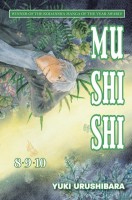
Mushishi, Volume 7 by Yuki Urushibara was originally published in Japan in 2006. It was the first volume of the award-winning manga series to be released after the first of several anime adaptations began airing. 2006 was also the year that Mushishi earned Urushibara a Kodansha Manga Award, having previously won a Japan Media Arts Award in 2003. In English, the seventh volume of Mushishi was initially published in print in 2009 by Del Rey Manga and then was later re-released in a digital edition by Kodansha Comics in 2014 along with the rest of the series. Mushishi is one of my favorite manga and one of the first series that I made a point to follow and collect as it was being released in translation. I love the manga’s atmosphere, subtle horror, and the obvious influence that traditional Japanese folklore and legends have had on Urushibara’s storytelling in the series.

The seventh volume of Mushishi collects four stories. Interestingly, the mushi in these particular chapters tend to be somewhat tangential to the real issues that the characters are struggling with. While the mushi have an impact on the way events unfold and develop, it is the interaction between people that forms the core of the individual stories. “Lost in the Blossoms” is about several generations in a family of skilled landscapers who obsessively care for the embodiment of a peculiarly beautiful and ancient cherry tree. In “The Mirror in the Muck,” a young woman falls ill after the man she loves leaves her behind, her love sickness putting her life in real danger. A young boy has become a host to a mushi that attracts lightning in “At the Foot of Lightning,” but the even greater problem is the nearly nonexistent relationship between him and his mother. The volume concludes with the series’ first multi-part story, “The Ragged Road,” about the head of the Minai, a clan of mushishi responsible for investigating forbidden mushi no matter what the personal cost.

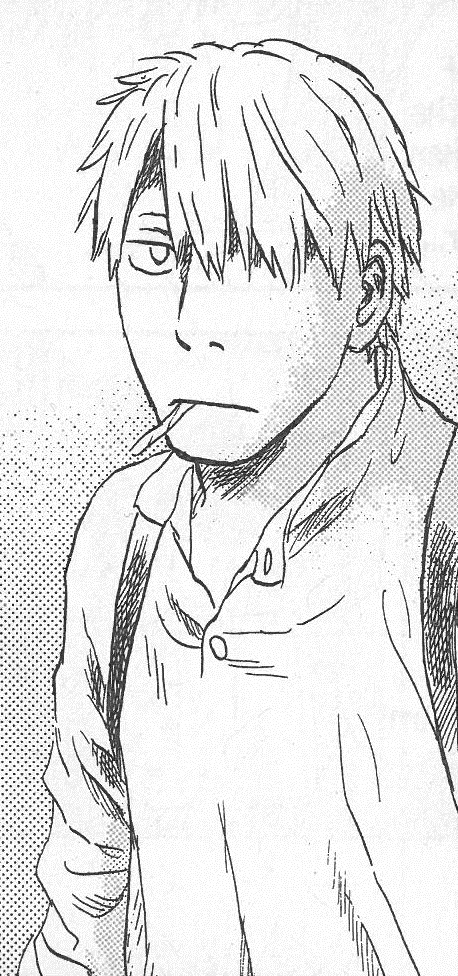
Mushishi, Volume 7, page 3While Mushishi generally tends to be episodic, “The Ragged Road” directly ties in with an early story, “The Sea of Brushstrokes,” collected in Mushishi, Volume 2. The Minai family serves under the Karibusa family which is responsible for recording and protecting information about mushi; the fate of both families is intertwined with that of the forbidden mushi. I especially like “The Ragged Road” because it further develops the world of Mushishi. The other three stories in Mushishi, Volume 7 technically do as well, but because they’re only loosely connected to previous chapters their contributions to the series’ lore generally add more breadth rather than depth. Still, bits of the characterization of Ginko, the manga’s protagonist, continue to be revealed with the telling of each story, showing just how much of an outsider he is even within the community of mushishi.

Although the plots of the individual stories collected in Mushishi, Volume 7 aren’t directly connect to one another, they do all share some similar themes. In some ways, the manga feels more horror-like than some of the previous installments of the series. Mushi in the case of this volume are creatures that can steal away a person’s senses, identity, life, or even soul. But as terrifying as that can be, the most chilling thing that Ginko encounters aren’t mushi but failed human relationships. I find these four stories to be some of the most heartbreaking in the series for that reason. Ginko is faced with situations where, while he can deal with the mushi, he is powerless to completely ease the distress of the people involved and their troubled families. However, as sad and tragic as some of the stories in Mushishi can be, there’s still an underlying sense of hope that in time people will be able to heal and move forward through their pain.

Filed Under: REVIEWS Tagged With: del rey, Japan Media Arts Award, Kodansha Manga Award, manga, mushishi, Yuki Urushibara

The Manga Revue: Idol Dreams and Monthly Girls’ Nozaki-Kun

January 15, 2016 by Katherine Dacey

Happy New Year! (Is it too late to extend that greeting to readers?) For my first column of 2016, I dove into my pile of unread books and chose two that I’d meant to review last year. The first is Arina Tanemura’s Idol Dreams, a body-swap comedy about a thirty-something office lady; the second is Izumi Tsubaki’s Monthly Girls’ Nozaki-Kun, a 4-koma series about a hunky high school manga artist who just happens to be the author of a popular girls’ comic.

idol-dreams-vol-1Idol Dreams, Vol. 1
By Arina Tanemura
Rated T, for readers 13 and up
VIZ Media, $9.99

Chikage Deguchi is at a crossroads: once a pretty, popular high school student, she’s become a sexless, thirty-something office drone who’s mocked by her co-workers. After making a fool of herself at a high school reunion, Chikage’s childhood friend Tokita stages a unique intervention, offering Chikage a drug that transforms her into a 15-year-old girl for a few hours a day. Chikage then does what any self-respecting 31-year-old would do: she pursues a (part-time) career as a teen idol.

Setting aside the question of whether anyone would voluntarily relive their teenage years, Idol Dreams has a bigger problem: tone. Arina Tanemura can’t decide if her story will revel in its absurdity or play things straight, and veers wildly between wacky show-biz hijinks and clumsy office scenes that are meant to establish just how awful Chikage’s adult life is. In the afterword to the story, Tanemura cheerfully vents her frustrations at being asked to do “a magical girl series for adults” without recourse to “too much screentone,” “gags and comedic touches,” or “super-stylish atmosphere.” Oddly enough, I don’t think these restrictions are the true source of the problem; if anything, Tanemura’s artwork is more polished and appealing in Idol Dreams than in Phantom Thief Jeanne or I.O.N. The real issue is the lead character: Tanemura never really explains why temporarily impersonating a 15-year-old would solve any of Chikage’s issues, especially since Chikage’s teenage alter ego is a wet noodle, too. The underlying message seems to be that recapturing youthful beauty is a pathway to empowerment–not a particularly novel or uplifting idea, given the developed world’s obsession with Botox, face lifts, wrinkle cream, and 17-year-old models.

The bottom line: I never thought I’d say this, but Idol Dreams is the rare Tanemura manga that would benefit from more zaniness and sparkly backgrounds.


monthly_girlsMonthly Girls’ Nozaki-Kun
, Vol. 1
By Izumi Tsubaki
Rated T, for teen readers
Yen Press, $13.00

Monthly Girls’ Nozaki-Kun is a textbook example of what happens when a great idea bumps up against the limitations of a restrictive format. The set-up is comedy gold: tenth-grader Chiyo Sakura confesses her romantic feelings to hunky classmate Umetarou Nozaki, only to have him casually respond, “Do you want to come to my place right now?” Flustered, Chiyo agrees but is surprised when Nozaki doesn’t put the moves on her; instead, he puts her to work on a chapter of his hit shojo manga Let’s Fall. Chiyo’s attempts to extricate herself from Nozaki’s employ or clarify her feelings for him only make things worse, as Nozaki is both romantically inexperienced and genuinely obtuse.

So far, so good: the concept provides plenty of fodder for jokes and pratfalls. The four-panel format, however, locks each character into a holding pattern in which he or she is doomed to repeat the same behavior over and over again. The supporting cast is big enough to prevent Monthly Girls from reading like a month’s worth of Cathy or Garfield strips, but the rhythm of every gag is virtually the same, whether author Izumi Tsubaki is introducing a new character, poking fun at shojo manga cliches, or demonstrating just how socially inept Nozaki really is; long stretches of Monthly Girls read like a Henny Youngman set, albeit with stranger–and funnier–material. Take my manga… please!

The bottom line: Some of the jokes are genuinely funny, but the series already feels like it’s chasing its tail by the end of chapter three.

Odds and Ends: Organization Anti-Social Geniuses has a new look, a new name, and a new URL. You’ll now find Justin Stroman and the gang at http://www.theoasg.com/. Manga vlogger Pluto Burns took a break from reviewing books and conducted a great interview with Carolina Manga Library founder Laura Mehaffey. If you’re not familiar with the good work that Mehaffey and her staff are doing, click here to learn more about this traveling book collection.

Reviews: Sean Gaffney, Anna N. and Michelle Smith post their first Bookshelf Briefs column of 2016. On the agenda: D-Frag!, My Love Story!!, Pandora Hearts, and Saki. Elsewhere on the web, Rebecca Silverman and Kory Cerjak review the first volume of Yowamushi Pedal, my pick for Best New Manga of 2015.

Chris Kirby on vol. 1 of 7 Billion Needles (The Fandom Post)
Karen Maeda on vol. 7 of Assassination Classroom (Sequential Tart)
Matthew Warner on Ayako (The Fandom Post)
Sheena McNeil on vol. 1 of Bloody Mary (Sequential Tart)
Megan R. on CLAMP School Detectives (The Manga Test Drive)
Justin on Confession (The OASG)
Kate O’Neil on vol. 5 of Demon from Afar (The Fandom Post)
Sean Gaffney on vol. 3 of Emma (A Case Suitable for Treatment)
Sean Gaffney on vol. 1 of Honey So Sweet (A Case Suitable for Treatment)
Ash Brown on vol. 3 of JoJo’s Bizarre Adventure, Part 1: Phantom Blood (Experiments in Manga)
Sheena McNeil on vol. 19 of Kamisama Kiss (Sequential Tart)
Ken H on vol. 1 of LD♥K (Sequential Ink)
Rebecca Silverman on vol. 1 of Livingstone (Anime News Network)
Lori Henderson on vol. 1 of Monthly Girls’ Nozaki-Kun (Manga Xanadu)
Dustin Cabeal on vol. 2 of My Hero Academia (Comic Bastards)
Sean Gaffney on vol. 1 of Of the Red, the Light, and the Ayakashi (A Case Suitable for Treatment)
Kane Bugeja on vol. 3 of One-Punch Man (Snap 30)
David Brooke on vol. 4 of One-Punch Man (AiPT!)
Dustin Cabeal on vol. 4 of One-Punch Man (Comic Bastards)
SKJAM! on vol. 18 of Rin-ne (SKJAM! Reviews)
Ken H. on vol. 9 of Say I Love You (Sequential Ink)
Helen on vol. 1 of Student Council’s Discretion (The OASG)
Patrick Moore on vol. 8 of Tiger & Bunny (Bento Byte)
Che Gilson on Tokyo Ghoul (Otaku USA)
Marion Olea on vol. 2 of Tokyo Ghoul (No Flying No Tights)
Frank Inglese on vols. 8-9 of Vagabond: VIZBIG Edition (Snap 30)
Ash Brown on vol. 7 of Vinland Saga (Experiments in Manga)
SKJAM! on vol. 7 of Vinland Saga (SKJAM! Reviews)
Megan Rupe on vols. 1-2 of Yo-Kai Watch (No Flying No Tights)


Filed Under: MANGABLOG, REVIEWS Tagged With: 4-koma, Arina Tanemura, Manga Review, shojo, viz media, yen press

Honey So Sweet, Vol. 1

January 15, 2016 by Sean Gaffney

By Amu Meguro. Released in Japan as “Honey” by Shueisha, serialized in the magazine Bessatsu Margaret. Released in North America by Viz.

In general I try to avoid reading back cover copy when I get a book, as it frequently tends to spoil the entire volume, particularly with manga titles. That said, I wouldn’t have to worry about that with Honey So Sweet, which wastes absolutely no time telling us what our premise is. Bad boy delinquent is secretly a big sweetie pie. We’ve seen this before, and not just in shoujo, and if that’s all there was to this title I’d likely be saving it fro a Brief review and moving on. But it also has the heroine, Nao, who is shy in all the worst ways – life has left her with an intense desire to avoid conflict, and so when Taiga confesses to her the initial reaction is “if I say no, he’ll kill me’.

sweet1

I’ve talked before about how difficult it can be to keep readers from abandoning a series when you write someone with major character flaws. To be fair, it is easier to do so when your heroine is of the wallflower variety than if she’s a selfish ball of temper. But Nao is the early parts of this volume is someone that is seemingly making all the wrong choices in an effort to just slide by in life – and she knows it, as she keeps repeating it to herself. Her parents have passed away at an early age, and much of her narrative monologue is done as communication with their souls in heaven. Her She’s living with her mother’s younger sister, who she has a massive complex for since he took her in and has sacrificed quite a bit for her. And she (not surprisingly) always seems depressed.

So it’s great seeing Taiga slowly manage to get Nao to have fun, and show actual effort, and elicit feelings from her that aren’t “go along with him because SCARED!”. We learn less about him in this volume, except that he tries a bit too hard to help out everyone, particularly Nao, but that’s the point – he’s the nice guy at heart, and you have to look past his face. By the end of the volume, Nao’s uncle is remarking on the fact that she’s smiling a lot more these days, and it’s a great thing to see, as now we can see her moving forward in life and doing things she’s good at.

In many ways this is very typical shoujo romance – we’ve seen Taiga’s sort in hundreds of other titles. We have two others who form a core group with our hero and heroine, and one is the tsundere hothead guy who speaks before he thinks, which again we’ve seen before. The other is Kayo, who’s grumpy, stoic, and seemingly written as a gift to me – I really want to see more from her in future volumes. Together they don’t make this title unmissable, but they make it enjoyable, and by the end Nao has developed enough so that you’re rooting for her as well.

Filed Under: REVIEWS

Vinland Saga, Omnibus 7

January 13, 2016 by Ash Brown

Vinland Saga, Omnibus 7Creator: Makoto Yukimura
U.S. publisher: Kodansha
ISBN: 9781612628035
Released: September 2015
Original release: 2013-2014
Awards: Japan Media Arts Award, Kodansha Manga Award

I honestly believe Makoto Yukimura’s Vinland Saga to be one of the best manga series currently being released in English. An epic tale of revenge, idealism, and the tremendous cost of violence, Vinland Saga is an incredibly engaging work with impressively compelling characters. In addition to being a personal favorite of mine, over the course of its publication the series has also won a Japan Media Arts Award and a Kodansha Manga Award among other honors. Kodansha Comics has been releasing Vinland Saga in English as a series of hardcover omnibuses. The seventh omnibus, released in late 2015, collects the thirteenth and fourteenth volumes of the manga originally published in Japan in 2013 and 2014 respectively. The seventh omnibus of Vinland Saga also includes two exclusives: the continuation of “Ask Yukimura,” where Yukimura responds to questions about the series, and a four-panel tribute comic by Faith Erin Hicks, another creator whose work I greatly admire.

After years of hard labor, Thorfinn’s freedom was near at hand until he and his fellow slave Einar became involved in an escape attempt. They helped Arnheid, Ketil’s favorite slave and mistress, aid her enslaved husband as he tried to run away from another farm. The attempt failed, resulting in multiple deaths. Now the three of them—Thorfinn, Einar, and Arnheid—must face the terrible consequences of their actions. Meanwhile, Ketil and his sons are returning from Jelling with King Canute and his finest warriors following close behind. In addition to dealing with his slaves, Ketil must also prepare for Canute’s inevitable attack before the farm falls into chaos. Canute plans on taking Ketil’s farm and wealth for his own in order to expand his kingdom, determined to create a paradise on earth for all who suffer from war and violence. Although he would prefer a peaceful resolution, Canute is more than prepared to stake his claim through questionable political maneuvering and force.

Vinland Saga, Omnibus 7, page 92Like so many of the other omnibuses of Vinland Saga, the seventh is brutal and at times even gruesome. The artistic detail and research that Yukimura has applied to the portrayal of the day-to-day lives of eleventh-century nobility, warriors, merchants, and slaves has also been applied to the battles and wars they wage. Men and women are beaten to the brink or point of death; limbs are severed; skulls are crushed; eyes are gouged out—Vinland Saga is an intense and violent series. But that violence isn’t idealized or glorified by Yukimura. Even while an individual’s martial skill and battle prowess are respected and admired, violence is shown to be the truly terrible and destructive force that it is, not just physically, but mentally and emotionally as well. Some of the most important themes in Vinland Saga revolve around violence, how it impacts people and society, and whether it can be avoided or whether humanity is trapped in a never-ending cycle of bloodshed.

In addition to the plot of Vinland Saga as a whole, violence and its effects are also crucial to the development of the individual characters. Many of them are trying to break free from the violence that pervades their lives, facing moral quandaries over how to enact their ideals. The characters of Vinland Saga aren’t safely philosophizing over what is ethical, they are literally risking their lives for what they believe in. But even when their ultimate goals are the same, they approach them differently. Canute is now in a position of power as king and will use any method necessary to ultimately achieve his earthly paradise. Thorfinn, on the other hand, is reluctant to use violent force in order to gain peace. And there are plenty of other characters in the series who fall somewhere between these two perspectives. Seeing the realistic interplay among all of these different worldviews in the series has been immensely engrossing. Vinland Saga is well-worth reading even in part, but I sincerely hope to see the rest of the series translated as well.

Filed Under: REVIEWS Tagged With: Japan Media Arts Award, kodansha, Kodansha Comics, Kodansha Manga Award, Makoto Yukimura, manga, Vinland Saga

  • « Go to Previous Page
  • Page 1
  • Interim pages omitted …
  • Page 220
  • Page 221
  • Page 222
  • Page 223
  • Page 224
  • Interim pages omitted …
  • Page 342
  • Go to Next Page »
 | Log in
Copyright © 2010 Manga Bookshelf | Powered by WordPress & the Genesis Framework