• Skip to primary navigation
  • Skip to main content
  • Skip to primary sidebar
  • Home
  • About Us
    • Privacy Policy
    • Comment Policy
    • Disclosures & Disclaimers
  • Resources
    • Links, Essays & Articles
    • Fandomology!
    • CLAMP Directory
    • BlogRoll
  • Features & Columns
    • 3 Things Thursday
    • Adventures in the Key of Shoujo
    • Bit & Blips (game reviews)
    • BL BOOKRACK
    • Bookshelf Briefs
    • Bringing the Drama
    • Comic Conversion
    • Fanservice Friday
    • Going Digital
    • It Came From the Sinosphere
    • License This!
    • Magazine no Mori
    • My Week in Manga
    • OFF THE SHELF
    • Not By Manga Alone
    • PICK OF THE WEEK
    • Subtitles & Sensibility
    • Weekly Shonen Jump Recaps
  • Manga Moveable Feast
    • MMF Full Archive
    • Yun Kouga
    • CLAMP
    • Shojo Beat
    • Osamu Tezuka
    • Sailor Moon
    • Fruits Basket
    • Takehiko Inoue
    • Wild Adapter
    • One Piece
    • After School Nightmare
    • Karakuri Odette
    • Paradise Kiss
    • The Color Trilogy
    • To Terra…
    • Sexy Voice & Robo
  • Browse by Author
    • Sean Gaffney
    • Anna Neatrour
    • Michelle Smith
    • Katherine Dacey
    • MJ
    • Brigid Alverson
    • Travis Anderson
    • Phillip Anthony
    • Derek Bown
    • Jaci Dahlvang
    • Angela Eastman
    • Erica Friedman
    • Sara K.
    • Megan Purdy
    • Emily Snodgrass
    • Nancy Thistlethwaite
    • Eva Volin
    • David Welsh
  • MB Blogs
    • A Case Suitable For Treatment
    • Experiments in Manga
    • MangaBlog
    • The Manga Critic
    • Manga Report
    • Soliloquy in Blue
    • Manga Curmudgeon (archive)

Manga Bookshelf

Discussion, Resources, Roundtables, & Reviews

Features & Reviews

Ran and the Gray World, Vol. 1

December 9, 2018 by Anna N

Ran and the Gray World Volume 1 by Aki Irie

Ran and the Gray World blends slice of live pacing with beautiful illustrations in this story about a girl with magical tennis shoes that transform her into a grown-up. Ran is being forced to do her chores in her cluttered home, and her older brother Rin strategically hides her shoes in a light fixture in order to get her to clean up. Ran’s homelife is just as haphazard as her room, since her mother is a powerful sorceress who has to live away from her family to deal with magical business.

Shizuka appears accompanied by a flock of birds and a profusion of flower petals, conjuring up sweets that threaten to engulf the whole neighborhood. Irie’s illustrations are wonderful at showing how things get off-kilter and out of control with such a powerful sorceress paying a visit, as Shizuka and her daughter lean up against a giant strawberry while eggs hatch into giant chickens and doughnuts threaten the roofing of the family’s near neighbors. Shizuka seems utterly unaware of the effect of her sudden appearance and disappearance on her family, and doesn’t seem to care that she’s annoying her son as she dazzles her daughter with magic.

Ran and the Gray World

Ran continues to throw on her tennis shoes and run away, with her most extended adventure involving dropping out of the sky onto the penthouse garden of playboy, who is intrigued by Ran. They remodel her guest room and have an additional random encounter at a local festival.

One aspect of the book that made me uneasy was seeing how Ran was getting placed in situations with adult men who are reacting to her as a young woman. While nothing much happens due to her magical powers, naiveté, and the vigilant actions of her older brother Jin, this is certainly something that I’d like to see minimized in further volumes. The first volume did such a great job setting up a unique magical world, though, I’m hoping that the series doesn’t turn into another Bunny Drop. Uneasiness aside, Ran and the Gray World seems like a must for low key fantasy fans. The magical world Irie creates with her illustrations is lovely, and it is shown off well by the larger volume size and deluxe treatment of the Viz Signature Edition.

Filed Under: Manga Reviews, REVIEWS

ECHO

December 9, 2018 by Sean Gaffney

By Akira and Oguchi, based on the Vocaloid song by Crusher-P. Released in Japan by PHP Institute. Released in North America by J-Novel Club. Translated by Kevin Chen.

There is a certain subgenre of novels that are based on Vocaloid songs. We’ve seen a few of them over here, Kagerou Daze being the most obvious. But Kagerou Daze has sort of morphed into a franchise of which the original songs are but a part. ECHO, on the other hand, is a stand-alone novel based on the video of the same name, and after reading it it really doesn’t feel like you can separate the two works. In fact, I’d recommend tracking down the video on Youtube and watching it before reading this book – it doesn’t really spoil much beyond the girl who’s already on the cover, and it helps to make sense of some of the surreal events happening in the middle and end of the book, which quote most of the song outright. As for the book itself, in addition to fans of the original work, I’d recommend it to fans of dark horror with a mystery tinge. As for me, it was well-written, but it didn’t grab me as much as I’d have liked.

Our heroine, much as she spends much of the book denying it, is Hitomi, a teenage girl who helps her family run an electronics store. (Her last name is an aggravation to her but also a character point, so I’ll avoid it for now.) While watching the store one afternoon, she suddenly finds herself flipping through various places as if she were a TV program, finally ending up falling from quite a height into a bizarre amusement park. Fortunately, she doesn’t go splat, and runs into a few other people in the park – her childhood friend, who she’s somewhat estranged from now; the daughter of the richest family in their (very rural) town; a tall introverted girl who seems to be connected to the rich girl in some way; and an adult actor who says he was just passing through town and somehow wound up here, and seems suspicious right from the get-go. Where are they? Why can’t they remember how they got there? And what’s with the girl with six arms and a TV for a head?

The novel is written by a seasoned pro at the genre, and it shows, there’s no awkward “webnovel” prose that you’d see in some works these days. There is some striking imagery, starting with the prologue, which features a horrific sight sure to get rid of any readers who don’t like horror at all. That said, I wish I’d had more time to get to know the characters before events caught up with them. There’s also the presence of Hitomi, which doesn’t really match any of the others, and whose explanation is far from satisfying – clearly she was there because the narrator needed to be an “everygirl” and audience surrogate. She insists she’s not the sort of person to be a protagonist, which may be true of shoujo manga, but if you turn towards Japanese novels for young adults, she absolutely is. The most interesting part of the book to me was probably the real world perspective of the mother of one of the characters, who ends up being tied into the plot far more than expected.

In the end, this is a good book that does what it set out to do – craft a novel around a piece of music. Fans of the song will enjoy it. (Also, wow, what a depressing “this is what happens after you die” this novel has. Pass on that.)

Filed Under: ECHO, REVIEWS

We Never Learn, Vol. 1

December 8, 2018 by Sean Gaffney

By Taishi Tsutsui. Released in Japan as “Bokutachi wa Benkyou ga Dekinai” by Shueisha, serialization ongoing in the magazine Weekly Shonen Jump. Released in North America by Viz Media. Translated by Camellia Nieh.

It always feels reassuring to have a romantic comedy coming out in Shonen Jump in amongst all the friendship, training and victory. Especially coming out in North America, where Jump romantic comedies have not always had the best track record. Nisekoi was a recent hit, but it’s an outlier – To-Love-Ru and its sequel were farmed out to a different company, and does anyone remember Strawberry 100%? That said, like Nisekoi, We Never Learn seems to be falling more on the side of “romantic comedy with strong character development” rather than “romantic comedy with lots of panty shots and sexual suggestiveness”. Like, well, those other two series. As a result, it’s far more my type of series. The main characters are all types, but they’re enjoyably written and aren’t aggravating. Nisekoi fans may find Fumino a bit familiar to Onodera, but that’s no surprise, given the author wrote Nisekoi’s magical girl spinoff.

Nariyuki is a serious young man from a poor family who needs a recommendation to get into a good school. He’s an excellent student, not through innate ability but hard study. He is, sadly, not the best in his class in science and literature, thanks to two geniuses who effortlessly get the best grades. Now he is being told to tutor these two, as they each have goals that clash with their specialty – literature genius Fumino wants to study astronomy but is wretched at science, and Rizu wants to go into the arts despite being seemingly awful at understanding feelings and emotions. Things get off to a rocky start, but Nariyuki is not one to give up easily, To make matters more chaotic, Naruyuki’s friend Uruka needs to study in order to stay on the swimming team, but she’s bad at EVERYTHING. Can he get these girls to bone up on the right things and achieve their dreams? And, more importantly, fall in love with one of them?

Well, I say that, but at this point in the series love is not all that high on the agenda, which is content to introduce the main cast and have them bond as friends. The plot is very sedate with few surprises – the girls meet Naruyuki’s family, the girls each reveals secret asides to themselves, etc. One of the interesting things about the title I noticed is that there’s no “first girl” here – both main female protagonists are introduced at once, so you don’t get a sense of who the author favors. (Sorry, Uruka, you arrive three chapters late.) I suspect that Western readers will gravitate to Rizu – let’s face it, Fumino is the classic “nice girl who always comes in second” sort (see also Nisekoi) – but it’s going to be more of a surprise than these titles usually pull off. The author also has a good flair for art and facial expressions – there’s just a lot of amusing faces here, and I found myself laughing at them as much as the characters and situation.

So overall a pretty strong debut, and I can see why it was licensed. I look forward to seeing these girls make painfully slow progress in their efforts to learn outside their specialties.

Filed Under: REVIEWS, we never learn

Toradora!, Vol. 3

December 7, 2018 by Sean Gaffney

By Yuyuko Takemiya and Yasu. Released in Japan by Dengeki Bunko. Released in North America by Seven Seas. Translated by Jan Cash & Vincent Castaneda. Adapted by Lora Gray.

In many ways this feels like a filler volume in the series, but I think it’s actually focusing more on the main cast and how Ryuuji is able to understand them – or not, as the case may be. Ryuuji is a nice, kind person but he’s not all that good at getting “what women want”, so to speak. That applies to Taiga, who spends much of this book intensely frustrated and upset – even for her. It also applies to Ami, who has been given her depth in the last book and so is free to backslide and be the ‘evil transfer student’ everyone was fearing – or is she merely trying to aggressively flirt? And then there’s Minori, who is theoretically Ryuuji’s crush, but who he seems to try to understand the least, letting her walk through the novel being Taiga’s goofy best friend without pondering why she acts the way she does. It’s not just “I am weird”, Ryuuji. By the end of the book he hasn’t figured much out either, but the stage is at least set for the next part of the series.

The book takes place immediately after the previous one, where Ami put Ryuuji in a compromising position and is now gleefully watching the fireworks. Taiga, of course, insists she is not angry, and we know what that means. Worse, swimming classes are up next, and Taiga has to wear a swimsuit (thus showing off her childlike figure) and also swim (which she can’t). Things come to a head when Ami invites Ryuuji to her summer home over the break, so they could get to know each other better. Taiga snaps, and we’re set up for a swimming challenge – the winner essentially gets Ryuuji. You could argue Ryuuji’s biggest mistake in this book is not shutting this down before it starts, but instead, he does his best to teach Taiga to swim and try to figure out why she’s so upset – which isn’t quite the reason he thinks.

This book came out about twelve years ago in Japan, and so a lot of the things that might feel obvious to the reader were a lot fresher then. If the big drawback in this volume is that there’s very little forward movement, the plus is this allows us to see a lot of silly and/or heartwarming scenes that we might not otherwise have gotten. The cold opening at the hospital, where we worry that Ryuuji’s mother may have died but then realize the far more amusing truth, is an absolutely perfect scene. Ami too is a horrible delight, and the humiliation she goes through near the end once again feels especially deserved. But as always the main reason to love this is Taiga, who is a bundle of issues and all the more readable because of them. Her “solution” to the challenge was fantastic, if also appalling.

If I recall correctly from the manga, the next volume should be especially strong. This one isn’t a world beater, but it’s fun, especially if you like seeing Taiga blow up.

Filed Under: REVIEWS, toradora!

Manga the Week of 12/12/18

December 6, 2018 by Sean Gaffney, Michelle Smith, Anna N, Ash Brown and MJ 1 Comment

SEAN: Merry Christmas! Why this early? Well, Yen Press is releasing most of its December lineup in one go next week. But first…

Dark Horse debuts Dangan Ronpa 2, the adaptation of the 2nd visual novel murder game. The 2nd is apparently more popular than the first, so I’m interested to see what it’s like.

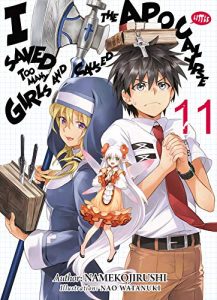
J-Novel Club has three ongoing series: How NOT to Summon a Demon Lord 6, I Saved Too Many Girls And Caused the Apocalypse 11, and Lazy Dungeon Master 3. To show I don’t read EVERY light novel, I’m only following one of those three.

Kodansha’s print this month is pretty light, but there are a few volumes. Again!! 6, Noragami: Stray God 19 (wow, remember Noragami? This is what happens when you catch up…), and To Your Eternity 8.

ASH: Oh! Some good choices there!

SEAN: Digitally we debut, gloriously, CROCODILE BARON! It has a crocodile in a top hat on its cover, and therefore is required reading. It’s from Weekly Morning, and despite its top-hatted crocs, seems to be a foodie manga.

Seven Seas has only two, and they’re both light novels. The Ancient Magus’ Bride: The Golden Yarn is a light novel based on the popular manga series. And there’s also the 5th volume (digitally, print will come later) of Didn’t I Say to Make My Abilities Average in My Next Life?!.

MICHELLE: Huh. I may have to read a light novel!

ASH: I’m looking forward to giving the light novels a try, too.

SEAN: SuBLime has two titles as well, with the 2nd Escape Journey and the 6th volume of Manga Bookshelf anti-favorite Ten Count.

MICHELLE: Unfortunately, Escape Journey is problematic, too.

MJ: I feel like we could build a fort out of problematic BL manga, and it would stand up unfortunately well against the elements. That thing would be solid.

SEAN: Udon has an 8th volume of Persona 3. (How long are these spinoff manga anyway?)

ASH: I’ll admit I tired of the Persona 3 adaptation pretty quickly, but I have been largely enjoying the Persona 4 manga.

Vertical has the 4th volume of not-Nichijou-but-close manga CITY.

Viz debuts Dragon Quest Illustrations, a sweet-looking artbook with illustrations from… well, I’ll let that be a surprise for the reader.

We also get the third and final volume of After Hours, Magi 33, Sleepy Princess in the Demon Castle 4, and Splatoon 5.

ASH: I’d forgotten that After Hours was so short.

SEAN: That just leaves Yen, but we’re not done here. Digitally we see the 20th Corpse Princess and the 10th IM: Great Priest Imhotep.

Yen has delayed about half its light novels to the week after next, but that still leaves several for this list. The Asterisk War 8, The Devil Is a Part-Timer! 12, I’ve Been Killing Slimes for 300 Years 3, KonoSuba 7, Rokka: Braves of the Six Flowers 6, and That Time I Got Reincarnated As a Slime 4 all are novels out next week.

On the manga side, there are four debuts, two of which are side-story tie-ins and two of which we’ve seen already in single-chapter digital releases. Dead Mount Death Play is a manga series we’ve seen released in chapter format but now we get a volume. It’s from Ryohgo Narita, the creator of Baccano! and DRRR!!, but seems darker than both those series. And NE NE NE (complete in one volume) is a sweet romantic comedy that ran in Shonen Gangan.

MICHELLE: NE NE NE looks cute!

ANNA: That does sound cute.

ASH: I’m glad it’s getting a print release! I’ve been wanting to read it.

SEAN: Goblin Slayer Side Story: Year One is a manga adaptation of the Goblin Story: Year One side story light novels, and your name Another Side: Earthbound is also a manga adaptation of a light novel side story. It’s almost Inception-esque.

Not based on light novels: As Miss Beelzebub Likes 4, Bungo Stray Dogs 9, Girls’ Last Tour 5, Hakumei & Mikochi 3, Hatsu*Haru 4, Horimiya 12, One Week Friends 5, A Polar Bear in Love 4, School of Horns 2, Silver Spoon 6, The Strange Creature at Kuroyuri Apartments 2, A Terrified Teacher at Ghoul School 5, and Yowamushi Pedal 10. In case Manga Bookshelf folks are skimming that long list, ‘Silver Spoon’ and ‘Yowapeda’ are what you want to stop on.

MICHELLE: Aww, yiss. I could use some Yowamushi Pedal about now.

ANNA: Nice!

ASH: Yup, Silver Spoon and Yowamushi Pedal definitely have most of my attention out of that bunch, though there are a few other series I’m reading, too.

MJ: Did someone say Silver Spoon?

SEAN: On the ‘based on light novels’ side, we see Accel World 8, The Boy and the Beast 4 (which is the final volume), The Honor Student at Magic High School 9. The Isolator 4, Kagerou Daze 11, My Youth Romantic Comedy Is Wrong As I Expected 9, and Sword Art Online: Progressive 7 (which marks the final volume by the current artist, but I think it’s being rebooted with a new one).

It’s another giant pile. What are you getting? Could it be crocodiles in top hats? Or something else?

Filed Under: FEATURES, manga the week of

A Bride’s Story, Vol. 10

December 6, 2018 by Sean Gaffney

By Kaoru Mori. Released in Japan as “Otoyomegatari” by Enterbrain, serialization ongoing in the magazine Harta. Released in North America by Yen Press. Translated by William Flanagan.

After two volumes of focus on Pariya, returning to our home base couple feels very peaceful and reassuring, even if they’re not together a lot of the time. As with the previous volumes, Amir and Karluk’s story is about waiting for Karluk to get older and more mature, and the fact that they love each other regardless. Karluk is a typical teenage boy, even on the Silk Road, and therefore constantly worries that he’s not manly enough and that Amir is somehow unhappy. This is fairly ridiculous, not only because Karluk is nice and sweet and doing his best, but also because Amir is a saint who can do no wrong. (I’ve come to really love A Bride’s Story, but Amir still needs a few more flaws.) But Karkuk doesn’t see this, and so there’s only one thing for a boy on the verge of manhood to do… hunt wild animals! Good thing too, as in this day and in this place, hunting animals for food is a life or death situation.

This also allows Karluk to bond with his brother-in-law, and realize that Amir’s tribe is really in dire straits… they are poor and have very little future available to them. This is presented very matter of factly, and Karluk (and the reader) can’t really do much about it except stare into the middle distance. But at least they’re training Karluk as a hunter, and we get some gorgeous shots of the landscape and foxes, antelope, etc. that roam wild and free but also provide food and clothing for our heroes. Amir shows up every once in a while as well, though Karluk tries to make the visits less frequent, because he’s hoping this will make them long for each other even more. (Amir doesn’t quite get this, of course, because she’s fully accepted her feelings for Karluk already.) He’s a good kid, and I wonder how long it will be before they take that next step.

After their story, we are back to Mr. Smith and his guide, who are finally making their way to Ankara, where he meets up with a good friend he knew from school (and I think his name is Henry? God knows, everyone keeps calling him Smith regardless). That’s not all that follows him, however… Talas, the girl he had the not-quite-romance with several volumes ago, has gotten married but still longs for her true love, and so her husband (whose sainthood here rivals Amir) takes her to Ankara to find Mr. Smith, because he wants her to be happy. I’m not really sure I enjoyed this part as much as the author wanted me to. The story of Smith and Talas was a nice bittersweet tale of a love that wasn’t meant to be, and seeing it revived here feels a bit like a cop out. I suspect their story will take up much of the next volume.

A Bride’s Story has a few weaknesses that my head just can’t get away from, but that doesn’t mean I don’t enjoy the series and its characters. And its art, which is fantastic. Still recommended.

Filed Under: a bride's story, REVIEWS

Bookshelf Briefs 12/5/18

December 5, 2018 by Sean Gaffney and Michelle Smith Leave a Comment

ACCA 13-Territory Inspection Department, Vol. 5 | By Natsume Ono | Yen Press – Jean’s identity is, if not in the open explicitly, at least well known among the cast. This is a big problem, of course, especially for his sister, who is the very definition of hostage bait. Fortunately, Jean also has friends that can help him out there—his sister is pretty much the one ray of sunshine in the series, so I don’t want to see her sacrificed. That doesn’t mean that it’s depressing tragedy, mind you—it just means that, as with most Ono titles, the majority consists of discussions among middle-aged men (and one woman). This being ACCA, they’re political discussions, though there’s a bit of food thrown in. As always, a good read if you’re an Ono fan. – Sean Gaffney

Accomplishments of the Duke’s Daughter, Vol. 2 | By Reai and Suki Umemiya | Seven Seas – Since the first volume came out, we’ve seen the appearance of the My Life as a Villainess series, which has essentially the exact same premise. That series is more focused on Katarina changing her fate and bonding with the cast of the VN, though. Accomplishments of the Duke’s Daughter is more like Realist Hero, wanting to change the world and advance it towards modern times. So we’re not only inventing chocolate, but also coffee, and concentrating on good roads and educating the youth. There’s not really much in terms of antagonists so far—Iris explains what she wants to do precisely and effectively, and everyone agrees with her. This makes it a tad dull, sadly. – Sean Gaffney

Beasts of Abigaile, Vol. 4 | By Spica Aoki | Seven Seas – I didn’t know when I started this volume that it’s the final volume of the series. It was only when one of the central hunky boys got definitively crossed off the list romantically that I was spurred to look it up and, yep, this is it. In her notes afterwards, Aoki-sensei says there was much she wanted and needed to draw that she couldn’t include, which makes me wonder if the series got canceled. Still, it hangs together reasonably well. Nina’s origins are explained, the king makes an appearance, there’s a big escape, noble sacrifice, and one person who seems to entirely lose touch with reality. What we don’t see is how any of the luga fare once they are out in the world but we’re encouraged to imagine a happy ending. Overall, this series was far from deep but still pretty fun. – Michelle Smith

Cardcaptor Sakura: Clear Card, Vol. 5 | By CLAMP | Kodansha Comics – There are interesting things going on in this volume of Clear Card. We meet Sakura’s great-grandfather, who apparently fell out with Nadeshiko when she got married (possibly as she married her teacher), but now regrets it because she’s dead. Speaking of that, Nadeshiko explicitly tells Sakura she should stop summoning her spirit for visions as it’s unhealthy. And Eriol finally coughs up a bit of info, revealing that Sakura is making her own cards using her magic and imagination—and that’s super dangerous if she knows about it. So let’s keep everything from her some more. I’d be more invested in this sequel if it weren’t so dull—the interesting plot points are conveyed tediously. – Sean Gaffney

Frau Faust, Vol. 5 | By Kore Yamazaki | Kodansha Comics – The way that Frau Faust ends is surprising to no one, but it’s done with a lot of style and feeling. Even the villains in this story get a chance to show off how they got that way, and for Marion, it’s an attempt to show off how much he’s grown. Despite that, this wasn’t going to be his story in the end—Johanna is who the reader is invested in. (Sarah is also pretty invested in Johanna, and the way her story resolves is touching but also very sad.) I actually wish that the series had gone on a bit longer—the action sequences here are even better than in The Ancient Magus’ Bride—but I’m also fine with this ending, which is final and yet the teensiest bit ambiguous. Let’s license more Yamazaki. – Sean Gaffney

Frau Faust, Vol. 5 | By Kore Yamazaki | Kodansha Comics – As the volume begins, Johanna has let herself be captured by the church in order to gain access to the holy city, where Mephisto’s final parts are. A lot of the stuff that follows isn’t exactly clear, but the gist of it is that all of Johanna’s friends are there to help her get to Mephisto’s head and there is a lot of action that culminates with her telling him, “I win.” Quite a few aspects of the ending are open to interpretation, which I’m not exactly fond of, but which fits the spirit of the series pretty well. Chief among them—did Johanna actually intend for that to happen all along? I do love how inspired by her everyone else was, and am especially fond the quiet love story between two characters. In the end, I enjoyed this series very much, though I do wish it had been longer. – Michelle Smith

Gabriel Dropout, Vol. 5 | By Ukami |Yen Press – We get another new character this time around, in the form of Kurona. She’s a demon who wants to make friends, but is rather awful at it, and it doesn’t help that she’s trying to befriend Taplis, who is an airhead even by the standards of Gabriel Dropout, a series dripping with airheads. Speaking of which, Satanya’s new attempt to defeat Gabriel works quite well, but not in the way she intended. (Yuri fans may like it, though.) We also get more backstory showing how Gabriel became what she is now, which was… exactly what you’d expect, to be honest. There weren’t quite as many laughs in this volume of Gabriel Dropout, but it’s still a cute, fun series. – Sean Gaffney

Hatsu*Haru, Vol. 3 | By Shizuki Fujisawa | Yen Press – I guess we do need to pair at least some of the spares already, as Miki and Kiyo, the pure cute boy-girl team from last time, end up becoming a couple in this volume in an utterly pure, cute and adorable way. Unfortunately, Kai is the hero, so he’s not going to have nearly as easy a time of it. On the bright side, Riko’s crush on Satoshi pretty much gets kicked to the curb this volume, as we confirm that he’s getting married. Which she knew was coming, but it still hurts. This allows Kai to man up and confess to Riko, though given this series is thirteen volumes and this is volume three, I suspect it may go badly. Still, while this breaks no new ground, it’s a good shoujo story, well told. – Sean Gaffney

Murcielago, Vol. 8 | By Yoshimurakana | Yen Press – There’s pretty much a volume full of action here. Some of it is Kuroko and Hinako, who pair up again to try to take out the big bad (and we actually get some backstory for Hinako! It’s as blood-filled as you’d expect.) and some of it is Urara, Kuroko’s hugely muscled and somewhat dim bartender friend, who’s on the cover but is mostly there to be comedy relief. It’s also nice to see Reiko, the cool assassin from previous books, who is still very good at her job but gets very angry if you think she’s a boy. (She also gets the sex scene at the end of the volume, meaning it’s pretty tasteful.) But let’s face it—we read Murcielago for the ridiculous violence. There’s a lot of it here. – Sean Gaffney

One Piece, Vol. 88 | By Eiichiro Oda | VIZ Media – Having successfully rescued Sanji, the Straw Hat crew is now attempting to escape the clutches of Big Mom, who is rampaging because she didn’t get to eat any wedding cake. I really appreciated the spotlight on female characters in this volume. Nami has actually been extremely smart and capable this whole arc, but now we see super tsundere Pudding stepping up to make a new cake to satisfy Big Mom’s hunger as well as Carrot the mink briefly becoming a badass as she transforms under the full moon. I also like that Pudding seems really into Sanji; I kind of hope they end up an official couple! Luffy’s fight with Katakuri is entertaining, as well, since their powers are so similar. All in all, this is a very well-paced and exciting installment. – Michelle Smith

Requiem of the Rose King, Vol. 9 | By Aya Kanno | Viz Media – We continue to stagger onwards towards the events of Richard III, though honestly neither Kanno or the reader are all that interested in matching up with Shakespeare precisely. We also lose Richard’s older brother George, who is done in by a lot of political machinations and Richard essentially being a triple agent. That said, Richard may be in trouble soon, as Buckinghan, the classic “bespectacled bastard,” has learned his body has a secret to it. Fortunately, he also has a mysterious bodyguard, who readers will immediately recognize but Richard doesn’t quite—yet. This is basically Kanno’s best series. Buy it. – Sean Gaffney

Filed Under: Bookshelf Briefs

Invaders of the Rokujouma!?, Vol. 18

December 5, 2018 by Sean Gaffney

By Takehaya and Poco. Released in Japan as “Rokujouma no Shinryakusha!?” by Hobby Japan. Released in North America digitally by J-Novel Club. Translated by Warnis.

Now that’s more like it. After being a bit disappointed with the minor villains in Kiriha’s resolution arc, we get a much higher standard of villain here. Darkness Rainbow are back, and they’re getting backstory. Not a hell of a lot, admittedly – that may be next volume, as this is sort of a stealth two-parter – but it’s clear that more care is being taken with these teenage, evil magical girls. (I’ll go with evil for now, given that they kidnapped ten small children, and if the ritual had finished they may have all ended up the way Sanae did.) This is also a continuation of Maki’s redemption arc. She may not win the big fight here, but the greater picture has her succeeding, as she’s forcing Crimson Rainbow to consider her relationship with both Maki and the rest of the Darkness Rainbow team. If there’s a way in to redeem this group, it’s likely to go via Crimson.

Given that we’re dealing with Darkness Rainbow here, it seems only natural that we finally get to see Nana, Yurika’s predecessor as a magical girl until her painful sacrifice. We find out how painful here, as we see her shakily trying to stand on crappy artificial legs, and her spirit energy is nearly nil. Fortunately, we have Koutarou’s harem, who between all of them are specialists in nearly everything, and they resolve to better Nana’s situation. In the meantime, though, kids are getting kidnapped as Darkness Rainbow makes its move – and they’re desperate, clearly, as kidnapping is not something easily papered over with memory erasure. Once it’s clear who’s behind it, Yurika asks everyone to help her save the kids and defeat the bad guys. Unfortunately, only one of these is accomplished by the end of the book, so it looks like we’re going on a field trip to the next dimension over next time.

Readers of these reviews know that I’m a huge Yurika fan, so I was pretty delighted with this book, where she spends most of her time in serious, competent mode. The joke is that everyone is really uncomfortable with Yurika being mature and competent, and wishes for the old whining Yurika to return. (This is admittedly a better joke than Shizuka’s running gag about her weight, though I liked how it became more about Koutarou being unable to princess carry her.) Yurika does an excellent job here, leading the team that discovers the bad guys, relying on others for support, and not breaking down once. The afterword hints of even better things in the next book. The rest of the cast are also good, and we’re starting to see the girls attempt to flirt harder with Koutarou, but he’s still not emotionally ready yet.

The book isn’t perfect – the battle in the hotel almost feels like there’s a chunk of the book that was randomly cut out, and the climax is similarly rushed – but overall this was a very strong entry in the series, and I really can’t wait to see what happens next.

Filed Under: invaders of the rokujouma!?, REVIEWS

Pez

December 4, 2018 by Sean Gaffney

By Hiroyuki Asada. Released in Japan by Wani Books, serialized in the anthology Robot. Released in North America digitally by Denpa Books. Translated by Andrew Castle.

The book is titled Pez, and I’m not sure if it’s meant to reflect what most people from my generation think of when we hear the word, which is to say the candy you got out of the package with the cartoon character head. It’s meant to suggest a light, sweet, ephemeral sort of think. And now we have the Pez manga, which is not all that light, somewhat bittersweet, and… well, OK, it does feel pretty ephemeral, as it seems to end right about where most manga would begin. But that’s fine, because this feels more like a doujinshi, the sort of high-concept original work you’d get from an artist who’s filled with creativity but also does work for Weekly shonen Jump to pay the bills a little better. It’s only 72 pages or so, but they’re all full color, which also helps to distinguish this. As for the plot? Well, it’s a post-apocalyptic slice-of-life, which is actually pretty popular these days, so it seems a good time for it to come out collected here.

Pez is the young woman on the cover, who we first see wandering around the ruins of a home in the middle of nowhere, scavenging for what she can find. She’s joined by Decosuke, who appears at first to be a young man the same age as her but it quickly becomes apparent is actually the brain that the body is carrying behind it. She’s found a old movie filmstrip, which she proceeds… to wear as a scarf, which tells you right off that this is not going to be all bleak tragedy. That said, it’s not all laughs either – Pez and Deco’s past when they were both normal kids (who appear to be living off the streets) is short but extremely painful (indeed, Pez calls this out in the actual manga). The reason they’re where they are right now is a mad scientist sort by the name of Dr. Thunder Land, who is able to revive/robotize the dead Decosuke, and also (as we find out in the final pages) gives a little something to Pez that makes her able to see a bit more than most people. (This section also involves some shots of Pwz topless, be warned.)

Most of the short volume is Pez and Decosuke walking the Earth, finding bombed-out shelters and discussing things. There’s a sweet bit where they find an old pizzeria whose chef is caught under rubble – they can’t free them from their inevitable death, but they can get instructions on how to make a delicious pizza. Sometimes it’s ridiculous, as with Pez’s imagining what sweets are like. And sometimes it’s inspirational, as the ending involves Pez and Decosuke following the “lights” in the sky and seeing where they lead so they can find out how the world got this way. They will find out, maybe, but we won’t – the book wraps up there. That said, as a one-shot it feels well worth the purchase, being made entirely of mood, and with some Wonderful sketch-like art that you’d normally only see in the likes of Ikki and similar magazines – or in the pages of the Robot anthology. It feels like a boutique manga, the sort you’d leave on your coffee table to impress the guests.

Filed Under: pez, REVIEWS

The Saga of Tanya the Evil: Dabit Deus His Quoque Finem

December 3, 2018 by Sean Gaffney

By Carlo Zen and Shinobu Shinotsuki. Released in Japan by Enterbrain. Released in North America by Yen On. Translated by Emily Balistrieri.

I’ve talked before about how Tanya the Evil is at many times written like you’re reading a history book. It’s actually a bit weirder than that, as you’re reading several competing history books, each with its own agenda. This is made obvious in the sections involving the Federation, aka not-USSR, whose style of Communism under “Josef” is mocked mercilessly, even to the point of having one section written as a children’s history book. The Federation in general comes in for a bashing this volume, partly because, well, Communism under Stalin, please look at real history, but also because Tanya is virulently, rabidly anti-Communist and says so most of the time. The book starts with her taking her team to “put a scare” into the Federation capital. She proceeds to overdo it. One of the more interesting bits is when she tells Visha, who escaped the Federation as a child, not to hold back her hatre3d and to go all out. Visha, who honestly doesn’t recall much of her childhood and isn’t really driven by hatred, is rather nonplussed.

It can be difficult at times to remember that Tanya is not the heroine, merely the protagonist. We’re meant to be a bit horrified by her. Quite a bit. The trouble is that most of the book is in her semi-1st person monologue, so sympathy naturally falls with her, especially when the war is not going her war, which is constantly. There’s a glorious bit when she’s on trial for some of her actions when they realize that this little girl is, in fact… acting like a petulant child. Even when she finally gets her wish of a transfer to a non-combat position, it doesn’t even last two weeks. But we’re not really meant to like ANYONE in this “war is hell” series. Not the Empire’s generals. Not the government, who are invisible but making poor decisions behind them. Not the Federation, who I would call a parody of Stalin’s Russia were it not already hard to parody. And not even the Commonwealth or the Unified States, who we see training up their own crack mage unit, complete with blonde Kansas girl Mary Sue, who unfortunately runs into Tanya in her first combat and realizes that Tanya was the one who killed her father. She doesn’t take it well.

These books continue to be bricks, far longer than almost all light novels that aren’t DanMachi. A lot of that is tactics and military discussion, and I say it again: don’t read this unless you’re fascinated by such things, because it will drive you mad. One other downside: we’re introduced in this book to “Josef” and his number two, who is named Loria. Loria is based on Lavrentiy Beria, who was a sexual predator, and it’s this aspect that Carlo Zen mines for “humor” (and also horror, to be fair), as he spots the 12-year-old Tanya (she must be twelve by now, right?) stomping all over Moscow burning everything in sight and decides that he needs to make her his. It’s as disturbing as it sounds, and it gets a color illustration that makes it much worse. Sadly, I expect to see more of him. As well as Mary Sue, who’s a talented newbie this time around but is now driven by hatred and fury, so I expect her next run-in with Tanya will be very different.

Tanya fans who only watched the anime will be happy to know this is where the new stuff begins (well, technically the end of the last book). It’s still a very interesting series to read, but remember that the author is actually a left-wing socialist. Tanya is not here to be admired. No one is, really.

Filed Under: REVIEWS, saga of tanya the evil

Ao-chan Can’t Study!, Vols. 1-2

December 2, 2018 by Sean Gaffney

By Ren Kawahara. Released in Japan as “Midara na Ao-chan wa Benkyou ga Dekinai” by Kodansha, serialization ongoing in the magazine Shonen Magazine Edge. Released in North America digitally by Kodansha Comics. Translated by Erin Proctor.

Sometimes when reading manga you are looking for a well-characterized, touching work that will heal your heart and make you think. And sometimes you’re looking for silly sex jokes. If it’s the latter you’re after, I am pleased to say that Ao-chan Can’t Study! is here for you. It’s about as subtle as a brick to the head, but why would you want to be subtle in a case like this? It’s a sex comedy. With the emphasis on the comedy, I hasten to add – there’s tons of sex talk, but don’t expect any forward progress, at least not at the start of the series. It sort of feels like Seitokai Yakuindomo to a degree (and I could write an entire POST about why Kodansha Comics never licensed that, complete with them indirectly dissing it when they picked up Aho-Girl). Despite all that, though, things still remain on the innocent side here, adn the kids read like normal romance comedy heroes and heroines and not perverts. Well, mostly.

Ao-chan has had difficulties with her childhood almost from the start, when she introduced herself to the elementary school class as Ao, “A as in apple and O as in orgy”. We find out why fairly quickly – her father is a famous author of erotic novels, and also the equivalent of Happosai from Ranma 1/2 (he even looks like him), and despite her best efforts, Ao is now in high school and has a mind that quickly turns filthy at the slightest provocation. Not that she has any experience or anything, but just being around her father has sort of led her to be a pervert by osmosis. She tries to repress this by being a stoic ice queen, with perfect grades and no interest in men. Sadly, she has piqued the interest of Takumi, the class’ resident hot guy, who doesn’t study very well but finds Ao interesting. She attempts to drive him off, but her dad has decided now is the time to get his daughter laid. What’s more, Takumi’s feelings appear to be genuine. And worst of all, there’s a rumor going around that he is… well, larger than average.

Shonen Magazine Edge tends to push boundaries a bit, and despite being clean at heart, so does this title. There’s Lots of discussion of penis size and how it can actually hurt for a woman when a guy’s too big. In the second volume, when the class goes to summer camp, Ao somehow gets it into her head that she’s going to be invited to a “fuck party”. As I said, things you wouldn’t normally see in Fairy Tail (UQ Holder, maybe), and you can see why it’s a digital-only series. The reason it avoids being pure skeeze is Ao, who is pretty innocent – she has no idea what a dick really looks like, and most everything that she gets in her head is either exaggerated or wrong. Plus she’s falling for Takumi too, and has no idea how to deal with her feelings – and her libido. Add in a rival or two, and you’ve got a fun if ecchi comedy, recommended for those who don’t mind that sort of thing.

Filed Under: ao-chan can't study!, REVIEWS

I Want to Eat Your Pancreas

December 1, 2018 by Sean Gaffney

By Yoru Sumino. Released in Japan as “Kimi no Suizō o Tabetai” by Futabasha. Released in North America by Seven Seas. Translated by Nathan Collins.

The book spoils you on page 1, so allow me to do the same: the heroine does not survive the book. That is in fact, the point of the book, which is a novel rather than a light novel, and has its feet planted firmly on the ground. Despite the title, this is not about zombies or anything like that. Sakura, the heroine, has something wrong with her pancreas, to the point that she has a year to live at most. Our hero, whose name remains deliberately obscured for most of the book, accidentally finds out about this (they’re classmates, but she’s only told her family and is hiding it from everyone else) and the bulk of the book is the two of them gradually getting closer and hanging out. They’re not quite falling in love (I suspect were it not for her illness they’d get together much faster, even with the hero’s personality issues), but most of the prose till near the end consists of either school or “dates”.

The handling of the hero’s name is quite interesting, if a bit aggravating at first. He’s defined by how others think of him – for most of the first half Sakura (who he also avoids naming, so her name also rarely comes up) refers to him as “Classmate I Get Along With-kun”. but this changes depending on circumstances, and other people like classmates also address him this way. It ties into the book that Sakura is writing, called Living with Dying, and while the text of this novel isn’t that book, it does sort of follows the rules of said book, which also avoids using him name. Speaking of the hero, he is a loner and something of an outcast – always reading, self-proclaimed with no friends, but very perceptive in a negative sort of way. Of course, he’s not as perceptive when it comes to emotions, and one of the highlights of the book is a fight that he and Sakura have over a misunderstanding.

Again, I will try not to spoil too much, but there is a definite sense that the book is going to end the way you’d expect (I mean, it begins with her funeral, which our hero does not attend), but the book has a few surprises in its last quarter or so. The surprise might upset a few readers – it’s foreshadowed, but not by much. That said, it’s mentioned that “real life doesn’t work like an novel”, and you get the feeling that the way things played out was the author’s way of avoiding things simply being too predictable. I also felt the epilogue, which jumps forward in time and avoids showing us two characters’ growth more than I like, was a bit abrupt, but that’s likely because the payoff of everything right after Sakura’s death was the best part of the book, and very emotionally raw.

This is not, for most of the time, a depressing tragedy of a book. I tweeted that it felt like a darker Teasing Master Takagi-san, and given that Sakura spends most of the time imposing demands on our nameless hero’s time, there’s a lot of Haruhi Suzumiya here as well. It’s a touching story of two people who have a deep and affecting impact on each other’s lives over the course of only a few months. I really, really enjoyed it.

Filed Under: i want to eat your pancreas, REVIEWS

Manga the Week of 12/5/18

November 29, 2018 by Sean Gaffney, Michelle Smith, Anna N, Ash Brown and MJ 1 Comment

SEAN: As we get ready for the holidays, why not give the gift of new manga? Here’s what’s next week.

Bookwalker has a 7th volume of The Combat Baker and Automaton Waitress, which I need to catch up on still.

Cross Infinite World debuts The Cursed Princess and the Lucky Knight, another in its line of romantic light novels for young women.

J-Novel Club has the 18th Invaders of the Rokujouma!?. Just making that a sentence makes the punctuation marks cry.

In print, Kodansha has Attack on Titan 26, Boarding School Juliet 2, Kiss Me at the Stroke of Midnight 8, and The Seven Deadly Sins: Seven Days 2, which wraps up this spinoff.

ASH: It’s been a while since I’ve caught up on Attack on Titan, I should probably get around to doing that.

SEAN: Digitally we debut Red Riding Hood’s Wolf Apprentice, a Betsushonen title that’s also a bit of a gender reversal: Red Riding Hood is a demon hunter, and the wolf is a cute young girl. Those with long memories may recall Pupa, a JManga title by the same author.

There’s also Are You Lost? 3, Can I Kiss You Every Day? 2 and My Boy in Blue 5.

Seven Seas has no debuts, but we do see Accomplishments of the Duke’s Daughter 2, Lord Marksman and Vanadis 9, New Game! 4, and Tomo-chan Is a Girl! 2.

Speaking of gift material, Titan is releasing a Sherlock Season 1 manga box set.

ASH: That will make a nice gift for fans of the franchise; the manga adaptations have been pretty faithful to the BBC television series.

SEAN: Vertical has Pop Team Epic: Second Season, with even more of those memes (and gags, but let’s face it, mostly memes) that you need.

The rest is Viz, and we have a ridiculous amount of final volumes out next week. But first, the debut. We Never Learn is a new romantic comedy from Viz’s Jump imprint, following the adventures of a tutor trying to work with three geniuses who are brilliant at one subject and bad at others. Nisekoi fans should like this.

Ending this week are Astra: Lost in Space (5), Kimi ni Todoke (30), Kuroko’s Basketball (29-30), and The Young Master’s Revenge (4). Man, I’m going to miss Sawako and Kuroko.

MICHELLE: Me, too!

ANNA: I haven’t been reading Kimi ni Todoke recently because of being timid of emotional devastation but one day I will get all caught up!

SEAN: In series that aren’t beginning or ending, we see Ao Haru Ride 2, Food Wars! 27, Juni Taisen: Zodiac War 2, My Hero Academia 16, One Piece’s 26th 3-in-1, Platinum End 7, The Promised Neverland 7, Queen’s Quality 6, Takane & Hana 6, and Yona of the Dawn 15. I am getting… most of those, to be honest.

MICHELLE: Same here. I’m particularly craving another dose of Takane & Hana.

ANNA: Any week Yona of the Dawn is coming out is a good week!!!! Also super excited for Ao Haru Ride.

ASH: Yes, Yona of the Dawn is great! I need to catch up on Queen’s Quality and Food Wars!, too.

MJ: Definitely Ao Haru Ride and Queen’s Quality! Also, I’m very behind in Platinum End, and obviously in danger of losing my Takeshi Obata fangirl card, so something must be done.

SEAN: Are you getting a pile of manga to give as presents? Or just reading it yourself?

Filed Under: FEATURES, manga the week of

Do You Love Your Mom and Her Two-Hit Multi-Target Attacks?, Vol. 1

November 29, 2018 by Sean Gaffney

By Dachima Inaka and Iida Pochi. Released in Japan as “Tsujo Kogeki ga Zentai Kogeki de Ni-kai Kogeki no Okasan wa Suki desu ka?” by Fujimi Shobo. Released in North America digitally by Yen On. Translated by Andrew Cunningham.

This book is straight up ridiculous. I realize that may be the most obvious thing to say, but I want to say it up front because I went into it thinking that the ridiculous content would take a back seat to sketchy mom-son sex humor. And there is a bit of that, but mostly the comedy is first and foremost the important thing here. This series is not trying to titillate its reader, it’s going for fun. And it pretty much succeeds. We get a lot of amusing riffs on the standard “adventure game” tropes, the characters are all obvious cliches but fairly likeable. Best of all, despite the occasional lewd joke or ogling, there’s absolutely no sense that Mamako (yes, really, that’s her name) and Masato view themselves as anything other than mother and son. This allows the reader to relax and focus on what’s important: Mamako is hilarious.

Masato is our hero, a 15-year-old boy who is dealing with a mom who a) looks about seventeen and is gorgeous; and b) doesn’t seem to realize that he’s not six years old anymore, so is overly doting and smothering. One day he comes home to find a government worker there who tells him that he has been chosen to play in an ‘MMMMMORPG’. He’s not sure why there are so many M’s, but he agrees… and finds himself in a virtual game world. He’s a hero! He gets an awesome sword! He has party members who are an adorable and trusting 12-year-old girl and a tsundere but clearly future love interest mage! There’s just one problem. His mother has come along with him into the game. And she has TWO swords (the two he didn’t pick when given a choice) that do so much damage that he never has a chance to shine. She may not know anything about adventure games, but she certainly knows how to make him feel awkward and embarrassed.

As you can see, we’re not going for subtle here. In fact, the overtness is part of the point – the series works better for it. The game that Masato and company are in is a beta release, and they’re meant to be testing it. This leads to many of the NPCs simply reciting the guidebook, or speaking in actual gamer talk rather than having it filtered through a fantasy world. Wise, the tsundere girl (she spends most of the book in a state of fury, but there are good reasons for it) is amusing, and you get the feeling she’d be nice if she ever calmed down. Porta, the girl, is a parody of the ‘little girl party member’, and this about as deep as a small puddle, but her pureness is almost endearing. As for Masato and Mamako, they start off exaggerated types, and by the end are slightly less so. Believe it or not, there is a bit of plot and character development in this, and by the end of the book Masato has learned not to take his mother’s actions as a personal attack, and Mamako has (possibly) learned to allow her boy to grow up. (I say possibly as, well, there’s more books in the series, and the premise is that Mama is more powerful and steals the spotlight.)

I also need to mention the main reason to read this series, which is Ms. Shirase, the government agent who starts this entire mess. She is amazingly funny in a deadpan sort of way, and I was delighted at her appearances throughout, as well as her constant fourth-wall breaking. I really hope we get more of her. The series reminds me a lot of KonoSuba in terms of its style and laughs, and I think fans will enjoy it. Yes, there’s some incest parody – that’s the premise! – but I feel safe that it won’t go anywhere and isn’t serious. Recommended for fans of comedies and mothers.

Filed Under: do you love your mom?, REVIEWS

Bookshelf Briefs 11/27/18

November 27, 2018 by Ash Brown, Sean Gaffney and Michelle Smith Leave a Comment

Anonymous Noise, Vol. 11 | By Ryoko Fukuyama | Viz Media – The concerts are over, and yes, In No Hurry tore it up, though in the end, the battle of the bands becomes fairy literal. That said, for once it’s the romance that made more of an impression on me than the singing, as Momo, tired of hearing how everything Nino’s doing now is for Yuzu, kisses her to stop her saying his name. And given that Nino is (she thinks) in love with Momo, and he with her, they get together. That said, this series has seven volumes to go. Moreover, this FEELS like the wrong couple. The narrative has been set up so that the reader is rooting for Yuzu—who also has bigger stakes. As for Miou, she’s still not quite sure about this new relationship, and it shows. Great potboiler, still a must-read. – Sean Gaffney

Dr. STONE, Vol. 2 | By Riichiro Inagaki and Boichi | Viz Media – This feels oddly like an aborted prologue. I mean, don’t get me wrong, it’s a solid shonen volume, with lots of excitement and almost death scenes and Yuzuriha actually doing something. But then Senku sends the other two leads off on a mission of their own, and the sense is that they’re being written out for not being quite as immediately memorable as he is. (They remind me a LOT of Video Girl Ai, right down to Yuzuriha’s headgear.) And Senku meets a new girl, who’s far more confident and also not the love interest of his sidekick. I suspect the series is about to really get started all over again, but that’s fine, as Dr. STONE is decent enough. I’m not quite fully into it yet. – Sean Gaffney

Hakumei & Mikochi: Tiny Little Life in the Woods, Vol. 2 | By Takuto Kashiki | Yen Press – This continues to be adorable and pretty relaxing. The largest of the slice-of-life stories in here has Hakumei trying to prove that she is good enough to work on repairing a stone wall with the rest of the work crew, which involves being told no a few times but gradually proving her worth. (Also, the crew leader thinks that Mikochi is her wife, though Hakumei points out that she’s a girl. They pretty much function as a married couple.) Elsewhere we meet a flamboyant and eccentric hairdresser who gives tomboy Hakumei an even shorter haircut than she already has, and the couple also deal with an owl who may or may not be a monster. Cute and fluffy. – Sean Gaffney

I Hear the Sunspot: Limit, Vol. 1 | By Yuki Fumino | One Peace Books – According to the creator’s afterword, Limit was initially intended to be a one-shot continuation of I Hear the Sunspot, but it ultimately evolved into an ongoing series. I can’t say that I’m disappointed—I absolutely loved I Hear the Sunspot and its first sequel Theory of Happiness, and Limit is off to a great start, too. Limit begins nearly immediately after Theory of Happiness. Taichi has left school in order to work at SIG-N while Kohei continues his law degree studies. Because they’re no longer classmates and are both very busy, the two young men aren’t able to see each other as much as they would like, which puts an understandable strain on their relationship. This sort of realism is something that I particularly appreciate about the I Hear the Sunspot series. Limit also introduces additional characters and their varying perspectives on hearing loss, deafness, and disability to great effect. – Ash Brown

Juana and the Dragonewt’s Seven Kingdoms, Vol. 3 | By Kiyohisa Tanaka | Seven Seas – It has to be said, the ending to this volume screams “you are cancelled,” as the villain’s master plan is wrapped up literally by sucking our heroes into a plothole to get away from him. Before that, though, we get some more explanation of Nid’s issues with his family and his vegetarianism, which turns out to be miscommunication that his parents think is sort of funny but Nid’s still not amused, especially since it seems to undercut his life choices. As for Juana, we get some backstory that explains why she is here, along with some foreshadowing that she may not be alone for long… but then the book ends, as she’d much rather be having adventures with Nid. This was fun, but that sudden ending—oof. – Sean Gaffney

Kiss & White Lily for My Dearest Girl, Vol. 7 | By Canno | Yen Press – The new couple in this volume is a pair of girls who are relatively close in age, but are also aunt and niece, so I’m not quite sure what to think of it. And to be fair, neither are they, as both know they like each other but both also know that once high school ends, girls give up that sort of thing. Only not anymore, and certainly not in this series. The volume works better when entwining their story with that of Yurine and Ayaka, our “main” couple. Yurine is suffering from the genius label again, and also opening up to Ayaka has led her to realize that her past actions have hurt others. As for Ayaka, Yurine’s feelings are getting deeper and deeper—can she cope with it? A good “sort of anthology” series, as always. – Sean Gaffney

New Game!, Vol. 4 | By Shotaro Tokuno | Seven Seas – What I said for the last book applies to this one, though there is some brief drama towards the end as the company decides that Kou is going to be doing the designs even though Aoba is supposed to be lead. This is entirely due to name recognition, and I was impressed with the fact that they don’t take it back after Aoba does something really impressive—Kou is still better than she is. Aoba’s improving a lot, though, and is figuring out how to get inside character’s heads. Meanwhile, Nene’s applying for a job—will she become even more of a regular? We’re certainly focusing more on her than some of the other supposed leads. New Game! remains cute but slight, aside from the welcome drama near the end. – Sean Gaffney

Ooku: The Inner Chambers, Vol. 14 | By Fumi Yoshinaga | VIZ Media – I’d like to begin with a special shoutout to the Cast of Characters in the front of each volume of Ooku, without which I’d be totally lost, given how infrequently this series comes out. This volume continues the story of Iesada, a poorly regarded female shogun who survived years of abuse from her horrible father, as her loyal advisor Masahiro contrives to find for her a consort whom she can actually love and trust. Unfortunately, Masahiro herself takes gravely ill just as the question of whether to sign a trade deal with America is being hotly contested (we’ve come to 1856 in the timeline), but at least she got to see Iesada looking happy and healthy as her relationship with Taneatsu has flourished. It’s incredibly foolish of me to wish for a happy ending for these two, but I do anyway. So many lovable characters in this series! – Michelle Smith

RWBY Anthology, Vol. 3 | By Various Artists | Viz Media – I am still absolutely the wrong audience for this, having not watched the original series. Still, it’s a sign that the anthology is doing its job that I can manage to follow along anyway. As you have probably guessed, we’re up to the B in the volumes, so these short comics focus on Blake and her moody cat self. There are some lighter stories that show Blake bonding with the others, or dealing with the team’s pet dog, who she naturally does not get along with. There’s also some stories showing she’s still tied to her past. And there’s ship tease with Yang, which I understand is the biggest ship in the fandom, so that makes sense. If you enjoy RWBY, you’ll like this. – Sean Gaffney

Shojo FIGHT!, Vol. 5 | By Yoko Nihonbashi | Kodasha Comics (digital only) – Because of the volleybetting scandal, Kokuyodani is not allowed to play in Tokyo and so instead has entered a small tournament in Osaka. This happens to be where Shino Itami is from and we learn that, as a middle schooler, she was accused of match-fixing because her grandfather is a yakuza. She actually came to Kokuyodani because of its bad reputation, since she wouldn’t be a burden to them. Unfortunately, most of the plot about Itami’s family is dreadfully boring, but I did like that her teammates stand up for her and, as a result, the crowd starts booing them as a whole rather than Itami specifically. I love that they have no problems “playing the heel” and look forward to more potentially villainous deeds. – Michelle Smith

Tales of Wedding Rings, Vol. 4 | By Maybe | Yen Press – For once, we have a princess who’s not all that into Satou. Oh, she still proposes to him the moment he appears, but it’s very much a political matchup, and even at the end of the volume she still sees him as a bit too naive for her. As the writer notes in the afterword, this is entirely intentional, as he wanted to have a bit of variety. We also meet said princess’ younger twin sister, and find out why Marse gave up in the first volume so easily. Things are not looking all peaches and cream plot-wise, as it turns out not all countries are happy to see the hero, particularly when there’s an evil advisor who REALLY reminds me of Caster from Fate. Will we get another princess in the next book? I think five’s the limit, right? – Sean Gaffney

Yotsuba&!, Vol. 14 | By Kiyohiko Azuma | Yen Press – I suppose Yotsuba has simply become too acclimated to things in her daily life—with some exceptions, like the beads Jumbo gives her as a present or the trash-bag princess dress Asagi crafts—and so Azuma takes his lead duo to Tokyo, where they must confront things like throngs of people, train passes, weird dogs, and luxurious hotel buffets. The best quality of this series continues to be seeing the world through a child’s eyes, guaranteed to expand as they acquire a car at the end of this volume, but I also appreciate the smaller lessons, as when Yotsuba confronts her conflicting desires to hoard all the beads yet be considered nice and when Daddy makes sure she tries again after messing up with the train pass the first time. I hope it doesn’t take 2.5 years for the next volume. – Michelle Smith

Filed Under: Bookshelf Briefs

  • « Go to Previous Page
  • Page 1
  • Interim pages omitted …
  • Page 197
  • Page 198
  • Page 199
  • Page 200
  • Page 201
  • Interim pages omitted …
  • Page 538
  • Go to Next Page »
 | Log in
Copyright © 2010 Manga Bookshelf | Powered by WordPress & the Genesis Framework