• Skip to primary navigation
  • Skip to main content
  • Skip to primary sidebar
  • Home
  • About Us
    • Privacy Policy
    • Comment Policy
    • Disclosures & Disclaimers
  • Resources
    • Links, Essays & Articles
    • Fandomology!
    • CLAMP Directory
    • BlogRoll
  • Features & Columns
    • 3 Things Thursday
    • Adventures in the Key of Shoujo
    • Bit & Blips (game reviews)
    • BL BOOKRACK
    • Bookshelf Briefs
    • Bringing the Drama
    • Comic Conversion
    • Fanservice Friday
    • Going Digital
    • It Came From the Sinosphere
    • License This!
    • Magazine no Mori
    • My Week in Manga
    • OFF THE SHELF
    • Not By Manga Alone
    • PICK OF THE WEEK
    • Subtitles & Sensibility
    • Weekly Shonen Jump Recaps
  • Manga Moveable Feast
    • MMF Full Archive
    • Yun Kouga
    • CLAMP
    • Shojo Beat
    • Osamu Tezuka
    • Sailor Moon
    • Fruits Basket
    • Takehiko Inoue
    • Wild Adapter
    • One Piece
    • After School Nightmare
    • Karakuri Odette
    • Paradise Kiss
    • The Color Trilogy
    • To Terra…
    • Sexy Voice & Robo
  • Browse by Author
    • Sean Gaffney
    • Anna Neatrour
    • Michelle Smith
    • Katherine Dacey
    • MJ
    • Brigid Alverson
    • Travis Anderson
    • Phillip Anthony
    • Derek Bown
    • Jaci Dahlvang
    • Angela Eastman
    • Erica Friedman
    • Sara K.
    • Megan Purdy
    • Emily Snodgrass
    • Nancy Thistlethwaite
    • Eva Volin
    • David Welsh
  • MB Blogs
    • A Case Suitable For Treatment
    • Experiments in Manga
    • MangaBlog
    • The Manga Critic
    • Manga Report
    • Soliloquy in Blue
    • Manga Curmudgeon (archive)

Manga Bookshelf

Discussion, Resources, Roundtables, & Reviews

My Week in Manga

My Week in Manga: December 14-December 20, 2015

December 21, 2015 by Ash Brown

My News and Reviews

Only one in-depth review was posted at Experiments in Manga last week. I should be getting back to my regular blogging schedule very soon, though. As for the said review, I took a look at Setona Mizushiro’s After School Nightmare, Volume 7 as part of my monthly horror manga review project. After School Nightmare is an effectively unsettling work, but it’s also engrossing. The seventh volume has some particularly chilling developments and revelations. (And that’s it from me at the moment!)

Quick Takes

Black Rose Alice, Volume 4Black Rose Alice, Volumes 4-6 by Setona Mizushiro. From what I can tell, Black Rose Alice is currently on hiatus in Japan. Fortunately, the first six volumes appear to complete the first major story arc of the manga. While I certainly hope that the Black Rose Alice continues, and I look forward to seeing how it develops, at least readers are provided with some resolution and closure for what could be a long wait. This second half of the first arc deals with the aftermath of Leo’s demise. The relationship dynamics in Black Rose Alice have always been a little peculiar and unnerving, but as they begin to fracture under the strain of the loss of Leo it’s shown just how strong and just how tenuous they can be at the same time. These volumes also include the reappearance of Koya, which throws the situation into even more turmoil, and the revelation of the twins tragic backstory. Emotions run high and the drama is intense as everything seems to be falling apart. Black Rose Alice continues to be dark and creepy and Mizushiro’s vampires are still some of the most unusual ones that I’ve come across.
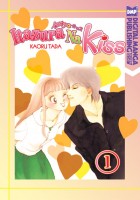
Itazura na Kiss, Volume 1Itazura na Kiss, Volumes 1-3 by Kaoru Tada. Considering the number of boys’ love titles that Digital Manga releases in print (as well as its recent efforts to translate all of Osamu Tezuka’s works and its foray into hentai) it can be easy to forget that the publisher has other interesting manga in its catalog, too. Itazura na Kiss is one such series, a classic shoujo manga from the nineties which was extremely successful in Japan and elsewhere in Asia. The story is about Kotoko, an academically-challenged young woman in high school who has fallen in love Naoki, another student who is a legitimate genius. He also turns out to be a huge jerk, but every once in a while he shows a warmer, kinder side of himself. So far, I have been enjoying Itazura na Kiss, perhaps more than I expected. Kotoko shows wonderful strength of character and even Naoki’s unpleasant personality has more depth to it than initially appears. Despite the best efforts of their parents who would love to see them married, the romance between the two of them is believably slow to develop. I also like that the story doesn’t get stuck in high school and follows Naoki and Kotoko as they enter college.
Merman in My Tub, Volume 1Merman in My Tub, Volume 1 by Itokichi. Seven Seas has made something of a name for itself as the publisher of monster girl manga, but with Merman in My Tub monster boys are now better represented as well. The basic and appropriately ridiculous premise of Merman in My Tub is that Wakasa, a merman, has become a permanent resident in the bathtub of Tatsumi, a young man who rescued him from a polluted river. His mere presence causes all sorts of problems and inconveniences for Tatsumi, especially when his other aquatic acquaintances begin showing up, too. The series is a largely episodic four-panel comedy manga although there are some small story arcs, recurring characters, and running jokes. There is also plenty of boys’ love tease and innuendo. (In part Itokichi seems to have created the series as an excuse to draw half-naked men.) At the same time, Merman in My Tub makes use of some of the vaguely incestuous little sister/big brother tropes that can be fairly prevalent these days. As a result, though it has its charm, the series sometimes seems a little confused about which audience it’s trying to appeal to.

Filed Under: FEATURES, My Week in Manga Tagged With: Black Rose Alice, itazura na kiss, Itokichi, Kaoru Tada, manga, Merman in My Tub, Setona Mizushiro

My Week in Manga: December 7-December 13, 2015

December 14, 2015 by Ash Brown

My News and Reviews

Okay! Last week I submitted my promotion dossier at work, which means I’ll be able to start paying more attention to Experiments in Manga again. I still have a few other life things preoccupying me at the moment, but I’m hoping to get back to my normal posting schedule by the beginning of the new year if not before. That being said, I only posted one in-depth review last week. Soji Shimada’s classic mystery novel The Tokyo Zodiac Murders was recently re-released in English, which seemed as good an excuse as any to get around to reading it. According to this interview with Shimada, if The Tokyo Zodiac Murders does well, the next book in the series might be translated, too, which I would definitely like to read.

As for other interesting things found online: Seven Seas’ ten-day licensing spree has now wrapped up. (The new license tag on Seven Seas’ tumblr is probably still the easiest place to see them all at once.) Out of all the announced titles the one I’m most curious about is Ichiya Sazanami’s Magia the Ninth which features master composers as demon hunters with music-based magic. (Sazanami is the creator of Black Bard which I likewise couldn’t resist because of the combination of music and magic.) And in case you need to catch up on all of the anime, manga, and light novel licenses announced in 2015, Reverse Thieves has you covered. Also of note, Manga Brog has translated an excerpt of an interesting interview of Kentaro Miura, the creator of Berserk.

Quick Takes

Captain Ken, Volume 1Captain Ken, Volumes 1-2 by Osamu Tezuka. I think that I’ve mentioned here before that I happen to have a particular fascination with Mars, which was one of the primary reasons that I was interested in reading Captain Ken. Of course, it didn’t hurt that series was also created by Tezuka. (Though granted, I would love to see more classic manga that isn’t by Tezuka released in English.) Captain Ken is basically a western in space—Mars has been deliberately developed to be reminiscent of the American Southwest, the primary mode of transportation is by (robotic) horse, and the Martians have met with the same tragic fate as the Native Americans. The series is an odd mashup of science fiction and western genre tropes and American history, including references to World War II and the dropping of the atomic bomb. (The portrayal of Americans, perhaps justifiably, isn’t especially flattering.) Captain Ken explores the same themes of anti-war and anti-discrimination found in many of Tezuka’s other manga. Overall, it’s an entertaining adventure story with a rather bittersweet ending.

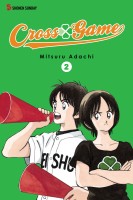
Cross Game, Omnibus 6Cross Game, Omnibuses 6-8 (equivalent to Volumes 12-17) by Mitsuru Adachi. I still don’t have much of an interest in baseball when it comes to real life, but I’m completely invested in the sport when it comes to Cross Game. I’ve come to care tremendously about the characters in the series and, because baseball is incredibly important to so many of them, by proxy the baseball is important to me as well. Cross Game‘s last three omnibuses focus on the final year of high school baseball for Ko and his classmates. In fact, the eighth omnibus is almost entirely devoted to a single game—the last opportunity for the Seishu team to make Wakaba’s dream of seeing them play at summer Koshien a reality. They’ve worked hard as a team and have several players who are individually impressive as well, but that never guarantees a win. I’ve watched the Cross Game anime series, which turns out to have been a very faithful adaptation, so I knew how things would end. Even so, the manga is incredibly engaging and has a ton of heart. I never expected to be so taken with a baseball manga, but Cross Game is excellent.

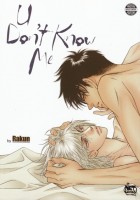
U Don't Know MeU Don’t Know Me by Rakun. After a somewhat dubious beginning, I ended up really enjoying U Don’t Know Me. Plot-wise there’s a lot packed into this one-volume boys’ love manhwa and the characterization is quite good as well. Seyun and Yoojin are childhood friends who have only recently come to realize that they share feelings for each other which are much more lustful in nature. While the manhwa is primarily about Seyun and Yoojin and the evolution of their friendship into a romance, their relationships with their friends and families are also extremely important to the story. Context is provided for their love for earch another and the implications of that love. My favorite part of U Don’t Know Me was actually the response of the boys’ parents upon discovering their sons’ intimate relationship. Initially they were shocked and upset, but they ultimately give their love and support and are very involved in ensuring the well-being of both young men. The realistic portrayal of this sort of positive acceptance seems to be something of a rarity in boys’ love, so it makes me particularly happy when I see it.

Filed Under: FEATURES, My Week in Manga Tagged With: Captain Ken, cross game, manga, manhwa, Mitsuru Adachi, Osamu Tezuka, Rakun

My Week in Manga: November 30-December 6, 2015

December 7, 2015 by Ash Brown

My News and Reviews

So, one of the many reasons that I’ve been incredibly busy lately (which led to me temporarily reducing the number of posts that I’ve been writing each week) is that I’m in the process of applying for a promotion at work. I’m currently putting the final touches on my dossier which is due later this week. At this point it’s already well over two hundred pages and has taken up a significant amount of my time; I’m really looking forward to being done and over with the whole thing so I can get back to reading and writing about things that I actually enjoy.

That being said, last week I announced the winner of the Kodansha Shoujo Smorgasbord manga giveaway. The post also includes a list of some of Kodansha Comics’ shoujo and josei manga, of which there’s a nice variety. The honor of the first in-depth review of the month went to Studio Kôsen’s Windrose, Volume 1 from Chromatic Press/Sparkler Monthly. Kôsen has had a few other releases in English, but I think that Windrose is probably my favorite so far. Finally, over the weekend I posted November’s Bookshelf Overload which will likely be the last list of its utterly ridiculous size for a while.

Elsewhere online in manga publishing announcements: Kodansha Comics manga are now available digitally on Overdrive, which is great news for libraries in Canada and the United States. Seven Seas is in the midst of celebrating ten days of licenses with some interesting as well as not-so-surprising choices. (At the moment, the new license tag on Seven Seas’ Tumblr may be the easiest place to see all of the new titles at once.) Yen Press probably made the biggest license announcement last week, though–Natsuki Takaya’s Fruits Basket is being re-released in English! Yen plans to release Takaya’s Liselotte & Witch’s Forest and Twinkle Stars as well.

Quick Takes

Alley of First LoveAlley of First Love by Ellie Mamahara. I picked up Alley of First Love without knowing much about the manga except that it was a boys’ love one-shot. Sometimes that can a risky proposition ripe with potential for disappointment, but Alley of First Love ended up being a pleasant surprise. After graduating high school, Shusuke’s best friend (and crush) Atsushi left to study abroad in England with no intention of returning to Japan. But six years later he unexpectedly comes back and Shusuke must once more face the fact that his feelings for Atsushi go far beyond friendship. There were quite a few things that appealed to me about the Alley of First Love: the leads are adult men, the prominence of their tightly-knit families and community (and the realistic rumor mills that accompany those), the touches of humor and overall heartwarming nature of the story, and so on. Readers looking forward to steamy love scenes will be left wanting as they are mostly implied rather than shown (Mamahara jokes in her notes that she’s terrible at drawing them), but the emotional connection between Shusuke and Atsushi is definitely there.

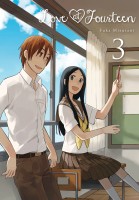
Love at Fourteen, Volume 3Love at Fourteen, Volumes 3-4 by Fuka Mizutani. I didn’t anticipate that I would enjoy the first couple of volumes of Love at Fourteen nearly as much as I actually did. However, although I also enjoyed the third and fourth volumes, my compulsion to read more of the series has somewhat diminished. Tanaka and Yoshikawa may be the leads, but I think they may actually be some of the least interesting characters in the series. But even though their personalities aren’t particularly strong, I do like them. And I like their relationship and the portrayal of the slow development of young love. But in the end, I find that I’m more intrigued by the supporting characters and their stories. Perhaps I’m not the only one who felt this way—Mizutani adds even more of them to the series in these two volumes. My favorite character has turned out to be Nagai, a delinquent with a talent for singing. However, the way that the music teacher manipulates and leads him on is troubling. She’s supposedly fallen in love with her fourteen-year-old student. I’m not sure if Mizutani intends for it to be tragically romantic, humorous, or what, but the way it plays out and is shown in the manga comes across as creepy more than anything else.

My Love Story!!, Volume 3My Love Story!!, Volume 3-6 written by Kazune Kawahara and illustrated by Aruko. I absolutely loved the first two volumes of My Love Story!! and so have made a point to collect the manga even though I’ve fallen behind in actually reading it. At first, I wasn’t really sure how long the series would be able to last before the gimmick was completely played out and became tiresome. After all, the manga was initially intended to be a one shot. Happily, My Love Story!! has yet to lose its charm for me. It continues to be funny and sweet, earnest and endearing. The story is beginning to expand more, as well. While Takeo and Yamato’s incredibly adorable and wholesome romance is at the heart of it all, the manga is now exploring the lives and relationships of their friends and family members as well. At one point it seemed as though My Love Story!! was going to be somewhat episodic, but some longer, continuing storylines are being introduced as are new, recurring characters. My Love Story!! always manages to make me happier just by reading it, so I’ll definitely continue following it.

Filed Under: FEATURES, My Week in Manga Tagged With: Aruko, Ellie Mamahara, Fuka Mizutani, Kazune Kawahara, Love at Fourteen, manga, My Love Story

My Week in Manga: November 23-November 29, 2015

November 30, 2015 by Ash Brown

My News and Reviews

Last week was Thanksgiving in the United States, which means that I was fairly busy traveling and visiting family. I still posted a couple of things at Experiments in Manga, though. Because it’s the end of the month, it’s also time for a manga giveaway. And, because it’s November, the giveaway is for multiple volumes. The winner will be announced on Wednesday, so there’s still time to enter for a chance to win four first volumes of manga in the Kodansha Shoujo Smorgasbord giveaway. I also posted a review last week of Attack on Titan: Kuklo Unbound, which is an omnibus edition of the last two volumes in Ryo Suzukaze’s trilogy of novels which form a prequel to Hajime Isayama’s Attack on Titan manga series. It’s a pretty quick read, and provides an interesting perspective and backstory that fans of the franchise will appreciate.

Because I was traveling and visiting family, I didn’t spend much time online last week, but there were a few things that managed to catch my attention. Comics Forum’s Manga Studies column continued with “What are you reading? Approaches and reasons for looking at language in manga” by Giancarla Unser Schutz. Gengoroh Tagame’s Otouto No Otto (My Brother’s Husband) won a Japan Media Arts Award, which is kind of a big deal. Viz Media posted its Fall 2015 survey about anime and manga buying habits and convention attendance. And, in much sadder news, mangaka and yokai enthusiast Shigeru Mizuki has passed away.

Quick Takes

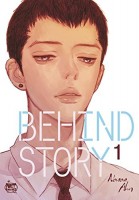
Behind Story, Volume 1Behind Story, Volume 1 by Narae Ahn. I’ve been trying to make a point to sample some of Netcomics’ recent releases which is what first brought Ahn’s boys’ love manhwa Behind Story to my attention. I wasn’t previously aware of the series, and I actually haven’t been able to find much information about Ahn, either. The the story didn’t initially engage me, likely because of the school setting which didn’t do much to distinguish itself, but by the end of the first volume I was left wanting more. Johann is a transfer student who is rumored to be gay, which means that most of his classmates avoid him, but recently Taehee has developed an interest in him. One of their teachers has, too, and Johann finds himself the target of an unhealthy and abusive obsession. Behind Story has tumultuous emotions and drama, with the potential to go in some very dark and dangerous directions. While the cover art of Behind Story is particularly striking, the interior artwork is attractive, too, although some of the transitions between scenes and flashbacks were occasionally difficult to follow.

Cross Game, Omnibus 2Cross Game, Omnibuses 2-5 (equivalent to Volumes 4-11) by Mitsuru Adachi. It’s been a long while since I read the first Cross Game manga omnibus or watched the anime series; I’d forgotten just how good the story is. I’m not even especially interested in baseball, and yet I find myself completely absorbed by Cross Game. Probably because the manga really is about more than just baseball, although the way that Adachi paces the games does makes them very exciting. And after reading the manga, I am able to better appreciate and understand the strategy involved in the sport. But for me, the baseball in Cross Game takes a backseat to the series’ exploration of love and loss. In more than one way, the characters are dealing with the utter unfairness of life. Sometimes they are able to triumph over adversity and it’s magnificent, but sometimes there is nothing to be done but to live and learn and try to move on as best as they can. Cross Game is a series that manages to be very emotionally resonant; I find that I’ve come to care about the characters and their well-being a great deal.

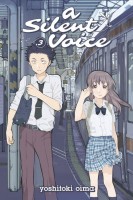
A Silent Voice, Volume 3A Silent Voice, Volume 3 by Yoshitoki Oima. I continue to be impressed with A Silent Voice and Oima’s willingness to include characters who are simply awful people. It does make the series a little difficult or unpleasant to read at times, but the manga is still very well done. Fortunately, the series isn’t completely depressing. There’s hope for redemption and the promise that, while the mistakes of the past can’t be undone, people can indeed change for the better. It’s a lesson that Shoya is still learning as he is constantly reminded of and trying to make up for how horrible he once was. Though he has apologized and sincerely regrets the actions of his sixth-grade self, he’s uncertain whether or not he actually deserves to be forgiven and what his motivations in seeking forgiveness truly are. Shoya is still a little oblivious and self-centered when it comes to his relationships with other people, and he still makes plenty of mistakes, but he is slowly beginning to grow and mature and form honest friendships. His heart at least is in the right place, and he has become a much more sympathetic character over the last few volumes.

Filed Under: FEATURES, My Week in Manga Tagged With: Behind Story, cross game, manga, manhwa, Mitsuru Adachi, Narae Ahn, Silent Voice, Yoshitoki Oima

My Week in Manga: November 16-November 22, 2015

November 23, 2015 by Ash Brown

My News and Reviews

Only one review was posted at Experiments in Manga last week since I’m still on my more relaxed blogging schedule. I’m a little behind in reviewing the series, but I finally took a closer look at What Did You Eat Yesterday?, Volume 8 by Fumi Yoshinaga. I’m still really loving the manga, especially the realistic portrayal of its characters and their relationships. The eighth volume had some heartbreaking moments as well as heartwarming moments and just the right touch of humor to keep it all entertaining.

I came across quite a few interesting things to read online last week. Organization Anti-Social Geniuses has a great post about the skills and education that are helpful for pursuing a career in the manga publishing industry. The Guardian looks at some recent and past manga controversies in the article “Manga rows show why it’s still Japan’s medium of protest.” Also of note, Dark Horse, partnering with Le Vision, will apparently be adapting six Chinese comics into English. Compared to manga or even manhwa, hardly any manhua has been published in English; there is only one other publisher that I know of off the top of my head (JR Comics) which is currently releasing manhua in translation.

Elsewhere online, Manhattan Digest interviewed Graham Kolbeins, talking about gay manga, MASSIVE, and the group’s hopes to expand into more queer content, which is very exciting. Wondering about the state of the English edition of Takako Shimura’s Wandering Son? Crunchyroll gathered together some of the comments made by Matt Thorn (the series’ translator) about the manga’s current status. Sadly, it’s not especially encouraging. Although Fantagraphics has stated in the past that it intends to release the entire series, the publication date for ninth and next volume has yet to be set. Fantagraphics is still working on manga projects, though–Moto Hagio’s Otherworld Barbara should hopefully be released sometime in 2016.

Quick Takes

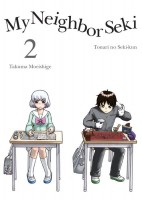
My Neighbor Seki, Volume 2My Neighbor Seki, Volumes 2-4 by Takuma Morishige. I continue to be utterly charmed and delighted by My Neighbor Seki. The anime series was wonderful, too, but I’m especially glad for the chance to read the chapters that where never adapted. My Neighbor Seki is an episodic manga, but there are a few running jokes that have emerged. Several scenarios feature the robot family, for one; Seki’s younger sister repeatedly appears after being introduced; and Yokoi and Seki’s classmate Goto more than once erroneously believes their relationship to be of a romantic nature. And of course there is the primary gag that underlies the entire series: Seki goofing off in class in impressively ridiculous ways and Yokoi being completely caught up in it all despite herself. My Neighbor Seki is marvelously funny and imaginative. Seki’s antics and Yokoi’s reactions (and overreactions) to them never disappoint. Reading the manga always leaves me smiling and has even been known to make me laugh out loud. I’m very glad that Vertical ultimately decided to release the entire series rather than just a “best of” collection.

One Is EnoughOne Is Enough by Love. Gen Manga is one of the very few publishers to release translations of doujinshi in English. The selections are independent, amateur works that unsurprisingly vary in quality, but I generally find them interesting. I believe One Is Enough was the first and so far has been the only boys’ love offering from Gen. I originally read the first half or so of the manga while it was being serialized, but am only now getting around to reading the completed volume. I’m not entirely sure whether it’s intentional or not, but at times One Is Enough almost seems to be a parody of boys’ love, exaggerating some of the genre’s well-worn tropes and plot devices. Although there are some nice individual panels and sequences, the manga’s artwork is sadly very inconsistent. Even the story itself seems to be constantly shifting in tone, as though the creator couldn’t quite decide which direction to take the manga. One Is Enough can be silly, cute, and sweet, but it also occasionally deals with some pretty heavy subject matter like suicide and self harm. Honestly, the manga is a bit of a mess without much cohesion, but it does have its moments.

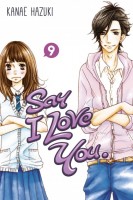
Say I Love You, Volume 9Say I Love You, Volume 9 by Kanae Hazuki. As the winners of the school idol contest, Megumi and Yamato are expected to go on a date with each other, despite the fact that he already has a girlfriend. While I had to suspend my disbelief for some of the setup, Hazuki actually handles the scenario as a whole very well. I was completely satisfied with the way that the date played out and ultimately ended. I also feel better about Megumi as she continues to mature as a person; the date was a turning point for her. Many of the characters in Say I Love You are dealing with some very personal issues, but there is hope that they will be okay in the end even though the journey itself may be painful. After the date and its fallout has been resolved, most of the ninth volume is actually spent exploring the tragic backstory of Yamato’s brother Daichi and how it complicates and interferes with his present-day relationships. Hazuki promises to return to Mei and Yamato’s story which will be good to see, but one of the things I particularly like about Say I Love You is Hazuki’s willingness to take the time to delve into the lives of the other characters as well.

Filed Under: FEATURES, My Week in Manga Tagged With: Kanae Hazuki, Love, manga, My Neighbor Seki, Say I Love You, Takuma Morishige

My Week in Manga: November 9-November 15, 2015

November 16, 2015 by Ash Brown

My News and Reviews

Last week was the first week of the temporary adjustment in my posting schedule at Experiments in Manga. I’ve got a lot going on right now and not enough time to do everything that I need to or would like. Hopefully I’ll have some good news to share soon, though! (I don’t want to jinx anything by saying too much, yet.) Anyway! Last week I reviewed Mushishi, Volume 6 by Yuki Urushibara as part of my monthly horror manga review project. I’ve read the series before so I already know that I like it (in fact, it’s a favorite of mine), but I’ve really been enjoying my reread.

A few interesting things that I came across online last week: Netcomics hinted on Twitter that it would have some exciting licenses to announce soon. Dark Horse has confirmed that it will be releasing Kenji Tsuruta’s Wandering Island. And Kodansha Comics has licensed Hiro Mashima’s Fairy Tail Zero prequel. The English Light Novels site has an interview with light novel translator Stephen Paul. And Shojo Beat posted the first part of an interview with Arina Tanemura.

Quick Takes

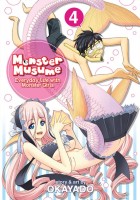
Monster Musume: Everyday Life with Monster Girls, Volume 4Monster Musume: Everyday Life with Monster Girls, Volume 4 by Okayado. I suspect it’s at least in part due to the enormous success of Monster Musume that Seven Seas has been able to expand its catalog and take a few more risks with its licenses of late. Monster Musume has been a bestseller since the release of its very first volume. I’m not exactly a member of the manga’s target audience though and so I haven’t really been keeping up with it. But I can easily understand why it’s so popular. And there actually are a few things that I like about the series in addition to the things that I don’t particularly care for. I enjoy the absolutely atrocious puns and wordplay, for one. I also appreciate the variety of monster girls and that new races are always being introduced. Considering the highly-sexualized nature of the manga and the obsession with breasts and nipples, the story can at times be surprisingly sweet and endearing. Kimihito is a legitimately nice guy who honestly cares for the well-being of the liminals that he meets and is put in charge of. Ultimately however, there’s no question that Monster Musume is an ecchi harem fantasy.

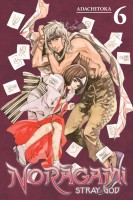
Noragami: Stray Go, Volume 6Noragami: Stray God, Volumes 6-7 by Adachitoka. The fifth volume of Noragami ended with one heck of a cliffhanger so I was very much looking forward to reading more of the series. The sixth volume is excellent and probably my favorite volume of the manga to date. It brings Yato and Bishamonten’s battle to an effective close, but there will still be lingering consequences and repercussions of the fight that will have to be dealt with moving forward. After the intense drama, emotions, and action of the sixth volume, Adachitoka takes the seventh in a different direction, bringing back some of the manga’s humor and goofiness while still building the underlying tension of the series. As the next story arc begins, new characters and antagonists are introduced and additional backstories are explored. One particularly important revelation is that Yato’s very existence is somewhat precarious, which is why maintaining his ties to other people is so critical. I’ve largely enjoyed the series since the beginning, but Noragami is starting to get really good. I’m like seeing the evolution of the characters and the changing dynamics of their relationships.

Showa: A History of Japan, 1953–1989Showa: A History of Japan, 1953-1989 by Shigeru Mizuki. Each volume of Showa has been massive, but this final installment covers the longest period of time. In fact, the fourth volume provides an outline of more years than the first three volumes combined. 1953-1989 follows Japan through the country’s postwar period, the falls and rises of the economy, and the political turmoil and change of the era. Woven into the history of Japan is Mizuki’s own personal story. One of the reasons that the fourth volume of Showa especially appealed to me was that it explores a bit of manga history as well, following Mizuki’s start and growth as a mangaka including the management of a studio of assistants. Sanpei Shirato, Ryoichi Ikegami, Yoshiharu Tsuge, and many other prominent creators and editors all make appearances. Mizuki’s interest in yokai is shown to become increasingly important as well. The final volume of Showa also includes some of Mizuki’s color work, which I’d never seen before. Mizuki’s black and white manga is great, but some of the color illustrations are simply stunning.

Filed Under: FEATURES, My Week in Manga Tagged With: Adachitoka, manga, Monster Musume, Noragami, Okayado, Showa: A History of Japan

My Week in Manga: November 2-November 8, 2015

November 9, 2015 by Ash Brown

My News and Reviews

Keeping this short and sweet because boy do I have a lot of stuff going on right now! Last week at Experiments in manga the Barakamon manga giveaway winner was announced. The post also includes a list of manga with prominent countryside settings for anyone interested in exploring some of what has been published in English. As for the first in-depth manga review of the month, I took a look at Junji Ito’s Cat Dairy: Yon & Mu which I found to be highly entertaining. I expected that I would at least like the manga, but I absolutely loved its weird mix of not-exactly-horror and comedy.

A few things of interest that I came across online last week: The most recent Sparkler Podcast focuses on what it’s like Working in the Manga Industry. (The podcast is currently only free for Sparkler Monthly members. Non-members can either purchase it now, or simply wait a few weeks.) Over at Anime New Network, Deb Aoki has been talking to the folks at Kodansha about the upcoming Attack on Titan anthology and bridging the gap between American comics and manga. Finally, Seven Seas slipped in a new license announcement: Monster Musume: I ♥ Monster Girls, a yonkoma spinoff from Okayado’s main series.

Quick Takes

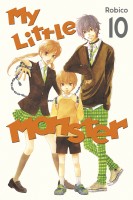
My Little Monster, Volume 10My Little Monster, Volume 10 by Robico. The last few volumes of My Little Monster have been getting progressively more serious to the point where, overall, the tenth seems to hardly have any humor at all. This is quite a change from the beginning of the series where the manga’s balance leaned more towards comedy and the more humorous aspects of the interactions between its oddball characters. I did really like this volume, though. Basically, Haru’s past and present are now colliding and the results are appropriately dramatic as everyone involved deals with the fallout. There are hurt and conflicted feelings, and many complications and frustrations. For one, Haru’s family circumstances are more fully explained, showing how the intense antagonism between him and his brother came about and just how awful a person their father is. A significant portion of My Little Monster, Volume 10 actually explores the story through the perspective of Haru’s brother Yuzan, which I was glad to see. He’s still not particularly pleasant, but being able to better understand his and Haru’s situation makes him less of an enigma and a much more sympathetic and interesting character.

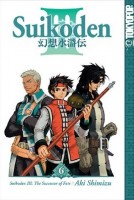
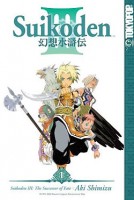
Suikoden III: The Successor of Fate, Volume 6Suikoden III: The Successor of Fate, Volumes 6-11 by Aki Shimizu. I still haven’t played any of the Suikoden games, although based solely on the manga adaptation of the third, it’s likely a to be franchise that I would enjoy. I liked the first five volumes of Shimizu’s Suikoden III, but the final six cemented my appreciation for the manga–it’s a solid epic fantasy series with both magic and military might. Although it is a video game adaptation and in a few places the RPG mechanics can be seen if one is looking for them, the manga stands very well on its own and doesn’t really feel too game-like. The second half of the series more fully delves into the antagonist’s backstory which was needed as his motivations are much more complicated than would initially appear. One of the things I like the most about the Suikoden III manga is that nothing is strictly good or evil, the characters and their actions are more nuanced than that. Under the weight of war and inherited responsibilities they must all try to hold onto their ideals while at the same time making compromises in order to protect what and who they love. Enemies become allies and in some cases even friends, but it is a hard journey.

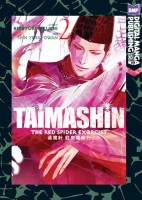
Taimashin: The Red Spider Exorcist, Volume 2Taimashin: The Red Spider Exorcist, Volume 2 written by Hideyuki Kikuchi and illustrated by Shin Yong-Gwan. Although all six volumes of Taimashin have been translated into English, only the first two were released in print; the other four volumes are only available digitally. It’s been a long while since I’ve read the first volume in the series, but I do distinctly recall liking it, or at being enthralled by Akamushi Fujiwara, the titular Red Spider Exorcist who may be a human, a demon, or something else entirely. Reading the second volume, Akamushi still fascinates me and is probably my favorite part of the manga. For the most part I would classify Taimashin as a horror manga although, as I’ve come to expect from Kikuchi’s works, it also has distinct elements of science fiction and fantasy. While it doesn’t always make a lot of sense, the manga can be both thrilling and creepy. This is actually something else that I associate with Kikuchi–he writes these bizarrely engaging stories with ominous atmospheres that end up being all over the place. Taimashin‘s artwork fits the story and characters particularly well, ranging from Akamushi’s otherworldly beauty to scenes that are frankly grotesque.

Filed Under: FEATURES, My Week in Manga Tagged With: Aki Shimizu, Hideyuki Kikuchi, manga, My Little Monster, Robico, Shin Yong-Gwan, Suikoden, Taimashin

My Week in Manga: October 26-November 1, 2015

November 2, 2015 by Ash Brown

My News and Reviews

A few different things were posted at Experiments in Manga last week. The most recent manga giveaway is currently underway, for one, and here’s still time to enter for a chance to win Barakamon, Volume 1 by Satsuki Yoshino. Last week I reviewed Vinland Saga, Omnibus 6 by Makoto Yukimura. The series continues to impress me a great deal with its story telling and character development. The fate of the series in English will be in part determined by how well the sixth and seventh omnibuses do (the seventh omnibus is currently scheduled to be released in December); I truly hope that Kodansha will be able to release more because Vinland Saga is fantastic. Finally, over the weekend, I posted the Bookshelf Overload for October.

I’ve been extremely busy with all sorts of life stuff, so while I’m sure there were plenty of interesting things going on in the realm of manga online, there were only two that really caught my eye last week: Shojo Beat posted a short interview with Rinko Ueda and Chris Butcher wrote about his experience interviewing Masashi Kishimoto at New York Comic Con. Also as a heads up, because I am so extraordinarily caught up in things going on at work and at home right now, I’ve decided to go a little easier on myself with my blogging schedule for November (and probably for the first half of December as well). Instead of the usual Monday-Wednesday-Friday posting schedule, in the upcoming weeks I may just be posting on Monday and Thursday. Hopefully things will calm down and I can get back to writing more soon!

Quick Takes

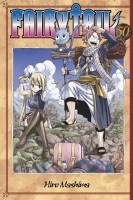
Fairy Tail, Volume 50Fairy Tail, Volume 50 by Hiro Mashima. After so many arcs in which the Fairy Tail guild was fighting to save the world, I’m particularly enjoying the beginning of this most recent arc in which Fairy Tail doesn’t technically even exist anymore. Although there are some epic, world-altering developments occurring in the background, for the moment the story is focusing on the much more personal crises of the disbanded guild as it rebuilds itself. It’s a nice change of pace, though I’m fairly certain it won’t last for very long. A year or so has passed since the members of Fairy Tail parted their separate ways. Quite a few of the magic users have managed to power up during that time, allowing Mashima the opportunity to come up with some exciting and interesting new skills for them in order to show just how badass they’ve become (and they were strong to begin with). Some of the fan service focusing on the female characters in Fairy Tail continues to feel very out-of-place and distracting, but at least the women are frequently some of the strongest and most well-developed characters. The male characters are the subject of fan service from time to time, too, though never to the same extent.

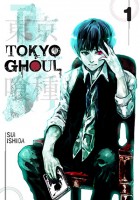
Tokyo Ghoul, Volume 1Tokyo Ghoul, Volume 1-3 by Sui Ishida. The glut of vampire and zombie manga continues—and I’m not really a devotee of either of those subgenres—so I especially appreciate that Tokyo Ghoul makes use of an entirely different creature, the titular ghoul. In the case of this particular manga series, ghouls largely pass as normal humans assuming that they can master their intense hunger for human flesh. After an encounter with a ghoul that nearly leaves him dead, Kaneki finds himself in the unique position of partly belonging to both the human world and the world of the ghouls, and yet it will be a struggle for him to survive in either of them. In Tokyo Ghoul, humans are just as capable of being monsters. And Ishida isn’t afraid of killing off prominent characters, whether they be human or ghoul, so there is a constant sense of danger. Sadly, I think the emotional impact of the deaths was somewhat diminished since readers hadn’t yet had the chance to really get to know the characters involved as individuals. Still, kudos to Ishida for potentially making good use of some shocking, unexpected developments, especially as some early parts of the first volume were a little predictable.

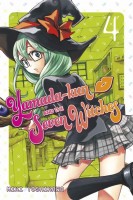
Yamada-kun and the Seven Witches, Volume 4Yamada-kun and the Seven Witches, Volume 4 by Miki Yohsikawa. Although the fan service in Fairy Tail tends to bug me, the fan service in Yamada-kun and the Seven Witches doesn’t really bother me at all, probably because it’s better incorporated into the story itself. Admittedly, it can still be gratuitous from time to time. Since the manga in part deals with body-swapping, it makes sense that there would be some focus on the characters’ physical traits. Plus this particular volume includes the obligatory beach and onsen scenes. One thing that really impresses me about Yoshikawa’s artwork in the Yamada-kun and the Seven Witches is that it’s obvious from the characters’ facial expressions and body language when there has been some swapping going on. This actually ends up being explicitly pointed out in the series when one character develops a crush on a specific combination of personality and body type. The witch count continues to grow in the series as does Yamada’s group of friends while he begins to work out a theory explaining why everyone has the powers that they do. I’m still really enjoying Yamada-kun and the Seven Witches. Though largely a comedy, it has some heart to it as well.

Filed Under: FEATURES, My Week in Manga Tagged With: Fairy Tail, Hiro Mashima, manga, Miki Yoshikawa, Sui Ishida, Tokyo Ghoul, Yamada-kun and the Seven Witches

My Week in Manga: October 19-October 25, 2015

October 26, 2015 by Ash Brown

My News and Reviews

I posted a couple of different things at Experiments in Manga last week in addition to the usual My Week in Manga feature. Having recently read and enjoyed Yukito Ayatsuji’s debut novel The Decagon House Murders, I made a point to finally get around to reading and reviewing his first novel released in English, Another. Though I felt a little cheated by one of the plot twists, overall the novel is a great mix of horror and mystery. I enjoyed the story so much that I plan on checking out the manga and anime versions, too. (Seems like a good candidate for an Adaptation Adventures feature.) My other post last week was some random musings on A Moment of Respite in Kohske’s Gangsta. Basically, a single scene from the sixth volume of the manga (more specifically, a sequence of three panels from that scene), inspired me to write more than a thousand words about some of the things that I particularly appreciate and love about the series.

A few things of interest found online last week: First of all, the most recent entry in Ryan Holmberg’s What Was Alternative Manga? column, Gottfredson’s Illegitimate Heirs: Tezuka Osamu and the Great Wall of 1945, was posted at The Comics Journal. Speaking of Tezuka, Stone Bridge Press will be publishing the manga The Osamu Tezuka Story: A Life in Manga and Anime in a single, massive volume. In other licensing news, NBM Publishing continues to release graphic novels in the Louvre Collection. Hirohiko Araki was the first Japanese creator to contribute to the series with the JoJo’s Bizarre Adventure spinoff Rohan at the Louvre, but In 2016, Jiro Taniguchi’s full-color Guardians of the Louvre will be translated.

Quick Takes

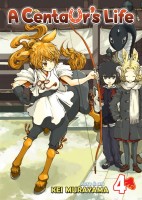
A Centaur's Life, Volume 4A Centaur’s Life, Volumes 4-5 by Kei Murayama. I love the world that Murayama has created for A Centaur’s Life. A fair amount of the worldbuilding can be found within the series’ narrative, but there’s also a ton of supplementary material between chapters—lessons in history and biology and such. The full introduction of a new character in these volumes, a transfer student who’s also an Antarctic snake person, allows for even more worldbuilding to be incorporated directly into the manga as she is learning about cultures outside of her own while the other students are learning about hers. The issues of race and discrimination that come up fairly frequently in A Centaur’s Life can sometimes be a little heavy-handed or simplistic, but the lessons learned are good ones. The series does tend to be fairly episodic, and even the individual stories and chapters can be fairly fragmented. They give glimpses into the characters and their lives without there necessarily being much of a plot. Generally, A Centaur’s Life is fairly charming and sweet though it has moments that, for one reason or another, are vaguely disturbing, too.

LDK, Volume 1LDK, Volume 1 by Ayu Watanabe. I’ve largely enjoyed most of Kodansha Comics’ recent shoujo series (or at least found something about them that I’ve liked even if as a whole they didn’t work for me), so I was looking forward to giving LDK a try. I believe that LDK is Watanabe’s first manga to be released in English. I’m not especially familiar with her or her series, but she seems to primarily work in shoujo romance. LDK falls squarely into that category. However, after only one volume, I remain completely unconvinced by the supposed romantic chemistry between who will obviously become the lead couple after they end up living together. Part of my difficulty probably stems from the fact that I don’t particularly like either of the characters involved. Shusei is frankly a jerk with apparently no sense of how to express his interest in another person without being an absolute creep. And sadly Aoi is so concerned about doing right by her best friend that she doesn’t actually listen to what she says or needs. On top of that, so far LDK is just a little too generic in both its story and artwork for me to feel truly engaged with the series.

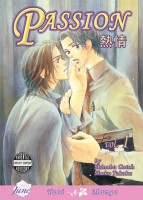
Passion, Volume 1Passion, Volumes 1-4 written by Shinobu Gotoh and illustrated by Shoko Takaku. I actually read the first volume of Passion several years ago, but the series begins so unpleasantly (opening with what appears to be a rape scene) that it took me this long to get around to finishing it. I gave it a second chance for two reasons: I was assured by others that the series improves and I’m loving the artist’s more recent series I’ve Seen It All. While it’s still not a favorite of mine, Passion does get significantly better. That opening scene which was so awful has repercussions for everyone involved and ends up being handled rather well by the creators. Hikaru is a high school student who is desperately in love with Shima, one of the teachers at his school. He forces himself on Shima and, after a peculiar turn of events, the two initially pretend to be lovers. But then their relationship continues to deepen. It turns out Shima is terribly manipulative, but he does recognize that about himself and is extremely troubled by it. Passion takes place over the course of multiple years. It’s interesting to see how the characters grow and evolve while dealing with their bad decisions.

Filed Under: FEATURES, My Week in Manga Tagged With: Ayu Watanabe, Centaur's Life, LDK, manga, Passion, Shinobu Gotoh, Shoko Takaku

My Week in Manga: October 12-October 18, 2015

October 19, 2015 by Ash Brown

My News and Reviews

It was a two-review week at Experiments in Manga last week. First off, I reviewed the third and final volume of Hide and Seek by Yaya Sakuragi, which I enjoyed immensely. In general, I tend to like Sakuragi’s boys’ love manga, but I think that Hide and Seek has probably become my favorite. It’s a bit more serious and realistic than some of her other manga, but it still has a great sense of humor. The second review from last week, and the most recent addition to my ongoing monthly horror manga review project, was After School Nightmare, Volume 6 by Setona Mizushiro. The series continues to be both disconcerting and compelling; I’m looking forward to seeing how it continues to develop.

Elsewhere online: The Shojo Beat tumblr posted a short interview with Kyousuke Motomi. Tofugu presents Japanese Onomatopoeia: The Definitive Guide, which is pretty great. The BBC has a brief spot on Hajime Isayama. Coming out of the New York Comic Con, Women Write About Comics had a chat with Kodansha executives Hiroaki Morita, Kohei Furukawa, and Yasumasa Shimizu. Brigid Alverson reports on Kodansha’s panels at New York Comic-Con, which included Yohei Takami, the editor of Noragami, as a special guest. Masashi Kishimoto was in New York for NYCC as well. Deb Aoki covered Masashi Kishimoto’s NYCC visit for Anime News Network. Brigid Alverson reports on Kishimoto’s main panel. Weekly Shonen Jump Blog has some Kishimoto NYCC videos to share, including interviews and panels. Also, the recording from Kishimoto’s SoHo Apple Store visit is now available.

Quick Takes

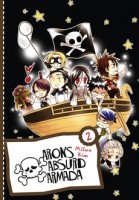
Aron's Absurd Armada, Omnibus 2Aron’s Absurd Armada, Omnibuses 2-3 (equivalent to Volumes 3-5) by MiSun Kim. I read the first Aron’s Absurd Armada omnibus quite a while ago. I largely enjoyed the full-color manhwa, which I believe had its start as a webtoon, and have been meaning to get around to reading the rest of the series. I’m not sure that binge-reading Aron’s Absurd Armada was really the way to go for optimal enjoyment, though. I still find the series to be consistently or at least vaguely amusing, and it even managed to make me laugh out loud a few times, but it’s a little hard to take in large doses. The humor isn’t particularly clever, mostly relying on the fact that almost every single character in the manhwa is incredibly shallow or dimwitted. As such, there’s not much depth to the story or characters. Surprisingly enough, Aron’s Absurd Armada actually does have a plot, granted it’s very meandering and almost stream-of-conscious. There are pirates and treasure, kingdoms and political intrigue, and a whole mess of other complicating factors. Aron’s Absurd Armada is indeed absurd.

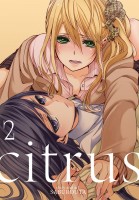
Citrus, Volume 2Citrus, Volumes 2-3 by Saburouta. Although I didn’t find some of the first volume of Citrus to be particularly realistic, I did find the intense emotions and drama to be engaging enough to be interested in continuing the series. The next two volumes follow in a similar vein—unbelievable in parts but still having the potential to become addictive. The series has begun to introduce prominent new characters as well. Not only is there another girl who has her eye on Mei, there’s also a young woman with designs for Yuzu. Mei’s father finally makes an appearance in the manga as well, albeit rather briefly. I’m not really entirely sure what to make of the man yet. Mei continues to be something of a mystery, too. One thing is for certain, though, a fair amount of Mei’s emotional issues, which have a huge effect on her interactions with other people, are tied up in her poor relationship with her father. As for the artwork, for the most part Citrus is drawn quite nicely in an overall attractive style that I like, but every so often there’s some weird anatomy going on which can be distracting.

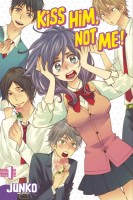
Kiss Him, Not Me!, Volume 1Kiss Him, Not Me!, Volume 1 by Junko. Serinuma is on fairly good terms with many of the hottest boys at her school, but what most people don’t know is that in her spare time she enjoys fantasizing about them in relationships with each other. She’s also a huge fan of the anime Mirage Saga and she’s devastated when her favorite character dies. Locking herself in her room for more than a week, she wastes away. Nearly unrecognizable (on the outside), she begins turning the boys’ heads when she returns to school. Personally, I would have preferred another gimmick than sudden weight loss to bring Serinuma to the attention of her schoolmates, but at least it’s not at all played seriously. In fact, there is very little that is serious about Kiss Him, Not Me!. Its ridiculousness is what makes the manga work. And it is funny. The humor primarily revolves around Serinuma being a hopeless otaku, specifically a fujoshi. Junko herself, who is also a boys’ love mangaka (I believe Mr. Mini Mart is currently her only other work released in English), is a fujoshi as well, so happily the jokes never feel mean-spirited.

Filed Under: FEATURES, My Week in Manga Tagged With: aron's absurd armada, Citrus, Junko, Kiss Him Not Me, manga, manhwa, MiSun Kim, Saburouta

My Week in Manga: October 5-October 11, 2015

October 12, 2015 by Ash Brown

My News and Reviews

Last week was a slower week at Experiments in Manga, but I am steadily coming to terms with the fact that I’m leading an increasingly busy life and that it’s okay to have slow blogging weeks. (Though I still wish I had the time to read and write more.) Anyway, last week I announced the Devils and Realist Giveaway Winner. The post also includes a list of some of the manga available in English that feature demons and devils. I also reviewed Project Itoh’s debut novel Genocidal Organ which is an excellent, intelligent work of near future science fiction. I’ve now read almost everything of Itoh’s that has been translated (I still need to pick up his Metal Gear Solid novel) which makes me a little sad since it’s all so good and I want more.

New York Comic Con was last week and there were some exciting license announcements to come out of that. Kodansha Comics will be releasing an Attack on Titan anthology collecting Western creator’s takes on the franchise (considering some of the artists and writers involved, this should be great) and has licensed Hounori’s Spoof on Titan and Hiroki Katsumata’s I Am Space Dandy. Viz Media announced a slew of new print titles: Mitsu Izumi’s 7th Garden, Yūki Tabata’s Black Clover, Izumi Miyazono’s Everyone’s Getting Married, Haruichi Furudate’s Haikyu!!, Tadatoshi Fujimaki’s Kuroko’s Basketball, Keiichi Hikami and Shin Yamamoto’s Monster Hunter, and Mizuho Kusanagi’s Yona of the Dawn. (I was very happy to see more sports manga and josei in that mix!) And Yen Press will be releasing Mikoto Yamaguchi’s Scumbag Loser, Makoto Kedōin and Toshimi Shinomiya’s Corpse Party: Blood Covered, Masafumi Harada, Sung-woo Park, and Red Ice’s Space Dandy, Yuji Iwahara’s Dimension W, and Cotoji’s Unhappy Go Lucky! as well as several new light novels.

Unrelated to NYCC (but still very interesting), manga-translator and yokai expert Zack Davisson was a guest on That Girl with the Curls podcast talking about all sort of things Japan-related. Actually, Davisson has been making the podcast rounds and was recently interviewed at Kaijucast, too, which happens to be featuring yokai all this month. Also of note, Connie at Slightly Biased Manga has posted a nice introduction/guide to all the various Alice in the Country of manga and light novels for anyone who may be intimidated the sheer number of titles involved.

Quick Takes

Devil Survivor, Volume 1Devil Survivor, Volume 1by Satoru Matsuba. Shin Megami Tensei is a huge and popular franchise of video games spanning multiple series and spinoffs which has spawned numerous anime and manga adaptations. Matsuba’s Devil Survivor is one of those, based on a 2009 tactical RPG for the Nintendo DS system. I’m always a little wary of manga adaptations of video games but was still interested in Devil Survivor. Unfortunately, it’s painfully obvious that the manga originated from a game. Although the story has some great mystery and action elements, as well as religious cults, demons, and so on, the original game mechanics are blatant in the story, made even more obvious by the characters’ use of handheld consoles. I’m not completely writing off the Devil Survivor manga, but honestly, I was disappointed with the first volume. I’m hoping that in the future the series will focus more on the story and characters, which have some great potential, and develop into something that takes advantage of the manga medium and feels less like watching someone else play a video game.

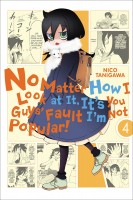
No Matter How I Look at It, It’s You Guys’ Fault I’m Not Popular!, Volume 4No Matter How I Look at It, It’s You Guys’ Fault I’m Not Popular!, Volumes 4-6 by Nico Tanigawa. In general Watamote tends to be fairly episodic, but time does slowly pass; the rhythm of school life drives the series along even if there isn’t much plot or character development per se. However, more and more recurring characters and running jokes are introduced and smaller story arcs form. The basic premise of Watamote is unchanging—Tomoko is an extremely awkward young woman whose social skills (or really the lack thereof) are entirely informed by the video games and manga that she’s interested in, many of which are rather raunchy. Occasionally she makes an effort to fit in with her classmates, but more often than not it backfires in terribly embarrassing ways. Watamote can be very funny in a painful and incredibly crass sort of way. Some but not all of the humor requires the reader to be at least vaguely familiar with Japanese pop culture, especially anime, manga, and video games. But there are copious translation notes available and the manga is usually fairly successful in conveying the basic gist of any given joke.

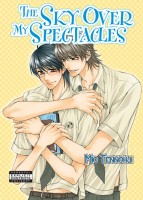
The Sky Over My SpectaclesThe Sky Over My Spectacles by Mio Tennohji. I will readily admit that I have a thing for glasses; in addition to having to wear them myself, I really like how they look on other people. One of the leads in titular story of The Sky Over My Spectacles has a similar fetish, which is what initially drew the collection of boys’ love manga to my attention. (The Sky Over My Spectacles was actually one of the first boys’ love manga that I ever read.) The four main manga collected in the volume—”The Sky Over My Spectacles,” “Let’s Fall in Love,” “Let’s Meet at 1 p.m.,” and “Tell Me You Love Me with Earnest Eyes”—all tend to be fairly upbeat and even surprisingly cute and sweet. Although there’s a bit of drama to be found, nothing ends in tragedy, which I appreciate. I also enjoy the light sense of humor present throughout the stories in the collection. The titular, and longest, manga is probably my favorite, though. In it, Azuma, whose glasses fetish is infamous, has developed a crush on one of his male, glasses-wearing classmates but then discovers that his feelings remain unchanged even when the glasses come off.

Filed Under: FEATURES, My Week in Manga Tagged With: Devil Survivor, manga, Mio Tennohji, Nico Tanigawa, Shin Megami Tensei, Watamote

My Week in Manga: September 28-October 4, 2015

October 5, 2015 by Ash Brown

My News and Reviews

A few different things were posted at Experiments in Manga last week. First of all, it’s time for the most recent monthly giveaway. The winner will be announced on Wednesday, so you all still have a chance to enter to win the first volume of Madoka Takadono and Utako Yukihiro’s Devils and Realist. The honor of the first in-depth review for October goes to Jim Zub and Steve Cummings’ Wayward, Volume 2: Ties That Bind, which continues to successfully meld the history and legends surrounding yokai with a brand new story. The series, which I’m thoroughly enjoying, would probably make a great entry point for manga fans who would be interested in exploring American-style comics. Finally, over the weekend I posted September’s Bookshelf Overload.

As for some of the interesting things that caught my attention elsewhere online last week: Foreign Policy has a nice piece about evolving LGBT rights in Japan and the role that manga like Wandering Son and boys’ love has played in it; Otaku USA has an interview with the (in)famous mangaka and tentacle master Toshio Maeda; it looks as though Masahiko Matsumoto’s long-awaited Cigarette Girl is currently scheduled for release in 2016 by Top Shelf; and Digital Manga, despite the trouble it seems to be having actually publishing anything in print these days, has launched its newest Tezuka Kickstarter aiming to release Wonder 3 and, as a stretch goal, The Film Lives On.

Quick Takes

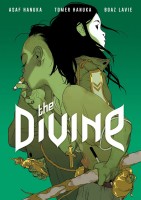
The DivineThe Divine by written by Boaz Lavie and illustrated by Asaf Hanuka and Tomer Hanuka. The striking color artwork of The Divine is what first caught my attention. (It looked vaguely familiar, and indeed, it turns out that Tomer created the cover art for Haikasoru’s recent Battle Royale releases.) The graphic novel follows Mark, an explosives expert, who travels to a remote Southeast Asian country on a military contract. The mission seems relatively straightforward—blowing up a mountain, supposedly to help the locals gain better access to its rich mineral resources—but Mark ends up caught up in the local civil war when he’s captured by a group of young rebels. Mixing mythology and modern warfare and the supernatural with man-made terrors, the comic is graphic in its blood and violence. The artwork is consistently great, but I found the narrative to be a little uneven and none of the characters are particularly likeable. The Divine was in part inspired by a photograph of the twelve-year-old Htoo twins from Burma, the leaders of the God’s Army guerrilla group in the 1990s. Although I did enjoy The Divine, I think I’d actually be even more interested in seeing a direct retelling of their story.

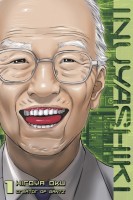
Inuyashiki, Volume 1Inuyashiki, Volume 1 by Hiroya Oku. It’s been a long while since I’ve read any of Gantz, the series that Oku is most well-known for, but I was still curious about Inuyashiki, his most recent series to be released in English. Almost unheard of in manga available in translation, which largely tends to be targeted at a younger audiences, one of lead characters, the titular Ichiro Inuyashiki, is nearly sixty years old. In fact, he looks even older than that. The first volume of Inuyashiki seems to mostly be a prologue for the rest of the series, establishing the premise of the manga and introducing the characters who will become the major players. Oku makes a point to emphasize just how sad and miserable Inuyashiki’s life is before killing him and another innocent bystander off in a freak accident. Granted, they are then both resurrected as extraordinarily powerful, weaponized cyborgs. In the case of Inuyashiki, he’s using his new-found abilities for good, and in spectacular fashion, too. As for the other victim, I don’t expect that he’ll be quite as magnanimous. Inuyashiki, as ridiculous as its setup is, has a promising start. I’m rather curious to see the direction Oku will be taking the series.

Suikoden III: The Successor of Fate, Volume 1Suikoden III: The Successor of Fate, Volumes 1-5 by Aki Shimizu. Although I am aware of the RPG series, I haven’t actually played any of the Suikoden video games. I was specifically interested in the Suikoden III manga adaptation for two reasons: the entire Suikoden series is loosely based on the Chinese classic Water Margin, and I generally enjoy Shimizu’s work (which also tends to have a Chinese influence). An overview of the previous two Suikoden stories is provided before the manga gets underway; it’s a nice, but largely unnecessary addition. The Successor of Fate seems to stand well on it own, so far. The manga doesn’t really feel like a video game adaptation, either, which I was happy to discover. References are made to past events (and past games, technically), but for the characters that history is shrouded in myth and legend. At this point The Successor of Fate hasn’t really made itself stand out from most other epic fantasy series, but its a solid beginning and, despite a few infodumps, there are plenty of things to like: a large cast of characters (including quite a few women in prominent roles), prophecies and magic, politics and intrigue, battles that rely on strategy as much as strength, and so on.

Filed Under: FEATURES, My Week in Manga Tagged With: Aki Shimizu, Asaf Hanuka, Boaz Lavie, comics, Hiroya Oku, Inuyashiki, manga, Suikoden, Tomer Hanuka

My Week in Manga: September 21-September 27, 2015

September 28, 2015 by Ash Brown

My News and Reviews

Apparently, considering the two in-depth reviews that I posted, Experiments in Manga was all about dynastic struggles and warfare last week. Ken Liu is an author that I’ve started to follow since reading one of his short stories in The Future is Japanese. His debut novel, Grace of Kings, was released this year and I absolutely loved it. It’s the first book in The Dandelion Dynasty, a fantasy epic which is inspired by and reimagines Chinese history and legends, such as Romance of the Three Kingdoms (which I really need to get around to finishing). I also reviewed Aya Kanno’s Requiem of the Rose King, Volume 2. So far, I’m really liking the series which takes its inspiration from William Shakespeare’s plays dealing with the Wars of the Roses. I think the second volume of Requiem of the Rose King improves on the first and is generally a little easier to follow as well. I continue to love the manga’s dark atmosphere and theatrical nature. Fortunately, the wait won’t be quite as long for the release of the next volume.

Quick Takes

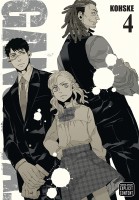
Gangsta, Volume 4Gangsta, Volumes 4-6 by Kohske. I intentionally saved up a few volumes of Gangsta to read all at once, but somehow during that time I’d forgotten how much I enjoy the series. I love the diverse cast of characters, the gritty setting, and the action and intrigue of the story. In addition to an escalation in the conflicts between “normals” and Twilights, these particular volumes of Gangsta include significant plot developments as well as more character development. For one, Alex’s memories are slowly returning, revealing small fragments of her past which should have major implications as the series progresses. Her younger brother even enters the scene. While Gangsta can be an extremely violent, brutal, and cruel manga, Kohske remembers to include quieter and more lighthearted moments to provide a contrast to the series’ intensity. Granted, they also serve to emphasize the manga’s tragic turns. Kohske isn’t afraid of killing off characters, either. With all of the battles going on between exceptionally skilled and powerful fighters, it’s probably not too surprising that there will be death, severe injury, and tremendous suffering involved.

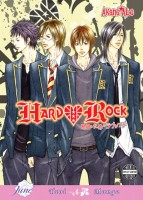
Hard RockHard Rock by Akane Abe. Because of my interest in and love of music, I have a tendency to seek out related manga (no matter how tangential), which is how I initially came across the boys’ love one shot Hard Rock. The manga follows four young men who started a band together. However, the volume actually begins with the band’s breakup and not much time is spent on music at all. Instead, Hard Rock focuses on the former bandmates’ changing friendships and relationships. There’s an underlying tangle of crushes, angst, and unrequited love, but relatively little romance, most of the major developments occurring off panel between chapters. With the exception of one page in the epilogue manga, close physical intimacy in Hard Rock is almost nonexistent beyond an occasional kiss or even rarer groping. The young men are just as likely to punch one another as they are to hug. Thus, readers looking for steamy bedroom scenes will probably be disappointed. Personally, I actually liked and appreciated the understated romance; Abe makes it work. Although Hard Rock ended up having very little to do with music, I still enjoyed it quite a bit.

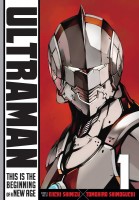
Ultraman, Volume 1Ultraman, Volume 1 by Eiichi Shimizu and Tomohiro Shimoguchi. I’ve watched and enjoyed a little over a dozen episodes of the live-action Ultraman series from the 1960s and so was curious about Shimizu and Tomohiro’s addition to the incredibly successful franchise. Readers who aren’t familiar with the original needn’t fear—the first chapter of the sequel has a tremendous amount of exposition crammed into it. While this does quickly establish the premise of the manga, it’s not the most effective or enjoyable introduction. However, the narrative of the following chapters quickly improves and the volume ends with a great hook. The manga takes place a generation after the end of the Ultraman television series and focuses on Shinjiro Hayata who, as the son of the original Ultraman, has inherited superhuman powers. He becomes the target of an alien attack which leads him to accept the role of the new Ultraman. However, instead of transforming into a powerful giant, Shinjiro uses an exo-suit to enhance his abilities. So far, the Ultraman manga is shaping up to be more serious and a fair amount darker than the original series.

Filed Under: FEATURES, My Week in Manga Tagged With: Akane Abe, Eiichi Shimizu, Gangsta, Kohske, manga, Tomohiro SHimoguchi, Ultraman

My Week in Manga: September 14-September 20, 2015

September 21, 2015 by Ash Brown

My News and Reviews

Two in-depth manga reviews were posted last week! As part of my monthly horror manga review project, I took a look at Yuki Urushibara’s Mushishi, Volume 5. I still love this series tremendously and wish it wasn’t out-of-print, but at least it’s available digitally from Kodansha Comics now. The second review last week was of Masayuki Ishikawa’s Maria the Virgin Witch: Exhibition, which is a collection of side stories, both prequels and sequels, focusing on the characters of Maria the Virgin Witch. For fans of the original series, it’s a very nice addition. The volume probably won’t appeal to or make much sense to anyone who hasn’t read the main manga, though.

There were a ton of interesting articles, reviews, and news announcements that I saw last week. Deb Aoki has been busy at Anime News Network with a two part interview with various Kodansha folk, mostly focusing on the Kodansha Advanced Media digital manga efforts, as well as an interview with those involved with the new Ultraman manga series, including the creators Eiichi Shimizu and Tomohiro Shimoguchi and Mike Montesa from Viz Media and Ai Shimizu from Hero’s Magazine. Over at Publishers Weekly, she takes a closer look at Tokyopop’s most recent efforts. Elsewhere, Kristin of Comic Attack interviewed Arina Tanemura at Anime Fest; AM Cosmos writes about the different perspectives of bullying found in A Silent Voice and Haven’t You Heard? I’m Sakamoto; and Organization Anti-Social Geniuses concludes its Advice on Manga series with advice on manga editing from manga editors.

In licensing news, the fine folk of MASSIVE will be working with Koyama Press to translate What Is Obscenity?, the comic memoir of sculptor and mangaka Megumi Igarashi (aka Rokudenashiko). In addition to the three original short manga, the English-language edition will have additional content, such as a new introduction by the artist and an interview between Rokudenashiko and Sion Sono. Yaoi Con was held over the weekend and there were some other licensing announcements made. SuBLime Manga picked up Rihito Takarai’s Ten Count, Bohra Naono’s Midnight Stranger, and Yonezou Nekota’s Don’t Be Cruel. (I’m especially looking forward to Ten Count, but am always happy to see more of Naono’s work translated.) As for Digital Manga, the Juné imprint is adding twenty-four new titles… except that they’re all digital, no print. (Interestingly, Project H’s recent license announcements were all digital-only as well, which really makes me wonder about DMP, especially as it’s starting to gear up for its next Tezuka Kickstarter.) And speaking of yaoi and BL, Kathryn Hemmann’s academic article “Queering the Media Mix: The Female Gaze in Japanese Fan Comics” takes a look at BL doujinshi based on CLAMP’s works.

Quick Takes

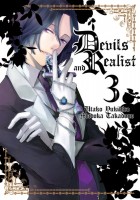
Devils and Realist, Volume 3Devils and Realist, Volumes 3-4 written by Madoka Takadono and illustrated by Utako Yukihiro. Sometimes the two major aspects of Devils and Realist (it’s humor and it’s drama) mesh well and sometimes they make the manga seem like it’s trying to be two entirely different series. Despite the demons that have become students in order to be closer to him, William’s school life remains fairly mundane, though humorous. That part of the story isn’t so different from any other school-based manga. What makes the series more interesting is the drama, politics, and intrigue surrounding the selection of the next ruler of hell. Heaven is getting involved now, too. Not only does William have to deal with demons vying for his attention, and in some cases his life, angels are beginning to make their presence known, causing even more problems for him. Also, angels can be just as big of jerks as their fallen brethren. Although I’m not in a rush to find out what happens next, I am still enjoying Devils and Realist; the art and character designs are pretty and I generally find the series to be entertaining.

King CityKing City by Brandon Graham. The first half of King City was initially published by Tokyopop but the series, like so many of the publisher’s other original English comics, was left unfinished. However, unlike all but a very select few of the series that met that particular fate, King City found a new home and was able to be completed, in this case thanks to Image Comics. Although there are some dramatic battles and rescues in King City, there really isn’t much in the way of a plot. What there is a bizarre futuristic city filled with some very strange residents. The comic focuses on Joe, his friends and acquaintances, and Earthling, his extremely intelligent and multi-talented cat. Joe is a Catmaster—with a little help from an injection, Earthling can turn into or do anything. What I love most about King City, besides Earthling and the rest of the cats, is that it is absolutely crammed with wordplay and visual puns. It’s worth taking time to thoroughly examine every page because Graham has incorporated so much humor in the small, seemingly inconsequential details. King City is very strange, but it’s the kind of strange that I tend to enjoy.

Pandora Hearts, Volume 1Pandora Hearts, Volumes 1-3 by Jun Mochizuki. I know so many people who absolutely adore Pandora Hearts that I’ve been meaning to try the series for a while now. To be honest, After reading the first volume, I wasn’t so sure about the manga—I found it to be extremely chaotic and confusing, and almost nonsensical (maybe I just wasn’t reading closely enough)—but after the second volume it started to click for me and by the third I was completely hooked on the series. Mochizuki’s artwork is pretty great, too. I definitely plan on reading more of Pandora Hearts. I’ll admit, I’m still not entirely sure what’s going on yet, but that mystery is part of the point. Most of the characters don’t understand everything, either, and those who do know at least part of the truth aren’t necessarily sharing that information anyone else unless it serves their own purpose. Tragedy and psychological trauma are major components of Pandora Hearts. There is violence and horror, betrayals and lies, but also obsessive loyalty and kindness. The characters are struggling with loneliness and the intense desire and need to belong and feel wanted.

Filed Under: FEATURES, My Week in Manga Tagged With: Brandon Graham, comics, Devils and Realist, Jun Mochizuki, King City, Madoka Takadono, manga, pandora hearts, Utako Yukihiro

My Week in Manga: September 7-September 13, 2015

September 14, 2015 by Ash Brown

My News and Reviews

I was on a much-needed vacation last week; the family spent a fair amount of time in northern Michigan enjoying nature and good food and drink. I got some extra sleep and caught up on some of my reading and writing, too. All in all, a lovely time was had. I wasn’t online much at all except to post a couple of reviews, so I’m sure that I’ve missed out on all sorts of things. (If you would, please do fill me in on anything that was particularly interesting!) The first review I posted was of the rather clever debut mystery novel The Decagon House Murders by Yukito Ayatsuji (who also happens to be the creator of the horror mystery Another and the husband of Fuyumi Ono). I also reviewed Hirohiko Araki’s JoJo’s Bizarre Adventure, Part 1: Phantom Blood, Volume 1 which continues to be marvelously strange and over-the-top.

Quick Takes

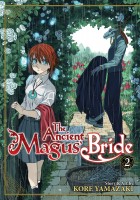
The Ancient Magus' Bride, Volume 2The Ancient Magus’ Bride, Volume 2 by Kore Yamazaki. The first volume of The Ancient Magus’ Bride was one of my favorite debuts of 2015 and I continue to thoroughly enjoy the series with the second volume. Although overall there is a disconcerting, dark, ominous, and creepy atmosphere to the manga, but there are also moments light; the horror and mystery are accompanied by touches of humor and hope that help keep the series from becoming too oppressive. Yamazaki also captures the capricious nature of the fae perfectly. I was rather pleased to see Titania and Oberon, the queen and king of the fairies, introduced in this volume as well. Although more is hinted about Elias’ past—he has connections to the fae, mages, and alchemists, but isn’t really accepted by any of them—he’s still reluctant to open up and talk about it. He largely remains shrouded in mystery, but it seems as though he may have more in common with Chise than would initially appear. Their relationship has a peculiar dynamic to it in addition to a significant imbalance of power, but I’m very curious to see how it develops; there may be healing involved for both of them.

Haven't You Heard? I'm Sakamoto, Volume 1Haven’t You Heard? I’m Sakamoto, Volume 1 by Nami Sano. The exceedingly odd Sakamoto doesn’t seem to care at all about what other people might think of him, making him immune to bullying and giving him the reputation of being the coolest student in school despite his weirdness. Somehow, he is able to take control of any situation and use it to his advantage; he always ends up looking good. The girls all love him and the guys, though they would like to hate him, can’t help but admire and respect him. And that’s what makes the manga so funny. So far, Haven’t You Heard? I’m Sakamoto is fairly episodic although there are some recurring characters and running jokes. Both the series and Sakamoto are admittedly strange, but the comedy is played seriously with an incredibly straight face. At the same time, Sano’s artwork highlights the drama and humor of the various situations. Haven’t You Heard? I’m Sakamoto is kind of absurd and yet highly entertaining. I’m not sure for how long Sano will be able to keep the gags fresh, but I’m looking forward to reading more of the series and finding out.

UQ Holder!, Volume 5UQ Holder!, Volume 5 by Ken Akamatsu. Up until this point, my feelings toward UQ Holder! have been fairly lukewarm. I’ve enjoyed the wide variety of immortals and some of the action sequences can be highly entertaining, but the story and characters more often than not are frustratingly directionless and shallow. That being said, I was surprised by how much I actually liked the fifth volume of UQ Holder!. I didn’t have much hope for it at first as the opening battle ends up being extremely anticlimactic. I’m sure this was meant to be an amusing development, but Akamatsu’s sense of humor in the series doesn’t always work for me. But then four of the UQ Holder members are sent undercover as high school students to investigate a string of serial murders in which an immortal may be involved. Not unexpectedly, some silliness ensues alongside the seriousness of the killings. The murder case is interesting, though, even if its solution ultimately feels forced. And while I liked some of the newly-introduced characters, the lead’s oblivious optimism and aggressive friendliness continues to be both an asset and a detriment to the series.

Save

Filed Under: FEATURES, My Week in Manga Tagged With: Ancient Magus' Bride, Haven't You Heard I'm Sakamoto, Ken Akamatsu, Kore Yamazaki, manga, Nami Sato, UQ Holder

  • « Go to Previous Page
  • Page 1
  • Interim pages omitted …
  • Page 6
  • Page 7
  • Page 8
  • Page 9
  • Page 10
  • Interim pages omitted …
  • Page 17
  • Go to Next Page »
 | Log in
Copyright © 2010 Manga Bookshelf | Powered by WordPress & the Genesis Framework