• Skip to primary navigation
  • Skip to main content
  • Skip to primary sidebar
  • Home
  • About Us
    • Privacy Policy
    • Comment Policy
    • Disclosures & Disclaimers
  • Resources
    • Links, Essays & Articles
    • Fandomology!
    • CLAMP Directory
    • BlogRoll
  • Features & Columns
    • 3 Things Thursday
    • Adventures in the Key of Shoujo
    • Bit & Blips (game reviews)
    • BL BOOKRACK
    • Bookshelf Briefs
    • Bringing the Drama
    • Comic Conversion
    • Fanservice Friday
    • Going Digital
    • It Came From the Sinosphere
    • License This!
    • Magazine no Mori
    • My Week in Manga
    • OFF THE SHELF
    • Not By Manga Alone
    • PICK OF THE WEEK
    • Subtitles & Sensibility
    • Weekly Shonen Jump Recaps
  • Manga Moveable Feast
    • MMF Full Archive
    • Yun Kouga
    • CLAMP
    • Shojo Beat
    • Osamu Tezuka
    • Sailor Moon
    • Fruits Basket
    • Takehiko Inoue
    • Wild Adapter
    • One Piece
    • After School Nightmare
    • Karakuri Odette
    • Paradise Kiss
    • The Color Trilogy
    • To Terra…
    • Sexy Voice & Robo
  • Browse by Author
    • Sean Gaffney
    • Anna Neatrour
    • Michelle Smith
    • Katherine Dacey
    • MJ
    • Brigid Alverson
    • Travis Anderson
    • Phillip Anthony
    • Derek Bown
    • Jaci Dahlvang
    • Angela Eastman
    • Erica Friedman
    • Sara K.
    • Megan Purdy
    • Emily Snodgrass
    • Nancy Thistlethwaite
    • Eva Volin
    • David Welsh
  • MB Blogs
    • A Case Suitable For Treatment
    • Experiments in Manga
    • MangaBlog
    • The Manga Critic
    • Manga Report
    • Soliloquy in Blue
    • Manga Curmudgeon (archive)

Manga Bookshelf

Discussion, Resources, Roundtables, & Reviews

Sean Gaffney

Pick of the Week: GTO, Limit, Kurosagi, Sailor Moon

November 26, 2012 by Anna N, MJ, Michelle Smith and Sean Gaffney 3 Comments

MICHELLE: There’s not a very robust crop of new manga at Midtown this week, but there are some interesting items nonetheless. I’m tempted to call the second volume of Limit my pick, since it’s of a different breed of shoujo than is usually licensed here, but I just cannot deny the more feel-good pull of GTO: 14 Days in Shonan, which has now reached its sixth volume. Okay, yeah, it can be a little crass, but it’s got a good heart!

MJ: Well, since Michelle took up the banner for GTO: 14 Days in Shonan, I’ll be the one to go for the second volume of Keiko Suenobu’s Limit. From my review of the first volume: “Limit‘s biggest asset at this point, in my opinion, is Konno, its difficult protagonist. I call her “difficult” because I think it’s really tricky to get an audience invested in a main character whose motives are so morally weak and self-serving, but when done well, this can be really freaking effective.” And effective this is. Also, the artwork is freaking awesome. Definitely a must-buy for me.

SEAN: I thank my colleagues for leaving me with the choice I was going to make anyway. Kurosagi Corpse Delivery Service has become another one of *those* Dark Horse titles. You know, the critically acclaimed ones that come out once every decade? As such, I cherish each volume, and volume 13 looks to be giving us more wry humor, more mystery, and more gore. And probably more of Sasaki’s nipples, which have almost appeared more than Makino by this point. With its mystery, horror, and fanservice, it could almost be like Higurashi… except that one would never, ever call Kurosagi Corpse Delivery Service moe.

ANNA: I also lean towards Limit 2, but since that was already discussed I will note that the Sailor Moon Box Set is perfectly timed for anyone wanting to pick up the manga for the holidays! I’ve bought all the volumes as single issues already, but box sets are nice to give and get as presents! Plus, who wouldn’t be delighted by the chance to experience again all the sailor suits, battle cries, and swooshing cape of Tuxedo Mask?


Readers, what looks good to you this week?

Filed Under: PICK OF THE WEEK

The Hentai Prince and the Stony Cat, Vol. 1

November 26, 2012 by Sean Gaffney

By Sou Sagara and Okomeken. Released in Japan as “Hentai Ouji to Warawanai Neko” by Media Factory, serialization ongoing in the magazine Comic Alive. Released in North America by Digital Manga Publishing.

I must admit I was rather surprised to see a title from Comic Alive licensed by someone other than Seven Seas, and had to double check to make sure that this wasn’t BL-related in some way. (Not that Comic Alive would go anywhere near BL.) But no, DMP is dipping their toe in this market, and doing so with a title that seems a bit more low-key than what we’ve seen from other Comic Alive titles released in North America lately, even if it does have the same basic storyline and outlook.

The story stars Yoto, a typical teenage boy who spends most of his days trying to look at girls’ panties (OK, a typical Japanese teenage boy). He’s very good at denying he’s doing anything wrong, and fate seems to love him, as whenever he’s caught perving it gets mistaken for him doing something noble. He’s still bothered by this, however, being a decent pervert at heart, and wishes he could be more honest. Then he hears about a cat statue that grants wishes, and it seems to work nicely on his best friend. So he goes to visit it, and promptly runs into an embarrassed, panicky girl who also wants to wish on the cat statue – she wants to make it so her feelings aren’t so visible. Unfortunately, they both get their wishes – he now can’t tell a lie at all, even to save his getting beaten up, and she’s a perfect stoic on the outside, no matter what she may be feeling.

Wackiness, as they say, ensues. As you can see by my taking a paragraph to write out the plot, there’s not much to this. The two leads quickly realize how horrific this has become, but of course they can’t take their wishes back so easily. And things are livened up by your typical moe manga archetypes in the supporting cast. Yoto and Tsukiko are already cliched types (heck, Tsukiko manages to be two in one, as we see her both as the stressed out over-emotional girl *and* the stoic), and they’re joined by a busty track star who’s queen of the school and a blonde tsundere princess who finds her match in Yoto’s new blunt and straightforward persona. A light-hearted harem manga ensues.

I have not been all that fond of Comic Alive titles recently. I Don’t Like You At All, Big Brother! and Haganai both tended to irritate more than amuse me, mostly because I prefer my moe to be relaxed and soft rather than hyperactive and angry. But this wasn’t quite as bad as those two. The lead was just a shade more sympathetic, the tsundere had a bit more dimension to her, the plot invited antics while still being interesting. Yes, there’s still lots of talk of breasts and panties, and the plot is a simple ‘role reversal’ type thing we’ve seen before in, say, Your and My Secret, but this ended up being OK. I’d recommend it, but DMP hasn’t put Volume 2 on their upcoming list for 2013 (after they return from print hiatus), meaning we won’t see a new volume, if we do at all, for over a year. Thus, I can’t actually recommend it that much. But it’s not too bad.

Filed Under: REVIEWS

Going Digital: November 2012

November 25, 2012 by MJ, Michelle Smith and Sean Gaffney 4 Comments

Welcome to the latest Going Digital, Manga Bookshelf’s monthly feature focusing on manga available for digital viewing or download. Each month, the Manga Bookshelf bloggers review a selection of comics we’ve read on our computers, phones, or tablet devices, to give readers a taste of what’s out there, old and new, and how well it works in digital form.

It’s all-browser, all the time this month, as MJtest drives JManga7 and Sean and Michelle take a look at some recent releases from JManga and VIZ. Device, OS, and browser information is included with each review as appropriate, to let you know exactly how we accessed what we read.


Platform

Test Drive: JManga7.com

It’s no secret that we’re pretty big fans of JManga.com here at Manga Bookshelf. Their ability to provide access to a wide variety of manga coupled with competitive pricing and an attentive ear to customer concerns has proven to more than make up for the service’s weak points—inconsistent translation quality and (so far) limited delivery options, to name a couple. Particularly for those of us who like epic, older shoujo, smart josei, idiosyncratic one-shots, or really anything in the yuri catalogue, JManga has been something of a miracle in terms of providing us much longed-for content we’d lost hope of ever seeing in print.

Just before New York Comic Con this year, JManga announced a new website, JManga7, where fans could read a rotating selection of free older chapters of their ongoing series each week, with the option to read the most recent chapters for a monthly subscription fee of $5.99. What does $5.99 buy you? Let’s find out!

The Good

JManga7’s catalogue is large and growing consistently, with new chapters arriving seven days a week. (JManga7, get it?) Heavy release days, such as Thursdays (pictured below), provide an abundance of new content for subscribers with wide-ranging tastes (and at least something for pickier readers each day). In the week I looked at, 48 new chapters were offered over the course of the week.

(click images to enlarge)

Though JManga7 suffers from the same limited delivery options as its sister site, its flash-based reader looks pretty good, loads quickly, and is easy to navigate.

Like most flash-based manga readers, JManga7 offers left and right arrows (that appear on mouseover) for quick page-to-page navigation, as well as the ability to see and skip to any page in the chapter. Links to buy full volumes at JManga are strategically placed at the top of each page.

The Less Good

Though JManga7’s catalogue looks fantastic at first glance, some titles (like Yukari Ichigo’s josei series Pride, which I clicked on excitedly, and another Shueisha favorite Crazy for You) seem to be a bit of a tease, offering only a few sample chapters and nothing more. Oddly, too, text that encourages the purchase of full volumes at JManga offers no direct link to do so. Even the offer to “Be the first to review this series!” is a hollow one, as attempts to click reveal it to be nothing more than static text.

Even titles with premium chapters available may prove disappointing for existing JManga customers. For instance, Setona Mizushiro’s BL epic Dousei Ai has chapters 10-14 currently available to premium JManga7 subscribers only. While this works well for new customers, fans who have already been buying the series at JManga (where it is currently available up to chapter 32) will find nothing new at JManga7. And while it’s obvious that part of JManga’s strategy is to encourage JManga7 fans to buy the full volumes, that leaves little incentive for existing fans to sign up for premium access.

Bottom Line

Much like JManga at the time of its initial launch, JManga7 feels a bit half-finished—burdened with features that appear to be not-quite-there and teaser content bulking up its fledgling catalogue. And though $5.99 a month is actually a pretty great deal for new readers who prefer low-committment, serialized content over serious collection, existing fans of JManga may be wondering what’s in it for them. – MJ


Web Browser

Rurouni Kenshin: Restoration, Chapters 1-5 | By Nobuhiro Watsuki | VIZ Media | Shonen Jump Alpha/VizManga.com | Windows 7, SeaMonkey 2.4.1 – Undoubtedly, there are bigger fans of Rurouni Kenshin than I, but it’s still a series for which I hold a great deal of fondness. I vividly remember picking up each volume of the manga as it was published each month (the first series to get that kind of accelerated release, I believe), and greatly enjoyed the anime, as well. (Well, not the often-atrocious filler episodes.) I firmly believe that the “Kyoto Arc” is one of the best storylines ever executed in shounen manga, and if other portions of the series were less well-done… well, I was inclined to be tolerant.

But now, here we have Rurouni Kenshin: Restoration. According to Shonen Jump Alpha‘s blurb, “To celebrate the upcoming live-action movie, Nobuhiro Watsuki reinvents the classic Rurouni Kenshin manga with all-new twists and turns.” I can understand why Watsuki might want to undertake such a project. In the first place, he’s never been able to replicate the success he had with Kenshin, and in the second, the original series does get off to a pretty slow start.

Restoration remedies this last issue by taking various shortcuts. Kenshin, Kaoru, and Yahiko meet under different circumstances, and villainous merchant Takeda Kanryu becomes a foe immediately. Neither Megumi nor Aoshi is under his employ, however, but he’s still got that gatling gun of which he is so fond. Sano still makes his first appearance as someone who’s been hired to fight Kenshin, but he already possesses his Mastery of Two Layers technique. The personalities of the characters are intact, though, so this streamlined introduction doesn’t ruffle my feathers too much.

Perhaps the most striking difference so far involves Saito Hajime. After six occasionally dull volumes, the original series is reinvigorated in the seventh with the introduction of Saito, who comes after Kenshin, grievously wounds Sano, lures Kenshin out with a note, and hangs out at the dojo for a while until Kenshin gets back, at which point they have an epic duel. It’s exciting stuff! He does eventually become an ally as they work together to combat madman Shishio during the Kyoto Arc, but they’re never truly friends.

In Restoration, we get our first glimpse of Saito in chapter three, which led me to wonder… how is Watsuki going to depict their battle this time? Surely, that’s one aspect of the story that needs no reinvention! The answer (at least so far) turned out to be… what battle? Instead, the guys meet and talk about how Kenshin is unable to find a place to belong in the new era. That’s it. So, basically, Watsuki just skips straight to the “uneasy allies” stage of their relationship.

Yeah, okay, I know this isn’t supposed to be a strict retelling. What would be the point in that? But the point remains… while there are definitely segments of the original manga that could benefit from a more streamlined approach, I would not classify anything from volumes seven through eighteen in that category. I’m kind of worried now about what will happen with the Kyoto Arc. Will it even exist? Do I want it to exist, given that it will be undoubtedly changed? I really don’t know.

At the moment, I still plan to check out new chapters of Restoration as they appear, but will maintain a dubious air whilst doing so. – Michelle Smith


Tokyo Cycle Girl, Vol. 1 | By Wadapen | Earth Star Entertainment, Comic Earth Star | JManga.com | Windows XP, Firefox 16.0
Sometimes you read a series because it immediately grips you, you latch on to a character right away, or you just have to find out what happens next. But those series don’t come along every day. Far more often you get the series that raise a smile, or have some potential, or pass the time. A series where your immediate reaction is “Yeah, I guess I’d read another volume of that.” Tokyo Cycle Girl is such a series. It does a lot of little things right, and is easy to follow, so is a nice, fast-paced, relaxing read. It only has one big flaw, which is a stunning lack of originality.

I need to mention that up front, as there’s a chance someone might think that this series might have something they haven’t seen eighty times before. Get those thoughts out of your head. This isn’t done in 4-koma style, but in every other aspect it follows at the feet of all the moe high school club manga circa Haruhi/K-On!/Lucky Star. The lead, Iruka, is a bubble-brain country girl who’s new to Tokyo, but filled with excitement, energy, and naive awe at absolutely everything about Tokyo. Katou, her roommate, has already grown used to the city, and finds Tokyo to be suffocating, with all the places and people looking the same to her. She’s a long-haired beauty, but seemingly cold and reserved. Of course, as Iruka finds out, she’s also very much a tsundere. Meanwhile, if I told you the other two main characters in this volume were a sporty tomboy who tends to speak first and think later and a yamato nadesico princess type whose aura of calm can make almost anyone bow to her, you wouldn’t be a bit surprised.

That said, aside from the stunning unoriginality, this manga doesn’t do anything else wrong. The author seems to know he’s dealing with types, so exaggerates them beyond belief right from the start. Iruka isn’t just perky, she’s beyond hyperactive, bouncing off the walls and floor when first reaching her dorm room. Yukimi isn’t just a perfect princess, but does a perfect tea ceremony the moment she and Iruka meet, and is already exuding enough ‘motherly’ vibes to fell the entire cast. The other interesting thing was the bicycle talk. All the characters ride bikes, ranging from the latest sport style to Iruka’s old-fashioned junior-high style bike. We get detailed looks at the various bike styles and accessories around Tokyo (along with frequent asides from the author), and bike knowledge definitely seems to be this series’ ‘hook’. Which is enough, along with the likeable cast, to keep me wanting to read more, even if this is The Return of K-On! Vol. 35, with Bicycles. -Sean Gaffney

Filed Under: Going Digital Tagged With: JManga, JManga7, Shonen Jump Alpha

Umineko: When They Cry, Vol. 1

November 25, 2012 by Sean Gaffney

Story by Ryukishi07; Art by Kei Natsumi. Released in Japan in two separate volumes as “Umineko no Naku Koro ni: Legend of the Golden Witch” by Square Enix, serialized in the magazine Gangan Powered. Released in North America by Yen Press.

The story of Higurashi: When They Cry may not be finished here in North America, but that doesn’t mean we haven’t seen people clamoring for its sequel. And so Yen has decided to bring it out even as Higurashi reaches its climax, in the more economical but deluxe-looking omnibus format. Not to worry, though: it’s a spiritual sequel rather than an actual one. Only one minor character from Higurashi shows up in Umineko, and we don’t meet her in this particular volume. But Umineko certainly has a lot of what drew people to Higurashi. Cute moe-style girls (who later turn out to have terrifying sides), heroes who use over the top perverse antics to hide a darker side, and of course giant piles of corpses drawn in gruesome detail.

It can be a little hard for me not to try to compare the protagonists of Umineko with their predecessors, especially since some of them don’t quite live up to those heights. Maria in particular is meant to have a certain Rika-esque aspect to her, but comes across as more bipolar than anything else. I must also agree with her mother: the uuu-uuu thing is really annoying, I’ll take nipah any day. As for Battler, I am reminded that I really disliked Keiichi at first, then grew to like him quite a bit, and I hope the same thing happens here. I also hope that, like Higurashi, the boob jokes and fetishes get less important as the volumes continue. I realize they’re there to provide contrast and relief before the main events, but let’s face it: they’re there for an otaku audience which isn’t me.

As for the story itself, I’m intrigued. Ryukishi07 has already stated that the goal here is not Higurashi’s (figure out who was behind the killings), leading me to think that the chances of everyone eventually living happily ever after are far less likely. The goal seems to be ‘is this a fantasy world or not?’, with its discussion of witches and black magic being countered by Battler (and Eva’s) staunch common sense and realistic view. I admit I’m inclined to believe there’s a human element as well, but then we’ve barely started this series, and still haven’t properly met ‘Beatrice’, the witch whose message is behind the whole thing. In addition, this series is about an extended family rather than a group of friends. It’s easy to bond with a group of close friends, who you can choose. Family’s harder, as you’re born with them. Notably, the parents in Umineko seem to be playing a much larger role than they did in Higurashi, and I’m not entirely sure if the children are supposed to be the heroes here, Battler’s POV or no.

Higurashi was never particularly subtle and somber, but it seems to me that Umineko takes things even further into a theatricality that almost embraces the grand guignol. Battler’s expansive gestures, the parents’ florid arguments regarding the inheritance, and of course the over-the-top mutilation of the corpses, all seem to be something that would be more appropriate for an opera house than a manga volume. That’s not to say I didn’t like it, though. Once you get used to the fact that everything is over the top, it becomes a much more readable series – even Maria’s supposed terrifying faces cause a grin and a ‘here we go again’.

In the end, this is a series with the same positives and negatives as Higurashi. If you can get past the groping fanservice and the grotesque murders, at its heart this is a mystery that will play out over the course of many volumes, and this is most likely merely meant as a taster introduction. Hopefully next volume we’ll meet the witch and get a few more answers. Then again, the first 2 volumes of Higurashi gave us no answers whatsoever…

Filed Under: REVIEWS

Bunny Drop, Vol. 7

November 24, 2012 by Sean Gaffney

By Yumi Unita. Released in Japan as “Usagi Drop” by Shodensha, serialized in the magazine Feel Young. Released in North America by Yen Press.

Please do not discuss Bunny Drop in the comments beyond Volume 7.

Everyone thinks a lot in Bunny Drop. I don’t just mean that we see their thoughts in addition to their dialogue, which we do, but that they think deeply all the time. Weighing decisions – and then wondering if they’re the correct ones – is something that Daikichi and Rin have done since this series began, and now that Rin is getting near graduating from school, she’s starting to think about her future. Which will involve having to resolve her past, and that means that she is finally going to have to meet Masako.

Yumi Unita knows that the best way to write a lovable, heartwarming manga is to make sure everything is as awkward as possible, so I was relieved to see that when Rin and Masako finally do meet, it wasn’t all hugs and tears and resolve to see each other every 2nd Saturday from now on. Rin still barely remembers Masako, even now – though we find out a reason for that here – and Masako may be moving on with her life and trying to be a better person, but she still acts like she regards Rin as a failed time in her life that makes her think lots of things she doesn’t want to. Masako’s childish qualities haven’t gone away, and it’s still very hard to sympathize with her. But we’re meant to be on Rin’s side here anyway.

Rin does a lot of soul searching here, spurred on partly by what happened with Kouki in Vol. 6 and partly through hearing about Reina getting a boyfriend (and then later watching it fall apart). She’s spent her last ten years growing up in an unconventional family, and realizes that she has a rather small pool of friends as well, mostly as she’s not doing clubs or sports, but going home to take care of Daikichi. I don’t think this is meant to be a dig on Daikichi himself – the general sense is that Rin really wants to do these things, and is likely better at cooking, etc., so has just stepped into this role at home.

Daikichi, meanwhile, is also growing older, and is having to deal with a serious injury for the first time – he puts his back out catching Rin when she falls off a stool. Given that he works in the shipping industry, this could be a big problem if it lingers. I was amused to see his co-workers coming over and reminiscing about their own back pains of the past, as well as Kouki’s mother telling Rin she had a back injury when she was in her twenties. But all this does is remind us how insular Daikichi’s own life has become as well. He doesn’t really hang out with co-workers anymore – his closest friend, in fact, may be Kouki.

So Rin is wondering about what it means to be a mother, and what it means to be a daughter. And realizing that the time may come when her life takes her away from Daikichi. And, unsurprisingly given how she’s grown up, she is not particularly fond of that day coming at all. That said, it’s not clear that day is coming soon in the manga either. The romantic drama we saw in Vol. 6 gets a brief mention here, but for the most part still appears to be over. So where does Rin go from here? Stay tuned for Vol. 8, coming out in April. Which may have a certain elephant that’s been lurking around the room. In the meantime, Vol. 7 gives us more of what we like about this series – thoughtful moments in the life of a kid who’s far too smart (but naive) for her own good.

Filed Under: REVIEWS

JManga the Week of 11/29

November 23, 2012 by MJ, Michelle Smith and Sean Gaffney 6 Comments

SEAN: JManga is not taking the holidays off this week, and next week promises even more new content. Let’s see what we’ve got.

I had written before about manga JManga could pick up, and suspected they already had Teekyu, which had an anime air this fall. Sure enough, they announced it at NYCC, and here it is. It’s from the increasingly omnipresent Earth Star Entertainment, and seems to be a cute tennis comedy.

MICHELLE: I like sports manga, but I’m wary of the moe factor.

MJ: I only *sort* of like sports manga, so I’m probably feeling even more wary than Michelle.

SEAN: Kemonogumi is also an Earth Star title, and I know absolutely nothing about it except it’s by ESE, who also does the Wanna Be Strongest In The World! wrestling manga on JManga’s site. Given that title’s over the top fanservice, and the fact that the cover to Kemonogumi features what seems to be a poodle with large breasts next to a bunny girl, I suspect I am not the audience for this series.

MICHELLE: … Wow.

MJ: Um. Yeah.

SEAN: Gokujyo Drops is the smutty yuri title of this week, a manga from Ichijinsha’s Yuri Hime that was actually released initially as a cellphone manga. It seems to be in that genre of yuri that thinks that sexual harassment is incredibly erotic. That’s not me, so I think I’ll move on.

MICHELLE: So far, this list isn’t looking too promising.

MJ: I was okay with “smutty yuri” until it got to the part about sexual harassment. That’s disappointing.

SEAN: I met the creator of Soredemo Machi wa Mawatteiru at New York Comic Con, and he was very nice and easy to talk to. I need to catch up to his low-key but funny maid cafe manga, which has reached Vol. 9. It’s not belly laughs, but it does put a smile on your face.

MJ: I really should read this. It doesn’t really look like my kind of thing, but I heard great things all-around about the mangaka from those who met him at NYCC, and I’ll admit that goes a long way.

SEAN: Peacemaker Kurogane is at Vol. 3. That’s not the final volume, so I assume that peace is not made.

MICHELLE: *snerk*

SEAN: Lastly, and for me the big release this week, we have Vol. 1 of Sweet Blue Flowers (Aoi Hana), a slice-of-life yuri series from the creator of Wandering Son. This is still running in Ohta Shuppan’s Manga Erotics F (Shimura is also still doing Wandering Son for Enterbrain’s Comic Beam – she’s incredibly prolific), and is simply one of the best manga titles out there, yuri or otherwise. I absolutely cannot wait for this!

Saved the best for last.

MICHELLE: You certainly did! I am really, really excited for Sweet Blue Flowers! (It feels weird to type that after calling the series Aoi Hana for so long.) I actually bought the first six volumes in Japanese just so I could look at them, so I am thrilled to actually have the chance to read the series.

Even after a largely disappointing list, JManga redeems themselves in the end with this one!

MJ: Yes! I was so excited when JManga announced this license, and I hadn’t realized it was due out so soon! This really does turn the entire list around.

SEAN: What intrigues you this week?

Filed Under: FEATURES, manga the week of

Manga the Week of 11/28

November 22, 2012 by MJ, Michelle Smith and Sean Gaffney 3 Comments

SEAN: After three weeks that absolutely buried us in manga, it’s a relief to find that the last week of November is reasonably small. If only as I’m so far behind I may never catch up. Let’s see what we’ve got…

First off, I’m pleased to see that Dark Horse has reached Lucky Vol. 13 of Kurosagi Corpse Delivery Service. It comes out so infrequently but that makes us love it all the more, especially Carl Horn’s expert liner notes, which get more glib with every passing volume. Last time we heard that Karatsu and Sasaki were in Hawaii on a case, so I’m hoping that we see said case here.

MJ: I know I’m late to the party here, but I’ve finally started reading this series, and of course it’s just as good as you’ve been telling me all this time. I expect I’ll make it to volume 13 before the next one comes out, from the sound of it!

MICHELLE: I read volume one a long time and liked the characters a lot, but got really grossed out by one page in particular. I’ve never gone back to it, even though I own through volume eleven or so. One of these days!

SEAN: Kodansha has a few new things as well. Deltora Quest hits its penultimate volume, and is one of the few manga released here under the ‘kodomo’ genre – i.e. it’s for little kids in Japan.

Fairy Tail is in the middle of its big alternate world with personality-swapped heroes arc, and Vol. 22 will feature lots of fighting, I’m going to guess.

MICHELLE: I generally read Fairy Tail courtesy of my local library, but I’m glad to see it’s still going strong. It seems popular amongst the young adult patrons, as well.

SEAN: Finally, for those of you who may have missed out on Sailor Moon 1-6 when they were first released, there’s now a big box set. It has stickers! (But no new content.)

MJ: It’s a great time for them to release something like this, too. It’s a natural choice for probably every manga gift guide that’ll come out this year.

SEAN: From Vertical, we have GTO Shonan 14 Days Vol. 6. I’m not sure if these twins are going to be the final Big Bad, but they’re proving to be very difficult for Onizuka. Not that this is going to stop him at all, of course. It’s Onizuka, we know what’s coming. DETERMINATION (and some perversion).

MJ: Have I mentioned how much I love this series? I really love this series. It was one of my biggest surprises of the year, really. I wouldn’t have thought it’d be my thing, but it is—very much so. Can’t wait to read this!

MICHELLE: I echo your sentiments, but must point out once again how much Sean’s commentary amuses me. :)

SEAN: There’s also Vol. 2 of Limit, where I’m going to take a wild guess things are going to go from bad to worse.

MJ: I’m looking forward to this as well! Vertical’s been on a roll for me lately.

MICHELLE: Me, too!

SEAN: Lastly, it’s not on the list, but Yen also apparently released Is This A Zombie? Vol. 3 two weeks back, and since it hasn’t shown up via Diamond yet I’ll give it a mention here. There is much debate about whether it’s a parody of magical girls/harems/zombie manga or just a mulched-up pastiche. I’ll let others keep reading it to make that choice for themselves.

MJ: I… Ugh. I have nothing more to say, really.

MICHELLE: I was totally going to write “Ugh.”

SEAN: All this plus the debut of the My Little Pony comic from IDW! What appeals to you turkey-stuffed individuals?

Filed Under: FEATURES, manga the week of

Shoulder-a-Coffin Kuro, Vol. 3

November 22, 2012 by Sean Gaffney

By Satoko Kiyuduki. Released in Japan as “Hitsugi Katsugi no Kuro – Kaichu Tabi no Wa” by Houbunsha, serialization ongoing in the magazine Manga Time Kirara. Released in North America by Yen Press.

I never reviewed the first two volumes of Shoulder-a-Coffin Kuro, the main reason being that I didn’t have a blog when they were both released. It’s been four long years (and 4 volumes of GA Art Design Class, the cute 4-koma series by the same author that many fans blame for Kuro’s hiatus) since we last saw the adventures of the stoic girl and her coffin. Indeed, the author apologizes profusely at the end of Vol. 3 for the delay, and hopes that we’ll keep reading regardless. Luckily, that should not be an issue. Not only is there a particularly vicious cliffhanger to keep us hungry for Vol. 4, but picking up this series again is like revisiting an old friend – after a few pages it’s like they never went away.

A lot of people note that this series often has a downbeat and melancholy tone, which is true and certainly doesn’t go away here. It’s just as important, though, that it manages to keep a light touch, mostly in its portrayal of Nijuku and Sanju. TV Tropes has a page called ‘Morality Chain’ which discusses characters whose basic existence is what keeps our heroes on the straight and narrow. While Kuro isn’t close to becoming a supervillain, there is a certain sense that the two mysterious children/scientific experiments function that way to this series as a whole. They have the childlike wonder of a Yotsuba, while also being able to sustain a level of creepy due to their supernatural origins. It makes for a good balance.

As for the manga itself, much of it is the same as the previous two volumes – Kuro, Sen and the two kids roaming the countryside of ‘generic pre-industrial world’ and trying to find information about the witch who cursed Kuro. And while there are stand-alone plots throughout that have nothing whatsoever to do with Kuro’s past, we are starting to see events come together into a coherent whole. We meet a strange young woman who is called a witch, and who ‘is searching for the person searching for her’ – an obvious connection to Kuro. Kuro, meanwhile, not only deals with her mirror opposite, but also her possible evil twin… though given what we know of Kuro before her curse, there may be far less difference between them than we’d like.

And much as I enjoyed the fluffy slice-of-life chapters and the twins, they are outnumbered by the melancholy in the end. We meet wind-up dolls waiting forever for their long-dead owners, and fairy-tale legends built around not-so-great men. But most of all, we get Kuro, who walks on her journey with an air of stoic suffering that is absolutely necessary. She is not stoic by choice, but by pure force of will. And when that will is shattered – as it is at the end of this volume when she encounters a war veteran searching for his wife and daughter – we are reminded that Kuro is CURSED, and there’s a very good reason why she carries that coffin all the time.

As I said, Kiyuduki urges us all to forgive her hiatus and watch over Kuro for a little longer. And she couldn’t have chosen a better volume to get us to do it. I *need* to find out what happens next. Unfortunately, while Kuro may no longer be on hiatus, it’s still not the fastest series in the world, so I may have to stoically suffer until the next volume. Get this book at once, and go back and get 1 and 2 as well if you didn’t already.

Filed Under: REVIEWS

Haganai: I Don’t Have Many Friends, Vol. 1

November 21, 2012 by Sean Gaffney

By Yomi Hirasaka and Itachi. Released in Japan as “Boku wa Tomodachi ga Sukunai” by Media Factory, serialization ongoing in the magazine Comic Alive. Released in North America by Seven Seas.

It can sometimes be very difficult to practice what I preach. It’s all very well and good for me to offer advice to others, but sometimes a situation comes up where I have to take it. And so it goes with this first volume of Haganai, where I can’t help but hear the voice in the back of my head reminding me of Teru Teru x Shonen, where I urged bloggers who read Vol. 1 and then stopped to not judge an ongoing character arc by its first volume. And so it goes with Haganai, where I feel obliged to note that the plot is likely meant to be ‘this characters grow better and learn to be nice as the series goes on’. Or at least I hope so, as Haganai has some of the most irritating leads you’ll ever meet.

As if you had not been able to guess by the title and cover, Haganai is based on a series of light novels. The basic premise seems like some odd fusion of Haruhi Suzumiya and Toradora: a young man who has trouble making friends due to his natural blond hair and his squinty eyes meets an antisocial young woman who has trouble making friends with anyone. After a brief discussion, she gets the idea to form a club, supposedly devoted to learning how to make friends but in reality most likely just an excuse to hang out. Of course, she doesn’t count on the club actually gaining new members, all of whom are just as socially maladjusted as she is.

One thing the manga does that I enjoyed was have a ‘Chapter 0’ which takes place several months after the events of the rest of the book, a flash-forward of sorts showing us what the club will eventually be like. It helps to introduce the major players (including several who then don’t show up again for the rest of the volume) and shows off the basic plot and how it leads to cringe-inducing humor. Seeing it, I felt a bit more prepared for the rest of the volume.

Unfortunately, Haganai is also part of a brand of ‘moe’ that I’ve never really come to love. The old ‘harem genre’ of shonen manga used to have the nebbish hero choosing between nice girls, tsundere girls and the occasional bottle fairy, but there was never any indication that the girls weren’t able to function in society as a whole. But manga lately, mostly due to the related boom in light novels, has seen a huge increase in socially maladjusted high schoolers who simply can’t interact properly with anyone (except of course our hero… and even then). And you’re left exhausted as you see them blackmailing people gleefully as it would be fun to abuse them (as Yozora does here) or getting offended that the male lead refuses to act as her slave/footstool (as Sena does). It’s a love triangle of two girls who re all tsun and no dere. And what that leaves is basically a somewhat nondescript hero listening to two loud and obnoxious women yell for 200 pages.

That said, as I noted, clearly the premise will be (besides which girl gets the guy) about seeing the nice and sweet side of these girls. But it’s getting harder to justify digging for it. Even Haruhi Suzumiya eventually mellows out. Can I expect the same for Yozora and Sena?

Filed Under: REVIEWS

Young Miss Holmes, Casebook 3-4

November 20, 2012 by Sean Gaffney

By Kaoru Shintani. Released in Japan as “Christie High Tension” by Media Factory, serialized in the magazine Comic Flapper. Released in North America by Seven Seas.

The second omnibus volume of Young Miss Holmes, I will admit, did not thrill me quite as much as the first. Shintani is starting to have more difficulty inserting Christie and company into the Holmes stories, and I suspect, given there’s 3 volumes (one omnibus) to go after this that he might veer off the canonical road soon. He also has that odd habit that most manga writers who started in the 70s and 80s do of inserting humor – usually quite low humor – at the oddest points, something he no doubt got from Tezuka (you can see traces of this in Adachi and Takahashi’s writing as well). That said, this is still a lot of fun, with Christie being incredibly precocious while avoiding cloying qualities, and some much needed backstory for her two maids.

The first half of the book is taken up with The Hound of the Baskervilles, quite possibly the most famous of the Holmes stories. There are no attempts to alter the outcome of the story such as we saw before, and it spins out (with much compression) as expected. As I noted above, we get lots of opportunities to see Christie be brilliant, making deductions and logical leaps. At the same time, though, she has the patience and drive of a 10-year-old girl, and her maids realize this – though they’re still not able to corral her very well. And, as Shintani knows what’s popular and what isn’t, we get some nice opportunities of seeing Nora using her whip, including a battle with the Hound (which doesn’t go well, but luckily she has an unseen rescuer.) And again, thankfully, Holmes arrives at the solution faster than anyone else, including Christie.

The second story adapted here is The Adventure Of The Six Napoleons, which has a solution that is obvious enough that Shintani can easily write Holmes out of the tale and have Christie solving everything. This also reintroduces Detective Dexter of Scotland Yard, who we briefly saw in Hound, and who pops up every now and then from now on. He has an immediate attraction to head maid Ann Marie, something Christie notes and is quick to take advantage of. Again, the case plays out much like the original, but makes for a nicely entertaining adaptation.

A brief short story, The Memories of Nora, follows, and is what it sounds like: an original story by Shintani showing Nora’s life to date and how she became a maid at the Hope Estate. It’s not a pleasant childhood to say the least (and has some annoying ‘evil gypsies’ stereotypes to boot), but lets us see that Nora has no regrets as to where she’s ended up.

The final Holmes story adapted for Christie is The Five Orange Pips. Wisely, Shintani leaves the main mystery to Holmes, if only so that Christie doesn’t have to feel responsible for the fallout. Christie’s plot rests with Ann Marie, who has a complete freakout when she hears about the pips. As with most modern North American readers, the solution is far more obvious these days – we know what KKK stands for – so the storyline concentrates on Ann Marie’s own tragic childhood, and her change from a sweet little child to an instrument of God’s vengeance (as Holmes rather awkwardly puts it).

I must note once again that Seven Seas’ All Ages rating for the book is entirely inappropriate, in my opinion. Leaving aside the brief non-sexual shots of underage nudity, there’s simply a giant pile of violence here, including lingering shots of corpses with their throats slit, as well as a young girl killing an entire mansion full of people. I get that ratings can sometimes drive sales, and that it’s very hard to sell books starring 10-year-old cuties to adults. But come on.

That said, I am very grateful to Seven Seas for bringing out this series, which is a fast-paced and fun mystery series with a cute and sharp as a whip protagonist, and can’t wait (though I will have to, as it’s not out till September 2013) for the conclusion. And note with amusement that even Christie herself has started to call her maids ‘Herculean’.

Filed Under: REVIEWS

Pick of the Week: Thermae Romae FTW

November 19, 2012 by MJ, Sean Gaffney, Michelle Smith, Brigid Alverson and Anna N 2 Comments

SEAN: There’s a ton of stuff coming out next week—again—but one obvious Pick of the Week, which is Mari Yamazaki’s Thermae Romae. The artist is known for her comedies, and there’s lots to laugh about here. A Roman architect discovers the ability to time-travel via bath, and ends up in modern times. Though initially freaked out, he is able to use our own modern bathing ideas to transform his own spa back in his time. It may not sound like much, but the execution is what makes it a winner. The manga has won awards and spawned an anime and a live-action feature. Plus the artist lives in Chicago! If this sells well, maybe we can get Kodansha or Vertical to pick up her Sweet Home Chicago series, which runs in the josei magazine Kiss.

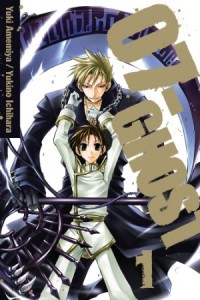
MJ: This really is a pretty incredible week, including the latest volume of Real, another installment of Viz’s X omnibus, and license rescue 07-Ghost. And though I absolutely agree with Sean that Thermae Romae trumps pretty much anything you could put on the list, since he’s already mentioned that, I’ll take the opportunity to give a shout-out to one of my surprise favorites of the year, Yen Press’ graphic novel adaptation of Gail Carriger’s Soulless. Its second volume comes out this week, and it’s a wild, tense ride. If you only buy one comic this week, go for Thermae Romae, but if you can manage two, Soulless is worth a look!

MICHELLE: … That really does just about sum it up, doesn’t it?

If, after buying Thermae Romae and Soulless you have room in your budget for more, then I absolutely recommend volume eleven of Takehiko Inoue’s Real. Saturn Apartments and Bokurano: Ours are good, too!

BRIGID: Yes, I want to jump in and put in the word for vol. 6 of Saturn Apartments. It’s a story with a great concept—the main character is a window-washer for a ring-shaped apartment complex that orbits around the earth, so he sees all strata of society—and an amazing visual sense. The cast of characters has been growing since volume 1, and there is an underlying plot anchoring it all, but it’s really a collection of self-contained stories so it isn’t hard to just jump in and start reading with this volume. So yes, Thermae Romae is my first pick too—it’s awesome—but this is my solid second choice.

ANNA: Thermae Romae is on my wish list for the holidays and any week that features a new volume of manga by Takehiko Inoue is a cause for celebration. I am going to go with 07-Ghost though, simply because it is next on my to-read list. I’m always a bit curious about license rescues, and I didn’t read the earlier version of the series which was published by the late lamented Go!Comi. I thought it was interesting that this manga came from the magazine Monthly Comic Zero Sum, home of Loveless and Saiyuki Reload. As I was quickly flipping through the volume I saw attractive art, plenty of action scenes, and weird religious iconography. I am always excited to read any manga featuring those three things!


Readers, what looks good to you this week?

Filed Under: PICK OF THE WEEK

Bookshelf Briefs 11/19/12

November 19, 2012 by Sean Gaffney, MJ and Michelle Smith 7 Comments

This week, Sean, MJ, & Michelle look at recent releases from VIZ Media and Yen Press.


Blue Exorcist, Vol. 8 | By Kazue Kato | VIZ Media – For the most part this is a typical Jump battle volume, meaning there’s lots of fighting and enemies vanquished, but not as much to really mention in a review. There’s enough to really enjoy, though. Shiemi showing her gumption in commanding her familiar to help her save Izumo; Renzo having to face up to the fact that doing the right thing is really annoying and hard; and all of Rin and Bon’s fight against the Impure King (who is truly disgusting adn foul, as you would expect from a giant demonic fungus). But it’s Yukio who gets the most attention here, as he’s dealing with the traitor Saburota, who knows just how to get under his skin and hit his weaknesses. Just as Rin feels his brother outshines him, Yukio feels the same. Hopefully it won’t prove to be a problem in future, but the foreshadowing isn’t looking good. -Sean Gaffney

Kamisama Kiss, Vol. 11 | By Julietta Suzuki | VIZ Media – Volumes like this remind me why I keep reading Kamisama Kiss even when it seems that the plot is content to coast along without resolving much. There’s just strong characterization, particularly of the heroine, Nanami. We already knew her father was a scumball from the opening chapter, but the flashbacks we get here show a truly tragic childhood, with the love of her mother (who dies early, in what is hinted to be part of a kamisama’s curse) being one of the few bright spots… and these days Nanami can’t even remember her face. It’s a sign of her strong will that she’s grown up to be the determined young woman she is today, and we see that determination in the second half, where she goes toe to toe with some nameless demons. Cute, intelligent, plucky heroines. What’s not to like? -Sean Gaffney

Kimi ni Todoke: From Me to You, Vol. 15 | By Karuho Shiina | VIZ Media – Although the friendship between Sawako, Chizu, and Ayane has been a central focus of the series since the beginning, at this point in the story it seems like the three of them have truly become co-leads, as they each face their own romantic problems in this volume. Sawako is troubled by a new distance in her relationship with Kazehaya; Ayane is possibly beginning to feel something for Kent, though she insists she’s not as great as he thinks she is; and Chizu is panicking because Ryu’s confession of love means the end of the sibling-like relationship they’ve shared since childhood. There’s a long and wonderful flashback to the two of them as kids, proving that she’s always been the one who understood him best, culminating in a surprising display of feeling from Ryu. Honestly, it’s giving me goosebumps just typing about it. How can I possibly wait until April for the next installment?! – Michelle Smith

March Story, Vol. 4 | By Kim Hung-Min and Yan Kyung-Il | VIZ Media – After a very exciting and beautifully-crafted third volume, volume four of March Story focuses on March’s secret gender. On the upside, this plays out much differently than in the all-too-common gender-bending comedy. On the downside, it seems to be part of some kind of grand, coordinated effort to boost the series’ volume of fanservice, which is suddenly in full bloom. The artists pull out all the usual tricks in this volume, including ill-fitting clothing that can’t quite keep from falling off and strategically timed gusts of wind. From this reader’s perspective, it reads as distracting and unnecessary pandering that is below these artists’ abilities, but perhaps it’s just a stern reminder that I’m not the series’ demographic after all. There’s enough genuine substance still in this volume to keep my attention, but I can’t deny that I found it disappointing. – MJ

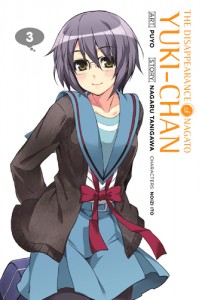
The Melancholy of Suzumiya Haruhi-chan, Vol. 6 | By Puyo and Nagaru Tanigawa | Yen Press – The goal of this series is to be as silly as possible. And as logn as that goal is in sight, it doesn’t matter how it achieves it. This time around, we get a discussion of fanservice, the continued humiliation of Mori-san, a far larger role for Kunikida than he ever gets in the main series (though he may not be too happy with why that is), and Ryoko and Kimidori-san teaming up to throw Yuki a school festival in the privacy of their own apartment. But the best chapters, in my opinion, are the two that mock the cliched Japanese over-dramatic plotlines, as we see Haruhi discovering she has to transfer and saying goodbye to everyone, followed by a life-or-death struggle to see who’s strongest on Children’s Day. Neither story has an ending, but endings don’t matter. Are they silly. Yes indeed. -Sean Gaffney

Pandora Hearts, Vol. 12 | By Jun Mochizuki | Yen Press – Pandora Hearts doesn’t have the most coherent plotting at the best of times, but volume twelve is more disjointed than most. There’s a lot of exposition here, as the focus shifts towards finding the seals (and their keys) that bind villainous Glen Baskerville and investigating a mysterious, murderous contractor known as “the headhunter.” We go from scenes of Vincent Nightray scheming to seduce Oz’s sister, to Oz’s uncle seeking to dispel the gloomy atmosphere at Pandora by hosting an outdoor tea party, to the group doing some snooping in disguise (with Oz in drag), to everyone attending a fancy dress banquet at the home of a creepy cult leader. This makes for some nice moments—I’m especially fond of the contrast between the female-filtered view of gussied-up Gilbert and the reality—but on the whole, the volume feels rather scattered. That’s not enough to keep me from recommending it, though! – Michelle Smith

Filed Under: Bookshelf Briefs

Cross Game, Vol. 8

November 19, 2012 by Sean Gaffney

By Mitsuru Adachi. Released in Japan in 2 separate volumes by Shogakukan, serialized in the magazine Shonen Sunday. Released in North America by Viz.

And so, at last, after two delays (this was supposed to be out in July), we have the final volume of Cross Game. And perhaps the final Adachi in North America or a while, though I hope I’m wrong. If it is the last, though, at least we got this, a terrific story which both encompasses exactly what Adachi does best and also plays with his own cliches. Plus it’s one hell of a final game.

There’s a lot of flashbacks and flashforwards throughout the entire volume, as despite this being the big winner goes to the Koshien game, there’s a lot on everyone’s mind. Wakaba, her dream for Ko and Akaichi, and Akane’s surgery, all of which we are aware of. And Ko and Aoba’s conversation before the game, which we only get half of. Though I think we might be able to guess, especially given that Ko prefaces it by asking if he can lie. The flashbacks are all revelatory even as we reach the final volume. The old man who remembers Ko throwing baseballs against his wall with tears in his eyes is touching and sad, then we get Aoba’s own memories, as she catches him doing it. The manga has made it seem at times as if Ko coasts and doesn’t put in the work – this shows that he’s been doing it all along, but it’s a secret. Or a lie. Take your pick.

Some folks have noted they felt that the Akane plot was superfluous, but as I’ve stated before, I think that Adachi did that deliberately to contrast Aoba, so unlike his usual heroines, with Akane, who’s a carbon copy of the type he normally writes. Akane’s quite never-give-up attitude towards her surgery, her waking up to the satisfaction of seeing Akaishi hit an RBI for the first run of the game, and just generally being sweet. This is probably another reason why Cross Game was the perfect license for North America – we are a land which favors the Aobas of the world.

The game itself is a pitcher’s duel, of course, and Ko gets to show off both his batting and pitching chops. It’s the perfect game for a manga narrative (despite Aoba literally walking over to Adachi to suggest a plot at one point – it’s nice to see the 4th wall being broken right to the end), and the outcome is satisfying on both sides, even if one finds it bittersweet. And all that’s left is the realizations – not just Junpei and his marriage proposal/bet, but also Aoba, who understands as Ko walks towards her that Ko and Aoba were able to satisfy Wakaba’s dream. It’s a very emotional moment, and played as one.

But life goes on, and the final chapter is a scene of everyone getting ready for another trip – even if things have changed between the leads. Ko has always described himself as a liar, but it’s Aoba who gets the last word, with the biggest lie she’s ever told Even after she wonders to herself why she and Ko have to be so alike. A fitting end to a terrific series.

Filed Under: REVIEWS

One Piece, Vol. 65

November 18, 2012 by Sean Gaffney

By Eiichiro Oda. Released in Japan by Shueisha, serialization ongoing in the magazine Weekly Shonen Jump. Released in North America by Viz.

I warn you in advance, this is another One Piece volume consisting primarily of one big fight, with many tiny little fights interspersed therein. Luckily, One Piece is dense enough that there’s still stuff to talk about even if the plot is mostly ‘Luffy hits the villain until he wins’.

One reason that the non-Luffy battles are so inconsequential is this is the big opportunity for Oda to show off how far his cast had improved in the two-year gap before the Fishman Island arc. There are some supposedly impressive mimi-bosses, but it’s notable that the only one who makes a really strong impression is the silliest, Zeo. It’s no coincidence that Zeo faces off against Brook, one of the silliest Straw Hat Pirates. He really is fantastically funny, and helps to liven up what might otherwise simply be a long stretch of battle. Usopp, too, has leveled up, and being who he is, gets to lampshade it. He doesn’t have to use fake balloon hammers or Sogeking anymore, he’s not tough enough to take on these bad guys with ease. Even Chopper has leveled up, coming to terms with his monster form and thus becoming able to control it.

The ongoing Fishman Island plot has been about racism, and this volume is no exception. It notes that Hody’s Fishman Uber Alles attitude may be stronger and angrier, but it’s also more hollow – he has no actual experience with what the Fishmen went through, but has merely grown up surrounded by a culture of hate. That’s not something easily changed, not even with a petition or really good thoughts. It has become, as the translation explicitly states, a holy war, and Neptune’s sons finally ask Luffy to do something that they cannot – wreck the entire island, reduce their past culture, with all its hatred, to smithereens.

This, of course, would fit the prophecy while not immediately spelling doom for everyone. Which is good, as this is also a good volume for seeing the good side of Fishman Island, and of One Piece heroes in general. You can always tell a character that Oda likes (even if they may be a villain) by their tendency not to give up even under the face of the worst adversity. Even the children watching the battle refuse to evacuate. And there’s a difference between this sort of strength and obsession, which is what we see from Hody and Vander Decken, who are perfectly happy with taking out countless innocents as long as they achieve their goals.

That said, I will admit to being a bit exhausted by this arc. It looks like it’s going to wrap up soon, for which I am thankful. I also wish we could have seen Nami and Robin do a bit more, but I can’t have everything. At least Sanji wasn’t too big an idiot this time. Next volume we wrap things up here and set off on a new adventure in the New World. Will we add a new crewman as well? I doubt it, but you never know with Luffy…

Filed Under: REVIEWS

Excel Saga, Vol. 24

November 17, 2012 by Sean Gaffney

By Rikdo Koshi. Released in Japan by Shonen Gahosha, serialized in the magazine Young King OURS. Released in North America by Viz.

Given everything that’s been happening over the last few volumes of Excel Saga, this volume might read at first glance like it’s a bit of a breather. Miwa barely appears, and the same can be said for Il Palazzo. A lot of time is spent trying to ‘fix’ Excel – or rather get her to realize the fix she’s in, but this doesn’t really happen either, mostly as relying on Elgala to bring this about is both hilarious and terrible. What we do see here, though, is a continuation of Rikdo’s ongoing deepening of the characterization. Excel, Hyatt, Misaki, Umi, Watanabe, and even Iwata get depth to them here that makes you sit back and think about just how screwed up their lives have become, and how it’s a lot less easy to accept that now that they’re not cartoon people who get blown up a lot but keep reviving.

For all that I didn’t care for the Teriha plotline, its effects continue to be felt by the group. Umi is still devastated by the disappearance of her friend, and a scene with Iwata (who, for once, gives helpful and useful advice – something he lampshades immediately) shows us how desperately she is clinging to Teriha, given the difficulty she has making friends. There’s a rather startling monologue where she notes that her mother initially thought she was a prodigy, but then she met Shiouji and figured out how far from his heights she was. It’s heartbreaking, in that, although it reminds is that Umi isn’t really dumb, just a klutz and a bit ditzy, there’s also the feeling that she could have been more – at such a young age, finding yourself so limited must be crushing, and I think it helps to explain a lot of her personality, as well as why she’s so devoted to Shiouji. I wonder if he ever thinks about any of this?

As for Iwata, he starts off with minimal memories of the last several years, but thanks to an outbreak of mysterious plot (was this Miwa? It doesn’t quite have the same feel), he seems to be back to himself, physically and mentally (albeit still in an indestructible robot body). In fact, as I noted above, he seems to be a bit less thoughtless and jerkass-ish than before, though that might change at any moment (his variable personality continues to be a sign that he may not live past the series). He’s also the one who knows immediately how to get through to Excel, something Elgala has to be coached to say: mention Umi. As for Misaki, she has less to do here, but is getting more distrustful of everything – and I can’t really blame her, given what’s going on with Iwata and what Shiouji isn’t really telling her. Her emotions are becoming more visible by the day.

Watanabe and Hyatt, meanwhile, seem to have resolved their own plot – and I say seemed because things could turn on a dime at any time. This does lend itself to one of the funnier bits of the volume, where Watanabe attempts to stalk Hyatt but keeps getting distracted by things that require a superhero – which, as Kabapu notes, sort of defeats the purpose of a secret identity, even if its intentions are ultimately good. As if to reward him for doing good deeds (as opposed to being the uncaring sleazy louse he’d morphed into during the Teriha arc), he actually does get to catch up with Hyatt and have a conversation with her. And… it doesn’t go his way, as expected. What surprised me was that Hyatt basically confirms here that she does have feelings for Watanabe, and does now remember him again. The only thing holding her back is her loyalty to Il Palazzo. Hyatt is by her nature one of the most opaque of the Excel Saga bunch, so it’s good to see her getting some depth as well.

And then there’s Excel. She now has an indestructible robot body as well – one that doesn’t even need to rest and power up, to Shiouji’s surprise – and can now finally keep up with Il Palazzo in every way. But it doesn’t seem quite enough, and even constantly heaping abuse on Elgala isn’t the same. It doesn’t help that both Iwata and Elgala remind her of Umi, that being the only thing that might distract her from ACROSS. Indeed, we get to see a rare shot of Excel acting tsundere, still attempting to deny that the Teriha memories are not quite as gone as she’s like them to be, and that she may need Umi’s friendship as much as Umi needed hers. (After all, Excel’s two closest female friends, Hyatt and Elgala, are not really all that close.) My favorite moment of the entire volume, though, was when she reported to Il Palazzo, making his only appearance in this scene. It’s arguable whether it’s really him, but let’s not go there right now. Instead of his usual abuse, he invites her to sit down by his side in the chair next to him. Hardly believing it, she does so – and the look on her face is possibly the cutest we’ve ever seen her, as Carl Horn remarks in his notes. For all that Excel’s devotion to Il Palazzo is used for humor, at its core is a deep, unconditional love. And it’s shown here at its purest, making you actually want to root for them to get together.

We now know that Excel Saga will end with Vol. 27. Luckily, Viz has sped up its release to twice a year again (probably as they now know it’s ending), so Vol. 25 will be out this April. Excel Saga has its faults, of course. The plot can get very confusing even if you do have the photographic memory required to deal with all the various subplots. And Rikdo’s fanservice fetish, now allowed to flourish after the series became a hit, can get very annoying to those who recall he used to draw girls with normal, if busty, proportions, and clothing that was a bit more modest. But there’s still no other manga series out there that has me as invested in its outcome as this (and yes, I have the last three in Japanese, but it’s not the SAME). Join me in April as I prepare to overanalyze Vol. 25 as well! And thanks to Carl Horn and Viz for continuing it to completion!

Filed Under: REVIEWS

  • « Go to Previous Page
  • Page 1
  • Interim pages omitted …
  • Page 346
  • Page 347
  • Page 348
  • Page 349
  • Page 350
  • Interim pages omitted …
  • Page 378
  • Go to Next Page »
 | Log in
Copyright © 2010 Manga Bookshelf | Powered by WordPress & the Genesis Framework