• Skip to primary navigation
  • Skip to main content
  • Skip to primary sidebar
  • Home
  • About Us
    • Privacy Policy
    • Comment Policy
    • Disclosures & Disclaimers
  • Resources
    • Links, Essays & Articles
    • Fandomology!
    • CLAMP Directory
    • BlogRoll
  • Features & Columns
    • 3 Things Thursday
    • Adventures in the Key of Shoujo
    • Bit & Blips (game reviews)
    • BL BOOKRACK
    • Bookshelf Briefs
    • Bringing the Drama
    • Comic Conversion
    • Fanservice Friday
    • Going Digital
    • It Came From the Sinosphere
    • License This!
    • Magazine no Mori
    • My Week in Manga
    • OFF THE SHELF
    • Not By Manga Alone
    • PICK OF THE WEEK
    • Subtitles & Sensibility
    • Weekly Shonen Jump Recaps
  • Manga Moveable Feast
    • MMF Full Archive
    • Yun Kouga
    • CLAMP
    • Shojo Beat
    • Osamu Tezuka
    • Sailor Moon
    • Fruits Basket
    • Takehiko Inoue
    • Wild Adapter
    • One Piece
    • After School Nightmare
    • Karakuri Odette
    • Paradise Kiss
    • The Color Trilogy
    • To Terra…
    • Sexy Voice & Robo
  • Browse by Author
    • Sean Gaffney
    • Anna Neatrour
    • Michelle Smith
    • Katherine Dacey
    • MJ
    • Brigid Alverson
    • Travis Anderson
    • Phillip Anthony
    • Derek Bown
    • Jaci Dahlvang
    • Angela Eastman
    • Erica Friedman
    • Sara K.
    • Megan Purdy
    • Emily Snodgrass
    • Nancy Thistlethwaite
    • Eva Volin
    • David Welsh
  • MB Blogs
    • A Case Suitable For Treatment
    • Experiments in Manga
    • MangaBlog
    • The Manga Critic
    • Manga Report
    • Soliloquy in Blue
    • Manga Curmudgeon (archive)

Manga Bookshelf

Discussion, Resources, Roundtables, & Reviews

Sean Gaffney

Sword Art Online, Vol. 14: Alicization Uniting

August 29, 2018 by Sean Gaffney

By Reki Kawahara and abec. Released in Japan by ASCII Mediaworks. Released in North America by Yen On. Translated by Stephen Paul.

(Of necessity, this review is going to have to spoil events in this book. If you want to be surprised, read the book first.)

It has to be said, given the length and breadth of the Alicization series, and the complete absence of most of the rest of the original cast, that Kirito and Eugeo’s relationship feels like the strongest and most valid in the series. Yes, this includes Asuna, who is almost entirely absent from this book save for the cliffhanger ending. But Kirito and Eugeo are meant to be two sides of the same coin, each yearning for what the other has, with Kirito’s cynicism being set off by Eugeo’s innocent idealism. Even the fate of Alice Synthesis Thirty, who nearly sacrifices herself a couple of times for Kirito in this book, has her own Eugeo counterpart in Alice Zuberg’s state of being and eventual fate. Kirito and Eugeo is the main reason to watch the upcoming anime to see what they do with it. And it’s also what makes this volume the most heartbreaking of the books to date.

For all that Kawahara wrote a story about a death game where people die in real life, he’s been pretty good about not actually killing most of the main cast. When there is a death, it tends to have major impact on the characters going forward – see Sachi and Yuuki, for example. This volume, though, is absolutely filled with horrible deaths, both seen and unseen. The actual plot is pretty simple – it’s the end of the fight to the top of the tower. Eugeo throws off his mind control fairly quickly all things considered, but that’s not really helping any of them defeat Administrator, who is simply too damn overpowered. And so one by one characters come out of the woodwork to buy time so that the hero can figure out what to do. And no, that hero’s not Kirito this time, who spe4nds much of the book dealing with the fact that he’s getting his ass handed to him. It’s up to Eugeo to make the ultimate sacrifice, destroying Administrator for the sake of the world, even if it costs him his life.

Actually, while Administrator is the weak part of the book, being the usual ‘I have no nuance I am just eeeeeeevil’ Kawahara villain, she is impressively tough, in that she even survives Eugeo’s final attack, only to get taken out by her minion’s overpowering creepy love for her. Still, she is a piece of work. The ceiling of her tower will go up there with the depiction of the Senate in the previous book as one of the most disturbing things in SAO. As for the state of the world now that Administrator is gone, we’ll have to see. It may have to deal with life without Kirito for a bit, as things have apparently been going on in the real world in his absence, and his “fluclight” is seemingly damaged right at the very end. Will this mean an entire volume with no Kirito narration?

Kawahara says in the afterword he debated letting Eugeo survive in the LN version, but decided not to. Much as I love Eugeo, I think it was probably the right choice. In the meantime, this is a very strong volume of SAO, and I can’t wait to see where we go from here – we still have four books to go after this, let’s remember.

Filed Under: REVIEWS, sword art online

Chio’s School Road, Vol. 1

August 28, 2018 by Sean Gaffney

By Tadataka Kawasaki. Released in Japan as “Chio-chan no Tsuugakuro” by Media Factory, serialization ongoing in the magazine Comic Flapper. Released in North America by Yen Press. Translated by Alexander Keller-Nelson.

Sometimes you can think yourself to death. We’ve all had that happen to us. You worry about how you’re going to achi9eve something, or how you’re going to talk to that person, or even how you’re going to get to school on time in the morning, your brain goes into overdrive, and you come up with some silly options that no one would actually do unless they were in some sort of comedy manga. Fortunately, Chio is in a manga, and so is able to do the silly things for our entertainment. A typical glasses-wearing, semi-introverted gaming girl, her late night habits lead her to be late almost every day, and things are not helped by random construction, or running into the popular girl and having to interact with her, or even just trying to find a bathroom. That’s the plot, really – we don’t really see Chio much at school, though she does have an equally socially inept friend. It’s just “what happens to Chio next?”.

I get the sense that the author came up with the idea for the first chapter and the publisher wondered what it would be like as a series, because “what if someone really did try to go roof hopping” really is a great one-shot premise, and it even gets highlighted in the cover art. It’s not as easy as it sounds, to no one’s surprise, especially when you’re trying to ensure no one notices you. The rest of the book is not quite as high concept – the chapters with Chio having to deal with interacting with other students, or talking with her equally unpopular friend about boys, are not quite as good as the rest of the book, and the reader gets the sense that this probably works better as a monthly serial in a magazine than it does collected into book form. (I’m also not sure the kissing in the back alley scene works well, as I suspect it will lead yuri readers to expect more tease that likely is not going to happen.)

The best chapters highlight the desperation of Chio’s needs and her motormouth inner monologue, where things just escalate to ridiculous levels. Getting past the gang member with his motorcycle in the path leads, inevitably, to Chio having to pretend to be a feared, deadly schoolgirl assassin, with appropriate glaring, and it’s quite well done, especially the anticlimactic payoff. Likewise, something as simple as Chio trying to find a bathroom spirals out of control and also highlights one of Chio’s other flaws, which is her selective obliviousness when it comes to digging herself into holes. I think whether you enjoy this book depends on how much you can tolerate Chio – she can be somewhat exhausting, and you get the feeling she’s her own worst enemy most of the time. Still, that’s the fun. As long as you don’t sympathize with her too much, Chio’s School Road should be a very entertaining series.

Filed Under: chio's school road, REVIEWS

Bookshelf Briefs 8/27/18

August 27, 2018 by Ash Brown, Sean Gaffney and Michelle Smith 1 Comment

Bloom Into You, Vol. 5 | By Nakatani Nio | Seven Seas – Yuu works with Kanou to get the ending of the student council play rewritten so that the character Touko’s playing won’t disregard the her of the present to pretend to be the her of the past. When Touko sees the new script, especially the requirement that she now say a line about how her choices have been wrong, she’s rather put out and expects Sayaka to support her, but instead, Sayaka is with Yuu on this one. Finally, though, Yuu seems to be getting through to her with an impassioned speech about, “You’ve been you all this time!” I do think Touko probably needs to be in therapy, but it seems like her love for Yuu, something her sister never had, might be showing her the path to her real self, and that’s kind of neat. I’ll keep reading! – Michelle Smith

Giant Killing, Vol. 13 | By Masaya Tsunamoto and Tsujitomo | Kodansha Comics (digital only) – There are twenty minutes left in ETU’s game against Tokyo Victory and their early one-point lead is in jeopardy as Victory’s previously injured ace, Mochida, takes the field. It’s probably too early in the series for ETU to achieve an outright victory over the league champions, but they at least hold them to a draw, with Tsubaki playing with a lot more confidence than in their prior matchup. It’s awesome to see how much he’s grown. Next, over midseason break, some of the players have been drafted for an exhibition game between the league’s Japanese all-stars and its foreign players, with ETU management hoping an MVP recognition might appease their sponsors, particularly the son of a wealty donor who is not as enamored of the club as his father is. Basically: this is grown-up sports manga and it’s great. – Michelle Smith

Hakumei & Mikochi: Tiny Little Life in the Woods, Vol. 1 | By Takuto Kashiki | Yen Press – It’s the manga’s subtitle that reveals the conceit that separates Hakumei & Mikochi from any number of other slice-of-life series currently being released. The two titular characters, like everyone else in the manga, are tiny. Like, using-beetles-as-a-mode-of-transportation small. Overall the tone of the manga is calming and optimistic although it’s not without its moments of danger and drama as the story follows Hakumei and Mikochi through their day-to-day lives. Mikochi is the more quiet and reserved of the two while Hakumei is more energetic and outgoing. The two young women live with, support, and look out for each other. The artwork of the series is detailed, with particular attention given to creating a well-realized setting and portraying the beauty of nature. At this point there’s no evidence whatsoever of humans encroaching upon the surprisingly gentle world of Hakumei & Mikochi, and I suspect that will be the case for the entire series. – Ash Brown

Lovesick Ellie, Vol. 6 | By Fujimomo | Kodansha Comics (digital only) – The drama in this volume mostly hinges on communication fails and I’m sorry to say that it’s getting old. Some of it is pretty good, like when Sara’s feelings get hurt when she realizes that Ellie never told her when she and Akira officially started going out. But it’s frustrating when Ellie irrationally decides that Akira does not actually care about receiving the Valentine’s Day chocolates she made for him. It’s just so stupid because it’s obvious that it means a lot to him! The cuteness of the resulting smoochy times just can’t make up for such a dumb moment. To top it all off, the friendless boy with whom Ellie sympathizes, despite Akira’s jealousy, is now poised to be a rival for her affections. Whee, a love triangle. My favorite. I hope I can continue to enjoy this series going forward, but I’m not so sure. – Michelle Smith

Scum’s Wish, Vol. 8 | By Mengo Yokoyari | Yen Press – The final volume of Scum’s Wish ends as it began, with the horrible pangs of unrequited teenage love. Neither Hanabi nor Mugi gets what they want, and while it would be really easy for them to take comfort in each other, they can’t bring themselves to do it. They just don’t have those feelings. It’s well-portrayed. Slightly less so is Akane, who seems to end up with Narumi because of his acceptance and love of who she is, including the awful bits—it’s fine if she cheats on him, he says with a smile. This leads her to the revelation that she really does want to marry him, but it feels, like most of Scum’s Wish, a bit more sordid than I’d like. There’s a sequel, but I suspect this may be it for the title over here. It was good, but painful. – Sean Gaffney

Stupid Love Comedy | By Syusyusyu Sakurai | Yen Press – For a manga with “love comedy” in the title, Stupid Love Comedy has surprisingly little romance in it. Suzu Sakura is a manga creator described as a natural genius but who requires quite a bit of oversight from her editors in order to keep her on schedule. Stupid Love Comedy opens with her being assigned a new editor, Osamu Hasegawa, who is less inclined to put up with her antics and excuses. Feelings of love aren’t completely absent from the story, and in some ways the series is set up like a reverse harem (every guy Sakura works with is incredibly attractive), but for the most part the true love of the various characters is the creation of manga. The stories and characters of Stupid Love Comedy are based on real-life people and experiences, the series providing a humorous, entertaining, and at times outrageous behind-the-scenes look at the manga industry. – Ash Brown

Tales of Wedding Rings, Vol. 3 | By Maybe | Yen Press – Last time I said the series was avoiding the obvious harem fantasy tropes, and while I enjoyed this volume as well, I can’t say that here. From catgirls to “my future husband must defeat me in combat,” it’s all present and correct. What’s more, Wife #1 Hime is starting to feel a bit jealous, and also somewhat inadequate compared to the powerhouses Satou is picking up. Still, she’s first among equals, and I think that fans of harem romances will… well, OK, fans of harem romances will be upset there was no nookie here either—Souma explicitly wants to wait till he’s back home in Japan. Next time we’ll get a new princess, no doubt, but I think the series works best when it’s focused on Satou and Hime. – Sean Gaffney

Toppu GP, Vol. 3 | By Kosuke Fujishima | Kodansha Comics – Everyone loves Myne, the Belldandy of this series, though she doesn’t really seem to have her eye on anyone. Which is good, as the romance would get in the way of the bike-racing and bike-training. The majority of this is basically watching awesome motocross racing and giving advice to newbies on how to get better, which includes things like “don’t ride when you are frustrated or you’ll injure yourself.” Toppu is a lot more young and teenage than the Keiichi ever was—actually, to be honest, he resembles the Keiichi at the start of Oh My Goddess!, before he became sexless by design. This comes out once in a blue moon, but it’s still a good title for Fujishima or biking fans. – Sean Gaffney

Yowamushi Pedal, Vol. 9 | By Wataru Watanabe | Yen Press – Day Two is over, and it will come as no surprise to anyone to learn that Midousuji’s way of biking is not going to come out on top. He gets a tragic backstory that makes things more understandable, but at the end of the day I still sort of hate him. Fortunately, this volume is far more balanced between the three teams, giving everyone a chance to show off, be really shonen, and demonstrate to the reader how cool, powerful, and exhausting this all is. The book reads as fast as the race, as you find yourself pulled along by the lineart. So with two days down and one to go, I expect some downtime in the next book. However, I still can’t wait to read it. Addicting. – Sean Gaffney

Filed Under: Bookshelf Briefs

Pick of the Week: Again!! Again (Again?)

August 27, 2018 by Sean Gaffney, Katherine Dacey, Michelle Smith, Anna N, Ash Brown and MJ Leave a Comment

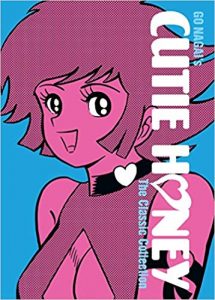
SEAN: I know my pick this week should be Cutey Honey: The Classic Collection, despite the fact that I know it will depress me in the end. I’m also interested, as always, in Nisioisin’s works, so Otorimonogatari is also a possible choice, despite ALSO ending on a down note. But I will be good. Please support Cutey Honey so we can get more series like it (by which I mean Shameless School).

KATE: I’m going to be super-predictable and shill for Again!! again. It’s easily one of the best new series of 2018, with humor, heart, and a wicked edge that prevents the story from feeling too pat. I’ll also be picking up Cutie Honey, as I want to support Seven Seas’ efforts to bring more classic manga to the US.

MICHELLE: I’m definitely keen to read more Again!! but The Night Beyond the Tricornered Window comes out so infrequently, to so little fanfare, and is so stellar that I just have to laud it when given the chance.

ANNA: Out of everything coming out this week, no question I’m most excited about Again!!

ASH: And once again… Again!! (And also Cutie Honey)

MJ: I’m going to back up Michelle this week, and encourage everyone to catch up on The Night Beyond the Tricornered Window! It’s so easy for me to forget digital titles when new volumes are released, and this one is worth remembering.

Filed Under: PICK OF THE WEEK

Defeating the Demon Lord’s a Cinch (If You’ve Got a Ringer), Vol. 1

August 27, 2018 by Sean Gaffney

By Tsukikage and bob. Released in Japan as “Darenidemo Dekiru Kage kara Tasukeru Maou Toubatsu” by Famitsu Bunko. Released in North America by Yen On. Translated by Alex Kerwin.

I write a column for Manga Bookshelf called Manga the Week of, where I point out the manga and light novels coming out next week, and briefly try to hype the debuts. Sometimes, though, this can lead to me being embarrassingly wrong about a title, because the cover art and blurb were vague, or even actively misleading. It’s especially true when there really isn’t much known about the new series. So, let me say up front: I was expecting Demon Lord Ringer (as I will call it for brevity’s sake) To be far more comedic in tone, something like Konosuba only with more of a straight man as the lead. Now, to be fair, Ares is definitely a straight man. But the book is not going for funny, instead being a crash course in how much we can take of its intensely serious, brimming with suppressed rage narrator until we beg for the demon lord to win after all. Make no mistake about it: the Ringer is a bit of a jerk.

As you can see by the cover image, as well as the blurb, this is not merely a case of me being too thick (which has also happened before): the premise is actively trying to mislead you. It is accurate, as far as it goes. A hero has been summoned to defeat the demon lord, but the hero’s level is far too low, and as for companions, we have a third princess as a mage who can only use fire magic (the entire book takes place in a forest, so she can’t do anything), a swordswoman who has recently changed her sword style away from her family specialty (so is learning a whole different skill set on the fly), and Ares, who is a priest who clearly is far more powerful than the Level 3 he suggests he is. (Yes, the usual fantasy RPG tropes apply here, as the characters discuss buffs and leveling as if they are real life fantasy terms.) The hero’s party, however, wants to get rid of Ares. And you can’t blame then, really.

There’s a reveal at the end of the book I was very impressed by, one that makes the entire party’s behavior around Ares make a lot more sense. It’s such a good reveal I won’t get into it. It actually made me want to read the second book, which I was on the edge about, to be honest. The book’s prose is good, and Ares is certainly a memorable character. But god, you want to throttle him. He’s given an assistant, Amelia, who seems to have some lingering affection for him (he doesn’t recall their ever meeting in person, which irritates her), and she keeps desperately trying to get him to slow down and not do absolutely everything on his own. And she fails. I was honestly wondering if the big reveal was going to be that he’s the villain after all, but it would seem that’s not the case. But so far, my interest in what happens next has won out over “my god, do I really need to listen to this guy’s simmering fury for another three+ volumes?”.

Filed Under: defeating the demon lord's a cinch, REVIEWS

A Certain Magical Index, Vol. 16

August 25, 2018 by Sean Gaffney

By Kazumi Kamachi and Kiyotaka Haimura. Released in Japan as “To Aru Majutsu no Index” by ASCII Mediaworks. Released in North America by Yen On. Translated by Andrew Prowse.

Given the events of the last volume, and the fact that the cover art looks for all the world like a fun romantic comedy, I imagine the average reader went into this book thinking it would be a nice, relaxing volume. And it is… for about the first quarter of the book. Then Acqua of the Back arrives, and everything pretty much goes to hell. But hey, at least this book has Touma and Index in it, right? Well, not so much. Index is once again relegated to comic relief (she even lampshades how useful she WOULD have been after everything has already happened), and Touma is removed from most of the fighting by, yet again, half-fatal injuries. No, this book is about the Amakusa Church, their guilt-driven Saint Kaori Kanzaki, and their #1 Touma fan Itsuwa, who can cook, clean, is pretty with a nice chest, wields a spear magnificently, and loves Touma. In fact, in a series filled with heroines with major faults, her main fault may be not having one.

Introduced in this book: Fiamma of the Right, the “Knight Leader”, and the Third English Princess, whose name I will hold off on till I see how Yen romanizes it. This takes place about three days after Touma and Index get back from France. Touma is starting to worry about his attendance credits, and well he should – he’s barely been in class this semester. We have basically passed all the Index spinoff titles in terms of chronology. There are, of course, several ongoing plot threads from previous books. Itsuwa is dispatched to be Touma’s bodyguard after the events of tBook 14 (and so that the Amakusa Church can try to get them together as a couple, something doomed to failure). Acqua’s threat to Touma a couple books ago is carried out here, and he very nearly succeeds. And Mikoto has found out about Touma’s amnesia, and it’s bothering her, mostly as she’s not sure when it happened.

This book, as with a lot of shonen titles, is about seeing people who are so much better, faster, and stronger than you, and then getting up and fighting anyway because it’s right. Acqua doesn’t care what Touma’s motivations or desires are – his hand is a weapon, and therefore he treats Touma the same way. (Honestly, given the last two members of God’s Right Seat, he’s the least villainous, but that’s only by degree.) Itsuwa and the rest of the Amakusa fight because they know Touma is a good person, right hand or no. And Kaori leaps in to fight because Acqua is about to kill the rest of the Amakusa, and she may be keeping her distance from them but she still wants to protect them. In fact, arguably it’s Kaori who learns the biggest lesson here – no, not Tsuchimikado’s stupid ero maid thing, which made my teeth grind. But you can’t protect the ones you love from the shadows and by pushing them away. It only hurts them more. Seeing Kaori and the Amakusa team up was absolutely the highlight of this book, and I like that for once Touma did not get in the final blow (or even break any illusions), though he certainly made it possible.

It appears we’re going to be focusing on England next time (and watch out for Fiamma describing how to bring the island nation down to its knees in a way that sounds suspiciously similar to a no-deal Brexit). Also, I worry my discussion of the lack of a role for Index and her desire to help more may change for the worse soon – it sounds like Fiamma’s big plan is basically to capture her. In any case, though Kamachi remains as bad as ever at wacky harem antics, this is still an excellent volume of Index.

Filed Under: a certain magical index, REVIEWS

That Blue Sky Feeling, Vol. 1

August 24, 2018 by Sean Gaffney

By Okura and Coma Hashii. Released in Japan as “Sorairo Flutter” by Square Enix, serialization ongoing in the magazine Gangan Joker. Released in North America by Viz Media. Translated by Jocelyne Allen.

When I first saw the cover for this manga on preordering it, my thought was “Boy, that guy sure is excited”. And that’s a pretty good description of the first volume. Noshiro, the guy punching the air on the cover, is just a big bundle of energetic, outgoing “HI THERE”, and you can’t help but be carried along in his wake. Even when he’s being introspective, angry, or doubting himself, it’s filled with big, energetic emotions and movements. This is, of course, to contrast him with the series’ other lead, Sanada, who is introverted, quiet, doesn’t smile much – at least at first – and is the very definition of standoffish. Most of the book is devoted to Noshiro’s arrival in Sanada’s life, and his reaction and actions on hearing the rumor going around the school, which is that Sanada is actually gay. A rumor that Sanada later confirms to Noshiro.

Most of the rest of the volume focuses on Noshiro’s developing reaction to this news, although honestly the book is as much about Sanada as an introvert as it is about Sanada as a young gay man. Sanada’s childhood friend Yamamoto has always come to eat with him (and might have a crush on him), but seems delighted that he’s finally making another friend, and tries to support Noshiro’s attempts to batter his way into Sanada’s life. But Sanada’s introversion and his sexuality aren’t easily separated either, and even being introverted isn’t always black and white. We see Sanada meet some old friends from junior high, and he’s smiling and laughing with them in a way he doesn’t seem to with Noshiro. This leads both Noshiro and Yamamoto to wonder if Sanada is “faking it” in front of them – something which Sanada rebuts, saying that both aspects of him are “real”.

We also meet Hidemitsu in this story, an older man who Sanada describes as “sort of an ex-boyfriend”. The fact that Sanada is still a high school boy is briefly brought up and then shunted aside, but I will hold off on objections till I see how close they actually were. For the moment Hidemitsu functions as an advisor and mentor to both Sanada and Noshiro, having a mature wisdom that both of them lack at this point. It also is fairly obvious that Hidemitsu and Noshiro look a whole lot alike, and that a lot of Sanada’s standoffishness may simply be attraction. Noshiro’s sexuality hasn’t come up much – he finds it difficult to name a specific girl he’s attracted to in a “guy conversation”, and has no romantic experience – but I suspect we may delve further into that in future volumes.

Honestly, the best thing about this ongoing coming-of-age story is simply how well-written it is. The characters are likeable, they have good depth, and you care about them. It feels very real. I absolutely recommend it.

Filed Under: REVIEWS, that blue sky feeling

Manga the Week of 8/29/18

August 23, 2018 by Sean Gaffney, Michelle Smith, MJ, Ash Brown and Anna N Leave a Comment

SEAN: Last week of August. Should be small, right? Hah. So much Kodansha digital. So much Seven Seas. Yen Press runoff stuff. It’s huge.

ASH: Let’s jam!

We begin with Cross Infinite World, who have another light novel for us with The Eccentric Master and the Fake Lover. Despite the somewhat salacious copy about bodily fluids, I think this is a woman-oriented romance title.

Dark Horse has the 18th and final volume of Neon Genesis Evangelion: The Shinji Ikari Raising Project. Don’t worry, the omnibuses are still going.

ASH: I’m glad that Dark Horse has found ways to keep things in print, but I’ll admit the publisher’s printing (and reprinting) schedule can be frustrating.

SEAN: Ghost Ship has a 6th volume of To-Love-Ru Darkness.

J-Novel Club has two debuts. Seirei Gensouki: Spirit Chronicles looks to combine both reincarnation isekai AND the magical academy sort of book.

Sorcerous Stabber Orphen may sound familiar to those with long memories – its anime adaptation aired exactly 20 years ago, and the novels are even older than that. It’s a big ol’ epic fantasy.

J-Novel Club also has a 7th If It’s For My Daughter, I’d Even Defeat a Demon Lord, which I believe catches us up with Japan.

Kodansha does have a few print titles next week. There’s Again!! 4, Aho-Girl 8, and the 4th Battle Angel Alita: Mars Chronicle.

MICHELLE: Yay for more Again!!.

ASH: I’m excited to read more, too!

ANNA: Triple yay!

SEAN: The majority of stuff is digital, though. Technically there’s no debut, but Kodansha is releasing digital versions of Peach Girl 1-18. These are the old Tokyopop editions ported over, I think, rather than a new translation, but that’s fine. Enjoy some classic overwrought shoujo!

MICHELLE: Oh, neat! I didn’t know they were doing that. That said, I have a big stack of TOKYOPOP editions that I never read, so… I would like to see them finish Ueda’s Papillon, which Del Rey had been publishing.

ANNA: Yeah, Papillon was good!

SEAN: And there’s Ace of the Diamond 14, Defying Kurosaki-kun 3, Hotaru’s Way 6, I Want to Hold Aono-kun So Badly I Could Die 3, Is Kichijoji the Only Place to Live? 2, Liar x Liar 5, and The Quintessential Quintuplets 3. Phew!

MICHELLE: I regret that I haven’t managed to read Is Kichijoji yet, but still, yay for more sports manga!

SEAN: But wait, here comes Seven Seas, and they’re burying us too. Debuts first. Cutey Honey: the Classic Collection is another deluxe hardcover which collects the original Cutey Honey manga from 1973. It should be complete in one omnibus, and is a must-read.

ASH: Cutie Honey A Go Go! was a lot of fun, so I’m looking forward to reading the original.

SEAN: The other new title is Ultra Kaiju Humanization Project, which is a Young Champion series that imagines an alien invasion that needs Japanese monsters to save the day! There’s just one problem. The monsters are high school girls. This sounds fascinatingly wretched.

And we also have (deep breath) Captain Harlock: Dimensional Voyage 5, Citrus 8, Holy Corpse Rising 5, How to Build a Dungeon 4, Magical Girl Apocalypse 15, Monster Girl Doctor light novel 3, and My Monster Secret 12. There’s a lot of stuff in that list I hate, so I am pleased it ends with My Monster Secret, which is hilarious.

ASH: I need to catch up on Dimensional Voyage, especially since the original Captain Harlock is now being released, too.

SEAN: Vertical Comics has a 2nd Chi’s Sweet Adventures, for all your cute cat needs.

If you prefer snakes, why not read the latest Monogatari novel from Vertical, Inc? Otorimonogatari: Decoy Tale gives us the story of Nadeko Sengoku’s encounter with a snake aberration, but who’s controlling whom here?

Yen Press also has a few titles that didn’t come out last week. Digitally we have Corpse Princess 18, IM: Great Priest Imhotep 7, and Toilet-Bound Hanako-kun 7.

Yen On has the 2nd novel of better-than-it-sounds fantasy Reborn as a Vending Machine, I Now Wander the Dungeon.

And lastly, Yen debuts Final Fantasy: Lost Stranger, where a Square Enix employee and his sister die and are reborn in the world of Final Fantasy. Yes, isekai has finally met Final Fantasy. Can we cope with this?

Are you coping with all this manga? What are you getting?

MICHELLE: SuBLime has a small number of digital-only series and my very favorite, The Night Beyond the Tricornered Window, has a fifth volume coming out! I’m snagging that for sure.

MJ: Oh, hey! I need to catch up with that!!

ASH: One of the titles I really wish was getting a print release!

SEAN:
Whoops! Pretend I mentioned that up above.

Filed Under: FEATURES, manga the week of

Baccano!: 1934 Alice in Jails: Prison

August 23, 2018 by Sean Gaffney

By Ryohgo Narita and Katsumi Enami. Released in Japan by ASCII Mediaworks. Released in North America by Yen On. Translated by Taylor Engel.

Having just finished a two-volume arc, we immediately jump into a THREE-volume arc, which consists of the two Alice in Jails book and a third called Peter Pan in Chains. As the names might indicate, Alice in Chains is the title quote, so to speak, but the book itself also revolves around jail, specifically Alcatrax, which in 1934 was still fairly new as a prison for hardcore felons (as opposed to a military prison). The description of the prison itself is quite good, showing it as an unpleasant place that can break a man, as well as being well-nigh impossible to escape from. After being blackmailed with Ennis’ safety, Firo is sent to infiltrate the prison to try to talk to its most infamous resident: Huey Laforet, who is kept in solitary confinement in the lowest of basements. But he’s not alone. Isaac has been sent there for some odd reason, and one of the prisoners already there is well known to us: Ladd Russo. Has he gotten any less violent and manic? No.

This book was, I believe, being written at the same time as the anime was being planned, and discusses certain events that the reader is unaware of but the characters aren’t, such as Graham Specter, who is introduced in this book but unseen, or the mention of a Mr. St. Germain at the Daily Days, who is also as yet unseen. The book also flits back and forth between Firo’s adventures in prison and the rest of the cast back in New York, who are dealing with Huey Laforet, despite being in prison, apparently planning a large scale terrorist attack. Narita enjoys setting up mystifying things only to have them pay off one or two books down the road, so we need to settle in here. There’s also some events from previous books intruding – the coverup of the Flying Pussyfoot murders is mentioned a few times, and we meet Gustavo, the pathetic villain from Drugs and the Dominoes, who is essentially here to be Ladd’s ticket to Alcatraz, and boy does he deserve it.

I want to talk about Isaac and Miria, though, as this is in some ways my favorite book with them, despite their not being major players in it. They’ve been wonderfully funny comic relief most of the time, but in the last arc we got some hints of deeper things – Miria’s monologue in the color pages. Now here we see that neither of them are as “stupid” as they may outwardly seem. Isaac’s ability to identify he’s talking to a cop and get Miria out of danger is masterful, and the rest of the Martillos rightly boggle at it. We also get into his head a little bit at the end, as it’s made clear he grew up in San Francisco right near Alcatraz… though he doesn’t want to see his family. As for Miria (whose head we don’t really get into), not only does she go to Ronny first to help her try to save Isaac, but she actually seems to know he’s a demon. But the best scene for Miria, in my opinion, is the one with Chane, where the two of them comfort each other over their most important person being in Alcatraz, and Miria shows off her empathy – I liked how she immediately knew how Chane communicated and wasn’t uncomfortable with it. Terrific character work here.

This is one of the better Baccano! books, including a great twist at the end I’ve tried not to spoil, and fans will absolutely want to get it. Next time we should actually meet Gustav St. Germain, as well as the much mentioned but unseen Graham, who I suspect may have been written with Norio Wakamoto and Tomokazu Sugita in mind.

Filed Under: baccano!, REVIEWS

An Archdemon’s Dilemma: How to Love Your Elf Bride, Vol. 1

August 22, 2018 by Sean Gaffney

By Fuminori Teshima and COMTA. Released in Japan by Hobby Japan. Released in North America digitally by J-Novel Club. Translated by Hikoki.

This is a series that, when I first heard about the license, I was told was really sweet and adorable. And there’s no doubt: it is. The relationship between Zagan and Nephy is very reminiscent of young teenage love, and despite the obvious power imbalance going on throughout the story, by the end of this first book the two seem to have worked things out, although I suspect those looking for sex may be in for a long wait. That said, I tell a lie, because the FIRST thing I heard about this license was its original title with one extra word, and I was… not impressed. In fact, I may have actually avoided it. As such, I definitely approve of J-Novel Club removing ‘Slave’ from the title. But I can see why it was originally there: Nephy isn’t a bride in this at all, but she is definitely a slave, purchased by Zagan, with a collar that will blow up and all the works. What makes this different from, say, Lazy Dungeon Master is how the narrative and the characters handle this sort of thing.

Zagan is a teenage demon lord, who has his own castle (which he essentially inherited from its previous owner due to backstory that is carefully revealed throughout the book) and his excellent magical powers. He spends his day doing things like saving young knights from evil sorcerers while justifying in his head that he’s not doing it because he’s a nice guy or anything. He then hears that one of the archdemons (even higher than his position) has died and their legacy is being auctioned off. He arrives in time to see the last part of this, which is the elf Nephelia, who has giant stockpiles of mana and is also young and gorgeous. The young and gorgeous part attracts Zagan more than the mana part, and he falls in love instantly, spending his entire fortune to buy her. There’s just one problem: he’s an incredibly awkward speaker who can’t say what’s on his mind and doesn’t know how to deal with a girl. Which is fine, because as it turns out Nephy is very similar.

This is not a book I would recommend to someone looking only for sweet, cute romance. It still has all the trappings of the fantasy light novel, with slavery being a major plot point. There are no rapes, but there are several rape threats and mentions, and lots of demonic skulduggery. Indeed, Zagan gets in trouble throughout the book as the rule of thumb is that archdemons = evil, and given he won’t admit that he’s being a nice guy, he never gets the benefit of the doubt. But it’s what the book does with this that is interesting, as it shows the local village is far more accepting than you’d expect, and Zagan’s inner monologue aside, he uses power to defend himself and (later) those he loves, and has to emphasize time and time again that he did not buy Nephy to use her powers, but because he was smitten. Not that he can admit that either.

In the end, the reason I enjoyed this so much despite its settings and overall premise is that the characters were sympathetic and enjoyable, and the actual narrative pushes against the premise. If you don’t mind fantasy LN settings, and like sweet romance that’s probably a slow burner, you should absolutely pick this up.

Filed Under: archdemon's dilemma, REVIEWS

Bookshelf Briefs 8/21/18

August 21, 2018 by Michelle Smith, Sean Gaffney and Ash Brown Leave a Comment

Arpeggio of Blue Steel, Vol. 13 | By Ark Performance | Seven Seas – Well, that escalated quickly. The end of this volume notes that this is the end of “Chapter One” of this series, and it’s certainly taking things in a different direction. It helps when you write out the main character, to be fair: Gunzou isn’t quite killed, but it seems pretty clear that he’s at least being written off the stage for a while. In his place we have Iona, who is forced to abandon him in order to save everyone else. And so now the entire cast seems to be shifting over to… I can’t believe I’m writing this… a school series, complete with cute school uniforms. It actually seems to be a Naval Academy, but I dunno. Are we really exchanging epic naval battles for this? I’m not really sure where this is going from here. – Sean Gaffney

In/Spectre, Vol. 8 | By Kyo Shirodaira and Chashiba Katase | Kodansha Comics – This is a second volume of short stories for this series, though it’s implied we’ll get a longer arc next time. The first story takes up most of it, and serves up a nice balance of mystery and horror, which is what we’ve come to expect from In/Spectre. Well, that and Kotoko going on and on about getting into Kuro’s pants. This time instead of the third wheel being Kuro’s ex-girlfriend, it’s a Cool Old Lady (TM),who helps the two of them deal with a wooden doll that is killing all the fish at a local seaport. The second story is lighter in tone, being about a tofu yokai who’s trying to get Kotoko to praise his tofu—this was actually interesting more for the discussion of taste than any mystery. Still enjoying this. Sean Gaffney

Magi: The Labyrinth of Magic, Vol. 31 | By Shinobu Ohtaka | VIZ Media – Aladdin and Alibaba haven’t had their reunion yet, but the day is drawing near. First, though, Aladdin must evade the clutches of Gyokuen, who isn’t dead and who is working along with Sinbad to try to take control of the world. Sinbad has convinced himself that only he can see the flow of fate and create a peaceful world, which of course Aladdin disagrees with. Meanwhile, Alibaba is hustling on behalf of the Kou Empire, making headway in their new business ventures before being torpedoed by Sinbad and coming back even stronger. It was hinted pretty heavily along the way that Sinbad would turn out to be the big bad of the series, and we’re starting to see that play out, even though neither Aladdin nor Alibaba thinks he’s a wholly terrible person. Six volumes left in this impressive shounen series! – Michelle Smith

Species Domain, Vol. 5 | By Shunsuke Noro | Seven Seas – I’m wondering if the series is wrapping up soon, as we get a lot more emphasis on who is going to pair up with whom in this volume. The most interesting, even if it goes nowhere for the moment, is Hanei and Mikasagi, which ends up being a very shonen sort of relationship—I love him and can admit it to myself, but want to wait till he knows he loves me too. As for Dowa and Tanaka, they may be insisting they aren’t a couple but Dowa’s family and the narrative is sure treating them as one, jokes about Tanaka dying aside. Still, the closest relationship may be between Kazamori and Ohki—sadly, this time around it’s the girl who’s oblivious. This is still an excellent “monster girl” series that’s not perverse and deft with the comedy. – Sean Gaffney

A Strange & Mystifying Story, Vol. 4 | By Tsuta Suzuki | SuBLime – A year has passed since Master Kurayori agreed to accept Tsumugi as his bride. In this time, Tsumugi has fallen in love with Kurayori, and his teenaged boy hormones lead him to plant a kiss on Kurayori when the latter doesn’t seem to understand his feelings, though at least Tsumugi is immediately mortified about what he did. In some ways, despite the fact that one of these characters is a supernatural being who was a sixty-year-old human spellcaster before becoming said supernatural being, this is basically your standard burgeoning romance boys’ love story. It’s got a pleasant atmosphere, and I enjoyed seeing a favorite couple from the previous volume. Perhaps the best part, though, was a very brief appearance by a mysterious couple in a bookstore. Could there be a darker subplot on the horizon? – Michelle Smith

That Blue Sky Feeling, Vol. 1 | By Okura and Coma Hashii | Viz Media – Very few manga by openly gay creators have made their way into English translation. Most recently is That Blue Sky Feeling, an ongoing manga series illustrated by Coma Hashii based on a webcomic by Okura. Outgoing, earnest, and kindhearted by nature, high school transfer student Noshiro can’t stand by when he notices that his classmate Sanada generally keeps to himself and that most of the other students avoid him. The reason for that is a rumor going around that Sanada is gay–a rumor that turns out to be true. The characterization and personal development of both Sanada and Noshiro are highlights of That Blue Sky Feeling. There are some discomforting elements as well (such as the age difference between Sanada and his ex-boyfriend, who essentially becomes the manga’s adult role model), but overall it’s a sweet, thoughtful, and charming if somewhat subdued series about friendship and first love. – Ash Brown

UQ Holder, Vol. 14 | By Ken Akamatsu | Kodansha Comics – A lot of UQ Holder is about history repeating itself from Negima, and so therefore it comes as no surprise that the Nodoka-alike gets shoved aside for Kuromaru, Setsuna’s expy, and then Kuromaru gets set aside for Kirie, who looks and acts like the loli-Chisame from the first series. Well, that’s not quite true—Chisame was never quite this over-the-top in terms of trying to deny her feelings. Kirie has to deal with being stuck in a body that’s too young for her mental state, as well as, well, being a massive tsundere. It is Ken Akamatsu after all. The first half of this series works better, because Ken has always been better at action than he has been at harem antics. But when will the series start using its new Japanese subtitle: Negima 2? – Sean Gaffney

What Did You Eat Yesterday?, Vol. 13 | By Fumi Yoshinaga | Vertical, Inc. – There’s hardly any drama in this volume, and what there is is decidedly adjacent to Shiro and Kenji. The boss of Kenji’s salon is oblivious to the fact that his wife is planning to divorce him, Shiro’s college classmate dies and he realizes that he’s old enough to have grandchildren, etc. Even seeing Mr. Kohinata again after he made a pass at Shiro goes smoothly. As ever, the best part here is the tasty food. Shiro seems to be getting a little more adventurous, incorporating more international dishes and modern ingredients into his cooking, while also making traditional hot pot and spring rolls, the latter of which look exceedingly tasty. This series will always be an immediate read for me whenever a new volume comes out. – Michelle Smith

Filed Under: Bookshelf Briefs

The Magic in This Other World Is Too Far Behind!, Vol. 5

August 21, 2018 by Sean Gaffney

By Gamei Hitsuji and himesuz. Released in Japan by Overlap. Released in North America digitally by J-Novel Club. Translated by Hikoki.

It stands to reason that, given this fantasy world is looking for strong heroes, and they’ve gathered three of them from Suimei’s “home” universe (albeit two of them by accident), that there would be other heroes here who hail from Japan. That said, having the hero be Suimei’s childhood friend is asking a bit much of the reader’s suspension of disbelief, methinks. She also has amnesia, which ends up helping the book to pad out its length, because a great deal of time is spent with Suimei trying to get her to trust him and also fending off attacks from her allies, who think that he’s some sort of villain. She is… an OK character, I suppose, but I have to be honest, an overly earnest swordswoman is not really something we need to add to Suimei’s party given that we already have Lefille. Given Hatsumi has her own party, much like Reiji, I’m hoping that when this arc ends she will head off on her own.

We also get a bit more information on our villains, if not their purpose just yet, and honestly I’m wondering if they’re more antagonists than villains. There is a sense that the religion in this world may be what’s actually holding it back, and while Suimei doesn’t dwell on it too much, given that he has some highly religious people in his party, I suspect it’s not something that will go away. This is also not too surprising for a Japanese fantasy light novel, where the Church has a tendency to be evil by default, but given this author’s habit of going deeply into magical theory, I’ll be interested to see if he also goes deeply into this in a way that’s not just “God bad. Grr!”. We also get a whole cadre of demons introduced, and they seem far more villainous – the one behind the battle at the end is a typical smug jerk who needs to get what’s coming to him. (Speaking of which, once again Suimei saves the girl multiple times but the author allows Hatsumi to get in the final blow. I’ll take what I can get, I suppose.)

I mentioned last time that Liliana’s depth suffered as she was essentially the victim in her introductory books. She does much better here, adding to Suimei’s party of white mage and swordswoman by being a top class spy. The scene where everyone comes up with no information whatsoever and she mentions she found “a little bit” and then rattles off every secret in the town is almost hilarious, and as Suimei notes speaks very well of her. Admittedly, you still get the sense that the girls are all doing this to get him to like them more, but given the nature of the genre I can’t really avoid that. This book ends with a cliffhanger, so it looks like another two-parter is in the works. I do wonder if Hatsumi will get her memory back in the next book or not – there’s good plot reasons why it may be best for her to stay amnesiac. Also, will Reiji and company (who have an unwanted addition now in the form of Evil Olivier Armstrong) find the ultimate weapon they’re seeking? Too Far Behind continues to stay just on the good side of “overpowered guy with harem” titles.

Filed Under: magic in this other world is too far behind!, REVIEWS

Pick of the Week: We’re Still Amazed This Was Licensed

August 20, 2018 by Sean Gaffney, Michelle Smith, Ash Brown, Katherine Dacey, MJ and Anna N Leave a Comment

MICHELLE: As usual, there’s a lot coming out that interests me, but if I’m honest, it’s the sports manga that calls the most stridently. DAYS, Giant Killing, and Yowamushi Pedal can share my pick this week, for all are awesome, though perhaps the bicycle boys have a bit of an edge.

SEAN: There are a truly ridiculous number of light novels coming out this week, but the one that attracts my attention the most is Kokoro Connect. I loved the anime, I loved the manga, and I expect I will really love the light novel. Also, for once revel in seeing teenage romantic drama written well!

ASH: Yowamushi Pedal continues to be very high on my list, as does Silver Spoon, but I think I’ll throw my pick towards the final volume of the deluxe Battle Angel Alita this week. Not only does the volume include both endings of the series proper (which I’m only now finally getting around to reading), it also collects the related manga Ashen Victor along with in-depth interviews with Yukito Kishiro.

KATE: I only have eyes for one title this week: Silver Spoon, quite possibly my favorite new manga of 2018. You should read it, too. ‘Nuff said.

MJ: I basically have nothing to say except, “What Kate said.”

ANNA: I’m terrible in that I haven’t read volume 1 of Silver Spoon yet. But if I was able to actually keep up on all the manga that I’m interested in, I’m confident that I would love it just as much as everyone else who picked it this week.

Filed Under: PICK OF THE WEEK

Wake Up, Sleeping Beauty, Vol. 5

August 20, 2018 by Sean Gaffney

By Megumi Morino. Released in Japan as “Ohayou, Ibarahime” by Kodansha, serialized in the magazine Dessert. Released in North America by Kodansha Comics. Translated by Alethea and Athena Nibley.

I reviewed the first volume of this shoujo series, and then the next three were reviewed as Bookshelf Briefs. This is common for the majority of the series I follow – there just aren’t enough hours in the day, and usually I don’t have 500+ words to say about a title even if I am enjoying it. But sometimes a volume comes along that I just can’t stop thinking about, and this penultimate volume of Wake Up, Sleeping Beauty is certainly that. I actually put it off for quite some time because I had a sneaking suspicion that it was going to be too depressing and also driven by Shizu’s antagonistic father. I was wrong on both counts – Tetsu fleeing with Shizu actually turns out to work out for a while, and Daddy Dearest doesn’t get to do much until near the end, because first we have to repair Shizu’s relationship with her mother.

Speaking of mothers, Tatsu’s mom manages to be the star of the show this volume, which is all the more impressive given that she spends the entire book in a coma. This is actually a major plot point, as it’s been eight years, and the family has been sacrificing everything they have to keep her going. Is it time to give up and pull the plug? The family has a difficult decision to make. The reader is not helped in making this easier when we find out who one of the spirits possessing Shizu really is. I’m not entirely sure if the final volume will have Aki waking up or dying, but I did appreciate the backstory given to both her and Sanae, Shizu’s mother – honestly it feels very much like a shoujo manga of its own, and one I’d want to read. It also helps Sanae repair her relationship with Shizu, and come to accept her despite the spirits.

That still leaves her father, who is seemingly a tougher nut to crack. In reality, I suspect this is when the author was told “you need to wrap this up by the next volume”, as this is perhaps a very rushed resolution. That said, it is quite dramatic, and we get to see the past of Shizu’s father as well, showing why he’s such a seemingly emotionless hardass. When you are starving for love, it can be wonderful to find the right person in your life. But if you then have children, you have to accept that this love is not going to be entirely the same anymore, and that can be difficult for many people. Fortunately, despite a dramatic fall, this is not resolved via convenient plot death, and hopefully the family can work things out. This is especially true given that clearly the spirits in Shizu are all, one by one, getting ready to move on. The cliffhanger suggests this will be the thrust of the final volume.

I wasn’t expecting much of this series, but it’s rapidly become one of my favorite shoujo manga this year. Fans of the genre should absolutely be buying it.

Filed Under: REVIEWS, wake up sleeping beauty

I Saved Too Many Girls and Caused the Apocalypse, Vol. 9

August 19, 2018 by Sean Gaffney

By Namekojirushi and Nao Watanuki. Released in Japan as “Ore ga Heroine o Tasukesugite Sekai ga Little Mokushiroku!?” by Hobby Japan. Released in North America digitally by J-Novel Club. Translated by Mana Z.

Eventually this series is simply going to have to run out of stereotypical heroines to stack on to Rekka’s pile. We’re down to two – well, one, really, but I have my suspicions about the other – in this book, and the cracks are starting to show – I’m OK with beloved childhood friend, but beloved childhood PET? Yes, turns out the cat was a cat yokai of some sort, and now She Is All Grown Up and everything. Of course, she still acts like a cat. Her story is probably the weakest in the book, actually, as this is essentially a book of four short stories with a wraparound, and so it gets resolved quickly and easily. Possibly realizing that, the author gives us a little more depth to both heroines from the 6th book, who R wasn’t quite sure were heroines or not last time. They may not have crises to resolve, but they do both seem to like Rekka. And then there’s R.

I have been crying out for more character depth and insight into R and her future, and it looks like I’m finally starting to get it. The other “girl” in this volume is an assassin from the future, and the moment we hear she’s named L we know she’s connected to R in some way. As it turns out, she’s the prototype for what R is, and it was originally her mission to save the world… but things took too long, and R had better specs, so she was used instead, and L was sent to live her own life and, well, get corrupted by the forces of evil. As frequently happens in this sort of story. I’m not entirely certain if we’re going to add L to the harem list, but the door is open for her return. That said, I found R more fascinating here. For the most part she remains her dry, emotionless snarky self, but dealing with L finally forces some actual anger and rage out of her, mostly because she can’t be like Rekka.

Much as this series tries to have Rekka be a parody of the clueless harem guy, and he absolutely is, when it comes to saving the girl he’s really, really good at it. R has watched him save the day time and again against all odds, and it’s very frustrating to R that she is ultimately unable to talk any sense into L or save her. Unfortunately, the drawback of my enjoying her plotline is that the rest of the book feels off-balance, as if the other three stories aren’t up to the task of the final one. There’s nothing wrong with them – everyone goes to the pool and tries to flirt with Rekka, to no avail; they hold a “summer camp” at the school in an effort to give Midori a bit more depth, which… works a bit, but she still suffers from not really having had much impact in her debut. So in the end this volume of Little Apocalypse is just OK, but the best part is at the end, so it will leave you happy when you finish it.

Filed Under: i saved too many girls and caused the apocalypse, REVIEWS

  • « Go to Previous Page
  • Page 1
  • Interim pages omitted …
  • Page 215
  • Page 216
  • Page 217
  • Page 218
  • Page 219
  • Interim pages omitted …
  • Page 379
  • Go to Next Page »
 | Log in
Copyright © 2010 Manga Bookshelf | Powered by WordPress & the Genesis Framework