• Skip to primary navigation
  • Skip to main content
  • Skip to primary sidebar
  • Home
  • About Us
    • Privacy Policy
    • Comment Policy
    • Disclosures & Disclaimers
  • Resources
    • Links, Essays & Articles
    • Fandomology!
    • CLAMP Directory
    • BlogRoll
  • Features & Columns
    • 3 Things Thursday
    • Adventures in the Key of Shoujo
    • Bit & Blips (game reviews)
    • BL BOOKRACK
    • Bookshelf Briefs
    • Bringing the Drama
    • Comic Conversion
    • Fanservice Friday
    • Going Digital
    • It Came From the Sinosphere
    • License This!
    • Magazine no Mori
    • My Week in Manga
    • OFF THE SHELF
    • Not By Manga Alone
    • PICK OF THE WEEK
    • Subtitles & Sensibility
    • Weekly Shonen Jump Recaps
  • Manga Moveable Feast
    • MMF Full Archive
    • Yun Kouga
    • CLAMP
    • Shojo Beat
    • Osamu Tezuka
    • Sailor Moon
    • Fruits Basket
    • Takehiko Inoue
    • Wild Adapter
    • One Piece
    • After School Nightmare
    • Karakuri Odette
    • Paradise Kiss
    • The Color Trilogy
    • To Terra…
    • Sexy Voice & Robo
  • Browse by Author
    • Sean Gaffney
    • Anna Neatrour
    • Michelle Smith
    • Katherine Dacey
    • MJ
    • Brigid Alverson
    • Travis Anderson
    • Phillip Anthony
    • Derek Bown
    • Jaci Dahlvang
    • Angela Eastman
    • Erica Friedman
    • Sara K.
    • Megan Purdy
    • Emily Snodgrass
    • Nancy Thistlethwaite
    • Eva Volin
    • David Welsh
  • MB Blogs
    • A Case Suitable For Treatment
    • Experiments in Manga
    • MangaBlog
    • The Manga Critic
    • Manga Report
    • Soliloquy in Blue
    • Manga Curmudgeon (archive)

Manga Bookshelf

Discussion, Resources, Roundtables, & Reviews

Sean Gaffney

Manga the Week of 11/25/20

November 19, 2020 by Sean Gaffney, Michelle Smith, Ash Brown, Anna N and MJ 1 Comment

SEAN: Happy Thanksgiving! Please be safe when you celebrate it!

Cross Infinite World gives us the 2nd volume of Another World’s Zombie Apocalypse Is Not My Problem!, which surprises me, as I thought it was a standalone. Though perhaps it surprises me less because it was on last month’s list – it got bumped.

Dark Horse Comics has two deluxe volumes – Vol. 6 of Berserk and Vol. 2 of Hellsing.

ASH: I plan on getting my hands on that deluxe Berserk volume.

SEAN: Ghost Ship has a trio of titles, as we see Fire in His Fingertips 2, World’s End Harem 9, and Yuuna and the Haunted Hot Springs 11.

ASH: Fire in His Fingertips is definitely one of the spiciest josei manga being released in print right now.

SEAN: J-Novel Club debuts The Bloodline, their first attempt at pulling a Cross Infinite World and licensing direct from the author – this isn’t out from a Japanese publisher yet. The plot sounds a lot like Our Last Crusade, but with vampires.

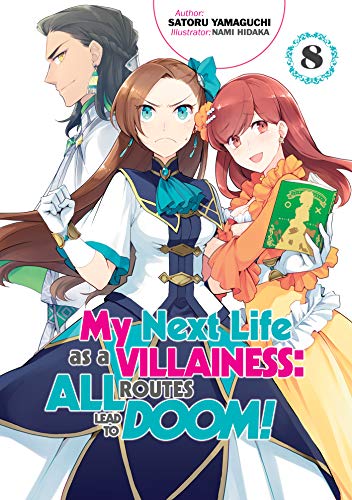
There’s also a pile of other titles. By the Grace of the Gods 5, Cooking with Wild Game 10, Demon Lord, Retry! 5, Full Metal Panic! 9, The Greatest Magicmaster’s Retirement Plan 7, the 11th and final volume of Kokoro Connect, My Instant Death Ability is So Overpowered, No One in This Other World Stands a Chance Against Me! 2, and My Next Life As a Villainess 8.

No print debuts for Kodansha, but some new volumes. We see I’m Standing on a Million Lives 8, Noragami: Stray God 22, Sayonara Football 2 (the final volume, though also see Farewell My Dear Cramer), The Quintessential Quintuplets 11, The Witch and the Beast 2, and Yuzu the Pet Vet 4.

MICHELLE: Man, I’m already so far behind on Yuzu the Pet Vet.

ASH: Likewise!

SEAN: SEAN: Digitally there is a debut. Am I Actually the Strongest? (Jitsu wa Ore, Saikyou Deshita?) is a reincarnation isekai that runs in Suiyoubi no Sirius. A reincarnated kid is abandoned for being weak. But is he? Is he really? No word on whether the author’s high school bullies play the villains here, but it’s possible! That is typical of the genre.

There’s also Cells at Work: Baby 2, Farewell My Dear Cramer 12, Maid in Honey 3, My Best (♀) Butler 3, Orient 8, Shaman King: Red Crimson 4 (the final volume), The Slime Diaries 4, and When We’re in Love 2.

Seven Seas has a massive amount of stuff. Let’s start with the debuts. Days of Love at Seagull Villa (Umineko Sou Days) is a Comic Yuri Hime title about a spurned fiancee who runs away, and the single mom who runs the housing complex she runs to. No relation to Umineko: When They Cry. Probably. It’s from the creator of I Married My Best Friend to Shut My Parents Up.

MICHELLE: This looks really good!

ASH: It does! I’m looking forward to giving it a try.

MJ: Could be interesting.

SEAN: Kageki Shojo!! The Curtain Rises is a one-omnibus shoujo manga that originally ran in a not-shoujo venue, Shueisha’s Jump Kai!. It’s about the lives of two Takarazuka girls. There is a sequel, as yet unlicensed, still running in Japan, this time in Hakusensha’s Melody.

MICHELLE: This looks really good, too!

ASH: Yes, it really does! In fact, it’s probably one of the releases that I’ve been most looking forward to this year.

ANNA: I’m intrigued by this for sure.

MJ: Same here!

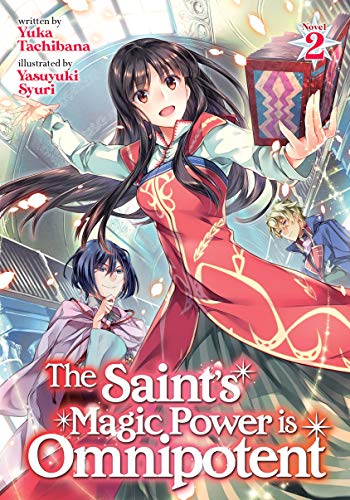
SEAN: Two light novels we’ve seen digitally already also make print debuts: The Saint’s Magic Power Is Omnipotent and The Sorcerer King of Destruction and the Golem of the Barbarian Queen. We also get the 2nd volume of each of those series digitally.

Also due out next week: Adachi and Shimamura 3 (print) and 4 (digital), Citrus+ 2, D-Frag! 14, Dungeon Builder: The Demon King’s Labyrinth is a Modern City! 3, Gal Gohan 5, GIGANT 3, Harukana Receive 6, High-Rise Invasion 15-16, Magical Girl Site 13, My Senpai is Annoying 3, Neon Genesis Evangelion ANIMA 4, PENGUINDRUM 3 (manga version), Scarlet 2 (the final volume), and Species Domain 8. A large number of these have been out digitally for a while.

Tokyopop has the 7th volume of Futaribeya: A Room for Two.

Vertical has the 14th volume of Witchcraft Works. They also have the digital debut of the final volume of Katanagatari.

Yen On only has three volumes, but one is a doozy. The Intuition of Haruhi Suzumiya is the 11th volume in the light novel series, coming out digital-only (for now, print will follow) in North America at about the same time it’s out in Japan. The last volume in the series came out in English almost 7 years ago to the day. It’s been a while. Now, this is merely three short stories, but hey, it’s nice to see Haruhi back again – rumors of the author’s crippling writer’s block were worrying.

ASH: It has been some time! I never got around to reading them all, but I did enjoy the Haruhi novels that I made time for.

SEAN: They’ve also got The Asterisk War 14 and Sword Art Online Alternative: Gun Gale Online 7.

On the Yen Press side, no debuts, but we get Breasts Are My Favorite Thing in the World! 2, Bungo Stray Dogs 16, Is It Wrong to Try To {Pick Up Girls in a Dungeon: Sword Oratoria 13 (manga version), Overlord the Undead King-Oh! 5, and Teasing Master Takagi-san 10.

Give thanks for manga! And again, stay safe. Masks, please.

Filed Under: FEATURES, manga the week of

A Certain Magical Index SS, Vol. 1

November 18, 2020 by Sean Gaffney

By Kazumi Kamachi and Kiyotaka Haimura. Released in Japan as “To Aru Majutsu no Index” by Dengeki Bunko. Released in North America by Yen On. Translated by Andrew Prowse.

Despite its name, and despite the fact that Yen On is releasing it after the main Index series, this is not particularly a short story volume. Instead, it’s four interlinked plot threads, which are presented as distinct chapters – he’s done this before. In Japan this came out between the 13th and 14th volumes of the main series, and it takes place there as well, with most of the cast worrying about what seems to be an inevitable war with the Roman Orthodox Church (which, to be fair, does happen). I am happy that we are finally seeing it here, though I will admit that a lot of its events would have had more impact if it had come out in its proper place. In particular, this volume introduces one of the main protagonists of the series – though honestly you’d never know it from the book itself, as he doesn’t even appear till 4/5 of the way in, and gets taken out by Touma like garbage. Which melds nicely with the book’s themes.

Introduced in this book: Shiage Hamazura, the aforementioned third protagonist. Sasha is also seen here as herself, rather than in “I am possessed by Gabriel” mode, though thanks to the Russian equivalent of Laura Stuart she’s walking around in a fetish outfit. We also meet Komaba Ritoku, though he sadly has the misfortune of running up against Accelerator, so he’s killed off here. He shows Accelerator the picture of a girl he’s trying to protect – his sister? Well, he’s dead now, so we will never know the identity of this mystery girl… well, unless Yen licenses New Testament. This volume also helps to solidify GROUP as part of the dark side of Academy City, and shows that they can grumpily work together when they want to – though they don’t here, as Accelerator and Musujime Awaki get their own separate fights.

There’s silliness at the start (how does Touma manage to pat Aisa on the back and knock her bra off?), which also leads to one of the few deliberately funny jokes in these books which usually try to be funny and fail – Touma’s heartfelt “I’m going to start studying English!” is a big LOL. Most of the book is introducing us to Skill-Out, a group of Level Zeroes trying to wreak havoc. Later books show them off as well, but, as Touma yells at Hamazura, they could have chosen to protect the weak (and indeed we see Komaba was doing this), instead of basically being a bad biker gang with explosives. We also meet once more Mikoto’s mother, the self-proclaimed “bisexual-disaster cougar”, who is also there for humor (not as funny) but also to possibly pull Mikoto out of Academy City due to impending war. Fortunately for the Railgun’s romantic prospects, Touma manages to impress her mom enough that she decides to leave her there. And, of course, Touma gets to punch the villain, in this case Hamazura, though notably instead of “breaking that illusion” he says Hamazura can break his own illusions himself.

So overall, this is very good setup for books 14-22, and you might want to go back and read those again if you have the time. Next time we’ll get the second SS book, which I understand is far more of a short-story volume than this one was, although I imagine they’re probably all interconnected as well.

Filed Under: a certain magical index, REVIEWS

Strike the Blood, Vol. 16

November 17, 2020 by Sean Gaffney

By Gakuto Mikumo and Manyako. Released in Japan by Dengeki Bunko. Released in North America by Yen On. Translated by Jeremiah Bourque.

After the last volume, which as I noted was “Strike the Blood: The Movie”, the first third of this book is very jarring indeed, as it seems to reboot the series with an entirely different cast. Kojou is on a different island – with his memories wiped – and has a different guardian, different companions, and they seem to spend their days learning how to be attack mages and dungeon crawling. He occasionally has brief flashes of his old life, but for the most part remains blank about it. And all is well, apart from the very obviously evil teacher and the fact that the ghost of Yukina keeps showing up and scaring students. Needless to say, it turns out that Kojou is NOT on a series reboot, but is instead trapped in a game – sort of. Also not really. The actual plot manages to bring back an organization from much earlier in the series, as well as the girl now dedicated to wiping out said organization. And, needless to say, has lots of cool fights.

The most interesting thing in the book is the introduction of Shizuri, Kojou’s new Watcher in this other world and the Girl Of The Book. It’s interesting that it starts off with her being a blatant Yukina clone, almost to the point of parody, but that actually ends up being what makes her work for me. OK, Shizuri is more ‘tsundere’ than ‘kuudere’, but in other ways they are much the same. This makes it easier to care about her more than the other two members of Kojou’s class group, who don’t have obvious analogues. Her backstory is suitably tragic, and, needless to say, she gets her blood drunk by Kojou at the end, meaning she is probably going to be added to the harem pile, which is already ridiculously high. I do wonder how she’ll fit in with the rest of the cast, particularly as the series has now ended in Japan, so we’re not far away from the final volume.

The reappearance of Yuuma is also a surprise, mostly as I’d forgotten she existed – as had most readers, I imagine. She is a refreshing dose of cool in a series whose heroines mostly tend to live or die on how much they can be angry at Kojou, though it’s unclear whether she’s merely back for this volume or will turn up again. I will argue that I was sort of hoping that one of the big plot beats of the last book – Nagisa now knows Kojou’s secret – would be brought up here. Having her hospitalized a month later and not really talking with anyone except Shizuri is kind of kicking the problem down the road. And, as always, the author’s attempts at humor are not very funny. “haha, you’re going to have to repeat a year because of constant saving the world” is eyebrow-raising, not laugh inducing. Though I was amused that 6 months in the other world taught Kojou to study.

Anime fans may be more spoiled than novel fans on the next book, as it appears to finally bring in the Children From The Future. Till then, this was a better than average Strike the Blood.

Filed Under: REVIEWS, strike the blood

Bookshelf Briefs 11/16/20

November 16, 2020 by Ash Brown, Sean Gaffney and Michelle Smith Leave a Comment

A Bride’s Story, Vol. 12 | By Kaoru Mori | Yen Press – Being at a yearly schedule for this series is bad, but it could be worse: Yotsuba&! seems to come out every 3-4 years. The best part of this volume sees Mr. Smith and Talas meeting up with Anis and Sherine, a married couple that, as before, remains defined by the lack of husband in their lives. He’s there, to be sure, but this may as well be a yuri couple for all the emotional beats. Also, learning how to write everyone’s name is very awesome and cathartic. Elsewhere, Karluk is reminded that everyone has different skill sets, and Pariya has to deal with unexpectedly being on her own. The “plot” of the series barely exists, and I’m not sure it will last till Karluk comes of age. But it’s peaceful and the art is gorgeous. – Sean Gaffney

Cherry Magic!: Thirty Years of Virginity Can Make You a Wizard?!, Vol. 1 | By Yuu Toyota | Square Enix – With a title and conceit like Cherry Magic!, I’ll admit I wasn’t expecting much from the series, so I was delighted to encounter a surprisingly charming and lighthearted first volume. After turning thirty without experiencing so much as a first kiss, Adachi finds that he can now read people’s minds when he physically touches them. The ability can occasionally be helpful, but in general he tries to avoid using it. Things take an awkward turn when he bumps into his coworker Kurosawa, inadvertently learning he’s been hiding a crush on him. Kurosawa is a popular and nice enough guy, but Adachi, being romantically inexperienced, isn’t quite sure what he should do with his newfound knowledge—especially considering that Kurosawa hasn’t actually mentioned anything about liking him yet. Cherry Magic! is a silly but sweet romantic comedy; I had fun reading it and would happily read more. -Ash Brown

Farming Life in Another World, Vol. 1 | By Kinosuke Naito and Yasuyuki Tsurugi | One Peace Books – If you liked everything about In Another World with My Smartphone but wish that the magical smartphone had been replaced with a magical farming tool, have I got a series for you. Most of the plot beats are even the same, although Hiraki manages to get it on with most of his wives a good 20 or so volumes before Touya. Despite that last sentence, those who are buying this for the “snu snu” will not be happy—it’s far more interested in the farming, as well as his accumulation of wolves, spiders, and brides. I’m honestly not unhappy that we only got the manga version of this—I suspect it would be tedious in prose. As it is, it’s perfectly good slow-life isekai with a farming bent. – Sean Gaffney

Himouto! Umaru-chan, Vol. 11 | By Sankakuhead | Seven Seas – This is the penultimate volume of the original series, though I understand there are several spinoffs. That said, there’s nothing here indicating that we’re headed for a big finish or climax. Which makes sense—this is not really that kind of series. It does show us how Umaru and Ebina met, which is as cutesy as it sounds. Indeed, cutesy is the watchword for every single chapter. Even the sibling relationship friction, which was what drove many of the early volumes, seems to have been dialed way back as they’re mostly getting along now. It’s a good sign that the series should be wrapping up, really, and so it is. That said, if you love Umaru-chan, this should make you happy. – Sean Gaffney

Revolutionary Girl Utena: After the Revolution | By Chihi Saito | Viz Media – I am, to put it mildly, not a fan of the original Utena manga. So I was initially incredibly uninterested in this 20-years-later single-volume afterword. That said, it does not seem to even take place in the same universe—it feels like Saito was told to make this an anime sequel more than a manga sequel. Good news, this means Juri is gay again. Not surprisingly, I found the Juri/Shiori/Ruka story the most interesting, though I still hate Ruka more than the creators want me to. Elsewhere, Touga and Saionji turn into Scooby Doo investigators, and Miki and Kaoru are still really into incestual subtext. I still prefer Artistic Veggie Platters as an Utena continuation, but this is OK. – Sean Gaffney

Teasing Master Takagi-san, Vol. 10 | By Soichiro Yamamoto | Yen Press – The “future” chapter showing Nishikata and Takagi married and having a daughter was wildly popular with readers. We don’t get another in the series here—by this point there was a spinoff all its own to take care of that—but we do see an older Chi in middle school, trying to be what her mother was with the guy she likes and failing miserably. It’s pretty adorable. As for the actual cast, they pet dogs, go fishing, eat candy, and make everyone think they are the most sickeningly sweet couple you’ll ever meet without actually being a couple. There’s no “plot advancing” chapters here, but there’s lots of cuteness, and Takagi is the most likeable of the “teasing” girls we see a lot of these days. – Sean Gaffney

That Blue Summer, Vol. 8 | By Atsuko Namba | Kodansha Comics (digital only) – Rio’s days in the tranquil village of Ueko are coming to an end. She has ended things with Ginzo because it was too hard, knowing they could never be together long-term, and tries to put on a brave face about going back home to Tokyo. But once she gets there and tries to move on, it’s clear she’s just going through the motions. I really liked that I wasn’t sure that the main couple would actually end up together, and also that the romance between a couple of side characters wasn’t just filler but a way to put things into perspective for Rio. What I liked most, though, is why Ginzo loves Rio—she’s the one who encouraged him to embrace his passion for graphic design, who created opportunities for him that boosted his confidence. This has been one of my favorites of the Kodansha digital-only shoujo offerings! – Michelle Smith

Yoshi no Zuikara: The Frog in the Well Does Not Know the Ocean, Vol. 1 | By Satsuki Yoshino | Yen Press – Despite my good intentions, I have yet to read Barakamon. And so I must ask… is this what Barakamon is like?! ‘Cos it’s good as hell! Naruhiko Tohno is a struggling manga artist who still lives in the remote village in which he was born and raised. He’s been writing fantasy manga for ten years and isn’t exactly gung-ho when his editor suggests he try writing rural slice-of-life instead, but it ends up selling far more than his previous series. I definitely enjoyed the segments about Tohno and his life growing up, particularly the obvious links between his middle-school friends and classmates and the characters in his manga, but I’m a little sad that we don’t spend more time with the characters in his manga, because they were totally charming, too. Guess I gotta go read everything in English by Yoshino-sensei now! – Michelle Smith

Yowamushi Pedal, Vol. 15 | By Wataru Watanabe | Yen Press – I mentioned as I was reading this that it’s astonishing that Watanabe has not turned his hand to horror manga, given everything about Midousuji in this volume, which is simply mind-numbingly creepy. That said, wow, he’s a good cyclist, and he likely will help to goad Naruko into becoming more well-rounded. Elsewhere, we learn how difficult it is to find new members who are as good as the old ones—the previous year was unusual, after all—and also not to abandon a potential member just because you judge them at first to be not worth your time. I hope to see more of our new huge son. It did feel weird that this volume did not have a major race in it, but I’m sure that’s coming soon. – Sean Gaffney

Filed Under: Bookshelf Briefs

Pick of the Week: Let’s Eat Mermaid Flesh!

November 16, 2020 by Michelle Smith, Sean Gaffney, Anna N, Ash Brown, MJ and Katherine Dacey Leave a Comment

MICHELLE: Most of the stuff that interests me this week is a reminder of how far behind I’ve fallen in various series. There’s one, though, that I waited so long to read that it’s now fresh and new and I can be timely, and that is Mermaid Saga! I enjoy Rumiko Takahashi on the whole, but have never read Rumiko Takahashi being scary, and it’s an experience I’m looking forward to!

SEAN: My eye is on horror as well this week, but not Mermaid Saga, though I’m sure that’s great. My pick is Sadako at the End of the World, a title that asks the question “what if you took the girl from Ringu and put her in a world where humanity is nearly destroyed?” The answer might not be what you think!

ANNA: Mermaid Saga for me! I’m excited to check this out.

ASH: It’s a horror-filled week for me, too! The new edition of Mermaid Saga gets my official pick (I still love it from back when it made its first appearance in English), but I’m also looking forward to giving Sadako at the End of the World and Mieruko-chan a try.

MJ: Okay, look. I’ve never been the kind of Rumiko Takahashi fan I’ve always felt I was supposed to be. But I gotta finally read this. Mermaid Saga it is!

KATE: If InuYasha didn’t convince you that Rumiko Takahashi has real horror chops, let the weird, unsettling stories in Mermaid Saga work their eerie magic on you. There’s a good deal of Monkey Paw Theater in this collection–lots of people discover that immortality isn’t what it’s cracked up to be–but the stories’ resolutions are never too pat or predictable, and Takahashi’s artwork is evocative. I already own the complete set, but I’m sorely tempted to purchase the new edition… just ’cause.

Filed Under: PICK OF THE WEEK

Re: ZERO ~Starting Life in Another World~, Vol. 14

November 16, 2020 by Sean Gaffney

By Tappei Nagatsuki and Shinichirou Otsuka. Released in Japan by MF Bunko J. Released in North America by Yen On. Translated by Jeremiah Borque.

I’ve always been a fan of Emilia, so have been inclined to cut her more slack than she possibly deserved, as those who’ve seen my other reviews know. That said, I get the feeling that for most Re: Zero fans, reading Emilia has sort of been like me reading Subaru in the first six books – screaming at her and wondering why she’s so bad at everything. This has only been underlined in this fourth Arc, which supposedly was going to give far more focus to Emilia – to the point of writing the other main love interest out of the story entirely – and then she spends the first three books sobbing on the ground, unable to get past a test that Subaru sails through. Of course, Subaru’s ‘overcome your past’ was, let’s be honest here, not the hardest test in the world. And at least he remembered it. Emilia’s past has a tragic centerpiece, and she’s also had her memories erased to boot – learning all of this with no emotional support would break a lot of people. Luckily, she now has that emotional support.

As you can see by the cover art, we get most of Emilia’s backstory here, though some elements (who her birth parents are) are still left clouded. Her aunt Fortuna, though, who raises Emilia as a daughter, is 100% pure awesome, and also… has Subaru eyes, something that causes me concern but I’m not going to dwell on it too much. And next to them on the cover is… yeah, that’s Petelgeuse, known mostly as Geuse here. He’s not quite what I was expecting, being fairly overdramatic and self-loathing even before said tragic events. I am grateful we got a lot of Emilia being cute here, showing her as a typical curious kid who does not enjoy being locked in a tree all day. This is balanced out by the present-day Emilia and Echidna watching the events as they happen, with Echidna being very irritated at how well Emilia is taking everything. They have the best dialogue in the book.

Meanwhile, while waiting for Emilia’s test to finish, Subaru, Garfiel and Otto confront Roswaal, who is still not willing to give an inch, despite some things happening that his book does not talk about. As long as the book ENDS the same way, he says, that’s enough. There’s some funny stuff here, mostly involving Roswaal’s reaction to Otto, but it’s clear that if they’re going to stop Elsa and her fellow animal-tamer assassin from killing everyone at the mansion, they’re going to have to do it themselves. Fortunately, Garfiel much better at fighting than Subaru is. We also got more backstory here, provided by Shima and the Ryuzus (which sounds like a girl group; from the 60s) showing the backstory of the Sanctuary, Echidna’s past with Roswaal, and most importantly Beatrice’s relationship to all of them. If Subaru is going to succeed, he has to get Beatrice away from her library, and given that’s the cliffhanger ending to this book, it’s a tall order.

The arc ends with the next book, but there’s still a lot to solve. Can Subaru end this with no deaths? Can Emilia pass the 2nd and 3rd Trials? Will the reader even see the 2nd and 3rd trials? (Signs point to no.) And will Roswaal finally be forced to give in and support Emilia for real? Can’t wait to find out.

Filed Under: re: zero, REVIEWS

Owarimonogatari: End Tale, Part 03

November 15, 2020 by Sean Gaffney

By NISIOISIN and VOFAN. Released in Japan by Kodansha BOX. Released in North America by Vertical, Inc. Translated by Ko Ransom.

It’s been a long detour since we last saw Koyomi Araragi getting brutally murdered by Izuko Gaen at the end of the short story volumes. We’ve seen how Ogi came into his life, why he got so disaffected in his first year of high school, and finally finished up with everything he was doing in that very busy August. But now we’re FINALLY ready to wrap up all the plot points that have been bubbling under for the entire series. The history and state of the town ever since Kissshot Acerolaorion Heartunderblade arrived one year previously. The string of oddities that have popped up ever since, particularly Nadeko Sengoku’s transformation into a snake god. The “darkness” that erases things that break the rules, which removed Mayoi Hachikuji from the series. But mostly, everything Ogi has done ever since she arrived. Can Araragi wrap this all up? Despite being dead? And can he pass his exams? Heck, can he even go on a date with… um… what was her name again?

Oh right, Senjogahara, who graces our cover, and who is quick to point out that it’s been so long since she’s had a major role in the series she’s forgotten her character. Before we get to her, though, we get Mayoi Hell, where Araragi, as all vampires do, goes to Hell, meeting Mayoi there (she’s there for dying before her parents) and going on an extended recap of his life. This serves to remind him of his tendency to save the girl, and that if he had to do it again he’d do the exact same thing. After a long explanation of what’s been going on (he had to die to get rid of his vampirism, Gaen’s gonna revive him), and a brief “do I deserve to live” that gets the punching from Mayoi that it deserves, he returns… with Mayoi, who he basically kidnaps in a leglock. Which is very him. Aside from my usual issues with Mayoi (the “lol he’s sexually harrassing a grade schooler and it’s funny!) stuff, this was alright, though it suffered from endless exposition (more of that later).

Next we get Hitagi Rendezvous, the “sweet” center of the book, where Senjogahara takes Araragi on a date, something they have not done since Tsubasa Cat waaaaay back at the start of the series, and attempts, through various date activities, to get him to swear one thing for the rest of his life. Sadly, she keeps losing. This has some of the best writing in the series, apart from a brief interlude with Ogi interrupting Araragi’s dream (he falls asleep at a planetarium) to provide more exposition (more of this – yes, even more – later). Senjogahara has never been the tsundere she claims to be – she’s too straightforward for that – but here she does have some very odd push/pull dynamics, as she’s clearly dressing in a “Hanekawa” way as she thinks that’s what he finds attractive, but is also discussing their future together to the point of naming their daughter (Tsubasa, which Araragi finds “heavy”, and I think Hanekawa would agree). The ending of this one is the high point of the book.

This leaves Ogi Dark, where we finally get the true nature of Ogi revealed. It makes sense within the series – indeed, clever readers may have guessed it already – ties in with the series mythology, and also allows the basic conflict of “what do we do with aberrations” to come into play. Gaen, Hanekawa, Meme Oshino, and Ogi Oshino all have different ideas on how to deal with them. Unfortunately, sometimes they lead to bad things, as we saw with Ogi’s manipulation of Nadeko. Gaen tries to convince Araragi to take care of Ogi once and for all… treat her like the “Darkness” she’s pretending to be. But, of course, Ogi is not only the main villain of the series, and Araragi’s dark mirror (more on that next book), but also a girl that needs saving. Despite also getting bogged down in exposition (always a danger with Gaen in the story), the ending to this part was excellent, even giving us a “happily ever after”.

So my main complaint is the wordiness of the backstory and exposition (which isn’t going away) and the lolicon jokes (sadly also unlikely to go away), but for a series finale it’s mostly a winner. We even get a hint as to why Ogi is still around for Kanbaru’s book, and why’s he’s a guy in that one. That said, we aren’t QUITE done with Araragi – the final final book in this arc, End Tale (cont’d), is due out soon.

Filed Under: monogatari series, REVIEWS

The Reincarnated Prince and the Twilight Knight

November 14, 2020 by Sean Gaffney

By Nobiru Kusunoki and Arico. Released in Japan as “Herscherik” by M Novels. Released in North America by J-Novel Club. Translated by Adam Seacord.

The second volume in this series pretty much picks up where the last one left off. There’s serious political intrigue. There’s tragic death and despair. There’s good old-fashioned sleuthing. And there is virtually none of the sort of thing that you’d expect in a reincarnation isekai – about the only thing that stands out is Herscherik briefly going all Marielle Clarac on us when he sees the titular knight and his former best friend (the first prince) angsting at each other and starts to ship them – though the text takes pains to tell us, over and over, that Ryoko was not a BL shipper per se. That, and the occasional scene where Hersch does something bad and Kuro yells at him, is the closest we get to humor in this series, which is far more concerned with showing us how HARD it is to change a corrupt world. Even when you discover the secret and stop the bad guys, you realize that there are bigger bad guys behind them who got away.

The titular Twilight Knight is that red-haired brooding man on the cover (OK, the one in the foreground, I clarify). Octavian is the 3rd son of the country’s most famous war general, and was easily the most talented of his children. Friends with the eldest prince, a lovely fiancee he adores, what could be better? Then his fiancee dies suddenly, and finding out why and how sends him spiraling into despair. Not, two years later, Herscherik is looking for a knight to protect him (every prince has one), but would rather not have a sycophant or someone only interested in his name. Octavian, who is trying out for the position as he’s being forced to by his family, seems like just the man. But can Hersch manage to awaken his spirit and get him to be the best knight he can? And can they stop the drug that killed his fiancee from making a comeback?

The majority of the plot, as you can see, is dealing with Herscherik as a 5-year-old 7th prince of the realm. But the most interesting stuff here may be on the Ryoko end of the equation. We get a few more glimpses of the life she had in Japan, and it’s clear that she was the type of employee who was overworked to death because she was competent enough to be given more. Herscherik is shaping up to be exactly the same. There’s also an oracle who is consulted at one point who not only gives our heroes the clue they need to solve the mystery, but also seems to be able to see that Hersch has the soul of a woman from another world inside him – something that is supposed to be impossible for this world. A far cry from the usual isekai “we summon heroes all the time” schtick. And Hersch is also starting to trust more people, which is helpful but also means more people are realizing he’s not your typical five-year-old boy.

So, as I noted, in the end our heroes win, sort of, but the main problem still exists. Which is good, as there are more volumes to come. For those who enjoy a good adventure series, this is right up your street.

Filed Under: reincarnated prince herscherik, REVIEWS

High School Prodigies Have It Easy Even in Another World!, Vol. 2

November 13, 2020 by Sean Gaffney

By Riku Misora and Sacraneco. Released in Japan as “Choujin Koukousei-tachi wa Isekai demo Yoyuu de Ikinuku you desu!” by GA Bunko. Released in North America by Yen On. Translated by Nathaniel Thrasher.

I really have to hand it to the writer of this series, they know how to keep a reader’s attention distracted. There’s romantic subplots (none of which are going to go anywhere given the nature of Tsukasa, but hey), there’s political intrigue, there’s starting a revolution by starting a religious movement, there’s a big-ass fight (literally in some cases) near the end of the book, and there are even moments of pure horror in a “welcome to our totally average town, weary travelers!” sort of way. And then you get to the end of the book, and you realize that the entire thing was incredibly dumb and full of holes, with one plot getting dropped so fast that I’m concerned my digital book was missing a chapter. Last time I said that this series is popcorn, which is very true. You eat it and enjoy it, but if you want an actual meal, look elsewhere.

Unlike the manga, the light novel covers are allowed to have more than Lyrule on the cover. Here we see Ringo, who doesn’t really do much here besides build power plants and get really jealous of Tsukasa and Lyrule’s relationship. Life is tough when you’re the unlucky childhood friend. The book deals with the aftermath of the coup that has happened. There’s a lot still to achieve. They need to figure out a way to unite the people regardless of class. They need to figure out ways to keep up their modernizations. And they need to worry about the neighboring Duke, who is made entirely of fury and condescension, and also has a magic firebomb that can take out a city. Even Shinobu, who is traveling towards the capital to try to get the lay of the land, runs into trouble when she gets to a village that is glad to eat her — I mean, meet her.

I will say one thing, which is that the book’s message of “the rich hate everyone else and will happily watch them die purely for entertainment” is a very 2020 mood, even if the book was written five years earlier. It tries to distinguish between “normal” nobles who are just rude assholes and “evil” nobles who are doing things like raping and murdering, but it doesn’t quite get it. Shinobu’s subplot is good and also quite dark… but then gets resolved so fast, and dropped so hard, that, again, I worried a section was missing. And then there’s Aoi, who in the grand finale volunteers to help a guided missile reach its target (a magic spear of fire) by running along side it… then hitting it with her “honed glutes” to get it to change course… then smashing her “sizable breasts” against the missile’s air vents to get it to change course AGAIN. The scene is so dumb your jaw drops, and sexist as hell, but you have to admire the bravado of writing it at all. I imagine this must have been something to see animated.

So yeah, this book is dumb but highly readable, provided you are not troubled by plot, or characterization, or thematic unity, or overt fanservice.

Filed Under: high school prodigies have it easy even in another world, REVIEWS

Manga the Week of 11/18/20

November 12, 2020 by Sean Gaffney, Michelle Smith, Ash Brown, Anna N and MJ Leave a Comment

SEAN: The weekend of Anime NYC, and I am… not in a hotel room in New York City. Boo. Still, there will be virtual con, I’m sure.

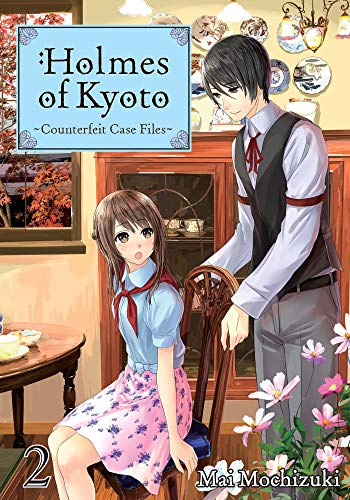
No debuts for J-Novel Club, but we do see The Combat Baker and Automaton Waitress 9, Holmes of Kyoto 2, Mapping 2, The Master of Ragnarok & Blesser of Einherjar 13, Seirei Gensouki 12, and Sorcerous Stabber Orphen 9.

Kaiten Books has a 3rd volume of Loner Life in Another World.

Kodansha also has no print debuts, but we do have a fair amount of print, assuming no last-minute delays. There’s Cardcaptor Sakura Collector’s Edition 6 and also Clear Card 8. We also get Granblue Fantasy 7, Living-Room Matsunaga-san 5, Saiyuki 3, and The Seven Deadly Sins 40.

MICHELLE: I need to catch up on Living-Room Matsunaga-san.

ASH: I still need to start reading Living-Room Matsunaga-san!

SEAN: Digitally there is a debut. Dr. Ramune -Mysterious Disease Specialist- (Kai Byoui Ramune) is about a sort of modern-day, more casual Black Jack and his bizarre supernatural-tinged patients. It sounds like a gag manga, but is apparently deeper than it looks. It runs in Shonen Sirius.

ASH: I’m curious about this one, though I don’t read much digitally.

SEAN: Also digitally: Dolly Kill Kill 8, GE: Good Ending 11, Heroine for Hire 3, Hop Step Sing! 2, Kakushigoto 9, Shaman King: Red Crimson 3, The Writer and His Housekeeper 2, and Yozakura Quartet 26.

Seven Seas has an early digital light novel debut: Trapped in a Dating Sim: The World of Otome Games is Tough for Mobs. This time it’s a male office worker who dies and gets reincarnated in an otome game… as a schlub NPC. But he does recall the game’s events. Can he make his life better?

In print, there are two debuts. The Hidden Dungeon Only I Can Enter has a manga, and this is the first volume of that. It’s pleasantly dumb.

What the Font?! – A Manga Guide to Western Typeface has, aside from a terrific title, an “educational” feel to it. Expect anthropomorphic personifications.

ASH: I’m actually really excited for this one.

ANNA: Oh, me too!

SEAN: Also from Seven Seas: Cosmo Familia 3 (the final volume), Mushoku Tensei: Roxy Gets Serious 4, New Game! 10, Precarious Woman Executive Miss Black General 5, Saint Seiya: Saintia Sho 11, and Sarazanmai 2.

ASH: Whoops, still need to get around to Sarazanmai 1!

Square Enix has, not a manga or novel, but Final Fantasy VII Poster Collection. It’s Tifa-tastic and Aerith-riffic.

Vertical gives us the 8th and final volume of Arakawa Under the Bridge. There’s also Blood on the Tracks 3 and Go with the Clouds, North-by-Northwest 4.

MICHELLE: The first volume of Blood on the Tracks was enjoyably ominous.That’s another one I need to catch up on.

SEAN: It’s a very Rumiko Takahashi week at Viz. Not only do we get Urusei Yatsura’s 8th omnibus (introducing Ryuunosuke, the precursor to Ranma Saotome), but also debut Mermaid Saga in omnibus form! This is decidedly NOT a comedy, and shows off how good Takahashi was at horror and suspense.

MICHELLE: I have the single volumes of this, but have never read it!

ASH: I love Mermaid Saga so much that I’m double-dipping for the new edition.

ANNA: I think I read a tiny bit of it back in the day but I’m excited for the new edition too.

MJ: I probably need to finally read this.

SEAN: There’s also Beastars 9, Hell’s Paradise Jigokuraku 5, and Tokyo Ghoul:re Illustrations: zakki, an artbook.

MICHELLE: I’m so far behind on Beastars and Hell’s Paradise already!

ASH: I’m a few volumes behind myself, but have been liking both series so far.

SEAN: And then there’s Yen, and they have a lot, even with the normal “date shifts”. First we get the novels.

There are three debuts, though one doesn’t count. A Certain Magical Index SS 1 is hardly unknown to readers, but it is nice to see, especially as I whined at Yen when it did not come out (as it did in Japan) between Books 13 and 14. It’s a short-story collection, and introduces the reader to Hamazura… assuming they haven’t read Index 15-22 already.

The Place Promised in Our Early Days is another Makoto Shinkai adaptation… in fact, it’s of his first major film.

MJ: I usually like these adaptations, though I haven’t watched this movie in a long while. Might be nice to revisit.

SEAN: The big debut is Unnamed Memory, an extremely popular light novel series. A Crown Prince with a curse has to visit the strongest witch in the world to break it. Destiny ensues.

ASH: It does look as though it may have some potential.

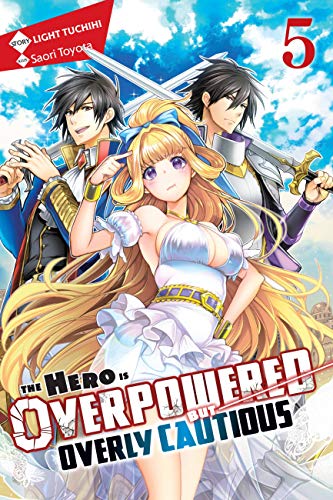
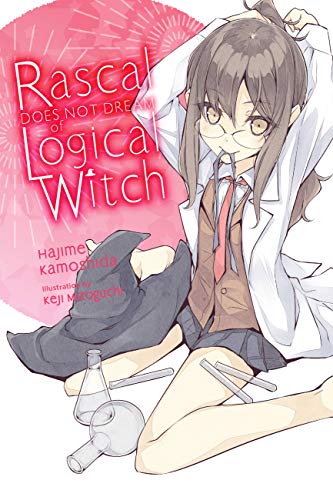
SEAN: Yen On also has a LOT of ongoing series. 86 ~Eighty-Six~ 6, The Dirty Way to Destroy the Goddess’s Heroes 5, Do You Love Your Mom and Her Two-Hit Multi-Target Attacks? 7, The Hero Is Overpowered but Overly Cautious 5, I’m a Behemoth, an S-Ranked Monster, but Mistaken for a Cat, I Live as an Elf Girl’s Pet 2, Last Round Arthurs 3, Magical Girl Raising Project 10, Rascal Does Not Dream 3, So I’m a Spider, So What? 10, and World’s Strongest Rearguard: Labyrinth Country’s Novice Seeker 4.

And that’s just novels. For manga, there are five debuts. Mieruko-chan is a comedy from Monthly Comic Alive about a girl who can see terrifying ghosts and monsters… and does her level best to ignore them.

Sadako at the End of the World (Shuumatsu no Sadako-san) is a one-shot manga from Comic Gene about the girl from Ring ending up in a post-apocalyptic world where her presence is far more welcome.

ASH: Okay, both of these sound like something I should check out.

MJ: Same here.

SEAN: Star Wars: Rebels is the manga adaptation of the popular series, and comes from LINE Corporation.

The White Cat’s Revenge as Plotted from the Dragon King’s Lap is the manga adaptation of a light novel we’ve seen from J-Novel Heart. A girl with the worst luck ends up reincarnated in another world… sadly, the source of that bad luck is here as well. Can she escape and live freely? This runs in Kadokawa’s FLOS Comic.

Lastly, A Witch’s Love at the End of the World (Sekai no Owari to Majo no Koi) (no relation to Sadako’s title) is a yuri series from ASCII Mediaworks’ Comic IT. It… honestly reads sort of like a Japanese version of The Owl House. Which I’m fine with.

There’s also Eclair Orange, the latest in that yuri anthology, IM: Great Priest Imhotep 5, Keito Koume Illustrations Spice & Wolf (an artbook), Shibuya Goldfish 8, and Yoshi no Zuikara 2.

MICHELLE: I had no idea there was yet another Eclair on the way!

SEAN: I’m exhausted, how about you?

Filed Under: FEATURES, manga the week of

There’s No Way a Side Character Like Me Could Be Popular, Right?, Vol. 2

November 12, 2020 by Sean Gaffney

By Sekaiichi and Tomari. Released in Japan as “Yujinchara no Ore ga Motemakuru Wakenaidaro?” by Overlap. Released in North America by Tentai Books. Translated by Alejandro de Vicente Suárez.

Once again I am tempted to just copy and paste my review of the first volume here, as it has most of the same strengths and weaknesses. It starts slow and builds to a big finish, does a great job of having our lead character be oblivious to love for a reason other than “because he is a potato” like most harem manga, and is very, very bad at justifying why everyone screams in terror when this tall, dark and handsome man comes anywhere near them. As you might imagine, this second volume focuses on Kana, who spent most of the last book clearly in love with Yuuji but having it come off as fear and hatred to him. But fear not, Touka also has a big role to play as well. And of course, possibly the best reason to read it; it’s a normal teenage romcom with no supernatural powers and a decided lack of deep cynicism. Pre-isekai, this was the big thing.

The plot of this second volume involves Kana’s feeling for Yuuji. She knows he’s dating Touka, so is conflicted. (We know, of course, that he’s in a “fake relationship” with Touka, one she wants to be real but can’t work up the courage to tell him that.) She also has a past friendship with Touka that broke off, so the two aren’t on good terms anymore. And she’s also feeling guilty about something else from her past, something that might explain why she’s fallen for Yuuji so hard, and perhaps how he got the scar that makes his face so “scary”. (Please note scary is used the same way “side character” should be, i.e. in air quotes.) It all comes to a head at a tennis tournament that she invites Yuuji, Touka and Ike (remember Ike?) to. Will she work up the nerve to tell Yuuji that he’s manages to get EVERYTHING wrong about their past and present?

As I noted, I enjoy the interactions between the main cast here. Though I will admit that I am not all that fond of the teacher who has an obvious crush on Yuuji, which does not bode well for a theoretical third volume. Kana and Touka’s fractured friendship makes a lot of sense given both of their characters, and I enjoy how no one is “fixed” but that they’re all still working through their own issues. This includes Yuuji, who has a pathological inability to see anyone having romantic feelings for him at all – indeed, even friendship strikes him as unlikely. I will admit that I’d like to get more inside the head of Ike, who for a supposed “main character” is rather bland and unassuming. Of course, that’s part of the gag – Yuuji continuing to see himself as a side character and not the lead in his own life is why he cannot imagine himself in a relationship, despite, by the end of this book, two girls blatantly throwing themselves at him.

The third book came out in Japan this August, and as predicted, it looks to feature the teacher, so I’m wary. That said, this is a very decent romcom that should appeal to anyone who is a fan of that genre.

Filed Under: REVIEWS, there's no way a side character like me could be popular right?

I’ll Never Set Foot in That House Again!, Vol. 1

November 11, 2020 by Sean Gaffney

By Milli-gram and Yuki Kana. Released in Japan as “Nidoto ie ni wa Kaerimasen!” by Overlap Novels f. Released in North America digitally by J-Novel Club. Translated by Emily Hemphill.

I’m going to be honest, this book is all over the place. Featuring a relatively nuanced portrayal of a heroine who’s recovering from horrible abuse, it has especially un-nuanced portrayals of the abusers. There’s a terrific surprise involving the hero, but it’s also contrasted with the fact that (per the afterword) the author aged him up after seeing the artwork but didn’t bother to age up the heroine, making for a very uncomfortable romance. And of course the heroine’s powers are especially overpowered even for this sort of book, with the question of “what can she create?” becoming a bar that gets raised higher and higher till the answer is “pretty much anything”. That said, I get the feeling none of this matters. This book gives you a girl you desperately want to hug, and then spends 160 pages hugging her. It’s the very definition of “D’aww”, and if that means putting up with some flaws, it’s OK because look, she’s eating sweets!

Chelsea is the daughter of a baron, but you’d never know it from her everyday life. She’s forced to do the housework, belittled and verbally abused by her mother and twin sister, and whipped when she does things wrong. She has to live off of scraps left after everyone else eats! What’s more, it’s totally unclear why this is the case. Then one day an “appraiser” shows up to see what the other daughter’s magic talents are, and they also know of Chelsea and appraise her. Turns out that Chelsea has a new skill, “Seed Creation”, that has never been seen before! Now she’s whisked off to the royal residence to see what her new skill can do (spoiler: a lot) and to be pampered and cared for as she never was before. As Chelsea slowly gets better and grows in self-confidence, and despite her fears that once they’ve appraised her, she’ll be sent back, she gradually realizes (say it with me) she’ll never set foot in that house again.

I noted on Twitter that this book had the subtlety of an icepick to the forehead, and I stand by that. That said, its portrayal of Chelsea is definitely the highlight. She’s beaten and shattered by the abuse she’s suffered, and it takes the entire book for her to even begin to stand up for herself and make her own decisions. This is, admittedly, helped by this being a world of magic, but even then, while they can heal her scars and stop her “emaciated” status effect, she still can’t really eat much at first. The hero, Glen, is more typical of these sorts of books, and has two big secrets, one of which is not really that much of a surprise, but the other one is, and it’s handled quite well, which is to say it’s barely mentioned. Sadly, as I noted before, making him older means the romantic feelings he starts to have for 12-year-old Chelsea come off as far skeevier than I would like – fortunately nothing is going on as of yet.

This also shares another fault with many shoujo light novels we’ve seen recently: it feels like it’s a one-shot, but there’s a second volume out. I’m not sure where the book is going to go, especially with a title that will likely seem out of place given, well, problem solved. That said, if it has hugs, cute dresses, and yummy sweets, I’ll probably be reading more.

Filed Under: i'll never set foot in that house again!, REVIEWS

Invaders of the Rokujouma!?, Vol. 33

November 10, 2020 by Sean Gaffney

By Takehaya and Poco. Released in Japan as “Rokujouma no Shinryakusha!?” by HJ Bunko. Released in North America digitally by J-Novel Club. Translated by Warnis.

The most annoying thing about this volume, of course, is what ISN’T here. We had been expecting that each girl would get their own “what if?” arc detailing their lives if Koutarou fell for them, with Harumi being the first. Now here we are with the next one, Clan… only we find that Maki already had hers, as an exclusive 75-minute CD bonus track. I gotta hope this is part of the Kickstarter in some way, because if that’s how it’s going down in the future, I suspect half of English-speaking fans are going to be left without satisfaction. Maki’s looks cute, seems to involve rescuing some stray cats (who continue to hang around her), and… well, sorry. As for the book itself, it’s fine. As with previous “short story” volumes, it contains three stories written previously for the “Hercules” website, and Clan’s “what if”, which is empty of surprises but is as sweet and cute as you’d expect. And you learn far more about vacuum tubes than you ever thought you would.

The first short story has Koutarou getting a cold while skiing (blame Yurika, who ends up going down the hill like a cartoon, as a rolling snowball) and getting nursed back to health by Elfaria and Kiriha. They both want to get closer to Koutarou, but are also nice and mature, so they end up having a “gambling match”, loser has to take care of him, and then both trying to throw the match, sort of. It shows off how Elfaria may not be quite as far out of the harem as she thinks, despite not being one of the “core girls”. Next we see just how Yurika got to be a magical girl, and her early days with Nana. If nothing else, this tells us that Yurika was indeed born on Earth and not in Magical Girl World. Other than that it’s slight, emphasizing how she’s still basically Usagi Tsukino in a Yurika skin. The third short has Kiriha and Maki, on separate outings with their friends, meeting at an amusement park and talking. It’s sweet, but again, two of the sensible characters having a conversation makes things a bit dull.

As with Harumi’s “what if”, Clan’s stems from one slight issue going worse than canon; while in the past searching for the Blue Knight, she gets a bad cold, and has to be taken care of by Koutarou. This allows the two of them to be far closer and less guarded than they are in canon, and that extends to when they return to the present day. Clan is not Harumi, so as you’d expect there’s a lot more tsundere action going on in this story, but the beats are the same – Koutarou’s defenses are brought down, he ends up hanging out with Clan more than the others, and they gradually fall in love, though being who they are said love is mostly exchanged via unspoken handholding and hugs. There’s also a nice examinatio9n of Clan’s tendency to think of herself as a “villain”, and the regrets she has from her past. She’s always going to be snarky, but Clan has soft4ened up a lot.

So overall, not an essential volume unless Clan is your best girl, but it’s readable. Next time we should get back to the main storyline… in fact, I think we get two books of main storyline in a row, so no what-ifs for a bit.

Filed Under: invaders of the rokujouma!?, REVIEWS

Pick of the Week: Jazz and Josei

November 9, 2020 by Sean Gaffney, Michelle Smith, Anna N, Katherine Dacey, Ash Brown and MJ Leave a Comment

SEAN: I try not to do more than one pick per week, but I have to break the rules this time around, as I cannot decide between jazz-tinged Blue Giant and gut-wrenching My Broken Mariko They both look amazing.

MICHELLE: I am absolutely in the exact same boat. I’m really looking forward to both of these.

ANNA: I agree, both of them sound amazing.

KATE: I am 400% on board with Blue Giant. I’m contractually obligated to pick it; what’s more Berklee than jazz manga?!

ASH: While I’m certainly interested in My Broken Mariko, I’m with Kate this week in fully backing Blue Giant as my pick. Bring on the award-winning music manga!

MJ: Okay, I’ll admit I’ve been having a hectic week, and I’m feeling unprepared to make a pick. But I’m hearing “jazz manga” and I absolutely can’t resist. Make it Blue Giant for me!

Filed Under: PICK OF THE WEEK

A Wild Last Boss Appeared!, Vol. 2

November 9, 2020 by Sean Gaffney

By Firehead and YahaKo. Released in Japan by Earth Star Novels. Released in North America by J-Novel Club. Translated by Kevin Chen.

I am a big fan of the old classic cartoons of Tex Avery, be they the early Warner Bros. years or the classic MGM masterpieces. One gag he first used with Porky Pig, in The Blow Out (1936), and then again with Droopy at MGM with Dumb Hounded (1943) and Northwest Hounded Police (1947) was that of “the pursuer is always there”. Our bad guy tries to flee the seemingly slow and ineffectual hero, but everywhere he goes, no matter what he does, there’s the hero, right there, waiting for him. It works as comedy because the hero is Porky or Droopy, and the villains are bad guys who deserve what they get. That said, if you flip it so that instead of a hero you have what is essentially a monster straight out of a horror movie… well, you get something altogether more terrifying. Despite said monster being a robot maid. Easily the best scene in the book, I sense the author was familiar with those old Tex Avery cartoons.

As for the book itself, the first chunk involves Lufas going to retrieve said killer robot maid, who is currently at the top of a huge tomb that is supposed to be Lufas’s final resting place. Needless to say, her group has very little trouble with said tomb, despite everyone else in the world getting killed off due to the many killer traps and golems within. Once that’s done, she and her crew go off to meet another one of the Heroes, who is currently king of a land that is literally divided into black and white sides. Lufas wants to just quietly investigate and maybe talk with the King. Unfortunately, almost everyone else around her, including most of her party, have other ideas. Can she stop a war between the light-winged and colored-winged residents? Can she get the king to stop hating himself? And what’s up with Dina, anyway?

Other than Libra’s Droopy impression, the highlight of the book is Dina and her attempts to be a double reverse quadruple agent, backstabbing absolutely everyone. We saw hints of this at the end of the last book, but it’s in full flower now, and the explanation as to who she really is works quite well. (Actually, the series handles the idea of “is this trapped in a game or not?” in a very interesting way, with differences between types of canon becoming extremely important to the world in general.) As for Lufas, it manages to be more intriguing than annoying that her mind constantly slides away from Dina when she tries to think about her, and it’s not particularly surprising that, when it comes to a real battle, Lufas wipes the floor with her. I’m pleased Dina is not killed off – and I’m assuming she’ll continue to be a lovable traitor in future books.

So yes, overall a definite improvement on the first book, and I’m enjoying its somewhat laid-back pace, despite the need to defeat the enemy somewhere down the line. Recommended for those who like cool overpowered beauties, backstabbing, and Droopy cartoons.

Filed Under: a wild last boss appeared!, REVIEWS

  • « Go to Previous Page
  • Page 1
  • Interim pages omitted …
  • Page 148
  • Page 149
  • Page 150
  • Page 151
  • Page 152
  • Interim pages omitted …
  • Page 378
  • Go to Next Page »
 | Log in
Copyright © 2010 Manga Bookshelf | Powered by WordPress & the Genesis Framework