• Skip to primary navigation
  • Skip to main content
  • Skip to primary sidebar
  • Home
  • About Us
    • Privacy Policy
    • Comment Policy
    • Disclosures & Disclaimers
  • Resources
    • Links, Essays & Articles
    • Fandomology!
    • CLAMP Directory
    • BlogRoll
  • Features & Columns
    • 3 Things Thursday
    • Adventures in the Key of Shoujo
    • Bit & Blips (game reviews)
    • BL BOOKRACK
    • Bookshelf Briefs
    • Bringing the Drama
    • Comic Conversion
    • Fanservice Friday
    • Going Digital
    • It Came From the Sinosphere
    • License This!
    • Magazine no Mori
    • My Week in Manga
    • OFF THE SHELF
    • Not By Manga Alone
    • PICK OF THE WEEK
    • Subtitles & Sensibility
    • Weekly Shonen Jump Recaps
  • Manga Moveable Feast
    • MMF Full Archive
    • Yun Kouga
    • CLAMP
    • Shojo Beat
    • Osamu Tezuka
    • Sailor Moon
    • Fruits Basket
    • Takehiko Inoue
    • Wild Adapter
    • One Piece
    • After School Nightmare
    • Karakuri Odette
    • Paradise Kiss
    • The Color Trilogy
    • To Terra…
    • Sexy Voice & Robo
  • Browse by Author
    • Sean Gaffney
    • Anna Neatrour
    • Michelle Smith
    • Katherine Dacey
    • MJ
    • Brigid Alverson
    • Travis Anderson
    • Phillip Anthony
    • Derek Bown
    • Jaci Dahlvang
    • Angela Eastman
    • Erica Friedman
    • Sara K.
    • Megan Purdy
    • Emily Snodgrass
    • Nancy Thistlethwaite
    • Eva Volin
    • David Welsh
  • MB Blogs
    • A Case Suitable For Treatment
    • Experiments in Manga
    • MangaBlog
    • The Manga Critic
    • Manga Report
    • Soliloquy in Blue
    • Manga Curmudgeon (archive)

Manga Bookshelf

Discussion, Resources, Roundtables, & Reviews

Ash Brown

Pick of the Week: A Fistful of Yen

May 23, 2016 by Michelle Smith, Sean Gaffney, Ash Brown, Anna N and MJ Leave a Comment

yotsuba13MICHELLE: I’m sorry everything else coming out this week, but I only have eyes for Yotsuba&! volume thirteen. It’s been so long!

SEAN: I know I’m alone this week, but oh well. It’s Baccano! all the way for me. I’d get this for Isaac and Miria alone, but they’re just the tip of the iceberg. It does not have vampires, but it does have immortals!

ASH: I’m joining in with Sean this week by picking a novel, but in my case it’s Another Episode S/0. Although, the volume does include the prequel manga as well, so I guess I’m covered either way. Despite feeling a little cheated by the original novel Another, overall I enjoyed it and am looking forward to reading more of the story.

ANNA: My pick is the third volume of Monthly Girls’ Nozaki-kun. I’m in the mood for something funny, and this series is hilarious.

MJ: Though I suspect I’d love Monthly Girls’ Nozaki-kun (and I’m about to try it out), I’m with Michelle this week. I’ve missed Yotsuba&!, and I’m happy to see it back again!

Filed Under: PICK OF THE WEEK

Random Musings: Toronto Comic Arts Festival 2016

May 20, 2016 by Ash Brown

TCAF 2016 Poster - Kazu Kibuishi

©Kazu Kibuishi

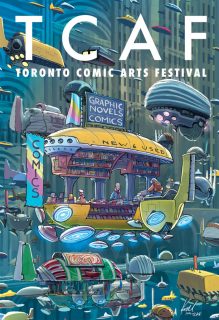
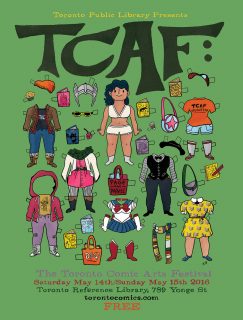
As of 2016, I have now attended the Toronto Comic Arts Festival (TCAF) for four years running. TCAF is still the only large comics event that I make a point to attended, although I guess technically I went to an anime/manga/cosplay convention earlier this year since I and the rest of the taiko group I’m a part of were featured guest performers. Anyway, I digress. TCAF is an amazing event and I’m able to enjoy a fair amount of it even though my anxiety (social and otherwise) sometimes prevents me from doing everything that I’d really like to. Each year I attend seems to be a little easier for me, though it’s still certainly not easy. But, I do think TCAF is totally worth trying to push through my issues when I can, which probably says a fair amount about the event itself.

Like last year, TCAF 2016 turned into a family trip, which made me happy. The four of us arrived in Toronto late Thursday afternoon, settled into where we were staying, stretched our legs in a nearby park (which was much needed after spending hours cooped up in the car), and eventually found something to eat for dinner before turning in for the night. Originally, I was hoping and planning to go to the opening of Shintaro Kago’s solo exhibition at Narwhal, but for a variety of reasons I ended up deciding to chill with the family all night instead. Which was also good, since for all intents and purposes TCAF ends up being a vacation of sorts for us all.

Friday, too, was more of a family day, although I did meet up with Jocelyne Allen (who translates Japanese novels and manga, and who is one of the interpreters for TCAF) for coffee in the morning. We chatted about taiko, translation, TCAF, Toronto, Tokyo and all sorts of other things, which was highly enjoyable. It was nice being able to find some time to talk with her in person since we primarily only know each other online and she’s understandably very busy during TCAF. Most of the rest of the day was spent exploring Toronto with the family, including the Royal Ontario Museum which had a really interesting exhibit—A Third Gender: Beautiful Youths in Japanese Prints—about gender and sexuality in Edo-era Japan. Finally, that evening I made my way to the tail end of Sparkler Monthly‘s annual TCAF mixer. It was a fairly small group when I got there, but a good time was had by all, myself included.

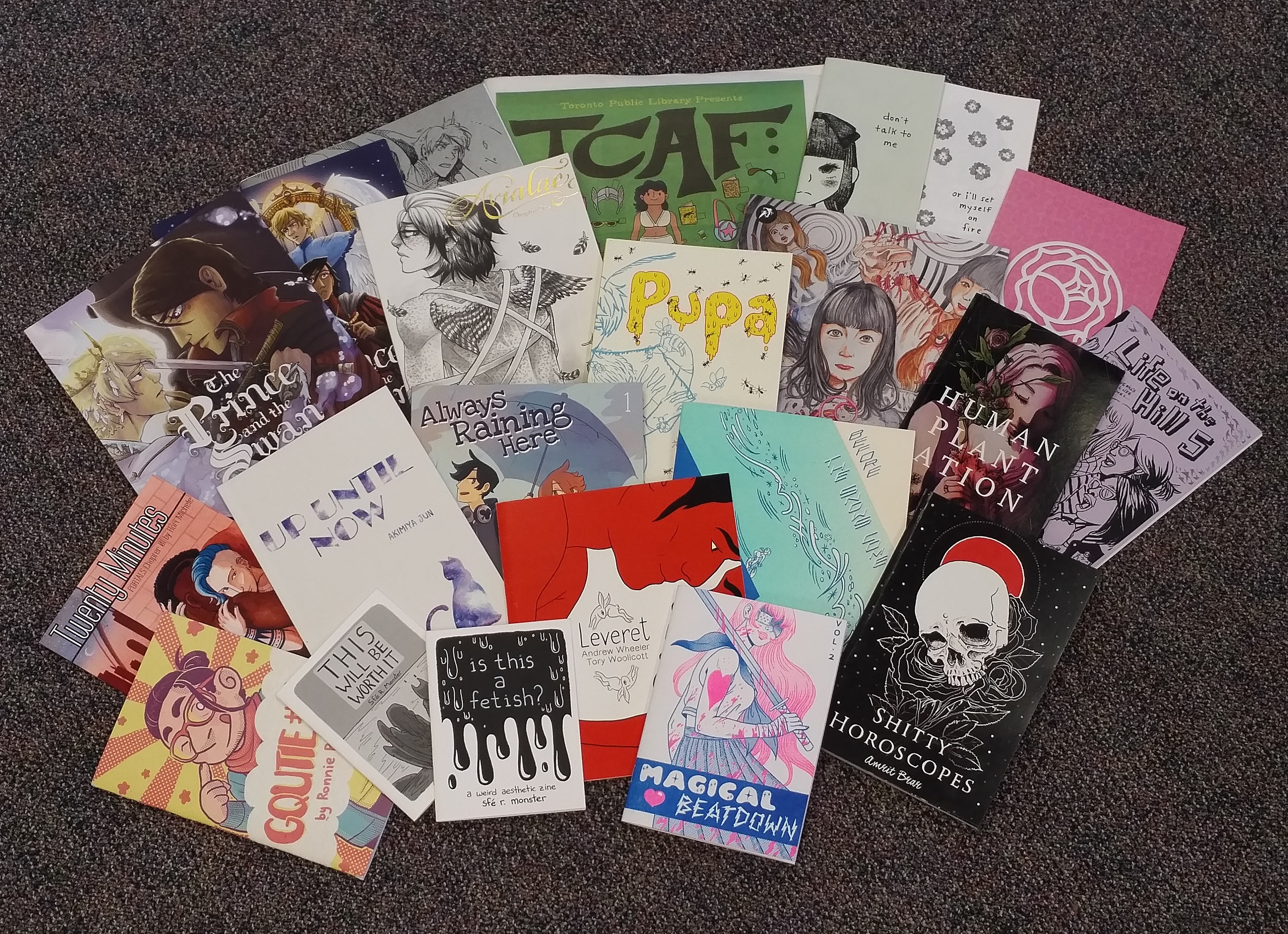
Saturday marks the beginning of TCAF proper, although there are plenty of related events that occur both before and after TCAF weekend. As was the case for the previous couple of years, I started off the 2016 festival in the in the exhibitors’ area before most of the main programming began. I ended up spending my entire comics budget for the weekend before the first day was over, but I was pretty happy with my haul which included some pre-orders, a couple of Kickstarter pickups, a few things I knew beforehand that I wanted to buy, as well as several unplanned, spur-of-the-moment purchases.

TCAF 2016 Poster - Kate Beaton

©Kate Beaton

This year I actually spent even more time on the exhibit floors buying comics, collecting sketches and signatures, and talking to creators than I have in the past. (A few highlights: I was particularly excited to meet Saicoink, whose comic Open Spaces and Closed Places I love, made a point to tell Kori Michele Handwerker how much Portals meant to me, and discovered some wonderful new-to-me creator’s like GQutie‘s Ronnie Ritchie.) That, combined with prioritizing the family more and considering the need for flexible schedules when dealing with a not-quite-two-year old, meant that I didn’t make it to as many panels this year. In some ways, TCAF 2016 for me felt more like TCAF-lite, but I still greatly enjoyed the festival and was thoroughly satisfied by all of the events, panels, and interviews that I was able to attend.

On Saturday, I ended up making it to four panels. The first was the Spotlight on Shintaro Kago, one of TCAF’s featured guests for 2016, who was interviewed by Youth in Decline’s Ryan Sands. Kago is particularly well-known for his horrific, erotic, and grotesque manga and illustrations. Many of Kago’s works are released ero-manga magazines. As he pointed out, his manga isn’t the type of work that would be published in Jump; there is a limited number of magazines (generally erotic or alternative) that would even consider releasing his work. But by submitting to ero-magazines, Kago is allowed a tremendous amount of editorial freedom. As long as the minimum erotic requirements are met, he is able to do almost anything that he wants to with his manga, including highly experimental techniques. An example of this is a work known in English as “Abstraction” which gained a fair amount of international attention when it was translated by a fan and posted online. When asked about his feelings regarding fan translations, Kago responded that in his case he was satisfied with his work becoming more readily available to a worldwide audience since the benefits he received from the original release (page rates, etc.) didn’t amount to much anyway. Another of Kago’s short manga, “Punctures,” was officially translated in English in the anthology Secret Comics Japan. Anecdotally, it was one of the few works by Kago that the editors felt would be safe enough to include and sell. At the beginning of his creative career, Kago actually wanted to be involved in making films. However, he realized that movies are very difficult to make alone, and since he didn’t have any friends to make movies with, he turned to manga as a way to express himself so that he wouldn’t need to rely on others.

After spending a bit more time wandering the exhibitor areas, I then made my way to the panel “Depictions of Sex in Comics” which was moderated by Rebecca Sullivan, a scholar specializing in sex and media as well as gender and cultural studies. The panel featured a variety of comics publishers and creators: Zan Christensen, Chip Zdarsky, Erika Moen, Cory Silverberg, C. Spike Trotman, and Shintaro Kago. Each of the panelists has their own approach to sex in regards to how it is related to and portrayed in their work, whether their focus is on sex education, erotica, some combination of the two, or something else entirely. One cultural difference that emerged during the conversation was that while erotic comics are currently seeing a resurgence in North America (Oni Press recently announced a new imprint devoted to sex positive comics, and there have been numerous, highly-successful crowd-funded projects for feminist and queer erotic comics in the last few years), the market for erotic manga in Japan has always been very strong. A very specific set of constraints exist in Japan in regards to the depiction of sex in media, what can and cannot be shown and so on, but the country probably has the most well-established and easily navigable erotic comics scene in the world. Many Japanese creators (including Kago himself) got their start working in erotic media before moving on to other and more mainstream projects. Interestingly, Kago also mentioned that BL isn’t necessarily always recognized as being “erotic” (possibly because its target demographic is women) and so in some ways the genre can actually get away with more than hentai aimed at heterosexual men which, in his experience, seems to come under public scrutiny and fire more quickly and more often.

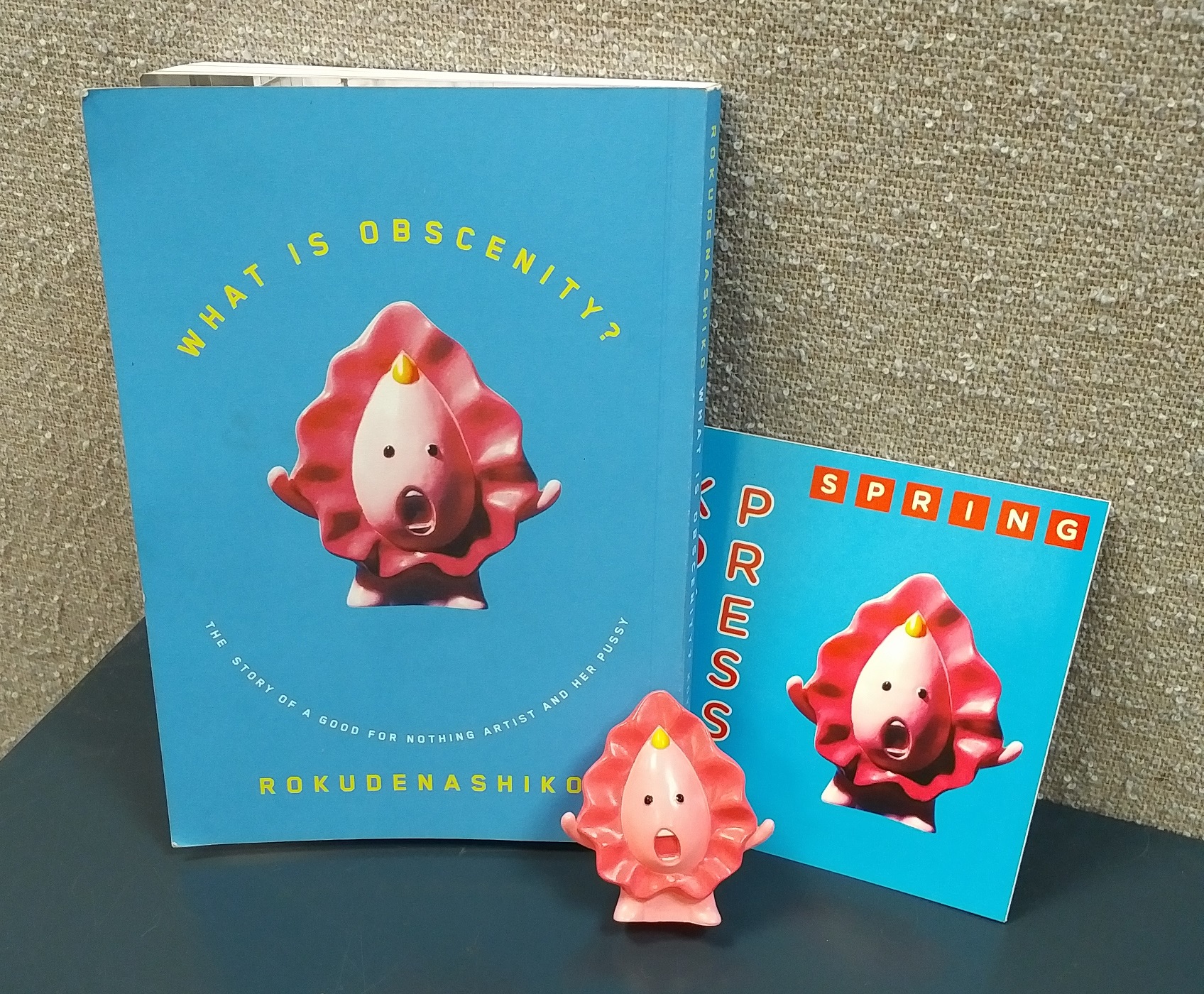
Rokudenashiko's Manko-chan

Manko-chan… in 3D!

The third panel I attended on Saturday was Rokudenashiko’s Spotlight which was absolutely delightful. After a brief introduction by Rebecca Sullivan, Rokudenashiko began by telling her story of how she came to be a vagina artist and activist and how she was subsequently arrested multiple times. Accompanying Rokudenashiko’s talk was a slide show of some of her artwork, and she brought along some of her small sculptures to show as well, including a remote-controlled “Gundaman.” Much of what she talked about I was already familiar with having read her manga What Is Obscenity? (which I highly recommend), but it was wonderful to see and hear her in person. Just like her work, Rokudenashiko is incredibly charming, cheerful, and funny. The humor and cuteness that Rokudenashiko brings to her manga, illustrations, and sculptures is very deliberate on her part. She noted that many feminist creators dealing with similar subject matter frequently use their art to express their anger and sadness which makes for very heavy work. So instead, Rokudenashiko wanted to do something that was more lighthearted and amusing. It was only after she realized that some people couldn’t laugh and have fun with it that she became more aggressive in her activism efforts, but without ever losing her sense of humor and positivity in her artwork. However, some critics and academics don’t appreciate this, feeling that she’s making too light of a serious subject. Rokudenashiko was very pleased with her reception in North America, saying that the long lines of people waiting to meet her would never happen in Japan where most people are generally too embarrassed to engage so publicly even if they recognize her and are interested in and support what she is doing.

Last year at TCAF I attended a panel on manga translation which was fascinating, so when I saw the “Translation” panel listed as part of the programming for 2016 I was immediately interested. This year the panel was moderated by Deb Aoki and featured three panelists: Jocelyne Allen, who translates from Japanese to English, Samuel Leblanc, a Canadian creator primarily working in French whose debut comic Perfume of Lilacs was released in English, and the French creator Boulet who (after a disastrous attempt to work with fans) currently translates his own comics into English. Leblanc was able to work directly with his translator and was able to provide feedback on the translation being done whereas Allen very rarely had the opportunity to be in contact with the creators of the works that she was translating. Although each of the panelists brought their own perspective to the conversation, they all agreed that capturing the appropriate tone and style is one of the most difficult things about translation. That and the fact that it’s nearly impossible to make everyone happy with a translation since so many people are invested in it each for their own reasons, whether it be the original creators, the translators, the publishers, or the readers. Lately however, the trend in comics translation seems to err on the side of the artists’ original choices and intent rather than focusing on localization. There are also different types of translation work which require different sets of skills—translating comics isn’t the same as translating prose literature which isn’t the same as translating technical manuals and so on. One thing that can be particularly challenging for comics translation is that the amount of space allowed for text is often limited. The visual element of the comics can have a great impact on the interpretation of a scene and the resulting word choices as well.

TCAF 2016 Haul

It’s not everything, but it is most of this year’s TCAF haul

On Sunday I was only able to make it to two panels before heading back home. One of the reasons that I enjoy TCAF so much is that it is an incredibly queer-friendly and queer-positive event, both in the exhibitor areas and in its programming. I was especially looking forward to “Queer Science Fiction and Fantasy,” a panel moderated by Melanie Gillman and featuring Megan Rose Gedris, Jeremy Sorese, Dylan Edwards, Andrew Wheeler, Taneka Stotts, and Gisele Jobateh, all of whom are queer creators of queer comics. Historically, queerness in speculative fiction has been relegated to subtext, but more and more that queerness is becoming increasingly obvious and in some cases is even the focus of a work. Speculative fiction allows for the creation and exploration of worlds that reflect upon current societal issues while showing what other possibilities could exist. Several of the panelists mentioned that when they were growing up speculative fiction provided some of the only representation of queerness that they saw in media, such as alternative relationship and social structures or a wider variety of genders and sexualities. Frequently, it was the non-human characters that they were most easily able to identify with and the inherent queerness of speculative fiction helped them to understand and discover their own identities. (All of this rings very true for me, too.) Webcomics and self-publishing efforts have been huge in changing the landscape of the comics market to the point where more mainstream publishers, which are slow to evolve and risk-averse, are now reaching a tipping point where queer content isn’t being automatically rejected. Deliberately, intentionally, and unquestionably queer speculative fiction is an evolving genre. Whether they mean to or not, independent creators are currently defining the expectations, tone, language, and tropes that are being set for queer representation in comics and what queer speculative fiction looks like.

The final panel I attended on Sunday was “Discussing Diversity (More or Less)” which was moderated by David Brothers. The panelists included Karla Pacheco, Cathy G. Johnson, Gene Luen Yang, Anne Ishii (one of the marvelous people behind Massive Goods), Ant Sang, and Bill Campbell. Diversity is a huge buzzword right now and not just in comics and other media. (Even my workplace is trying to focus on issues surrounding diversity, so it’s something I’m thinking about a lot these days.) In many of the conversations taking place in North America, diversity is often broadly defined as being non-straight/white/male which, in reality, is actually most of the world. The panel’s incredibly refreshing approach to discussing diversity was simply to talk about it as if was normal, because it is, rather than treating it as an exception or something unusual. As the panelists spoke about their own personal experiences and work, several common themes emerged, probably the most important being that there absolutely is a market, and a need, for diverse media. Though it can be a deliberate initiative, diversity in comics is a natural and often unintentional extension of creators’ own lives, interests, identities, and perspectives. There is also a distinct difference between providing more diverse representation in mainstream media and allowing a more diverse pool of creators to participate and express themselves within that context. While it might be a starting place, non-straight/white/male characters being written by straight/white/male creators sets an extremely low bar in terms of diversity. New voices and perspectives are just as critical if not more so in order to ensure that the comics market remains healthy as it continues to grow and evolve.

Sadly, because the kidling was getting cranky, I had to leave the festival before the food in comics panel which I was really hoping to attend. I was sad to miss most of the “What Women Want” panel’s third year, too. But I have come to realize that even if I wasn’t leaving “early,” it is impossible to see and experience everything that TCAF has to offer and choices must be made. Actually, this is something that I’ve known since the very beginning. There are always going to be panels I miss or that conflict with one another, and after the fact I’m always going to end up discovering comics that I would have been interested in and creators that I wish I had known about. But even so, that doesn’t detract from my overall enjoyment of the event and I am tremendously happy with what I was able to attend this year. TCAF is such a truly wonderful festival. As always, I’m already looking forward to and planning for my trip to Toronto for the event next year.

Filed Under: FEATURES Tagged With: comics, manga, Rokudenashiko, Shintaro Kago, TCAF

Manga the Week of 5/25

May 19, 2016 by Sean Gaffney, Ash Brown, MJ, Michelle Smith and Anna N 2 Comments

SEAN: Does it say something that having only 25 titles out the week of a Yen Press release dump is rather mild now? I keep thinking “it could be worse!”. I think it’s the new normal.

There are other publishers, of course. Kodansha Comics gives us a 2nd volume of Real Account, a title with good buzz despite being a survival game series.

ASH: I was surprised; it has the potential to become really interesting.

SEAN: There’s also an 8th Tsubasa Reservoir Chronicle omnibus, and I believe this is about the time when I started to actively mock the series.

MJ: Poor Tsubasa. So much abuse.

SEAN: Vertical has a new series debuting again, this one called Devils’ Line. It is also a dark fantasy series, just like last week’s To the Abandoned Sacred Beasts, and features vampires. It runs in Kodansha’s Morning Two.

ASH: Not particularly interested in vampires, but I do tend to like dark fantasy.

SEAN: OK, that’s it for other publishers. On to Yen Press, starting with its novel line. Another was a under-the-radar horror novel that was released a while back digitally, and did well enough to get a hardcover release later on. Now it’s done well enough to get a sequel licensed, Another Episode S/0.

ASH: I’m looking forward to reading this! The volume includes the manga as well as the novel, too.

baccano1

SEAN: Baccano! is easily one of my most awaited novel releases in the history of ever, and it’s finally here. From the creator of Durarara!!, this actually came first, and shows us the story of a group of Mafia (cough) sorry, Camorra gangs in 1930s New York City and their run in with a mysterious elixir. Read this. It’s in hardcover and digital.

The other big novel (also in hardcover and digital) this month is Overlord, whose description sounds like it’s another SAO/Log Horizon knockoff, but I’ve been assured that that’s not actually true, and that this is a fantasy series that goes to a lot of interesting places as it examines what it’s like to be a monstrous creation in an RPG. Looking forward to seeing what the fuss is here.

MJ: Well, hm.

SEAN: Lastly, there’s a 3rd Strike the Blood, a title that has underperformed for me previously, but maybe the third time is the charm.

Yen Digital seems to be the week after this, so let’s dig right into Yen proper, starting with a third volume of Aldnoah Zero Season One, which is still not Gundam.

Anne Happy: Unhappy Go Lucky! is a new debut that falls somewhere between shonen and seinen, as it runs in Manga Time Kirara Forward, also home of Aldnoah Zero and School-Live!. It’s about a high school class made up of those with natural bad luck, and their struggles to overcome it.

Black Butler has a 22nd volume, and the butler is still buttling onward, while also, yes, being a hot and sexy demon.

Corpse Party: Blood Covered is the first in a series of omnibuses (2 volumes per book) based on a game that came out in 2008. A group of kids find themselves in an alternate dimension that is haunted by the ghosts of some murdered schoolchildren. If you liked Higurashi’s mystery and gore, you should like this.

There’s a second Dimension W.

And a third Dragons Rioting. I need a title I care about stat.

inuboku11

Ah, here we go! Inu x Boku SS wraps up with its 11th volume, and I hear it’s a good ending despite the unfortunate death of its creator right around when it was written. I have enjoyed this series far more than I expected, and am sad to see it go.

Is It Wrong to Try To Pick Up Girls In A Dungeon? has a 5th manga volume, and I suspect will start coming out slower, as we’ve caught up to Japan.

There’s a third Monthly Girls’ Nozaki-kun, hooray! The cover features Kashima and Hori, who may be the series’ most popular fan pairing.

ASH: This series is so great. I love it.

MICHELLE: Yay, I’m looking forward to this!

MJ: I obviously need to start reading this, looking at my colleagues’ comments.

ANNA: I’m also very much looking forward to this.

SEAN: Its novel may have gotten delayed to September, but the manga is still here, as we get the debut of My Youth Romantic Comedy Is Wrong As I Expected (just call it OreGairu, everyone else does). The story may sound familiar – a pair of misfits end up in the school Service Club trying to help others despite horrible personalities. It does, however, have one very important quality – there are no fantasy elements to it.

Another Madoka spinoff bites the dust, with the final volume of Puella Magi Suzune Magica.

School-Live! gets a third volume of heartwarming friendship and terrifying zombies.

Strike the Blood gets a third manga volume. Don’t confuse it with the third Strike the Blood light novel, out the same day. Yes, we’re still doing that.

Trinity Seven has hit volume 5, and I believe will be getting that Blake’s Seven crossover any minute now.

We also get the 6th Ubel Blatt omnibus, Ubel Blatt Vol. 5. Yes, we’re still doing that as well.

dawn1

Umineko: When They Cry begins a new arc, despite Beatrice being, y’know, dead. But that hardly stops anyone in this series. Dawn of the Golden Witch is here! We’ll meet more weird “furniture”, and see how murders happen when it’s Battler that’s writing it. Oh yes, and Erika is there too. The artist also did the Higurashi: Massacre Arc manga.

I believe the 12th Until Death Do Us Part omnibus catches us up with Japan, so it’s a perfect time to go read the 2500 or so pages you may have missed.

Lastly, yay! A lucky Volume 13 of Yotsuba&!, the first new volume since 2013! (It was on hiatus in Japan as well.) Are you ready to see Koiwai’s mother? Yotsuba sure is!

ASH: I am so far behind in reading Yotsuba&!, but it is an absolutely delightful manga.

MICHELLE: Yay!!!!

MJ: Finally! I feel like Yen has largely moved towards series that are just not going to be my cup of tea, but this is a reminder that it hasn’t always been so!

SEAN: Aside from Baccano!… yes, OK, and Yotsuba&!… what are you getting this week?

Filed Under: FEATURES, manga the week of

My Week in Manga: May 9-May 15, 2016

May 16, 2016 by Ash Brown

My News and Reviews

Despite being in Toronto for the majority of last week for the Toronto Comic Arts Festival (which I should hopefully have a write-up about soon), I still managed to post a few things here at Experiments in Manga. For those interested in what sorts of manga and other books make their way onto my shelves, April’s Bookshelf Overload is now available. The feature used to be posted fairly early on in the month, but at least for the time being it’s more likely to appear sometime in the second week as I’m following a more relaxed posting schedule. Last week I also reviewed Philip K. Dick’s award-winning novel The Man in the High Castle which explores an alternate history in which Germany and Japan won the Second World War and occupy most of what was the United States. It’s a fascinating, thought-provoking, chilling, and frankly terrifying work.

A few interesting things that I came across online last week while I wasn’t wandering around Toronto: The lead lawyer of Rokudenashiko’s legal team wrote a nice summary and explanation of the recent verdict in her obscenity trial, including the next steps that will be taken in the case. (I reviewed Rokudenashiko’s What Is Obscenity? a couple of weeks ago; the manga is excellent, and I was thrilled to have the chance to meet Rokudenashiko at TCAF.) Over at Publishers Weekly, Brigid Alverson writes about Hachette and Kadokawa’s recently announced partnership and what it means for Yen Press. Finally, Leah Zoller and Kathryn Hemmann have started to post a series of articles at The Lobster Dance based on their panel The Sparkling World of 1970s Shojo Manga, which should be fantastic.

Quick Takes

Noragami: Stray Stories, Volume 1Noragami: Stray Stories, Volume 1 by Adachitoka. Even though I have fallen behind in reading the main series, I have been enjoying Adachitoka’s Noragami. I’m apparently not the only one as the manga has been doing quite well for Kodansha, enough so that the publisher also licensed Stray Stories, a multi-volume series of Noragami side stories. For the most part, the short manga of Stray Stories don’t appear to rely on the main Noragami storyline although it is assumed that readers are at least already vaguely familiar with the manga’s characters and basic premise. So far, Stray Stories reminds me a bit of Noragami‘s earlier, more episodic nature before the series’ overarching plot began to take precedence. The short manga collected in Stray Stories also tend to be more comedic than serious, which I greatly enjoyed. The first volume was a lot of fun, and I’m glad that there will be more side stories to come. Stray Stories allows Adachitoka to expand on the world and characters of Noragami in ways that wouldn’t make sense in the main series but that are still enjoyable in their own right.

RealAccount1Real Account, Volume 1 written by Okushou and illustrated by Shizumu Watanabe. I’ll admit, I actually wasn’t expecting all that much from Real Account, so I was a little surprised by how much liked the first volume of the series even if there were a few things that didn’t quite work and even if there was at least one minor plot hole. Quite a few manga seem to have come out over the last few years with a similar basic premise in which a group of people find themselves trapped in an online environment where they must survive. If they die onlie, they will die real world as well. In the case of Real Account, that online environment is greatly influenced by social media and the users’ survival depends on them having at least one follower. The titular “Real Account” is something closely akin to Twitter with a few additional elements, like games, mixed in. Some of the deadly games those who are being held hostage are forced to play are actually quite clever and highly psychological, relying on the unpredictable nature of human relationships when self-preservation is on the line. At this point in the series it’s still unclear who is behind it all and what their motivations are, but there is definite and not particularly subtle social commentary being made.

Sense & SexualitySense & Sexuality by You Higashino. Originally released in English in print as part of Media Blaster’s Kitty Media line, Sense & Sexuality is now available digitally from Sublime Manga. I haven’t come across very many manga that take place during Japan’s Taishō Era, but it’s a really interesting time period in the country’s history and one of the reasons Higashino’s boys’ love one-shot Sense & Sexuality was first brought to my attention. The manga follows the sexual conquests of Hanamura and Takakura, two close friends from noble families whose lives are filled with decadence, leisure, and hedonism. They have turned their romances into a game, betting on who will be the first to bed the various attractive young men they have identified as their targets. Eventually though, their sights are set upon each other. For the most part, Sense & Sexuality is fairly episodic. There’s just enough story to hold it all together, but what little plot there is simply provides the excuses needed for the manga’s plentiful and explicit sex. High literature it is not, nor does it need to be. I really liked Sense and Sexuality‘s setting, the characters have a bit more depth to them than it initially seems, and the manga can be surprisingly humorous even though I wouldn’t necessarily describe it as a comedy.

Filed Under: FEATURES, My Week in Manga Tagged With: Adachitoka, manga, Noragami, Okushou, Real Account, Shizumu Watanabe, You Higashino

The Man in the High Castle

May 13, 2016 by Ash Brown

The Man in the High CastleAuthor: Philip K. Dick
Publisher: Houghton Mifflin Harcourt
ISBN: 9780544916081
Released: October 2016
Original release: 1962
Awards: Hugo Award

Philip K. Dick’s The Man in the High Castle is one of those classic science fiction novels that I’ve been meaning to read for ages but for one reason or another never quite got around to. Recently, though, the novel seems to be popping up wherever I turn: Viz Media’s speculative fiction imprint Haikasoru takes its name from the title; it was mentioned multiple times in the tenth volume of Mechademia which I read not too long ago; and in 2015 it was adapted as a live-action television series. Originally published in 1962, The Man in the High Castle can be counted as among the first major works of fiction written in English to examine an alternate history in which Germany and Japan emerged victorious from the Second World War, a historical turning point which has since become one of the most popular for the subgenre to explore. Winning the Hugo Award for best novel in 1963, The Man in the High Castle is also regarded as one of Dick’s most well-known and highly-acclaimed works. The novel has been re-published around the world numerous times with the most recent US edition scheduled to be released in 2016 by Houghton Mifflin Harcourt.

After being defeated, the United States of America was divided into three political entities at the end of World War II. The Pacific States of America is overseen by Japan and the Eastern United States is occupied by Germany while the central third of the country, the Rocky Mountain States, remains an independent buffer zone. Less than two decades have passed since the end of the war. Nazi Germany, having become a major power, continues to dominate and conquer the rest of the world and has even extended its reach to space. However, internal power struggles threaten to throw the precariously-balanced international political landscape into war and turmoil once again. In the meantime, Americans have had to either learn to adapt to their occupiers’ whims or to flee their homeland. The Japanese rule is fairly benign, especially when compared to that of the Germans, but it is still grating and demeaning for the Americans who are slowly losing their national identity along with the freedoms and respect that they once enjoyed in the past.

The alternate history that Dick envisions in The Man in the High Castle is honestly terrifying and horrifying. Under the global influence of a fascist, totalitarian regime, extreme racism and prejudice is rampant and genocide isn’t a thing of the past but of the present and future. People live in a world in which insidious fear, hatred, anger, and uncertainty have come to dominate. The Man in the High Castle follows several different and fairly ordinary characters from a variety of backgrounds who are all ultimately connected to one another, either directly or tangentially: an antiques dealer making his living selling Americana to Japanese clients, an American craftsman and jewelry maker who must hide his Jewish identity and heritage, a Japanese trade official stationed in what was once California, an American woman who teaches judo in the Rocky Mountain States, and a Nazi defector trying to prevent impending atrocities from becoming a reality. By the end of the novel, both together and separately, they have all taken a stand against the status quo and have made a difference, however small, in the world around them.

In addition to being a work of alternate history itself, there is a novel within The Man in the High Castle—The Grasshopper Lies Heavy—which explores yet another potential reality. That novel plays a pivotal role as does the Chinese classic the I Ching which many of the characters consult as an oracle or use to make major decisions and which Dick himself used to guide the story and plot of The Man in the High Castle. The writing style of The Man in the High Castle did take some time for me to get used to. Much of the novel consists of the characters’ internal monologues and thought processes, resulting in a work that frequently feels like fragmented stream-of-consciousness. Parts of the novel are also written in deliberately stilted English which, while clever and effective (and while I can understand and appreciate Dick’s intentions), doesn’t necessarily always make for the most pleasant reading experience. However, the underlying ideas and themes behind The Man in the High Castle are tremendous. Ultimately, The Man in the High Castle is a fascinating and chilling read, and a novel that is remarkably relevant and thought-provoking even today.

Filed Under: REVIEWS Tagged With: Hugo Award, Novels, Philip K. Dick

Bookshelf Overload: April 2016

May 11, 2016 by Ash Brown

April was a fairly reasonable month when it came to the number of manga and other books that I acquired, but by far my biggest acquisition was a house! It took nearly six months and a lot of stress to get everything to align properly, but I was finally able to close on the house that my family and I have had our eyes on since the the beginning of the process. We aren’t moved in yet, though we hope to be by the end of May. One of the (many) reasons that I’m especially excited about the new place is that it’s large enough that I’ll be able to devote an entire room to books. Now I’ll finally have a place to properly house my absurdly large library.

Anyway! Back to April’s manga. I happened across a bunch of Kaze Hikaru volumes for only a dollar each at my local comic book store, which made me very happy. As for preorders, there were several April releases that I was particularly happy to see, including Kaori Ozaki’s The Gods Lie (I loved Ozaki’s series Immortal Rain/Meteor Methuselah, so am glad to have the opportunity to read more of her manga) and the newly revised and expanded edition of The Passion of Gengoroh Tagame (I reviewed the original collection back when it was first released). However, what I think is probably one of the most notable and most important manga from April is Rokudenashiko’s What is Obscenity? I believe the official release date was technically in May and my copy simply arrived early, but that certainly didn’t stop me from reading and reviewing it.

Manga!
The Ancient Magus’ Bride, Volume 4 by Kore Yamazaki
I Am a Hero, Omnibus 1 by Kengo Hanazawa
The Gods Lie by Kaori Ozaki
Guardians of the Louvre by Jiro Taniguchi
Kaze Hikaru, Volumes 12-13, 15-18 by Taeko Watanabe
Library Wars: Love & War, Volume 15 by Kiiro Yumi
Midnight Stranger, Volume 1 by Bohra Naono
Of the Red, the Light, and the Ayakashi, Volume 2 by Nanao
The Passion of Gengoroh Tagame by Gengoroh Tagame
What is Obscenity?: The Story of a Good For Nothing Artist and Her Pussy by Rokudenashiko
Yowamushi Pedal, Omnibus 2 by Wataru Watanabe

Comics!
Broken Frontier edited by Frederik Hautain and Tyler Chin-Tanner
The Nameless City by Faith Erin Hicks
Two Keys, Volume 1 by Chloe Chan and Aliena Shoemaker
Vertoscope edited by Nechama Frier and Ten Van Winkle

Artbooks!
Bearutus by Cauro Hige
Blanc et Noir by Takeshi Obata
Living with Yuko Shimizu by Yuko Shimizu

Anthologies!
In Light of Shadows: More Gothic Tales by Kyōka Izumi

Nonfiction!
Straight from the Heart: Gender, Intimacy, and the Cultural Production of Shōjo Manga by Jennifer Prough

Filed Under: Bookshelf Overload, UNSHELVED

Manga the Week of 5/18

May 11, 2016 by Sean Gaffney, Ash Brown, Michelle Smith and MJ Leave a Comment

SEAN: Third weeks of the month tend to be grab bag weeks, and this is no exception, but as with most grab bags, there’s always something in there that’s of interest.

bloodcspinoff1

For those who were eagerly awaiting the new volume of Blood C, I got nothing. But we do have a spinoff from that series, titled Demonic Moonlight, coming from Dark Horse.

ASH: Huh, I think I missed this particular license being announced. Granted, I’ve not read Blood C, either.

SEAN: Cage of Eden has slowed down its release schedule, but it’s still going, and has reached its 20th volume from Kodansha.

And Devil Survivor is more than halfway over with its 5th volume.

Kodansha also has a 2nd volume of haremnesia series Forget Me Not.

MICHELLE: *snerk*

SEAN: And a 14th Noragami, which I believe still has one or two fans.

ASH: It does and I’ve been enjoying it, too, though I’m terribly behind.

SEAN: One Peace has the 3rd volume of the manga adaptation of Rise of the Shield Hero.

Seven Seas has a trio of releases. Devils and Realist is up to Volume 9, and still features very handsome demons.

ASH: Yet another series I’ve fallen behind on, but the artwork and demons are very pretty.

SEAN: If you love Monster Musume, you’ll be delighted at the new spinoff, I Heart Monster Girls.

And there’s a 2nd volume of dark Pokehorror series Tomodachi x Monster.

cigarette

A late entry that came out this week. Blame Amazon not actually classifying it as manga. Top Shelf has a collection of stories by Masahiko Matsumoto, famous gekiga and alternative manga artist. It’s called Cigarette Girl and looks absolutely fantastic. A must for fans of manga history.

MJ: Oh! Yes! Something I actually care about! Glad to see this on the list!

ASH: It’s literally been years since this manga was first announced; I’m thrilled it’s finally coming out!

Vertical debuts To The Abandoned Sacred Beasts, another in what is proving to be a lucrative line of ‘dark fantasy’ series.

ASH: Dark fantasy? I am intrigued.

SEAN: And Terra Formars from Viz has now hit a dozen volumes.

Lastly, we see a 4th Ultraman. A reminder that it’s a sequel to the beloved original TV show.

Are you grabbing something from this grab bag of manga?

Filed Under: FEATURES, manga the week of

Pick of the Week: Some Hail the King

May 9, 2016 by Michelle Smith, Sean Gaffney, Anna N, Ash Brown and MJ 1 Comment

requiem4SEAN: It’s a small week, but there’s a few items of interest here, definitely. That said, in terms of the title I’m most intrigued by, it has to be What Is Obscenity?, which I plan on picking up at TCAF, despite the inherent dangers of testing Canadian customs. And then probably reading it while listening to “The Power Of Pussy” by Bongwater.

ASH: An excellent choice, Sean! And, despite the most recent volumes in some of my favorite series like Requiem of the Rose King being released this week, What Is Obscenity? is my pick, too. I actually just reviewed the wonderfully remarkable, playful, and subversive comic memoir and highly recommend it.

MICHELLE: I will buck the trend and award my pick to volume ten of Fumi Yoshinaga’s always wonderful What Did You Eat Yesterday?. It’s been ten months since volume nine was released, but the wait is finally over! Happily, there’s only a six-month wait for volume eleven. Still long, but bearable.

ANNA: I’m most interested in the latest volume of Requiem of the Rose King. The combination of history and drama with Aya Kanno’s masterful art is hard to resist.

MJ: I’ve been incredibly torn this week, with a new volume of my beloved What Did You Eat Yesterday? and a number of other interesting prospects on the way. In the end, though, I guess I’m with Anna here. My personal obsession with Requiem of the Rose King in all its strangeness and beauty has me firmly in its thrall. There’s no other way for me this week.

Filed Under: PICK OF THE WEEK

My Week in Manga: May 2-May 8, 2016

May 9, 2016 by Ash Brown

My News and Reviews

Last week at Experiments in Manga I announced the winner of the superhero duo manga giveaway. As usual, the post also includes a list of manga, in this particular case a list of manga featuring superheros of one ilk or another. Last week I also posted my review of Rokudenashiko’s comic memoir What Is Obscenity?: The Story of a Good for Nothing Artist in Her Pussy which is a wonderfully engaging and important work. Rokudenashiko is one of the featured guests at the Toronto Comic Arts festival which is this upcoming weekend; I greatly admire her and her work, so I’m looking forward to having the opportunity to meet her in person.

Elsewhere online: Rokudenashiko was recently interviewed in preparation for her trip to Toronto. Massive Goods hints at an upcoming announcement regarding an English-language release of Gengoroh Tagame’s award-winning My Brother’s Husband, which I am super-excited about. And Ryan Holmberg wrote a about Katsumata Susumu’s Anti-Nuclear Manga for the Sainsbury Institute and, at the other end of the spectrum, about the Nuclear Literati: Nakashima Kiyoshi’s Furusato Goes to Hell for The Comics Journal.

Quick Takes

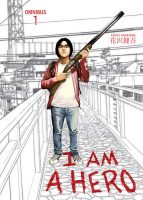
I Am a Hero, Omnibus 1I Am a Hero, Omnibus 1 (equivalent to Volumes 1-2) by Kengo Hanazawa. By this point I’m fairly burned-out when it comes to zombies, but I had heard so many good things about the award-winning I Am a Hero that I had to give it a try. And, I must admit, the manga is one of the most interesting and best examples of the genre that I’ve come across in quite some time. For me what makes I Am a Hero stand out is the lead character, Hideo. After making his debut as a professional mangaka, he’s back to being an assistant when his career failed to take off. He has the tendency to talk to himself, hear voices, and hallucinate, so everything that he experiences has to be questioned. The zombie apocalypse doesn’t really come until the second half of the first I Am a Hero omnibus. Until that happens, most of the hints and clues of the impending disaster can be easily dismissed as part of Hideo’s delusions. When the apocalypse finally does happen the series suddenly becomes horrifyingly brutal and grotesque as the world descends into chaos. Hideo remains surprisingly calm in the face of it all, partially because he initially assumes that the end of the world is just another one of his hallucinations. By the end of the first omnibus there’s already an extraordinarily high body count (most the named characters are done for and even Hideo isn’t completely unscathed), so I am very curious to see where the series goes from here.

Maga-Tsuki, Volume 1Maga-Tsuki, Volume 1 by Hoshino Taguchi. Apparently the initial inspiration behind Maga-Tsuki was originally going to be worked into a shōnen battle manga, but in the end it turned into a harem-ish romantic comedy. Personally, in this case I probably would have been more interested in the action-oriented series, but Maga-Tsuki does offer some variations on the usual tropes that are amusing. It is, however, very trope-heavy and contains the expected levels of fanservice for this type of story. When he accidentally breaks the sacred mirror protected by his family’s shrine, Yasuke finds himself cursed by the goddess sealed within it. In order to lift the curse he must make Orihime, a goddess of calamity and misfortune, happy, which proves to be something of a challenge. In the meantime, his soul has been separated from his body and he must maintain constant physical contact with Orihime or else he will die. A kiss from Orihime will conveniently revive him, though. This obviously results in all sorts of complications and misunderstandings, especially when it comes to trying to confess his feelings to the girl that he likes. I like that Maga-Tsuki makes use of Japanese mythology, otherwise I’m not sure that it would have managed to hold my attention. However, I do have a hard time seeing the sweetly cute and seemingly innocent Orihime as an ancient, all-knowing goddess even if her divine powers are suitably impressive.

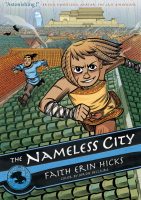
The Nameless CityThe Nameless City, Volume 1 by Faith Erin Hicks with colors by Jordie Bellaire. In general I tend to be fond of Hicks’ work, but I’ve been especially anticipating the debut of The Nameless City trilogy having followed its development and progress online. The titular Nameless City is a city that has been conquered and re-conquered countless times. Situated in a geographically advantageous location which allows the ruling kingdom immense control over the area’s economics and trade it makes a sought-after target. The city is currently under the domain of the Dao and has been for a few decades, but it’s likely only a matter of time before there’s another invasion or the residents rise up in revolt. Inspired in part by Chinese history, The Nameless City is about an unlikely friendship that develops over the backdrop of warfare, clashing cultures, and political intrigue. Kaidu is one of the Dao, sent to the Nameless City to participate in military education and training (though he’d much rather be reading than fighting), while Rat is one of the city’s many orphans whose parents were killed by the Dao. As Kaidu gets to know Rat he gets to know the city, and he learns more about his own people in the process, too. As for Rat, she initially hates Kaidu simply because he is Dao, but that slowly changes as she realizes that not all Dao are the same. I’m really enjoying seeing their relationship develop and look forward to the next volume, The Stone Heart, a great deal.

Filed Under: FEATURES, My Week in Manga Tagged With: comics, Faith Erin Hicks, Hoshino Taguchi, I Am a Hero, Kengo Hanazawa, Maga-tsuki, manga, Nameless City

What Is Obscenity?: The Story of a Good for Nothing Artist and Her Pussy

May 6, 2016 by Ash Brown

What Is Obscenity?Creator: Rokudenashiko
U.S. publisher: Koyama Press
ISBN: 9781927668313
Released: May 2016
Original release: 2015

Like many other people both inside and outside of Japan, the work of artist and activist Rokudenashiko (the pseudonym of Megumi Igarashi) was brought to my attention following her arrests in 2014 on charges of obscenity. Rokudenashiko is a self-described manko (pussy) artist, challenging preconceived notions and taboos surrounding female genitalia by creating clever, fun, and silly sculptures incorporating realistic molds of vulvas as well as designing Manko-chan, a cute anthropomorphized pussy. One of Rokudenashiko’s responses to being arrested was to create the manga What Is Obscenity? about her experience. It was originally serialized in the Japanese political magazine Weekly Friday in 2014 before being collected in a single volume along with other material in 2015. The English-language edition of Rokudenashiko’s comic memoir, subtitled The Story of a Good for Nothing Artist and Her Pussy, was published by Koyama Press in 2016 thanks in part to the editing, translation, and production efforts of the fine folks behind Massive Goods.

In 2013, Rokudenashiko successfully crowdfunded a project to create a kayak molded from a 3D scan of her genitals. One of the rewards given to some contributors of the campaign was a downloadable vector file of the scan which she encouraged others to use to make their own artwork. In July 2014, this file along with her artwork and other personal belongings were used as evidence to support the obscenity charges that were brought against her. Rokudenashiko was arrested and jailed for a week before being released only to be arrested and indicted again in December of that year. She continues to fight the charges in court and her trial process is currently ongoing, although a judgement on her case is scheduled to be pronounced on May 9, 2016.

What Is Obscenity? collects two short series of autobiographical manga—”What Is Obscenity? How I Became a So-Called Artist” about Rokudenashiko’s first arrest, her time spent in jail, and the immediate aftermath and “Why I Became a Manko Artist” which relates the story of how she almost unintentionally became an activist and started creating pussy-related artwork. Adorable illustrations of Manko-chan are found throughout the volume and “This Is My Story,” a short full-color manga about Manko-chan, is featured as well. The English-language edition of What Is Obscenity also includes additional material such as an introduction by Rokudenashiko, examples of her sculptures and artwork, color photography, cultural notes, and an excerpt of a discussion between Rokudenashiko and the controversial film direction Sion Sono.

What Is Obscenity?, page 11Freedom of expression, and especially freedom from governmental censorship, is something that I am very passionate about. One of my particular focuses in the various copyright and intellectual property law courses I took in graduate school actually happened to be obscenity law which, as in the case of Rokudenashiko, can be used to attempt to silence and punish artists and other creatives as criminals and which are notoriously inconsistent in their application. But Rokudenashiko isn’t allowing herself to be silenced. Her arrest and trial, as well as her willingness to publicly fight the obscenity charges, made not only national but international news. This has given her a larger platform that has allowed her to bring even greater attention to the absurdity of the systemic injustice of a society that objectifies the bodies of women while at the same time treating them as something shameful and obscene. I greatly and sincerely admire her work and efforts; what Rokudenashiko is doing is incredibly important both artistically and socially.

One of the things that makes Rokudenashiko so remarkable is that even in the face of infuriating and intimidating circumstances she is able to retain an outwardly upbeat, bright, and strikingly personable attitude which is then reflected in her work. Even while dealing with some fairly serious issues, What Is Obscenity? is sweet and charming with a wonderful sense of humor and art to match. As with much of Rokudenashiko’s work, What Is Obscenity? can be silly and fun, though many of the events portrayed were probably not nearly as funny while she was actually living through them. Her experiences, everything from the utter lows of personal and family troubles and the jail time caused by her artwork to the immense joy sparked by the unflagging support of her friends and fans, are recounted with a cheeky candidness that makes her story and the subject matter approachable and entertaining while still getting her message across. With its gentle humor and creative cuteness, What Is Obscenity? and the rest of Rokudenashiko’s work is subversively powerful, inspiring, and empowering.

Filed Under: REVIEWS Tagged With: Koyama Press, manga, Rokudenashiko

Manga the Week of 5/11

May 5, 2016 by Sean Gaffney, Ash Brown, Michelle Smith, MJ and Anna N 1 Comment

SEAN: Glory be! A small week at last! Write this week down in your diary, folks.

ASH: Astonishing!

MICHELLE: “Glory be” is gonna make me have “The Night Chicago Died” in my head all day! :)

SEAN: We start off with Kodansha’s 14th volume of The Seven Deadly Sins, which is at least seven too many sins. Are they just repeating sins now?

For those going to TCAF, you may be aware that Rokudenashiko will be appearing and discussing her genitalia-related art. A manga-style memoir discussing the whole thing, called What is Obscenity?: The Story of a Good For Nothing Artist and her Pussy, will be out next week from Koyama Press.

ASH: It’s a serious topic and an important manga, but it’s also strikingly funny and charming. Highly recommended.

guardians

SEAN: And Jiro Taniguchi fans will be delighted to hear about the hardcover Guardians of the Louvre coming out from NBM Publishing.

ASH: Looking forward to reading this! I enjoy Taniguchi’s work, and it’s a part of the series that brought us Hirohiko Araki’s Rohan at the Louvre as well.

MICHELLE: Ooh, I had no idea about this.

MJ: Oh… yes!

SEAN: SubLime has a 5th volume of Love Stage!!.

Vertical has somehow reached double digits with What Did You Eat Yesterday’s 10th volume. That’s a lot of food.

ASH: And a delectable series.

MICHELLE: Yay! I treasure each new release of this series.

MJ: I’m so excited! I always want more of this series.

SEAN: Ranma 1/2 has a 14th omnibus, as we get to see Hinako fall for Soun Tendo, every Ryouga/Ukyou fan’s favorite story (they won’t enjoy the manga version), and Ryu Kumon, possibly the most sympathetic antagonist in all of Ranma.

And Requiem of the Rose King has a 4th volume, as I begin to wonder how closely we’ll be sticking to Shakespeare’s timeline. Is Henry VI not long for this world?

ASH: I still adore this series. The atmosphere! The drama!

MICHELLE: I’m enjoying this one, too.

MJ: I’m head-over-heels for this series! Figures, the first small week in ages, and it’s the one with the most for me!

ANNA: I agree, this is one of my current favorites!

SEAN: Are you going for the arty manga, or the more traditional fare? Or both?

ASH: I’ll apparently be picking up a copy of almost everything being released this week…

Filed Under: FEATURES, manga the week of

Manga Giveaway: Superhero Duo Winner

May 4, 2016 by Ash Brown

Batmanga, Volume 1Ultraman, Volume 1And the winner of the Superhero Duo manga giveaway is… Cody Kemp!

As the winner, Cody will be receiving a copy of Batmanga, Volume 1 by Jiro Kuwata as well as a copy of Ultraman, Volume 1 by Eiichi Shimizu and Tomohiro Shimoguchi, two superhero manga that were released relatively recently in English. I don’t really consider myself to be a huge fan of the superhero genre, but when I do finally get around to reading manga featuring superheros of one ilk or another, I generally do enjoy them. So, for this giveaway, I asked that participants tell me a little about some of their favorite superhero manga. For everyone’s detailed responses, be sure to check out the Superhero Duo giveaway comments. (The lesson learned from the responses? If you’re not already reading One-Punch Man, you should be!)

Some of the superhero manga available in English:
Apocalypse Zero by Takayuki Yamaguchi
Batmanga by Jiro Kuwata
Big Hero 6 by Haruki Ueno
Dead End by Shohei Manabe
Duklyon: Clamp School Defenders by CLAMP
Hero Heel by Makoto Tateno
Hero’s Are Extinct by Ryoji Hido
Heroman written by Stan Lee, illustrated by Tamon Ohta
Junk: Record of the Last Hero by Kia Asamiya
Lucifer and the Biscuit Hammer by Satoshi Mizukami
My Hero Academia by Kōhei Horikoshi
No. 5 by Taiyō Matsumoto
One-Punch Man written by One, illustrated by Yusuke Murata
Ratman by Sekihiko Inui
Tiger & Bunny by Mizuki Sakakibara
Tiger & Bunny: The Beginning by Tsutomu Ono
Tiger & Bunny: Comic Anthology edited by Asuka Henshubu
Tokyo ESP by Hajime Segawa
Ultimate Muscle: The Kinnikuman Legacy by Yudetamago
Ultraman by Eiichi Shimizu and Tomohiro Shimoguchi

Depending on your definition of “superhero,” the above list could be much longer (or much shorter, for that matter) but it’s probably not a bad place to start for someone interested in reading super-heroic manga. Thank you to everyone who participated in the giveaway and took the time to share your favorite superhero manga with me. Until next time!

Filed Under: Giveaways, UNSHELVED Tagged With: Batmanga, Eiichi Shimizu, Jiro Kuwata, manga, Tomohiro SHimoguchi, Ultraman

My Week in Manga: April 25-May 1, 2016

May 2, 2016 by Ash Brown

My News and Reviews

April has come to a close and May has begun, but there’s still a little time left to enter April’s manga giveaway for a chance to win a duo of superhero manga: Jiro Kuwata’s Batmanga, Volume 1 and Eiichi Shimizu and Tomohiro Shimoguchi’s Ultraman, Volume 1. In addition to the manga giveaway, I also snuck in my review of Setona Mizushiro’s After School Nightmare, Volume 9 last week. It’s a particularly dramatic volume in the series with some major twists and reveals. I’m very curious to see how Mizushiro will bring things to a close in the tenth and final volume. The review was part of my monthly horror manga review project, and I just barely got it written and posted before April ended. I’ve been super busy and stressed out lately, which makes writing even more difficult for me than it usually is. There are plenty of great and wonderful things going on right now in my life, but sadly the busyness and stress probably isn’t going anywhere anytime soon.

Quick Takes

Fairy Tail: Ice Trail, Volume 1Fairy Tail: Ice Trail, Volume 1 by Yuusuke Shirato. There have recently been several manga spin-offs of Hiro Mashima’s series Fairy Tail released, but Ice Trail is the first that I’ve read. (For that matter, I’ll have to admit that I’ve not actually read most of Fairy Tail proper.) What primarily interested me in Ice Trail is that it serves as an origin story for Gray Fullbuster, one of Fairy Tail‘s most popular characters (as well as one of my personal favorites). Gray is a badass ice mage with a tragic past and the propensity for walking around without a shirt. Ice Trail shows Gray’s childhood in the brief time between when his home village was destroyed and when he joined the Fairy Tail guild. Despite the cuteness of seeing Gray as a kid, Ice Trail is very reminiscent of Fairy Tail in both style and tone. Apparently the series is only two volumes long, which may partially explain why the manga moves along at a break-neck pace with one action-packed battle after another. Ice Trail can mostly stand on its own, but will likely be most appreciated by readers who are already familiar with Gray and with Fairy Tail as a whole—though not absolutely necessary, that additional context can be helpful.

Kiss Him, Not Me, Volume 2Kiss Him, Not Me!, Volume 2 by Junko. I do get a kick out of Kiss Him, Not Me! I was a little worried at first since the series’ plot essentially hinges on the heroine’s sudden and drastic weight loss to bring her to the romantic attention of four of the hottest guys at her school. However, the manga quickly moves on from that premise and I don’t think it was even referenced at all in the second volume. Instead, Kiss Him, Not Me! revels in its humor and the comedic situation of a fujoshi finding herself on the opposite side of her usual fantasies. Basically, Serinuma’s life has become an otome game in which numerous young men are vying for her favor. The second volume of Kiss Him, Not Me! primarily focuses on two events: the school festival, during which each of the guys has the opportunity to have a mini-date with Serinuma (with varying degrees of success), and the Winter Comiket, which they all attend together although Serinuma is by far the most enthusiastic about it. One of the things that I particularly appreciate about Kiss Him, Not Me! is that no one asks Serinuma to change who she is at heart—she still gets to be an otaku. The second volume also introduces a new character who greatly intrigues me.

A Silent Voice, Volume 4A Silent Voice, Volumes 4-6 by Yoshitoki Oima. One of the manga to debut last year that I found to be particularly notable was Oima’s A Silent Voice and it continues to be a series that greatly impresses me. It’s not necessarily an especially happy read, though. The manga realistically portrays teenage angst compounded by issues of disability and bullying and explores the accompanying relationships which are extraordinarily messy and complicated. Emotional and physical violence takes its toll not only on the people who are being directly targeted, but also on the people who surround them. For better and for worse, the characters are all trying to deal with the repercussions of their past mistakes as best as they can, and even those who come across as antagonistic generally have their own problems they are working through. Just how deep a wound bullying can leave and how it can literally change a person’s life is more fully expressed in these volumes, and frankly it’s devastating. Thankfully, there are still moments of hope and redemption so A Silent Voice, while very serious and at times emotionally wrenching, never seems to become overwhelmingly bleak, but sometimes it does get close.

Filed Under: FEATURES, My Week in Manga Tagged With: Fairy Tail, Junko, Kiss Him Not Me, manga, Silent Voice, Yoshitoki Oima, Yuusuke Shirato

Pick of the Week: May Flowers

May 2, 2016 by Michelle Smith, Sean Gaffney, Anna N, Ash Brown and MJ Leave a Comment

blancnoirMICHELLE: Regrettably, I’m not too excited about anything coming out next week. However, I am planning to check out the debut volume of The Heiress and Chauffeur, so I reckon I’ll make that my official pick this week.

SEAN: No question about it, Oresama Teacher is what has me excited this week. Its combination of hilarity, delinquency, and brainwashing (yes, really) has been a must read the last few volumes. Go get it.

ANNA: I also pick The Heiress and Chauffeur. I’m always curious about new shoujo, and the historical setting for this manga sounds appealing.

ASH: It’s a little bit of a cheat for me since my copy arrived last week and I already know how gorgeous it is, but my pick this week is for Takeshi Obata’s artbook blanc et noir. I’ve always enjoyed Obata’s artwork, so having an entire book devoted to it great and Viz has done a fantastic job with it.

MJ: Yes, yes, yes, I gotta go with Ash this week! I own Obata’s gorgeous Hikaru no Go artbook, and I’m incredibly excited about this new one. It’s blanc et noir for me!

Filed Under: PICK OF THE WEEK

After School Nightmare, Vol. 9

April 30, 2016 by Ash Brown

After School Nightmare, Volume 9Creator: Setona Mizushiro
U.S. publisher: Go! Comi
ISBN: 9781933617701
Released: November 2008
Original release: 2007

After School Nightmare is a ten-volume manga series by Setona Mizushiro. Darkly psychological with elements of horror as well as social commentary, After School Nightmare can at times be a deeply troubling and challenging read while still being engrossing and oddly compelling. I first started reading the series several years ago, but have only recently been able to bring myself to read beyond the first few volumes of the manga, largely because I did find it so disconcerting and hard-hitting. Granted, the dark, anxiety-ridden atmosphere which makes the After School Nightmare so intimidating to approach is also what makes the story particularly effective and is an aspect to the manga that I can appreciate. After School Nightmare, Volume 9 was first published in Japan in 2007. The English-language edition of the volume was released in 2008 by Go! Comi. Sadly, the entire series has now gone out of print and is becoming more difficult to find.

One by one the students participating in the special after school class which forces them to share their literal nightmares with one another are graduating and disappearing, leaving only a vague memory of their existence behind. Though at times vicious and cruel, the dreams are intended to allow the students to work through their personal traumas, crises, and fears so that they can let go and move on from their troubled pasts. However, the violence and turmoil they experience within the dreams frequently spills over into their waking lives and graduating doesn’t necessarily guarantee a peaceful resolution. Koichiro in particular has reached his breaking point. He is ruthless in his determination to graduate and leave his overbearing and abusive father behind along with his carefully crafted public persona. Triggered by outside events, the nightmare Koichiro brings down upon the other students as he tries to free himself turns into a shockingly brutal and bloody rampage, signalling the beginning of the end for himself and for those who still remain.

After School Nightmare, Volume 9, page 29A few questions still remain, but for the most part Koichiro’s character arc is resolved in After School Nightmare, Volume 9. Like so many of the other characters’ stories, Koichiro’s is a tragic one and it is heartwrenching to see it play out. The culmination of his anger, pain, and suffering has a direct and devastating impact on the others, ending with a violent attack on Mashiro, the portrayal of which has blatant parallels to a sexual assault. Koichiro was at one point the most stable and seemingly well-adjusted character in the series, so to see such a drastic shift in his outward attitude and behavior is especially startling. He isn’t the only character to have significantly changed over the course of After School Nightmare, though. However, for some the process, while still being extraordinarily difficult, has ultimately been more positive. Just as the dreams have led Koichiro to abandon his self-restraint, they have also allowed Mashiro the freedom to begin to come to terms with his fluid gender identity and the fact that he may feel more comfortable as a girl. Compared to the beginning of the series, Mashiro has greatly matured.

After School Nightmare, Volume 9 has a fair number of major plot twists, surprising reveals, and crucial story developments, many of which call into question everything that has come before in the manga. Some of these things have been foreshadowed and are not entirely surprising but there is still some disorientation as they are revealed to be not quite what they initially seemed. Koichiro dominates the first few chapters of the ninth volume but from there the focus of the manga turns toward Sou as more of his backstory is explored. An explanation of a past that he has not entirely dealt with yet and that has been incredibly damaging both emotionally and psychologically is finally given. After School Nightmare was never a light series, but the ninth volume is a particularly heavy and dramatic one. Considering the very final scene which challenges many of the assumptions that I had made regarding the series, I am very curious to see where Mizushiro takes the story in the final volume. After School Nightmare has been a dark and twisting journey and I have no idea how it will end; I’m almost a little frightened to find out.

Filed Under: REVIEWS Tagged With: after school nightmare, Go! Comi, manga, Setona Mizushiro

  • « Go to Previous Page
  • Page 1
  • Interim pages omitted …
  • Page 84
  • Page 85
  • Page 86
  • Page 87
  • Page 88
  • Interim pages omitted …
  • Page 140
  • Go to Next Page »
 | Log in
Copyright © 2010 Manga Bookshelf | Powered by WordPress & the Genesis Framework