• Skip to primary navigation
  • Skip to main content
  • Skip to primary sidebar
  • Home
  • About Us
    • Privacy Policy
    • Comment Policy
    • Disclosures & Disclaimers
  • Resources
    • Links, Essays & Articles
    • Fandomology!
    • CLAMP Directory
    • BlogRoll
  • Features & Columns
    • 3 Things Thursday
    • Adventures in the Key of Shoujo
    • Bit & Blips (game reviews)
    • BL BOOKRACK
    • Bookshelf Briefs
    • Bringing the Drama
    • Comic Conversion
    • Fanservice Friday
    • Going Digital
    • It Came From the Sinosphere
    • License This!
    • Magazine no Mori
    • My Week in Manga
    • OFF THE SHELF
    • Not By Manga Alone
    • PICK OF THE WEEK
    • Subtitles & Sensibility
    • Weekly Shonen Jump Recaps
  • Manga Moveable Feast
    • MMF Full Archive
    • Yun Kouga
    • CLAMP
    • Shojo Beat
    • Osamu Tezuka
    • Sailor Moon
    • Fruits Basket
    • Takehiko Inoue
    • Wild Adapter
    • One Piece
    • After School Nightmare
    • Karakuri Odette
    • Paradise Kiss
    • The Color Trilogy
    • To Terra…
    • Sexy Voice & Robo
  • Browse by Author
    • Sean Gaffney
    • Anna Neatrour
    • Michelle Smith
    • Katherine Dacey
    • MJ
    • Brigid Alverson
    • Travis Anderson
    • Phillip Anthony
    • Derek Bown
    • Jaci Dahlvang
    • Angela Eastman
    • Erica Friedman
    • Sara K.
    • Megan Purdy
    • Emily Snodgrass
    • Nancy Thistlethwaite
    • Eva Volin
    • David Welsh
  • MB Blogs
    • A Case Suitable For Treatment
    • Experiments in Manga
    • MangaBlog
    • The Manga Critic
    • Manga Report
    • Soliloquy in Blue
    • Manga Curmudgeon (archive)

Manga Bookshelf

Discussion, Resources, Roundtables, & Reviews

Archives for July 2016

7th Garden, Vol. 1

July 17, 2016 by Sean Gaffney

By Mitsu Izumi. Released in Japan by Shueisha, serialization ongoing in the magazine Jump Square. Released in North America by Viz.

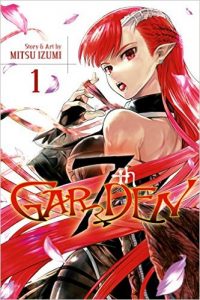
For a nation that mostly seems to revolve around Shintoism and Buddhism, Japanese manga authors seem very taken with Christianity. Not necessarily for the actual religious thought behind it, but I think they see the Bible as sort of a Lord of the Rings-type book, filled with epic battles between angels and demons, lots of divine punishment, and a few bouts of sinning for good measure. There have been quite a few stories talking about a battle between heaven and hell with Earth as its grounds, most famously Neon Genesis Evangelion, but Angel Sanctuary is also up there. 7th Garden is firmly along those lines, as a young man with a tortured past finds himself allying with a demon with a tortured past in order to protect his young mistress, who may in fact have a tortured past as well. All of this revolves around the symbols and imagery of Christianity, slightly distorted,
7thgarden1

This actually ended up being a lot more wholesome than the descriptions I saw led me to believe – I probably should have guessed that give that the busty demon on the cover actually has her back turned to the reader, rather than facing them chest first. Said demon is Vyrde, who is accidentally freed by our hero from a thousand year sleep, and proceeds to be the best thing about this series once she wakes up. She’s playful, seductive, and amoral in just the right amount, and even the ‘sneak into the hero’s bed at night’ feels for once as if it didn’t come out of the pages of ‘Love Comedy For Beginners’. Probably because there’s not much love here – yes, there’s a suggestion that Awyn (the hero) and Marie (his mistress) sort of kind of like each other, but make no mistake about it: this is a battle manga, with ridiculous swordfights and lots of corpses.

I mentioned Christianity above, but given that in this series the demons are the good guys and the angels the bad guys (very common in manga), it’s unsurprising that this fantasy world calls it ‘anti-Quoristiantity’, enforced by ‘anti-Knights, who as you might imagine with a name like that tend to mete out anti-Justice. To be fair, we’re told that the mooks we see killing innocents here are not Knights but Apostles – those who were not good enough to be Knights so do the Church’s dirty work. This does allow our hero to be somewhat more cavalier about life and death than you’d expect from a Jump manga – then again, this is Jump Square, and Blue Exorcist can also have very ambiguous morality. The most interesting part of the manga may have been told the end, as we’re fed little droplets of backstory hints that might pay off. Who is Ashriel, really, and what does she know? (With a name like that, the foreshadowing isn’t subtle.) What do they mean by the village not existing? And is there any significance that our demon’s real name is so close to Awyn’s innocent mistress? (That last may be a no. I suspect it’s the Western name equivalent of Isumi and Izumi being nothing alike.)

There’s a lot of tease here but not much beyond promise, and the fighting is good but can get confusing (on a level of 1 to Trigun Maximum, it’s about a 4). But it does show promise, and I am interested enough to pick up a second volume. Recommended for those who like fantasy and don’t mind religion being used as a heavy spice.

Filed Under: REVIEWS

Manga the Week of 7/20

July 14, 2016 by Sean Gaffney, Ash Brown, Anna N and Michelle Smith Leave a Comment

SEAN: Sometimes I like to shake things up and do my list in reverse order, usually when a feature image would be right at the bottom of the list. This is one of those times.

rezero1

So let’s start with Yen On, which has four books out, one a debut, Re: ZERO ~Starting Life in Another World~ sounds like a mouthful, and it is yet another in a series of “normal guy gets summoned to fantasy world” books, but I have heard from those who have seen the anime that this is top tier stuff. We shall see, but I am provisionally excited.

ASH: One of the light novel competitions has actually stopped accepting those types of stories they’ve become so prevalent.

SEAN: Log Horizon has a 5th volume, subtitled A Sunday in Akiba. Will Shiro and company be able to avoid politics and monster killing and have a light fluffy volume of no consequence? I highly doubt it.

After a bit of a delay, we see the 4th Kagerou Daze novel. The main point of interest in the last novel was seeing that one of the Mekakushi group seems to have a grudge against Shintaro, and also knows about his tragic relationship with Ayano. I’d like to see more about that.

The 4th Durarara!! novel, on the other hand, is a bit of a placeholder before the next major arc begins, but as with most Narita novels, the placeholding is possibly more interesting to fans.

ASH: I’ve sadly fallen behind in most of my light novel reading.

SEAN: And now back to manga, so the rest of the MB team can wake up. We have a 13th volume of Terra Formars from Viz, which honestly has gone a lot further than I expected.

I believe that the 9th volume of Monster (Perfect Edition) is the last, which means it’s a perfect time for readers who got behind to catch up.

ASH: I’m really glad Monster is available in its entirety again! And in a great looking edition, too.

SEAN: And hey, it’s been a while – over a year, in fact – but here’s the 7th volume of Gangsta.

ASH: I’ve been looking forward to the continuation of the series as well as the spinoff that Viz recently licensed.

ANNA: I didn’t realize that there was a spinoff coming out too! I enjoy this series and it has been far too long since a new volume came out.

SEAN: The Complete Chi’s Sweet Home has a 3rd omnibus of amazingly cute kitties!

MICHELLE: Yay!

SEAN: Seven Seas has a bevy of titles out. My Monster Secret’s 3rd volume continues to show us that monsters and broad comedy mix really well.

linhdl

If you enjoyed Love in Hell when it came out a while back, we’re now getting a sequel series, Love in Hell: Death Life. As for me, I’d prefer an anime of Matt Groening’s Life in Hell.

And there’s a 4th volume of yuri thriller Akuma no Riddle, which is beginning to run out of antagonists.

MICHELLE: I haven’t gone back since volume two. Not sure if I am sufficiently compelled.

SEAN: One Peace has a 4th volume of the manga adaptation of Rise of the Shield Hero (which runs in Comic Flapper, for those of you fond of that magazine).

Kodansha has an 8th volume of UQ Holder, which has gone from weekly to monthly recently in Japan, so may start slowing down soon.

And with Noragami 16, we are finally caught up with Japan, so the monthly releases end here.

ASH: I recently caught up with Noragami myself and it’s getting really good. Like, really good.

SEAN: Lastly, we end as we began, with a novel. This one can’t really be called light, though, as it’s the 2nd Legend of the Galactic Heroes book from Haikasoru. Space opera! Intrigue! A whole lot of death! All are within these pages.

MICHELLE: Woot! I confess I still haven’t read the first one, but I am totally getting this via Audible, as I did the first volume.

ASH: Definitely picking this up!

ANNA: I need to confess that I haven’t read the first, but I really want to! Maybe I will schedule a reading binge for a long weekend soon.

SEAN: Which of these books will help you beat the heat?

Filed Under: FEATURES, manga the week of

Haikyu!!, Vol. 1

July 14, 2016 by Michelle Smith

By Haruichi Furudate | Published by VIZ Media

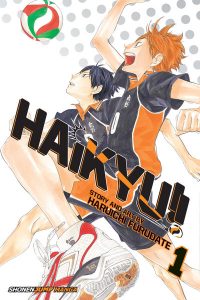
haikyu1

It’s been a good year so far for sports manga! Competitive cycling is represented in Yen’s Yowamushi Pedal, August brings the first two-in-one omnibus edition of Kuroko’s Basketball, and volleyball-centric Haikyu!! is on shelves now. I am just about in heaven! (If someone would just license Mitsuru Adachi’s Rough, that would seal the deal.)

At first glance, Haikyu!! looks a little bit like Slam Dunk. Tobio Kageyama is the dark-haired character with talent and experience, and Shoyo Hinata is the enthusiastic redhead with a lot of potential but who lacks many basic skills. They join their high school’s volleyball team in their first year and clash instantly, fueled by a previous encounter where Kageyama’s team trounced Hinata’s in a middle-school tournament, but must put this aside and learn to function as teammates. What’s different is that Kageyama has more obviously negative qualities than Slam Dunk’s Rukawa had, including a perpetual snarl and dismissive attitude, while Hinata has more positive qualities than Sakuragi possessed, like discipline and team spirit.

I really liked watching their relationship develop, as it eventually becomes apparent (as they practice for then participate in a match against a couple other new members) that each is what the other has been waiting for. Kageyama’s previous team turned their backs on his demanding leadership and wound up losing the aforementioned tournament. None of them could keep up with the pace he was attempting to set. Hinata can, though, and he’s so grateful to finally have teammates and someone to “set” the ball for him, that he is positively eager to get in position to execute the plays that Kageyama’s old team grumbled about.

Their rivalry is far from over, but as the first volume draws to a close, it’s clear they’ve begun to appreciate the other more and are warming to the idea that, if they used to be the greatest enemies, then now they could be the greatest teammates. Inevitably, their journey will take them to Nationals, for that’s the goal of seemingly all sports manga series. I’ll be looking forward to it!

Haikyu!! is ongoing in Japan, where the 22nd volume has just been released. VIZ will be releasing a new volume each month through at least January 2017, which is as far as their Amazon listings presently go.

Review copy provided by the publisher.

Filed Under: REVIEWS Tagged With: Haruichi Furudate

Adaptation Adventures: Mushishi

July 14, 2016 by Ash Brown

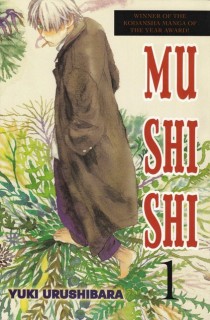
Mushishi, Volume 1After revisiting and reviewing each volume of Yuki Urushibara’s Mushishi for my horror manga review project, by now it’s probably readily clear that I greatly enjoy the series. I love the influence of traditional Japanese folklore on the stories. I love the manga’s subtle creepinesss. I love the exploration of the relationship between humans and the rest of nature. I love how the series delves into the connections that exist between people. I love the importance placed on the search for knowledge. The storytelling in Mushishi is atmospheric, beautiful, and frequently unsettling as individuals struggle with themselves and with the unknown. There is darkness and tragedy in Mushishi but there is also hope—one of the major themes in the manga is that for better or for worse, life will ultimately persevere.

Mushishi is a largely episodic series following Ginko, a mushishi, who travels the Japanese countryside studying mushi and trying to help people who have fallen under their influence. Mushi are described as creatures which are very close to the original form of life. Their presence is fundamental and necessary to the living world, but depending on the circumstances they may either be beneficial to or negatively impact humans. Mushi are frequently at the heart of unusual natural phenomenon or may cause otherwise unexplainable illnesses. Within the context of the series mushi can be taken literally, but they can also be read as metaphors for many conditions experienced in reality.

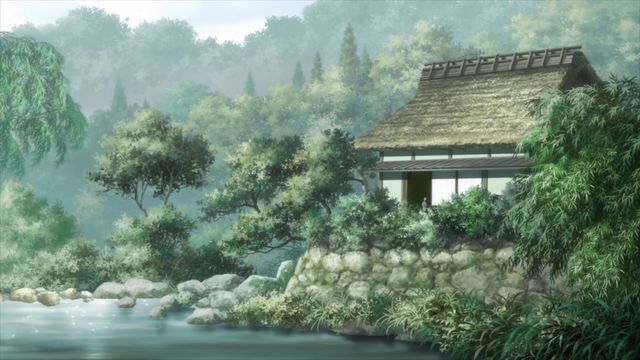
MushishiAnime1Urushibara’s ten-volume Mushishi, originally serialized in Japan between 1999 and 2008, was first released in print in English by Del Rey Manga between 2007 and 2010. Soon after, Del Rey’s manga imprint was closed and Mushishi subsequently went out of print. Unsurprisingly, the print edition of Mushishi has become increasingly difficult to find over time, but in 2014 Kodansha Comics released the entire series digitally. In addition to earning multiple awards and honors over the course of its publication, Mushishi was also the basis for multiple anime adaptations and a live-action film (most of which are available digitally if not physically in North America), as well as a variety of other media.

The first Mushishi anime series, directed by Hiroshi Nagahama, aired in Japan in 2005 and 2006. At twenty-six episodes, it only adapted a portion of the original manga. (Granted, the manga hadn’t yet been completed at that point.) Since I love the Mushishi manga, it probably doesn’t come as much of a surprise that I love the anime as well. Although the first Mushishi anime adaptation isn’t necessarily my favorite series, or even the anime that means the most to me personally, it is the series that I’ve seen the most number of times; I return to it frequently. Eventually, nearly a decade after the first Mushishi anime series, an animated television special was released which was followed a few months later by a second anime series. This twenty-episode series, also directed Nagahama, aired in Japan between 2014 and 2015 and adapted most of the remaining stories found in the manga. (A second animated television special was released during this time as well.) Despite the number of years that passed between the first and the second anime series, they are both very similar in tone and style. Nagahama also directed the Mushishi animated film released in 2015 which adapted the manga’s final story arc. Since I loved both the original manga and the first anime series, I was very happy to see so much more Mushishi anime produced.

MushishiAnime2-17The various Mushishi anime are very faithful adaptations of the manga. Frequently the scenes in the anime follow the scenes in the manga frame by frame and panel by panel, though occasionally the order that events appear in the narrative is slightly altered. Where the anime distinguish themselves is in their color and sound, especially in the establishment of the backgrounds and settings. Urushibara’s color artwork is lovely, but except for the covers of the individual manga volumes, very few examples of it officially appeared in North America. (I imported Urushibara’s 2015 Mushishi artbook which is filled with color illustrations and I adore it.) The anime bring the world of Mushishi to life. While the actual animation can at times be fairly simple and limited, the environments are always absolutely gorgeous and beautiful in their detail. The sound design in the anime adaptations is great, too, adding spectacularly to the overall atmosphere. The music by Toshio Masuda (which I’m constantly listening to) makes extensive use of bells, chimes, and other percussion along with unobtrusive synthesized and acoustic instruments, creating a beautiful soundtrack that is in turns ethereal and dramatic. Much like the original, the Mushishi anime creates an experience that can be calming and soothing as well as unsettling and disturbing.

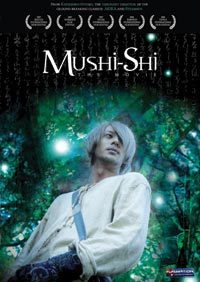
MushishiMovieUrushibara’s manga series was also the inspiration for Katsuhiro Otomo’s award-winning 2006 live-action film Mushishi. For the most part the film was received very well both inside and outside of Japan. Though overall it’s palette tends to be darker and more subdued than the anime adaptations, the visuals can be quite stunning; the special effects hold up surprisingly well even a decade after it was first released. I actually only very recently watched Otomo’s Mushishi for the first time. From the standpoint of someone who is very familiar with the original manga and its anime adaptations, the live-action movie is somewhat disorienting and perhaps even shocking. Though it begins much as one would expect, it ultimately deviates a fair amount from its source material even to the point of changing some of the underpinning mythologies and characterizations of the original. It’s clear that Urushibara’s manga provides the basis for the movie, but many details have been reimagined or remixed in some way. The narrative is still interesting, though. Otomo successfully weaves together several stories from the manga series and makes references to many others before taking the film in an entirely new and different direction. While the original Mushishi tends to be episodic, Otomo’s film is self-contained and provides a single cohesive story. In part this is accomplished placing a significant focus on Ginko’s past and what it means for his present and future, providing a framework for the film as a whole. Instead of simply wandering the countryside helping other people, Ginko has the additional motivation of trying to solve the mystery of who he really is and to reclaim his missing memories.

MushishiLiveActionWhile I would consider the Mushishi manga and anime to be horror, albeit fairly subtle and subdued horror, the film is much more obviously so. Many of the underlying elements are the same, but the film focuses more directly on the aspects of traditional, supernatural horror. However, this does mean some of the more nuanced themes found in the manga and anime are missing. Otomo’s film is a much darker incarnation of Mushishi. The movie, especially towards its end, is incredibly creepy and extraordinarily disconcerting in both imagery and story. It’s so different in tone and narrative that it might actually be better described as a portrayal of an alternate universe of Mushishi rather than being a strict adaptation. It certainly won’t be to everyone’s taste, especially if viewers are expecting something more akin to the gentler (though still disquieting) anime adaptations, but I actually quite liked the movie. For me though, it’s really more of a horror film before it’s a Mushishi film. Still, I feel that the live-action film, the anime adaptations, and the original manga are all well worth checking out and are all fascinating in their own rights. And of course, although unlikely, I’d love to see more Mushishi media and merchandise released in North America.

Save

Filed Under: FEATURES Tagged With: anime, film, Hiroshi Nagahama, Katsuhiro Otomo, manga, mushishi, Yuki Urushibara

Ranma 1/2, Vols. 29-30

July 14, 2016 by Sean Gaffney

By Rumiko Takahashi. Released in Japan by Shogakukan, serialized in the magazine Shonen Sunday. Released in North America by Viz.

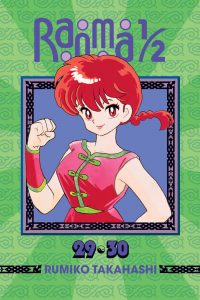
There’s a lot I could discuss with this omnibus of Ranma 1/2, which is a strong one. There’s Nabiki’s 2nd and final focus story, where she meets her match in a man dedicated to making others spend money on him. It’s nice to see Nabiki actually tricked once or twice during this arc, and Ranma and Akane watching the debt rack up are hilarious. There’s also the story with Pink and Link, where Shampoo once again doesn’t seem to realize that the whole thing could be solved by her not being a violent jerk (to be fair to her, this applies to most of the cast as well). There’s also an amusing story that quickly turns bittersweet, as Ranma tries to turn a cold that temporarily stops his curse into an excuse to finally meet his mother at last. It’s a strong book.

ranma15

But a lot of these reviews have been about my own experience with Ranma back in the 1990s (this is why I still use the old-fashioned romanization), and therefore it would feel wrong if I didn’t talk the rest of this review about Akari Unryuu. I was never a big watcher of the Ranma 1/2 anime, preferring the manga and fanfiction. And in any case, the Ranma anime had ground to a halt right about Vol. 26’s material, meaning that the last 12 or so volumes weren’t animated. And I never really got the popularity of the Ryouga/Ukyou pairing in fandom either, because I hadn’t seen the anime do a much bigger job of putting them together. And, given I liked Ryouga and wanted him to be happy, I always hoped something would come along.

Now it has, as we meet a young girl and her farm of sumo wrestling pigs. Make no mistake about it, Akari’s introductory story is as ridiculous as all the other Ranma stories, and I admit if she’d never showed up again it wouldn’t be all that different from, say, the story earlier in the book with Pink and Link (who indeed never show up again). Akari is looking for a husband strong enough to defeat her champion sumo pig, and has been massacring the males of Nerima as a result. Ryouga, naturally, flips the pig into the air with his umbrella. It’s love at first sight… if only Akari wasn’t so devoted to pigs. Every time she mentions them Ryouga twitches, to Akane’s confusion (a reminder that she never, ever does figure out Ryouga is P-chan) and Ranma’s frustration.

Ranma asks here, and the fandom asked constantly, whether Akari would simply fall in love with anyone who beat her pig. But Akari really does seem to have fallen for Ryouga himself, to the point where, when she mistakenly thinks he hates pigs, she has her sumo pig beat her up till she can hate them herself and solve the problem. (This does not solve the problem. But then, if you’ve been reading Ranma 1/2, you’d have guessed this.) And tellingly, at the end of this short arc Ranma decides to solve the problem by exposing Akari to Ryouga’s curse – something that, as I’ve said above, never happens with Akane. So now Akari has the best of both worlds – she loves Ryouga, AND he turns into a pig.

I won’t deny, 20 years on, that Akari as a love interest is a bit flat. but then again, most Ranma characters are more two-dimensional than Fandom makes them out to be. She’s also introduced towards the end of the series, clearly as a love interest – go see ‘Pair the Spares’ on TV Tropes to see how this upsets people. But I still don’t really care, and Takahashi clearly didn’t either. Akari was popular enough that she gets a cameo at the end of this book, writing Ryouga a letter (which promptly gets destroyed, because that’s the kind of series this is, but hey). And she’ll show up again next time. In any case, this volume of Ranma 1/2 is excellent, and even if you don’t like Akari as much as I do (few do), you should still pick it up.

Filed Under: ranma 1/2, REVIEWS

Pick of the Week: Nostalgia Factors

July 12, 2016 by Sean Gaffney, Michelle Smith, Ash Brown and Anna N Leave a Comment

ranma15SEAN: For sentimental, nostalgic reasons, my pick of the week is the 15th omnibus of Ranma 1/2, which introduces a Last Minute Hookup girl who is one of my absolute favorites. It’s been 20 years since I first got into Ranma, and I’m happy to find I can still be enthusiastic about it.

MICHELLE: I’m not terribly excited about anything this week, so I’ll pick Ranma, too, for making Sean happy.

ASH: The manga I’m most curious about this week is The Osamu Tezuka Story, a biographical manga about one of the most influential creators of manga. It’s also huge, and one of the very few comics to have been released by Stone Bridge Press.

ANNA: I’m also not super excited about much this week, so I’ll throw in with Ash and pick The Osamu Tezuka Story, because I’m sure more info about Tezuka is a good thing!

Filed Under: PICK OF THE WEEK

Bookshelf Briefs 7/11/16

July 11, 2016 by Sean Gaffney and Michelle Smith Leave a Comment

behindscenes2Behind the Scenes!!, Vol. 2 | By Bisco Hatori | VIZ Media – I was pretty disappointed by volume one of Behind the Scenes!!, but while the series remains far from great, the second volume is an improvement overall. Some parts of it I found excruciating, though, like the dumb gag where the props a girl stayed up all night making get destroyed because someone literally slips on a banana peel. But while I was groaning, the same girl would make a speech about refusing to repress her passions just to nab a boyfriend, and I’d have to begrudgingly approve. It’s only at the very end, when Ranmaru learns a bit more about mysterious Izumi, who heedlessly plunges his hand into boiling water to save a classmate’s cell phone and seemingly has no regard for his own welfare, that I actually found a character I could possibly care about. I’m willing to keep going with this for a little while, at least. – Michelle Smith

centaur9A Centaur’s Life, Vol. 9 | By Kei Murayama | Seven Seas – Once again, this is a tale of two halves. On the one half, we have the typical slice-of-monster-life we’re used to, with more ‘is it yuri or just akogare’ chapters, another examination of how monster bodies and human-style clothing works, and a bizarre omake where a political argument in class is resolved by the teacher transforming into a magical girl and mind controlling everyone. The other half has Hime and Shino accidentally transported to a fantasy dimension where she’s thought to be a god, and has to defend a fortress against various enemies with her archery and tactics. It doesn’t so much end as stop. I sense this series has become ‘whatever the author feels like writing that month.’ – Sean Gaffney

honey3Honey So Sweet, Vol. 3 | By Amu Meguro | Viz Media – I talked about the new guy who arrived at the end of the last volume, and in the end he turns out to be a friend, enemy, AND love interest. Futami has the looks and personality that Onise doesn’t, and is quick to help him to open up and gain more support from his classmates. In fact, they get along so well Kogure worries that maybe she’s the one in the way (no, not in that way). But Futami is also falling for Kogure, and he’s determined to do something about it, even as Onise has mixed feelings. The whole subplot is handled quite well, and while there’s a bit more drama and angst to it, this still reminds me a lot of My Love Story!!—you read it for the sweetness. – Sean Gaffney

nichijou3Nichijou: My Ordinary Life, Vol. 3 | By Keiichi Arawi | Vertical Comics – Nichijou is a surreal comedy, and so you don’t really go looking for character development here. That said, the third volume had a surprising number of heartwarming scenes mixed in among the hilarity. The Professor deals with the hazards of still being a young child, despite her genius, and bonds with Nano a bit. Mio and Yukko get into a huge argument that goes on for pages until it eventually circles back around and turns into the two of them praising each other. And Yukko goes to visit Nao and the Professor, and reassures her that, even if everyone knows she’s a robot, Nano is still just Nano to them. These scenes give the series a heart that helps it to earn the laughs and strange “huh?’ reactions it also gives us. – Sean Gaffney

onepunch7One-Punch Man, Vol. 7 | By ONE and Yusuke Marata | Viz Media – Yes, we are here. It finally takes more than one punch for Saitama to take out an enemy, though he’s still not really breaking a sweat or showing much emotion. The main reason to get this volume is the artwork, which is simply amazing. This volume may have more two-page spreads than any other shonen manga I’ve seen, as the final battle is a huge monumental “serious punch” from Saitama that words cannot really describe. (And note he’s able to do this even after being hit TO THE MOON and having to jump back to Earth.) I suspect we’ll see more of Tornado, who has a giant chip on her tiny shoulder. And some other heroes get shown off here as well. But this is still The Saitama Story, and what a story it is. – Sean Gaffney

pandora5Pandora in the Crimson Shell: Ghost Urn, Vol. 5 | By Shirow Masamune and Rikudou Koushi | Seven Seas – There’s no Excel Saga cameos here, beyond the appearance of the Excel-ish Vlind, so I am once again forced to talk about the actual manga itself. Fortunately, the first 3/4 of this volume is relatively mild, and even interesting. Nene wishes for happy fun uneventful days, but Clarion knows that the world they live in is filled with evil organizations and killer robots. So she proceeds to go to town on said robots, as well as the local army. It’s almost worth recommending, except at the end they have to power up the Pandora, which is done via the wretched “not really vaginal fingering, but close” method we know and loathe. In the end, this is still Pandora, alas. – Sean Gaffney

persona4-3Persona 4, Vol. 3 | By Shuji Sogabe and ATLUS | Udon Entertainment – Most of this volume is dedicated to a new young man trapped in the killer TV program, and again it shows us hidden sides, this time dealing with traditional gender roles and how shameful it can be for a young Japanese boy to be good at traditionally feminine tasks. Naturally, this has led him to overcompensate and become a giant thug, hence the obvious choice of him going to TV Bear land. That said, it’s resolved fairly simply, and our heroes didn’t even need to do much besides stand around and comment. Of course, it’s not all psychological horror and battles, there’s also the worst curry in the world, as we discover that of the two main heroines, neither one can cook worth a damn. Pretty good. – Sean Gaffney

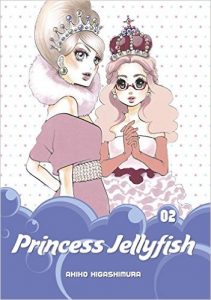
princessjellyfish2Princess Jellyfish, Vol. 2 | By Akiko Higashimura | Kodansha Comics – Kuranosuke and the residents of Amamizu-kan have declared their intention to buy the place to save it from redevelopment, but they lack the funds to actually do so. Kuranosuke rallies them into action, especially after being inspired by one of Tsukimi’s drawings to create jellyfish-inspired fashions. I love how all the various story elements service the series’ predominant theme. Meeting Kuranosuke has introduced Tsukimi to the passion of creating something she loves, but it has also brought her pain, as she is confronted with “evidence” that Shu has slept with the scheming Inari. It’s too much stimulation for her, and she retreats to the familiar territory of avoiding her emotions, and believing she’s not the kind of girl who could fall in love. Funny, poignant, addictive… I’m sad we must wait ’til October for more! – Michelle Smith

Filed Under: Bookshelf Briefs

My Week in Manga: July 4-July 10, 2016

July 11, 2016 by Ash Brown

My News and Reviews

Okay! A couple of different although expected things were posted last week at Experiments in Manga in addition to the usual My Week in Manga feature. First up was the announcement of the Complex Age Giveaway Winner which also includes a list of manga which incorporates cosplay in one way or another. I also posted the Bookshelf Overload for June last week for those of you interested in what manga and such I’ve recently acquired.

Other interesting things found online: As Anime Expo wrapped up early last week, a few more licensing announcements were made. Viz Media announced that it plans on publishing the fourth part of Hirohiko Araki’s JoJo’s Bizarre Adventure as well as Araki’s How to Create Manga. Yen Press will release Erased by Kei Sanbe and Bungo Stray Dogs written by Kafka Asagiri and illustrated Sango Harukawa. Also announced last week was SuBLime’s partnership with Libre, outlining their plans to release Ayano Yamane’s Finder series as well as other titles in English. Ani-gamers posted an interview with Rei Hiroe from AnimeNext 2016. And over at the Lobster Dance, the sixth installment of “The Sparkling World of 1970s Shojo Manga” takes a look at the Rose of Versailles franchise.

Quick Takes

As Many As There Are StarsAs Many As There Are Stars by Miecohouse Matsumoto. As Many As There Are Stars starts as one thing but by the end of volume the manga has turned into something else entirely. Matsumoto may very well have had this planned out in advance—hints about Kousuke’s tragic past and proclivities are present from very early on—but the shift in tone is still a bit jarring. As Many As There Are Stars is a boys’ love one-shot about seven young men who are all in the same club at college. Supposedly it’s an astronomy club of some sort, but it might as well be a club for sexual tension as most of the members have feelings for one or more of the others. The notable exception is the first year who, despite being an important plot point in the first chapter, is largely forgotten for the rest of the volume. Initially, the manga is fairly sweet and lighthearted if somewhat cliché as it explores the relationships between the club members. Eventually As Many As There Are Stars turns its focus onto Kousuke, an art student who is both desperate to be and terrified of being loved. What starts as a somewhat goofy manga develops into something more melancholic, a story about an unfortunate young man confronted by friendship and love.

Inuyashiki, Volume 2Inuyashiki, Volumes 2-3 by Hiroya Oku. After reading the first volume of Inuyashiki, I was curious to see what direction Oku would take the series. At this point, I’m not entirely convinced that Oku actually has a cohesive overarching narrative in mind. Instead, the basic premise of the series creates a platform for Oku to tell some legitimately disturbing stories; I’m just not sure that there’s much of a point to them beyond their violence and depravity. Inuyashiki often feels like it’s being distasteful just to be distasteful in order to see just how far Oku can push the boundaries of acceptability. However, I will admit that it can be can oddly satisfying to see someone who looks like an elderly man protect others by beating the crap out of obvious wrongdoers. (Oku seems to go out of the way to make the bad guys as over-the-top and awful as possible, which is fitting for the series as a whole.) Inuyashiki—the previously mentioned old man—is starkly contrasted by Shishigami, the manga’s other, much younger, lead. Like Inuyashiki, Shishigami has been reborn as a cyborg. Unlike Inuyashiki, he has been using his newly-gained powers to cause death a mayhem at will. He is unyielding in his deliberate cruelty and absolutely terrifying.

Noragami: Stray God, Volume 8Noragami: Stray God, Volumes 8-14 by Adachitoka. I have been enjoying Noragami more and more as the series progresses, but I still managed to fall behind on the manga. I was actually intending to only read a few volumes this past week, but once I started I found myself devouring my entire backlog; Noragami continues to get better and better. More of Yato’s backstory has been revealed at this point and his past has become central to the plot. The narrative flow can be somewhat odd, though. In between the intensely dramatic and serious story arcs, Adachitoka has the tendency to introduce several chapters (or more) of what feels like playful filler material. However, I’m really enjoying Adachitoka’s modernized take on Japanese deities and mythologies. (I also appreciate the thorough translation and cultural notes included in the volumes.) The interplay between the gods, shinki, ayakashi, and humans is fascinating and the relationships and power dynamics between them all are marvelously complex and nuanced even if the characters’ actions aren’t always the most subtle. Adachitoka also isn’t afraid of killing off major characters, which heightens the tension of the series’ conflicts and it’s unlikely anyone will remain unscathed.

Save

Save

Filed Under: FEATURES, My Week in Manga Tagged With: Adachitoka, Hiroya Oku, Inuyashiki, manga, Miecohouse Matsumoto, Noragami

Haikyu!!, Vol. 1

July 10, 2016 by Sean Gaffney

By Haruichi Furudate. Released in Japan by Shueisha, serialization ongoing in the magazine Weekly Shonen Jump. Released in North America by Viz.

For a genre that has a reputation for not succeeding in North America, there have been quite a few sports manga released over here, most of them connected in some way or another with Weekly Shonen Jump. There’s been Slam Dunk, and Whistle, and Eyeshield 21. It’s a classic and established genre in Japan, with its own cliches and foibles, and I’ve read enough of them to know what to look for and to be surprised when something I expected didn’t happen. The type of sport shown doesn’t really matter – basketball and soccer are always popular, though not baseball – Jump avoids that, possibly as Sunday and Magazine are so well known for baseball titles. And now we have Haikyu!!, which tells us about a down-on-its luck high school volleyball team trying to make it back to the finals with some promising but troublesome rookies.

haikyu1

Our two heroes are on the cover, although it’s possible that the dark-haired guy is more of an anti-hero. Hinata is a very typical Jump hero – short, overenthusiastic, filled with amazing athletic abilities that no one has ever been able to hone, but also prone to overconfidence and lack of experience. Kageyama, at first glance, appears to be the classic polar opposite to that sort of character – stoic, always frowning, experienced and unlikely to make the sort of rash decisions that Hinata would. But, as it turns out, this is just a fakeout, and was possibly my favorite part of the book. For Kageyama is actually an arrogant guy with a very hot temper, who expects to be the star and is rather frustrated that this is actually a team sport. Seething ball of rage Kageyama is a very interesting character, and I look forward to seeing more of him.

If you don’t know volleyball, no worries – Hinata barely knows the basics as well, so we get a lot of explanations. We also get a whole lot of characters, typical for a series like this – a team needs players, after all. There’s 2 third years who play good cop/bad cop, and an overzealous 2nd year who matches the rookies’ enthusiasm. There’s a tall, arrogant first-year whose face every reader will want to punch, and I can’t wait to find out what kind of situations he’ll have to go through before he stops being a complete jerk (he’s on the same team as our heroes, so will no doubt have to stop at some point). Oh yes, and the female manager is cool rather than cute.

There’s nothing particularly groundbreaking here, though as I said I was surprised and pleased by a few of the character choices. It’s just a sports manga, well-told. It’s 20+ volumes in Japan, which means that Viz is going to be releasing it every month for a while, so get used to these guys. And it’s the start, hopefully, of a sports manga renaissance, as now that Slam Dunk has finally finished, Viz is also picking up Kuroko’s Basketball as well. Can Touch or Major be far behind? (Well, yes, they can. Far, far behind.) In any case, Haikyu!! is a fun and energetic sports manga in the classic Jump tradition. You’ll enjoy it.

Filed Under: REVIEWS

Bookshelf Overload: June 2016

July 8, 2016 by Ash Brown

After the ridiculousness that was May’s Bookshelf Overload (thanks, TCAF!), the number of manga and other books that I acquired in June seems entirely reasonable. Last month I took advantage of a few good sales combined with gift cards to fill in some gaps in a few of my manga series. As I mentioned previously, Kazuo Umezu’s Drifting Classroom looks like it may be going out of print, so I made a point to complete my set. I also supplemented my recent haul of review copies from Kodansha. As for June’s preorders that I was particularly excited for (and dreading in some ways because they’re so emotionally intense) at the top of the list sits Goodnight Punpun, Omnibus 2 by Inio Asano and Orange, Omnibus 2 by Ichigo Takano. (I’d actually like to post some Random Musings about Orange, but it will probably be a while before I can get around to it.) June was also a good month for me for shoujo science fiction. I discovered Wrecked Hearts by Mathilde Kitteh and Luca Oliveri and imported Moto Hagio’s SF Art Works collection, both of which are great. (As a side note, if you’re interested in Wrecked Hearts and ordering directly from PEOW! Studio in Sweden is difficult, I recently discovered that it can also be ordered from Retrofit Comics in the United States.)

Manga!
Drifting Classroom, Volumes 9-10 by Kazuo Umezu
Emma, Omnibus 3 by Kaoru Mori
Everyone’s Getting Married, Volume 1 by Izumi Miyazono
Franken Fran, Omnibus 2 by Katsuhisa Kigitsu
Genshiken: Second Season, Volume 7 by Shimoku Kio
Goodnight Punpun, Omnibus 2 by Inio Asano
Inuyashiki, Volume 2 by Hiroya Oku
Kaze Hikaru, Volume 14 by Taeko Watanabe
My Little Monster, Volumes 11-12 by Robico
Noragami: Stray God, Volumes 8-9 by Adachitoka
Orange, Omnibus 2 by Ichigo Takano
Red Red Rock and Other Stories by Seiichi Hayashi
Say I Love You, Volumes 10-11 by Kanae Hazuki
Vagabond, Omnibus 6 by Takehiko Inoue
Yamada-kun and the Seven Witches, Volumes 5-6 by Miki Yoshikawa
Your Lie in April, Volumes 3-4 by Naoshi Arakawa

Comics!
Elf Cat in Love by James Kochalka
Hellbound Lifestyle by Kaeleigh Forsyth
I.D. by Emma Ríos
New World edited by C. Spike Trotman
Shadoweyes, Volume 1 by Sophie Campbell, colors by Erin Watson
Wrecked Hearts by Mathilde Kitteh and Luca Oliveri

Artbooks!
Seconda by Yeehun
SF Art Works by Moto Hagio

Nonfiction!
Bubishi: The Classic Manual of Combat translated by Patrick McCarthy
Shed & Frontlawn Zine by Graeme McNee, Ryan Cecil Smith, and An Nguyen

Filed Under: Bookshelf Overload, UNSHELVED

Manga the Week of 7/13

July 7, 2016 by Sean Gaffney, Ash Brown, Michelle Smith and Anna N Leave a Comment

SEAN: For a 2nd week of the month, there sure is a lot of stuff coming out. What have we got here?

Dark horse has a 6th and final volume of the Oreimo spinoff Kuroneko. Is it a slightly less incestuous ending? (Actually, I think, unlike many harem spinoffs, it’s not an AU at all.)

wanderingisland1

If you recall Spirit of Wonder coming out from Dark Horse, a) you are very very old, and b) you will be delighted with the release of Wandering Island by the same author.

ASH: I missed out on Spirit of Wonder, but I’m looking forward to giving this series a try.

SEAN: Fairy Tail Zero from Kodansha is, as the title might suggest, a prequel focusing on Fairy Tail’s founder, Mavis.

Forget Me Not has a 3rd volume. Note this isn’t the Forget Me Not which the author of Wandering Island wrote back in the 1990s.

ASH: Ha! I hadn’t made that non-connection yet.

SEAN: And The Seven Deadly Sins gives us Vol. 15, and has surely run out of sins by now, just as I have run out of jokes to use about this title.

Seven Seas has an 8th volume of Magical Girl Apocalypse, because grim and gritty refuses to go away no matter how many wishes I use.

And the Monster Musume spinoff I Heart Monster Girls gives you some 4-koma gag monsters.

Pandora in the Crimson Shell’s 5th volume has less Excel Saga knockoffs, but does have a fair amount of exciting action, and of course the awful service is there too.

tezukastory

The big release this week is The Osamu Tezuka Story, a biography from Stone Bridge Press that is over 900 pages (and print only, so I will let someone else read it – Ash, I suspect).

ASH: Yup! It might take me a while to get through, though. My copy just arrived, and it is ENORMOUS.

SEAN: SubLime has the 2nd and final volume of Midnight Stranger, who is no doubt friends with the Midnight Cowboy and Midnight Rambler.

ASH: The first volume of Midnight Stranger was, well, strange, but the clueless goat spirit was rather endearing.

SEAN: Viz gives us the 59th volume of Case Closed. I don’t read it, but it’s always great to see non-Jump series reach this many volumes – in fact, I think Case Closed may be the ONLY non-Jump series to reach this many volumes here.

Ranma 1/2’s 15th omnibus volume has the introduction of my favorite Ranma character. I am alone in this, and have been since 1996, but I don’t care. It’s been 20 years, I won’t back down now.

ASH: I’m still glad this series is getting a re-release.

MICHELLE: Me, too.

SEAN: Lastly, Rin-Ne has a 21st volume. My guess is that ghosts will feature in some way. Also, Rinne will be poor. And Sakura will continue to not have any emotions at all.

What’s your wallet paying for?

MICHELLE: Nothing this time, actually.

ANNA: My wallet is paying for nothing! It is a good thing so much great manga came out in the previous week!

Filed Under: FEATURES, manga the week of

Princess Jellyfish, Vol. 2

July 7, 2016 by Sean Gaffney

By Akiko Higashimura. Released in Japan in two separate volumes as “Kuragehime” by Kodansha, serialization ongoing in the magazine Kiss. Released in North America by Kodansha Comics.

Princess Jellyfish is turning out to be a difficult but worthy read for me. I spent much of this omnibus being irritated by the majority of the characters, either for making stupid decisions, being horrible people, or having the self-awareness of a gnat. And of course, that’s what the whole point is. It’s where the majority of the comedy comes from, and also the character development. Without Tsukimi’s introvertedness and low self-esteem, without Inari’s blackmail and vampishness, and without Kuranosuke’s amazing unself-awareness (though he’s above the majority of Amars, to be sure), we wouldn’t have anything to read about. And all of these aspects are in this volume in abundance.

jellyfish2

Tsukimi is our heroine, of course, and so she gains the most depth here, even as she takes a few steps back as well. I’m still not particularly happy with Kuranosuke’s constant attempts to get her to do things and be more outgoing, but it does lead to a few nice moments, particularly when they’re designing dresses based on types of jellyfish and Tsukimi unleashes her inner fashion designer. (I also appreciates the fact that, while she does have untapped talent, things weren’t perfect right off the bat and the first attempt was totally wrong.) Sadly, she alsp sees the guy she has a crush on with another woman, and has no idea how to deal with it, even as she’s unsure what her feelings are. She equates love as something that makes her a ‘normal girl’, something to be truly feared.

And while the residents of Amars may not be normal girls (though they show surprisingly more aptitude at attempting it than Tsukimi does), Kuranosuke and his family prove to be just as screwed up. Inari is trying to tempt Shu using sex as a weapon, but he’s repressed (as we discover here, he seems to have been traumatized by walking in on his father as a young boy) to a point where she’s actually thrown off her game. Inari is at her most interesting when she’s like this – the idea of Shu being a genuine innocent virgin almost horrifies her a bit – but I’m unsure how long the manga can keep this plot going. She certainly has staying power, I’ll grant you. As for Kuranosuke, he may be the most interesting character so far, even if I keep waffling between liking and disliking him. He’s amazingly selfish most of the time, and, just like Tsukimi, seems horrified at the idea of falling in love like a normal guy.

It’s the tension that keeps me going as a reader, seeing how far the author can take all these plot points – Kuranosuke’s secret that he’s actually a man, Inari being terrible, etc. – and actually have them collapse. And, of coruse, there’s the fashion design, which I suspect is going to take up more and more of this manga’s time. It’s not perfect, but it’s the flaws that make Princess Jellyfish so fascinating.

Filed Under: REVIEWS

Manga Giveaway: Complex Age Giveaway Winner

July 6, 2016 by Ash Brown

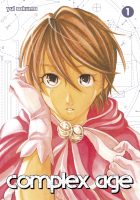
Complex Age, Volume 1And the winner of the Complex Age manga giveaway is… Sean Kleefeld!

As the winner, Sean (whose writing at Kleefeld on Comics and elsewhere I greatly enjoy) will be receiving a copy of Yui Sakuma’s Complex Age, Volume 1 as published in English by Kodansha Comics. I read (and reviewed) the first volume and was rather surprised by how much the manga resonated with me and wanted to spread the love. For this giveaway, I asked participants to tell me a little about the manga that they’ve read that included cosplay, the passion of Complex Age‘s main character. Check out the giveaway comments for the detailed responses, and check out below for a list!

Some of the manga available in English which include cosplay:
Anything and Something by Kaoru Mori
Complex Age by Yui Sakuma
Genshiken by Shimoku Kio
Genshiken: Second Season by Shimoku Kio
Girl Friends by Milk Morinaga
I, Otaku: Struggle in Akihabara by Jiro Suzuki
Kiss Him, Not Me by Junko
Lucky Star by Kagami Yoshimizu
Maid-sama! by Hiro Fujiwara
Maniac Road by Shinsuke Kurihashi
My Girlfriend’s a Geek by Rize Shinba
Ouran High School Host Club by Bisco Hatori
Servant X Service by Karino Takatsu
Sunshine Sketch by Ume Aoki

The above list certainly isn’t exhaustive, but it does have some variety. Although cosplay doesn’t take precedence in many series (or at least in many of the series that have been translated), there are numerous examples of manga where there’s a character who is into cosplay or a class that sponsors a cosplay cafe for a school festival. Manga with otaku themes usually mention it at least in passing, too. And depending on the definition being used, cosplay can be found in plenty of the more… ahem… adult-oriented manga of various ilk (which I decided to leave off the list this time). Anyway! The list presented above contains series which include cosplay that either immediately came to my mind or that were mentioned in the giveaway comments and some feature cosplay more heavily than others. Thank you to everyone who participated in the giveaway; hope to see you again at Experiments in Manga!

Filed Under: Giveaways, UNSHELVED Tagged With: Complex Age, manga, Yui Sakuma

Battle Rabbits, Vol. 1

July 5, 2016 by Sean Gaffney

By Ameichi. Released in Japan by Ichijinsha, serialization ongoing in the magazine Comic Zero-Sum. Released in North America by Seven Seas.

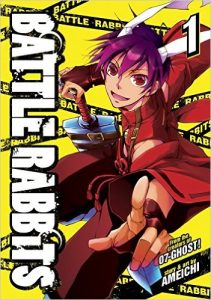
Back in my pre-blogging days I used to write up the week’s manga shipping list on my LiveJournal, similar to Manga the Week of but with less commentary. I noted the Japanese company the work came from, and what genre it fell into – shonen, shoujo, seinen, josei, or “whatever Wings is”. The last was my running gag for Shinshokan’s flagship magazine, which by all rights should probably have fallen under shoujo, but always had a bit more action and fantasy than your typical Margaret or Hana to Yume works. Of course, this was about 7-8 years ago, and now we know there’s also GFantasy, and indeed Comic Zero-Sum, which is where today’s title comes from. Battle Rabbits not *quite* BL, as there’s never any actual follow through, but I would say it caters to BL readers who don’t mind just being teased. And oh do they get fanfic fodder here.

battlerabbits1

I had actually forgotten this was a Zero-sum title until it arrived. Based on title alone, I was expecting a different kind of Seven Seas series, catering to their flagship demographic. And to be fair, there is a young girl wearing rabbit ears in this first volume. Mao is cute, and a bit of a ditz, and there are precisely zero readers who would get this title for her, because oh those guys. We start with our hero, Kaguya, who really should have known what was going to happen just by looking at his name. As a child, his father was murdered by a mysterious demon, but no one believed him and called it a suicide. Now he’s in high school and still dreams of getting revenge. Which, good news! A delinquent with a grudge against Kaguya gets possessed and attacks him, and we find out that Kaguya is actually a Battle Rabbit – which technically are supposed to defend the Earth but in actually seem to, as many of these titles are wont to do, stop people whose personal life problems are making them turn into monsters and heal them.

Despite the delinquent clearly being tsundere for our hero, the real BL tease comes in the 2nd half of the volume, when we meet Hijiri, leader of the Battle rabbits’ base on Earth. It turns out Kaguya is not only a Battle Rabbit but basically King Battle Rabbit, and thus everyone’s calling him “Young Master” and such in the best Little Lord Fountleroy-sama tradition. Hijiri meets him by putting a ring on his finger, uses mind control to get him to agree to fight as a Battle Rabbit for them, and later pops up in a dream literally in a wedding dress marrying him. So yeah, the authors (who have mushed their names together as a single pen name) know their audience. I’m less taken with Kaguya himself – I liked the idea that his need for revenge is just too emotional a reason to actually fight, but when he’s reluctant he’s far more generic. Oh yes, and Mao, the female Battle Rabbit, does the third-person speaking thing, for those who don’t like that style.

If you enjoy handsome guys looking cool and saving the day with a smile and a smirk, you should get a lot out of Battle rabbits. I’m not sure I’d be desperate to continue it, but as I said before, this series has a demographic and knows how to hit said demographic right in its sweet spot.

Filed Under: REVIEWS

Bookshelf Briefs 7/4/16

July 4, 2016 by Sean Gaffney and Michelle Smith Leave a Comment

ancientmagus5The Ancient Magus’ Bride, Vol. 5 | By Kore Yamazaki | Seven Seas – Chise is an all-loving heroine sort of girl, and when she sees someone she naturally wants to help them. Which is fine, and leads to some nice heartwarming scenes here, but it also does a number on her body, as she simply can’t use all that magic and not pay for it in some way. This leads to much of this volume taking place in Fairy Land (and a return to winter later), where we meet a doctor with a harsh but effective bedside manner, and Elias is once again mocked by everyone who seems to see him as being too selfish. Again, it’s not clear how bride-like this series will ever get, but I’m content with detailed descriptions of magic plants and rituals and gorgeous art in the meantime. – Sean Gaffney

barakamon11Barakamon, Vol. 11 | By Satsuki Yoshino | Yen Press – It’s hard to follow a volume as good as the last one, and much of this new Barakamon is spent wrapping that story up and starting a new one. No one really expected Handa to get married, and he doesn’t, but it is interesting seeing the idea of an arranged marriage for him being tossed about among all the other characters who’ve grown close to him. Once his parents have departed (and I think his father understands him better now, if not the reverse), we see the return of old rival Higashino, who Handa still doesn’t remember but who seems dedicated to theoretically ruining his life, although as always most of that is merely in Handa’s head. Will he be able to grow the best vegetable garden ever? Results are unclear. – Sean Gaffney

onlyvamp7He’s My Only Vampire, Vol. 7 | By Aya Shouoto | Yen Press – Ever since the very first chapter, we’ve known that Eriya was going to show up eventually. And sure enough, he’s now here, conveniently at a time when Aki is still dealing with amnesia. Kana isn’t sure what to make of this—she’s having enough trouble dealing with the fact that Aki’s love for her is now history, though he seems to be backsliding a bit there. That said, Eriya seems to be evil, or at least rather selfish, using a chance at a “normal school life” to try to win Kana over for himself, with the use of liberal hypnosis to make the school OK with this. Kana is, by the nature of the series, a somewhat passive heroine, but I really hope she’s able to do something about this next time. – Sean Gaffney

He’s My Only Vampire, Vol. 7 | By Aya Shouoto | Yen Press – There are two distinct halves to this volume, and they don’t fit together terribly well. We begin with Aki having forgotten his feelings for Kana, due to trading the “lust” stigma in exchange for her release from her Tsubakiin captors. Eve the succubus and her dealer try to take advantage of Aki’s personality shift to cause the final stigma, “envy,” to manifest—mostly by making him kill deranged humans but also through a random beauty contest—and it also seemed like the story would be developing its love triangle by bringing Kana and Jin closer together, but then both of those threads are abandoned in favor of Eriya’s return, which might have been surprising if it hadn’t been foreshadowed so heavily. I’m afraid that as this series approaches the end, it’s going to get as convoluted as Shouoto’s Kiss of the Rose Princess did. That would be a shame. – Michelle Smith

honorstudent3The Honor Student at Magic High School, Vol. 3 | By Tsutomu Sato and Yu Mori | Yen Press – If ever there was a spinoff that felt like a spinoff, it’s this series, which never lets me forget throughout its entire reading that more important things are happening to the actual hero elsewhere while this is going on. The three ‘detectives’ are amusing, and they do achieve something, but compared to Tatsuya and Miyuki they’re mostly there as victims. Miyuki, of course, is not going to be your garden variety victim, and the best parts of this book show off how much of the “darkness” within herself she wants to hide from her brother so that they can live happy, normal high school lives. I suspect, as with the previous two volumes, this will read better after I’ve read the second irregular novel. – Sean Gaffney

redlightayakashi3Of the Red, the Light, and the Ayakashi, Vol. 3 | By nanao and HaccaWorks* | Yen Press – I’m guessing the author heard me when I said in my last review I’d drop the series if the cute little sister got erased. She not only doesn’t, but gets actual things to do, as she is able to tell that her brother is in trouble and get help for him! (Of course, this implies that she too knows more than she’s saying, and may have dark secrets of her own, but I’ll deal with that when I come to it.) As for said big brother, he is indeed in peril from one of the most dreaded monsters of all, the bratty girl sort, who is desperate to eat his soul but also toys with her food far too much, so she’s not going to be long for this world. I still have no idea where this is going, but it’s fun. – Sean Gaffney

Of the Red, the Light, and the Ayakashi, Vol. 3 | By HaccaWorks* and nanao | Yen Press – I compared the first volume of this series to Natsume’s Book of Friends, but now it has evolved to the point where there’s hardly anything similar about them. Of the Red… has a more defined plot—a delightfully creepy one that heightens the ethical dilemma for our hero—as well as multiple action scenes, as one of Yue’s new friends, Tsubaki, is revealed to be an extremely desirable and tasty target for the local ayakashi population. (Also, his sister seems to be protecting him somehow, and his dad recognized Yue as someone called “Yoshiki.”) The mysteries continue to unfold but the answers do, too, which I really appreciate. I continue to really enjoy this series and look forward to volume four! – Michelle Smith

Filed Under: Bookshelf Briefs

  • « Go to Previous Page
  • Page 1
  • Page 2
  • Page 3
  • Go to Next Page »
 | Log in
Copyright © 2010 Manga Bookshelf | Powered by WordPress & the Genesis Framework