• Skip to primary navigation
  • Skip to main content
  • Skip to primary sidebar
  • Home
  • About Us
    • Privacy Policy
    • Comment Policy
    • Disclosures & Disclaimers
  • Resources
    • Links, Essays & Articles
    • Fandomology!
    • CLAMP Directory
    • BlogRoll
  • Features & Columns
    • 3 Things Thursday
    • Adventures in the Key of Shoujo
    • Bit & Blips (game reviews)
    • BL BOOKRACK
    • Bookshelf Briefs
    • Bringing the Drama
    • Comic Conversion
    • Fanservice Friday
    • Going Digital
    • It Came From the Sinosphere
    • License This!
    • Magazine no Mori
    • My Week in Manga
    • OFF THE SHELF
    • Not By Manga Alone
    • PICK OF THE WEEK
    • Subtitles & Sensibility
    • Weekly Shonen Jump Recaps
  • Manga Moveable Feast
    • MMF Full Archive
    • Yun Kouga
    • CLAMP
    • Shojo Beat
    • Osamu Tezuka
    • Sailor Moon
    • Fruits Basket
    • Takehiko Inoue
    • Wild Adapter
    • One Piece
    • After School Nightmare
    • Karakuri Odette
    • Paradise Kiss
    • The Color Trilogy
    • To Terra…
    • Sexy Voice & Robo
  • Browse by Author
    • Sean Gaffney
    • Anna Neatrour
    • Michelle Smith
    • Katherine Dacey
    • MJ
    • Brigid Alverson
    • Travis Anderson
    • Phillip Anthony
    • Derek Bown
    • Jaci Dahlvang
    • Angela Eastman
    • Erica Friedman
    • Sara K.
    • Megan Purdy
    • Emily Snodgrass
    • Nancy Thistlethwaite
    • Eva Volin
    • David Welsh
  • MB Blogs
    • A Case Suitable For Treatment
    • Experiments in Manga
    • MangaBlog
    • The Manga Critic
    • Manga Report
    • Soliloquy in Blue
    • Manga Curmudgeon (archive)

Manga Bookshelf

Discussion, Resources, Roundtables, & Reviews

Unshelved

Manga Giveaway: Please Tell Me! Galko-chan Giveaway Winner

February 1, 2017 by Ash Brown

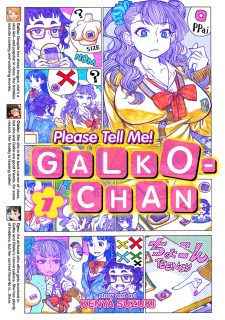
Please Tell Me! Galko-chan, Volume 1And the winner of the Please Tell Me! Galko-chan manga giveaway is… Dawn!

As the winner, Dawn (whose Anime Nostalgia Podcast is well-worth checking out, by the way) will be receiving the first volume in Kenya Suzuki’s delightful manga series Please Tell Me! Galko-chan as published in English by Seven Seas. The series is somewhat unusual in that it is a full-color manga, so I asked participants in the giveaway to tell me a little about some of the color manga that they’ve read. Check out the giveaway comments for everyone’s detailed responses, and check out the list below for some great full-color manga! (I decided to include a few full-color manhwa on the list, too.)

Some of the full-color manga (and manhwa!) available in print in English:
Aaron’s Absurd Armada by MiSun Kim
Chi’s Sweet Home by Konami Kanata
Fluffy, Fluffy Cinnamoroll by Yumi Tsukirino
Guardians of the Louvre by Jiro Taniguchi
His House by Hajin Yoo
Joan by Yoshikazu Yasuhiko
Lethe by Kimjin
Maka-Maka: Sex, Life, and Communication by Torajiro Kishi
Milkyway Hitchhiking by Sirial
The Monkey King by Katsuya Terada
Please Tell Me! Galko-chan by Kenya Suzuki
Rohan at the Louvre by Hirohiko Araki
Unico by Osamu Tezuku
Void’s Enigmatic Mansion by HeeEun Kim
The Legend of Zelda: A Link to the Past by Shotaro Ishinomori

As far as full-color print releases in English go, I believe the above list is actually pretty comprehensive, but there may have been a few that I missed. (If you can think of one, let me know!) There are also some full-color manga and manhwa that have been licensed in English for digital release, too. Thank you to everyone who participated in the giveaway by sharing your experiences with color manga and manhwa. I hope that 2017 is a bright and colorful year for you all, and I hope to see you again for the next giveaway!
Filed Under: Giveaways, Lists, UNSHELVED Tagged With: Kenya Suzuki, manga, Please Tell Me Galko-chan

Bookshelf Overload: December 2016

January 12, 2017 by Ash Brown

Well, December happened, as I knew it would. I took advantage of a large number of holiday and end of year sales and made good use of coupons and gift cards, so my wallet is happier than it would have been otherwise, but I still managed to pick up an absurd number of things. This includes an unusual amount of anime for me, such as the Amazon-exclusive limited edition of Cowboy Bebop which was on super sale at one point. (This will replace the bootleg copy I unintentionally bought when I was much younger and didn’t know any better or how to tell the difference.) Probably the manga release I was most excited for in December was the return of Makoto Yukimura’s Vinland Saga. (I’ll hopefully have a review of the eighth and most recent omnibus to share in the near future.) I’m also especially happy to have the deluxe edition of Junji Ito’s Tomie and the conclusion of The Ghost and the Lady by Kazuhiro Fujita on my shelves. And, of course, more of Inio Asano’s Goodnight Punpun, Haruichi Furudate’s Haikyu!!, and Izumi Tsubaki’s Monthly Girls’ Nozaki-kun are always welcome. Fans of Mentaiko Itto will also want to be aware of the poster collection recently released by Bruno Gmünder. It’s labeled as “1,” so there may very well be more to come. (Ahem.) As for comics, Reindeer Boy by Cassandra Jean is a lot of fun and I recently read and highly recommend The One Hundred Nights of Hero by Isabel Greenberg.

Manga!
Aoharu X Machinegun, Volume 1 by Naoe
Blood Blockade Battlefront, Volumes 1-7 by Yasuhiro Nightow
Bungo Stray Dogs, Volume 1 written by Kafka Asagiri, illustrated by Sango Harukawa
Dragon Voice, Volumes 1-10 by Yuriko Nishiyama
Fruits Basket, Omnibus 1 by Natsuki Takaya
Gangsta: Cursed, Volume 1 written by Kohske, illustrated by Syuhei Kamo
The Ghost and the Lady, Volume 2 by Kazuhiro Fujita
Giganto Maxia by Kentaro Miura
Goodnight Punpun, Omnibus 4 by Inio Asano
Haikyu!!, Volume 7 by Haruichi Furudate
Happiness, Volume 2 by Shuzo Oshimi
He’s My Only Vampire, Volumes 1-3 by Aya Shouoto
Holy Corpse Rising, Volume 1 by Hosana Tanaka
Hunter x Hunter, Volumes 1-8 by Yoshihiro Togashi
Kiss of the Rose Princess, Volumes 1-2 by Aya Shouoto
Magi: The Labyrinth of Magic, Volumes 1-2 by Shinobu Ohtaka
Monthly Girls’ Nozaki-kun, Volume 5 by Izumi Tsubaki
New Lone Wolf and Cub, Volume 6 written by Kazuo Koike, illustrated by Hideki Mori
One-Punch Man, Volume 10 written by One, illustrated by Yusuke Murata
Ōoku: The Inner Chambers, Volumes 11-12 by Fumi Yoshinaga
Pandora Hearts, Volumes 20-22 by Jun Mochizuki
Persona 4, Volumes 4-5 by Shuji Sogabe
The Prince and His Dark Days, Volume 2 by Hico Yamanaka
Seven Princes of the Thousand Year Labyrinth, Volume 1 by Yu Aikawa
Sweetness and Lightning, Volume 3 by Gido Amagakure
Tomie by Junji Ito
Vinland Saga, Omnibus 8 by Makoto Yukimura
Welcome to the Ballroom, Volume 2 by Tomo Takeuchi

Comics!
Babybel Wax Bodysuit by Eric Kostiuk Williams
Battles by Jenn Woodall
Canopy by Karine Bernadou
Centralia 2050, Chapters 1-2 by Michelle Stanford
A City Inside by Tillie Walden
Diesel Ignition by Tyson Hesse
Dirty Diamonds, Issue 7: Imagination edited by Claire Folkman and Kelly Phillips
The End of Summer by Tillie Walden
Forest Dew by Heldrad
Hot Dog Taste Test by Lisa Hanawalt
I Love This Part by Tillie Walden
Little Kinano by Yeehun
Mondo by Ted McKeever
Oath: An Anthology of New (Queer) Heroes edited by Audre Redpath
The One Hundred Nights of Hero by Isabel Greenberg
Panther by Brecht Evens
RAV, Volume 2 by Mickey Zacchilli
Reindeer Boy by Cassandra Jean
Rosalie Lightning by Tom Hart
Small Town Witch written by Alex Singer, illustrated by Jayd Aït-Kaci
Somthing Terrible by Dean Trippe
Spidersilk, Volume 1 by Pamela Kotila
SuperCakes by Kate Leyh
That Which Wills: Virgo Rising, Book 1 written by Alex Singer, illustrated by Jayd Aït-Kaci

Artbooks!
BLKBT by C Lijewski
Burl & Furl edited by Irene Koh, Ricardo Bessa, Paul Reinwand, and Kevin Jay Stanton
Poster Book 1 by Mentaiko Itto

Novels!
The Borrowed by Chan Ho-Kei
Memoirs of a Polar Bear by Yoko Tawada
Moshi Moshi by Banana Yoshimoto
Orochi no Yaiba written by Itoshi, illustrated by Aldaria
Outlet by Randy Taguchi

Anime!
Cowboy Bebop directed by Shinichirō Watanabe
Detroit Metal City directed by Hiroshi Nagahama
My Love Story directed by Morio Asaka
Natsume’s Book of Friends, Seasons 3-4 directed by Takahiro Omori
The Perfect Insider directed by Mamoru Kanbe
Persona 4: The Animation directed by Seiji Kishi
Terror in Resonance directed by Shinichirō Watanabe
Yurikuma Arashi directed by Kunihiko Ikuhara
Young Black Jack directed by Mitsuko Kase

Filed Under: Bookshelf Overload, UNSHELVED

Manga Giveaway: Kuroko’s Basketball Giveaway Winner

January 4, 2017 by Ash Brown

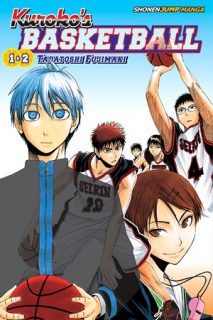
Kuroko's Basketball, Omnibus 1And the winner of the Kuroko’s Basketball manga giveaway is… Coco!

As the winner, Coco will be receiving a copy of the first Kuroko’s Basketball omnibus, created by Tadatoshi Fujimaki and published in English by Viz Media. Tournaments often play a large part in sports manga like Kuroko’s Basketball but they can also be incorporated into other genres in interesting ways, too. For this giveaway, I asked that participants tell me a little about their favorite tournament manga. I’ve collected some of the responses in the list below (combined with some additional titles), but be sure to check out the giveaway comments for all of the detailed replies.

Some of the tournament and competition manga licensed in English:
Air Gear by Oh!Great
Angelic Layer by CLAMP
Battle Angel Alita: Last Order by Yukito Kishiro
Crimson Hero by Mitsuba Takanashi
Cross Game by Mitsuru Adachi
Dragon Ball by Akira Toriyama
Eyeshield 21 written by Riichiro Inagaki, illustrated by Yusuke Murata
Fairy Tail by Hiro Mashima
Food Wars!: Shokugeki no Soma written by Yuto Tsukuda, illustrated by Shun Saeki
Haikyu!! by Haruichi Furudate
Hikaru no Go written by Yumi Hotta, illustrated by Takeshi Obata
Hunter x Hunter by Yoshihiro Togashi
King of Cards by Makoto Tateno
Kuroko’s Basketball by Tadatoshi Fujimaki
Let’s Dance a Waltz by Natsumi Ando
My Hero Academia by Kohei Horikoshi
The Prince of Tennis by Takeshi Konomi
Real by Takehiko Inoue
Reborn! by Akira Amano
Revolutionary Girl Utena by Chiho Saito
Shaman King by Hiroyuki Takei
Slam Dunk by Takehiko Inoue
Toriko by Mitsutoshi Shimabukuro
Welcome to the Ballroom by Tomo Takeuchi
Yakitate!! Japan by Takashi Hashiguchi
Your Lie in April by Naoshi Arakawa
Yowamushi Pedal by Wataru Watanabe
YuYu Hakusho by Yoshihiro Togashi
Yu-Gi-Oh! by Kazuki Takahashi

The above list is not by any means comprehensive, but it’s not a bad place to start looking for some tournament manga to read. Perhaps unsurprisingly, sports manga seems to predominate but there are a few other interesting titles in there as well. As always, thank you to everyone who took the time to participate in the giveaway and share your favorite manga tournaments with me! I hope to see you again for the next giveaway. (Oh, and happy new year!)

Filed Under: Giveaways, UNSHELVED Tagged With: Kuroko's Basketball, manga, Tadatoshi Fujimaki

Bookshelf Overload: November 2016

December 16, 2016 by Ash Brown

In an interesting trend, I seem to be picking up more and more non-manga comics lately. And in some months–take November as an example–the number of non-manga comics that I purchase even manage to rival the number of manga proper that find their way to my shelves. As for my manga acquisitions in November, I was very happy to almost complete my print collection of Kyoko Hikawa’s From Far Away which is now largely out of print. (I still need to find a nice copy of the fourteenth volume for a reasonable price.) I was also very excited for the release of Mentaiko Itto’s second collection of gay erotic manga in English The Boy Who Cried Wolf, the latest in Bruno Gmünder Gay Manga line. November saw the debut of Ichiya Sazanami’s absolutely ridiculous Magia the Ninth which I can’t claim to be the best manga out there, but I loved it and was delighted by all of its music history in-jokes. Major holiday sales began in November, too. Those will have a larger impact for me (and my wallet) in December, but a few purchase (mostly anime) have already started to arrive. Also of note, I picked up the Lone Wolf and Cub boxset for a steal when it was initially listed at the wrong price. It’s a really lovely collection of the six Lone Wolf and Cub films from the early 1970s. Surprisingly, none of which I’ve actually seen yet.

Manga!
The Boy Who Cried Wolf by Mentaiko Itto
A Bride’s Story, Volume 8 by Kaoru Mori
Devils’ Line, Volumes 1-2 by Ryo Hanada
From Far Away, Volumes 4-12 by Kyoko Hikawa
Gate: Where the JSDF Fought, Volume 1 written by Takumi Yanai, illustrated by Satoru Sao
Haikyu!!, Volumes 4-6 by Haruichi Furudate
In/Spectre, Volume 1 by Chasiba Katase
JoJo’s Bizarre Adventure, Part 3: Stardust Crusaders, Volume 1 by Hirohiko Araki
La Corda d’Oro, Volumes 1-7 by Yuki Kure
Magi: The Labyrinth of Magic, Volumes 3-4 by Shinobu Ohtaka
Magia the Ninth, Volume 1 by Ichiya Sazanami
Miss Kobayashi’s Dragon Maid, Volume 1 by Coolkyoushinja
Please Tell Me! Galko-chan, Volume 1 by Kenya Suzuki
Prison School, Omnibus 5 by Akira Hiramoto
Sunny, Volume 6 by Taiyo Matsumoto
To the Abandoned Sacred Beasts, Volumes 1-2 by Maybe
Urotsukidoji: Legend of the Overfiend, Volume 1 by Toshio Maeda
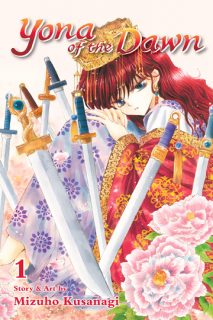
Yona of the Dawn, Volume 3 by Mizuho Kusanagi

Manhwa!
His House, Volumes 2-3 by Hajin Yoo
Intense, Volumes 2-4 by Kyungha Yi

Comics!
The Boy in Pink Earmuffs, Volumes 1-3 by Jay Fuller
Cucumber Quest, Book 1 by Gigi D.G.
Fujoshi Trapped in a Seme’s Perfect Body written by Seru, illustrated by Joberu
Habitat by Roy Simon
How to Survive in the North by Luke Healy
I Thought You Hated Me by MariNaomi
Jane Eyre adapted by Crystal S. Chan, illustrated by SunNeko Lee
Laid Waste by Julia Gfrorer
Lovers in the Garden by Anya Davidson
Miss Priss is Missing! by Jay Fuller
Narrow Road, Issues 1-2 written by Zack Davisson, illustrated by Mark Morse
No Mercy, Volume 1 written by Alex de Campi, illustrated by Carla Speed McNeil and Jenn Manley Lee
Oh Joy Sex Toy, Volume 3 by Erika Moen
Queer: A Graphic History written by Meg-John Barker, illustrated by Julia Scheele

Novels!
Legend of the Galactic Heroes, Volume 3: Endurance by Yoshiki Tanaka
The Moai Island Puzzle by Alice Arisugawa
Mr. Turtle by Yusuke Kitano

Anthologies!
The Black Cat Takes a Stroll: The Edgar Allan Poe Lectures by Akimaro Mori
Invisible Planets: Contemporary Chinese Science Fiction in Translation edited by Ken Liu

Nonfiction!
A Brief History of the Martial Arts: East Asian Fighting Styles, from Kung Fu to Ninjutsu by Jonathan Clements

Anime!
Haikyu!!, Season 1 directed by Susumu Mitsunaka
Karate Master directed by Osamu Dezaki
Parasyte: The Maxim directed by Kenichi Shimizu
The Vision of Escaflowne directed by Kazuki Akane

Film!
Lone Wolf and Cub directed by Kenji Misumi, Buichi Saito, Yoshiyuki Kuroda

Filed Under: Bookshelf Overload, UNSHELVED

Manga Giveaway: Kodansha Comics Collection Winner

December 7, 2016 by Ash Brown

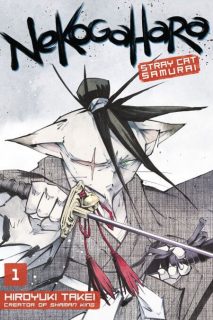
Happiness, Volume 1Nekogahara: Stray Cat Samurai, Volume 1
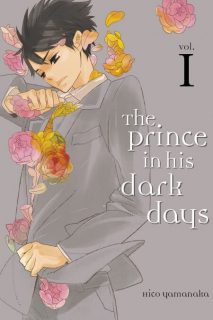
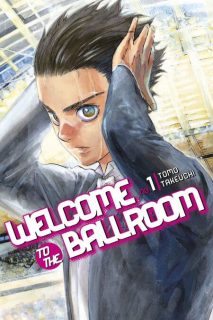
The Prince in His Dark Days, Volume 1Welcome to the Ballroom, Volume 1

And the winner of the Kodansha Comics Collection manga giveaway is… Amaya!

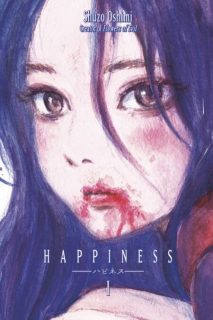
As the winner, Amaya will be receiving not one but four of Kodansha Comics print debuts from 2016: Shuzo Oshimi’s Happiness, Hiroyuki Takei’s Nekogahara: Stray Cat Samurai, Hico Yamanaka’s The Prince in His Dark Days, and Tomo Takeuchi’s Welcome to the Ballroom. As I was reflecting back on the manga of 2016, I found that I was particularly impressed by the increased variety in Kodansha Comics titles. And so, for this giveaway, I asked that participants tell me about their favorite 2016 Kodansha Comics manga, debuts or otherwise. Akiko Higashimura’s Princess Jellyfish seems to have garnered the most love and attention, but be sure to check out the giveaway comments for everyone’s excitement over all of the great manga released by Kodansha Comics this year!

Kodansha Comics 2016 print debuts:
Attack on Titan: Lost Girls written by Koji Seko, illustrated by Ryosuke Fuji.
Attack on Titan Coloring Book by Hajime Isayama
Attack on Titan Anthology edited by Ben Applegate and Jeanine Schaefer
Cells at Work by Akane Shimizu
Complex Age by Yui Sakuma
Fairy Tail: Twin Dragons of Saber Tooth by Kyouta Shibano
Fairy Tail: Zero by Hiro Mashima
Fire Force by Atsushi Ohkubo
Forget Me Not written by Mag Hsu, illustrated by Nao Emoto
The Ghost and the Lady by Kazuhiro Fujita
Happiness by Shuzo Oshimi
In/Spectre by Chashiba Katase
Interviews with Monster Girls by Petos
Maga-Tsuki by Hoshino Taguchi
Nekogahara: Stray Cat Samurai by Hiroyuki Takei
Neo Parasyte F by Various
Paradise Residence by Kosuke Fujishima
Persona Q: Shadow of the Labyrinth, Side: P3 by So Tobita
Persona Q: Shadow of the Labyrinth, Side: P4 by Mizunomoto
The Prince in His Dark Days by Hiko Yamanaka
Princess Jellyfish by Akiko Higashimura
Queen Emeraldas by Leiji Matsumoto
Real Account written by Okushou, illustrated by Shizumu Watanabe
Spoof on Titan by Hounori
Sweetness and Lightning by Gido Amagakure
That Wolf-Boy is Mine! by Yoko Nogiri
Welcome to the Ballroom by Tomo Takeuchi

As always, thank you to everyone who took the time to participate in the giveaway and for sharing your favorite Kodansha Comics manga with me. 2016 was a great year for manga and 2017 looks like it should be pretty darn good, too. But before we get to that, I hope to see you again for this year’s last giveaway!

Save

Save

Save

Save

Save

Save

Filed Under: Giveaways, UNSHELVED Tagged With: Happiness, Hico Yamanaka, Hiroyuki Takei, manga, Nekogahara, Prince in His Dark Days, Shuzo Oshimi, Tomo Takeuchi, welcome to the ballroom

Bookshelf Overload: October 2016

November 11, 2016 by Ash Brown

October brought quite a few interesting things to my shelves. The University of Hawaii Press, which publishes some excellent Japan-related materials, had a major sale celebrating its 69th anniversary. So as not to go overboard (which would have been incredibly easy to do) I limited myself to five books. I was especially excited that Modanizumu: Modernist Fiction from Japan, 1913-1938 was included in the sale–it’s been on my wishlist since I wrote my spotlight on Kaita Murayama a couple of years ago. Kodansha Comics continues to impress me with the range and variety of manga that it’s publishing this year. Some of the great Kodansha manga from October included (but certainly wasn’t limited to) the shoujo tribute anthology Neo-Parasyte F, The Ghost and the Lady, Volume 1 by Kazuhiro Fujita and of course Princess Jellyfish, Omnibus 3 by Akiko Higashimura. (Technically, that last one is a November release; my copy just arrived early). High on the list of other October manga for which I was particularly excited there’s Blue Morning, Volume 6 by Shoko Hidaka (actually released in September, but I finally got my hands on a copy) and Kitaro Meets Nurarihyon by Shigeru Mizuki. As for non-manga October releases, I’m hoping to make time to read the second novel in Ken Liu’s Dandelion Dynasty trilogy, The Wall of Swords, sooner rather than later. (The first volume, The Grace of Kings, was one of my favorite books from last year.) I must also mention the wonderful children’s book and poetry collection Are You an Echo?: The Lost Poetry of Misuzu Kaneko which I recently reviewed and highly recommend.

Manga!
Ajin: Demi-Human, Volume 8 by Gamon Sakurai
Attack on Titan: Lost Girls, Volume 1 by Ryosuke Fuji
Blue Morning, Volume 6 by Shoko Hidaka
Cells at Work!, Volume 1 by Akane Shimizu
Dawn of the Arcana, Volumes 1-7, 9, 12-13 by Rei Toma
The Ghost and the Lady, Volume 1 by Kazuhiro Fujita
I Am a Hero, Omnibus 2 by Kengo Hanazawa
Interviews with Monster Girls, Volume 1 by Petos
Kitaro Meets Nurarihyon by Shigeru Mizuki
My Love Story!!, Volume 10 written by Kazune Kawahara, illustrated by Aruko
Nekogahara: Stray Cat Samurai, Volume 1 by Hiroyuki Takei
Neo-Parasyte F by Various
Platinum End, Volume 1 written by Tsugumi Ohba, illustrated by Takeshi Obata
Princess Jellyfish, Omnibus 3 by Akiko Higashimura
Samejima-kun and Sasahara-kun by Koshino
The Secret Sakura Shares by Akira Hagio
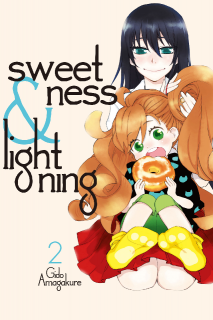
Sweetness &Lightning, Volume 2 by Gido Amagakure
Ten Count, Volume 2 by Rihito Takarai
Yona of the Dawn, Volume 2 by Mizuho Kusanagi

Manhwa!
Goong: The Royal Palace, Volumes 2-7, 9-10 by Park SoHee

Comics!
Adulthood Is a Myth by Sarah Andersen
Eat Me by Megan Rose Gedris
Godzilla in Hell by James Stokoe
Food Baby by Lucie Byron
Hotblood!: A Centaur in the Old West by Toril Orlesky
Humanescent written by Jacques Nyemb
Kill 6 Billion Demons, Volume 1 by Tom Parkinson-Morgan
Love! Love! Fighting! by Sharean Morishita
Romeo X Julien, Act 2: The Lovers by Marina
Tetris: The Games People Play by Box Brown

Artbooks!
Fat Mermaids edited by Paige Hall
Hotblood! Foundry: Materials Book (1871-2016) by Toril Orlesky

Novels!
Deep Red by Hisashi Nozawa
Dandelion Dynasty, Book 2: The Wall of Swords by Ken Liu

Anthologies!
Modanizumu: Modernist Fiction from Japan, 1913-1938 edited by William Jefferson Tyler
Three-dimensional Reading: Stories of Time and Space in Japanese Modernist Fiction, 1911-1932 edited by Angela Yiu

Nonfiction!
Are You an Echo?: The Lost Poetry of Misuzu Kaneko written by David Jacobson, illustrated by Toshikado Hajiri
Bodies of Evidence: Women, Society, and Detective Fiction in 1990s Japan by Amanda C. Seaman
Reading Food in Modern Japanese Literature by Tomoko Aoyama
She Changed Comics: The Untold Story of the Women Who Changed Free Expression in Comics by Various
Whisky Japan: The Essential Guide to the World’s Most Exotic Whisky by Dominic Roskrow

Anime!
Monthly Girls’ Nozaki-kun directed by Mitsue Yamazaki
Natsume’s Book of Friends, Seasons 1-2 directed by Takahiro Omori
Escaflowne: The Movie directed by Kazuki Akane

Filed Under: Bookshelf Overload, UNSHELVED

Manga Giveaway: Sweetness & Lightning Giveaway Winner

November 2, 2016 by Ash Brown

Sweetness & Lightning, Volume 1
Sweetness & Lightning, Volume 2

And the winner of the Sweetness & Lightning manga giveaway is… Joseph Miller!

As the winner, Joseph will be receiving a copy of the first two volumes of Gido Amagakure’s manga series Sweetness & Lightning as published in English by Kodansha Comics. In addition to being a food manga, which I generally enjoy, Sweetness & Lightning is also a series about family. In particular, the father-daughter relationship between Kōhei and Tsumugi is a major part of the story. Kōhei is a great dad, so for this giveaway I asked that participants tell me a little about their favorite fathers and father figures from manga. Be sure to check out the giveaway comments for all of the detailed responses!

Some of the manga available in English with notable dads and father figures:
Baby & Me by Marimo Ragawa
Barakamon by Satsuki Yoshino
Bokurano: Ours by Mohiro Kito
Bunny Drop by Yumi Unita
Dragon Ball by Akira Toriyama
Fairy Tail by Hiro Mashima
Fake by Sanami Matoh
Fate/Zero written by Gen Urobuchi, illustrated by Shinjiro
Fullmetal Alchemist by Hiromu Arakawa
Gugure! Kokkuri-san by Midori Endou
Hide & Seek by Yaya Sakuragi
Lone Wolf & Cub written by Kazuo Koike, illustrated by Goseki Kojima
Master Keaton written by Hokusei Katsushika, Takashi Nagasaki, Naoki Urasawa
My Brother’s Husband by Gengoroh Tagame
My Neighbor Totoro by Hayao Miyazaki
Neon Genesis Evangelion by Yoshiyuki Sadamoto
One-Punch Man written by One, illustrated by Yusuke Murata
Only Serious About You by Kai Asou
Otomen by Aya Kanno
Ouran High School Host Club by Bisco Hatori
Persona 4 by Shuji Sogabe
Real by Takehiko Inoue
Sweetness & Lightning by Gido Amagakure
Tiger & Bunny by Mizuki Sakakibara
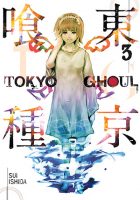
Tokyo Ghoul by Sui Ishida
Vinland Saga by Makoto Yukimura
Wandering Son by Takako Shimura
Yotsuba&! by Kiyohiko Azuma

As usual the above list certainly isn’t comprehensive but it does provide a variety of manga to explore. Thank you to everyone who participated in the giveaway and shared some of your favorite manga dads with me! I hope you see you all again for the next giveaway.

Filed Under: Giveaways, UNSHELVED Tagged With: Gido Amagakure, manga, Sweetness and Lightning

Bookshelf Overload: September 2016

October 13, 2016 by Ash Brown

Normally manga far outweigh the other types of comics that I acquire in any given month, but in September there wasn’t much of a difference between the two. I also picked up more anime than I usually do and my artbook collection continues to steadily increase. Anyway, probably the most exciting thing that I’ve read so far from September was the  Attack on Titan Anthology, an excellent collection of Western comics inspired by Hajime Isayama’s Attack on Titan. (Granted, the anthology’s official release date was in October, but I was fortunate to get my hands on an early copy.) It was also a good month for omnibuses such as the final volume of Kaoru Mori’s Emma (technically released at the very end of August, but I picked up my copy late), the most recent volume of Inio Asano’s Goodnight Punpun, and Wataru Watanabe’s third Yowamushi Pedal omnibus among others. As for series that debuted in September, I’m particularly interested in and looking forward to reading the first volumes of The Prince in His Dark Days by Hico Yamanaka and Welcome to the Ballroom by Tomo Takeuchi.

Manga!
Blame!, Omnibus 1 by Tsutomu Nihei
Boyfriend in Heat by Sakria
The Demon Prince of Momochi House, Volume 6 by Aya Shouoto
Don’t Rub Yourself Against My Ass by Sakira
Emma, Omnibus 5 by Kaoru Mori
Franken Fran, Omnibus 3 by Katsuhisa Kigitsu
Goodnight Punpun, Omnibus 3 by Inio Asano
Haikyu!!, Volume 3 by Haruichi Furudate
Happiness, Volume 1 by Shuzo Oshimi
The Heroic Legend of Arslan, Volume 4 by Hiromu Arakawa
Hey, Class President!, Volumes 2-3 by Kaori Monchi
Kuma Miko: Girl Meets Bear, Volume 1 by Masume Yoshimoto
Mr. Mini Mart by Junko
One-Punch Man, Volume 8 written by One, illustrated by Yusuke Murata
Persona 3, Volume 1 by Shuji Sogabe
The Prince in His Dark Days, Volume 1 by Hico Yamanaka
Sailor Men by Sakira
Welcome to the Ballroom, Volume 1 by Tomo Takeuchi
Wild Boyfriend by Sakira
Yowamushi Pedal, Omnibus 3 by Wataru Watanabe

Comics!
Acid Monday by Lucid
Agents of the Realm: Semester 1, Volume 1 by Mildred Louis
Attack on Titan Anthology edited by Ben Applegate and Jeanine Schaefer
Avialae, Chapter 2 by Lucid
From Under Mountains written by Claire Gibson and Marian Churchland, illustrated by Sloane Leong
Mirror: The Mountain written by Emma Ríos, illustrated by Hwei Lim
Mooncop by Tom Gauld
My Car’s a Spaceship, and My Spaceship’s a Boy! by Kris Mukai
Princess Princess Ever After by Katie O’Neill
Someone Please Have Sex With Me by Gina Wynbrandt
Soulless, Volumes 1-3 written by Gail Carriger, illustrated by Rem
Spider-Man/Deadpool, Volume 1: Isn’t it Bromantic written by Joe Kelly, illustrated by Ed McGuinness
Trying Not to Notice by Will Dinski
Turning Japanese by MariNaomi
The Usagi Yojimbo Saga, Omnibus 5 by Stan Sakai
Virus Tropical by Powerpaola
Vixen by Danielle Keller

Artbooks!
10: Illustrations, 2006-2016 by Tomoko Yamashita
The Art of Jo Chen Illustration Collection by Jo Chen
Space Beside: Selected Illustrations, 2014-2016 by Loika
Yoshitaka Amano: Illustrations by Yoshitaka Amano

Novels!
The Dark Forest by Cixin Liu
A Riot of Goldfish by Kanoko Okamoto

Anthologies!
Red Roofs and Other Stories by Jun’ichirō Tanizaki

Anime!
Black Jack directed by Osamu Dezaki
Black Jack: The Movie directed by Osamu Dezaki
Cardcaptor Sakura: The Movie directed by Morio Asaka
Doukyusei directed by Shouko Nakamura
The Eccentric Family directed by Masayuki Yoshihara
Otogi Zoshi directed by Mizuho Nishikubo

Filed Under: Bookshelf Overload, UNSHELVED

NYCC 2016, Day 4

October 10, 2016 by Sean Gaffney

The final day of New York Comic-Con 2016 dawned with much rain and wind. I am somewhat relieved it waited to the final day for this. Luckily, I had an umbrella, so made it over to the Javits in order to catch my first panel, which was about how books are turned into audiobooks. It had 3 actors who narrate audiobooks as well as two authors of said audiobooks. (They hadn’t met each other before, which says a bit about the way the business is conducted.)

On the author side, we had John Scalzi, famed for his many science fiction novels, and R. A. Salvatore, best known for the Forgotten Realms series. On the narration end we had Fred Berman, who has narrated The Walking Dead audiobooks among other things; Allyson Johnson, an actor and singer best known for narrating the Honor Harrington series; and Victor Bevine, an actor who has also written his own works (one of which he did the audiobooks for), who has done Salvatore’s books and also Dan Simmons’ Hyperion books.

There was a lot of great discussion at the panel. Both Scalzi and Salvatore say they now think of how the audiobook will sound when they write, which was not in their heads at all at the start of their careers. Scalzi added that overusing the word ‘said’ – which in prose is fine, as a reader won’t really notice it – becomes more of a problem when the narration hammers in the repetition. All three narrators agreed they noticed when an author repeated words. Scalzi has a forthcoming short story that is in interview format, with Q and A, and will have to ask the audio team for multiple actors to carry that off.

The authors don’t really get much say in who narrates their books, though it sometimes happens. That said, they trust their publisher to get someone solid, as of course the publisher does not want to ruin the audiobook. Bevine said that he once won a fan competition to narrate an audiobook. It then got into the technical process of how they prepare to read the book – Johnson used to make notes on filecards and annotate the books so that as she read them she wouldn’t have to worry about things like where to pause for a breath; it would all be marked out. (These days she uses a spreadsheet for some things.)

They also discussed name pronunciation. All three work in a genre where there can be weird alien or fantasy creature names, and sometimes that means asking the author how a name is pronounced. R.A. Salvatore has fun with this – his most famous character is named Drizzt, and he says that he doesn’t like to confirm how it’s pronounced because he enjoys watching people argue about it. Scalzi, who is close friends with one of his narrators, William Dufris, once wrote a character named (and I approximate here) Btbtbtbtbtbt, and then said it should be pronounced like the finger between the lips insane pose from old cartoons. Once Salvatore was surprised to find one of his short stories narrated by Ice-T, who did not appreciate the difficult names i n the least. Still, as authors, they don’t have to pronounce their own names!

There are many ways to narrate, and this was gone into as well. Some narrators strive for clarity and some for effect; neither are wrong, but you should know which one would be most effective for your book. Some narrators use their own voice throughout the book, some try to use different voices for different speaking characters. Fantasy and SF gives the narrators an ability to stretch out – Bevine asked Salvatore if he could voice his dwarfs as drunken Irishmen, which delighted the author. Johnson says that she comes from a musical background, so pays close attention to the rhythms of the book, comparing it to a symphony.

They talked about the difference between one narrator and a book with a full cast; it’s more than just “you don’t get to read all the parts”. The narrators agreed that you need a strong leader for those books to pull the cast together, but that doesn’t always happen, so frequently the actors are seen comparing notes to ensure that it is as smooth as possible. Fred Berman also discusses the difference in style between his night job as a theatre actor (he’s in The Lion King on Broadway at the moment) and his day job doing narration. In theater you have to hit the back of the house, whereas narration is up close to the mic. (I loved that they all praised Bing Crosby for being the first recording artist to use the mic as a tool.) And they also listen to their own narration as they do it via headphones at times, both to see how it comes across and to fix mistakes in post-production so that it’s not jagged.

There are more female fantasy and SF authors than there were in the past, which all agreed was a great new development – Salvatore also said there were more diverse fans as well, thinking back to his signings in the 1980s which were all teenage white boys. Johnson had never read science fiction till she began to narrate – she has a low alto, so thinks they like that she can do “male” voices as well, though sometimes this can backfire – Honor Harrington is a soprano, something that book mentions a lot, so using a different register there can be tough. It was asked how they remember the voice of a character – the authors find it quite easy to slip back into an old character’s speech style, though Johnson said she keeps an index of all speaking characters for series she does, in case they show up six books later.

It was asked if they ever rejected doing any books? Bevine said he had once rejected a couple for being too sexually explicit, but for the most part the answer was no – if they don’t like a work, they can use a pseudonym. And they still put their heart into it, as even if they don’t like the book, they know there are fans who will. You focus on something that you like in the book. And of course they talked about the current boom in audiobooks – it used to be they were all in one section in the bookstore, competing for space, and would go out of print quickly. With the advent of new technology, that’s not happening. Best of all, audiobooks don’t cannibalize the market for regular books – the two mesh well with each other, and a good audiobook can sell as well as a hardcover.

The question and answer period had a few people thank them for making books available to those with difficulty reading – either because of losing their sight or for dyslexia, etc. Someone asked the narrators what scenes they found difficult to do, and they said that while big battle scenes were fun to read, they could be hard to narrate. The authors all agreed that a lot of the fun of narration is seeing how the book is interpreted by someone else, and urged authors not to try to micromanage the audiobook narrator. Someone asked how long the recording process takes, and it seems to average about twice the length of a book – in other words, if your book takes 10 hours to read, the recording process will be about 20 hours. This also includes going back to fix any errors in post-production. They also take it in sections, of course, no one reads the whole book though.

It was a terrific panel all around. I didn’t have anything else for a bit, so decided, as I often do, to go to the panel before the one I wanted to see. This was a great decision, as it was the panel devoted to the 10th anniversary of First Second Books, the alternative comics publisher who have put out 160 books in that span. Present were Mark Siegel, the founder and president; Scott Westerfeld, author of The Uglies and Leviathan, who is doing a new graphic novel with First Second; Pénélope Bagieu, who has written Exquisite Corpse and is doing a new book about the life of Mama Cass before she joined the Mamas and the Papas; Box Brown, who did a book on the life of Andre the Giant, and whose new book is on Tetris; and Sara Varon, author of Robot Dreams and other masterpieces.

They discussed what’s different about the market since First Second began; it’s very different. Back in 2006 booksellers were reluctant to stock graphic novels by First Second, and it was only after their books won multiple awards that they began to soften up. These were the days when newspapers would have the standard “Hey, comics aren’t for kids anymore!” article, which made everyone ill. They did have a big group in their corner, however; librarians, who were big champions of their works. In fact, the last bastion of “why are you reading that garbage” is parents, who still tend not to regard comics as real books. That said, they’ve already lost the battle, they just aren’t aware of it yet.

Westerfeld mentioned the manga explosion leading to a whole new readership, as mainstream comics weren’t all that welcoming. The explosion has died off a bit now, but there are still those readers out there to be won with good quality graphic novels. First Second gives their artists creative freedom to do what they’d like, without worrying about things like “Are the heroine’s boobs big enough?” as with Marvel or DC. Everyone agreed that comics need more badass women – real badass, not a male fantasy of a badass woman. Bagieu admitted she didn’t read comics growing up in France, as Tintin and the like were all very male-oriented. She wouldn’t even have considered writing a book in the comic medium till First Second.

There was discussion on how to make people realize comics can also be literature. A good comparison was made – what if all movies were James Bond movies? You’d get people saying “Oh, I just don’t like movies”. And comics offer a way to tell stories that other mediums can’t match – in Westerberg’s story he’s currently working on, a young woman is the narrator, but we also have her sister, who doesn’t speak – except, as the comic reader can see, she talks in thought bubbles with the doll she carries around. This isn’t something you could carry off in a prose book without awkward shoehorning, but in comics it’s easy to convey.

Comics and graphic novels in North America are compartmentalized a lot more than they are in Europe – Bagieu had to learn about this, as in France they have no issues with comics being for everyone. Whereas here we have librarians getting into huge arguments about whether a book belongs in the adult or children’s section of the library – vehemently. Indeed, until cost became an issue, illustrations accompanied books all the time, simply as part of the work. Can we bring that back? A fun panel, and all agreed that they greatly look forward to seeing what First Second does in 2017.

My final panel of the con was one I had been excited about all weekend. Denis Kitchen of Kitchen Sink Press was here to discuss the next volume in their Essential Harvey Kurtzman collection, which was dedicated to Trump Magazine (not related to the Donald, I promise), which Hugh Hefner financed as he loved Mad Magazine and wanted a similar one for the Playboy brand – with an unlimited budget, which was a big reason why Kurtzman agreed, as he’d been begging Gaines to let him print in color, and hadn’t gotten anywhere. On the panel, besides Denis and John Lind, the other editor of the book, were legendary cartoonists Arnold Roth and Al Jaffee. I knew of Jaffee from Mad Magazine, of course, where I grew up with his fold-ins, Snappy Answers to Stupid Questions, and somewhat terrifying grinning self-portrait pasted on all his books. As for Roth, his varied career includes work for TV Guide, Sports Illustrated, Playboy, a long time contributor to the British Punch magazine, and editorial cartoonist at The Progressive. Though no spring chickens (Roth is 87, Jaffee 95), both were highly entertaining and talkative throughout.

They began with a brief discussion of Kitchen Sink Press, and how it managed to survive the shuttering of many other underground comics publishers. It’s done Eisner reprints, a reprint of L’il Abner, and many Hurtzman titles. The first Essential Kurtzman was The Jungle Book, A collection for adult readers that features four long-form satirical works. Trump will be the second such collection. Trump only lasted two issues, with a third in production when it was cancelled. Roth suggested that, rather than Hefner’s joking answer that it was because Kurtzman overspent his unlimited budget, that it was simply because a LOT of magazines died in the 1950s, with the advent of television. Even Colliers folded at that time.

Kurtzman began with a title called Hey Look!, which was included as filler pages in Timely Comics, for which Stan Lee was the editor. Nobody was doing what Harvey was, and whenever he would drop off a comic everyone would rush to see it. Jaffee admitted it was the same when they were all in school together – he and Will Elder were at the High School of Music and Art, learning painting as cartooning was absolutely forbidden. They did it anyway. Then one day someone told them to “look to their laurels” as this new freshman just posted a cartoon on the bulletin board that was amazing. If was, of course, Kurtzman, who had drawn a parody of the Freshman Boat Race which blew them both away. Kurtzman later met both of them and said one day he wants to hire them to work for him. Kurtzman was 15 at the time.

When Kurtzman left Mad Magazine to start Trump, he asked Jaffee to join him. But Jaffee was working on Patsy Walker at Timely Comics, and didn’t really have the financial stability to quit and go work on a newbie humor project. Since his titles weren’t filled with violence, the new Comics Code, which cause Mad to become a magazine rather than a comic, didn’t affect him either the way they had Kurtzman. And Playboy was still a new title at the time. Arnold Roth discusses a party he went to with various highbrow men belittling the magazine, while also showing off how much they must have read it closely in order to belittle it so well. Roth answered them by saying that Playboy was the first magazine to take a stand against nuclear proliferation – no one had a good response to that.

As for Trump itself, Roth learned about it through of all people, Paul Desmond, the alto sax player with the Dave Brubeck Quartet! They were friends, and the musicians apparently read Mad while on the road. Kurtzman, of course, was also a good talent spotter. Since Trump had a budget, adn also worked in color, it was attracting artists who might not otherwise have signed on. Jaffee, after a joking argument with Stan Lee that led him to realize that he genuinely wanted to move on, also ended up with Kurtzman, saying that “Harvey was a mensch”, and was much better at establishing good relationships than actual business sense.

Jaffee was asked about the color paintings he had in Trump, which went into far more depth and detail than his other works. He admits he learned that type of art in school. A parody of one of life magazine’s ‘gatefold’ pictures was shown, which Trump magazine gamely parodied, complete with folding out the pages to see the entire piece. Jaffee later with Mad thought about the opposite, a fold-in, where you folded the page in order to see the true picture. He handed it in as a joke, and says “Don’t publish it, because kids will ruin the magazine when they buy it!” Bill Gaines, who always had terrific business sense, said “Absolutely publish it – they’ll buy a second one to replace it.” The second one he did had Rockefeller and Goldwater debating, asking who the winner would be – of course, when folded in, Richard Nixon was the answer. Jaffee is still doing those fold-ins for the magazine, even to this day!

Trump Magazine had very minimalist covers for its two issues – Hefner wanted it to look “sophisticated”. That said, the third issue, had it ever come out, featured a parody of a Saturday Evening Post Rockwell cover, showing grandparents looking on fondly in their garden as a young boy feeds a frog to a Venus Flytrap. In fact, by the third issue they were going to be parodying magazines more – this was something you could really do well with color pages, and a Sports Life magazine parody had a chilling yet amusing picture of a “bullet POV” which showed the photographer’s terrified face in the reflection of the bullet.

Roth and Jaffee both delivered work to Kurtzman differently. Roth liked to turn in finished product, and hated rough sketches. Kurrtzman usually accepted these, and when he did ask for corrections, Roth would usually abandon it and deliver a completely new piece. Jaffee, on the other hand, was constantly getting many, many corrections and suggestions, which would be far more irritating if they didn’t always, always make everything better and funnier – Kurtzman’s eye for detail was simply stunning. He worried about perspective, how things would fall naturally, etc. He also has a box of nipples in the attic, which I think is so amusing out of context I won’t bother to give it any.

The panel ended with a reveal of what the next Essential Kurtzman would be – a collection of Hey Look, the comics that first made Kurtzman a big name, at least among other cartoonists. And with that I had finished with what I wanted to see, and made my way back outside, where the rain had just ended, to head home. Despite a few hiccups, mostly (as always) bathroom related, it was a great con. Every year I find something new to enthuse over, as those who see how long I’ve been going on can tell. Trust me, it’s not just a giant ‘come see the stars’ media event – there’s gold to be found.

Filed Under: NYCC/NYAF, UNSHELVED

NYCC 2016, Day 3

October 8, 2016 by Sean Gaffney

My apologies to those readers who expect that a manga-oriented blog would confine itself to manga events, but that’s never been how my NYCC coverage rolls. As a result, I missed the Shonen Jump panel this year, which is sad. I do hear they licensed the RWBY manga which is being put out in Ultra Jump, drawn by the creator of Dogs: Bullets and Carnage. Several of my friends are big RWBY fans, so I’m sure this news will please them.

As for me, I began my day at BookCon, the offshoot of NYCC devoted to prose publishing. It’s about a block away from the Javits, in a building on 36th and 10th. I was there for a panel on Nostalgia and Reboots in Literature, which had as panelists many writers who specialized in that type of work. John Jackson Miller moderated, and noted his tie-in work, including a Star Wars book that suddenly became the start of the New Book Canon.

There was also horror author Paul Tremblay; Max Brailler, who has done Pick Your Own Path books (which are absolutely not the Choose Your Own Adventure books, he reminds us over and over again); Jonathan Maberry, another horror writer who’s also worked in the X-Files universe; Gareth Hinds, who does graphic novel adaptations of classic works of literature; Christina Henry, a fantasy writer who has done works based around Wonderland’s ethos, and has a new book giving Captain Hook a backstory; and Elizabeth Eulberg, whose works include Prom and Prejudice and The Revenge of the Girl with a Great Personality. She has a new Holmes pastiche coming out starring a 9-year-old girl Holmes who’s addicted to sugar.

Adaptations of movies based on prominent works began the discussion, and how they’re not really watched by fans the same way you’d watch a normal movie. It was described as going to church, where you see how the holy word is interpreted and argue about doctrines. In fact, this sort of thing began with Conan Doyle, who was wretched at remembering his own canon, so Holmes fans began to try to create a canon for him. Eulberg got the idea for her own Holmes book watching the BBC Sherlock, and seeing he had the immaturity of a typical 10-year-old girl, so why not makes Holmes one? Also, the sugar addiction (rather than cocaine) is a good example of making a retelling your own story and not the source.

Christina Henry’s Alice-related books are scary, more like Alice in Nightmareland. Even kids who’ve never read it know Alice, of course – it’s embedded in the culture. You can use retools like this as springboards for your own work. She also discussed her Captain Hook book, where she tries to be closer to actual canon – unlike the Alices, the Hook book is an actual prequel, so she can’t stray as far.

Gareth Hinds then discussed his graphic novels, and I was pleased to see they mentioned the old Classic Illustrated books, though they noted the art was not good and they were too staid. He has to cut the books to fit, of course, particularly Shakespeare who is so dense. With Shakespeare he tries to avoid using words or lines not in the original, but with something like The Odyssey he has a bit more leeway. Schoolteachers are big fans, though they always regret the one scene he has to leave out.

Maberry’s works are a bit different, as the creations are not in the public domain. There had already been a series of successful X-Files comics, and he had asked if there was a way he could do a fiction anthology. The publisher apparently scoffed, and didn’t think anyone would want to do it. He began e-mailing, and 45 minutes later he had filled three anthologies. And since there were stories with both young Dana Scully and young Fox Mulder, those became the Origins series, which can lead up to canon. Chris Carter still has to approve, of course, and in general the writers recommend “treating the franchise like a natural park”. (As an old Doctor Who New Adventures fan, this amused me greatly – Who was more Jurassic Park.)

As I said before, Brailler has apparently felt the roar of lawyers at his back, and made a running gag out of saying “choose your own adventure” and then correcting himself. He had written a bunch of great beginnings, most of which them petered out, a common writing flaw. And he then talked to the creator of the original CYOA books, who said they came from old War Games scenarios. His first book, based on a zombie apocalypse, had very disparate endings, but Highway to Hell, a newer book, has to all come together in the end, so he needed a giant chart to keep track.

Tremblay tried to update The Exorcist, as he saw vampires and werewolves getting modern updates, but no possession stories beyond bad Hollywood ones. The horror genre makes it easy to riff on common themes. That said, the themes don’t always have to be common. He noted he tries to keep his books very contemporary, and doesn’t worry about how they’re going to read in thirty years. It strengthens connections with the current readers. At a Q&A after the panel, I asked how far back they felt this repurposing of common stories went, citing King Arthur and The Bible. Maberry said that he imagines two guys sitting around a fire talking about elk – that’s how far back it goes. It’s always happened.

After this I went over to the Javits and got right in line for the next panel I had to see. I’ve been a Bloom County fan almost since it began in 1981, and have many fond childhood and teenage memories of it. As such, seeing that Berkeley Breathed was making a rare East Coast appearance to discuss his bringing the series back last year, I absolutely could not miss it. It was opposite Jump, but Jump will return, while Breathed may never do so. And it was a wonderful panel, with no moderator needed – Breathed hosted it himself.

He began with a film presentation, featuring panels from the 2015 Bloom County. In between those were two “pilot” attempts at an Opus cartoon, which had never gotten off the ground. In one, Opus is being directed by the voice of John Cleese, and has to deal with a scene where he’s ravaged by sharks. In the other, he has the voice of David Hyde Pierce, and has to struggle against the temptation to de-pants two people with low-riding jeans in front of him. Both were quite amusing, also showed why they had not become series.

Of course, he’s here to promote the new book, and new strips. He says he returned for three reasons. First was the disaster that was the attempt to film his book Mars Needs Moms, which Robert Zemeckis and Disney took and made entirely too serious and sentimental. The original book was an allegory, based on a real life incident where his son had said something horrible to his mother and stormed off. Breathed did to, to his workplace, and this book was the result. But the movie… wasn’t the book.

The second was Donald Trump, who dominated the early 2015 strips, but whom Breathed has now vowed not to use anymore in the strip. He feels that Trump is a “reverse canary” – his rise once more showed that something new was in the air and it was time to come back. The third reason was the most interesting, though – it was the release of Go Set a Watchman, the sequel to To Kill a Mockingbird that Harper Lee had written (before she wrote Mockingbird) and buried. He feels the publishers did this without her real informed consent, and that the result tarnishes the legacy of the original book, which was a huge influence on Breathed as a child.

In fact, Bloom County was based heavily off of the rural small towns as seen in TKAM. As child, he was told to draw anything he wanted. He drew a spaceman whose head had just exploded gorily due to helmet decompression, and received an F. His father looked at the picture and suggested adding “Gesundheit!”, and he realized that’s what he wanted to do – art and words combined to make humor. A year after beginning Bloom County, the first collection, Loose Tails, came out. He suggested 10,000 copies was a little low and was told to shut up and be grateful. It’s currently sold over a million.

He then showed off another letter he got in 1989, when he announced the end of Bloom County, begging him not to abandon these beloved characters. It was from Harper Lee. And coming back to that while helping compile the IDW reprints of the Bloom County Library made him realize he did have more he wanted to do with these guys. It was interesting re-reading the old work to see what he still found funny – he was writing them so fast back in the day he never really took in what he actually did. (In fact, at the signing afterwards, I mentioned one of my favorite BC memories, the Bill the Cat dies of acne strips, and he didn’t even recall them.)

Now that he’s releasing the strips via social media, he doesn’t have to worry about editors, and can mess with the format as much as he likes. He does say, unlike the old strips, he’s avoiding celebrity humor now, mostly due to meeting Barry Manilow years after mocking him shamelessly in the old strips. When Breathed broke his back in an accident, he got a huge bouquet from Manilow, and it wasn’t even sarcasm but genuine get well wishes. It reminded him that celebrities are also people with their own lives. (Politics, on the other hand, still seems to be OK – minus Trump).

The other book coming out is The Bill the Cat Story, which is a very unlikely children’s book given that its star is Bill the Cat. It shows Bill as Binkley’s cat back in the day, before getting taken away and going on a series of increasingly ridiculous adventures, and Opus eventually finding him and taking him home. It looks amazing. The panel ended with a series of drawings by Bill Watterson, who was penpals with Bill back in the day. He doesn’t actually have permission to publish these, and so I won’t go into great detail, except they were utterly hysterical, and the last drawing (Breathed’s addition to Watterson’s) had to be flashed by at lightspeed as there were kids present!

I went to the signing, which I don’t normally do, and managed to get in line early enough to not only get the new Bloom County book signed, but also The Academia Waltz, IDW’s hardcover collection of his college strips. I was pretty much done for the day after that, but wanted to take in one more panel so as not to disappoint you, the reader. As a result, I went back to Bookcon and walked in and sat, then checked to see what the panel actually was.

It turned out to be husband and wife team W. Bruce Cameron and Cathryn Michon, there to discuss his bestselling book A Dog’s Purpose, and the movie of same that is out in January, with the dog’s thoughts voiced by Josh Gad. The book came out in 2010 and was a huge hit, and Cameron has become something of a dog spokesperson. It’s about a dog who learns the true meaning of what he can do for humans by getting reincarnated as various dogs. The trailer looked excellent.

He came up with the story after Michon’s dog died, and he told it out loud to her as they drove on a long trip. Interestingly, the story barely changed from that telling to the page – there was almost no change needed. She hadn’t wanted another dog after the first one passed on, but now they have Tucker, who they also got through a rescue group, which they are huge fans of. Cameron says he was asked about reincarnation and spirituality a lot, and it was mentioned that this was reminiscent of Defending Your Life, as the dog has to learn what really matters.

The adaptation was also discussed – they removed part of the start of the book as it was a very harsh beginning. It was important it be a live action film with a real dog, and that, thoughts or not, the dog had to act and think like a dog, with all the limitations that comes with – a different vocabulary, a heightened sense of smell vs. vision, etc. They compared the narrative voice to the Forrest Gump movie, that sort of simplicity. The dog actors in the movie were also fantastic, not being trained with treats but with affection, so they weren’t always looking to the side for a payoff. As for Josh Gad, they were delighted to get him, as he has “joy in his voice”. (I was also amused that they had to change the end dog, as black Labs are too hard to film!)

He had not intended it to be a series, but when the popularity exploded, his agent convinced him. It takes him about a year to write a book, and he mocked his own abilities to write, with Michon coming in and correcting him, saying he’s really very disciplined. He paces his writing, whereas Michon says her best work is done when she’s in a panic. The panel ended with Q&A, as we discussed the fact that it was written for adults but he loves that it appeals to families, as will the film. He wishes we could all be happier, the way dogs are, as we move through life.

And thus ends my eventful Saturday. Tomorrow I have two panels I want to see, but they’re both in the small rooms, so we shall see.

Filed Under: NYCC/NYAF, UNSHELVED

NYCC 2016, Day 2

October 7, 2016 by Sean Gaffney

The theme of Friday’s NYCC was lines, lines, and more lines. Usually one can avoid lines by room camping, provided you don’t mind sitting through some things you didn’t expect to see. Not this year. Between Marvel Comics and Mythbusters, camping was out of the question. And so, the line.

After waiting in line for a while, they let us into the Viz panel, which is good as it was first panel of the day. It’s Viz’s 30th Anniversary, and as you’d expect was pretty big on hype, not underserved. There’s a wall of tribute art on the show floor from Japanese creators, and it’s a sight to see. They put out 342 volumes in 2015, not all of which were reviewed by me.

They did have some new announcements as well. Legend of Galactic Heroes had only had the first three novels licensed, with others dependent on sales. Well, sales were good enough that we’re now getting Volumes 4-6 of this series from Haikasoru! As a political space-opera, it’s a terrific page-turner.

After Hours had been announced just before the con. It was described as yuri, though they weren’t too quick to hype that, so I wonder. It’s about the modern nightclub scene, and two girls meeting and falling for each other. It runs in Hibana, which is the replacement for Ikki that Shogakukan started, so falls in the seinen genre.

Anonymous Noise is a Hakusensha title, so you know I’m excited. It runs in Hana to Yume, and is from the creator of Nosatsu Junkie (which Tokyopop put out some of) and Monochrome Kids. It’s about love and music, and has a lot of hype.

They also mentioned the Tokyo Ghoul Re books, but I think that too had previously been announced. The one title I had not heard of at the panel was Golden Kamuy, an award-winning series from Young Jump set during the Russo-Japanese war. It also features the Ainu, and looks really awesome. Oh yes, and we’re also getting the Boruto manga, but who’s really surprised about that?

The last two big announcements were a Pokemon artbook, which should appeal to fans of both Pokemon AND artbooks, and Vampire Knight Memories, the sort of prequel, sort of side story continuation of Vampire Knight which Hino-san returned to after Shuriken and Pleats sort of bombed. Still, I enjoyed the Vampire Knight aesthetic.

After this came the first big line, as I’d decided to go to Aniplex before the Spice & Wolf writer’s panel, but there was a giant Marvel panel prior to that, so wait in line it was. Aniplex reminds me (and humbles me a bit) at how much more fans at these events care about anime rather than manga – they were hyped, and cheered on even titles that cynical forum users have long abandoned, such as SAO or Asterisk War. It was very nice to see.

Speaking of SAO, the movie is being released in 25 different countries on February 18, and apparently that includes the US as well. The new announcement was a movie called I’ve Always Liked You, based off of a Honey Works music series. There’s also an anime version of March Comes in Like a Lion, which no doubt gives Honey and Clover fans hope that Viz will p;ick up the manga. In more in-your-face news, the supernatural hero story Occultic Nine features a girl with breasts so large she could easily have appeared in Eiken. It was then followed by the trailer for the 2nd Kizumonogatari movie, which could have done the same thing, but Hanekawa’s appearances were kept to a minimum.

Yen Press didn’t have a panel this year, but they did have Isuna Hasekura, author of Spice & Wolf, and his editor. I somewhat shamefacedly admit I haven’t read it – it began pre Yen On and I never picked it up, then when I realized it might interest me it was already too long. And the 1000-page omnibus seems a bit too crippling to me. It’s also incomplete, as Kurt announced the license of two new series – one is a direct sequel following Lawrence and Holo, and then other is about their daughter. Both will be multi-volume.

Hasekura proved to be a quiet but confident speaker. He says he got the idea while researching the Crusades, and became fascinated with the idea of medieval commerce. He was also reading the mythology of The Golden Bough, and also Sakuran, Moyoco Anno’s manga about an oiran. This combo led him to what became Spice & Wolf. He thought of Holo while reading a scene from Sakuran, and wanted to write his “own version” of that character.

Lawrence is a foil for Holo, who’s good at running scams and manipulating people. Hasekura-san says he’s not as good at reading people as Lawrence is, so the writing took awhile. As for why Europe and not Japan, I think he finds European History more exciting – it’s the era of dragons! I was very amused when he was asked how he researched the period – he went to the University Library. See? Libraries are important!

The character of Holo also helped him show off the old gods vs. new technology, and how he wanted Holo to be this sort of sad (but cute!) girl who is faced with obsolescence. He later admitted that he thinks the light novel artist gets this dichotomy better – the manga artist’s Holo is more excited and energetic. As for where he learned about economic theory, it was self-teaching – he didn’t take it at university. He just reads a lot. In fact, when he tried stock trading, it went badly – this was at the time of Lehman Bros.!

If you want a more apocalyptic take on economics, he’s also written World End Economica, which many in the audience cheered. But perhaps 17 whole volumes of Spice & Wolf was enough – he admits that he sometimes worried he would not get through the entire story due to a simple lack of mental energy, and found himself seriously praying to any god who would listen! He knew it was time to end it around Vol. 14, and began to use then last three volumes to move towards the ending that he’d already worked out by Vol. 2 or so.

He then moved on to his work habits, and he mentioned he can write in a home office, a restaurant, or a hired rental office – in fact, he has to move around as he gets bored easily! I laughed when he discussed how he became a writer – he mentioned ‘8th Grade Disease’, and I think was startled the audience, who had all seen Chuunibyou in various anime by now. He was asked about the definition of a light novel as compared to a normal one, and talked about how it lets you do things in a more varied and non-regimented way. In Japan, light novel readers can be as old as their early 30s! (This made me feel old, but hey, it’s not about me.)

The manga and anime adaptations were discussed. He seems to have let the creators do their own thing. He did discuss then manga artist liking big breasts, which is not his own preference (hence Holo’s flatness). He talked about the popularity of Spice & Wolf in Japan – it’s not really a series with fights or battles. Instead, the battles are intellectual. I was impressed to hear this was his first published series, though he did doujinshi before this (non-erotic, he hastens to add). Besides the S&W spinoffs, he’s also researching Mediterranean culture for a possible book, and working with a VR animation company.

Possibly the best first question I’ve ever heard at a Q&A – why was there no name for Lawrence’s horse? It’s sad but true, the horse has no name. He was asked if any of the anime seiyuu changed how he thought of the characters, and said Nora is a case where this happened. He mentioned how he liked Ben Bernanke, and thinks people are too mean to him. There are also other non-Hasekura economic books now, which makes him feel both pride and humility. It’s also worth noting that when he discussed how to get published, he said this was his first series, but it took him years to actually get a work accepted to be published.

He was asked about series he likes – it was hard to hear, but I think it was Hakumei to Mikoshi, a yokai series from Enterbrain’s fellows! Magazine. As for why a scantily-clad wolf girl was in a series about medieval economics, he admits that he just can’t imagine writing a slice-of-life book starring a girl like Holo. Lastly, he discussed religion in Spice & Wolf, which is loosely based on the Christian church, which like many other Japanese creators he got fascinated by through Evangelion.

After this came another long, long line, this one for the creator of Assassination Classroom, Yusei Matsui. This was in the big panel room, and rightly so – it was packed to the gills. We also had Matsui’s Jump editor come along, Murakoshi Shuu. Matsui was quite different from Hasekura, very extroverted and talkative. He was an assistant on the gag comedy Bobobo-bo Bo-bobo, before getting his first big hit with the popular but sadly unlicensed Neuro manga. He loves New York – both the big buildings and the big blondes.

He grew up in a very strict household where he could not watch anime or read manga, but he still managed to get some excellent influences – JoJo, Parasyte, Dragon Ball, and soccer manga Captain Tsubasa. He never wanted to be a teacher, though he likes the idea of passing on his experience. Nor was Koro-sensei based on any teacher he had The idea of Assassination Classroom came when he envisioned what became the first three pages of the manga, with the students all trying to kill their teacher, and then tried to imagine what teacher could survive that… and what school would let a class do that.

He didn’t have too many issues with editorial, who are used to eccentric teacher manga from many, many other examples of the genre (I’m thinking GTO here). Simplicity was the goal here – both the basic idea of the assassinations, and Koro-sensei himself, who is an octopus drawn as a circle – very easy to draw, as there are no joints or hands. But he still loves to eat octopus! When asked about then secret to drawing a hit manga (as Neuro was also, in Jump terms, a huge hit), his response was “I won’t say!”, which got a big laugh.

We then saw him ink a sketch of Koro-sensei as the Statue of Liberty he had done earlier. While this happened, we got some questions for both his Japanese and American editors. Murakoshi-san was asked what he does as an editor, and in addition to shaping the story and researching (which he doesn’t have to do much, as Matsui is very good), he makes sure the series keeps its internal continuity, and oversees the merchandising of the series, including overseas. As for the US editor, she wants to make sure that the story is told well without people realizing they’re reading a translation.

Given the series is about a group of kids who try to kill their teacher, you’d think that controversy would have come up at some point, but neither the Japanese nor American editor noted any problems at all. The bigger problem over here is that some of the references and jokes are too Japanese – Jump manga here has a semi-unofficial policy against endnotes, so they have to find a good way to adapt it. As for life lessons learned from Koro-sensei, the idea that the journey is more important than the result came up, and I heartily agree.

The anime has already finished, while the manga is still (in North America) coming out, so there was a lot of “don’t spoil it” hemming and hawing – especially as the editor of the American version wants to not spoil herself! He worked very closely with the anime team to make sure that his vision was not compromised, and he advised them on how it should end. The ending was very important, which is likely why the anime rushed some of the middle episodes – they were not allowed to make up an ending like many other shonen titles.

His favorite episode was the one with Kayano’s giant flan (it amused me that he was using the English loan-word Pudding, but the translator insisted on ‘flan’, as the Viz manga had it), which expanded the details on how a huge flan would be made. He was also asked which character he’s most like – he said Koro-sensei, as he too is weak to boobs. (For those hoping for less boob obsession from Japanese creators, this was clearly the wrong con.) Hed also mentioned a love of Powerpuff Girls!

And thus ended the panel, and my day, as I walked back and boggled at the amazingly long line to get into the Hammerstein Ballroom, which extended past my hotel. I’m hoping Saturday is less packed. (What am I SAYING?)

Filed Under: NYCC/NYAF, UNSHELVED

NYCC 2016, Day One

October 6, 2016 by Sean Gaffney

Another NYCC dawns. Another long run of panels in a row, long bathroom lines, walks along the show floor, and coming back to the hotel room exhausted only to realize you have to type up all your notes. Today was a lot of fun. What did I do? Well…

For starters, we had the Kodansha Panel, which thankfully proved fairly easy to get into. They had a giant pile of new licenses, so let’s break them down:
— Regarding my Reincarnation as a Slime, a title they say is not finalized, and I hope is made less awkward, is another ‘based on a fantasy RPG light novel’. Like many recent licenses of that nature, this is more of a parody of the genre. It runs in Shonen Sirius.
— Fairy Tail: Rhodonite, a spinoff which stars Gajeel, and has Levy on the cover of a volume, so I’m in. Gajevy ship tease, maybe?
— Love & Lies may be familiar for those who use the Mangabox app, as it runs there. It’s a “dystopian romance”.
— Lily Hoshino, who did character design for Mawaru Penguindrum, has a shoujo title from Nakayoshi called Kigurumi Defense Squad, a somewhat ridiculous magical girl parody featuring pretty boys dressed as amusement park-style mascots. Seems like great fun.
— Also looking fun is Kiss Me At the Stroke of Midnight, a Betsufure title about a girl who secretly loves sappy stories. The facial expressions of the girl are the prime reason to buy this.
— Possibly the title that most excites me, Frau Faust. It’s by the author of The Ancient Magus’ Bride, and runs in Itan, a josei fantasy magazine. Badass female scholars, yes please!
— Wake Up, Sleeping Beauty is one of two Dessert licenses, and is a supernatural romance, because I hear those do well.
— Waiting For Spring also runs in Dessert. Seems to involve basketball hotties, and has been called cute by those in the know.
— Ahogaru – Clueless Girl is a rare 4koma license by Kodansha, as they admitted they rarely find them funny (I sense a swipe at Seitokai Yakuindomo here). This one makes them laugh, though. It’s in Weekly Shonen Magazine, and involves… well, a clueless girl and her friends trying to save her from herself.
— Lastly, we have Land of the Lustrous, a fantasy series from Afternoon that deals with a race of gemstones, but is not much like Steven Universe at all. It’s won multiple awards.

I note that all four main manga genres were licensed here – yay!

After that came other news. A Silent Voice has a live-action film out in Japan soon. Princess Jellyfish is performing MUCH better than expected, and they could not be happier. They quickly went over the previously announced titles coming out this fall, including works by the creators of Soul Eater and Shaman King. Appleseed Alpha is delayed to June 2017, but as consolation will be hardcover. And the Akira and Ghost in the Shell del.uxe reprints look first rate.

This took up most of the panel, so sadly the Kodansha editor that came over did not get as much time to talk as planned, but he made the most of what he had. He works in the seinen genre, which he readily admits does not sell as well here. He’s edited Inoue Takehiko’s Vagabond, which comes out via Viz here but is a Kodansha series in Japan, and he talked very amusingly about Inoue-san’s workplace habits and how they brainstorm. He’s also edited Anno Moyoco, and talked about Sakuran (licensed here by Vertical) and Hataraki Man (sadly unlicensed). She apparently is known for tearing up her rough sketches when she gets different ideas, which can be frustrating. We also saw some rough sketches of Inuyashiki, but the panel had to end there.

After that, I ran into Erica Friedman, who was only going to be at the con today, so I hung out with her for a bit. I wanted to get back to the panels to get in early enough to make the Attack on Titan Anthology panel. As with most years, this meant I room camped into a panel where I had no idea what it was but it ended up being a big surprise. In this case, it was The Future of Comics in New Realities, a panel hosted by Madefire, a motion comics app that has turned a lot of heads.

On the panel was Christina Mancini, who’s in charge of Franchise Development at Fox; Ted Gagliano, who is also at Fox and is in charge of Post-Production; Nick Hooker, head of Frame Store visual effects; Matt Hooper from Oculus; and much to my surprise, Dave Gibbons, who was the artist on the old Doctor Who Weekly/Monthly comic strips back in the Tom Baker and Peter Davison days, and yes, also something called Watchmen, I guess. I did not get to ask him if he was nicknamed Funky Gibbons as a teen, which is probably for the best.

The panel talked about the impact virtual reality is having on creation, both in the comics medium and outside it. The use of comic narrative is as old as the hills (indeed, some hills contain cave paintings). It doesn’t have to be totally realistic, which allows it to be more powerful. And with VR, you can actually shift your perspective of the art away from a 2-D image. Indeed, with the arrival of comics on a tablet, the idea that print is a necessity is becoming a thing of the past. A comic artist doesn’t need $100 million to create their vision the way that, say, a visual effects studio might.

The other discussion of the panel was how to engage content that helps the brand of whatever Fox is merchandising. That’s what Christina is in charge of. I found this fascinating, coming from old-school fanfic writing which always had disclaimers out the wazoo and would never, ever be part of a corporate platform. But Fox is reaching out to find ways to make this work, and virtual reality can be a shared bonding experience. It can also be a tool for women and people of color to work in genres traditionally ruled by straight white men and sometimes co-opt them for other uses.

You’re also getting new, up-and-coming artists ho find that virtual reality is the best way to express themselves as craftsmen. Every new medium brings new ways to draw in both fans and creators – Gibbons talked about comic strips being used as a way to get readers to buy the newspapers, and they also mentioned Twitch TV’s recent marathon of Bob Ross, where the comments flying across the screen almost became an artform of their own – content commenting on content is a very new thing, and it uses new mediums such as concepts of virtual reality. It can be difficult – sometimes creators try to hard to be special or go above and beyond, when simpler ideas can be very effective by themselves. They then had an announcement that the Madefire App was going to have Motion Comics, the first ones to use virtual reality as a platform, with some nice panorama work.

After this came the Attack on Titan Anthology panel, with several of the creators involved. In addition to editors Ben Applegate and Janine Shaffer, we had Genevieve Valentine, Brendan Fletcher, and Jorge Corona, each of whom did excellent work in the Anthology itself. Most of them were drawn to the project through the anime, and Genevieve was drawn to the period before it began – the 100 years of peace they had before the Outer Wall was breached. For Brendan, this also conveniently came between the end of his team’s Batgirl run, and before they began a new project with Image; in fact, doing nice gory Titan art helped focus them on their new stuff as well.

This is not an anthology for the squeamish; in many ways, it’s even more brutal than the main series, and Ben joked about telling the writers and artists to kill more people in more horrible ways. One of then reasons people love AoT is that you’re never quite sure if the cast are safe or not. After discussing their love for the series, we got Q&A, and much to my amusement we had a guy who’d never even read or seen the series, but now wanted to pick it up! My favorite question was about the approval process from Japan, and Ben said they had no issues with the dramatic stories, but the comedic ones were more difficult, as Japan has a different relationship with violence and humor together. Ben apparently sent them Deadpool comics to show what it’s like here!

My final panel of the day was one on Marketing Yourself on Tumblr. Being fairly active in various Tumblr fandoms, I was quite curious about this. There were three Tumblr staffers there, as well as three creators – and this was very much a panel designed for the creator of content rather than the casual reblogger. Nick Tapalansky is a comic writer, Kendra Wells draws, and C.B. Cebulski not only is a talent scout for Marvel Comics (for which he uses Tumblr), but also has his own Tumblr foodie blog!

Microblogging is, of course, why most people use Tumblr. There are many ways a creator can both analyze their core audience and reach out to them. There’s Tumblr Analytics, which can tell you which posts are most popular. Suggested Artists and Tumblr Radar also help guide you to other, like-minded Tumblr blogs. You can also queue our posts so they don’t get spammed tol someone’s dash all at once (I am very bad at this, I will admit.)

Art theft was discussed, and it mentioned how copyright theft (someone took my art from another site I control and put it on Tumblr) is different from misattribution (someone took what I put on Tumblr, took my name off it and posted it as theirs). Tagging was discussed, and how monumentally important it is to gain readers and followers. You can use tags to ‘lure’ readers into your demographic, but don’t go overboard – that’s just spam. If you like site design, you can design your Tumblr site to look however you want. If you hate site design, use Mobile, where all sites look the same. You can have multiple Tumblr blogs linked to the same account, and art blogs are popular, along the lines of ‘Ask (Character XX)’. Most importantly, the best way to get popular on Tumblr is to do what you do – if you love your work, it will get noticed.

I had to leave early so missed the Q&A, but overall four very enjoyable panels, and I got to walk around the show floor when it wasn’t a madhouse (i.e., Saturday).

Filed Under: NYCC/NYAF, UNSHELVED

Manga Giveaway: Yona of the Dawn Giveaway Winner

October 5, 2016 by Ash Brown

Yona of the Dawn, Volume 1And the winner of the Yona of the Dawn manga giveaway is… Kate!

As the winner, Kate will be receiving a copy of Yona of the Dawn, Volume 1 by Mizuho Kusanagi as published in English by Viz Media. As someone who tends to love epic shoujo fantasies, I was very excited for the release of Yona of the Dawn. For this giveaway, I asked participants to tell me a little about their own favorite shoujo fantasy manga, epic or otherwise, but I was specifically interested in works with a compelling female lead Be sure to check out the giveaway comments for everyone’s detailed responses! The list below includes the favorites mentioned and more.

Some of the shoujo fantasy manga with great female leads available in English:
Alice 19th by Yuu Watase
Basara by Yumi Tamura
Cardcaptor Sakura by CLAMP
The Demon Prince of Momochi House by Aya Shouoto
Dawn of the Arcana by Rei Toma
From Far Away by Kyoko Hikawa
Fruits Basket by Natsuki Takaya
Fushigi Yuugi: Genbu Kaiden by Yuu Watase
Immortal Rain by Kaori Ozaki
Kamisama Kiss by Julietta Suzuki
Kobato by CLAMP
Liselotte & Witch’s Forest by Natsuki Takaya
Magic Knight Rayearth by CLAMP
Please Save My Earth by Saki Hiwatari
Pretty Guardian Sailor Moon by Naoko Takeuchi
Record of Lodoss War: Deedlit’s Tale by Ryo Mizuno
Red River by Chie Shinohara
Revolutionary Girl Utena by Chiho Saito
Romeo x Juliet by Com
St. ♥ Dragon Girl by Natsumi Matsumoto
The Story of Saiunkoku written by Sai Yukino, illustrated by Kairi Yura
Time Stranger Kyoko Arina Tanemura
Tsubasa: Those with Wings by Natsuki Takaya
Two Flowers for the Dragon by Nari Kusakawa
Vampire Game by Judal
Yona of the Dawn by Mizuho Kusanagi

Viz Media seems to have a pretty good corner on the shoujo fantasy market, especially when it comes to epics, but other publishers have released some great manga, too. And, of course, the above list certainly isn’t exhaustive. Thank you to everyone who took the time to share their personal favorites with me! I hope to hear from you all again.

Filed Under: Giveaways, UNSHELVED Tagged With: manga, Mizuho Kusanagi, yona of the dawn

Bookshelf Overload: August 2016

September 15, 2016 by Ash Brown

I’m slowly slipping back into my old buying habits; I should probably be a bit more stringent before things get ridiculously out of hand again. Granted, I stayed within my budget in August more than it would initially appear by the list below. The last of my Barnes & Noble orders from the recent manga super sale arrived which were already paid for; a bunch of Kickstarter rewards arrived; I somehow received not one, but two boxes of review copies from Kodansha Comics; and I made judicious use of coupons and gift cards. I also received some pretty phenomenal gifts like the out-of-print limited edition hardcover of Minna Sundberg’s A Redtail’s Dream. (A huge thank you to Narrative Investigation‘s Helen! You can read my quick take of A Redtail’s Dream here, and Helen’s thoughts about the webcomic here.) My biggest unplanned splurge in August was picking up an entire set of Firefighter!: Daigo of Company M by Masahito Soda which I liberated from the shelves of my Manga Bookshelf cohort Kate Dacey. (The series seems to be on its way out of print, but is still available digitally.) As for the August manga release that I was most excited for, I’m absolutely thrilled that Moto Hagio’s first Otherworld Barbara omnibus from Fantagraphics is now available. I love Hagio’s work, and am especially happy to see more of her science fiction in translation. I’d like to review or otherwise feature Otherworld Barbara at some point, but am not sure when that will be. However, I do have a review of South Korean author Han Kang’s novel Human Acts to post soon! Human Acts has already been released in the United Kingdom, but it won’t be released in the United States until January; I was fortunate enough to receive an early review copy. It’s honestly one of the best novels that I’ve read recently.

Manga!
Attack on Titan, Volume 19 by Hajime Isayama
Attack on Titan: Before the Fall, Volume 8 written by Ryo Suzukaze, illustrated by Satoshi Shiki
Complex Age, Volume 2 by Yui Sakuma
The Demon Prince of Momochi House, Volumes 3-5 by Aya Shouoto
Devil Survivor, Volume 6 by Satoru Matsuba
Dimension W, Volumes 1-2 by Yuji Iwahara
Dorohedoro, Volume 19 by Q Hayashida
The Earl & The Fairy, Volumes 1-4 by Ayuko
Fairy Tail, Volume 55 by Hiro Mashima
Fairy Tail: Blue Mistral, Volume 3 by Rui Watanabe
Firefighter!: Daigo of Company M, Volumes 1-20 by Masahito Soda
Food Wars!: Shokugeki no Soma, Volumes 9, 13 written by Yuto Tsukuda, illustrated by Shun Saeki
Forget Me Not, Volumes 3-4 written by Mag Hsu, illustrated by Nao Emoto
The Heroic Legend of Arslan, Volume 5 by Hiromu Arakawa
Horimiya, Volumes 3-4 by Hero
Inuyashiki, Volume 4 by Hiroya Oku
JoJo’s Bizarre Adventure, Part 2: Battle Tendency, Volume 4 by Hirohiko Araki
Kiss Him, Not Me, Volumes 5-6 by Junko
Kuroko’s Basketball, Omnibus 1 by Tadatoshi Fujimaki
Livingstone, Volume 3 by written Tomohiro Maekawa, illustrated by Jinsei Kataoka
Lone Wolf and Cub, Omnibuses 11-12 written by Kazuo Koike, illustrated by Goseki Kojima
Lucifer and the Biscuit Hammer, Omnibus 5 by Satoshi Mizukami
Noragami: Stray God, Volumes 15-16 by Adachitoka
Otherworld Barbara, Omnibus 1 by Moto Hagio
Ouran High School Host Club, Volume 18 by Bisco Hatori
Paradise Residence, Volume 3 by Kosuke Fujishima
Persona 4, Volume 3 by Shuji Sogabe
Real Account, Volume 3 written by Okushou, illustrated by Shizumu Watanabe
Say I Love You, Volumes 14-15 by Kanae Hazuki
The Seven Deadly Sins, Volume 15 by Nakaba Suzuki
Spoof on Titan, Volume 1 by Hounori
Ten Count, Volume 1 by Rihito Takarai
That Wolf-Boy is Mine!, Volume 1 by Yoko Nogiri
Wolfsmund, Volume 7 by Mitsuhisa Kuji
Yamada-kun and the Seven Witches, Volume 9 by Miki Yoshikawa
Your Lie in April, Volumes 8-9 by Naoshi Arakawa

Comics!
Baggywrinkles: A Lubber’s Guide to Life at Sea by Lucy Bellwood
Breaks: Prologue by Malin Ryden and Emma Vieceli
Chester 5000 XYV, Book 2: Isabelle & George by Jess Fink
Dragon Heir: Reborn by Emma Vieceli
Fresh Romance, Volume 1 by Various
Gaijin Mangaka by Various
Gatesmith, Volume 1 by Jen Lee Quick
Libby’s Dad by Eleanor Davis
The Other Side edited by Melanie Gillman and Kori Michele Handwerker
Our Mother by Luke Howard
QuickSilver, Volume 1 by Emily Smith
Rainflowers by Ash Heimerl
A Redtail’s Dream by Minna Sundberg
The Usagi Yojimbo Saga, Omnibus 6 by Stan Sakai

Novels!
Human Acts by Han Kang
Dusk in Kalevia by Emily Compton, illustrated by Onorobo

Nonfiction!
Hi! My Name Is Loco and I Am A Racist by Baye McNeil
Loco in Yokohama by Baye McNeil
Mah Jong for Beginners by Shozo Kanai

Filed Under: Bookshelf Overload, UNSHELVED

Manga Giveaway: Tokyo Ghoul Trio Winner

September 7, 2016 by Ash Brown

Tokyo Ghoul, Volume 1
Tokyo Ghoul, Volume 2
Tokyo Ghoul, Volume 3

And the winner of the Tokyo Ghoul Trio manga giveaway is… Briell Saunders!

As the winner, Briell will receive the first three volumes of Sui Ishida’s manga series Tokyo Ghoul as published in English by Viz Media. For this giveaway, I asked that participants tell me a little about their favorite half-human characters from manga. Kaneki Ken, the protagonist of Tokyo Ghoul, was mentioned a fair number of times, but he’s not the only well-liked half-human. Check out the giveaway comments for everyone’s details responses, and check out the list below for some of the manga that feature half-humans of various types.

Some of the manga licensed in English featuring half-humans:
Bleach by Tite Kubo
Blue Exorcist by Kazue Kato
Ceres: Celestial Legend by Yuu Watase
Cirque du Freak by Takahiro Arai
Claymore by Norihiro Yagi
D.Gray-man by Katsura Hoshino
Dawn of the Arcana by Rei Toma
The Devil Is a Part-Timer by Akio Hiragi
Franken Fran by Katsuhisa Kigitsu
Fullmetal Alchemist by Hiromu Arakawa
InuYasha by Rumiko Takahashi
Jiu Jiu by Touya Tobina
My Girlfriend Is a T-Rex by Sanzo
My Monster Secret by Eiji Masuda
Negima by Ken Akamatsu
Nura: Rise of the Yokai Clan by Hiroshi Shiibashi
Parasyte by Hitoshi Iwaaki
Rin-ne by Rumiko Takahashi
Rust Blaster by Yana Toboso
That Wolf-Boy Is Mine! by Yoko Nogiri
Three Wolves Mountain by Bohra Naono
Tokyo Ghoul by Sui Ishida
Übel Blatt by Etorouji Shiono
Wolf Children: Ame & Yuki by Mamoru Hosoda
YuYu Hakusho by Yoshihiro Togashi

Thank you to everyone who participated in the giveaway and took the time to share your favorites with me. I hope to see you all again!

Filed Under: Giveaways, UNSHELVED Tagged With: manga, Sui Ishida, Tokyo Ghoul

  • « Go to Previous Page
  • Page 1
  • Page 2
  • Page 3
  • Page 4
  • Page 5
  • Page 6
  • Interim pages omitted …
  • Page 62
  • Go to Next Page »
 | Log in
Copyright © 2010 Manga Bookshelf | Powered by WordPress & the Genesis Framework