• Skip to primary navigation
  • Skip to main content
  • Skip to primary sidebar
  • Home
  • About Us
    • Privacy Policy
    • Comment Policy
    • Disclosures & Disclaimers
  • Resources
    • Links, Essays & Articles
    • Fandomology!
    • CLAMP Directory
    • BlogRoll
  • Features & Columns
    • 3 Things Thursday
    • Adventures in the Key of Shoujo
    • Bit & Blips (game reviews)
    • BL BOOKRACK
    • Bookshelf Briefs
    • Bringing the Drama
    • Comic Conversion
    • Fanservice Friday
    • Going Digital
    • It Came From the Sinosphere
    • License This!
    • Magazine no Mori
    • My Week in Manga
    • OFF THE SHELF
    • Not By Manga Alone
    • PICK OF THE WEEK
    • Subtitles & Sensibility
    • Weekly Shonen Jump Recaps
  • Manga Moveable Feast
    • MMF Full Archive
    • Yun Kouga
    • CLAMP
    • Shojo Beat
    • Osamu Tezuka
    • Sailor Moon
    • Fruits Basket
    • Takehiko Inoue
    • Wild Adapter
    • One Piece
    • After School Nightmare
    • Karakuri Odette
    • Paradise Kiss
    • The Color Trilogy
    • To Terra…
    • Sexy Voice & Robo
  • Browse by Author
    • Sean Gaffney
    • Anna Neatrour
    • Michelle Smith
    • Katherine Dacey
    • MJ
    • Brigid Alverson
    • Travis Anderson
    • Phillip Anthony
    • Derek Bown
    • Jaci Dahlvang
    • Angela Eastman
    • Erica Friedman
    • Sara K.
    • Megan Purdy
    • Emily Snodgrass
    • Nancy Thistlethwaite
    • Eva Volin
    • David Welsh
  • MB Blogs
    • A Case Suitable For Treatment
    • Experiments in Manga
    • MangaBlog
    • The Manga Critic
    • Manga Report
    • Soliloquy in Blue
    • Manga Curmudgeon (archive)

Manga Bookshelf

Discussion, Resources, Roundtables, & Reviews

Reviews

I Swear I Won’t Bother You Again!, Vol. 3

January 27, 2023 by Sean Gaffney

By Reina Soratani and Haru Harukawa. Released in Japan as “Kondo wa Zettai ni Jama Shimasen!” by Gentosha Comics. Released in North America by Seven Seas. Translated by Molly Lee. Adapted by T. Anne.

I remember when I read the first volume of this series, I was impressed at its ability to take a stock plot, “villainess goes back in time to try to avoid her fate”, and seriously examine what traumas they might actually carry back by doing so. In the second volume, I was impressed (but also a bit wary, as it’s clearly the end pairing) at showing how disturbing and obsessive Yulan’s love for Violette is, and also at how the series shows that even if you do have a “safe haven” at school, and make new friends, there’s still the abusive family at home. And now we have the third volume, and by the end of it I am reduced to begging the author to please make it stop. This is still an excellent, compelling read, provided you can get past, well, the entire plot. But let’s face it, at this point we’ve switched genres. It’s not a villainess book. It’s a horror novel.
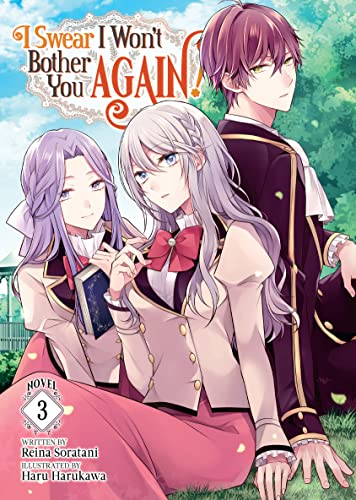
In the first two-thirds of this book, things are looking relatively good for Violette. She manages to apologize to Claudia for her previous behavior, closing the book on that chapter in her life. She’s managed to make a good friend in Rosette, another noble who hides her true self behind a facade. Sure, Yulan tells her that he can’t study with her this round of exams because he has to study with Maryjune, but that’s… she can deal with that. She may not like it, but she can deal with it. Heck, she’s even having Marin come up with new hairstyles for her, which is a big, big change, because her hair is one of her triggers from her childhood abuse by her mother. Then even more good news: her abusive father is called away to her grandfather’s place for the week! Now mealtime will be peaceful… OR WILL IT?

There’s no sugarcoating this, the last third of this volume is straight up terrifying. We haven’t really seen much at all of Lady Elfa, Violette’s stepmother, in this book, and given how absolutely terrible Violette’s father was, and how innocently terrible her sister is, I wasn’t sure we needed another terrible person. Sadly, I proved to be incorrect. (Indeed, the author states that the head chef, named in this volume, is literally the only non-terrible adult in the series.) Elfa feels like a horror parody of all the smiling, “ara ara” moms that you see in anime, and her words and actions towards Violette come uncomfortably close to a line I really really do not want this series to cross. That said, the most terrifying parts of the book involve Marin, Violette’s maid. She’s not the heroine, so does not have plot immunity, and I am very, very worried that she will not live to the end of the series.

I can’t recommend this series for everyone anymore, as it’s just become far too harrowing. If you don’t care for emotional torment as a plot device, Tearmoon Empire would be a better “villainess goes back in time” book. But for those who love a good soap opera that’s not afraid to get dark as pitch, this is a nightmarish yet thrilling ride.
Filed Under: i swear i won't bother you again!, REVIEWS

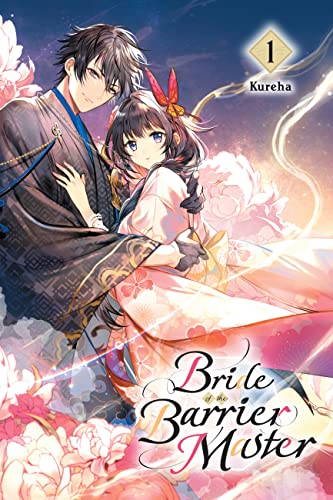
Bride of the Barrier Master, Vol. 1

January 26, 2023 by Sean Gaffney

By Kureha and Bodax. Released in Japan as “Kekkaishi no Ichirinka” by Kadokawa Bunko. Released in North America by Yen On. Translated by Linda Liu.

Sometimes you get the feeling that you’re reading something in the wrong medium. Bride of the Barrier Master is a shoujo manga. Everything about it screams shoujo manga, and the personalities of the two leads are designed so that we can watch the expressions on their faces as they react to each other. Unfortunately, while there *is* a manga adaptation of this light novel, this isn’t it. I mean, I get it. Sometimes the written word is all a creator has. It’s fine. The problem here is that without visuals, everything just feels a bit too harsh. We’re supposed to admire the perseverance of the heroine and laugh at her biting cynicism, but I found her a bit too mean. Likewise, the main guy has a bit of that “I can be an asshole to you because I’m hot” vibe that really doesn’t work when you can’t see him being hot, so it just makes him seem controlling. This isn’t a bad book, it’s perfectly readable. It just feels off.

We are, for once, in modern Japan, but it is a supernatural-tinged Japan in danger of being overrun by Shades. To combat this, five huge pillars are set up as a barrier, each pillar controlled by one of five families – who are very rich and powerful as a result. A family in the biggest clan has twins, Hana and Hazuki. They’re delighted with both of them… till Hazuki shows off impressive supernatural power, and Hana shows off bupkus. Hana is immediately shunned by her parents, who don’t physically abuse her but certainly there’s plenty of mental and emotional abuse. Over the years even her sister, sympathetic at first, grows to look down on her. Then, when she turns 15, Hana suddenly comes into a huge amount of power. Sadly, she’s far too worldwise and cynical at this point, and does not desire any sycophants saying they always knew she was wonderful, so she hides it. But can she hide it from the head of the family, who is looking for a bride?

This is something like the 4th title in a few days I’ve read featuring an abusive family and their daughter, and that might be tainting my viewpoint a bit. Hana’s bitter wit can occasionally be amusing, and I do like the genuinely loving relationship she has with the three shikigami she has created. You certainly sympathize with her desire to simply forget about the supernatural altogether and become an OL. As for Saku, well, we’ve seen his type in shoujo manga before. He’s attractive, powerful, and smart. Women throw themselves at him, and he’s totally uninterested in them. Hana, on the other hand, is rude and dismissive towards him. It’s almost love at first sight. That said, I’m nev3er fond of the “I will manipulate you into loving me by this written contract” as a plot device, and I don’t like it here. He’d be better off being sincere… except I’m not sure Hana can even accept sincerity at this point in her life.

Again, this isn’t bad, it just feels a bit sour and fatalistic. I’m sure if the manga is licensed (only one volume is out in Japan to date), it will be more pleasant to read.

Filed Under: bride of the barrier master, REVIEWS

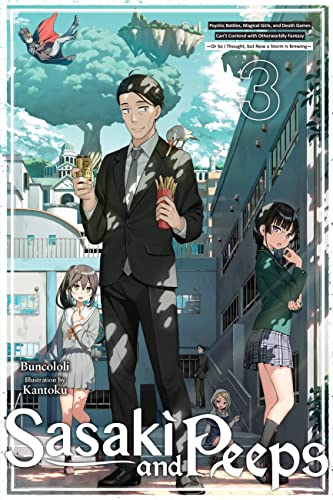
Sasaki and Peeps: Psychic Battles, Magical Girls, and Death Games Can’t Contend with Otherworldly Fantasy ~Or So I Thought, but Now a Storm Is Brewing~

January 25, 2023 by Sean Gaffney

By Buncololi and Kantoku. Released in Japan as “Sasaki to Pi-chan” by Media Factory. Released in North America by Yen On. Translated by Alice Prowse.

It’s getting better. There are still a few times where I wince while reading the series, mainly whenever the neighbor girl is trying to manipulate Sasaki into sexually assaulting her (he doesn’t), but for the most part the series is doing what it does best: mashing up genre after genre and watching our deadpan salaryman crush all of them as he flies past. Sasaki may be a bit of a stoic sad sack, but the series wouldn’t work at all if the protagonist were, say, Kazuma from KonoSuba. It not only requires his experience as a Japanese salaryman to drive a lot of the plot, but also his reserve helps the reader glide through the plot without taking anything too seriously. Which is good, because this series is still mostly a comedy, but also bad, because there are a lot of things I think could do with being taken more seriously, such as getting the neighbor girl some therapy.

Sasaki continues to juggle the various light novel plots he finds himself in. In the fantasy world, the count’s daughter Elsa is being taken as a “concubine” by an evil Duke, so Sasaki agrees to help fake Elsa’s death and take her with him to Japan, where she can hide out in a hotel. In the “psychic” world, he continues to investigate mysterious happenings (most of which have to do with one of the other genres he’s in) while trying to get enough blackmail material on his suspicious boss. In the “magical girl” part of the book, he finds her trying to murder another psychic. Sadly, before that gets anywhere, he’s dragged into the “angels vs. demons death game” genre we started to see last time, and finally discovers what the neighbor girl has been up to. Unfortunately, everything completely is blown to hell and back due to one fatal mistake: he lets Peeps get drunk.

I do suspect a lot of the salaryman humor in this lands better in Japan than it does here – he’s constantly apologizing to the girls around him, and thanking them for their support of him, in a way that is meant to evoke the office even as it happens while they’re watching demons blow teenage girls’ heads off. The best part of the book was seeing the neighbor finally get drawn into the main plotline as opposed to being a very uncomfortable side story. She’s still very uncomfortable – I hate using the word yandere, but it does apply here, and her rape/suicide fantasies are deliberately disturbing – but now that she’s involved with everyone else, hopefully she can get a little help? Maybe? The book ends in a four-way Mexican standoff between all of the various underage girls Sasaki has pulled into his orbit – none of whom he’s remotely romantically interested in, but I see what you’re doing there. And that doesn’t even count the traditional “looks nine but is decades older” girl. Which, again, light novel trope.

It appears we’re adding aliens to the stack of plots if the cliffhanger is to be believed, though if I were Sasaki I’d worry more about calming down his not-harem first. This series is absolutely not for everyone, but if you have drenched yourself in light novel plots over the years, it can be a lot of fun.

Filed Under: REVIEWS, sasaki and peeps

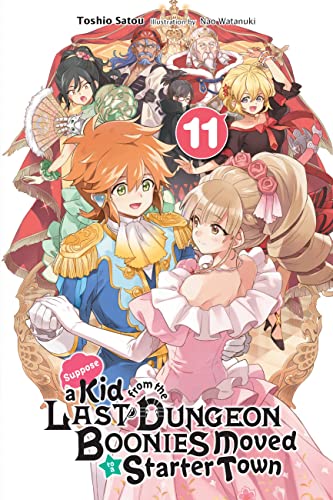
Suppose a Kid from the Last Dungeon Boonies Moved to a Starter Town, Vol. 11

January 24, 2023 by Sean Gaffney

By Toshio Satou and Nao Watanuki. Released in Japan as “Tatoeba Last Dungeon Mae no Mura no Shonen ga Joban no Machi de Kurasu Youna Monogatari” by GA Bunko. Released in North America by Yen On. Translated by Andrew Cunningham.

While I would not say that the cast of Last Dungeon Kid are as bad as Seinfeld, a series where the creators had as one of their series rules “no hugging, no learning”, it is certainly true that any time one of the characters almost reaches a point where they will come to their senses and mature as a person, they immediately backslide horribly for comedic effect. Usually that person has been Marie, and it’s Marie here as well. She’s reaping what she’s sown, as Lloyd is now convinced that Marie is the LAST person that could possibly be the kingdom’s princess, mostly thanks to what a giant disaster she is. A sensible person might think that they should shape themselves up so that Lloyd might be able to see them as royalty. Marie, instead, realizes that her being a disaster means Lloyd is too attached to her to fall in love with anybody, so she doubles down on being terrible. It’s… well, they’re comedy types, Harold.

As the country prepares for possible war, our core military cast are going around to various guilds to make sure that they’ll be on the right side when the fighting starts. This includes the adventurer’s guild whose mysterious leader has been absent for years but who returns the moment Lloyd shows up. It also includes the maritime guild, whose head has been fighting with the King for years and years, apparently due to the disappearance of the Queen. The King is trying to move things forward by having a big party where he’ll reveal the return of Princess Maria, and Marie has even agreed to it, in a desperate effort to get Lloyd to believe her. Sadly, when informed that the princess loves Lloyd, he becomes desperate to find the REAL princess… so he can reject her!

I wasn’t kidding when I said that stuff happens immediately after Lloyd gets involved. When he walks in, the plot moves forward. And yes, there is still a plot. Indeed, we get an extended prologue that shows us Alka’s past from before this world’s transformation, and get closer to figuring out who was behind it and what they actually want. We also see the return of the mystery woman who Lloyd met in the “bathroom” he found several books ago. As it happens, she’s deeply tied to both the Kingdom and Alka’s past… but of course she’s also a bit of a disaster, because there really are no 100% serious characters in this book. It reminds me of reading Urusei Yatsura or Ranma 1/2. You keep wanting things to be taken more seriously, for drama, for a bit of romantic resolution. But you can get that in other series that are far less funny than this. This series is here to give us laughs, and though they may be rueful laughs most of the time, they’re still there.

That said, we have to wait another three months while this series’ narrator goes off to do his other job as narrator of Tearmoon Empire. Till then, this is always a fun read, especially if you’ve just read two awful books in a row (like I had).

Filed Under: REVIEWS, suppose a kid from the last dungeon boonies moved to a starter town

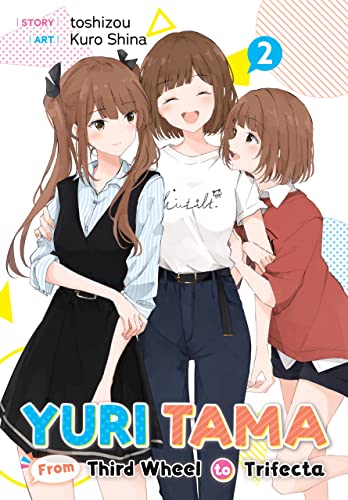
Yuri Tama: From Third Wheel to Trifecta, Vol. 2

January 23, 2023 by Sean Gaffney

By Toshizou and Kuro Shina. Released in Japan as “Yuri no Ma ni Hasamareta Watashi ga, Ikioi de Futamata Shite Shimatta” by Overlap Bunko. Released in North America by J-Novel Club. Translated by Tristan K. Hill.

“Sean,” my readers say to me. “I’m happy that we’ve gotten a lot more yuri titles in the last few years, but what about fans of incest? Is there a book out there that looks closely at younger sisters who love their older sister and tries hard to do a deep analysis about whether it’s OK or not?”. OK, no. My readers never say that to me. That said, if that’s what you want, I have good news, the second volume of Yuri Tama is all about said feelings, and whether Yotsuba will decide to dump her new girlfriends for her sisters, or just have all of them in a giant polycule, or what. So yeah, good news for fans of that. If, on the other hand, you read the above and said “what the actual fuck?”, then you are like me and stared at this volume with dull horror. The author can certainly write. It’s just what they write that’s the problem.

Yotsuba has managed to pass all but one of her exams, despite possessing the worst self-loathing of any light novel protagonist ever. This means she has most of her summer break free, and she plans to spend it dating her two girlfriends (separately). Unfortunately, each date is seen by one of her younger sisters, and now they’re both furious. Yotsuba is sure they’re upset that she’s “two-timing” the girls she’s dating, or they’re upset that she didn’t tell them she was dating at all. They’re not. They’re upset because they’ve been in love with Yotsuba since they were little children, and the idea that two other hussies have snatched her away is appalling. Can a family trip to a hot spring allow Yotsuba to explain? Or will it just make things worse?

So, let’s tick off the things I didn’t hate. 1) The author is somewhat self-aware that they are writing ridiculous shit, and it gets lampshaded a few times. 2) There is an attempt at discussing the differences between sexual attraction, familial love, and close friendship. It’s an attempt that is somewhat steamrollered by the plot, but the attempt is made. OK, I’m done with good things. Yotsuba remains the most annoying narrator ever, not being able to go more than three paragraphs without reminding us how awful and pathetic she is. Her sisters are, not to put too fine a point on it, creepy, and Yotsuba seriously considering loving both of them sexually boggles the mind. And unfortunately, because of this plot, Rinka and Yuna are sidelined. The dates may be the best part of the book, both because they’re not incestuous and also because Yotsuba shows an odd confidence that she doesn’t seem to be aware of herself. I want to explore that, not whether incest is OK.

I wish I could say that the series ended here, but a third volume of this came out last month in Japan. If you are really really desperate for yuri… please read something else anyway. Also, please use the word “two-timing” correctly! It’s consensual! They both know! Explain that!

Filed Under: REVIEWS, yuri tama

Honey Lemon Soda Vol 1 by Mayu Murata

January 22, 2023 by Anna N

Honey Lemon Soda Volume 1 by Mayu Murata

I was aware that there was a great deal of anticipation when Honey Lemon Soda was licensed, and the first volume lived up to the hype! Popular boy inexplicably adopting an incredibly awkward girl is a familiar plot in most shoujo manga, but Honey Lemon Soda takes this premise and runs with it, making the reader feel instantly sympathetic with the introverted heroine in question. Uka Ishimori’s gets in the way of an errant blast of lemon soda wielded by Kai Miura. She freezes up and is unable to respond to his friends’ expressions of concern and she runs away when Miura apologizes to her. His friends comment “It’s kinda like she’s living out a different genre than the rest of us” which is a good way of summarizing how disconnected Uka is from people her own age.

Honey lemon soda 1

In middle school, Uka was bullied, with classmates calling her “Rocky” due to her last name and stony expression. She’s determined to make friends and change in high school, and picked a school to go to based on its more laid back and flashy reputation instead of going to a school where people are devoted to studying. Every possible social interaction has Uka caught up in her anxious thoughts, as she has to force herself to offer to help a classmate with the answer to a question. Miura starts taking an interest, coaching Uka through some basic greetings. When she actually calls on him for help, he leaps in and defends her from some of her former middle school bullies. Uka starts expressing herself more often, although sometimes she’s so tense about communicating with others that her thoughts come out more like yelling accidentally.

Miura might look super cool with his effervescent blond hair, but he also seems to have more compassion than is typical in a shoujo hero, and he keeps dropping comments designed to help Uka become more comfortable with herself. Murata’s character designs are attractive, and there are plenty of dynamic panel layouts as the characters make their way through emotionally fraught situations. After reading the first volume, I am eager to see how Uka changes on her journey to break out of her shell and express herself more.

Filed Under: Manga Reviews, REVIEWS Tagged With: honey lemon soda, shoujo, yen press

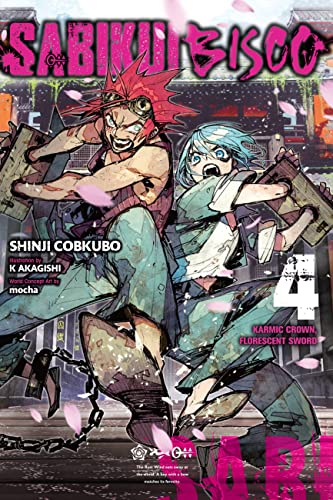
Sabikui Bisco, Vol. 4

January 22, 2023 by Sean Gaffney

By Shinji Cobkubo and K Akagishi. Released in Japan by Dengeki Bunko. Released in North America by Yen On. Translated by Jake Humphrey.

This review really cannot happen without spoiling the end of the book, so beware if you do not want to be spoiled, though I will try not to exactly spoil. Throughout most of this volume, this has the feel of a “makework” volume in the series, as events happen but it lacks the striking imagery of previous books, which was one of the major reasons we read it. It also is not as gay, which is the other reason we read it, mostly as Bisco and Milo spend most of the book separated from each other, and there’s only one or two moments, such as brief princess carry, or Milo staring in what is clearly jealousy at one point, that makes you realize the writer knows what they’re doing. But it’s all right. It’s got some really cool fight scenes, Bisco is funny at times, we have a new waif who needs to be guided/rescued, and we get a little more development of the post-apocalyptic works with a slave race. OK, that last part is questionable.

We open with a teenager escaping from what appears to be a maximum security prison, only to be caught almost immediately, and their rescue/medical treatment by Bisco and Milo, and we then backtrack to see why they’re in a prison in the first place. They arrive at what is supposed to be a mushroom keeper’s village only to find it nearly deserted, covered in sakura flowers. The tribe have been arrested and thrown into a maximum security prison by the warden, who is very big on justice in a “Shonen Cop Gone Bad” sort of way. Shishi is part of a tribe called the Benibishi, an artificially engineered plant-based species designed as slaves. All the Benibishi are ALSO in the prison, and Shishi’s father, their King, is due to be executed. Now Bisco and Milo have to get into the prison and try to resolve things… except that they’re promptly arrested and thrown in there anyway.

Starting off with the one really great part of the book. The third volume ended, to the surprise of most readers, with Pawoo marrying Bisco, and she’s come along in this book as well. Then, a third of the way through the book, the prison warden grabs her and simply throws her out of the book and back to her home town. We never see her again. It’s jaw-droppingly funny given the novels’ BL tendencies. Well, that’s the good out of the way. Shishi is briefly presented as trans, but it’s unclear if that’s gender-based or just has to do with the idea of “prince”, and the book uses female pronouns for Shishi throughout. The Benibishi all are jailed because there is a worry that they will go mad with revenge and try to kill those who wronged them. Their plant nature means they run the risk of getting caught up in murderous rage, and the King warns Bisco and Milo about it, so they help his daughter calm down and not choose violence.

And then comes the ending, which is like the author giving you a nice warm hug and then stabbing you in the back. Now, I will grant you there’s certainly a plot for Book 5 now, and I wonder if the only reason this happened is the author ran out of things to do in this series. But man, Shishi’s actions in the last three pages or so leave SUCH a bad taste in my mouth that I can’t really recommend this anymore. A merely okay volume of the series till the ending brings it down to bad.

Filed Under: REVIEWS, sabikui bisco

High School DxD: Lionheart of the Academy Festival

January 21, 2023 by Sean Gaffney

By Ichiei Ishibumi and Miyama-Zero. Released in Japan by Fujimi Fantasia Bunko. Released in North America by Yen On. Translated by Haydn Trowell.

Generally speaking, harem series rarely have to ask the question “why is the guy not understanding that all these girls who are literally naked in his bed saying “take me now, big boy!” kinda like him?”. The reason for that is that in most of these stories the answer is the same. It’s a variation on “don’t be silly, no girl will ever like me.” Harem protagonist never comes without a heaping helping of self-loathing, it would seem. Fortunately for High School DxD, it can actually give Issei a real reason for all that self-loathing beyond “because the plot requires it”. His first girlfriend, the one who he finally thought would be the girl that did not see him as a creepy pervert loser (which, sorry Issei, he is) rejected him bluntly multiple times. Oh yes, and turned out to be evil, tried to kill him, and was murdered in front of him. So when you ask “why does he not understand why Rias is so mad in this volume”, the answer can be, frankly, “trauma”.

We’ve had the sports festival and the school trip, so clearly it’s time for the culture festival. Maid cafe? Haunted house? Why not do both? As the Occult Research Club prepares to pull out all the stops, they also have a fresh new Rating Game, against an up and coming team whose leader, Sairaorg, has no demonic powers, but has to get by with his charisma and his brute strength. He is, frankly, a perfect opponent for Issei, and the fight takes up the entire second half of the book. Unfortunately, there’s trouble in paradise: After being as subtle as a truck and failing to get her feelings across to Issei, Rias spends most of the book miserable and thinking that he doesn’t actually love her. He’s not helping things by not understanding why calling her “Prez” feels like distance. Can they make up in time to win the match?

I haven’t mentioned breasts at all yet in this review, so I want to sadly reassure fans of the series that they’re still ridiculously essential to the plot, with the funniest fight in the book revolving around a woman taking off her panties before her bra, something that absolutely infuriates Issei. As for he and Rias, frankly, the two are more similar than you’d expect, and of course are the main couple of this series. And yes, finally we can say “couple”, given that we get an incredibly overdramatic and public confession (it’s High School DxD, where everything happens in front of the biggest crowd imaginable) which, more importantly, is followed by a quieter but just as firm confession when it’s just the two of them. It doesn’t take a genius to realize that this is a “marry everyone” kind of series, but it has to start with Rias, and now it has.

That said, haven’t things gone a bit too well for our heroes lately? (Well, except Akeno, who got annihilated in about ten seconds. Sorry, Akeno.) Gosh, I hope nothing absolutely tragic happens in the next book…

Filed Under: high school dxd, REVIEWS

Bottom-Tier Character Tomozaki, Vol. 9

January 20, 2023 by Sean Gaffney

By Yuki Yaku and Fly. Released in Japan as “Jaku Chara Tomozaki-kun” by Gagaga Bunko. Released in North America by Yen On. Translated by Jennifer Ward.

The Tomozaki novels have always felt a bit like a college thesis. It’s the sort of series that Chitose Is in the Ramune Bottle made fun of, detailing ways to improve your life and become a normie. As such, it’s not too much of a surprise that this book is very analytical of its three main characters. In fact, arguably that’s the plot of this volume. And what it shows us is scary. Hinami, Tomozaki and Kikuchi are all characters we like and root for (well, OK, maybe not Hinami), but at the same time they can be truly terrifying. In this book we see Tomozaki realizing that the path Hinami has been leading him down is the wrong one, but the self-discoveries that he comes to are also very dangerous, and he almost chooses a totally different but equally wrong path. God bless Mimimi, who may constantly be the romantic loser but I think sees the real Tomozaki better than any of the others. She knows WHY they all fell for him.

You will be relieved to hear that Tomozaki and Kikuchi do not break up after the events of the previous book, though I admit I am a lot less optimistic about their future by the END of this book. Tomozaki confronts Hinami about the advice she gave him regarding his new relationship, and finds she was trying to get them to have their first fight – which causes him to break off their sessions. He apologizes to Kikuchi and tries to work things out with her, but we discover that the aspects of dating that everyone else seems to take for granted elude him. This is shown best in a game of Atafami with his offline group, where she shows that he’s started to use a completely different character, something that almost makes Hinami have an emotion. Meanwhile, Kikuchi is writing a new online novel… one that, once again, seems eerily familiar.

Which sounds scarier, seeing the world only as a gamer or seeing the world only as a writer? Tomozaki’s reaction to Kikuchi’s new novel almost feels like it’s out of a horror story, where you find that she’s secretly behind him as he reads it. Meanwhile, Hinami simply IS a horror story. Her statement that she never does anything without a reason, and her bafflement that others find this creepy, forces Tomozaki to wonder why she’s been tutoring him on life this whole time. What is her real reason? If it’s just “I was annoyed by Tomozaki’s lameness”, that’s a sad reason. But no, it’s actually a way to validate herself that doesn’t damage herself – only him. I think we may be totally done with the life lessons, at least on her end. Just as it turns out Tomozaki was strong and cool all along, Hinami is still dealing with past trauma, and any lessons learned in the future are probably going to be hers.

There’s a new translator for this volume, as Jennifer Ward has been freed from Oregairu and moved on to a series inspired by it. Bottom-Tier Character Tomozaki may not need a glossary at the end, but its volumes are filled with emotion, trauma, and psychoanalysis. I really enjoy this series.

Filed Under: bottom-tier character tomozaki, REVIEWS

Baccano!: 1935-C The Grateful Bet

January 18, 2023 by Sean Gaffney

By Ryohgo Narita and Katsumi Enami. Released in Japan by Dengeki Bunko. Released in North America by Yen On. Translated by Taylor Engel.

The author has said a few times that this will be the final 1930s arc, and that after that there’s just one arc in 2003 to wrap up the series. (Admittedly he said that when this volume came out… almost ten years ago… more on that next time.) And on reading this volume, you get the sense that he’s sending the series off with a bang. Baccano! is known for its big cast, but here it feels like he’s trying to have every single main character from the series show up at the same time. We get Firo’s group, Luck’s group (with several additions from Drugs and the Dominoes and Man in the Killer), All Huey’s various Lamia and Larva, Jacuzzi’s gang, the girls from Time of the Oasis, etc. As for the 1700s immortals, for the most part they’re absent from the actual event (Maiza doesn’t count at this point, he’s part of Firo’s group more than he is a 1700s alchemist) but are trying to control or destroy everything there. It’s an all-star finale.

So yeah, Ennis has (sigh) been kidnapped in order to make Firo do something dumb. Fortunately, Firo has matured a bit from the last time this happened, so he merely smolders with controlled rage. The Martillos have his back (well, most of them, Ronny is AWOL) and consider Ennis one of their own. Meanwhile, there’s also the Runorata’s big casino opening, which everyone wioll be attending so that they can watch the other shoe drop. No one is quite sure what will be happening, but they all know it will be happening there. As for Melvi, we find out who he is in this book, but frankly he’s started his downhill slide already, given that he can’t even win against Ennis in an argument about what makes someone human. And then there’s Nader, the least likely protagonist, trying to help Eve and avoid getting caught by Leeza, but also running into someone who knows of his past.

Again, so much of this is just setup. I do wish Ennis had done more (Melvi is threatening her with Czes being tortured, but as we can see, Melvi doesn’t even have Czes, something Ennis can’t really confirm) but I did really enjoy her conversation with Melvi, where she shows she’s a much better homunculus than he’ll ever be. (Speaking of the Dormentaires, we get confirmation that only three of them got immortality in 1711 – Lucrezia, Niki, and Maiza’s dad. Sorry, Lucrezia/Carla shippers.) There’s a lot of potential confrontations that haven’t happened yet (Ladd vs. Claire, Nader and Sonia meeting again) as this book is STILL almost all setup, but we do get a couple scenes we’ve been waiting for, such as Leeza and Chane working together and Huey confronting Fermet. I’d mentioned above that almost everyone from the main cast and supporting cast is here, but Elmer is mentioned but not around – one wonders if he’ll be the fuse for this explosion to come.

The arc still isn’t over, so we’ll have to wait till next time for that explosion. Till then, enjoy the discussion of what makes a human, how much the world runs on fate, and other Baccano! philosophical debates.

Filed Under: baccano!, REVIEWS

My Friend’s Little Sister Has It In for Me!, Vol. 9

January 17, 2023 by Sean Gaffney

By mikawaghost and tomari. Released in Japan as “Tomodachi no Imouto ga Ore ni dake Uzai” by GA Bunko. Released in North America by J-Novel Club. Translated by Alexandra Owen-Burns.

I’m not sure how much longer this series has to go in Japan – Vol. 10 just came out in October there – but I suspect this series is not going to get beyond Vol. 12 at the most, as it’s really starting to wrap everything up. Basically, all the secrets that everyone has been hiding come out here, and come out very publicly. In some cases this is a good thing. We’ve watched Mashiro’s character development from the start of the series, and here we see why she writes and what she takes inspiration from. She’s jealously guarded her own incredibly popular work because she worries others will change it and that it won’t be hers anymore, but coming to terms with her feelings for Akiteru has made her back off on that – and on the fake relationship, which she breaks because she feels it’s holding her back on the chances of a real relationship. She gets some of the best bits in this book… but is still probably coming in 2nd of 2.

The class has a free day, which is good because Akiteru got no sleep the night before as Mashiro, as I mentioned above, breaks up with him. That said, she’s now taking him out on a date to the not-Disneyworld theme park… you know, the one run by Iroha’s mother. Who happens to be there, and gives them free “extra special guest” passes. Of course, they’re followed by Midori, who is still fairly broken up about her rejected confession. Meanwhile, Mizuki takes Iroha to the set where they’re filming, and there they run into Otoi, who does not like Mizuki very much and it shows. After this, they too end up at the theme park, where Mizuki has a meeting. As Mashiro and Akiteru deal with a very scary haunted mansion… erm, sorry, ghost mansion… Iroha also ends up in the same mansion. How many dates is Akiteru going to have, anyway?

The best character in this volume may be Otoi, whose bluntness helps to cut through the aura of bullshit that everyone else around her carries, even if we still don’t know her first name (it’s implied to make people think of toilets). As mentioned above, Mashiro gets a great character development book, but in terms of romance it comes up short – Akiteru thinks they’re on a “real” date, whereas she thinks that they, the creators of a popular horror game, are here for research. It’s funny, but in a bittersweet way. Less funny is Iroha’s cliffhanger. The relationship between Iroha and her mother has always had an air of “final boss” to it, and here we see that Iroha is so terrified of her that when it comes time to admit out loud what she wants to do with her life, she runs away. It’s actually rather depressing.

This does sort of wrap up the arc from last time, but it also has a cliffhanger that promises us that the next book will be a flashback showing us how Akiteru and Iroha first met. After that, we basically have only two plotlines to resolve, as I said. This is a solid series, but I admit I’m more in it for the drama now than the wacky teasing.

Filed Under: my friend's little sister has it in for me!, REVIEWS

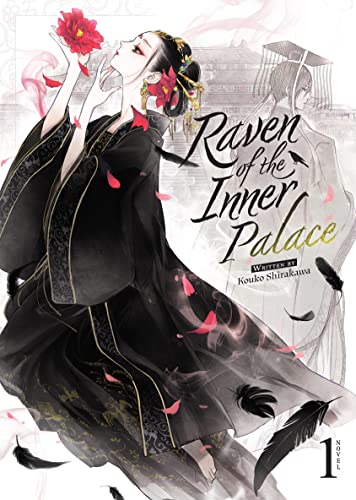
Raven of the Inner Palace, Vol. 1

January 16, 2023 by Sean Gaffney

By Kouko Shirakawa and Ayuko. Released in Japan as “Kōkyū no Karasu” by Shueisha Orange Bunko. Released in North America by Airship. Translated by Amelia Mason.

Sometimes people just want variations on a theme. Looks at why isekai is so popular, despite the fact that everyone you talk to seemingly hates it. Heck, look at Villainess novels, where I feel like Holt from Brooklyn Nine-Nine. “I’ve read this story before.” “AND YOU’LL READ IT AGAIN!” And now we have the mini-genre of “intrigue in the inner court palace of the Emperor and his harem”, where I’ve already got The Apothecary Diaries (mystery series with a side of toxic romance), Culinary Chronicles of the Court Flower (foodie shoujo with doomed romance very much not as the side), and Though I Am An Inept Villainess (bodyswap AND villainess AND romance AND intrigue). And now we have Raven of the Inner Palace, which has mystery, and also romance, but most importantly it has ghosts. So many ghosts, they’re honestly choking the Inner Palace. Fortunately, we have a young woman who can help them move on. Somewhat less fortunately, she’s stuck there for the rest of her life, because she is Special ™.

Jusetsu is the Raven Consort, who, unlike the other Consorts in the Inner Palace, does not spend the nights “having conversations” with the Emperor. Instead, she helps others in the court to find lost items, or to remove a curse with her mystical powers. Now the Emperor, who is relatively new to power after overthrowing the Dowager Queen (who is ludicrously evil in an almost laughable way, despite the fact that we never see her) is here to see Jusetsu to see if she can identify who is the owner of a jade earring dropped on the ground. From here, and despite Jusetsu being standoffish and prickly and the Emperor seemingly being stoic, the two grow closer, and each learns the backstory of the other.

As with a lot of mystery series, I don’t want to give the game away by talking about the plot too much. I do like Jusetsu, who different enough from the other “court intrigue” heroines to be her own person. She turns out to be socially awkward as hell, partly from her tragic past, but mostly, it’s inferred, from the training she got to be the next Raven Consot, which consisted of emphasizing that she should have a minimum of human contacts. That goes out the window in the first book. Not only is the Emperor clearly starting to fall for her (she doesn’t notice) and she gains a court lady and a second servant. This is clearly a good thing for her character development, but I suspect a lot of folks are not going to like her straying out of her lane in the future. It does help that she’s very good at the supernatural part, which is the other half of this book. The ghosts are more sad than terrifying, but I’m sure we’ll have even more of them in future.

This also got an anime in the fall (which, be warned, used the Chinese names rather than the Japanese ones as this translation does). It succeeds for the same reason the other three series I mentioned do. Not because of the genre, or because of the mysteries. It’s because they’re REALLY well written. I wasn’t planning to read more. It’s now definitely one I’ll read more of.

Filed Under: raven of the inner palace, REVIEWS

Kuma Kuma Kuma Bear, Vol. 13

January 15, 2023 by Sean Gaffney

By Kumanano and 029. Released in Japan by PASH! Books. Released in North America by Seven Seas. Translated by Jan Cash & Vincent Castaneda. Adapted by M.B. Hare.

Generally speaking, long-running light novels tend to come in two different varieties of some sort. The first is “there is a definite end goal in mind, but we can drag this on forever if it stays popular”. This applies to most romantic comedies where the end point is “he chooses girl X”, or to fantasy books which have a save the world sort of goal, where the world getting saved is the endpoint. The others are the ones where we create a world or a situation and then just write infinite variations on the situation, with no expected end beyond “and the adventure continues…” Kuma Kuma Kuma Bear is definitely the second kind of book. No one expects Yuna’s past in Japan to ever be relevant again beyond going to this fantasy world’s Japan analogue. Likewise, this isn’t the kind of book where it’s going to pair Yuna romantically with anyone – not seriously, anyway. Unfortunately, this does mean that after a while it’s hard to find a real reason to carry on. Yuna’s not going to change.

The ten-year-old girl showing off her legs on the front cover (sigh…) is Karina, the daughter of the local lord of Dezelt, where Yuna has been sent. The water gem that stops their land becoming a sand-infested monster home has cracked and needs to be replaced, and fortunately Yuna’s water gem she got from killing the Kraken is just what they need. Unfortunately, for magic reasons, only the lord’s wife (who is pregnant) or Karina can guide folks through the labyrinthine pyramid to get to where the gem needs to go… and Karina dropped the magic map in the labyrinth. Karina, wracked with guilt, has been trying to find a group of adventurers who will help her find the map again, but you’d need someone super powerful who has a soft spot for ten-year-old girls, and where in this series can we find anyone like that?

Forgive me for saying things I have said about ten times over the course of this series, but Yuna seems to have a tremendous issue with accepting praise. To the point where even casual people who have just met her see that it’s a problem. It’s pathological by this point, and even when she’s forced to accept rewards for saving the entire town, she still finds a way to quietly only take half of it. It’s frustrating to me because, as I hinted above, I don’t think this is going anywhere. The author has mostly dropped the darker aspects of the series as they’ve gone along, so we’re unlikely to hear more about Yuna’s past. And I don’t think we’re reaching any sort of crisis point where Yuna has a breakdown or admits that she has to change herself. The only way I can see that happening would be if it comes from Fina, but Fina’s not in this book. Instead we have a Finalike, who is nice enough but frankly is another earnest ten-year-old girl with a crush on Yuna to stack onto the pile of earnest ten-year-old girls with a crush on Yuna.

I am aware that I’m not the audience for this series, and that it’s squarely in the “Cute Girls Doing OP Things” genre. But man, don’t use psychological trauma as your heroine’s one character trait.

Filed Under: kuma kuma kuma bear, REVIEWS

I’m in Love with the Villainess: She’s So Cheeky for a Commoner, Vol. 1

January 14, 2023 by Sean Gaffney

By Inori and Hanagata. Released in Japan as “Heimin no Kuse ni Namaikina!” by GL Bunko. Released in North America by Seven Seas. Translated by Kevin Ishizaka. Adapted by Nibedita Sen.

I’ll admit I was surprised when I heard that this spinoff was being written. After five volumes of the main series, with so much that’s possible to explore, do we really need to have a retelling of events of the first book from Claire’s perspective? Fortunately, the answer is yes, we do need to have this. When I reviewed Book Two of the main series I talked about how much I loved Claire’s character development even though so much of it had to be filtered through Rae’s POV. Now we’re able to see that first hand. That said, this is still an adaptation of the events in the first book, meaning that much of the character development is still to come. We do see Claire’s inherent goodness and kindness, but we also see a lot of arrogance and ignorance of the class system that has propped up families like hers. Over the course of the book, Claire starts to get better about noticing that other people – even her good friends – have differing opinions.

Claire Francois is enjoying her life as one of the elites in the Royal Academy… at least until one day a commoner starts pestering her, and harassing her, and confessing love to her. It’s maddening, of course. Especially when said commoner ends up getting hired as Claire’s second maid! That said, she’s just a commoner, so a spot of mild bullying should do the trick and drive her away. Unfortunately, Claire’s friends Pepi and Loretta have ideas for bullying that are far more sadistic than what the essentially good-hearted Claire has in mind, so she gets nowhere. Over the course of the book, Claire is forced to confront her preconceptions about her friends, her roommate Catherine, lesbians, and commoners. Then just when she thinks she has a handle on things, she’s faced with the worst kind of betrayal.

As you may have noticed, this is not just a straight “write the same scenes from the opposite POV” side story. For one thing, Claire’s friends, known to the reader (and to Rae) as “Those Two Girls” get actual things to do and times where they disagree with Claire… though they also rely on her a great deal. We also get a brand new character, Claire’s roommate Catherine. Catherine is deeply connected to Claire’s traumatic past, and is also the daughter of a family that rivals hers, though Catherine’s status as part of that family is less than ideal. Of all the new things introduced in this book, she’s the most interesting to me, and I have a sneaking fear she won’t survive the series. She may have an agenda of her own for all I know, but her main role in this book is to give Claire good advice and try to get her to open her horizons… though she ends up rather startled when Claire is able to return the favor later on by forcing Catherine to leave her gilded cage.

As for Rae herself, Claire consistently refers to her as “the commoner” in her narrative voice throughout this book. I expect that will change in future volumes. If you enjoyed the main series, there’s absolutely no reason not to get this as well.

Filed Under: i'm in love with the villainess, REVIEWS

Slayers: The Long Road Home

January 12, 2023 by Sean Gaffney

By Hajime Kanzaka and Rui Araizumi. Released in Japan by Fujimi Fantasia Bunko. Released in North America by J-Novel Club. Translated by Elizabeth Ellis.

After the previous volume, which was essentially an anniversary special, Kanzaka seems to have remembered how much fun it was to write Lina and Gourry, and so has returned to Slayers once more to kickstart a new arc. That said, he knows that he’s already used up most of the plots and fight scenes that he can in Lina’s world. There’s only so many times that you can battle a Dynast General and not have it seem dull, you know? Of course, he COULD just give in and write Lina taking Gourry to meet her family, which she’s been trying to do for the last couple of books, but that would involve writing her family, and we already know that characters like Lina’s older sister Luna work better as an unseen threat. As such, this volume DOES start with a battle with a Dynast general… who promptly gives in because Lina’s reputation is Just. That. Bad. Unfortunately, when they emerge from the fight they’re not in Kansas… erm, Zephilia anymore, but in a completely different place.

As it turns out, Lina and Gourry hail from the demon lord side of the continent. There’s also a dragon side of the continent, separated by a strong barrier to keep the two sides from meeting. And now Lina and Gourry, thanks to that annoying Dynast general, are in Ceifeed lands, with no idea how to return home. They spend most of the start of the book trying to decipher the different writing system, figure out the money conversion, and slowly making their way towards a real city. Along the way they run into a spunky young girl, Ran, who may act like a hyperactive tween but also can use wind magic and has an incredibly powerful staff. Unfortunately, as they move along, it becomeds apparent that Lina’s type of sorcery is far more powerful than these foiks are used to… and they want it for themselves.

The main issue I have with this book is that it’s a setup for more books down the line. Ran is a fun character, but we learn next to nothing about her, nor do we know anything about her motivation for traveling with Lina and Gourry. The villains in this book (leaving aside the city guard guys, who are more mooks than anything else) tend to blend together like most minor Slayers villains do, but they certainly show a callous disregard for human life or property… something that becomes more understandable when you realize who they are. Other than that, this is a perfectly decent Slayers book. Lina and Gourry are always fun, and we get to see Lina trying to get past her own reputation even in a place where it doesn’t precede her. The fights are action packed, and if they ever animate Slayers again might be fun to see. It will be interesting to see where this arc goes.

Unfortunately, this book came out in 2019, and there’s no Vol. 18 on the horizon, so we may never see how the arc goes. Which is the most frustrating part of this book, to be honest.

Filed Under: REVIEWS, slayers

  • « Go to Previous Page
  • Page 1
  • Interim pages omitted …
  • Page 65
  • Page 66
  • Page 67
  • Page 68
  • Page 69
  • Interim pages omitted …
  • Page 346
  • Go to Next Page »
 | Log in
Copyright © 2010 Manga Bookshelf | Powered by WordPress & the Genesis Framework