• Skip to primary navigation
  • Skip to main content
  • Skip to primary sidebar
  • Home
  • About Us
    • Privacy Policy
    • Comment Policy
    • Disclosures & Disclaimers
  • Resources
    • Links, Essays & Articles
    • Fandomology!
    • CLAMP Directory
    • BlogRoll
  • Features & Columns
    • 3 Things Thursday
    • Adventures in the Key of Shoujo
    • Bit & Blips (game reviews)
    • BL BOOKRACK
    • Bookshelf Briefs
    • Bringing the Drama
    • Comic Conversion
    • Fanservice Friday
    • Going Digital
    • It Came From the Sinosphere
    • License This!
    • Magazine no Mori
    • My Week in Manga
    • OFF THE SHELF
    • Not By Manga Alone
    • PICK OF THE WEEK
    • Subtitles & Sensibility
    • Weekly Shonen Jump Recaps
  • Manga Moveable Feast
    • MMF Full Archive
    • Yun Kouga
    • CLAMP
    • Shojo Beat
    • Osamu Tezuka
    • Sailor Moon
    • Fruits Basket
    • Takehiko Inoue
    • Wild Adapter
    • One Piece
    • After School Nightmare
    • Karakuri Odette
    • Paradise Kiss
    • The Color Trilogy
    • To Terra…
    • Sexy Voice & Robo
  • Browse by Author
    • Sean Gaffney
    • Anna Neatrour
    • Michelle Smith
    • Katherine Dacey
    • MJ
    • Brigid Alverson
    • Travis Anderson
    • Phillip Anthony
    • Derek Bown
    • Jaci Dahlvang
    • Angela Eastman
    • Erica Friedman
    • Sara K.
    • Megan Purdy
    • Emily Snodgrass
    • Nancy Thistlethwaite
    • Eva Volin
    • David Welsh
  • MB Blogs
    • A Case Suitable For Treatment
    • Experiments in Manga
    • MangaBlog
    • The Manga Critic
    • Manga Report
    • Soliloquy in Blue
    • Manga Curmudgeon (archive)

Manga Bookshelf

Discussion, Resources, Roundtables, & Reviews

Reviews

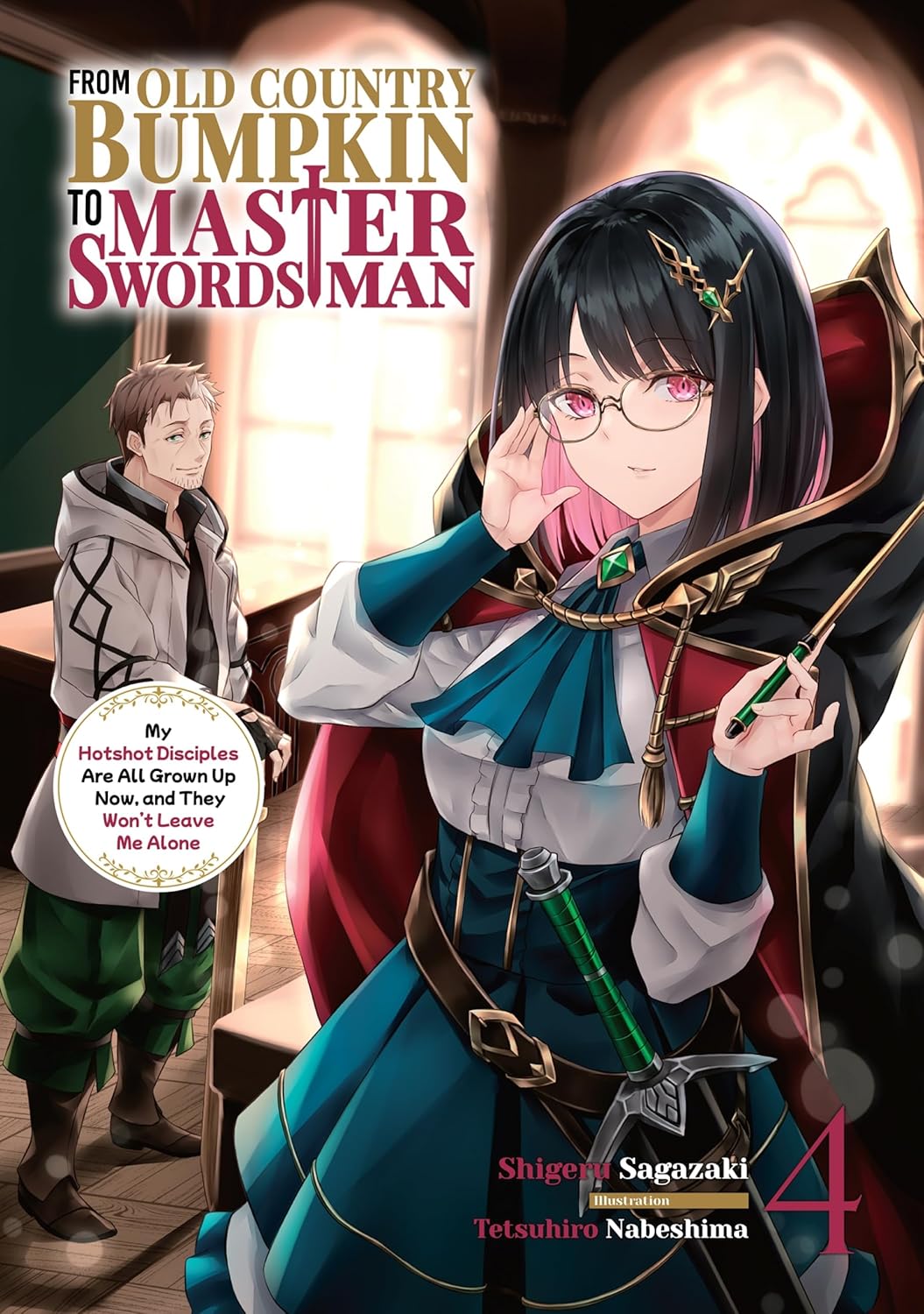
From Old Country Bumpkin to Master Swordsman: My Hotshot Disciples Are All Grown Up Now, and They Won’t Leave Me Alone, Vol. 4

November 8, 2024 by Sean Gaffney

By Shigeru Sagazaki and Tetsuhiro Nabeshima. Released in Japan as “Katainaka no Ossan, Kensei ni Naru: Tada no Inaka no Kenjutsu Shihan Datta noni, Taisei Shita Deshitachi ga Ore o Hōttekurenai Ken” by SQEX Novels. Released in North America by J-Novel Club. Translated by Hikoki.

What is the audience for this series? Honestly, it’s primarily “people who just like to read light novels”, followed by “people who are curious if the series will ever end with him choosing a girl or will it go poly’. That said, I wonder if there are actually any kendo practitioners who might be reading this, because a lot of this 4th volume seems to be written to those students, telling them not to forget the basics. Well, and also reminding muscleheads trying to teach newcomers that “do everything I did without knowing the reason behind it” is a great way to be a terrible teacher. But just maybe the audience for this series is guys who are Beryl’s age who just like to fantasize about still being able to do all the cool athletic things they could do when they were young. Because once again, Beryl is awesome.
After the events of the last book, Beryl is once again left with some free time, and so Lucy asks him to drop by the magic academy to look at the sword magic course taught by his old student Ficelle. Unfortunately, she’s apparently not the best teacher, so Beryl is asked to come by to see if he can help. Since Mewi is also in this class, Beryl agrees, and finds that Ficelle’s teaching is far to spartan and hardcore. Trying to teach the five kids in the class a little less evilly, while offering advice and words of praise, Beryl not only earns the love of the students but also reminds Ficelle of what she was like when she was a student herself. Unfortunately, not all the faculty is happy to see Beryl, and he’s warned to NEVER GO IN THE BASEMENT. Take a wild guess what the climax of the book is.

I have to admit, this is a lot more meandering than the previous books. You get the sense the author realized that Ficelle is the only former student who they never really circled round and gave more depth, so they wrote a book to fix that. Unfortunately, Ficelle is not only a meathead but a stoic meathead, so it can sometimes be hard to get the character development she desperately needs. The best moment was probably the pat on the head. There’s also a group of students who have “spinoff volume” written all over them, especially the ludicrously genki Cindy, who reeks of the protagonist of some other series. The big dramatic climax of the book is not that great, as it barely gets any setup besides that one annoying teacher. I was, I admit, amused by Beryl achieving the impossible without actually knowing it. Someone needs to get him together with the star of Der Werwolf and have them self-deprecate rap battle.

The next volume’s cover suggests it will be for Yotsuba fans… erm, Curuni, I guess that’s her name. And not Yotsuba from Quintuplets. (looks at Vol. 5 cover art) Christ, even the ribbon is the same, only blue. In any case, if you like swordfighting, old men, and no romantic resolution, you’d like this.
Filed Under: from old country bumpkin to master swordsman, REVIEWS

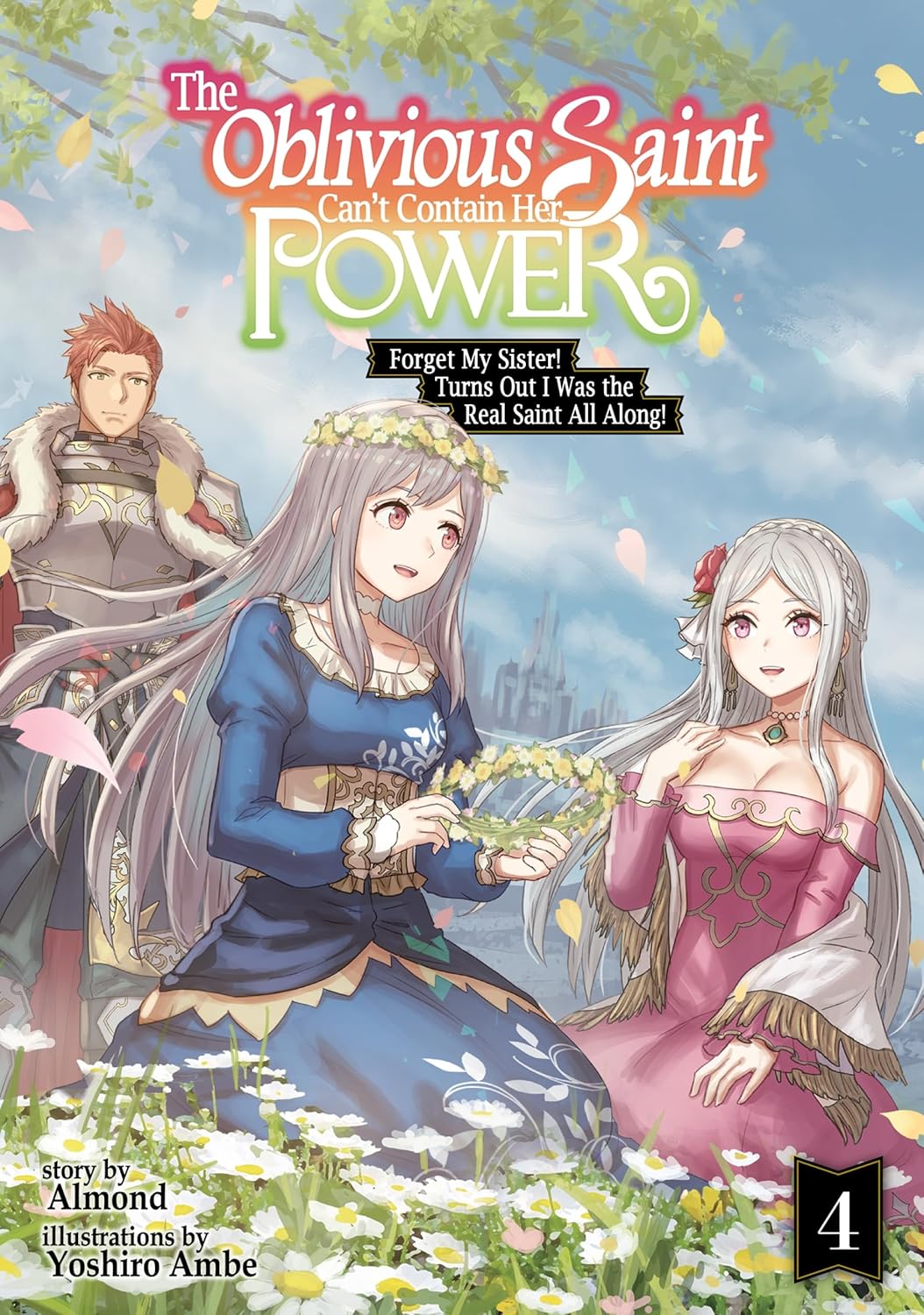
The Oblivious Saint Can’t Contain Her Power: Forget My Sister! Turns Out I Was the Real Saint All Along!, Vol. 4

November 7, 2024 by Sean Gaffney

By Almond and Yoshiro Ambe. Released in Japan as “Mujikaku Seijo wa Kyō mo Muishiki ni Chikara o Tare Nagasu: Imadai no Seijo wa Anede wa Naku, Imōto no Watashi Datta Mitai Desu” by Earth Star Luna. Released in North America by J-Novel Heart. Translated by Dawson Chen.

Every volume of this series has me being fairly ambivalent about it, so it feels very appropriate that, when I read the afterword to this 4th and final volume, my first thought was “yeah, you should have gone with your initial instinct, it would have felt far more real and in character”. But I suppose it wouldn’t be Oblivious Saint if it wasn’t hitting all the really obvious beats. And thus Flora, who is really fascinating in the first part of the book as we see her literally consume herself with desperate rage to the point and death, ends up suddenly realizing how horrible she’s been her whole life after realizing how much Carolina looks like their late mother. It’s a head-tilting swerve, and is 100% unironic and, if I’m being honest, 100% out of character. But I guess the author’s right. Ending dark would subvert the very basic story being told.

It’s time for the big Saint Competition final, and there are twenty-three candidates competing. That said, the only ones the reader has to worry about are Carolina and Flora. Carolina is told to stop holding back, and she certainly does so, wiping the floor with everyone else. Meanwhile, Flora is also doing very well, but it’s clearly killing her – literally. She ends up having to have her life saved by her sister, the ultimate humiliation. Anyway, in a plot point so obvious I’m not worried about spoiling, Carolina wins and is now the Saint of all, with full approval of the church. Hell, she even grows SIX angel wings when she goes all out to heal Flora. Now she has only two things to worry about: going back to her birthplace for a festival, and trying to actually consummate her marriage.

I had anticipated that Ed and Carolina’s lack of a sex life would end up being a plot point, and I was mostly wrong – there’s no “you aren’t really married, ha ha!” twist, and Gilbert’s obvious love for Carolina is dealt with (surprise) in a very straightforward and earnest way. That said, the best part of the book is Ed confessing his worries to Teodore – that he is so aflame with passion that he will only end up hurting his new bride with his fiery, violent lovemaking. To which Teodore, rightly, calls Ed a massive coward and says that all his worries are complete and total bullshit. Teodore’s sarcastic, biting remarks have been a high point of each book, so I was pleased to see him point out that Carolina has obviously also been wanting to have sex with him and, if Ed keeps this up, may simply think he doesn’t love her like that at all. Rest assured, by the end of the book they have done the deed, and Carolina is fine – in fact, she worries he was so gentle HE wasn’t satisfied.

In the end, this was a bit too on-the-nose for me, and I sort of wish Flora got the unhappy ending she longed for. There are better saint books.

Filed Under: oblivious saint can't contain her power, REVIEWS

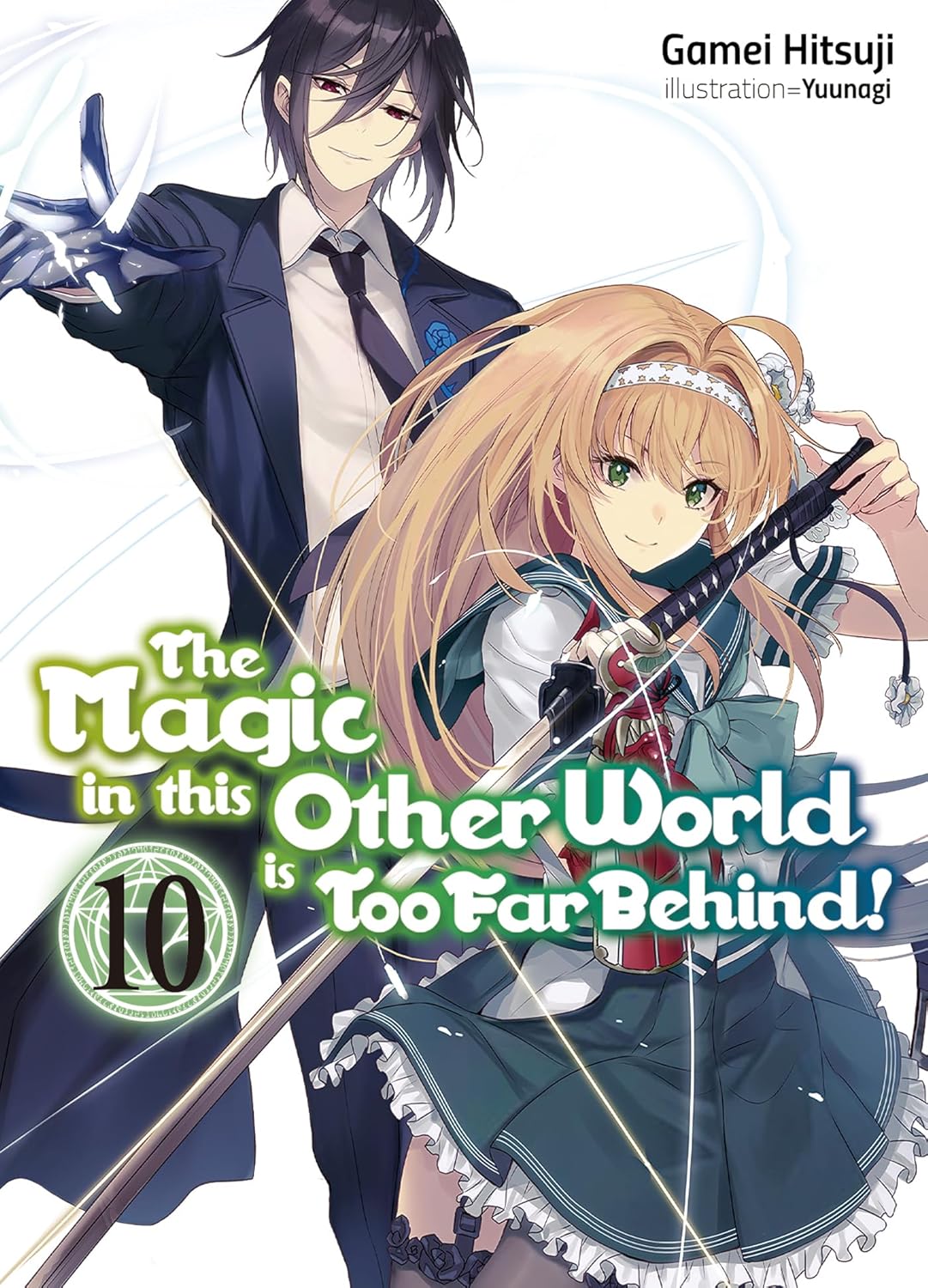
The Magic in This Other World Is Too Far Behind!, Vol. 10

November 6, 2024 by Sean Gaffney

By Gamei Hitsuji and Yunagi. Released in Japan as “Isekai Mahou wa Okureteru!” by Overlap Bunko. Released in North America digitally by J-Novel Club. Translated by Hikoki.

First of all, let’s get rid of that elephant in the room. The 11th volume is, as of this writing, not out in Japan yet. I really hope there is not a 5-year-gap between books 10 and 11 the way there was between Books 9 and 10, thank you very much, if only as I had to try to remember things I had long since forgotten when I assumed this series had gone the way of, say, Altina the Sword Princess. Secondly, I apologize to this book for having to read it today, when I was, for reasons I won’t get into, a bit distracted. That said, in the end we are here to see Suimei do cool magic things, and we definitely get that here – at least in the second half. The book is basically a ‘darkest before the dawn’ sort of book, and the first half or so focuses on Reiji, who feels his own hero power is Too Far Behind, and is prepared to possibly turn evil in order to solve the issue.

Suimei and his party are still in Japan as this book starts, which is unfortunate, as the demons have chosen this moment to attack… supposedly. It’s a somewhat puzzling, half-assed attack, as if their real goal is something else – much to the frustration of one of the demon generals. Unfortunately, with only one mage, a girl from Japan who’s new to the profession, actually present, the battle is not going well, especially as there are new artificially created demons that are sort of Noumu from My Hero Academia, only more insectoid. Reiji, without Suimei there to back him up/save his ass, is feeling powerless and pathetic, and unfortunately the power within him takes this time to tell him to beg for more power no matter what. The “no matter what” being a corruption that starts to happen almost immediately.

I feel for Reiji, but I will not deny that once Suimei returns to the story I was far more invested in actually reading it. I suspect we’ll be getting an “I know you’re still in there somewhere, fight!” moment for our hero soon. He and Suimei do share one very obvious trait, though, which is their total inability to see exactly how many young women want them. The scene in the baths was easily the most “light novel” in the volume, and honestly after the darkness of the previous 3/4 of the volume it felt like a breath of fresh air despite having an “oh no I fell and now your face is in my boobs” moment. The other highlight is the climax of the book, which helps to show off Suimei’s two superpowers, which are being incredibly overpowered and also being an incredible dick. His taunting of the demon general was hysterical, and, again, helped to take the edge of an “is our protagonist dead for real” scene even though we knew the answer was no.

So yeah, this was good. Was it worth the wait? Nothing is worth that wait. Hopefully the next one comes sooner.

Filed Under: magic in this other world is too far behind!, REVIEWS

The Dorky NPC Mercenary Knows His Place, Vol. 1

November 5, 2024 by Sean Gaffney

By Toryuu and hamm. Released in Japan as “Kimo Ota Mob Yōhei wa, Mi no Hodo o Wakimaeru” by Overlap Novels. Released in North America by J-Novel Club. Translated by Josh DM.

Sometimes you don’t need everything to be new. Sure, we love it when there’s a groundbreaking work that creates a new template going forward, but sometimes all you need is a different ingredient to make everything not quite stay the same. There have been other light novels that are set in space, of course, but those are irrelevant to me as I don’t read those. I did give this a try, though, as part of my “every once in a while I’ll try something I wouldn’t normally read” pick. And it’s good. Not great, not something I’d recommend. But it reads easily, the main characters are likeable (they may be the only likeable characters in this fictional world), and the fact that it’s in space helps to cover up the fact that this is basically a standard fantasy guild adventurer book, only with spaceships and lasers rather than dungeons and monsters. And then there’s the hero, who… well, despite what he says, we’ve seen his type before.

John Ouzos is a mercenary for hire, doing such jobs as security for a repair job, trying to stamp out space pirates, and occasionally getting involved in a war between rival nobles. He tends to stay out of flashy situations, do his job, and not get killed. He is a commoner, and knows that in this world that is trying to become more equal but isn’t yet, this is just the right thing for him to do. Unfortunately, not everyone agrees. Another mercenary pilot is furious that he’s hiding his true talents and being “lazy”. A sentient spaceship is determined to get him to pilot her so that she can be rid of her current immature pilot. And his old classmate is now a famous professional racer, and wants him to join her team. They all know what he won’t admit – he’s one of the very best.

Again, this hits its beats pretty well. As you can tell from the cover, it has a thing for breasts (and, as future covers will show, butts as well), but honestly I’ve seen worse. There was a very odd paragraph describing two arrogant noble siblings as “anti-men feminists” that made me growl a bit, but it went away almost as fast and the POV character was not to be trusted either. And of course, if you don’t like the sort of protagonist who will do anything to avoid being part of an exciting story, this isn’t for you by definition. But I liked how, the more you get to know the world John lives in (mostly through his endless exposition, which wasn’t too boring so I’ll let it slide), you realize that his plan to stay unnoticed is pretty smart. That said, even in his past he tended to get into death-defying situations, and that hasn’t changed. He may think he’s an NPC, and he’s certainly surrounded by evil nobles, but the hot girls around him know his true value.

Yeah, that’s right, it really is a stock light novel, but in space. I expect more harem next time. But till then, if you want to enjoy a standard LN that doesn’t require you to know how to cast from hit points, this is good.

Filed Under: dorky npc mercenary knows his place, REVIEWS

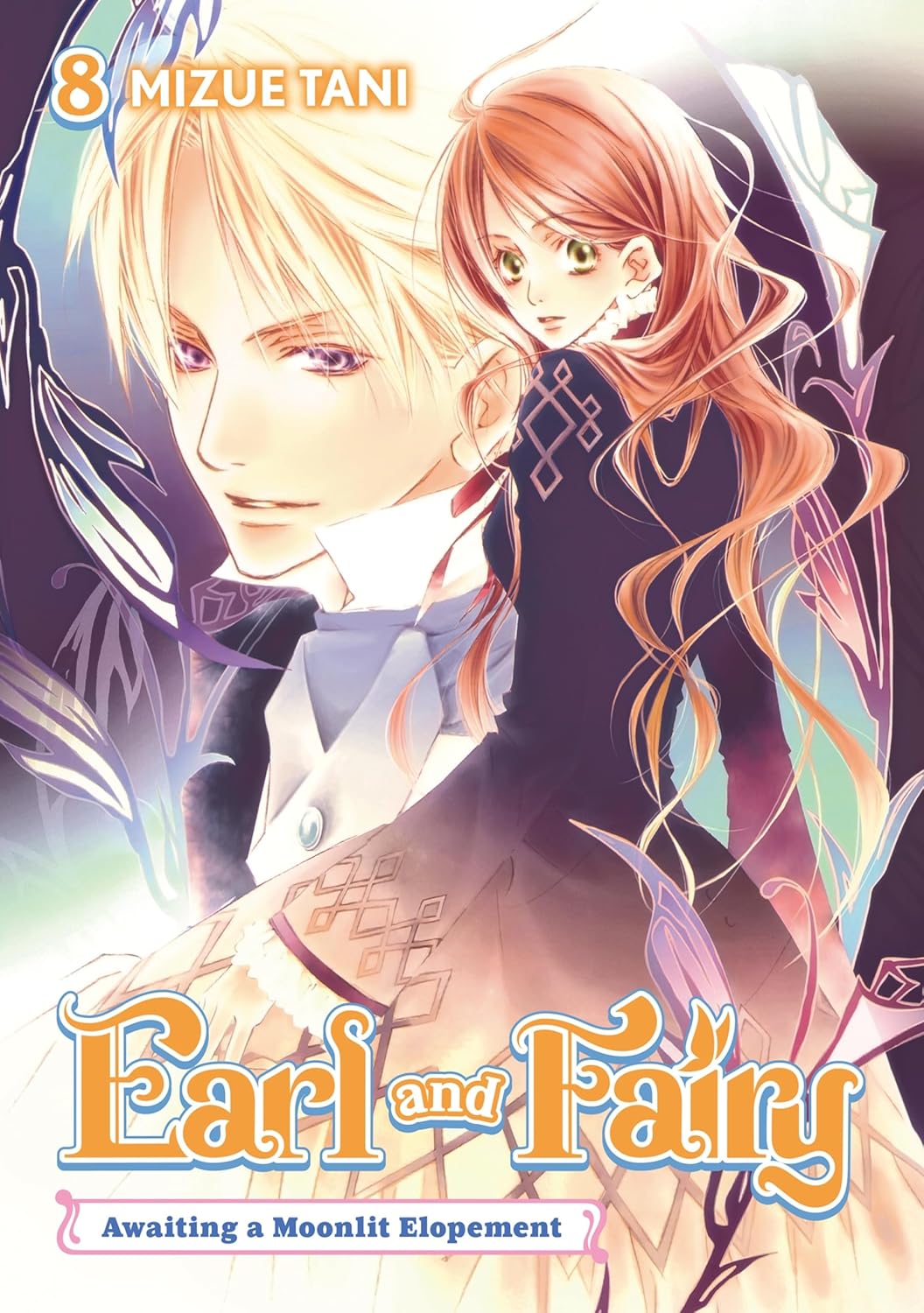
Earl and Fairy: Awaiting a Moonlit Elopement

November 4, 2024 by Sean Gaffney

By Mizue Tani and Asako Takaboshi. Released in Japan as “Hakushaku to Yōsei” by Shueisha Cobalt Bunko. Released in North America by J-Novel Heart. Translated by Alexandra Owen-Burns.

Sometimes I don’t read the blurbs before I start a volume, particularly if it’s a series I’ve been reading for a while. As a result, I came into this book not knowing that it was a short story volume. This is good and bad in some ways. It allows for less complicated narratives that better show off the two leads, and can also venture into other areas, such as Lydia’s pre-Edgar life. (All but the last short story were collected elsewhere, and the prologue was the first thing the author ever wrote for the series at all.) On the down side, without a big, action-packed and terrifying narrative to drive everything, we can sometimes be reminded a bit TOO much how irritatingly smug and possessive Edgar is, and how annoyingly naive and stubborn Lydia is. Fortunately, they’re only really at their worst in one of the short stories featured in this volume. So, of course, that particular story is the one that was used for the volume’s subtitle. Sigh.

There are five short stories in this book. 1) Before the events of the main series, a Lydia who’s just starting out meets a violinist plagued by a fairy, and makes a foolish decision that will need to be fixed by the man she’s trying to save. 2) We learn how Lydia first met Kelpie, as she helps to reunite Kelpie’s bookish brother with an elderly woman who romanced him in her youth; 3) Edgar takes Lydia to the opera, and they deal with a flower girl whose daisies are telling very accurate fortunes; 4) Lydia, having just read an exciting romance novel about a couple eloping, finds a young man being troubled by a lhiannan-shee, and decides to get involved despite Edgar, accurately, saying this is incredibly shady; 5) After the events of the 6th book, we see Edgar in London and Lydia in Scotland, both lonely at Christmastime.

The first three stories are all various shades of ‘pretty good’. The fourth annoyed me the most, as Lydia is even more naive than usual, which of course requires Edgar to be more possessive than usual, and they reinforce both their worst habits, especially as Lydia is still the sort of girl who will stubbornly jump off a cliff if Edgar tells her it’s a bad idea. That said, Lydia has heroine plot armor, unbeknownst to both of them, and therefore, of course, her naive ideas of romance and eloping turn out to be correct after all. The best story in the book is the final one, especially on Edgar’s side, as it shows him trying his best to try to fall for some other girl so he can let Lydia go and not involve her in his drama and failing miserably. The climax of the story, where fairy magic brings the two of them together for a brief period,. is the most romantic this series has gotten to date.

Next time we likely should get back to the main plot. Will we get Lydia firmly admitting her feelings with no backsies? That’s less likely. Will Edgar stop flirting with every single girl in London as part of his schemes? Even less likely.

Filed Under: earl and fairy, REVIEWS

How I Swapped Places with the Villainess, Beat Up Her Fiancé, and Found True Love, Vol. 1

November 3, 2024 by Sean Gaffney

By BlueBlue and Meiji Anno. Released in Japan as “Danzai Sareteiru Akuyaku Reijou to Irekawatte Konyakusha-tachi wo Buttobashitara, Dekiai ga Matteimashita” by M Novels f. Released in North America by Cross Infinite World. Translated by JCT.

There are good elements to this book, which I promise I’ll get to later. But for the most part, as I was reading this I found myself thinking ‘we’ve finally hit the era of generic villainess books’. It’s boilerplate, and most things that it does do well (such as our heroine beating up her problems) are done better in other, more famous series and also ignored for the majority of the book. It features a super evil “heroine” character, which I have grown very bored with – if you’re going to be evil, you’d better at least be as interesting as Lilia. But the most annoying part of the book may be how easy it is. Everyone immediately figures out the problem and comes up with a solution. Our main character is overpowered. And mostly it’s just her friends doing a Noel Coward play while the heroine fumes. This book suffers from being smug.

You know how this begins. Truck-kun. After our main character is killed saving a mother and child from a truck at the cost of her own life, she meets a goddess who has a deal to make for her. She was killed by accident, so can’t be reincarnated in Japan. But fortunately there’s a bad situation in another world. Alexandra Vistriano is in a time loop. She has been betrayed by her friends and fiance, exiled, and brutally murdered four times now, and it’s about to be five. Her soul is so damaged by despair that she’s at risk of being lost forever. Could the main character, who grew up learning karate and is a bit of a tomboy, step into the villainess’ place? Of course! The new Alexandra has no issue beating the crap out of everyone trying to exile and betray her. That said… when she does that, time loops AGAIN, and Alexandra has to do everything for a sixth time.

I did mention the good things. There are some plot conceits I quite liked involving the time loops, which also help explain one of the book’s biggest and most ludicrous handwaves, the amulets of protection. I also really loved Alexandra finally snapping at the end of the book and screaming at Celette for everything she’d done, expressing sheer horror and disbelief that she could possibly be so cruel and uncaring. It felt earned. That said… the rest of the book feels too easy. Since Alexandra has her past life memories, AND she now has a ton more magic power thanks to the reincarnation, this particular loop mostly consists of the heroine failing over and over again and everyone sneering at her. Also, the main love interest is, well, a jealous and obsessive stalker, and YMMV with those types – I just read one two days ago in the other October CIW debut, so was less forgiving this time around.

And of course, one more common villainess book cliche – despite wrapping up all its plotlines in the first volume, there are four more. For completists only.

Filed Under: how i swapped places with the villainess, REVIEWS

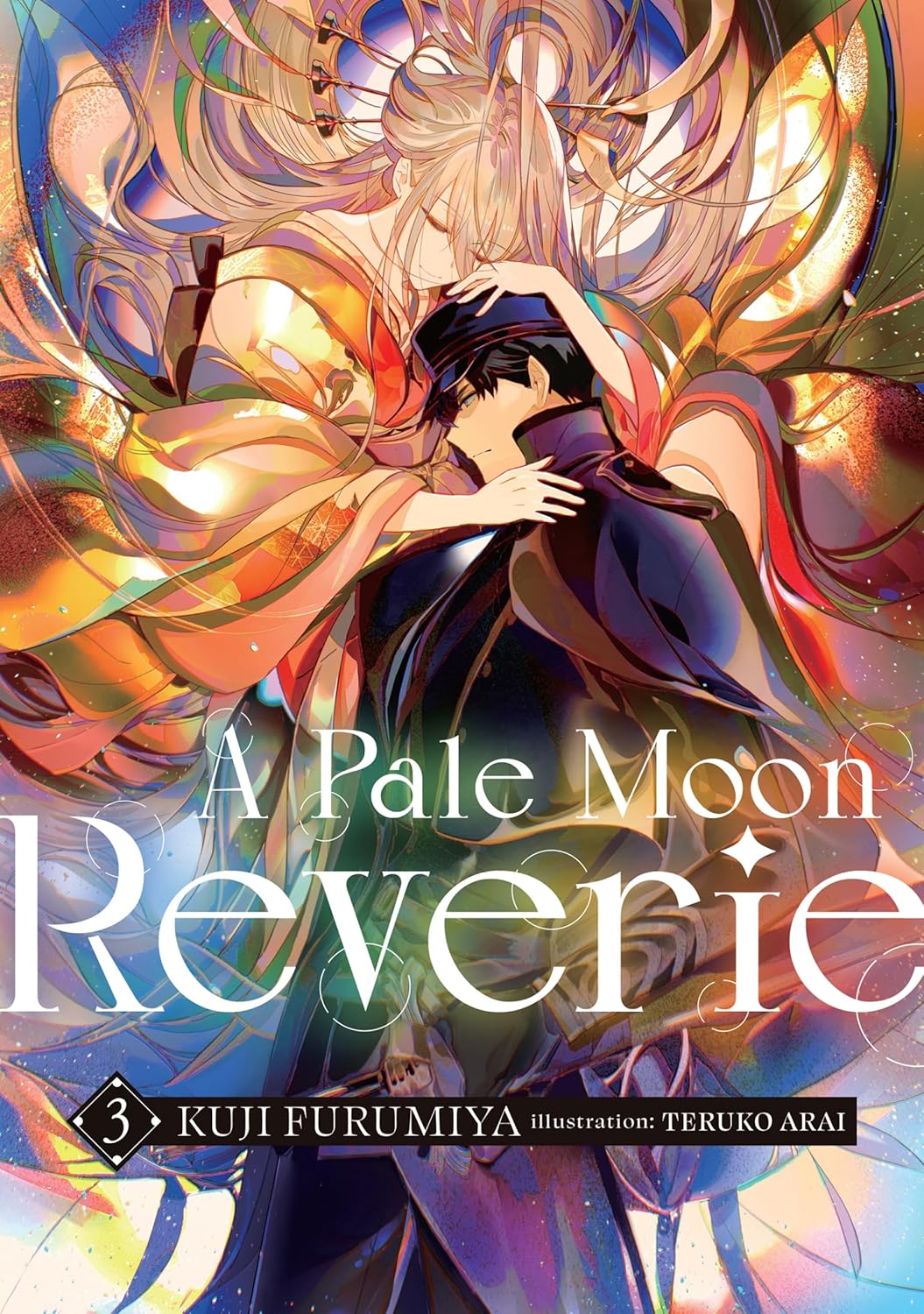
A Pale Moon Reverie, Vol. 3

November 2, 2024 by Sean Gaffney

By Kuji Furumiya and Teruko Arai. Released in Japan as “Tsuki no Shirosa o Shirite Madoromu” by DRE Novels. Released in North America by J-Novel Club. Translated by Jason Li.

The third volume of this series, as with the previous two, is very much concerned with people who are trying to control other people vs. people who want to live their lives freely, and it’s not a surprise that we’re very much on the free side. The bulk of the first two-thirds of this volume involves fighting against a god who really wants to have Sari do what he says, and is quite content to blow everything up if he can’t do that. We also have Xixu, hemmed in by his royal blood and his diligence to duty, who needs to be almost killed and possessed himself before he and Sari finally agree to make the choice we’ve been waiting almost 1000 pages for them to make. Even the last third, an epilogue, features a bunch of slave traders kidnapping people, or blackmailing them into evil. At the end of the book, one open ending has an antagonist, no longer being blackmailed, simply leave the city, unsure how to be free. Sometimes control can feel safer.

There’s war in other countries, but it hasn’t quite hit Irede yet. Unfortunately, as a result of the fight she had in the last volume, Sari accidentally left behind a pool of blood for the enemy to find – which the enemy can now use to essentially create a number of brainwashed assassins. A much more down to earth problem is that there’s a new guy showing up to the Pale Moon every day, and he wants to go to bed with Sari, and he is not taking no for an answer. And of course there’s Vas, now possessed by a God and very interested in making Sari give up her humanity and making Xixu dead. It’s becoming increasingly apparent that most everything that’s been happening to date is the god’s doing. As a result, it’s probably a very good thing that, after a bit more pouting and self-deprecation, our couple are finally ready to BE a couple.

So yes, spoiling the one question that everyone who’s read the first two volumes has, they do indeed have sex. Indeed, it’s possibly the most awkward first time ever, as due to all the machinations of the plot that have been going on, it also involves some death and resurrection. Which feels very fitting in a book with so many gods going on. Xixu remains the same awkward but heroic guy he’s always been, but it’s really striking how much Sari comes alive after she’s finally chosen Xixu as her life partner. The Epilogue section in particular shows her fully in control, kicking eight kinds of ass, and freezing bad guys in ice and then shattering them to bits. She’s gotten over her worries. I also liked the plucky young royal we saw here, introduced as a theoretical threat but in reality that’s defused almost immediately and she proves to be a savvy businesswoman with a good head on her shoulders – which is good, because she gets abducted. Abductions happen a lot in this series.

Fans of Kuji Furumiya should read this, of course, but it’s also a good read for those who are sick of isekai RPG-style fantasy and want something different. It also has a lot of cool sword fights, magic battles, and giant snakes. I loved reading it. And hey, a lot less death than I was expecting!

Filed Under: a pale moon reverie, REVIEWS

The Frugal Priestess Becomes a Saint

November 1, 2024 by Sean Gaffney

By Hanami Nishine and Suzuka Oda. Released in Japan as “Isekai kara Seijo wo Yobe to Muchaburisareta Shinkan wa, Cost Performance no Tsugou de Seijo ni Naru” by Muchu Bunko Aletta. Released in North America by Cross Infinite World. Translated by Kashi Kamitoma.

I always like it when a book hits all the things I enjoy, though sometimes I have to remind myself that it’s fine because it’s fiction. The main romance here works because a) despite even the publisher labeling the Crown Prince a yandere, he’s very careful to go so far and no farther, so he gets to be extremely possessive and give chilly looks to everyone else, but around the girl he loves he’s a total soppy sweetheart. b) Fiona, our heroine, is as oblivious as a bag of things that don’t know they’re hammers, but because she’s so serious and dedicated, it’s refreshing. She lacks the ditzy quality we frequently see from this type, and it’s also very clear why she’s like this – she’s been carefully kept in a gilded cage for the last ten years. The reason for that, frankly, is not a mystery to the reader, but it is to her.

Fiona Everett is a talented priestess and aide to the pontiff. Unfortunately, the King has demanded that they summon a saint, mostly as the country next door has summoned one and he really wants to keep up with the Joneses. They already tried to summon a saint ten years ago, but it failed, and summoning one again will cost a great deal of time, manpower, and MONEY. So Fiona has an idea. Since saints traditionally have black hair, a rarity in this kingdom, and Fiona also has black hair, why doesn’t she says the spirit of the saint possessed her and she can act as a fake saint? The crown prince and the pontiff seem to go along with this pretty easily. Honestly, a bit too easily. And because Fiona is an overly serious, bookish sort, she’s decided she is the Saint of Cost Performance, balancing the books so that we see a lot more fixed bridges and a lot fewer replacement wigs.

So yeah, not to spoil too much, but Fiona actually has no memories from before she was ten years old, where she was taken in by the pontiff and also when the crown prince started doting on her. It does not take a brain surgeon to figure out the big secret everyone is covering up. The best part of the book is how the writing keeps Fiona both likeable and powerful without having to back off on her not understanding why Linus is kissing her hair, going with her wherever she goes, and having her sleep in his lap when she’s exhausted. This is played for humor, mostly in the coments from everyone around them who cannot believe she doesn’t get it, and it really is funny. Everyone calls Linus a sexual harrasser, which is true in terms of the letter of the law, I suppose, but it’s not as if Fiona ever tells him to stop either. Basically, she’s unconsciously in love with him the entire book. We also do meet another saint from a different country, who manages to be an absolute terror and makes me very happy Fiona decidedly does NOT regain her memories at the end of the book.

It’s also only one volume long, so even the series is cost-effective! If you can put up with clueless but studious heroines and handsy, possessive (but not sadistic) princes, this is a must read. Also, it has Fiona solve a problem by slapping someone in the face over and over and over again, which was glorious and I now want that in every book I read.

Filed Under: frugal priestess becomes a saint, REVIEWS

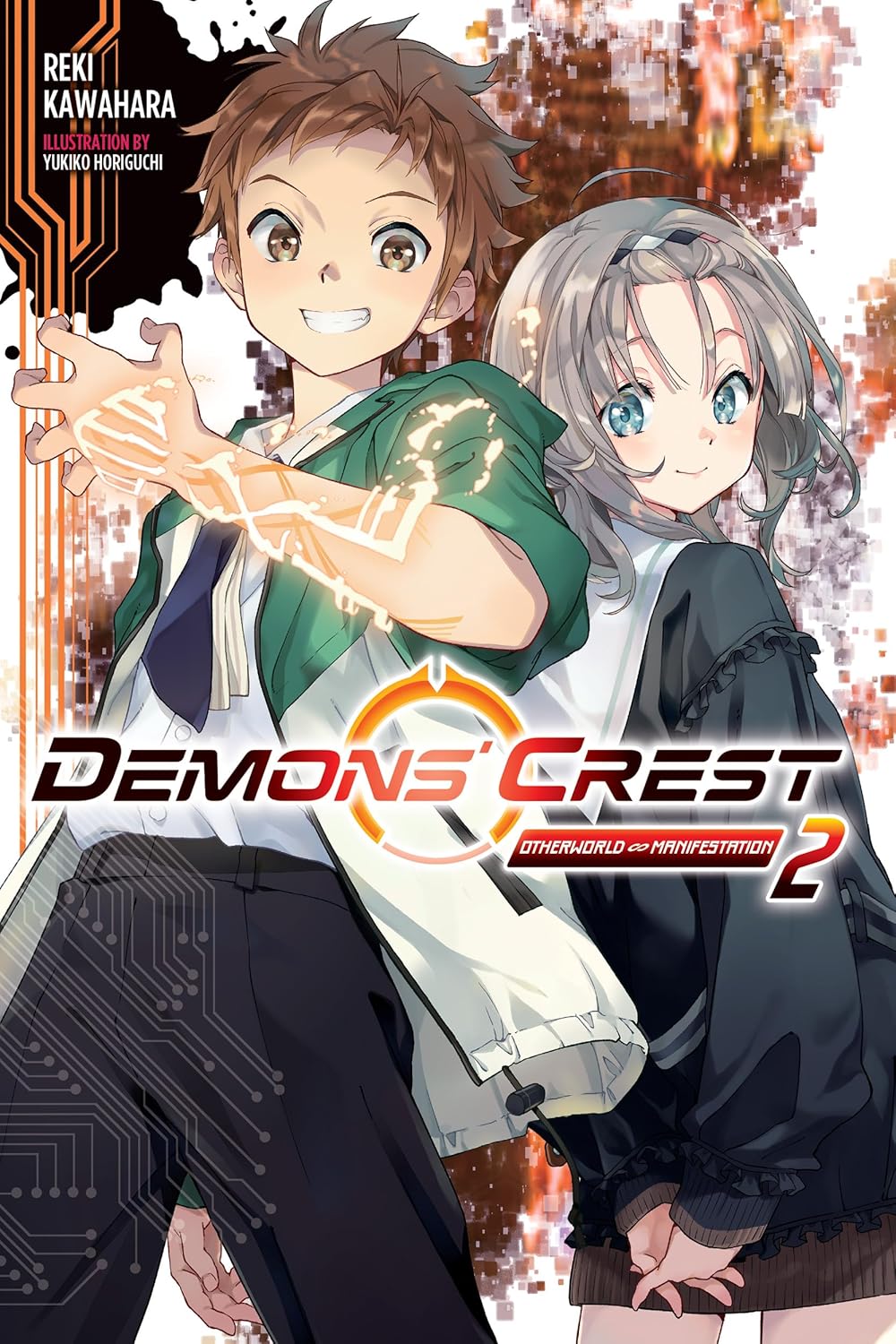
Demons’ Crest, Vol. 2

October 31, 2024 by Sean Gaffney

By Reki Kawahara and Yukiko Horiguchi. Released in Japan by Dengeki Bunko. Released in North America by Yen On. Translated by James Balzer.

I’ve mentioned before that I am not a gamer, and what this means that most of what I know about MMORPGs and the like comes from these sorts of light novels. As you can imagine, what this has mostly ended up doing is filling me with a deep desire not to game. Because man, gaming can be boring. Or at least, gaming can be boring if it’s being written by Reki Kawahara. Usually I have no issues with his action scenes, but that’s mostly as they’re being taken care of by characters I’ve known for ten years. But this is a new series that unfortunately is not really doing as many different things as I’d like (he says in the afterword that this is basically the SAO game system but with character classes added), and so, like so many, other light novels of this type, it reads like the author wants us to read their weekly gaming log. There’s a plot in this, which may possibly be intriguing. But we get less of it this time.

Sawa has a secret to tell everyone, which is that she is, in fact, possessed by a demon. Unfortunately, the demon only has a few minutes to tell them what they have to do next: go back into the game itself and find their childhood friend Nagi, who is still inside it. When they do so, they find that the game is a lot more realistic than it had been when they were just playing it for fun, and also that Nagi may in fact be trapped by one of the big bads, which requires them to essentially sneak in and perform a series of near-impossible tasks to get anywhere near Nagi. And this doesn’t even get into the fact that there are various other bad guys trying to stop them. And even if they do find Nagi and get back to reality, reality still sucks at the moment. Fortunately, they do have the help of the handsome playboy (well, for a 12-year-old) Niki.

There is a rather interesting plot way at the back of this. Sawa is not the only one possessed by a demon – in fact, the entire cast may each have a demon inside of them, relating to Solomon’s Demons, a popular thing in games. And, of course, the demons are quite different from the kids they inhabit, which could possibly lead some of them into betraying their friends. I’m definitely more interested in this than I am in Sugamo, who is still trying to do his own little Lord of the Flies and establish that he’s the best and everyone else needs to be executed (we all know that’s where he’s headed). As for the game world, when they’re wandering around a town and interacting with suddenly interesting NPCs, it’s fine. But most of it, as I said, is battles that don’t advance the plot beyond “they win after struggling”.

The third volume of this series comes out in Japan next week, so it will be a bit, and perhaps I will forget how much this bored me before it comes out. This sentence is here to jog my memory. Stick to Kawahara’s other series.

Filed Under: demons' crest, REVIEWS

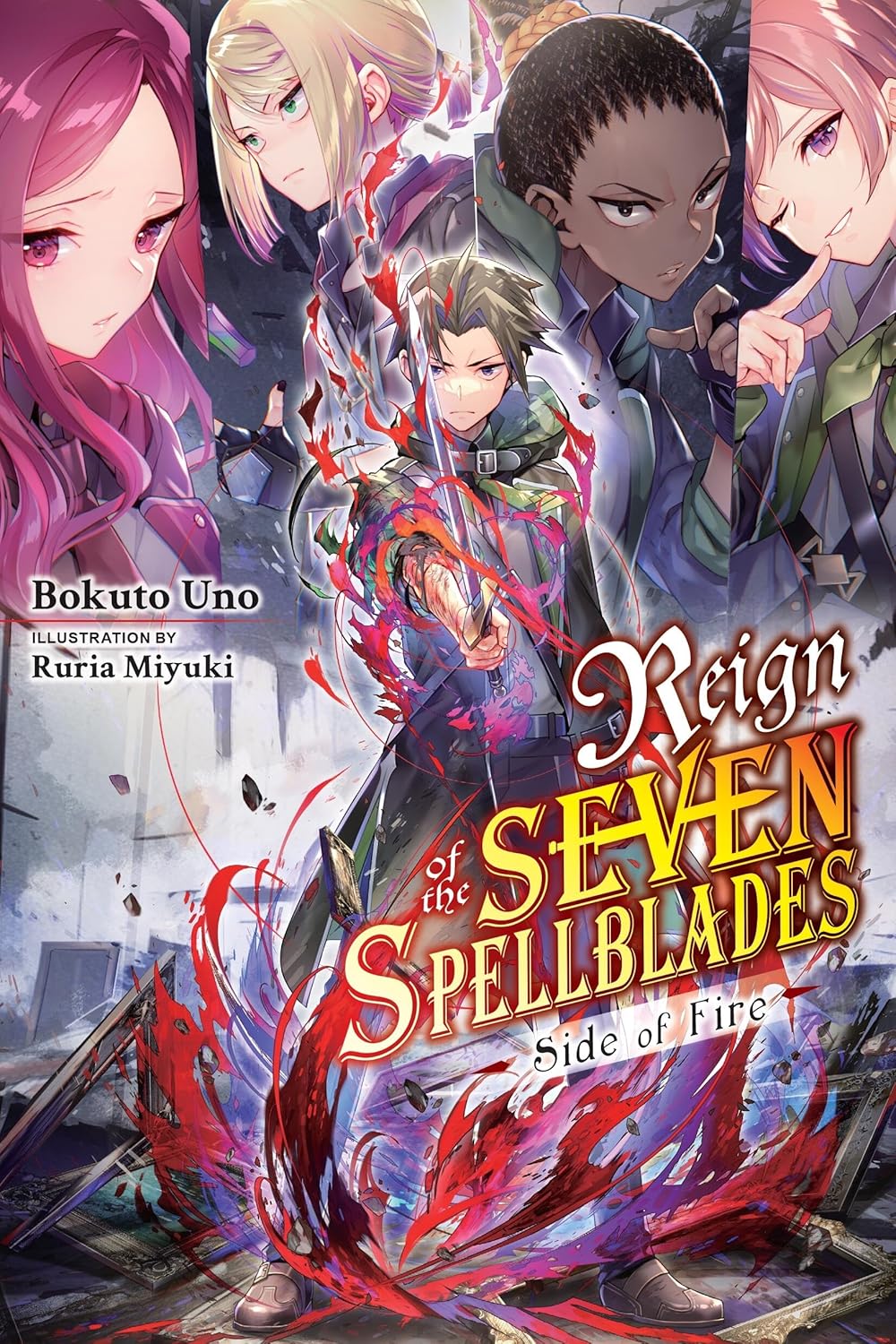
Reign of the Seven Spellblades: Side of Fire

October 30, 2024 by Sean Gaffney

By Bokuto Uno and Ruria Miyuki. Released in Japan as “Nanatsu no Maken ga Shihai suru Side of Fire – Rengoku no Ki” by Dengeki Bunko. Released in North America by Yen On. Translated by Andrew Cunningham.

This does not have a ‘1’ on the cover, and the book ends with the words “The End”. That said, I would not be remotely surprised if we get another volume of this prequel/side story. It’s a book that serves to show off some of the more popular supporting cast before the events of the main series, but it’s also there to remind us that Kimberly Academy did not begin when Nanao and Oliver arrived – and, in fact, the reason that they are able to do as well as they are is because the way was paved. It was paved by Alvin Godfrey, of course. And he has his own close-knit group of friends (though not, it has to be said, quite as close knit as our main cast), all of whom we have seen before, and some of whom are now dead. It’s also an opportunity to see the teachers as caring (to a point) educators, and not the next people Oliver has to kill.

Alvin Godfrey is having a bad time. His magic is rather pathetic, and his father resolves to disown him unless he gets into a magic academy. He proceeds to take 18 exams, and fail 17 of them. But it’s Kimberly, the most prestigious, that accepts him, as they see what he can’t – that he’s been taught wrong from an early age, and that he is, in reality, far more powerful than he’d ever expect. As we see his first and then second year, he realizes how much he hates the current student environment, and how he’s going to change it by the power of being really nice and helping people. Fortunately, he has his androgynous best friend Carlos, the always angry but also righteous Lesedi, temperamental and unhinged poison maker Tim, and abused and bullied Ophelia. Can they change the academy?

I admit I did wonder if this would take in everything we’d seen from the main books in its one volume, and thus was watching Ophelia carefully. But about halfway through I realized that it wasn’t going to end quite that far ahead, so I was pleased to have it read like… well, honestly, like the main series. Alvin and company are trained by Kevin Walker to survive in the Labyrinth, and they get help (but not too much) from Vera Miligan. And, frankly, the fact that in the main series Ophelia has become an antagonist is something that could still easily happen in the main series, given Katie’s subplot. Oliver may have his Great Cause, and I get that, but he’s not special – there are other protagonists in their own story. I also liked the climax, where we discover that sometimes you can’t assign meaning and definition to everything. It doesn’t quite say “shit happens”, but the thought is there, and it allows someone to be saved, if not to survive.

All this plus another reminder of how well-hung Leoncio is, in case you forgot which series you were reading. Fans of the books will definitely want to get this.

Filed Under: reign of the seven spellblades, REVIEWS

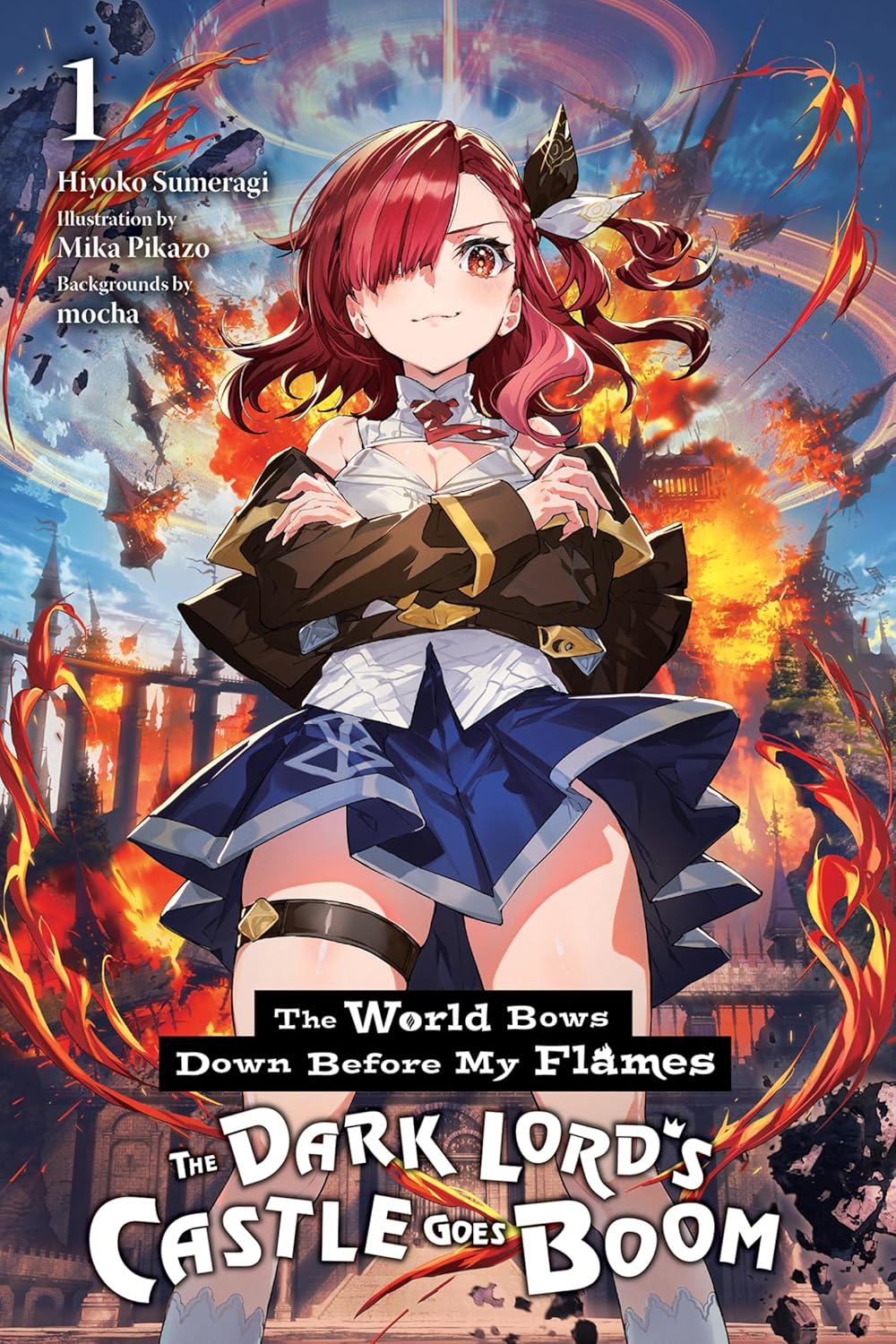
The World Bows Down Before My Flames: The Dark Lord’s Castle Goes Boom

October 29, 2024 by Sean Gaffney

By Hiyoko Sumeragi, Mika Pikazo and mocha. Released in Japan as “Waga Homura ni Hirefuse Sekai: Mao Jo, Moyashitemita” by Kadokawa Sneaker Bunko. Released in North America by Yen On. Translated by James Balzer.

This advertises itself as a comedy, and that’s certainly true. If you’re the sort who loves to see teenage girls be horrible little gremlins, then this is right up your street. There’s funny situations, amusing banter, and a lot of hypocrisy. That said, I want to emphasize that this is a dark, cynical comedy, something that will be very obvious once you hit the end of the book. The world that our… “heroines” have been reincarnated into is absolutely terrible, and by the end of it we’ve seen a giant pile of death, some of it achieved by our main cast, because when I said that the girls would be horrible little gremlins, I meant along the lines of “committing atrocities”. Towards the end it turns serious for a bit, and I must admit I wavered. I’ll read the next one, but I hope it’s funny throughout – I don’t need each volume of this series ending with pure horror.

We start with the end of the series, with our five protagonists (as you’ll discover, heroines is absolutely the wrong word) having defeated the demon lord and burned his castle to the ground. Indeed, the fire is still burning as they bicker with each other. We then flash back to see them summoned before a goddess: POV character Homura, mad scientist Saiko… erm, Psycho, katana-wielding assassin Jin, alien robot girl Proto, and human experimentation victim Tsutsumi. They’ve been summoned to defeat the demon lord and save the world they’re now in. Unfortunately, the world they’re now in is kinda crappy, two of them look like monsters so have to hide their appearance, and the one normal girl in the cast may actually be the least normal one of all.

I’m not sure if each of the books will focus on a different girl, but this one is definitely Homura’s book. For the most part, she’s a somewhat shy, normal girl who suffered a life of bullying and abuse (and be warned, her suicide in the previous world is shown). Pretty soon we figure out that “normal” not the case, and it’s not really a spoiler, since it’s both the title AND the cover art. Actually, what is a bit of a spoiler is that Homura already had her powers before she was reincarnated – which means that, well, they’re a bit overpowered and over the top. And they also seem to influence her mind, something we see near the end of the book when she uncovers her inner bad girl. Everyone in the cast is a terrible person, and it just takes till the end of the book to figure out Homura is the worst of them. Sure, they’ll save the world, but not because they want to help people – they just like to kill bad guys.

This series is not for everyone – the most horrifying thing in the book is done by Psycho, the mad scientist – but it’s certainly striking, and I can see why it won an award. I’ll try another.

Filed Under: REVIEWS, world bows down before my flames

Last Quarter Vol. 1 by Ai Yazawa

October 29, 2024 by Anna N

Last Quarter Volume 1 by Ai Yazawa

Last Quarter is an appropriately spooky manga for October, but it begins with a familiar story of angsty love between a Japanese schoolgirl and a foreigner who likes to lurk around Shibuya playing the guitar. Mizuki is struggling with a change in her family’s circumstances and becomes entranced by Adam’s music. Adam latches on to Mizuki as though she’s a life preserver, they quickly grow close. This type of self-destructive romance is done much much better by Yazawa herself in her later series, so seeing a similar story compressed into a chapter with less time to become invested in the characters made me just want to yell at Mizuki “Run Away Girl!!!” rather than hoping for a happily ever after scenario.

Last Quarter Volume 1

Mizuki’s story is cut short and Last Quarter shifts to exploring the ghost investigations of Hotaru and her classmates. Hotaru meets a mysterious ghost girl in an abandoned mansion. The girl has few memories of who she is or why she’s tied to the mansion, except she keeps playing the same song over and over and has strong memories of a long-lost love. Hotaru starts to investigate, and pulls in some of her friends, who are quite startled when they see that the ghost that only Hotaru can communicated with is capable of influencing the physical environment of the abandoned house. Hotaru nicknames her ghost Eve and they strike up a warm if somewhat disconcerting friendship.

Yazawa’s character designs are as always on-point and stylish, and it is nice being able to read earlier works of hers and compare them to Paradise Kiss and Nana. There’s a real sense of emptiness and distance as Eve continues her diminished existence in the mansion with only half-remembered feelings tying her to Earth. The dynamics in Hotaru’s friend group are engaging as they throw themselves into figuring out what happened to Mizuki/Eve, but Adam very much remains a cypher. I’ll be curious to see how the story continues to develop.

Filed Under: Manga Reviews, REVIEWS Tagged With: last quarter, viz media

Banished from the Hero’s Party, I Decided to Live a Quiet Life in the Countryside, Vol. 12

October 28, 2024 by Sean Gaffney

By Zappon and Yasumo. Released in Japan as “Shin no Nakama ja Nai to Yuusha no Party wo Oidasaretanode, Henkyou de Slow Life Surukoto ni Shimashita” by Kadokawa Sneaker Bunko. Released in North America by Yen On. Translated by Dale DeLucia.

The good news is that there’s a lot more relaxing in the countryside in this volume. Oh, don’t get me wrong, everyone still gets a chance to kick ass, and we also get the start of the plot that will presumably form the 13th and 14th volumes (I am assuming that 15, already announced to be the final volume, will be Red and Rit’s wedding). But there’s also lots of showing off exactly why Red and Ruti settled down in Zoltan, and how they aren’t alone. Not everyone in this town has been banished from the hero’s party, but it does seem to be pretty full of people who used to be in a violent, adventure filled life, and then they decided to just… stop, and come live here and do whatever the hell they want. That said, sometimes what they want is to save people and protect them, because while it’s bad to be forced to be a hero against your will, being heroic is still OK.

Yaralandra has decided she wants to build herself a modern ship. Unfortunately, there aren’t a lot of shipwrights who can do what she wants locally, so she gets everyone to join her in revisiting the ship they sank in the last book. While there, they end up seeing ANOTHER ship that is clearly on its last legs, and therein they find a princess of the Jade Empire, near death, and her plucky ninja protector. They manage to get them back to Zoltan, where the princess, Torahime, can recover. This leaves the gang with no choice but to take in the ninja girl for the next few days. That said, the ninja girl seems to lack a lot of common sense, and in many ways seems a lot more childish than you’d expect from someone protecting a princess. What’s really going on here?

The plot twist in this book is so obvious as to be visible from space, but that’s fine. The main purpose of this book is twofold: to introduce us to a fun, if somewhat annoying, new character in Habotan (who even speaks in overly polite speech just to make her extra grating), and to help Ruti realize that just because she is no longer the hero controlled by God does not mean that she can’t be a hero for someone else. There’s also a heaping helping of “sacrificing your own life to protect someone you care about may not, in fact, be the best solution” here, as this honestly is a world where everyone tends to be ludicrously self-sacrificing and we’re trying to get away from that. The last few pages are very much “building up to the final battle”, complete with an old enemy returning one last time.

That said, there’s still plenty of Red and Rit gazing softly into each other’s eyes. There may be less time for that in 13, though. Oh, and we get to see Mr. Crawly-Wawly wear tiny little spider sunglasses on top of his head.

Filed Under: banished from the hero's party, REVIEWS

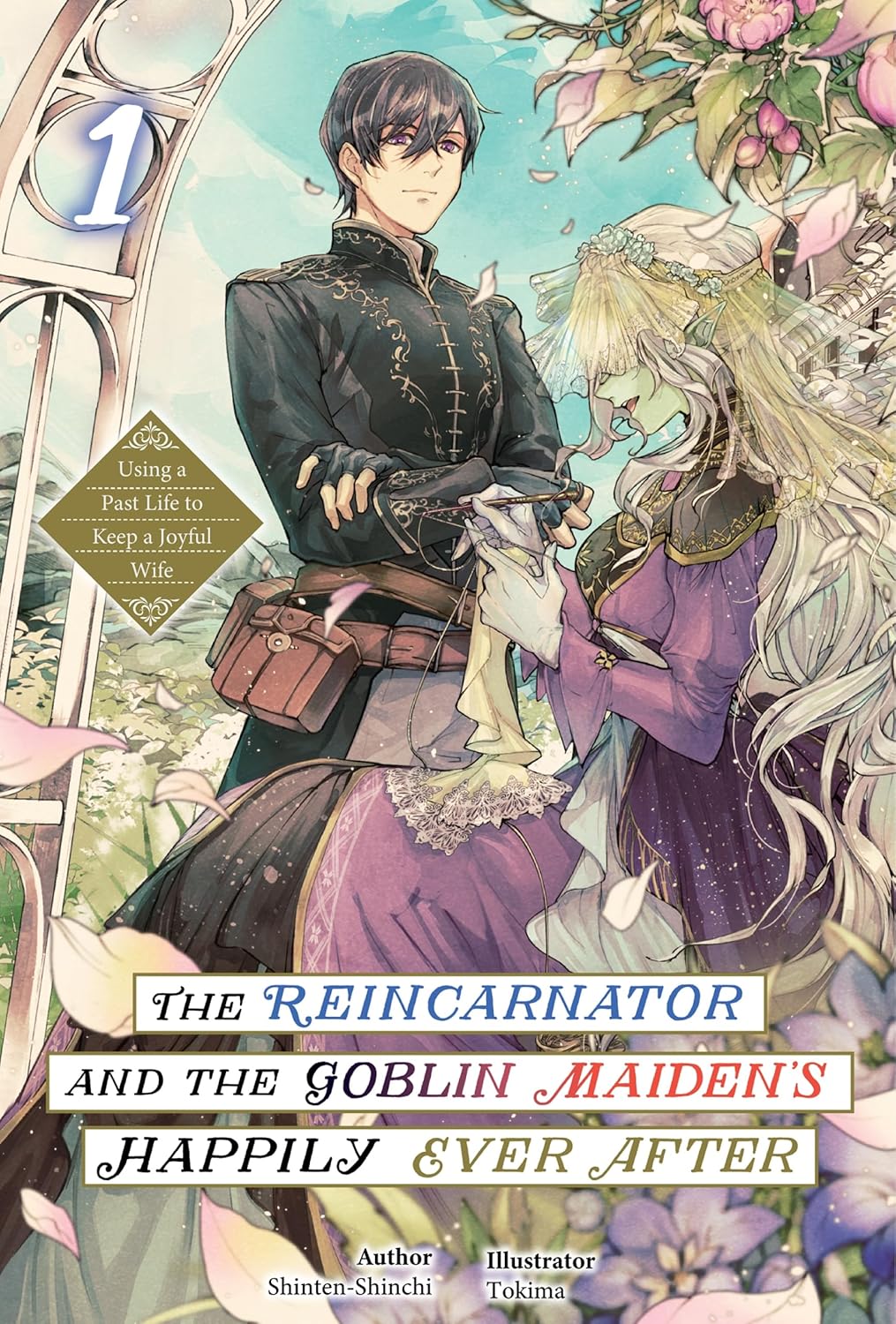
The Reincarnator and the Goblin Maiden’s Happily Ever After: Using a Past Life to Keep a Joyful Wife, Vol. 1

October 27, 2024 by Sean Gaffney

By Shinten-Shinchi and Tokima. Released in Japan as “Goblin Reijō to Tensei Kizoku ga Shiawase ni Naru Made: Konyakusha no Tame no Zense Chishiki no Jōzu na Tsukaikata” by Kadokawa Books. Released in North America by J-Novel Heart. Translated by Geirrlon Dunn.

Before we start, I really enjoyed one of the big twists in this book, and am going to have to discuss it, but I’ll put it after the cover image, so spoiler FYI.

And since I’m going to be talking about something I love as a spoiler, let’s start the review with something I loved less. This is, for the most part, a very good book, and I enjoyed both lead characters, their cool families, and their battle maids. But it does have a plot that I have always hated whenever I see it in both Eastern and Western books, TV< movies, manga, etc., which is the "if you're being bullied, the best thing to do is to get mentally stronger". Now, this isn't quite as bad as some – Ana's appearance is not, as of this first volume, something she can control, and we're given a real reason she doesn't simply tell an authority figure (in this case her mother). And the bullies do get theirs. But they only get theirs after Ana steps up and stops acting bullied. That leaves me conflicted.

Our protagonist is Ginorious, aka Gino. The fourth son of a viscount, he’s a commoner merchant due to being unable to inherit the title. Fortunately, he’s able to rely on his past memories from when he lived in Japan to help his business take off. Then one day his family get a marriage proposal from a duke’s family – i.e., they can’t turn this down. The family want him to marry their daughter Anastasia, who, due to a curse, has a lumpy forehead, long pointed ears, and green skin. She looks very much like a goblin, and has acquired a nasty nickname. Her other marriage partners were disgusted with her and treated her horribly the moment they were out of parental range. Fortunately for her, in his past life in Japan, Gino also had a terrible facial appearance, and spent his whole long life alone and unloved. So like hell he’ll let that happen to her.

So yeah. Let’s face it, when you hear “reincarnated from Japan”, you expect it to be, well, OUR Japan. And nothing in the first seventy pages or so says otherwise, except the occasional hint that Gino wears a mysterious ring. But as it turns out, the Japan he’s from is filled with magic, golems, etc. In fact, he was a golem engineer in Japan for most of his previous life. And what’s more, in Japan they knew a lot more about exactly what Ana’s curse is – it means she’s got far too much mana. Unfortunately, this isn’t Ehrenfest, and Ana cannot simply pour mana into various instruments until she’s better. Indeed, this world doesn’t really “get” mana that much. But it does mean that he knows a possible way forward. This was a great twist that helped distract me from “of course this will end with them curing her and she’ll be gorgeous”, which seems to be the actual long-term plot.

for the most part, this is really sweet and syrupy. It’s less good in the second half, not just from the bullying and more that I’m a bit sick to death of the school full of nobles by now. But it’s still a strong debut, and I will happily read a second volume.

Filed Under: reincarnator and the goblin maiden's happily ever after, REVIEWS

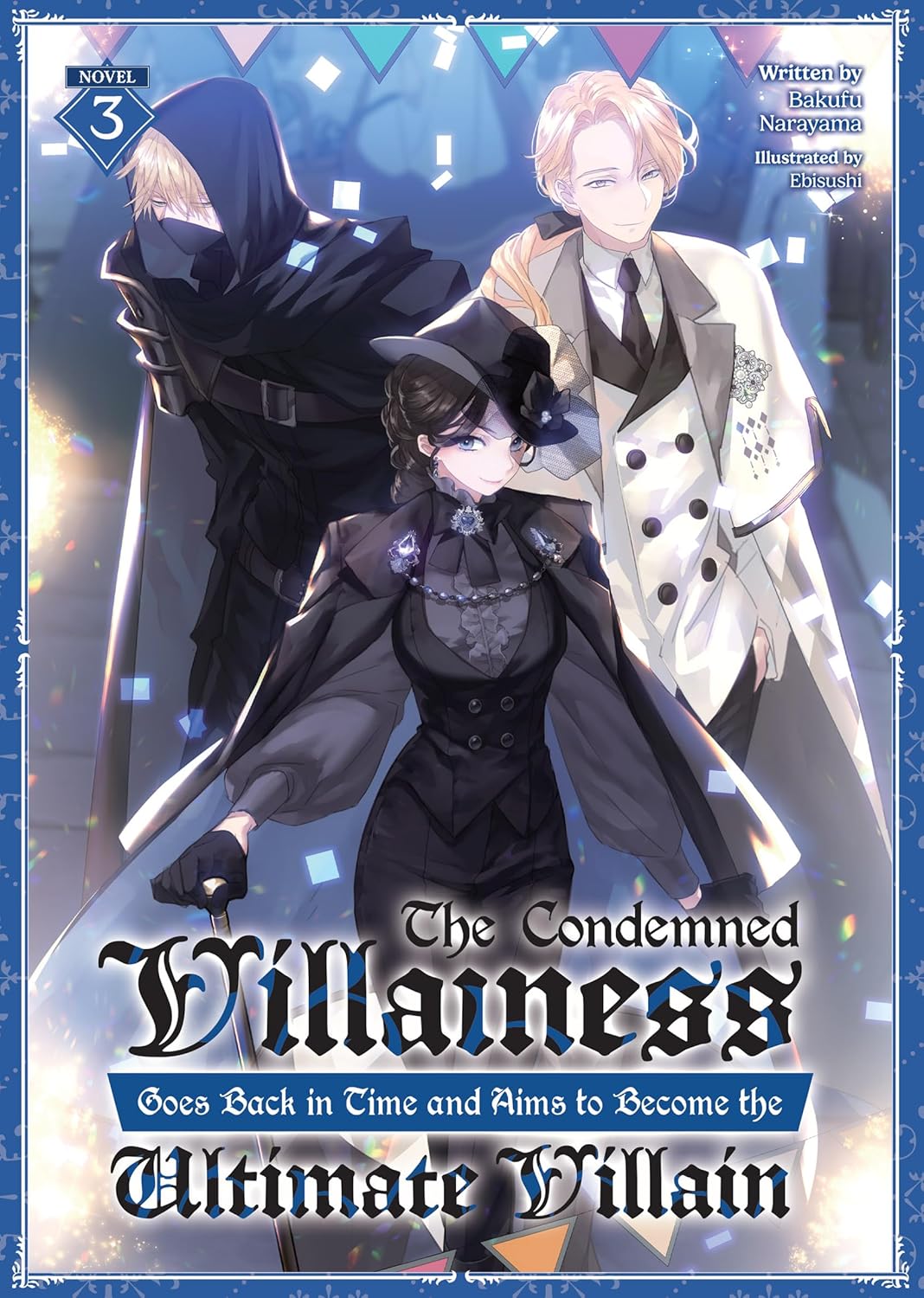
The Condemned Villainess Goes Back in Time and Aims to Become the Ultimate Villain, Vol. 3

October 26, 2024 by Sean Gaffney

By Bakufu Narayama and Ebisushi. Released in Japan as “Danzaisareta Akuyaku Reijō wa, Gyakkō-shite Kanpekina Akujo o Mezasu” by TO Books. Released in North America by Airship. Translated by Alyssa Niioka. Adapted by Vida Cruz-Borja.

The general premise of “heroine goes back in time to her earlier self” stories, which Japan calls Yarinaoshi Loop, is that our protagonist tries to change things in order to change the future and in the end ends up changing everyone else’s lives for the better as well. Sometimes this ends up being the entire kingdom, where we see her do things like unite various kingdoms and solve famine (looking at you, Mia). But occasionally our heroine has a narrower focus. Claudia, in her first lifetime, ended up being sold into a brothel, and had firsthand experience of what a wretched life it is, as well as how, for so many women, there may be no other choice. We’ve already seen her rescue Helen from that life in the first book, and in the second book disguise herself to invest in the brothel she used to work in. But she’s not done. Here we see she wants to make sex work legal. Light novels rarely venture into this area.

(As a side note, if your villainess does not look at least as hot as Claudia does in that suit and hat on the front cover, try harder.)

There’s another foreign prince arriving in town, this one from fantasy… Britain? Denmark? One of those. Prince Seraphim is there to visit Sylvester. They have a Church problem – Seraphim’s nation is not monotheistic, and therefore the church which rules over Sylvester’s nation, as well as most of the others, dislikes them and won’t trade with them at normal prices. Seraphim is looking for allies. Meanwhile, Claudia accidentally murmuring about business when she’s thinking about ways to save the sex workers means her father gifts her a business to run – actually, more accurately an entire shopping center. And wouldn’t you know it, it’s in Seraphim’s home country! Now they’re all traveling to try to do various things, the most important of which may be to stop the evil church guy that always pops up in Japanese light novels.

The most interesting part of this book, aside from its putting the plight of sex workers front and center, is the addition of the cardinal, Nigel. Towards the end of the volume, the book felt it was moving far too fast, and I briefly wondered if it was a two-parter. That’s not the case, but I get the feeling that the author realized as they were writing Nigel that he made a great antagonist for Claudia now that Fermina is out of the picture. Nigel fills a lot of villain tropes – besides being a churchman who loves luxury and will happily kill women and children to get minions to obey him, he’s also dreadfully bored and regards Claudia, an unexpected element, as a challenge. Clearly we’ll be seeing more of him.

This isn’t fantastic, but is on the high side of very good, and Claudia is a great lead character. I’m happy to read more.

Filed Under: condemned villainess goes back in time, REVIEWS

  • « Go to Previous Page
  • Page 1
  • Interim pages omitted …
  • Page 28
  • Page 29
  • Page 30
  • Page 31
  • Page 32
  • Interim pages omitted …
  • Page 346
  • Go to Next Page »
 | Log in
Copyright © 2010 Manga Bookshelf | Powered by WordPress & the Genesis Framework