• Skip to primary navigation
  • Skip to main content
  • Skip to primary sidebar
  • Home
  • About Us
    • Privacy Policy
    • Comment Policy
    • Disclosures & Disclaimers
  • Resources
    • Links, Essays & Articles
    • Fandomology!
    • CLAMP Directory
    • BlogRoll
  • Features & Columns
    • 3 Things Thursday
    • Adventures in the Key of Shoujo
    • Bit & Blips (game reviews)
    • BL BOOKRACK
    • Bookshelf Briefs
    • Bringing the Drama
    • Comic Conversion
    • Fanservice Friday
    • Going Digital
    • It Came From the Sinosphere
    • License This!
    • Magazine no Mori
    • My Week in Manga
    • OFF THE SHELF
    • Not By Manga Alone
    • PICK OF THE WEEK
    • Subtitles & Sensibility
    • Weekly Shonen Jump Recaps
  • Manga Moveable Feast
    • MMF Full Archive
    • Yun Kouga
    • CLAMP
    • Shojo Beat
    • Osamu Tezuka
    • Sailor Moon
    • Fruits Basket
    • Takehiko Inoue
    • Wild Adapter
    • One Piece
    • After School Nightmare
    • Karakuri Odette
    • Paradise Kiss
    • The Color Trilogy
    • To Terra…
    • Sexy Voice & Robo
  • Browse by Author
    • Sean Gaffney
    • Anna Neatrour
    • Michelle Smith
    • Katherine Dacey
    • MJ
    • Brigid Alverson
    • Travis Anderson
    • Phillip Anthony
    • Derek Bown
    • Jaci Dahlvang
    • Angela Eastman
    • Erica Friedman
    • Sara K.
    • Megan Purdy
    • Emily Snodgrass
    • Nancy Thistlethwaite
    • Eva Volin
    • David Welsh
  • MB Blogs
    • A Case Suitable For Treatment
    • Experiments in Manga
    • MangaBlog
    • The Manga Critic
    • Manga Report
    • Soliloquy in Blue
    • Manga Curmudgeon (archive)

Manga Bookshelf

Discussion, Resources, Roundtables, & Reviews

Reviews

Danza

December 10, 2012 by Sean Gaffney

By Natsume Ono. Released in Japan by Kodansha, serialized in the magazine Morning Two. Released in North America by Kodansha Comics.

After seeing how popular (well, popular with manga bloggers) Natsume Ono’s other works were when Viz Media was putting her stuff out, Kodansha decided they wanted to get in on the game as well. After all, Ono didn’t only write for Ikki and Manga Erotics F, she also did stuff for Morning Two, Kodansha’s alternative manga magazine best known for Saint Young Men (which will never be licensed here ever). And Danza seems to be a good test market – it’s a collection of one-shot short stories, so little investment is required, and it deals with the same thing most of Ono’s best manga deal with – awkward conversations between people who have trouble communicating.

As with a lot of short story collections, it’s a mixed bag. Viz also did some of her collected short stories, and I think it shows that she works better at a slightly longer form with characters we can invest in (such as Ristorante Paradiso/Gente). Of course, this doesn’t mean that this collection doesn’t have some excellent stuff. But these are stories that are meant to provoke a wistful mood, with only one of them (involving Italian ices and police officers) even getting close to giving me a wry grin. When you draw mild, somewhat sad low-key manga, you need to anticipate that the reaction will be somewhat low-key as well. There’s also one short-story here that didn’t work for me, involving time-travel and father-son relationships. I felt this one added one too many plot complications, which is ironic given that almost 40 of its 60 pages are taken up with sitting at a table talking.

But as I said above, when Ono is on her game there’s no one I enjoy reading better. The best stories here involve things, again, I’ve seen from her before – grumpy fathers (or father figures) who gruffly disguise any feelings or emotions they may have under a veneer of indifference, doubly helped by the fact that they’re taciturn and uncommunicative naturally. Long pauses, saying things slightly poorly, shutting up for hours because you don’t want to risk spoiling the mood further… these are all things any reader is familiar with no matter what the country. And these stories (which take place in not only Italy, Ono’s default country, but also the United States and Japan)make you yearn for that connection, make you want to see everyone work it out. You want to see people talk, but it’s not drawn out enough that you’re yelling at the page.

As for Ono’s art, it is what it is, and I don’t think too many people read the story for her expressions. Which is a shame, as they fit her mood so well. If you have skill at drawing men who sort of frown and glance downwards furtively, well then write stories that use that! Ono’s heroes tend to look shifty even if they aren’t, which can sometimes help to pace a story as well, particularly the final one about a police officer and his new recruit, who’s listening to far too many rumors.

This isn’t going to be a knock-out up there with the best of Ono’s works, but nor is it just a collection of throwaways. It’s a Natsume Ono book, and if you don’t know what you’re getting by now it may not be for you. For those who do, it’s more of the same. (furtive glance to the side, frowns) And that’s enough.

(This review was based on a copy provided by the publisher.)

Filed Under: REVIEWS

A Devil And Her Love Song, Vol. 6

December 9, 2012 by Sean Gaffney

By Miyoshi Tomori. Released in Japan by Shueisha, serialized in the magazine Margaret. Released in North America by Viz.

This manga has been on my Bookshelf Briefs stack for the past few volumes, but it completely steps up its game here, so I feel I should do the same. We were in danger of hitting a rut and resolving things too early, with Maria’s latest antagonist, Anna, proving to be another in a series of foes that Maria and her harem… um, friends can win over with honest feelings and stubborn refusal to give up. But in this volume, we see that Anna is made of far sterner antagonist stuff, and steps up her game in a way that tries to both destroy Maria’s life *and* win the affection of Shin.

I’m quite impressed with the author, who has made Anna a villain who ruins the heroine’s life, through the usual shoujo tricks (oh dear, I threw your cellphone into the river by accident) and by things that only Anna could really utilize (telling Shin about Maria’s past). Both work quite well, but the latter really takes hold more than the former. And yet with all that said, it’s somewhat startling that I still really hope that she and Maria can work things out in the end. Maria, as we’ve noted before, *is* genuinely very hard to be around sometimes, and this would have been especially true given what happened between her and Anna. And clearly Anna is not doing this entirely out of pure hatred, given her reaction in that last scene.

Speaking of that last scene, it’s one of the best in the series to date, with Maria once again attempting to sacrifice herself in order to ‘protect’ someone else. Admittedly, this being Maria, it comes from a series of harsh truths and insults, but the heart behind it is there. And Anna can see that heart, which just makes it worse. Her final comment ‘You’re terrible at playing the devil’ is true – Maria is at her worst when she’s wallowing in her own self-hatred and trying to make everyone else see the same things she does.

And then there’s the revelation about Maria’s past that Anna shows Shin. While I’m not sure I buy the whole ‘it’s all Maria’s fault’ that was tossed in, I’m inclined to think the basic facts are true. I like that it took a lot for Shin to buy into this – actual newspaper clippings. Shin is not your typical guy who will believe anything a pretty face tells him. That said, this does affect Shin, but not in the way Anna expects – he’s now hell bent on helping Maria get over the trauma that this has left on her, and his discomfort around her stems from this. And I can see why he’s reacting this way – I mean seriously, how much more tragic can we possibly make Maria’s life?

All this plus we see Yusuke finally making his own move, even if he has to continue to couch it in ‘just kidding’ terms (which is going to come back to kick him in the ass one of these days). I think the audience now knows which pairing we’ll end up with by the end, but there’s 7 volumes still to go, so I’m fine with Yusuke showing he wants to be more than just a romantic runner-up – especially since he doesn’t have the knowledge Shin or Anna do. And by the way, the teacher from hell? Still there, still horrible. HE MUST GO. But the rest of the volume? Awesome.

Filed Under: REVIEWS

Toriko, Vol. 13

December 8, 2012 by Sean Gaffney

By Mitsutoshi Shimabukuro. Released in Japan by Shueisha, serialization ongoing in the magazine Weekly Shonen Jump. Released in North America by Viz.

Again, it’s been a long time since I reviewed Toriko on the main blog as opposed to a Bookshelf Brief. Jump series in general tend to lend themselves well to a paragraph rather than four or five paragraphs, especially when the volume in question is ‘they fight for 10 chapters’. Luckily, there’s a lot less fighting and a lot more character development here, although we do get the daily required amount of huge fictional animals, death-inducing climates, and large muscled men beating things up, all things Toriko requires for its daily nutritional value.

It seems appropriate that the Ozone Grass, the astonishing vegetable Toriko and Komatsu had spent most of last volume climbing to, turns out to be a pointer to both of the major themes of this episode. First off, it’s something that requires two people to work together to eat it properly, showing off the friendship part of Shonen Jump’s traditional motto. Toriko and Komatsu have been close since Volume 1, but there’s always been a bit of a tagalong ‘normal guy’ aspect to Komatsu, with Toriko going off on some dangerous quests on his own when he didn’t think Komatsu up to the challenge. These scenes really show off how important Komatsu has become in Toriko’s life, and that he really is perfect as Toriko’s partner. (I’d talk about the BL subtext, but I’ve mentioned that in prior reviews.)

And then, amazingly, after one of the more heartwarming scenes in the entire series, Toriko promptly misses the entire point and goes off to Gourmet World on his own, something so amazingly stupid you want to smack your head. In general, we haven’t really seen Toriko’s youth and inexperience all that often in the series to date, and indeed I sometimes forget that he’s only about 25 years old or so. But then, Toriko is always after the big experience, and notably when Sunny finds out what he’s about to do he doesn’t say anything, knowing that Toriko is the sort who is only likely to learn through bitter experience.

And bitter experience is exactly what he gets, as Gourmet World turns out to be a hellish environment straight out of nightmares. The sheer scale of all these dangers when compared with Toriko (who, as has been noted, is pretty huge) boggles the mind, and you have to wonder how he’ll get out of there. The answer is ‘saved by a stronger character’, of course, but only in order to drive home the two important morals of this volume. 1) Toriko is not ready for Gourmet World yet, and 2) Toriko, needs a partner, REPEATED FOR ADDED EMPHASIS. Luckily, this time around he seems to get the point, even if this means we are treated to a sobbing Komatsu spicing up Toriko’s food with something he really doesn’t want.

Unfortunately, Komatsu’s cooking knife is broken, and they head off to get a new one from the amazing knife master Melk. Who looks… suspiciously bishie for a character described as scar-covered and a loner. I sense a surprise coming next volume. In the meantime, this volume gave Toriko some much-needed humility, and saw him finally form what will hopefully be an equal partnership with Komatsu. All this, plus lots of weird animals getting beaten up. What’s not to love?

Filed Under: REVIEWS

The Kurosagi Corpse Delivery Service, Vol. 13

December 4, 2012 by Sean Gaffney

By Eiji Otsuka and Housui Yamazaki. Released in Japan as “Kurosagi Shitai Takuhaibin” by Kadokawa Shoten, serialization ongoing in the magazine Young Ace. Released in North America by Dark Horse.

I am pleased to report that this volume of Kurosagi Corpse Delivery Service has exactly what its readers look for each time around. There’s lots of grotesque set pieces which allow the artist to display a flair for horrible imagery. There’s wry and witty commentary between smart people. There’s genuine mystery, with our heroes being clever, and a nice use of synaesthesia as a plot point. And there’s copious endnotes from editor Carl Horn, explaining things like Karatsu’s Space Battleship Yamato reference and who Terry and Dory Funk are.

That said, there is one other development that not only surprised me but irritated me a bit. Not because of what the revelation was – yes, it sinks one of my ships, but given that this isn’t a harem manga I can deal – but because of its offhand nature. I am reminded of an earlier volume, when we saw a storyline end with Karatsu set on fire and an intense cliffhanger. Come the next chapter… and we’ve moved on, with nothing ever getting resolved. Here we see Sasaki and Karatsu get back from the Okinawa trip mentioned in the last volume, and for the most part it’s the same thing, except for that revelation. Which is laid out more to explain the deus ex machina of the story rather than for any dramatic tension. I do hope we eventually come back to it.

With all that said, it is an intriguing revelation, and also leads to some misdirection and amusement when we see Sasaki being sick and think it may be due to other reasons. Sadly, nothing quite so pleasant – it’s just the joys of being a woman. (KCDS is as blunt and matter-of-fact when dealing with periods as it is when dealing with corpses.) Sasaki also gets more to do than usual here, as she’s the focus of the 2nd case in the book, involving a jury trail where a man has already admitted his guilt. The jury system is still fairly new in Japan, and Carl’s notes help to lay out how it’s different from the U.S. The use of auras and synaesthesia manage to give it both a fantasy and realistic feeling, and the murder victims are both quite sympathetic.

Lastly, there were clearly not enough shots of nude women in peril in the series recently, so the final story more than makes up for that, combining a look at land redevelopment and harvest rituals with a good old fashioned psycho who likes to chop up young women. Luckily, the ‘karmic justice’ aspect of this series also makes a reappearance to give the reader someone to root for. Overall, this is a good but not great volume of our favorite cynical horror manga, offering some solid imagery and a few interesting revelations, even if the authors may not have figured out what to do with these revelations as yet. The series is still ongoing in Japan, so we may have a ways to go. Especially as I’m not sure when Vol. 14 is scheduled here. Fight on, Kurosagi Corpse Delivery Service!

Filed Under: REVIEWS

Nausicaä of the Valley of the Wind Box Set

December 3, 2012 by Anna N

I’m just going to talk about the packaging and quality of this box set, because I think most people are familiar with the story and wonderful art found in Nausicaa of the Valley of the Wind. Nausicaä is a manga classic, and it totally deserves the deluxe treatment it gets in this collected edition. This is a two volume set that comes in cardboard box with a glossy cover. The set comes with a folded two-sided Nausicaä poster as well. The hardcover volumes are a mega-sized 10+ inches tall, ensuring the reader can appreciate the full details of Hayao Miyazaki’s art. The covers for each volume are matte, with an image of Nausicaä on the front and some grey and blue tinted abstract designs featuring the flora and fauna from Nausicaä’s world, giving the covers the look of an antique book. I pulled out my Viz Select Comics editions from way back in 1988 when Viz was releasing monthly comics with flipped art, and the reproduction size of the art was the same. I have always regretted not having a complete run of Nausicaä in the larger size. I filled in my collection of the later half of the series with a couple of the Perfect Collection volumes and I thought that the art suffered a little bit from being printed smaller.

The paper used for the box set is a good matte quality, and the ink used is a softer black which I think makes the backgrounds of the story seem even more dreamy and fairy-tale like. The translation here is the same Studio Proteus translation for the series that has been used in the past, but the lettering has been redone and looks much more smooth, compact, and easy to read. There are glossy color plates in front of each volume, which include character portraits as well as maps rendered in the lovely muted color palette I expect to see used for Nausicaä. I think that out of all the deluxe editions of manga that I’ve seen, this is by far the nicest.

I originally had this box set on my wishlist for the holidays, and then got wind of a coupon at Barnes and Noble and picked it up for $22.00, which I consider to be basically free. At slightly below $40 on Amazon currently, this is still an extremely good deal. If you have the money to spare to treat yourself to this set or can make some pointed hints to people who might be buying you presents, I think this is truly a great addition to any manga fan’s library.

Filed Under: REVIEWS Tagged With: nausicaa, viz media

Demon Love Spell Vol. 1

December 3, 2012 by Anna N

I ended up liking Mayu Shinjo’s Ai Ore a bit more than I thought I would after reading the first omnibus volume. The second series settles in as more of a straightforward comedy series, without some of the problematic gender dynamics that were present in the earlier series. Still, Ai Ore didn’t inspire much rereading or long term affection from me. One of my problems was that the male lead of Ai Ore looked nothing like Sakuya from Sensual Phrase. Shinjo has a somewhat limited set of character designs, but when she does hit on a design she does execute it very well. I experienced far too much cognitive dissonance in Ai Ore expecting a Sakyua clone to pop up, only to be disappointed. Fortunately in Demon Love Spell, the demon in question looks like a typical Shinjo hero half of the time!

Miko is a shrine maiden (ha ha!) who isn’t very good at her job. She can’t sense the demons that she battles, so her technique is limited to chanting random spells and hoping that one of them works. She sees all the girls in her class crying over a faithless boy named Kagura. One of the victims jokes that Kagura has to be a demon because no human boy could go through women that fast. Miko makes up for her lack of skill with enthusiasm and she decides to rush off and exorcise the womanizer. Miko fins Kagura kissing yet another girl and starts lecturing him about the dangers of being possessed by an incubus who preys on the sexual desire of women. Kagura finds Miko extremely hilarious until she casts a spell on him and he actually disappears. Miko starts crying because she thinks that she accidentally killed someone when she hears an angry voice yelling at her from the vicinity of her shins, saying that it is impossible that someone like her could bind his powers.

Kagura wasn’t possessed by an incubus, he actually is one of the most powerful incubi around, and now he’s trapped as a powerless chibi version of himself only a few inches tall. Miko and Kagura end up developing a symbiotic relationship. When she’s in contact with him she can actually see the demons she wants to battle. If Miko gives Kagura a tiny amount of affection, his powers kick in and he’s able to help her. Kagura in appearance and demeanor is very much a typical Shinjo alpha male. He’s imperious and demanding, which doesn’t always play very well when he looks like a three inch tall cherub. One of the reasons why I wasn’t able to enjoy Ai Ore as much is that the relationship between the protagonists was a bit unbalanced. Even though this was deliberately done to contrast with the character’s outward appearances, Mizuki was too tremulous and Akira too demanding for me to really root for them as a couple. The personalities of the characters are much more balanced in Demon Love Spell. Miko might not be the best shrine maiden in the world, but she has no problem torturing Kaguya in his chibi form by dressing him up in clothes belonging to an old doll of hers. She decides to fasten Kaguya to a chain and hang him on her handbag to take him to school with her, and she starts lecturing him on proper behavior, saying “Bag mascots aren’t supposed to talk!”

Kaguya is still able to use manifest his regular form and power up when he visits Miko in her dreams, but she doesn’t remember anything the next morning. The incubus helps Miko fend off all the demons that are gathering around her, drawn by the fact that she managed to capture him. As the story develops, it seems like Kaguya is starting to feel genuine concern and affection for Miko. Or perhaps he’s just comfortable with the fact that he’s able to hang out in her cleavage when they enter battle together. Demon Love Spell was a fun comedic version of paranormal romance manga. While the comedy explored in Demon Love Spell is on a bit of a similar wavelength as Ai Ore, I found the characters much more interesting and sympathetic. I think readers who tried Ai Ore and didn’t care for it should give this series a try. I still tend to prefer Shinjo when she is in serious and dramatic soap-opera mode as seen in Sensual Phrase, but Demon Love Spell was quite enjoyable.

Filed Under: MANGA REVIEWS, REVIEWS Tagged With: demon love spell, Mayu Shinjo, shojo beat, shoujo

07 Ghost, Vol. 1

November 29, 2012 by Anna N

07 Ghost, Vol. 1 by Yuki Amemiya and Yukino Ichihara

I’m always a little curious about license rescues, and I hadn’t read 07 Ghost when it was released earlier by GoComi. I was even more interested when I saw that in Japan the series ran in Monthly Comic Zero Sum, the same magazine that features Saiyuki Reload and Loveless. In manga genre terms, I suppose that 07 Ghost is josei, although it would be a bit hard to tell from the trade dressing that Viz provided, as it isn’t released under any of the Viz sub-imprints and it is labeled as being for teen readers. 07 Ghost is one of those titles that I can see appealing to a wide variety of readers, as it features a nice combination of world-building, a solid protagonist, magical battle scenes, and perky nuns.

Teito Klein is an orphan going to school in an militarized area. Teito and his fellow students are trained in a form of magical combat called Zaiphon, which uses hand gestures to evoke energy. Teito’s acerbic nature and favored status by one of his instructors ensures that he’s just about the least popular student at the Barsburg Military Academy, but he does have a best friend named Mikage whose sunny disposition contrasts with Teito’s more brooding personality. Teito is An Orphan With A Forgotten Past, and when he starts getting flashbacks to memories from his previous life he begins to think that Barsburg isn’t the right place for him anymore. He confronts Aya, who he suddenly remembers as having killed his father. Aya says that Teito is a “slave from Raggs” and puts him in chains. Teito manages a daring escape and winds up in District 7, the City of God. District 7 is filled with handsome priests and pretty but interchangeable nuns. Teito starts to adjust to a different way of life.

There’s a ton of plot explored in this first volume, but overall I thought that the pacing and world building aspects of 07 Ghost were handled very well. Teito’s journey serves as a way to introduce the tricky geopolitical issues of his world, and the fantasy and action aspects of the manga are visually striking. In District 7, the religious order believes in seven ghosts that serve as guardians against evil. The guardians are depicted as hooded figures with dramatic scythes inscribed with runes. When the unconventional priests battle their spells are also depicted as sweeping scythes that cut across the panels of the manga. This results in some action scenes that are a bit more pretty than coherent, but it was still not to hard to follow what was going on. A large cast of characters are introduced but aside from Teito and Mikage the most prominent person from District 7 is Frau, the cynical priest who rescues Teito and sticks around to make sarcastic comments and protect him occasionally. There’s a bit of a Saiyuki vibe with Frau and Teito’s relationship, which makes sense given the source magazine for the manga.

When I finished 07 Ghost I wanted to see what would happen next with Teito’s story. While Teito’s amnesias-orphan status isn’t particularly novel, I enjoyed seeing the world he lives in and it was fun to read a fast-paced fantasy manga. I feel like many of the series I’ve been reading recently develop much more slowly, so 07 Ghost‘s storytelling pace was a nice contrast. The attractive art, fighting priests, and hints of a larger magic/spiritual system to explore all have me looking forward to the next volume. I can see why Viz chose to put out this series again. It has plenty of commercial appeal, but is still quirky enough to be genuinely intriguing.

Review copy provided by the publisher

Filed Under: MANGA REVIEWS, REVIEWS Tagged With: 07 Ghost, Josei, viz media

Thermae Romae, Vol. 1

November 28, 2012 by Sean Gaffney

By Mari Yamazaki. Released in Japan in two separate volumes by Enterbrain, serialization ongoing in the magazine Comic Beam. Released in North America by Yen Press.

Sometimes, the companies putting out manga in the West surprise you. Let’s face it, most of what comes out these days is meant to be popular and sell well. That’s the way of business. And I like a lot of popular, bestselling manga as well. But in times like these, with companies struggling to stay afloat, it’s far more likely you’ll see the latest “My Little Sister Has A Light Novel Series With An Overly Long Title” series than something from Big Comic or Evening (or, yes, even IKKI, though Viz has made an excellent effort). That’s why it’s always fantastic to see exceptions like these, a series with a nice big deluxe hardcover (which, admittedly, is probably the best way to ensure it will break even), which is about a Roman architect who finds he can now time-travel between Ancient Rome and modern-day Japan to learn about baths.

Seriously, just read that description again. It’s hard to find something farther away from ninjas and vampires. And yet I found this entire volume fascinating. There’s a nice balance between the so-called hook of Lucius marveling at the wonders of modern architecture and design (and beating himself up about the inadequacies of his time, which at times seems to be the dominant aspect of his personality) and Lucius’ own soap-opera of a life that his new designs bring about. There’s no real danger of ‘will bringing modern innovations into the past change the future’ – this isn’t a science fiction story, and notably how he does this is never really explained – it could easily be hallucinatory dreams.

But it’s his life, and those of his fellow Romans, that makes this such a page=turner. Lucius is modest to the point of self-loathing, has quite a few marriage issues (which, to the author’s credit, are not magically solved once he becomes more successful) and a number of jealous comrades. He’s also becoming closer with Emperor Hadrian, who has him design a few new baths, which leads to several obvious rumors about his sexuality (Hadrian’s tastes were well-known, though there’s a long series of endnotes for those unaware of the finer aspects of Roman history).

The Roman plotline (which actually is fairly historically accurate, to the degree allowed by the plot’s designs) is fairly heavy throughout, even as Lucius’s career prospects skyrocket. It’s therefore a relief that there’s always a modern Japanese time travel story to break this up. Lucius tends to overreact much of the time, in the best comedic tradition, and his awe in the face of things like Strawberry Milk or washcloths is just plain funny. The Japanese people he meets seem to be almost preternaturally unsuspecting and accommodating of him (oh look, another crazy foreigner) and always willing to expound on how awesome their baths/hot springs/etc are. (There’s some nationalism here, I admit, but it’s woven well enough into the plot that it’s easy to accept).

Yen’s presentation, as I noted above, is deluxe. A hardcover with a plastic slipcase in order to cover the Japanese original, which features a Roman statue with naughty bits. (Fear not – take off the slipcase and the bits are all present and correct.) The paper is high-class, and there’s comments by the author after each chapter about her research, Roman times vs. today, and how much she likes to simply bathe. A love of the bathing ritual permeates this book – not just getting clean, but everything about it – and it’s to Yamazaki-san’s credit that it doesn’t overwhelm the actual plotline of Lucius’s rise to fame and growing intrigue. This volume is a bit pricey, but it’s definitely worth it. Ask for it for Christmas!

Filed Under: REVIEWS

The Hentai Prince and the Stony Cat, Vol. 1

November 26, 2012 by Sean Gaffney

By Sou Sagara and Okomeken. Released in Japan as “Hentai Ouji to Warawanai Neko” by Media Factory, serialization ongoing in the magazine Comic Alive. Released in North America by Digital Manga Publishing.

I must admit I was rather surprised to see a title from Comic Alive licensed by someone other than Seven Seas, and had to double check to make sure that this wasn’t BL-related in some way. (Not that Comic Alive would go anywhere near BL.) But no, DMP is dipping their toe in this market, and doing so with a title that seems a bit more low-key than what we’ve seen from other Comic Alive titles released in North America lately, even if it does have the same basic storyline and outlook.

The story stars Yoto, a typical teenage boy who spends most of his days trying to look at girls’ panties (OK, a typical Japanese teenage boy). He’s very good at denying he’s doing anything wrong, and fate seems to love him, as whenever he’s caught perving it gets mistaken for him doing something noble. He’s still bothered by this, however, being a decent pervert at heart, and wishes he could be more honest. Then he hears about a cat statue that grants wishes, and it seems to work nicely on his best friend. So he goes to visit it, and promptly runs into an embarrassed, panicky girl who also wants to wish on the cat statue – she wants to make it so her feelings aren’t so visible. Unfortunately, they both get their wishes – he now can’t tell a lie at all, even to save his getting beaten up, and she’s a perfect stoic on the outside, no matter what she may be feeling.

Wackiness, as they say, ensues. As you can see by my taking a paragraph to write out the plot, there’s not much to this. The two leads quickly realize how horrific this has become, but of course they can’t take their wishes back so easily. And things are livened up by your typical moe manga archetypes in the supporting cast. Yoto and Tsukiko are already cliched types (heck, Tsukiko manages to be two in one, as we see her both as the stressed out over-emotional girl *and* the stoic), and they’re joined by a busty track star who’s queen of the school and a blonde tsundere princess who finds her match in Yoto’s new blunt and straightforward persona. A light-hearted harem manga ensues.

I have not been all that fond of Comic Alive titles recently. I Don’t Like You At All, Big Brother! and Haganai both tended to irritate more than amuse me, mostly because I prefer my moe to be relaxed and soft rather than hyperactive and angry. But this wasn’t quite as bad as those two. The lead was just a shade more sympathetic, the tsundere had a bit more dimension to her, the plot invited antics while still being interesting. Yes, there’s still lots of talk of breasts and panties, and the plot is a simple ‘role reversal’ type thing we’ve seen before in, say, Your and My Secret, but this ended up being OK. I’d recommend it, but DMP hasn’t put Volume 2 on their upcoming list for 2013 (after they return from print hiatus), meaning we won’t see a new volume, if we do at all, for over a year. Thus, I can’t actually recommend it that much. But it’s not too bad.

Filed Under: REVIEWS

Umineko: When They Cry, Vol. 1

November 25, 2012 by Sean Gaffney

Story by Ryukishi07; Art by Kei Natsumi. Released in Japan in two separate volumes as “Umineko no Naku Koro ni: Legend of the Golden Witch” by Square Enix, serialized in the magazine Gangan Powered. Released in North America by Yen Press.

The story of Higurashi: When They Cry may not be finished here in North America, but that doesn’t mean we haven’t seen people clamoring for its sequel. And so Yen has decided to bring it out even as Higurashi reaches its climax, in the more economical but deluxe-looking omnibus format. Not to worry, though: it’s a spiritual sequel rather than an actual one. Only one minor character from Higurashi shows up in Umineko, and we don’t meet her in this particular volume. But Umineko certainly has a lot of what drew people to Higurashi. Cute moe-style girls (who later turn out to have terrifying sides), heroes who use over the top perverse antics to hide a darker side, and of course giant piles of corpses drawn in gruesome detail.

It can be a little hard for me not to try to compare the protagonists of Umineko with their predecessors, especially since some of them don’t quite live up to those heights. Maria in particular is meant to have a certain Rika-esque aspect to her, but comes across as more bipolar than anything else. I must also agree with her mother: the uuu-uuu thing is really annoying, I’ll take nipah any day. As for Battler, I am reminded that I really disliked Keiichi at first, then grew to like him quite a bit, and I hope the same thing happens here. I also hope that, like Higurashi, the boob jokes and fetishes get less important as the volumes continue. I realize they’re there to provide contrast and relief before the main events, but let’s face it: they’re there for an otaku audience which isn’t me.

As for the story itself, I’m intrigued. Ryukishi07 has already stated that the goal here is not Higurashi’s (figure out who was behind the killings), leading me to think that the chances of everyone eventually living happily ever after are far less likely. The goal seems to be ‘is this a fantasy world or not?’, with its discussion of witches and black magic being countered by Battler (and Eva’s) staunch common sense and realistic view. I admit I’m inclined to believe there’s a human element as well, but then we’ve barely started this series, and still haven’t properly met ‘Beatrice’, the witch whose message is behind the whole thing. In addition, this series is about an extended family rather than a group of friends. It’s easy to bond with a group of close friends, who you can choose. Family’s harder, as you’re born with them. Notably, the parents in Umineko seem to be playing a much larger role than they did in Higurashi, and I’m not entirely sure if the children are supposed to be the heroes here, Battler’s POV or no.

Higurashi was never particularly subtle and somber, but it seems to me that Umineko takes things even further into a theatricality that almost embraces the grand guignol. Battler’s expansive gestures, the parents’ florid arguments regarding the inheritance, and of course the over-the-top mutilation of the corpses, all seem to be something that would be more appropriate for an opera house than a manga volume. That’s not to say I didn’t like it, though. Once you get used to the fact that everything is over the top, it becomes a much more readable series – even Maria’s supposed terrifying faces cause a grin and a ‘here we go again’.

In the end, this is a series with the same positives and negatives as Higurashi. If you can get past the groping fanservice and the grotesque murders, at its heart this is a mystery that will play out over the course of many volumes, and this is most likely merely meant as a taster introduction. Hopefully next volume we’ll meet the witch and get a few more answers. Then again, the first 2 volumes of Higurashi gave us no answers whatsoever…

Filed Under: REVIEWS

Bunny Drop, Vol. 7

November 24, 2012 by Sean Gaffney

By Yumi Unita. Released in Japan as “Usagi Drop” by Shodensha, serialized in the magazine Feel Young. Released in North America by Yen Press.

Please do not discuss Bunny Drop in the comments beyond Volume 7.

Everyone thinks a lot in Bunny Drop. I don’t just mean that we see their thoughts in addition to their dialogue, which we do, but that they think deeply all the time. Weighing decisions – and then wondering if they’re the correct ones – is something that Daikichi and Rin have done since this series began, and now that Rin is getting near graduating from school, she’s starting to think about her future. Which will involve having to resolve her past, and that means that she is finally going to have to meet Masako.

Yumi Unita knows that the best way to write a lovable, heartwarming manga is to make sure everything is as awkward as possible, so I was relieved to see that when Rin and Masako finally do meet, it wasn’t all hugs and tears and resolve to see each other every 2nd Saturday from now on. Rin still barely remembers Masako, even now – though we find out a reason for that here – and Masako may be moving on with her life and trying to be a better person, but she still acts like she regards Rin as a failed time in her life that makes her think lots of things she doesn’t want to. Masako’s childish qualities haven’t gone away, and it’s still very hard to sympathize with her. But we’re meant to be on Rin’s side here anyway.

Rin does a lot of soul searching here, spurred on partly by what happened with Kouki in Vol. 6 and partly through hearing about Reina getting a boyfriend (and then later watching it fall apart). She’s spent her last ten years growing up in an unconventional family, and realizes that she has a rather small pool of friends as well, mostly as she’s not doing clubs or sports, but going home to take care of Daikichi. I don’t think this is meant to be a dig on Daikichi himself – the general sense is that Rin really wants to do these things, and is likely better at cooking, etc., so has just stepped into this role at home.

Daikichi, meanwhile, is also growing older, and is having to deal with a serious injury for the first time – he puts his back out catching Rin when she falls off a stool. Given that he works in the shipping industry, this could be a big problem if it lingers. I was amused to see his co-workers coming over and reminiscing about their own back pains of the past, as well as Kouki’s mother telling Rin she had a back injury when she was in her twenties. But all this does is remind us how insular Daikichi’s own life has become as well. He doesn’t really hang out with co-workers anymore – his closest friend, in fact, may be Kouki.

So Rin is wondering about what it means to be a mother, and what it means to be a daughter. And realizing that the time may come when her life takes her away from Daikichi. And, unsurprisingly given how she’s grown up, she is not particularly fond of that day coming at all. That said, it’s not clear that day is coming soon in the manga either. The romantic drama we saw in Vol. 6 gets a brief mention here, but for the most part still appears to be over. So where does Rin go from here? Stay tuned for Vol. 8, coming out in April. Which may have a certain elephant that’s been lurking around the room. In the meantime, Vol. 7 gives us more of what we like about this series – thoughtful moments in the life of a kid who’s far too smart (but naive) for her own good.

Filed Under: REVIEWS

Give My Regards to Black Jack, Vols. 1-4

November 24, 2012 by Anna N

Give My Regards to Black Jack Volumes 1-4 by Shuho Sato

I’m not sure if many people in the English language manga blogosphere have reviewed Give My Regards to Black Jack. I know Kate at Manga Critic covered the first couple volumes. Give My Regards to Black Jack is an interesting example of digital manga, as it is released directly in Kindle format. It is only $2.99 per volume, so it it is also one of the better bargains out there for digital manga. It is a bit ballsy to reference Osamu Tezuka’s Black Jack in a modern medical procedural manga, and while there were aspects of the manga that I found very gripping, a story that took up volumes 3-4 made me question if I wanted to continue reading the series.

Saito is a just graduated medical intern, training to be a full-fledged doctor. He has a certain type of relentless optimism and a “can do” attitude that will be very familiar to anyone who has read manga before. Saito’s salary as an intern is so insignificant, he has to take on a night shift in the emergency room at a nearby hospital. Saito is entirely unprepared for the next phase of his life. He finds himself paired with an emergency room veteran for his first shift, and Dr. Ushida doesn’t have the time to babysit the new doctor when car accident victims start rolling in the hospital. Saito romantically assumes that the hospital is providing the best medical care for accident victims, but Ushida quickly disabuses him of the notion that altruism plays any part in what goes on in the hospital. They can bill more for traffic accident victims, so every patient experiencing severe trauma is actually a moneymaker. Saito is wondering if it is morally right to take the higher salary at his part-time job, but when he’s left alone to cover the emergency room he freezes instead of providing treatment because he has no experience doing major surgery. The head nurse has to call in the supervising physician.

The art in Give My Regards to Black Jack is workmanlike, but it doesn’t have that extra flair that would cause me to read the manga more for the art than the story. The accident victims and surgeries are quite detailed. Saito is portrayed as a wide-eyed innocent, while the other doctors sometimes look like detailed caricatures. Ushida looks rather horse-like, for example.

Give My Regards to Black Jack is a very didactic manga, as Saito’s adventures provide the author with plenty of opportunities to expound upon the problems with the Japanese National Health Care system, issues with medical billing, and problems with the hierarchical nature of intern training and hiring. These elements actually appealed to me a little more than Saito’s emotional struggles with becoming a new doctor, because I’m always a little fascinated at the way manga of this type will work random factoids into a larger story.

The second volume shows Saito rotating on to the cardiac care unit and struggling with a patient named Mr Miyamura whose physical condition makes it almost certain that he will not survive his scheduled surgery. The other doctors don’t believe in really giving the patient the full picture of what is going on, but Saito decides that he’s going to try to find a more qualified heart surgeon to treat his patient from outside his hospital, even if the result is political and professional suicide for himself. Saito is helped out by Ms Akagi, a cynical and world-weary nurse who just happens to know one of the best heart surgeons in Japan. Dr Kita is having his own crisis of faith as a surgeon, but meeting Saito causes him to take up the scalpel again.

The third volume opens with Saito dealing with political fallout from his actions, but he still has the time to check up on one of his colleagues who is thinking of dropping out of the program. Michiba’s grandfather is a neighborhood doctor, diagnosing colds and making a pittance of a salary. Michiba doesn’t want to end up like him. But Saito and Michiba see the impact an old-fashioned doctor can have when they go along on a house call to a live-long patient who is dying of terminal cancer.

The next story in this volume featured a situation that I had a great deal of difficulty connecting to as a reader. Saito is rotated on to neonatology, a placement that every intern before him has avoided. He’s assigned to care for premie twins whose parents refuse to bond with them over their fear that they will end up disabled. The father in particular just wants his sons to die, and since he’s a lawyer he is prepared to file suit if the hospital doesn’t withhold treatment from the babies. Give My Regards to Black Jack doesn’t hesitate to wallow in sentimentality but this was one situation where I thought the motivations of the parents wasn’t fully explored, and Saito’s reactions in pushing for the treatment of the infant to the extent where he was exploring parental rights and offering to raise the baby himself were so farfetched that they were unrealistic even for an overly sentimental medical procedural manga. While the reasons for the parents’ reactions were explored, it was really difficult for me to feel any sympathy for them whatsoever, so when the story wrapped up with a somewhat happy ending, it felt both unnecessary and in some ways unearned by the narrative.

This was my first experience buying manga for the Kindle app in my iPad, and it was a smooth reading experience. The pages turn with the orientation of a western book, but the manga itself was unflipped. $2.99 is a bargain for digital manga, and the medical procedural aspects of Give My Regards to Black Jack did appeal to me. I might give another couple volumes a try once Saito has rotated beyond neonatology to see if the rest of the series has more appeal than that particular storyline.

Filed Under: MANGA REVIEWS, REVIEWS Tagged With: give my regards to black jack

Shoulder-a-Coffin Kuro, Vol. 3

November 22, 2012 by Sean Gaffney

By Satoko Kiyuduki. Released in Japan as “Hitsugi Katsugi no Kuro – Kaichu Tabi no Wa” by Houbunsha, serialization ongoing in the magazine Manga Time Kirara. Released in North America by Yen Press.

I never reviewed the first two volumes of Shoulder-a-Coffin Kuro, the main reason being that I didn’t have a blog when they were both released. It’s been four long years (and 4 volumes of GA Art Design Class, the cute 4-koma series by the same author that many fans blame for Kuro’s hiatus) since we last saw the adventures of the stoic girl and her coffin. Indeed, the author apologizes profusely at the end of Vol. 3 for the delay, and hopes that we’ll keep reading regardless. Luckily, that should not be an issue. Not only is there a particularly vicious cliffhanger to keep us hungry for Vol. 4, but picking up this series again is like revisiting an old friend – after a few pages it’s like they never went away.

A lot of people note that this series often has a downbeat and melancholy tone, which is true and certainly doesn’t go away here. It’s just as important, though, that it manages to keep a light touch, mostly in its portrayal of Nijuku and Sanju. TV Tropes has a page called ‘Morality Chain’ which discusses characters whose basic existence is what keeps our heroes on the straight and narrow. While Kuro isn’t close to becoming a supervillain, there is a certain sense that the two mysterious children/scientific experiments function that way to this series as a whole. They have the childlike wonder of a Yotsuba, while also being able to sustain a level of creepy due to their supernatural origins. It makes for a good balance.

As for the manga itself, much of it is the same as the previous two volumes – Kuro, Sen and the two kids roaming the countryside of ‘generic pre-industrial world’ and trying to find information about the witch who cursed Kuro. And while there are stand-alone plots throughout that have nothing whatsoever to do with Kuro’s past, we are starting to see events come together into a coherent whole. We meet a strange young woman who is called a witch, and who ‘is searching for the person searching for her’ – an obvious connection to Kuro. Kuro, meanwhile, not only deals with her mirror opposite, but also her possible evil twin… though given what we know of Kuro before her curse, there may be far less difference between them than we’d like.

And much as I enjoyed the fluffy slice-of-life chapters and the twins, they are outnumbered by the melancholy in the end. We meet wind-up dolls waiting forever for their long-dead owners, and fairy-tale legends built around not-so-great men. But most of all, we get Kuro, who walks on her journey with an air of stoic suffering that is absolutely necessary. She is not stoic by choice, but by pure force of will. And when that will is shattered – as it is at the end of this volume when she encounters a war veteran searching for his wife and daughter – we are reminded that Kuro is CURSED, and there’s a very good reason why she carries that coffin all the time.

As I said, Kiyuduki urges us all to forgive her hiatus and watch over Kuro for a little longer. And she couldn’t have chosen a better volume to get us to do it. I *need* to find out what happens next. Unfortunately, while Kuro may no longer be on hiatus, it’s still not the fastest series in the world, so I may have to stoically suffer until the next volume. Get this book at once, and go back and get 1 and 2 as well if you didn’t already.

Filed Under: REVIEWS

Haganai: I Don’t Have Many Friends, Vol. 1

November 21, 2012 by Sean Gaffney

By Yomi Hirasaka and Itachi. Released in Japan as “Boku wa Tomodachi ga Sukunai” by Media Factory, serialization ongoing in the magazine Comic Alive. Released in North America by Seven Seas.

It can sometimes be very difficult to practice what I preach. It’s all very well and good for me to offer advice to others, but sometimes a situation comes up where I have to take it. And so it goes with this first volume of Haganai, where I can’t help but hear the voice in the back of my head reminding me of Teru Teru x Shonen, where I urged bloggers who read Vol. 1 and then stopped to not judge an ongoing character arc by its first volume. And so it goes with Haganai, where I feel obliged to note that the plot is likely meant to be ‘this characters grow better and learn to be nice as the series goes on’. Or at least I hope so, as Haganai has some of the most irritating leads you’ll ever meet.

As if you had not been able to guess by the title and cover, Haganai is based on a series of light novels. The basic premise seems like some odd fusion of Haruhi Suzumiya and Toradora: a young man who has trouble making friends due to his natural blond hair and his squinty eyes meets an antisocial young woman who has trouble making friends with anyone. After a brief discussion, she gets the idea to form a club, supposedly devoted to learning how to make friends but in reality most likely just an excuse to hang out. Of course, she doesn’t count on the club actually gaining new members, all of whom are just as socially maladjusted as she is.

One thing the manga does that I enjoyed was have a ‘Chapter 0’ which takes place several months after the events of the rest of the book, a flash-forward of sorts showing us what the club will eventually be like. It helps to introduce the major players (including several who then don’t show up again for the rest of the volume) and shows off the basic plot and how it leads to cringe-inducing humor. Seeing it, I felt a bit more prepared for the rest of the volume.

Unfortunately, Haganai is also part of a brand of ‘moe’ that I’ve never really come to love. The old ‘harem genre’ of shonen manga used to have the nebbish hero choosing between nice girls, tsundere girls and the occasional bottle fairy, but there was never any indication that the girls weren’t able to function in society as a whole. But manga lately, mostly due to the related boom in light novels, has seen a huge increase in socially maladjusted high schoolers who simply can’t interact properly with anyone (except of course our hero… and even then). And you’re left exhausted as you see them blackmailing people gleefully as it would be fun to abuse them (as Yozora does here) or getting offended that the male lead refuses to act as her slave/footstool (as Sena does). It’s a love triangle of two girls who re all tsun and no dere. And what that leaves is basically a somewhat nondescript hero listening to two loud and obnoxious women yell for 200 pages.

That said, as I noted, clearly the premise will be (besides which girl gets the guy) about seeing the nice and sweet side of these girls. But it’s getting harder to justify digging for it. Even Haruhi Suzumiya eventually mellows out. Can I expect the same for Yozora and Sena?

Filed Under: REVIEWS

Romance Manga from jmanga.com: The London Game and Forbidden Love With a Prince

November 21, 2012 by Anna N

I was hoping to kick off the new incarnation of Manga Report with a triumphant series of reviews this week. Unfortunately I have a horrible cold and am really only capable of communing with my roku box and knitting scarves. But! There is a certain type of manga that I can enjoy when I am too incoherent to actually follow a plot very well, and that is romance manga! Because the plots are so predictable that even someone loopy on cold medication can follow everything without getting lost and the art is often pretty enough to distract me from my kleenex-riddled misery. Romance manga from Ohzora are usually amusing, because they are very similar to Harlequin manga adaptations, but usually the art is much more consistent and well-executed. Both of these titles are available from jmanga.com.

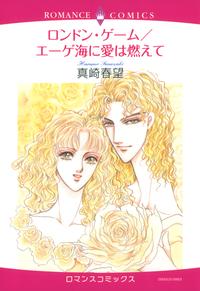
The London Game by Harumo Sanazaki

The London Game

This is the story of Maximilian Rochefort, a commoner with an impressive fortune and equally impressive eyebrows, and Eleanor, the unmarried only princess of a tiny European country that has fallen on hard times. He proposes a game to her – she’ll convince him that the royal family is worth saving and he’ll rescue her. Maximilian and Eleanor knew each other briefly several years ago, and a party at a country house provides an opportunity for them to spend some more time together despite Maximilian’s antagonistic attitude. Unfortunately there are groups of other rich social climbers hanging around. Maximilian quickly determines that Eleanor’s country is basically auctioning her off to the highest bidder, and she’s utterly unaware of what is happening around her. Maximilian asks if she’s ever watched the news or read a tabloid and Eleanor says that her only reading material is “the front page of the Financial Times” because her father has always encouraged her to make appearances at charity functions instead of learning about current events. Maximilian yells “Are you an idiot?! It should be a crime to grow up this naive and unsullied! Think a little bit about who you are!” I found this scene very amusing, because all too often heroines in romance manga are idiots and no one calls them on it. Eleanor grows up a little bit and Maximilian stops acting aggressively petulant. Sanazaki’s art is detailed, lush, and a little bit stylized which is exactly the type of illustration I tend to look for from romance manga. I enjoyed the backup story about a vengeful ex-boyfriend “Flames of Love in the Aegean Sea” much less because it was a bit too rapey (in the old 1980s romance novel sort of way) for me.

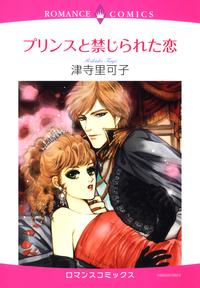
Forbidden Love With a Prince by Rikako Tsuji

Forbidden Love With a Prince

This was a fun single volume story about an aspiring actress named Sherry who is studying in a tiny European country (there are so many of those in romance manga) when she has an encounter with a handsome yet slightly weird young man named Ernest at her part-time job working in a cafe. He tries a slightly cheesy pickup line on her and she dismisses him. They meet in a park and Ernest woos Sherry in the undercover way commonly practiced by princes of tiny European countries who don’t wish to reveal their royal natures to their crush objects. Ernest and Sherry’s dating activities include foiling bank robberies and accidentally getting handcuffed together. Sherry’s career begins to take off and Ernest vanishes from her life. When Prince Ernest attends Sherry’s new play, she finally realizes who he is. Sherry then has to make a decision – should she continue with her career or become a queen? Tsuji is very good at portraying facial expressions and body language, and it was particularly interesting to see the way Ernest is open and enthusiastic when he’s undercover and then turns much more stiff and formal when he’s in his role as a Prince. The story took up the whole volume of the manga, and I was amused to see that there were little touches with character introductions which highlighted the possibility of a number of spin-off stories featuring Ernest’s friends and relatives.

Romance manga might not be great literature, but it is the perfect thing sometimes when one wants to be diverted and distracted by the spectacle of pretty people falling in love. Both of these volumes are good examples of the genre, and I’m glad that Jmanga.com has stepped up to translate so much romance manga in recent months.

Electronic access provided by the publisher.

Filed Under: MANGA REVIEWS, REVIEWS Tagged With: jmanga.com, ohzora

  • « Go to Previous Page
  • Page 1
  • Interim pages omitted …
  • Page 276
  • Page 277
  • Page 278
  • Page 279
  • Page 280
  • Interim pages omitted …
  • Page 346
  • Go to Next Page »
 | Log in
Copyright © 2010 Manga Bookshelf | Powered by WordPress & the Genesis Framework