• Skip to primary navigation
  • Skip to main content
  • Skip to primary sidebar
  • Home
  • About Us
    • Privacy Policy
    • Comment Policy
    • Disclosures & Disclaimers
  • Resources
    • Links, Essays & Articles
    • Fandomology!
    • CLAMP Directory
    • BlogRoll
  • Features & Columns
    • 3 Things Thursday
    • Adventures in the Key of Shoujo
    • Bit & Blips (game reviews)
    • BL BOOKRACK
    • Bookshelf Briefs
    • Bringing the Drama
    • Comic Conversion
    • Fanservice Friday
    • Going Digital
    • It Came From the Sinosphere
    • License This!
    • Magazine no Mori
    • My Week in Manga
    • OFF THE SHELF
    • Not By Manga Alone
    • PICK OF THE WEEK
    • Subtitles & Sensibility
    • Weekly Shonen Jump Recaps
  • Manga Moveable Feast
    • MMF Full Archive
    • Yun Kouga
    • CLAMP
    • Shojo Beat
    • Osamu Tezuka
    • Sailor Moon
    • Fruits Basket
    • Takehiko Inoue
    • Wild Adapter
    • One Piece
    • After School Nightmare
    • Karakuri Odette
    • Paradise Kiss
    • The Color Trilogy
    • To Terra…
    • Sexy Voice & Robo
  • Browse by Author
    • Sean Gaffney
    • Anna Neatrour
    • Michelle Smith
    • Katherine Dacey
    • MJ
    • Brigid Alverson
    • Travis Anderson
    • Phillip Anthony
    • Derek Bown
    • Jaci Dahlvang
    • Angela Eastman
    • Erica Friedman
    • Sara K.
    • Megan Purdy
    • Emily Snodgrass
    • Nancy Thistlethwaite
    • Eva Volin
    • David Welsh
  • MB Blogs
    • A Case Suitable For Treatment
    • Experiments in Manga
    • MangaBlog
    • The Manga Critic
    • Manga Report
    • Soliloquy in Blue
    • Manga Curmudgeon (archive)

Manga Bookshelf

Discussion, Resources, Roundtables, & Reviews

Reviews

Shojo Beat Quick Takes – My Love Story!! 9 and Honey So Sweet 3

July 24, 2016 by Anna N

My Love Story!! and Honey So Sweet both feature heroines in love with unconventional boyfriends who are viewed by society based on harsh exteriors when they are incredibly nice on the inside. While both series have a similar vibe, My Love Story!! is a bit more broadly comedic, and as fitting with the title, Honey So Sweet is a bit more sweet and simple. Both of these series are dealing with a similar plot point in these volumes, the random dude with a crush on the girl in an established relationship, so I thought it would be fun to look at both series.

Honey So Sweet Volume 3 by Amu Meguro

There were hints of things getting derailed a bit in the last volume when mysterious new boy Futami shows up and rapidly befriends Onise, but he turns into a full-blown frenemy in this volume. Futami starts inserting himself in Taiga and Nao’s relationship, flirting with Nao, and just generally being just on the edge of skeevy, always with an excuse or a habit of brushing off his comments as jokes. The school is also distracted with an upcoming sports festival.

One of the productive ways that Onise deals with the situation is sitting down and talking with Sou about his feelings. Sou tells Onise that he needs to work on his self confidence, and he can’t ignore Nao’s feelings in the situation either. Nao seems to like Futami but is also uncomfortable around him. She’s also wanting to get along with Onise’s new friend.

Onise ends up sending Futami a formal invitation to duel, but the duel ends up with Onise just talking with Futami very frankly. Futami ends up revealing some of the insecurity he’s been dealing with too, and he actually ends up being somewhat sympathetic. While there are some continued live triangle complications ahead, I would be very surprised if Onise and Nao get separated. The core of this manga is exploring how a relationship can turn a couple with some emotional issues into better human beings. Even though there are some typical plot elements like a school festival and love triangle, Honey So Sweet portrays all these events with some emotional depth and delicacy, making it a refreshing read.

hss3

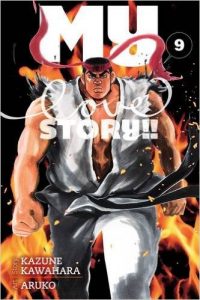
My Love Story!! Volume 9 by Kazune Kawahara and Aruko

In contrast, My Love Story!! is equally sweet, but it explores love triangle plot points with broad comedy. Yamato gets a job working at a pastry shop, and chef Ichinose decides that she’s his muse. Yamato keeps enjoying sweet treats, but she likes bringing them to Takeo even more. Takeo is in the grips of an insecurity attack, spending time staring out at the beach with his feelings in turmoil. While Suna encourages Takeo to not worry, his observational powers see Ichinose staring when Takeo visits Yamato at work. When Yamato cheerfully tells Ichinose that Takeo is her boyfriend, he runs out of the bakery to tell Takeo to break up with her, yelling that she’d be way better off with him. Ichinose suggests that Takeo date a bear instead, because they’d have more in common, but Takeo calmly says that he’s not going to break up with his girlfriend. Ichinose vows to not let Takeo win and stalks off.
mls9

One of the things I like about this series is that everyone wears their emotions on their sleeves. There’s never any doubt about what someone might be feeling at any particular time, even if this results in some ridiculous confrontations between nebbishy pastry chefs and giant high school boys. Ichinose clearly has placed Yamato on an unrealistic pedestal, assuming that she’ll be able to help him win a competitive baking contest, even though her skills aren’t up to a professional standard yet. Yamato is a bit oblivious, enjoying her new job and still clearly only in love with Takeo. The contrast between Ichinose’s thoughts and Yamato’s straightforward comments about her boyfriend and her love of sweets is hilarious. As Takeo works through his episode of insecurity, he becomes more resolute than ever about the future of his relationship.

It was fun to contrast the way both of these volumes tackled similar plot points. Honey So Sweet was more subtle and emotional, while the comedy of My Love Story!! allowed it to explore similar issues of insecurity and relationship testing with more over the top emotional reactions. Both of these series are thoroughly enjoyable, in part because even though the main couples in them might be tested from time to time, the strength of the relationships make the reader secure about a good outcome even if an ending isn’t yet in sight.

Filed Under: REVIEWS

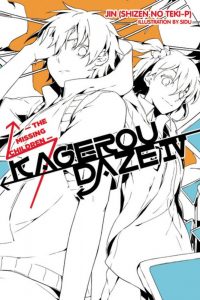
Kagerou Daze IV: The Missing Children

July 24, 2016 by Sean Gaffney

By Jin (Shinzen no Teki-P) and Sidu. Released in Japan by Enterbrain. Released in North America by Yen On.

As we reach the end of this book, our heroes are getting a lot closer to figuring out why they have these strange eye powers and what the powers actually are. In fact, they get a lot closer than the reader, as we’re shown parts of a diary that Marie’s grandmother kept, but they get to read the whole thing. Admittedly, we can connect some dots, but I am reminded once more that this is a light novel series based off of a series of songs, and that the intended audience is meant to be familiar with those songs. In particular, Shinigami (Reaper) Record, which introduces us to Azami’s story that is fleshed out here.

kagerou4

Azami is a mysterious supernatural creature – called a Reaper, she seems to also have many traits of a medusa, something which she’s apparently passed along to her granddaughter. Speaking of Marie, the bigger revelation in this book may be just how old she actually is – it’s somewhat startling, particularly given her fairly childlike personality. But of course, when you live alone in a cabin in the woods, there’s not as much chance to evolve or learn. And there’s also Konoha, whose real identity we’ve been able to guess with information from the previous two books, but who looks to be just as different from his other self as Ene is from Takane. Actually, the biggest disappointment here may be Shintaro, who still has a tendency to get dragged along and whine much of the time – indeed, the trip to and from the cabin is an endless stream of irritation from him.

If there’s a larger issue with these books, it’s the length – they’re much, much shorter than the average Japanese light novel, and you barely get into the book before it’s already finished, padding out its page count with lots of character design art and advertisements for the manga. Each of the last three volumes has featured a segment of the main plot and a more serious side story that gives us backstory and hints, but the backstory really is not connecting fast enough for my taste, and some of the things I was most interested in last time (Kano confronting Shintaro in Ayano’s body) is glossed over here, as Kido reassures Shintaro in a way that makes it seem like just a bad nightmare.

This volume was delayed two months, so the next one will come sooner than expected, and I’m hoping that less lag time will allow me to get into it a bit more. It would seem to involve Kano in a big way, so maybe I’ll finally get the answers to my questions. Kagerou Daze is enjoyable, particularly to fans of the multimedia franchise, but I still wish it wasn’t so fragmented. And short – even this review is underlength when I try to discuss it.

Filed Under: REVIEWS

Durarara!!, Vol. 4

July 21, 2016 by Sean Gaffney

By Ryohgo Narita and Suzuhito Yasuda. Released in Japan by ASCII Mediaworks. Released in North America by Yen On.

Narita’s books, be it Baccano!, DRRR!!, or what have you, all enjoy being endlessly re-readable. Not only do you get the single-volume habit of various disparate and seemingly unconnected plots all crashing together at the end, which certainly happens here, but you also see this as part of a series whole, as he also teases out future major plot and characters that don’t pay off here but will several books down the line. I’ve called DRRR!! a nerd series, and it’s not just because Erika and Walker talk a lot about anime and manga types (their discussion of whether Celty is a tsundere or not is one of the highlights of the book). It’s because his series cry out for Tumblr analysis and bullet points explaining what’s going on and how it affects things down the road.

drrr4

As an example, this volume is very good about taking the metatext and making it textual. In addition to the analysis of Celty’s character and how it applies to a seemingly ‘real life’ person, we meet Izaya’s twin younger sisters, Mairu and Kururi, who are not as loathsome as him but do seem to be just as difficult to stop. They’re polar opposite twins, as per the TV Tropes article, but Izaya helpfully tells us they deliberately engineer this in order to balance each other out, the better to be one person in two bodies (which is what they think they are). This isn’t the sort of exposition you expect to be casually laid out in the book itself. Things get even weirder when, at the end of the volume, Izaya has to meet with an even higher level of manipulator to find out about events he wasn’t around for (most of them, in fact). We don’t learn all that much about him, but what we do get seems to imply that Izaya is literally meeting the book’s omniscient narrator.

This is not to say the book does not function as a normal book as well. There’s a lot going on, as always, but if you pay enough attention it’s easy to follow and have fun (indeed, the narrative helpfully spells out the difficult bits, like the fact that all the money Celty lost ends up returning to her by the end of the volume). There’s car chases and fights, Shizuo throws people across the city and hits them so hard they need reconstructive surgery. We meet Aoba Kuronuma, who is a new high school student who is clearly there to manipulate Mikado for evil ends, but at the same time he himself is thrown off by the higher-levels weirdness of the Orihara Twins. (Speaking of the Twins, those who disliked Namie’s creepy incest subtext in previous books won’t be happy to see Mairu and Kururi making out here – again, they deliberately invoke tropes, even distasteful ones.) My favorite subplot was probably that of Shizuo’s brother, who runs into the cutest serial killer you’ll ever see, and helps her redefine what it means to be a monster.

Speaking of said killer, I mentioned how DRRR’s novels tie into each other and reward re-reading, and the same can be said for “The Naritaverse” as a whole. Nebula, the evil corporation we’ll see in Baccano!, is still the evil corporation 70 years later in DRRR!!. We hear about a couple of thieves who liked to dress in costumes, clearly Isaac and Miria. And while Ruri’s ‘monstrous’ nature is kept deliberately vague, anyone who reads Narita’s unlicensed series Vamp! will have figured it out already. DRRR!! is a nerd series that rewards overanalysis, and also a lot of fun and action packed. It ends with everyone in the cast having food with friends and loved ones, except Izaya, who is alone and unloved. Needless to say, this pisses him off and he will no doubt be far more active in future books. Can’t wait.

Filed Under: REVIEWS

7th Garden, Vol. 1

July 17, 2016 by Sean Gaffney

By Mitsu Izumi. Released in Japan by Shueisha, serialization ongoing in the magazine Jump Square. Released in North America by Viz.

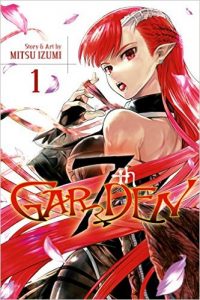
For a nation that mostly seems to revolve around Shintoism and Buddhism, Japanese manga authors seem very taken with Christianity. Not necessarily for the actual religious thought behind it, but I think they see the Bible as sort of a Lord of the Rings-type book, filled with epic battles between angels and demons, lots of divine punishment, and a few bouts of sinning for good measure. There have been quite a few stories talking about a battle between heaven and hell with Earth as its grounds, most famously Neon Genesis Evangelion, but Angel Sanctuary is also up there. 7th Garden is firmly along those lines, as a young man with a tortured past finds himself allying with a demon with a tortured past in order to protect his young mistress, who may in fact have a tortured past as well. All of this revolves around the symbols and imagery of Christianity, slightly distorted,

7thgarden1

This actually ended up being a lot more wholesome than the descriptions I saw led me to believe – I probably should have guessed that give that the busty demon on the cover actually has her back turned to the reader, rather than facing them chest first. Said demon is Vyrde, who is accidentally freed by our hero from a thousand year sleep, and proceeds to be the best thing about this series once she wakes up. She’s playful, seductive, and amoral in just the right amount, and even the ‘sneak into the hero’s bed at night’ feels for once as if it didn’t come out of the pages of ‘Love Comedy For Beginners’. Probably because there’s not much love here – yes, there’s a suggestion that Awyn (the hero) and Marie (his mistress) sort of kind of like each other, but make no mistake about it: this is a battle manga, with ridiculous swordfights and lots of corpses.

I mentioned Christianity above, but given that in this series the demons are the good guys and the angels the bad guys (very common in manga), it’s unsurprising that this fantasy world calls it ‘anti-Quoristiantity’, enforced by ‘anti-Knights, who as you might imagine with a name like that tend to mete out anti-Justice. To be fair, we’re told that the mooks we see killing innocents here are not Knights but Apostles – those who were not good enough to be Knights so do the Church’s dirty work. This does allow our hero to be somewhat more cavalier about life and death than you’d expect from a Jump manga – then again, this is Jump Square, and Blue Exorcist can also have very ambiguous morality. The most interesting part of the manga may have been told the end, as we’re fed little droplets of backstory hints that might pay off. Who is Ashriel, really, and what does she know? (With a name like that, the foreshadowing isn’t subtle.) What do they mean by the village not existing? And is there any significance that our demon’s real name is so close to Awyn’s innocent mistress? (That last may be a no. I suspect it’s the Western name equivalent of Isumi and Izumi being nothing alike.)

There’s a lot of tease here but not much beyond promise, and the fighting is good but can get confusing (on a level of 1 to Trigun Maximum, it’s about a 4). But it does show promise, and I am interested enough to pick up a second volume. Recommended for those who like fantasy and don’t mind religion being used as a heavy spice.

Filed Under: REVIEWS

Haikyu!!, Vol. 1

July 14, 2016 by Michelle Smith

By Haruichi Furudate | Published by VIZ Media

haikyu1

It’s been a good year so far for sports manga! Competitive cycling is represented in Yen’s Yowamushi Pedal, August brings the first two-in-one omnibus edition of Kuroko’s Basketball, and volleyball-centric Haikyu!! is on shelves now. I am just about in heaven! (If someone would just license Mitsuru Adachi’s Rough, that would seal the deal.)

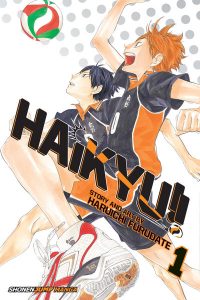
At first glance, Haikyu!! looks a little bit like Slam Dunk. Tobio Kageyama is the dark-haired character with talent and experience, and Shoyo Hinata is the enthusiastic redhead with a lot of potential but who lacks many basic skills. They join their high school’s volleyball team in their first year and clash instantly, fueled by a previous encounter where Kageyama’s team trounced Hinata’s in a middle-school tournament, but must put this aside and learn to function as teammates. What’s different is that Kageyama has more obviously negative qualities than Slam Dunk’s Rukawa had, including a perpetual snarl and dismissive attitude, while Hinata has more positive qualities than Sakuragi possessed, like discipline and team spirit.

I really liked watching their relationship develop, as it eventually becomes apparent (as they practice for then participate in a match against a couple other new members) that each is what the other has been waiting for. Kageyama’s previous team turned their backs on his demanding leadership and wound up losing the aforementioned tournament. None of them could keep up with the pace he was attempting to set. Hinata can, though, and he’s so grateful to finally have teammates and someone to “set” the ball for him, that he is positively eager to get in position to execute the plays that Kageyama’s old team grumbled about.

Their rivalry is far from over, but as the first volume draws to a close, it’s clear they’ve begun to appreciate the other more and are warming to the idea that, if they used to be the greatest enemies, then now they could be the greatest teammates. Inevitably, their journey will take them to Nationals, for that’s the goal of seemingly all sports manga series. I’ll be looking forward to it!

Haikyu!! is ongoing in Japan, where the 22nd volume has just been released. VIZ will be releasing a new volume each month through at least January 2017, which is as far as their Amazon listings presently go.

Review copy provided by the publisher.

Filed Under: REVIEWS Tagged With: Haruichi Furudate

Ranma 1/2, Vols. 29-30

July 14, 2016 by Sean Gaffney

By Rumiko Takahashi. Released in Japan by Shogakukan, serialized in the magazine Shonen Sunday. Released in North America by Viz.

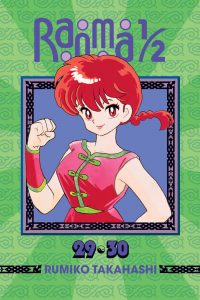
There’s a lot I could discuss with this omnibus of Ranma 1/2, which is a strong one. There’s Nabiki’s 2nd and final focus story, where she meets her match in a man dedicated to making others spend money on him. It’s nice to see Nabiki actually tricked once or twice during this arc, and Ranma and Akane watching the debt rack up are hilarious. There’s also the story with Pink and Link, where Shampoo once again doesn’t seem to realize that the whole thing could be solved by her not being a violent jerk (to be fair to her, this applies to most of the cast as well). There’s also an amusing story that quickly turns bittersweet, as Ranma tries to turn a cold that temporarily stops his curse into an excuse to finally meet his mother at last. It’s a strong book.

ranma15

But a lot of these reviews have been about my own experience with Ranma back in the 1990s (this is why I still use the old-fashioned romanization), and therefore it would feel wrong if I didn’t talk the rest of this review about Akari Unryuu. I was never a big watcher of the Ranma 1/2 anime, preferring the manga and fanfiction. And in any case, the Ranma anime had ground to a halt right about Vol. 26’s material, meaning that the last 12 or so volumes weren’t animated. And I never really got the popularity of the Ryouga/Ukyou pairing in fandom either, because I hadn’t seen the anime do a much bigger job of putting them together. And, given I liked Ryouga and wanted him to be happy, I always hoped something would come along.

Now it has, as we meet a young girl and her farm of sumo wrestling pigs. Make no mistake about it, Akari’s introductory story is as ridiculous as all the other Ranma stories, and I admit if she’d never showed up again it wouldn’t be all that different from, say, the story earlier in the book with Pink and Link (who indeed never show up again). Akari is looking for a husband strong enough to defeat her champion sumo pig, and has been massacring the males of Nerima as a result. Ryouga, naturally, flips the pig into the air with his umbrella. It’s love at first sight… if only Akari wasn’t so devoted to pigs. Every time she mentions them Ryouga twitches, to Akane’s confusion (a reminder that she never, ever does figure out Ryouga is P-chan) and Ranma’s frustration.

Ranma asks here, and the fandom asked constantly, whether Akari would simply fall in love with anyone who beat her pig. But Akari really does seem to have fallen for Ryouga himself, to the point where, when she mistakenly thinks he hates pigs, she has her sumo pig beat her up till she can hate them herself and solve the problem. (This does not solve the problem. But then, if you’ve been reading Ranma 1/2, you’d have guessed this.) And tellingly, at the end of this short arc Ranma decides to solve the problem by exposing Akari to Ryouga’s curse – something that, as I’ve said above, never happens with Akane. So now Akari has the best of both worlds – she loves Ryouga, AND he turns into a pig.

I won’t deny, 20 years on, that Akari as a love interest is a bit flat. but then again, most Ranma characters are more two-dimensional than Fandom makes them out to be. She’s also introduced towards the end of the series, clearly as a love interest – go see ‘Pair the Spares’ on TV Tropes to see how this upsets people. But I still don’t really care, and Takahashi clearly didn’t either. Akari was popular enough that she gets a cameo at the end of this book, writing Ryouga a letter (which promptly gets destroyed, because that’s the kind of series this is, but hey). And she’ll show up again next time. In any case, this volume of Ranma 1/2 is excellent, and even if you don’t like Akari as much as I do (few do), you should still pick it up.

Filed Under: ranma 1/2, REVIEWS

Haikyu!!, Vol. 1

July 10, 2016 by Sean Gaffney

By Haruichi Furudate. Released in Japan by Shueisha, serialization ongoing in the magazine Weekly Shonen Jump. Released in North America by Viz.

For a genre that has a reputation for not succeeding in North America, there have been quite a few sports manga released over here, most of them connected in some way or another with Weekly Shonen Jump. There’s been Slam Dunk, and Whistle, and Eyeshield 21. It’s a classic and established genre in Japan, with its own cliches and foibles, and I’ve read enough of them to know what to look for and to be surprised when something I expected didn’t happen. The type of sport shown doesn’t really matter – basketball and soccer are always popular, though not baseball – Jump avoids that, possibly as Sunday and Magazine are so well known for baseball titles. And now we have Haikyu!!, which tells us about a down-on-its luck high school volleyball team trying to make it back to the finals with some promising but troublesome rookies.

haikyu1

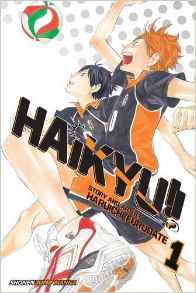
Our two heroes are on the cover, although it’s possible that the dark-haired guy is more of an anti-hero. Hinata is a very typical Jump hero – short, overenthusiastic, filled with amazing athletic abilities that no one has ever been able to hone, but also prone to overconfidence and lack of experience. Kageyama, at first glance, appears to be the classic polar opposite to that sort of character – stoic, always frowning, experienced and unlikely to make the sort of rash decisions that Hinata would. But, as it turns out, this is just a fakeout, and was possibly my favorite part of the book. For Kageyama is actually an arrogant guy with a very hot temper, who expects to be the star and is rather frustrated that this is actually a team sport. Seething ball of rage Kageyama is a very interesting character, and I look forward to seeing more of him.

If you don’t know volleyball, no worries – Hinata barely knows the basics as well, so we get a lot of explanations. We also get a whole lot of characters, typical for a series like this – a team needs players, after all. There’s 2 third years who play good cop/bad cop, and an overzealous 2nd year who matches the rookies’ enthusiasm. There’s a tall, arrogant first-year whose face every reader will want to punch, and I can’t wait to find out what kind of situations he’ll have to go through before he stops being a complete jerk (he’s on the same team as our heroes, so will no doubt have to stop at some point). Oh yes, and the female manager is cool rather than cute.

There’s nothing particularly groundbreaking here, though as I said I was surprised and pleased by a few of the character choices. It’s just a sports manga, well-told. It’s 20+ volumes in Japan, which means that Viz is going to be releasing it every month for a while, so get used to these guys. And it’s the start, hopefully, of a sports manga renaissance, as now that Slam Dunk has finally finished, Viz is also picking up Kuroko’s Basketball as well. Can Touch or Major be far behind? (Well, yes, they can. Far, far behind.) In any case, Haikyu!! is a fun and energetic sports manga in the classic Jump tradition. You’ll enjoy it.

Filed Under: REVIEWS

Princess Jellyfish, Vol. 2

July 7, 2016 by Sean Gaffney

By Akiko Higashimura. Released in Japan in two separate volumes as “Kuragehime” by Kodansha, serialization ongoing in the magazine Kiss. Released in North America by Kodansha Comics.

Princess Jellyfish is turning out to be a difficult but worthy read for me. I spent much of this omnibus being irritated by the majority of the characters, either for making stupid decisions, being horrible people, or having the self-awareness of a gnat. And of course, that’s what the whole point is. It’s where the majority of the comedy comes from, and also the character development. Without Tsukimi’s introvertedness and low self-esteem, without Inari’s blackmail and vampishness, and without Kuranosuke’s amazing unself-awareness (though he’s above the majority of Amars, to be sure), we wouldn’t have anything to read about. And all of these aspects are in this volume in abundance.

jellyfish2

Tsukimi is our heroine, of course, and so she gains the most depth here, even as she takes a few steps back as well. I’m still not particularly happy with Kuranosuke’s constant attempts to get her to do things and be more outgoing, but it does lead to a few nice moments, particularly when they’re designing dresses based on types of jellyfish and Tsukimi unleashes her inner fashion designer. (I also appreciates the fact that, while she does have untapped talent, things weren’t perfect right off the bat and the first attempt was totally wrong.) Sadly, she alsp sees the guy she has a crush on with another woman, and has no idea how to deal with it, even as she’s unsure what her feelings are. She equates love as something that makes her a ‘normal girl’, something to be truly feared.

And while the residents of Amars may not be normal girls (though they show surprisingly more aptitude at attempting it than Tsukimi does), Kuranosuke and his family prove to be just as screwed up. Inari is trying to tempt Shu using sex as a weapon, but he’s repressed (as we discover here, he seems to have been traumatized by walking in on his father as a young boy) to a point where she’s actually thrown off her game. Inari is at her most interesting when she’s like this – the idea of Shu being a genuine innocent virgin almost horrifies her a bit – but I’m unsure how long the manga can keep this plot going. She certainly has staying power, I’ll grant you. As for Kuranosuke, he may be the most interesting character so far, even if I keep waffling between liking and disliking him. He’s amazingly selfish most of the time, and, just like Tsukimi, seems horrified at the idea of falling in love like a normal guy.

It’s the tension that keeps me going as a reader, seeing how far the author can take all these plot points – Kuranosuke’s secret that he’s actually a man, Inari being terrible, etc. – and actually have them collapse. And, of coruse, there’s the fashion design, which I suspect is going to take up more and more of this manga’s time. It’s not perfect, but it’s the flaws that make Princess Jellyfish so fascinating.

Filed Under: REVIEWS

Battle Rabbits, Vol. 1

July 5, 2016 by Sean Gaffney

By Ameichi. Released in Japan by Ichijinsha, serialization ongoing in the magazine Comic Zero-Sum. Released in North America by Seven Seas.

Back in my pre-blogging days I used to write up the week’s manga shipping list on my LiveJournal, similar to Manga the Week of but with less commentary. I noted the Japanese company the work came from, and what genre it fell into – shonen, shoujo, seinen, josei, or “whatever Wings is”. The last was my running gag for Shinshokan’s flagship magazine, which by all rights should probably have fallen under shoujo, but always had a bit more action and fantasy than your typical Margaret or Hana to Yume works. Of course, this was about 7-8 years ago, and now we know there’s also GFantasy, and indeed Comic Zero-Sum, which is where today’s title comes from. Battle Rabbits not *quite* BL, as there’s never any actual follow through, but I would say it caters to BL readers who don’t mind just being teased. And oh do they get fanfic fodder here.

battlerabbits1

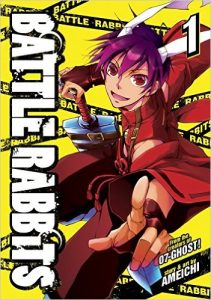
I had actually forgotten this was a Zero-sum title until it arrived. Based on title alone, I was expecting a different kind of Seven Seas series, catering to their flagship demographic. And to be fair, there is a young girl wearing rabbit ears in this first volume. Mao is cute, and a bit of a ditz, and there are precisely zero readers who would get this title for her, because oh those guys. We start with our hero, Kaguya, who really should have known what was going to happen just by looking at his name. As a child, his father was murdered by a mysterious demon, but no one believed him and called it a suicide. Now he’s in high school and still dreams of getting revenge. Which, good news! A delinquent with a grudge against Kaguya gets possessed and attacks him, and we find out that Kaguya is actually a Battle Rabbit – which technically are supposed to defend the Earth but in actually seem to, as many of these titles are wont to do, stop people whose personal life problems are making them turn into monsters and heal them.

Despite the delinquent clearly being tsundere for our hero, the real BL tease comes in the 2nd half of the volume, when we meet Hijiri, leader of the Battle rabbits’ base on Earth. It turns out Kaguya is not only a Battle Rabbit but basically King Battle Rabbit, and thus everyone’s calling him “Young Master” and such in the best Little Lord Fountleroy-sama tradition. Hijiri meets him by putting a ring on his finger, uses mind control to get him to agree to fight as a Battle Rabbit for them, and later pops up in a dream literally in a wedding dress marrying him. So yeah, the authors (who have mushed their names together as a single pen name) know their audience. I’m less taken with Kaguya himself – I liked the idea that his need for revenge is just too emotional a reason to actually fight, but when he’s reluctant he’s far more generic. Oh yes, and Mao, the female Battle Rabbit, does the third-person speaking thing, for those who don’t like that style.

If you enjoy handsome guys looking cool and saving the day with a smile and a smirk, you should get a lot out of Battle rabbits. I’m not sure I’d be desperate to continue it, but as I said before, this series has a demographic and knows how to hit said demographic right in its sweet spot.

Filed Under: REVIEWS

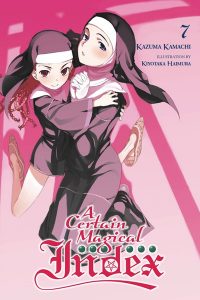
A Certain Magical Index, Vol. 7

July 3, 2016 by Sean Gaffney

By Kazumi Kamachi and Kiyotaka Haimura. Released in Japan as “To Aru Majutsu no Index” by ASCII Mediaworks. Released in North America by Yen On.

There is a certain amount of religion in Index, more and more as the series goes on, in fact. The whole point of the Magic side of Index is that it’s made up of various religious factions who are at odds with each other and themselves, and even an Angel has gotten in on the act. That said, I’m not really sure Kanachi has anything deep to say about religion in particular. I think he’s just using the basics as fodder for what he wants to do, which is tell stories where cool things happen. Which is fine, and there’s lots of cool things going on in this volume of Index. I quite enjoyed it. But I also grew up Roman Catholic, and the group of nuns that are introduced here adhere far more to the “Spanish Inquisition” type than the more modern Catholic Church. In fact, the text goes out of its way to say “Roman Orthodox”, and casually says the word Catholic doesn’t really apply to them anymore. Which is true, because what we have here is not a convent, it’s a paramilitary unit.

index7

Introduced in this volume: Laura Stuart, Orsola Aquinas, Agnes Sanctis, Lucia, Angeline, Saiji Tatemiya. Yes, Yen’s translation spells it Agnes, not Agnese. I think that’s fine. For anime and manga readers expecting Itsuwa, she was added to the adaptations but isn’t in the light novel. No worries, she’ll turn up later. This takes place a whole week after Book 6, which is huge in Index terms. for Railgun readers, Misaka’s not in this one, probably as she’s still in California dealing with events in the Railgun SS novel. For Accelerator fans, the Accelerator manga’s start takes place around this time.

Laura Stuart is the most important of the names mentioned above. For all of the amusing “Your Japanese sounds stupid” jokes and occasional dojikko moments she gets, she’s clearly meant to be to the Magic Side what Crowley is to the Science side, i.e. a chessmaster who’s always thinking 10 moves ahead of everyone else. As Stiyl notes, she’s the one who told all those lies about Index that kicked off the series in the first place (a popular fan theory is that she’s Index’s mother, possibly as that makes it much worse), and certainly nothing that happens in these pages seems to surprise her – everything turned out as planned. That said, simply due to her nature and the way she’s written the reader tends to find her more sympathetic than Crowley (who, as we learn here, is likely also a magician in any case).

Much of the volume deals with a grimoire called The Book of the Law, written by Crowley, which is supposed to be undecodable, except Orsola thinks she knows how to decode it. Orsola is basically the one Roman Orthodox nun we meet here who isn’t a villain, and her tendency to underplay horrific injuries and forgive those who have attempted to kill her must surely strike a familiar chord with Touma. As for Agnes and the others, they’re zealots, thinking nothing of lying to Touma and the others about absolutely everything as, well, they’re non-Catholic heathens, so who cares? That said, Touma, who possible has been spoiled for the 11th novel, says he can totally see him being on Agnes’ side later. Touma tends to be on the side of whatever he thinks is right at the time.

There’s more I could discuss, including Index (who once again gets a lot to do) using a whole lot of magic given that she’s someone who supposedly is unable to use magic (I suspect that Laura may be responsible for that as well), but I think this is getting a bit long. Suffice to say this is a strong volume of the Magical Index series that will please its fans, unless they’re hardcore Catholics, in which case please note that Index is to actual religious theory of today what Goofy is to an actual dog.

Filed Under: REVIEWS

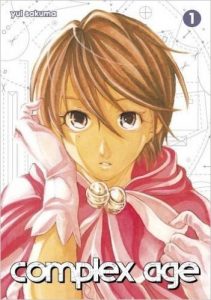
Complex Age, Vol. 1

July 1, 2016 by Sean Gaffney

By Yui Sakuma. Released in Japan by Kodansha, serialized in the magazine Morning. Released in North America by Kodansha Comics.

The genres that make up the Japanese manga industry have been becoming more fluid over the last few years, and there are titles and even entire magazines that don’t quite fit the label. That said, I still try to always put where the manga first came out in my reviews, both as a helpful reference and because it can be useful to see if you’re going to like something. Jump shonen titles are very different from Magazine shonen titles, and both of those are equally different from a Sunday title. A title that runs in Betsucomi is probably never going to fly in Hana to Yume. With seinen and josei it’s a bit less regimented, but you still see it. All of which is a fairly long preface to explain that I was rather surprised to see that Complex Age ran in Weekly Morning, a seinen magazine, rather than the josei magazine Be Love, where I would have expected it.

complexage1

Complex Age stars Nagisa, a mid-twenties OL who also has a hobby of cosplay that takes up most of her time and money. She creates the costumes herself, and goes to show them off at the latest Comiket and other such events, along with her friend Kimiko. Her obsession is a long-running magical girl series that isn’t quite PreCure, but it’s close enough for jazz. She is, however, running into several problems. She still is trying to keep her cosplay a secret from her office life, particularly as some of her coworkers seem like the sort who would use it against her; another, younger girl comes along and looks absolutely perfect for the role that Nagisa is cosplaying herself; and Nagisa is getting to the age where it’s harder and harder to realistically play a 14-year-old magical girl. She’s also really tall, which also doesn’t help. This culminates in someone at the even calling her a “giant old lady”, causing her to snap and have a bit of an emotional breakdown.

I’m trying to think of a better way to say it, but I can’t: this is a very good series. The characters all have a depth and nuance that takes them beyond a level where I would normally expect them to stay. Nagisa’s friend Kimiko in particular amazed me. At first I thought that she might be setting up Nagisa for a horrible fall, and couldn’t imagine why, given they’re best friends, but it turned out to be – pardon the term – far more complex than that. As for Nagisa herself, after the beginning emotional turmoil, she actually proves to be far more mature than you’d expect, helping her new protege even as she inwardly writhes. And while new protege may look the part, there’s a lot more to cosplay than just looking right. The manga shows that cosplay can be a money-sucking hobby, but it never belittles it. And there’s a nasty cliffhanger that immediately makes me want to get the next book.

There’s a one-shot at the end of this volume that was the basis of the ongoing series, and it won an award. It’s quite different, showing a married woman as opposed to Nagisa’s OL, and seems a lot starker, ending in a literal bonfire where she cuts off her old cosplay life and moves on. It was well-told, but I preferred the ongoing tale, and I hope that Nagisa can find an ending that allows her to not be completely cut off from what she loves.

Filed Under: REVIEWS

Haikyu!!

June 30, 2016 by Anna N

Haikyu!! Volume 1 by Haruichi Furudate

I’m always curious to check out new sports manga, mostly because we tend to get so few licensed over here. Haikyu!! is a shonen volleyball title. I still have fond memories of the shoujo series Crimson Hero, so I was curious to see the world of volleyball manga yet again.

Shoyo Hinata saw a volleyball tournament when he was younger, where a shorter than average player made up for his height with some wonderful athleticism. Shoyo is determined to become an elite volleyball player, and he’s not going to let the fact that he’s the only member of his volleyball club in middle school stop his dreams. Eventually by his third year, Shoyo manages to put together a small team and play in a tournament, where he faces down Tobio Kageyama. Tobio is a star player, and he knows it, yelling at his teammates constantly and trying to win on his own. Shoyo loses, but displays a ton of heart in the process and manages to score some great points.

Fast forward to the following year, and it is no surprise that Shoyo and Tobio are starting on the same volleyball team in high school. The captain Daichi Sawamura immediately sees a problem with the two new rookies and tells them that they can’t even practice until they can work as a team. While undisciplined enthusiasm and athletic snobbery might not be the best thing for the disgraced former champion team of Karasuno High, Daichi thinks that they could be an unstoppable team if they are able to work together. Shoyo and Tobio have to earn their way back to the team by facing off against the other first-years.

hai1

The art in Haikyu!! uses plenty of action and unconventional angles to display the tension of the volleyball game. Shoyo leaps all over the place for the ball, and Tobio tends to lurk around in a gloomy manner, then suddenly strike like a snake. The character designs are well-executed, with a large supporting cast all given distinct looks and personalities, making it easy to navigate the mass introductions that come with reading the first book of every series. I enjoyed getting a glimpse of the upperclassmen on the team, who range from being able to give wise volleyball philosophical advice, to being knuckleheads. The dynamic between Shoyo and Tobio is interesting, because it is so antagonistic but it is clear that there’s a lot they can learn from each other. This first volume mainly served to set up the characters and their long road to a possible championship, but it was definitely entertaining.

Filed Under: REVIEWS Tagged With: Haikyu!!, Shonen, viz media

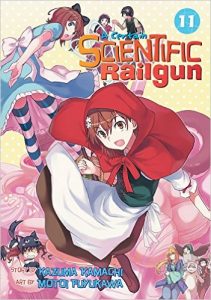
A Certain Scientific Railgun, Vol. 11

June 28, 2016 by Sean Gaffney

By Kazuma Kamachi and Motoi Fuyukawa. Released in Japan as “Toaru Kagaku no Railgun” by ASCII Media Works, serialization ongoing in the magazine Dengeki Daioh. Released in North America by Seven Seas.

I usually decide which series get full reviews and which ones get a review of the first volume and then shuffled off to the Briefs section fairly quickly, but Railgun muscled its way up over the last several volumes with a combination of dramatic plot, action, and excellent characterization. Sadly, that’s not all the series is. As part of the Dengeki line, there’s a certain amount of otaku pandering in its chapters (the same is true of its parent series, Index, and in fact many of the things I’m going to be complaining about originated there). And Railgun just wrapped up a big plot, and clearly wants to fool around a bit before it gets to the next big one. And so we get a volume like this.

railgun11

I’m still attempting to save my complaints about Kuroko for the review of the 8th Index book in August, which stars her, so I will simply note that Kamachi and Fuyukawa seem to think “lesbian” and “sexual predator” amount to the same thing, and they are oh-so-hilarious. We also see a macguffin introduced here, Indian Poker, which lets you see the dreams of someone else – supposedly with their permission, but of course, horny Academy City teens are already using it to dream-screw the hottie of their choice – including Mikoto and Misaki (who at least get a reasonable amount of revenge here). Much of the last third of the book is devoted to Mikoto and Saiai (from ITEM about 6-7 volumes earlier, in case you’d forgotten) attempting to get a special Indian Poker card that increases your breast size, and many, many bust jokes follow, with the final punchline being that the card DID work but on some bystander. Oh, and to top it off, there’s an entire CHAPTER devoted to Awaki Musujime and her shotacon fetish, which if you haven’t read Index must baffle you (and honestly, even if you have read Index it’s baffling.)

Speaking of Awaki, while one can still read Railgun without being cognizant of what’s going on in Index, it’s becoming more and more difficult, due to both sly continuity cameos and callbacks/callforwards. Some time seems to have passed since the last volume of Railgun, which took place during the athletic festival. The astute Index reader can tell this because ITEM now has a lackey, Shiage Hamazura, who will grow very important as the Index series goes on, but not yet. We’re likely sometime between Index books 13 and 15 (we can’t be after 15, for reasons I won’t spoil). Moreover, the entire volume is filled with Index characters – the guy selling the cards that allow you to dream-screw Misaki and Mikoto is “the blue-haired piercings” friend of Touma’s; Frenda mentions her little sister; Mikoto’s dream of a girl wanting huge breasts is clearly Aisa, the vampire killer girl; and yay, we get more hints of the incestuous relationship between the Motoharu siblings. It’s continuity porn, even if you may not want it.

Amongst all this, there is a serious story in the middle, as Kuroko and Uiharu help a young boy with precognition try to save people from various accidents that he has seen. That said, its placement in between the two Indian Poker storylines reads like it was put in to fill out the page count as the author hadn’t quite decided which direction to go yet, and while it shows off how much of an excellent Judgment member Kuroko is that just makes it all the more frustrating that we get the “pervert” talk as a punchline. Railgun can be excellent when it ditches the cameos and fanservice and is about women kicking ass. This is mostly not that volume.

Filed Under: REVIEWS

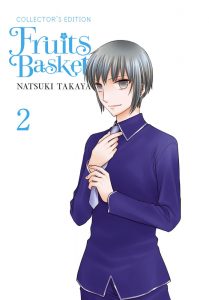
Fruits Basket Collector’s Edition, Vols. 1 & 2

June 26, 2016 by Sean Gaffney

By Natsuki Takaya. Released in Japan by Hakusensha, serialized in the magazine Hana to Yume. Released in North America by Yen Press.

If ever there was a series that cried out for a license rescue and re-release, it was Fruits Basket, one of the biggest gateway manga of the 21st century. First released in North America between 2004 and 2009, the story of a young girl and her encounter with a “cursed” family is one of the most beloved shoujo manga of all time over here. It was also big in Japan, and the re-release we’re seeing is based off of the Japanese re-release. I say that because I know some people will be annoyed that the original author’s sidebars are missing – this is very common with re-released manga, simply as the sidebars tend to be very dated – as Takaya herself says in her afterword. We do see new cute SD-art to replace them, but sadly it repeats itself, so we see the same bookmark-ish art over and over. There’s also a new translation, which reads fine, though of course those who have the old one memorized may find it jarring. It feels a bit freer than the Tokyopop one. Worry not, though, we do have honorifics here.

furuba2

As for the content, what is there to say? If you haven’t read this series, do so right away. I will try not to spoil it, though it’s honestly very difficult not to do so, as the fun of re-reading is going back and seeing all the little hints that I never picked up the first time I was reading the series. I’ve made little secret that my favorite character is Shigure, for example, and I recalled his character getting darker and more manipulative as the series went on. But no, there it is as I reread it. He was like that from the very beginning, it’s just we were distracted by the whole “high school girls!” and flirting with Ayame going on. Likewise, Tohru’s relationship with her late mother, which I think the reader is first meant to see as sweet and touching, already shows some of the dark undercurrents to come.

These two volumes show us the first four of the original release, and you can tell right away that no one was quite sure if it would be a hit yet. Takaya’s previous big hit for Hakusensha, Tsubasa: Those With Wings, was only 6 volumes long. And you can see here that Takaya wants to get a lot of the zodiac introduced and show us their deep traumas and tragedies as quickly as possible, just in case it goes the same amount of time. It is almost startling how fast Hatori’s backstory is breezed though, to give an example, or Momiji’s. The exceptions are Yuki and Kyo – as the two male leads, they get the most focus, and we see the development of their characters over the course of both omnibuses – each wants what the other has, and wishes things could be different.

It’s not all sad boys in snow, though. Fruits Basket could be hilarious much of the time, and the humor works very well. Tohru’s friends Hanajima and Uotani contribute the bulk of it, being the sort of girls you;d normally imagine would never hang out with a bright shining object like Tohru but brought together through circumstances we don’t know about yet to form a deep bond. We see how much the two girls care about Tohru, and worry she might be taken advantage of by the Sohma family, even if they seem nice enough. But Tohru needs a place to stay. And, as becomes clear, Yuki and Kyo need Tohru – as does Shigure, who clearly has some scene that requires her to be there and make the others break out of their shells. We see what might be driving that when we get a few glimpses of Akito, the leader of the family, who manages to terrify Yuki in just a few seconds, leading Tohru to physically push him away – something startlingly unlike her.

If you already have Fruits Basket and are wondering whether to get it again, well, it’s a larger trim with new covers and interstitials, and a new translation. Make up your mind from that. If you haven’t, do so at once. The series only gets better as it goes along, and rewards readers who pay attention. A well-deserved classic.

Filed Under: REVIEWS

Everyone’s Getting Married, Vol. 1

June 23, 2016 by Michelle Smith

By Izumi Miyazono | Published by VIZ Media

egm1I’ve grown a bit wary of josei romances. I’d prefer them not to be smutty, or to derive much of their drama from misunderstandings, or to feature a controlling male lead. Happily, Everyone’s Getting Married avoids all of those things!

Twenty-four-year-old Asuka Takanashi enjoys a successful career as a real estate broker, but what she really wants to do is get married, quit her job, and become a full-time homemaker. I struggled to identify with her at first because of this, but Miyazono does a great job showing how serious a person Asuka is. This isn’t some idealistic fantasy she’s concocted. Asuka works hard at her job, and we soon see that she absolutely will work just as hard to provide a warm environment for her family. Too, the more negative reactions Asuka gets, the more it’s clear for the reader that it’s nobody’s business criticizing her choice.

Unfortunately for her connubial dream, right after Asuka catches the bouquet at a friend’s wedding, her long-time boyfriend breaks up with her, saying, “You’d be happy with anyone who puts a ring on your finger.” Asuka tells herself this isn’t true, but immediately begins attending mixers and matchmaking events, looking for a potential husband. Meanwhile, she keeps running into handsome newscaster Ryu Nanami, who flatly declares, “I’d rather die than get married.” She tries to squash the feelings that are developing, but by the end of the volume they’re going out, even though neither has changed their mind about matrimony.

How refreshing it is to read a story about two adults who are plain-spoken about what they want from life! Nobody does anything spazzy and they are both consummate professionals. I don’t know how they’re going to reconcile their differences—probably we’ll get a happy ending, though I admit I’d be happy if Miyazono took the unconventional route and had them break up. My one complaint is that it’s initially hard to tell whether the conflicting opinions Ryu expresses regarding housewifery (at one point calling it an escape and later a respectable career) represent evolution because of Asuka or just inconsistency. (When he reiterates his respect again towards the end of the volume, it seems much more obviously because of her.) Also, there’s a scene where Asuka berates him, calling him a lowlife and a womanizer, and then just a few pages later he’s praising her for not judging others’ choices. Um…

All in all, this was a nice surprise and I look forward to volume two!

Everyone’s Getting Married is ongoing in Japan, where it is up to five volumes. VIZ will publish the second volume in English in September.

Review copy provided by the publisher.

Filed Under: REVIEWS Tagged With: Izumi Miyazono

  • « Go to Previous Page
  • Page 1
  • Interim pages omitted …
  • Page 216
  • Page 217
  • Page 218
  • Page 219
  • Page 220
  • Interim pages omitted …
  • Page 346
  • Go to Next Page »
 | Log in
Copyright © 2010 Manga Bookshelf | Powered by WordPress & the Genesis Framework