• Skip to primary navigation
  • Skip to main content
  • Skip to primary sidebar
  • Home
  • About Us
    • Privacy Policy
    • Comment Policy
    • Disclosures & Disclaimers
  • Resources
    • Links, Essays & Articles
    • Fandomology!
    • CLAMP Directory
    • BlogRoll
  • Features & Columns
    • 3 Things Thursday
    • Adventures in the Key of Shoujo
    • Bit & Blips (game reviews)
    • BL BOOKRACK
    • Bookshelf Briefs
    • Bringing the Drama
    • Comic Conversion
    • Fanservice Friday
    • Going Digital
    • It Came From the Sinosphere
    • License This!
    • Magazine no Mori
    • My Week in Manga
    • OFF THE SHELF
    • Not By Manga Alone
    • PICK OF THE WEEK
    • Subtitles & Sensibility
    • Weekly Shonen Jump Recaps
  • Manga Moveable Feast
    • MMF Full Archive
    • Yun Kouga
    • CLAMP
    • Shojo Beat
    • Osamu Tezuka
    • Sailor Moon
    • Fruits Basket
    • Takehiko Inoue
    • Wild Adapter
    • One Piece
    • After School Nightmare
    • Karakuri Odette
    • Paradise Kiss
    • The Color Trilogy
    • To Terra…
    • Sexy Voice & Robo
  • Browse by Author
    • Sean Gaffney
    • Anna Neatrour
    • Michelle Smith
    • Katherine Dacey
    • MJ
    • Brigid Alverson
    • Travis Anderson
    • Phillip Anthony
    • Derek Bown
    • Jaci Dahlvang
    • Angela Eastman
    • Erica Friedman
    • Sara K.
    • Megan Purdy
    • Emily Snodgrass
    • Nancy Thistlethwaite
    • Eva Volin
    • David Welsh
  • MB Blogs
    • A Case Suitable For Treatment
    • Experiments in Manga
    • MangaBlog
    • The Manga Critic
    • Manga Report
    • Soliloquy in Blue
    • Manga Curmudgeon (archive)

Manga Bookshelf

Discussion, Resources, Roundtables, & Reviews

Features & Reviews

Demon Love Spell, Vol. 1

December 14, 2012 by Sean Gaffney

By Mayu Shinjo. Released in Japan as “Ayakashi Koi Emaki” by Shueisha, serialized in the magazine Margaret. Released in North America by Viz.

When I first heard this was licensed, I had assumed it was due to the popularity of Maru Shinjo, creator of Sensual Phrase and Ai Ore!, and that it would have lots of hot jerk guys trying to get into the female cast’s pants. Which is absolutely true. But little did I realize that the main reason this was licensed was probably because it played into Viz’s newfound obsession with yokai manga. I mean, this is basically just a sexier Kamisama Kiss, right? With adorable chibi-incubus!

demonlovespell1

This is very much on the ‘silly’ side of Mayu Shinjo’s work, which suits me just fine, as I like her best when she’s putting her heroes through the ringer rather than when they’re emotionally manipulating the heroine. Though there’s a fair bit of that going on here as well. But for some reason, I find it more acceptable here than I do in Ai Ore!. Miko is just a little bit stronger than Mizuki, and less likely to be taken in by some sweet talk and sweet loving (well, except in her dreams, where they’re apparently already gone pretty far). As for Kagura, there is a built-in plot device to keep him from being an ass – he’s in adorable SD-mode! Yes, many things that are hideously inappropriate when a grown man is saying them are totally OK when the guy snuggling the heroine’s breasts can fit easily in between them.

There are a few random yokai demons here, who look similar to the ones we see in, say, Nura, or Natsume’s Book of Friends. Those two titles would probably tone down the fact that Kagura is an incubus, of course. But Mayu Shinjo, who got her start writing softcore porn shoujo for Shogakukan and has never really strayed quite that far away, knows how to do the sexy. The relationship dynamics between the main couple go back and forth all the time, which makes things more interesting. Admittedly, things slow down a bit after the first 2/3 of the book, when the series switched from being a one-off to a longer run, and the author had to figure out what to do next. Thus we meet a new classmate who’s sensitive to spirits, and a manipulative fox creature (who, naturally, turns into a cute, shy bishonen).

This being a shoujo manga, there’s still plenty of waffling from the heroine about what these strange feelings are, with the added bonus of ‘what the hell did he do to me in my dreams?’. That said, the humor here is top-notch, with many amusing humiliations of our otherwise handsome seductive hero. There is a choice scene with a hamster that I won’t spoil, but made me laugh out loud. In Ai Ore!, Shinjo was always at her best when not taking her hero seriously, and the same applies here. Given all the cliches she has to work with – heck, the hero’s powers even awake with a kiss – I expect we’ll only see more of this in the future.

I always go back and forth on Shinjo manga, and indeed there’s a chance that this could turn sour in a hurry, depending on how Miko is developed. For now, though, we have a first volume that’s a winner, especially if you enjoy yokai comics but want a little spice to it.

Filed Under: REVIEWS

Manga the Week of 12/19

December 13, 2012 by Sean Gaffney, MJ and Michelle Smith 3 Comments

SEAN: The danger of skipping ahead when you don’t like what a list is providing you is that eventually the list will catch up. Midtown didn’t have a lot of things that we knew were arriving in bookstores, or via Diamond, in the last two weeks, and so we put them on our own list or talked about them before. And now here they are, coming round to Midtown like a prodigal. So this list will skip the volumes we’ve already discussed in previous weeks.

Dark Horse starts us off with Vol. 43 of Oh My Goddess, which is still in its big Hell arc, which continues to give the impression that it’s working its way towards a finale. Working its way at Oh My Goddess’ usual pace, which is to say still a few years. But the ending may be a glimmer in the road ahead.

MJ: This is such a famous, long-running series, I’m a bit embarrassed about the fact that I’ve never read even a single page of it. Probably I should rectify this, but at 43 volumes and counting, that just seems daunting.

MICHELLE: Same here. I at least regard it benevolently.

Goodbyegeist

SEAN: Good-bye Geist is a title from GEN manga, a publisher I always want to throw more support. Unfortunately, I really don’t find the synopsis, which mentions sexual assault and animal cruelty, all that appetizing. Perhaps it’s due to having ‘Geist’ in its title? Something about that word does violent things to anime and manga…

MJ: I have this dilemma with GEN all the time. I really like what they’re doing, and I want to support them, but their titles so rarely appeal to me, at least on the surface. I need to dig deeper more often.

MICHELLE: Even if there is surprising depth to Good-bye Geist, I am simply unwilling to wade through sexual assault and animal cruelty to get to it.

SEAN: Kodansha Comics has Danza, a new collection of short stories by Natsume Ono. I’ve already reviewed this book on my blog. It has the same strengths and weaknesses as most of her short works do, but is still recommended for Ono fans, as well as those who like middle-aged men sitting around talking.

MJ: I never realized that was me, but I guess it is, at least when it’s Natsume Ono driving the conversation.

MICHELLE: I intend to get this some day, but I’m not particularly clamoring for it.

SEAN: Seven Seas has a bunch of titles out this week via Diamond and next week at Midtown. A Certain Scientific Railgun 6 finally gets to the point that it can’t avoid anymore: adapting the third A Certain Magical Index novel. So, a few less surprises here for fans of the franchise, but the Sisters arc is still pretty great, so I’m sure I’ll like this.

Dance in the Vampire Bund is, I believe, Seven Seas’ best-selling Japanese title (someone can correct me if I’m wrong). As such, it makes sense to do a deluxe oversize omnibus, to lure in new readers. And indeed, I’d never read the series, but decided to check it out after reading the crossover with Young Miss Holmes. Hopefully it will rise above ‘loli vampire’, which is what its premise seemed like.

MJ: I have never been able to get interested in this title. I suppose that’s the “loli vampire” bit.

MICHELLE: Yeah. Railgun interests me at least some, though I haven’t read any of it yet.

mayochiki

SEAN: Mayo Chiki is a new Comic Alive title from Media Factory, the makers of Haganai and I Don’t Like You At All, Big Brother!!. It features reverse traps, boys terrified of girls, sadists who love tormenting guys, and, well, that cover. I haven’t read it yet, so someone please tell me it isn’t just a giant catalog of moe fetishes?

MJ: Yes, please.

MICHELLE: This is, like, the third title (at least!) out in English that involves sadistic girls tormenting guys. I hadn’t realized that was a genre.

SEAN: Given we’ve established that I judge BL based on their covers, I am highly amused by His Favorite Vol. 2 from SubLime. I hope it lives up to it, because the combination of ‘Sexy pose!’ and ‘Get the hell off me!’ is a total win.

MJ: Ha! And “agreed.”

MICHELLE: I do that too with BL, and this is certainly a striking one!

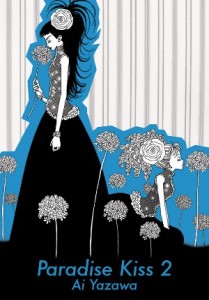
SEAN: Vertical has the 2nd collection of Paradise Kiss, deepening the relationship between Yukari and George… for better and worse. So hot together… so bad for each other.

MJ: I made this my pick of the week this week–a bit ahead of schedule, I guess–but it’s really a gorgeous volume.

MICHELLE: There’s a scene toward the end that gives me goosebumps just *thinking* about it. But I shan’t spoil it here.

SEAN: Viz has the 8th volume of my favorite Ikki series, Dorohedoro. The imprint hasn’t done lights-out sales, so I am very thankful to Viz for continuing this awesome series, which has earned great critical praise. Last time we ended on a nasty cliffhanger, which I hope is resolved with little damage. Wait, it’s the world of Dorohedoro, never mind.

MICHELLE: I have been hoarding this one with the intention of talking about it in Off the Shelf at some point, but so far I haven’t yet managed it.

SEAN: Tenjo Tenge is up to the 10th volume of its omnibus collections, so must be nearing the end. I’m so far behind I’ll never catch up, but it’s a great manga for those who like fighting and unrealistic female bodies.

MJ: Heh.

MICHELLE: At least once during each of these columns, Sean, you make me go *snerk*. This was where I did it this week.

SEAN: Lastly, Vagabond also has an omnibus out, collecting more gorgeous art and depressing storylines for the Inoue lover in all of us.

MICHELLE: Oh, Vagabond. You know, I really really love Inoue’s basketball manga (Slam Dunk and Real), and Anna and I even cohosted a MMF celebrating his works earlier this year. But as part of that, I read the first Vagabond omnibus and found it largely unaffecting. Still, owning the first ten omnibus volumes as I do, it’s a given that I’ll be picking up the eleventh as well as giving the series another go in the future. Perhaps it’s simply best in small doses.

SEAN: ‘Zat you, Santa Claus? What manga did you bring me?

Filed Under: FEATURES, manga the week of

My Week in Manga, Episode 2

December 13, 2012 by MJ 7 Comments

Welcome back to our new video feature, My Week in Manga! In this week’s episode, I talk about what I’ve read this week and what I’ll be reading before the week is out, including a short review of Yuuki Kodama’s Blood Lad, out this week from Yen Press.

Come join me!

Manga this week:
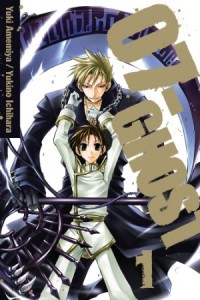
07-Ghost, Vol. 1 (VIZ Media)
Blood Lad, Vol. 1 (Yen Press)
Puella Magi Madoka Magica, Vol. 3 (Yen Press)
Pandora Hearts, Vol. 13 (Yen Press)

Edited by MJ
Music (“20/20,” “Stars Collide,” & “Swansong”) by Josh Woodward

Filed Under: My Week in Manga

The Most Familiar Manga Magazine You’ve Never Read, Hana to Yume

December 12, 2012 by Erica Friedman 7 Comments

Here on Magazine no Mori, I seek to introduce you to the rich and varied world of manga magazines available in Japan. From kids’ books to the kind of thing you might actually see that mythical salaryman read on that mythical commuter train, I’ve barely scratched the surface. If I’m fortunate enough to continue this column for ten more years, I will still have barely scratched the surfaced, there are just that many manga magazines…and new ones popping up all the time.

Today I wanted to step off the unbeaten path I usually take through this forest of magazines, to look at what is arguably the best known manga magazine that no one in the west has ever read. ^_^

Hana to Yume (花とゆめ) magazine published by Hakusensha is the source material of a huge chunk of Viz’s shoujo imprint (and before that, much of Tokyopop’s shoujo in later days.) Just a random sampling of titles from this magazine will be instantly familiar to most western manga readers: Tachibana Higuchi’s Gakuen Alice, Suzuki Julietta’s Kami-sama Hajimemashite (published in English as Kamisama Kiss), Oresama Teacher by Izumi Tsubaki,  Nakamura Yoshiki’s Skip Beat.  Hana to Yume was also the magazine in which the record-breaking Fruits Basket  by Takaya Natsuki, ran. Two of the seminal (yes, pun intended) BL classics that comprised the vanguard of the Boy’s Love genre back in the day, Yuki Kaori’s Angel Sanctuary and Matsushita Youko’s Yami no Matsuei (Descendants of Darkness) also come from the pages of Hana to Yume. For as comprehensive coverage as possible on Hakusensha titles available in translation, check out Sean Gaffney’s blog,  A Case Suitable for Treatment  here on Manga Bookshelf.

In fact, so many titles are familiar to the English-language manga audience, it’s worth taking a look at the Wikipedia article for the magazine just to take stock of all the titles that *haven’t* made it over here, among which is one of my favorite series of all time – Shinji Wada’s Sukeban Deka, Which brings me to an interesting point about fashion in manga magazines. In the 70’s and 80’s, Hana to Yume was a “weird” magazine, full of speculative fiction series, action, and really off-beat stories. I picked up a recent issue to find that the current art style is significantly simplified and the stories, while they may have supernatural elements, are mostly romantic comedies.

Hana to Yume has a website, Hana to Yume. com,  with the traditional girly, pink, sparkly, flower-y look, previews of this and next month’s magazines, a game corner, and a branded “mangaka course.” The magazine also has a stripped-down Hana to Yume Online site, suitable for reading on mobile devices. The lack of decoration makes the exact same content suddenly appear more mature.  ^_^

Hana to Yume premiered in 1974 and now has supplemental titles,  Bessatsu Hana to Yume  and The Hana to Yume. These come in a smaller size than the monthly magazine, which sells for 350 yen ($4.24  at time of writing.), with about 500 pages per issue – and one of the strongest creator line-ups in manga. The most recent data from the Japanese Magazine Publisher’s Association put the magazine’s monthly circulation at 189,113 for 2010-2011. Thanks to English-language translation Hana to Yume series are probably better loved here, (as unknown as the magazine itself is,) than in Japan where its standing among girls’ comics magazines has been slipping – from 4th in 2006, to 7th in 2010.

If you’re a western fan of shoujo manga, Hana to Yume has probably been your gateway drug. ^_^

Hana to Yume, by Hakusensha: http://www.hanayume.com/hanayume/index.html

Filed Under: Magazine no Mori Tagged With: Erica Friedman, Hakusensha, Manga Magazines

Neon Genesis Evangelion, Vol. 13

December 12, 2012 by Sean Gaffney

By Yoshiyuki Sadamoto and GAINAX. Released in Japan by Kadokawa Shoten, serialized in the magazine Young Ace. Released in North America by Viz Media.

The trouble with reviewing a manga series like Evangelion, with release dates from hell, is that of memory. I mean, I’m obsessed with Excel Saga, but even I had to do a bit of a reread when it was coming out on a once a year basis. And Evangelion isn’t even allowed that luxury – it comes out when a Japanese volume comes out, and Sadamoto is notorious for hiatuses, breaks, and 8-page chapters because the editors had to submit something or they’d lose their jobs. Luckily, he’s with Kadokawa Shoten, former home of CLAMP, so they’re used to things like this. What this means, though, is that it’s entirely possible that this manga, which started in 1995 in Japan, may not finish by 2015, which is the date it actually takes place.

Evangelion13

However, the comet has passed by once more, which means that we have a new Evangelion volume. And luckily, Sadamoto continues to do what we all want him to do; he tells the basic story of Evangelion, but makes everything better and all the characters more tolerable. Now, this does have its down side, which is that he is still telling the same story. The manga looks as if it might end with Vol. 14 (though that’d be compressing things a bit), and we’re still heading for the orange goo horizon, if you know what I mean. But without Anno’s veneer of self-hatred and disgust surrounding Shinji and company, we’re left with a title that’s a bit less soul searching but has a lot more ‘hell yeah!’ moments.

Let’s start with the most obvious, which we started to see at the end of Volume 12: Shinji rescues Asuka. Now, this probably isn’t permanent; indeed, by the end of the volume, I’m not entirely certain if she’s dead or not. But that’s irrelevant. Shinji making an effort, doing something other than whine and clutch his knees, is the main reason to read the Evangelion manga at all. And his reunion with Asuka, however brief, is all the more touching for it.

As for the rest of the cast, well, Fuyutsuki and the Bridge Bunnies are mostly used to shout the plot at us, as you’d expect when the apocalypse is coming down and has to be carefully monitored. (At least they avoided saying that Lilith’s power levels were over nine thousand.) Ritsuko, meanwhile, also gets to meet a bad end, mostly due to the astonishing idea that she thought that the computers (i.e. her mother) would side with her over Gendo. I mean really, has she met her mother? That said, she too gets a better exit which is more satisfying, both for her and for us. (Who here wasn’t wanted to shoot Gendo in the throat? Come on, let’s not always see the same hands…)

We end on a cliffhanger, with Giant Rei towering over all, and Shinji having dream flashbacks to Yui trying to tell him something, only he’s not quite sure what it is. I’m not sure if everything will be resolved in the next volume, or even whether that volume will come out before I die. And I suspect this will all end in tears. But at least I’ll be able to look back on the cast and say they tried their best, which is more than I could say for the anime. (The new movies, I hear, are trying to do something similar.) Recommended, especially for those who enjoy seeing Shinji achieve things.

Filed Under: REVIEWS

It Came from the Sinosphere: The Bride with White Hair

December 11, 2012 by Sara K. 2 Comments

A drawing of Zhuo Yihang and Lian Nichang

To start, allow me to translate an excerpt:

Lian Nichang crumpled a wildflower, and threw it down the mountain valley. Zhuo Yihang, stunned, watched the flower pieces float down in the wind, and suddenly said “Sister Lian, your looks should be like an everlasting flower.”

Lian Nichang laughed. “What a silly daydream! Where under the sun is there a place with everlasting spring? I say, if the old man of heaven were just like a human, having done so much thinking, even he would be old! We see each other here, bicker with each other there, the next time you see me, I fear I’ll already be an old woman with a head full of white hair!”

What she said made Zhuo Yihang’s feelings surge, and he thought “Lian Nichang really is very insightful. She hasn’t read many books, can’t compose poetry, nor fit lyrics to a song, but when she says what she thinks, aside from not having a proper meter, is simply wonderfully poetic. [Zhuo Yihang quotes poetry in Classical Chinese, which I can’t translate.] Doesn’t what she just said have the same meaning as all that classical poetry? However what she says is much easier to understand, and thus is more moving.”

Lian Ninchang laughed, and said “I just fear that when my head if full of white hair you won’t want to see me.”

Zhuo Yihang knew that she was just trying to get him to pour out his true feelings, but he found it very hard to answer her, so he tried to make light of it, and answered “when your hair turns white, I find an elixir to restore your youth.”

Lian Nichang sighed, and said “when someone else is trying to have a serious conversation,you make a joke of it.” Her mind soured, and said no more.

The foreshadowing is tickling me.

“The Bride with White Hair” is the most iconic female character in all of wuxia. She is one of the most iconic characters of all of wuxia period.

This novel has been adapted for TV five times, the most recent one being the 2012 TV drama. Additionally, there are four film adaptations, of which the best-known is the 1993 movie adaptation starring Brigette Lin as Lian Nichang. In other words, it’s one of the most-adapted wuxia stories ever.

The Story

The Ming dynasty is in decline, and the Manchus are ready to take some power. Meanwhile, there is a fierce sword fighter, known as “Jade Rakshasi” who is kicking everybody’s ass.

Zhuo Yihang meets Lian Nichang in a cave

Zhuo Yihang, of the Wudang sect, gets involved in some of the intrigues happening around the throne. During his adventures, he encounters a beautiful maiden called Lian Nichang who was raised by wolves. Later, he enters a duel with the “Jade Rakshasi” … only to discover that she is none other than Lian Nichang!

Zhuo Yihang and the Wudang elders

Anyway, Zhuo Yihang and Lian Nichang work together for a while to deal with intrigues, during which they meet Yue Mingke. While Lian Nichang and Yue Mingke are comparing notes, Lian Nichang’s sword-fighting manual gets stolen, which leads to set of adventures in which Lian Nichang becomes Tie Feilong’s adopted daughter, and Yue Mingke gets acquainted with Tie Feilong’s biological daughter Tie Shanhu. Heck, Lian Nichang and Zhuo Yihang get pretty sweet on each other. Then Zhuo Yihang becomes the leader of the Wudang sect and, well, Lian Nichang is officially their enemy…

Zhuo Yihang gets into a sword-fight

About Liang Yusheng

If you want to know about Liang Yusheng, the writer, read the Wikipedia entry and this webpage.

Mountains, trees, and sword-fighting!

It’s worth noting that one of his innovations was infusing real history into his stories, and this story is no exception – many of the characters are based on actual historical figures. I have previously mentioned another Liang Yusheng novel, Pingzong Xiaying Lu

Tie Shanhu flees for her life!

One thing which really makes Liang Yusheng stand out from other wuxia writers is how he handles female characters. He treats them pretty much the same way he treats the male characters. In many wuxia stories, it seems that the female characters’ primary purpose is to offer romantic options to the male protagonist. This is definitely not the case in Liang Yusheng stories.

The female characters are also sometimes, you know, the main character. It’s not just this novel, it’s a trend in Liang Yusheng novels.

Female Appearances

Let me state the obvious. Women are judged based on their looks far more and far more narrowly than men. They are expected to look pretty, sexy, and youthful. Actually, both mainstream Chinese and mainstream American culture have trouble imagining a woman who is pretty and sexy without looking youthful. I once heard a guy once asked a professional makeup artist why old men look dignified, but old women don’t. The professional makeup artist said this was 100% cultural, and has nothing to do with physical appearances.

The main purpose of this type of ‘female beauty’ is to please men.

Yue Mingke meets Ke Shi

One of the villains, Ke Shi, is a middle-aged woman who has managed to maintain her youthful appearance. She considers her looks as a tool to manipulate males and, thus, take their power. Likewise, she considers her young and pretty daughter to be an asset that she can trade with a man to acquire more power. Ironically, in her quest for power, she is submitting to the idea that a woman’s place is to be youthful and pretty to satisfy men’s desires.

By contrast, Lian Nichang likes youth and beauty for its own sake, not as a bait for males. Having been raised by wolves, she didn’t grow up with patriarchy. She doesn’t hate men; she loves her adopted father Tie Feilong, and becomes good friends with Yue Mingke, not to mention that she falls in love with Zhuo Yihang. She simply treats men as she would anyone else.

Lian Nichang and Zhuo Yihang meet again

People’s hair turning white while they are still young is a common trope in wuxia – in the Condor Trilogy alone there is not just one, but two characters under the age of 25 whose hair turns white. However, The Bride with White Hair explores this much more deeply.

I think white hair looks beautiful, and is a great way for a woman to look pretty while countering the male gaze. So at first I thought it was strange that Lian Nichang was so upset about the white hair. But it is an involuntary change, and she does value her youth, not to mention that the circumstances which cause her hair to turn white are extremely distressing.

Nonetheless, she at one point puts on a mask which makes her look like an old woman (aside from the hair, she still looks young). This was clearly a move to reject the male gaze.

Zhuo Yihang chases Lian Nichang through the mountains

Meanwhile, Zhuo Yihang is much more preoccupied with Lian Nichang’s looks than, well, her feelings. When he meets Lian Nichang disguised as an old woman, his response is “in my heart you look just the same as when I met you” (as in, he wouldn’t value her if she looked like an old woman in his heart) and “I will find an elixir which will restore your youth” (this time, he’s serious).

Lian Nichang fights the Red Flower Devil Woman

Since this is a society-wide problem, the female characters either have to take it, or sacrifice their social life (particularly the prospect of romance). Tie Feilong had made Mu Jiuniang his concubine because he wanted a pretty young female to satisfy his desires, and he doesn’t think about her feelings until it is too late (he deeply regrets that). Mu Jiuniang happily leaves him … but the man she marries ends up being even worse. Meanwhile, the Red Flower Devil Woman (a badass swordswoman) had left her husband because he didn’t respect her … but her own son Gongsun Lei is like his father, and considers women to be mere sex objects. Eventually, he is murdered out of revenge for a rape he had committed. “Find a lover who respects gender equality” is not helpful advice when a) you’re looking for a male lover and b) males who respect gender equality are in very short supply.

Even Lian Nichang doesn’t escape from this unscathed.

A Surprise that Made Me Think

While reading the novel, I expected this story to have a very predictable ending. Then actual ending turns out to be quite different from the “predictable” ending I imagined.

This made me think hard about the story, and helped me appreciate the novel in a much deeper way. Lian Nichang grew up among wolves, who didn’t teach her how a woman should act. She doesn’t do what a woman “should” do, she does what she wants to do. And that’s less predictable.

Availability in English

Naturally, this novel has not been published in English.

As far as I know, the only version of this story which is available legally in English is the 1993 movie. Speaking of the movie, I find Albert A. Dalia’s comparison of Lian Nichang and Mulan intriguing.

Conclusion

Now that I’ve read this novel, I now get why it’s difficult to have a serious conversation about gender and feminism in the wuxia genre without discussing this story. Even compared to wuxia novels written by women, or the other Liang Yusheng novels I’ve read, it is shockingly feminist. Heck, compared to most novels by women I’ve read in English, it is shockingly feminist. And it’s hard to shock me with feminism.

That said, this novel has plenty of flaws … much of it is totally non-memorable. But the memorable parts are enough to make this a must-read for anybody who can read Chinese and has an interest in wuxia and/or gender roles.

Next time: The Flying Guillotine (movie)


Sara K. is also shocked that she stayed up past her bed time to working on this post.

Filed Under: It Came From the Sinosphere Tagged With: Liang Yusheng, Novel, The Bride with White Hair, wuxia

Story of Saiunkoku, Vol. 8

December 10, 2012 by Anna N

Story of Saiunkoku, Vol 8. by Kairi Yura and Sai Yukino

I enjoy the meditative pace of Story of Saiunkoku. By the end of this volume plucky heroine and trailblazing civil servant Shurei Hong is finally launched at another stage of her life, and the fact that it took eight volumes for her to experience a new adventure doesn’t bother me at all. The main reason why I enjoy this series so much is the fact that the manga features such a rich variety of characters, all of whom are sympathetic and interesting in different ways. As the first and only woman to pass the civil servant exam, Shurei has been accused of cheating and must clear her name. It is always a bit heartwarming how all the people that surround Shurei come together to support her. She’s a very capable young woman, but the path that she’s chosen is so incredibly difficult that it is a good thing that she has so many friends and relatives who work behind the scenes to make sure that she can succeed on her own terms.

It turns out that the burdensome paperwork that Shurei and Eigetsu were processing also not so coincidentally included the clues to major financial irregularities in the Ministry of Rites whose head was determined to prevent Shurei from becoming a civil servant. Shurei and Eigetsu’s hazing resulted in their peers becoming more sympathetic to them, and the duo was also able to research and create a report that contained very damning evidence about an enemy that they didn’t even know they had. Supporting cast members that come to the forefront in this volume include Shurei’s uncle Renshin Hong and Minister Ko, whose devastating beauty ends up being a weapon for Shurei when he actually takes off his mask in court to force a confession from the Minister of Rites. There’s plenty of humor in this scene, as the onlookers are warned that if they look at Minister Ko’s face they will lose their ability to concentrate on work for years, their home life will collapse, and “in the worst case, you may lose your mind.”

There’s a great scene between Shurei and Ryuki towards the end of the volume where he demonstrates his trust in her by appointing her as a civil servant even though he would prefer that she stay as his bride. Shurei and Eigetsu embark on a new phase of their lives as civil servants together, but life can’t be boring when they are about to be sent to govern the most rebellious province in the land, aided mainly by the roguish Ensei. This volume also features a very lighthearted story about a cross-dressing contest that Shurei tries to make her male friends participate in because she’s so enthusiastic about the grand prize of many bales of rice. I think we’re catching up to the Japanese releases of this manga and the next volume is the final one. I’ll be a bit disappointed since I believe the light novel version of the story covers much more than the manga. Still, I’ll be happy with whatever I can read from this series.

Filed Under: REVIEWS Tagged With: shojo beat, shoujo, story of saiunkoku

Bookshelf Briefs 12/10/12

December 10, 2012 by Sean Gaffney, MJ, Anna N and Michelle Smith Leave a Comment

This week, Sean, MJ, Anna, & Michelle look at recent releases from VIZ Media, Seven Seas, Yen Press, Kodansha Comics, and Vertical, Inc.!


Ai Ore!, Vol. 7 | By Mayu Shinjo | VIZ Media – I’m starting to get the feeling that Shinjo is beginning to lose interest in her own series, and am somewhat relieved that the next volume will be the last. Once again we see how well-adjusted Mizuki is when not thinking about Akira, and how thinking about him makes her a nervous wreck. The same applies, of course, to Akira in reverse – and it’s lampshaded by the other characters that this has been going on a bit too long. The main plot here involves Akira starting a solo career, seemingly in a bid to gain Mizuki’s attention. Of course, he has to sing as a girl, which leads to his photographer/manager (who doesn’t seem to care about his true gender) hitting on him and forcing him to question why he does all this cross-dressing. It’s sad that this series has gone from appalling to funny to sweet and now to boring. – Sean Gaffney

Alice in the Country of Clover: Cheshire Cat Waltz, Vol. 3 | By QuinRose and Mamenosuke Fujimaru | Seven Seas – I’m going to have to come out and say it—I found Peter White the most interesting part of this volume. And given that I don’t like Peter at all, that’s saying something. But of course, that’s the point. Peter’s constant war between “I want Alice to be mine” and “I want Alice to be happy” seems to have finally swung in the “happy” direction, and so he has to stay away from her for the sake of her memories. It’s nice to see the main plotline of AitCoH get brought up again, reminding us that despite all the fluffy romance with Boris, everyone here is working with one goal in mind, which is to prevent Alice from recalling some psychological trauma involving her sister. And yes, Boris is doing that too. Will this threaten their relationship? Read on! – Sean Gaffney

Cage of Eden, Vol. 8 | By Yoshinobu Yamada | Kodansha Comics – It’s a shame the fanservice is so blatant and sexist, because this really is quite a fun adventure/thriller manga. There’s young men fighting twenty-foot-tall horse/bear hybrids by kicking them in the face, there’s intriguing plot revelations that force you to rethink everything about the premise (the view from the mountain), and there’s mystery elements that unfortunately seem to reinforce one of the manga’s main themes, “almost all adults are evil,” But really, Cage of Eden 8 can be defined by its cover, featuring Yarai looking grim and cool while carrying his teacher in a way that displays her ass to the reader in the most blatant way possible. Jump may try to quietly cater to both male and female readers – Magazine never bothers. But, getting past the boobs, butts and more boobs, it’s genuinely intriguing. – Sean Gaffney

Limit, Vol. 2 | By Keiko Suenobu | Vertical, Inc. – After the first volume’s wild drama, things remain tense and messy in volume two, as the girls figure out their own strategies for survival in a scenario where they are forced to depend on those they most certainly can’t trust. Though some of the character development may seem obvious, there are a few genuine surprises in the mix, and all the girls’ stories are well-told in Keiko Suenobu’s deft hands. Though capable Kamiya, with her well-honed survival skills and calm focus, is the most objectively impressive character in this volume, it’s popular girl Konno who experiences the greatest (and most surprising) personal growth. This series continues to maintain a delicate balance between its scathing commentary on teen social politics and its expressive shoujo artwork, cementing it as one of my favorite debut series of the year. Highly recommended. – MJ

Oresama Teacher, Vol. 12 | By Izumi Tsubaki | VIZ Media -Oresama Teacher is a bit predictable, and I am growing a little tired of the parade of cute young men with severe psychological issues that end up causing chaos in ex-delinquent Mafuyu’s new life. But it also consistently makes me laugh every time I pick up a volume due to the lunacy of the situations and visual gags. In this volume, Mafuyu deals with Aya’s past and gets some unwelcome attention from a new transfer student at her school. I was also happy to see the return of the school’s former Bancho, and his reaction to seeing Mafuyu and Aya talking together was priceless. I hope that the series swings back to the larger plotline about Takaomi and the redemption of the school, but as long as Oresama Teacher continues to reliably deliver funny moments I’m going to keep reading. – Anna N

Paradise Kiss, Vol. 2 | By Ai Yazawa | Vertical, Inc. – Each time I re-read this series, I am surprised all over again by how complex Yukari’s feelings for George are and how seriously cruel he can be, but this time, there’s more. Vertical’s gorgeous reprint of this series also brings into focus just how damned alluring George is, and how genuinely sexy and romantic Yukari’s relationship is with him at times, which really only complicates things more. Emotional complication is nearly always a very good thing, and that’s certainly the case here, especially in this volume, where Yukari is struggling so desperately with first love along with understanding the power (and terror) of exercising her own free will. My earlier reservations about this version’s English adaptations were smoothed over by this volume, which neatly swept me away without distraction. Highly recommended. – MJ

Real, Vol. 11 | By Takehiko Inoue | VIZ Media – Nomiya takes center stage in this volume, as the time has finally come for him to try out for the Tokyo Lightnings, a pro team. As a devotee of sports manga, I found the whole process undeniably riveting, and even somewhat verklempt-inducing since Nomiya, though lacking in various skills and experience, is nonetheless able to display his best qualities on the court and as a person. (Spoiler: we’re going to have to wait another year for volume twelve to learn whether he’s made the team or not.) Meanwhile, Togawa’s wheelchair basketball team, the Tigers, acquires a feisty new coach and Takahashi, still doing rehabilitation in the hospital, takes a competition wheelchair for a spin. Real is full of struggle and effort, and we’ve seen these protagonists dispirited before. But now, when they’re on the cusp of achieving something so meaningful, the payoff is immensely sweet. Very strongly recommended. – Michelle Smith

Slam Dunk, Vol. 25 | By Takehiko Inoue | VIZ Media – I always put down a volume of an Inoue manga feeling like I’ve witnessed a very entertaining masterclass in storytelling. Slam Dunk always balances the psychological aspects of playing sports with incredibly well-executed action scenes. The Shohoku team is about to play the tournament favorites Sannoh, and the early part of the volume deals with team strategy on both sides. We see the cipher-like coach of Shohoku knowing just what to say to each of his players to ensure that they won’t be intimidated by their opposing team, and the formation of a new cohesive team identity. There are always a few moments from Slam Dunk that stand out in my mind after I close each volume, and in this case it is the identical looks of disbelief on Sakuragi and Miyagi’s faces when Sakuragi actually manages to do something cool in a competitive game after Miyagi feeds him the ball. – Anna N

Vampire Knight, Vol. 15 | By Matsuri Hino | VIZ Media – For all that it features really hot and sexy vampires being hot, this volume of Vampire Knight excels because it focuses on what Matsuri Hino writes best—politics. Kaname is physically absent from this volume except in a couple of flashbacks, but the aftermath of his actions at the end of the last volume reverberate throughout. Yuki is trying to hold everything together, and in fact given the lack of faith many have in her what she achieves is surprising, but I can’t help but feel, like Zero, that it’s not going to hold up for very long. It’s especially not helped by the presence of Sara, who is such an obvious villain that she gets to simply walk around being villainous and wait for anyone to bother to prove it. And yes, if you do like vampires, there’s even some interesting vampire stuff here. Still addicting soap opera. – Sean Gaffney

Filed Under: Bookshelf Briefs

Danza

December 10, 2012 by Sean Gaffney

By Natsume Ono. Released in Japan by Kodansha, serialized in the magazine Morning Two. Released in North America by Kodansha Comics.

After seeing how popular (well, popular with manga bloggers) Natsume Ono’s other works were when Viz Media was putting her stuff out, Kodansha decided they wanted to get in on the game as well. After all, Ono didn’t only write for Ikki and Manga Erotics F, she also did stuff for Morning Two, Kodansha’s alternative manga magazine best known for Saint Young Men (which will never be licensed here ever). And Danza seems to be a good test market – it’s a collection of one-shot short stories, so little investment is required, and it deals with the same thing most of Ono’s best manga deal with – awkward conversations between people who have trouble communicating.

As with a lot of short story collections, it’s a mixed bag. Viz also did some of her collected short stories, and I think it shows that she works better at a slightly longer form with characters we can invest in (such as Ristorante Paradiso/Gente). Of course, this doesn’t mean that this collection doesn’t have some excellent stuff. But these are stories that are meant to provoke a wistful mood, with only one of them (involving Italian ices and police officers) even getting close to giving me a wry grin. When you draw mild, somewhat sad low-key manga, you need to anticipate that the reaction will be somewhat low-key as well. There’s also one short-story here that didn’t work for me, involving time-travel and father-son relationships. I felt this one added one too many plot complications, which is ironic given that almost 40 of its 60 pages are taken up with sitting at a table talking.

But as I said above, when Ono is on her game there’s no one I enjoy reading better. The best stories here involve things, again, I’ve seen from her before – grumpy fathers (or father figures) who gruffly disguise any feelings or emotions they may have under a veneer of indifference, doubly helped by the fact that they’re taciturn and uncommunicative naturally. Long pauses, saying things slightly poorly, shutting up for hours because you don’t want to risk spoiling the mood further… these are all things any reader is familiar with no matter what the country. And these stories (which take place in not only Italy, Ono’s default country, but also the United States and Japan)make you yearn for that connection, make you want to see everyone work it out. You want to see people talk, but it’s not drawn out enough that you’re yelling at the page.

As for Ono’s art, it is what it is, and I don’t think too many people read the story for her expressions. Which is a shame, as they fit her mood so well. If you have skill at drawing men who sort of frown and glance downwards furtively, well then write stories that use that! Ono’s heroes tend to look shifty even if they aren’t, which can sometimes help to pace a story as well, particularly the final one about a police officer and his new recruit, who’s listening to far too many rumors.

This isn’t going to be a knock-out up there with the best of Ono’s works, but nor is it just a collection of throwaways. It’s a Natsume Ono book, and if you don’t know what you’re getting by now it may not be for you. For those who do, it’s more of the same. (furtive glance to the side, frowns) And that’s enough.

(This review was based on a copy provided by the publisher.)

Filed Under: REVIEWS

Off the Shelf: Sweet Blue Flowers, Bunny Drop, Thermae Romae

December 9, 2012 by MJ and Michelle Smith 4 Comments

MICHELLE: Hey, MJ! What game would you play with a wombat?

MJ: Well, wow, I don’t know! What game would you play with a wombat?

MICHELLE: Wom!

MJ: Heh. Okay, it actually took a moment for me to get that. I must need more coffee!

MICHELLE: Maybe so! While you’re getting caffeinated, wanna tell us about some manga you read this week?

MJ: Sure! Those who took in my new video feature this week, My Week in Manga, may be anticipating this as my first topic for today—I’m talking about Sweet Blue Flowers (Aoi Hana) by Takako Shimura. The first volume is now available at JManga, and I could not be more thrilled. I’ve been waiting to read this series for a long time, and I’m so happy that it’s finally available in English.

Sweet Blue Flowers has two protagonists—Akira Okudaira, a young woman just beginning her first year at an elite all-girls high school, and Fumi Manjoume, Akira’s childhood friend who has just moved back into the area after ten years (though she’s attending a different all-girls school). Fumi is a lesbian, and shortly after we meet her, she discovers that her older cousin, Chizu, with whom she’s been having a sexual relationship for some time, has become engaged to be married. Heartbroken, Fumi turns to Akira for comfort, cementing their renewed friendship. Akira is relatively innocent about matters of the heart, but when Fumi begins dating an upperclassman, Yasuko, she finds Akira to be a supportive confidante—the first she’s ever really had. Meanwhile, Akira’s classmate, Kyouko, who has a long-time crush on Yasuko, tries to pawn off her arranged fiance on Akira.

Like Shimura’s earlier series, Wandering Son, Sweet Blue Flowers is a quiet, emotionally complex story that addresses its characters’ sexuality, burgeoning sense of self, and considerable teen angst with thoughtfulness and real gravity, while also carefully providing them with a support system that keeps their sense of fear and isolation from overtaking the narrative. Manga fans who long for teen-oriented series’ depicting fantastic female friendships will find everything they’re looking for in this series, along with so much more.

Though the initial onslaught of new characters inhabiting two different girls’ schools can be a bit overwhelming, the story soon settles in on its primary relationships and how these schools’ social circles intertwine. This aspect of the story mainly revolves around Yasuko, who transferred from Akira’s school to Fumi’s, and whose romantic history looks to be far more complicated than she lets on. The series’ exploration of these girls’ romantic fantasies and inner lives should ring true to any adult woman still in touch with her teenaged self, and this is really its greatest strength. Sweet Blue Flowers doesn’t romanticize first love, but it does let us in to its characters‘ romantic hearts, with a level of authenticity that’s less common than one might expect, especially in stories about young girls.

I admit, I’d love to see a high-end print version of this series similar to Wandering Son‘s, especially as the visual quality of JManga’s edition makes text sometimes difficult to read, but overall I’m just grateful to be able to read it at all. This is really a treasure.

MICHELLE: I’ve really wanted to read this series for a long time, so I too am really grateful that it’s available in English at last! JManga has released a fair amount of yuri in the past year, but this does seem to be the most “emotionally complex” one yet. And probably utterly devoid of fanservice.

MJ: Yes, it’s completely fanservice-free, which is a bigger relief than I even expected it to be. I’m so accustomed to just wading through fanservice, I sometimes forget how relaxing it is to read without it.

So what have you been reading this week?

MICHELLE: I’ve spent the interval since our last column getting caught up on Yumi Unita’s josei series Bunny Drop.

Let me state right up front that I was spoiled on the ending of this series before I even began reading it, and have found that this advanced knowledge has colored my reading to the extent that I really can’t avoid talking about it. So, if you don’t want to be spoiled on the ending of Bunny Drop, you should probably skip down to where we start talking about Thermae Romae.

After four volumes depicting single guy Daikichi Kawachi’s experience raising his six-year-old aunt, Rin, Bunny Drop skipped ahead ten years for its fifth volume. Since then, it’s focused more on Rin as a teenager, her disappointment with childhood friend/love interest Kouki, and her uncertainty over her future. Before I get into my complaints, I want to note that Rin’s truly an interesting character. Serious, studious, responsible, domestic, and reserved, it’s refreshing to read about someone who’s simultaneously classy and occasionally prickly. In this volume, her observations of the bonds shared by friends and their mothers causes her to contemplate the nature of motherhood and to ultimately seek out her own. She does eventually meet Masako—another unique character who’s prickly, defensive, and yet somehow sympathetic—but the volume ends with her concluding that living with Daikichi is best.

All of this sounds perfectly innocent without the foreknowledge that Rin and Daikichi are going to end up as a couple. But because I know that, I have seen Unita urging the story in that direction ever since the fifth volume. I might’ve found Rin’s reaction to Kouki’s astoundingly poor decision-making more poignant, had I not been cynically observing, “Had to cross him off the list.” I had the same reaction when Daikichi and Kouki’s mother eventually decide not to get together. Because this seventh volume is mostly concerned with Rin and Masako meeting, there’s less of that, but it’s still present in the form of an awkward sniff-test that I guess is supposed to confirm that Daikichi is not too close a relation to be genetically viable and Rin’s realization that she doesn’t want anyone else to take care of Daikichi in his old age. This, coupled with scenes in which Daikichi confirms that she’ll always be his kid, just makes everything kind of… confusing and icky.

Now, don’t get me wrong. Bunny Drop is still a good read, and I am trying to keep an open mind that Unita will somehow manage to bring these two together romantically in a way that won’t make my skin crawl. (I pray that we get another ten-year time jump first!) But I can’t deny that I wish it had remained in its quasi-Yotsuba?! state indefinitely.

MJ: I admit I’m not feeling the “icky” as much as you are, and perhaps that’s because I was spoiled much later, after I already had the chance to fall in love with the characters and the story in general. Also, I just may not be as squicked by the concept in general. But I agree that the story has been nudging Rin in this direction since the time-jump, and knowing the ending in advance has certainly affected the way I view both Rin and Daikichi’s romantic lives. More and more, though, I’m feeling confident that Unita will be able to pull this off in a way that’s moving and sweet instead of gross. I hope I’m right?

MICHELLE: I really hope so, too.

Anyway, you want to do the honors and introduce Thermae Romae?

MJ: Sure! So, as we’ve mentioned, our mutual read this week is the first volume of Mari Yamazaki’s Thermae Romae, published in true hardcover glory by Yen Press. It’s an award-winning manga in Japan that’s spawned both an anime series and a popular live-action film, and it’s been ongoing in Enterbrain’s seinen magazine Comic Beam since 2008.

Lucius Modestus is an architect in ancient Rome, whose old-style bathhouse designs are falling out of favor. A true devotee of the public bath, Lucius goes for a soak to clear his thoughts after losing an important contract. As he sinks deeper into the bath, he is suddenly sucked into a drainage pipe, only to find himself finally emerging in modern-day Japan! Thrilled by the “flat-faces”‘ (as he calls them) advances in public bathing, he returns to his own time full of new ideas, which become all the rage in Rome, establishing him as an architectural genius.

Each new chapter roughly repeats this formula (Lucius hits a snag in his own design, time-travels to Japan, and returns with the plan for Rome’s next great bath), which I admit I found a bit wearying over time, though I certainly learned a lot about baths!

MICHELLE: More than anything, Thermae Romae actually reminds me of Ekiben Hitoritabi (available from JManga), which is the likewise repetitious story of a train/bento enthusiast who travels around Japan, marveling at both trains and bento and finding nothing in his travels to dislike. Similarly, each time Lucius comes to Japan he finds it wondrous and deserving of enthusiastic mental praise. At one point, during the chapter in which he discovers onsen, the hard-boiled eggs cooked in the hot water, and the sake served along with them, he utters a line of dialogue that could’ve been completely lifted from Ekiben: “Fantastic! It goes perfectly with the egg!”

So, basically, Thermae Romae is to baths what Ekiben Hitoritabi is to trains and bento lunches. It’s a celebration of a unique aspect of Japanese culture that is a little bemusing perhaps for Westerners to read, but still entertaining.

This makes me wonder… why did Thermae Romae get a deluxe hardcover release while Ekiben is only available digitally? Certainly the time-travel aspect offers a modicum of intrigue, but I think the main difference might rest in Yamazaki’s art style. The volume’s large size and glossy pages, coupled with Yamazaki’s realistic renderings (of Lucius in particular), contribute to the impression that this is actually a Western graphic novel of distinguished literary merit! Yen must be hoping to attract a wider audience with this release than simply manga fans.

MJ: I think you may have a very good point. For what’s essentially an episodic gag manga, the artwork is really quite gorgeous, particularly in its depictions of ancient Rome. It’s a strange and awesome combination, really, when you consider that there’s an entire section regarding toilets (down to the details of Roman wiping), depicted with this really lovely, rather sensitive artwork instead of crude, gross-out drawings or clinical, non-fiction diagrams—either of which would be more likely to accompany the subject matter. Yen’s high-end treatment emphasizes the erudite nature of the series, which isn’t at all inappropriate, but I’ll be interested to see who its audience really is.

MICHELLE: Speaking of the gag aspect… until I got to the part about the toilets, I was feeling kind of dubious about the front flap’s claim that Thermae Romae is a “historical comedy.” However, Lucius accusing the bidet of being an “insolent knave!!” changed my mind.

MJ: Heh, yes, the toilet section did provide some of the best humor, I have to admit!

Filed Under: OFF THE SHELF

A Devil And Her Love Song, Vol. 6

December 9, 2012 by Sean Gaffney

By Miyoshi Tomori. Released in Japan by Shueisha, serialized in the magazine Margaret. Released in North America by Viz.

This manga has been on my Bookshelf Briefs stack for the past few volumes, but it completely steps up its game here, so I feel I should do the same. We were in danger of hitting a rut and resolving things too early, with Maria’s latest antagonist, Anna, proving to be another in a series of foes that Maria and her harem… um, friends can win over with honest feelings and stubborn refusal to give up. But in this volume, we see that Anna is made of far sterner antagonist stuff, and steps up her game in a way that tries to both destroy Maria’s life *and* win the affection of Shin.

I’m quite impressed with the author, who has made Anna a villain who ruins the heroine’s life, through the usual shoujo tricks (oh dear, I threw your cellphone into the river by accident) and by things that only Anna could really utilize (telling Shin about Maria’s past). Both work quite well, but the latter really takes hold more than the former. And yet with all that said, it’s somewhat startling that I still really hope that she and Maria can work things out in the end. Maria, as we’ve noted before, *is* genuinely very hard to be around sometimes, and this would have been especially true given what happened between her and Anna. And clearly Anna is not doing this entirely out of pure hatred, given her reaction in that last scene.

Speaking of that last scene, it’s one of the best in the series to date, with Maria once again attempting to sacrifice herself in order to ‘protect’ someone else. Admittedly, this being Maria, it comes from a series of harsh truths and insults, but the heart behind it is there. And Anna can see that heart, which just makes it worse. Her final comment ‘You’re terrible at playing the devil’ is true – Maria is at her worst when she’s wallowing in her own self-hatred and trying to make everyone else see the same things she does.

And then there’s the revelation about Maria’s past that Anna shows Shin. While I’m not sure I buy the whole ‘it’s all Maria’s fault’ that was tossed in, I’m inclined to think the basic facts are true. I like that it took a lot for Shin to buy into this – actual newspaper clippings. Shin is not your typical guy who will believe anything a pretty face tells him. That said, this does affect Shin, but not in the way Anna expects – he’s now hell bent on helping Maria get over the trauma that this has left on her, and his discomfort around her stems from this. And I can see why he’s reacting this way – I mean seriously, how much more tragic can we possibly make Maria’s life?

All this plus we see Yusuke finally making his own move, even if he has to continue to couch it in ‘just kidding’ terms (which is going to come back to kick him in the ass one of these days). I think the audience now knows which pairing we’ll end up with by the end, but there’s 7 volumes still to go, so I’m fine with Yusuke showing he wants to be more than just a romantic runner-up – especially since he doesn’t have the knowledge Shin or Anna do. And by the way, the teacher from hell? Still there, still horrible. HE MUST GO. But the rest of the volume? Awesome.

Filed Under: REVIEWS

Manga Bestsellers: 2012, Week Ending 9 December

December 9, 2012 by Matt Blind 1 Comment

Comparative Rankings Based on Consolidated Online Sales

last week’s charts
about the charts

##

Correction: The series Alice in the Country of Joker: Circus & Liar’s Game, tracked in the charts since 17 June, was incorrectly listed as a Yen Press title. Alice in the Country of Joker is actually from Seven Seas. The charts affected have been edited, but I wanted to apologize again for the error.

##

Manga Bestsellers

1. ↔0 (1) : Sailor Moon 8 – Kodansha Comics, Nov 2012 [419.3] ::
2. ↑1 (3) : Death Note vols 1-13 box set – Viz Shonen Jump Advanced, Oct 2008 [408.0] ::
3. ↓-1 (2) : Naruto 59 – Viz Shonen Jump, Nov 2012 [393.2] ::
4. ↔0 (4) : Vampire Knight 15 – Viz Shojo Beat, Nov 2012 [363.8] ::
5. ↑4 (9) : Maximum Ride 6 – Yen Press, Sep 2012 [352.4] ::
6. ↓-1 (5) : Sailor Moon vols 1-6 box set – Kodansha Comics, Nov 2012 [341.1] ::
7. ↑4 (11) : Sailor Moon 1 – Kodansha Comics, Sep 2011 [318.0] ::
8. ↓-1 (7) : Sailor Moon 3 – Kodansha Comics, Jan 2012 [316.1] ::
9. ↓-3 (6) : Sailor Moon 4 – Kodansha Comics, Mar 2012 [315.8] ::
10. ↔0 (10) : Alice in the Country of Clover Cheshire Cat Waltz 3 – Seven Seas, Nov 2012 [315.8] ::

[more]

Top Imprints
Number of volumes ranking in the Top 500:

Yen Press 102
Viz Shonen Jump 83
Viz Shojo Beat 54
Kodansha Comics 52
Viz Shonen Jump Advanced 36
Seven Seas 27
Dark Horse 17
Viz 17
Del Rey 12
Vizkids 11

[more]

Series/Property

1. ↔0 (1) : Sailor Moon – Kodansha Comics [1,040.8] ::
2. ↔0 (2) : Naruto – Viz Shonen Jump [787.5] ::
3. ↑2 (5) : Maximum Ride – Yen Press [653.7] ::
4. ↓-1 (3) : Vampire Knight – Viz Shojo Beat [624.6] ::
5. ↓-1 (4) : Black Butler – Yen Press [621.0] ::
6. ↔0 (6) : Alice in the Country of Clover – Seven Seas [557.6] ::
7. ↔0 (7) : Bleach – Viz Shonen Jump [515.7] ::
8. ↔0 (8) : Death Note – Viz Shonen Jump Advanced [508.3] ::
9. ↑1 (10) : Soul Eater – Yen Press [430.5] ::
10. ↑3 (13) : Pokemon – Vizkids [400.5] ::

[more]

New Releases
(Titles releasing/released This Month & Last)

1. ↔0 (1) : Sailor Moon 8 – Kodansha Comics, Nov 2012 [419.3] ::
3. ↓-1 (2) : Naruto 59 – Viz Shonen Jump, Nov 2012 [393.2] ::
4. ↔0 (4) : Vampire Knight 15 – Viz Shojo Beat, Nov 2012 [363.8] ::
6. ↓-1 (5) : Sailor Moon vols 1-6 box set – Kodansha Comics, Nov 2012 [341.1] ::
10. ↔0 (10) : Alice in the Country of Clover Cheshire Cat Waltz 3 – Seven Seas, Nov 2012 [315.8] ::
12. ↑62 (74) : Black Bird 15 – Viz Shojo Beat, Dec 2012 [273.6] ::
15. ↑2 (17) : Blue Exorcist 8 – Viz Shonen Jump Advanced, Nov 2012 [250.9] ::
19. ↓-11 (8) : Rosario+Vampire Season II 10 – Viz Shonen Jump Advanced, Nov 2012 [246.3] ::
24. ↑33 (57) : Bleach 52 – Viz Shonen Jump, Dec 2012 [231.9] ::
29. ↑154 (183) : D. Gray-Man 23 – Viz Shonen Jump Advanced, Dec 2012 [210.6] ::

[more]

Preorders

20. ↓-6 (14) : Sailor Moon 9 – Kodansha Comics, Jan 2013 [245.1] ::
34. ↓-10 (24) : Sailor Moon 10 – Kodansha Comics, Mar 2013 [189.0] ::
58. ↓-20 (38) : Sailor Moon 12 – Kodansha Comics, Jul 2013 [148.8] ::
59. ↓-16 (43) : Sailor Moon 11 – Kodansha Comics, May 2013 [146.9] ::
89. ↓-19 (70) : Negima! 37 – Kodansha Comics, Jan 2013 [114.3] ::
101. ↑7 (108) : Alice in the Country of Joker Circus & Liar’s Game 1 – Seven Seas, Feb 2013 [98.7] ::
107. ↑4 (111) : Battle Angel Alita Last Order 17 – Kodansha Comics, Feb 2013 [96.5] ::
111. ↓-11 (100) : Alice in the Country of Joker Circus & Liar’s Game 2 – Seven Seas, May 2013 [93.8] ::
117. ↓-5 (112) : Naruto 60 – Viz Shonen Jump, Jan 2013 [89.6] ::
121. ↓-11 (110) : Negima! 38 – Kodansha Comics, Apr 2013 [87.9] ::

[more]

Manhwa

240. (new) : Let Dai 15 – Netcomics, Dec 2008 [46.5] ::
364. ↓-144 (220) : Bride of the Water God 12 – Dark Horse, Nov 2012 [27.6] ::
467. ↑25 (492) : March Story 4 – Viz Signature, Oct 2012 [20.5] ::
642. (new) : Chocolat 8 – Yen Press, Dec 2012 [11.7] ::
819. ↓-181 (638) : Bride of the Water God 11 – Dark Horse, May 2012 [6.9] ::
927. ↓-308 (619) : Black God 8 – Yen Press, Feb 2010 [5.0] ::
950. ↑316 (1266) : March Story 3 – Viz Signature, Oct 2011 [4.7] ::
999. ↑ (last ranked 18 Nov 12) : Zero The Beginning of the Coffin 1 – Infinity Studios, Mar 2006 [4.0] ::
1071. ↓-203 (868) : Jack Frost 1 – Yen Press, May 2009 [3.1] ::
1098. ↑86 (1184) : Jack Frost 6 – Yen Press, Sep 2012 [2.9] ::

[more]

BL/Yaoi

110. ↑6 (116) : Awkward Silence 2 – SuBLime, Oct 2012 [93.9] ::
135. ↑18 (153) : Alice the 101st 3 – DMP DokiDoki, Jan 2013 [77.1] ::
149. ↓-18 (131) : Finder Series 6 Passion within the View Finder – DMP Juné, Jul 2012 [70.6] ::
167. ↑59 (226) : Ze 7 – 801 Media, Jan 2013 [64.8] ::
210. ↑2249 (2459) : A Century of Temptation – DMP Juné, Apr 2013 [51.8] ::
240. (new) : Let Dai 15 – Netcomics, Dec 2008 [46.5] ::
254. ↓-32 (222) : Loveless 9 – Viz, Sep 2012 [43.8] ::
266. (new) : Otodama: Voice from the Dead 2 – DMP DokiDoki, Oct 2013 [41.0] ::
277. ↓-10 (267) : I’ve Seen It All 2 – DMP Juné, Dec 2012 [39.5] ::
335. ↑ (last ranked 4 Sep 11) : Reversible 1 – DMP Juné, Sep 2009 [30.0] ::

[more]

Ebooks

21. ↑2 (23) : Maximum Ride 1 – Yen Press, Jan 2009 [240.9] ::
38. ↑4 (42) : Maximum Ride 5 – Yen Press, Dec 2011 [185.1] ::
47. ↑4 (51) : Naruto 57 – Viz Shonen Jump, Jul 2012 [164.0] ::
50. ↑13 (63) : Maximum Ride 2 – Yen Press, Oct 2009 [159.3] ::
71. ↑19 (90) : Maximum Ride 3 – Yen Press, Aug 2010 [136.9] ::
79. ↑5 (84) : Maximum Ride 4 – Yen Press, Apr 2011 [123.0] ::
92. ↑4 (96) : Naruto 56 – Viz Shonen Jump, May 2012 [112.1] ::
104. ↑21 (125) : Naruto 1 – Viz Shonen Jump, Jul 2003 [97.4] ::
108. ↑32 (140) : Blue Exorcist 1 – Viz Shonen Jump Advanced, Apr 2011 [95.8] ::
154. ↑11 (165) : Naruto 55 – Viz Shonen Jump, Mar 2012 [68.3] ::

[more]

Filed Under: Manga Bestsellers Tagged With: Manga Bestsellers

Combat Commentary: Fullmetal Alchemist Ch. 91-92 Alphonse & Heinkel vs. Pride & Kimbley

December 8, 2012 by Derek Bown 2 Comments

What Happened?
With the rest of the cast joining in on the attack on Central, Alphonse and Heinkel, the Lion Chimera, stay behind to detain the Homunculus Pride. Unknown to them, Pride calls for help, and is answered by the Crimson Alchemist, Kimbley, who easily takes out Heinkel and frees Pride.

What Happens?
Alphonse, badly injured by Pride, manages to create a dust cloud and tries to escape with Heinkel. When he refuses to leave Heinkel behind and save himself, despite the Chimera’s insistence, Heinkel gives Alphonse the philosopher’s stone he picked up back in the North.

(click images to enlarge)

Armed with the power of the stone, Alphonse fights Pride and Kimbley, even going so far as succeeding in trapping Pride again. He and Kimbley share philosophies for a moment when Kimbley reveals that he has another philosopher’s stone hidden away. With it, he frees Pride and the battle seems to turn against Alphonse as he is restrained.

Alphonse reveals that he no longer has the stone, having given it to Marco who was using the dust to read the direction the wind was blowing. Just as he is about to warn Kimbley, the transformed Heinkel pounces from the dust and sinks his teeth into Kimbley’s neck.

What Does it Mean?
It means that Hiromu Arakawa is a master of cliff hangers. Consider this, those of you that read these chapters when they were first published in the States. Imagine that you were reading chapter 92 as it was being released monthly. Really let that image sink in—consider that Kimbley was one of the biggest bastards in the entire Fullmetal Alchemist series. Imagine the sense of elation at seeing his doom. Imagine the nagging sense that maybe he would still survive. Was this the end for him? Characters in manga had survived worse. But then again, Fullmetal Alchemist was always more realistic about what kind of injuries could be survived. Imagine, if you will, all these thoughts racing through your head, all heading towards the realization that you had to wait another month before you get your answers.

That’s what it must have been like, reading this fight as the series was being published. Reading it from the volumes all one must do is turn the page for the next chapter. Reading it chapter by chapter as each new one came out, would have made that moment all the more sweet and frustrating.

But what about the fight itself? Well, for one it was Alphonse’s big character moment. He’d had his moments in the past, but this was the first time he really got to dish out some punishment, and he did it beautifully. In my last column about Fullmetal Alchemist I talked about the Armstrongs’ fight against Sloth. While I very much like that fight—as I do most fights from this series, of which there are many that will be covered in this column—anytime Edward or Alphonse fights it’s always a much more interesting fight.

Rather than focus on just one type of alchemy, the Elric brothers can form almost anything they want, which makes for some very interesting fights that rarely get dull. This one especially used a lot of interesting trickery, which was necessitated by the fact that they were fighting a far superior opponent. Even at the end they are unable to defeat Pride and have to escape with their lives.

There are a lot of reasons to like Fullmetal Alchemist. One of my main reasons is perfectly illustrated in this fight. The deep imagination that went into the creation of this world, story, and magic system. It’s one of my all-time favorite manga, and I can’t wait to spend more of your time ranting about how awesome the fights are.

Filed Under: Combat Commentary

Toriko, Vol. 13

December 8, 2012 by Sean Gaffney

By Mitsutoshi Shimabukuro. Released in Japan by Shueisha, serialization ongoing in the magazine Weekly Shonen Jump. Released in North America by Viz.

Again, it’s been a long time since I reviewed Toriko on the main blog as opposed to a Bookshelf Brief. Jump series in general tend to lend themselves well to a paragraph rather than four or five paragraphs, especially when the volume in question is ‘they fight for 10 chapters’. Luckily, there’s a lot less fighting and a lot more character development here, although we do get the daily required amount of huge fictional animals, death-inducing climates, and large muscled men beating things up, all things Toriko requires for its daily nutritional value.

It seems appropriate that the Ozone Grass, the astonishing vegetable Toriko and Komatsu had spent most of last volume climbing to, turns out to be a pointer to both of the major themes of this episode. First off, it’s something that requires two people to work together to eat it properly, showing off the friendship part of Shonen Jump’s traditional motto. Toriko and Komatsu have been close since Volume 1, but there’s always been a bit of a tagalong ‘normal guy’ aspect to Komatsu, with Toriko going off on some dangerous quests on his own when he didn’t think Komatsu up to the challenge. These scenes really show off how important Komatsu has become in Toriko’s life, and that he really is perfect as Toriko’s partner. (I’d talk about the BL subtext, but I’ve mentioned that in prior reviews.)

And then, amazingly, after one of the more heartwarming scenes in the entire series, Toriko promptly misses the entire point and goes off to Gourmet World on his own, something so amazingly stupid you want to smack your head. In general, we haven’t really seen Toriko’s youth and inexperience all that often in the series to date, and indeed I sometimes forget that he’s only about 25 years old or so. But then, Toriko is always after the big experience, and notably when Sunny finds out what he’s about to do he doesn’t say anything, knowing that Toriko is the sort who is only likely to learn through bitter experience.

And bitter experience is exactly what he gets, as Gourmet World turns out to be a hellish environment straight out of nightmares. The sheer scale of all these dangers when compared with Toriko (who, as has been noted, is pretty huge) boggles the mind, and you have to wonder how he’ll get out of there. The answer is ‘saved by a stronger character’, of course, but only in order to drive home the two important morals of this volume. 1) Toriko is not ready for Gourmet World yet, and 2) Toriko, needs a partner, REPEATED FOR ADDED EMPHASIS. Luckily, this time around he seems to get the point, even if this means we are treated to a sobbing Komatsu spicing up Toriko’s food with something he really doesn’t want.

Unfortunately, Komatsu’s cooking knife is broken, and they head off to get a new one from the amazing knife master Melk. Who looks… suspiciously bishie for a character described as scar-covered and a loner. I sense a surprise coming next volume. In the meantime, this volume gave Toriko some much-needed humility, and saw him finally form what will hopefully be an equal partnership with Komatsu. All this, plus lots of weird animals getting beaten up. What’s not to love?

Filed Under: REVIEWS

It Came from the Sinosphere: A Deadly Secret (Part 2)

December 7, 2012 by Sara K. 1 Comment

You may read Part 1 here.

The Fighting

It would probably be unfair to say that the fights in this series are just indiscriminate sword-clanging. But I think most of the fights are no more than one notch above that level.

Two characters engage in a mix of sword-fighting and hand-to-hand combat

The thing is, to get good on-screen fighting, you need the following:

1. A good fight choreographer
2. Skilled performers (actors and/or stunt people)
3. Tons and tons of rehearsal time

Now, a great fight choreographer can compensate for less skilled performers, and very talented performers can compensate for a mediocre fight choreographer … but nothing can compensate for a lack of rehearsal time.

All of the above costs quite a bit of money. Particularly the rehearsal time.

I suspect this was outside this TV series’ budget.

Given that they couldn’t afford good fighting, I think they handled the fights pretty well. Though the choreography itself was not exciting, at least the fights moved the story forward. And Jin Yong writes his fight scenes so well that they would be engaging even if the performers were wet noodles.

There were a few fight scenes which did stand out … surprisingly, they were mostly fight scenes which weren’t in the original novel (or maybe that shouldn’t be surprising … when you make up your own fight scene, you can choose to do something which will look good without breaking your budget).

The standout for me is definitely the big fight at the end of episode 25 / beginning of episode 26. I never expected I would say this, but this fight works so well because of the set.

A long tall ribbon leading up to a high stand.

Look at that fantastic ribbon leading up to the stand.

A character acends the giant ribbon with a sword

It’s a very scenic way for the fighters to run up…

Somebody is being kicked down the giant ribbon

… and get kicked down.

Di Yun descends onto the high stand
Di Yun looks snazzy as he sits on the stand.

And that stand is a great place for the fighter to stand above the crowd.

Di Yun spars with another character on top of the stand with the crowd watching below.

But wait!

Di Yun flies down through the collapsing stand.
The two characters fight their way down the collapsing scaffolding

The stand gets destroyed in the midst of the fighting!

The two opponents stand on elevated drums, with the collapsed stand in between them

And we have the two fighters standing on drums, while the stand collapses. Now the space has completely changed. Notice that the fighters are still elevated above the crowd. And notice all of those nice tall yellow-and-red streamers, adding nice vertical lines to the scene. With a set like that, it’s okay if the fighting itself is mostly indiscriminate sword-clanging.

I also need to give points to the costume designer who gave Di Yun such a swishy white outfit. It makes his dancing sword-fighting look more graceful.

Di Yun gracefully points his sword

Even if you don’t understand Mandarin, I highly recommend watching this fight scene yourself, because I don’t think I can adequately describe it with words and screenshots alone. You can see it in this youtube video (it starts around the 17 minute mark).

Life in an Unjust World

In a way, this is the harshest, bleakest, and most relenting of Jin Yong’s stories. The world is full of greedy people who really aren’t concerned with ethics … and they ruin the lives of the people who actually do follow some ethical principles. Again. And again. And again.

The characters could have easily been portrayed as being just black and white, and I think the TV series does go in that direction for some of the characters. However, rather than showing people as being innately good or evil, it shows that some people choose to prioritize money and power over other people, and let their greed corrupt them …. and other people choose to prioritize other people over money and power. Alas, the people who prioritize money and power tend to actually get more money and power.

Yet when money and power are not involved, the ‘bad’ guys can actually do good things and be very nice people. They don’t want to do evil. They merely don’t mind doing evil.

There is something called the ‘just world fallacy’ (TRIGGER WARNING for the link) – in other words, people want to believe that life is fair. It’s called a ‘fallacy’ because there is lots of evidence that the world is not, in fact, fair.

To pick one example (I could pick many other examples) a bunch of financial firms in the United States bribed politicians to loosen regulations, then violated even the watered-down regulations, committed fraud on a wide scale, blew up a giant housing bubble which made shelter less affordable for tens of millions of people, and which destroyed over 40% of the net wealth of middle-class Americans when it burst. Were the CEOs fired, the financial firms broken down, and serious criminal investigations launched? No! The financial firms got large government bailouts, the CEOs saw their pay increase, tens of millions of people lost their jobs and homes, fraudulent foreclosures are poisoning the centuries-old chain-of-title system which are essential to property rights, etc etc. Oh, and the statue of limitations on their crimes is coming up, which will make them immune to prosecution. This is not what a fair and just world looks like.

A variant of Sartre’s hell: being stuck in the mountains with somebody you don’t like (fortunately, for them, they stop disliking each other, which improves their quality of live).

Justice does sometimes happen in the world, but only by random luck, or when people insist on justice happening. And when people already think that the world is just, they aren’t motivated to do the hard work required to insist on justice.

Most fiction (okay, most fiction that I’m familiar with) supports the just-world fallacy – the good guys win and the bad guys lose. Like most people, I also want to believe the just-world fallacy, so in a way it’s very comforting. Such fiction serves as an escape, which probably is necessary for one’s mental well-being. But I don’t want all of my fiction to be like that.

The TV series does make the story a little more just than the original novel. For example, in the TV series (but, IIRC, not the novel), the bad guys are often plagued with nightmares filled with the ghosts of the people they have wronged. It’s a nice idea that everybody who commits evil is tortured by their consciences, but I don’t think reality always works out that way.

There’s also a new subplot in the TV series where the good guys defeat one of the bad guys very neatly. On one level, I loved watching that, because it’s nice to see the characters I like delivering a character I hate what he deserves. On another level, it makes the world of the story a little more fair, which I think goes a little against the point of the story.

This detestable character finally gets impaled on the spear of justice (the character in the background means ‘justice’). This does not happen in the original novel.

The power of this story, for me, is that it shows that, in spite of the fact that the world is unfair, it is still a wonderful to be alive.

First, integrity is its own reward. Even if you lose, lose, and lose, integrity is still worth something.

Second, there are wonderful people in the world. It is only by staying alive that one will ever have the opportunity to connect with them. And a good relationship is worth the hardship of living in an unjust world.

Of course [SPOILTER] the bad guys blow themselves up with their own greed at the end, and the good guys who are not dead get an ending that is, if not joyful, at least has some contentment. There is a limit to how much unjustness even I can stand in a story, and I’m not sure I could have taken it if the bad guys were all allowed to live happily into old age in luxury. But this story certainly takes the unjustness of the world a bit farther than a lot of other fiction I’m familiar with.[END SPOILER]

I actually find a story which acknowledges that the world is unjust and how to live on in spite of that more comforting than an escapist tale about a just world.

Availability in English

This TV series is, sadly, not available in English. It would be really nice if somebody fixed that. The novel isn’t available in English either. The only version of this story available in English is the movie, which is available on Region 3 DVD with English subtitles.

Conclusion

This … is actually a good TV series. I had my reservations at the beginning, and it took a number of episodes to win me over … but I totally got sucked into the story all over again. If you understand Chinese, I highly recommend trying this.

The movie is also worth watching.

However, my love ultimately belongs to the original novel. Whenever I go back to a story which I had loved before, I’m always afraid that it won’t be as good as I had remembered it. Sometimes my fears prove correct … but not this time. I noticed some flaws in the story which weren’t apparent to me before, but overall it served as a reminder of why I have come to love this story.


Sara K. actually did take a class on set design (as well as a class on costume design and a class on lighting design). She is not a good designer, but she got a lot of practice describing how various designs help or do not help tell a story. The posts she writes about comics would be really, really different if she hadn’t taken those classes … in fact, when she’s writing about comic book artwork, she often feels like she’s talking to one of her design teachers. Of course, it also bleeds into some of her other posts, like this one.

Filed Under: It Came From the Sinosphere Tagged With: A Deadly Secret, China, jin yong, TV, wuxia

  • « Go to Previous Page
  • Page 1
  • Interim pages omitted …
  • Page 390
  • Page 391
  • Page 392
  • Page 393
  • Page 394
  • Interim pages omitted …
  • Page 538
  • Go to Next Page »
 | Log in
Copyright © 2010 Manga Bookshelf | Powered by WordPress & the Genesis Framework