• Skip to primary navigation
  • Skip to main content
  • Skip to primary sidebar
  • Home
  • About Us
    • Privacy Policy
    • Comment Policy
    • Disclosures & Disclaimers
  • Resources
    • Links, Essays & Articles
    • Fandomology!
    • CLAMP Directory
    • BlogRoll
  • Features & Columns
    • 3 Things Thursday
    • Adventures in the Key of Shoujo
    • Bit & Blips (game reviews)
    • BL BOOKRACK
    • Bookshelf Briefs
    • Bringing the Drama
    • Comic Conversion
    • Fanservice Friday
    • Going Digital
    • It Came From the Sinosphere
    • License This!
    • Magazine no Mori
    • My Week in Manga
    • OFF THE SHELF
    • Not By Manga Alone
    • PICK OF THE WEEK
    • Subtitles & Sensibility
    • Weekly Shonen Jump Recaps
  • Manga Moveable Feast
    • MMF Full Archive
    • Yun Kouga
    • CLAMP
    • Shojo Beat
    • Osamu Tezuka
    • Sailor Moon
    • Fruits Basket
    • Takehiko Inoue
    • Wild Adapter
    • One Piece
    • After School Nightmare
    • Karakuri Odette
    • Paradise Kiss
    • The Color Trilogy
    • To Terra…
    • Sexy Voice & Robo
  • Browse by Author
    • Sean Gaffney
    • Anna Neatrour
    • Michelle Smith
    • Katherine Dacey
    • MJ
    • Brigid Alverson
    • Travis Anderson
    • Phillip Anthony
    • Derek Bown
    • Jaci Dahlvang
    • Angela Eastman
    • Erica Friedman
    • Sara K.
    • Megan Purdy
    • Emily Snodgrass
    • Nancy Thistlethwaite
    • Eva Volin
    • David Welsh
  • MB Blogs
    • A Case Suitable For Treatment
    • Experiments in Manga
    • MangaBlog
    • The Manga Critic
    • Manga Report
    • Soliloquy in Blue
    • Manga Curmudgeon (archive)

Manga Bookshelf

Discussion, Resources, Roundtables, & Reviews

Features & Reviews

One Piece, Vol. 86

May 7, 2018 by Sean Gaffney

By Eiichiro Oda. Released in Japan by Shueisha, serialization ongoing in the magazine Weekly Shonen Jump. Released in North America by Viz. Translated by Stephen Paul.

Food has always played an important role in One Piece, from Luffy’s voracious appetite to Sanji’s chef skills. And in this arc we’ve seen the dangers of food as well in a kingdom where everything is edible. But I don’t think we’ve ever quite gotten as terrifying as Big Mom and her backstory, one of the most truly unnerving and creepy moments in the entire series, especially because it’s implied – we don’t quite see it, as we’re seeing things from Charlotte Linlin’s point of view. Big Mom is certainly the villain of this arc, but I’m not sure we’ve seen a villain quite as psychologically damaged from a very young age as she’s been, and it makes her ravenous appetite far less of a joke than it had previously seemed (and it was always meant to be disturbing). Kudos to Oda for getting really, really dark here.

Elsewhere in the volume, it’s becoming more apparently that Jimbei actually IS going to be a new crewmember, provided he manages to survive the upcoming battle without a tragic sacrifice. This is actually rather interesting, as he’s the first semi-serious crewmember to be added since Nico Robin. Jimbei’s really cool here, standing up to Big Mom and refusing to cower, and I’m actually looking forward to seeing what he brings to the crew. Admittedly, the gender imbalance of the crew is starting to show itself a bit as well. Maybe we can get Vivi back? It’s certainly not going to be Charlotte Pudding, who despite her best efforts to be super evil, and her genuine irritation at Sanji’s goofy pervert persona, is backsliding into being a good person. I’m not sure how happy I’ll be with this, we’ll have to see.

As for Luffy, I have to hand it to him, that was a very clever (and funny) way to crash the wedding, and shows that he’s starting to strategize rather than just burst in fists akimbo – or rather, he still bursts in but works strategy into it. Unfortunately, things don’t go quite as planned (big surprise there), and it looks as if we’re settling in for the long haul, introducing several of the Charlotte family to no doubt battle our heroes one by one and show off their quirks… sorry, Devil Fruit Powers. I have to say I won’t cry if Capone ends up dying (though it’s always hard to have actual named characters die in One Piece), given that his plan to take out Big Mom relied on basic mental cruelty. I was also amused at the Straw Hat Crew (even Nami!) all sleeping like the dead before the big event, because, as Jimbei points out, they’ve been running flat out for days before this.

I suspect the next couple of volumes are going to be pure chaotic fighting, though hopefully it won’t go quite as long as Dressrosa. Still, this was a stronger volume of Once Piece than we’ve seen lately, and I look forward to seeing how that chaos plays out. Definitely recommended for fans.

Also, the Grand Line has a Pleasure District? How adult!

Filed Under: one piece, REVIEWS

That Time I Got Reincarnated as a Slime, Vol. 2

May 6, 2018 by Sean Gaffney

By Fuse and Mitz Vah. Released in Japan as “Tensei Shitara Slime Datta Ken” by Micromagazine Publishing. Released in North America by Yen On. Translated by Kevin Gifford.

Here I am, back with a book that I found deeply frustrating with occasional bursts of promise in its first volume. I have now read the second volume, and the promise is starting to bear fruit – I was more interested in the worldbuilding this time around when it wasn’t trapped in statland, and the occasional moments in the book that are dramatic action scenes or dialogue are decently well told. The problem is that the deeply frustrating parts of the book are still there and still deeply frustrating – in fact I found them even more frustrating because the rest of the book had improved around them. Our slime hero is still a very boring, matter of fact hero whose chief interesting bit is that he really seems to underestimate how amazingly overpowered he is. And he still goes on about stats. On and on and on. I am not a gamer, and I honestly don’t care if your Flame Throw stat has evolved into Flame Hurl when you level up. Spider So What did this too, but that heroine has personality to carry me through it.

We begin with our slime helping his goblin followers build their village, which has now become about the size of a town. They run into some ogres, who are attacking the goblins on the basis of mistaken identity, something that Rimuru tries to correct but to no avail. Fortunately he’s able to defeat them all fairly handily, to the point where they too want to follow him. After naming them (which knocks him out – you’d think he’d learn) they become Ogre Mages, and are various degrees of fantasy types – the noble leader, the smooth ninja spy guy, the cute princess, and (oddly enough) the sexy secretary, who even gets a business suit but unfortunately may not have the temperament for it. And it’s probably a good thing he gained new allies, as he discovers than an army of 200,000 orcs is coming down and destroying everything in its path. Can Rimuru and his allies, along with some lizardmen and a dryad or two, stop the creation of a new demon lord?

Again, the bits of the book that are not discussing RPG stats are better this time around. Even Rimuru is more interesting, though I wish he had a personality that would evolve beyond “well, huh. That’s a thing.” The ogres are a more interesting secondary cast than the goblins from the first book, particularly Shion (who is a bomb waiting to go off, I suspect) and Soei, the cool ninja. The lizardmen also are complex, and two of the major villains of this arc get to have nuance and be more than just the typical Japanese “Mwah ha ha!” isekai villain. But… I’m sorry, there are large chunks of this book that are boring as hell. It’s a very lengthy book, probably close to 300 pages in print, and if you cut out Rimuru wanking on about his powers and levelups it would be 1/3 of that size and a much, much better book.

Still, it’s improved enough that I will be giving it a third volume, though I will likely skim the stats as I did here. If you like isekais and don’t mind RPG nerdery, Reincarnated as a Slime should appeal to you.

Filed Under: REVIEWS, that time i got reincarnated as a slime

The Bride Was a Boy

May 5, 2018 by Sean Gaffney

By Chii. Released in Japan as “Hanayome wa Motodanshi” by Asuka Shinsha. Released in North America by Seven Seas. Translated by Beni Axia Conrad. Adapted by Shanti Whitesides.

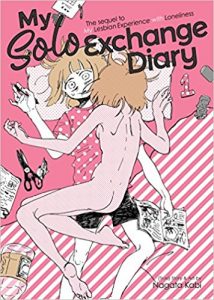
I will admit that when I first saw that this was licensed, my feeling was that it would be something more along the line of My Lesbian Experience with Loneliness, i.e. very stark and autobiographical. While it is autobiographical, I could not have been more wrong about it otherwise, as this title might best be described as “fluffy”. (The cover was likely a clue I just wasn’t picking up.) The title also makes it sound as if this is meant to be BL, which it isn’t. The emphasis should be on the ‘Was’ in the title, whereas I suspect most readers would see it as “Good Grief, the Bride Was a Boy!”, Kermit-style. But our author, Chii, is a woman who was assigned male at birth, and this manga is her story of exploring that, then transitioning, and finally getting married.

Chii’s art is cute and adorable, as is Chii, and the story flows along fairly well. Each chapter is followed by a brief ‘guide’ regarding transgender touchpoints, such as Gender Identity Disorder, LGBT, gender transition, etc. The story itself starts off with Chii meeting her future husband, though he was more “love at first sight” than she was. The husband is something of an amusing dork, but he’s very understanding, even when she explains to him that she’s a cisgender woman who was born as a man. We then flash back to various points in Chii’s life; growing up and realizing that she didn’t feel the same as the other guys around her; doing research and dating both men and women; and then starting the steps of transitioning and explaining things to her family and friends. The manga then ends with the wedding in question, which goes very well, even if Chii ends up crying when she said she wouldn’t.

If this all sounds somewhat undramatic, I won’t argue with that; it’s hard to take issue at the story since it’s autobiographical, but things honestly went very smoothly for Chii throughout this process, with her immediate family and her boyfriend/husband loving and supporting her no matter what. That said, it is nice to see this sort of story portrayed as happy and sweet, rather than like a YA novel with heavy drama. If you’re a reader who is not up to date on the various aspects of transgernderism, this is also a very good read, getting into greater detail on Sex Reassignment Surgery (which Chii does have, though it’s a tough decision – she ends up flying to Thailand to have it due to the high cost in Japan) and all the legal hoops that have to be jumped through in order to make things official in Japan.

This really ended up being a fun, educational read, and I’m definitely glad I picked it up. Chii’s art style is cute (her husband’s less so – we get a sample), and I’d recommend it to anyone who wants to read about a transgender protagonist or even just a “meet cute and get married” story.

Filed Under: bride was a boy, REVIEWS

Konosuba: God’s Blessing on This Wonderful World!: Crimson Magic Clan, Let’s & Go!!

May 4, 2018 by Sean Gaffney

By Natsume Akatsuki and Kurone Mishima. Released in Japan as “Kono Subarashii Sekai ni Shukufuku o!: Chūnibyō demo Majo ga Shitai!” by Kadokawa Sneaker Bunko. Released in North America by Yen On. Translated by Kevin Steinbach.

Another new KonoSuba novel, another obscure yet nerdy subtitle for the volume. This one never even got licensed in North America at all, it’s for the kids’ series Bakusō Kyōdai Let’s & Go!!, which is about mini-car racing. Fortunately, the novel itself has no actual car racing, but it does introduce us to the rest of Megumin’s Crimson Magic Clan, as we head to her hometown after there is news of an attack that will destroy the village. As it turns out, Yunyun and Megumin are the staid, sensible ones in this group, which consists entirely of overdramatic nerds living out their grand magic fantasies – only they actually have magic power to back themselves up. Even Megumin’s parents don’t escape this, though they’re more concerned with her relationship with Kazuma. And, as it turns out, it’s a good thin they came, as there really *is* a demon invasion happening, though at first it seems like the Clan has it under control.

Despite Yunyun being on the cover and jumpstarting the plot, this is not really her book, it’s Megumin’s. And Kazuma’s, of course. I’ve talked before about how his group feels more like a close-knit (if dysfunctional) family than anything else. That’s definitely changing here, as Megumin explicitly says that she’s fallen in love with him, something that Kazuma somehow manages not to quite understand. it’s a bit difficult for Megumin to admit it anyway, mostly as Kazuma is still several shades of terrible at times, though usually every time he tries to do something stupidly selfish it comes back to hit him in the ass. But Kazuma is Kazuma, so you also see exactly why it is that she fell for him anyway. Darkness is likely in the same boat, though this isn’t her book, so we don’t get much of that and instead get more of her being totally useless at anything except defense. As for Aqua, I’m relieved to say that there is no sexual tension there whatsoever. Let’s keep it that way.

This is the first book that hasn’t (yet) been adapted into an anime, but the adaptation, when it comes, should go very smoothly – there’s going to be a lot of fun set pieces here. Leisure Girl was particularly amusing, and the female orcs wanting to ravish Kazuma is a nice reversal of the standard fantasy “orcs want to rape the women all the time” trope. There’s also a few nice fights, particularly the one at the end, even though it consists of the whole Clan essentially dodging the demon lord while Kazuma tries to figure out what can stop them. The best scene, however, is right at the end. I will try not to spoil it, but it involves Megumin recognizing her own shortcomings and trusting Kazuma to help her get past them… and Kazuma realizing that Megumin’s happiness is more important. It’s really sweet.

Next time, to Darkness’ horror, we will be meeting the princess of this land, and I have no doubt fresh new disasters will ensue. Till then, KonoSuba remains a funny, light read, and anyone who likes to see the standard fantasy light novel tweaked on the nose will want to pick it up.

Filed Under: konosuba, REVIEWS

Manga the Week of 5/9/18

May 3, 2018 by Sean Gaffney Leave a Comment

SEAN: Are you going to Toronto Comic Arts Festival? You should! And here are some manga coming out next week you can read on your way there.

ASH: I am! It’s a great time.

SEAN: Ghost Ship debuts a new series called Yuuna and the Haunted Hot Spring (Yuragi-sou no Yuuna-san). It’s a Weekly Shonen Jump series, but apparently too hot for Viz, so Ghost Ship has it. Expect a lot of ghosts and a lot of nudity.

J-Novel Club has the 3rd How NOT to Summon a Demon Lord (anime coming soon) and the 8th In Another World with My Smartphone (anime now over).

Kodansha, print-wise, has the 7th Happiness (which I have to assume has caught up with Japan) and the 10th Sweetness and Lightning.

MICHELLE: I am definitely in the mood for some warm-hearted food manga!

ASH: Same! I’ve been really enjoying this series.

SEAN: Kodansha Digital gives us new volumes of Grand Blue Dreaming (9) and GTO Paradise Lost (8).

Their debut is Heaven’s Design Team (Tenchi Souzou Design-bu), which runs in Morning Two, and is apparently about a team creating new kinds of animals. It looks pretty weird.

MICHELLE: It does. I hope it’s a good weird.

SEAN: Seven Seas itself debuts two big titles. For manga we have The Bride Was a Boy (Hanayome wa Motodanshi), a story of a husband and wife from the wife’s POV, in which she talks about being assigned male at birth, transitioning, and falling in love. It’s complete in one volume, and looks great.

MICHELLE: I’m definitely looking forward to this one!

ASH: Yes! This is one of my most anticipated titles for the year.

ANNA: Interesting!

SEAN: There’s also the light novel debut of Toradora!. I love the manga series, but sadly the manga only comes out once every 235 years now, so I am pleased we get to read the novels that it’s based on. Out digitally too! (Insert Toradorable joke here.)

SuBLime has a 3rd volume of A Strange and Mystifying Story. I hope it lives up to that name.

MICHELLE: If I recall rightly, around here is where the story began to improve for me.

ASH: This is the last volume that was previously translated; I’m looking forward to reading more of the series.

SEAN: Titan has another volume release of the Sherlock manga that’s been running in Kadokawa’s Young Ace. This one is The Great Game.

Vertical has an 11th Ajin.

Viz has possibly the most Manga Bookshelf week it’s ever had, with just two releases. We get the debut of the re-release of Fullmetal Alchemist in hardcover with extra sketches by the author, though I will let people know that yes, Shou Tucker is still in it.

ASH: I am incredibly tempted by that new edition of Fullmetal Alchemist.

SEAN: And we also have an 8th volume of Requiem of the Rose King, which STILL has not killed off Henry. The last volume was the best yet, so I am hankering to read this. (Yes, hankering. it’s a thing.)

MICHELLE: As a Southerner, I use “hankering” fairly often. I also sometimes “reckon” and “mosey.” :)

ASH: Requiem of the Rose King is well-worth hankering after.

ANNA: Such a great series!

SEAN: There’s also some Yen titles delayed from April. Wolf & Parchment is the Spice & Wolf light novel spinoff, and it has a 2nd volume. There’s also a 3rd DanMachi: Sword Oratoria manga, and a 5th Kagurui – Compulsive Gambler.

And to round things off, we see the debut of Star Wars: Lost Stars, a manga adaptation of the YA novel by Claudia Gray that runs as a manga from LINE Communication, which makes me suspect it’s phone-based. I am always open to more Star Wars.

See something here that floats your boat?

Filed Under: FEATURES, manga the week of

Yuuna and the Haunted Hot Springs, Vol. 1

May 3, 2018 by Sean Gaffney

By Tadahiro Miura. Released in Japan as “Yuragi-sou no Yuuna-san” by Shueisha, serialization ongoing in the magazine Weekly Shonen Jump. Released in North America by Ghost Ship. Translated by Kayla Albarado. Adapted by David Lumsdon.

When I was first researching this manga, more than one site told me that it was “the spiritual successor to To-Love-Ru”. Which makes sense. Jump usually has one title that is written purely for the sake of teenage hormones, and for years To-Love-Ru was the one. And so, perhaps after briefly checking to make sure none of the cast are based on anyone’s wife, we have Yuuna and the Haunted Hot Springs, an ecchi Jump title which offers pretty much a lot of the same things that To-Love-Ru gave the reader. There’s a guy surrounded by a bunch of hot young girls. There is an awful lot of tripping and falling into boobs. There is a lot of violence towards the lead guy by said girls after that happens. And no doubt most of them will fall for him, though so far we only have the titular ghost. It’s Harem Comedy 101.

Our hero is Kogarashi, who has had a pretty unlucky life – he’s easily possessed by spirits, and it’s made his life very difficult, as well as made him very poor. Fortunately, he’s learned (almost out of necessity) to be an exorcist so that he can deal with these things. He’s also found an inn with attached hot springs where the rent is dirt cheap – because, of course, it’s haunted. He meets the residents, all of whom are gorgeous girls, and also the girl haunting his room, who is a cute fluffy-headed poltergeist with a bad habit of making things float around her when she is flustered, which is most of the time. Yuuna is a cute girl, so Kogarashi can’t exorcise her. Instead he befriends her, which works out even better (and also makes her fall head over heels in love with him). Then we discover the other residents are also… not ghosts, but various types of supernatural entities or those that deal with them. Can he get along with everyone? And what about school?

As you might be able to guess, this is not exactly the most original title in the world. At the same time, it has a job to do and does it well. Everything is in the standard ecchi harem language, but there was no point where I was bored or turned off by any of the various goings-on. Kogarashi is more of the “confident” Jump hero in the Luffy/Soma tradition, which makes a nice change from the meek nerds that usually inhabit such titles (as, for example, To-Love-Ru). Yuuna is as you’d imagine, but I did like the way she was translated/adapted, as she uses a certain amount of “Scooby-Doo” style exclamations at times, which is amusing as she’s a ghost, but also apropos as it shows she’s older than she should be. We’ve barely met the other residents yet (there’s a demon slayer who I still call Motoko as she hasn’t really differentiated herself from the Love Hina character), but I’m sure that will come soon.

So this won’t win any awards, but if you’re here for amusing comedic romance with lots of large breasts, and don’t mind no actual romantic resolution for 25 volumes or so (because did I mention it’s a comedic romance manga?), this could be the title for you.

Filed Under: REVIEWS, yuuna and the haunted hot springs

The Queen’s Thief, Books 4-5 by Megan Whalen Turner

May 2, 2018 by Michelle Smith

A new installment of The Queen’s Thief is here! That proved an excellent incentive to reread the first three books (which I deeply love) and finally tackle the fourth book as well as the handful of short stories that’ve appeared as paperback extras.

A Conspiracy of Kings
A Conspiracy of Kings is a coming-of-age story for Sophos, the sweet, scholarly boy we met in The Thief who also happens to be the heir to Sounis. Some of the barons are in revolt, and when the villa in which he’s staying is attacked, Sophos tries to save his mother and sisters but ends up captured himself. Although he’s resourceful enough to escape and hide out amongst enslaved field hands, he nonetheless is bitterly self-critical and sure his father is disappointed in him (as usual). And yet, throughout the course of the novel, he exhibits a great deal of courage, makes some hard choices, and—though still the sweet, scholarly boy underneath—ultimately becomes a worthy king.

A Conspiracy of Kings strikes me as a simpler book than The King of Attolia, probably because Sophos is earnest and idealistic rather than guarded and secretive, though that’s not to say that he’s incapable of carrying out a secret plan or clever strategy. The book does have an unusual narrative style, beginning in the third person with Sophos already in Attolia, switching to first person as he tells Eddis his story up to that point, going back into third while everyone’s together in Attolia, going back into first when he returns after claiming the throne and fills Eddis in again, and then back into third for the ending.

It occurs to me that as The Queen’s Thief series continues, the further we’re getting away from Eugenides. The Thief was first-person from his point of view, The Queen of Attolia was third-person, The King of Attolia viewed Gen and his relationship with the queen through the eyes of a palace guard, and now we have a story about Sophos in which Gen appears occasionally and spends some of that time behaving with icy formality. I appreciate the expanding world the characters inhabit and genuinely enjoy spending time with everyone, but I do love Gen best and hope the focus returns to him someday.

Thick as Thieves
After waiting so long for a new book in the series, learning that it would be about Kamet, the slave of the Mede ambassador Nahuseresh, was somewhat of a disappointment. Now, I feel compelled to apologize to the author because I really should’ve had more faith in her. Kamet is a smart, distrustful protagonist with somewhat of a superiority complex and his evolution throughout the novel is fascinating.

Thick as Thieves is most similar to the first book in the series, since it involves a road trip peppered with storytelling. An Attolian soldier has been dispatched by Eugenides to steal Kamet out of spite, and after initially planning to decline the offer of freedom (thinking of all the power he will one day wield after he is gifted to the next emperor), Kamet is forced to accept after learning that his master has been poisoned and that he must escape quickly or face torture and execution. A Goodreads reviewer describes what follows as “bloodshed, betrayal, and bromance,” and I really cannot improve on that description. Although he initially thinks the Attolian is an idiot and plans on ditching him at the earliest opportunity (rather than return to uncivilized Attolia) he comes to like and respect him very much. I also love how one little piece of information lets readers know exactly who this soldier is, although Kamet does not use his name until near the end.

I don’t want to spoil the ending, but that’s the part of the book that really shines. (Alas, the road trip does drag a little in parts.) There are quite a few surprises—including one satisfying “I knew it!” moment—and the conclusion is both sniff-inducing and exciting, as conflict is still brewing between the Empire and the small countries on the peninsula, though the latter (thanks to Eugenides) appear to have acquired some powerful allies. This is such a great series and I hope we’ll see Kamet again in what follows.

The short stories:
“Thief!”, originally printed in Disney Adventures Magazine in 2000, is a prequel short story about Eugenides as a kid. There’s not much to it, but I liked seeing Gen interact with his older brother and favorite sibling, Stenides.

“Eddis” was included in the 2007 paperback edition of The King of Attolia. In it, nine-year-old Helen—wonderfully described as round, solid, sturdy, and not too bothered by the fact that she isn’t pretty—slips away from the palace to go exploring. Her destination is a desolate temple where she is visited in the night by a trio of gods, who refer to her as “the last Eddis.” It’s a neat story that not only fleshes out Helen’s background a little bit and explains why she uses the masculine “Eddis” rather than “Eddia,” but ties in nicely with her motivations in A Conspiracy of Kings.

“Destruction” was included in the 2011 paperback edition of A Conspiracy of Kings. In this brief story, we witness the ceremony to dispose of Hamiathes’s Gift in the fires of the Sacred Mountain in Eddis. Frustrated Sounis is in attendance as is Attolia, who never takes her eyes from Eugenides. Scant though it is, I find I appreciate having a mental image for this occasion, as well as the moment in which Eugenides achieves certainty that the stone is really gone.

“Knife Dance” is included in the new paperback edition of The Queen of Attolia. In it, a juggler named Druic is coerced by his jerk of a brother to perform a certain Eddisian knife dance—”one of the Mysteries of the Thieves”—for the court of Attolia. Both the king and his god have something to say about it. I liked this one, and the ending was very satisfying.

“Wineshop” is included in the new paperback edition of The King of Attolia. It’s extremely short and depicts Eugenides enjoying his final moment of anonymity before coins bearing his likeness enter circulation and how Teleus spoils it all. There’s one part of it that makes me wonder if Eugenides knew that was going to happen. It would not surprise me.

Filed Under: Books, Fantasy, REVIEWS, YA Tagged With: Megan Whalen Turner

Sword Art Online, Vol. 13: Alicization Dividing

May 2, 2018 by Sean Gaffney

By Reki Kawahara and abec. Released in Japan by ASCII Mediaworks. Released in North America by Yen On. Translated by Stephen Paul.

As you might gather from the title, Kirito and Eugeo are divided throughout the book, as the cliffhanger from last time leaves Kirito and Alice hanging off the edge of the tower, and Eugeo needs to go on by himself to duel the last of the Integrity Knights there to stop them. This once again allows the author to alternate between third-person Eugeo POV and first-person Kirito POV. I’m not entirely certain if the hate-on fans have for Kirito is as omnipresent in Japan as it is here in the West, but I get the sense that Kawahara is playing with the reader a bit here. Eugeo is the straightforward, pure, noble type hero and Kirito is the snarky little cheater. Possible the funniest moment in the book is when Kirito wears Eugeo’s sword, and he and Alcie talk for a bit about how difficult using two swords actually is. Kirito doesn’t bring up his past as he feels embarrassed by it. Even Kirito is sick of Kirito. That said, Eugeo does not end up in a good place either.

As I said before, Kirito and Alice end up hanging off the tower by their swords, and have to find a way to climb up about twenty floors. This allows them to snark at each other, bond during fights, and of course for Kirito to tell Alice what’s really going on with the Integrity Knights. I will note that this scene should look fantastic when animated, though I suspect my fear of heights will mean I would never be able to watch it. I was most interested in how Kirito and the author are both telling the reader to think of Alice Zuberg, the little girl and childhood friend, as a separate person from Alice Synthesis Thirty, the Integrity Knight. Kirito knows that saving the former means killing the latter, and is feeling increasingly bad about that. More to the point, Eugeo is clearly there for Alice Zuberg… but Alice the Integrity Knight is obviously being set up as another of Kirito’s love interests.

Speaking of Eugeo, his fight against Bercouli was pretty awesome, and I was amused by the idea of a time-traveling sword slash. Eugeo gets the better of him in sort of a double suicide attack, but unfortunately is then found and brought to the administrator, whereupon he runs up against the necessity of the plot. Kirito and Eugeo are both great protagonists, but there can be only one Kirito in Sword Art Online. And come on, you know that the two friends were going to have to battle at some point. So yes, much as we’d like Eugeo to be strong and throw off the obvious brainwashing, he falls, and the cliffhanger shows that he is now an Integrity Knight with his memory removed. (Speaking of which, Alice, Eugeo and Kirito all have flashes of Kirito being present in their childhood – something Kirito clearly doesn’t recall now. I do wonder what’s going on there.)

So we’re all set up for friend vs. friend next time around. Will they finally be able to take down the Administrator? Well, possibly not, as we’re only now at the halfway point of the Alicization arc. One last thing: Kirito and Alice discovering the true nature of the Senators may in fact be the darkest, most horrifying scene Kawahara has ever written. Well done. I shuddered.

Filed Under: REVIEWS, sword art online

Bookshelf Briefs 4/30/18

April 30, 2018 by Michelle Smith, Sean Gaffney and Ash Brown Leave a Comment

Again!!, Vol. 2 | By Mitsurou Kubo | Kodansha Comics – Imamura sets about convincing the former members of the ouendan to rejoin the club. Although he has success with drummer Tatsuhiko Okuma (who has an extremenly ardent, unrequited crush on Usami), the other second years want nothing to do with it. Thankfully, he finally manages to convince a pair of third years to return by exposing the cheerleaders’ evil plot via a puppet show. (Yes, really.) Things are looking up, Usami is smiling, but… he’s still stuck in the past, and he’s a member of a club he never intended to personally join, and what’s more, he has knowledge that the school’s sports teams aren’t going to win anything. The volume ends with the suggestion that he might try to change that, but it seems like what he really needs to conquer is his own deep-seated belief that he’s a bad-luck charm. This is a fun series. – Michelle Smith

DAYS, Vol. 8 | By Tsuyoshi Yasuda | Kodansha Comics (digital only)- It’s the semi-finals of the Tokyo qualifiers for the All Japan Tournament, the final chance for Seiseki’s third years to play on the national stage. Unfortunately, with Oshiba and Kazama injured, and captain Mizuki forced to sit out because of penalties in previous games, Seiseki is missing its offensive powerhouses. Tsukamoto plays his first official game in some time, and it’s truly gratifying to see him gradually realize that he doesn’t suck anymore. He has a real affinity for regaining possession of stolen balls, and once he begins to have some confidence in his skill, soccer, which previously was just a way of hanging out with friends, starts to become fun in its own right. Seeing him seize the opportunity for a shot without hesitation is quite a big deal, even though he misses. Looking forward to volume nine! – Michelle Smith

Dead Dead Demon’s Dededede Destruction, Vol. 1 | By Inio Asano | Viz Media – While it may not be as immediately dark as some of Asano’s other manga, Dead Dead Demon’s Dededede Destruction still has an ominous and disconcerting atmosphere to it; already there is plenty of heartbreak along with the more lighthearted moments. Kadode Koyama is a young woman in high school who is having a difficult time finding the motivation to devote to her studies when the world itself is coming to an end. Three years ago, aliens appeared from outer space, the attack changing both everything and nothing about human life on Earth. While the story itself is intriguing, Asano’s artwork is a real highlight of the series. With dramatic angles and cinematic framing, Dead Dead Demon’s Dededede Destruction is always visually dynamic even when the manga focuses on the more mundane aspects of the characters’ lives. Well, as surprisingly mundane as things can be when living through an alien invasion. – Ash Brown

The Honor Student at Magic High School, Vol. 8 | By Tsutomu Sato and Yu Mori | Yen Press – For a series that’s supposed to be about Miyuki, the side manga really isn’t concentrating on her POV as much as you’d expect. Of course, given Miyuki’s incestuous love for her brother, perhaps that’s for the best. Instead, this volume is Honoka-and-Shizuru heavy, as we see Honoka’s triumphant win at Battle Board (as well as her triumphantly skintight wetsuit, which shows off her large chest to a ridiculous degree) and also see Shizuku’s battle with Miyuki in Ice Pillars Break, whose conclusion is fairly obvious but still emotional. It’s hard to strive to do your best when you hang around with people so far above you every day, let alone when they’re good friends. Excellent – Sean Gaffney

Imperfect Girl, Vol. 3 | By NISIOISIN and Mitsuru Hattori | Vertical Comics – Good news, the series stayed away from disquieting relationships, though there is a bath scene together. This series has been about a girl who has suffered abuse, and her traumatic mindset after the death of her parents. Said death is shown here, a bit unrealistic but evocative, as is somewhat expected of Nisioisin. Speaking of which, the revelation of the stories that the narrator wants to tell now is a nice fourth-wall break, as they’re all if Nisioisin’s other series, from Zaregoto onward. The conclusion is perhaps a bit too pat, but honestly at this point after all the exhausting tension of the three-book series, pat is good enough for me. Good stuff. – Sean Gaffney

Murcielago, Vol. 6 | By Yoshimurakana | Yen Press – To answer my question from last review, yup, this volume begins with a ridiculously over-the-top sex scene between Kuroko and the mother from last volume. As for the daughter, she’s attending a new school, which is an elevator school that also features Hinako and her friends, as well as a mad bomber, some unfortunate bullies, and a seemingly meek young woman whom Kuroko helps to stroll down the path of a twisted lesbian killer. For all that Kuroko is theoretically helping the police, there’s never any doubt that she’s also killing because she loves it, and gets away with it here. I emphasize again: I enjoy reading Murcielago, but it is a nasty series, and you need to accept that going in. Everyone here is awful. – Sean Gaffney

Pandora in the Crimson Shell: Ghost Urn, Vol. 10 | By Shirow Masamune and Rikudou Koushi | Seven Seas – Just when I thought I was out, they pull me back in. The first half of this is standard Pandora, meaning somewhat dull and also filled with dumb comedy, though I did appreciate that Vlind’s two assistants seemingly look similar to Hyatt and Elgala. The second half, dealing with Mr. Keith Brooklyn, his wife, and their child, is a lot better, getting into the nature of “quality of life” and what it means to be truly happy, and utilizing Nene’s special superpowers for a good, loving reason. I know more than to expect this sort of thing to continue, but it was greatly appreciated as a break from the fanservice and global conspiracy. – Sean Gaffney

Spirit Circle, Vol. 3 | By Satoshi Mizukami | Seven Seas – Fuuta is getting better at reconciling his past lives with his present (and figuring out that his family and friends are also connected to him in the past), but he’s not getting along any better with Kouko, and she’s determined to destroy him for what he apparently did as Fortuna—which we still don’t know, and which Fortuna himself seems to be trying to actively stop him learning. As for the life we see this time around, it’s a tale of old samurai, and he and Kouko literally lose an arm and a leg each to each other. The author is very goo9d at showing the emotional impact of a scene, even if he’s not the best at facial expressions. (That hasn’t changed since Biscuit Hammer, really.) Addicting. – Sean Gaffney

Yowamushi Pedal, Vol. 8 | By Wataru Watanabe | Yen Press – Day two of the Inter-High continues. Although this volume features the triumphant return of Onoda and Tadokoro—which is great, and features Tadokoro crying manly tears of profound gratitude—most of the action has to do with the two teams currently battling it out for the lead: reigning champions Hakone Academy and Kyoto Fushimi, led by deceptive and ever-so-creepy Midousuji. We see how he converted the previously unified members of the Kyoto Fushimi team into his foot soldiers (and there are hints that a rebellion might come soon from within the ranks) and how he exploits the totally justified and sympathetic weakness of Hakone’s ace sprinter, Shinkai. Although readers surely want to see Shohoku take the victory, it’s neat that for this section at least, I find myself rooting for Hakone to smack Midousuji down decisively. Hopefully that will transpire in the next volume! – Michelle Smith

Filed Under: Bookshelf Briefs

Baccano!: 1933 The Slash -Bloody to Fair-

April 30, 2018 by Sean Gaffney

By Ryohgo Narita and Katsumi Enami. Released in Japan by ASCII Mediaworks. Released in North America by Yen On. Translated by Taylor Engel.

“There’s always someone better than you.” A truism that this two-volume arc of Baccano! seems to be taking to heart. Last time we saw Maria devastated when her swordplay lost out to Adele’s spear, and the repercussions of that reverberate though this book. But it doesn’t just end with her. Adele herself gets shattered when Maria’s clever thinking is actually able to deliver a bad wound, and the newly introduced Christopher Shaldred can try all he wants to be a cool, constantly talking killer, but we already have Clare/Felix, so he’s inevitably going to come out second best, especially when you realize that Felix prolonged the fight solely for the reason that he wanted to fight back to back with his fiancee. And then there’s Tim, who finds that not only is he easily manipulated by Huey, but also gets verbally destroyed by Senator Beriam. The theme here is “stay humble”, though to be honest nobody really learns that lesson.

By the time this book had come out, Narita had already started his other popular novel series Durarara!!, and I have to admit that of all the Baccano! novels, this one feels the closest to DRRR!! style shenanigans. That said, DRRR!! never gets quite as bloody as Baccano! does, and the massacre of the employees of the Nebula Building is (at least temporarily) a bit horrifying. Again one is reminded that there really aren’t too many “good guys” in this series – even Jacuzzi and Nice are gang leaders, and honestly I think the only reason they don’t get taken to the cleaners at the end is because Chane is part of their gang. The new villains are also pretty bad, and continue the theme of “someone better than you” – Tim’s Larva group from the prior book is as nothing compared to Huey’s experimental Lamia children, and it’s notable that after the fight at the end of the previous book, Adele is ready to go off the rails at a moment’s notice.

And then there’s Maria. I savaged her pretty badly in the first volume’s review, and to be fair she was incredibly annoying then. That doesn’t completely change (Luck confronting her at the end may be the funniest scene in the book, especially as by then the reader had ALSO forgot what her original mission was), but she manages to overcome her fears and doubts, gets a ridiculously cool two-sword move (honestly, this book would be fantastic animated), and possibly hook up with Tick – she says he gets to decide if they’re friends or lovers, to which I think Tick’s response can best be described as “Buh?”. She’s certainly better off than Firo, who runs around trying to save Ennis only to find Ennis never really needed saving at all. and then has Ennis say that she thinks of Firo… as family. Good thing these two are immortal, they need all that time.

Narita’s afterword says that the publisher wanted to get away from the 1930s again (so The Children of Bottle apparently did pretty well), but he said he had far too many 1930s plots still to tell. As such, be prepared to start a THREE-part arc next time, as we advance one year but otherwise have the same old ruckus. Plus maybe we’ll see who rescued Christopher, last seen bleeding out. As for The Slash, the second part definitely is better than the first. This is a fun ride.

Oh yes, Dallas is in this too. Sorry, totally ignored him.

Filed Under: baccano!, REVIEWS

Monthly Girls’ Nozaki-kun, Vol. 9

April 29, 2018 by Sean Gaffney

By Izumi Tsubaki. Released in Japan as “Gekkan Shoujo Nozaki-kun” by Square Enix, serialization ongoing in the online magazine Gangan Online. Released in North America by Yen Press. Translated by Leighann Harvey.

It’s been a long nine months since we last saw Nozaki-kun here, the curse of having caught up with Japan. I’m relieved to say, though, that the wait is worth it, as this series’ one and only job is stillo being done incredibly well: I laugh a whole lot when reading this. In fact, one joke made me laugh so much I had to put the book down for a few minutes. (It involves the art club and their “perfect guys”.) Characterization remains strong but static: apart from Hori maybe realizing that Kashima is attractive as a woman (though that doesn’t necessarily translate to any love epiphanies), no one here grows or changes, but remains the same lovably exaggerated idiots we want and expect. Chiyo’s Nozaki-love is up to eleven, Seo continues to be the best troll, and Nozaki’s people watching is as entertaingly wrong as ever.

If there’s a straight man left in the series, it’s probably Mikoshiba, whose attempts at getting Mayu and Wakamatsu interested in visual novels is a hilarious disaster, given that they’re not really playing the game for the same goals. Mikoshiba continues to be Chiyo’s BFF (yes, even though he’s a guy), trying in vain to help her and Nozaki get closer. This culminates in the guys and girls having (separate) sleepovers, which predictably involves Mikoshiba an company staying up late and gossiping about the romance game they played, while the three girls (who have no idea how an actual slumber party works) just talk about what male underwear looks sexiest.

I’ve been reviewing this series with full reviews since it began, and I admit it can sometimes be a bit of a challenge given that there’s not much to say here beyond “this is what I thought was the funniest”. But it is funny, and I can admire the craft that Tsubaki brings to the title in developing each gag. This series is not really much at all like Oresama Teacher beyond the love of “tsukkomi” style punchlines. Nozaki-kun has to be punchier, faster, and not wait for the gag to land. It can also be hard to think up material every week – you might see some of that in Nozaki’s watching the drama club improv, where they all talk about how easy it is to end a scene by having everyone drop dead or be murdered.

I’m not sure when Nozaki will end – I suspect when Tsubaki and Square Enix decides it’s run its course. We’ve already had an anime,. and a 2nd season is not on the horizon. That said, I’m not sure I’d expect much resolution in any ending – much as the fans might want the three “main couples” to get together – or even Mikoshiba and Mayu – I’m inclined to agree with the drama club. Ending with a romantic kiss is cheap and easy. Especially for a series like this. Making us laugh, though? That’s guaranteed.

As for tanukis, well, just look at the cover.

Filed Under: monthly girls' nozaki-kun, REVIEWS

Reborn as a Vending Machine, I Now Wander the Dungeon, Vol. 1

April 28, 2018 by Sean Gaffney

By Hirukuma and Ituwa Kato. Released in Japan as “Jidou Hanbaiki ni Umare Kawatta Ore wa Meikyuu wo Samayou” by Kadokawa Shoten. Released in North America by Yen On. Translated by Andrew Prowse.

If you’re going to be selling, as a regular series, a story about a guy reincarnated as a vending machine, you’d better go all in. Some stories work better as parodies (see the upcoming “Do You Like Your Mom?”), but I’m pretty sure this would not be any good if it weren’t 100% serious about its vending machine hero and the world he now lives in. The author says he wrote the book as a sort of push against the typical isekai harem protagonist, and I can see that. Yes, the machine gets a “blessing” that allows him to have a super cool force field, but it uses up HP fast, and its airtightness means it’s hard to keep humans inside. He also can’t move – he’s a vending machine. And his conversation is limited to six programmed phrases – he’s a vending machine. And he’s not getting a harem… well, OK, that remains to be seen.

Our hero is Boxxo (yes, really – thankfully it’s not his own choice of name), a young Japanese man obsessed with vending machines and the things that come out of them, who one day is killed in a brutal vending machine accident. He wakes to find he is now a vending machine, dispensing mineral water and corn soup. Unfortunately, he is sitting at the side of a lake deep in the middle of nowhere, surrounded by frog enemies trying to break him, and if he doesn’t sell things he’ll eventually run out of lifespan. Then he meets Lammis, a super strong, super spunky, super naive girl who has been abandoned by her party and is on the verge of death. He gives her food and drink, and in return she picks him up and carries him to the nearest settlement. (I did mention the super strength, right?) As the book goes on, he finds he can add new items (provided it’s something he previously bought when he was a human), camouflage himself, and other cool adventure powers. As for going on quests… you’d be surprised how important convenient food and drink can be in a battle.

As you can see, the premise can be as silly as you’d like. This is absolutely ridiculous. But the characters are all treated as real people rather than stock isekai types, even the guards at the door, the innkeeper and her daughter, and the town madam. (Oh yes, Boxxo can also sell condoms. I was surprised it went there, but it’s handled quite well. No, Boxxo is not going to be using them, he’s a vending machine.) Boxxo and Lammis get on great from the start, she’s very good at figuring out what he means when he’s using his stock “welcome!’ phrases, and having her around means the story is not totally stationary. I mean… the book has a subplot of Lammis falling in love with Boxxo, and it actually plays out as really sweet and cute rather than weird and creepy. I could have done without the constant breast size discussion, but that’s what you get in this genre, and at least Boxxo’s lack of a human body means he’s rather blase about it all – mostly.

I was going to be cute and say this was the best vending machine isekai I’d ever read, but that’s selling it short – it was a really good read, period. I enjoyed this a lot more than I expected, and definitely want to see what happens next. You will believe that a fantasy world can be transformed by a simple machine that gives you Pringles when you want them.

Filed Under: reborn as a vending machine, REVIEWS

Manga the Week of 5/2/18

April 27, 2018 by Sean Gaffney, Ash Brown, Michelle Smith, Anna N and MJ Leave a Comment

SEAN: There’s a lot of manga out in May, but mercifully slightly less than March or April. What do we have next week?

Cross Infinite World has another Japanese webnovel for us. Mia and the Forbidden Medicine Report stars a girl determined to help the sick, and her adventures in a fantasy-tinged land.

Ghost Ship has a 4th To-Love-Ru Darkness.

J-Novel Club has a couple of debuts, one of which is very interesting indeed. Mari Okada is a prolific anime screenwriter who has won awards, and From Truant to Anime Screenwriter: My Path to “Anohana” and “The Anthem of the Heart” is her autobiography. A truly unique license that sounds fantastic.

ASH: That does sound interesting! Okada worked on the anime adaptation of Wandering Son and The Woman Called Fujiko Mine among many other great series.

ANNA: Huh, that does sound interesting!

SEAN: The other debut is more typical. The Unwanted Undead Adventurer starts off in a fantasy world, so not an isekai. Unfortunately, our plucky young adventurer was eaten, and now exists as a skeleton. Can he conquer dungeons anyway? What do you think?

There’s also a 2nd New Life + and a 12th Invaders of the Rokujouma!?.

Kodansha is mostly taking a break from digital next week, but they are debuting even more new series, so we get the debut of Beware the Kamiki Brothers! (Kamiki Kyoudai Okotowari), a 6-volume Betsufure series. I tend to be very wary of shoujo covers with a pensive female lead and smug male lead. We shall see.

Seven Seas has the 7th Lord Marskman and Vanadis, and a 2nd Nameless Asterism. They’re also putting out a 2nd digital volume of the Strawberry Panic light novel.

ASH: I liked the first volume of Nameless Asterism well enough to see how the Gordian Knot of unrequited love continues to develop in the second.

SEAN: We have a new publisher, though they’ve done work on visual novels in the past. Sol Press debuts two new light novels titles digitally, with print apparently coming out later on. We have Battle Divas: The Incorruptible Battle Blossom Princess, as well as Strongest Gamer: Let’s Play in Another World. Go check them out!

ASH: Oh, a new challenger has entered the arena! I was previously unaware.

MJ: Oh, interesting! I’m not sure I mean these particular books, but always happy to see a new publisher in the game.

SEAN: Vertical has the debut of Chi’s Sweet Adventures, the spinoff of beloved cat manga Chi’s Sweet Home.

And the rest is Viz. There are no debuts this time around. The Jump imprint has new volumes of Black Clover (11), Bleach’s 23rd 3-in-1, Haikyu!! (23), the 7th hardcover re-release of JoJo’s Bizarre Adventure: Stardust Crusaders, Kaguya-sama: Love Is War 2 (technically Seinen Jump), Naruto: Chibi Sasuke’s Sharingan Legend (3), One Piece (86), the penultimate Toriko (42), and Twin Star Exorcists (12).

ASH: Haikyu!! and JoJo for me, please!

ANNA: So behind with JoJo but I love it.

On the Shojo Beat end, we see Anonymous Noise 8, Everyone’s Getting Married 8, Kimi ni Todoke 29 (also a penultimate volume), and Oresama Teacher 24.

ASH: I’ll take some more Oresama Teacher, too.

SEAN: That’s actually quite a bit. Do you see favorites in this list?

MICHELLE: My favorites are all in the VIZ camp today, specifically One Piece, Haikyu!!, and Kimi ni Todoke. Hard to believe the last is finally drawing to a close.

Filed Under: FEATURES, manga the week of

Dead Dead Demon’s Dededede Destruction, Vol. 1

April 27, 2018 by Sean Gaffney

By Inio Asano. Released in Japan by Shogakukan, serialization ongoing in the magazine Big Comic Spirits. Released in North America by Viz. Translated by John Werry.

This was the series that came directly after Goodnight Punpun for Inio Asano, and he’s on record as saying that he wanted to give readers something a bit lighter and easier to read after Punpun’s depresso-fest. Having read the first volume of this series, it’s… sort of correct? There’s definitely an attempt here to do a sort of Asano version of a slice-of-life series a la Strawberry Marshmallow, with Kadode and Ontan as a sort of grown up Chika and Miu, doing weird things in their day to day life. But of course this is an Asano version of slice-of-life, not actual slice-of-life, and so it’s hard not to see the grey clouds piling up bind the series. Kadode’s family life is depicted starkly but without drama (big drama is rarely seen in Asano’s works), and her attempts at relationships are meant to make the reader feel uncomfortable, I suspect, and succeed. Oh yes, and then there’s the other reason this slice-of-life is odd: aliens invaded Japan three years before, and are still hanging around.

The idea of an alien invasion that has gone on so long that it’s become part of everyday life is not unique to Asano, I believe, but usually in other cases the aliens play a major role. Here they hover offscreen in their giant mothership, occasionally sending out smaller ships to get blown up by pissed-off humans. The flashbacks to the initial invasion are played relatively seriously, but most of the story takes place once everyone is thinking “now what?”, as after that first strike not much has happened. And so life has gone back to semi-normal, allowing the kids to keep going to high school, Kadoda to continue to hit in her teacher, and Ontan to be loud, rude, and eccentric, which seems to be her entire character. There are games to play, love affairs to be gossiped about, and college choices to be mulled over. At least till a possible cliffhanger, you get the sense that “now what?” may be the point of the entire story.

There are a few flaws here, in my opinion. As I said before, Ontan does not seem to have as deep a character as Kadoda, and various scenes suggest that the author kind of wants to set the two girls up as a couple but can’t bring himself to do it. The relationship between Kadoda and her teacher is meant to be vaguely offputting and unsettling, and certainly fulfills its function there, but I also get the sense there’s a “will they or won’t they?” question that is speaking to an audience far more comfortable with teacher/student romance in their manga. Also, please try not to make your high schoolers look like they’re eight years old. On the flip side, of course, this volume is filled with what Asano does best, with evocative art (the contrast between the hyperrealistic backgrounds and the cartoony characters is excellent) and a mood that I think I can best describe as “repressed ennui”. I read an Asano book to feel things, and I certainly did with this one, even if some of those things were frustration.

If you’re an Asano fan, you should absolutely get this. If you avoided him for one reason or another, you may want to give this a try. He seems to be trying to compromise with his audience a bit, and the journey should be fascinating. Also, who could resist that cover?

Filed Under: dead dead demon's dededede destruction, REVIEWS

I’ve Been Killing Slimes for 300 Years and Maxed Out My Level, Vol. 1

April 26, 2018 by Sean Gaffney

By Kisetsu Morita and Benio. Released in Japan as “Slime Taoshite 300 Nen, Shiranai Uchi ni Level MAX ni Nattemashita” by Softbank Creative. Released in North America by Yen On. Translated by Taylor Engel

The premise for the start of this book may seem a tad familiar: a young woman dies and is told by an apologetic angel that she can be reincarnated in another world, and is entitled to 1 (one) cool power. Azusa wasn’t actually killed saving a young boy or murdered by a jealous colleague, though – she just worked herself to death as a corporate wage slave. Since dying for her job proved to be very unsatisfying, she asks to be immortal in her next life, and is reincarnated as a perpetually 17-year-old witch in your standard fantasy land. (If this is made into an anime, she’d better be played by Kikuko Inoue or I’ll be sad.) She meets the local villagers, finds a conveniently abandoned house, and spends her days killing off low-level slimes. Then 300 years pass…

If this sounds like I just spent a paragraph explaining the plot of a book whose plot is actually explained in the title, well, welcome to the world of Japanese light novels, where the longer and more pedantic the title, the more popular it seems to be. Yes, after killing slimes every day for 300 years, Azusa is rather shocked to find she’s now a Level 99 powerhouse. This upsets her, as for 300 years she’s also been doing the opposite of what she did in her former life – taking life easy, slow, and not really doing anything at all. Unfortunately, now that word’s gotten out, she suddenly finds adventure coming for her. A dragon wants to challenge her, two slime girls are here for revenge, a busty elf arrives demanding protection from a demon… you get the idea. Will she be dragged into dangerous yet compelling adventures against her will?

Well, no, she won’t, in fact. The conceit of this series, and its most entertaining aspect, is that everyone who tries to fight Azusa ends up pulled into her “my pace” lifestyle. The dragon, once defeated, transforms to human form and lives as her apprentice. The slime girls are really children who need a family more than anything else. And what’s more, Azusa benefits from this as well, as she realizes that while living alone and relaxing for 300 years was all very well, her new found family is even better, and she’s even willing to protect them in a pinch, despite that not being very relaxing. (I haven’t mentioned the elf girl, who is the weak point of the book, being a busty airhead with lesbian tendencies who is in the book because it’s written by a male author for a male audience that wants to see a busty airhead elf with lesbian tendencies. She’s not as funny as everyone would like us to think.) The general theme of this book is “relax and take it easy, do things at your own pace”, and I quite like that.

The book has several volumes out in Japan, and I’m not sure how well it will succeed going forward, but I’m perfectly happy to find out. Another “don’t read if you hate overpowered characters” warning, but if you can get past that, Killing Slimes for 300 Years will put a nice smile on your face. A good beach read.

Filed Under: i've been killing slimes for 300 years, REVIEWS

  • « Go to Previous Page
  • Page 1
  • Interim pages omitted …
  • Page 216
  • Page 217
  • Page 218
  • Page 219
  • Page 220
  • Interim pages omitted …
  • Page 538
  • Go to Next Page »
 | Log in
Copyright © 2010 Manga Bookshelf | Powered by WordPress & the Genesis Framework