• Skip to primary navigation
  • Skip to main content
  • Skip to primary sidebar
  • Home
  • About Us
    • Privacy Policy
    • Comment Policy
    • Disclosures & Disclaimers
  • Resources
    • Links, Essays & Articles
    • Fandomology!
    • CLAMP Directory
    • BlogRoll
  • Features & Columns
    • 3 Things Thursday
    • Adventures in the Key of Shoujo
    • Bit & Blips (game reviews)
    • BL BOOKRACK
    • Bookshelf Briefs
    • Bringing the Drama
    • Comic Conversion
    • Fanservice Friday
    • Going Digital
    • It Came From the Sinosphere
    • License This!
    • Magazine no Mori
    • My Week in Manga
    • OFF THE SHELF
    • Not By Manga Alone
    • PICK OF THE WEEK
    • Subtitles & Sensibility
    • Weekly Shonen Jump Recaps
  • Manga Moveable Feast
    • MMF Full Archive
    • Yun Kouga
    • CLAMP
    • Shojo Beat
    • Osamu Tezuka
    • Sailor Moon
    • Fruits Basket
    • Takehiko Inoue
    • Wild Adapter
    • One Piece
    • After School Nightmare
    • Karakuri Odette
    • Paradise Kiss
    • The Color Trilogy
    • To Terra…
    • Sexy Voice & Robo
  • Browse by Author
    • Sean Gaffney
    • Anna Neatrour
    • Michelle Smith
    • Katherine Dacey
    • MJ
    • Brigid Alverson
    • Travis Anderson
    • Phillip Anthony
    • Derek Bown
    • Jaci Dahlvang
    • Angela Eastman
    • Erica Friedman
    • Sara K.
    • Megan Purdy
    • Emily Snodgrass
    • Nancy Thistlethwaite
    • Eva Volin
    • David Welsh
  • MB Blogs
    • A Case Suitable For Treatment
    • Experiments in Manga
    • MangaBlog
    • The Manga Critic
    • Manga Report
    • Soliloquy in Blue
    • Manga Curmudgeon (archive)

Manga Bookshelf

Discussion, Resources, Roundtables, & Reviews

Blog

Random weekend question: critical condition

July 17, 2011 by David Welsh

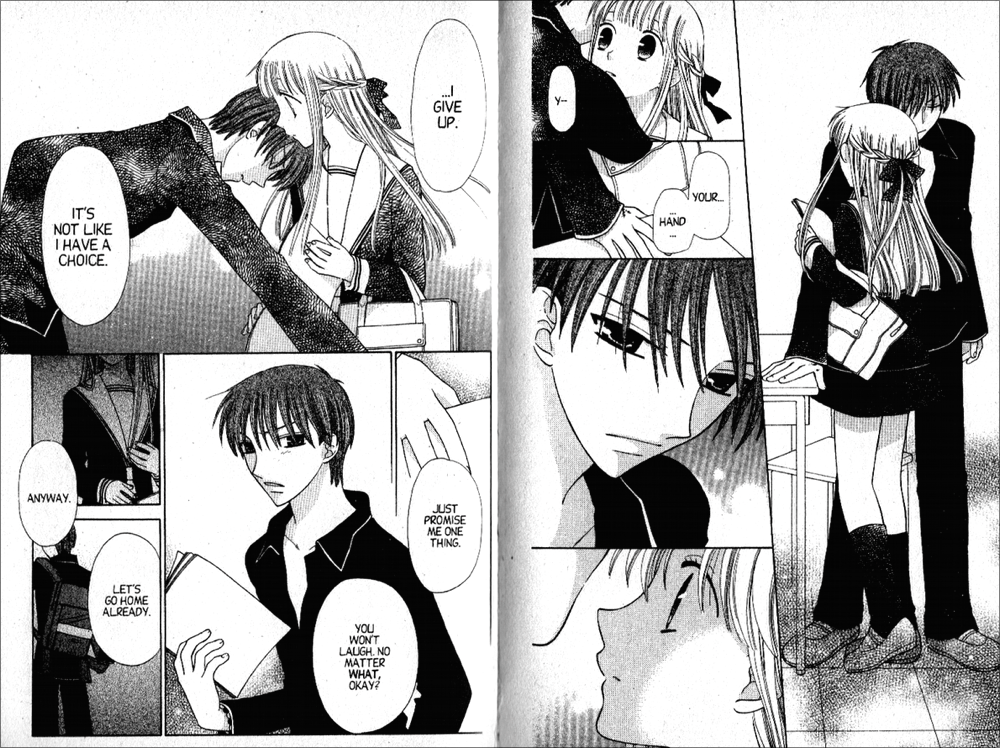
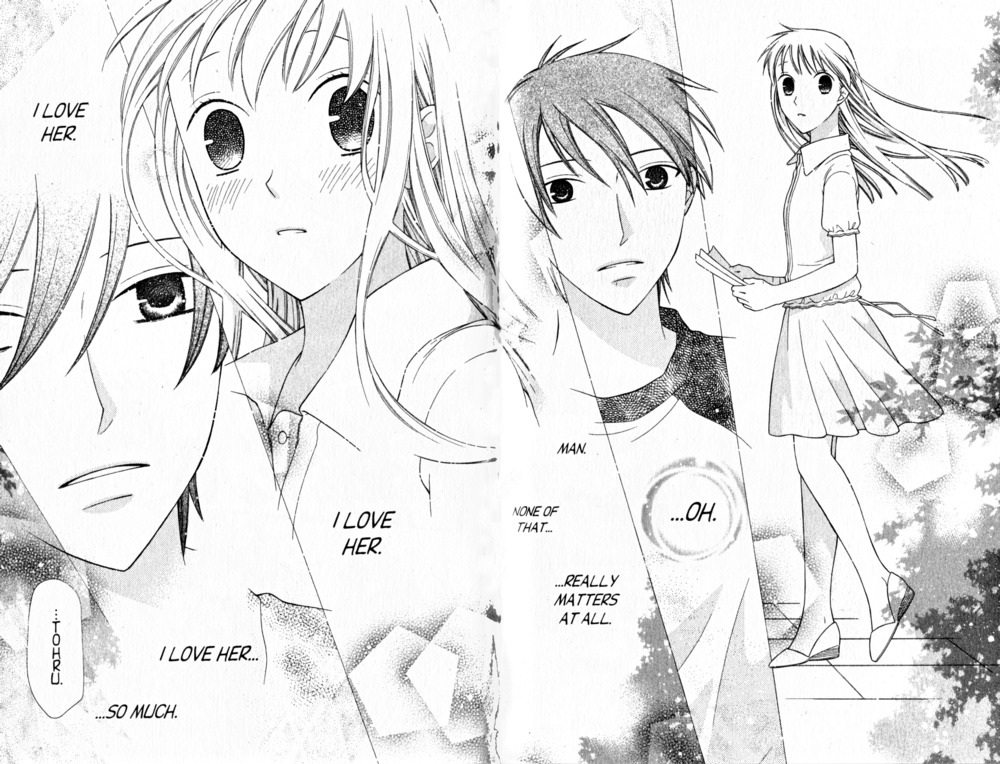
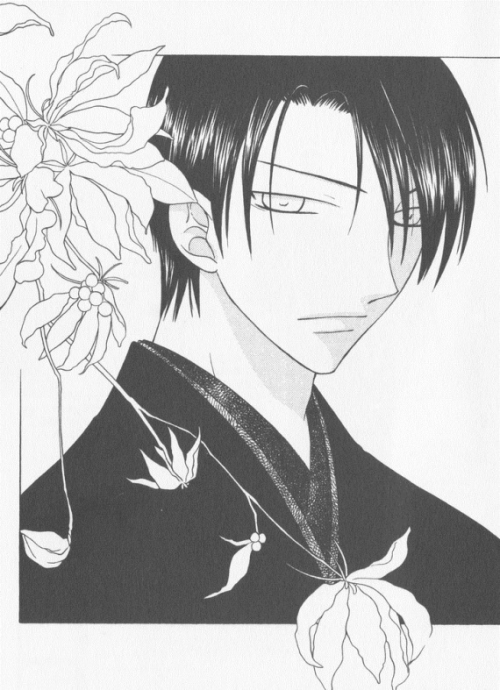
As I prepare for the Manga Moveable Feast featuring Natsuki Takaya’s Fruits Basket (Tokyopop), one nagging thought keeps slightly tinging the pleasure of revisiting the series. I always felt that Fruits Basket was critically under-appreciated. Sure, the series always had its partisans who approached it with the seriousness I felt it deserved, but, on the whole, it seemed like it got dismissed as cute romance, which it stopped being about halfway through the third volume. That critical response might have been because of its demographic, and it might also have been because of its commercial success. (I think there’s a natural and often correct implication to look at an entertainment that makes a lot of money and be suspect of its likely quality. Still, there are plenty of examples of things that are both wildly popular and really good.)

So, for this random weekend question, which comics do you think are critically under-appreciated? What books do you think don’t get the admiration they deserve?

(As a reminder, the Fruits Basket Manga Moveable Feast will run from Sunday, July 24, 2011, through Saturday, July 30, 2011. If you’d like for me to host a piece here, I’d be more than happy to do so.)


Filed Under: DAILY CHATTER

License request day: Onmyôji

July 15, 2011 by David Welsh

[Update: Ed Chavez informs me that the source material isn’t a light novel, but a novel that was serialized in one of Japan’s premiere literary magazines. There’s just not enough strike-through in the world to tidy up the post below, so I’ll let it stand, but I wanted to note the correction in a prominent way. Apologies all around!]

You all know how much I love The Story of Saiunkoku (Viz), Kairi Yura’s spirited adaptation of Sai Yukino’s light novels. You all probably also know that I never let a body of experience get in the way of a recent enthusiasm, so I’m on the lookout for other excellent manga adaptations of light novel series, even though I’m sure they vary wildly in terms of quality. I think I’ve found a winner, though.

It’s actually a literal winner, having won the grand prize for manga at the Osamu Tezuka Cultural Prizes in 2001. I’m referring to Reiko Okano’s adaptation of Baku Yumemakura’s Onmyôji, which ran for 13 volumes in Hakusensha’s Melody. This creates a sort of compound endorsement. The roster of Tezuka Prize winners could also substitute for a list of some of my favorite manga to be published in English with a subset of series I desperately want to see licensed. Melody runs Fumi Yoshinaga’s Ôoku: The Inner Chambers (Viz), another Tezuka Prize winner, so I’m naturally inclined in favor of anything they publish.

The series is currently being published in French by Delcourt’s Akata line. The covers for the volumes released so far are insanely gorgeous. The story follows the work of an imperial magician in the Heian Era who deals with pesky supernatural phenomena like demons and possessed objects. Frankly, it sounds right up my alley: sophisticated supernatural storytelling rich with lots of period detail, plus loads of pretty.

What are some of your favorite light novels? Or manga adaptations of light novels? Or light novel adaptations of manga?

Filed Under: LICENSE REQUESTS

Sasameke Volume 2

July 15, 2011 by Sean Gaffney

By Ryuji x Gotsubo. Released in Japan by Kadokawa Shoten, serialized in the magazine Shonen Ace. Released in North America by Yen Press.

Having just read through my review of the first volume of this manga, I did not particularly like it at all. So it may be somewhat of a surprise to see me reviewing the 2nd volume. I’m a stubborn guy, though, and one feature of that review was that I was defending the second volume’s right to exist, saying that it should not be cancelled based on bad word of mouth, even if it was a horrible manga. Well, Yen has now put out the second volume, and I thank them for that.

That will be the last word of praise you hear in this review. This volume actually managed to be worse than the first. MUCH worse.

On the somewhat bright side, there is a lot more soccer in this volume than there was in the first. Given this is a soccer manga, that can only be a good thing. Sadly, we continue to follow the exploits of the most annoying team ever, so the soccer does not rise to the occasion. We meet new players who hadn’t appeared (or barely) in Volume 1, such as Antonio. We then meet his four older brothers, who are playing for the other team, and who are all better than him. We have another team where the two stars are brothers, and the younger one tries to sabotage our heroes by kidnapping Inae because he loves his brother so much. Oh, and Rakuichi meets his archrival who he knew in Italy.

But wait, I hear you cry. What happened to the large amount of plot in Volume 1 regarding Maiko’s mother? Well, it was totally abandoned. She doesn’t appear in this volume. Hell, Maiko barely appears in this volume, mostly showing up as a comedic foil for whatever foolishness is going on and to provide the book’s climax. Indeed, every time we seem to be getting any plot development, it simply ends. Matsuri rescues a child, and proceeds to flirt with the kid’s mother, who is the wife of the opposing coach… except that’s it. Done just so the opposing coach can cry.

Then there’s Rakuichi, who spends this volume much like he did the last one, whining and bitching. He gets no chance to score a goal or justify everyone calling him talented (OK, he can run downfield with the ball well), and still has no desire for teamwork whatsoever. The author admitted in a note that he wanted to try drawing a team where the heroes were all lazy slackers, but he ended up with this instead. I’ve got news for him – he succeeded. There are precisely zero characters that you feel any empathy towards or want to see succeed.

Despite all of this, they manage to get through the qualifying rounds and end up in the final tournament in Tokyo. I was rather leery at this point, as I saw we only had about 40 pages left in the book. And then we get the ending. Oh my god. I’ve seen endings where the author was told “you’re cancelled next issue, wrap it up” before, but this really takes the cake. The team gets disqualified due to its president’s financial irregularities (which was lampshaded a bit earlier, somewhat incoherently, but lampshaded), and the school forces the team to disband.

My jaw dropped. This isn’t just ‘we only got to the second round, but next year we’ll be the champions’ ending you see in so many sports mangas, this is an active ‘screw you’ to everyone who has been reading this. It reminded me of the final episode of Seinfeld in the way that it seemed to show a total antipathy to its readers. Then it spends the last 10 pages showing everyone but Rakuichi is now successful, and dissolves into incoherence. No really, the last page is merely shonen one-liners spouted off, even the author notes it’s incoherent.

I haven’t mentioned the art, I notice. Suffice to say that it didn’t improve from Volume 1, and has the same issues. It reads like the author put out his first draft every week due to time constraints, without bothering to fix anything. Heck, the plot reads like that too, not only dropping things from chapter to chapter, but sometimes form page to page!

Apparently this manga did succeed fairly well when it first came out. The author mentions merchandise for sale a few times, and it doesn’t seem to read like a put on. There’s also some fanart on deviantart that seems to date from 2007, so some folks must have enjoyed it. And there’s a 4-volume sequel, god help us all. But to be honest, I spent most of my time reading this wondering what possessed Yen Press to license it in the first place? It being a sports manga doesn’t seem to be a big selling point, and it’s not a parody of sports manga or a gag manga, despite flirting with both of those slots unsuccessfully. It’s just a formless shapeless mess.

I did note, on Googling, that the author is known for one other thing besides his manga (which apparently continue in Shonen Ace to this day). When Twilight came out in Japan, they added illustrations and manga covers to the books, to make it more like a ‘light novel’. And Ryuji Gotsubo did those illustrations. Now, this is mere baseless speculation, but I wonder if, upon Yen getting the rights to the Twilight graphic novels they’re doing, there was a rider indicating they had to put out some of this author’s work? After all there have been weirder contracts.

I worry that some people, on reading this review, might think that Sasameke is one of those ‘fun’ bad manga, something to enjoy along the lines of Mystery Science Theater 3000. Let me tell you straight out, it isn’t. It is one of the most frustrating, irritating, and annoying manga ever put out in North America, and you will be grinding your teeth by the end if you even manage to get through it. Yen put out Volume 2, and good for them, but I beg them now: don’t license the sequel. Please?

Filed Under: REVIEWS

Off the Shelf: the good & the great

July 14, 2011 by MJ and Michelle Smith 4 Comments

MICHELLE: Hey, MJ. How is a majestic field different from a gaudy shrimp?

MJ: Hmmm, I don’t know, how *is* a majestic field different from a gaudy shrimp?

MICHELLE: One’s a proud lawn and the other is a loud prawn!

MJ: Ba-dum-dum *chick*

MICHELLE: That one can be blamed on Stephen Fry. Now that I’ve done my obligatory bad joke, want to get on with the real reason why we’re here?

MJ: Sure! My turn?? Me, me, me??

MICHELLE: You, you, you.

MJ: Okay! I’m actually pretty excited to talk about both of my selections this week (in case you couldn’t quite tell), as both of them really embody the beauty and power of the medium.

I’ll begin with Kaoru Mori’s A Bride’s Story, published in hardcover splendor by Yen Press. The story is set in nineteenth-century Central Asia, along the Silk Road, where 20-year-old Amir, daughter of the semi-nomadic Halgal tribe is meeting her betrothed, twelve-year-old Karluk, for the first time. Karluk is the oldest son of the Eihon tribe who are settled near the Caspian Sea, and whose culture differs significantly from that of the Halgal. Though the age difference is a shock for both of them, the greater challenge for Amir is finding her place in her new tribe and proving her worth to Karluk’s family.

So much about this manga is beautiful and refreshing, it’s difficult to know where to begin. Though there is some tribal drama here in the background, with Amir’s tribe determined to take her back from the Eihon in order to marry her more advantageously, the story’s focus is much more on the day-to-day, as Amir and Karluk adjust to their marriage and to each other—a much more compelling subject in my view.

Though Amir is clearly the center of things (she is the title character, after all), the story’s narrative remains staunchly objective, with no particular insight into anyone’s inner thoughts or feelings. While a lesser writer might easily lose the thread without a clear point of view to cling to, Mori uses the opportunity to focus on detail. No expression or bit of dialogue is wasted. Every moment is deliberate and carefully crafted to eke out these characters and their burgeoning relationships. As a result, we feel that we’re getting to know the characters just as slowly as they are becoming comfortable with each other, something I found to be incredibly effective as a reader.

This is a quiet, slow-moving manga, with an emphasis on character development, yet it also has some of the most thrilling moments I’ve experienced in my comics reading to date. Perhaps most spectacular is a scene early on, in which Amir has gone off to catch the ingredients for rabbit stew (something her new family has never eaten). Concerned for her welfare, Karluk follows after her, only to witness her deftly hunting rabbits from horseback with a bow and arrow, a skill his tribe has long forgotten. Amir is full of moments like these, quietly winning Karluk’s heart (and ours) with her knowledge and ability, so different from anything he’s grown up with. More tentative are her efforts towards consummating her marriage, which obviously requires some patience and delicacy.

And “delicacy” is the key word here. While there are any number of things that could be either completely creepy or played for laughs in a story about a 20-year-old bride and her child groom, there is absolutely no trace of either in this manga.

Have I mentioned, too, that it’s just completely gorgeous? From the meticulous period details to the truly adorable livestock, this series is a feast for the eyes. It’s really just a treat in every possible way.

MICHELLE: That sounds wonderful indeed. I love stories where the introduction to the world and its people feels completely organic, especially when you’re able to see how the way they’ve lived has influenced the person they are now. My copy is literally six inches from my left arm, so I will definitely be reading this soon.

MJ: It’s really the loveliest thing, Michelle. I think you will love it. I should also note that I am one of the two manga bloggers still in existence who hasn’t yet read Emma, but seeing this, I feel I have to rectify that immediately.

MICHELLE: I’ve only read part of Emma, though I own all of it.

MJ: So what have you got for us tonight?

MICHELLE: I’ve also got a story about a skilled and awe-inspiring young woman making her way in a new environment, though this one is played for laughs. Oresama Teacher is up to its third volume now, and though I can’t honestly call it the greatest thing I’ve ever read, it definitely makes me giggle.

As you’re aware, Oresama Teacher revolves around the struggle of Mafuyu Kurosaki, a former gang leader expelled from her old school for fighting, to stay out of trouble at her new school and make the best of her second chance. This isn’t easy, since she doesn’t feel at ease around girls (they just seem too fragile) and so instead develops a friendship with the class delinquent in addition to reuniting with her childhood love, the guy who basically groomed her for gang life in the first place, who is now her homeroom teacher.

In volume three, Mafuyu laments the state of her larder and decides to go home for the weekend, where she immediately finds herself in the middle of gang strife once again. But, y’know, funny gang strife. A rival gang sets a trap for her by staging various crimes—knowing that Mafuyu will rush to the rescue—and she ends up tied up in some building with two of her former underlings.

One of my favorite things about the series is mangaka Izumi Tsubaki’s impeccable comic timing, as illustrated by the following scene:

Mafuyu: *discovers similarly bound underlings*
Underling #1: Oh.
Underling #2: Oh.
Nice big pause emphasized by a large airy panel.
Underling #2: Did you cut your hair?

End of chapter.

I can totally imagine this happening in an episode of Buffy the Vampire Slayer. In fact, it probably did.

Wacky hijinks ensue, but unlike most wacky hijinks, these are actually amusing. By the end of the volume Mafuyu has met a new nemesis, the bishounen student council chairman whose beguiling charisma makes others do his bidding. It’s not all hilarity, of course, and there are some very nice scenes as Mafuyu confronts the unpleasant fact that things have gone on pretty much unchanged without her around.

Really, I can’t recommend the series enough. And I’m finding it harder and harder to believe that Tsubaki’s previous Shojo Beat series, The Magic Touch, was really as bad as people said.

MJ: Having been a one of the people who hated The Magic Touch, I’m kinda bowled over by how hilarious this manga sounds. I enjoyed the first volume, certainly, but I hadn’t quite decided whether to carry on. That exchange you quote, though… that’s definitely my kind of funny.

MICHELLE: Do you remember what was so bad about it, or has too much time passed?

MJ: Probably too much time has passed, but I do remember feeling that it was very tedious. Which can’t possibly be said for Oresama Teacher.

MICHELLE: Hm. Well, I may need to check it out anyway, if only to appreciate how Tsubaki has improved at her craft.

So what is your second incarnation of “beauty and power”?

MJ: My second subject is actually the manga I’ve been most looking forward to discussing with you this week, and that would be Takako Shimura’s Wandering Son, also in hardcover, from Fantagraphics.

This manga tells the story of two elementary school students, Shuichi Nitori and Yoshino Takatsuki, who, besides navigating everyday pre-teen challenges like siblings and school friends, are also slowly becoming aware that they are transgender. It’s a gradual and individual process for each of them, but the two bond quickly when Shuichi is seated next to Yoshino on his first day at her school, and it isn’t too long before they begin to suspect that this is something they have in common.

There has been a lot of really eloquent discussion of this volume already (David’s review from just this morning comes immediately to mind, along with your early review), so I won’t attempt to do anything here but explain some of the reasons why I personally loved this manga, and I really do have quite a bit to say on that front.

First of all, this is a elegantly-crafted, character-driven story that lets us into its characters’ private worlds with both candor and delicacy. We are brought into their lives completely, and though we’re privy to their some of their most private thoughts and fears, there is never a sense that we’re observing them as “subjects” or invading their privacy—something I often feel when experiencing “issue”-focused fiction. the real secret to this is that they aren’t treated as though their gender is all that they are, despite how much weight that aspect of their identity is being given in their thoughts and hearts over the course of this volume.

Many of this volume’s most affecting moments are its most quiet and private—Shuichi buying himself a girl’s headband, Yoshino (more commonly referred to by her classmates as “Takatsuki-kun”) riding the train out of town in her brother’s old school uniform—with very little in the way of Big Dramatic Moments, which helps to maintain the silent tension growing in the hearts of both of its leads as they begin to let themselves think more and more about their feelings. Shuichi’s realization that he really should have been born a girl comes not as some kind of melodramatic epiphany, but rather as a private moment of honesty. And these kinds of moments—these quiet bits of realization—don’t magically fix anything or create any kind of grand determination within the characters’ hearts to be themselves or do their best. They simply add to the characters’ growing self-awareness and (to an extent) their bond with each other.

I could go on here, but actually I’m pretty eager to talk with you about this manga.

MICHELLE: It’s been four months since I read this, but so many moments remain indelibly stamped on my brain, like when Shuichi has dressed as a girl while home alone and ends up passing as a girl in an interaction with a solicitor, or the absolutely wrenching scene in which Yoshino experiences her first period. Each of these moments is quiet and understated, but so vastly important in the lives of the characters.

MJ: Oh, the scene with Yoshino and her period… it’s the ultimate betrayal of her body against her, and yet as you say, it’s not at all overstated. It doesn’t have to be, because it’s important without the author having to telegraph that to us. Even when Yoshino leaves school crying after some boys accidentally reinforce exactly what the period means for her, it’s not played for drama in the least.

MICHELLE: I also liked that the story is so completely innocent. Thus far, the children have not been concerned with sexuality; what they’re feeling has simply to do with their own personal identity, uncomplicated by any other factors.

MJ: I don’t think bringing sexuality into the picture would necessarily damage the story’s innocence. But they have plenty to think about as it is, so I’m not bothered at all that it has not come up in a major way.

Mostly, I’m just completely charmed by this story, and content to take it as it comes. I feel like I’m in very sure hands.

So Michelle, what’s our final volume for the evening?

MICHELLE: Well, as you know, I’ve spent the last week catching up on Pandora Hearts, and wanted to talk about the sixth and most recent volume.

It’s actually a lot more simple plot-wise than recent volumes have been, as Oz’s uncle, Oscar, decides to give his nephew a fun diversion by whisking him off to visit his little sister (who, thanks to the ten-year time lapse, is now older than him) at school. Much forced hilarity ensues, with Oscar pretending to be daft in order to encourage Oz to enjoy himself, and Oz playing along to avoid worrying others. Along the way he meets a couple of other students, engaging in a lengthy bickerfest with one of them, and a girl who spirits him away to a Baskerville lair.

The most interesting aspect of Pandora Hearts is its characters, and in this volume it seems that everyone—even near total strangers—is coming down on Oz for his tendency to accept things as they are. Oz makes no effort to protect himself—getting easily nabbed by the Baskervilles, for example—and so inconveniences others when they have to save him, but there’s such a solid backstory reason for his behavior that it never comes across as annoying. I don’t know if some of the words Oz hears in this volume will have a lasting effect, but it looks like some may have gotten through, at least.

Even more interesting to me is the brief snippet of background we get for Xerxes Break, the Shigure-like figure in the story who is friendly and silly but extremely capable of manipulating those closest to him for his own goals. What’s so interesting about him is how honest he is about what he’s done after the fact, and everyone just keeps on trusting him. Still, he does seem to have his own code of honor, and downplays his own actions when making a personal sacrifice to save someone he cares about. He’s extremely hard to figure out, and thus quite intriguing.

But, of course, Raven is still my favorite.

MJ: There was a point in this volume where I began to worry that it was going to let itself linger too long in school-based silliness, but I was relieved to discover that it was all really a ploy to lead us into some terrific character development for Oz. I developed an immediate fondness for the volume’s new characters too—another son of the Nightray household and his outspoken valet.

Also, I’m a pretty big Break fan, so I definitely agree on that point. Even if Raven is still the best. ;)

MICHELLE: To continue on with Fruits Basket comparisons, much like Manabe was essential for challenging Yuki and drawing him out of his shell, I think someone like Elliot is essential for Oz. Sure, I didn’t much enjoy their protracted arguing, but at least Oz was reacting passionately to something.

MJ: That’s an excellent point. Oz needs someone to make him mad, and though Alice seems pretty well-equipped to serve that purpose for just about everyone else (or maybe it’s just Raven), Oz identifies with her too strongly for her to fulfill that role in his life.

MICHELLE: Exactly. But she’s also very important in other ways, like seeing through his feigned good humor to the fear of meeting his sister again that lies beneath. Really, just about every character in this series represents something vitally important to Oz, which is pretty impressive.

MJ: Agreed! Though with a plot-heavy series like this, it would be easy to focus on all the events that are going on, I think Jun Mochizuki’s greatest strength is with characterization, and you’ve pointed out one of the reasons why.

MICHELLE: Now that I have caught up with the series, I vow never to fall behind again!

MJ: Hurrah!

Filed Under: OFF THE SHELF Tagged With: a bride's story, oresama teacher, pandora hearts, Wandering Son

3 Things Thursday: Out of my dreams

July 14, 2011 by MJ 8 Comments

Though my commute to work is too short to allow the consumption of podcasts in a timely manner, over the past few days, I’ve been slowly working my way through the latest installment of Ed Sizemore’s Manga Out Loud, featuring Takako Shimura’s Wandering Son. I still have a ways to go, but one of the topics that has engaged me deeply so far has been discussion of Shuichi’s nightmares in the book, and what they reveal about his fears and his state of mind as he works through his discomfort and disconnection with his biologically assigned gender.

I rambled on a lot about this in comments to the entry, mainly because the harshness of his later nightmare in the volume resonated so strongly with me personally and the nature of my own worst nightmares.

The truth is, I’m pretty obsessed with dreams and dream worlds (pleasant or otherwise) and always have been, and while many works of fiction use dreams as a narrative device, it’s not all that often that they use them in a way that really rings true to me. Obviously, what “rings true” to me in a dream sequence is going to be largely informed by my own dream experiences and may not reflect the experiences of others, but this is an area in which Shimura’s vision of her character’s dreams really shines. I’ll probably have more to say about this as I discuss the series further, but in the meantime, let’s have ourselves a 3 Things Thursday!

3 manga series that heavily (and effectively) make use of dreams

1. After School Nightmare | Setona Mizushiro | Go! Comi – One of my greatest regrets will always be that I could not find the time to participate in the Manga Moveable Feast for this title, because I have a lot to say about it, not the least of which would be regarding its use of shared nightmares as its primary plot device. In these students’ nightmares, they each appear as manifestations of their darkest secrets, and while, as Erica Friedman points out in the Wandering Son podcast, these secrets tend to come from a place of self-loathing, the line between what we fear about ourselves and what we fear other people think of us is often a pretty difficult one to draw. It took me a long time to realize that the horrible things people say about me in my nightmares are less often what I fear they think of me and more what I secretly fear about myself. It’s me writing the script, after all. This is a distinction that After School Nightmare completely gets, and that has a lot to do with why I found it so effective as a dream-based manga. Furthermore, it uses its nightmare setting as a metaphor for the state of being a teenager, when emotional vulnerability to one’s peers is more terrifying than anything else the subconscious mind could possibly dream up.

2. Please Save My Earth | Saki Hiwatari | Viz Media – Probably I’ve already talked this one to death in my recent discussion with Michelle at The Hooded Utilitarian, but moving to the happier side of dream fantasy, nothing can possibly beat Saki Hiwatari’s Please Save My Earth, in which a group of teenagers discover through a series of shared dreams (is there a theme here?) that they are the collective reincarnation of a group of alien scientists sent to study Earth from the Moon. Unlike After School Nightmare, this series resonates more strongly with the best dreams of my youth and the sense that our dream worlds might be just as real as our waking lives. This was a recurring theme in my childhood, and Please Save My Earth is in many ways a perfect representation of my own deepest pre-teen fantasies. Interestingly, like After School Nightmare, this series also touches on questions of gender identity, though it fails to dig as deeply, and of course neither approach the subject with the same kind of maturity as Wandering Son.

3. xxxHolic | CLAMP | Del Rey Manga – Though this is a manga that hooked me long before its use of dreams as a major narrative device, there are few examples that I love more. From Watanuki’s frequent dream-based encounters with Doumeki’s grandfather to his complete inability to maintain his waking consciousness throughout some of the later volumes, CLAMP’s use of dreams in this series is emotionally and narratively spectacular. This series goes further than either of the others in questioning the concept of reality vs. dreams, as it plunges Watanuki from waking to dreaming and back again, leaving both he and us disoriented as to which is which much of the time. It’s revealing and immersive, which is what makes it so effective for me. Also? Kinda gorgeous.


Readers, do you have favorite dream-based manga?

Filed Under: 3 Things Thursday Tagged With: after school nightmare, dreams, please save my earth, Wandering Son, xxxholic

From the stack: Wandering Son vol. 1

July 14, 2011 by David Welsh

This phenomenon may have been before your time, but do you remember those movies of the week that dealt with social issues? Recognizable small-screen stars would grapple with family strife, illness, and other bits of contemporary malaise, ultimately (though conditionally) triumphing by the end of two hours, where we’d often see Michele Lee or Lindsay Wagner walking serenely on a beach or joyously pushing a child in a swing. Freeze frame.

As with any subset of entertainment, the quality of these outings varied widely. There’s only so much you can do with a big issue in two hours (minus commercials), which tended to necessitate a lack of nuance and a reliance on the star’s charisma to carry the audience through all the exposition. My favorite of these has to be The Last, Best Year, where Mary Tyler Moore helps Bernadette Peters make end-of-life choices after Peters learns she has a terminal illness. It’s great because it forgoes lessons about living wills and detailed diagnosis in favor of what’s going on inside the characters’ heads and hearts. I mist up just thinking about it.

I mention this genre because it does tenuously relate to Takako Shimura’s Wandering Son, which recently debuted from Fantagraphics. It’s kind of a big-issue manga, as it deals with transgendered people, but it’s the best kind of big-issue anything, because it’s so measured and tender and treats its characters with so much respect. Since Shimura doesn’t need to confine her story to 120 minutes or 120 pages, she has the leisure to explore the issue entirely through the characters immersed in it. The time it takes to tell their story is dependent entirely on Shimura’s commitment and the interest of her audience. (The story has been running in Enterbrain’s fifth-genre marvel, Comic Beam, since 2002, so both the commitment and the interest must be substantial.)

Her protagonists are fifth graders in the same class. Shuichi Nitori has transferred to a new school, and he immediately bonds with Yoshino Takatsuki, the girl at the next desk. Both respond to activities and aesthetics that are typically assigned to the other’s gender. Nitori likes to bake. Takatsuki cuts her hair short and covets her father’s old school uniform. Shimura gently shows Nitori and Takatsuki noticing these resonances and starting to recognize what they might imply.

Of course, the characters are 11 years old, so Shimura keeps their evolving feelings and knowledge on the abstract side. One of the most impressive things about this debut volume is how age-appropriate the protagonists’ thinking is. Shimuri isn’t writing about transgendered people issues; she’s writing about two kids and the way they feel. It’s mesmerizing how she can do so with such simplicity and directness while still giving the content often heartbreaking weight.

As Nitori and Takatsuki inch towards a more complex understanding of a part of their identities (and back away from it from time to time), we meet their families and friends. Most fascinating to me is Saori Chiba, who seems to have a precocious understanding of her classmates’ states of mind. Of course, she’s also 11, so understanding a part of a concept doesn’t give her any guidance on how to act on that knowledge. She’s a great catalyst character, interesting in her own right, invested with contradictory feelings and motivations.

It’s often argued that the key element to any successful manga is a relatable protagonist. Shimura has crafted hers so meticulously and is revealing their natures so carefully that it’s virtually impossible not to be deeply invested in them. In part, it’s the actual portrayal in this volume, but it’s also the tremendous potential they have. I want to see them age and mature, struggle and succeed, and find their ways to lives that give them happiness and peace. I don’t think there’s any more a reasonable person could ask of a story like this.

Filed Under: REVIEWS

The Stellar Six of Gingacho Volume 3

July 14, 2011 by Sean Gaffney

By Yuuki Fujimoto. Released in Japan as “Kirameki☆Gingachou Shoutengai” by Hakusensha, serialized in the magazine Hana to Yume. Released in North America by Tokyopop.

And so sadly we come to the end of this series in North America. I’m not optimistic about any license rescues, so it looks as if Volumes 4-10 will only be available in Japanese for the foreseeable future. Which is a shame, as this is a great volume of slice-of-life shoujo manga, and we’re finally starting to see at least one of the four other friends get some development.

The last volume of this series seems to have only come out via Diamond Distribution’s comic book stores – Amazon and Right Stuf never shipped it. Indeed, it was very hard to find any cover art at all that didn’t have ‘art not final’ stamped on it.

As for the volume itself, thankfully there seems to be only one of the ‘Mike wants everyone to be best friends 4-evah’ type of story we saw so often in the first two volumes. This leaves us with more regarding the relationship between Mike and Kuro. Mike is mostly as dense as ever (Q even tries hugging her close to show that she only feels ‘weird’ about it when Kuro does it, though this backfires on him spectacularly), but after the final story where she cheerfully agrees to go on a date with another guy without realizing what it actually is, she seems to at least start to get the idea that life is not all about happy smiles and that eventually real love and affection is going to have to come into play.

The character who gets the best focus here is Sato, the shy wallflower girl of the six friends. She’s at a different school from the others, and doesn’t stand out as much among the insane eccentrics in her group, so not only is she feeling depressed and inadequate, other kids are talking about her as the odd one out. Naturally, they stick her with the class rep job, the traditional job given in manga to the last person who wants it. Nothing unique or surprising happens here – with the help of her friends who show her that they love her no matter what, she’s able to overcome her fears and worries – but it’s still a heartwarming story nonetheless.

Mike and Kuro have been the focus of the romance to date, so it’s intriguing to see that we may be seeing the other four get in on the act. Kuro drags Sato along to pose as his date while he stalks Mike on hers, which shows that in many ways he can be Mike’s equal in cluelessness, as we note that she seems to have a crush on him. More intriguingly, in the funniest chapter of the book, where the three boys are candidly snapped for a gossip magazine and then become local ‘hottie’ celebrities, we get Kuro implying Q also has a crush. Indeed, Kuro’s angry “Mr. Eternally Unrequited Love” gets Q rather annoyed, and clearly it’s a plot point we would learn more about in future volumes were they coming out.

As I noted when I reviewed Happy Cafe, this type of shoujo manga is something we saw quite a bit of from CMX and Tokyopop but less from Viz. As a result, I suspect we won’t be seeing much of this genre, the manga where romance is there but not the focus, and you end up simply smiling at reminiscence of those happy childhood/teenage memories. Despite my above cynicism, I do hope that one day we find out how Mike and Kuro will get together, and see if the other four also find happiness (with each other? Well, it is that type of manga, so I wouldn’t be surprised). Try to track down a copy of this if you can.

Filed Under: REVIEWS

Kamisama Kiss Volumes 3 and 4

July 13, 2011 by Anna N

I’m a big fan of Julietta Suzuki. I hosted the Manga Moveable Feast for Karikuri Odette, so it isn’t a surprise that I’m finding her latest series Kamisama Kiss absolutely delightful. In some ways Karakuri Odette, with its android protagonist and the way it explored romance without leading to a typical shoujo manga conclusion, was an anti-shoujo shoujo manga. Kamisama Kiss is a little more typical as Nanami, the human girl turned shrine goddess struggles with her feelings towards her shrine’s protector, the fox spirit Tomoe. While the storyline may be a bit more expected, Suzuki seems to be stretching her artistic skills a little bit more in this series. The characters are cute, with a bit of an edge. The opportunities to portray spirits attached to different types of landscapes allows for some refreshing character designs from Suzuki.

The third volume shows Nanami struggling with the realization of her feelings for Tomoe. They have to go on a visit to see swamp goddess Himeneko, but Nanami opts to attend in her school uniform instead of taking fashion advice from Tomoe. Himeneko’s underwater palace is bright and luxurious, with fish swimming by as Nanami admires the decor. Three bitchy carp princesses immediately attach themselves to Tomoe, while Himeneko takes Nanami aside for a bit of a makeover. Tomoe tells Nanami that she’s beautiful and she’s overcome with emotion. He keeps vowing to never fall in love with a human, so Nanami continues to suffer. A rival for Nanami soon appears when she gets rid of a white snake at her shrine. It leaves a mark around her wrist which is the equivalent of a snake engagement ring. Mizuki is a lonely snake spirit, and he’s selected Nanami as his new companion. There’s a hilarious story later in this volume, as Tomoe uses his powers of disguise to attend school as Nanami when she’s back at the shrine nursing a cold. Tomoe-Nanami has some interesting encounters with Nanami’s school friends, and Nanami’s hair starts whipping around almost like tentacles when Tomoe’s temper accidentally shows through his disguise.

Nanami continues to struggle with her feelings for Tomoe in somewhat superficial ways, testing his devotion to her and trying to get him to go out on a date with her. But when she asks Tomoe to go into the sea even when it is forbidden to him in order to rescue one of her friends, she starts displaying her feelings for him in a very substantial way. When Tomoe enters the sea he alerts a vengeful god who he tangled with years ago. The sea god promptly kidnaps Tomoe as payment for past wrongdoings, but agrees to a bargain with Nanami. If she can find the eye that Tomoe stole from him long ago, he will restore Tomoe to her. Mizuki the snake comes along on Nanami’s quest and she shows how far she’s willing to go to protect Tomoe. It seems like Mizuki is going to be sticking around for some time, so I’ll be looking forward to Tomoe’s reaction to that in the next volume.

The textiles of the yokai outfits and the undersea backgrounds in this volume were very detailed. When combined with Suzuki’s charming knack of rendering her facial expressions just exaggerated enough for humor but still realistic enough to inspire sympathy from the reader, Kamisama Kiss provides great summer escape reading.

Review copy of volume 4 provided by the publisher.

Filed Under: UNSHELVED

Manga the week of 7/20

July 13, 2011 by Sean Gaffney

After the first two weeks of July were very busy, this third week, as is traditional with comic shops, is fairly quiet. (Quick note: Midtown, where I get my list from, is very behind in getting Kodansha Comics. My shop (not Midtown) lists Fairy Tail 14 as coming in next week, and I suspect that means Arisa 3, Ninja Girls 6 and Shugo Chara 11 might also show up via Diamond. But we won’t know till Monday.)

First off, Bandai has a new one-volume Code Geass spinoff, Tales of An Alternate Shogunate. It’s essentially Code Geass in 1853, assuming that 1853 had giant mecha. It ran in one of Kadokawa’s media magazines, Kerokero Ace, but does not feature anyone from Sgt. Frog. I think.

Udon’s line of child-friendly manga never really got as much attention as it probably deserved. They licensed several titles from Japanese publisher Poplar, which specializes in the ‘kodomo’ genre, aka manga for children ages 3-6. The longest title Udon picked up was the 5-volume magical girl manga The Big Adventures of Majoko, and its final volume hits shelves next week.

Vertical has Volume 8 of its quietly fantastic space manga Twin Spica. Which I believe is actually the 2nd half of 8 and all of 9 in Japan, as Vertical is starting to release these in longer chunks. Very much worth your money in any case.

And Viz has its prestige items. La Quinta Camera is the latest in Viz’s quest to license everything by Natsume Ono they possibly can (that is not either yaoi or owned by Kodansha). This ran, like Not Simple did, in Penguin Shobo’s magazine Comic SEED!, and from the reviews I’ve read I expect I will enjoy it quite a bit.

The 6th volume of Ooku is also coming out. This runs in the Japanese magazine Melody, which tends to straddle the line between shoujo and josei so much that folks get confused. A good rule of thumb is to see which imprint the collected editions come out under. Gatcha Gacha, for example, ran in Melody and was put out under the Hana to Yume imprint. Hence, shoujo. Ooku, on the other hand, comes out in the much sleeker and more adult Jets imprint. This one’s josei. Enjoyable no matter where it slots, however.

Lastly, there’s the 10th VIZBIG Edition of samurai thriller Vagabond, which I believe is the last until Japan gets a few more volumes out, as I think the collections have almost caught up with the individual volumes.

Anything appealing to you yet?

Filed Under: FEATURES

Wandering, not lost

July 13, 2011 by David Welsh

I had a great time discussing the first volume of Takako Shimura’s Wandering Son (Fantagraphics) for the latest Manga Out Loud podcast, though I bailed before the talk switched to the anime, as I’m avoiding spoilers. Speaking of that marvelous book, Glen Weldon includes it on his list of “Five Recent Graphic Novels You Really Shouldn’t Miss” for NPR’s Monkey See blog.

In other news, Viz triggered mild panic when it listed the fourth volume of Mitsuru Adachi’s Cross Game as the final volume on its Facebook page. After panicked inquiries from overly invested geeks like me, a Viz rep hastened to reassure us that it was a typo and that they will publish the series in its entirety. PHEW!


Filed Under: DAILY CHATTER, Link Blogging

  • « Go to Previous Page
  • Page 1
  • Interim pages omitted …
  • Page 836
  • Page 837
  • Page 838
  • Page 839
  • Page 840
  • Interim pages omitted …
  • Page 1047
  • Go to Next Page »
 | Log in
Copyright © 2010 Manga Bookshelf | Powered by WordPress & the Genesis Framework