• Skip to primary navigation
  • Skip to main content
  • Skip to primary sidebar
  • Home
  • About Us
    • Privacy Policy
    • Comment Policy
    • Disclosures & Disclaimers
  • Resources
    • Links, Essays & Articles
    • Fandomology!
    • CLAMP Directory
    • BlogRoll
  • Features & Columns
    • 3 Things Thursday
    • Adventures in the Key of Shoujo
    • Bit & Blips (game reviews)
    • BL BOOKRACK
    • Bookshelf Briefs
    • Bringing the Drama
    • Comic Conversion
    • Fanservice Friday
    • Going Digital
    • It Came From the Sinosphere
    • License This!
    • Magazine no Mori
    • My Week in Manga
    • OFF THE SHELF
    • Not By Manga Alone
    • PICK OF THE WEEK
    • Subtitles & Sensibility
    • Weekly Shonen Jump Recaps
  • Manga Moveable Feast
    • MMF Full Archive
    • Yun Kouga
    • CLAMP
    • Shojo Beat
    • Osamu Tezuka
    • Sailor Moon
    • Fruits Basket
    • Takehiko Inoue
    • Wild Adapter
    • One Piece
    • After School Nightmare
    • Karakuri Odette
    • Paradise Kiss
    • The Color Trilogy
    • To Terra…
    • Sexy Voice & Robo
  • Browse by Author
    • Sean Gaffney
    • Anna Neatrour
    • Michelle Smith
    • Katherine Dacey
    • MJ
    • Brigid Alverson
    • Travis Anderson
    • Phillip Anthony
    • Derek Bown
    • Jaci Dahlvang
    • Angela Eastman
    • Erica Friedman
    • Sara K.
    • Megan Purdy
    • Emily Snodgrass
    • Nancy Thistlethwaite
    • Eva Volin
    • David Welsh
  • MB Blogs
    • A Case Suitable For Treatment
    • Experiments in Manga
    • MangaBlog
    • The Manga Critic
    • Manga Report
    • Soliloquy in Blue
    • Manga Curmudgeon (archive)

Manga Bookshelf

Discussion, Resources, Roundtables, & Reviews

vertical

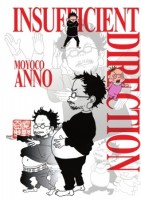
Insufficient Direction by Moyoco Anno

April 8, 2014 by Anna N

Vertical is such a great publisher. I’m turning into even more of a fangirl because Gundam: The Origin, What Did You Eat Yesterday?, and Insufficient Direction all make me very happy. Some of the online reviews I’ve skimmed about this manga tend to focus more on the opportunity to find out what Hideaki Anno is like, but I always found myself more intrigued by getting a bit of an autobiographical glimpse into Moyoco Anno’s home life. She’s obviously fiercely intelligent, with a cynical edge to her manga like Happy Mania and Sakuran.

Insufficient Direction
is an affectionate and humorous look at what it is like to be married to the Ultimate Otaku. Anno portrays herself as a toddler wearing a one piece suit named Rompers and her husband looks like a bearded five-year-old with a beer belly, who is referred to as Director-kun. The manga details the hazards of geekdom, including how to shop for wedding outfits when one part of the couple wants to cosplay as Ultraman, anime song earworms, large collections of action figures and dvds, and superhero posing contests. Rompers gradually finds her personality slowly adjusting to Director-kun’s as she accidentally binge watches Gundam and finds herself making random geeky cultural references.

Anno’s style in Insufficient Direction is basically a cartoonish chibi way of drawing both her and her husband, but I was amused by the panels here and there where her normal manga style peeked through, when she was sitting around talking to her assistants or portraying a goofy story made up by her husband. Overall, this manga is an affectionate portrayal of a marriage, with give and take on both sides as Rompers tries to get Director-kun to be more healthy and Director-kun tries to get his wife to become the ultimate otaku bride.

There’s an essay by Hideaki Anno in the back of the book, and it is clear how much he respects his wife’s talent. I also appreciated the copious notes included in this volume, which are necessary for anyone who doesn’t have a ton of knowledge about Japanese tv shows and anime from the 60s and 70s. I enjoyed the episodic nature of this manga, which made it easy to pick up and put down if I was just in the mood to read a chapter or two. This is a must read if you enjoy slice of life manga, or if you are a fan of either Hideaki or Moyoco Anno.
Filed Under: REVIEWS Tagged With: Moyoco Anno, vertical

What Did You Eat Yesterday, Vol. 1

March 30, 2014 by Anna N

What Did You Eat Yesterday? Vol 1 by Fumi Yoshinaga

What Did You Eat Yesterday?
is one of those holy grail manga that I thought would be tough to get here in America in translated form, so you can imagine my delight when Vertical announced that they would be publishing it. No one does slice of life foodie manga like Yoshinaga, so I was looking forward to this series about a gay couple and the food they eat.

Shiro Kekei is a lawyer for his day job, determined to take on boring cases that will allow him to leave work by 6 every day. He doesn’t share much about his personal life at work, seeming very aloof. Shiro’s enthusiasm comes out when he’s shopping for and preparing food for his outgoing boyfriend Kenji who works at a salon. Ordinarily reading someone’s thoughts as they scan the supermarket for bargains and contemplate the nuances of the seasoned rice that they are cooking wouldn’t be all that exciting, but Yoshinaga’s wit and humor makes these every day occurrences fascinating. What Did You Eat Yesterday? is all about food, but Yoshinaga also includes details of character interaction that make you want to spend more time with the people she introduces. Shiro’s mother calls him and browbeats him about not being out at work, yelling over the phone “Proclaim it loud and proud! Being homosexual is nothing to be ashamed of!” Shiro zealously guards his privacy, while Kenji brags about his hot lawyer boyfriend at work while he’s cutting hair.

Shiro has another close friend outside of work, an older housewife who he bonds with over their shared love of cooking, and they meet in an amusing way. Seeing the contrast between Shiro’s job as a lawyer and the hobby that takes up so much of his interior life is interesting, as well as the way the different personalities Shiro and Kenji complement each other. There are a few recipes in the book, and for the dishes that Shiro prepares that aren’t as fully described, it would be easy to track down a recipe online. I did find myself wondering towards the end of the book if I could start using my rice cooker more creatively. This was a pleasure to read, from the opening scenes to the next volume preview that includes a list of all the foods the reader can expect to see in volume 2.

Filed Under: REVIEWS Tagged With: vertical, what did you eat yesterday?

Insufficient Direction

March 28, 2014 by Ash Brown

Insufficient DirectionCreator: Moyoco Anno
U.S. publisher: Vertical
ISBN: 9781939130112
Released: February 2014
Original release: 2005

I picked up the first few volumes of Moyoco Anno’s manga series Happy Mania more on a whim than anything else. After reading them I immediately went out and tracked down all of the manga by Anno available in English that I could find. I have been a fan ever since and even went so far as to host the Moyoco Anno Manga Moveable Feast. Anno is an extraordinarily talented creator. I adore her work and so was extremely happy when Vertical released Insufficient Direction in 2014. Originally published in Japan in 2005, the manga is a somewhat fictionalized account of Anno’s married life with her husband Hideaki Anno of Neon Genesis Evangelion fame. Now, I know quite a few people who were interested in Insufficient Direction primarily because of the Hideaki Anno connection. In addition to being one of the manga’s main subjects, an essay in which he discusses Insufficient Direction is also included as part of the volume’s extra materials. But for me, my interest in Insufficient Direction was all about Moyoco Anno. I was excited to have the chance to learn a little more about her and her life directly from her own perspective.

Rompers (aka Moyoco Anno) and Director-kun (aka Hideaki Anno) are getting married. It just so happens that Director-kun is one of the “big four” of Japanese otaku. A director of both film and anime, he is also a huge fan and obsessive collector of Japanese pop culture. Rompers has her own otaku tendencies and enjoys manga, anime, and such, but she has tried to keep those impulses under control in order to lead a more “normal” life. However, Rompers’ marriage to Director-kun makes that almost impossible and she slowly becomes bona-fide ota wife. Although Rompers obsesses over some of her own interests, it’s nothing when compared to Director-kun. Instead of denying her otakuness, Rompers begins to embrace it, partly out of self-preservation. She and Director-kun are able to share their love of Japanese television, anime, and manga, but how much is too much? Their home quickly fills with their collections and they can be embarrassingly enthusiastic over the smallest bits of trivia. In the end, it is a way of life and they love it (although Rompers continues to have some reservations). But more importantly, they love each other.

There are a ton of references to tokusatsu, anime, manga, and other Japanese pop culture and celebrities. In fact, there are thirty pages of annotations to help interested readers keep a handle on everything. Sometimes reading the notes actually takes longer than reading the chapters they’re associated with. However, understanding all of the minutia and details isn’t absolutely needed to enjoy Insufficient Direction; simply recognizing the extreme levels of geekiness and nerd cred involved should be enough. Rompers and Director-kun make an adorable and loving couple. The reason that there are so many pop culture references isn’t just because that is what they are interested in, it’s also one of the ways they connect and communicate with each other. Entire conversations can be held that consist of nothing but quotes from anime and other media. Singing theme songs at the top of their lungs brings them even closer together. Vacations and excursions are based on locations from films and television shows. Fortunately, because they do share so many interests, they usually can happily spend time enjoying them as a couple.

Although Insufficient Direction is fictionalized–mostly to emphasize the more humorous aspects of Rompers and Director-kun’s relationship–I find it to be entirely and completely believable. As a bit of an otaku myself, I am very familiar with relationships that work in similar ways to theirs and am all too aware of some of the challenges faced by avid collectors. Insufficient Direction shows both of the Anno’s to be very relatable people. At least I could certainly identify with them. Insufficient Direction is quirky, smart, and very funny. Compared to some of Anno’s other manga, the artwork in Insufficient Direction tends to be simpler in style, suitable for what basically amounts to a real-life gag manga. The individual chapters are short and there isn’t really an overarching plot so much as there is an ongoing challenge for Rompers and Director-kun to put up with each other’s quirks and interests. There’s quite a bit of good-natured teasing in Insufficient Direction and quite a bit of love, not just for each other but for art and entertainment as well. I found Insufficient Direction to be a very enjoyable read and am very happy to have it in English.

Filed Under: REVIEWS Tagged With: manga, Moyoco Anno, vertical

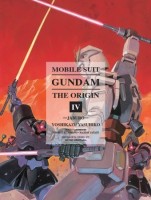
Mobile Suit Gundam: The Origin, Vol. 4: Jaburo

February 21, 2014 by Ash Brown

 Mobile Suit Gundam: The Origin, Volume 4: JaburoCreator: Yoshikazu Yasuhiko
Original story: Yoshiyuki Tomino and Hajime Yatate

U.S. publisher: Vertical
ISBN: 9781935654988
Released: December 2013
Original release: 2008

Yoshikazu Yasuhiko’s manga series Mobile Suit Gundam: The Origin was my first real introduction to the massively popular Gundam franchise. I was somewhat hesitant to enter into the fray; Gundam can appear rather daunting to a newcomer considering the sheer number of series and alternate timelines involved. However, I was already a fan of Yasuhiko’s other manga. If I was going to start anywhere with Gundam it made sense for me to start with The Origin. So far, in my admittedly limited experience with the Gundam franchise, The Origin has been my favorite rendition of the story. The manga is a retelling of the original 1979 anime series with which Yasuhiko was also involved. Jaburo is the fourth volume in the collector’s edition of The Origin, initially published in Japan in 2008 and released in English by Vertical in 2013. The guest contributor for Jaburo was Yokusaru Shibata, which I believe makes it his manga debut in English.

After a far too brief stalemate in which fighting had all but ceased, the war between the self-proclaimed Principality of Zeon and the Earth Federation has quickly begun to escalate once more. Escaping from the destruction of the Federation’s Side 7 space colony, the ship White Base is carrying with it the Federation’s best hope to regain technological superiority over Zeon–the newly developed Gundam mobile suit. Crewed by a mix of civilians and inexperienced military personnel and doggedly pursued by some of Zeon’s finest commanders, White Base has surprisingly been able to persevere. The ship is drawing closer to Jaburo, the Federation’s headquarters on Earth, but the journey will still require passing through Zeon-occupied territory. The mission’s success and the crew’s survival will not only depend on their own inherent skills and talents but the support received from what remains of the Federation military and its dwindling resources.

While the war between Zeon and the Federation continues on a grand scale, Jaburo reveals some of the very personal reasons why the individual soldiers have chosen to fight that war and why some of the civilians have joined in the battle as well. Over the last couple of volumes in The Origin, Zeon has suffered several deaths of particular significance. Garma Zabi’s death has served as a rallying point for Zeon’s forces as a whole, but Ramba Ral’s death has triggered a much more aggressive vendetta from those who knew him best. They are less concerned with Zeon’s cause than they are with their own personal revenge. But neither side of the conflict is immune to the effects of war. In Jaburo, it’s the Federation and the crew of White Base who must face some severe losses of their own. Death and destruction has not been lacking in The Origin, but growing to know the characters, what they hold important, and what they are willing to die for make their demise even more potent.

In addition to the excellent character development found in Jaburo, I was also particularly impressed by Yasuhiko’s artwork in this volume. The color work is especially effective. In general, I have largely favored Yasuhiko’s black and white illustrations in The Origin, but the color artwork in Jaburo is simply gorgeous. The lush greens and blues of the Amazon and South America are beautiful, contrasting with the reds and oranges of fires and explosions as humankind continues to destroy itself. Yasuhiko’s black and white art in the series remains very strong as well and has a fantastic “old school” feel to it. The battles are fierce and dramatic, but Yasuhiko handles the chaos in a controlled manner that still retains a sense of pandemonium. The story has moved from space to Earth and so the technology, mobile suits, and strategies have to be adjusted for the new environment. Both the characters and Yasuhiko are aware of this, and it shows in Jaburo. I’m continuing to enjoy The Origin and look forward to reading more.

Filed Under: REVIEWS Tagged With: Gundam, Hajime Yatate, manga, vertical, Yoshikazu Yasuhiko, Yoshiyuki Tomino

No Longer Human, Vol. 3

January 25, 2014 by Ash Brown

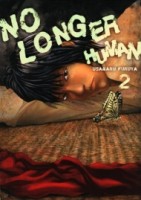
No Longer Human, Volume 3Creator: Usamaru Furuya
Original story: Osamu Dazai

U.S. publisher: Vertical
ISBN: 9781935654377
Released: February 2012
Original release: 2011

Osamu Dazai’s semi-autobiographical novel No Longer Human, originally published in Japan in 1948, has had a least three manga adaptations. Of those, only one is currently available in English–a three-volume series by Usamaru Furuya. I have been interested in Furuya’s work ever since I read Lychee Light Club, and so I was very happy when Vertical licensed his No Longer Human manga series. No Longer Human, Volume 3 was first published in Japan in 2011 while the English-language edition was released in 2012. The original novel was a fairly dark work. While Furuya has taken some liberties with his version of the story–using himself as a framing character and updating the setting to contemporary Japan, among other changes–the No Longer Human manga is also quite dark. Furuya argues in the afterword that his ending is somewhat more uplifting than Dazai’s, but it is still severe. Vertical describes the third volume as “the devastating finale” which is incredibly apt.

Disowned by his family and the survivor of a double suicide, Yozo Oba’s life was falling apart. Getting by on his good looks, he lived for a time as a kept man until he ran away from that situation, too. But then he met and fell in love with Yoshino, a young woman working at the cigarette shop that he frequented. Yoshino and Yozo elope and have now been married for a year. For the first time in his life Yozo is genuinely happy. He has a wonderful trusting wife who loves and accepts him for who he is, the only person with whom he can be completely open and honest. He’s gainfully employed, his manga for children is popular and selling well and with the extra income from his side job drawing erotic illustrations, he and Yoshino are able to live quite comfortably. Yozo still carries some guilt over his past, something that his supposed friend Horiki never lets him forget, but he’s now starting to look forward to his future. And then it all comes crashing down. Yozo’s perfect fantasy life is destroyed and he is destroyed along with it.

Having previously read Dazai’s orignal novel (several times, actually), I was all too aware the direction that Furuya’s No Longer Human was heading. Actually, from the beginning of the manga series alone it is known that Yozo’s story is not a happy one. But knowing what’s in store does not necessarily make it any easier to witness it happen. There is nothing that the reader can do but to watch the events unfold. Yozo is doomed from the very start. Something happens to this young man, seemingly loved by all, to cause his life to completely shatter. He should be in the prime of his youth but becomes so broken that most assume him to be more than twice his age. The third volume of Furuya’s No Longer Human outlines his final and ultimate downfall, the one from which he is never to recover. It’s made even more tragic because he has finally experienced true happiness and contentment only to have it torn from his grasp.

Throughout the No Longer Human manga the tremendous disconnect between how Yozo views himself and how others perceive him has been shown. It’s one of the driving forces behind the story. Up until the very end people insist that Yozo is a good person, but to him it has all been an act. He holds a pessimistic view of the world and recoils from humanity. What many people would consider to be a source of hope and salvation only guarantees Yozo’s undoing. Eventually he becomes a drug addict which only amplifies his fears and anxieties and further damages his precarious state of mind. His increasingly twisted and tormented psyche is reflected quite clearly in Furuya’s artwork. No Longer Human is an unrelenting and even terrifying tale. Even at his worst I can still see a little bit of myself in Yozo. It’s perhaps because of this that I find the series to be so effectively gut-wrenching. Furuya’s adaptation of Dazai’s novel is excellent, bringing his own interpretation to the story while staying true to the dark heart of the original.

Filed Under: REVIEWS Tagged With: manga, no longer human, Osamu Dazai, Usamaru Furuya, vertical

No Longer Human, Vol. 2

January 22, 2014 by Ash Brown

No Longer Human, Volume 2Creator: Usamaru Furuya
Original story: Osamu Dazai

U.S. publisher: Vertical
ISBN: 9781935654223
Released: December 2011
Original release: 2010

Usamaru Furuya’s manga series No Longer Human is an adaptation of Osamu Dazai’s 1948 semi-autobiographical novel No Longer Human. Furuya’s manga adaptation began serialization in Weekly Comic Bunch in 2009. The second volume of the series was published in Japan in 2010 while the English-language edition was released in 2011 by Vertical. No Longer Human was the second manga by Furuya that was published by Vertical, the first being the one-volume Lychee Light Club. Although Furuya’s No Longer Human is based on Dazai’s novel, he has taken a few liberties with his rendition, one of the most notable changes being that the story is now set in the 2000s instead of the 1920s and ’30s. Furuya has also inserted himself into the manga as a framing character. These changes, as well as others, are actually quite effective. It is not at all necessary to have read the original No Longer Human to appreciate Furuya’s interpretation of the story.

Yozo Oba attempted a double suicide with a club hostess named Ageha, but only she drowned while he survived. He’s come to the realization that although he doesn’t want to die, he doesn’t want to live, either. Yozo has long since been disowned by his family and the one person for whom he held any sort of honest feelings is now gone. He spends his days directionless and in despair, slowly recovering from a torturous situation partly of his one making. He desperately wants some meaning to his life, but has failed to discover what that might be. At one point he thinks he’s found it, only to have it snatched away from him. Yozo was once adored by all and even in his current pitiful state people are drawn to him and dare to care about him. He uses this to his advantage, putting on airs to get what he wants and needs, recognizing all the while how distasteful it is. Yozo uses people and he knows it. To him, life is still an act.

No Longer Human is a dark and troubling manga series. Yozo doesn’t treat himself well and treats those around him even worse. He is extremely manipulative and frankly can be a terrible person. And yet at the same time Yozo is a tragic figure; No Longer Human is heart-wrenching. While I don’t find his portrayal in the manga to be as sympathetic as it is in the novel, there are still points with which I can empathize. Yozo has a fear of people and their expectations of him that prevents him from being authentic. He’s repeatedly told that he is a good, sweet, and kind person, but this is the last thing he wants to hear. Yozo’s extraordinarily anxiety-ridden and conflicted over it because he see the life he is living as one big lie. He is very aware of his dishonesty and how he misleads people, but continues to do so because he is so desperate to be liked and accepted. Occasionally he manages to express some feelings of legitimate remorse and genuine caring, but more often than that it is already too late to undo any of the damage done.

No Longer Human, Volume 2 follow Yozo from the depths of despair to the heights of happiness and back again. Those glimmers of hope that Yozo will be able to turn his life around make his failure to do so even more anguished as he lets chance after chance to slip through his fingers. Furuya’s artwork in No Longer Human suits the story well, capturing Yozo’s internal and emotional turmoil and dragging the readers along for the ride. Furuya provides disconcerting glimpses into Yozo’s psyche, visually expressing his suffering through imagery of suffocation (harkening back to his near-drowning) and showing the ugliness he sees in the world. No Longer Human isn’t necessarily an easy read and it can be emotionally exhausting, but I find it to be incredibly compelling and difficult to turn away from as well. Yozo may not often be particularly likeable, but as with so many of the other characters in the series I can’t help but wish the best for him no matter how doomed he seems.

Filed Under: REVIEWS Tagged With: manga, no longer human, Osamu Dazai, Usamaru Furuya, vertical

Adventures in the Key of Shoujo: Princess Knight, Vol. 1

January 22, 2014 by Phillip Anthony Leave a Comment

PrincessKnight volume 1Princess Knight Vol.1 | By Osamu Tezuka | Published by Vertical Inc. | Rated: Unknown
“The Prince is here!”

Looking at Osamu Tezuka’s work, I would be hard pressed to pick one thing the man was most famous for. 150,000 individual pieces of artwork, dozens of works in manga and anime, almost single handedly popularising manga as we know it in Japan plus innovations in genre and work ethic. The last point is interesting as it pertains to my review. Shoujo is a genre that had existed before Tezuka came along but he is indelibly linked to it. Princess Knight is a title that many creators of manga in Japan cite as an influence and it’s not hard to see why. A magical fairytale setting, a prince/princess to root for, a cast of evil villains to hate and a wonderful Wagnerian background. So does the book have it’s share of problems? Yes, but I’m not that annoyed by them. Let’s begin, shall we?

I imagine that Princess Knight volume 1 starts much like the 1959 Walt Disney version of Sleeping Beauty. Don’t ask me why, the two art styles are miles apart, the tempo is all wrong and the movie came out three years after the first version of the book finished in Shojo Club. But two things stay true in both cases: the sweeping nature of the story (Princess Sapphire is carried through her adventure by the people conspiring against her, Aurora is carried along by the plotting of Maleficent, dragons, witches, sword fights) and the fact that both stories deserve epic, classical scores. Shame only Sleeping Beauty has that score.

In creating Princess Knight, Tezuka seeks to both subvert and add to the Happily Ever After idea by having the Princess take on the attributes of the Prince arch type. Sharing two hearts, the Prince is daring and brave while being graceful and light (the story goes a bit overboard with some of these traits but I’ll save that for later). It’s hard to decide where Sapphire wants to go as a character from the start of the book. She fulfills all her roles as Prince because she has to but then, in her off time, she likes to be a princess and wear dresses and do all the things that Princess’ are supposed to want to do (need to find that particular rule book and beat up its author) in these tales. But she’s constantly having to walk a tightrope between what she wants and what’s demanded of her. If she slips for an instant, the Duke will strike and that will be the end of the fairy tale. You get the sense from the first five or so pages that Sapphire is screwed no matter what she does. Tink (or Choppy depending on what version you’re reading) is a nice enough character but he reminds me a little too much of Dororo from the title of the same name but with a little more reserve. The characters Tezuka has on display are varied and I do like them but it’s frustrating for me to have to read this as I’m not and was never supposed to be the target audience. You could argue that Tezuka was primarily creating the story for young girls exclusively but since that time the title has taken on a life of it’s own with people of all ages enjoying it. I have read commentary on the story in regards to how Sapphire reacts to danger in both of her guises, male and female. I will get into that in a minute.

But for now let us talk about how the book looks at times to veer into silly country and how it always seems to pull out at the last second. Tezuka is famous for his gags in the middle of high drama and Princess Knight is no exception. In our modern times, this sort of pop culture reference assembly line might seem trite but Tezuka was doing stuff like this years before it was expected. Like calling for the villains to photograph the Princess in a compromising position only to be told cameras haven’t been invented yet. Or the fact that the good and true characters all have named after natural minerals (Silverland, Sapphire) versus the synthetic names of the villains (Nylon, Duralumin). Couple that with Tezuka having characters like Madame Hell (Madame Hell!!!) being entirely superfluous and then Tezuka will draw a whole page panel scene with her bringing the elements of nature down on someone. It’s always hard to gauge whether or not to laugh at what he’s trying to say. What can’t be argued with is the fact Tezuka really keeps the pace going. The use of Looney Tunes-esque sword fighting is quirky, I must admit. It really looks like “Take this! And That! Touché!!! Ha! I meant to lose my sword like that!” in sequentially paced panels. Sapphire doesn’t get a chance to herself and goes from one adventure to another, one life or death moment to another. While Prince Franz goes from wandering pretty boy to foil for Sapphire’s male persona and onto love interest. All while the evil elements conspire against the Princess and her family. Tezuka takes a Disney approach to pacing. In fact, early Disney movies might be the best way of describing the tone and pace of the whole endeavour. Films like Snow White and Sleeping Beauty are reflected in this story with a European style of storytelling (good always triumphs, animals are your friend and yes, there’s magic involved). For me, I like the whole tone and would have liked to see more from Tezuka in this genre.

The tricky thing about this story is two-fold: does the story still hold up against other shoujo works and secondly does the dual-gender identity story have weight today? For my money, it doesn’t really hold up as a shoujo story as the whole genre has moved on from what Tezuka helped to pioneer. It sits more as the story that started it all in a manner of speaking to borrow one of Disney’s taglines. When put against a franchise monster like Sailor Moon, Princess Knight feels quaint but I give it a pass because of the time it was made in and the fact that the story still works as a fairy tail. As a gender identity story, I must say it has things to say in today’s world. I would preface the next statement by saying that it is my opinion that Tezuka didn’t foresee how the manga’s unique twist would be interpreted. How could he as the things that today’s youth and people in general face as personal difficulties couldn’t have been imagined in 1953? Sapphire’s want to be a boy AND a girl goes to the heart what people of all walks of life must go through in the name of love. Who do I love and how does their gender make a difference to me? How does my gender make a difference to them? You don’t have to be one specific gender to know that crosses like these are hard to bear. The fact that Tezuka wrapped it up in a fairy tail makes the transmission of the story’s heart to modern times amazing to see.

When we leave the volume, Sapphire gets involved with the Prince Franz, finds her mother turned to stone and facing enemies both real and supernatural. So where could Tezuka go at the end? Have Sapphire board a pirate ship, of course! I wasn’t expecting that. We’ve gone from Disney to Burt Lancaster high adventure. Where will we and Tezuka goes from here? I am looking forward to find out.


More Princess Knight at Manga Bookshelf: Manga Artifacts: Princess Knight (Katherine Dacey) | Off the Shelf: Princess Knight (MJ & Michelle Smith)

Filed Under: Adventures in the Key of Shoujo Tagged With: shojo, shojo beat, vertical

Mobile Suit Gundam: The Origin, Vol. 3: Ramba Ral

December 6, 2013 by Ash Brown

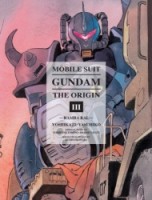
Mobile Suit Gundam: The Origin, Volume 3: Ramba RalCreator: Yoshikazu Yasuhiko
Original story: Yoshiyuki Tomino and Hajime Yatate

U.S. publisher: Vertical
ISBN: 9781935654971
Released: September 2013
Original release: 2007

Although I have been aware of the massively popular and influential Gundam franchise for quite some time, my first real introduction to Gundam was through Yoshikazu Yasuhiko’s manga series Mobile Suit Gundam: The Origin. The manga is a reimagining of the 1979 anime series Mobile Suit Gundam which launched the franchise. Yasuhiko was one of the creators heavily involved in the visual development of the original series, so it is particularly interesting to see his personal take on the story. Part of The Origin was initially released by Viz Media in the early 2000s. However, the series is now being published by Vertical in a beautiful deluxe release based on the Japanese collector’s edition. Ramba Ral is the third volume in that series, first published in Japan in 2007 and released in English in 2013. This particular volume also includes delightful contributions from Shimoku Kio, the creator of Genshiken, as well as additional Gundam color illustrations by Yasuhiko.

After the overly ambitious Garma Zabi, the youngest scion of the Principality of Zeon’s ruling family, is killed in battle, his brother Gihren resolves to use his death to rally support for Zeon’s fight, going against the wishes of his father. Garma’s sister Kycilia isn’t about to let the opportunity be wasted, either. Zeon may not have access to the same amount of resources available to the Earth Federation, but it has a cause, charismatic leaders, and more advanced technology. Now that the battle of Los Angeles is over, the Federation’s White Base carrier, along with the newly developed Gundam mobile suit, are en route to Jaburo. Its young crew is closer to reaching the Earth Federation’s headquarters, making resupply easier, but Zeon is more determined than ever to either capture or destroy the Gundam. To make matters even worse for White Base, tension continues to mount between the civilians and the military personnel on the ship, making their mission even more challenging.

One of the biggest problems that the crew of White Base faces is that they are both young and inexperienced. In some cases they are rather immature as well. With all of the excitement and battles going on in The Origin, it can be easy to forget just how young many of the characters actually are. Ramba Ral serves as a good reminder, especially when it comes to Amuro Ray, the Gundam’s pilot. He’s only fifteen–an age at which he is easily distracted and flustered by members of the opposite sex–and he makes some extremely poor decisions in this volume of The Origin. His selfishness and petulance puts everyone on White Base in danger. Amuro may be the person in the best position to save his friends, but his immaturity is what put them at risk to begin with. While I can understand where he’s coming from, I found myself rather annoyed with Amuro in Ramba Ral and wanted to shake some sense into him. Unsurprisingly, many of his cohorts harbor some very similar feelings to mine.

While the crew of White Base is inexperienced, the Zeon forces in pursuit are anything but. In particular, the titular Ramba Ral is shown to be a very capable commander in this volume. He may not have the same arrogant elegance that the dreaded Char Aznable exhibits–Ral is much more down-to-earth and straightforward in how he fights–but he is very good at what he does. He’s not afraid to personally enter the fray and takes a very hands-on approach to battle. Ral’s men are extremely loyal and gladly follow him. Ral and Zeon also have an advantage over the Federation forces. While the Gundam is representative of the pinnacle of the Federation’s technology, Zeon continues to research and improve its own weapons and mobile suits. Combined with skilled and experienced pilots and commanders, Zeon’s military can be devastatingly effective. The arms race shows no signs of slowing in the series; the development of weapons is an important aspect of any war, and so it makes sense that it would be an important part of The Origin as well.

Filed Under: REVIEWS Tagged With: Gundam, Hajime Yatate, manga, vertical, Yoshikazu Yasuhiko, Yoshiyuki Tomino

Josei from Vertical, Helter Skelter and Utsubora

November 12, 2013 by Anna N


Helter Skelter: Fashion Unfriendly by Kyoko Okazaki

It has been a very good year for fans of josei. Viz appears to be committed to disguising a few josei titles like Happy Marriage and Midnight Secretary as mature shoujo. I’m enjoying those very much, but I’m also very happy that Vertical is releasing josei as well, with the kind of more raw and uncompromising titles that you’d expect from them.

Helter Skelter: Fashion Unfriendly
is a slap in the face for fans of titles like Paradise Kiss or Walkin Butterfly. While neither of those titles presented a totally romantic view of the fashion industry, Helter Skelter’s story of a dysfunctional model is packed with both rage and almost unrelenting ugliness. Liiko is a supermodel at the top of her game due to massive plastic surgery. She’s incredibly self-obsessed and driven to achieve even more by her surrogate mother/manager. Liiko’s beauty and charisma serves as a snare that draws the people around her into her incredibly warped world, resulting in some incredibly warped plot twists that all make sense. Hada, Liiko’s young manager finds her own personality changing as she becomes more and more subservient to her mercurial boss.

Liiko’s surgeries are starting to break down, and there’s an unsettling theme of body horror that is prevalent throughout the title, as Liiko’s facade literally begins to crack, and she becomes more and more desperate to preserve her beauty. She’s a charismatic monster, but as the story progresses and her condition worsens it is almost possible for the reader to start viewing a broken down supermodel as the embodiment of raging id, albeit an id with a really good shoe collection. Okazaki’s art is deliberately rough and skewed, showing the fashion world as anything but glamorous. Liiko has a few panels of looking polished and perfect when she’s modeling, but mostly all the characters are portrayed in a sketchbook type style, with exaggerated features and the occasional rictus-like expression that serves to underscore just how false fashion industry concerns are.

Utsubora: The Story of a Novelist by Asumiko Nakamura

This manga is an interesting mix of genres. There are elements of noir, thriller, psychodrama, and a meditation on the meaning of identity in this story about a novelist who gets caught up in plagiarism and a young woman who turns herself into a character from one of his stories. The manga opens with the body of a young girl falling from the top of a building. Shun Mizorogi, a famous author who affects traditional Japanese clothing is called to the hospital to identify the body of the girl Aki. Sitting in the hallway of the hospital is a girl who is apparently Aki’s twin. Nakamura weaves together an intriguing mystery with Mizorogi and the supporting cast, which includes his painfully naive niece, the detectives investigating Aki’s death, and Tsuji the editor who is suspicious about Mizorogi’s sudden late in life outpouring of productivity. Mizorogi tries to unravel the mystery behind the sudden appearance of Sakura Miki, and all of the mysteries surrounding the death of Aki are about to converge in a very interesting way.

Nakamura’s style is both delicate and detailed, with some panels reminding me a little bit of art nouveau. This sophisticated illustration style makes the psychosexual developments in the book even more unsettling. Utsubora has some amazingly unsympathetic characters, but it reminded me very much of classic noir works where the dark side of human nature is fully explored.

Both Helter Skelter and Utsubora are omnibus editions, and as always the production from Vertical is a treat. Both manga have the type of memorable stories and characters that will linger in the minds of readers long after they’ve finished reading. For challenging josei manga with plenty of psychological twists, you can’t go wrong with picking up both of these titles.

Filed Under: REVIEWS Tagged With: helter skelter, Utsubora, vertical

Off the Shelf: Two from Vertical

October 27, 2013 by MJ and Michelle Smith 3 Comments

MICHELLE: One of us is sad and one of us is sick, but we’re still putting our woes aside to talk about some new manga this morning. I guess that makes us troopers, huh?

MJ: Or masochists, one of the two.

MICHELLE: I… had not thought about that possible interpretation.

MJ: That’s what I’m here for!

MICHELLE: MJ, dispensing disturbing interpretations since the 1970s!

MJ: You know it!

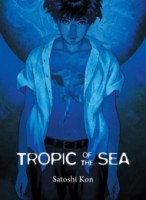
tropic-220x300We’ve been away from this column for a while, for various reasons, and to crank things back up again, we thought we’d take a look at a couple of recent releases from one of our favorite publishers, Vertical, Inc. First on the docket is a rare classic from the late Satoshi Kon, Tropic of the Sea, written while Kon was still a college student, and first published in Japan over twenty years ago.

Yosuke is the teenaged son of a village priest, whose family has long guarded the secret of a mermaid’s egg, which was reportedly entrusted to his forebears in return for the continuing safety and bounty of their small fishing community. According to legend, the egg must be protected and watered regularly for sixty years, at which point it is returned to its home and replaced by a new one. As the next in line to care for the egg, Yosuke is charged with bringing fresh seawater up to the shrine in which it is kept, which he does both out of duty and a lingering fondness for the legend he believed as a child.

When Yosuke discovers that his father has sold out their family secret to land developers seeking to transform the village into a sprawling resort, he is mildly appalled, but not nearly so much as his grandfather, who, enraged by his son’s hubris, risks his life in an attempt to return the egg to the mermaids as promised. Meanwhile, the villagers wage their own battle with the land developers whose promises of luxury and prosperity threaten their way of life. As the volume continues, Yosuke must decide what he believes and what is really important as he watches his community and his family being torn apart over their land and the mysterious egg.

MICHELLE: Usually, stories about families who stop honoring their contracts with supernatural beings never end well, but I was pleased that this story took a slightly different route. That said, I often times found the pacing disjointed. Perhaps Kon was trying to cram as much story as possible into a limited number of chapters, but there were a few transitions that puzzled me. And in the end, it all just seems to zip by so quickly, and I got a much firmer sense of the awesomeness of Yosuke’s dog (Fujimaru) than many of the human characters.

MJ: I realize that it might be the decongestants slowing me down, I didn’t have quite the same experience. While some sections did feel a bit zippy—particularly the final confrontation and chase with the land developers, I appreciated way Kon slowly and quietly revealed his characters’ truths, particularly Yosuke’s. For instance, while it’s clear early on that Yosuke has some kind of painful past association with the water that makes him reluctant to swim, Kon avoids the sort of carefully manipulated drama that would normally accompany a hero’s childhood trauma. There’s obviously an issue—one that his close friends are distractedly aware of—but it results in none of the kind of drama I’d expect from most stories.

First of all, Yosuke is uncomfortable with swimming, but he still *does* it when he needs to, without any tortured posturing. Then, later, when we finally figure out what it’s all about, the drama of the reveal is overshadowed by the larger problems at hand. I found this somehow refreshing.

MICHELLE: I’m glad that it read a bit differently for you. I wonder if part of the problem for me is that I am usually a slow reader, but the art style (which I loved) and paneling and everything made it possible for me to read this much more quickly than usual. Whereas you’re used to reading stuff quickly. I dunno.

But I absolutely agree about the low-key approach to Yosuke’s trauma. I also really loved the final page of the volume, which would be an absolutely ordinary image to anyone who hadn’t read the story to learn its full significance.

MJ: I love the subtlety of that final image, too, and the way Kon consistently lets his artwork do the storytelling. And while I think that this strong instinct to “show, not tell” is probably part of what made it read so quickly for you, it’s also his greatest strength here. I’m not saying that I think this is a perfect work, by any means, and even as much as I enjoyed it, it very much feels like an artist’s early work. But I found a lot to appreciate in it.

So, would you like to introduce our second selection?

helterskelterMICHELLE: Alrighty!

Helter Skelter is another one-shot from Vertical, and another sort of cautionary tale, as well. Currently popular model Liliko is much talked about but also, as we soon see, a wretched person. She’s obligated to her agency’s president, whom she calls “Mama,” who helped to transform her from an unattractive and overweight girl into a celebrity with a perfect, but nearly entirely fake, body. Liliko sought fame and adulation and made this choice herself, but is soon disillusioned with the life and dissatisfied with the work and yet terrified of the moment that it all ends. “What happens when I stop being sellable?” she wonders. “Everyone who pampers me now will leave me.”

Meanwhile, a prosecutor named Asada and his assistant are investigating the clinic where Liliko’s procedures were performed as well as a string of suicides committed by former patients.

MJ: Liliko makes for a troublesome heroine, as her disillusionment and fear has created in her a level of cynicism and raw desire that would ruin even the purest soul (which she is decidedly not). In a frantic bid to keep control of someone, even as she’s (literally) falling to pieces, she calls upon her remaining allure in order to emotionally enslave both an eager assistant and the assistant’s boyfriend. She’s cruel, manipulative, and every bit as terrifying as the technology that led her there. Yet, even as we witness her careful destruction of those around her, it’s impossible not to understand her. And perhaps that’s the most terrifying thing of all.

MICHELLE: I thought Okazaki did a great job at making Liliko sympathetic and understandable even while she’s doing utterly horrible things, like ensnaring/tainting Hada (the assistant) and Okumura (her boyfriend). She interrupts them together right after she learns that “Mama” has never sent money back home to her family as promised, and the narration makes it clear that there’s a direct correlation between the discovery and her subsequent actions. And later, after she has “punished” Hada for wanting to quit, she thinks, “I just want to play with bodies. And have fun wrecking others. How can I help it? Aren’t others making a wreck of me?”

And, of course, her jealousy of newcomer teen model Kozue is completely understandable, especially considering that Kozue has come by all of her beauty naturally and is able to be herself in public in a way that Liliko can never be. (One of the things that intrigues the prosecutor about her, after all, is that her responses in interviews are completely devoid of any hint of her actual personality or upbringing.) We can even understand why she might lash out at the woman who ended up marrying the rich guy Liliko had pegged for her safety net, though it’s less easy to understand why Hada and Okumura might do her bidding in actually carrying out an attack on the woman.

MJ: I admit I found them understandable as well, though identifying at all with them may actually be more disturbing than understanding Liliko. Their own relationship is so dysfunctional and lacking, I think harboring mutual shame becomes a sort of sick bonding experience for them. They’ll continue down their road with Liliko, because any attempt to go back only forces them to confront what their relationship has become, which is somehow more uncomfortable than just doing what they’re told. The deeper in they get, the less they resemble themselves, and this is actually a plus for them. That’s my interpretation, anyway.

You know, I was thinking as I read this… I’m always anxious for more josei manga, but I’ll admit that there’s a part of me that bristles at the notion that good stories for adult women must be those that prove that the world is a horrible place filled with horrible people. It’s an ugly, cynical view that doesn’t generally resonate with me at all. But though Helter Skelter is exactly that kind of manga, there’s an honest fury to it that makes me somehow thrilled that it exists. As disillusioned and cynical as Liliko is, Okazaki’s take on her circumstances reads to me as just plain angry. To her, Liliko matters, and as awful as she’s become, Okazaki is still furious on her behalf. Is that a strange thing to say? And my feelings about this were reinforced a million-fold by the way she ends the story.

MICHELLE: No, I think you’re spot-on with that. This isn’t an indictment of Liliko; it’s an indictment of the culture of disposable, commodified celebrity that helped create and destroy her. One of my very favorite pages is quite near the end, where the babble of fans/consumers is now obsessed with obtaining “That.” This just reinforces the idea that Liliko was never a person to them; just a thing to be interested in for a while until the next thing comes along.

And wow, that ending was so unexpected! I wonder whether we’re to take the “to be continued” literally, as in that Okazaki really will pick up the story again later, or if we’re only to take that as a sign that Liliko’s “curious journey of adventure” will continue.

MJ: I selfishly hope for the former, but my hopes may be in vain!

MICHELLE: I don’t know whether I want a sequel or not; I kind of like the ambiguous ending as it is. We will, at least, be getting more Okazaki in English soon, as Vertical will be releasing Pink next month!

MJ: I’m certainly looking forward to it!

Filed Under: OFF THE SHELF Tagged With: helter skelter, tropic of the sea, vertical

Vertical Manga NYCC 2013

October 11, 2013 by MJ Leave a Comment

imageOne of our favorite manga publishers, Vertical, Inc., had some announcements to make at New York Comic Con today, but Marketing Director Ed Chavez began by going through a number of their recent titles and talking about the company in general.

Quite a number of publishers have fallen over the past few years, and though some may have been skeptical about Vertical’s long-term prospects, Chavez pointed out that this is Vertical’s 10th year in publication, and that, far from struggling, they are “stronger, I think, than ever.” And this strength is certainly apparent when looking over their list of current releases.

A few highlights include Satoshi Kon’s Tropic of the Sea, which is doing very well for the company, Chavez reported, and they are “definitely looking into some more Kon.” He mentioned that Kon’s comic backlist is limited, and that they’d specifically be looking to “focus on just Kon being Kon,” rather than his collaborative work with other creators.

The hardcover Gundam: The Origin has also been a best-seller for the company. “We kind of wanted to build the ultimate manga machine, and thankfully, it’s been selling like hotcakes.” They’ll be publishing the series in its entirety, and they’re “definitely thinking about doing some more with Gundam,” said Chavez, though he had no announcements to make on that front at this time.

Shuzo Ashimi’s Flowers of Evil has been “a surprise hit for Vertical,” according to Chavez. “I keep on saying it’s a rom-com,” he said of the notoriously dark series, which elicited some laughs from the crowd. “A lot of their situations make me laugh.”

Humor aside, Chavez spoke admiringly of the series’ artistic progression. “It seriously gets better with age,” he said. “You will be shocked by this work, and it will be so satisfying.” Vertical has early copies of volume seven here at the convention, and is passing out postcards featuring the cover in their booth.

Another surprise success for the company has been Takahiro Seguchi’s Sickness Unto Death, which they partly licensed as a complement to Flowers of Evil. Early copies of volume two are moving quickly here at NYCC, and Chavez estimated that they might not have enough to last the weekend.

Some upcoming Vertical titles that we’re particularly excited about came up in today’s panel, including classic josei manga Pink from creator Kyoko Okazaki, Moyoco and Hideaki Anno’s autobiographical comedy Insufficient Direction, and Fumi Yoshinaga’s foodie drama What Did You Eat Yesterday?, which Chavez said he’s “stoked” about. We are, of course, “stoked” x 100 here at Manga Bookshelf.

imageNow on to the license announcements! Vertical saved these for the end of their panel, and they were well worth waiting for.
First, again from Moyoco Anno, the award-winning In Clothes Named Fat, a josei one-shot originally published by Shodensha, is due out here in summer, 2014. “The characters in this tale are gross,” said Chavez, “they are horrible people.” But I suspect that, once we’ve started, we’ll be unable to put this book down.

And on the light novel front, summer will also bring Attack on Titan: Before the Fall, which details the events leading up to the hugely popular manga series. This is an extremely fresh acquisition, and Chavez was not even sure of the author when questioned at the panel. Chavez mentioned that the company has been consciously licensing more manga with other media tie-ins (see last year’s 5 Centimeters Per Second and the recent Summer Wars). Given the enormous popularity of this franchise, it certainly seems like smart strategy. More details will be soon to come.

We’ll be covering New York Comic Con all weekend, so stay tuned!

Filed Under: UNSHELVED Tagged With: NYCC, NYCC 2103, vertical

Tropic of the Sea

October 5, 2013 by Ash Brown

Tropic of the SeaCreator: Satoshi Kon
U.S. publisher: Vertical
ISBN: 9781939130068
Released: September 2013
Original release: 1990

Satoshi Kon is probably best known as a phenomenal writer and director of anime, especially in the West, but he started his career working in manga. Tropic of the Sea, serialized in Young Magazine in 1990, was Kon’s first long-form manga. Vertical’s release of the English-language edition of Tropic of the Sea in 2013 marks the first, and hopefully not the last, of Kon’s manga to be translated into the language. The volume also includes an afterword by Kon excerpted from the ninth anniversary edition of Tropic of the Sea published in Japan in 1999. Vertical’s edition of Tropic of the Sea is actually based on an even later Japanese release of the manga from 2011. Already a fan of Kon’s work in anime, I was thrilled when Tropic of the Sea was licensed. I was even more excited for the manga’s release when I saw the absolutely gorgeous and captivating cover. Added to that the manga’s focus on legends and the sea and I was sold.

For generations, the small fishing village of Ade has been blessed by calm seas and bountiful catches. This good fortune has been attributed to a promise made between a mermaid and a priest–the village receives protection and in return he will worship the sea and care for the mermaid’s egg for sixty years before returning it to begin the cycle anew. But times are changing and very few people believe the old legend to actually be true. Yosuke Yashiro’s family is responsible for guarding the egg and its shrine, but his father does the unthinkable and reveals the secret of its existence to the world. The sacred relic has now become a draw for tourists, only the most recent example of the increased commercialization of Ade. Although there have been some good things to come from the village’s development, many people are upset with the extent of the changes that have been made and what they may be losing in exchange.

At first the pacing of Tropic of the Sea is fairly leisurely, appropriate for a story that takes place in a quiet seaside village, but as the manga progresses the pace steadily quickens. The role that Ozaki, Ade’s most prominent commercial developer, plays as the manga’s villain is somewhat predictable–desiring the mermaid’s egg for his own purposes while claiming to be interested in the good of humanity–but he does have slightly more to him than first appears. One of the greatest things about Tropic of the Sea from beginning to end is Kon’s artwork. A tremendous amount of attention has been give to the backgrounds and landscapes, granting the manga a very real sense of place which is crucial for the story. The illustrations also convey a feeling of mystery and wonder, awe and foreboding, surrounding the mermaids and the sea. Some of the scenes involving water are simply stunning, the realism strikingly rendered. The artwork in Tropic of the Sea is wonderful.

What impressed me the most about Tropic of the Sea, though, is how subtly complex and deceptively simple the narrative is for such a short work. Thematically, Tropic of the Sea has many overlapping layers and the story can be viewed through a number of different lenses. Tropic of the Sea explores generational dissonance, familial disputes, the values of modernity and tradition, the tension between science and religion and skepticism and belief, the human struggle both with and against nature, the power of legends and their impact on reality. (And that’s just to name a few of the many elements in play.) Any of these aspects of Tropic of the Sea can be focused on individually but they are all interconnected and influence one another to form an engaging story with a surprising amount of depth. Out of the various conflicts portrayed, no one side is ever entirely in the right. I enjoyed Tropic of the Sea a great deal. It may be an earlier work, but Kon’s talent was already evident.

Filed Under: REVIEWS Tagged With: manga, Satoshi Kon, vertical

The Crimson Labyrinth

September 11, 2013 by Ash Brown

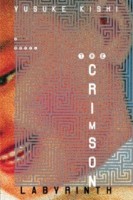
The Crimson LabyrinthAuthor: Yusuke Kishi
Translator: Masami Isetani and Camellia Nieh
U.S. publisher: Vertical
ISBN: 9781932234114
Released: October 2006
Original release: 1999

The Crimson Labyrinth, written by Yusuke Kishi, was first published in Japan in 1999. Prior to the novel’s release, Kishi had won two Japan Horror Association Awards. He continues to be a bestseller and award winner in Japan both for his horror and for his speculative fiction. The Crimson Labyrinth was released in English in 2006 by Vertical with a translation by Masami Isetani and Camellia Nieh. The novel was Kishi’s English debut and so far remains the only work of his that has been translated, although Vertical is scheduled to release Tōru Oikawa’s manga adaptation of Kishi’s novel From the New World in 2013. The Crimson Labyrinth was my introduction to Kishi and his work. I was particularly interested in reading The Crimson Labyrinth after seeing it compared to Koushun Takami’s Battle Royale, a personal favorite of mine. Also, I tend to enjoy just about everything that Vertical publishes.

Forty years old and unemployed, Yoshihiko Fujiki never expected that answering a job advertisement would end up with him being drugged and abandoned in the wild. He wakes up alone with only a small amount of food and water and a Pocket Game Kids handheld game console to keep him company. Soon he encounters Ai Otomo who is also wandering alone and who has been given similar provisions. Following the instructions provided by the game console, together they navigate the labyrinthine corridors and valleys of the bizarre landscape in which they find themselves. When they reach the first checkpoint indicated by the console they discover another group of people waiting there. All together there are nine Japanese men and women and no one seems to be certain of what is going on, where they are, who has stranded them or for what purpose. What they do know is that have become unwilling participants in a perverse game of survival. If they want to stay alive they may very well have to turn on each other.

The Crimson Labyrinth is heavily influenced by extreme reality television as well as classic, text-based role-playing games. And just like those RPGs, the decisions made by the characters early on in The Crimson Labyrinth are the most crucial and will determine how the rest of the game will play out. At first the group of nine works together, but their cooperation quickly disintegrates. The group fragments into four smaller teams, each following a different path outlined by the game: survival, self-defense, food, or information. Game theory might suggest how the competition will progress and what will lead to the ideal outcome for all involved, but as Fujiki points out, game theory is nearly useless in their situation. It depends on people making logical and rational decisions after considering all the information available to them. Humans are most certainly not rational creatures, especially when faced with the unknown, consumed by fear, and fighting for their lives.

Most of The Crimson Labyrinth takes place over the course of a few weeks. As events and the game unfold, the novel is seen exclusively from Fujiki’s perspective. For a large part of The Crimson Labyrinth he doesn’t interact much with anyone except Ai. This is a little unfortunate since the utter hell the other teams are going through can only be inferred. But as the novel and the game progress, Ai and Fujiki come across shocking evidence that the other players are having a very hard time of it and that it didn’t take long at all for violence to erupt. The wilderness is filled with its own dangers, but it’s really their fellow humans that they need to be wary of. Terrible things happen in The Crimson Labyrinth. What makes it even worse is the fact that so many of them could have been avoided if only people were able to bring themselves to trust each other and work together. In the end, no one is entirely innocent of the deaths that occur. A quick read, The Crimson Labyrinth is an absorbing novel of horror and survival.

Filed Under: REVIEWS Tagged With: Novels, vertical, Yusuke Kishi

Mobile Suit Gundam: The Origin, Vol. 2: Garma

August 30, 2013 by Ash Brown

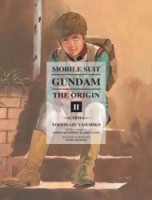
GundamOrigin2Creator: Yoshikazu Yasuhiko
Original story: Yoshiyuki Tomino and Hajime Yatate

U.S. publisher: Vertical
ISBN: 9781935654889
Released: June 2013
Original release: 2006

Though I wouldn’t consider myself to be a fan of or even particularly knowledgeable about the massive Gundam franchise, at this point I would consider myself to be a fan of Yoshikazu Yasuhiko’s manga series Mobile Suit Gundam: The Origin. The manga is a retelling of the original 1979 Mobile Suit Gundam anime series from one of the artists who was heavily involved in its creation and visual design. Garma is the second volume in the collector’s edition of Yasuhiko’s The Origin manga, originally released in Japan in 2006. The English-language edition of the volume, published by Vertical in 2013, is a beautiful, high-quality release. This particular volume includes a small illustration gallery of Yasuhiko’s color work as well as a roundtable and special illustration from CLAMP. I was quite impressed with Activation, the first volume of The Origin, so I was looking forward to reading Garma a great deal.

After an eight-month armistice, the forces of the Earth Federation and the Principality of Zeon have once again come into conflict. The Federation’s colony Side 7 was attacked and destroyed when Zeon discovered the Federation military was secretly developing a highly advanced mobile suit there. White Base, the supply ship carrying the new weapon as well as hundreds of refugees from the colony, has reached Earth but Zeon’s pursuit has pushed it far off course. Trapped behind enemy lines and commanded by a young and inexperienced crew, White Base may have survived the initial confrontation with Zeon but the threat is far from over. The Zeon forces are determined to prevent White Base from breaking through to Jaburo; if they can’t capture the new technology, they are more than happy to destroy it. In particular, Colonel Garma Zabi, leader of the Zeon’s North American forces and the youngest son of its reigning family, is interested in the recognition, prestige, and military honor that successfully accomplishing such a feat would bring.

While in Activation the fighting primarily took place in space, the battles and skirmishes in Garma are surface based, occurring on Earth’s land, in its air, and even within a demolished urban center. Both Yasuhiko and the characters must make adjustments because of this. They must take into consideration and use the terrain and topography as part of their strategy. The battles in Garma literally, figuratively, and visually have weight. Even during the aerial maneuvers, Yasuhiko is constantly aware of the forces and gravity in play. The way he draws the battles makes them feel very different from those in Activation and they should be different–tactics and equipment change depending on the environment. Fighting on a planet is very different from fighting in space and he captures that remarkably well. The battles in Garma are engaging. Yasuhiko’s excellent pacing and layout combined with his color work result in some exceptionally stunning, cinematic sequences.

While the military aspect of The Origin is certainly important, perhaps even more important are the more personal human dramas of the story. As can be inferred by the volume’s title, Garma plays a particularly critical role at this point in the manga. Introduced at the very end of Activation, Yasuhiko quickly reveals Garma to be an arrogant and privileged young man. His relationship and association with Char, one of Zeon’s most formidable and calculating commanders, is crucial to the development of the story. Perhaps Garma’s complete opposite is Amuro Ray, the young pilot of the Federation’s new Gundam mobile suit. Drawn into war more by chance than by choice, at the age of fifteen he’s already seen more of battle than he ever wanted. He’s understandably terrified and struggling with the grave responsibility that has been thrust upon him. I’m very interested in seeing how the two sides of the conflict react to the events in Garma because they will have some major consequences.

Filed Under: REVIEWS Tagged With: Gundam, Hajime Yatate, manga, vertical, Yoshikazu Yasuhiko, Yoshiyuki Tomino

7 Billion Needles, Vol. 1

July 7, 2013 by Anna N

7 Billion Needles, Vol. 1 by Nobuaki Tadano

I was happy when I saw that Vertical was releasing some of their titles for the Kindle, but I already had print copies of the main series I was following like Twin Spica. I remember hearing interesting things about 7 Billion Needles, so I decided to give the first volume a try. Hikaru is a typical teenager, spending most of her time shutting out the world by keeping her headphones on. She’s a teenager with something other than angst churning inside her though. On a school trip she had an encounter with an extraterrestrial object that vaporized her body, leading to an alien intelligence named Ciel who reconstructed her body and establishes a symbiotic relationship with her.

Tadano does a good job establishing a slightly unsettling slice of life tone for this manga. Hikaru goes through her life someone aimlessly, and gradually more and more strange events begin to occur around her. Ciel makes contact and tells his host that he’s hunting an even worse threat – an entity called Maelstrom that might also be inhabiting a human. The title 7 Billion Needles refers to the needle in a haystack like task of hunting down an evil alien intelligence hiding somewhere in the human population. The manga is based on the Hal Clement novel Needle, and Tadano does manage to strike a good balance between the thought experiment vibe of classic science fiction and manga action as Hikaru and Ciel strike an uneasy truce and start hunting together.

The reading experience on my Kindle Paperwhite was just fine. I was intrigued by the first volume, and this is the type of digital series I can easily see myself stocking up on when I’m about to go on a trip and can’t haul around a bunch of physical copies of manga with me.

Filed Under: REVIEWS Tagged With: 7 billion needles, vertical

  • « Go to Previous Page
  • Page 1
  • Page 2
  • Page 3
  • Page 4
  • Page 5
  • Interim pages omitted …
  • Page 7
  • Go to Next Page »
 | Log in
Copyright © 2010 Manga Bookshelf | Powered by WordPress & the Genesis Framework