• Skip to primary navigation
  • Skip to main content
  • Skip to primary sidebar
  • Home
  • About Us
    • Privacy Policy
    • Comment Policy
    • Disclosures & Disclaimers
  • Resources
    • Links, Essays & Articles
    • Fandomology!
    • CLAMP Directory
    • BlogRoll
  • Features & Columns
    • 3 Things Thursday
    • Adventures in the Key of Shoujo
    • Bit & Blips (game reviews)
    • BL BOOKRACK
    • Bookshelf Briefs
    • Bringing the Drama
    • Comic Conversion
    • Fanservice Friday
    • Going Digital
    • It Came From the Sinosphere
    • License This!
    • Magazine no Mori
    • My Week in Manga
    • OFF THE SHELF
    • Not By Manga Alone
    • PICK OF THE WEEK
    • Subtitles & Sensibility
    • Weekly Shonen Jump Recaps
  • Manga Moveable Feast
    • MMF Full Archive
    • Yun Kouga
    • CLAMP
    • Shojo Beat
    • Osamu Tezuka
    • Sailor Moon
    • Fruits Basket
    • Takehiko Inoue
    • Wild Adapter
    • One Piece
    • After School Nightmare
    • Karakuri Odette
    • Paradise Kiss
    • The Color Trilogy
    • To Terra…
    • Sexy Voice & Robo
  • Browse by Author
    • Sean Gaffney
    • Anna Neatrour
    • Michelle Smith
    • Katherine Dacey
    • MJ
    • Brigid Alverson
    • Travis Anderson
    • Phillip Anthony
    • Derek Bown
    • Jaci Dahlvang
    • Angela Eastman
    • Erica Friedman
    • Sara K.
    • Megan Purdy
    • Emily Snodgrass
    • Nancy Thistlethwaite
    • Eva Volin
    • David Welsh
  • MB Blogs
    • A Case Suitable For Treatment
    • Experiments in Manga
    • MangaBlog
    • The Manga Critic
    • Manga Report
    • Soliloquy in Blue
    • Manga Curmudgeon (archive)

Manga Bookshelf

Discussion, Resources, Roundtables, & Reviews

Kodansha Manga Award

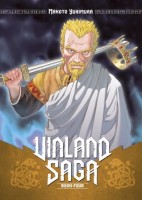
Vinland Saga, Vol. 5

November 22, 2014 by Ash Brown

Vinland Saga, Omnibus 5Creator: Makoto Yukimura
U.S. publisher: Kodansha
ISBN: 9781612624242
Released: October 2014
Original release: 2010-2011
Awards: Japan Media Arts Award, Kodansha Manga Award

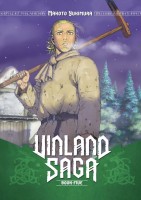
Makoto Yukimura’s award-winning manga Vinland Saga, an epic and thoroughly researched work of historical fiction, has quickly become one of my favorite series currently being released in English. I was very happy when Kodansha Comics initially licensed Vinland Saga, but with each new volume that is published my excitement increases. The English-language edition of Vinland Saga is being printed as a series of hardcover omnibuses, each containing two volumes of the manga as originally released in Japan. The fifth omnibus, published by Kodansha in 2014, collects the ninth and tenth volumes of the Japanese edition of the series which were published in 2010 and 2011 respectively. It also includes a section of questions and answers exclusive to the English-language edition in which Yukimura discusses some of the inspirations for and creative processes behind Vinland Saga. I already enjoy Vinland Saga immensely, but greatly appreciate of this sort of bonus material.

Ever since his father was killed in front of his eyes, Thorfinn has devoted his life to one thing–seeking revenge against Askeladd, the man he holds responsible for his father’s death. But when Askeladd takes King Sweyn’s head and doesn’t survive the resulting skirmish, suddenly Thorfinn is left directionless and without purpose. Despondent and empty, he ends up a slave on an expansive wheat farm in Denmark. There he really only goes through the motions of living, suffering silently under the humiliation, discrimination, and torment inflicted by the farm hands and hired guards. It’s not until Einar arrives at the farm that Thorfinn is slowly drawn out of his despondency. Of the two, Einar is much more lively and still chafes at his enslavement. And, unlike Thorfinn, he actually knows a thing or two about farming. As difficult as it will be to achieve, those are skills that could conceivably help them earn back their freedom.

The amount of research and historic detail that Yukimura has put into both the artwork and the narrative of Vinland Saga has always been impressive, and that hasn’t changed with the fifth omnibus. Vinland Saga incorporates the politics and social structures of the time period directly into the story in a very engaging way, making them critical issues that the characters must deal with and which greatly impact their lives. At this point in the series, the manga has largely moved from the battlefield to the wheat field, but it still retains its intensity. Farming, like war, is also a life and death struggle which requires men and women to submit themselves to arduous and unforgiving tasks for the smallest chance of survival. The main difference is that raising crops is a creative act while battle is a destructive one. It seem appropriate then that Thorfinn’s labouring in the fields might actually help to bring him some healing, especially since in his past he was part of a force that would raze farms and villages when needed or convenient.

Much of the fifth omnibus of Vinland Saga is devoted to Thorfinn and Einar and the system of slavery that they are now a part of. A great deal of focus is given to Thorfinn and his psychological development in particular. In addition to historical accuracy, Yukimura also excels at creating realistically complex and well-defined characters in Vinland Saga who change and are affected by the events around them. And in some cases, they are the ones to bring great change to the world in which they exist. One of the characters that has transformed the most is Canute, the younger son of King Sweyn. Out of the entire omnibus, only two chapters show what has become of him, but they leave a tremendous impact. Once a seemingly weak and timid young man he has shown incredible fortitude and strength. Where Thorfinn has lost his purpose, Canute has found his. Canute’s ambitions and his willingness to do anything it takes to forge his kingdom will have far-reaching implications.
Filed Under: REVIEWS Tagged With: Japan Media Arts Award, kodansha, Kodansha Comics, Kodansha Manga Award, Makoto Yukimura, manga, Vinland Saga

Vinland Saga, Vol. 4

August 9, 2014 by Ash Brown

Vinland Saga, Omnibus 4Creator: Makoto Yukimura
U.S. publisher: Kodansha
ISBN: 9781612624235
Released: July 2014
Original release: 2009
Awards: Japan Media Arts Award, Kodansha Manga Award

Makoto Yukimura’s award-winning Vinland Saga has quickly become one of the manga releases that I most look forward to each time a new volume is published every few months. The series is thoroughly researched historical fiction with fantastic artwork and incredibly engaging story and characters. I was happy when Kodansha Comics picked up the license, but as the series gets better and better with each passing volume my excitement for the manga grows along with it. Kodansha’s edition of Vinland Saga was the publisher’s first foray into a deluxe release. Each omnibus collects two of the original volumes, retaining the color pages, in a nice hardcover format. Vinland Saga, Omnibus 4, published by Kodansha in 2014, contains the seventh and eighth volumes of the Japanese edition of the series, both of which were released in 2009. The fourth omnibus, like the third, also includes an exclusive question and answer segment with Yukimura about the series which I’ve really been enjoying.

Defying all expectations, Prince Canute has survived his father’s attempt to have him killed in battle and has taken his destiny into his own hands. At one point a gentle young man considered weak by the Viking mercenaries and soldiers, Canute is now resolved to wrest the crown from his father, King Sweyn. He is prepared to use force and any other means necessary in order to gain control of the realm. This change of heart has earned Canute an impressive array of followers who are willing to fight and die for him as he challenges Denmark’s king. Thorkell and his men are known and respected as great warriors to be feared on the battlefield. Most of Askeladd’s troop has been slain, but Askeladd himself is a skilled fighter with an even greater talent for strategy and manipulation. The aid of both men will give Canute distinct advantages in the approaching confrontation, but its conclusion is far from certain. Sweyn  has strong men who are loyal to him as well in addition to the recognized power to rule over the masses. He isn’t about to let the throne slip away so easily.

I continue to be extremely impressed by the characterization in Vinland Saga. The main characters and even the supporting cast all have a tremendous amount of depth. They are complex, with both human failings and strengths, well-developed personalities, and believable motivations. Nothing is as simple as good or bad. Instead the characters are portrayed as real people with complicated pasts that have made them who they are. Up until this point Sweyn has been somewhat of an enigma, a dark shadow hanging over Canute and the territories which he has conquered. But in Vinland Saga, Omnibus 4 he, too, is revealed to be much more nuanced of a character than when he was first introduced. Much like Canute, Sweyn’s actions are informed and driven by his beliefs and his desire to create a prosperous realm. He is a formidable ruler with significant influence, but he is also a man and a tired one at that. Kingship has taken its toll. Sweyn also serves as an example showing that even a person with righteous intentions can become corrupt, a lesson that Canute would do well to take to heart.

Compared to previous installments of Vinland Saga, the fourth omnibus in the series focuses less on all-out battle and more on the political strategies and maneuverings going on behind the scenes. However, the intensity of the series remains and when fights do break out they make an impact. They are incredibly bold and dynamic. Yukimura’s action scenes are epic and extremely well choreographed, but what makes them so effective is the emotional investment of the characters. Askeladd in particular is especially compelling. He has been able to channel his hatred and desire for revenge, controlling those around him with immense skill, but it hasn’t been without personal sacrifice. Askeladd himself is also the target of revenge–Thorfinn holds him responsible for the death of his father. Thorfinn and Askeladd’s relationship is extraordinarily complex. Askeladd doesn’t blame the younger man for seeking his demise. In his own way he actually tries to teach Thorfinn, drawing from his own past experiences. But this omnibus makes it tragically clear that Thorfinn is so obsessed with his quest for revenge that he has thought very little beyond it.

Filed Under: REVIEWS Tagged With: Japan Media Arts Award, kodansha, Kodansha Comics, Kodansha Manga Award, Makoto Yukimura, manga, Vinland Saga

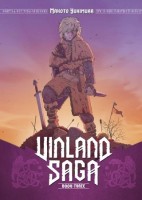
Vinland Saga, Vol. 3

May 3, 2014 by Ash Brown

Vinland Saga, Omnibus 3Creator: Makoto Yukimura
U.S. publisher: Kodansha
ISBN: 9781612624228
Released: April 2014
Original release: 2007-2008
Awards: Japan Media Arts Award, Kodansha Manga Award

Vinland Saga, an award-winning manga series by Makoto Yukimura, is a title that I’ve been wishing for a release in English for years. Thanks to Kodansha Comics, it’s finally available, and in a deluxe hardcover edition no less. I couldn’t be happier. If I loved the first omnibus, I loved the second omnibus even more. Vinland Saga has easily become one of my favorite manga series currently being released in English. The third Vinland Saga omnibus, published by Kodansha in 2014, collects the fifth and sixth volumes of the original Japanese edition, released in 2007 and 2008 respectively. Vinland Saga, Omnibus 3 also includes a brief section of questions answered by Yukimura about the series which is exclusive to the English release. Vinland Saga is Kodansha’s first foray into deluxe manga releases and features color pages as well as a slightly larger trim size than most of its other manga which allows Yukimura’s artwork to present itself as strongly as his storytelling skills. Vinland Saga is an excellent series and has won both a Japan Media Arts Award as well as a Kodansha Manga Award.

The Danish invasion of England is steadily progressing. The English forces are preparing to surrender, which doesn’t sit well at all with Thorkell the Tall. A Viking mercenary fighting on the side of the English with an insatiable thirst for battle, he would much rather see the war continue indefinitely. One way he can encourage the conflict to continue is by taking Canute, the son of Denmark’s King Sweyn and second in line to the throne, captive. Canute is currently being escorted by Askeladd and his band of mercenaries. They initially escaped Thorkell’s pursuit by fleeing to Wales. Askeladd planned to rejoin with the main Danish force, but to do so required traveling through English-controlled territory. To make their situation even worse, winter and a heavy snowstorm forced them to halt their march in a small English village. Their presence behind enemy lines is discovered far sooner than they had wished or expected. Askeladd and his men are once again faced with confronting Thorkell and his mercenaries in bloody battle.

The struggle for the control of Canute and his fate is pivotal to the story of Vinland Saga. It also provides a phenomenal opportunity for battle sequences and they are brutal. Yukimura doesn’t hold back or spare any details, depicting broken bones, severed limbs, crushed skulls, blood and gore as needed or required. Askeladd’s plans are falling apart around him and his men are beginning to lose confidence in their leader. Already in disarray, they are in an extremely bad position when Thorkell and his band catch up with them. The battle as a whole is intense, but then comes the fight between Thorkell and Thorfinn. Their confrontation in the second omnibus was impressive to begin with, but their duel in the third is even more so. Thorfinn is skilled, quick, small, and volatile while Thorkell is a literal giant of a man who primarily relies on his strength. Their fight is incredible to watch unfold. Thorfinn holds his own against Thorkell surprisingly well, but Thorkell’s physical feats are astounding.

The battles and duels in Vinland Saga are well-executed and thrilling, but just as important to the series is the development of the story and of the characters. Particularly astonishing in Vinland Saga, Omnibus 3 is the remarkable growth of Canute. Up until this point he has seemed sheltered and coddled; he abhors the senseless violence around him which makes the others view him as weak. However, Canute is all too aware of his unfortunate situation. Askeladd and Thorkell are surprised to discover that Canute carries very little value as a hostage, nor will his survival necessarily be appreciated by the king. Ultimately, it is up to Canute himself to take control of his own destiny. His true strength is revealed and it is utterly magnificent. This marks a turning point not only for Canute but for the entirety of Vinland Saga. Yukimura mixes historical fiction with meticulously researched historical fact and the results are extraordinarily engaging. Vinland Saga is the epic that I’ve been waiting for and I can’t wait to read more.

Filed Under: REVIEWS Tagged With: Japan Media Arts Award, kodansha, Kodansha Comics, Kodansha Manga Award, Makoto Yukimura, manga, Vinland Saga

Vinland Saga, Vol. 2

February 7, 2014 by Ash Brown

Vinland Saga, Omnibus 2Creator: Makoto Yukimura
U.S. publisher: Kodansha
ISBN: 9781612624211
Released: January 2014
Original release: 2006-2007
Awards: Japan Media Arts Award, Kodansha Manga Award

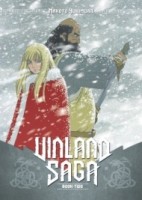
The second Vinland Saga omnibus, released by Kodansha in 2014, collects the third and fourth volumes of Makoto Yukimura’s historical manga series originally published in Japan in 2006 and 2007 respectively. Vinland Saga first began serialization in 2005 and has since earned Yukimura several honors, including a Japan Media Arts Award in 2009 and a Kodansha Manga Award in 2012. Vinland Saga was a series that I had been hoping would be licensed in English for years and so I was understandably thrilled when Kodansha picked the series up. Kodansha’s edition of Vinland Saga is quite nice–hardcover omnibuses which include color pages and have a larger trim size than the publisher’s previous releases. Vinland Saga is Kodansha’s first deluxe manga; personally, I think it’s a series which deserves the special treatment. I was not at all disappointed with the first omnibus of Vinland Saga and so was eagerly awaiting the release of the second.

In the early part of the eleventh century, England was under frequent attack by Vikings. In 1013, after years of fighting, England’s King Ethelred has been driven into exile in France while King Sweyn of Denmark proceeds with his invasion of the country. The Danes aren’t entirely united though, and many of the king’s forces are more like mercenaries or bands of pirates than they are loyal followers. Some groups, such as those led by Thorkell the Tall, have actually aligned themselves with the English in the conflict. Others, such as Askeladd’s band of warriors, fight under King Sweyn simply because he currently has the more advantageous position and the chance of reward is therefore much greater. But there is some infighting among Askeladd’s ranks as well. The only reason that Thorfinn, a skilled young fighter, follows him is for the chance to seek revenge against Askeladd for the death of his father. In the meantime, Thorfinn serves both as one of Askeladd’s most valuable and most expendable assets.

I enjoyed the first omnibus of Vinland Saga a great deal, but I think that I probably enjoyed the second one even more. Yukimura has struck an ideal balance between exciting action sequences and combat and the more personal and emotional character development of the fighters who are involved. Vinland Saga is both epic and intimate in its scope. War is occurring between nations, but it is the characters’ individual struggles that make the story so visceral and compelling. Many of the warriors in Vinland Saga are bloodthirsty, seeking glory and taking pleasure from battle itself rather than from any sort of perceived noble cause. But there are exceptions. Thorfinn despises this fighting for fighting’s sake. However, while his search for revenge may arguably be more righteous, that doesn’t necessarily mean that he’s in the right. Askeladd, too, has some very legitimate justifications for fighting. But while his skills as a warrior and strategist are commendable, many of his actions are deplorable.

The depth of characterization in Vinland Saga is impressive. In this omnibus, Askeladd in particular is shown to be a much more complicated figure than he may have first appeared. Vinland Saga, Omnibus 2 delves into part of his backstory, which only begins to reveal his motivations and who he really is as a person. Yukimura’s attention to detail in Vinland Saga extends beyond the characters themselves. The amount of research he has conducted allows him to portray the time period realistically, taking into consideration major historical events but also incorporating religious issues and matters of the day-to-day lives of royalty, mercenaries, and common folk. The artwork, too, can be incredibly detailed. The landscapes and environments are beautifully rendered and each character, even the multitudes of unnamed combatants, have distinctive designs. Vinland Saga really is an excellent series. I’m enjoying it immensely and am extremely happy that it’s finally available in English.

Filed Under: REVIEWS Tagged With: Japan Media Arts Award, kodansha, Kodansha Comics, Kodansha Manga Award, Makoto Yukimura, manga, Vinland Saga

What’s Michael?, Vol. 2

November 8, 2013 by Ash Brown

What's Michael?, Book TwoCreator: Makoto Kobayashi
U.S. publisher: Studio Proteus
ISBN: 9781560600787
Released: February 1991
Original release: 1985
Awards: Kodansha Manga Award

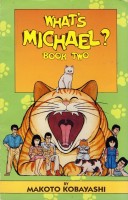
Before there was Konami Kanata’s Chi’s Sweet Home there was Makoto Kobayashi’s What’s Michael?, proving that the international appeal of cats and cat manga is nothing new. What’s Michael? began serialization in Comic Morning in 1984 and ran for five years and nine volumes, winning a Kodansha Manga Award in the process. In addition to English, at least part of the series has been translated into French, German, and even Polish. What’s Michael?, Book Two is the second of two volumes to be released in English by Studio Proteus. The volume, published in 1991, collects material that was originally released in Japan in 1985. Although only two volumes of What’s Michael were released by Studio Proteus, Dark Horse later released the series almost in its entirety. (Some strips were left out due to potentially objectionable content.) Unfortunately, both the Studio Proteus and Dark Horse editions of What’s Michael? are long out of print.

Michael is an orange tabby tomcat, an American Shorthair with plenty of personality and representative of all cats and their quirks. What’s Michael? follows him and his interactions with other cats and humans, who are often just as peculiar as the felines they love. There’s the man who seems to be a living cat-magnet, the couple who didn’t completely think through the combination of claws and their new wicker furniture, the man who put far too much thought into living with a cat, a girl who delights in pestering Michael, the yakuza who despite their hardened demeanor have a soft spot in their hearts when it comes to four-legged fuzzballs, and all of the other people who can’t get enough of or who have had way too much of cats. Michael’s fellow felines, along with all their foibles and charms, also make frequent appearances. The result is an entertaining and highly amusing collection of short cat manga.

What’s Michael? works so well because Kobayashi is exceptionally attuned to cats and their behavior as well has how humans react when confronted by that behavior. Everything in What’s Michael? I have seen before with the cats, family members, and friends that I have known, which is what makes it so delightfully funny. One of the things that impressed me the most about What’s Michel?, Book Two was how little of the comedy relied on dialogue, which makes sense considering that cats don’t really communicate through words. Instead, Kobayashi relies on the actions, reactions, and overreactions of the cats and other characters to drive the humor of the series. And he succeeds magnificently–What’s Michael? is hilarious. It really is a shame that the series is currently out of print and somewhat difficult to find in English; it’s definitely worth tracking down.

Although there are recurring characters and running jokes, and even a few continuing storylines, What’s Michael? is largely episodic in nature. Before reading What’s Michael?, Book Two, I had only seen a few random chapters from the series; my unfamiliarity did not at all detract from my enjoyment of the volume. Each strip is only six pages long and range from the completely realistic to the utterly fantastic, but they are all authentic representations of the nature of cats and their owners. What’s Michael? is a genuinely funny and slightly surreal manga. Cat lovers will especially appreciate the series, but even those without a particular affinity for felines should at least occasionally find What’s Michael to be amusing. I know that I enjoyed What’s Michael?, Book Two immensely and would love to read more of the series, but then I live with cats and am quite familiar with their antics. Kobayashi captures them perfectly in What’s Michael?.

Filed Under: REVIEWS Tagged With: Kodansha Manga Award, Makoto Kobayashi, manga, Studio Proteus, What's Michael

Vinland Saga, Vol. 1

October 9, 2013 by Ash Brown

Vinland Saga, Omnibus 1Creator: Makoto Yukimura
U.S. publisher: Kodansha
ISBN: 9781612624204
Released: October 2013
Original release: 2005
Awards: Japan Media Arts Award, Kodansha Manga Award

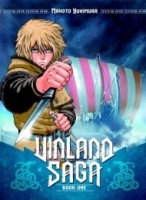
Makoto Yukimura’s Vinland Saga is a manga series that I have been hoping would be licensed in English for years. Understandably, I was thrilled when Kodansha Comics announced that it would be publishing the series. Not only that, Vinland Saga is Kodansha’s first foray into deluxe, hardcover manga. Kodansha’s edition of Vinland Saga uses a larger trim size than its other manga, contains color pages, and is being released in an omnibus format. The first volume of Kodansha’s Vinland Saga, published in 2013, collects the first two volumes in the original Japanese edition of the series, both of which were released in 2005. Vinland Saga is a critically acclaimed, award-winning manga. In 2009, Yukimura earned a Japan Media Arts award for the series. Even more recently, Vinland Saga won a Kodansha Manga Award in 2012. Even if Vinland Saga wasn’t already so well received, I would still want to read it. Yukimura is a the creator of Planetes, which I love, and I also happen to have a particular interest in Iceland among other things.

When he was only six years old, Thorfinn’s father was killed before his very eyes. Thors was a great man and a great warrior, but that was a life he tried to leave behind in order to live with his family in peace in a small Icelandic village. Thors’ past is inescapable and ultimately leads to his death, but in the process he is able to protect what is most dear to him. Even at such a young age Thorfinn vows to avenge his father. Ten years later he has grown into a hostile and stubborn young fighter serving under the very man who was responsible for his father’s death. Askeladd is a shrewd and cunning leader, his band of mercenaries willing to take on any job for the right price. Their battle prowess is fearsome, relying not only on their sheer strength and power but on underhanded strategies and their willingness to be utterly ruthless. Askeladd and his men may be uncouth, but they are also a terrible force to be reckoned with.

Vinland Saga is historical fiction and the series is inspired by actual events and people as well as by Norse sagas. The great adventurer Leif Ericson plays a significant role in the first omnibus of Vinland Saga and Thorfinn himself is loosely based on another explorer–Thorfinn Karlsefni. Considering that the manga deals with eleventh-century warfare and Vikings, a northern Germanic group of seafarers notorious for raiding and pillaging, it’s probably not too surprising that Vinland Saga can be rather violent. The battles in Vinland Saga are particularly well done. Some of the physical feats may be astounding or even slightly exaggerated–there are some very good reasons that Askeladd’s mercenaries are so feared–but the flow of the battles are very realistic as are the resulting deaths and injuries. Yukimura hasn’t forgotten the use and limitations of technology and tactics in Vinland Saga and they are appropriate for the era being portrayed. In general Yukimura’s action sequences are very exciting and leave quite an impression.

Vikings are often depicted as savage, bloodthirsty invaders in fiction but this portrayal misses some of the nuances and complexities of the historical reality. Yukimura notes in the afterword of the first volume of Vinland Saga that he wanted to show more than just a stereotypical representation of Vikings in his story. I think he is very successful in that. Much of Vinland Saga, Omnibus 1 focuses on brutal skirmishes, battles, and duels, but the development of Thorfinn and his family–particularly his father, but his mother and sister, too–as well as their Icelandic village and the other people who live there is also very important. The exceptional events surrounding the outbreak of war may be some of the major driving forces behind the story but the more mundane affairs of everyday life, such as the concerns over the changing weather and the coming winter and disputes over land for grazing, provide additional depth and realism to the series. I thoroughly enjoyed the first Vinland Saga omnibus and am looking forward to the release of the second.

Filed Under: REVIEWS Tagged With: Japan Media Arts Award, kodansha, Kodansha Comics, Kodansha Manga Award, Makoto Yukimura, manga, Vinland Saga

  • « Go to Previous Page
  • Page 1
  • Page 2
 | Log in
Copyright © 2010 Manga Bookshelf | Powered by WordPress & the Genesis Framework