• Skip to primary navigation
  • Skip to main content
  • Skip to primary sidebar
  • Home
  • About Us
    • Privacy Policy
    • Comment Policy
    • Disclosures & Disclaimers
  • Resources
    • Links, Essays & Articles
    • Fandomology!
    • CLAMP Directory
    • BlogRoll
  • Features & Columns
    • 3 Things Thursday
    • Adventures in the Key of Shoujo
    • Bit & Blips (game reviews)
    • BL BOOKRACK
    • Bookshelf Briefs
    • Bringing the Drama
    • Comic Conversion
    • Fanservice Friday
    • Going Digital
    • It Came From the Sinosphere
    • License This!
    • Magazine no Mori
    • My Week in Manga
    • OFF THE SHELF
    • Not By Manga Alone
    • PICK OF THE WEEK
    • Subtitles & Sensibility
    • Weekly Shonen Jump Recaps
  • Manga Moveable Feast
    • MMF Full Archive
    • Yun Kouga
    • CLAMP
    • Shojo Beat
    • Osamu Tezuka
    • Sailor Moon
    • Fruits Basket
    • Takehiko Inoue
    • Wild Adapter
    • One Piece
    • After School Nightmare
    • Karakuri Odette
    • Paradise Kiss
    • The Color Trilogy
    • To Terra…
    • Sexy Voice & Robo
  • Browse by Author
    • Sean Gaffney
    • Anna Neatrour
    • Michelle Smith
    • Katherine Dacey
    • MJ
    • Brigid Alverson
    • Travis Anderson
    • Phillip Anthony
    • Derek Bown
    • Jaci Dahlvang
    • Angela Eastman
    • Erica Friedman
    • Sara K.
    • Megan Purdy
    • Emily Snodgrass
    • Nancy Thistlethwaite
    • Eva Volin
    • David Welsh
  • MB Blogs
    • A Case Suitable For Treatment
    • Experiments in Manga
    • MangaBlog
    • The Manga Critic
    • Manga Report
    • Soliloquy in Blue
    • Manga Curmudgeon (archive)

Manga Bookshelf

Discussion, Resources, Roundtables, & Reviews

MangaBlog

Takeshi Obata Returns to Shonen Jump

December 15, 2014 by Brigid Alverson

Shonen Jump adds a new series to its lineup, and the artist is Takeshi Obata! The series is Gakkyu Hotei: School Judgment and the writer is Nobuaki Enoki. It’s about a school that has its own court; if that sounds familiar, it’s because the manga ran for a while as a smartphone-only series and just relaunched on December 1.

Kodansha has expanded into China with a local magazine, Jinmanhua, and homegrown manga by Chinese artists; the creative duo who go by Navar have seen their manhua Carrier: Xiedaizhe, go the other way—it is now running in Kodansha’s Bessatsu Shonen Magazine in Japan and has been published as collected editions there as well.

Got some last-minute shopping to do? Erica Friedman posts the Okazu Gift Guide, and she also has a fresh serving of Yuri Network News for us.

Laura reveals her favorite shoujo series at Heart of Manga, and she also looks at the series currently running in the magazine Be Love.

Reviews: The Manga Bookshelf team takes a quick look at recent releases in their newest Bookshelf Briefs post.

Rebecca Silverman on vol. 1 of Ajin (ANN)
Ash Brown on vol. 2 of Attack on Titan: No Regrets (Experiments in Manga)
Lesley Aeschliman on vol. 6 of Attack on Titan (Lesley’s Musings on Manga)
Lori Henderson on vols. 11-13 of Attack on Titan (Manga Xanadu)
Alice Vernon on Bloody Cross (Girls Like Comics)
Lesley Aeschliman on vol. 24 of Fullmetal Alchemist (Lesley’s Musings on Manga)
Kristin on The Garden of Words (Comic Attack)
Sarah on vol. 16 of Kamisama Kiss (nagareboshi reviews0
Lesley Aeschliman on vol. 25 of Naruto (Lesley’s Musings on Manga)
Johanna Draper Carlson on vol. 10 of Ooku: The Inner Chambers (Comics Worth Reading)
A Library Girl on vols. 1-3 of Pandora Hearts (A Library Girl’s Familiar Diversions)
Leroy Douresseaux on vol. 4 of Phantom Thief Jeanne (The Comic Book Bin)
Erica Friedman on Philosophia (Okazu)
Lesley Aeschliman on the December 15 issue of Shonen Jump (Lesley’s Musings on Manga)
Sean Gaffney on vol. 4 of Soul Eater Not! (A Case Suitable for Treatment)
Leroy Douresseaux on vol. 3 of Terra Formars (The Comic Book Bin)
AstroNerdBoy on vol. 2 of UQ Holder (AstroNerdBoy’s Anime and Manga Blog)

Filed Under: MANGABLOG

Quick Friday Manga Links

December 12, 2014 by Katherine Dacey

Once again, the fifth volume of Monster Musume tops the New York Times’ Manga Bestseller list, followed by the latest installments of Fairy Tail, Attack on Titan, and xxxHolic Rei, CLAMP’s sort-of sequel to xxxHolic.

Will the Kickstarter campaign for Ludwig B. reach its goal of $21,000? Johanna Draper Carlson investigates.

The Manga Bookshelf gang discuss next week’s big releases, from Master Keaton to Mobile Suit Gundham.

Look out, Wallace and Grommit–Moyocco Anno has launched an Indie GoGo campaign to adapt her manga Diary of O’Chibi into a stop-motion film.

Kodansha recently posted a brief video “trailer” for Noriko Ootani’s josei series Sukkute Goran, and it’s lovely.

Reviews: Ash Brown discusses Frederick Schodt’s landmark 1983 book Manga! Manga! The World of Japanese Comics. Over at Anime News Network, Shaenon Garrity devotes the latest House of 1000 Manga column to Taiyo Matsumoto’s GoGo Monster.

Leroy Douresseaux on vol. 20 of Arata: The Legend (The Comic Book Bin)
Jordan Richards on vol. 1 of Assassination Classroom (Adventures in Poor Taste)
Rachel Tougas on vol. 1 of Assassination Classroom (Rachel Loves Comics)
Noel Thorne on vol. 1 of Batman: The Jiro Kuwata Batmanga (Comic Ally)
Rebecca Silverman on vols. 1-2 of False Memories (Anime News Network)
Marissa Lieberman on vol. 1 of Food Wars! (No Flying No Tights)
Eric Gaudette on Hellsing (Emertainment Monthly)
Megan R. on In Clothes Called Fat (The Manga Test Drive)
Nick Smith on vol.1 of Kiss of the Rose Princess (ICv2)
Leroy Douresseaux on vol. 9 of Magi: The Labyrinth of Magic (The Comic Book Bin)
Johanna Draper Carlson on vol. 2 of My Love Story!! (Manga Worth Reading)
Johanna Draper Carlos on vol. 2 of Spell of Desire (Manga Worth Reading)
Kate O’Neil on vol. 3 of Sweet Rein (The Fandom Post)
Matthew Warner on vol. 19 of Vampire Knight (The Fandom Post)
Leroy Douresseaux on vol. 8 of Voice Over! Seiyu Academy (The Comic Book Bin)
Rebecca Silverman on vol. 1 of Witchcraft Works (Anime News Network)
Matthew Alexander on vol. 5 of Wolfsmund (The Fandom Post)
Johanna Draper Carlson on vol. 1 of Yukarism (Manga Worth Reading)
Sean Gaffney on vol. 1 of Yukarism (A Case Suitable for Treatment)

Filed Under: MANGABLOG

Kodansha Comics Licenses ‘Your Lie in April’

December 10, 2014 by Brigid Alverson

yourlieinapril1
Kodansha Comics announced a new license out of the blue on Wednesday: Naoshi Arakawa’s music-romance story Your Lie in April. Here’s the blurb:

Kosei Arima was a piano prodigy until his cruel taskmaster of a mother died suddenly, changing his life forever. Driven by his pain to abandon piano, Kosei now lives in a monotonous, colorless world. Having resigned himself to a bland life, he is surprised when he meets Kaori Miyazono, a violinist with an unorthodox style. Can she teach Kosei not just how to play, but how to start living again?

The anime is already running on Crunchyroll, Aniplex Channel, and Hulu, and apparently it’s quite popular; Kodansha may be banking on the same anime/manga synergy that made Attack on Titan such a hit. There’s more at the anime website, including trailers for an upcoming movie.

Filed Under: MANGABLOG

More on Digital’s Kickstarters; New Naruto Novels

December 8, 2014 by Brigid Alverson

At Publishers Weekly, I talked to Digital Manga Publishing CEO Hikaru Sasahara about their ambitious Kickstarter, which would have raised over half a million dollars to publish 31 volumes of manga by Osamu Tezuka. I also talked a bit about their new Kickstarter, which is closer to the older model. At Eeepers Choice, Phillip questions the wisdom of their plans to hold another Kickstarter to fund a new printing of Unico, Swallowing the Earth, and Barbara.

The Manga Bookshelf team discusses this week’s new releases.

Volume 72 of Naruto will be the final volume; it will be out in February in Japan and sometime in 2016 in the U.S. Also, Shueisha has announced the full list of post-manga Naruto novels, which will continue the story and feature art by manga-ka Masashi Kishimoto.

One Piece is taking a one-week hiatus from Shonen Jump (in Japan, so presumably from Viz’s Shonen Jump as well) so author Eiichiro Oda can do some research.

Erica Friedman brings us up to date with a new Yuri Network News post at Okazu.

Lori Henderson posts the weekly top ten lists from Viz’s digital site and the New York Times, plus a list of the manga that appeared in BookScan’s top 20 list for November.

Lori also posts a Manga Gift Guide at Manga Xanadu, and she gives her take on the past week’s new manga.

News from Japan: Da Vinci magazine revealed its list of the top manga of the year, based on votes by over 4,000 readers, retailers, and reviewers, and Attack on Titan was number one for the second year in a row. Inio Asano is taking a break from his current series, Dead Dead Demon’s Dededededestruction; it will return to Big Comic Spirits in the spring.

Reviews

Erica Friedman on Ashita no Kimi ni Hanabata wo (Okazu)
Lesley Aeschliman on vol. 5 of Attack on Titan (Lesley’s Musings on Manga)
Dan Greenfield on vol. 1 of Batmanga (13th Dimension)
A Library Girl on vols. 1-4 of Durarara!!! (A Library Girl’s Familiar Diversions)
Drew McCabe on E-Robot (Comic Attack)
Erica Friedman on Himitsu no Kakera (Okazu)
Laura on vol. 1 of Kiss of the Rose Princess (Heart of Manga)
Ash Brown on vol. 7 of Mobile Suit Gundam (Experiments in Manga)
A Library Girl on vols. 1, 2, and 5-18 of Monster (A Library Girl’s Familiar Diversions)
Lori Henderson on vols. 15-21 of Pokemon Adventures: Ruby and Sapphire (Good Comics for Kids)
Anna N on vol. 3 of Seraph of the End (Manga Report)
Matthew Alexander on vol. 5 of Sherlock Bones (The Fandom Post)
Sean Gaffney on Showa 1944-1953: A History of Japan (A Case Suitable for Treatment)
Kristin on vol. 2 of Spell of Desire (Comic Attack)
TSOTE on vol. 2 of Swallowing the Earth (Three Steps Over Japan)
Josh Begley on vol. 4 of Vinland Saga (The Fandom Post)
Leroy Douresseaux on vol. 1 of Yukarism (I Reads You)

Filed Under: MANGABLOG

VIZ Nabs New Junji Ito Manga

December 5, 2014 by Katherine Dacey

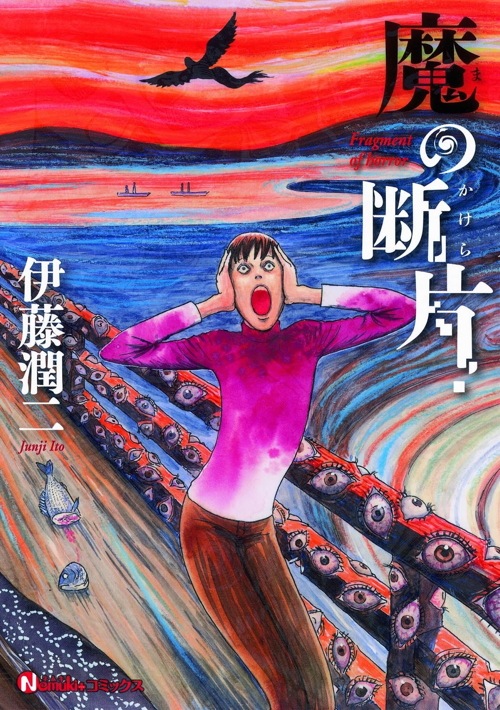
fragments_of-Horror-itoExciting news: VIZ will publish Junji Ito’s latest manga, Fragments of Horror, in 2015. VIZ promises that Fragments has something for everyone, “from the terrifying to the comedic, from the erotic to the loathsome.” Look for a hardcover edition next summer.

The latest volume of Monster Musume edges out Attack on Titan for the top spot on this week’s New York Times Manga Bestseller list.

Toshi Nakamura thinks the new Parasyte movie doesn’t stack up against the manga.

But wait–there’s more! Masashi Kishimoto sits down for another interview about Naruto, this time with Mezamashi TV.

Deb Aoki files a report from the 2014 International Manga Festival in Tokyo, while Khursten Santos posts an in-depth look at the Manga Futures conference, which was held at the University of Wollongong last month.

Organization Anti-Social Geniuses is looking for a Manga Features Writer.

To help shojo fans get into the Christmas spirit, Anna N. is giving away volumes 1-3 of Sweet Rein.

Which new Seven Seas titles are you eagerly anticipating? Lori Henderson offers her two cents on the company’s latest acquisitions.

Librarian Mikhail Koulikhov discusses the pros and cons of using Google Scholar to research anime and manga topics.

News from Japan: Mayumi Azuma (Elemental Gelade) and Tatsuro Nakanishi (Crown) have teamed up for Amadeus Code, a new series for Monthly Comic Garden.

Reviews: Anime News Network officially retires its Right Turn Only!! column this week with mini-reviews of Afterschool Charisma, From the New World, and Whispered Words. Elsewhere at ANN, Jason Thompson looks at Japan Sinks, a natural disaster story from the 1970s.

Alice Vernon on Are You Alice? (Girls Like Comics)
Sakura Eries on vol. 3 of Aron’s Absurd Armada (The Fandom Post)
Sean Gaffney on vol. 1 of Assassination Classroom (A Case Suitable for Treatment)
Matt Wilson on Batman: The Jiro Kuwata Batmanga (Comics Alliance)
Sarah on vol. 62 of Bleach (nagareboshi reviews)
Kate O’Neil on vol. 52 of Case Closed (The Fandom Post)
Megan R. on Hatsune Miku: Unofficial Hatsune Mix (The Manga Test Drive)
Allen Kesinger on vols. 1-4 of Judge (No Flying No Tights)
Leroy Douresseaux on vol. 4 of Millennium Snow (Comic Book Bin)
Lori Henderson on vols. 15-21 of Pokemon Adventures: Ruby & Sapphire (Good Comics for Kids)
Matthew Warner on vol. 3 of Puella Magica Madoka Magi: The Different Story (The Fandom Post)
Scott Cederlund on vol. 13 of Real (Panel Patter)
Mad Manga on chapters 1-26 of Salty Studio (Cartoon Geek Corner)
Ken H. on vols. 3-4 of Say I Love You (Sequential Ink)
Megan R. on The Seven Deadly Sins (The Manga Test Drive)
Mad Manga on chapters 2-3 of Takujo no Ageta (Cartoon Geek Corner)
Lesley Aeschliman on vol. 8 of Voice Over! Seiyu Academy (Lesley’s Musings on Anime & Manga)

Filed Under: MANGABLOG Tagged With: Junji Ito, viz media

Bookmarked: Satoshi Kon-a-thon

December 3, 2014 by Katherine Dacey

It’s not every day that an American publisher releases a manga by the late, great Satoshi Kon, so Brigid and I decided to mark the occasion with a roundtable discussion. Joining us is David Brothers, one our favorite comics journalists. David has written for Comics Alliance, Pop Culture Shock, Publisher’s Weekly, Wired, and The Atlantic Monthly, and currently works in the comics industry.

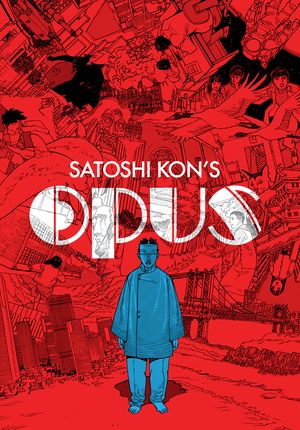
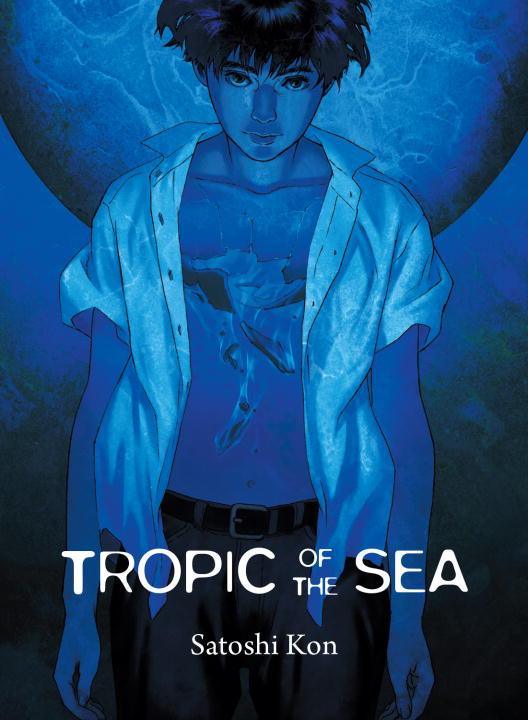
On our plate: Tropic of the Sea, which was published by Vertical Comics in 2013, and OPUS, which arrives in comic book stores today courtesy of Dark Horse. Both works date to an early stage of Satoshi Kon’s career, but explore themes present in such films as Perfect Blue, Millennium Actress, and Paprika–most notably the boundary between reality and imagination.

KATE: Let’s start the conversation with a basic question: which did you enjoy more, OPUS or Tropic of the Sea, and why?

OpusDAVID: I definitely liked OPUS a lot more than Tropic of the Sea, I think owing to the fact that while both are stories in well-worn genres, OPUS is way more up my alley in general, since it was at least partly about storytelling as a creator. Tropic of the Sea felt fairly pat, with precious few surprises all the way down to the last panel. OPUS follows the blueprint of other stories in its genre, but it’s also funnier and warmer somehow, I suppose because it’s about the nature of free will and humanity, and to tackle those points you kinda have to have characters that are entertaining to watch.

I actually read these books back-to-back the first time I read both, Tropic of the Sea and then OPUS, with a break for cooking and dinner in-between. OPUS did a great job of sparking my imagination. I think it’s cool that the story works as both how we read it, as the story of a creator in his creation, and also a crazy deus ex machina ending for the manga Resonance. Tropic of the Sea sorta is what it is, which is a well-executed story to be sure, but OPUS goes places I really enjoy.

I’m focusing on OPUS, but I didn’t dislike Tropic of the Sea. It’s good, but it’s just not quite my bag. How was it for you two?

BRIGID: Wow, I’m actually feeling the opposite: I really liked Tropic of the Sea because I thought that it was very well done, even if the story had been done before. I’m finding OPUS much harder to follow, though. Maybe I’m just not good with action stories, but it seems like things are constantly exploding and flying apart without any visible cause. And right at the end of chapter 1 there’s this weird non-sequitur where Satoko’s leg is trapped under a stone column and then, without anything changing in the panel that I could see, she just pushed it off and jumped up. On the one hand, this manga has a pretty sophisticated sense of space, but on the other hand, I’m having a lot of trouble following the motion of people and things within that space, and in particular, why things are blowing up. As I write this, I haven’t finished the manga, so maybe there’s a resolution or explanation I’m not seeing yet, but right now it’s pulling me out of the story to have to stop and figure out what just happened. It’s weird, too, because you would expect an animator to be tighter about that kind of thing.

tropic-of-the-sea-cover
KATE: My experience tracks with yours, David: I liked OPUS more than Tropic of the Sea. I found the premise of Tropic of the Sea a little too familiar, in large part because the characters were all such obvious types–the skeptic, the unscrupulous developer, the wise old-timer–that none registered as individuals. The story’s length was also a contributing factor, as Kon didn’t have enough space to flesh out the cast beyond their specific plot functions. It’s a shame that the script wasn’t better, as the illustrations create a palpable sense of place.

As for OPUS, it irresistibly reminded me of the a-ha video for “Take on Me” and the Will Farrell/Emma Thompson flick Stranger Than Fiction, with a pinch of AKIRA for seasoning. I normally find these kind of meta-exercises tedious, but Kon infuses the story with a sense of playful urgency that thwarts the urge to deconstruct every page. (For me, at least; your mileage may vary.)

DAVID: Oh, I’m definitely knee-deep in that urge to deconstruct. Resonance feels like the anime and manga that was around when I was getting into this stuff, something halfway between Ryoichi Ikegami’s ’80s realism and Masamune Shirow’s willingness to blend weird tangents into his hard sci-fi worldbuilding. The haircuts, the fashion, the motivations, the poorly thought-out backstories, and somehow even the fourth wall breaking action are all my bag. Which I think is a big part of why I share the constant feeling of Things Are Happening All Over with you, Brigid, but have a different response to it. The story-in-the-story is something I know well and have read often (the cop mentor, the thug friend, the weird way the heroine keeps getting rescued instead of rescuing!), so I buy into that, and through that the rest of the story, maybe a little harder than others would. This feels a lot like a lost chapter of a comic I never read as a kid, from late enough in the story that doing a daring metafictional “let’s talk about comics stories by way of being in a comics story!” tale was not just feasible, but something you could dedicate 300+ pages to.

KATE: I agree with Brigid that the draftsmanship in Tropic of the Sea is crisper–in fact, I think that’s part of the reason that I’m so focused on the creakier aspects of the story. The illustrations are almost… well, “invisible” isn’t quite the right word, but they don’t call attention to themselves in the same way that the illustrations in OPUS do. I don’t always respond well to flashy artwork, but I found OPUS engaging enough that I didn’t linger on the busier images.

As for the story, I’m with you, David: OPUS is a fun throwback to the kind of manga that Dark Horse and VIZ were publishing in the 1990s, right before the Sailor Moon/InuYasha revolution. OPUS isn’t as gonzo as some of the Koike/Ikegami manga from that era, but it still has that same breathless, hyperbolic quality. I’m kind of surprised that I liked it better than Tropic of the Sea, actually, as Tropic seems like it would be more in my wheelhouse. But I thought the script was too on-the-nose–a little ambiguity would have made the ending more satisfying, and more in keeping with Kon’s mature work. (An aside: I wondered what Rumiko Takahashi could have done with the premise of Tropic of the Sea… sigh.)

Switching gears, how did you react to the ending? Was Dark Horse right to include Kon’s unfinished sketches, or should the manga have been left incomplete?

DAVID: I came into OPUS cold, not even knowing it was unfinished, so I was both surprised, disappointed, and glad to see them. Surprised at the lack of an ending, disappointed at the same, but glad there was some kind of resolution, even if it’s just a metafictional one. For a story about stories to end with “Welp, and I guess I just didn’t finish this one, but I might one day!” is the kind of serendipity you can’t plan for, but is sometimes thematically correct for the work. It worked here, and I especially liked to see the pages Kon did with no faces. I thought that was a cool and creepy touch, and when combined with the rest of the backmatter, it made for a satisfying, though not all the way satisfying, ending.

Filed Under: MANGABLOG Tagged With: Dark Horse, Satoshi Kon, Vertical Comics

The Problem with Doraemon

December 1, 2014 by Brigid Alverson

OpusZainab Akhtar posts a preview of Satoshi Kon’s Opus, which is due out this week from Dark Horse.

At Eeeper’s Choice, Phillip weighs in on Digital’s new Tezuka Kickstarter, which is considerably more modest than the last one.

Doraemon is the most iconic children’s character in Japan, if not all of Asia, so why have publishers been so slow to bring him over here? Roland Kelts looks at the problem, with input from translators Matt Alt (who is translating the manga, which is being released digitally), and Matt Thorn.

This week’s Pick of the Week at Manga Bookshelf comes down to two very different manga.

Erica Friedman recommends the digital magazine Sparkler Monthly.

Laura looks at this month’s new shoujo manga releases at Heart of Manga.

At Organization Anti-Social Geniuses, Justin and Manjiorin discuss five fears they have about buying manga. Any dedicated manga reader will relate!

A Library Girl notes a mini-revolt going on in the Crunchyroll forums because the company did not offer its traditional Black Friday discount on the All Access pass. Why are we writing about this on a manga blog? Because the All Access pass is what you use to read manga; if a substantial number of customers drop their subscriptions or convert to the anime-only service, it could hurt their digital manga program.

Peking University in Beijing, China, has opened a manga library.

News from Japan: This year’s best selling manga were One Piece, with 11,885,957 volumes sold, and Attack on Titan, with 11,728,368, but the numbers drop off quickly after that; Naruto, in the number six slot, had only half the sales of One Piece. Princess Resurrection manga-ka Yasunori Mitsunaga has a new series, Kako to Nise Tantei (Kako and Detective Nise), set to debut in the next issue of Young Jump.

Reviews: The Manga Bookshelf bloggers round up some quick takes on recent releases in the latest edition of Bookshelf Briefs. Ash Brown sums up a week’s worth of manga reading at Experiments in Manga. At Brain Vs. Book, Jocelyne Allen reviews Fumiko Fumi’s Memento Mori, which hasn’t been translated into English. Johnanna Draper Carlson takes a look at the how-to book Kawaii Manga: Adorable! at Comics Worth Reading.

Ash Brown on All You Need Is Kill (Experiments in Manga)
Leroy Douresseaux on vol. 2 of Black Rose Alice (The Comic Book Bin)
Erica Friedman on the September issue of Comic Yuri Hime (Okazu)
Sakura Eries on vol. 6 of GA: Geijutsuka Art Design Class (The Fandom Post)
TSOTE on Heureka (Three Steps Over Japan)
Johanna Draper Carlson on vol. 1 of Manga Dogs (Comics Worth Reading)
Sean Gaffney on vol. 14 of Neon Genesis Evangelion (A Case Suitable for Treatment)
Leroy Douresseaux on vol. 16 of Rin-ne (The Comic Book Bin)
A Library Girl on vols. 7-9 of The Story of Saiunkoku (A Library Girl’s Familiar Diversions)

Filed Under: MANGABLOG

VIZ, DMP, and Crunchyroll Announce New Titles

November 28, 2014 by Katherine Dacey

Ludwig-B

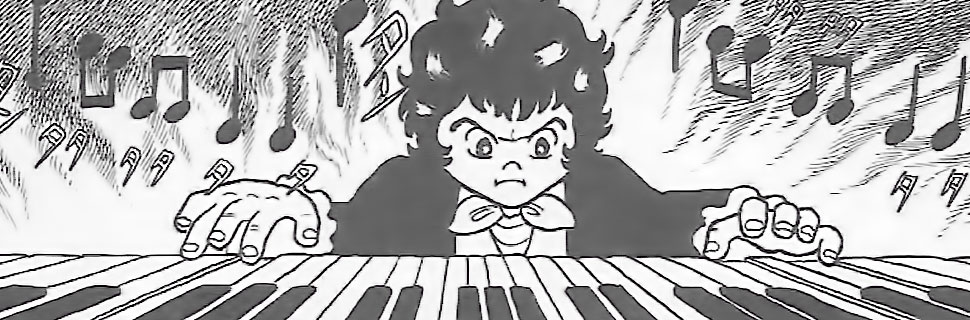
In the aftermath of its failed Kickstarter campaign to raise $380,000, DMP has announced a more modest project: the publication of Ludwig B., Osamu Tezuka’s two-volume biography of Ludwig van Beethoven. DMP seems to have listened to fans’ complaints about previous fundraising efforts, offering more low-cost options for supporting the project and getting paper copies of the books. Johanna Draper Carlson weighs in on the new campaign.

VIZ announced the acquisition of Yoshiaki Sukeno’s Twin Star Exorcists, which will join the Shonen Jump imprint in summer 2015, while Crunchyroll recently added Hoshino Taguchi’s Maga-Tsuki to its growing manga catalog.

Holy guacamole, Batman–Yuusuke Murata’s One-Punch Man has sold more than 4.5 million volumes since its 2012 debut!

Books-a-Million reports that third-quarter manga sales were strong, buoyed by consumer interest in Attack on Titan.

And speaking of Attack on Titan, the latest volume tops this week’s New York Times Manga Bestseller list, followed by new installments of Nisekoi: False Love, Bleach, and Fairy Tail.

Wondering what books arrive at the comic shop next week? The Manga Bookshelf gang sifts the wheat from the chaff.

Japanese tennis pro Kei Nishikori finished a strong year on the court with an awesome off-the-court surprise: a portrait drawn by Prince of Tennis author Takeshi Konomi.

How have your favorite manga characters’ appearances changed through the years? Brian Ashcraft offers side-by-side comparisons of Sgt. Frog, Shin-chan, and other popular characters from the 1980s and 1990s.

White Fox, a Marvel superhero created specifically for the Korean webtoon market, will make her Stateside debut with the Avengers. The character was inspired by the kumiho, a nine-tailed fox demon from Korean folklore.

News from Japan: Taishi Tsutsui will be penning an official Nisekoi spin-off for Shonen Jump+; the first chapter goes live on Monday. Also launching a new series is Kaiji Kawaguchi, author of Zipang, a time-traveling adventure set at the Battle of Midway. His new project, which will appear in Big Comic, will focus on a state-of-the-art Japanese aircraft carrier.

Reviews: Break out the ice pick and crampons–Shaenon Garrity’s latest House of 1000 Manga column examines Jiro Taniguchi’s mountaineering saga The Summit of the Gods. Here at MangaBlog, our colleagues MJ, Sean Gaffnery, Anna N., and Michelle Smith joined me and Brigid for a conversation about our favorite food manga.

Sakura Eries on vol. 6 of Are You Alice? (The Fandom Post)
Nic Wilcox on vols. 3-5 of Are You Alice? (No Flying No Tights)
Ken H. on vol. 4 of Brave 10 (Sequential Ink)
Lesley Aeschliman on vol. 6 of A Bride’s Story (Lesley’s Musings on Anime & Manga)
A Library Girl on vols. 9-10 of Chi’s Sweet Home (A Library Girl’s Familiar Diversions)
Leroy Douresseaux on vol. 4 of Gangsta (Comic Book Bin)
Kory Cerjak on vol. 1 of Honey Blood (The Fandom Post)
Megan R. on Joan (The Manga Test Drive)
Lesley Aeschliman on vol. 16 of Kamisama Kiss (Lesley’s Musings on Anime & Manga)
Megan R. on Ludwig II (The Manga Test Drive)
Lori Henderson on Manga Classics: Pride and Prejudice (Good Comics for Kids)
Guy Thomas on Opus (Panel Patter)

Filed Under: MANGABLOG

Bookmarked: Setting the Table

November 26, 2014 by Brigid Alverson

On the eve of Thanksgiving, we decided to whet our appetite for tomorrow’s dinner with a conversation about our favorite food manga. Our guests around the table today are the Manga Bookshelf bloggers: MJ, who runs Manga Bookshelf and blogs there as well, Ash Brown of Experiments in Manga, Michelle Smith of Soliloquy in Blue, Anna N of Manga Report, and Sean Gaffney of A Case Suitable for Treatment. Bon appetit!

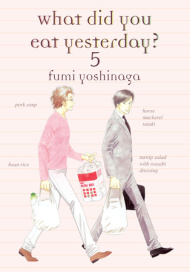
Michelle: I’ve thoroughly been enjoying What Did You Eat Yesterday?, especially the idea that this is everyday fare that a person on a budget might be able to make, were they so ambitious. Somehow it’s so refreshing to see someone using powder mixes! I love Shiro’s shopping trips and his sense of triumph upon scoring a good deal. My one regret is that I really can’t imagine how the vast majority of what he makes actually tastes.

Another food manga I enjoy, somewhat despite myself, is Food Wars!: Shokugeki no Soma. I kind of feel like I should be more bothered by the fan service than I am, but to me it seems purposefully ridiculous and not meant to titillate, but I suppose it could be doing both things at once. Anyway, this manga is basically Prince of Tennis with food. You’ve got the cocky protagonist, whose father possibly is a famous cooking ninja or something, who immediately takes on and bests his classmates at an elite culinary school. And being that it’s kind of sports manga with food, it is completely up my alley.

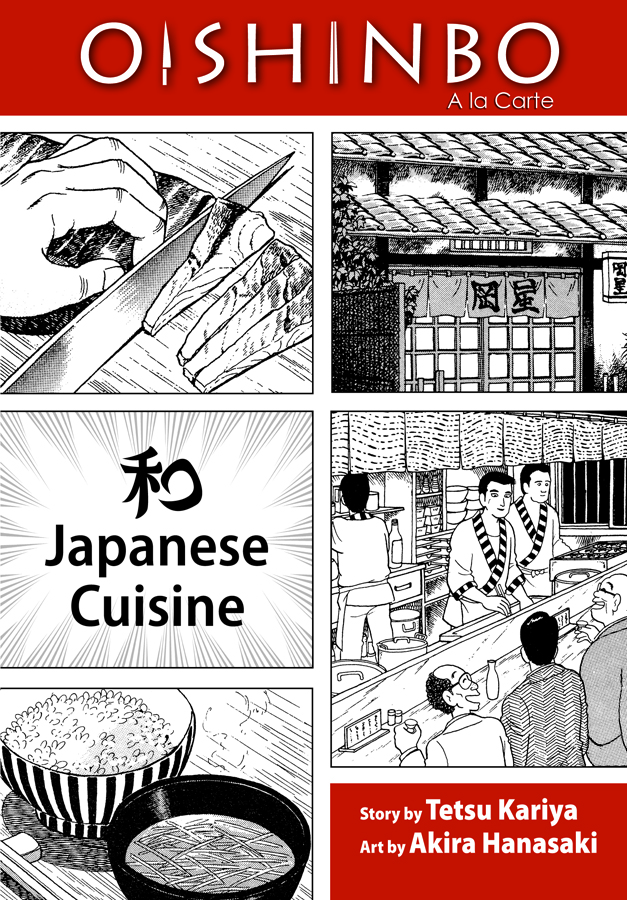
oishinbo1_coverAsh: I love food and I love manga, and so when the two come together in the same work I’m always going to check it out. More often than not, I end up enjoying it, too. My first food manga was Oishinbo: A la Carte, and it remains one of my favorite food series. With its food and family drama, Oishinbo is both informational and highly entertaining. Occasionally it can be controversial as well. Despite being a best-selling food manga in Japan, back in May publication of the series was suspended after its depiction of health issues in the Fukushima area. The series can be very opinionated, and at times those opinions aren’t widely held or popular. Another example is the support shown in favor of whaling. But I appreciate a work that can take a strong stance; even if I don’t necessarily agree with it I usually learn something by reading it.

Currently my go-to food manga is What Did You Eat Yesterday? Granted, it’s not just the food that particularly appeals to me about the series; I also welcome its realistic portrayal of gay life in contemporary Japan. Food frequently has an important role to play in Fumi Yoshinaga’s manga, as can be seen in Antique Bakery and Not Love But Delicious Foods among others, but What Did You Eat Yesterday? takes it to a whole new level. I know plenty of readers who don’t really enjoy the detailed food preparation and recipes found in the manga, but I’m one of those people who can happily watch cooking and food shows for hours at a time (if I actually had the time, that is) so it doesn’t bother me at all. And I especially like how the creation of a dish is shown to be a method of personal expression and communication.

What Did You Eat Yesterday 5MJ: I’ll pipe up here to add myself to the list of folks who are rabidly consuming What Did You Eat Yesterday? There’s pretty much nothing I love more than the combination of Fumi Yoshinaga and food. As a food-lover who does not cook, I suppose I especially appreciate the fact that even food-preparation serves to move the story along in a Yoshinaga manga, so I’m never left to face my inadequacies in the kitchen alone; there’s always a little bit of human drama to keep me company. Actually, I think that’s a significant part of what always drew me to CLAMP’s xxxHolic as well. It’s not a food manga by any means, but there’s an enormous amount of food and food-preparation involved in the story. These things are inextricable from the character’s lives.

Brigid: Michelle, I’m right there with you on Food Wars. It’s so over the top that it’s hard to take seriously, and it must be said that the delicious food has the same effect on guys as on girls, although somehow it’s funnier with the guys. Anyway, it’s one of those manga I enjoy in spite of my better judgment. And the food is interesting.

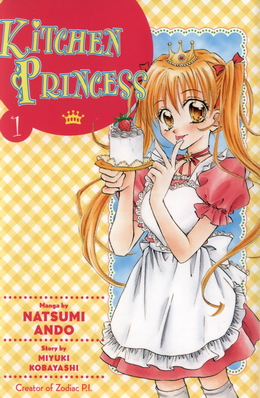
I’m going to toss out a few more titles to get your reactions: Back when it first came out, I read the first couple of volumes of Yakitate!! Japan, a shonen manga about a guy who wants to create the national bread of Japan—it’s funny because Japan is a rice culture, not a bread culture—and it was sort of interesting how he had these bread-baking beatdowns with other would-be bakers. Then there’s Kitchen Princess, a super-shoujo drama about a good-hearted orphan girl, Najika, who has perfect taste, the way some people have perfect pitch, and can make really delicious, classic dishes out of cheap ingredients. This story is very much about the emotional side of food, as it’s basically a soap opera in which all problems are solved by Najika’s cooking. I also really like Toriko, the story of gourmet hunters in search of the world’s rarest and most elusive foods, just because the plants and animals the author comes up with are so imaginative. And finally, an oldie but a goodie, Iron Wok Jan, sort of a manga version of Iron Chef that’s set in a Chinese restaurant. Does anyone have any thoughts on these, or am I the only one who read them?

Michelle: I have the complete runs of Kitchen Princess and Yakitate!! Japan, but haven’t read them. I did, however, watch a few episodes of the latter’s anime and what I remember also kind of reminds me of Food Wars, in that it’s a big sports manga-ish (maybe what I really mean here is simply that it’s thoroughly shounen) and there are over-the-top reactions to food, though not so much fanservicey as wacky. Like Drops of God or something. :) I definitely intend to read both series one of these days.

Kitchen_Princess_vol01Ash: Yakitate!! Japan is a series I’ve been meaning to read, but haven’t quite got around to yet. Kitchen Princess, on the other hand, I have read. It’s deliciously melodramatic, and the food is tasty, too! I’ve actually seen more of the Toriko anime than I’ve read of the manga, but I do enjoy the series. It’s a lot of fun. As you mentioned, Brigid, the flora and fauna are incredibly imaginative. The gourmet hunters and their prey are both fantastically over-the-top. And I really like Toriko himself—he’s a powerful and skilled fighter, but he also has a respect for life and a childlike delight in food. It’s been a while since I’ve read Iron Wok Jan (it was one of my very first food manga), but I do remember some pretty epic and intense battles in that series, too!

Anna: I enjoyed the first few volumes of Yakitate!! Japan, mostly due to the horrible puns and the baking competitions. Iron Wok Jan I read several volumes of many years ago, and it had a bit of a fiercer edge to the cooking competitions, just because the main character was so intense. There was a little less humor and more over the top cooking aggression from what I remember from that series. I read most of Kitchen Princess, and I enjoyed being able to read a foodie manga in a shoujo setting, because it seems like more often when food manga comes out here, it comes with an Iron Chef-like series of shonen competitions.

I have to say that for food manga now I do prefer the works of Fumi Yoshinaga, just because her enthusiasm for food is so genuine it ends up getting reflected so well in the way her characters react to their meals. I’m a little less than enthused about Food Wars due to the fanservice, but there still is something entertaining about the combination of cooking mastery and an elite school for young chefs.

I do also enjoy food manga that are a bit more didactic or instructive in addition to the variations of battle manga. I was really glad to have the chance to read some translations of Ekiben Hitoritabi when JManga was up and running. I’ve also enjoyed a few volumes of Drops of God and Oishinbo.

Sean: I enjoy a lot of food manga, but not necessarily for the food—I’m honestly a McNuggets kind of guy. I like how it shows that anything can be adapted to fit the manga style. The titles like Food Wars and Yakitate Japan all are very much shonen fighting/training/making friends series, just about food.

Most of the seinen food manga we’ve seen consist of “talk about food preparation/eat food/exult about how delicious food is”, with close ups of amazed faces. Though Yoshinaga’s What Did You Eat Yesterday? at least does have characters, much as I don’t care for Shiro. With Oishinbo, characterization was so irrelevant that Viz could simply release seven omnibuses from all over the spectrum, with Kurita going from vaguely attracted to Yamaoka to already having kids and back depending on the food “theme.” (Also, lots of Shiros in food manga.)

As for series like Mixed Vegetables and Kitchen Princess, the food is a vital ingredient, but it isn’t the plot, like with Food Wars or What Did You Eat Yesterday? The standard shoujo romance and high school traumas take the front seat, though food may be used to advance those plots.

And josei, well, that’s Yoshinaga as well, right? Not Love But Delicious Foods?

Michelle: Oh, Ekiben Hitoritabi! I forgot about that one, but I also really liked it. Too, JManga had Gokudou Meshi, in which a bunch of prisoners had a yearly tradition of telling each other about delicious food they had eaten. I’m sad I won’t get to read more of either of those.

Kate: I’m glad to see that I’m not the only one mourning the demise of JManga–that was my go-to source for off-beat food manga! I was a big fan of both Ekiben Hitoritabi and Gokudou Meshi, in part because neither had fanservice, over-the-top battle sequences, or idiot savants whose one great gift was making awesome cakes. Of the two, I had a slight preference for Gokudou, as the script was a deft blend of slapstick comedy and culinary shop-talk, with characters waxing poetic about their last meal “on the outside,” or favorite comfort food. Ekiben unfolded at a more leisurely pace that, at times, bordered on snoozy; how much is there to say about the food at train stations? Still, Ekiben captured the feeling of train travel, and made me sad that the food options at Penn Station are so abysmal.

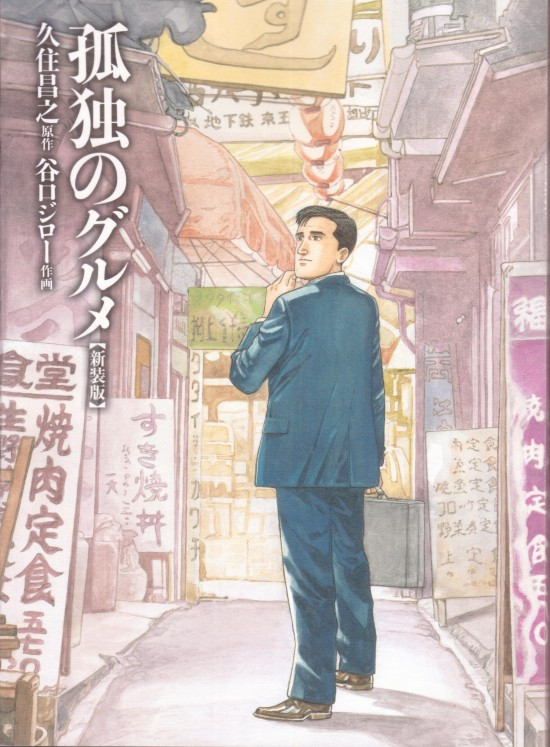
gourmetAnother JManga title that I loved was Kodoko no Gourmet, quite possibly the least manly-man title ever illustrated by Jiro Taniguchi. Its hero, Goro Inoshigara, is a traveling salesman who spends most of his time checking out new restaurants in each city he visits. (If he actually transacts any business during the course of the series, I missed it.) Each chapter is just a few pages long, but gives us a window into a variety of different types of restaurants, from mom-and-pop noodle joints to upscale bistros. Taniguchi does a terrific job of conveying the atmosphere of each place that Goro visits–something that frequently gets overlooked in competition-oriented food manga, where the tastiness of the food trumps all other considerations.

I’d also like to join the chorus of folks praising Fumi Yoshinaga. Though I share Sean’s opinion of What Did You Eat Yesterday?, I adored Not Love But Delicious Foods. The story consists of fifteen vignettes, each centered around a particular eatery: a Korean restaurant, a French bistro, a bagel bakery. (Call me a recovering New Yorker, but I hate to think of what passes for a decent bagel in Tokyo.) The meals are an important ingredient in every story, but it’s the conversation that really pops; Yoshinaga does a great job of demonstrating the power of wine and food in bringing people together, smoothing over disagreements, and giving people license to break taboos.

Still hungry? Back in 2012, Khursten Santos hosted a Manga Moveable Feast devoted to food manga; click here to view the entire archive.

Filed Under: MANGABLOG

DMP Kickstarter Fails, Yen Confirms New Licenses

November 24, 2014 by Brigid Alverson

Johanna Draper Carlson has some commentary on Digital Manga’s Tezuka World Kickstarter, which failed to reach its goal last week. Lori Henderson shares her thoughts as well at Manga Xanadu.

Some sharp-eyed folks spotted a couple of unannounced manga on Amazon, and Yen Press confirmed it: They will publish Sword Art Online: Girls Ops in May and Puella Magi Madoka Magica: The Rebellion Story in June. They also announced that they will publish Tomoco Kanemaki’s Kingdom Hearts light novel series in a single volume.

What’s good this week? The Manga Bookshelf bloggers have some recommendations.

Lori Henderson rounds up the Viz and New York Times best-sellers in one handy post.

Erica Friedman looks at the latest issue of Eureka Magazine, which focuses on “The Current State of Yuri Culture,” and she updates us on just that with the latest edition of Yuri Network News.

Help Ash Brown decide what series to write about next at Experiments in Manga.

Neon Genesis Evangelion: The Shinji Ikari Raising Project will end this summer.

News from Japan: Matsuri Hino wrapped up Vampire Knight a little while ago, but now she’s back with a new chapter that will run in the March issue of LaLaDX. Shueisha’s Miracle Jump magazine announced that there are now 4.5 million volumes of One Punch Man out there. Crunchyroll has a preview of Peach-Pit’s first shonen manga, Wandering Wonder World, which will debut in the January issue of Shonen Ace. Kaiji Kawaguchi (Zipang, Eagle) will launch a new series, Kūbo Ibuki (Aircraft Carrier Ibuki), in Big Comic Magazine in December.

Reviews: Streamline your reading by checking out this week’s Bookshelf Briefs at Manga Bookshelf. Ash Brown has more short takes and a roundup of a week’s worth of manga reading.

Lori Henderson on Another (Manga Xanadu)
Sarah on vol. 18 of Black Butler (nagareboshi reviews)
Anna N on vol. 2 of Black Rose Alice (Manga Report)
Erica Friedman on vol. 2 of Bousou Girlsteki Mousou Renaiteki Suteki Project (Okazu)
Kory Cerjak on vol. 5 of Deadman Wonderland (The Fandom Post)
Damion Julien-Rohman on Gangsta (The State Press)
Sean Gaffney on vol. 26 of Higurashi: When They Cry (A Case Suitable for Treatment)
Matthew Warner on vol. 5 of Inu x Boku (The Fandom Post)
Matthew Warner on vol. 4 of Kingdom Hearts 358/2 Days (The Fandom Post)
Steve Bennett on vol. 1 of LBX: New Dawn Raisers (ICv2)
Kate O’Neil on vol. 17 of Natsume’s Book of Friends (The Fandom Post)
Lesley Aeschliman on vol. 25 of Pokemon Adventures (Lesley’s Musings on Manga)
Leroy Douresseaux on vol. 1 of Resident Evil: The Marhawa Desire (I Reads You)
Leroy Douresseaux on vol. 17 of Tegami Bachi: Letter Bee (The Comic Book Bin)
Ash Brown on vol. 5 of Vinland Saga (Experiments in Manga)
Leroy Douresseaux on vol. 7 of Voice Over (The Comic Book Bin)

Filed Under: MANGABLOG

More from Masashi Kishimoto

November 20, 2014 by Katherine Dacey

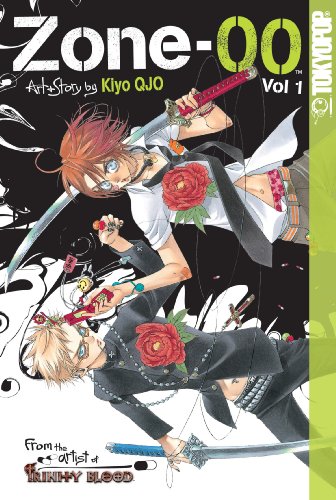
zone00Viz has picked up Zone-00, originally licensed by Tokyopop, as a digital release.

Naruto creator Masashi Kishimoto talks about his plans for the next few months, which include a Naruto spinoff that will launch in April, some other Naruto-related business, and spending some quality time with his wife and child. He will start working on a brand-new series in the summer, but he cautions fans that he is turning 40 and may not be up to the rigors of another monthly series.

Wondering what’s in the pipeline for next year? The Fandom Post shares VIZ’s April 2015 release list.

If you’re a Weekly Shonen Jump reader, you may have noticed that VIZ just added a new title to the mix, Takujo no Ageha: The Table Tennis of Ageha. In the coming weeks, VIZ will launch two more series: Ryohei Yamamoto’s E-ROBOT (11/24) and Nobuaki Enoki and Takeshi Obata’s Gakkyu Hotei: School Judgment (12/1).

The Manga Bookshelf gang strongly recommend the latest volume of Takehiko Inoue’s Real, which arrived in stores this week, and preview next week’s coming attractions.

The Q2 gallery in Los Angeles threw a party to commemorate the 30th anniversary of Dragon Ball‘s publication.

In her latest House of 1000 Manga column, Shaenon Garrity explores the GEN Manga catalog.

Good news: translator Jocelyne Allen is posting reviews again, focusing on offbeat, funny, and weird manga that haven’t yet crossed the Pacific. On her nightstand: Mahoshojo Ore, a series featuring magical girl men, and Yume Kara Sameta, a collection of short stories by Natsujikei Miyazaki.

News from Japan: Ken Akamatsu, Tetsuya Chiba, and Hideaki Anno were among the manga and anime insiders who were guests at the first meeting of the Japanese Parliamentary Association for manga, anime, and games, a.k.a. Manga Giren. The Association, which is mostly made up of councilors from the Liberal Democratic Party, will promote tax breaks for the industry and work toward relaunching the mothballed International Media Art General Center.

Rei Toma, author of Dawn of the Arcana, will be launching a new series in the February issue of Shogakukan’s Monthly Cheese! Also in the works: an anime adaptation of Rumiko Takahashi’s Rin-ne, which will debut in spring 2015.

Reviews: Remember Top Shelf’s AX anthology? One of the stand-out contributions, “Rainy Day Blouse and The Umbrella,” was by Akino Kondoh. Indie publisher Retrofit Comics has just published a new collection of her stories in English, with translations by manga scholar Ryan Holmberg. Alex Hoffman has a review at Sequential Slate.

Sean Gaffney on vol. 1 of Ani-Emo (A Case Suitable for Treatment)
Leroy Douresseaux on vol. 12 of Blue Exorcist (Comic Book Bin)
Lesley Aeschliman on vol. 23 of Full Metal Alchemist (Lesley’s Musings on Anime & Manga)
Sakura Eries on vol. 16 of Goong (The Fandom Post)
Megan R. on Lovers in the Night (Manga Test Drive)
Sean Gaffney on vols. 1-2 of Lucifer and the Biscuit Hammer (A Case Suitable for Treatment)
Lesley Aeschliman on vol. 24 of Naruto (Lesley’s Musings on Anime & Manga)
Nicholas Smith on Naruto (Ka Leo)
Ken H. on vols. 6-7 of No. 6 (Sequential Ink)
Mad Manga on Takujo no Ageha (Cartoon Geek Corner)
MJ on They Were Eleven (Manga Bookshelf)
Matthew Warner on vol. 00 of Ubel Blatt (The Fandom Post)

Filed Under: MANGABLOG Tagged With: GEN Manga, viz media, Weekly Shonen Jump

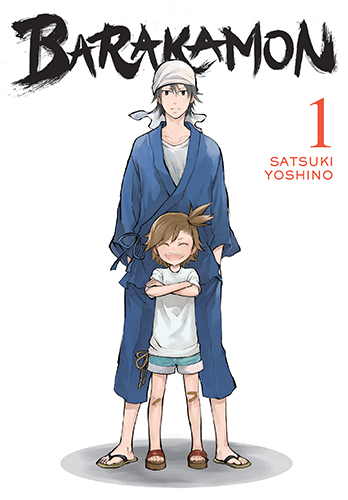
Review: Barakamon, Vol. 1

November 19, 2014 by Katherine Dacey

Yoshino_Barakamon_V1_TPBarakamon, Vol. 1
By Satsuki Yoshino
Rated T, for Teens
Yen Press, $15.00

Barakamon is a textbook fish-out-of-water story: an impatient city slicker finds himself in the country where life is slower, folks are simpler, and meaningful lessons abound. Its hero, Seishuu Handa, is a calligrapher whose fiery temper and skillful but unimaginative work have made him a pariah in Tokyo. His foils are the farmers and fishermen of Gotou, a small island on the southwestern tip of Japan that’s inhabited by an assortment of eccentrics, codgers, and naifs.

If this all sounds a little too familiar, it is; you’ve seen variations on this story at the multiplex, on television, and yes, in manga. (I think I liked it better when it was called Cold Comfort Farm, and starred Kate Beckinsale and Rufus Sewell.) Satsuki Yoshino does her best to infuse the story with enough humor and warmth to camouflage its shopworn elements, throwing in jokes about internet pornography, dead frogs, and bad report cards whenever the story teeters on the brink of sentimentality. The mandates of the genre, however, demand that Handa endure humiliations and have epiphanies with astonishing regularity—1.5 times per chapter, by my calculations.

From time to time, however, Yoshino finds fresh ways to show us Handa’s slow and fitful progress towards redemption. The first chapter provides an instructive example: Handa angrily dismisses his six-year-old neighbor Naru when she declares his calligraphy “just like teachers write.” After seeing Naru’s wounded expression, Handa chastises himself for lashing out at a kid. Handa never musters an apology to Naru, but makes restitution by joining her for a series of small adventures. The experience of swimming in the ocean, scrambling over a wall, and watching a sunset prove liberating, leading Handa to an explosive outburst of creativity punctuated by a few high-flying kicks. (Now that’s what I call action painting.) The results are messy, but the message is clear: Handa has the potential to be a genuine artist if he can connect with his playful side.

Like the story, the artwork is serviceable if not particularly distinctive. Yoshino creates enough variety in her character designs that the reader can easily distinguish one islander from another—an important asset in a story with many supporting players. Yoshino’s grasp of anatomy, however, is less assured. When viewed from the side, for example, Handa’s Tokyo nemesis has a cranium like a gorilla’s and a chest to match; when viewed from above, however, the Director appears small and wizened. Other characters suffer from similar bodily distortions that exaggerate their necks, arms, and torsos, especially when Yoshino attempts to draw them from an unusual vantage point.

Yoshino is more successful at creating a sense of place. Through a few simple but evocative images of the harbor and coastline, she firmly establishes the seaside location. She also uses architectural details to suggest how old the village is; though locals enjoy such modern conveniences as television, their homes look otherwise untouched by modernity. Yoshino is less successful in creating a sense of space, however. It’s unclear, for example, if Naru lives a stone’s throw from Handa’s house—hence her frequent intrusions—or if she lives a mile down the road.

The dialogue, too, plays an important role in establishing the setting. Faced with the difficult task of rendering the Gotou dialect, translators Krista and Karie Shipley chose a broad Southern accent for the local population. That decision neatly illustrates the cultural divide between Handa and his neighbors, but at the cost of nuance; a few jokes that hinge on vocabulary simply can’t be conveyed by this particular adaptation strategy. (The Shipleys’ translation notes are helpful in demystifying these exchanges.) Most of the punchlines, however, need no such editorial interventions to enjoy; certain elements of city slicker/country bumpkin humor transcend culture.

My verdict: Barakamon has enough charm and energy to engage the reader, even if the story isn’t executed with enough precision or subtlety to transcend the basic requirements of the fish-out-of-water genre.

Filed Under: MANGABLOG, REVIEWS Tagged With: Barakamon, yen press

Naruto creator speaks

November 17, 2014 by Brigid Alverson

Shonen Jump’s latest “Jump Start” manga are Ryohei Yamamoto’s E-ROBOT and Nobuaki Enoki and Takeshi Obata’s Gakkyu Hotei. The magazine will run the first three chapters of each series.

In an interview with the Asahi Shimbun, Naruto creator Masashi Kishimoto talks about how he was different as a child than the character he created:

“I was unable to do well in school and felt a strong sense of inferiority,” he said. “When Naruto said, ‘I will be Hokage,’ people surrounding him laughed at his dream. Since childhood, I also told others that I would be a manga artist but had no foundation.

“Unlike Naruto, I did not have the courage to declare that I will become a manga creator at any cost. So I would just say in my mind, ‘It may be possible.’”

Erica Friedman updates us with a new Yuri Network News post at Okazu.

News from Japan: The Osaka Prefectural Police have filed charges against 16 people, including manga-ka Rensuke Oshikiri, in the Hi Score Girl copyright infringement case. A new volume of Doraemon Plus will be released on December 1, the 80th birthday of creator Fujiko F. Fujio. A One Piece spinoff, One Piece Party, will launch in the January issue of Saikyo Jump; it will feature super-deformed versions of the One Piece cast. The next issue of Morning magazine will include a one-shot by Go Nagai, titled Kaiketsu Furo Zukin (The Amazing Bath Hood).

Reviews: Ash Brown takes us through a week of manga reading at Experiments in Manga. Three Steps Over Japan reviews the Osamu Tezuka manga Neo Faust, which has not been published in English.

Connie on vol. 2 of Castle Mango (Slightly Biased Manga)
Matthew Warner on vol. 8 of Happy Marriage?! (The Fandom Post)
A Library Girl on vols. 1-5 of Kobato (A Library Girl’s Familiar Diversions)
Connie on vol. 2 of Moon and Blood (Slightly Biased Manga)
Connie on vol. 2 of Neon Genesis Evangelion (3-in-1 edition) (Slightly Biased Manga)
Leroy Douresseaux on vol. 1 of Resident Evil: The Marhawa Desire (The Comic Book Bin)
Sean Gaffney on vols. 9 and 10 of Ranma 1/2 (A Case Suitable for Treatment)
Connie on vol. 10 of Rin-Ne (Slightly Biased Manga)
Connie on vol. 9 of Sailor Moon (Slightly Biased Manga)
A Library Girl on vol. 1 of Soulless (A Library Girl’s Familiar Diversions)
Matthew Warner on vol. 1 of Void’s Enigmatic Mansion (The Fandom Post)

Filed Under: MANGABLOG

Tatsumi on Film; Anno on Instagram

November 14, 2014 by Katherine Dacey

tatsumiGekiga pioneer Yoshihiro Tatsumi’s work is now accessible to viewers on the big screen, thanks to Singaporean director Eric Khoo. Khoo adapted such classic stories as “Hell,” “Goodbye,” and “Beloved Monkey,” interleaving them with vignettes from Tatsumi’s autobiography A Drifting Life. 

This just in: Moyocco Anno‘s new Instagram account is pretty awesome.

Marvel’s C.B. Cebulski shares a few more details about the Avengers/Attack on Titan crossover series. Over at TCJ, Joe McCulloch looks at an earlier Marvel/manga crossover, Kazuo Koike’s Wolverine one-shot.

Lori Henderson dishes the dirt on two new licenses: Aquarion-Evol and Flowers for Chronous, both of which will be published by One Peace Books.

The Manga Bookshelf gang share their picks for this week’s best new arrivals.

What kind of manga appeals to 9-to-12 year old readers? MJ weighs the pros and cons of three series that are frequently recommended for tweens.

News from Japan: The forthcoming Doraemon movie–Doraemon: Nobita no Space Heroes–will be adapted for the pages of Coro Coro; look for the first chapter in January 2015. Also arriving in theaters next year will be a big-screen treatment of Io Sakisaka’s Strobe Edge.

Reviews: Over at Anime News Network, Jason Thompson completes his 56-hour Naruto review marathon, tackling volumes 28-72. Closer to home, MJ sings the praises of an oldie but goodie: Setona Mizushiro’s Afterschool Nightmare.

Matthew Warner on vol. 13 of 07-Ghost (The Fandom Post)
Ash Brown on vol. 1 of Ajin: Demi-Human (Experiments in Manga)
Sean Gaffney on vol. 14 of Attack on Titan (A Case Suitable for Treatment)
Anna Call on vol. 1 of Deadman Wonderland (No Flying No Tights)
Ken H. on vols. 2-3 of Kimagure Orange Road (Sequential Ink)
Megan R. on Le Chevalier D’Eon (Manga Test Drive)
Rebecca Silverman on vols. 1-2 of Lucifer and the Biscuit Hammer (Anime News Network)
L.B. Bryant on vol. 5 of No Matter How I Look at It, It’s You Guys’ Fault I’m Not Popular (ICv2)
Richie Graham on vol. 1 of Ranma 1/2: 2-in-1 Edition (No Flying No Tights)
Sakura Eries on vol. 9 of Spice and Wolf (The Fandom Post)
Kate O’Neil on vol. 22 of Soul Eater (The Fandom Post)
Leroy Douresseaux on vol. 10 of Ultimo (Comic Book Bin)
Jenny Ertel on vols. 1-3 of What Did You Eat Yesterday? (No Flying No Tights)
Matthew Warner on vol. 1 of World Trigger (The Fandom Post)

Filed Under: MANGABLOG Tagged With: attack on titan, Marvel, Moyocco Anno, One Peace Books, Yoshihiro Tatsumi

Bookmarked! 11/12/14

November 12, 2014 by Brigid Alverson

Welcome to another edition of Bookmarked! This week, Johanna Draper Carlson of Comics Worth Reading joins Kate and I as we talk about what’s on the top of our reading stacks this week. I’ll start:

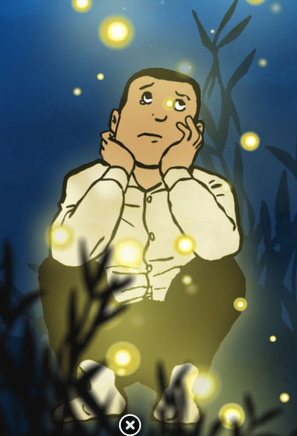
Legal DrugBrigid: I have been reading CLAMP’s Legal Drug a few pages at a time, which is really not the way to read it. I know this manga was a big deal back in the 2000s, but I have to confess I don’t always get CLAMP, and I’m finding this story somewhat tiresome because the characters all seem like types. The lead character, Kazahaya Kudo, was dying in the snow (for reasons that aren’t at all clear) when he was rescued by Rikuo, a young man who is as sullen as he is handsome. Now they live together and work for a pharmacy, but they spend a lot of time doing side jobs for the overly winsome owner of the business. The tasks they are assigned seem impossible—catch an invisible firefly—and they are given no direction, although they do have special psychic powers to fall back on. The puzzle part of it is interesting, and the art is lovely, but I just can’t warm up to any of these characters. It is nice, though, that Dark Horse has collected it into a single, thick omnibus, and that makes it easy for me to keep on plowing through it.

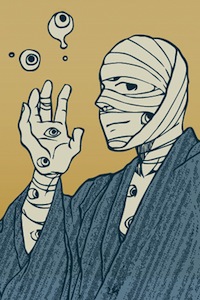
AnomalAnomal, by contrast, is a slim volume filled with lots of interesting characters. It’s a collection of short stories about the interactions between humans and yokai, and although they are all by the same creator, they vary quite a bit in tone. The character on the cover is a hyaku-me, or “hundred-eyes,” and he only figures in the first story, which is a shame as he’s a striking character. Some of the tales touch on deep emotions such as love, loss, and indebtedness, but there are a couple of semi-humorous ones, too. Unfortunately, the longest story is also the most annoying, about a schoolgirl who wants to become a yokai master because she loves to hug yokai. Nukuharu has an interesting way of drawing yokai, but like the stories, the art is uneven. I would love to see a more polished work from this creator, but Anomal is an interesting work and very different from the usual run of yokai tales.

Kate: I read Legal Drug about eight years ago. Though I loved it then, I’m not sure I’d be as enthusiastic about Legal Drug now. I still find CLAMP’s artwork elegant, but I agree with your assessment of the characters: they’re paper-thin collections of tics and mannerisms that grow tiresome quickly.

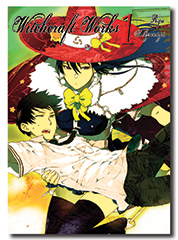
book_witchcraftworks01My nightstand is overflowing with new Vertical Comics. First up for me is volume one of Witchcraft Works, a series that falls squarely under the heading of Manga for Teenage Boys. The story focuses on Honoka Takamiya, a nebbishy high school student who has inexplicably attracted the attention of the class queen, Ayaka Kagari. After Ayaka rescues Honoka from an army of vicious stuffed rabbits — yes, it’s that kind of manga — we learn that Ayaka has been tasked with protecting Honoka from her fellow witches.

I’ll give creator Ryu Mizunagi credit: he wastes no time on exposition, diving into the action in the very first pages. Later chapters are denser in explanation, but generally read like conversations, rather than convenient exchanges of information for the reader’s benefit. I’m a little “meh” on the art, as it’s been calculated to appeal to the male gaze; most of the female characters are comically well endowed. (Several would topple over in real life, given their otherwise slender proportions.) There’s a fair amount of mammary-oriented fanservice and silly outfits, as well as an element of male wish fulfillment that just doesn’t resonate with an older female reader like me.

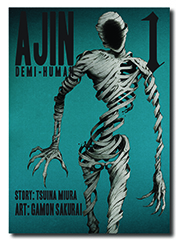
book_ajin-demihuman01More promising is Ajin: Demi-Human, a supernatural thriller that starts slowly but builds momentum quickly. The first ten or so pages are a chore to read, as author Tsuina Miura provides a detailed explanation of what demi-humans are–they’re immortal–and how many walk the earth. (Hint: not many.) After this clumsy intro, however, the author delivers a nasty jolt: seemingly ordinary teen Kei Nagai learns the hard way that he’s immortal when he survives a hit-and-run accident with a truck. The intense media interest in this discovery forces Kei to go on the lam to avoid bounty hunters, government agents, and evil scientists.

A story likes Ajin lives or dies by its artwork, and manga-ka Gamon Sakurai proves he’s up to the task of bring Miura’s script to life. Kei’s accident, for example, is suitably icky and unsettling, leaving the reader as dumbfounded as the characters who witnessed it. Sakurai’s action scenes are crisply rendered, too–a big plus, considering how many pages of volume one are devoted to high-speed chases and hand-to-hand combat. My only nit-picky criticism is the character designs: although the adults look good, some of the teenagers have serious Manga Hair. That’s a minor complaint, however, considering how much I enjoyed volume one.

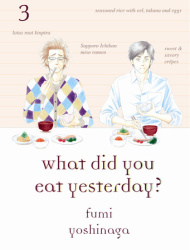
9781939130402Also on my nightstand are volumes three and four of Fumi Yoshinaga’s What Did You Eat Yesterday? I admit that I began this series fully expecting to love it, but have been mildly disappointed thus far. The issue, for me, is the ratio of drama to shop talk. The vignettes exploring the relationship between Shiro, an uptight lawyer, and his partner Kenji, a cheerful hairdresser, are lovely, capturing the normal rhythms of a middle-aged couple’s life. We also get glimpses of each man’s work situation, and how they interact with peers and clients—another winning touch. The food talk, however, is less compelling. Though some of the dishes sound appetizing, I found these passages as tedious as listening to someone give a blow-by-blow account of an expensive meal. Your mileage may vary; if you live to eat, you may find these stove-side rhapsodies more engaging than I have.

Johanna: It’s been a while since I’ve had a chance to read any manga—too much life stuff getting in the way—but the bright side of that is lots of volumes to catch up on over the holidays from series I expect to enjoy. I did manage to dive into a few books recently, plus try a new one-shot.

What Did You Eat Yesterday 5

Let’s start with one of my current favorites, What Did You Eat Yesterday? Volume 5 is just out, and every new book for me is a reminder that I’m thrilled that we’re getting this series in English. I adore Fumi Yoshinaga’s art, and her combination of recipe how-tos and small moments of daily life for a gay couple works well. I keep thinking I’m going to try one of the dishes Shiro prepares, but they’re too domestic. They use short-cut bottled sauces and whatever he gets at the local grocery, which is realistic (someone who has to get dinner on the table every day doesn’t spend a lot of time making fancy dishes) and a great insight into his personality, but that makes them difficult to replicate in the U.S. Yet that cultural authenticity adds another level of enjoyment. I need to learn to mimic how he thinks about meals, with easy but balanced side dishes included, instead of getting caught up in the details. I’m not sure I could filet my own whole fish in my kitchen, the way Shiro does, either.

Ha! I originally typoed “meals” as “males” above, which leads into the other piece of the work, the comfortable relationship between the two men. It’s not about what Shiro and Kenji say, specifically, to each other in an evening, it’s that they’re sharing the details of their experiences. Some of them are dramatic, as when Kenji explains how his father abandoned his family. There’s a good deal of humor, too. Early on, a friendly housewife’s husband tries to make Shiro friends with the other gay guy he knows just because they’re both gay. Anyone who’s been matched up on a superficiality can ruefully relate to that. Overall, I never know what a new chapter will bring, which I like a lot.

Genshiken Second Season 5

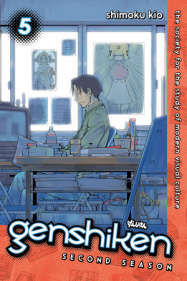
Reaching further back, I also read Volume 5 of Genshiken: Second Season. I don’t always know exactly what’s going on with the characters, since they’re so fannish and detailed about media I’m unfamiliar with, but I can appreciate their dedication to their hobbies, even if this go-round for the series is a lot about cosplay and yaoi.

The one character I remember best from the previous series, the terminally nerdy Madarame, is still hanging around the college club, although he’s graduated. The younger club members have decided to do him a favor by orchestrating him being in the club room with the girl he’s had a crush on for four years. The encounter plays out in a way I found totally unexpected, but quietly charming and good-hearted. That’s why I’m still “hanging around” with these wackos—it’s like being part of your own group of fans, virtually. The details may vary, but the underlying love and dedication, even when taken to extremes, is similar. I also like the way each chapter is followed up by four 4-koma strips that comment on the events we’ve just seen.

In my own burst of fannish trivia, it’s part of the cosplay girl’s (I don’t know any character names beyond “Sue”) character that she’s very large-breasted, in contrast to her sweet, unassuming personality (when she’s not dressing up). In some of the outfits she wears here (and the chapter where she’s topless), I was reminded of what they used to say about Wally Wood drawing Power Girl, that he told his assistants that he was going to keep drawing her bigger and bigger until they made him stop … and they never did.

Judge5

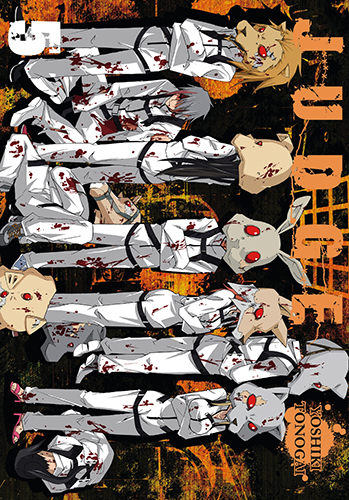
From sex to violence. I also read Judge, volume 5, although I am embarrassed to admit it. I only keep up with it because I’m lucky enough to get review copies. (If not, I’d be getting it out of the library, because I only want to buy series I expect to reread, and once the final villain is revealed, I suspect my interest will disappear entirely.) Next volume is supposedly the last, and I’m glad, the same way I’m glad when they cancel a TV show I should have stopped watching several episodes before but couldn’t quite break the habit on.

It’s one of those “a bunch of random people are told to kill each other one by one” stories—and why did Japan develop that genre?—that’s gone on too long. There are a couple of revelations in this book that I think are supposed to be interesting and provide twists, but I just want it to be over. Especially since it’s turned into a mini-harem, with our nice-ish guy protagonist mostly dealing with three girls. I expected more from it, with the original theme of the seven deadly sins, but I can’t keep up with who had which animal head which was what sin. Really bad pacing, this series has.

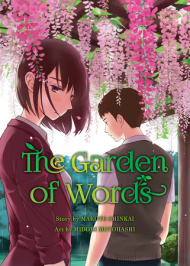
Garden of Words

My one new read was The Garden of Words, which I failed. Remember when I said things had been really busy lately? As a result, I’ve been in a super-charged mood of “let’s get more stuff done,” and I want what I’m reading to keep up. This book is the exact opposite. It’s about an older woman and school-age boy who meet at a gazebo when it rains. It requires leisurely reflection and an awareness of connections in life and pondering how someone can affect our lives temporarily but then we move on.

I was in totally the wrong mood for it. I’m going to try reading it again when I can better calm myself and approach it on its terms before I decide whether it’s too much like other things I’ve read or has its own special qualities.

Filed Under: MANGABLOG Tagged With: clamp, Dark Horse, fumi yoshinaga, Vertical Comics

  • « Go to Previous Page
  • Page 1
  • Interim pages omitted …
  • Page 6
  • Page 7
  • Page 8
  • Page 9
  • Page 10
  • Interim pages omitted …
  • Page 28
  • Go to Next Page »
 | Log in
Copyright © 2010 Manga Bookshelf | Powered by WordPress & the Genesis Framework